
100-Year-Old Advice For Entrepreneurs Today
100-Year-Old Advice For Entrepreneurs Today
By Christine McAlister
3 lessons from a little-known genius
“Making chalk mark on generator: $1 Knowing where to make mark: $9,999.”-Charles Proteus Steinmetz
Have you heard the story of the man who identified the cause of Henry Ford’s broken generator and charged him $10,000 — roughly $150,000–200,000 in today’s dollars — for this seemingly simple service?
Charles Steinmetz, circa 1915 (Image courtesy of Wikipedia)
My great-great Uncle Howard worked for Henry Ford and was witness to this event, and my dad got to hear this tale told at every holiday gathering growing up.
Why do I share this legendary lore now?
I believe Mr. Steinmetz has a lot to teach entrepreneurs today.
From the Recaps Archives posted on 4/27/2019
100-Year-Old Advice For Entrepreneurs Today
By Christine McAlister
3 lessons from a little-known genius
“Making chalk mark on generator: $1 Knowing where to make mark: $9,999.”-Charles Proteus Steinmetz
Have you heard the story of the man who identified the cause of Henry Ford’s broken generator and charged him $10,000 — roughly $150,000–200,000 in today’s dollars — for this seemingly simple service?
Charles Steinmetz, circa 1915 (Image courtesy of Wikipedia)
My great-great Uncle Howard worked for Henry Ford and was witness to this event, and my dad got to hear this tale told at every holiday gathering growing up.
Why do I share this legendary lore now?
I believe Mr. Steinmetz has a lot to teach entrepreneurs today.
Here are my three 100-year-old lessons I think all entrepreneurs today can learn from Mr. Steinmetz.
Lesson #1: Value Your Zone Of Genius
If you’re a service provider, you have probably been guilty of devaluing your work before.
It happens innocently enough. The fact is, when what we do is so easy for us and we get so much joy and energy from doing it, we tend to not place as high of a value on the actual process of completing it — and one way that often shows up is that we have a hard time charging premium prices for it!
“Why tip someone for a job I’m capable of doing myself? I can deliver food. I can drive a taxi. I can, and do, cut my own hair. I did, however, tip my urologist, because… I am unable to pulverize my own kidney stones.” — Dwight Schrute, The Office
Our favorite fictional straight-shooter summarizes this well. Dwight clearly places a higher value on something he himself cannot do. The problem comes when we do not place a higher value on what we do so well, because we forget that it doesn’t come as easily to others.
Have you ever felt or thought something like this?
“I would do it for free; so it feels weird to charge someone for it!”
“Can’t everyone do this? It’s so easy for me!”
When something comes so naturally to us and we love doing it, it DOESN’T mean that everyone can do it; it means that it’s very likely our Zone of Genius, and it is the very thing it would be wise to double-down on offering and charging for.
Have you found yourself saying these same things? How have you overcome them, or how will you begin to shift them now?
To continue reading, please go to the original article here:
https://medium.com/thrive-global/100-year-old-advice-for-entrepreneurs-today-d8fad36256b1
What Would You Do With a One Million Dollar Windfall?
.What Would You Do With a One Million Dollar Windfall?
From the Recaps Archives originally posted on 4/30/2019
Post From Financial Pilgrimage April 29, 2019
How many of us have thought to ourselves, “If I only had a million dollars all of my financial troubles would go away…”?
I know I have.
A million dollars is a tricky amount of money to think about. While it can be life changing money, it’s probably not life changing enough to live off for the rest of our lives without some work.
The reality is that if most people received one million dollars, half of the money would be gone to taxes, a few hundred thousand dollars to paying off debt, and the rest spent on expensive cars, vacations, etc.
I remember being five-years-old and even $5 seemed like one million dollars at the time. As little as $1,000 seemed like a million dollars when I was a teenager. Now that I’m older, one million dollars doesn’t quite seem like one million dollars (if that makes sense).
From the Recaps Archives originally posted on 4/30/2019
What Would You Do With a One Million Dollar Windfall?
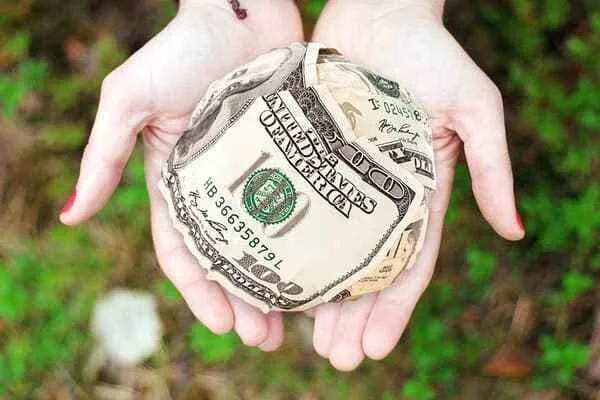
Post From Financial Pilgrimage April 29, 2019
How many of us have thought to ourselves, “If I only had a million dollars all of my financial troubles would go away…”?
I know I have.
A million dollars is a tricky amount of money to think about. While it can be life changing money, it’s probably not life changing enough to live off for the rest of our lives without some work.
The reality is that if most people received one million dollars, half of the money would be gone to taxes, a few hundred thousand dollars to paying off debt, and the rest spent on expensive cars, vacations, etc.
I remember being five-years-old and even $5 seemed like one million dollars at the time. As little as $1,000 seemed like a million dollars when I was a teenager. Now that I’m older, one million dollars doesn’t quite seem like one million dollars (if that makes sense).
For the sake of simplicity, we’re going to assume this one million dollar windfall is tax-free. Now the question: What should we do with the money? The easy and boring answer is put the money in a brokerage account, invest it in something safe, and apply the four percent rule.
The four percent rule is a rule of thumb used to determine the amount of funds to withdraw from a retirement account each year, while limiting the chances of running out of money (thanks, investopedia). This would provide you with $40,000 of income per year without lifting a finger.
For the purpose of this article, let’s think through the options a little more. Instead of dropping the money in a low risk index fund, let’s invest in something more interesting such as buy and hold real estate.
Our One Million Dollar Windfall
One Million Dollars Remaining…
First, 10% of the one million dollar windfall would go to charitable causes, so there goes $100,000 right off the top. It’s easy to give away six figures of virtual money, and I hope we’d have the discipline to do the same if this situation ever occurred.
The majority of this money would go to causes and organizations where we already contribute. However, we’d use a good chunk of it to give freely when the occasion called for it.
We could pay for the meal of the table next to us at dinner, buy groceries for the family behind us at the store, or make a donation to the gofundme page of someone who is truly in need.
I personally get a lot of satisfaction from helping others and we would have fun with giving away this money. In fact, I think the financial independence community could make a huge impact on the world with a bit more generosity.
To continue reading, please go to the original article here:
https://financialpilgrimage.com/if-i-received-a-1-million-dollar-windfall-i-would/
The Velocity of Money by Virginia Gentleman
.The Velocity of Money by Virginia Gentleman
From the Recaps Archives originally posted on 6/1/2019
Re-posted just in case our Exchange Appointments are really close!!!
From Virginia Gentleman VELOCITY OF MONEY
I know I don't have to state the obvious...GO HAVE FUN WITH SOME OF YOUR NEW FOUND WEALTH. However, I would like to pass on some words of wisdom.
As we get ready to punch it in, please remember to act like you've been in the End Zone before. Take a deep breath and exhale slowly as you collect yourself with the full intentions of acting with class and integrity.
Respectful treatment of others will be an inherent responsibility of your new status, as well as respectful treatment of your money and assets. You owe this to yourself, your family, your neighbors, and your heirs.
Don't hoard it, and on the other hand, don't waste it or give it all away. Save, invest, and spend wisely.
One of the single best things you can do with a small portion, and in effect a very small portion, is to be more generous over at least the next 18-24 months (or the longer) spending your money locally. What do I mean? The answer is the ‘VELOCITY OF MONEY’.
The Velocity of Money by Virginia Gentleman
From the Recaps Archives posted on 6/1/2019
Re-posted just in case our Exchange Appointments are really close!!!
From Virginia Gentleman VELOCITY OF MONEY
I know I don't have to state the obvious...GO HAVE FUN WITH SOME OF YOUR NEW FOUND WEALTH. However, I would like to pass on some words of wisdom.
As we get ready to punch it in, please remember to act like you've been in the End Zone before. Take a deep breath and exhale slowly as you collect yourself with the full intentions of acting with class and integrity.
Respectful treatment of others will be an inherent responsibility of your new status, as well as respectful treatment of your money and assets. You owe this to yourself, your family, your neighbors, and your heirs.
Don't hoard it, and on the other hand, don't waste it or give it all away. Save, invest, and spend wisely.
One of the single best things you can do with a small portion, and in effect a very small portion, is to be more generous over at least the next 18-24 months (or the longer) spending your money locally. What do I mean? The answer is the ‘VELOCITY OF MONEY’.
The Velocity of Money is a fairly simple financial concept where a ‘community’ can be positively impacted by the way a group of individuals increase the spending of their money in their economy, and in turn, the ripple effect of that spending as it accelerates throughout that same economy.
It can be local, regional, national, and even global. Velocity of money is most effective in a smaller market with the smaller more predictive population of a local economy, and it isn’t just effective, it is fun for the people spending their increased earnings, or in this case, significant returns on an investment. Yep, that is you!
Anyone who has ever lived in a small town or Suburban area where a new large company has come in and opened a large facility and hired a large amount of employees has witnessed this phenomenon.
Money gets pumped in and spending from increased disposable income begins to spread out through the entire community finding its way into the wallets of all the inhabitants.
The goal is to spend your money at local establishments on services, appliances, home improvements, food, entertainment, and such.
More precisely on things like tipping an extra 5-15 percent, using a valet to park at the local steakhouse (tipping extra), go hear a local band (put money in the tip jar), buy cheese or pork or beef at a farmers market instead of 2 month old shrink wrapped processed cheese from a Big Box store or grocer, get an extra manicure or haircut (tipping extra!), get your car repaired at the mechanic down that side road instead of Walmart or the Dealer.
Buy those nicer hiking boots ‘Made In America’, get your computer cleaned up by that geek in the shop she set up in the old 7-11 building, buy your lumber from the local milled lumber supplier not the National Chain hardware store, deal with a local community bank or credit union with a substantial portion of your money… you get it now right.
Think about it. You may be spending either the same amount or perhaps an extra 10-20%, and you’re getting the same things… OFTEN WITH THE BONUS OF MUCH HIGHER QUALITY PRODUCTS WHILE GETTING TO KNOW YOUR NEIGHBORS ON MAIN STREET!!!
I personally look forward to trying some of the world’s best Craft Breweries in Richmond (tipping generously) and touring some of Virginia’s wineries (tipping generously)… jealous of you Kentucky folks that can tour the best ‘Bourbon’ distilleries on the planet, or you ‘Whiskey’ lovers in Tennessee just outside of Fayetteville down the Admiral Frank B Kelso highway or those in Nashville who can wander in a restaurant and catch a ‘local’ band like Kenny Chesney, lol. Believe it!
By doing this the dominoes of positive change begin to fall within your local community. The ripple effect is that the waiters, mechanics, manicurists, hairstylists, valet, carpenter, plumber, artisan cheesemaker, farmer, and others in your community begin to make more money.
And what do they do? They go out and spend more, tip more, consume more. Your local tax authority makes more sales tax revenue and spends it on improvements.
I’m in America, but the Velocity of Money is true in Canada, Great Britain, Iraq, Vietnam, or anywhere. And guess what? Since this is fun stuff you’ll be doing while spending your hard earned money, you will also be wearing a BIG smile.
There is nothing more infectious and quick to spread goodwill than passing on your smile accompanied by kind words. So be wise with your prosperity and have some fun …LOCALLY.
Even pay attention to those companies being loyal corporate citizens to us through the new Trump incentives to stay and manufacture here, and be loyal to them.
Not a bad time to avoid items and foods imported from Mexico for example …no Avacados or Corona at my Superbowl party this year, which is an example of the deceleration of the Velocity of Money.
The fruit you bear will fall from your tree and spread its seeds…
Live and grow in the nine fruits of the Spirit and you will sow the nine fruits…
Love, Joy, Peace, Patience, Kindness, Goodness, Gentleness, Faithfulness, and Self-Control.
Take care –Virginia Gentleman
10 Ways the Richest Billionaires Stay Rich
.10 Ways the Richest Billionaires Stay Rich
Learn how to get rich and stay rich by listening to the experts.
By Autumn Rose
The richest people in the world climbed to the top of the fiscal food chain with smart investments and dreams of making a meaningful impact on the world. They also had a good deal of business savvy.
See these inspiring tips from billionaires like Bill Gates and Warren Buffett to find out how to get rich — and stay rich.
Bill Gates: Focus on Development
Net Worth: $86.8 billion
Microsoft founder Bill Gates built a reputation for being not only one of the richest men in the world, but also one of the smartest and most serious thinkers alive today.
It should come as no surprise that Gates became one of the richest people in the world by focusing more on development and innovation than the business side of things.
In 2014, Gates told Rolling Stone, “You know, development sometimes is viewed as a project in which you give people things and nothing much happens, which is perfectly valid, but if you just focus on that, then you’d also have to say that venture capital is pretty stupid, too. Its hit rate is pathetic. But occasionally, you get successes, you fund a Google or something….”
10 Ways the Richest Billionaires Stay Rich
Learn how to get rich and stay rich by listening to the experts.
By Autumn Rose
The richest people in the world climbed to the top of the fiscal food chain with smart investments and dreams of making a meaningful impact on the world. They also had a good deal of business savvy.
See these inspiring tips from billionaires like Bill Gates and Warren Buffett to find out how to get rich — and stay rich.
Bill Gates: Focus on Development
Net Worth: $86.8 billion
Microsoft founder Bill Gates built a reputation for being not only one of the richest men in the world, but also one of the smartest and most serious thinkers alive today.
It should come as no surprise that Gates became one of the richest people in the world by focusing more on development and innovation than the business side of things.
In 2014, Gates told Rolling Stone, “You know, development sometimes is viewed as a project in which you give people things and nothing much happens, which is perfectly valid, but if you just focus on that, then you’d also have to say that venture capital is pretty stupid, too. Its hit rate is pathetic. But occasionally, you get successes, you fund a Google or something….”
Warren Buffett: Think Long Term
Net Worth: $74.8 billion
Self-made billionaire Warren Buffett believes in using long-term investment strategies. In fact, he accumulated most of his impressive wealth after turning 50 and continues to make smart investments today, pulling off what Forbes called his “biggest-ever deal” in August 2015.
According to Time, Buffett once said, “Successful investing takes time, discipline and patience. No matter how great the talent or effort, some things just take time: you can’t produce a baby in one month by getting nine women pregnant.”
Jeff Bezos: Be a Missionary to Stay Motivated
Net Worth: $77 billion
Amazon.com founder and CEO Jeff Bezos is a billionaire businessman whose many accomplishments include successfully launching a rocket into sub-orbit with his aerospace company, Blue Origin. In a 2010 interview with Fortune, Bezos revealed that he thinks of business as a mission.
“I strongly believe that missionaries make better products,” he said. “They care more. For a missionary, it’s not just about the business. There has to be a business, and the business has to make sense, but that’s not why you do it. You do it because you have something meaningful that motivates you.”
Mark Zuckerberg: Think Like a Hacker
Net Worth: $59 billion
Nineteen-year-old Mark Zuckerberg was a student at Harvard when he founded Facebook back in 2004. Since then, he’s become one of the world’s richest and most successful people.
Zuckerberg attributes his success to a willingness to take risks and a desire to create something that can change the world. Additionally, he believes in following a business strategy known as “The Hacker Way.”
In a 2012 letter to potential Facebook investors, he wrote, “The Hacker Way is an approach to building that involves continuous improvement and iteration. Hackers believe that something can always be better, and that nothing is ever complete.”
Larry Ellison: Be Aggressive With Acquisitions
Net Worth: $54.5 billion
Larry Ellison started his career building databases for the CIA before founding his own database software company, Oracle, in 1977. Over the years, Ellison has gone from being someone who despised growth acquisitions to someone who uses them to his advantage.
Ellison’s open-minded acquisition style — which helped Oracle acquire successful companies like PeopleSoft, Eloqua and Siebel — enabled him to turn the organization into a giant worth $168.9 billion. Moreover, Ellison stresses the importance of having cash on hand for the next big acquisition.
According to Business Insider, in a discussion with Wall Street analysts, he said, “We use our money for a variety of things. We buy back stock, we pay dividends.
We haven’t made any large acquisitions for a while. You know? We’re kind of saving our nickels and dimes. We might do something interesting, one of these days.
To continue reading, please go to the original article here:
https://www.gobankingrates.com/making-money/wealth/ways-richest-billionaires-stay-rich/#0
.What Does Wealth Mean To You?
What Does Wealth Mean To You?
Post From Money Saved Is Money Earned
As a member of the personal finance blogger community, I’ve been privy to a multitude of differing opinions about a myriad of finance topics.
While most agree with a few broad topics (financial independence is good, for example) you’ll find that there’s a great deal of variance even among those who are financially savvy.
Go beyond personal finance communities and the variance grows even more.
Why is there such a difference?
What Does Wealth Mean To You?
When it comes down to it, I think a lot of this variance is simply a product of the differences in how people value wealth and success.
What Does Wealth Mean To You?
Posted on Dinar Recaps Archives on 8/4/2019
What Does Wealth Mean To You?Post From Money Saved Is Money Earned
As a member of the personal finance blogger community, I’ve been privy to a multitude of differing opinions about a myriad of finance topics.
While most agree with a few broad topics (financial independence is good, for example) you’ll find that there’s a great deal of variance even among those who are financially savvy.
Go beyond personal finance communities and the variance grows even more.
Why is there such a difference?
What Does Wealth Mean To You?
When it comes down to it, I think a lot of this variance is simply a product of the differences in how people value wealth and success.
Although wealth and success are not traditional synonyms, in this case I think they should be because how you define success is also tied to what you consider wealth.
After all, one definition of wealth is an abundance of a resource. That resource could be many different things depending on what you value and what you consider successful.
Let’s delve more into what wealth means to you, why it matters, and how you can use your definitions of wealth and success to live a more fulfilled life.
What Do You Value?
How do you value wealth and success?
The reason for the variance in opinions and decisions in regard to personal finance is because everyone is different when it comes to what they value.
Yes, lack of financial education can lead you down some dark paths and you should try to avoid the debt trap while in pursuit of what you value, but ultimately a large part of our decisions will be driven by what we value.
So, what is it that you value? How do you measure success? What makes you wealthy?
There are a plethora of things you could mention, but most can be summed up in this list:
Income/moneySavings/investmentsTimeFamily/friendsWorkTitlesRecognitionThings/possessionsHealthExperiences
This list is by no means exhaustive or exclusive, and there will likely be quite a bit of overlap between some of these categories.
No matter which of the above items is most important to you, what you value and how you define wealth and success is largely dependent on your background and experiences.
Ask someone if being a millionaire would make them successful and many (perhaps most) would agree. However, ask someone from a different background if being a millionaire would make them successful and they might claim you need a lot more.
As with anything, it’s the differences in background and experience that shape your attitude and understanding of money, wealth, and success.
This is why everyone is a little different when it comes to personal finance and what matters to them.
Why Does It Matter?
You may be thinking that the idea of people defining wealth and success differently is an obvious concept.
So why does this matter? Why do you need to understand what wealth and success mean to you?
It matters because your happiness will ultimately be tied to your definition of success and wealth, regardless of what others think or how they behave.
And it isn’t always easy to determine what means the most to you.
Many people go through life with very little insight into their behavior and the motives behind it. They are unable, or unwilling, to take a look in the mirror and to understand why they act the way they do.
Aside from knowing what you value and why, understanding your behavior and the factors that shape it are really the only way to truly change that behavior if so desired.
Essentially, what we’re talking about is a concept called metacognition, or thinking about your thinking.
To continue reading, please go to the original article here:
https://www.moneysavedmoneyearned.com/what-does-wealth-mean-to-you/
Introduction into Foreign Currency
. What Are the Functions of Foreign Currency Exchange Markets?
By: Thomas Metcalf Managing Your Money December 12, 2019
The foreign exchange market, also known as the FOREX market, is a worldwide network that connects exchanges around the globe to enable round-the-clock trading from when the markets open Monday morning in Asia -- Sunday afternoon in the United States -- until the American markets close on Friday afternoon. The FOREX market provides essential functions that facilitate the growth of world commerce
Foreign Exchange Markets
Currencies are bought and sold with prices determined by supply and demand with occasional government intervention. Currency transfers are accomplished by checks and bank drafts, bills of exchange, and mail and wire transfers.
The players in the market are banks, brokers and businesses, with some individuals trading on their own accounts. The FOREX market supports world commerce by allowing the transfer of funds from one currency to another, providing credit to businesses in the import trade and offering a hedge against possible exchange-rate fluctuations.
What Are the Functions of Foreign Currency Exchange Markets?
By: Thomas Metcalf Managing Your Money December 12, 2019
The foreign exchange market, also known as the FOREX market, is a worldwide network that connects exchanges around the globe to enable round-the-clock trading from when the markets open Monday morning in Asia -- Sunday afternoon in the United States -- until the American markets close on Friday afternoon. The FOREX market provides essential functions that facilitate the growth of world commerce
Foreign Exchange Markets
Currencies are bought and sold with prices determined by supply and demand with occasional government intervention. Currency transfers are accomplished by checks and bank drafts, bills of exchange, and mail and wire transfers.
The players in the market are banks, brokers and businesses, with some individuals trading on their own accounts. The FOREX market supports world commerce by allowing the transfer of funds from one currency to another, providing credit to businesses in the import trade and offering a hedge against possible exchange-rate fluctuations.
Transfer Function
The most visible function fulfilled by the foreign exchange market is to facilitate the conversion of one currency to another. In doing so, the foreign exchange market is the mechanism that transfers purchasing power from one country to another.
When an importer in the United States imports goods manufactured in Germany, for example, the exporter wishes to be paid in euros. The conversion of U.S. dollars to euros is done through the foreign exchange market. Likewise, if an American businessman plans a trip to India, he exchanges U.S. dollars for Indian rupees through the foreign exchange market.
Credit Function
By using the FOREX market, importers can obtain credit to finance their foreign purchases. Suppose an American company wishes to purchase an inventory of Chinese-manufactured tools.
The American importer can pay for the purchase by using a bill of exchange in the FOREX market -- essentially an IOU with a three-month maturity. This instrument locks in the exchange rate and allows the importer 90 days to sell his products before the note is payable
Hedging Function
While exchange rates fluctuate, they do not ordinarily exhibit dramatic shifts, barring international crises. Nevertheless, the chance that rates may change poses a risk to traders whose business lies in buying and selling merchandise, not speculating in currency-price movements.
If a business is concerned that rates may change against him before the transaction is completed, he can make an offsetting transaction in the forward exchange market and then liquidate it when his initial transaction is completed. An exchange-rate profit in one will be balanced by a loss in the other, allowing him to complete the primary transaction with no fear of losing money because of an adverse currency movement.
To continue reading, please go to the original article here:
https://pocketsense.com/functions-foreign-currency-exchange-markets-9293.html
Pros & Cons of Foreign Exchange Markets
By: Bryan Keythman
The foreign exchange (forex) market is the interbank market where institutions trade currencies. It is also accessible to retail investors through online dealers or brokers. The forex market has several pros and cons that investors and traders should be aware of. Knowing what’s involved with participating in the forex market will increase your chances of success.
Size
The foreign exchange market’s size gives it several advantages. The large number of participants provides liquidity, meaning currencies are easily bought or sold, and orders are typically filled right away. The size of the market also prevents any single entity from exercising too much control over the market. Large participants, such as central banks, may influence the market, but only for a short amount of time.
Accessibility
The forex market is open 24 hours a day, five days a week. Some brokers are even open on weekends. This allows for flexibility to trade when you want. Brokers require low opening deposits, offer low transaction costs and typically charge only the bid-ask spread per trade, which is the difference between the buying and selling price. Traders can also use leverage to trade a larger amount of money than they have in their account.
Trading Styles
The forex market accommodates different trading styles. Investors can buy long or sell short in the foreign exchange market without restrictions. Investors can participate in the forex market using futures, exchange-traded funds or options, or directly through a broker in the spot market. This caters to different investment objectives.
Loose Regulations
The orex market is an over-the-counter market with no central exchange. It is less regulated than other markets. Traders typically place trades directly with their broker, who takes the other side of the trade. The lack of a central exchange results in a lack of information on certain market statistics, such as trading volume, and creates a greater risk of mispricing.
Broker Risk
The loose regulation of online brokers increases the potential for fraud. Traders must research a broker carefully before opening an account. Funds deposited with a forex broker are typically not protected if the broker goes bankrupt. Any outages in a broker’s trading system could leave a trader unable to manage open trades.
Risk of Loss
There is the potential to lose all of your money. Using leverage to trade more money than is in your account magnifies the potential loss if the market moves against you.
You may be responsible for losses greater than the funds in your account. Because currency prices are influenced by many factors, the amount of fundamental information to analyze is daunting.
To continue reading, please go to the original article here:
https://pocketsense.com/functions-foreign-currency-exchange-markets-9293.html
Introduction into Foreign Currency
Foreign Currency Definition By Alex Kocic,
Currency is any generally accepted medium of exchange for goods and services in a particular country or region. Today currency normally takes the form of paper notes and coins. Foreign currency is any currency not normally used in a particular region or country.
There are almost 200 currencies worldwide today. Although most countries have their own currency, there are some that adopt another country's currency as their own. The euro is a common currency in a number of European countries.
History
Before there was money people would trade, or barter, goods directly—say a certain number of cows for a certain number of tools.
This, however, became complicated as the number of goods and services traded grew. That's why a common currency was needed—to help people determine how many tools a cow was worth.
Any durable commodity could be used as currency. Shells, furs, teeth, beaver pelts, dried corn or buckskin (hence the term "buck" for dollar).
As Niall Ferguson writes in the "Ascent of Money," the earliest known coins date to 600 B.C. and were found in the Temple of Artemis at Ephesus in modern-day Turkey. First banknotes originated in seventh-century China.
Foreign Exchanges
As trade grew between nations that all had their own separate currencies, there was a need to establish foreign exchanges, where foreign currencies could be bought and sold.
This came with the birth of the gold standard in 1875. Before that, precious metals such as gold and silver were used for international payments.
Gold standard meant that any currency was backed by gold, measured in ounces. Countries were required to keep large reserves of gold to back the demand for currency. The price of an ounce of gold was set for each currency and the difference in price between two currencies became their exchange rate.
Bretton Woods System
The gold standard was abolished with the outbreak of World War I in Europe and in July 1945 replaced by the Bretton Woods system, in which the U.S. dollar, as the only currency backed by gold, became the ultimate exchange currency. It was replaced in the early 1970s by the current system of floating exchange rates in which currencies are not tied to one another or to gold.
Considerations for Tourists
Whether you have an importing or exporting business, or simply plan to make a tourist trip abroad, there are a couple of important foreign currency considerations. Tourists should buy their foreign currency before they travel, which is usually a bit cheaper than buying it on arrival.
For larger purchases or other expenses while abroad, it is better to use a credit card, since most credit card issuers use their own exchange rate, usually slightly lower then the rates abroad, when they bill you.
Considerations for Businesses
Businesses that buy or sell goods abroad can incur significant losses due to exchange rate fluctuations between the time of purchase and time of payment. They should talk to their bank about hedging against foreign currency rises.
To continue reading, please go to the original article here:
https://www.sapling.com/6752884/foreign-currency-definition#ixzz2IsBAYMtQ
What Is Foreign Currency Valuation? By Corr S. Pondent,
Currency values change from time to time depending on market factors. If you have any kind of exposure to foreign currencies, you will need to be aware of foreign currency valuation.
Definition
Foreign currency valuation refers to the value of a foreign currency in terms of the local currency, for instance the U.S. dollar vs. the Canadian dollar. This defines how many Canadian dollars you will get for your U.S. dollar. The higher the value of the U.S. dollar vs. the Canadian dollar, the higher your purchasing power will be in Canadian dollars.
Significance
There are everyday situations in which you are likely to be affected by foreign currency valuations. If the value of the U.S. dollar goes down vs. the Canadian dollar, businesses that buy raw materials from Canada might see their costs go up. In that case, you might end up paying more for their goods.
Sapling.com
Currency is any generally accepted medium of exchange for goods and services in a particular country or region.
Risk Management
Businesses manage their foreign currency risk exposure to guard against changes in foreign currency values.
They don't want to end up paying more than they expected for imports or receiving less money than they expected for goods they export. There are various contracts that allow them to do this.
How to Find the Value of Foreign Currency By Carter McBride,
Each foreign currency has a different value compared to United States dollars. The amount of one foreign currency equaling one dollar is the foreign currency exchange rate.
This can also be inverted where the rate shows how much of a U.S. dollar equals one unit in another currency. By using the foreign currency exchange rate, people can find the value of a foreign currency. Foreign currencies is either used in another country or in speculative trading
Instructions
1 Determine the currency you want to find the value of. For example, an investor wants to know the value of the euro in relation to the U.S. dollar.
2 Determine how much of the currency you want to find the value of in another currency. In the example, the investor wants to know the worth of 200 euros in U.S. dollars (USD).
3 Search for "Amount of Currency 1 to Currency 2" in Yahoo!, Bing, or Google. Like a regular search, these will bring up various websites, but unlike a regular search, each search engine will convert the one currency to another currency using current exchange rates.
Replace Amount with the amount you want to convert. Replace Currency 1 with the currency you are converting and replace Currency 2 with the currency you are converting to. In the example, type "200 euros to USD."
Each search engine will return a result that looks like "200 euros = 247.7400 U.S. dollars." So 200 euros has the same worth of $247.74.
To continue reading, please go to the original article here:
https://www.sapling.com/6675640/value-foreign-currency#ixzz2IsEiHwQF
For the Love of Money
.For the Love of Money
By Sam Polk, Sunday Review
In my last year on Wall Street my bonus was $3.6 million — and I was angry because it wasn’t big enough. I was 30 years old, had no children to raise, no debts to pay, no philanthropic goal in mind. I wanted more money for exactly the same reason an alcoholic needs another drink: I was addicted.
Eight years earlier, I’d walked onto the trading floor at Credit Suisse First Boston to begin my summer internship. I already knew I wanted to be rich, but when I started out I had a different idea about what wealth meant
I’d come to Wall Street after reading in the book “Liar’s Poker” how Michael Lewis earned a $225,000 bonus after just two years of work on a trading floor.
That seemed like a fortune. Every January and February, I think about that time, because these are the months when bonuses are decided and distributed, when fortunes are made.
I’d learned about the importance of being rich from my dad. He was a modern-day Willy Loman, a salesman with huge dreams that never seemed to materialize. “Imagine what life will be like,” he’d say, “when I make a million dollars.”
For the Love of Money
By Sam Polk, Sunday Review
In my last year on Wall Street my bonus was $3.6 million — and I was angry because it wasn’t big enough. I was 30 years old, had no children to raise, no debts to pay, no philanthropic goal in mind. I wanted more money for exactly the same reason an alcoholic needs another drink: I was addicted.
Eight years earlier, I’d walked onto the trading floor at Credit Suisse First Boston to begin my summer internship. I already knew I wanted to be rich, but when I started out I had a different idea about what wealth meant
I’d come to Wall Street after reading in the book “Liar’s Poker” how Michael Lewis earned a $225,000 bonus after just two years of work on a trading floor.
That seemed like a fortune. Every January and February, I think about that time, because these are the months when bonuses are decided and distributed, when fortunes are made.
I’d learned about the importance of being rich from my dad. He was a modern-day Willy Loman, a salesman with huge dreams that never seemed to materialize. “Imagine what life will be like,” he’d say, “when I make a million dollars.”
While he dreamed of selling a screenplay, in reality he sold kitchen cabinets. And not that well. We sometimes lived paycheck to paycheck off my mom’s nurse-practitioner salary.
Dad believed money would solve all his problems. At 22, so did I. When I walked onto that trading floor for the first time and saw the glowing flat-screen TVs, high-tech computer monitors and phone turrets with enough dials, knobs and buttons to make it seem like the ****pit of a fighter plane, I knew exactly what I wanted to do with the rest of my life.
It looked as if the traders were playing a video game inside a spaceship; if you won this video game, you became what I most wanted to be — rich.
IT was a miracle I’d made it to Wall Street at all. While I was competitive and ambitious — a wrestler at Columbia University — I was also a daily drinker and pot smoker and a regular user of cocaine, Ritalin and ecstasy.
I had a propensity for self-destruction that had resulted in my getting suspended from Columbia for burglary, arrested twice and fired from an Internet company for fistfighting. I learned about rage from my dad, too. I can still see his red, contorted face as he charged toward me.
I’d lied my way into the C.S.F.B. internship by omitting my transgressions from my résumé and was determined not to blow what seemed a final chance.
The only thing as important to me as that internship was my girlfriend, a starter on the Columbia volleyball team. But even though I was in love with her, when I got drunk I’d sometimes end up with other women.
Three weeks into my internship she wisely dumped me. I don’t like who you’ve become, she said. I couldn’t blame her, but I was so devastated that I couldn’t get out of bed. In desperation, I called a counselor whom I had reluctantly seen a few times before and asked for help.
She helped me see that I was using alcohol and drugs to blunt the powerlessness I felt as a kid and suggested I give them up. That began some of the hardest months of my life. Without the alcohol and drugs in my system, I felt like my chest had been cracked open, exposing my heart to air.
The counselor said that my abuse of drugs and alcohol was a symptom of an underlying problem — a “spiritual malady,” she called it. C.S.F.B. didn’t offer me a full-time job, and I returned, distraught, to Columbia for senior year.
After graduation, I got a job at Bank of America, by the grace of a managing director willing to take a chance on a kid who had called him every day for three weeks. With a year of sobriety under my belt, I was sharp, cleareyed and hard-working.
At the end of my first year I was thrilled to receive a $40,000 bonus. For the first time in my life, I didn’t have to check my balance before I withdrew money
But a week later, a trader who was only four years my senior got hired away by C.S.F.B. for $900,000. After my initial envious shock — his haul was 22 times the size of my bonus — I grew excited at how much money was available.
Over the next few years I worked like a maniac and began to move up the Wall Street ladder. I became a bond and credit default swap trader, one of the more lucrative roles in the business.
Just four years after I started at Bank of America, Citibank offered me a “1.75 by 2” which means $1.75 million per year for two years, and I used it to get a promotion. I started dating a pretty blonde and rented a loft apartment on Bond Street for $6,000 a month.
I felt so important. At 25, I could go to any restaurant in Manhattan — Per Se, Le Bernardin — just by picking up the phone and calling one of my brokers, who ingratiate themselves to traders by entertaining with unlimited expense accounts.
I could be second row at the Knicks-Lakers game just by hinting to a broker I might be interested in going. The satisfaction wasn’t just about the money. It was about the power. Because of how smart and successful I was, it was someone else’s job to make me happy.
Still, I was nagged by envy. On a trading desk everyone sits together, from interns to managing directors. When the guy next to you makes $10 million, $1 million or $2 million doesn’t look so sweet. Nonetheless, I was thrilled with my progress.
My counselor didn’t share my elation. She said I might be using money the same way I’d used drugs and alcohol — to make myself feel powerful — and that maybe it would benefit me to stop focusing on accumulating more and instead focus on healing my inner wound. “Inner wound”? I thought that was going a little far and went to work for a hedge fund.
Now, working elbow to elbow with billionaires, I was a giant fireball of greed. I’d think about how my colleagues could buy Micronesia if they wanted to, or become mayor of New York City. They didn’t just have money; they had power — power beyond getting a table at Le Bernardin. Senators came to their offices. They were royalty.
I wanted a billion dollars. It’s staggering to think that in the course of five years, I’d gone from being thrilled at my first bonus — $40,000 — to being disappointed when, my second year at the hedge fund, I was paid “only” $1.5 million.
But in the end, it was actually my absurdly wealthy bosses who helped me see the limitations of unlimited wealth. I was in a meeting with one of them, and a few other traders, and they were talking about the new hedge-fund regulations. Most everyone on Wall Street thought they were a bad idea.
“But isn’t it better for the system as a whole?” I asked. The room went quiet, and my boss shot me a withering look. I remember his saying, “I don’t have the brain capacity to think about the system as a whole. All I’m concerned with is how this affects our company.”
I felt as if I’d been punched in the gut. He was afraid of losing money, despite all that he had.
From that moment on, I started to see Wall Street with new eyes. I noticed the vitriol that traders directed at the government for limiting bonuses after the crash. I heard the fury in their voices at the mention of higher taxes. These traders despised anything or anyone that threatened their bonuses.
Ever see what a drug addict is like when he’s used up his junk? He’ll do anything — walk 20 miles in the snow, rob a grandma — to get a fix. Wall Street was like that.
In the months before bonuses were handed out, the trading floor started to feel like a neighborhood in “The Wire” when the heroin runs out.
I’d always looked enviously at the people who earned more than I did; now, for the first time, I was embarrassed for them, and for me. I made in a single year more than my mom made her whole life.
I knew that wasn’t fair; that wasn’t right. Yes, I was sharp, good with numbers. I had marketable talents. But in the end I didn’t really do anything. I was a derivatives trader, and it occurred to me the world would hardly change at all if credit derivatives ceased to exist. Not so nurse practitioners. What had seemed normal now seemed deeply distorted.
I had recently finished Taylor Branch’s three-volume series on the Rev. Dr. Martin Luther King Jr. and the civil rights movement, and the image of the Freedom Riders stepping out of their bus into an infuriated mob had seared itself into my mind. I’d told myself that if I’d been alive in the ‘60s, I would have been on that bus.
But I was lying to myself. There were plenty of injustices out there — rampant poverty, swelling prison populations, a sexual-assault epidemic, an obesity crisis. Not only was I not helping to fix any problems in the world, but I was profiting from them.
During the market crash in 2008, I’d made a ton of money by shorting the derivatives of risky companies. As the world crumbled, I profited. I’d seen the crash coming, but instead of trying to help the people it would hurt the most — people who didn’t have a million dollars in the bank — I’d made money off it.
I don’t like who you’ve become, my girlfriend had said years earlier. She was right then, and she was still right. Only now, I didn’t like who I’d become either.
Wealth addiction was described by the late sociologist and playwright Philip Slater in a 1980 book, but addiction researchers have paid the concept little attention. Like alcoholics driving drunk, wealth addiction imperils everyone.
Wealth addicts are, more than anybody, specifically responsible for the ever widening rift that is tearing apart our once great country. Wealth addicts are responsible for the vast and toxic disparity between the rich and the poor and the annihilation of the middle class.
Only a wealth addict would feel justified in receiving $14 million in compensation — including an $8.5 million bonus — as the McDonald’s C.E.O., Don Thompson, did in 2012, while his company then published a brochure for its work force on how to survive on their low wages.
Only a wealth addict would earn hundreds of millions as a hedge-fund manager, and then lobby to maintain a tax loophole that gave him a lower tax rate than his secretary.
Despite my realizations, it was incredibly difficult to leave. I was terrified of running out of money and of forgoing future bonuses. More than anything, I was afraid that five or 10 years down the road, I’d feel like an idiot for walking away from my one chance to be really important.
To continue reading, please go to the original article here:
https://www.nytimes.com/2014/01/19/opinion/sunday/for-the-love-of-money.html?_r=1
Take My Cash, You Discriminatory Corporate Buffoons
Take My Cash, You Discriminatory Corporate Buffoons
By Ashwin Rodrigues Jul 31 2019,
Posted in Dinar Recaps Archives 8/2/2019
'We don't take cash' is another way to say 'No broke people allowed.'
Disdain for poor people is often packaged as an innocent design choice. There is, for instance, an entire genre of architecture dedicated to subtly preventing people from sleeping or lying down.
But cashless businesses, which retailers claim improve store operations, and which seem to keep popping up in the bougiest corners of the cities that have not banned them, are an especially offensive and insidious way to keep lower-wage people out of coffee shops and salad spots.
Cash bans turn regular retailers into semi-private spaces, as some consumers, such as those who are “unbanked” (without a bank account) and “underbanked” (those who have a bank account but rely on alternative, often predatory financial products like check cashing) cannot afford the cost of admission.
Posted in Dinar Recaps Archives 8/2/2019
Take My Cash, You Discriminatory Corporate Buffoons
By Ashwin Rodrigues Jul 31 2019,
Posted in Dinar Recaps Archives 8/2/2019
'We don't take cash' is another way to say 'No broke people allowed.'
Disdain for poor people is often packaged as an innocent design choice. There is, for instance, an entire genre of architecture dedicated to subtly preventing people from sleeping or lying down.
But cashless businesses, which retailers claim improve store operations, and which seem to keep popping up in the bougiest corners of the cities that have not banned them, are an especially offensive and insidious way to keep lower-wage people out of coffee shops and salad spots.
Cash bans turn regular retailers into semi-private spaces, as some consumers, such as those who are “unbanked” (without a bank account) and “underbanked” (those who have a bank account but rely on alternative, often predatory financial products like check cashing) cannot afford the cost of admission.
An estimated 25 percent of U.S. households are unbanked or underbanked.
“Moving to a cashless society essentially prevents lower-wage workers and those without credit from accessing certain products and services,” said Alexandrea Ravenelle, assistant professor of sociology at the University of North Carolina, whose work focuses on the sharing economy.
“It creates a two-tiered society of those who can spend freely and those who are essentially discriminated against on the basis of credit access.”
People use cash as a way to budget, and avoid fees for overdrafts or low balances, Ravenelle added. “If they do have access to prepaid debit cards, those cards often come with numerous fees.
Research also shows that people tend to spend more when they're using credit cards—which is especially problematic if someone has a tight budget or limited funds. It's very easy to go over budget when using plastic,” she said. Just look at all the people who refer to Venmo as “not real money.”
Cashlessness is not a new phenomenon. Visa, in an early-2000’s campaign for their Visa Check Card, attempted to smear it as a cumbersome payment instrument. Ads show busy theater-goers and convenience store customers moving and swiping their cards in fast-paced synchrony until one customer produces cash from his wallet, bringing the symphony to a screeching halt.
Visa went even further in 2017, offering $10,000 to businesses willing to go cashless, according to a Bloomberg report.
To continue reading, please go to the original article here:
https://www.vice.com/en_us/article/kzm4yv/cashless-businesses-discrimination
Quotes That Can Change Your Attitude Towards Money
.Quotes That Can Change Your Attitude Towards Money
50 Money Quotes by Famous People that Can Change Your Attitude Towards Money
Catherine Alford
Catherine Alford is a personal finance freelance writer who received a B.A. from The College of William and Mary and an M.A. from Virginia Tech.
When you need advice about your finances, it’s often quite inspirational, interesting, and even funny to research the opinions of famous businessmen, thinkers, and celebrities. Check out our 50 favorite money quotes below: we hope they can help you change your attitude towards money in a positive way.
1. “Money can’t buy friends, but you can get a better class of enemy.” Spike Milligan
2. “Money has never made man happy, nor will it, there is nothing in its nature to produce happiness. The more of it one has the more one wants.” Benjamin Franklin
3. “A wise person should have money in their head, but not in their heart.” Jonathan Swift
4. “Money was never a big motivation for me, except as a way to keep score. The real excitement is playing the game.” Donald Trump
5. “Money often costs too much.” Ralph Waldo Emerson
6. “A man is rich in proportion to the things he can afford to let alone.” Henry David Thoreau
7. “You can only become truly accomplished at something you love. Don’t make money your goal. Instead, pursue the things you love doing, and then do them so well that people can’t take their eyes off you.” Maya Angelou
8. “Money is usually attracted, not pursued.” Jim Rohn
Quotes That Can Change Your Attitude Towards Money s
50 Money Quotes by Famous People that Can Change Your Attitude Towards Money
Catherine Alford
Catherine Alford is a personal finance freelance writer who received a B.A. from The College of William and Mary and an M.A. from Virginia Tech.
When you need advice about your finances, it’s often quite inspirational, interesting, and even funny to research the opinions of famous businessmen, thinkers, and celebrities. Check out our 50 favorite money quotes below: we hope they can help you change your attitude towards money in a positive way.
1. “Money can’t buy friends, but you can get a better class of enemy.” Spike Milligan
2. “Money has never made man happy, nor will it, there is nothing in its nature to produce happiness. The more of it one has the more one wants.” Benjamin Franklin
3. “A wise person should have money in their head, but not in their heart.” Jonathan Swift
4. “Money was never a big motivation for me, except as a way to keep score. The real excitement is playing the game.” Donald Trump
5. “Money often costs too much.” Ralph Waldo Emerson
6. “A man is rich in proportion to the things he can afford to let alone.” Henry David Thoreau
7. “You can only become truly accomplished at something you love. Don’t make money your goal. Instead, pursue the things you love doing, and then do them so well that people can’t take their eyes off you.” Maya Angelou
8. “Money is usually attracted, not pursued.” Jim Rohn
9. “Not he who has much is rich, but he who gives much.” Erich Fromm
10. “Never stand begging for that which you have the power to earn.” Miguel de Cervantes
11. “There’s no money in poetry, but then there’s no poetry in money, either.” Robert Graves
12. “I’d like to live as a poor man with lots of money.” Pablo Picasso
13. “When it is a question of money, everybody is of the same religion.” Voltaire
14. “Money is power, freedom, a cushion, the root of all evil, the sum of blessings.” Carl Sandburg
15. “It is better to have a permanent income than to be fascinating.” Oscar Wilde
16. “It doesn’t matter about money; having it, not having it. Or having clothes, or not having them. You’re still left alone with yourself in the end.” Billy Idol
17. “What difference does it make how much you have? What you do not have amounts to much more.” Seneca
18. “You use your money to buy privacy because during most of your life you aren’t allowed to be normal.” Johnny Depp
19. “The art is not in making money, but in keeping it.” Proverb
20. “The glow of one warm thought is to me worth more than money.” Thomas Jefferson
21. “Money is the wise man’s religion.” Euripides
22. “Only buy something that you’d be perfectly happy to hold if the market shut down for ten years.” Warren Buffett
23. “Put all good eggs in one basket and then watch that basket.” Andrew Carnegie
24. “Neither a borrower nor a lender be, for loan oft loses both itself and friend, and borrowing dulls the edge of husbandry.” William Shakespeare
25. “Money is like muck—not good unless it be spread.” Francis Bacon
26. “Money can’t buy happiness, but it will certainly get you a better class of memories.” Ronald Reagan
27. “Never ask of money spent Where the spender thinks it went. Nobody was ever meant To remember or invent What he did with every cent.” Robert Frost
28. “When I had money everyone called me brother.” Polish proverb
29. “For I don’t care too much for money, for money can’t buy me love.” The Beatles
30. “If you think nobody cares if you’re alive, try missing a couple of car payments.” Earl Wilson
31. “Money is a guarantee that we may have what we want in the future. Though we need nothing at the moment it insures the possibility of satisfying a new desire when it arises.” Aristotle
32. “Money and women are the most sought after and the least known about of any two things we have.” Will Rogers
33. “My formula for success is rise early, work late and strike oil.” JP Getty.
34. “I made my money the old-fashioned way. I was very nice to a wealthy relative right before he died” Malcolm Forbes
35. “Frugality includes all the other virtues.” Cicero
36. “Capital as such is not evil; it is its wrong use that is evil. Capital in some form or other will always be needed.” Gandhi
37. “He who loses money, loses much; He who loses a friend, loses much more; He who loses faith, loses all.” Eleanor Roosevelt
38. “Know what you own, and know why you own it.” – Peter Lynch
39. “Formal education will make you a living; self-education will make you a fortune.” Jim Rohn
40. “A treasure is to be valued for its own sake and not for what it will buy.” Graham Greene
41. “The way to stop financial joyriding is to arrest the chauffeur, not the automobile.” Woodrow Wilson
42. “I pity that man who wants a coat so cheap that the man or woman who produces the cloth shall starve in the process.” Benjamin Harrison
43. “Opportunity is missed by most people because it is dressed in overalls and looks like work.” Thomas Edison
To continue reading, please go to the original article here:
How Will You Handle Close Family Members?
.How Will You Handle Close Family Members?
By Muhammad Ali
This is a very delicate subject and the nice thing with this long wait for the RV, I have had many years to think about and research it. So in this article, I'd like to share some ideas from my research. I too have family and I also want to help them along with some of my friends and neighbours.
On my Currency Exchange Planner website, I have a Survey and one of the questions I added was:
Who do you plan to help your immediate family, extended family (brothers, sisters, and in-laws), charities or community?
My Family
Extended Family
Charities
Community
(Choose all that apply)
I have had many people complete the survey and I look thru each result and what I've noticed by far the most prominent choices are My Family and Extended Family, then Charities and Community.
So this tells me there is a lot of truth in the saying Charity begins at home. For the sake of this article I will group your family and extended families as just family members, this will also include friends or neighbours that you plan to help.
How Will You Handle Close Family Members?
By Muhammad Ali
This is a very delicate subject and the nice thing with this long wait for the RV, I have had many years to think about and research it. So in this article, I'd like to share some ideas from my research. I too have family and I also want to help them along with some of my friends and neighbours.
On my Currency Exchange Planner website, I have a Survey and one of the questions I added was:
Who do you plan to help your immediate family, extended family (brothers, sisters, and in-laws), charities or community?
My Family
Extended Family
Charities
Community
(Choose all that apply)
I have had many people complete the survey and I look thru each result and what I've noticed by far the most prominent choices are My Family and Extended Family, then Charities and Community.
So this tells me there is a lot of truth in the saying Charity begins at home. For the sake of this article I will group your family and extended families as just family members, this will also include friends or neighbours that you plan to help.
Now we all have family members that we want to help and possibly some members that we do not want to help, for various reasons, but the question is, not whether we want to help them, rather what do we tell them when they ask where did you get the money from?
This is the tricky question and will require careful thought and consideration and the answers may be different for each and every one of us especially when it comes to the amount of how much that we want to give them and how much currency we hold, but is there a general response that we can use?
If we tell them the truth that it was from a currency exchange, we may get bombarded with additional questions, such as, well how much money did you make? Or, since it was easy money, why don't you give me more money then? After all, you can just go buy more currency right? This already shows that they lack an understanding of this investment.
Chances are once the money you've given them runs out they will be back for more. So will you become the continual ATM of the family?
So these are the guaranteed challenges that we will face after the RV, and with some basic thinking and preparedness now, we can be ready for this obstacle when it faces us.
The first challenge you will face is how much are you willing to give to your family? And how will this affect your balance of exchange money? So this is something that many people don't really have a clue.
I am a true believer of give and you shall receive. God is Great and Merciful, so give from your heart, but at the same token have a sense of what you're doing. Know how much you are giving out, and how much you will have left over.
In your planning you should be in control of your money not your emotions controlling your money. After all, we are the ones that waited and sacrificed all of these years, reading news and hearing soon...soon...soon, not our families. They didn't wait up 'til 3am because there was a Red Alert notice for RV the same night. Did they?
So for this very reason, I added a Family Gifting section in my Currency Exchange Planner that you can list down the family members that you want to gift to and how much you plan to give them, then you can immediately see how these amounts affect your bank balance.
Then if required, you can change and adjust your contributions. There is also a Charity planning section in the program so you can see how that would affect your balance too.
So I believe this is the first step, once you've determine who and how much you plan to give the next step is deciding what to say to them.
If you were giving them $500 or $1000, it's probably easy to say that you got an extra bonus at work or an old friend paid back a long overdue debt and you just want to share a little bit with them. How about if you wanted to give your family a million or more? What would you tell them, then? Also do you plan to give them in one lump sum or break it down into smaller payments over time? Questions to think about right?
So the next thing you want to think to yourself is do you want to tell them the truth or not? And if you tell them the truth, what would be the consequences of those actions? If they already know about the RV, then it's difficult to hide the fact of where the money came from, because they are going to figure it out sooner or later. Always bear in mind that their motivations may be different from yours.
You may feel pressure (imagined or otherwise) to make promises to people, which will compromise your financial future. So let's assume they don't know about the RV, as you've never mentioned it to them before.
Now, from my research on this subject, I've seen various kinds of responses, some advice I have seen is to take the low profile route and avoid or be careful of family. Your lawyer, wealth manager or financial advisor will usually tell you that your new wealth may attract new friends, and estranged family members may pop out of nowhere.
In fact, it is quite common for advisors to suggest directing requests for money from family to the advisor. Sometimes this can be a good idea and it puts some distance between you and the family or friend. So that is good advice to remember.
Another advice that I want to share with you is it may appear to you that your family may start acting friendlier and more affectionate than before. This show of affection often makes it worse, because you'll suspect these people are interested in the money and not in you.
So please be careful to keep your emotions in check and controlled. It is one thing to be paranoid about your families gunning for your wealth but don't take it to extreme levels as you will be the one who will have the stress and psychological impact. In other words, don't let your own behaviour be part of the problem, as well.
Now the above kind of advice is fine if we plan to take the low profile route, but what if we truly wanted to open on telling our family but at the same time protect ourselves from them bombarding us with sensitive questions and exposing too much of our currency exchange to them.
I always believe that honesty is the best policy, and I teach this to my children as well. However, in this case we may need to stretch the truth a little. Keep in mind, another reason for not telling everything especially to our children, is for their own protection.
When their friends suddenly come to know that their best friend is now a multi-millionaire their friendships will change. So until the point that your children transition into the wealth, best to keep them partially in the dark, for their own good.
About letting your extended family and friends know, it's best and advisable to keep your sudden wealth situation as private as possible. If you really need to tell someone, only tell really close friends or family, the fewer people who know the better.
If you do tell, keep the information minimal, for example, let's say you're holding Dinar, Rial, Dong, Zim and Rupiah but you only tell them 1 currency, say Dong or Dinar, which ever it is, maintain 1 and maintain the same cover story to whoever you need to tell. This is to avoid unsolicited advice and pressure from others.
Here are some other things that you can tell them about the balance of your money, you paid off all of your debts and blocked off 40% for taxes. Then you invested in an account that you can only withdraw money from in 5 years or that you purchased government bonds with any extra cash you have and they cannot be cashed in for 7 years.
Indirectly, you are telling them that no financial commitments are going to be made for some time to avoid causing them any offence.
As far as I can see it, there really is no upside to telling your extended family or friends everything - they’ll either sponge off you until all the money is gone or they’ll hate you for not giving them all your money.
The point is, when people think there is a safety net to catch them, they’re more comfortable with jumping out of the burning building instead of working their way through the fire to make it out.
I just want to clarify one last point, make a distinguishment between immediate family, extended family, and friends and neighbours. Your immediate family will be your spouse and your children, your extended family are your brothers, sisters, in-laws etc. and friends are well, friends.
I, particularly, want to mention about your immediate family, depending on your age, your children could be still in school or married with their own children and working. Eventually, we will want to pass on our wealth thru our wills to our children (unless you have another plan).
In my previous article called "Preparing our Children to Inherit Wealth", I talked about passing down our wealth to our children and I explained that even though we use lawyers and advisors and do the proper paper work, many times it breaks down and there are problems, and the main problem is communication.
The advice that I shared was to have regular meetings with your children and share your dinar stories and experiences you had while waiting for it to happen.
It is my suggestion that when you feel the time is right and you feel that your children have transitioned into the wealth, tell them everything, even though you may have held off telling them the complete truth at the beginning. As for your extended families, friends and neighbours always draw and maintain a line with them.
This subject definitely needs more research on your own. I did a search on Amazon and there are over a dozen books on Sudden Wealth and how families coped with it.
I would strongly suggest taking a search thru Amazon or your local book shops and read some of the books' descriptions and reviews and then pick up a copy of a book that you feel comfortable with. The more you know on this subject, the more informed you will be and the more you can keep a handle on it and handle those around you.
Visit my website and get a hold of my currency exchange planner, it will help you with your family gift and charity planning.
Thank you and I wish you all the success in your currency exchange.
Muhammad Ali www.CurrencyExchangePlanner.com
https://www.currencyexchangeplanner.com/article-26-handling-family-members
Surprisingly Honest Quotes About Money
.Surprisingly Honest Quotes About Money
From Entrepreneurs, Celebrities, Authors and Athletes
The lifestyles of the rich and famous haven't always been so charmed.
Lydia Belanger
You might think celebrities never worry about money or don’t think twice when shelling out for fancy cars and clothes or even basic necessities. But the reality is, many of the most successful entertainers and entrepreneurs didn’t come from wealthy backgrounds. In many cases, even if they did grow up comfortable, they had to survive on their own dime before finding fame or fortune.
To help today’s financially anxious young people feel less alone in their money woes, digital investment service Wealthsimple is running an ongoing series called “Money Diaries.”
It features candid interviews with actors, authors, athletes and more about their first experiences with money (odd jobs and allowances), scraping by in their 20s, managing an influx of cash when they had their big breaks and more.
Many of the celebrities, entrepreneurs and thinkers featured in the series are forthcoming and vulnerable in the anecdotes they share. They don’t take money for granted -- they save it and think twice before they spend it. Most notably, many of them acknowledge that money is fleeting.
Click through to learn how Anthony Bourdain, Margaret Atwood, Iman Shumpert and other successful folks think about money.
Some quotes have been edited for clarity.
Surprisingly Honest Quotes About Money
From Entrepreneurs, Celebrities, Authors and Athletes
The lifestyles of the rich and famous haven't always been so charmed.
Lydia Belanger
You might think celebrities never worry about money or don’t think twice when shelling out for fancy cars and clothes or even basic necessities. But the reality is, many of the most successful entertainers and entrepreneurs didn’t come from wealthy backgrounds. In many cases, even if they did grow up comfortable, they had to survive on their own dime before finding fame or fortune.
To help today’s financially anxious young people feel less alone in their money woes, digital investment service Wealthsimple is running an ongoing series called “Money Diaries.”
It features candid interviews with actors, authors, athletes and more about their first experiences with money (odd jobs and allowances), scraping by in their 20s, managing an influx of cash when they had their big breaks and more.
Many of the celebrities, entrepreneurs and thinkers featured in the series are forthcoming and vulnerable in the anecdotes they share. They don’t take money for granted -- they save it and think twice before they spend it. Most notably, many of them acknowledge that money is fleeting.
Click through to learn how Anthony Bourdain, Margaret Atwood, Iman Shumpert and other successful folks think about money.
Some quotes have been edited for clarity.
1. Mark Duplass, film producer and director
“I don’t like spending money on anything that goes away. But I live in a big, expensive house, because I know that will appreciate in value. I like to fly coach and I like to drive a Toyota. I’m a very traditional kind of 1940s guy who’s like, ‘You gotta invest and let it appreciate and build your wealth and compound it.’”
2. Charles Duhigg, author and habit-formation expert
“A dollar is essentially a fungible stand-in for some other type of resource. Time is a resource. Energy is resource. A pension is a resource. Once you understand that a dollar is just stand-in for some other type of resource because we're trying to find some easy way to exchange one resource for another, then you begin to understand how money works.”
3. Allen Lau, Wattpad co-founder
“I still remember the look my wife gave me when I told her I was going to quit and start a new company focused on mobile reading. … Almost a year later, we passed 1,000 active users, but we had no venture capital. The only way we could make money was to add some Google advertisements to the website.
I remember we got a $2 check at the end of the month. I was sitting at a café with Ivan Yuen, my co-founder, and I said if we wanted our revenue to buy a coffee, we’d have to share this cup. It was super stressful.”
4. Maria Bamford, comedian and actress
“There’s so much shame attached to discussing finances. I don’t totally understand it. Why can’t we all know what everybody’s earning? When I get booked to do a stand-up show, I can gross $20,000 or more in a night. That’s my current market rate.
Two years ago, it would have been maybe a quarter of that amount. A year from now, it could be more or it could be a lot less. It’s impossible to predict. My finances have definitely changed from one year to the next.”
5. Abbi Jacobson, comedian and actress
“For the most part, I’m careful to save money, because I get a little nervous that the success I’ve been finding just won’t keep going. But I also work hard all the time to ensure it won’t all go away.
The next thing is always in the works. And lately, because I work so much, I’ve been feeling a bit like a workaholic. … But now the thought crosses my mind: What am I working for if I’m not going to get to enjoy things? So I’ve actually started to splurge on myself and other people in ways I never have before.”
6. Kevin Bacon, actor
“After high school, I moved to New York City. That’s what I did. I didn’t have anything lined up, and I started working in restaurants, first as a busboy, and then as a waiter. My relationship with money was very loose. I had no budget, no savings, no credit cards and no bank accounts.
I was a cash-only kind of guy. I’d get paid out at the end of the night, spend some of it at the bar, wake up the next day, and check my pockets to see how much money I had left. There was never a budget or any kind of longer-term financial plan.”
7. Anthony Bourdain, chef and TV personality
“In cooking school, I’d work weekends in New York as a cook; I think I was paid $40 cash per shift, which was a lot at the time. I made extra money by playing poker and Acey-Deucey, another card game. I may or may not have moved a little product.
“I didn’t put anything aside, ever. Money came in, money went out. I was always a paycheck behind, at least. I usually owed my chef my paycheck [for] cocaine. Until I was 44, I never even had a savings account.”
8. Margaret Atwood, author
“The Handmaid’s Tale television series was not my deal. I sold the rights to MGM in 1990 to make a movie -- so when the TV rights were sold to Hulu, the money went to MGM. We did not have a negotiating position. I did get brought on as an executive consultant, but that wasn’t a lot of money.
People think it’s been all Hollywood glamour since the TV show happened, but that’s not happening to me. But book sales have been brisk, so there’s that.”
9. Woody Harrelson, actor
“Every once in a while I treat myself with a special purchase. The most extravagant I’ve been is when I bought a Tesla not too long ago. I like the way it drives, and I really like the idea of reducing my carbon footprint. But often, I’ve found, the least expensive things can be the most personally rewarding. Take my wedding, for example. The whole event cost a total of $500.”
10. Kylie Jenner, reality TV star and social influencer
“Over the years, even as I’ve had more money available to me, my relationship with money hasn’t dramatically changed. I’ve never been the type to say, ‘Oh, look, I just made all this money. Now I can go spend it.’ One day, I’ll step out of the spotlight, I think, and just live a normal life. And just because I have money now, doesn’t mean I’ll always have money.”
11. Bobbi Brown, makeup artist and entrepreneur
“I have never been great at sticking to a budget. I used to owe more in interest on my credit card than I owed for stuff I bought on the card. I remember being really young and calling my dad in tears, and I thought he was going to say, ‘You’ve got to learn how to live within your budget!’
Instead, he said, ‘Forget about following a budget. Why don’t you just figure out how you’re going to make more money?’ I’ll never forget that.”
12. French Montana, hip-hop artist
“People expect you to spend lavishly everywhere you go -- strip clubs, restaurants. I’ll always tip $100. But if you spend like crazy every day, you will go broke. It’s funny in some ways that I have to throw $50,000 or people will think I’m broke because for most of my life I was broke.”
13. Iman Shumpert, professional basketball player
“Now that I think about it, our whole team isn’t big on expensive stuff. For as much money as we make, we’re all pretty cheap. We split the bill at dinner. We're smart about our coins, man. If I ever wanted to have someone on the team invest my money, it’d be LeBron.”
14. Chris Mazdzer, Olympic silver medalist (luge)
“Luge runs are expensive … you’re looking at about $20 to $30 a run. So there are times we’re spending $100 a day per person just on runs. During the 2015-2016 season, I was ranked third overall in the world. I had a dream season, I couldn’t have really done much better. The total prize money was $14,000.”
15. Aubrey Plaza, comedian and actress
“[Because I didn’t have money] I used to eat peanut butter out of the jar for lunch ... In four days, everything happened for me. I was at the right place, right time. Now I eat fancy almond butter, but still out of the jar.”
16. Jon Hamm, actor
“I worked in restaurants for a long, long time. Recently, I realized that I’d crossed an interesting threshold. I’ve now -- just recently -- been working as an actor for longer than I worked as a waiter and bartender. To me, the main reason to have money is to remove the hindrances that accompany being broke. Once those hindrances are out of the way, it doesn’t matter if you have a ton of money or just a comfortable amount.”
To continue reading, please go to the original article here: