
Iraq Economic News and Points To Ponder Thursday Evening 10-1-26
The Dollar In Iraq: The Government Announces The Arrival Of A New Cash Shipment
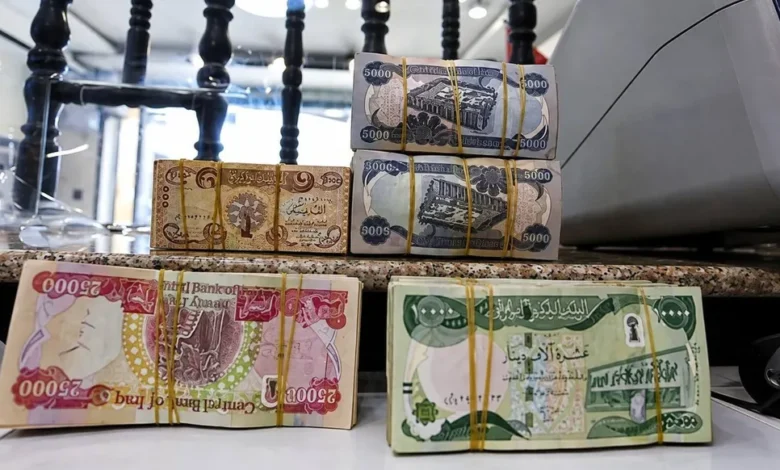
Last updated: October 1, 2026 The Independent - Iraqi government spokesman Haider al-Aboudi announced the arrival of a new shipment of cash dollars to Iraq, as part of the understandings reached with the United States regarding the continued sending of shipments of US currency to meet legitimate needs in the Iraqi market.
The Dollar In Iraq: The Government Announces The Arrival Of A New Cash Shipment
Last updated: October 1, 2026 The Independent - Iraqi government spokesman Haider al-Aboudi announced the arrival of a new shipment of cash dollars to Iraq, as part of the understandings reached with the United States regarding the continued sending of shipments of US currency to meet legitimate needs in the Iraqi market.
Al-Aboudi had previously confirmed that Prime Minister Ali Faleh al-Zaidi, during his visit to the United States, reached an understanding regarding the continued sending of cash dollar shipments to Iraq, in a move that the government said comes in conjunction with strengthening control measures over the distribution of foreign currency and regulating its use.
According to government statements, the understandings with the American side came in light of the measures taken by Iraq to reduce the misuse of foreign currency, in addition to the expansion of electronic payment systems and the gradual shift towards digital transactions.
Official authorities have not yet announced the value of the new shipment of cash dollars, while previous statements indicated that the aim of continuing these shipments is to provide the necessary liquidity to cover legitimate demands for foreign currency.
The shipment comes at a time when the Iraqi exchange market is witnessing continuous movements in the dollar exchange rate against the dinar, making the levels of cash liquidity and the size of the supply of the American currency among the issues that are widely followed in economic and banking circles.
The impact of the new shipment on liquidity levels and the movement of the exchange market is expected to become clear in the coming period, in conjunction with the continuation of governmental and banking measures aimed at regulating the trading of the dollar and strengthening control over its uses. https://mustaqila.com/الدولار-في-العراق-الحكومة-تعلن-وصول-شح/
Starting Next Week, Al-Taif Bank Announces Cash Withdrawals For Its Customers In The Provinces.
Shafaq News - Baghdad Al-Taif Islamic Bank of Iraq announced on Thursday that it has strengthened its branches in various governorates with cash and liquidity as part of the measures taken to regulate withdrawal operations and provide cash liquidity to customers.
In an official statement, the bank said that starting from the beginning of next week, the bank’s customers will be able to make withdrawals from the bank’s branches in the governorates according to specific and approved ratios, in order to ensure the organization and smooth flow of the disbursement process.
The statement confirmed that the process of replenishing branches with cash has already been completed, noting that procedures are ongoing to facilitate and organize withdrawals in a way that ensures the best possible smoothness for customers.
This statement comes with the confirmation by the management of Al-Taif Islamic Bank, represented by the Trustees Committee, on September 19th, that the ratios will be adopted in the near future to distribute depositors’ funds according to the balances available in the accounts in order to achieve the principle of fairness in distribution.
The Central Bank of Iraq had decided to place Al-Taif Islamic Bank for Investment and Finance under guardianship for 18 months, due to violations that it said affected the bank's financial position and depositors' funds.
The Central Bank stressed that imposing guardianship does not mean the bank’s bankruptcy, but rather comes within the framework of precautionary supervisory measures aimed at protecting the rights of depositors, noting that depositors’ funds are protected under the applicable laws and regulations.
Following this, a number of depositors demonstrated in front of Al-Taif Islamic Bank in the Karrada district of Baghdad, protesting the freezing of banking services and the suspension of withdrawal and deposit operations, following the measures taken by the Central Bank of Iraq against the bank.
Speaking to Shafaq News Agency, the protesters demanded an end to restrictions on banking services and that they be allowed access to their money and the ability to withdraw their deposits, stressing that their demands focus on receiving their money and not leaving it pending.https://www.shafaq.com/ar/مجتـمع/اعتبارا-من-ال-سبوع-المقبل-مصرف-الطيف-يعلن-السحب-النقدي-لزبا-نه-في-المحافظات
A Government Source: We Are Working To Stimulate Economic Activity And Protect Purchasing Power, And There Is No Decision Yet To Change The Currency Or Remove Zeros
Baghdad - One News A government source confirmed that the government is aware of the slowdown in buying and selling in the markets, and is working on solutions to stimulate economic activity and protect the purchasing power of citizens.
The source explained that the current economic challenges are not limited to Iraq, but are faced by most countries in the region due to regional tensions and the closure of the Strait of Hormuz and the resulting economic pressures and repercussions.
He pointed out that the government seeks to address internal obstacles and stimulate commercial and productive activity, in addition to facilitating financing for productive projects and supporting the private sector, with the aim of revitalizing market activity and driving the economy forward.
Regarding the talk circulating about changing the currency or removing zeros, the source reassured citizens that putting forward such proposals does not mean approving them or starting to implement them, stressing that the file is still in the initial discussion phase and no decision has been made about it yet.
He added that boosting confidence in the markets requires providing clear information and practical steps, in parallel with cooperation between the government, financial institutions and the private sector to alleviate pressures and improve economic activity.
The source called on citizens, merchants, and business owners to remain calm regarding circulating news and to rely on official information, particularly concerning currency, procedures, and economic policies.
https://1news-iq.net/مصدر-حكومي-نعمل-على-تحريك-النشاط-الاقت/
What Should I Do With Cash Sitting In My Bank Account?
What Should I Do With Cash Sitting In My Bank Account?
Published Sep 23, 2026 Sergei Klebnikov
Idle cash refers to money that is not invested, not needed for daily expenses and not reserved for future purchases. When cash sits uninvested and earns little yield, it loses purchasing power over time, especially during periods of inflation and rising costs. But putting idle cash to work doesn’t necessarily mean seeking the highest available yield.
What Should I Do With Cash Sitting In My Bank Account?
Published Sep 23, 2026 Sergei Klebnikov
Idle cash refers to money that is not invested, not needed for daily expenses and not reserved for future purchases. When cash sits uninvested and earns little yield, it loses purchasing power over time, especially during periods of inflation and rising costs. But putting idle cash to work doesn’t necessarily mean seeking the highest available yield.
The first step is understanding the role that cash plays in your financial life. Some dollars may need to remain immediately accessible for everyday expenses or unexpected needs. Others may be earmarked for a future purchase, tax payment or other known expense. And some cash may not have a near-term use at all.
Once you’ve identified what the money is for, you can consider the appropriate balance of accessibility, stability and return potential – along with factors such as risk, taxes, fees and withdrawal restrictions.
A useful starting point is to think about your cash as part of a broader liquidity bucket – the money you want available to support your lifestyle, provide a financial cushion, fund upcoming purchases or obligations, and preserve flexibility for opportunities that may arise. Once you’ve sized those needs, you can more clearly identify cash that may be available for longer-term investing.
Why leaving cash sitting in a bank account can be a problem
Keeping money in a bank account can often feel like a conservative choice when it comes to covering bills, managing day-to-day spending and keeping an emergency cushion. Having accessible funds for these purposes makes sense; the issue, though, is what happens when “extra” cash sits in a low-yield account for long stretches of time. Even if your balance doesn’t change, inflation can reduce what that money can buy over time (purchasing power).
But remember, “fixing” the problem of idle cash isn’t just about chasing the highest rates. Higher yield usually comes with trade-offs. Depending on the option, those trade-offs could be less convenience (extra steps to move money), more rules (limits on withdrawals or penalties for early access) or more price fluctuations. Different options offer different trade-offs with regard to accessibility, stability and return potential – which is why the right choice starts with understanding when and why you’ll need the money. Footnote 1 Opens overlay
“The conversation shouldn’t start with, ‘Where can I get the highest yield?’ It should start with, ‘What do I want or need this money to do for me?’ Once you understand the purpose and timing of your cash, you can make a much more thoughtful decision about where it belongs,” said Angelena Mascilli, Managing Director and Head of Wealth Management Banking.
There isn’t one universal best place to put cash. The better approach is to match the money – and where you store it – to your goals and timeline: Cash you may need soon typically calls for prioritizing accessibility, while cash you won’t need for a while may give you a chance to seek a higher yield, so long as you’re comfortable with the associated rules and risks.
Start by sizing your liquidity needs
Before deciding where to put your cash, start by determining how much liquidity you actually need. Rather than treating all of your cash as one pool, consider the different jobs you may need it to perform.
For example, your liquidity needs may include:
Operating cash flow: Money needed to cover regular day-to-day spending.
A financial safety net: Additional accessible funds that can help you manage unexpected expenses or simply provide greater peace of mind.
Known upcoming needs: Cash earmarked for taxes, a home purchase or renovation, tuition, travel, or another significant expense.
Opportunistic funds: Money you intentionally keep accessible so you can act when an investment or other opportunity arises.
There’s no universal amount that’s right for each category. Your appropriate liquidity level will depend on your spending, income, upcoming obligations, comfort level and broader financial plan. Once those needs are covered, you can identify whether you have excess cash that may be positioned differently.
Once you’ve identified how much liquidity you need and what each portion is for, time horizon becomes an important consideration in deciding where to hold it. Cash you may need on short notice generally calls for greater accessibility and stability, while cash with a more predictable or longer time horizon may offer additional flexibility.
Day-to-day (0–9 months): For cash you may need on short notice, prioritize accessibility and stability. This is money you need to be able to access quickly for near-term spending.
Reserve (9–18 months): For cash that you have the time and risk tolerance to invest. This money should still be available relatively easily, but you can also afford to direct it to more long-term options.
Strategic (18 months and beyond): For cash not needed in the short term, where you have greater flexibility in how it is positioned, depending on your goals and time horizon. Given the longer time horizon, you may be able to seek higher potential yields.
Day-to-day cash: Prioritizing accessibility and stability
For cash you expect to use in the near future, the priority is generally to keep it stable and readily accessible. Money market funds (MMFs) can be useful for day-to-day cash because they often offer higher liquidity with lower risk, not to mention generate income through interest (unlike a traditional savings account).
High-yield savings accounts (HYSAs) and bank money market deposit accounts are among the other options that may be appropriate for these needs. A key feature of both HYSAs and bank money market deposit accounts is that their rate can change over time. Annual percentage yields (APYs) may move up or down based on broader interest rate conditions or at the discretion of the financial institution. That makes it important to consider an account’s accessibility and overall features – not just its current rate.
These are also deposit accounts, which may come with Federal Deposit Insurance Corporation (FDIC) insurance (for banks) or National Credit Union Administration (NCUA) insurance (for credit unions), up to applicable limits and subject to eligibility. You may still want to confirm what is covered and how your balances are held, especially if you keep cash across multiple accounts. Footnote 2 Opens overlay
When evaluating where to hold cash you may need soon, consider factors beyond the headline rate, including:
Transfer speed: Understand how quickly you can access or move your money when you need it.
Withdrawal/transaction limits: Look for any restrictions that could affect flexibility when in a pinch.
Fees: Check for monthly maintenance fees and any charges for transfers or excess transactions.
Minimums: Make sure you can meet any opening deposit or minimum balance requirements needed to earn the advertised yield rate.
APY: Consider the current rate and whether it is likely to move frequently.
Customer support: Consider factors like customer service hours, mobile app quality and how easy it is to set up transfers.
Reserve Cash: Cds And T-Bills (How Laddering Can Keep Money Accessible)
Once you’ve identified cash that you’re unlikely to need immediately, you can begin considering solutions that may trade some day-to-day access for potentially higher yield. Depending on your time horizon and liquidity needs, certificates of deposit (CDs) and Treasury bills (T-bills) may enter the picture because they are built around defined time frames.
TO READ MORE: https://www.chase.com/personal/investments/learning-and-insights/article/what-should-i-do-with-cash-in-bank-account
Judy Shelton Joins The Treasury, Do We Have The Gold? Gold Destroys The Fed,The Golden Age
Judy Shelton Joins The Treasury, Do We Have The Gold? Gold Destroys The Fed,The Golden Age
X22 Report: 10-3-2026
Bessent brings on Judy Shelton to assist in transitioning the country to sound money.
Gold in the end will destroy the Fed.
Judy Shelton has joined the US Treasury Dept. as councilor to the Secretary.
Judy has spent decades thinking deeply about monetary policy, Sound money, gold and the architecture of the global financial system.
Judy Shelton Joins The Treasury, Do We Have The Gold? Gold Destroys The Fed,The Golden Age
X22 Report: 10-3-2026
Bessent brings on Judy Shelton to assist in transitioning the country to sound money.
Gold in the end will destroy the Fed.
Judy Shelton has joined the US Treasury Dept. as councilor to the Secretary.
Judy has spent decades thinking deeply about monetary policy, Sound money, gold and the architecture of the global financial system.
And now she is going to be assisting Treasury Secretary Bessent. Think about that.
Do we have the gold? Gold will destroy the Fed.
Trump is bringing us back to the constitution and sound money. They need to shift off of the old Federal Reserve petrodollar system and onto the new US dollar system based and backed by stablecoins for the transition. I do believe also backed by bitcoin and eventually gold.
When the time is right, the new financial structure is complete , and the transition has begun…I believe he will start the narrative and talk about Ft. Knox and asking “Do we have the gold” He is already setting it up and Judy Shelton will assist.
We are heading to a place where the whole system is about to change. We will be going from a debt system to a income system. An income system needs sound money. That is where it is headed….we will be entering the “Golden Age”
Reset Intelligence: IQD: The Currency of the New Babylon.
Reset Intelligence: IQD: The Currency of the New Babylon.
By Reset Intelligence | @EXIT_FIAT
On Tuesday the Abu Dhabi Securities Exchange switched Iraq's stock market into its cross-border trading network, where trades settle in local currencies. 103 Iraqi companies, valued at $21.7 billion, now sit inside a network holding over $1 trillion in listed value.
The next day Baghdad told its own public that buying and selling have slowed, and that deleting the zeros from the currency is under discussion with no decision taken.
Reset Intelligence: IQD: The Currency of the New Babylon.
By Reset Intelligence | @EXIT_FIAT
On Tuesday the Abu Dhabi Securities Exchange switched Iraq's stock market into its cross-border trading network, where trades settle in local currencies. 103 Iraqi companies, valued at $21.7 billion, now sit inside a network holding over $1 trillion in listed value.
The next day Baghdad told its own public that buying and selling have slowed, and that deleting the zeros from the currency is under discussion with no decision taken.
The link
The platform is called Tabadul. Abu Dhabi launched it in July 2022 so that a broker in any member market can trade shares listed in another, without the company listing twice and without a separate custodian. Iraq is the eighth market to go live on it, and two Iraqi brokerage firms already hold licences from the Emirates' market regulator to trade there. Abu Dhabi's exchange chief, Abdulla Salem Alnuaimi, said the move "gives investors a clear, straightforward path to trade Iraqi companies." The agreement behind it was signed in April 2025. A link like this sets no exchange rate, and nothing in the announcement names one.
Everything else that moved
The statement - a government source told the state news agency the government is aware of the slowdown in buying and selling and is working on measures to revive activity. On the zeros: deleting them means re-expressing prices, salaries, savings and debts at the same ratio, and "does not in itself mean reducing the real value of citizens' money." No decision has been taken, and anything approved will be announced officially first.
The street - the dollar finished Wednesday at 157,000 IQD per $100 in Baghdad, down from 157,500 on Tuesday, against the official 131,000. No arrival has been reported for the cash dollars promised last Saturday. From today, importers pay customs duties before their transfer leaves the bank.
The holdout - Kataib Hezbollah's secretary-general, Abu Hussein al-Hamidawi, said all armed groups "must halt all military operations and mobile logistical activities," keeping one exception for hostile aircraft. On the weapons talks with the Prime Minister: "It is better to start over to produce a solid agreement that safeguards everyone's rights."
Sadr - Muqtada al-Sadr dissolved the Promised Day Brigade, renamed his Mahdi Army as a foundation, and called for a public programme to put every weapon in the state's hands. Foreign Minister Fuad Hussein said the government's draft weapons plan will be presented "in the coming days."
Washington - the Pentagon called the departure from Erbil the "successful conclusion of the military mission that defeated ISIS in Iraq." Trump announced that "the last American Forces are leaving Iraq" and backed al-Zaidi by name. Iraq's oil income is still paid into the New York Fed.
Tehran - Trump said of Iran: "We blow them up or make a deal." Tehran says it has received Washington's formal reply to its 7-day ceasefire proposal. The rial is past 2.5 million to the dollar, and the US 30-year yield reached 5.63%, its highest since June 2002.
The question
Babylon was where the region's trade was once counted and settled, because outsiders trusted its records. This week an outside market agreed to settle Iraqi trades in IQD. Whether the IQD is being built to become the money the Middle East trades in is our opinion, and we say so.
That is the short version. What the link does and does not mean for the rate, the history behind it, and the one gate that still belongs to the Central Bank of Iraq - that is the daily read.
Read the full daily briefing free for 5 days. Sign up here: the daily Iraqi dinar briefing
Want it straight from the horse's mouth? The CBI Rate Alert pings you the moment the Central Bank of Iraq moves the official rate. The number itself, not a rumour about it. It comes with our free resource library and the daily breakdown of what is actually moving in Iraq. Sign up free: The CBI Rate Alert
Got a dinar question? Reset Intelligence runs an on-call research assistant: ask it anything they have published. It answers in seconds and will conduct deep research to find you the answer. Try it: the Iraqi dinar research assistant
Common questions, answered straight: When will the Iraqi dinar revalue? and Is the Iraqi dinar revaluation real?
The design behind all of it is mapped in Head of the Snake, and the free guides live in the Iraqi dinar resource library.
Follow the daily intel free: Telegram · Facebook · Spotify · Odysee
Iraq Economic News and Points To Ponder Thursday Afternoon 10-1-26
The New Iraqi Dinar: Changing The Currency's Design Without Removing Zeros
Last updated: October 1, 2026 Independent/- An informed source on the monetary file revealed that the Central Bank of Iraq is moving towards changing the design of the national currency and issuing a new edition that includes updates in the form and security elements, without affecting the nominal value of the dinar or resorting to the project of removing zeros.
The New Iraqi Dinar: Changing The Currency's Design Without Removing Zeros
Last updated: October 1, 2026 Independent/- An informed source on the monetary file revealed that the Central Bank of Iraq is moving towards changing the design of the national currency and issuing a new edition that includes updates in the form and security elements, without affecting the nominal value of the dinar or resorting to the project of removing zeros.
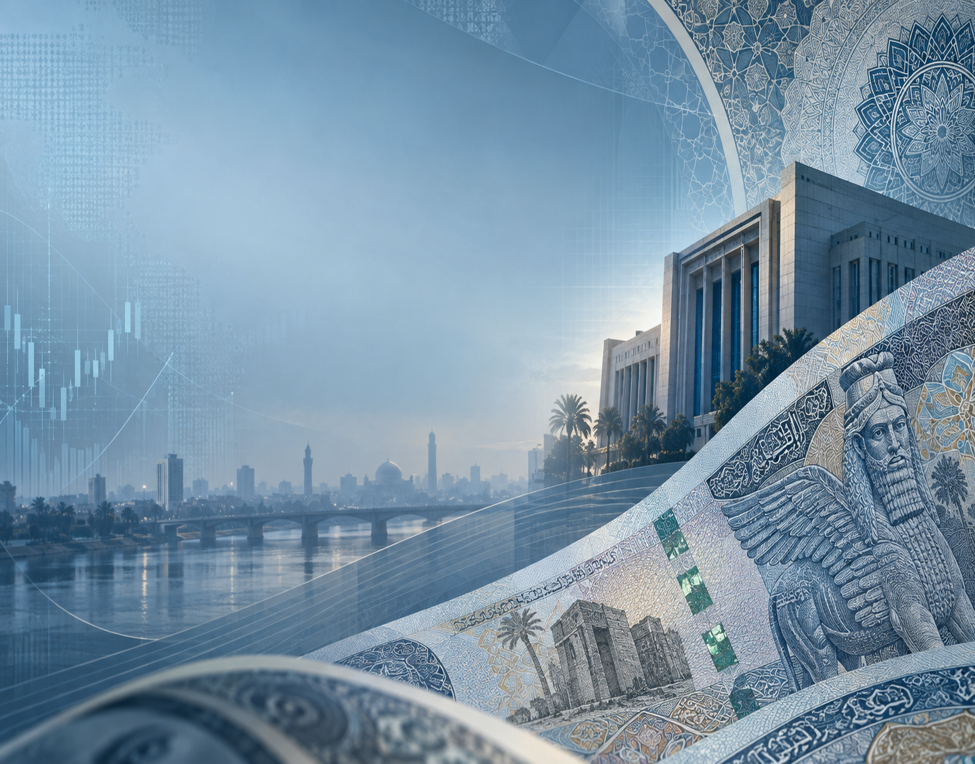
The source told Al-Mustaqilla on Thursday that the approach being studied within the bank is based on maintaining the current system of currency denominations and values, in exchange for redesigning banknotes and introducing security features and modern technologies aimed at raising the level of protection against counterfeiting and developing verification and tracking mechanisms related to the issuance of currency.
According to the source, the Central Bank has concepts and designs for the new currency, while the final procedures related to the required approvals and authorizations are still being completed, before moving to the implementation phases and officially announcing the details of the project.
The source indicated that the proposed approach does not include removing zeros from the Iraqi dinar, and that the Central Bank, according to available information, is not proceeding with a project to revalue the currency by reducing its nominal values, but rather focuses on updating the form of the circulating banknotes and their technical and security characteristics.
Changing the currency design, if approved, does not mean an automatic change in the dinar's exchange rate or the purchasing power of citizens, as the central bank can issue new print runs with the same nominal values, while keeping the old banknotes in circulation during a transitional phase before gradually withdrawing them according to a schedule determined by the monetary authorities.
This comes at a time when Iraq is witnessing renewed debate about the future of the dinar and the possibility of removing zeros. The Central Bank of Iraq officially denied on August 26, 2026, reports of printing a new currency with zeros removed, emphasizing that any such project, should it be decided upon in the future, would require multiple legal, regulatory, and technical stages before its implementation and announcement.
The Central Bank has also previously made changes to some denominations of the dinar without changing their nominal value. In previous years, it issued editions that included modifications to the design and some of the details and markings used on banknotes. This technically demonstrates that updating the currency's appearance does not necessarily mean changing the monetary system or the value of the dinar.
Banking experts believe that updating the currency design, if limited to replacing current banknotes with others bearing the same values, is radically different from the project to remove zeros. The former is a technical and monetary process that can aim to enhance security elements, combat counterfeiting, and improve the quality of banknotes, while removing zeros represents a broader project that affects accounting units and requires major legal, accounting, and banking arrangements.
Economic experts point out that introducing more advanced security technologies in banknotes can reduce the risk of counterfeiting and give banks and financial institutions a better ability to automatically verify cash, especially with the expanding use of counting and sorting machines and modern cash management systems.
On the other hand, experts warn that announcing any change in the currency’s design requires careful media management, because confusing a change in design with the removal of zeros and a change in the exchange rate could lead to market speculation or a rush by citizens to convert their savings into dollars or gold without economic justification.
They believe that the success of any future replacement process requires a sufficient transition period during which the old and new editions circulate together, along with a clear announcement of the replacement mechanism and the dates for withdrawing the old denominations, and a guarantee that no fees or losses will be imposed on cash holders.
The Central Bank itself affirms that any fundamental change related to restructuring currency denominations or removing zeros must go through legal, regulatory and technical stages, while granting citizens, banks and institutions a transition period that ensures the safety of the replacement process and preserves all financial rights and obligations.
The bank also affirms in its declared policy that currency management and issuance are carried out within the objectives of maintaining financial and monetary stability, warning against dealing with undocumented news related to printing money or currency management as final decisions before they are officially issued.
Information obtained by the Independent Press Agency indicates that the step, if the required approvals are completed, will be closer to issuing a new generation of Iraqi dinars in terms of form and security features, rather than launching a currency with a different value or implementing a project to remove zeros.
The final timing for introducing the new design and the mechanism for replacing the current banknotes remains linked to an official announcement from the Central Bank of Iraq, which has not yet published a decision that includes a specific date for introducing a new currency or approved images of its design.
Thus, according to the source, the proposed scenario is based on a clear equation: the dinar remains at its current values, the zeros remain as they are, while the design changes and new security technologies are added to the next version
https://mustaqila.com/الدينار-العراقي-الجديد-تغيير-شكل-العم/
Al-Moussawi Told Al-Maalomah: There Is No Final Agreement On Raising The Dollar Exchange Rate
Information/Baghdad.. MP Mukhtar Al-Moussawi confirmed on Thursday that there is no final agreement to raise the dollar exchange rate, while he pointed out that the country's economic situation requires a strategy that maintains the stability of food prices and keeps them away from speculation, as well as creating a strategic reserve that takes into account the tensions in the region.
Al-Moussawi explained to Al-Maalouma that “until this moment, there is no clear government decision pushing for an increase in the exchange rate, especially since the dollar exchange rate in the parallel market witnessed a rise a few days ago exceeding 160,000 dinars per 100 dollars, while the official exchange rate is 132,000 dinars per 100 dollars. Consequently, this difference is being exploited for speculation and profit by some.”
He pointed out "the necessity of having a government strategy to reconsider the dollar exchange rate in a way that maintains market stability and prevents speculation and the exploitation of the difference by some to make profits," noting that "regional tensions compel us to demand the necessity of having a strategic reserve of food supplies to ensure stability and reassurance, and to prevent some unscrupulous individuals from exploiting any tensions that occur to raise prices under many pretexts and excuses."
Al-Moussawi stressed that “reconsidering the dollar exchange rate is extremely important during the coming period, especially with the current crisis, while maintaining the stability of food prices.” End 25
Seeds of Wisdom RV and Economics Updates Thursday Afternoon 10-1-26
Good Afternoon Dinar Recaps,
GLOBAL TRADE RESET WATCH: G20 MOVES TOWARD COORDINATED ACTION ON CHINA'S EXCESS STEEL CAPACITY
Twenty-eight economies have agreed on a framework to address global steel overcapacity, potentially reshaping trade protections, industrial supply chains, and the movement of goods across international markets.
Good Afternoon Dinar Recaps,
GLOBAL TRADE RESET WATCH: G20 MOVES TOWARD COORDINATED ACTION ON CHINA'S EXCESS STEEL CAPACITY
Twenty-eight economies have agreed on a framework to address global steel overcapacity, potentially reshaping trade protections, industrial supply chains, and the movement of goods across international markets.
OVERVIEW
Twenty-eight economies agreed to the Milwaukee Framework to address excess global steel production and market distortions.
The framework encourages stronger trade investigations, possible tariffs, reduced subsidies, and greater transparency in steel imports.
The development signals growing coordination over industrial trade policy, with potential consequences for manufacturers, supply chains, and international commerce.
Key Developments
1. A New Framework for Steel Trade
On September 30, the OECD-led Global Forum on Steel Excess Capacity adopted the Milwaukee Framework, chaired by the United States. The agreement calls for coordinated action to address excess production and its effects on steel industries.
2. Tariffs and Trade Investigations in Focus
The framework encourages participating economies to consider anti-dumping, anti-subsidy, and safeguard investigations that may lead to additional duties. It also promotes sharing import data to help identify where steel is produced and prevent tariff circumvention. These are coordinated policy measures, not a guarantee that all members will impose identical tariffs.
3. China at the Center of the Debate
China, the world's largest steel producer, is central to concerns about excess capacity. Chinese officials and other critics of restrictive trade measures have disputed claims that industrial policies justify protectionist responses. The framework's implementation will therefore depend on national decisions and how trade partners respond.
WHY IT MATTERS
Steel is a foundational material for construction, infrastructure, transportation, energy, and manufacturing. Changes in tariffs and subsidies can influence production costs, investment decisions, and the routes goods take through international supply chains.
Coordinated trade measures could support some domestic producers while increasing costs for companies that rely on imported steel. The overall effect will depend on how policies are implemented and whether other countries respond with additional trade restrictions.
WHY IT MATTERS TO FOREIGN CURRENCY HOLDERS
Trade policy can influence currencies through export revenues, import costs, investment flows, and economic growth. If new barriers reshape trade between major economies, businesses may adjust where they manufacture, source materials, and invest.
For foreign currency holders following the Global Financial Reset, this is a development to watch—not proof of a currency revaluation. It highlights how governments are reconsidering the rules governing production, trade, and economic dependence.
IMPLICATIONS FOR THE GLOBAL RESET
Pillar 1: Trade
Greater coordination on steel could change market access and supply-chain decisions, particularly for economies that depend heavily on steel exports or imports.
Pillar 2: Assets
Steel tariffs and trade uncertainty may affect industrial companies, infrastructure projects, and investment decisions. The impact will vary across producers, manufacturers, and steel-consuming industries.
Pillar 3: Debt
If trade restrictions raise construction and infrastructure costs, some projects could become more expensive to finance. The scale of any effect will depend on tariff coverage, market conditions, and the availability of alternative suppliers.
THE BOTTOM LINE
The Milwaukee Framework marks a move toward more coordinated responses to global steel overcapacity, but its real-world impact will depend on what participating economies actually implement.
The bigger story is not simply where steel is produced—it is how governments are reshaping the rules of trade, investment, and supply chains as the global financial system continues to evolve.
Seeds of Wisdom Team
Newshounds News™ Exclusive
Sources
Reuters — “Steel forum calls for more tariffs, fewer subsidies to fight excess capacity”
OECD — “2026 Ministerial Meeting of the Global Forum on Steel Excess Capacity”
~~~~~~~~~~
Seeds of Wisdom Team RV Currency Facts Youtube and Rumble
Newshound's News Telegram Room Link
RV Facts with Proof Links Link
RV Updates Proof links - Facts Link
Start Here room with Most Asked Questions Link
Follow the Gold/Silver Rate COMEX
Follow Fast Facts
Seeds of Wisdom Team™ Website
Thank you Dinar Recaps
Coffee with MarkZ, joined by Bob Lock. 10/01/2026
Coffee with MarkZ, joined by Bob Lock. 10/01/2026
MarkZ Disclaimer: Please consider everything on this call as my opinion. Be sure to consult a professional for any financial decisions
MZ: Iraq looks forward, discusses currency changes, Iran and Bob Lock joins us to take questions.
THE CONTENT IN THIS PODCAST IS FOR GENERAL & EDUCATIONAL PURPOSES ONLY&NOT INTENDED TO PROVIDE ANY PROFESSIONAL, FINANCIAL OR LEGAL ADVICE. PLEASE CONSIDER EVERYTHING DISCUSSED IN MARKZ’S OPINION ONLY
Coffee with MarkZ, joined by Bob Lock. 10/01/2026
MarkZ Disclaimer: Please consider everything on this call as my opinion. Be sure to consult a professional for any financial decisions
MZ: Iraq looks forward, discusses currency changes, Iran and Bob Lock joins us to take questions.
THE CONTENT IN THIS PODCAST IS FOR GENERAL & EDUCATIONAL PURPOSES ONLY&NOT INTENDED TO PROVIDE ANY PROFESSIONAL, FINANCIAL OR LEGAL ADVICE. PLEASE CONSIDER EVERYTHING DISCUSSED IN MARKZ’S OPINION ONLY
https://rumble.com/user/theoriginalmarkz
Kick: https://kick.com/theoriginalmarkz
Markz's linktree https://linktr.ee/theMarkZshow
FOLLOW MARKZ : TWITTER . https://twitter.com/originalmarkz?s=21. TRUTH SOCIAL . https://truthsocial.com/@theoriginalm...
Mod: MarkZ "Back To Basics" Pre-Recorded Call" for Newbies 10-19-2022 ) https://www.youtube.com/watch?v=37oILmAlptM
MARKZ DAILY LINKS: https://theoriginalmarkz.com/home/
THANK YOU FOR JOINING. HAVE A BLESSED DAY. SEE YOU IN THE MORNING FOR COFFEE @ 10:00 AM EST ~ UNLESS BREAKING NEWS HAPPENS! FOR UPDATES ON MARK’S PODCAST GO TO: https://t.me/+b3hYhYlhKM1hYzcx
Ariel: Are you all Ready for What is about to Occur?
Ariel: Are you all Ready for What is about to Occur?
10-1-2026
The Seal Has Broken: Gold Shall Return (Field Report)
Judy Shelton Treasury Insertion, Iraq’s 170 Tons, and the Coming Gold-Backed Fiscal Reset
Are You All Ready For What Is About To Occur?
Sit down and grab a snack.
Ariel: Are you all Ready for What is about to Occur?
10-1-2026
The Seal Has Broken: Gold Shall Return (Field Report)
Judy Shelton Treasury Insertion, Iraq’s 170 Tons, and the Coming Gold-Backed Fiscal Reset
Are You All Ready For What Is About To Occur?
Sit down and grab a snack.
The timing of Judy Shelton’s entry into Treasury as Counselor to the Secretary is the loudest quiet move of 2026. This woman spent forty years writing the intellectual architecture for a gold-backed dollar her 2018 Fox op-ed “A Case for Monetary Reform” was effectively a blueprint nobody in a Paul Volcker Fed building wanted to read.
Her 2020 Senate confirmation was stalled by Romney, Murkowski’s wobble, and a coordinated whisper campaign out of Brookings monetary-policy fellows who called her “unqualified” a woman who’d worked at the Fed’s institutional memory bank itself, authored “The Coming First World Debt Crisis” and “Fixing the Dollar Now,” and ran the European Bank for Reconstruction and Development.
She was blocked precisely because she knows where the bodies are buried: the fictional reserve counts, the rehypothecation chains, the paper-gold Ponzi run out of London. Now she sits inside the building.
The Iraq gold is the fulcrum everyone’s missing. 170 tons that’s roughly 15-20 billion at current prices, but the tonnage matters more than the dollar figure because tonnage is physical, and physical is what the Basel boys can’t print. Iraq has been quietly accumulating for a decade, moving from roughly 79 tons pre-2014 to this current hoard, second-largest in the Arab world behind Saudi Arabia.
I could be off on the numbers but you get the point. What’s not in any press release. A significant portion of that gold settled in Baghdad vaults as ‘sovereign’ holdings not IMF-collateralized, not leased through the BIS, not encumbered by the World Bank structural adjustment paper that’s smothered Iraq since Bremer’s Coalition Provisional Authority rewired their economy in 2003 to dollar-dependence.
The U.S. troop withdrawal wasn’t an exit; it was the removal of the cabal’s occupation lever. With American forces gone, Tehran-aligned extraction networks and the CIA’s Baghdad Station assets lost their physical cover. Maliki’s Iranian proxies and the Qatari-cutout funding channels that kept Iraq’s cabinet in permanent gridlock for eight months are now starved of their occupation-era justifications.
Fort Knox is the other side of this pincer, and Trump’s audit demands were never campaign theater. The last genuine audit was 1953 Eisenhower-era, pre-Bretton Woods collapse and the 1974 congressional visit where members held gold bars was a photo-op; they saw one compartment of thirteen, were not allowed serial-verification or drilling, and the comptroller’s report itself noted the Treasury could not physically confirm holdings. The actual bar count sits with the U.S. Mint, but encumbrance status whether those bars are leased out to bullion banks via the Exchange Stabilization Fund has never been verified.
Here’s the intel that isn’t public: Treasury’s European counterparts, the German Bundesbank repatriation of 2013-2017 (300 tons returned from New York, and the Fed returned melted, recast bars not the original serials) revealed the NY Fed vault holds German-labeled metal that appears to have been temporarily unavailable.
That pattern gold that exists on paper but is physically “out on loan” is the systemic rot the Fort Knox audit threatens to expose. Shelton’s counsel role means when the audit happens, the person designing the verification methodology spent decades anticipating every trick the bullion banks would use.
Read Full Article:
https://www.patreon.com/Prolotario1/posts/seal-has-broken-171052602
https://dinarchronicles.com/2026/09/30/prolotario-are-you-all-ready-for-what-is-about-to-occur/
Thursday Iraq News Posted by Tishwash at TNT 10-2026
TNT:
Tishwash: Trump: We are leaving Iraq with a great prime minister there.
The US President announced Donald Trump On Wednesday, the international coalition announced the end of its military presence in Iraq.
He said Trump In a statement followed Alsumaria News"I am pleased to announce that the last American troops are leaving."Iraq Today,” he said, adding, “We are leaving Iraq with a great prime minister there.”
TNT:
Tishwash: Trump: We are leaving Iraq with a great prime minister there.
The US President announced Donald Trump On Wednesday, the international coalition announced the end of its military presence in Iraq.
He said Trump In a statement followed Alsumaria News"I am pleased to announce that the last American troops are leaving."Iraq Today,” he said, adding, “We are leaving Iraq with a great prime minister there.”
He added that "the departure of coalition forces and their equipment from Erbil Air Base This represents the end of a military presence that began years ago,” he noted, adding, “I had the choice to stay in Iraq or leave, and I decided that the time had come for Americans to return home.”
He continued, "I set a clear mission, gave our leaders the tools to complete it, and refused to allow a temporary presence to become permanent," noting that "this is a great day for America, a victory for the United States and Iraq, and a decisive victory over the organization."ISIS He confirmed that "
the withdrawal of forces and equipment from Erbil It is carried out in an organized manner, unlike the withdrawal process from Afghanistan" link
Tishwash: Coordination framework: Ending the occupation is a national achievement, but sovereignty is incomplete without liberating the economy.
Ali al-Zubaidi, a member of the Coordination Framework, affirmed on Wednesday that the evacuation of American forces and the end of their military presence represents a national achievement and a long-overdue entitlement, given the record of catastrophic crimes and violations committed by the occupation army since 2003.
He stressed that the restoration of national sovereignty will remain incomplete unless the withdrawal is accompanied by ending the financial dependence on American hegemony and regaining full control over Iraqi airspace.
Al-Zubaidi told Al-Maalouma News Agency that “the American presence was and still is the root cause and basis for the crises and setbacks that have plagued Iraq throughout the past two decades,” explaining that “Washington possesses a military destruction machine capable of overthrowing regimes by brute force, but it has proven a resounding failure and complete inability to manage the state, which has plunged the country into systematic chaos and enabled the occupation to exploit Iraqi airspace, along with the airspace of neighboring countries, to carry out repeated attacks against Iran in flagrant violation of international laws.”
He added that “the American military withdrawal is an urgent and deserved step, but it requires the government to complete the pillars of sovereignty by liberating the economic and financial decision from the restrictions and hegemony of the American Federal Reserve,” noting that “talk of the return of sectarian conflict or the outbreak of a civil war after the departure of the occupier is nothing but misleading promotion and a losing bet that is refuted by the reality of the cohesion and coexistence of the established mujahideen and intermarriage among all segments of the Iraqi people, and that any tensions that may arise are limited to narrow political squabbles and conflicts only.”
Earlier, Mu'in al-Kadhim, a member of the Coordination Framework and former MP, affirmed that the Islamic Resistance in Iraq played the largest and most fundamental role in forcing the American occupation forces to leave Iraqi territory, emphasizing the rejection of any attempts to maintain foreign forces under any name or new pretext. link
************
Tishwash: Foreign Minister: The plan to restrict weapons will be presented in the coming days.
Foreign Minister Fuad Hussein said that the government's plan to restrict weapons will include specific timelines for implementation, noting that the deadline for its completion will be in June of next year.
The Ministry of Foreign Affairs’ media office stated in a statement that “the Atlantic Council in the American capital, Washington, hosted on Wednesday, the Minister of Foreign Affairs, Fuad Hussein, in a dialogue session entitled ‘Iraq after September 30,’ moderated by Victoria Taylor, Director of the Iraq Initiative and the Syria Project at the Council.”
He added that “the dialogue addressed the latest political and security developments in Iraq and the region, the prospects for Iraqi-American relations, the future of security cooperation, and efforts to combat the ISIS terrorist organization.”
He continued: “He also discussed Iraq’s position on regional conflicts, the impact of sanctions imposed on Iran on Iraq and its economic relations, as well as the Iraqi government’s efforts to restrict weapons to the state and to deal with the issue of armed factions.”
In this context, the minister explained, according to the statement, that “the Iraqi government has prepared a draft plan to restrict weapons to the state, which is scheduled to be presented in the coming days, and will include specific timeframes for its implementation,” noting that “the Prime Minister announced that the final date for completing the plan will be in June of next year.”
He added that “the dialogue also touched on border security and developments in Syria and their repercussions on Iraqi national security, in addition to discussing opportunities to strengthen economic relations between Iraq and the United States, and encouraging American companies to invest in Iraq, which would contribute to expanding the prospects for economic and trade cooperation between the two countries. link
Nine ministerial portfolios are up for grabs... Political moves to resolve the agency issue in Baghdad
Next week will witness intense political activity among political forces to resolve the issue of nine ministerial portfolios that are still being run by acting ministers in the government of Prime Minister Ali al-Zaidi, most notably the Ministries of Interior and Defense.
These anticipated moves come after multiple meetings held by the coordination framework over the past two weeks, which resulted in tangible progress and understandings to overcome obstacles and develop a final roadmap, in preparation for setting a date for a special session of the House of Representatives to vote on the new candidates.
Nine ministerial portfolios await resolution
In this context, Coordination Framework member Uday Abdul Hadi revealed in a press statement on Wednesday that next week will witness action to resolve the issue of nine ministerial portfolios in Prime Minister Ali al-Zidi’s government that are still being run by acting ministers, including two security ministries.
Abdul-Hadi explained that “the past two weeks witnessed multiple meetings within the coordination framework and with the rest of the political forces, in order to develop a roadmap to resolve the issue of candidates for nine ministerial portfolios, especially the security ministries, referring to the Ministries of Interior and Defense.”
“Tangible progress”
He pointed out that “there is tangible progress, and therefore next week will witness greater and broader activity in terms of meetings and consultations, in order to determine the roadmap that is being agreed upon, leading to setting a date for holding a session of the House of Representatives to vote on the candidates for the nine portfolios.
Abdul-Hadi added that “some complications have been agreed upon to be overcome, and therefore next week will be very important, and we expect progress to be made towards the possibility of agreeing on a date for a session of the House of Representatives.” link
*************
Tishwash: “One basket” is Al-Zaydi’s way to fill the vacancies: a discussion with Al-Maliki to resolve the issue
An informed government source revealed a proposed mechanism to complete the government cabinet in the event that political agreement cannot be reached on candidates for the vacant ministries or their distribution among the political forces, coinciding with a visit by the head of the State of Law Coalition, Nouri al-Maliki, to Prime Minister Ali al-Zaidi to discuss the same issue.
The source was briefed on the details of the inability to finalize the candidates for the vacant ministries, including the security ministries (Interior and Defense), and the continued state of disagreement between the political forces and leaders.
According to him, this will push towards passing the candidates according to the “single basket” mechanism, to complete the government cabinet headed by Ali al-Zidi, who was authorized by most of the political forces to choose whomever he sees fit for the vacant ministries.
The mechanism will also include the positions of deputy prime ministers, in order to avoid a political veto, given that the Kurdish forces have not yet agreed on who should hold the position of deputy prime minister, whether it belongs to the Kurdistan Democratic Party or the Patriotic Union of Kurdistan, according to the source.
In a related context, Prime Minister Ali al-Zaidi received Nouri al-Maliki, head of the State of Law Coalition, and discussed with him the importance of continuing understandings and dialogues between national political forces to complete the formation of the government, as well as supporting the government’s efforts in combating corruption, achieving reforms, and consolidating stability.
In addition, the government source pointed out that “the coordination framework, after the conclusion of the celebrations marking the withdrawal of US forces from the entire country, will appoint a delegation to visit the Kurdistan Region to decide on the identity of the second deputy prime minister, in addition to the candidates for the ministries that fall within the Kurdish share in the federal government.
According to the source, the government cabinet will be completed after the conclusion of the Sovereignty Day ceremonies and events, noting that a televised speech by the Prime Minister on behalf of Iraq will be broadcast on this occasion, and this matter was discussed in previous meetings of the coordination framework.
On May 14, the Iraqi parliament voted to approve Ali al-Zaidi's government and its ministerial program, including 14 ministers. Voting on the remaining nine ministries was postponed until further notice due to ongoing political disagreements over the distribution of portfolios, amid reports of international warnings against including armed factions in the new cabinet.
Since then, the coordination framework has authorized Prime Minister Ali al-Zaidi to make contacts with the heads of the political blocs and entities participating in the government, whose candidates for the vacant ministries have not yet been decided up to the time of writing this report. link
News, Rumors and Opinions Thursday 10-1-2026
GP Q: Iraq’s Date with Destiny
10-1-2026
IRAQ — DATE WITH DESTINY
1 October 2026
Iraqi Sovereignty Day.
Inside a government window running 30 September through 3 October, Baghdad is marking the end of the US-led Coalition combat mission. Iraqi institutions hold security and national decisions. Cooperation continues as a bilateral partnership, not a coalition command.
GP Q: Iraq’s Date with Destiny
10-1-2026
IRAQ — DATE WITH DESTINY
1 October 2026
Iraqi Sovereignty Day.
Inside a government window running 30 September through 3 October, Baghdad is marking the end of the US-led Coalition combat mission. Iraqi institutions hold security and national decisions. Cooperation continues as a bilateral partnership, not a coalition command.
This is a political and security milestone. It is not a new dinar rate, and it is not a banking decree. Those files move on Central Bank of Iraq and Ministry of Finance timelines — not on a holiday calendar.
Mark the date. Hold the distinction. A new official rate exists only after a Central Bank decision and a public announcement.
Facts first. Official announcements second. Rumours last.
Sources
Shafaq — Sovereignty Days as the Coalition mission ends:
https://shafaq.com/en/Iraq/Iraqi-leaders-mark-Sovereignty-Days-as-Coalition-mission-ends
Shafaq — four-day holiday for Sovereignty Days:
https://shafaq.com/en/society/Iraq-declares-four-day-holiday-for-Sovereignty-Days
Iraqi News — security forces mark Sovereignty Day:
https://iraqinews.com/iraq/iraqi-security-forces-mark-sovereignty-day-as-us-forces-leave/
Iraqi News Agency — mission conclusion announced:
https://ina.iq/en/politics/52455-commander-in-chief-of-the-armed-forces-announces-official-conclusion-of-global-coalition-mission-to-combat-isis-in-iraq.html
Cabinet of Iraq: https://cabinet.iq
Central Bank of Iraq: https://cbi.iq
Watch on X: https://twitter.com/i/status/2105427275928018971
Source(s):
• https://x.com/argosaki/status/2105427275928018971
https://dinarchronicles.com/2026/09/30/gp-q-iraqs-date-with-destiny/
************
Courtesy of Dinar Guru: https://www.dinarguru.com/
Reset Intelligence The coalition that arrived in 2014 closes its mission today, with the last soldiers gone since Sunday. On Tuesday, the day before that deadline, Iraq's Council of Ministers voted through...the law that puts the Popular Mobilization Forces on the same footing as every other state security agency - Service terms. Ranks. Retirement. Compensation for the families of the fallen. Al-Zaidi's office referred it to parliament the same evening...Kataib Hezbollah, the faction that refuses every version of the deal, announced it will monitor Iraqi airspace from Thursday and bring the government down if the ban on Iranian flights holds.
Jeff The 30th was the agreed upon date for the US troops to be out. We're at the point at which the troops are out and have exited Iraq. Iraq is now shifting gears. They're preparing to go international ...Everything critical is happening at the same time after the point at which US troops are out. They're being declared sovereign...You guys are extremely close to the rate change...
Mnt Goat On October 22, 2025 the CBI told us they planned to issue a 20 dinar note as one of the newer lower denominations, also even though they never issued a matching 20,000. They now plan to launch that 20,000 note too at this time and this is yet another sign to us that these three zero notes, once they are taken out of “public” circulation, will still be useful and used for very large cash transactions of dinar for inter-banking and international transactions only. This also reinforces once again that our dinars, outside of Iraq, that we investors now hold, will remain valid and will be exchanged at the going rate... Example: a 20,000 three zero dinar note may fetch a whopping 80,000 US Dollars in the exchange to US dollars if the US rate on FOREX comes out at $4.00.
Emailed to Recaps: ( Real or AI?)
Susan Kokinda Q: Jim Rickards says Trump plans to unlock a $150 trillion trust fund hidden for 161 years. The wealth transfer no one’s talking about won’t be televised. It’s moving quietly into digital assets, commodities, and emerging markets. Only a few are positioned.
Watch on X: https://x.com/SusanKokindaQ/status/2105421523980828796/video/1
************
Wed. Evening News with MarkZ. 09/30/2026
9-30-2026
Iraq celebrates the end of the coalition…The celebrations go 4 days and end Sat.
Iraq Economic News and Points To Ponder Thursday Morning 10-1-26
Iran Central Bank Chief Dismisses Currency Concerns Over Essentials
2026-09-30 Shafaq News- Tehran Iranian Central Bank Governor Abdulnaser Hemmati said on Wednesday there were “no concerns” over securing the foreign currency needed to import medicines and essential goods.
Speaking on the sidelines of a meeting of the Economic Commission of the Iranian parliament, Hemmati stressed that ensuring access to basic needs was among the central bank’s top priorities.
Iran Central Bank Chief Dismisses Currency Concerns Over Essentials
2026-09-30 Shafaq News- Tehran Iranian Central Bank Governor Abdulnaser Hemmati said on Wednesday there were “no concerns” over securing the foreign currency needed to import medicines and essential goods.
Speaking on the sidelines of a meeting of the Economic Commission of the Iranian parliament, Hemmati stressed that ensuring access to basic needs was among the central bank’s top priorities.
Responding to US Treasury Secretary Scott Bessent’s claim that “the Iranian economy will collapse within two weeks,” Hemmati invoked a Persian proverb: “Chickens are counted at the end of autumn,” meaning that outcomes should be judged after they materialize rather 000 tomans on Iran’s open market on Tuesday than in advance.
The remarks came as the US dollar surpassed 250,000 tomans on Iran’s open market on Tuesday.
Earlier, the US Treasury Department sanctioned 10 individuals and entities for allegedly helping Iran’s Defense Ministry procure weapons and components through networks spanning several countries.
https://shafaq.com/en/Economy/Iran-central-bank-chief-dismisses-currency-concerns-over-essentials
Oil Prices Drop On Rising US Inventories
2026-10-01 Shafaq News Oil prices fell 1% on Thursday as recovering crude exports from the Gulf and a surprise rise in US inventories eased supply concerns, while investors weighed renewed US-Iran diplomatic efforts to end their conflict in the Middle East.
Brent crude futures fell 1.1% to $96.92 a barrel by 0420 GMT, and US West Texas Intermediate crude dropped 1.4% to $89.18 a barrel.
Both benchmarks rose about $1 a barrel on Wednesday. Brent recorded a monthly gain of around 14% in September, its biggest since July, while WTI increased by about 5% on the month.
"Oil's near-term bias remains negative as recovering shipments from the Gulf region, resumed Saudi exports through Yanbu and a buildup in US inventories ease supply concerns," said Sugandha Sachdeva, founder of SS WealthStreet, a New Delhi-based research firm.
Saudi Arabia resumed oil tanker loadings from Yanbu, Reuters reported on Tuesday, after earlier restarting operations on its East-West Pipeline.
Meanwhile, US crude inventories rose by 922,000 barrels to 427.3 million barrels in the week ended September 25, the Energy Information Administration said, compared with expectations in a Reuters poll for a 264,000-barrel draw.
"Renewed US-Iran diplomatic engagement could further reduce the geopolitical risk premium, although a breakthrough remains uncertain," Sachdeva said.
Iran said on Wednesday it had received a US response to its latest proposal to resurrect the collapsed ceasefire in the Gulf.
US President Donald Trump denied reports by Axios and CNN, however, that cited US officials as saying he was willing to give Iran sanctions relief and release frozen Iranian funds in return for "concrete" steps by Tehran on its nuclear programme.
Goldman Sachs estimates Gulf oil exports, including "dark exports" involving ships operating with their location transponders turned off, have recovered to 23.3 million barrels per day over the last week, in line with their 2025 average, as exports doubled in September, it said in a note on Tuesday.
Also, OPEC+ oil-producing countries are likely to keep their oil production targets steady for November when they meet on Sunday, two people with knowledge of the matter told Reuters. (REUTERS)
https://shafaq.com/en/Economy/Oil-prices-drop-on-rising-US-inventories
Basrah Crudes Retreat Alongside Global Decline
2026-10-01 03:23 Shafaq News- Basrah Iraq’s Basrah crude prices fell by less than 1% on Thursday, tracking a broader decline in major global oil benchmarks.
Basrah Heavy crude fell to $73.12 per barrel, down 0.79%, while Basrah Medium crude slipped to $76.42 per barrel, a decline of $0.58, or 0.75%.
Brent crude edged lower to $96.92 per barrel, losing 1.1%. US West Texas Intermediate (WTI) crude also declined, falling 1.4% to $89.18 per barrel.
OPEC’s basket fell by $2.22 to $109.53 a barrel, a decline of 1.99%.
https://shafaq.com/en/Economy/Basrah-crudes-retreat-alongside-global-decline-8
USD/IQD Falls In Baghdad And Erbil
2026-10-01 Shafaq News- Baghdad/ Erbil The US dollar opened Thursday’s trading lower in Iraq, hovering around 156,900 dinars per 100 dollars.
According to a Shafaq News market survey, the dollar traded in Baghdad’s Al-Kifah and Al-Harithiya exchanges at 156,850 dinars per 100 dollars, down from the previous session’s 157,250 dinars.
In the Iraqi capital, exchange shops sold the dollar at 157,250 dinars and bought it at 156,250 dinars, while in Erbil, selling prices stood at 157,000 dinars and buying prices at 156,900 dinars.
https://shafaq.com/en/Economy/USD-IQD-falls-in-Baghdad-and-Erbil
Gold Prices Fall In Baghdad, Erbil Markets
2026-10-01 Shafaq News- Baghdad/ Erbil On Thursday, gold prices hovered around 915,000 IQD per mithqal in Baghdad and Erbil markets, according to a Shafaq News market survey.
Gold prices on Baghdad's Al-Nahr Street recorded a selling price of 920,000 IQD per mithqal (equivalent to five grams) for 21-carat gold, including Gulf, Turkish, and European varieties, with a buying price of 916,000 IQD. The same gold had sold for 930,000 IQD on Wednesday.
The selling price for 21-carat Iraqi gold stood at 890,000 IQD, with a buying price of 886,000 IQD.
In jewelry stores, the selling price per mithqal of 21-carat Gulf gold ranged between 920,000 and 930,000 IQD, while Iraqi gold sold for between 890,000 and 900,000 IQD.
In Erbil, 22-carat gold was sold at 970,000 IQD per mithqal, 21-carat gold at 926,000 IQD, and 18-carat gold at 794,000 IQD.
https://shafaq.com/en/Economy/Gold-prices-fall-in-Baghdad-Erbil-markets-0-8
Al-Taif Bank To Resume Percentage-Based Withdrawals
2026-10-01 Shafaq News- Baghdad Depositors at Iraq's Al-Taif Islamic Bank will be able to withdraw part of their funds starting next week under a percentage-based payout system, nearly a month after the central bank placed the lender under guardianship, the bank said on Thursday.
Withdrawals will be capped at fixed percentages to keep payouts orderly. Branches across the country have already received cash, with further steps under way to ease access.
The percentages will be based on the balances available in each account, a measure the committee running the bank announced on September 19 to ensure fair distribution.
A Month Under Guardianship
The Central Bank of Iraq (CBI) placed Al-Taif Islamic Bank for Investment and Finance under guardianship for 18 months on September 2, citing violations that had damaged the bank's financial position and depositors' funds. Acting CBI Governor Nizar Nasser Hussein appointed Imad Mohammed Hamad to run it.
The move froze banking services and halted all withdrawals and deposits. On September 6, depositors protested outside the bank's branch in Baghdad's Karrada district, demanding access to their money.
The CBI has insisted the bank is not bankrupt, calling the guardianship a precautionary step to protect depositors. Most deposits at Al-Taif are guaranteed, according to Hussein, and the central bank would step in to cover any shortfall.
Under a phased plan announced by the CBI on September 8, withdrawals and other obligations are being settled gradually, with salary payments given priority.
https://shafaq.com/en/Economy/Al-Taif-Bank-to-resume-percentage-based-withdrawals