
Envelope Planning
.Envelope Planning
By Muhammad Ali
You're probably thinking, what the heck is that?
It's an idea that I suggested to my group here in Malaysia and I think it's great idea for those who want to take their planning to the next step.
Once you have entered all of your exchange plans into my Currency Exchange Planner software, this is the next logic step that can help you further get a clearer picture of your overall financial portfolio.
So how does this work, Muhammad?
You categorized your allocation of currency based upon your exchange plans. So let's see an example and then things will be more clear.
Below is a sample exchange plan from one of my group members. What he has done is made 16 envelopes and he put the required amount of currency in each labeled envelope based upon the amounts from his exchange planner.
Envelope Planning
By Muhammad Ali
You're probably thinking, what the heck is that?
It's an idea that I suggested to my group here in Malaysia and I think it's great idea for those who want to take their planning to the next step.
Once you have entered all of your exchange plans into my Currency Exchange Planner software, this is the next logic step that can help you further get a clearer picture of your overall financial portfolio.
So how does this work, Muhammad?
You categorized your allocation of currency based upon your exchange plans. So let's see an example and then things will be more clear.
Below is a sample exchange plan from one of my group members. What he has done is made 16 envelopes and he put the required amount of currency in each labeled envelope based upon the amounts from his exchange planner.

Remember that everyone's plans will be different, kind of like fingerprints, it's specific to each person. In this example, the person is holding Iraqi Dinar, Iranian Rial and Zimbabwe Dollar, you can substitute these for any other currencies you are holding, including Dong or Rupiah but just follow the logic flow of the example.
1. First RV exchange to secure Team (1 note IQD)
2. Pay current debts (1 note IQD)
3. Buy a house with land (40 notes x IRR)
4. Open a Private Bank account (10 notes x IRR)
5. Bank Investments (40 note iqd, 40 notes x IRR)
6. Farming/Agriculture business (15 notes x IQD)
7. Plan B - Precious Metals (50 notes x IRR)
8. Entertainment & Travel (2 notes x ZIM 100T)
9. Charity project 1 (15 notes x IQD 15 notes x IRR)
10. Charity project 2 (1 note x ZIM 100T)
11. Miscellaneous purchases (5 notes x IRR)
12. Family In-laws gifting (10 notes x IQD)
13. Taxes and expenses for 10 years (1 note x ZIM 100T)
14. Currencies to Exchange 5 years later (15 notes x IQD, 15 notes x IRR)
15. Basket 2, 3, 4 Reserve fund (5 notes x IRR)
16. Top up (If no RV as yet, buy more)
This particular Dinarian is holding quite a variety of currencies, may be you have less or may be you have more. The important aspect of all this, is this kind of creative thinking and planning will be what is required to keep you from losing your money in the future. I cannot stress how important money management is.
This Dinarian even allocated 1 envelope (#14) for currency to be exchanged in 5 years time, meaning that if he runs into any financial difficulties due to Sudden Wealth Syndrome (SWS), he still has back up currency to bail him out.
He also allocated taxes and expenses for 10 years (#13) and (#15) he allocated currencies that can used to buy more currencies for the upcoming baskets. Wasn't that very clever?
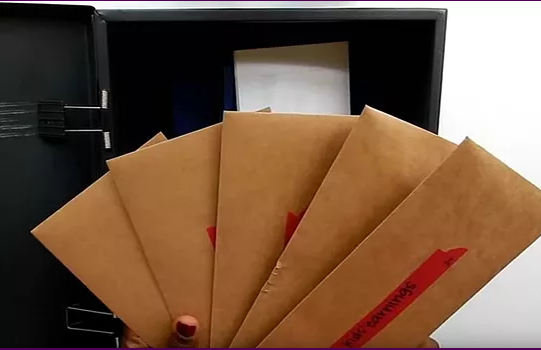
For those who are visually oriented, this kind of creative thinking and exchange planning will be right up your alley and even if you're not you may still be able to benefit from it.
And very important, once you are done, make sure you put those envelopes in a bank safety deposit box or home safe box, but some place secure.
I hope my article has sparked some creative thinking and opened up new ways to help you plan your exchange. Remember our ultimate goal is to be in the 30% group of those who will not suffer from SWS. This requires learning and education and whatever else it takes, let's get it done.
Thanks for reading my article, as a token of thanks here is a $5 off promo code that you can use at the checkout for any of my CEP products. (code: Article5).
Thank you and I wish you all the success in your currency exchange.
Muhammad Ali
www.CurrencyExchangePlanner.com
Do's and Don'ts When You Increase Your Income
Do's & Don'ts When You Increase Your Income
2 Things You Should Do (and 1 You Shouldn’t) When You Increase Your Income
Team Member Blog, Consumerism to Frugalism
Most of you would like to increase your income.
Whether you’re looking to make a career move, change companies, start a business, or simply move up in your current situation, making more money is likely one of the major factors in your job decisions.
Here at Money Saved is Money Earned, we know money isn’t everything and you shouldn’t live just for money. However, we also know that money plays a major factor in your ability to live the way you want.
Do's & Don'ts When You Increase Your Income
From the Recaps Archives originally posted on 7/11/2019
2 Things You Should Do (and 1 You Shouldn’t) When You Increase Your Income
Team Member Blog, Consumerism to Frugalism
Most of you would like to increase your income.
Whether you’re looking to make a career move, change companies, start a business, or simply move up in your current situation, making more money is likely one of the major factors in your job decisions.
Here at Money Saved is Money Earned, we know money isn’t everything and you shouldn’t live just for money. However, we also know that money plays a major factor in your ability to live the way you want.
While we should live within our means, most people would make very different choices if money wasn’t an option. Having said that, money should never be the end goal.
What’s really at the heart of the drive for more money is the desire for more freedom and power: over our life and the choices we make about it, as well as our ability to influence the world in the ways we care most about.
Money is nothing more than the means to an end.
Unfortunately, most of us will not win the big lottery, start a billion dollar company, or inherit millions. This means that while our incomes may increase over time that increase will likely be gradual, and may come in the form of step or merit-based raises, bonuses, or commissions.
However, most people find themselves spending money as fast as they make it, gradual increase or not.
With these points in mind, what SHOULD you do if you find your income increasing?
Luckily, we’re here to help.
Here are 2 things you should do when you increase your income and 1 you shouldn’t.
Things You SHOULD Do :
Pay off Debt
We know we play this tune like a broken record, but paying off your debt as fast as you can is one of the most effective ways of having Money Earned through Money Saved.
In fact, paying off debt is second only to not accruing debt in the first place!
The reason paying off debt as soon as possible is so impactful is because of interest.
Essentially, any loans you have you will pay interest on, which gives the lender extra incentive for loaning the money in the first place.
The trick with paying off debt at a faster pace than your loan term lies in the fact that any extra you pay goes directly toward the loan balance and not to interest.
Thus, making extra payments lowers your overall balance, which lowers the interest paid, which lowers the total amount you will pay to the lender.
Depending on the size of the loan and how much extra you put toward it, the impact on the total you pay can be quite astounding.
For instance, making extra payments on a mortgage could save you upwards of $30,000 in interest and several years on the life of the loan!
Not only does paying down your debt help you to save on interest and shorten the life of the loan, having less debt helps you maintain financial flexibility.
Say your car dies and you need another one, or you get in an accident (heaven forbid) and have medical bills. What if you get laid off or get sick and need to miss work?
If your debt to income ratio is maxed out you’ll be hard-pressed to get more credit no matter how great your credit score is or how much you make.
This is why it’s so important to focus on paying down any debt you do have as fast as possible and to try and keep it paid down. Not only will you be saving on interest and getting out from under loans faster, you’ll be able to handle any unknowns that may come up that could require you to accrue more debt.
Long story short, if you increase your income one of the first things you should do with that money is to pay down your debt.
To continue reading, please go to the original article at
What Is Your Lifestyle After The RV?
.What Is Your Lifestyle After The RV?
By Muhammad Ali
I have been getting many questions about investing after RV and creating a steady stream of income so that you can have a work free lifestyle.
So I made this post for you all to think wisely and have the opportunity to top up your currency as required before the RV.
After the RV, the perfect scenario is: we do not want to work. We want to have our money work for us.
So we need to invest our money into places that will not run away with our money nor be shut down by corrupt/greedy CEO. No more money games!!!!
So the best and safest avenue will be thru the banks.
What Is Your Lifestyle After The RV?
By Muhammad Ali
I have been getting many questions about investing after RV and creating a steady stream of income so that you can have a work free lifestyle.
So I made this post for you all to think wisely and have the opportunity to top up your currency as required before the RV.
After the RV, the perfect scenario is: we do not want to work. We want to have our money work for us.
So we need to invest our money into places that will not run away with our money nor be shut down by corrupt/greedy CEO. No more money games!!!!
So the best and safest avenue will be thru the banks.
Just last week, I met with the manager of BIMB investments a subsidiary of a local bank in Malaysia, we met at my house. We had a 3 hour discussion of the BIMB investment program; this was our second meeting actually.
And I really like their programs and their results. This program is open to Singaporeans and foreigners from any country.
Their present returns have been around 11% per annum. This is very good.
So I want you to think carefully about this and ask yourselves this question.
How much do I need to lock-in, in order to generate a monthly/yearly income that I can live off of comfortably?
So for everyone, that answer will be different. Some will want to live like a King while others a few thousand a month will contend you.
Ok let's put some numbers down on paper then you can see.
Let's say, for example, we want to live a millionaire’s lifestyle, this means we need at least $1,000,000 per year to live on. We can pay all of our expenses, we can travel anywhere we want, we can buy anything we want and we can live very comfortably. (Large house, which includes maid, gardener, personal driver etc.)
So how much do we need to invest with the bank to generate $1 million per year?
So let's say we can get 10% return, we will need $10,000,000 invested.
Now what this means is:
We will actually need more than $10 million from our currency exchange after the RV.
$6,000,000 to open a private bank account
$3,000,000 to buy a new 10 bedroom house with renovations, new car and clothes.
$1,000,000 to pay off all current debts and pay to our charities.
(These amounts may be overestimated - depends on each person's debt capacity)
And then $10,000,000 for investing.
So that means we would need at least $20,000,000 after RV.
Now, no bank can guarantee a yearly return of 10% it would all depend on the markets. So you may need to have multiple investment accounts with various banks to generate your 10% per year.
So for example, let's say you had a principal amount of;
$10,000,000 invested at BIMB giving you a yearly average of 5%
$10,000,000 invested at HSBC giving you a yearly average of 5%
If the banks made more money for you, then bonus!
Total is 10% giving you, your $1,000,000 per year profit to live off this money, roughly about $83,000 per month.
So this also means you never touch your principal and you have money flowing in every month.
And if you think you'll need more than $1,000,000 a year, then you'll need to invest higher amounts.
If you want to live a simpler lifestyle, then you will invest smaller amounts.
What is important to note, is that this kind of investing will give you a work free lifestyle.
Is it making sense?
Another option is this can also be done by investing in a business or restaurant. But remember when you operate a business, you need to monitor it, you will have expenses, overhead, employees, a lot of the head aces that comes with running a business.
So if that is what you want then by all means you can work towards it. Work is the keyword. You will not have a work free lifestyle.
Ideally if you want that kind of working lifestyle and if you have enough currency after RV, then you may want to consider doing both, investing with the banks and to open a business.
This way if the business is down, you still have money coming in from your banking investments.
YOUR PRIORITY IS TO FIND A WAY TO HAVE MONEY FLOWING IN, THIS IS WHAT YOU HAVE TO THINK VERY, VERY CAREFULLY, RIGHT NOW.
If money is always flowing out and you have no money flowing in, then sooner or later the money will finish and then you will find yourselves with no money and you’re out looking for a job.
So it's very important you plan from now and have good money management.
The above examples that I made are based on 1 particular lifestyle, you can adjust the lifestyle as you require and therefore adjust the investing amounts. It's all up to you.
I know exactly what I want and I have bought enough currency for the lifestyle that I choose.
By now, you all know the estimated rates for IQD, Rial and Zim. Calculate how much your estimated net worth will be.
Use my currency exchange planner spread sheet and it will help you calculate your Net Worth very easily.
Once you see the numbers then you will know whether you have enough currency to maintain that lifestyle.
And if you don't have enough currency then find money and top up while you still can.
You will never have this opportunity again, for some of you, you have been buying currency.
For some of you, you are holding 4 or 5 notes.
Think wisely and make sure you have enough currency to create a work free lifestyle.
My Currency Exchange Planner has an Investment tab that you can enter in 3 investment risk types. High Risk, Medium Risk and Low/No Risk investments. You can put in estimated amounts and percentages and see how much income you can generate per year and per month. This is the first step to your planning a steady income stream.
Once you know your lifestyle then you know what amount of income that you need to generate every month.
Now, regardless of your lifestyle, we want to try and target 10% profit per annum (year) from your investments.
Maybe you'll be lucky and get higher than this, like 15%-20%. Consider this a bonus or maybe you'll even get lower than 10%.
But 10% per annum is our target. Now we have think, how will we achieve this?
Some investments will lose money and some will do better than others. This is where you need an investment plan B.
So just this line alone tells you not to put all your eggs (investments) into one basket (one bank).
You need to diversity.
Here is my personal investment strategy after RV. I hope you pay close attention.
I will put my money in several avenues to give me several types of yield.
1. High risk investments
2. Medium risk investments
3. No risk investments
4. Agriculture
For now, I will exclude number 4.
For example, let's say $10,000,000 is my investment allocated amount.
My target is 10% per year so this gives me $1,000,000 per year divide by 12 months = $83,000 per month to cover my expenses.
So now going back to 1, 2 and 3.
You need to determine how to classify the investment as high risk, medium risk and no risk. Now, how much of the $10 million i will divide into no. 1, no. 2 and no. 3? This question requires a lot of careful thought.
If you can afford to invest $10 million it means you have at least another $10 million in your bank account so you should also consider compounding the profits over 4 to 5 years before taking any profits. Let the money grow first, then starting the 6th year, start taking out your monthly profits.
For the first 1-5 years, control your spending and money out flow as you won't have money flowing in right away so you need to control the spending.
There are many articles available on compounding just do a search in Google and you’ll quickly be able to see the power of compounding.
So i hope my article helps you to plan your investments.
Any questions please send me an email to currencyexchangeplanner@gmail.com
I am the creator of the currency exchange planner, an excel spread sheet, which is the most advanced and affordable planning tool for the dinar community.
Try the free download version to test run or buy the full version for a one-time low price of $25. This includes free updates in the future.
My website is www.currencyexchangeplanner.com
Thank you so much, Muhammad Ali
8 Insights Only the Self-Made Super Wealthy Understand
.From the Dinar Recaps Archives originally posted on 6/3/2019
Billionaire Ken Fisher Shares 8 Insights Only the Self-Made Super Wealthy Understand
Wonder what it's really like to strike it rich? Billionaire Ken Fisher explains the perspectives of the self-made wealthy.
BY KEVIN DAUM Inc. 500 entrepreneur and best-selling author@KevinJDaum
Not all entrepreneurs are in it for the money, but gaining wealth is certainly among the top motivators for company building. Not surprisingly, having great wealth brings it's own unique responsibilities and circumstances that few get to experience first hand.
I recently had the privilege of interviewing billionaire Ken Fisher, founder, chairman, and CEO of Fisher Investments, best-selling author, Forbes magazine columnist, and No. 225 on the Forbes 400.
Fisher provided a candid, no-holds-barred look at the perspective of the self-made super wealthy.
Here are his insights.
From the Dinar Recaps Archives originally posted on 6/3/2019
Billionaire Ken Fisher Shares 8 Insights Only the Self-Made Super Wealthy Understand
Wonder what it's really like to strike it rich? Billionaire Ken Fisher explains the perspectives of the self-made wealthy.
BY KEVIN DAUM Inc. 500 entrepreneur and best-selling author@KevinJDaum
Not all entrepreneurs are in it for the money, but gaining wealth is certainly among the top motivators for company building. Not surprisingly, having great wealth brings it's own unique responsibilities and circumstances that few get to experience first hand.
I recently had the privilege of interviewing billionaire Ken Fisher, founder, chairman, and CEO of Fisher Investments, best-selling author, Forbes magazine columnist, and No. 225 on the Forbes 400.
Fisher provided a candid, no-holds-barred look at the perspective of the self-made super wealthy.
Here are his insights.
1. It isn't pursuit of wealth, but pursuit of passion that creates wealth.
Focusing on money won't likely get you to the Forbes list like Fisher. He aptly states: "Most people don't get super wealthy by accumulating money. They get super wealthy by following some dream they are passionate about, whether its starting and running a business, or being a rock star musician or a visual entertainer."
He points out that most of the super wealthy overshoot their personal goals, and yet they are still driven by their passion. The super wealthy know that if you pursue your passion, the money will come.
2. After a certain monetary threshold, the desire isn't for more wealth, but more time.
There is very little that the super wealthy cannot buy. As the wealth keeps accumulating, spending becomes less of a joy or ambition. "After a certain point," Fisher explains, "there isn't much more you can think of that you want."
What becomes more desirable is time to enjoy life. "The vacation homes, cars, boats, and wardrobes are just more stuff to deal with." Fisher observes. "All that stuff clutters your time usage, so at a certain point, the wealthier you get the more you covet time."
3. Everyone you've known forever (except your spouse) will think you've changed.
There is a common belief that wealth changes everyone, and not always for the better. Fisher says, "Only you will know that you haven't changed; that passionate drive to follow dreams does not change."
Fisher explains it this way: "Everyone's perceptions of change are as though they are seeing the clock at a few different hour points in your evolution, as opposed to seeing it as a continuous sweeping minute hand that doesn't change."
To continue reading, please go to the original article here:
How To Move Money After The RV
.How To Move Money After The RV
By Muhammad Ali
This article I wrote for my group here in Malaysia. Most of the information pertains to Malaysians and Singaporeans, however, the general concept of moving money can apply to anyone, anywhere.
For some of you, after the RV, you will have hundreds of millions of RM (Ringgit Malaysia) or Dollars and for security reasons you may want to park your funds in several banks in several countries.
For example, you may have an account in Malaysia, Singapore and Brunei, as well as have an IBC (International Business Center) in Labuan.
As the English express goes, don't put all your eggs in one basket.
Diversification of your money in other countries or in other currencies (as in multi-currency accounts) may be a very good thing to do.
How To Move Money After The RV
By Muhammad Ali
This article I wrote for my group here in Malaysia. Most of the information pertains to Malaysians and Singaporeans, however, the general concept of moving money can apply to anyone, anywhere.
For some of you, after the RV, you will have hundreds of millions of RM (Ringgit Malaysia) or Dollars and for security reasons you may want to park your funds in several banks in several countries.
For example, you may have an account in Malaysia, Singapore and Brunei, as well as have an IBC (International Business Center) in Labuan.
As the English express goes, don't put all your eggs in one basket.
Diversification of your money in other countries or in other currencies (as in multi-currency accounts) may be a very good thing to do.
If you kept all of your money in Malaysia Ringgit and the Ringgit takes a dive and drops considerably in value, this may affect your net worth. So having money in Canadian Dollars, Australian Dollar, Singapore Dollar etc., might be a wise thing to do.
I will particularly focus on those living in Malaysia and Singapore.
As it is today, banks from one country to another do not share account details with each other, unless you are an American citizen or you have committed a crime.
So what this means, if you are in Malaysia, and you park some funds in Singapore, your Singapore bank will not reveal nor inform Malaysia.
So that's the first thing as to why we want to put money in other countries.
Now if you have an account in Singapore and you want to move money to Malaysia or Canada or any other country. Here are several ways you can do so.
1. Bank to bank transfer. From your account in Singapore, you can transfer to any bank account in any country.
2. When you open your account in Singapore you will receive a debit/ATM card, in which you can withdraw funds from any ATM in any country of the world.
3. You can use the money changers to move money across the border. Let's say you have money in Singapore and you want to move $250,000 SGD to Malaysia. Go to a money changer with the cash or transfer to their bank account and tell them you want to pick up the money in Malaysia.
The money changer will give you a pick up code and the location in Malaysia to pick up the money. So then you travel across the border hassle free and then you can pick up the money in Malaysia.
4. You can take out large sums of money from Singapore ATMs and then just drive over the border with the cash in your pockets but do not travel over via any public transport methods for example, bus, train, flight as the money will be detected thru travel scanners.
Ok, why am I sharing this information, as I said, for some of you, you will have hundred's of millions of RM or SGD after RV. You will be considered ultra-high-network individuals. You need to understand and keep all your options open and make it part of your exchange plan.
Taking money across the border is usually limited to about $10,000 USD for most countries. Singapore it is $20,000 SGD. If you are searched and found with money above this amount you will be charged and/or fined for not declaring the amount you have brought over the legal amount.
Why do we not want to declare? When we have nothing to hide? That is the question. The reason why we don't want to declare is because at the checkpoint or border they will make you fill in a form with all of your personal details, name, passport number, home address etc.
This information will be put into a computer system and printed paper versions left in the immigration systems and office with public access to your personal details by immigration officers.
So this is why, if we want to move money, we do it without declaring via the above methods.
Now let's say it's already RV and you want to take you 100 notes bundle of Iranian Rials (10 million Rials) over to Singapore to exchange at HSBC Singapore.
But you are scared to travel with that large amount of money. Or for some of you guys who are overseas and I am holding your currency and you want to come to Malaysia and then bring your currency back to your country to exchange.
Now this becomes difficult because the value of the Rial now has increased and way above the $10,000 limit to fly back with.
There is another solution to this problem. You would take your currency to a local bank (in Malaysia) and ask to exchange the currency to SKR. (Safe Keeping Receipts) the bank will exchange the currency at the current rate but not deposit the money into your account but will give an SKR for the amount.
Now you can travel safely with the SKR, these are just paper receipts and non-trackable at the airports or border crossings.
When you arrive to your home country you take the SKR to your bank, and they will convert it to your local currency and deposit to your account.
So this is how you can move your Dinar, Rial or Zim after the RV, without any worries at the border.
I hope my article brings awareness and helps you to if you plan on moving money across borders.
Any questions please send me an email to currencyexchangeplanner@gmail.com
I am the creator of the Currency Exchange Planner, an excel spread sheet, which is the most advanced and affordable planning tool for the Dinar Community.
Try the FREE Download version to test run or BUY the full version for a One-Time low price of $25. This includes free updates in the future.
My website is www.CurrencyExchangePlanner.com
Thank you so much, Muhammad Ali
https://www.currencyexchangeplanner.com/article-5-how-to-move-money
Finding a Financial Advisor or Planner
.From the Recaps Archives, originally posted on 6/3/2019
Finding a Financial Advisor or Planner
By Troy Segal Updated Jun 3, 2019
If it's ever occurred to you how complex and vital 'getting it right' is when it comes to saving, investing, maximizing the value of your wealth and planning for a safe, comfortable retirement, you've probably asked yourself if you should employ a financial planner or advisor.
Similarly, if you've felt the pressure of deciding on a big investment, such as a home or education—or felt overwhelmed with the financial details after a wedding, the birth of a child, divorce, death of a spouse, or major illness—you've probably wondered about finding someone to advise you.
From the Recaps Archives, originally posted on 6/3/2019
Finding a Financial Advisor or Planner
By Troy Segal Updated Jun 3, 2019
If it's ever occurred to you how complex and vital 'getting it right' is when it comes to saving, investing, maximizing the value of your wealth and planning for a safe, comfortable retirement, you've probably asked yourself if you should employ a financial planner or advisor.
Similarly, if you've felt the pressure of deciding on a big investment, such as a home or education—or felt overwhelmed with the financial details after a wedding, the birth of a child, divorce, death of a spouse, or major illness—you've probably wondered about finding someone to advise you.
Services of Advisors and Planners
According to a 2019 CNBC and Acorns Invest survey, over a third of Americans don't have a good understanding of what a financial advisor actually does. That figure balloons to 46% for Millennials.
So what kind of services do financial advisors and planners provide? Broadly, they can help you manage your financial life using a variety of strategies and products to both manage your wealth and improve your financial habits.
Types of Financial Advice
Not all financial advisors are the same. Some specialize in certain practice areas, types of clients, income levels, investment strategies, and products. Some work with clients all over the country, while others focus on clients in their town.
Some can help you with your taxes, insurance needs, or estate planning and others will focus on retirement planning. There are advisors for the younger client and some specialize on retirees. You can find a planner to help with life stages planning, estate distribution strategies, and business planning.
From managing every aspect of your personal or business financial life to simply suggesting directions, there are specialized professionals available to help.
Reasons to Seek Financial Advice
You may need an advisor for many reasons. For example, perhaps you just received a considerable sum of money from a relative who died or a windfall from the state lottery. As a person goes through different stages in life, their need for a financial professional will change.
erhaps you just had a baby and want to ensure their future in case the worst happens. Many parents seek help for college savings for children and setting up estates that can convey wealth to future generations.
The approach to investing at or during retirement is different than that of a young worker. As you near retirement your risk tolerance level will change, and your style of investing should change as well. Perhaps your company is offering a too-good-to-resist early-retirement package, and you want to make sure the money lasts.
Any of these events (and many others) could naturally trigger the desire for some professional help in managing your financial affairs.
To continue reading, please go to the original article here:
https://www.investopedia.com/updates/find-financial-advisor-planner/
.Private Banking and Private Bankers
.Philanthropy 101
Giving money away can be just as complicated as making it.
Private bankers help spread the wealth.
Private bankers help clients to guard their wealth; they also hold their hands when it’s time to give some of it away.
“Many times clients are interested in donating, but they don’t really have the people to sit down and have a dialogue with,” says Nicholas Stonestreet, head of Trust & Wealth Structuring at Merrill Lynch International Private Client Group. “It’s a really important part of private banking.”
Stonestreet encourages his staff to ask clients about their philanthropic intentions. Like therapists exploring personal problems, charity experts at private banks can help donors think through their altruistic inclinations and motives.
From the Dinar Recaps Archives originally posted on 6/4/2019
Philanthropy 101
Giving money away can be just as complicated as making it.
Private bankers help spread the wealth.
Private bankers help clients to guard their wealth; they also hold their hands when it’s time to give some of it away.
“Many times clients are interested in donating, but they don’t really have the people to sit down and have a dialogue with,” says Nicholas Stonestreet, head of Trust & Wealth Structuring at Merrill Lynch International Private Client Group. “It’s a really important part of private banking.”
Stonestreet encourages his staff to ask clients about their philanthropic intentions. Like therapists exploring personal problems, charity experts at private banks can help donors think through their altruistic inclinations and motives.
Will the client get more out of giving while still alive or after death? Some may want a foundation to carry on their legacy forever; others may want the bequest spent out at some point.
The tax implications of giving are a frequent concern. Though the U.S. leads the world in tax breaks for charitable giving, other countries are catching up.
In recent years the U.K. has improved its Gift Aid plan, introduced in 1990 to allow charities to reclaim basic-rate tax (now 22%) on one-time cash donations of at least £250 ($390), by eliminating the minimum amount and allowing income tax deductions to those donating stock.
This year Canada indefinitely extended legislation that halves to 25% the amount of capital gain subject to tax for gifts of public securities made directly to charities.
Private bankers will help structure a donation to maximize the writeoff, selecting the best asset and even seeing to the completion of the transaction. Sometimes an offshore trust is advantageous for tax or other reasons; private banks have always known the score there.
As philanthropy becomes more widespread on the giver end, so too are receivers becoming more active. Banks can set up a screening service for pleas and proposals from would-be beneficiaries.
To continue reading, please go to the original article here:
4 Steps to Make Your Money Last a Lifetime
.From the Dinar Recaps Archives originally posted on5/30/2019
4 Steps to Make Your Money Last a Lifetime
By Jane Bryant Quinn, AARP Bulletin
A simple, easy-to-use formula to make sure you never run out of cash
As a financial columnist, I get asked the same heartfelt question over and over: “How do I make sure I don’t outlive my money?” And that makes sense. Surveys confirm that the No. 1 worry among older Americans is running out of cash.
Fortunately, financial planners have come up with sound ways to prevent this. Collected here are their key rules for maintaining a livable income for life, plus case studies that show how to put these general rules into action. The goal is your peace of mind — knowing that you’re getting the most from the money you’ve saved and that you’ll always have enough.
From the Dinar Recaps Archives originally posted on 5/30/2019
4 Steps to Make Your Money Last a Lifetime
By Jane Bryant Quinn, AARP Bulletin
A simple, easy-to-use formula to make sure you never run out of cash
As a financial columnist, I get asked the same heartfelt question over and over: “How do I make sure I don’t outlive my money?” And that makes sense. Surveys confirm that the No. 1 worry among older Americans is running out of cash.
Fortunately, financial planners have come up with sound ways to prevent this. Collected here are their key rules for maintaining a livable income for life, plus case studies that show how to put these general rules into action. The goal is your peace of mind — knowing that you’re getting the most from the money you’ve saved and that you’ll always have enough.
The Magic Number
The key to long-term planning is knowing one essential number: how much money you can afford to spend annually. From there, you can adjust your expenses to fit.
You may be tempted to reverse the order — estimate your future expenses, then adjust your investment assumptions to make that spending appear possible. But that’s wishful thinking: a hope that big investment returns will rescue your budget. It leads to overspending early on, and regret later.
Instead, let’s focus on the real, guaranteed money you’ll have. There are two main sources:
Your personal savings and investments.
Your guaranteed income from other sources.
Download this worksheet to help you find your sustainable income. The key steps:
Step 1: Tally Your Guaranteed Income
The most common source is Social Security, which you may already be collecting. (If you’re not, get an estimate by calling Social Security or by opening a My Social Security account at ssa.gov.) You might also have a pension or annuity.
If you own a reliable rental property, include the amount of rent you receive after expenses.
To continue reading, please go to the original article here:
https://www.aarp.org/retirement/retirement-savings/info-2018/make-money-last-lifetime.html
Possible Bank Perks to ask for at your Exchange Apt.
.From Dinar Recaps Archives
Possible Bank Perks to ask for at your Exchange Appointment .
AUM - Assets Under Management
1. No fees ever for foreign currency exchanges
2. Provide a Private Banker/Wealth Manager at the time of exchange to initially park the funds in an non-interest-bearing account overnight and sweep those funds into other non-interest bearing accounts within your bank the following day; until I meet with bank advisers and other financial professionals and make some general guidelines for the management of these funds and the distribution of a portion of these funds through your bank, trust, and LLCs.
From Dinar Recaps Archives
Possible Bank Perks to ask for at your Exchange Appointment.
AUM - Assets Under Management
1. No fees ever for foreign currency exchanges
2. Provide a Private Banker/Wealth Manager at the time of exchange to initially park the funds in an non-interest-bearing account overnight and sweep those funds into other non-interest bearing accounts within your bank the following day; until I meet with bank advisers and other financial professionals and make some general guidelines for the management of these funds and the distribution of a portion of these funds through your bank, trust, and LLCs.
3. Family Office Services
4. Perks can be based on AUM (Assets Under Management) in a tier grid
5. Discounts on AUM fees
6. No fees ever - no fee to deposit/wire transfer money
7. No Broker fees ever
8. Free Safe Deposit Box, Certified Checks, Notarized, Courier Services
9. Provide Excess Deposit Insurance (i.e. Lloyds of London and/or Travelers) or Abbott Downing
10. Provide Senior Wealth Managers/Investment Bankers for selection
11. Tax/Business/Estate Attorney & CPA
12. Private transactions representation –assistance in buying a house/car/anything ( my trustee will purchase through my bank) 13.
Free Due Diligence Services provided for outside investment opportunities(research on any person or service) they will get it
14. 100% funding availability (immediate Funds) before we leave
15. Unlimited Platinum or Black Visa Signature Debit & Credit Card with no ATM fees
16. Line of Credit available
17. Group Health Insurance - to cover the signers and families of depositors
18. Guarantee 12-15% interest per year on deposits
19. Bank Trading Platforms & Repurchase Agreement Sweep Accounts
20. Short Term/High Yield Interest Rates
21. Assist in opening an offshore bank account with affiliate bank for foreign investments
22. Access to information on great investment opportunities
23. Pre-IPO deals
24. Provide free Executive Privacy Plus subscription with Reputation.com
25. Sports tickets in suites and on the floor (Football, Basketball, Baseball, Boxing, Tennis, Golf, NASCAR & etc.) Also, special events like the Super Bowl, NBA Finals, College Bowls, NCAA Final Four, World Series &the Olympics. Based on AUM in a tier grid
26. Entertainment & Concert tickets in suites and on the floor (Music Concerts, Entertainment Awards Shows, Premier Movie Screenings, TV Show tickets & etc.) Based on AUM in a tier grid
27. Limousine & VIP transportation based on AUM in a tier grid
28. Private Jet Travel (5-25 flight hrs. per mo.) based on AUM in atier grid on flight hours per month
29. First Class seats/commercial airlines based on AUM in a tier grid
30. Private Yacht access/usage (40 hrs. annually) based on AUM in a tier grid on access/usage hours per year
31. Donations to our favorite charities (Banks matching a certain percentage)
32. Prime seats at charity events
33. Suites at Luxury Hotels & VIP Dinners at Restaurants based on AUM
34. Membership fee & Annual fees to Inspirato Core resorts & residences
35. Membership fee & Annual fees to Exclusive Resorts & Residences for 60 days with Priority Holiday Access annually
36. ClubCorp Private Membership based on AUM
37. Spa & Massage Club Membership based on AUM in a tier grid
38. Concierge Services 24/7 based on AUM
39. Provide a free Vertu Ti cell phone & concierge subscription service for members with $1 million and over AUM
40. Free Family Financial Education provided for group family members
41. Provide any and all other perks that was not mentioned
Possible Exchange Apt. Checklist and Tips
.From Dinar Recaps Archives:
Note: All items on the checklist may or may not apply to your own individual circumstances…some of the items listed may or may not still be applicable at your exchange apt....ask your banker at the time of your appointment.
Bank appointment for Currency EXCHANGE Instructions/Checklist
Bank Name_________________________________________
Bank 800#__________________________________________
“I am calling to schedule a foreign currency exchange”
My name is___________________________________________
My zipcode is__________________
My e-mail address is (If they ask for it)________________________________
From Recaps Archives:
Note: All items on the checklist may or may not apply to your own individual circumstances…some of the items listed may or may not still be applicable at your exchange apt....ask your banker at the time of your appointment.
Bank appointment for Currency EXCHANGE Instructions/Checklist
Bank Name_________________________________________
Bank 800#__________________________________________
“I am calling to schedule a foreign currency exchange”
My name is___________________________________________
My zipcode is__________________
My e-mail address is (If they ask for it)________________________________
I have________________________ IQN (Iraqi) currency
I have________________________VNN (Vietnamese)currency
I have________________________1000 notes from 2000 of IDN (Indonesian) currency
I have_________100Trillion,________50Trillion,_______20Trillionand_______10Trillion
2008 AA notes of ZWN (Zimbabwe)currency
FILL IN THE BLANKS for EXCHANGE appointment information that you get from the call
center representative:
Your appointment Information:
Date_________________________
TIME_________________________
The Location____________________
------------
The Day of Your Appointment- Things To Do
1. Make sure you know where you are going. Arrive early so you can “get yourself together, take a deep breath”.
Do not loiter. If you are too early, stay SECURELY in the general area but not in the bank parking lot.
2. Remember to get in and get the EXCHANGE done, there a lot of other people behind you in line so be thoughtful of their time as well.
You will have time for questions at your second appointment with your new Private Banker/Wealth Manager.
3. Be discrete, be professional, and be alert and aware of your surroundings. BREATHE! Seriously consider hiring security to accompany you to your appointment or bring a trusted friend.
4. Collect business cards from everyone or take their name and phone numbers as well as the location of their regular branch office.
5. Read and Sign the NDA. If it is simple and states you cannot tell anyone except your spouse, lawyer, or CPA (These are the people that need to know how you came about your money for tax purposes) how you came about all of your new found wealth, sign it and move forward with your exchange.
Be prepared to uphold it!
If you break the terms, you could lose your newfound wealth.
If the NDA is more complex and you are not comfortable with it, simply let them know you would like to explore your options with another banking institution. They may or may not waive the NDA.
REMEMBER TO GET A COPY OF THE NDA IF YOU SIGNED IT.
--------------
The Day of Your Appointment Things NOT To Do
Do not demand anything while at the bank or act like a lunatic, you will be escorted out.
Remember the Golden Rule “Treat others the way you wish to be Treated”!!!
------------
Items to Bring to the EXCHANGE Appointment
(Check off the list as you put all items needed together to make sure you remember everything)
“Driver’s License
“Second form of ID (accredit card or passport)
“Your most recent utility bill (Water, power, etc.) to confirm residency in case you have never held an account with the bank you will be exchanging with or for another form of ID
“Power of Attorney Paperwork (If you are exchanging for someone else)
“A pad, pen to take notes, calculator
“Receipts for all currency purchased or gifting letter if they were a gift in case they are needed (Do not offer them, only do so if they are requested)
“IQN / VNN / IDN / ZWN currency
“Have your TOD designees (Transferable on Death) full legal names, phone numbers, addresses and Social Security Numbers written down that you want listed on your accounts.
You can have multiple TOD designations per account (Wife/Husband, Children, Grandchildren, Nieces/Nephews, etc.)
“Have a list of Cashier’s Checks you will need, if any, along with the exact amounts and who they need to be Payable to
“Decide in advance if you will be requesting cash for “Pocket Money” beforehand and how much.
DO NOT get more than $9,500 unless you would like Uncle Sam to visit you. Also remember the more you take with you, the bigger the target you are for thieves! BE SMART!!! Do you have a safe to store Cash In ??
“Know the ceiling rate!!! Make sure you do not get hit with a Spread Fee! If you do not like the spread fee they are charging simply let them know (In a Professional manner) you will go to another bank.
-----------
New Account Numbers for each Currency EXCHANGED
( DO NOT EXCHANGE ALL CURRENCIES IN TO ONE ACCOUNT, OPEN SEPARATE ACCOUNTS FOR EACH CURRENCY!!!!)
Name of Bank Exchanger____________________________________________
Bank____________________________________________
Branch___________________________________________
IQN Checking Account Number__________________________________________
IQN Checking Routing Number__________________________________________
IQN Savings Account Number (Deposit 50% of your Exchange for Taxes just in case and do not touch until Tax Time)_________________________________________
Add TOD (Transferable on Death) Names to Accounts (Checking and Savings)
“Make sure you receive copies of the deposit slips and all account information
“Get Clean and Clear Certificates – at least 10 or more (Documentation that your money is not tied to anything illegal)
“Get starter checks if needed until your checks arrive
“Get ATM card if you want one
“Set up Online Banking if wanted
“Inquire about Extra Insurance for your funds __________
------------
VNN Checking Account Number__________________________________________
VNN Checking Routing Number__________________________________________
VNN Savings Account Number (Deposit 50% of your Exchange for Taxes just in case and do not touch until Tax Time)_________________________________________
“Add TOD (Transferable on Death) Names to Accounts ( Checking and Savings)
“Make sure you receive copies of the deposit slips and all account information
“Get Clean and Clear Certificates – at least 10 or more (Documentation that your money is not tied to anything illegal)
“Get starter checks if needed until your checks arrive
“Get ATM card if you want one
“Set up Online Banking if wanted
“Inquire about Extra Insurance for your funds____________
-------------
Zim Checking Account Number__________________________________________
ZIm Checking Routing Number__________________________________________
Zim Savings Account Number (Deposit 50% of your Exchange for Taxes just in case and do not touch until Tax Time)_________________________________________
“Add TOD (Transferable on Death) Names to Accounts ( Checking and Savings)
“Make sure you receive copies of the deposit slips and all account information
“Get Clean and Clear Certificates – at least 10 or more (Documentation that your money is not tied to anything illegal)
“Get starter checks if needed until your checks arrive
“Get ATM card if you want one
“Set up Online Banking if wanted
“Inquire about Extra Insurance for your funds
(Use the same format for Rupiah and Rial or other currencies if they are also exchangeable at this time)
DID YOU GET A COPY OF YOUR SIGNED NDA?
Set second appointment with a Private Banker or Wealth Manager (The bank will guide as to who you need to speak with based on your EXCHANGE/deposit amount
This appointment will be the one in which you discuss all of your options for investment and
your “perks”
Private Banker Name__________________________
Telephone Number____________________________
Appointment time______________
Location___________________________
(Dinar Recaps Note: You may also want to have a list of "perks" with you so you know which ones are important to you)
Negotiating At Your Exchange by Mother Esq.
.From Recaps Archives
MotherEsq: Negotiating at your Exchange
Dear TNT family,
Taking another day off here and wanted to comment just a little bit about the “Exchange”. I am not an Intel provider but simply an “educator” on what I perceive to be tactics.
Again I admonish. You to be discerning in who you listen to among the Intel providers. As Rayren has stressed this week and last week, “there is some crazy stuff” out there. A lot of it starts out good and then as you get near the end “the yellow submarine” takes effect and and the lunacy comes out.
I received many positive comments on my last posting thank you. And only a few negative. I do not read everything – time constraints to be candid. However, I approach my analyzing like a lawyer approaches “evidence”.
When a lawyer looks at a document or listen to testimony we are looking at “context” – a document we apply the “4 corners” test which is often referred to as “Parole Evidence”.
From Recaps Archives
MotherEsq: Negotiating at your Exchange
Dear TNT family,
Taking another day off here and wanted to comment just a little bit about the “Exchange”. I am not an Intel provider but simply an “educator” on what I perceive to be tactics.
Again I admonish. You to be discerning in who you listen to among the Intel providers. As Rayren has stressed this week and last week, “there is some crazy stuff” out there.
A lot of it starts out good and then as you get near the end “the yellow submarine” takes effect and and the lunacy comes out.
I received many positive comments on my last posting thank you. And only a few negative. I do not read everything – time constraints to be candid. However, I approach my analyzing like a lawyer approaches “evidence”.
When a lawyer looks at a document or listen to testimony we are looking at “context” – a document we apply the “4 corners” test which is often referred to as “Parole Evidence”.
Not going to give you all a dissertation here but – when I read a posting or even listen to a call – in the back of my mind I am running through the tests for heresy statements, relevant facts, lineage etc.
Lastly I apply something that is applied in “criminal proceedings”. The doctrine of “Fruit from the “Poisoness Tree”. This doctrine says that if there is a violation in the collection of evidence in other words things like “chain of custody” or someone lied to obtain an affidavit or something was done wrong in the pursuit of evidence then anything obtained from this “Tree of evidence” is tainted and therefor thrown out.
This all applies to investigations done by the state in criminal investigations. You may be asking how does this apply to my thinking? Well when I look at a blog or posting and I see something crazy in it – then in my mind the whole thing is “tainted”.
Many of said take the good and discard the bad. That is like separating the “wheat from the chaff”. However if the source is bad how can you trust anything the person says? What is their motive? What is their agenda?
To my main purpose this morning. Negotiating. Please do not over complicate your first visit to the bank or exchange center by:
1.Taking an entourage of folks with you
2.Telling the banker you want to be a philanthropist and give away a lot of money
If you take someone with you to the bank you may block or prevent yourself from having a shot at “contract” rates. Because everyone knows a NDA will have to be signed. And that agreement is between you and the bank acting as agent for the government.
Do you really want to make the circle larger and create possible leaks that would jeopardize your future? If you take someone with you and they do not have a stake in this – it is easy for them to put you in jeopardy. Of course not willingly but why do you want o expose yourself? Remember, “Lose lips sink ships”.
I heard earlier this week from some outfit or notes from a call. Tell them the banker at the exchange you want to give to humanitarian causes and be this great philanthropist. Why in the world if I am a banker would I want to do business with someone who wants to give it all away?
I am representing the bank or financial institution. When you go into the bank – you need to tell the banker or exchanger, “Hey first of all thank you for working me into day. I know you are busy and have been dealing with a lot of folks.
Please I want and it is my hope we can establish a solid banking relationship and your institution can give me guidance for long term stability, planning. I want this to a mutually great profitable partnership, I would like to obtain the highest possible rate or contract rate available..”
Now your talking the banker’s language. They are there to make money for the bank and collect assets for management.
If right out of the gate you tell them how great you are and how much you want to give away – what is their incentive to help you?
Remember when negotiating, do not play all your cards, and the second rule upon making an opening statement, “first one who talks loses”. Just make a nice opening statement, then be quiet.
You have 1. Been gracious to the banker or showed empathy, 2. You have set the table – that you are sophisticated and want a solid relationship, 3. You have shared your expectations. Now be quiet.
Again you want to play to the vanity and greed of banks. If you go in saying you’re going to give money away – how does that benefit them? And remember “Planned Giving” is a part of “Planning” it is not about Exchanging. You are there to do an exchange not “plan”. So keep the two separate.
At your next appointment even then is not the time to “blab”. It is the time to meet the Planner and or Wealth manager and lay out goals and objectives to sustain your wealth into the future and grow it and put structures together that maximize “asset protection”, “provide for yourself and possible heirs” and to “minimize tax liabilities”. Planned giving fits into the last category because through planned giving you effect tax liabilities.
Anyway I hope in some way this helps a lot of folks.
Be courteous, kind and gracious upon your exchange. Keep it simple you are there to exchange and obtain the highest rate as possible if you chose that route. And you want to communicate stability, a level of sophistication and you want to get it over with so the banker can move on to the next person. Simple keep it that way. Be as “Wise as a Serpent and as Harmless as a Dove.
Kindest regards
Mother, Esq.