
Quiet Wealth: An Asset Protection Strategy
.Quiet Wealth: An Asset Protection Strategy
Time is Money: An Asset Protection Strategy
Diversified Investments
I’ve never worn a watch. I flatter myself that’s because of a high school Latin teacher/lacrosse coach named Thurber who, when asked why he didn’t, responded that “a man who wears a watch worries too much about time.”
That quote has always stuck with me. Its philosophical brevity is almost Hellenic.
My real reason for going watch-less is simpler, however. I have a hard enough time keeping track of my keys, wallet, eyeglasses and anything else I need during my daily journey to worry about a watch as well.
Quiet Wealth: An Asset Protection Strategy
Time is Money: An Asset Protection Strategy
Diversified Investments
I’ve never worn a watch. I flatter myself that’s because of a high school Latin teacher/lacrosse coach named Thurber who, when asked why he didn’t, responded that “a man who wears a watch worries too much about time.”
That quote has always stuck with me. Its philosophical brevity is almost Hellenic.
My real reason for going watch-less is simpler, however. I have a hard enough time keeping track of my keys, wallet, eyeglasses and anything else I need during my daily journey to worry about a watch as well.
In fact, I’m pretty sure the only watch I ever owned was one that had belonged to my grandfather, that my Dad gave me when I was about 5 — what was he thinking? — that I promptly dropped and broke.
My relationship with timepieces, in other words, is Thurberesque in another way entirely.
But there are people for whom watches are an asset protection strategy
Last week in Lausanne, Switzerland, auction house Phillips sold 164 watches by makers such as Rolex, Patek Phillippe, Longines and Piaget. All were from the 20th century, the oldest from the ‘20s, but many made as recently as the 1990s.
The sale prices impressed me for two reasons. First, who knew that someone would deem a simple wristwatch to be worth almost $5 million? Apparently someone does. A 1927 Patek Philippe Stainless Steel Model 130 fetched that much. There were several $1 million-plus items as well, and dozens made it into six figures.
The second thing that struck me about the auction results was that in almost every case, the sale price significantly exceeded the pre-auction estimate, sometimes significantly.
The lucky seller of the 1927 Patek Philippe doubled his or her hoped-for gains, whilst the prior owner of a 1969 Piaget Montre-Manchette 9850 in 18-carat yellow gold got five times what Phillips thought he or she would.
I’m no expert on watches, but clearly, there’s more to these things than telling the time.
The values reflected in the Phillips auction derive from a combination of outstanding craftsmanship, rarity, and an artistic je ne sais quoi that watch aficionados must surely understand.
The 1931 Longines Lindbergh Hour Angle in silver, to the right, is clearly a gorgeous example of human creativity.
Quiet Wealth: An Asset Protection Strategy
My colleagues and I often refer to items like these watches as “quiet wealth” — an asset protection strategy quite unlike conventional stocks, bonds, metals and other financial instruments.
Quiet wealth is largely synonymous with collectibles, such as stamps, coins, fine wines, historical artifacts and similar rarities. But they can also include such little-known items as comic books (a Jeff Opdyke favorite) and vintage guitars (my personal weakness).
What they all have in common is that (a) significant numbers of people out there value them intrinsically, i.e. for what they are, where they came from, who owned them previously, and so on, and (b) in most cases, they aren’t making any more of them.
A 2015 Rolex may be worth a lot more than its sale price to a collector someday, but that will be largely because there will be so few of them around.
Quiet wealth collectibles tend not to be correlated with traditional financial assets. That means their prices move independently of the financial markets.
For example, indices of rare collectible stamps have never lost value — even when the global economy tanked in 2008. The growth in the market value of many forms of quiet wealth may speed up or slow down, but it almost never reverses.
Some Caveats
Quiet wealth like collectible watches are an ideal way to store and grow wealth. They’re also an effective asset protection strategy. But as with everything, you have to be aware of the taxman’s interest. Here are some important things to know in this regard:
With the exception of some bullion coins, collectibles like watches cannot form part of any tax-deferred retirement planning vehicles, such as an Individual Retirement Account (IRA) or private placement annuity.
If you bequeath any quiet wealth assets to your heirs, the IRS will levy inheritance tax on the items’ fair market value at the time of inheritance, even if they are not sold.
If you give quiet wealth assets to someone as a gift, you will pay gift tax on the difference between your original purchase price (less any costs associated with acquiring and maintaining the asset, such as auction fees and storage) and their fair market value at the time of your gift.
The annual gift tax exclusion of $14,000 applies, however, so any assets under that value gifted are tax-free.
Appraisal of quiet wealth assets is critical, both for insurance and when calculating capital gains for tax purposes. The IRS actually has an “art advisory panel,” whose determinations are binding on the IRS but not on the asset’s owner — so if they are wrong about what an asset will fetch on the market, you will save tax on the difference.
The Icing on Top
Despite these tax-related cautions, one of the most attractive things about quiet wealth like the Lausanne watches is that they aren’t reportable to the IRS if they’re stored in a non-bank institution, which makes collectibles such an effective asset protection strategy.
For example, you could take your newly-acquired 1948 Patek Philippe 518 in rare 18-carat pink gold down to Vienna, put it in a private storage facility like Das Safe, and nobody need know about it.
People used to buy fine Swiss watches because of their security and reliability. It seems they still do.
Of course, there are many more forms of quiet wealth, which is why The Sovereign Society will soon launch a new service based on growing and protecting your wealth through collectibles. Stay tuned for more details.
Kind regards, Ted Baumann Offshore and Asset Protection Editor





5 Important Lessons From Squirrels For A Better Life
.·5 Important Lessons From Squirrels For A Better Life
Raymond Marlborough Sep 15, 2021
Love them or loathe them, these furry acrobats have lessons to teach.
Squirrels divide opinion, you either love their acrobatics and furry antics or are tearing your hair out as they evade your latest defenses to devour all the seed that you have left out for the birds.
While I was living in England our house backed onto a wood which had a lively squirrel population in addition to birds of all types, foxes and even deer on occasion. My wife and I got to observe squirrel behavior up close and were also trying and failing mostly in stopping them getting to the seeds that we left out for the birds.
·5 Important Lessons From Squirrels For A Better Life
Raymond Marlborough Sep 15, 2021
Love them or loathe them, these furry acrobats have lessons to teach.
Squirrels divide opinion, you either love their acrobatics and furry antics or are tearing your hair out as they evade your latest defenses to devour all the seed that you have left out for the birds.
While I was living in England our house backed onto a wood which had a lively squirrel population in addition to birds of all types, foxes and even deer on occasion. My wife and I got to observe squirrel behavior up close and were also trying and failing mostly in stopping them getting to the seeds that we left out for the birds.
We learnt a lot from the squirrels that could be lessons for our, in theory anyway, more evolved species. Here are our top 5 lessons:
Always Be Curious And On The Lookout For Opportunity
Squirrels in our garden were always exploring, looking under every leaf and rustling through the plants in the garden on the lookout for opportunity, they would sit on a tree branch opposite our window and look in at us, curious about what we were doing.
Often in this exploring they would find something, a fallen nut or piece of fruit that we had thrown from the window, and when they did find it they would grab it wholeheartedly and rush to a safe spot, devouring everything they could and discarding what was not for them.
How often do we look at an opportunity from the outside and analyse it and second guess before we embrace it? We spend so much time looking at it that it has often passed by before we truly commit to it. We should act more like squirrels (of course taking safety into account) and dive into an opportunity, but also not be afraid to discard it if it is not what we needed.
Don’t Stop At The First Sign Of Difficulty, Persevere
Squirrels really want nuts and seeds and are very motivated to get them and there is a whole industry designing and building bird feeders that are squirrel proof and people are always trying to find new ways to keep their birdseed away from hungry squirrels and mostly, failing.
From watching the squirrels in my garden, I think that the clear reason for this is in addition to their intelligence, squirrels have a remarkable sense of perseverance. Once they have identified something that they want they will devote themselves to working out a way to get it.
They will try one approach and fail and then sit on a nearby branch for a few minutes with their eyes locked on their prize and then try a different approach and then another and another until they achieve their goal, or they discover that it is truly impossible to reach and even then, they will occasionally revisit the problem to see if anything has changed.
I know that in my life I have seen something that I want to achieve given it a try and failed and then decided that it obviously wasn’t for me. But how many things that are truly worthwhile are attained easily on the first try?
If we have a goal that we truly believe in then we have to keep trying, this is not blind trying just rushing in and doing any old thing, but after failing sit back for a moment, think through why the approach didn’t work and look for an alternative strategy and then after truly exhausting all strategies you can declare the goal unattainable, but just like the squirrel we should come back every so often to see if something has changed to make our goal available.
Practice Your Skills To Keep Them Sharp
To continue reading, please go to the original article here:
https://medium.com/writers-blokke/5-important-lessons-from-squirrels-for-a-better-life-a0596671bbf9
Brain Meets Money
.Brain Meets Money
Richard Quinn February 20, 2020
HOW OFTEN DO you think about money? Hey, you just did. Seriously, we think about money every day and sometimes every hour. Some studies say we ponder financial matters even more often than the old standby: sex.
We’ve been thinking about the stuff for a long time. Money goes back about 3,000 years. Paper currency can be traced to China in 700 BC. They didn’t fool around: Their currency stated that all counterfeiters would be decapitated. I’m guessing counterfeiting was rare.
Today, it costs two cents to manufacture a penny and almost eight cents to make a nickel. Result? Each year, we taxpayers lose about $85.4 million on the production of pennies and $33.5 million on nickels.
Brain Meets Money
Richard Quinn February 20, 2020
HOW OFTEN DO you think about money? Hey, you just did. Seriously, we think about money every day and sometimes every hour. Some studies say we ponder financial matters even more often than the old standby: sex.
We’ve been thinking about the stuff for a long time. Money goes back about 3,000 years. Paper currency can be traced to China in 700 BC. They didn’t fool around: Their currency stated that all counterfeiters would be decapitated. I’m guessing counterfeiting was rare.
Today, it costs two cents to manufacture a penny and almost eight cents to make a nickel. Result? Each year, we taxpayers lose about $85.4 million on the production of pennies and $33.5 million on nickels.
Gee, at that rate, those of us on Social Security could receive a $2-a-year raise if they made cheaper money. Who needs pennies anyway? Money is no more than a piece of metal or paper—basically worthless, except you can get stuff for it because the people who sell you stuff can get other stuff with the money you give them.
Does money make us happy? Benjamin Franklin didn’t think so. “Money never made a man happy yet, nor will it. The more a man has, the more he wants. Instead of filling a vacuum, it makes one.”
The evidence suggests Ben was right, but try telling that to addicted lottery players. I recall a TV show depicting the impact of winning the lottery on people. Instead of making the winners happy, it often messes up their lives, mostly because they’re ill-prepared to handle the money and because they thought spending would make them happy.
One winner stands out in my memory. He bought several pieces of used heavy construction equipment just to have. He didn’t know the tax withholding on his winnings wouldn’t cover all of the tax he owed. He eventually lost all of his prize possessions and a great deal more to the IRS.
Another family lived in a trailer and, instead of moving, expanded it, bought each child their own ATV and gave each an allowance of $1,000 a month. The kids were ostracized at school and had to leave.
“The conviction of the rich that the poor are happier is no more foolish than the conviction of the poor that the rich are,” offered Mark Twain. Indeed, if you Google the subject of happiness and money, you will find assessments from every point of view. But none concludes that money buys permanent happiness, only fleeting pleasure perhaps.
On the other hand, money can relieve stress—or create it. If you don’t have enough to pay the bills, more money will help. But if you have plenty of money, the fear of losing some may be stressful.
To continue reading, please go to the original article here:
This Is How Much Money Americans Think They Need To Be Considered Wealthy
.This Is How Much Money Americans Think They Need To Be Considered Wealthy
Alicia Adamczyk Wed, May 18, 2022
an you put a dollar amount on what it means to be wealthy in the U.S.? An annual survey asks Americans to do just that, and this year, $2.2 million is the magic number.
That's according to the annual Modern Wealth Survey from Charles Schwab, which also finds people believe that an average net worth of $774,000 is what it takes to be financially comfortable.
This Is How Much Money Americans Think They Need To Be Considered Wealthy
Alicia Adamczyk Wed, May 18, 2022
an you put a dollar amount on what it means to be wealthy in the U.S.? An annual survey asks Americans to do just that, and this year, $2.2 million is the magic number.
That's according to the annual Modern Wealth Survey from Charles Schwab, which also finds people believe that an average net worth of $774,000 is what it takes to be financially comfortable.
The report, which surveyed 1,000 Americans ages 21 to 75 in February 2022, asked respondents a range of questions about their personal finances, including the factors influencing their savings and investment decisions.
The average net worth needed to be considered wealthy and to be financially comfortable both rose from last year's survey. In 2021, Americans said they needed $624,000 in net assets to live comfortably, while it would take $1.9 million to be rich. That said, the averages are still lower than they were before the COVID-19 pandemic, likely because many people are focusing less on hitting a specific number and more on their overall goals, financial and otherwise, says Rob Williams, managing director of financial planning, retirement income, and wealth management at Charles Schwab.
"People are concerned about other things besides the balance in their portfolio and in their investment account," says Williams, including their physical health and overall stability.
The average net worth of U.S. households actually isn't so far off from Schwab's survey: It stood at $748,800 in 2019, according to the most recent Survey of Consumer Finances by the Federal Reserve. But that's skewed by the richest households. The median net worth for U.S. households is $121,700, per the Fed. And as other reports have found, many U.S. households have very little or no savings at all.
Build your savings momentum
To continue reading, please go to the original article here:
https://finance.yahoo.com/news/survey-seeks-identify-magic-number-040100617.html
Decades-Old Investment Wisdom From Albert Einstein
.Decades-Old Investment Wisdom From Albert Einstein
Notes From The Field By Simon Black
March 3, 2020 Bahia Beach, Puerto Rico
Albert Einstein is rumored to have said that “Compound interest is the eighth wonder of the world. He who understands it, earns it ... he who doesn't ... pays it.”
These days interest rates are near zero. The average savings account currently pays .09% interest per year, according to the FDIC. So over the course of a decade, saving $100 with compound interest would give you a grand total of $109.37.
But at the same time, the opposite force is working against us. Inflation currently stands around 2.5%. And that compounds too. What $100 can buy now will cost $102.50 next year. After ten years, assuming inflation stays the same, it will cost $128. So just by saving $100 for ten years, you’ve lost $18.63 of real value.
Decades-Old Investment Wisdom From Albert Einstein
Notes From The Field By Simon Black
March 3, 2020 Bahia Beach, Puerto Rico
Albert Einstein is rumored to have said that “Compound interest is the eighth wonder of the world. He who understands it, earns it ... he who doesn't ... pays it.”
These days interest rates are near zero. The average savings account currently pays .09% interest per year, according to the FDIC. So over the course of a decade, saving $100 with compound interest would give you a grand total of $109.37.
But at the same time, the opposite force is working against us. Inflation currently stands around 2.5%. And that compounds too. What $100 can buy now will cost $102.50 next year. After ten years, assuming inflation stays the same, it will cost $128. So just by saving $100 for ten years, you’ve lost $18.63 of real value.
That’s why these days, you have to invest to make money. Luckily stocks, real estate and pretty much every asset class is close to all time highs right now.
But last week's “coronavirus drop” is a good reminder that it’s not going to last forever.
If you have substantial unrealized capital gains, and you’re looking for an exit strategy, there is one available right now. It allows you to compound your current gains for almost six years before paying capital gains tax.
I’m talking about Opportunity Zones. These were created by Trump’s tax reform law to reward investors who fund projects in distressed areas.
One of the major benefits of investing in an Opportunity Zone is the chance to compound your gains BEFORE you pay taxes on them.
For instance, if you bought $100,000 worth of stocks that are now worth $200,000 you have $100,000 worth of capital gains. At current tax rates, you could owe as much as $23,800.
But by investing those $100,000 of gains in an Opportunity Zone, you can defer paying those taxes until 2026. That means the $23,800 that would have gone to taxes instead grows from the new investment.
Let’s say that the new investment increases in value by 10% each year. When the time comes to pay the capital gains taxes on the original investment, you will have earned an EXTRA $18,363 just from deferring taxes.
In addition, after holding the Opportunity Zone investment for several years, you’ll finally pay tax on your original capital gain, but at a discounted rate. (Technically they call this a ‘step-up in basis’, so instead of being taxed on $100,000 you are taxed on a gain of $90,000.)
This can save you even more money.
But there is yet another major tax benefit of Opportunity Zones.
If you keep your funds in the Opportunity Zone for ten years, you’ll NEVER pay tax on the capital gains from your Opportunity Zone investment.
So to continue our example, say that after ten years, your $100,000 Opportunity Zone investment has compounded into $259,374-- a total capital gain of $159,374. Your total capital gains tax bill will be ZERO.
Remember, ALL capital gains are eliminated on Opportunity Zone investments held for at least 10 years. So if you invest in the next Facebook and turn $100,000 into $100 million you still owe ZERO capital gains taxes on that $99,900,000 gain.
But like most good things, this won’t last forever.
And some of the benefits have already expired.
For instance, you could have had a 15% step-up in basis on your original capital gains (i.e. only paid tax on $85,000 instead of $100,000).
But you had to hold the Opportunity Zone investment for seven years. And with the deadline to pay the original capital gains set at the end of 2026, it is too late to hold the investment for seven years.
But you can still get the discount of 10% by holding for five years, as long as you get into an Opportunity Zone by the end of 2021.
It’s worth looking into. And a good place to start is our new in-depth article: Opportunity Zones: Ultimate Guide and My Personal Experience.
To your freedom & prosperity, Simon Black, Founder, SovereignMan.com
Where Do Millionaires Keep Their Money?
.Where Do Millionaires Keep Their Money?
Rosemary Carlson Sat, May 14, 2022
Where do millionaires keep their money? High net worth individuals put money into different classifications of financial and real assets, including stocks, mutual funds, retirement accounts and real estate. Most of the 20.27 million millionaires in the U.S. did not inherit their money; only about 20% inherited their money. More than two-thirds of all millionaires are entrepreneurs. Here are some of the places the genuinely rich keep their money.
Whether you're a millionaire or not, a financial advisor can help you take significant steps toward achieving your goals.
Where Do Millionaires Keep Their Money?
Rosemary Carlson Sat, May 14, 2022
Where do millionaires keep their money? High net worth individuals put money into different classifications of financial and real assets, including stocks, mutual funds, retirement accounts and real estate. Most of the 20.27 million millionaires in the U.S. did not inherit their money; only about 20% inherited their money. More than two-thirds of all millionaires are entrepreneurs. Here are some of the places the genuinely rich keep their money.
Whether you're a millionaire or not, a financial advisor can help you take significant steps toward achieving your goals.
Cash and Cash Equivalents
Many, and perhaps most, millionaires are frugal. If they spent their money, they would not have any to increase wealth. They spend on necessities and some luxuries, but they save and expect their entire families to do the same. Many millionaires keep a lot of their money in cash or highly liquid cash equivalents. They establish an emergency account before ever starting to invest. Millionaires bank differently than the rest of us. Any bank accounts they have are handled by a private banker who probably also manages their wealth. There is no standing in line at the teller's window.
Studies indicate that millionaires may have, on average, as much as 25% of their money in cash. This is to offset any market downturns and to have cash available as insurance for their portfolio. Cash equivalents, financial instruments that are almost as liquid as cash. are popular investments for millionaires. Examples of cash equivalents are money market mutual funds, certificates of deposit, commercial paper and Treasury bills.
Some millionaires keep their cash in Treasury bills that they keep rolling over and reinvesting. They liquidate them when they need the cash. Treasury bills are short-term notes issued by the U.S government to raise money. Treasury bills are usually purchased at a discount. When you sell them, the difference between the face value and selling price is your profit. Warren Buffett, CEO of Berkshire Hathaway, has a portfolio full of money market accounts and Treasury bills.
Millionaires also have zero-balance accounts with private banks. They leave their money in cash and cash equivalents and they write checks on their zero-balance account. At the end of the business day, the private bank, as custodian of their various accounts, sells off enough liquid assets to settle up for that day. Millionaires don't worry about FDIC insurance. Their money is held in their name and not the name of the custodial private bank.
Other millionaires have safe deposit boxes full of cash denominated in many different currencies. These safe deposit boxes are located all over the world and each currency is held in a country where transactions are conducted using that currency.
Real Estate
To continue reading, please go to the original article here:
https://finance.yahoo.com/news/where-millionaires-keep-money-070638027.html
12 Money Rules You Need To Live By
.12 Money Rules You Need To Live By
Have you ever thought of putting rules on your money? It is a pretty interesting concept.
We tend to have rules for every other area of our life…how much to eat, how much we should watch TV, limiting the amount of social media, amount of time to brush our teeth, etc. Then, that love hate relationship comes up with rules. We love rules because they provide structure and guidance when we need it the most.
We hate rules because rules are meant to be broken. The golden rules are the ones that should be so ingrained in our lives that we don’t think differently.
Do you have a list of money rules? Maybe a few in your head? But, probably not on an actual list.
The bottom line is having a list of money rules to live by will life changing and make things easier.
12 Money Rules You Need To Live By
Have you ever thought of putting rules on your money? It is a pretty interesting concept.
We tend to have rules for every other area of our life…how much to eat, how much we should watch TV, limiting the amount of social media, amount of time to brush our teeth, etc. Then, that love hate relationship comes up with rules. We love rules because they provide structure and guidance when we need it the most.
We hate rules because rules are meant to be broken. The golden rules are the ones that should be so ingrained in our lives that we don’t think differently.
Do you have a list of money rules? Maybe a few in your head? But, probably not on an actual list.
The bottom line is having a list of money rules to live by will life changing and make things easier.
These financial rules of thumb will make your life easier. Guaranteed. More than likely, you hope to manage your money well and have extra left over each month. Not that I want to burst your bubble, but does that truly happen every month? Be honest.
Learning how to manage money is a skill that must be learned. And unfortunately, for a good majority of us, that skill comes from the school of hard knocks. Money management and personal finance principles aren’t “important” subjects to be taught in schools.
Today, we are going to start out with a simple list of money rules.
A list to remember. There are more than 7 rules of money. Not a list of 30+ rules of money. A simple list of 12 money rules that you can actually memorize. Money rules that will help us enjoy life and reach financial independence. There is good reason to have financial rules guiding our path.
Why Is Personal Finance Important?
Personal finance is not just for those that find it interesting.
Everyone needs to know the basics of personal finance principles to become wise with their money.
The best part is you need to know the minimum financial rules to be successful. You don’t need a CFP, a financial advisor, or have a degree in accounting and finance. You must be willing to learn a few things to be successful.
That is all.
Specifically, here are personal finance guidelines:
To continue reading, please go to the original article here:
13 Top Tips To Prevent Identity Theft
.13 Top Tips To Prevent Identity Theft
Protecting your sensitive personal information from thieves is getting harder than ever, thanks to a combination of the growth and sophistication of organized crime, and the lack of initiative on the part of banks and legislators to do anything meaningful to combat it.
Ways To Beat Identity Theft
What follows is a list of the most basic things you can do to prevent your identity from being stolen. While some of them are pretty obvious, its best to take nothing for granted:
13 Top Tips To Prevent Identity Theft
Protecting your sensitive personal information from thieves is getting harder than ever, thanks to a combination of the growth and sophistication of organized crime, and the lack of initiative on the part of banks and legislators to do anything meaningful to combat it.
Ways To Beat Identity Theft
What follows is a list of the most basic things you can do to prevent your identity from being stolen. While some of them are pretty obvious, its best to take nothing for granted:
Invest in a good paper shredder. Some, like the Fellowes Powershred are less than 100 dollars.
Watch out for so-called "shoulder surfers". Often people will try to get a glimpse of you entering your PIN number into an ATM machine or checkout card reader. Be wary even of the most harmless looking person.
Watch out for the store clerk double swiping your debit card in two places.
Use your credit card. Instead of using a bank debit card, which is likely not insured, use your credit card instead - and pay off the balance each month on time. You see unlike bank debit cards, you are only liable for the first $50 dollars.
Watch what you carry. Never carry certain pieces of ID, such as your Social Security Card it you can help it. https://www.youtube.com/watch?v=bC8pjXn-sWM
To continue reading, please go to the original article here:
24 Home Security Tips
.24 Home Security Tips
With perhaps the exception of fire, home burglary is the biggest threat to our safety at home. Depending on where you live, government statistics show that a home burglary occurs every few seconds. While the exact number obviously varies, best estimates in the USA have burglaries occurring every 8 seconds.
Unlike the stereotypical burglar we see in the media and movies, most home burglaries actually occur weekdays during work hours. This is for the simple and obvious reason that the burglar chooses the path of least possible resistance, and this includes picking a time when they are least likely to run into the homeowner.
24 Home Security Tips
With perhaps the exception of fire, home burglary is the biggest threat to our safety at home. Depending on where you live, government statistics show that a home burglary occurs every few seconds. While the exact number obviously varies, best estimates in the USA have burglaries occurring every 8 seconds.
Unlike the stereotypical burglar we see in the media and movies, most home burglaries actually occur weekdays during work hours. This is for the simple and obvious reason that the burglar chooses the path of least possible resistance, and this includes picking a time when they are least likely to run into the homeowner.
The majority of burglars are potentially dangerous however, should they run into the homeowner. It should be assumed that most of them would be armed in some way, albeit with a screwdriver or crowbar, and the majority of them (approximately 75%) of them use force to gain entry. A burglar, like any other violent criminal will utilize maximal force against what they perceive to be the weakest target. A house that appears to be a "hard target", will usually be bypassed for a more vulnerable easy pick.
This is because most burglars are young males, under 30, looking for an easy score that they can convert into quick cash. In most cases, the drug trade is what fuels this, as the burglar is looking for valuables, TV equipment, DVD players, Laptops, etc., to convert into cash, which then is used to keep them a high for the day until the whole sordid cycle repeats itself again the next day, on yet another innocent victim.
Home Security Tips
Burglars will choose the easiest, softest target in a home. Therefore it is a good idea to use a systematic approach in assessing your home's vulnerabilities, effectively turning liabilities into strengths. As mentioned before, there is no such thing in the "real world" as a burglar proof home, but that shouldn't preclude us from pursuing that value as if it were an absolute. Most burglars will typically spend less than a minute trying to gain entry and less than 3 minutes inside. The enemy of the burglar are, when you get down to it, two things: time and noticability.
Time is a self explanatory natural enemy of the burglar. The longer that he has to work to get in, the safer you are, as the likelihood of him giving up increases by the minute. Every minute longer that he spends trying to get in, brings him closer to the second natural enemy of the burglar, noticability. Noticability comes in two forms: audibility and visibility. Anything that will cause the burglar to be seen or heard is an asset to you!
24 Tips To a More Secure Home!
Survey your home, thinking like a would-be burglar. Try to assess things that are a threat to your time, audibility and visibility. Are there windows hidden by shrubs? Are there windows out of view from the neighbors?
Are there doors or windows that back onto a ravine, where the criminal could easily exit? Are there valuables visible to anyone who might look in your windows? What doors and windows are the softest targets?
If someone were to break a door or window, is it likely that it would not be heard by a neighbor? Are there ladders in your driveway or backyard that a criminal could use to access a vulnerable second floor window?
Have a look at the locks on your doors, the length of the screws used to secure the hinges, and the screws used in the striker plates that the deadbolts rest in. You do have deadbolts on your doors, don't you? Quite often the screws uses are so short that they are really useless. For example, the place I am renting now is a small house.
When I moved in, I found that the screws holding the deadbolt striker plate into the door frame were only 1/4" long, and the ones used to secure the door hinges were actually 1/2" long. My 70 year old mum could likely kick in the door! Needless to say, I replaced them with 3" screws.
Securing the door frames themselves makes good sense. Mostly they are made of just cheap pine wood, and the force of a strong kick can easily split the frame. It is a good idea to put some of those three inch screws right into the door frame at 6 inch intervals as well. If you live in a high risk area, perhaps consider using a metal brace with staggered screw holes which is about 8-12" long, 1/8" thick, and 1 1/2" wide, screwed right onto the frame itself. That frame, isn't going anywhere!
To continue reading, please go to the original article here:
Even the Smartest Man In the World Was A Terrible Central Banker
.Even the Smartest Man In the World Was A Terrible Central Banker
Notes From The Field By Simon Black May 9, 2022
By the early Spring of 1696, England was on the brink of a major currency crisis that had been building for decades. This was back in an era where English money was primarily silver; more than 1,000 years ago, in fact, Britain’s pound sterling was originally struck by Anglo-Saxon kings in the British Isles as one “Tower pound” of sterling silver.
(The ‘Tower pound’ was a medieval unit of measurement roughly equivalent to 0.75 modern pounds.) But over time, of course, English kings heavily debased their coins and reduced the silver content; by the mid-1600s, the pound only contained about 1/3 its original silver content.
Even the Smartest Man In the World Was A Terrible Central Banker
Notes From The Field By Simon Black May 9, 2022
By the early Spring of 1696, England was on the brink of a major currency crisis that had been building for decades. This was back in an era where English money was primarily silver; more than 1,000 years ago, in fact, Britain’s pound sterling was originally struck by Anglo-Saxon kings in the British Isles as one “Tower pound” of sterling silver.
(The ‘Tower pound’ was a medieval unit of measurement roughly equivalent to 0.75 modern pounds.) But over time, of course, English kings heavily debased their coins and reduced the silver content; by the mid-1600s, the pound only contained about 1/3 its original silver content.
This massive debasement, though, wasn’t just a game for kings. People across England realized that they too could reduce the silver content of the coins.
Metallurgy and minting technologies were still in their infancy; most coins in circulation at the time had been hand-made, literally hammered at a forge by silversmiths, so they were riddled with imperfections and irregularities.
People figured out that they could easily clip a few grains of silver off each coin, keep the metal scraps for themselves, and put the shaved coin right back into circulation.
Eventually everyone was stealing silver from the coins, from the mightiest king to the lowliest peasant. Even workers inside the Royal Mint routinely shaved silver from the coins they were striking.
This practice continued until the coins had become laughably tiny; imagine a US quarter that had been shaved and clipped down to the size of a penny.
To make matters worse, the price of silver kept steadily rising. England had been in a nearly perpetual state of war, including its bloody Civil War in the 1640s. Public finances were in turmoil, and chaos was rampant.
People turned to silver as a safe haven, and demand for the metal soared.
But the Royal Mint, which purchased silver from miners and traders in order to produce more coins, refused to pay market price for silver; their official price was well below the prevailing market price.
Naturally this led to a shortage of coins.
In fact, the market price for silver became so high that people used to melt down their coins and sell the metal at a profit to silversmiths.
You can see the problem here: English coins were rapidly disappearing from circulation. And those few coins that remained had been clipped down to a hilariously diminutive size.
Naturally it took decades for the government to finally get serious-- just after King William III suffered a massive defeat in 1690 at the hands of the French navy, and he was desperate to rebuild his military.
But England was heavily in debt. And they had almost no savings, no credit, and very little coin.
The government tried a host of ideas to come up with quick cash, including forced loans, lotteries, and paper money. But the primary debate was about the coinage: how could they fix this problem?
Many people were in favor of a major devaluation, essentially slashing the value of the coins until they were in balance with the actual metal content. Others pushed for a recoinage, i.e. calling in all the old coins and replacing them with new ones based on the better technology that had emerged.
Some of England’s brightest minds stepped forward to offer their advice, including the philosopher John Locke.
Locke was adamantly opposed to a devaluation, stating that “it will weaken, if not totally destroy, the public faith”.
And Locke had plenty of support-- most notably from his good friend Isaac Newton.
Newton was legendary in England, practically a living god. And with he and Locke both on the same page against the devaluation, Parliament authorized the “Great Recoinage” of 1696.
And to really drive the point home, Isaac Newton himself was made Warden of the Royal Mint, on the 2 May 1696, to personally oversee the program.
Now, the actual central bank, i.e. the Bank of England, had just been created only a few months before, so they didn’t really have much power yet.
This essentially made Isaac Newton the de facto central banker of England, since he was in control of the nation’s money supply.
Newton applied his unparalleled genius to his new post with admirable dedication.
He personally tracked down, interrogated, and prosecuted counterfeiters. And he was a also man of impeccable integrity, having once refused a bribe of £6,000, worth roughly $1MM today.
But, candidly speaking, he sucked as a central banker.
Newton threw himself into studying international markets and metals prices, and routinely reported back to Parliament with recommendations about adjusting the value of the coins.
In a 1701 report, for example, he meticulously calculated what the value of English gold and silver coins should be, based on current market prices in Spain and France.
Newton may have been right at the time. But almost immediately after his report was published, the market prices changed. Market prices always change.
And he never figured out that no man, not even Isaac Newton himself, was smart enough to regulate the price and value of money.
The Great Recoinage ended up being a total disaster. The Mint recalled all the old coins, but replaced them with new coins based on equivalent silver weight.
In other words, people received the same amount of silver from the Mint that they had turned in. But since the silver content in the new coins was higher, they received fewer coins.
This made people feel like they were being robbed… and riots quickly broke out across England.
Plus, markets plummeted. And a massive deflationary spiral caused widespread economic devastation.
Now, it’s not like these consequences were Newton’s fault. He was incredibly well-meaning and clearly did his best.
But even the smartest man in the world at the time-- one of the greatest intellectual giants in human history-- couldn’t manage to properly regulate the price/value of money, or to prevent economic disaster.
This is a really important lesson.
For some bizarre reason, we are made to have unshakable confidence in today’s central bankers. No one questions their wisdom and infallibility, and it’s inconceivable that they would ever make the wrong call.
This is ludicrous. People make mistakes. Even Isaac Newton. Even modern central bankers.
One needn’t look any farther than last week’s remarks by the Federal Reserve, in which the Chairman told the American people:
“Inflation is much too high. . . and we’re moving expeditiously to bring it down. We have both the tools we need and the resolve it will take to restore price stability.”
Yet only moments later he ruled out the possibility of increasing interest rates by more than 0.5% at a time.
So basically they’ll do whatever it takes to fight inflation… except for what it may actually take to fight inflation.
That’s like the Detroit Lions saying they’ll do whatever it takes to win… except for making any changes to their roster, coaching staff, or front office management. Good luck with that.
The Fed seems to have consulted the recently departed Meatloaf for inspiration: “And I would do anything to reduce inflation… but I won’t. do. That.”
Fed officials are walking the ultimate tightrope. Inflation is at a multi-decade high. Government debts and deficit spending has never been higher. Supply chains are in chaos. Covid is still a thing after 2+ years, forcing major world economies to shut down. There’s a war raging, conflict is rising.
Oh, and the US economy shrank last quarter.
To presume they can simply wave a magic wand and engineer widespread prosperity forever and ever until the end of time is a little bit foolish.
Even Isaac Newton couldn’t get it right. You might want to have a Plan B… just in case the Fed doesn’t get it right either.
To your freedom, Simon Black, Founder, SovereignMan.com
Over 60 Places to Hide Valuables in Your Home
.Over 60 Places to Hide Valuables in Your Home
Rising burglary and home invasion rates are the main reasons one might consider hiding property or valuables from others. There are many good reasons for hiding money, cash and valuables.
Some of the more common hiding places for cash or valuables are a home security safe, decoy safes, gun safes, a floor safe, or some sort of specialized money safe. However, sometimes the best hiding places are right in plain sight in your own home. You can hide things in your home in such a way that you won't even have to spend a cent on some expensive home security safe.
Over 60 Places to Hide Valuables in Your Home
Rising burglary and home invasion rates are the main reasons one might consider hiding property or valuables from others. There are many good reasons for hiding money, cash and valuables.
Some of the more common hiding places for cash or valuables are a home security safe, decoy safes, gun safes, a floor safe, or some sort of specialized money safe. However, sometimes the best hiding places are right in plain sight in your own home. You can hide things in your home in such a way that you won't even have to spend a cent on some expensive home security safe.
How and where you hide your valuables will depend on three important things. The first, decide whatever it is that you are trying to hide. It is precious coins or jewelry? a stamp or coin collection? money? incriminating or critical documents, foreign currency, gold or other precious metals, firearms, external hard drives with your bitcoins, family heirlooms? The list could go on and on.
The second is whom are you trying to hide it from? It is a burglar, nosy relatives or landlords or some other criminal who has found out that you have something worth stealing?
This is important because the average thief will just snatch loot what can fenced quickly (electronics, jewelry), and likes to be in and out as quickly as possible (usually ten to twenty minutes). Weigh the risk if your valuables were found - what would be the consequences? The most valuable items could be hidden in something like a floor safe, while others in makeshift hiding places where you could have fast daily access to them.
Then, once you've got an idea of all the things you need to hide to make it very difficult for burglars to find, the final thing you need to do is decide on multiple hiding spots so that all of your loot isn't in one or two places.
Obviously, don't use well known places and avoid anything in the bedroom including dresser drawers, closets, inside clothes pockets or socks, and under mattresses or pillows. This would the first place anyone would look. The bedroom still remains the number one room that burglars go to.
Likewise, avoid the medicine cabinet (most home burglaries are committed by those involved in the street drug scene and will scour your medicine cabinet for any medications they can sell) and any hiding place visible from the front door of your house. If the objects are really sensitive you may better hiding it off the premises.
Perhaps you could also keep some valuables with a trusted neighbor, relative, or long time friend.
Secret Spots to Hide Valuables at Home
To continue reading, please go to the original article here:
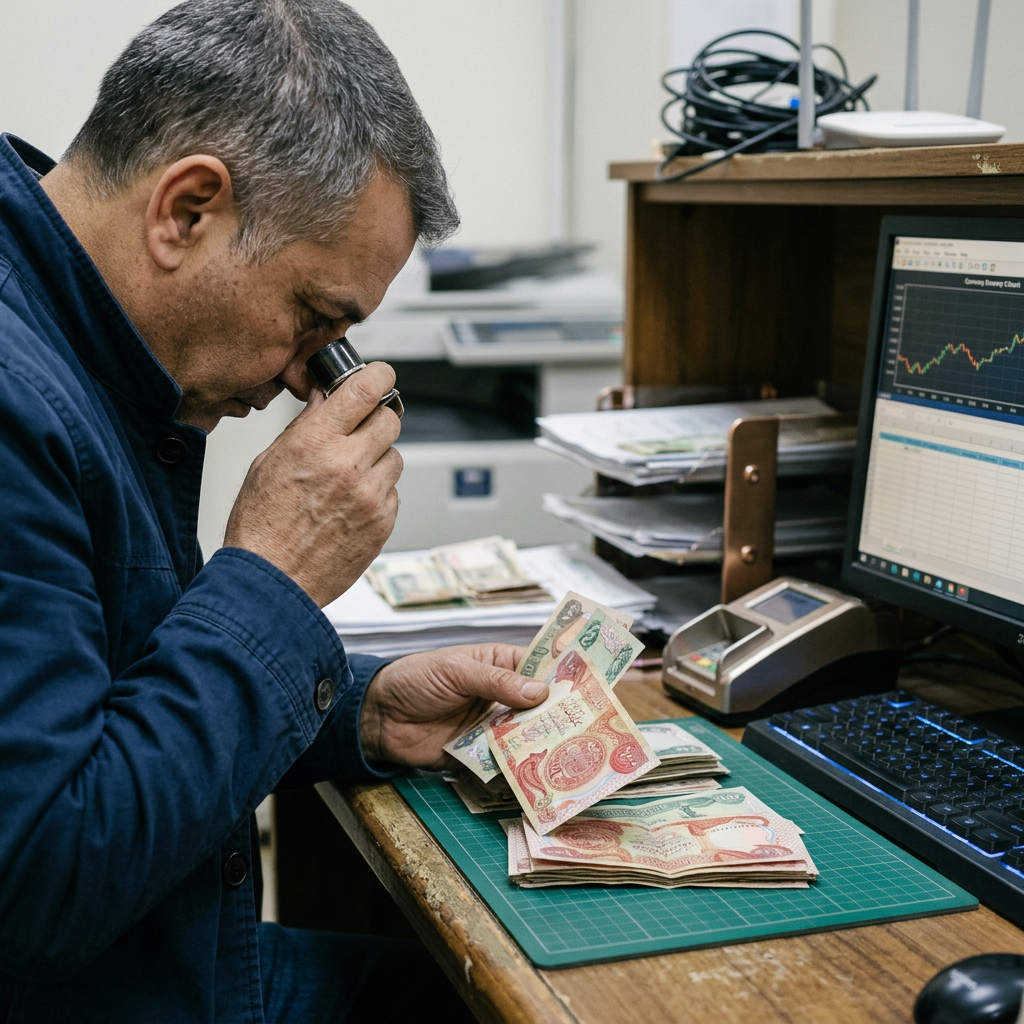
The Iraqi Dinar Is The Second Worst-Performing Arab Currency; Dollar Pressures Pose A Difficult Test For Monetary Policy.
October 20, 2026 The Independent - The classification of the Iraqi dinar among the Arab currencies that have declined the most against the US dollar has raised widespread questions about the future of monetary stability in Iraq, and the ability of the Central Bank to contain the increasing pressures on the exchange market, at a time when the economy is facing challenges related to oil revenues, government spending and the heavy reliance on imports.