
Americans Say $516K Needed to Achieve Financial Wellness
.Americans Say $516K Needed to Achieve Financial Wellness
Patrick Villanova Fri, August 6, 2021
A recent survey found that Americans on average think it takes $516,000 in savings to achieve financial wellness.
The key to financial wellness may be a cool half mil. Though the factors determining financial stability may be different to each investor and retirement saver, a recent Empower Retirement and Personal Capital survey found that most Americans believe it takes having more than $500,000 in savings to become financially healthy. The survey, conducted by The Harris Poll, interviewed 2,005 people across different age groups, racial and ethnic backgrounds, life stages and employment sectors to get their views on financial wellness.
$516K: The Magic Number For Financial Wellness?
Americans Say $516K Needed to Achieve Financial Wellness
Patrick Villanova Fri, August 6, 2021
A recent survey found that Americans on average think it takes $516,000 in savings to achieve financial wellness.
The key to financial wellness may be a cool half mil. Though the factors determining financial stability may be different to each investor and retirement saver, a recent Empower Retirement and Personal Capital survey found that most Americans believe it takes having more than $500,000 in savings to become financially healthy. The survey, conducted by The Harris Poll, interviewed 2,005 people across different age groups, racial and ethnic backgrounds, life stages and employment sectors to get their views on financial wellness.
$516K: The Magic Number For Financial Wellness?
The poll found that Americans’ views on financial wellness evolve as they progress through different phases of life or experience significant “perspective-changing events.” However, Americans feel the average amount of money it takes to achieve financial well-being is $516,433, according to the survey.
The survey found that Americans don’t feel financially healthy themselves until age 47. What’s more, they said age 49 is when they think other people feel financially healthy.
“While many Americans believe financial well-being is attainable, less than half say they’re financially healthy today,” the survey states.
From Broke College Grad to a Half-Million by Age 47
A recent study found that Americans on average think it takes saving over $500,000 to attain financial wellness.
So how does someone actually save $500,000 after starting with next to nothing? Consider a 22-year-old college graduate named Nicole. Despite graduating with minimal debt, she starts out with just $100 to invest. Using SmartAsset’s investment calculator, she could determine exactly how much she’ll need to invest each year to reach her goal of saving over $500,000 by age 47.
Assuming an 8% annual rate of return, Nicole will need to invest $7,050 a year to have over $516,000 within 25 years. That means each month she’ll have to put aside $587 to invest. Nicole’s ability to save at that rate, of course, depends on a number of factors, including her income, her expenses, her budgeting and the cost of living in her area.
Saving $500K Despite Starting Later
To continue reading, please go to the original article here:
https://www.yahoo.com/finance/news/americans-516k-needed-achieve-financial-195338904.html
Avoid These 4 Common Mistakes When You Get Rich Overnight
September 4, 2025 by Laura Bogart GoBankingRates
You’re about to score a financial touchdown. Maybe you’ve crushed it at work and landed a sweet promotion. Perhaps you’ve won a lottery or stumbled into a side hustle that suddenly pays off. As you near the end zone, heart pounding, head full of dreams, you can’t afford (literally) to fumble. Whether you’re blindsided by unexpected taxes or tripped up by bad financial advice, you have a lot to lose if you drop the ball.
Ariel: Iraqi Dinar Update, Acceleration and Recalibration
10-21-2026
Iraqi Dinar Update: Acceleration & Recalibration (Where We Are)
ACCELERATION SEQUENCE POST-IMF, POST-CABINET, POST-TREASURY LIFT — INVESTOR PROJECTION WINDOW
Iraq isn’t moving fast because they’re panicking. They’re moving fast because the infrastructure is finally in place.
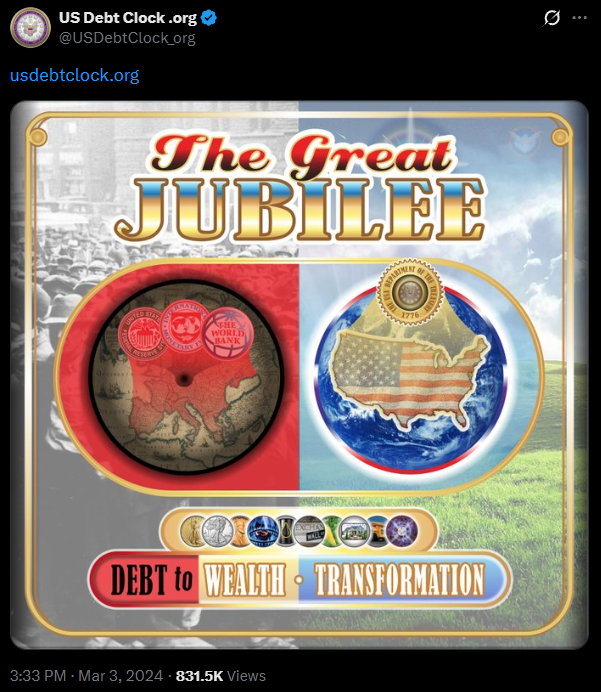
Echo X: Is America Entering a Monetary Reset?
10-21-2026
THE GREAT JUBILEE: IS AMERICA ENTERING A MONETARY RESET? | PART 4
NESARA. GESARA. The Federal Reserve. Gold revaluation. A proposed asset-backed Treasury dollar.
For years, people have talked about a Great Monetary Reset. Now we’re seeing real changes in blockchain infrastructure, digital finance, and international monetary policy alongside some very interesting illustrations from the U.S. Debt Clock.
What if the next monetary transformation looks different from what everybody expected?
Bruce’s Big Call Dinar Intel Tuesday Night 10-20-26
Transcribed By WiserNow Emailed To Recaps (INTEL ONLY)
Welcome, everybody, to Big Talk tonight. It It is Tuesday, october 20, and you're listening to the big call. Thanks everybody for coming in, listening again, being with us for another big call, and we thank you for coming.
Talk about not only where we are or where we want to be, but in the same vein as what Bob mentioned about Melania Trump, President Trump talked today. Let's see. When was today? I caught like two thirds of his speech before he took questions today, and I enjoyed the fact that he brought up the Q phone, and the Q phone is available, and we've known about it for a while now, and we have a few people that have actually demoed one or tried one out and everything.
Good Afternoon Dinar Recaps,
GLOBAL TRADE RESET WATCH: APEC WARNS GROWING IMBALANCES THREATEN ECONOMIC STABILITY
Asia-Pacific finance leaders call for stronger economic coordination as trade imbalances, rising debt and digital investment reshape the global financial landscape.
Emailed to Recaps~ Thank you David
Reset Intelligence: The Dollar Gap Runs Through Iran.
By Reset Intelligence | @EXIT_FIAT
Iraq's Central Bank says trade with Iran is one reason Baghdad's street dollar stays above the bank's rate.
On Tuesday night, an official source said, Baghdad ordered its first crossing with Iran shut, with the rest to follow.
TNT:
Tishwash: The Central Bank extends bank working hours and directs them to open during official holidays.
The Central Bank of Iraq directed banks with outstanding remittances to work on Fridays to avoid delays caused by official holidays, while it completed covering all remittances before the exchange rate change, with a total amount of $3 billion.
MilitiaMan & Crew: CBI Policy Update: What You Need to Know About the IQD
10-21-2026
The Crew: Samson, PompeyPeter, Petra, Daytrader, Sunkissed, GIGI and Militia Man
No drama. No intrigue. No songs and dances. Just straight, factual news that I read and interpret to the best of my ability after being an avid Dinar investor and insanely obsessed Dinarian for over 15 years.
Follow MM on X == https://x.com/Slashn
Good Morning Dinar Recaps,
GLOBAL CURRENCY RESET WATCH: ECB SEEKS TO EXPAND THE EURO’S GLOBAL ROLE
The European Central Bank is widening access to euro liquidity, strengthening Europe’s financial reach as central banks reassess the international monetary landscape.
Physical Gold vs. Digital Gold: Which Is the Ultimate Safe Haven?
Published: 05-20-2026
Gold is trading at approximately $4,500 per troy ounce as of May 20, 2026 [World Gold Council]. However, the debate about physical gold vs digital gold matters more than most investors realise — because not all of these products are the same thing. Both show up on a brokerage statement with a dollar value attached. But what you actually own — what you hold, what you control, what survives a real crisis — is a very different story. This isn’t a debate about returns. It’s a debate about what “safe haven” actually means.
KTFA
Tuesday Night Video
FRANK26…10-20-26.....YOU PROMISED
This video is in Frank’s and his team’s opinion only
Frank’s team is Walkingstick, Eddie and Omar in Iraq and guests
Playback Number: 605-313-5163 PIN: 156996#
Iraq Orders Banks to Work OVERTIME! Why Now?
The Dinar Den: 10-20-2026
Stephen: Hey everyone, welcome back to the channel. We have some exciting and breaking news that came out of the central bank of Iraq today. So, I'm going to cover and go over those few articles that I think as dinar investors are um just exciting and I think they are very telling as to what the future might possibly hold.
And I'm gonna tie it all together and share how I think these things could possibly be related to a higher dinar exchange rate.
The Iraqi Dinar Is The Second Worst-Performing Arab Currency; Dollar Pressures Pose A Difficult Test For Monetary Policy.
October 20, 2026 The Independent - The classification of the Iraqi dinar among the Arab currencies that have declined the most against the US dollar has raised widespread questions about the future of monetary stability in Iraq, and the ability of the Central Bank to contain the increasing pressures on the exchange market, at a time when the economy is facing challenges related to oil revenues, government spending and the heavy reliance on imports.
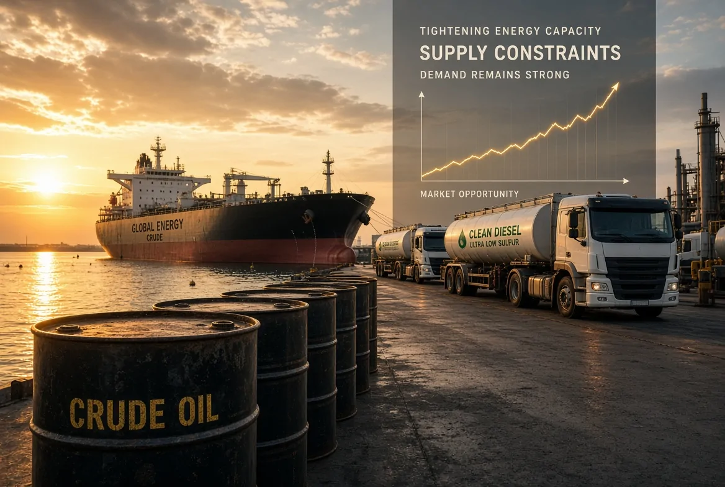
The Iran War Will End. Expensive Diesel Won’t
Notes From the Field By James Hickman (Simon Black / sovereign Man) October 20, 2026
There’s a college degree that pays about $100,000 right out of school, which is pretty good money for a 22-year old. Within a few years, that pay could easily double.
Yet hardly any young person wants the job.
It’s not dangerous, it’s not dirty, and it doesn’t require superhuman work hours. The only reason young people aren’t interested is because Greta Thunberg told them it wasn’t cool.
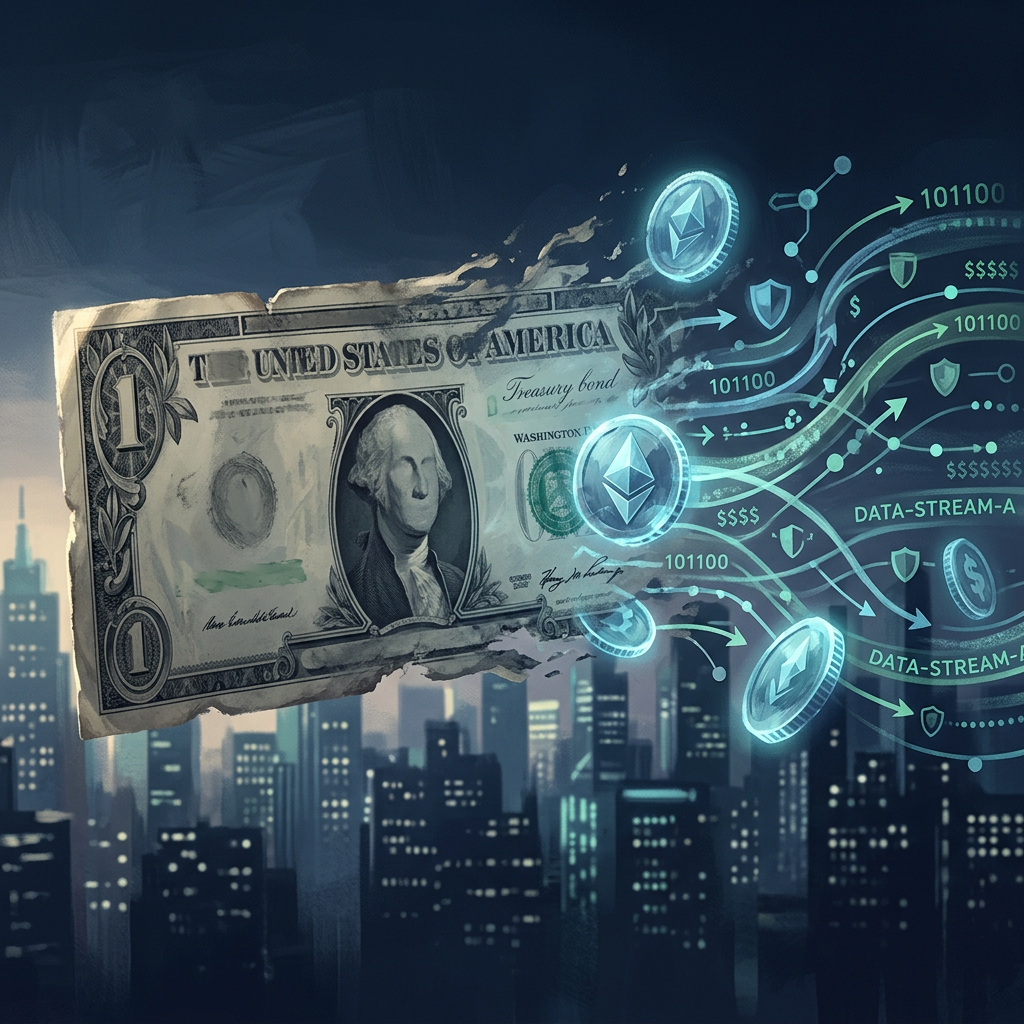
GP Q: US Dollar Upgrade or Collapse?
10-20-2026
“Is the dollar dying… or is it about to get a major upgrade?”
MONEY MONEY MONEY
Most people are only watching the old fiat dollar.
They’re completely missing the new system the U.S. is building right now under the GENIUS Act. Here’s the simple version:

Rob Cunningham: If the World Could Choose Only One Blockchain
10-20-2026
On a go forward basis, “all things considered”, based on the comprehensive utility and liquidity needs of the entire world, “if” only one blockchain was allowed to exist, which should it be?
My choice: the XRP Ledger.
Under this hypothetical – one blockchain serving the world’s combined needs for payments, currencies, tokenized assets, exchange and settlement – XRPL offers the strongest fit in my judgment.
The Central Bank Of Iraq Resolves The Issue Of Merchants' Remittances And Confirms The Continuation Of Import Financing In Dollars.
October 20, 2026Last updated: October 20, 2026 The Central Bank of Iraq confirmed on Tuesday, October 20, 2026, the continuation of financing imports and providing foreign currency through official banking channels, announcing the completion of fulfilling external transfer requests that were suspended before the adjustment of the dinar exchange rate on October 7, in a step aimed at addressing outstanding issues, protecting the rights of traders and ensuring the smooth flow of foreign trade.
Good Afternoon Dinar Recaps,
GLOBAL ASSET RESET WATCH: DEBT, AI UNCERTAINTY AND ENERGY RISKS RESHAPE SAFE-HAVEN DEMAND
Investors are reassessing where to protect their wealth as geopolitical conflict, rising energy prices, government debt and uncertainty surrounding artificial intelligence reshape global markets.
Reset Intelligence: Iraq's Oil Exports Are Back.
By Reset Intelligence | @EXIT_FIAT
Iraq's oil exports are back above 3.4 million barrels a day, close to where they stood before the war.
The same weekend the IMF and Washington both moved toward Baghdad, and the street dollar went the other way.
Why Do Some People Blow The Family Fortune? 5 Tips To Build Wealth For Generations
.Why Do Some People Blow The Family Fortune? 5 Tips To Build Wealth For Generations
Benzinga Contributor Wed, August 4, 2021
As more baby boomers (those born from 1946 to 1964) move deeper into retirement, a massive transfer of wealth to younger generations is approaching. One report mentions that over the next 25 years, U.S. households will pass nearly $70 trillion to their children.
But there is no guarantee that a family’s wealth will last for generations. Building and maintaining wealth, so it benefits many generations, requires proper financial education, perspective among family members, and communication, says Chance Robinson, a financial advisor and author of Financial Myths: Important Information You May Not Know About Your Retirement And Financial Future.
Why Do Some People Blow The Family Fortune? 5 Tips To Build Wealth For Generations
Benzinga Contributor Wed, August 4, 2021
As more baby boomers (those born from 1946 to 1964) move deeper into retirement, a massive transfer of wealth to younger generations is approaching. One report mentions that over the next 25 years, U.S. households will pass nearly $70 trillion to their children.
But there is no guarantee that a family’s wealth will last for generations. Building and maintaining wealth, so it benefits many generations, requires proper financial education, perspective among family members, and communication, says Chance Robinson, a financial advisor and author of Financial Myths: Important Information You May Not Know About Your Retirement And Financial Future.
“There is much to learn from the reckless wealthy,” Robinson says. “There have been numerous instances where inheritors have squandered wealth. Unfortunately, they could not build upon what was available to them.
“Preserving intergenerational wealth is an uphill task. But understanding the differences between a wealth-generation mindset and a wealth-destroying one can teach lessons that are vital to continuing and increasing intergenerational wealth in your own family.”
Robinson has these tips for families to consider about building and maintaining intergenerational wealth:
View Wealth As More Than Money And Property
To Robinson, the first things that come to mind when discussing wealth are bank balances and properties. Still, he adds that a family’s collective wealth goes deeper to include family memories, relationships, and ethos – its aspirations for the greater good. “These intangible but important emotional factors play an important role in keeping the family and its generations on the same page and keeping the financial assets intact,” he says.
Take An Unselfish, Long-Term View
“There is no place for a self-centered attitude,” Robinson notes. “The person intending to generate wealth and leave a legacy behind would likely possess an open and generous mind. He or she would not necessarily look for ways to consume everything in his or her lifetime.
To continue reading, please go to the original article here:
https://www.yahoo.com/finance/news/why-people-blow-family-fortune-185703474.html
CBI Foreign Reserves Rise To $81.5B In August
2026-10-21 06:18 Shafaq News- Baghdad Iraq's foreign reserves rose to $81.538 billion at the end of August 2026, up from $80.633 billion a month earlier, according to Central Bank of Iraq (CBI) data released on Wednesday. The gain of about $905 million followed four straight monthly declines from April through July, according to the data reviewed by Shafaq News. Reserves are still $15.894 billion below the $97.432 billion recorded at the end of 2025, a drop of about 16.3% over the first eight months of the year.
Avoid These 4 Common Mistakes When You Get Rich Overnight
September 4, 2025 by Laura Bogart GoBankingRates
You’re about to score a financial touchdown. Maybe you’ve crushed it at work and landed a sweet promotion. Perhaps you’ve won a lottery or stumbled into a side hustle that suddenly pays off. As you near the end zone, heart pounding, head full of dreams, you can’t afford (literally) to fumble. Whether you’re blindsided by unexpected taxes or tripped up by bad financial advice, you have a lot to lose if you drop the ball.
Ariel: Iraqi Dinar Update, Acceleration and Recalibration
10-21-2026
Iraqi Dinar Update: Acceleration & Recalibration (Where We Are)
ACCELERATION SEQUENCE POST-IMF, POST-CABINET, POST-TREASURY LIFT — INVESTOR PROJECTION WINDOW
Iraq isn’t moving fast because they’re panicking. They’re moving fast because the infrastructure is finally in place.
Echo X: Is America Entering a Monetary Reset?
10-21-2026
THE GREAT JUBILEE: IS AMERICA ENTERING A MONETARY RESET? | PART 4
NESARA. GESARA. The Federal Reserve. Gold revaluation. A proposed asset-backed Treasury dollar.
For years, people have talked about a Great Monetary Reset. Now we’re seeing real changes in blockchain infrastructure, digital finance, and international monetary policy alongside some very interesting illustrations from the U.S. Debt Clock.
What if the next monetary transformation looks different from what everybody expected?
Bruce’s Big Call Dinar Intel Tuesday Night 10-20-26
Transcribed By WiserNow Emailed To Recaps (INTEL ONLY)
Welcome, everybody, to Big Talk tonight. It It is Tuesday, october 20, and you're listening to the big call. Thanks everybody for coming in, listening again, being with us for another big call, and we thank you for coming.
Talk about not only where we are or where we want to be, but in the same vein as what Bob mentioned about Melania Trump, President Trump talked today. Let's see. When was today? I caught like two thirds of his speech before he took questions today, and I enjoyed the fact that he brought up the Q phone, and the Q phone is available, and we've known about it for a while now, and we have a few people that have actually demoed one or tried one out and everything.
Good Afternoon Dinar Recaps,
GLOBAL TRADE RESET WATCH: APEC WARNS GROWING IMBALANCES THREATEN ECONOMIC STABILITY
Asia-Pacific finance leaders call for stronger economic coordination as trade imbalances, rising debt and digital investment reshape the global financial landscape.
Emailed to Recaps~ Thank you David
Reset Intelligence: The Dollar Gap Runs Through Iran.
By Reset Intelligence | @EXIT_FIAT
Iraq's Central Bank says trade with Iran is one reason Baghdad's street dollar stays above the bank's rate.
On Tuesday night, an official source said, Baghdad ordered its first crossing with Iran shut, with the rest to follow.
TNT:
Tishwash: The Central Bank extends bank working hours and directs them to open during official holidays.
The Central Bank of Iraq directed banks with outstanding remittances to work on Fridays to avoid delays caused by official holidays, while it completed covering all remittances before the exchange rate change, with a total amount of $3 billion.
MilitiaMan & Crew: CBI Policy Update: What You Need to Know About the IQD
10-21-2026
The Crew: Samson, PompeyPeter, Petra, Daytrader, Sunkissed, GIGI and Militia Man
No drama. No intrigue. No songs and dances. Just straight, factual news that I read and interpret to the best of my ability after being an avid Dinar investor and insanely obsessed Dinarian for over 15 years.
Follow MM on X == https://x.com/Slashn
Good Morning Dinar Recaps,
GLOBAL CURRENCY RESET WATCH: ECB SEEKS TO EXPAND THE EURO’S GLOBAL ROLE
The European Central Bank is widening access to euro liquidity, strengthening Europe’s financial reach as central banks reassess the international monetary landscape.
Physical Gold vs. Digital Gold: Which Is the Ultimate Safe Haven?
Published: 05-20-2026
Gold is trading at approximately $4,500 per troy ounce as of May 20, 2026 [World Gold Council]. However, the debate about physical gold vs digital gold matters more than most investors realise — because not all of these products are the same thing. Both show up on a brokerage statement with a dollar value attached. But what you actually own — what you hold, what you control, what survives a real crisis — is a very different story. This isn’t a debate about returns. It’s a debate about what “safe haven” actually means.
KTFA
Tuesday Night Video
FRANK26…10-20-26.....YOU PROMISED
This video is in Frank’s and his team’s opinion only
Frank’s team is Walkingstick, Eddie and Omar in Iraq and guests
Playback Number: 605-313-5163 PIN: 156996#
Iraq Orders Banks to Work OVERTIME! Why Now?
The Dinar Den: 10-20-2026
Stephen: Hey everyone, welcome back to the channel. We have some exciting and breaking news that came out of the central bank of Iraq today. So, I'm going to cover and go over those few articles that I think as dinar investors are um just exciting and I think they are very telling as to what the future might possibly hold.
And I'm gonna tie it all together and share how I think these things could possibly be related to a higher dinar exchange rate.
The Iraqi Dinar Is The Second Worst-Performing Arab Currency; Dollar Pressures Pose A Difficult Test For Monetary Policy.
October 20, 2026 The Independent - The classification of the Iraqi dinar among the Arab currencies that have declined the most against the US dollar has raised widespread questions about the future of monetary stability in Iraq, and the ability of the Central Bank to contain the increasing pressures on the exchange market, at a time when the economy is facing challenges related to oil revenues, government spending and the heavy reliance on imports.
The Iran War Will End. Expensive Diesel Won’t
Notes From the Field By James Hickman (Simon Black / sovereign Man) October 20, 2026
There’s a college degree that pays about $100,000 right out of school, which is pretty good money for a 22-year old. Within a few years, that pay could easily double.
Yet hardly any young person wants the job.
It’s not dangerous, it’s not dirty, and it doesn’t require superhuman work hours. The only reason young people aren’t interested is because Greta Thunberg told them it wasn’t cool.
GP Q: US Dollar Upgrade or Collapse?
10-20-2026
“Is the dollar dying… or is it about to get a major upgrade?”
MONEY MONEY MONEY
Most people are only watching the old fiat dollar.
They’re completely missing the new system the U.S. is building right now under the GENIUS Act. Here’s the simple version:
Rob Cunningham: If the World Could Choose Only One Blockchain
10-20-2026
On a go forward basis, “all things considered”, based on the comprehensive utility and liquidity needs of the entire world, “if” only one blockchain was allowed to exist, which should it be?
My choice: the XRP Ledger.
Under this hypothetical – one blockchain serving the world’s combined needs for payments, currencies, tokenized assets, exchange and settlement – XRPL offers the strongest fit in my judgment.
The Central Bank Of Iraq Resolves The Issue Of Merchants' Remittances And Confirms The Continuation Of Import Financing In Dollars.
October 20, 2026Last updated: October 20, 2026 The Central Bank of Iraq confirmed on Tuesday, October 20, 2026, the continuation of financing imports and providing foreign currency through official banking channels, announcing the completion of fulfilling external transfer requests that were suspended before the adjustment of the dinar exchange rate on October 7, in a step aimed at addressing outstanding issues, protecting the rights of traders and ensuring the smooth flow of foreign trade.
Good Afternoon Dinar Recaps,
GLOBAL ASSET RESET WATCH: DEBT, AI UNCERTAINTY AND ENERGY RISKS RESHAPE SAFE-HAVEN DEMAND
Investors are reassessing where to protect their wealth as geopolitical conflict, rising energy prices, government debt and uncertainty surrounding artificial intelligence reshape global markets.
Reset Intelligence: Iraq's Oil Exports Are Back.
By Reset Intelligence | @EXIT_FIAT
Iraq's oil exports are back above 3.4 million barrels a day, close to where they stood before the war.
The same weekend the IMF and Washington both moved toward Baghdad, and the street dollar went the other way.
Steve Harvey Says Every Married Couple Should Have 4 Bank Accounts
.Steve Harvey Says Every Married Couple Should Have 4 Bank Accounts
Evan Romano Wed, August 4, 2021,
Steve Harvey shared some financial advice in a short video called "Couples Economy," originally posted to YouTube but now shared from his Twitter account.
In the video, Harvey breaks down why every married couple should have not one, not two, not three, but "a minimum" of four bank accounts. He shared his reasoning, calling it "the best advice I ever got."
On the set of Family Feud, for his motivational speaking video series "Motivated," Steve Harvey shared a bit of financial insight that he calls "the best advice I ever got." And given that the stand-up comedian, actor, and mogul has a reported net worth of around $200 million, there are probably worse people to take these sorts of tips from. The advice? That every married couple should have a minimum of four different bank accounts.
Steve Harvey Says Every Married Couple Should Have 4 Bank Accounts
Evan Romano Wed, August 4, 2021,
Steve Harvey shared some financial advice in a short video called "Couples Economy," originally posted to YouTube but now shared from his Twitter account.
In the video, Harvey breaks down why every married couple should have not one, not two, not three, but "a minimum" of four bank accounts. He shared his reasoning, calling it "the best advice I ever got."
On the set of Family Feud, for his motivational speaking video series "Motivated," Steve Harvey shared a bit of financial insight that he calls "the best advice I ever got." And given that the stand-up comedian, actor, and mogul has a reported net worth of around $200 million, there are probably worse people to take these sorts of tips from. The advice? That every married couple should have a minimum of four different bank accounts.
It's something that's probably crossed people's minds before: how can a couple, conceivably together for the long haul, share and manage their funds? Harvey offers his reasoned take in the short video. "If one person works in the house, or if two people work in the house, it doesn't matter," he says in the video, presumably assuring people that this is universal advice. "You need four bank accounts."
So for anyone curious, here's a breakdown of why Harvey believes there are four bank accounts—each with its own dedicated purpose—that every married couple needs to have.
1) Account for all necessary items
The first account that Harvey says a married couple needs is one account with shared money. This takes care of things that need to be paid, like car notes, mortgage, electric bill gas bill, food, etc. "Everything that maintains your lifestyle," he says.
2) Savings account
To continue reading, please go to the original article here:
https://www.yahoo.com/lifestyle/steve-harvey-says-every-married-152000762.html
You can watch the full video of Harvey's financial advice below:
CBI Foreign Reserves Rise To $81.5B In August
2026-10-21 06:18 Shafaq News- Baghdad Iraq's foreign reserves rose to $81.538 billion at the end of August 2026, up from $80.633 billion a month earlier, according to Central Bank of Iraq (CBI) data released on Wednesday. The gain of about $905 million followed four straight monthly declines from April through July, according to the data reviewed by Shafaq News. Reserves are still $15.894 billion below the $97.432 billion recorded at the end of 2025, a drop of about 16.3% over the first eight months of the year.
Avoid These 4 Common Mistakes When You Get Rich Overnight
September 4, 2025 by Laura Bogart GoBankingRates
You’re about to score a financial touchdown. Maybe you’ve crushed it at work and landed a sweet promotion. Perhaps you’ve won a lottery or stumbled into a side hustle that suddenly pays off. As you near the end zone, heart pounding, head full of dreams, you can’t afford (literally) to fumble. Whether you’re blindsided by unexpected taxes or tripped up by bad financial advice, you have a lot to lose if you drop the ball.
Ariel: Iraqi Dinar Update, Acceleration and Recalibration
10-21-2026
Iraqi Dinar Update: Acceleration & Recalibration (Where We Are)
ACCELERATION SEQUENCE POST-IMF, POST-CABINET, POST-TREASURY LIFT — INVESTOR PROJECTION WINDOW
Iraq isn’t moving fast because they’re panicking. They’re moving fast because the infrastructure is finally in place.
Echo X: Is America Entering a Monetary Reset?
10-21-2026
THE GREAT JUBILEE: IS AMERICA ENTERING A MONETARY RESET? | PART 4
NESARA. GESARA. The Federal Reserve. Gold revaluation. A proposed asset-backed Treasury dollar.
For years, people have talked about a Great Monetary Reset. Now we’re seeing real changes in blockchain infrastructure, digital finance, and international monetary policy alongside some very interesting illustrations from the U.S. Debt Clock.
What if the next monetary transformation looks different from what everybody expected?
Bruce’s Big Call Dinar Intel Tuesday Night 10-20-26
Transcribed By WiserNow Emailed To Recaps (INTEL ONLY)
Welcome, everybody, to Big Talk tonight. It It is Tuesday, october 20, and you're listening to the big call. Thanks everybody for coming in, listening again, being with us for another big call, and we thank you for coming.
Talk about not only where we are or where we want to be, but in the same vein as what Bob mentioned about Melania Trump, President Trump talked today. Let's see. When was today? I caught like two thirds of his speech before he took questions today, and I enjoyed the fact that he brought up the Q phone, and the Q phone is available, and we've known about it for a while now, and we have a few people that have actually demoed one or tried one out and everything.
Good Afternoon Dinar Recaps,
GLOBAL TRADE RESET WATCH: APEC WARNS GROWING IMBALANCES THREATEN ECONOMIC STABILITY
Asia-Pacific finance leaders call for stronger economic coordination as trade imbalances, rising debt and digital investment reshape the global financial landscape.
Emailed to Recaps~ Thank you David
Reset Intelligence: The Dollar Gap Runs Through Iran.
By Reset Intelligence | @EXIT_FIAT
Iraq's Central Bank says trade with Iran is one reason Baghdad's street dollar stays above the bank's rate.
On Tuesday night, an official source said, Baghdad ordered its first crossing with Iran shut, with the rest to follow.
TNT:
Tishwash: The Central Bank extends bank working hours and directs them to open during official holidays.
The Central Bank of Iraq directed banks with outstanding remittances to work on Fridays to avoid delays caused by official holidays, while it completed covering all remittances before the exchange rate change, with a total amount of $3 billion.
MilitiaMan & Crew: CBI Policy Update: What You Need to Know About the IQD
10-21-2026
The Crew: Samson, PompeyPeter, Petra, Daytrader, Sunkissed, GIGI and Militia Man
No drama. No intrigue. No songs and dances. Just straight, factual news that I read and interpret to the best of my ability after being an avid Dinar investor and insanely obsessed Dinarian for over 15 years.
Follow MM on X == https://x.com/Slashn
Good Morning Dinar Recaps,
GLOBAL CURRENCY RESET WATCH: ECB SEEKS TO EXPAND THE EURO’S GLOBAL ROLE
The European Central Bank is widening access to euro liquidity, strengthening Europe’s financial reach as central banks reassess the international monetary landscape.
Physical Gold vs. Digital Gold: Which Is the Ultimate Safe Haven?
Published: 05-20-2026
Gold is trading at approximately $4,500 per troy ounce as of May 20, 2026 [World Gold Council]. However, the debate about physical gold vs digital gold matters more than most investors realise — because not all of these products are the same thing. Both show up on a brokerage statement with a dollar value attached. But what you actually own — what you hold, what you control, what survives a real crisis — is a very different story. This isn’t a debate about returns. It’s a debate about what “safe haven” actually means.
KTFA
Tuesday Night Video
FRANK26…10-20-26.....YOU PROMISED
This video is in Frank’s and his team’s opinion only
Frank’s team is Walkingstick, Eddie and Omar in Iraq and guests
Playback Number: 605-313-5163 PIN: 156996#
Iraq Orders Banks to Work OVERTIME! Why Now?
The Dinar Den: 10-20-2026
Stephen: Hey everyone, welcome back to the channel. We have some exciting and breaking news that came out of the central bank of Iraq today. So, I'm going to cover and go over those few articles that I think as dinar investors are um just exciting and I think they are very telling as to what the future might possibly hold.
And I'm gonna tie it all together and share how I think these things could possibly be related to a higher dinar exchange rate.
The Iraqi Dinar Is The Second Worst-Performing Arab Currency; Dollar Pressures Pose A Difficult Test For Monetary Policy.
October 20, 2026 The Independent - The classification of the Iraqi dinar among the Arab currencies that have declined the most against the US dollar has raised widespread questions about the future of monetary stability in Iraq, and the ability of the Central Bank to contain the increasing pressures on the exchange market, at a time when the economy is facing challenges related to oil revenues, government spending and the heavy reliance on imports.
The Iran War Will End. Expensive Diesel Won’t
Notes From the Field By James Hickman (Simon Black / sovereign Man) October 20, 2026
There’s a college degree that pays about $100,000 right out of school, which is pretty good money for a 22-year old. Within a few years, that pay could easily double.
Yet hardly any young person wants the job.
It’s not dangerous, it’s not dirty, and it doesn’t require superhuman work hours. The only reason young people aren’t interested is because Greta Thunberg told them it wasn’t cool.
GP Q: US Dollar Upgrade or Collapse?
10-20-2026
“Is the dollar dying… or is it about to get a major upgrade?”
MONEY MONEY MONEY
Most people are only watching the old fiat dollar.
They’re completely missing the new system the U.S. is building right now under the GENIUS Act. Here’s the simple version:
Rob Cunningham: If the World Could Choose Only One Blockchain
10-20-2026
On a go forward basis, “all things considered”, based on the comprehensive utility and liquidity needs of the entire world, “if” only one blockchain was allowed to exist, which should it be?
My choice: the XRP Ledger.
Under this hypothetical – one blockchain serving the world’s combined needs for payments, currencies, tokenized assets, exchange and settlement – XRPL offers the strongest fit in my judgment.
The Central Bank Of Iraq Resolves The Issue Of Merchants' Remittances And Confirms The Continuation Of Import Financing In Dollars.
October 20, 2026Last updated: October 20, 2026 The Central Bank of Iraq confirmed on Tuesday, October 20, 2026, the continuation of financing imports and providing foreign currency through official banking channels, announcing the completion of fulfilling external transfer requests that were suspended before the adjustment of the dinar exchange rate on October 7, in a step aimed at addressing outstanding issues, protecting the rights of traders and ensuring the smooth flow of foreign trade.
Good Afternoon Dinar Recaps,
GLOBAL ASSET RESET WATCH: DEBT, AI UNCERTAINTY AND ENERGY RISKS RESHAPE SAFE-HAVEN DEMAND
Investors are reassessing where to protect their wealth as geopolitical conflict, rising energy prices, government debt and uncertainty surrounding artificial intelligence reshape global markets.
Reset Intelligence: Iraq's Oil Exports Are Back.
By Reset Intelligence | @EXIT_FIAT
Iraq's oil exports are back above 3.4 million barrels a day, close to where they stood before the war.
The same weekend the IMF and Washington both moved toward Baghdad, and the street dollar went the other way.
The Best Money Moves for August 2021
.The Best Money Moves for August 2021
Kenadi Silcox Mon, August 2, 2021
It feels like the summer just began, and yet it’s already starting to come to a close as August leads us into another back-to-school season.
The price of new backpacks, notebooks and sneakers — not to mention extracurriculars — can put a strain on many families’ budgets. And as we head back to “reality” after post-pandemic vacations and perhaps less-than-frugal spending, you’re certainly not alone if you’ve started wincing with every swipe of your credit card.
But there are tax savings to be had and another child tax credit payment on the horizon to help ease parents’ burden. We’ll walk you through both, along with other important money moves for this month. Here’s what you need to know in August:
The Best Money Moves for August 2021
Kenadi Silcox Mon, August 2, 2021
It feels like the summer just began, and yet it’s already starting to come to a close as August leads us into another back-to-school season.
The price of new backpacks, notebooks and sneakers — not to mention extracurriculars — can put a strain on many families’ budgets. And as we head back to “reality” after post-pandemic vacations and perhaps less-than-frugal spending, you’re certainly not alone if you’ve started wincing with every swipe of your credit card.
But there are tax savings to be had and another child tax credit payment on the horizon to help ease parents’ burden. We’ll walk you through both, along with other important money moves for this month. Here’s what you need to know in August:
1. Plan back-to-school shopping around tax-free holidays
The price of back-to-school supplies is expected to be at an all-time high this year, so there’s no better time to take care of one of the most costly annual to-dos than during your state’s tax-free shopping holiday.
Every year around this time, select states offer “tax holidays” that allow shoppers to buy school supplies without having to pay any sales tax. This year, 15 states have some sort of back-to-school related tax holiday during the month of August. https://money.com/sales-tax-holiday-back-to-school-2/
Depending on where you live, you can save between 4% and 7% without having to pay state sales tax. The savings will be more in places that include local sales taxes in the shopping holiday.
The National Retail Federation estimates families will spend an average $849 on back-to-school shopping this year. But what counts as school supplies can vary by state, and some states may offer the tax break on items other than traditional school supplies like notebooks and calculators.
Shoppers in states like New Mexico or Missouri can make tax-free purchases on clothes, shoes, and computers as well. Be sure to check the specific dates, price limit and products available for the discount in your own state to avoid any surprises at the checkout counter. https://www.taxadmin.org/2021-sales-tax-holiday
2. Unenroll from future child tax credit payments
The second of six monthly child tax credit payments will deposit into parents’ bank accounts on Aug. 13, injecting up to $300 per child into millions of peoples’ budgets. Most parents shouldn’t need to take any action, but if you want to opt out of monthly payments or update your information, take note of these dates:
To continue reading, please go to the original article here:
https://money.yahoo.com/best-money-moves-august-2021-182410148.html
CBI Foreign Reserves Rise To $81.5B In August
2026-10-21 06:18 Shafaq News- Baghdad Iraq's foreign reserves rose to $81.538 billion at the end of August 2026, up from $80.633 billion a month earlier, according to Central Bank of Iraq (CBI) data released on Wednesday. The gain of about $905 million followed four straight monthly declines from April through July, according to the data reviewed by Shafaq News. Reserves are still $15.894 billion below the $97.432 billion recorded at the end of 2025, a drop of about 16.3% over the first eight months of the year.
Avoid These 4 Common Mistakes When You Get Rich Overnight
September 4, 2025 by Laura Bogart GoBankingRates
You’re about to score a financial touchdown. Maybe you’ve crushed it at work and landed a sweet promotion. Perhaps you’ve won a lottery or stumbled into a side hustle that suddenly pays off. As you near the end zone, heart pounding, head full of dreams, you can’t afford (literally) to fumble. Whether you’re blindsided by unexpected taxes or tripped up by bad financial advice, you have a lot to lose if you drop the ball.
Ariel: Iraqi Dinar Update, Acceleration and Recalibration
10-21-2026
Iraqi Dinar Update: Acceleration & Recalibration (Where We Are)
ACCELERATION SEQUENCE POST-IMF, POST-CABINET, POST-TREASURY LIFT — INVESTOR PROJECTION WINDOW
Iraq isn’t moving fast because they’re panicking. They’re moving fast because the infrastructure is finally in place.
Echo X: Is America Entering a Monetary Reset?
10-21-2026
THE GREAT JUBILEE: IS AMERICA ENTERING A MONETARY RESET? | PART 4
NESARA. GESARA. The Federal Reserve. Gold revaluation. A proposed asset-backed Treasury dollar.
For years, people have talked about a Great Monetary Reset. Now we’re seeing real changes in blockchain infrastructure, digital finance, and international monetary policy alongside some very interesting illustrations from the U.S. Debt Clock.
What if the next monetary transformation looks different from what everybody expected?
Bruce’s Big Call Dinar Intel Tuesday Night 10-20-26
Transcribed By WiserNow Emailed To Recaps (INTEL ONLY)
Welcome, everybody, to Big Talk tonight. It It is Tuesday, october 20, and you're listening to the big call. Thanks everybody for coming in, listening again, being with us for another big call, and we thank you for coming.
Talk about not only where we are or where we want to be, but in the same vein as what Bob mentioned about Melania Trump, President Trump talked today. Let's see. When was today? I caught like two thirds of his speech before he took questions today, and I enjoyed the fact that he brought up the Q phone, and the Q phone is available, and we've known about it for a while now, and we have a few people that have actually demoed one or tried one out and everything.
Good Afternoon Dinar Recaps,
GLOBAL TRADE RESET WATCH: APEC WARNS GROWING IMBALANCES THREATEN ECONOMIC STABILITY
Asia-Pacific finance leaders call for stronger economic coordination as trade imbalances, rising debt and digital investment reshape the global financial landscape.
Emailed to Recaps~ Thank you David
Reset Intelligence: The Dollar Gap Runs Through Iran.
By Reset Intelligence | @EXIT_FIAT
Iraq's Central Bank says trade with Iran is one reason Baghdad's street dollar stays above the bank's rate.
On Tuesday night, an official source said, Baghdad ordered its first crossing with Iran shut, with the rest to follow.
TNT:
Tishwash: The Central Bank extends bank working hours and directs them to open during official holidays.
The Central Bank of Iraq directed banks with outstanding remittances to work on Fridays to avoid delays caused by official holidays, while it completed covering all remittances before the exchange rate change, with a total amount of $3 billion.
MilitiaMan & Crew: CBI Policy Update: What You Need to Know About the IQD
10-21-2026
The Crew: Samson, PompeyPeter, Petra, Daytrader, Sunkissed, GIGI and Militia Man
No drama. No intrigue. No songs and dances. Just straight, factual news that I read and interpret to the best of my ability after being an avid Dinar investor and insanely obsessed Dinarian for over 15 years.
Follow MM on X == https://x.com/Slashn
Good Morning Dinar Recaps,
GLOBAL CURRENCY RESET WATCH: ECB SEEKS TO EXPAND THE EURO’S GLOBAL ROLE
The European Central Bank is widening access to euro liquidity, strengthening Europe’s financial reach as central banks reassess the international monetary landscape.
Physical Gold vs. Digital Gold: Which Is the Ultimate Safe Haven?
Published: 05-20-2026
Gold is trading at approximately $4,500 per troy ounce as of May 20, 2026 [World Gold Council]. However, the debate about physical gold vs digital gold matters more than most investors realise — because not all of these products are the same thing. Both show up on a brokerage statement with a dollar value attached. But what you actually own — what you hold, what you control, what survives a real crisis — is a very different story. This isn’t a debate about returns. It’s a debate about what “safe haven” actually means.
KTFA
Tuesday Night Video
FRANK26…10-20-26.....YOU PROMISED
This video is in Frank’s and his team’s opinion only
Frank’s team is Walkingstick, Eddie and Omar in Iraq and guests
Playback Number: 605-313-5163 PIN: 156996#
Iraq Orders Banks to Work OVERTIME! Why Now?
The Dinar Den: 10-20-2026
Stephen: Hey everyone, welcome back to the channel. We have some exciting and breaking news that came out of the central bank of Iraq today. So, I'm going to cover and go over those few articles that I think as dinar investors are um just exciting and I think they are very telling as to what the future might possibly hold.
And I'm gonna tie it all together and share how I think these things could possibly be related to a higher dinar exchange rate.
The Iraqi Dinar Is The Second Worst-Performing Arab Currency; Dollar Pressures Pose A Difficult Test For Monetary Policy.
October 20, 2026 The Independent - The classification of the Iraqi dinar among the Arab currencies that have declined the most against the US dollar has raised widespread questions about the future of monetary stability in Iraq, and the ability of the Central Bank to contain the increasing pressures on the exchange market, at a time when the economy is facing challenges related to oil revenues, government spending and the heavy reliance on imports.
The Iran War Will End. Expensive Diesel Won’t
Notes From the Field By James Hickman (Simon Black / sovereign Man) October 20, 2026
There’s a college degree that pays about $100,000 right out of school, which is pretty good money for a 22-year old. Within a few years, that pay could easily double.
Yet hardly any young person wants the job.
It’s not dangerous, it’s not dirty, and it doesn’t require superhuman work hours. The only reason young people aren’t interested is because Greta Thunberg told them it wasn’t cool.
GP Q: US Dollar Upgrade or Collapse?
10-20-2026
“Is the dollar dying… or is it about to get a major upgrade?”
MONEY MONEY MONEY
Most people are only watching the old fiat dollar.
They’re completely missing the new system the U.S. is building right now under the GENIUS Act. Here’s the simple version:
Rob Cunningham: If the World Could Choose Only One Blockchain
10-20-2026
On a go forward basis, “all things considered”, based on the comprehensive utility and liquidity needs of the entire world, “if” only one blockchain was allowed to exist, which should it be?
My choice: the XRP Ledger.
Under this hypothetical – one blockchain serving the world’s combined needs for payments, currencies, tokenized assets, exchange and settlement – XRPL offers the strongest fit in my judgment.
The Central Bank Of Iraq Resolves The Issue Of Merchants' Remittances And Confirms The Continuation Of Import Financing In Dollars.
October 20, 2026Last updated: October 20, 2026 The Central Bank of Iraq confirmed on Tuesday, October 20, 2026, the continuation of financing imports and providing foreign currency through official banking channels, announcing the completion of fulfilling external transfer requests that were suspended before the adjustment of the dinar exchange rate on October 7, in a step aimed at addressing outstanding issues, protecting the rights of traders and ensuring the smooth flow of foreign trade.
Good Afternoon Dinar Recaps,
GLOBAL ASSET RESET WATCH: DEBT, AI UNCERTAINTY AND ENERGY RISKS RESHAPE SAFE-HAVEN DEMAND
Investors are reassessing where to protect their wealth as geopolitical conflict, rising energy prices, government debt and uncertainty surrounding artificial intelligence reshape global markets.
Reset Intelligence: Iraq's Oil Exports Are Back.
By Reset Intelligence | @EXIT_FIAT
Iraq's oil exports are back above 3.4 million barrels a day, close to where they stood before the war.
The same weekend the IMF and Washington both moved toward Baghdad, and the street dollar went the other way.
31 People Share The Best Money Advice They've Ever Gotten
.31 People Share The Best Money Advice They've Ever Gotten
Simple ways to save and smart ways to spend.
by Sally Tamarkinn BuzzFeed News Reporter
Everyone needs money, but everyone has different strategies for saving it and spending it. So we asked members of the BuzzFeed Community to share with us the best advice about money they'd ever gotten.
Here's what they shared:
1. Keep your three biggest expenses as low as you can.
"Your three biggest expenses are (usually in this order): housing, transport, and food. Keep those as low as you happily can, and that will make the most significant difference to your spending. I do this by sharing housing, cooking at home, and not having a car. You can lower other expenses and that definitely helps, too (i.e. get store brand, a cheaper mobile phone contract, clothes, etc.) but housing, transport, and food are where lowering costs will make the biggest difference." —maxw46042041e
31 People Share The Best Money Advice They've Ever Gotten
Simple ways to save and smart ways to spend.
by Sally Tamarkinn BuzzFeed News Reporter
Everyone needs money, but everyone has different strategies for saving it and spending it. So we asked members of the BuzzFeed Community to share with us the best advice about money they'd ever gotten.
Here's what they shared:
1. Keep your three biggest expenses as low as you can.
"Your three biggest expenses are (usually in this order): housing, transport, and food. Keep those as low as you happily can, and that will make the most significant difference to your spending. I do this by sharing housing, cooking at home, and not having a car. You can lower other expenses and that definitely helps, too (i.e. get store brand, a cheaper mobile phone contract, clothes, etc.) but housing, transport, and food are where lowering costs will make the biggest difference." —maxw46042041e
2. If you want to pay off multiple debts fast, try the Snowball method.
"Basically, you commit to paying an extra amount ($100 in this example) every month until all your debt is paid off. Also, once an account is closed, you add that minimum payment to the power payment.
You start by making a power payment (to the principle only) to the account with lowest balance debt, each month, until it's paid off. Once it is, you take the $100 and the monthly payment for the balance that's now closed and apply that to the next lowest balance debt until it's paid off. Rinse and repeat.
Eventually your power payments are huge and those larger balance debts don't seem so scary. It also doesn't impact your monthly budget too much. I paid off all my debt (student loans, credit cards, and car loans) by the time I was 28 using this method. I heard about it when I was 25." —ja14torres
3. Round up on each bill and pay that amount.
"My dad always told me to round up your bills and pay a little extra, as it makes your next month's bill lower, leaves a good impression, and you won't miss the extra $5-$10."—elyse1509
4. Figure out what your monthly bills are going to be and then put that amount in savings throughout the month.
"I calculate what my bills are going to be for the month (car payment, rent, utility bills) then put half of that from each paycheck (I get paid bi-weekly) into savings so I know how much extra I have to work with. I also usually try to round up my bills and then I won't touch that extra money I put into my savings. For example, if my rent is $375 a month, I'll take out $200 a paycheck and keep the extra $25 I didn't use on rent as extra savings."
—elyse1509
5. Use direct deposit to put money directly into an account that's just for bills.
"Where I work you can have your paycheck split into however many different bank accounts and however you'd like. So you can have a bank account solely for bills that never change, like house or car payments. If you automatically have your bill money put into one account then you know that whatever is deposited into your other account is 'leftover' money." —ashlyns4aa602521
6. Every time you make a dollar, save a dime.
To continue reading, please go to the original article here:
https://www.buzzfeed.com/sallytamarkin/ways-to-stress-less-about-money
CBI Foreign Reserves Rise To $81.5B In August
2026-10-21 06:18 Shafaq News- Baghdad Iraq's foreign reserves rose to $81.538 billion at the end of August 2026, up from $80.633 billion a month earlier, according to Central Bank of Iraq (CBI) data released on Wednesday. The gain of about $905 million followed four straight monthly declines from April through July, according to the data reviewed by Shafaq News. Reserves are still $15.894 billion below the $97.432 billion recorded at the end of 2025, a drop of about 16.3% over the first eight months of the year.
Avoid These 4 Common Mistakes When You Get Rich Overnight
September 4, 2025 by Laura Bogart GoBankingRates
You’re about to score a financial touchdown. Maybe you’ve crushed it at work and landed a sweet promotion. Perhaps you’ve won a lottery or stumbled into a side hustle that suddenly pays off. As you near the end zone, heart pounding, head full of dreams, you can’t afford (literally) to fumble. Whether you’re blindsided by unexpected taxes or tripped up by bad financial advice, you have a lot to lose if you drop the ball.
Ariel: Iraqi Dinar Update, Acceleration and Recalibration
10-21-2026
Iraqi Dinar Update: Acceleration & Recalibration (Where We Are)
ACCELERATION SEQUENCE POST-IMF, POST-CABINET, POST-TREASURY LIFT — INVESTOR PROJECTION WINDOW
Iraq isn’t moving fast because they’re panicking. They’re moving fast because the infrastructure is finally in place.
Echo X: Is America Entering a Monetary Reset?
10-21-2026
THE GREAT JUBILEE: IS AMERICA ENTERING A MONETARY RESET? | PART 4
NESARA. GESARA. The Federal Reserve. Gold revaluation. A proposed asset-backed Treasury dollar.
For years, people have talked about a Great Monetary Reset. Now we’re seeing real changes in blockchain infrastructure, digital finance, and international monetary policy alongside some very interesting illustrations from the U.S. Debt Clock.
What if the next monetary transformation looks different from what everybody expected?
Bruce’s Big Call Dinar Intel Tuesday Night 10-20-26
Transcribed By WiserNow Emailed To Recaps (INTEL ONLY)
Welcome, everybody, to Big Talk tonight. It It is Tuesday, october 20, and you're listening to the big call. Thanks everybody for coming in, listening again, being with us for another big call, and we thank you for coming.
Talk about not only where we are or where we want to be, but in the same vein as what Bob mentioned about Melania Trump, President Trump talked today. Let's see. When was today? I caught like two thirds of his speech before he took questions today, and I enjoyed the fact that he brought up the Q phone, and the Q phone is available, and we've known about it for a while now, and we have a few people that have actually demoed one or tried one out and everything.
Good Afternoon Dinar Recaps,
GLOBAL TRADE RESET WATCH: APEC WARNS GROWING IMBALANCES THREATEN ECONOMIC STABILITY
Asia-Pacific finance leaders call for stronger economic coordination as trade imbalances, rising debt and digital investment reshape the global financial landscape.
Emailed to Recaps~ Thank you David
Reset Intelligence: The Dollar Gap Runs Through Iran.
By Reset Intelligence | @EXIT_FIAT
Iraq's Central Bank says trade with Iran is one reason Baghdad's street dollar stays above the bank's rate.
On Tuesday night, an official source said, Baghdad ordered its first crossing with Iran shut, with the rest to follow.
TNT:
Tishwash: The Central Bank extends bank working hours and directs them to open during official holidays.
The Central Bank of Iraq directed banks with outstanding remittances to work on Fridays to avoid delays caused by official holidays, while it completed covering all remittances before the exchange rate change, with a total amount of $3 billion.
MilitiaMan & Crew: CBI Policy Update: What You Need to Know About the IQD
10-21-2026
The Crew: Samson, PompeyPeter, Petra, Daytrader, Sunkissed, GIGI and Militia Man
No drama. No intrigue. No songs and dances. Just straight, factual news that I read and interpret to the best of my ability after being an avid Dinar investor and insanely obsessed Dinarian for over 15 years.
Follow MM on X == https://x.com/Slashn
Good Morning Dinar Recaps,
GLOBAL CURRENCY RESET WATCH: ECB SEEKS TO EXPAND THE EURO’S GLOBAL ROLE
The European Central Bank is widening access to euro liquidity, strengthening Europe’s financial reach as central banks reassess the international monetary landscape.
Physical Gold vs. Digital Gold: Which Is the Ultimate Safe Haven?
Published: 05-20-2026
Gold is trading at approximately $4,500 per troy ounce as of May 20, 2026 [World Gold Council]. However, the debate about physical gold vs digital gold matters more than most investors realise — because not all of these products are the same thing. Both show up on a brokerage statement with a dollar value attached. But what you actually own — what you hold, what you control, what survives a real crisis — is a very different story. This isn’t a debate about returns. It’s a debate about what “safe haven” actually means.
KTFA
Tuesday Night Video
FRANK26…10-20-26.....YOU PROMISED
This video is in Frank’s and his team’s opinion only
Frank’s team is Walkingstick, Eddie and Omar in Iraq and guests
Playback Number: 605-313-5163 PIN: 156996#
Iraq Orders Banks to Work OVERTIME! Why Now?
The Dinar Den: 10-20-2026
Stephen: Hey everyone, welcome back to the channel. We have some exciting and breaking news that came out of the central bank of Iraq today. So, I'm going to cover and go over those few articles that I think as dinar investors are um just exciting and I think they are very telling as to what the future might possibly hold.
And I'm gonna tie it all together and share how I think these things could possibly be related to a higher dinar exchange rate.
The Iraqi Dinar Is The Second Worst-Performing Arab Currency; Dollar Pressures Pose A Difficult Test For Monetary Policy.
October 20, 2026 The Independent - The classification of the Iraqi dinar among the Arab currencies that have declined the most against the US dollar has raised widespread questions about the future of monetary stability in Iraq, and the ability of the Central Bank to contain the increasing pressures on the exchange market, at a time when the economy is facing challenges related to oil revenues, government spending and the heavy reliance on imports.
The Iran War Will End. Expensive Diesel Won’t
Notes From the Field By James Hickman (Simon Black / sovereign Man) October 20, 2026
There’s a college degree that pays about $100,000 right out of school, which is pretty good money for a 22-year old. Within a few years, that pay could easily double.
Yet hardly any young person wants the job.
It’s not dangerous, it’s not dirty, and it doesn’t require superhuman work hours. The only reason young people aren’t interested is because Greta Thunberg told them it wasn’t cool.
GP Q: US Dollar Upgrade or Collapse?
10-20-2026
“Is the dollar dying… or is it about to get a major upgrade?”
MONEY MONEY MONEY
Most people are only watching the old fiat dollar.
They’re completely missing the new system the U.S. is building right now under the GENIUS Act. Here’s the simple version:
Rob Cunningham: If the World Could Choose Only One Blockchain
10-20-2026
On a go forward basis, “all things considered”, based on the comprehensive utility and liquidity needs of the entire world, “if” only one blockchain was allowed to exist, which should it be?
My choice: the XRP Ledger.
Under this hypothetical – one blockchain serving the world’s combined needs for payments, currencies, tokenized assets, exchange and settlement – XRPL offers the strongest fit in my judgment.
The Central Bank Of Iraq Resolves The Issue Of Merchants' Remittances And Confirms The Continuation Of Import Financing In Dollars.
October 20, 2026Last updated: October 20, 2026 The Central Bank of Iraq confirmed on Tuesday, October 20, 2026, the continuation of financing imports and providing foreign currency through official banking channels, announcing the completion of fulfilling external transfer requests that were suspended before the adjustment of the dinar exchange rate on October 7, in a step aimed at addressing outstanding issues, protecting the rights of traders and ensuring the smooth flow of foreign trade.
Good Afternoon Dinar Recaps,
GLOBAL ASSET RESET WATCH: DEBT, AI UNCERTAINTY AND ENERGY RISKS RESHAPE SAFE-HAVEN DEMAND
Investors are reassessing where to protect their wealth as geopolitical conflict, rising energy prices, government debt and uncertainty surrounding artificial intelligence reshape global markets.
Reset Intelligence: Iraq's Oil Exports Are Back.
By Reset Intelligence | @EXIT_FIAT
Iraq's oil exports are back above 3.4 million barrels a day, close to where they stood before the war.
The same weekend the IMF and Washington both moved toward Baghdad, and the street dollar went the other way.
11 Awkward (But Important) Conversations About Money Every Couple Should Have
11 Awkward (But Important) Conversations About Money Every Couple Should Have
From splitting the bill for dinner to splitting the bill for life.
by Megan Liscomb Personal Finance Editor
Talking about money can sometimes feel a little uncomfortable. And figuring out how to have a money conversation with someone that you ~like-like~ can take it to a new level of "I have no idea what I'm doing."
But even though it might feel awkward, talking about money is super important in a relationship. The way you and your partner handle finances (both separately and together) can have a huge impact on things that you might want to do together someday, like owning a home or starting a family.
So to get some guidance, I talked to Shelly Ann Eweka, Director of Financial Planning Strategy at the insurance company TIAA, and Tori Dunlap, a millennial money expert and Coupons.com spokesperson, to get some insights into conversations you should have about money in different stages of a relationship.
11 Awkward (But Important) Conversations About Money Every Couple Should Have
From splitting the bill for dinner to splitting the bill for life.
by Megan Liscomb Personal Finance Editor
Talking about money can sometimes feel a little uncomfortable. And figuring out how to have a money conversation with someone that you ~like-like~ can take it to a new level of "I have no idea what I'm doing."
But even though it might feel awkward, talking about money is super important in a relationship. The way you and your partner handle finances (both separately and together) can have a huge impact on things that you might want to do together someday, like owning a home or starting a family.
So to get some guidance, I talked to Shelly Ann Eweka, Director of Financial Planning Strategy at the insurance company TIAA, and Tori Dunlap, a millennial money expert and Coupons.com spokesperson, to get some insights into conversations you should have about money in different stages of a relationship.
Remember, every relationship is different. Some of these things might come up on their own or at an earlier or later time than recommended here. So instead of a checklist, think of this as a general guide to help make your relationship even stronger by getting aligned on your financial goals.
And if you're thinking about having a money talk with your S.O., set yourself up for success by approaching them in a mellow moment when there aren't distractions around and you'll have time to talk.
Here are 11 money conversations you should have with your partner:
WHEN YOU’RE DATING
1. The "Splitting the Bill" Talk
One way to pick up on a person's ~money vibe~ early on is by talking about who pays before you go on a date. Tori Dunlap says that something as simple as offering to split a dinner bill can give you a feel for your date's attitudes about money. "It can be a really great way to figure out, 'Are we financially compatible? Is this a good potential relationship where we have these smart financial habits together?'"
Hopefully, you and your date will be able to have an open and easy conversation about splitting the check, possibly opening the door for bigger conversations about money later on.
2. The "What's Important to You?" Talk
Dating is all about getting to know each other, and learning what your date loves to do can give you a peek into how they spend their money — and help you work out how financially compatible you are. For example, if your date is obsessed with fancy restaurants, they likely don't mind spending money on eating out. But if you're more into saving cash by cooking at home, you two might clash down the line when it comes to making a food budget.
Shelly Eweka says you can also learn a lot about your date's values by sharing yours. "Put out there what your dreams are and what you're trying to achieve. For example, you might be paying off student loan debt or saving to buy a house." By sharing your goals and watching how your date responds, you can learn a lot about what's important to them.
Different values aren't necessarily a deal breaker and opposites often attract, but it's a good idea to go into a potential relationship with your eyes open.
3. The "Partnership Roles" Talk
You can also learn a lot about your date's money habits by asking them how they handled finances in a past relationship. For example, if they mention that they lived with an old flame, you might ~casually~ ask some questions about how they shared responsibilities in the relationship. Finding out how they've handled this stuff in the past can give you insight into what they might want to do in the future.
To continue reading, please go to the original article here:
https://www.buzzfeed.com/meganeliscomb/money-conversations-in-a-relationship?bfsource=relatedmanual
What Is Bankruptcy, and How Does It Work?
.What Is Bankruptcy, and How Does It Work?
by: Maurie Backman | Feb. 21, 2020
Many or all of the products here are from our partners. We may earn a commission from offers on this page. It’s how we make money. But our editorial integrity ensures our experts’ opinions aren’t influenced by compensation. Terms may apply to offers listed on this page.
When you're drowning in debt with no end in sight, you may start wondering if you should file for bankruptcy. There are both benefits and drawbacks to taking this drastic step, so it's important to know what you're signing up for. Here, we'll discuss how bankruptcies work and help you decide if it's the right route for you to take.
What Is Bankruptcy, and How Does It Work?
by: Maurie Backman | Feb. 21, 2020
Many or all of the products here are from our partners. We may earn a commission from offers on this page. It’s how we make money. But our editorial integrity ensures our experts’ opinions aren’t influenced by compensation. Terms may apply to offers listed on this page.
When you're drowning in debt with no end in sight, you may start wondering if you should file for bankruptcy. There are both benefits and drawbacks to taking this drastic step, so it's important to know what you're signing up for. Here, we'll discuss how bankruptcies work and help you decide if it's the right route for you to take.
What is bankruptcy?
Bankruptcy is a legal process that lets people or entities who can't pay their debts obtain some type of relief by having those debts either reorganized or eliminated. You can file for bankruptcy as an individual, a corporation, or a municipality.
How do bankruptcies work?
When you file for bankruptcy, your debts are either reorganized so they're easier to pay off, or wiped out so you don't need to pay some or all of them. The exact process depends on the chapter of bankruptcy you file for.
When should I declare bankruptcy?
You might consider filing for bankruptcy when your debts are such that you see no reasonable way to keep up with your payments. The purpose of bankruptcy is to give people (or companies or municipalities) a chance either to wipe out some of their financial obligations and start over with a clean slate, or to repay those obligations in a more affordable fashion.
However, to be clear, bankruptcy is not an option to consider if your debt is fairly new, or if you're going through a temporary financial crisis that's likely to improve (such as being out of a job). There are consequences associated with filing for bankruptcy, and it's most certainly not a "get out of jail free" card. So you should really consider bankruptcy only as a last resort if you've tried paying off your debts but keep digging yourself deeper into a hole.
Types of bankruptcy
Bankruptcy isn't a one-size-fits-all solution. There are different chapters of bankruptcy that apply in different circumstances. If you're filing for a personal bankruptcy, your choices are Chapter 7 and Chapter 13.
Chapter 7 bankruptcy
Chapter 7 is a personal liquidation bankruptcy. Your non-exempt assets are sold off by a court-appointed trustee to pay your debts to the greatest extent possible, and from there, your remaining unsecured debts are eliminated. (The amount of assets you can exempt varies from state to state.) Unsecured debts are those without collateral behind them -- debts like credit card balances and medical bills.
Qualifying for Chapter 7 is harder than qualifying for Chapter 13 because you'll be subject to what's known as the means test. If your income is lower than the median income in your state for a household your size (meaning, based on the number of dependents you have), you'll pass the means test and be eligible for Chapter 7. If you don't pass the means test based on income alone, you can deduct certain expenses, such as taxes, mortgage payments, and child care, from your income to see if it comes in under the necessary threshold.
To continue reading, please go to the original article here:
CBI Foreign Reserves Rise To $81.5B In August
2026-10-21 06:18 Shafaq News- Baghdad Iraq's foreign reserves rose to $81.538 billion at the end of August 2026, up from $80.633 billion a month earlier, according to Central Bank of Iraq (CBI) data released on Wednesday. The gain of about $905 million followed four straight monthly declines from April through July, according to the data reviewed by Shafaq News. Reserves are still $15.894 billion below the $97.432 billion recorded at the end of 2025, a drop of about 16.3% over the first eight months of the year.
Avoid These 4 Common Mistakes When You Get Rich Overnight
September 4, 2025 by Laura Bogart GoBankingRates
You’re about to score a financial touchdown. Maybe you’ve crushed it at work and landed a sweet promotion. Perhaps you’ve won a lottery or stumbled into a side hustle that suddenly pays off. As you near the end zone, heart pounding, head full of dreams, you can’t afford (literally) to fumble. Whether you’re blindsided by unexpected taxes or tripped up by bad financial advice, you have a lot to lose if you drop the ball.
Ariel: Iraqi Dinar Update, Acceleration and Recalibration
10-21-2026
Iraqi Dinar Update: Acceleration & Recalibration (Where We Are)
ACCELERATION SEQUENCE POST-IMF, POST-CABINET, POST-TREASURY LIFT — INVESTOR PROJECTION WINDOW
Iraq isn’t moving fast because they’re panicking. They’re moving fast because the infrastructure is finally in place.
Echo X: Is America Entering a Monetary Reset?
10-21-2026
THE GREAT JUBILEE: IS AMERICA ENTERING A MONETARY RESET? | PART 4
NESARA. GESARA. The Federal Reserve. Gold revaluation. A proposed asset-backed Treasury dollar.
For years, people have talked about a Great Monetary Reset. Now we’re seeing real changes in blockchain infrastructure, digital finance, and international monetary policy alongside some very interesting illustrations from the U.S. Debt Clock.
What if the next monetary transformation looks different from what everybody expected?
Bruce’s Big Call Dinar Intel Tuesday Night 10-20-26
Transcribed By WiserNow Emailed To Recaps (INTEL ONLY)
Welcome, everybody, to Big Talk tonight. It It is Tuesday, october 20, and you're listening to the big call. Thanks everybody for coming in, listening again, being with us for another big call, and we thank you for coming.
Talk about not only where we are or where we want to be, but in the same vein as what Bob mentioned about Melania Trump, President Trump talked today. Let's see. When was today? I caught like two thirds of his speech before he took questions today, and I enjoyed the fact that he brought up the Q phone, and the Q phone is available, and we've known about it for a while now, and we have a few people that have actually demoed one or tried one out and everything.
Good Afternoon Dinar Recaps,
GLOBAL TRADE RESET WATCH: APEC WARNS GROWING IMBALANCES THREATEN ECONOMIC STABILITY
Asia-Pacific finance leaders call for stronger economic coordination as trade imbalances, rising debt and digital investment reshape the global financial landscape.
Emailed to Recaps~ Thank you David
Reset Intelligence: The Dollar Gap Runs Through Iran.
By Reset Intelligence | @EXIT_FIAT
Iraq's Central Bank says trade with Iran is one reason Baghdad's street dollar stays above the bank's rate.
On Tuesday night, an official source said, Baghdad ordered its first crossing with Iran shut, with the rest to follow.
TNT:
Tishwash: The Central Bank extends bank working hours and directs them to open during official holidays.
The Central Bank of Iraq directed banks with outstanding remittances to work on Fridays to avoid delays caused by official holidays, while it completed covering all remittances before the exchange rate change, with a total amount of $3 billion.
MilitiaMan & Crew: CBI Policy Update: What You Need to Know About the IQD
10-21-2026
The Crew: Samson, PompeyPeter, Petra, Daytrader, Sunkissed, GIGI and Militia Man
No drama. No intrigue. No songs and dances. Just straight, factual news that I read and interpret to the best of my ability after being an avid Dinar investor and insanely obsessed Dinarian for over 15 years.
Follow MM on X == https://x.com/Slashn
Good Morning Dinar Recaps,
GLOBAL CURRENCY RESET WATCH: ECB SEEKS TO EXPAND THE EURO’S GLOBAL ROLE
The European Central Bank is widening access to euro liquidity, strengthening Europe’s financial reach as central banks reassess the international monetary landscape.
Physical Gold vs. Digital Gold: Which Is the Ultimate Safe Haven?
Published: 05-20-2026
Gold is trading at approximately $4,500 per troy ounce as of May 20, 2026 [World Gold Council]. However, the debate about physical gold vs digital gold matters more than most investors realise — because not all of these products are the same thing. Both show up on a brokerage statement with a dollar value attached. But what you actually own — what you hold, what you control, what survives a real crisis — is a very different story. This isn’t a debate about returns. It’s a debate about what “safe haven” actually means.
KTFA
Tuesday Night Video
FRANK26…10-20-26.....YOU PROMISED
This video is in Frank’s and his team’s opinion only
Frank’s team is Walkingstick, Eddie and Omar in Iraq and guests
Playback Number: 605-313-5163 PIN: 156996#
Iraq Orders Banks to Work OVERTIME! Why Now?
The Dinar Den: 10-20-2026
Stephen: Hey everyone, welcome back to the channel. We have some exciting and breaking news that came out of the central bank of Iraq today. So, I'm going to cover and go over those few articles that I think as dinar investors are um just exciting and I think they are very telling as to what the future might possibly hold.
And I'm gonna tie it all together and share how I think these things could possibly be related to a higher dinar exchange rate.
The Iraqi Dinar Is The Second Worst-Performing Arab Currency; Dollar Pressures Pose A Difficult Test For Monetary Policy.
October 20, 2026 The Independent - The classification of the Iraqi dinar among the Arab currencies that have declined the most against the US dollar has raised widespread questions about the future of monetary stability in Iraq, and the ability of the Central Bank to contain the increasing pressures on the exchange market, at a time when the economy is facing challenges related to oil revenues, government spending and the heavy reliance on imports.
The Iran War Will End. Expensive Diesel Won’t
Notes From the Field By James Hickman (Simon Black / sovereign Man) October 20, 2026
There’s a college degree that pays about $100,000 right out of school, which is pretty good money for a 22-year old. Within a few years, that pay could easily double.
Yet hardly any young person wants the job.
It’s not dangerous, it’s not dirty, and it doesn’t require superhuman work hours. The only reason young people aren’t interested is because Greta Thunberg told them it wasn’t cool.
GP Q: US Dollar Upgrade or Collapse?
10-20-2026
“Is the dollar dying… or is it about to get a major upgrade?”
MONEY MONEY MONEY
Most people are only watching the old fiat dollar.
They’re completely missing the new system the U.S. is building right now under the GENIUS Act. Here’s the simple version:
Rob Cunningham: If the World Could Choose Only One Blockchain
10-20-2026
On a go forward basis, “all things considered”, based on the comprehensive utility and liquidity needs of the entire world, “if” only one blockchain was allowed to exist, which should it be?
My choice: the XRP Ledger.
Under this hypothetical – one blockchain serving the world’s combined needs for payments, currencies, tokenized assets, exchange and settlement – XRPL offers the strongest fit in my judgment.
The Central Bank Of Iraq Resolves The Issue Of Merchants' Remittances And Confirms The Continuation Of Import Financing In Dollars.
October 20, 2026Last updated: October 20, 2026 The Central Bank of Iraq confirmed on Tuesday, October 20, 2026, the continuation of financing imports and providing foreign currency through official banking channels, announcing the completion of fulfilling external transfer requests that were suspended before the adjustment of the dinar exchange rate on October 7, in a step aimed at addressing outstanding issues, protecting the rights of traders and ensuring the smooth flow of foreign trade.
Good Afternoon Dinar Recaps,
GLOBAL ASSET RESET WATCH: DEBT, AI UNCERTAINTY AND ENERGY RISKS RESHAPE SAFE-HAVEN DEMAND
Investors are reassessing where to protect their wealth as geopolitical conflict, rising energy prices, government debt and uncertainty surrounding artificial intelligence reshape global markets.
Reset Intelligence: Iraq's Oil Exports Are Back.
By Reset Intelligence | @EXIT_FIAT
Iraq's oil exports are back above 3.4 million barrels a day, close to where they stood before the war.
The same weekend the IMF and Washington both moved toward Baghdad, and the street dollar went the other way.
11 Great Documentaries That Might Change The Way You Think About Money
.11 Great Documentaries That Might Change The Way You Think About Money
BuzzFeed Tue, August 3, 2021
1. The Most Important Class You Never Had
What it's about: This 35-minute film follows eight personal finance educators around the country as they talk with high school students about important financial concepts. Plus the students and teachers also share personal stories about their relationships with money that are honestly super relatable. If you've ever wished you learned more about money when you were in school, this film is a great place to start.
2. Money Explained
What it's about: This limited documentary series by Vox explores five financial topics: get rich quick schemes, credit cards, student loans, gambling, and retirement. And it covers a lot of ground quickly, with super digestible 22-minute episodes. Plus it features narration from celebs like Tiffany Haddish and Jane Lynch. TBH my only critique is that I wish there were more episodes!
11 Great Documentaries That Might Change The Way You Think About Money
BuzzFeed Tue, August 3, 2021
1. The Most Important Class You Never Had
What it's about: This 35-minute film follows eight personal finance educators around the country as they talk with high school students about important financial concepts. Plus the students and teachers also share personal stories about their relationships with money that are honestly super relatable. If you've ever wished you learned more about money when you were in school, this film is a great place to start.
Where you can watch it: YouTube Next Gen Personal Finance / Via youtube.com
2. Money Explained
What it's about: This limited documentary series by Vox explores five financial topics: get rich quick schemes, credit cards, student loans, gambling, and retirement. And it covers a lot of ground quickly, with super digestible 22-minute episodes. Plus it features narration from celebs like Tiffany Haddish and Jane Lynch. TBH my only critique is that I wish there were more episodes! Where you can watch it: Netflix
3. Thinking Money: The Psychology Behind Our Best and Worst Financial Decisions
What it's about: This PBS documentary is all about how our emotions and beliefs impact the decisions we make with our money. This field of study is called behavioral economics, and I think it's absolutely fascinating. The more I learn about how my brain works and how I make decisions, the better I've been able to steer towards positive choices and get past some of my money anxieties — and this doc is a great intro to all of that. Where you can watch it: PBS
4. The Minimalists: Less Is Now
What it's about: This documentary looks at how we can be happier with less stuff, and it really makes you think about how (and why) you're spending your money. While adopting this minimalist lifestyle definitely requires a certain level of wealth, the message I took from the film is to be more mindful about what I buy and ask myself, "Is this something that's meaningful to me?" before I spend. If you're looking for some inspiration to help you cut down on impulse spending, this documentary is worth your time.
Where you can watch it: Netflix
5. Dirty Money
What it's about: This series is all about corporate corruption and greed, so if you're anything like me you'll have to pause frequently for rage-breaks. But with that said, the episode about a shady payday lender in the first season should be mandatory viewing. It shows the devastating effect that these high-interest loans can have on regular people and looks at who's profiting. It's hard to watch, but so important.
To continue reading, please go to the original article here:
https://www.yahoo.com/lifestyle/11-documentaries-actually-learning-money-034609123.html
CBI Foreign Reserves Rise To $81.5B In August
2026-10-21 06:18 Shafaq News- Baghdad Iraq's foreign reserves rose to $81.538 billion at the end of August 2026, up from $80.633 billion a month earlier, according to Central Bank of Iraq (CBI) data released on Wednesday. The gain of about $905 million followed four straight monthly declines from April through July, according to the data reviewed by Shafaq News. Reserves are still $15.894 billion below the $97.432 billion recorded at the end of 2025, a drop of about 16.3% over the first eight months of the year.
Avoid These 4 Common Mistakes When You Get Rich Overnight
September 4, 2025 by Laura Bogart GoBankingRates
You’re about to score a financial touchdown. Maybe you’ve crushed it at work and landed a sweet promotion. Perhaps you’ve won a lottery or stumbled into a side hustle that suddenly pays off. As you near the end zone, heart pounding, head full of dreams, you can’t afford (literally) to fumble. Whether you’re blindsided by unexpected taxes or tripped up by bad financial advice, you have a lot to lose if you drop the ball.
Ariel: Iraqi Dinar Update, Acceleration and Recalibration
10-21-2026
Iraqi Dinar Update: Acceleration & Recalibration (Where We Are)
ACCELERATION SEQUENCE POST-IMF, POST-CABINET, POST-TREASURY LIFT — INVESTOR PROJECTION WINDOW
Iraq isn’t moving fast because they’re panicking. They’re moving fast because the infrastructure is finally in place.
Echo X: Is America Entering a Monetary Reset?
10-21-2026
THE GREAT JUBILEE: IS AMERICA ENTERING A MONETARY RESET? | PART 4
NESARA. GESARA. The Federal Reserve. Gold revaluation. A proposed asset-backed Treasury dollar.
For years, people have talked about a Great Monetary Reset. Now we’re seeing real changes in blockchain infrastructure, digital finance, and international monetary policy alongside some very interesting illustrations from the U.S. Debt Clock.
What if the next monetary transformation looks different from what everybody expected?
Bruce’s Big Call Dinar Intel Tuesday Night 10-20-26
Transcribed By WiserNow Emailed To Recaps (INTEL ONLY)
Welcome, everybody, to Big Talk tonight. It It is Tuesday, october 20, and you're listening to the big call. Thanks everybody for coming in, listening again, being with us for another big call, and we thank you for coming.
Talk about not only where we are or where we want to be, but in the same vein as what Bob mentioned about Melania Trump, President Trump talked today. Let's see. When was today? I caught like two thirds of his speech before he took questions today, and I enjoyed the fact that he brought up the Q phone, and the Q phone is available, and we've known about it for a while now, and we have a few people that have actually demoed one or tried one out and everything.
Good Afternoon Dinar Recaps,
GLOBAL TRADE RESET WATCH: APEC WARNS GROWING IMBALANCES THREATEN ECONOMIC STABILITY
Asia-Pacific finance leaders call for stronger economic coordination as trade imbalances, rising debt and digital investment reshape the global financial landscape.
Emailed to Recaps~ Thank you David
Reset Intelligence: The Dollar Gap Runs Through Iran.
By Reset Intelligence | @EXIT_FIAT
Iraq's Central Bank says trade with Iran is one reason Baghdad's street dollar stays above the bank's rate.
On Tuesday night, an official source said, Baghdad ordered its first crossing with Iran shut, with the rest to follow.
TNT:
Tishwash: The Central Bank extends bank working hours and directs them to open during official holidays.
The Central Bank of Iraq directed banks with outstanding remittances to work on Fridays to avoid delays caused by official holidays, while it completed covering all remittances before the exchange rate change, with a total amount of $3 billion.
MilitiaMan & Crew: CBI Policy Update: What You Need to Know About the IQD
10-21-2026
The Crew: Samson, PompeyPeter, Petra, Daytrader, Sunkissed, GIGI and Militia Man
No drama. No intrigue. No songs and dances. Just straight, factual news that I read and interpret to the best of my ability after being an avid Dinar investor and insanely obsessed Dinarian for over 15 years.
Follow MM on X == https://x.com/Slashn
Good Morning Dinar Recaps,
GLOBAL CURRENCY RESET WATCH: ECB SEEKS TO EXPAND THE EURO’S GLOBAL ROLE
The European Central Bank is widening access to euro liquidity, strengthening Europe’s financial reach as central banks reassess the international monetary landscape.
Physical Gold vs. Digital Gold: Which Is the Ultimate Safe Haven?
Published: 05-20-2026
Gold is trading at approximately $4,500 per troy ounce as of May 20, 2026 [World Gold Council]. However, the debate about physical gold vs digital gold matters more than most investors realise — because not all of these products are the same thing. Both show up on a brokerage statement with a dollar value attached. But what you actually own — what you hold, what you control, what survives a real crisis — is a very different story. This isn’t a debate about returns. It’s a debate about what “safe haven” actually means.
KTFA
Tuesday Night Video
FRANK26…10-20-26.....YOU PROMISED
This video is in Frank’s and his team’s opinion only
Frank’s team is Walkingstick, Eddie and Omar in Iraq and guests
Playback Number: 605-313-5163 PIN: 156996#
Iraq Orders Banks to Work OVERTIME! Why Now?
The Dinar Den: 10-20-2026
Stephen: Hey everyone, welcome back to the channel. We have some exciting and breaking news that came out of the central bank of Iraq today. So, I'm going to cover and go over those few articles that I think as dinar investors are um just exciting and I think they are very telling as to what the future might possibly hold.
And I'm gonna tie it all together and share how I think these things could possibly be related to a higher dinar exchange rate.
The Iraqi Dinar Is The Second Worst-Performing Arab Currency; Dollar Pressures Pose A Difficult Test For Monetary Policy.
October 20, 2026 The Independent - The classification of the Iraqi dinar among the Arab currencies that have declined the most against the US dollar has raised widespread questions about the future of monetary stability in Iraq, and the ability of the Central Bank to contain the increasing pressures on the exchange market, at a time when the economy is facing challenges related to oil revenues, government spending and the heavy reliance on imports.
The Iran War Will End. Expensive Diesel Won’t
Notes From the Field By James Hickman (Simon Black / sovereign Man) October 20, 2026
There’s a college degree that pays about $100,000 right out of school, which is pretty good money for a 22-year old. Within a few years, that pay could easily double.
Yet hardly any young person wants the job.
It’s not dangerous, it’s not dirty, and it doesn’t require superhuman work hours. The only reason young people aren’t interested is because Greta Thunberg told them it wasn’t cool.
GP Q: US Dollar Upgrade or Collapse?
10-20-2026
“Is the dollar dying… or is it about to get a major upgrade?”
MONEY MONEY MONEY
Most people are only watching the old fiat dollar.
They’re completely missing the new system the U.S. is building right now under the GENIUS Act. Here’s the simple version:
Rob Cunningham: If the World Could Choose Only One Blockchain
10-20-2026
On a go forward basis, “all things considered”, based on the comprehensive utility and liquidity needs of the entire world, “if” only one blockchain was allowed to exist, which should it be?
My choice: the XRP Ledger.
Under this hypothetical – one blockchain serving the world’s combined needs for payments, currencies, tokenized assets, exchange and settlement – XRPL offers the strongest fit in my judgment.
The Central Bank Of Iraq Resolves The Issue Of Merchants' Remittances And Confirms The Continuation Of Import Financing In Dollars.
October 20, 2026Last updated: October 20, 2026 The Central Bank of Iraq confirmed on Tuesday, October 20, 2026, the continuation of financing imports and providing foreign currency through official banking channels, announcing the completion of fulfilling external transfer requests that were suspended before the adjustment of the dinar exchange rate on October 7, in a step aimed at addressing outstanding issues, protecting the rights of traders and ensuring the smooth flow of foreign trade.
Good Afternoon Dinar Recaps,
GLOBAL ASSET RESET WATCH: DEBT, AI UNCERTAINTY AND ENERGY RISKS RESHAPE SAFE-HAVEN DEMAND
Investors are reassessing where to protect their wealth as geopolitical conflict, rising energy prices, government debt and uncertainty surrounding artificial intelligence reshape global markets.
Reset Intelligence: Iraq's Oil Exports Are Back.
By Reset Intelligence | @EXIT_FIAT
Iraq's oil exports are back above 3.4 million barrels a day, close to where they stood before the war.
The same weekend the IMF and Washington both moved toward Baghdad, and the street dollar went the other way.
$1M Is No Longer the Standard Nest Egg
.$1M Is No Longer the Standard Nest Egg – Here’s How Much Most Americans Think You Actually Need To Retire
Gabrielle Olya Wed, August 4, 2021
A common financial rule of thumb is that you should have $1 million saved for retirement, but this piece of advice may now be outdated — you may actually need roughly double that. At least, that’s what most 401(k) plan participants believe. A recent survey conducted by Schwab Retirement Plan Services found that on average, 2021 plan participants think they need to save $1.9 million for retirement. But how accurate is this number?
$1.9 Million Is a Good Estimate for How Much You Will Need in Retirement
Nathan Voris, director of business strategy at Schwab Workplace Financial Services, thinks that the survey participants have a pretty accurate idea of how much they will need in retirement.
$1M Is No Longer the Standard Nest Egg – Here’s How Much Most Americans Think You Actually Need To Retire
Gabrielle Olya Wed, August 4, 2021
A common financial rule of thumb is that you should have $1 million saved for retirement, but this piece of advice may now be outdated — you may actually need roughly double that. At least, that’s what most 401(k) plan participants believe. A recent survey conducted by Schwab Retirement Plan Services found that on average, 2021 plan participants think they need to save $1.9 million for retirement. But how accurate is this number?
$1.9 Million Is a Good Estimate for How Much You Will Need in Retirement
Nathan Voris, director of business strategy at Schwab Workplace Financial Services, thinks that the survey participants have a pretty accurate idea of how much they will need in retirement.
“I think for a survey like this, that’s a pretty good number,” he said. “That’s a ballpark range for a wide range of folks. Obviously, retirement is not one-size-fits-all, but that’s sort of the middle of the range for a lot of people.”
As Voris notes, there are numerous factors that will affect how much someone will actually need in retirement, so some may need more and others may need less.
“There’s so much written about that, but I boil it down into just a couple of things. One is, when do you want to retire?,” Voris said. “If you’re going to retire at 50, you need to plan for 45 years of living expenses. If it’s 67, you need to plan for 30 years. That has a huge factor in what your plan should be.”
“One of the other levers is, what lifestyle are you going to have in retirement?” he continued. “Where are you going to live? Are you going to live in California or Wyoming? Think about the state tax perspective. Are you going to have an active lifestyle? Or are you living close to grandkids where you’re going to be pretty local? There’s a lot of factors in what level of lifestyle you want to live in retirement.”
Finally, how much you need to have saved for retirement will depend on your other sources of income in retirement. This includes Social Security, pensions, assets and inheritance.
“Those kinds of things can be a factor in what the retirement future looks like,” Voris said.
Why $1 Million Is No Longer Enough
To continue reading, please go to the original article here:
https://finance.yahoo.com/news/1m-no-longer-standard-nest-150025075.html
CBI Foreign Reserves Rise To $81.5B In August
2026-10-21 06:18 Shafaq News- Baghdad Iraq's foreign reserves rose to $81.538 billion at the end of August 2026, up from $80.633 billion a month earlier, according to Central Bank of Iraq (CBI) data released on Wednesday. The gain of about $905 million followed four straight monthly declines from April through July, according to the data reviewed by Shafaq News. Reserves are still $15.894 billion below the $97.432 billion recorded at the end of 2025, a drop of about 16.3% over the first eight months of the year.
Avoid These 4 Common Mistakes When You Get Rich Overnight
September 4, 2025 by Laura Bogart GoBankingRates
You’re about to score a financial touchdown. Maybe you’ve crushed it at work and landed a sweet promotion. Perhaps you’ve won a lottery or stumbled into a side hustle that suddenly pays off. As you near the end zone, heart pounding, head full of dreams, you can’t afford (literally) to fumble. Whether you’re blindsided by unexpected taxes or tripped up by bad financial advice, you have a lot to lose if you drop the ball.
Ariel: Iraqi Dinar Update, Acceleration and Recalibration
10-21-2026
Iraqi Dinar Update: Acceleration & Recalibration (Where We Are)
ACCELERATION SEQUENCE POST-IMF, POST-CABINET, POST-TREASURY LIFT — INVESTOR PROJECTION WINDOW
Iraq isn’t moving fast because they’re panicking. They’re moving fast because the infrastructure is finally in place.
Echo X: Is America Entering a Monetary Reset?
10-21-2026
THE GREAT JUBILEE: IS AMERICA ENTERING A MONETARY RESET? | PART 4
NESARA. GESARA. The Federal Reserve. Gold revaluation. A proposed asset-backed Treasury dollar.
For years, people have talked about a Great Monetary Reset. Now we’re seeing real changes in blockchain infrastructure, digital finance, and international monetary policy alongside some very interesting illustrations from the U.S. Debt Clock.
What if the next monetary transformation looks different from what everybody expected?
Bruce’s Big Call Dinar Intel Tuesday Night 10-20-26
Transcribed By WiserNow Emailed To Recaps (INTEL ONLY)
Welcome, everybody, to Big Talk tonight. It It is Tuesday, october 20, and you're listening to the big call. Thanks everybody for coming in, listening again, being with us for another big call, and we thank you for coming.
Talk about not only where we are or where we want to be, but in the same vein as what Bob mentioned about Melania Trump, President Trump talked today. Let's see. When was today? I caught like two thirds of his speech before he took questions today, and I enjoyed the fact that he brought up the Q phone, and the Q phone is available, and we've known about it for a while now, and we have a few people that have actually demoed one or tried one out and everything.
Good Afternoon Dinar Recaps,
GLOBAL TRADE RESET WATCH: APEC WARNS GROWING IMBALANCES THREATEN ECONOMIC STABILITY
Asia-Pacific finance leaders call for stronger economic coordination as trade imbalances, rising debt and digital investment reshape the global financial landscape.
Emailed to Recaps~ Thank you David
Reset Intelligence: The Dollar Gap Runs Through Iran.
By Reset Intelligence | @EXIT_FIAT
Iraq's Central Bank says trade with Iran is one reason Baghdad's street dollar stays above the bank's rate.
On Tuesday night, an official source said, Baghdad ordered its first crossing with Iran shut, with the rest to follow.
TNT:
Tishwash: The Central Bank extends bank working hours and directs them to open during official holidays.
The Central Bank of Iraq directed banks with outstanding remittances to work on Fridays to avoid delays caused by official holidays, while it completed covering all remittances before the exchange rate change, with a total amount of $3 billion.
MilitiaMan & Crew: CBI Policy Update: What You Need to Know About the IQD
10-21-2026
The Crew: Samson, PompeyPeter, Petra, Daytrader, Sunkissed, GIGI and Militia Man
No drama. No intrigue. No songs and dances. Just straight, factual news that I read and interpret to the best of my ability after being an avid Dinar investor and insanely obsessed Dinarian for over 15 years.
Follow MM on X == https://x.com/Slashn
Good Morning Dinar Recaps,
GLOBAL CURRENCY RESET WATCH: ECB SEEKS TO EXPAND THE EURO’S GLOBAL ROLE
The European Central Bank is widening access to euro liquidity, strengthening Europe’s financial reach as central banks reassess the international monetary landscape.
Physical Gold vs. Digital Gold: Which Is the Ultimate Safe Haven?
Published: 05-20-2026
Gold is trading at approximately $4,500 per troy ounce as of May 20, 2026 [World Gold Council]. However, the debate about physical gold vs digital gold matters more than most investors realise — because not all of these products are the same thing. Both show up on a brokerage statement with a dollar value attached. But what you actually own — what you hold, what you control, what survives a real crisis — is a very different story. This isn’t a debate about returns. It’s a debate about what “safe haven” actually means.
KTFA
Tuesday Night Video
FRANK26…10-20-26.....YOU PROMISED
This video is in Frank’s and his team’s opinion only
Frank’s team is Walkingstick, Eddie and Omar in Iraq and guests
Playback Number: 605-313-5163 PIN: 156996#
Iraq Orders Banks to Work OVERTIME! Why Now?
The Dinar Den: 10-20-2026
Stephen: Hey everyone, welcome back to the channel. We have some exciting and breaking news that came out of the central bank of Iraq today. So, I'm going to cover and go over those few articles that I think as dinar investors are um just exciting and I think they are very telling as to what the future might possibly hold.
And I'm gonna tie it all together and share how I think these things could possibly be related to a higher dinar exchange rate.
The Iraqi Dinar Is The Second Worst-Performing Arab Currency; Dollar Pressures Pose A Difficult Test For Monetary Policy.
October 20, 2026 The Independent - The classification of the Iraqi dinar among the Arab currencies that have declined the most against the US dollar has raised widespread questions about the future of monetary stability in Iraq, and the ability of the Central Bank to contain the increasing pressures on the exchange market, at a time when the economy is facing challenges related to oil revenues, government spending and the heavy reliance on imports.
The Iran War Will End. Expensive Diesel Won’t
Notes From the Field By James Hickman (Simon Black / sovereign Man) October 20, 2026
There’s a college degree that pays about $100,000 right out of school, which is pretty good money for a 22-year old. Within a few years, that pay could easily double.
Yet hardly any young person wants the job.
It’s not dangerous, it’s not dirty, and it doesn’t require superhuman work hours. The only reason young people aren’t interested is because Greta Thunberg told them it wasn’t cool.
GP Q: US Dollar Upgrade or Collapse?
10-20-2026
“Is the dollar dying… or is it about to get a major upgrade?”
MONEY MONEY MONEY
Most people are only watching the old fiat dollar.
They’re completely missing the new system the U.S. is building right now under the GENIUS Act. Here’s the simple version:
Rob Cunningham: If the World Could Choose Only One Blockchain
10-20-2026
On a go forward basis, “all things considered”, based on the comprehensive utility and liquidity needs of the entire world, “if” only one blockchain was allowed to exist, which should it be?
My choice: the XRP Ledger.
Under this hypothetical – one blockchain serving the world’s combined needs for payments, currencies, tokenized assets, exchange and settlement – XRPL offers the strongest fit in my judgment.
The Central Bank Of Iraq Resolves The Issue Of Merchants' Remittances And Confirms The Continuation Of Import Financing In Dollars.
October 20, 2026Last updated: October 20, 2026 The Central Bank of Iraq confirmed on Tuesday, October 20, 2026, the continuation of financing imports and providing foreign currency through official banking channels, announcing the completion of fulfilling external transfer requests that were suspended before the adjustment of the dinar exchange rate on October 7, in a step aimed at addressing outstanding issues, protecting the rights of traders and ensuring the smooth flow of foreign trade.
Good Afternoon Dinar Recaps,
GLOBAL ASSET RESET WATCH: DEBT, AI UNCERTAINTY AND ENERGY RISKS RESHAPE SAFE-HAVEN DEMAND
Investors are reassessing where to protect their wealth as geopolitical conflict, rising energy prices, government debt and uncertainty surrounding artificial intelligence reshape global markets.
Reset Intelligence: Iraq's Oil Exports Are Back.
By Reset Intelligence | @EXIT_FIAT
Iraq's oil exports are back above 3.4 million barrels a day, close to where they stood before the war.
The same weekend the IMF and Washington both moved toward Baghdad, and the street dollar went the other way.
Could Pandemic Surge Make the Case for More Checks?
.Stimulus Check Update: Could Pandemic Surge Make the Case for More Checks?
by Maurie Backman | Aug. 2, 2021
The pandemic is spiraling again. Could that mean Americans will get more aid?
Earlier this summer, many Americans were in celebration mode. It seemed like the worst of the pandemic was over, and the CDC had finally given vaccinated adults the green light to ditch their masks and live life normally.
But then the Delta variant emerged, and now, it's responsible for the majority of U.S. COVID-19 cases. Over the past couple of weeks, infection rates have soared on a national level, and things have gotten so bad that the CDC is now saying that all Americans, regardless of vaccination status, should once again be masking up in public (at least while they're indoors).
Stimulus Check Update: Could Pandemic Surge Make the Case for More Checks?
by Maurie Backman | Aug. 2, 2021
The pandemic is spiraling again. Could that mean Americans will get more aid?
Earlier this summer, many Americans were in celebration mode. It seemed like the worst of the pandemic was over, and the CDC had finally given vaccinated adults the green light to ditch their masks and live life normally.
But then the Delta variant emerged, and now, it's responsible for the majority of U.S. COVID-19 cases. Over the past couple of weeks, infection rates have soared on a national level, and things have gotten so bad that the CDC is now saying that all Americans, regardless of vaccination status, should once again be masking up in public (at least while they're indoors).
At this point, a lot of people are frustrated, scared, and tired of dealing with a pandemic that's been raging since early 2020. But what's alarming is the fact that some cities are already imposing restrictions to combat the spread of the new Delta variant. And if more follow suit, things on the economic front could take a serious turn for the worse. But could things get so bad that it makes the case for a fourth stimulus check?
Shutdowns could lead to hiring slowdowns and job loss
The big reason millions of Americans lost their jobs within weeks early on in the pandemic is that non-essential businesses were forced to shutter or operate at limited capacity. As such, they had to shed jobs just to stay afloat, and also, they didn't need as many hands on deck because they weren't running at full speed.
At this point, we have to hope that we don't go back to early pandemic lockdowns. But are more restrictions a possibility? Absolutely. And that could, unfortunately, cause the jobless rate to soar once again.
All of this is coming at a time when the economic situation has largely been holding steady but not necessarily improving. This past week, there were 400,000 new jobless claims filed. The previous week saw 424,000 new claims come in. This is in contrast to many weeks where claims were steadily coming in at under 400,000. If weekly jobless claims continue to rise, or don't fall, it could prompt lawmakers to rethink their stance on giving out more aid.
To continue reading, please go to the original article here: LINK
CBI Foreign Reserves Rise To $81.5B In August
2026-10-21 06:18 Shafaq News- Baghdad Iraq's foreign reserves rose to $81.538 billion at the end of August 2026, up from $80.633 billion a month earlier, according to Central Bank of Iraq (CBI) data released on Wednesday. The gain of about $905 million followed four straight monthly declines from April through July, according to the data reviewed by Shafaq News. Reserves are still $15.894 billion below the $97.432 billion recorded at the end of 2025, a drop of about 16.3% over the first eight months of the year.
Avoid These 4 Common Mistakes When You Get Rich Overnight
September 4, 2025 by Laura Bogart GoBankingRates
You’re about to score a financial touchdown. Maybe you’ve crushed it at work and landed a sweet promotion. Perhaps you’ve won a lottery or stumbled into a side hustle that suddenly pays off. As you near the end zone, heart pounding, head full of dreams, you can’t afford (literally) to fumble. Whether you’re blindsided by unexpected taxes or tripped up by bad financial advice, you have a lot to lose if you drop the ball.
Ariel: Iraqi Dinar Update, Acceleration and Recalibration
10-21-2026
Iraqi Dinar Update: Acceleration & Recalibration (Where We Are)
ACCELERATION SEQUENCE POST-IMF, POST-CABINET, POST-TREASURY LIFT — INVESTOR PROJECTION WINDOW
Iraq isn’t moving fast because they’re panicking. They’re moving fast because the infrastructure is finally in place.
Echo X: Is America Entering a Monetary Reset?
10-21-2026
THE GREAT JUBILEE: IS AMERICA ENTERING A MONETARY RESET? | PART 4
NESARA. GESARA. The Federal Reserve. Gold revaluation. A proposed asset-backed Treasury dollar.
For years, people have talked about a Great Monetary Reset. Now we’re seeing real changes in blockchain infrastructure, digital finance, and international monetary policy alongside some very interesting illustrations from the U.S. Debt Clock.
What if the next monetary transformation looks different from what everybody expected?
Bruce’s Big Call Dinar Intel Tuesday Night 10-20-26
Transcribed By WiserNow Emailed To Recaps (INTEL ONLY)
Welcome, everybody, to Big Talk tonight. It It is Tuesday, october 20, and you're listening to the big call. Thanks everybody for coming in, listening again, being with us for another big call, and we thank you for coming.
Talk about not only where we are or where we want to be, but in the same vein as what Bob mentioned about Melania Trump, President Trump talked today. Let's see. When was today? I caught like two thirds of his speech before he took questions today, and I enjoyed the fact that he brought up the Q phone, and the Q phone is available, and we've known about it for a while now, and we have a few people that have actually demoed one or tried one out and everything.
Good Afternoon Dinar Recaps,
GLOBAL TRADE RESET WATCH: APEC WARNS GROWING IMBALANCES THREATEN ECONOMIC STABILITY
Asia-Pacific finance leaders call for stronger economic coordination as trade imbalances, rising debt and digital investment reshape the global financial landscape.
Emailed to Recaps~ Thank you David
Reset Intelligence: The Dollar Gap Runs Through Iran.
By Reset Intelligence | @EXIT_FIAT
Iraq's Central Bank says trade with Iran is one reason Baghdad's street dollar stays above the bank's rate.
On Tuesday night, an official source said, Baghdad ordered its first crossing with Iran shut, with the rest to follow.
TNT:
Tishwash: The Central Bank extends bank working hours and directs them to open during official holidays.
The Central Bank of Iraq directed banks with outstanding remittances to work on Fridays to avoid delays caused by official holidays, while it completed covering all remittances before the exchange rate change, with a total amount of $3 billion.
MilitiaMan & Crew: CBI Policy Update: What You Need to Know About the IQD
10-21-2026
The Crew: Samson, PompeyPeter, Petra, Daytrader, Sunkissed, GIGI and Militia Man
No drama. No intrigue. No songs and dances. Just straight, factual news that I read and interpret to the best of my ability after being an avid Dinar investor and insanely obsessed Dinarian for over 15 years.
Follow MM on X == https://x.com/Slashn
Good Morning Dinar Recaps,
GLOBAL CURRENCY RESET WATCH: ECB SEEKS TO EXPAND THE EURO’S GLOBAL ROLE
The European Central Bank is widening access to euro liquidity, strengthening Europe’s financial reach as central banks reassess the international monetary landscape.
Physical Gold vs. Digital Gold: Which Is the Ultimate Safe Haven?
Published: 05-20-2026
Gold is trading at approximately $4,500 per troy ounce as of May 20, 2026 [World Gold Council]. However, the debate about physical gold vs digital gold matters more than most investors realise — because not all of these products are the same thing. Both show up on a brokerage statement with a dollar value attached. But what you actually own — what you hold, what you control, what survives a real crisis — is a very different story. This isn’t a debate about returns. It’s a debate about what “safe haven” actually means.
KTFA
Tuesday Night Video
FRANK26…10-20-26.....YOU PROMISED
This video is in Frank’s and his team’s opinion only
Frank’s team is Walkingstick, Eddie and Omar in Iraq and guests
Playback Number: 605-313-5163 PIN: 156996#
Iraq Orders Banks to Work OVERTIME! Why Now?
The Dinar Den: 10-20-2026
Stephen: Hey everyone, welcome back to the channel. We have some exciting and breaking news that came out of the central bank of Iraq today. So, I'm going to cover and go over those few articles that I think as dinar investors are um just exciting and I think they are very telling as to what the future might possibly hold.
And I'm gonna tie it all together and share how I think these things could possibly be related to a higher dinar exchange rate.
The Iraqi Dinar Is The Second Worst-Performing Arab Currency; Dollar Pressures Pose A Difficult Test For Monetary Policy.
October 20, 2026 The Independent - The classification of the Iraqi dinar among the Arab currencies that have declined the most against the US dollar has raised widespread questions about the future of monetary stability in Iraq, and the ability of the Central Bank to contain the increasing pressures on the exchange market, at a time when the economy is facing challenges related to oil revenues, government spending and the heavy reliance on imports.
The Iran War Will End. Expensive Diesel Won’t
Notes From the Field By James Hickman (Simon Black / sovereign Man) October 20, 2026
There’s a college degree that pays about $100,000 right out of school, which is pretty good money for a 22-year old. Within a few years, that pay could easily double.
Yet hardly any young person wants the job.
It’s not dangerous, it’s not dirty, and it doesn’t require superhuman work hours. The only reason young people aren’t interested is because Greta Thunberg told them it wasn’t cool.
GP Q: US Dollar Upgrade or Collapse?
10-20-2026
“Is the dollar dying… or is it about to get a major upgrade?”
MONEY MONEY MONEY
Most people are only watching the old fiat dollar.
They’re completely missing the new system the U.S. is building right now under the GENIUS Act. Here’s the simple version:
Rob Cunningham: If the World Could Choose Only One Blockchain
10-20-2026
On a go forward basis, “all things considered”, based on the comprehensive utility and liquidity needs of the entire world, “if” only one blockchain was allowed to exist, which should it be?
My choice: the XRP Ledger.
Under this hypothetical – one blockchain serving the world’s combined needs for payments, currencies, tokenized assets, exchange and settlement – XRPL offers the strongest fit in my judgment.
The Central Bank Of Iraq Resolves The Issue Of Merchants' Remittances And Confirms The Continuation Of Import Financing In Dollars.
October 20, 2026Last updated: October 20, 2026 The Central Bank of Iraq confirmed on Tuesday, October 20, 2026, the continuation of financing imports and providing foreign currency through official banking channels, announcing the completion of fulfilling external transfer requests that were suspended before the adjustment of the dinar exchange rate on October 7, in a step aimed at addressing outstanding issues, protecting the rights of traders and ensuring the smooth flow of foreign trade.
Good Afternoon Dinar Recaps,
GLOBAL ASSET RESET WATCH: DEBT, AI UNCERTAINTY AND ENERGY RISKS RESHAPE SAFE-HAVEN DEMAND
Investors are reassessing where to protect their wealth as geopolitical conflict, rising energy prices, government debt and uncertainty surrounding artificial intelligence reshape global markets.
Reset Intelligence: Iraq's Oil Exports Are Back.
By Reset Intelligence | @EXIT_FIAT
Iraq's oil exports are back above 3.4 million barrels a day, close to where they stood before the war.
The same weekend the IMF and Washington both moved toward Baghdad, and the street dollar went the other way.
Essential Money Tips for Surviving the ‘Pandemic Spiral’
.Essential Money Tips for Surviving the ‘Pandemic Spiral’
By Gabrielle Olya February 18, 2021
Take a deep breath before you spend more.
In a story for The Atlantic, writer Ed Yong put forth the idea that, thanks to the coronavirus, America is stuck in a "pandemic spiral" that's destroying, among many things, their budgets.
"Many Americans trusted intuition to help guide them through this disaster," he wrote. "They grabbed onto whatever solution was most prominent in the moment, and bounced from one (often false) hope to the next. (...) The country is now trapped in an intuition nightmare. (...) Americans are walled in by their own unhelpful instincts, which lead them round and round in self-destructive circles."
Essential Money Tips for Surviving the ‘Pandemic Spiral’
By Gabrielle Olya February 18, 2021
Take a deep breath before you spend more.
In a story for The Atlantic, writer Ed Yong put forth the idea that, thanks to the coronavirus, America is stuck in a "pandemic spiral" that's destroying, among many things, their budgets.
"Many Americans trusted intuition to help guide them through this disaster," he wrote. "They grabbed onto whatever solution was most prominent in the moment, and bounced from one (often false) hope to the next. (...) The country is now trapped in an intuition nightmare. (...) Americans are walled in by their own unhelpful instincts, which lead them round and round in self-destructive circles."
While trusting your instincts can be productive, it can also sometimes be disastrous -- leading to financial ruin if you're "going with your gut" with every money decision amid the pandemic. Here are a few money tips that may go against your gut reaction, but that can save you from ending up broke by the end of the coronavirus pandemic.
Prioritize Emergency Savings
Yong said it's easy to fall into a "normality trap" when dealing with a crisis, as people want to return to "normal" ASAP rather than facing the uncertain world we are now in. Put into financial terms, you may be maintaining your normal spending behaviors if you're not one of the millions of Americans who have lost their jobs due to COVID-19. But just because you haven't lost your job doesn't mean that you won't, as the economy is still rocky for many sectors. Given this uncertainty, it's important to prioritize your emergency savings.
“As the COVID-19 pandemic makes clear, financial stressors can strike with minimal warning,” said Greg Klingler, CFP, ChFEBC, director of wealth management for the Government Employees’ Benefit Association. “An emergency fund is a crucial part of your budget, and you may need to contribute a bit less to your savings (retirement or debt payments) and/or wants (entertainment, clothes, etc.) to establish and fund it. All Americans should maintain three to six months of expenses in liquid cash.”
Cut Costs Where You Can
In order to save more, you will likely have to spend less. If you're saving money by not commuting, not traveling and going out to eat less, save that money rather than blowing it on online shopping or panic buying.
Put Your Savings Into a High-Yield Savings Account
With the economy in its current state, you may be wondering if your money is still safe in a bank. Do not panic -- the Federal Deposit Insurance Corporation covers up to $250,000 in each bank account, which means that even if your bank fails, your money is fully protected by the U.S. government.
To continue reading, please go to the original article here:
CBI Foreign Reserves Rise To $81.5B In August
2026-10-21 06:18 Shafaq News- Baghdad Iraq's foreign reserves rose to $81.538 billion at the end of August 2026, up from $80.633 billion a month earlier, according to Central Bank of Iraq (CBI) data released on Wednesday. The gain of about $905 million followed four straight monthly declines from April through July, according to the data reviewed by Shafaq News. Reserves are still $15.894 billion below the $97.432 billion recorded at the end of 2025, a drop of about 16.3% over the first eight months of the year.
Avoid These 4 Common Mistakes When You Get Rich Overnight
September 4, 2025 by Laura Bogart GoBankingRates
You’re about to score a financial touchdown. Maybe you’ve crushed it at work and landed a sweet promotion. Perhaps you’ve won a lottery or stumbled into a side hustle that suddenly pays off. As you near the end zone, heart pounding, head full of dreams, you can’t afford (literally) to fumble. Whether you’re blindsided by unexpected taxes or tripped up by bad financial advice, you have a lot to lose if you drop the ball.
Ariel: Iraqi Dinar Update, Acceleration and Recalibration
10-21-2026
Iraqi Dinar Update: Acceleration & Recalibration (Where We Are)
ACCELERATION SEQUENCE POST-IMF, POST-CABINET, POST-TREASURY LIFT — INVESTOR PROJECTION WINDOW
Iraq isn’t moving fast because they’re panicking. They’re moving fast because the infrastructure is finally in place.
Echo X: Is America Entering a Monetary Reset?
10-21-2026
THE GREAT JUBILEE: IS AMERICA ENTERING A MONETARY RESET? | PART 4
NESARA. GESARA. The Federal Reserve. Gold revaluation. A proposed asset-backed Treasury dollar.
For years, people have talked about a Great Monetary Reset. Now we’re seeing real changes in blockchain infrastructure, digital finance, and international monetary policy alongside some very interesting illustrations from the U.S. Debt Clock.
What if the next monetary transformation looks different from what everybody expected?
Bruce’s Big Call Dinar Intel Tuesday Night 10-20-26
Transcribed By WiserNow Emailed To Recaps (INTEL ONLY)
Welcome, everybody, to Big Talk tonight. It It is Tuesday, october 20, and you're listening to the big call. Thanks everybody for coming in, listening again, being with us for another big call, and we thank you for coming.
Talk about not only where we are or where we want to be, but in the same vein as what Bob mentioned about Melania Trump, President Trump talked today. Let's see. When was today? I caught like two thirds of his speech before he took questions today, and I enjoyed the fact that he brought up the Q phone, and the Q phone is available, and we've known about it for a while now, and we have a few people that have actually demoed one or tried one out and everything.
Good Afternoon Dinar Recaps,
GLOBAL TRADE RESET WATCH: APEC WARNS GROWING IMBALANCES THREATEN ECONOMIC STABILITY
Asia-Pacific finance leaders call for stronger economic coordination as trade imbalances, rising debt and digital investment reshape the global financial landscape.
Emailed to Recaps~ Thank you David
Reset Intelligence: The Dollar Gap Runs Through Iran.
By Reset Intelligence | @EXIT_FIAT
Iraq's Central Bank says trade with Iran is one reason Baghdad's street dollar stays above the bank's rate.
On Tuesday night, an official source said, Baghdad ordered its first crossing with Iran shut, with the rest to follow.
TNT:
Tishwash: The Central Bank extends bank working hours and directs them to open during official holidays.
The Central Bank of Iraq directed banks with outstanding remittances to work on Fridays to avoid delays caused by official holidays, while it completed covering all remittances before the exchange rate change, with a total amount of $3 billion.
MilitiaMan & Crew: CBI Policy Update: What You Need to Know About the IQD
10-21-2026
The Crew: Samson, PompeyPeter, Petra, Daytrader, Sunkissed, GIGI and Militia Man
No drama. No intrigue. No songs and dances. Just straight, factual news that I read and interpret to the best of my ability after being an avid Dinar investor and insanely obsessed Dinarian for over 15 years.
Follow MM on X == https://x.com/Slashn
Good Morning Dinar Recaps,
GLOBAL CURRENCY RESET WATCH: ECB SEEKS TO EXPAND THE EURO’S GLOBAL ROLE
The European Central Bank is widening access to euro liquidity, strengthening Europe’s financial reach as central banks reassess the international monetary landscape.
Physical Gold vs. Digital Gold: Which Is the Ultimate Safe Haven?
Published: 05-20-2026
Gold is trading at approximately $4,500 per troy ounce as of May 20, 2026 [World Gold Council]. However, the debate about physical gold vs digital gold matters more than most investors realise — because not all of these products are the same thing. Both show up on a brokerage statement with a dollar value attached. But what you actually own — what you hold, what you control, what survives a real crisis — is a very different story. This isn’t a debate about returns. It’s a debate about what “safe haven” actually means.
KTFA
Tuesday Night Video
FRANK26…10-20-26.....YOU PROMISED
This video is in Frank’s and his team’s opinion only
Frank’s team is Walkingstick, Eddie and Omar in Iraq and guests
Playback Number: 605-313-5163 PIN: 156996#
Iraq Orders Banks to Work OVERTIME! Why Now?
The Dinar Den: 10-20-2026
Stephen: Hey everyone, welcome back to the channel. We have some exciting and breaking news that came out of the central bank of Iraq today. So, I'm going to cover and go over those few articles that I think as dinar investors are um just exciting and I think they are very telling as to what the future might possibly hold.
And I'm gonna tie it all together and share how I think these things could possibly be related to a higher dinar exchange rate.
The Iraqi Dinar Is The Second Worst-Performing Arab Currency; Dollar Pressures Pose A Difficult Test For Monetary Policy.
October 20, 2026 The Independent - The classification of the Iraqi dinar among the Arab currencies that have declined the most against the US dollar has raised widespread questions about the future of monetary stability in Iraq, and the ability of the Central Bank to contain the increasing pressures on the exchange market, at a time when the economy is facing challenges related to oil revenues, government spending and the heavy reliance on imports.
The Iran War Will End. Expensive Diesel Won’t
Notes From the Field By James Hickman (Simon Black / sovereign Man) October 20, 2026
There’s a college degree that pays about $100,000 right out of school, which is pretty good money for a 22-year old. Within a few years, that pay could easily double.
Yet hardly any young person wants the job.
It’s not dangerous, it’s not dirty, and it doesn’t require superhuman work hours. The only reason young people aren’t interested is because Greta Thunberg told them it wasn’t cool.
GP Q: US Dollar Upgrade or Collapse?
10-20-2026
“Is the dollar dying… or is it about to get a major upgrade?”
MONEY MONEY MONEY
Most people are only watching the old fiat dollar.
They’re completely missing the new system the U.S. is building right now under the GENIUS Act. Here’s the simple version:
Rob Cunningham: If the World Could Choose Only One Blockchain
10-20-2026
On a go forward basis, “all things considered”, based on the comprehensive utility and liquidity needs of the entire world, “if” only one blockchain was allowed to exist, which should it be?
My choice: the XRP Ledger.
Under this hypothetical – one blockchain serving the world’s combined needs for payments, currencies, tokenized assets, exchange and settlement – XRPL offers the strongest fit in my judgment.
The Central Bank Of Iraq Resolves The Issue Of Merchants' Remittances And Confirms The Continuation Of Import Financing In Dollars.
October 20, 2026Last updated: October 20, 2026 The Central Bank of Iraq confirmed on Tuesday, October 20, 2026, the continuation of financing imports and providing foreign currency through official banking channels, announcing the completion of fulfilling external transfer requests that were suspended before the adjustment of the dinar exchange rate on October 7, in a step aimed at addressing outstanding issues, protecting the rights of traders and ensuring the smooth flow of foreign trade.
Good Afternoon Dinar Recaps,
GLOBAL ASSET RESET WATCH: DEBT, AI UNCERTAINTY AND ENERGY RISKS RESHAPE SAFE-HAVEN DEMAND
Investors are reassessing where to protect their wealth as geopolitical conflict, rising energy prices, government debt and uncertainty surrounding artificial intelligence reshape global markets.
Reset Intelligence: Iraq's Oil Exports Are Back.
By Reset Intelligence | @EXIT_FIAT
Iraq's oil exports are back above 3.4 million barrels a day, close to where they stood before the war.
The same weekend the IMF and Washington both moved toward Baghdad, and the street dollar went the other way.
CBI Foreign Reserves Rise To $81.5B In August
2026-10-21 06:18 Shafaq News- Baghdad Iraq's foreign reserves rose to $81.538 billion at the end of August 2026, up from $80.633 billion a month earlier, according to Central Bank of Iraq (CBI) data released on Wednesday. The gain of about $905 million followed four straight monthly declines from April through July, according to the data reviewed by Shafaq News. Reserves are still $15.894 billion below the $97.432 billion recorded at the end of 2025, a drop of about 16.3% over the first eight months of the year.