
One Surprising Question You Should Ask Any Financial Adviser You Might Hire
.One Surprising Question You Should Ask Any Financial Adviser You Might Hire — their answer could be a huge red flag
Updated: Feb. 7, 2022 Lindsay Goldwert
They often manage your life savings. Be smart about who you hire.
Planning your financial life can sometimes be a lot to handle on your own. If you’re paying off your debt, how much should you invest into your Roth IRA? Should you buy a house or keep renting while you build up some liquidity? While not everyone needs a certified financial planner, they can help you get organized and formulate a plan for your money. But how do you know who to trust and whether they’ll be right for what you want to accomplish?
When you meet with a certified financial planner, here are the 15 questions you should ask them to make sure they are trustworthy, experienced and have your best interests at heart.
One Surprising Question You Should Ask Any Financial Adviser You Might Hire — their answer could be a huge red flag
Updated: Feb. 7, 2022 Lindsay Goldwert
They often manage your life savings. Be smart about who you hire.
Planning your financial life can sometimes be a lot to handle on your own. If you’re paying off your debt, how much should you invest into your Roth IRA? Should you buy a house or keep renting while you build up some liquidity? While not everyone needs a certified financial planner, they can help you get organized and formulate a plan for your money. But how do you know who to trust and whether they’ll be right for what you want to accomplish? (You can use this tool to get matched with a planner who meets your needs.)
When you meet with a certified financial planner, here are the 15 questions you should ask them to make sure they are trustworthy, experienced and have your best interests at heart.
1. “‘What’s your definition of a financial planner?”
The definition of a financial planner is very broad and can encompass everything the planner helping with everything from investing and retirement, to insurance and taxes. You want to make sure that the financial planner you go with defines their job in a way that aligns with what you will need them to do. Some may only want to deal with your investments, others may take a holistic approach and even get into the nitty gritty with your budget — make sure the planner you hire can do exactly what you need.
2. “What are your qualifications?”
When it comes to planning your financial universe, you likely want a certified financial planner (CFP) or, if you want help with taxes, a certified public accountant (CPA). Just because someone says they’re a financial planner doesn’t mean they’ve taken the exams that qualify them to be a certified financial planner or CFP. They may have other licenses, such as the Series 7, that allow them to sell financial products, but that’s not the same.
“Know the difference between an actual qualification designation and what is a list of tests that a person took in order to sell stocks and bonds,” explains Katie Brewer, a Dallas-based certified financial planner and founder of Your Richest Life.
To continue reading, please go to the original article here:
If your financial adviser didn’t ask you these 6 questions, it may be time to give them a call
.If your financial adviser didn’t ask you these 6 questions, it may be time to give them a call
Alisa Wolfson Fri, March 4, 2022
These questions can be a good way of fully understanding a client’s needs, setting ground rules, establishing trust and learning whether you will be a good fit.
You may know all the questions you should be asking your financial adviser , but did you know a new adviser should also be asking you questions? “I tell clients and prospects it is like going to the doctor and taking a full physical exam.
I like to call it a financial physical,” says Grace Yung, a certified financial planner and managing director at Midtown Financial Group. “When I meet with new prospective clients, as part of making an overall financial plan, there are several questions that I ask.”
If your financial adviser didn’t ask you these 6 questions, it may be time to give them a call
Alisa Wolfson Fri, March 4, 2022
These questions can be a good way of fully understanding a client’s needs, setting ground rules, establishing trust and learning whether you will be a good fit.
You may know all the questions you should be asking your financial adviser , but did you know a new adviser should also be asking you questions? “I tell clients and prospects it is like going to the doctor and taking a full physical exam.
I like to call it a financial physical,” says Grace Yung, a certified financial planner and managing director at Midtown Financial Group. “When I meet with new prospective clients, as part of making an overall financial plan, there are several questions that I ask.”
Indeed, you’ll want an adviser to look at your finances, and then get to know you. The financial advisers we spoke to all said that questions are a good way of fully understanding a client’s needs, setting ground rules, establishing trust and learning whether you two will be a good fit. Here are six questions financial advisers may want to ask clients to get to know their financial goals, expectations and more.
1. What was your experience working with advisers in the past like — and what would you like this experience to look like?
Keith Moeller, wealth management adviser with Northwestern Mutual in Minneapolis, says this is a great way to uncover what has worked well for a prospective client and what hasn’t, and what they want moving forward.
“This question helps the client verbalize what they’re looking for and it gives the advisor a sense of their expectations and provides an opportunity to help the client understand what they should expect from an adviser,” says Moeller. Indeed, some clients may only want help with specific issues, like investing for retirement, while others may want a more holistic approach. (You can use this tool to get matched with a planner who meets your needs.
2. What are your short-term and long-term goals?
When building strategies for clients, Yung says it’s important to know what the short-term and long-term goals of clients are. “Of your invested funds, when will they need to tap into the account to meet various goals? This is important to note because some strategies are better off if they don’t get interrupted prematurely,” says Yung.
3. What does success in retirement look like for you?
To continue reading, please go to the original article here:
Are Traditional Savings Accounts Worth It for You Anymore?
.The Future of Banking: Are Traditional Savings Accounts Worth It for You Anymore?
John Csiszar Wed, March 2, 2022
Just a few short years ago, online savings accounts were paying annual percentage yields of 2% or even more, making them a great place to stash cash. But with the onset of the coronavirus pandemic, the Federal Reserve quickly cut interest rates, dropping savings rates close to zero. Even the best online savings yields top out at about 0.50% these days. What this means is that for the past two years, savers have earned negative yields on their bank accounts, after factoring in inflation and taxes. And with inflation skyrocketing past 7% in recent months, savings accounts are falling woefully behind. So, are traditional savings accounts even worth it for you anymore? The answer is definitely yes — when they are used properly.
The Future of Banking: Are Traditional Savings Accounts Worth It for You Anymore?
John Csiszar Wed, March 2, 2022
Just a few short years ago, online savings accounts were paying annual percentage yields of 2% or even more, making them a great place to stash cash. But with the onset of the coronavirus pandemic, the Federal Reserve quickly cut interest rates, dropping savings rates close to zero. Even the best online savings yields top out at about 0.50% these days. What this means is that for the past two years, savers have earned negative yields on their bank accounts, after factoring in inflation and taxes. And with inflation skyrocketing past 7% in recent months, savings accounts are falling woefully behind. So, are traditional savings accounts even worth it for you anymore? The answer is definitely yes — when they are used properly.
When Are Savings Accounts Still Appropriate?
Savings accounts will never generate the big returns offered by asset classes like the stock market, but they serve valuable purposes that stocks and other investments can’t. Here are the top reasons why savings accounts are still appropriate.
They Carry FDIC Insurance
Probably the most important characteristic of a savings account is that it is FDIC insured. This means that your assets in the account, up to $250,000, are insured against loss by the federal government. Some bank accounts offer additional supplemental insurance that can bring the total amount up to $1 million or even more. This makes savings accounts the ideal vehicle for funds that you absolutely can’t lose, such as your emergency fund.
They Offer Liquidity
Savings accounts are generally accessible at any time. You can withdraw your funds from a branch any time it is open, and for accounts that offer debit cards, you can use an ATM machine to take out your funds as well. Even the stock market, which is also considered highly liquid, doesn’t offer this type of accessibility, as you must sell your stocks and then wait two business days after the sale to access your cash. For times when you need money right away, a savings account is one of the best available options.
They Can Help You Reach Your Short-Term Savings Goals
If you’re saving for a short-term goal, such as a wedding or a vacation, a savings account is usually your best option. Even if the interest currently paid on savings accounts is low, you will earn at least something while saving for your goal, and you won’t have to worry about losing value in the account even in a bad market environment.
When a Savings Account Just Doesn’t Cut It
To continue reading, please go to the original article here:
https://news.yahoo.com/future-banking-traditional-savings-accounts-130014037.html
When Ukraine Was Invaded 700 Years Ago… Another Superpower Was in Decline
.When Ukraine Was Invaded 700 Years Ago… Another Superpower Was in Decline
Notes From the Field By Simon Black February 28, 2022
In the autumn of 1362, on the banks of Syniukha River in eastern Europe, General Algirdas of the Grand Duchy of Lithuania was about to do something that would have been unthinkable only a few decades before. He was going to invade Ukraine and take over the Principality of Kiev. Kiev at the time was a client state of the Mongolian Empire which had long been the world’s dominant superpower. But Mongolia was in obvious decline.
In the early 1200s under Genghis Khan, everyone in the known world was terrified of the Mongols. No one would have dared to antagonize them. Genghis’s successors, including his grandson Kublai Khan, continued to wield this immense power into the early 1300s, a century after the empire’s formation.
When Ukraine Was Invaded 700 Years Ago… Another Superpower Was in Decline
Notes From the Field By Simon Black February 28, 2022
In the autumn of 1362, on the banks of Syniukha River in eastern Europe, General Algirdas of the Grand Duchy of Lithuania was about to do something that would have been unthinkable only a few decades before. He was going to invade Ukraine and take over the Principality of Kiev. Kiev at the time was a client state of the Mongolian Empire which had long been the world’s dominant superpower. But Mongolia was in obvious decline.
In the early 1200s under Genghis Khan, everyone in the known world was terrified of the Mongols. No one would have dared to antagonize them. Genghis’s successors, including his grandson Kublai Khan, continued to wield this immense power into the early 1300s, a century after the empire’s formation.
But then things started to change.
Mongolians became extremely divided; they no longer had a common sense of unity, and bitter disputes broke out over who was Mongolia’s rightful leader.
Furthermore, Mongolia’s legendary tolerance began to fade. The Empire under Genghis had once been a place where all faiths, belief systems, and ideologies could flourish.
But by the early 1300s, Mongolians began choosing sides; some parts of the empire became Muslim, others Buddhist. Others adopted Chinese culture and traditions. And some factions became extremely intolerant of the others.
Mongolia also suffered other serious issues. The Bubonic Plague, which may have originated from within the Mongolian Empire before making its way to Europe, devastated trade and commerce.
Worried about the way things are going in your country?
Download our FREE Ultimate Plan B Guide to discover how you can build your own robust Plan B and thrive - no matter what happens next...
Plus, inflation was raging in the eastern part of the empire, thanks to the astonishing amount of paper money that the Mongolian treasury had been printing. Inflation was so bad, in fact, that even the peasants were starting to revolt.
Mongolia’s problems compounded. And by the mid-1300s, rising powers like Lithuania were no longer intimidated.
That’s why Algirdas led a force of 25,000 men into Ukraine in 1362; he wanted to conquer Kiev, essentially stealing one of Mongolia’s vassal states.
The Mongols tried to stop him. They made threats and sent harsh warnings. They even tried to put up a small fight.
But in the end, Lithuanian forces decisively pushed into Ukraine and took Kiev. More importantly, they made the Mongols look weak.
This was an important moment in history; most people already noticed Mongolia’s decline — the infighting, the intolerance, the inflation.
But it took the Lithuanians invading Mongolia’s vassal state of Kiev — something that would have been unthinkable only a few decades prior — for the world to finally realize that the Mongolian Empire was no longer the dominant superpower.
History is full of similar watershed moments where it becomes obvious that a former superpower has declined. The Suez Crisis in 1956 is another great example; the United Kingdom, formerly the world’s dominant superpower, invaded Egypt.
Yet almost immediately the United States (the rising superpower) threatened the UK with financial sanctions if they did not cease the operation and withdraw from Egypt.
Britain complied and pulled their forces out, marking the end of their dominance in the world… and the beginning of US dominance. I’ve written extensively about the many, obvious signs that US dominance is waning. Last year’s disgraceful, humiliating retreat from Afghanistan was one such sign.
Another sign is the woke fanaticism that has infected the US intelligence and defense community, where many policymakers seem to prioritize diversity and inclusion over national security.
But the most recent sign is Putin’s invasion of Ukraine last week. This would have never happened two decades ago; he would have been too afraid of America’s wrath.
Yet today, Putin feels emboldened. The Brandon Administration spent months threatening Putin, hoping to scare him into backing off.
But like the Grand Duchy of Lithuania back in the 1360s, Putin sees the decline — the infighting, the intolerance, the inflation (not to mention weak leadership) — so he’s no longer intimidated… by either the US or NATO.
It’s also notable that China is the most important voice in this conversation; Putin agreed to peace talks with Ukraine ONLY after Chinese President Xi Jinping urged Putin to do so on Friday.
In other words, the US was powerless to prevent the invasion, while China may be instrumental in ending it. I take no pleasure in this conclusion; Putin is acting like a deranged lunatic, and it’s sad that the risk of provoking America is no longer a suitable deterrent. But facts are facts, and it’s important to remain objective.
Future historians will undoubtedly opine about the end of America’s dominance, and precisely when it happened; they may point to the Afghanistan retreat, or the COVID-19 pandemic in which Faucist bureaucrats took over the nation.
Perhaps they’ll point to the day that the US national debt hit $30 trillion. Or Russia’s invasion of Ukraine. Or they may point to some other event that hasn’t taken place yet. But it should be obvious that the decline is happening. And that’s reason enough to have a Plan B. Remember, a big part of having a Plan B is having the courage to use it… to look at circumstances and say, “OK, Plan B is now Plan A.”
I know people in Ukraine who were still consumed with day-to-day trivialities as late as last Tuesday, the day before the invasion. One woman I know fretted about her expiring gym membership. Now she’s stuck in Kiev with a small child.
These are not stupid people; they’re intelligent, educated individuals who assumed “There’s no way he’s going to invade.” And let’s be honest, most people around the world thought the same, and forgot the lessons of Covid-19: everything can change overnight.
You can have the best Plan B in the world. But it won’t matter if you don’t execute.
There are almost always warning signs. With Covid, we could see western European countries imposing lockdowns. With Ukraine, we could see 100,000+ troops massed on the border. With US dominance, we can see obvious indications of decline.
We’re not talking about obscure risks; the signs are clear. It’s just a question of getting over denial and normalcy bias… because it’s better to be comfortable and early than even a second late.
PS: If you can see what is happening, and where this is all going, you understand why it is so important to have a Plan B.
A Few Comments About That Big ‘SWIFT’ Threat
.A Few Comments About That Big ‘SWIFT’ Threat
Notes From The Field By Simon Black March 2, 2022
Well, it looks like western leaders are finally starting to put on their big boy pants. For the first few days after Vladimir Putin’s invasion of Ukraine, most governments offered nothing but harsh words… and the obligatory thoughts and prayers. Now every organization in the world seems to be chipping in to punish Putin over this invasion. Even the International Judo Federation has removed Putin as its honorary president.
Not to be outdone, World Taekwondo (which until recently was known as the World Taekwondo Federation, but then changed its name due to connotations about its initials) stripped Putin of the honorary 9th degree black belt they awarded to him in 2013.
A Few Comments About That Big ‘SWIFT’ Threat
Notes From The Field By Simon Black March 2, 2022
Well, it looks like western leaders are finally starting to put on their big boy pants. For the first few days after Vladimir Putin’s invasion of Ukraine, most governments offered nothing but harsh words… and the obligatory thoughts and prayers. Now every organization in the world seems to be chipping in to punish Putin over this invasion. Even the International Judo Federation has removed Putin as its honorary president.
Not to be outdone, World Taekwondo (which until recently was known as the World Taekwondo Federation, but then changed its name due to connotations about its initials) stripped Putin of the honorary 9th degree black belt they awarded to him in 2013.
(Note that Putin was awarded his honorary black belt AFTER he had waged very public genocide against Chechnya, something the WTF seemed to have no problem with.)
Now, I’m not poking too much fun at these reactions; Putin has now crossed several sacrosanct lines, ranging from the invasion itself to the mobilization of his nuclear forces.
He’s acting like a deranged bully. You can practically hear him whisper to his skeptical generals, “Sweep the leg.”
And it’s human nature to want to do something in situations like this. Or at least to virtue signal to everyone where you stand by making it look like you’re doing something.
But most of these reactions are hasty and irrelevant. It’s not like the war is going to stop because Putin lost his honorary black belt.
More importantly, some of these reactions could have dangerous, unintended consequences that no one ever thought about because of the rush to do something.
Banishment from SWIFT is an obvious example.
This morning, under pressure from the European Union and United States, SWIFT agreed to exclude seven of Russia’s largest banks from the network.
Bear in mind that SWIFT (which stands for Society for Worldwide Interbank Financial Telecommunication) is technically a messaging platform; it’s a way for banks to communicate with one another about financial transactions in a somewhat secure manner.
And ‘somewhat secure’ may be generous.
I own a bank here in Puerto Rico. And a few years ago when my bank was accepted into SWIFT, I remember the onboarding team told us to go find a computer with Windows 7 on it.
Now, Windows 7 is an obsolete operating system that Microsoft had stopped supporting long ago. Yet it was still the foundation of one of SWIFT’s ‘secure’ messaging products.
It turns out that this is not unusual in banking; many financial institutions are in the dark ages when it comes to technology, and security is really lacking.
We’ve seen reports of banks being hacked over and over again. And even SWIFT is no exception.
In fact, SWIFT’s cybersecurity deficiencies have already been exploited by hackers; back in 2015-2016, the Bangladesh Central Bank had more than $100 million stolen due to a security hole in SWIFT’s software.
So this is hardly an impenetrable fortress of security.
And now that Russia’s top banks are being booted from SWIFT, it’s certainly possible the system could be hacked again… and much more seriously this time.
Putin has already invaded Ukraine. Is it so inconceivable that he would hack SWIFT?
After all, if his biggest institutions are no longer allowed to access the platform, he has nothing to lose by taking down SWIFT. And that would cause complete chaos across the world, bringing cross-border payments to a halt.
Last week I wrote to you about Justin Trudeau’s psychopathic rage against the Freedom Convoy, as he was directing financial institutions to freeze protestors’ funds. Further, the financial website GoFundMe unilaterally refused to pay $10+ million in donations to Freedom Convoy groups.
It was a clear and obvious sign that the financial system cannot be trusted.
This SWIFT issue is another sign.
There’s certainly no guarantee that Russia is going to hack the system. But it’s certainly a possibility, given that the vulnerabilities are widely known and have already been exploited.
It’s 2022. There’s no reason to hold 100% of your savings in a financial system that is still in the technological Dark Ages. And that’s why it makes a lot of sense to consider holding at least a portion of your savings in cryptocurrency.
To your freedom, Simon Black, Founder, SovereignMan.com
https://www.sovereignman.com/trends/a-few-comments-about-that-big-swift-threat-34704/
3 Money Moves Every Woman Must Make
.Gabrielle Olya Mon, February 28, 2022
In today’s “Financially Savvy Female” column, we chat with Rachel Cruze — personal finance expert, author of “Know Yourself, Know Your Money” and host of “The Rachel Cruze Show” — about her own financial obstacles, the best financial advice she received and the money moves every woman must make.
What is the biggest obstacle you face when it comes to financial success?
Comparison is probably the biggest struggle for me. It’s so hard to avoid these days because you don’t have to live next door to the Joneses to see their new car — we carry them around in our back pockets. But we’re comparing our real lives to someone else’s highlight reel. Comparison will steal your joy and your paycheck.
3 Money Moves Every Woman Must Make, According to Rachel Cruze
Gabrielle Olya Mon, February 28, 2022
In today’s “Financially Savvy Female” column, we chat with Rachel Cruze — personal finance expert, author of “Know Yourself, Know Your Money” and host of “The Rachel Cruze Show” — about her own financial obstacles, the best financial advice she received and the money moves every woman must make.
What is the biggest obstacle you face when it comes to financial success?
Comparison is probably the biggest struggle for me. It’s so hard to avoid these days because you don’t have to live next door to the Joneses to see their new car — we carry them around in our back pockets. But we’re comparing our real lives to someone else’s highlight reel. Comparison will steal your joy and your paycheck.
One of the best ways to overcome this is to unfollow accounts on social media that tempt you to shop. Out of sight, out of mind — you need to put some blinders on and focus on your own goals in life. Money is the tool to help you achieve them, and it’s hard to win with money when you’re spending it based on someone else’s values.
What is the best piece of advice you received along your financial journey?
Don’t do debt. Period! Debt will keep you paying for your past when you should be focused on your present and future. Our culture has normalized debt, but 78% of Americans live paycheck to paycheck. Not to mention that 40% of people can’t cover a $400 emergency with cash.
Being “normal” is not setting you up for financial freedom. Look, money flows two ways. If you’re spending more than you make, you’ll continue to repeat the cycle of debt. Start living below your means and cut down on expenses. It’s a simple concept, but it’s not the norm these days. Start budgeting your money and saving up for purchases that you would normally swipe a credit card to purchase. Practice delayed gratification!
If you had to boil your financial advice down to the three money moves every woman must make, what would they be?
To continue reading, please go to the original article here:
https://finance.yahoo.com/news/3-money-moves-every-woman-160116319.html
The 4 Most Important Pieces of Advice This Financial Advisor Gave to His 3 Daughters
.The 4 Most Important Pieces of Advice This Financial Advisor Gave to His 3 Daughters
Gabrielle Olya Mon, February 28, 2022,
In today’s “Financially Savvy Female” column, we chat with Urban Adams, an investment advisor at Dynamic Wealth Advisors and the father of three young adult daughters. Here, he shares the financial lessons he taught them, his advice for other parents who want to raise financially savvy females and how being the father of daughters affected how he advises others in his practice.
What are the most important financial lessons you taught your daughters?
There are quite a few I taught them, [but the most important were] 1) wants versus needs, 2) saving for larger purchases, 3) independence by having their own money, and 4) awareness of what was saved for college for them.
The 4 Most Important Pieces of Advice This Financial Advisor Gave to His 3 Daughters
Gabrielle Olya Mon, February 28, 2022,
In today’s “Financially Savvy Female” column, we chat with Urban Adams, an investment advisor at Dynamic Wealth Advisors and the father of three young adult daughters. Here, he shares the financial lessons he taught them, his advice for other parents who want to raise financially savvy females and how being the father of daughters affected how he advises others in his practice.
What are the most important financial lessons you taught your daughters?
There are quite a few I taught them, [but the most important were] 1) wants versus needs, 2) saving for larger purchases, 3) independence by having their own money, and 4) awareness of what was saved for college for them.
Whenever a financial lesson to be taught presented itself, I would discuss it with them individually or as a group. More specifically, one example was opening checking accounts for them at the local credit union when they each turned 13. This got them comfortable with using a debit card, managing the balance, spending, etc. When each got their first job with W-2 income, I helped them open a Roth IRA to begin saving for retirement.
As the father of daughters, it was important for me to set them on a path to being financially independent. I have told my daughters numerous times over the years (they are 18, 19 and 21 now) that I will teach them the tools to be financially independent — with the aim of not having to be dependent on a mate or partner.
More personally, I’ve told them many times over the years that the only male they would ever be financially dependent on was me — and I was teaching them the lessons that would help them avoid being dependent on anyone.
When should parents start talking to their daughters about money?
To continue reading, please go to the original article here:
https://finance.yahoo.com/news/4-most-important-pieces-advice-190012038.html
The Biggest Things People Get Wrong About Money
.The Biggest Things People Get Wrong About Money
Financial Literacy Zina Kumok
I’ve gotten to a point in my career where I’m commonly referred to as a financial “expert”. I’ve worked hard to broaden my knowledge and fill in the gaps, so I feel pretty comfortable in that role. When a friend or colleague asks me for advice, chances are I can help them in some way.
But the more I learn, the more I realize how ignorant I actually am. Money is such a diverse and dynamic topic that it’s impossible to know everything, and even the most basic fundamentals can change over time. The best you can do is keep an open mind and actively challenge your assumptions.
The Biggest Things People Get Wrong About Money
Financial Literacy Zina Kumok
I’ve gotten to a point in my career where I’m commonly referred to as a financial “expert”. I’ve worked hard to broaden my knowledge and fill in the gaps, so I feel pretty comfortable in that role. When a friend or colleague asks me for advice, chances are I can help them in some way.
But the more I learn, the more I realize how ignorant I actually am. Money is such a diverse and dynamic topic that it’s impossible to know everything, and even the most basic fundamentals can change over time. The best you can do is keep an open mind and actively challenge your assumptions.
We all get things wrong about money. Here are some of the most common – and most dangerous – misconceptions.
“Keep 30% Balance On Your Credit Cards.“
I’ll never forget this argument I had with my friend Chelsea. We were talking about credit card rewards programs and how awesome they are. “Of course, you should never hold a balance on them, no matter what kind of cash-back you’re getting,” I told her. She disagreed, saying that you should always carry a small balance on your card or you won’t build any credit.
In my opinion, this is probably the most persistent credit myth still making the rounds in 2019. It’s true that you need to have a balance on a card when the statement closes. That balance will then be reported to the credit card bureaus, but once the statement closes, you can pay off the entire amount without hurting your credit. If you pay off the balance before the statement closes then the card provider will report your balance as $0.
An easy way to set this up is to create automatic payments that will go in effect after the statement closes, but before your due date. Go to your credit card account and click on the payments section. Then, create automatic payments for the full statement balance and choose a withdrawal date on or before your due date.
“Investing is the same thing as gambling.”
When I was in middle school, the dot-com crash happened. I don’t remember much about it, except for the fact that a lot of people lost a lot of money. A year later, 9/11 happened and the market tanked again. When I was a freshman in college, the housing market crashed and the Great Recession began.
To continue reading, please go to the original article here:
https://mint.intuit.com/blog/financial-literacy/the-biggest-things-people-get-wrong-about-money/
What You Need to Know to Get Through This Volatile Financial Time
.What You Need to Know to Get Through This Volatile Financial Time
February 8, 2022 (Last Modified: February 14, 2022) / Brittney Castro
As we’ve entered 2022 and the pandemic is still upon us, a lot of Minters are asking, “What do I need to know about what’s happening in the economy and stock market, and how does it all affect my finances?”
When investing, whether it is in real estate, the stock market, or crypto market, it is always important to remember your long-term game plan and investment philosophy. There are a lot of new investors on the scene and many have not yet experienced bear markets or extreme market volatility and don’t understand the principles of not reacting emotionally when they see their accounts down. If you are investing for the future, then focus on having the right allocation mix, understanding market volatility and risk, and don’t react emotionally when you see your accounts down. Remember, short-term fluctuation is not a long-term loss and you only lose money if you sell at a loss.
What You Need to Know to Get Through This Volatile Financial Time
February 8, 2022 (Last Modified: February 14, 2022) / Brittney Castro
As we’ve entered 2022 and the pandemic is still upon us, a lot of Minters are asking, “What do I need to know about what’s happening in the economy and stock market, and how does it all affect my finances?”
When investing, whether it is in real estate, the stock market, or crypto market, it is always important to remember your long-term game plan and investment philosophy. There are a lot of new investors on the scene and many have not yet experienced bear markets or extreme market volatility and don’t understand the principles of not reacting emotionally when they see their accounts down. If you are investing for the future, then focus on having the right allocation mix, understanding market volatility and risk, and don’t react emotionally when you see your accounts down. Remember, short-term fluctuation is not a long-term loss and you only lose money if you sell at a loss.
Spend time to learn, or remind yourself of, smart investing principles and never panic, sell, or get lost in your emotions when it comes to making financial decisions. The news will always (and I mean always) be a chicken little crying, “the sky is falling, the sky is falling,” but any successful investor will tell you to keep your investment philosophy front and center, and not react to market swings unless something major changes in your financial life and, therefore, changes your goals.
To help you review your finances and get an updated plan for 2022, here are 10 important things you can do right now with your money:
1. Don’t panic
Easier said than done, but during volatile times, it is important to remain calm and centered and not react from a place of fear. It is wise to express any emotions you may have about what is going on with a trusted family member, friend, or licensed therapist and use your network of professionals to help guide you during this time. Take advantage of this time to start meditating or doing other activities to keep you centered and calm.
2. Have a plan
You always need a solid budget and financial plan, and in times like these, you can then be more present and clear with what is happening. Most people who have a solid budget and financial plan that they’ve set up in Mint or have been working with a financial planner, will find that they don’t need to react much to the unforeseen circumstances and hopefully have been getting prepared for a market downturn.
3. Review your plan with your financial planner
You should review your plan often, but especially during times like this, you can review again to ensure you are doing everything properly with your money. If you don’t have a financial planner, now is the time to get one. Check out www.cfpboard.net for a planner who fits your needs.
4. Review your budget and cut out any unnecessary expenses
To continue reading, please go to the original article here:
What Does Being ‘Good with Money’ Actually Look Like?
.What Does Being ‘Good with Money’ Actually Look Like?
Personal Finance / Zina Kumok
People tend to talk about being financially savvy in a black and white way. You’re either good with money or you’re not. But as with most things related to your finances, it’s a little more complicated than that. You could be great at earning money and terrible at saving it – or vice versa. You could have an impressive net worth and a terrible credit score. You could be the world’s greatest budgeter and the world’s worst investor.
In other words, being “good with money” can mean a lot of things. Let’s take a look at some of the most important factors to consider.
What Does Being ‘Good with Money’ Actually Look Like?
Personal Finance / Zina Kumok
People tend to talk about being financially savvy in a black and white way. You’re either good with money or you’re not. But as with most things related to your finances, it’s a little more complicated than that. You could be great at earning money and terrible at saving it – or vice versa. You could have an impressive net worth and a terrible credit score. You could be the world’s greatest budgeter and the world’s worst investor.
In other words, being “good with money” can mean a lot of things. Let’s take a look at some of the most important factors to consider.
Metrics to Track
While there’s not a single figure that shows you’re good with money, there are some numbers you can track to see how you’re doing (Mint tracks these for you):
Net Worth
Your net worth is your total assets minus your liabilities. Assets include the money in your bank accounts, investment accounts, collectible items, home equity and more. Liabilities include what you owe, like your credit card balance, auto loans, student loans, mortgage balance and more.
To calculate your net worth, add up your assets and liabilities separately. Then, subtract the liabilities from the assets. Don’t be surprised if your net worth is negative. That means you owe more money than you currently have. Recent graduates and young adults often have a negative net worth, especially if they have a lot of student loans.
But as you get older, your net worth should increase as you pay down debt and start investing consistently. Try to track your net worth a couple times a year. You can create your own spreadsheet or use Mint’s net worth tracker.
“Over time you will see your assets really starting to grow,” said Ryan C. Phillips, CFA, CFP, and founder of GuidePoint Financial Planning. “The success from this can be really motivating and many times will lead individuals to save and invest even more.”
Credit Score
Your credit score shows how responsible you are as a borrower. Potential lenders, utility companies, cell phone providers, car insurance companies and landlords will look at your credit score before approving you.
A credit score doesn’t take your savings rate or investment success into account, so it’s not a holistic number. But it does show if you’re good at borrowing money and paying it back. Even if you plan to avoid taking out loans, you may still need a good credit score.
Meeting Your Personal Goals
To continue reading, please go to the original article here:
https://mint.intuit.com/blog/personal-finance/what-does-being-good-with-money-actually-look-like/
Intellectual Freedom Started With The Elon Musk Of The 1600s
.Intellectual Freedom Started With The Elon Musk Of The 1600s
Simon Black Notes From The Field February 22, 2022
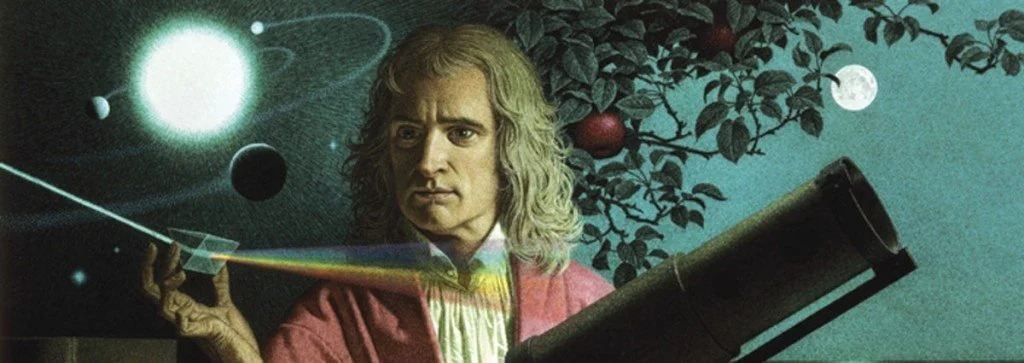
If Isaac Newton were alive today, he would almost certainly have over 100 million Twitter followers. He was something like the Elon Musk of his day– a bit controversial, incredibly innovative, and always the topic of conversation. People were obsessed with Newton’s every word and action. When news spread, for example, that Isaac Newton had invested in the famous South Sea Company, investors clamored to buy the stock… simply because Newton was in it. Sort of like Dogecoin.
The South Sea Company eventually collapsed after barely generating a penny in revenue; it still ranks as one of the biggest stock bubbles of all time, and Newton himself lost a fortune. But the obsession with Newton never stopped. People even paid attention to things that he didn’t say to infer what he might be thinking.
Intellectual Freedom Started With The Elon Musk Of The 1600s
Simon Black Notes From The Field February 22, 2022
If Isaac Newton were alive today, he would almost certainly have over 100 million Twitter followers. He was something like the Elon Musk of his day– a bit controversial, incredibly innovative, and always the topic of conversation. People were obsessed with Newton’s every word and action. When news spread, for example, that Isaac Newton had invested in the famous South Sea Company, investors clamored to buy the stock… simply because Newton was in it. Sort of like Dogecoin.
The South Sea Company eventually collapsed after barely generating a penny in revenue; it still ranks as one of the biggest stock bubbles of all time, and Newton himself lost a fortune. But the obsession with Newton never stopped. People even paid attention to things that he didn’t say to infer what he might be thinking.
In some of his earlier works, for example, Newton did not explicitly profess his faith in either the Catholic religion or the Church of England. Of course he didn’t explicitly state that the didn’t adhere to religious faith either. But people took the omission as a sign that Newton was an atheist. (He wasn’t.)
Bear in mind that England in the 1600s was a highly puritan society; “atheist” was one of the worst things you could call a human being back then.
Yet with so many people assuming that Newton was an atheist, there was a sudden surge of interest in alternative spirituality. It became cool to question mainstream religious beliefs. And a number of philosophers emerged from this new trend that Newton never intended to create.
One of those was Charles Blount, who argued in 1679 that organized religion was not the will of the divine, but the product of human beings seeking wealth and power over others.
Want to ensure you and your loved ones can survive and thrive, no matter what happens next? Download our FREE Ultimate Plan B Guide now to discover fully actionable strategies you can start putting in place right now...
He described clergymen as having a “vain opinion of their great knowledge” and that they “pretended to know all things which were done in Heaven and Earth.”
And he considered most stories of the Bible to be contrived works of men that were “irrational and repugnant”.
Primarily Blount was merely arguing for intellectual independence. He didn’t care what people believed, so long as they reached their own conclusions.
Blount himself was deeply spiritual. Yet he was instantly branded an atheist.
Blount pushed back. He argued that ‘atheist’ was just a word used to defame someone with different ideas.
He compared ‘atheist’ to how ancient Romans used the term ‘barbarian’ to describe Germanic tribes as feral savages, even though many of the barbarian kingdoms were extremely cultured and civilized.
But Blount was effectively canceled. His books were censored, and he was financially and socially ruined. He died by suicide in 1693.
Another writer named John Toland took on the fight for intellectual independence, and published his first book in 1696, three years after Blount’s death.
Toland argued that human beings should not have blind faith in anything without first engaging in discussion, exploration, and intellectual discourse.
Obviously this infuriated the authorities; Toland was immediately labeled an atheist, and his books were condemned.
In Dublin, the Irish parliament went so far as to hold a public burning of Toland’s works on the steps of the capital on September 18, 1697.
Several governments ordered Toland’s arrest. His ideas were simply too dangerous, and they couldn’t have an evil atheist on the loose.
Toland managed to escape to Hanover and remained in the protective care of the much more enlightened Queen of Prussia.
This is still the case today; if one society has totally lost its mind, there’s most likely another one where you can feel safe, free, and unconstrained. Hanover was Toland’s Plan B.
Toland continued his work while in Hanover, secure from all the crazies who wished him harm. He became a staunch advocate for freedom of thought, later writing:
“Let all men freely speak what they think, without being ever branded or punished. . . [only] then you are sure to hear the whole truth.”
It’s notable that Toland is the first person to coin the term “free thinker”, and he lived during an era when being one was a terrible crime.
While in Hanover, Toland was subjected to endless scorn from “experts” back in England; more than FIFTY books were written criticizing his work and demeaning his character as an evil atheist.
Obviously Toland wasn’t an atheist either. Like Charles Blount before him, he simply had a different viewpoint and believed wholeheartedly in everyone’s right to intellectual freedom.
But that was more than enough for the ‘experts’ to censor him.
Another major development during this era was the authorities’ attempts to control information.
At this point in history, the printing press was having an extraordinary impact on social development; new ideas could be published and widely circulated at a speed that had never been imaginable.
Many politicians and religious leaders wanted to restrict this technology in order to prevent the spread of misinformation.
The Archdeacon of Canterbury complained in the late 1600s, for example, that the printing press was making it too easy for the “ignorant and unlearned… plebeians and mechanics… to demonstrate out of The Leviathan that there is no God.”
They didn’t like the ideas that were spreading… so their solution was to control the spread.
Now, if what I’ve written above sounds vaguely similar to our modern world, here’s the good news:
Freedom prevailed. Cancel culture lost.
It took time. But eventually the critics and the censors and ‘experts’ (who were always wrong about everything) faded into obscurity, paving the way for the Age of Enlightenment in which scientific achievement and freedom of thought flourished like never before.
This is true about all forms of totalitarianism, whether you’re talking about the Soviet Union or extreme ideological intolerance. They always fail. Freedom wins.
But it’s a bumpy road to get there… which is why it’s always worth having a Plan B.
PS: Alternative residency or citizenship generally forms the backbone of any robust Plan B. But there are WAY more things to consider. That’s why we created our 31-page Ultimate Plan B report to help you get to grips with this topic, and you can download the full, unabridged report here - 100% FREE.