
What Is A Multicurrency Account, And Should You Get One?
.What Is A Multicurrency Account, And Should You Get One?
Spencer Tierney Tue, February 15, 2022,
You might need a more global account for certain banking needs. That’s where a multicurrency account comes in. How it works, and other options that may work better for you
The minute you use your U.S. debit card or bank account abroad, your wallet may feel the impact. You may incur foreign transaction and ATM fees. Or your bank may decline debit card purchases if it doesn’t know you’re traveling. If you live or have close connections outside the U.S., you might need a more global account for certain banking needs. That’s where a multicurrency account comes in. Here’s how it works and how to know if one’s right for you.
What Is A Multicurrency Account, And Should You Get One?
Spencer Tierney Tue, February 15, 2022,
You might need a more global account for certain banking needs. That’s where a multicurrency account comes in. How it works, and other options that may work better for you
The minute you use your U.S. debit card or bank account abroad, your wallet may feel the impact. You may incur foreign transaction and ATM fees. Or your bank may decline debit card purchases if it doesn’t know you’re traveling. If you live or have close connections outside the U.S., you might need a more global account for certain banking needs. That’s where a multicurrency account comes in. Here’s how it works and how to know if one’s right for you.
What is a multicurrency account?
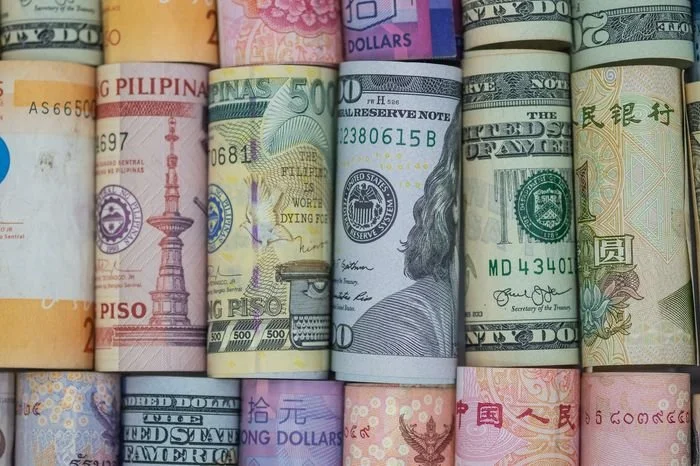
A multicurrency account is typically an account at a bank or financial tech firm that lets you spend, receive and hold multiple currencies. It can work like an international checking account with multiple subaccounts, each with a different currency. This lets you manage payments in a foreign currency instead of opening a new bank account overseas.
“Credit cards and multicurrency accounts allow you to spend as a local, but only multicurrency accounts allow you to quickly transfer and receive money,” says Leyla Beriker, product owner of U.S. payments at Revolut.
Most multicurrency accounts — also called foreign currency accounts — are reserved for businesses and high net worth individuals through international or private banking services at banks such as Citibank C, -0.07% and HSBC HSBC, -0.69%. Two notable exceptions are Wise WPLCF, -0.74% and Revolut, two fintech companies that offer multicurrency accounts for the general public and businesses.
When to choose a multicurrency account
1. You live or work outside the U.S.
A multicurrency account can be an easy way to avoid currency conversions every time you make a transaction. This removes the uncertainty in cost from constant exchange rate fluctuations.
To continue reading, please go to the original article here:
Where To Invest Your Money When Inflation Is High — and What Investments To Avoid
.Where To Invest Your Money When Inflation Is High — and What Investments To Avoid
Vance Cariaga Mon, February 14, 2022
Inflation fears in the United States have many Americans thinking about how to protect their money against rising prices and higher costs of living. This requires strategizing on which investments to gravitate toward — and which to avoid.
Inflation fears in the United States have many Americans thinking about how to protect their money against rising prices and higher costs of living. This requires strategizing on which investments to gravitate toward — and which to avoid.
Where To Invest Your Money When Inflation Is High — and What Investments To Avoid
Vance Cariaga Mon, February 14, 2022
Inflation fears in the United States have many Americans thinking about how to protect their money against rising prices and higher costs of living. This requires strategizing on which investments to gravitate toward — and which to avoid.
Inflation fears in the United States have many Americans thinking about how to protect their money against rising prices and higher costs of living. This requires strategizing on which investments to gravitate toward — and which to avoid.
As the BBC reported in May 2021, consumer prices in the U.S. rose 4.2% during the 12 months ending in April, which was the biggest increase since September 2008. Higher prices for cars and food drove much of the increase. When prices push higher, your money doesn’t go as far — especially for those on fixed incomes, like retirees. Rising prices also bring the threat of higher interest rates, which tend to drag down equities, CNBC reported.
So where should you put your money?
First off, if you have investments in stocks, don’t start panicking just yet. It’s still too early to know if the U.S. is headed for an extended period of inflation or if the current situation is a temporary blip caused by COVID-19 restrictions and lockdowns.
Moreover, financial experts point out that historically, stocks tend to do well even during periods of inflation. CNBC referenced comments from Steve Hanke, a professor of applied economics at Johns Hopkins University, who said the average annual return on stocks between 1990 and 2017 was 11%. Even when you factor in the cost of inflation, the average annual return was 8%.
Before looking at the best investments during inflation, it’s a good idea to know which ones to avoid. Experts interviewed by CNBC say you should shy away from long-term bonds and certificates of deposit, because buying them during periods of inflation means you might miss out on higher rates later. Short- to intermediate-term bonds are a better choice.
You might also want to avoid growth stocks, which are companies with above-average expected earnings, during inflation. Alex Doll, president of Anfield Wealth Management in Cleveland, told CNBC that growth stocks “tend to perform worse because they expect to earn the bulk of their cash flow in the future. And as inflation increases, those future cash flows are worth less.”
In terms of investments that make good hedges against inflation, Business Insider listed the following:
To continue reading, please go to the original article here:
https://finance.yahoo.com/news/where-invest-money-inflation-high-200001918.html
Where To Invest Your Money When Inflation Is High — and What Investments To Avoid
.Where To Invest Your Money When Inflation Is High — and What Investments To Avoid
Vance Cariaga Mon, February 14, 2022
Inflation fears in the United States have many Americans thinking about how to protect their money against rising prices and higher costs of living. This requires strategizing on which investments to gravitate toward — and which to avoid.
Inflation fears in the United States have many Americans thinking about how to protect their money against rising prices and higher costs of living. This requires strategizing on which investments to gravitate toward — and which to avoid.
Where To Invest Your Money When Inflation Is High — and What Investments To Avoid
Vance Cariaga Mon, February 14, 2022
Inflation fears in the United States have many Americans thinking about how to protect their money against rising prices and higher costs of living. This requires strategizing on which investments to gravitate toward — and which to avoid.
Inflation fears in the United States have many Americans thinking about how to protect their money against rising prices and higher costs of living. This requires strategizing on which investments to gravitate toward — and which to avoid.
As the BBC reported in May 2021, consumer prices in the U.S. rose 4.2% during the 12 months ending in April, which was the biggest increase since September 2008. Higher prices for cars and food drove much of the increase.
When prices push higher, your money doesn’t go as far — especially for those on fixed incomes, like retirees. Rising prices also bring the threat of higher interest rates, which tend to drag down equities, CNBC reported.
So where should you put your money?
First off, if you have investments in stocks, don’t start panicking just yet. It’s still too early to know if the U.S. is headed for an extended period of inflation or if the current situation is a temporary blip caused by COVID-19 restrictions and lockdowns.
Moreover, financial experts point out that historically, stocks tend to do well even during periods of inflation. CNBC referenced comments from Steve Hanke, a professor of applied economics at Johns Hopkins University, who said the average annual return on stocks between 1990 and 2017 was 11%. Even when you factor in the cost of inflation, the average annual return was 8%.
Before looking at the best investments during inflation, it’s a good idea to know which ones to avoid. Experts interviewed by CNBC say you should shy away from long-term bonds and certificates of deposit, because buying them during periods of inflation means you might miss out on higher rates later. Short- to intermediate-term bonds are a better choice.
To continue reading, please go to the original article here:
https://finance.yahoo.com/news/where-invest-money-inflation-high-200001918.html
One Of The Best Pieces Of Advice I Ever Heard
.One Of The Best Pieces Of Advice I Ever Heard
Notes From The Field By Simon Black February 15, 2022
Thursday, November 29, 2001 felt like any other day in Argentina. People woke up, went to work, and lived their lives. There was nothing really unusual about that day, everything seemed fine. Sure, Argentina’s economy had been in a severe recession for three years, so life was difficult. But it was still normal. By the end of the day, however, a major bank run had started in the country, and life changed forever.
For years, up to that point, Argentina had pegged its currency at a 1:1 rate to the US dollar; this meant that anyone holding local currency could freely convert their Argentine pesos to US dollars. The government’s goal behind this scheme was to reign in inflation and demonstrate that their currency was strong. And it worked for a few years.
One Of The Best Pieces Of Advice I Ever Heard
Notes From The Field By Simon Black February 15, 2022
Thursday, November 29, 2001 felt like any other day in Argentina. People woke up, went to work, and lived their lives. There was nothing really unusual about that day, everything seemed fine. Sure, Argentina’s economy had been in a severe recession for three years, so life was difficult. But it was still normal. By the end of the day, however, a major bank run had started in the country, and life changed forever.
For years, up to that point, Argentina had pegged its currency at a 1:1 rate to the US dollar; this meant that anyone holding local currency could freely convert their Argentine pesos to US dollars. The government’s goal behind this scheme was to reign in inflation and demonstrate that their currency was strong. And it worked for a few years.
But eventually the convertibility became unsustainable. As more and more businesses and individuals converted their pesos into dollars, the government started running out of dollars.
So they went into debt.
Argentina’s government borrowed a mountain of US dollars from foreign investors, solely to maintain this artificial exchange rate. Nearly every dollar they borrowed was almost immediately exchanged for pesos, forcing the government to borrow even more dollars.
By November 2001 the situation reached its crisis moment; large depositors became spooked that the heavily indebted government was about to break the unsustainable exchange rate and devalue the peso. So they started withdrawing their money and converting into dollars.
Panic quickly set in. The next day, Friday November 30th, everyone in the country was rushing to get their money out and convert to dollars.
Then it happened: the next morning, on Saturday December 1st, the government announced that they were freezing every bank account in the country in order to stop the panic.
Needless to say the bank freeze had the opposite effect. People went out into the streets to riot like never before. Workers went on strike. Looting and crime rates soared. Grocery store shelves emptied out.
The government quickly deployed federal forces to quell violence and restore order, but the ‘mostly peaceful’ protests continued.
By December 20th the situation was so untenable that the President resigned from office and was forced to escape the capital by helicopter.
The new President almost immediately defaulted on Argentina’s $132 billion national debt, and then devalued peso.
The whole episode took less than five weeks-- from November 29, when everything still felt ‘normal’, to early January 2002 when they had blood in the streets, looting, empty grocery shelves, frozen bank accounts, debt default, and a currency crisis.
My friend Marco was there for it. Originally from Argentina, Marco was studying at Harvard at the time, but he flew back to Buenos Aires to help his family.
He once told me a story about how he went with his father to the bank in December 2001, after the national freeze. Marco’s dad was holding his life’s savings in physical cash US dollars inside a safety deposit box at the bank.
They had to bribe a guard to let them in and access the box; Marco and his dad then stuffed bricks of cash down their pants, then escaped by making their way past the violent mob outside.
It’s not a situation anyone ever expects to find themselves in. Again, it had only been a few days prior that everything still felt normal. But then the unthinkable happened.
This shouldn’t be so far-fetched anymore. The last few years should have taught all of us that absolutely anything can happen. And just because something hasn’t happened yet doesn’t mean that it won’t happen.
Marco recently told me the best piece of advice his dad ever gave him. He said, “Son, learn English… and know how to swim. Because by the time you’re going to really need those skills, it will be too late.”
That’s incredible advice. But I would add to that list-- Have a Plan B! Because by the time you need one, it will be too late.
Marco’s father did have a Plan B; he was smart enough to realize that the exchange rate wouldn’t last, and that the government would freeze everyone’s bank account. So he held his savings in US dollar cash.
The flaw, of course, was that the money was still held inside of a bank building, in a safety deposit box. They were lucky to have been able to bribe their way into the bank.
A great Plan B covers a lot of ground. It ensures that, no matter what happens or doesn’t happen next, you’ll be in a position of strength. Critically-- a Plan B is NOT the same as having a bunker mentality.
I know there are a lot of people who are deeply concerned about the risks in the world and the astonishing erosion of individual liberty. And it’s natural that stressing out over those risks can prompt an emotional reaction, often resulting in a bunker mentality where people feel like they need to prepare for the end of the world.
The emotional response is understandable. But, rationally, the world is not coming to an end. And when you have a bunker mentality, you end up spending a lot of time, money, and energy wallowing in negativity and preparing for a very specific scenario that is extremely unlikely.
A bunker mentality is like having a REALLY expensive insurance policy on your home that will pay you out $1 BILLION… but only if your home gets struck by lightening.
Sure, if your house is struck by lightening you’ll clean up. But that specific insurance policy costs you a lot of money and misses 99.99999% of other potential risks.
A great Plan B, on the other hand, enables you to go on living your life with a lot more confidence that your risk exposure is greatly reduced across the board.
For example, if you’re concerned what our public health dictators will do the next time a new virus pops up, you might consider having a second residency in a country that’s more respectful to individual freedom. (You could even have a third, fourth, fifth, etc. residency to increase your options.)
If you’re concerned about the privacy, control, and censorship from Big Tech companies, you can stop using them. There are dozens of different options to set up your digital life in a way that reduces or eliminates Big Tech’s dominance over you.
And sure, if you’re concerned about thinning grocery store shelves and ongoing supply chain dysfunction, it doesn’t hurt to have some extra nonperishable food and water at home. Or even a small generator. But if those risks never really play out, you won’t be worse off for having taken those steps.
If the supply chain magically clears up, you won’t be worse off for having some extra food in your pantry, or tending a small garden. If the Big Tech companies suddenly embrace Free Speech, you won’t be worse off securing your data from them.
And you’ll hardly be worse off having another option where you and your family have the right to live, work, and visit whenever you want.
That’s the key difference in what makes a great Plan B: you’re not planning for the end of the world, or even a specific outcome. It’s about taking a rational view of obvious risks, and finding sensible, cost-effective ways to mitigate them.
And it’s definitely something you want to have as soon as possible. Because, just like knowing how to swim, by the time you need it, it will be too late.
Simon Black, Founder, SovereignMan.com
https://www.sovereignman.com/trends/one-of-the-best-pieces-of-advice-i-ever-heard-34643/
FEAR AND GREED
.FEAR AND GREED
Financial planning, Investment by Robert Lockie
Whenever somebody asks me why the stock market fell in value, I have a simple response. On that day, there were more sellers than buyers. If they ask why there were more sellers than buyers, I respond that there was more fear than greed.
Fear and greed are the two competing emotions which govern the behaviour of market participants and this applies regardless of the economic fundamentals which underpin the long-term performance of any investment. Uncertainty, whether economic, political or stock market, has always been with us and always will be as the future is unknown.
FEAR AND GREED
Financial planning, Investment by Robert Lockie
Whenever somebody asks me why the stock market fell in value, I have a simple response. On that day, there were more sellers than buyers. If they ask why there were more sellers than buyers, I respond that there was more fear than greed.
Fear and greed are the two competing emotions which govern the behaviour of market participants and this applies regardless of the economic fundamentals which underpin the long-term performance of any investment. Uncertainty, whether economic, political or stock market, has always been with us and always will be as the future is unknown.
Meanwhile, investors and other market participants are prone to various psychological biases and they must manage these in the context of such a background. The last couple of years remind us that even when the fundamentals look unfavourable, market prices can diverge significantly from this and produce strong returns.
In such circumstances, where substantial segments of the economy have effectively been shut down yet market returns have been positive, investors must have felt something of a conflict between their fear and greed. Failure to manage these forces effectively can have a material long-term impact on the decisions that they make and consequently their long-term financial security. A couple of examples may serve to illustrate this point.
Availability Bias
Availability bias is a phenomenon whereby people base their perception of risk on examples which they can easily recall when a subject is raised. For example, try asking someone how they would view the construction of a nuclear power plant near to their home. Most would recall one or more of the nuclear plant disasters of varying severity such as Fukushima, Chernobyl, Three Mile Island or Windscale.
The prospect of a radioactive leak occurring on the other side of their fence unsurprisingly is something which they prefer to avoid. Although (or maybe because) leaks of radioactive material are uncommon, when they do occur they feature as major news items and therefore attract a lot of attention.
Yet despite this nuclear power stations are generally reliable and produce no emissions of the greenhouse gases to which fossil fuel plants are prone. With the world moving towards greener sources of energy, a focus on such aspects might be thought to favour nuclear over traditional energy sources. However, the principal concern of many over nuclear energy is the safety aspect.
It may therefore come as a surprise to see that even with the fatalities from Fukushima and Chernobyl, as well as those from further upstream in the extraction and processing functions, the death rate from nuclear energy is among the lowest for power generation routes, being comparable with wind.
To continue reading, please go to the original article here:
Chocolate Cake Investor Or Broccoli Investor — Which One Are You?
.Chocolate Cake Investor Or Broccoli Investor — Which One Are You?
Posted by TEBI on February 10, 2022 By Patrick Geddes
We all know from experience that rational thoughts often lose out to primal cravings. If someone handed you a plate of chocolate cake and a plate of broccoli right now, which would you instinctively reach for? As PATRICK GEDDES explains in his new book Transparent Investing, you face this same tension as an investor — between the part of your brain that longs for the sweet, satisfying allure of beating the market versus the rational and wise part that chooses the boring solution offering better results. You also face an uphill battle against an industry that makes more money selling you the finance equivalent of chocolate cake. Just because the evolution of our brain has left some blind spots doesn’t mean we’ve somehow lost our ability to reason or make good decisions. Yet documented biases like the illusion of control set us up for behavioural patterns that aren’t ideal for decision-making.
Chocolate Cake Investor Or Broccoli Investor — Which One Are You?
Posted by TEBI on February 10, 2022 By Patrick Geddes
We all know from experience that rational thoughts often lose out to primal cravings. If someone handed you a plate of chocolate cake and a plate of broccoli right now, which would you instinctively reach for? As PATRICK GEDDES explains in his new book Transparent Investing, you face this same tension as an investor — between the part of your brain that longs for the sweet, satisfying allure of beating the market versus the rational and wise part that chooses the boring solution offering better results. You also face an uphill battle against an industry that makes more money selling you the finance equivalent of chocolate cake. Just because the evolution of our brain has left some blind spots doesn’t mean we’ve somehow lost our ability to reason or make good decisions. Yet documented biases like the illusion of control set us up for behavioural patterns that aren’t ideal for decision-making.
I sometimes put a spin on the phrase “hazardous for your health” by saying that “your brain is hazardous to your wealth”. But health — especially how we eat — is a good analogy for how we invest. One could argue that many modern health problems related to diet stem from the now wide availability of the sweet or fatty foods our brains evolved to crave millions of years ago. Unfortunately, that hard-wiring of the brain now leads to problems like obesity, since fatty and sweet foods are widely available in the developed world.
This food analogy extends into the two main — and competing — approaches to investing, which I call Chocolate Cake versus Broccoli.
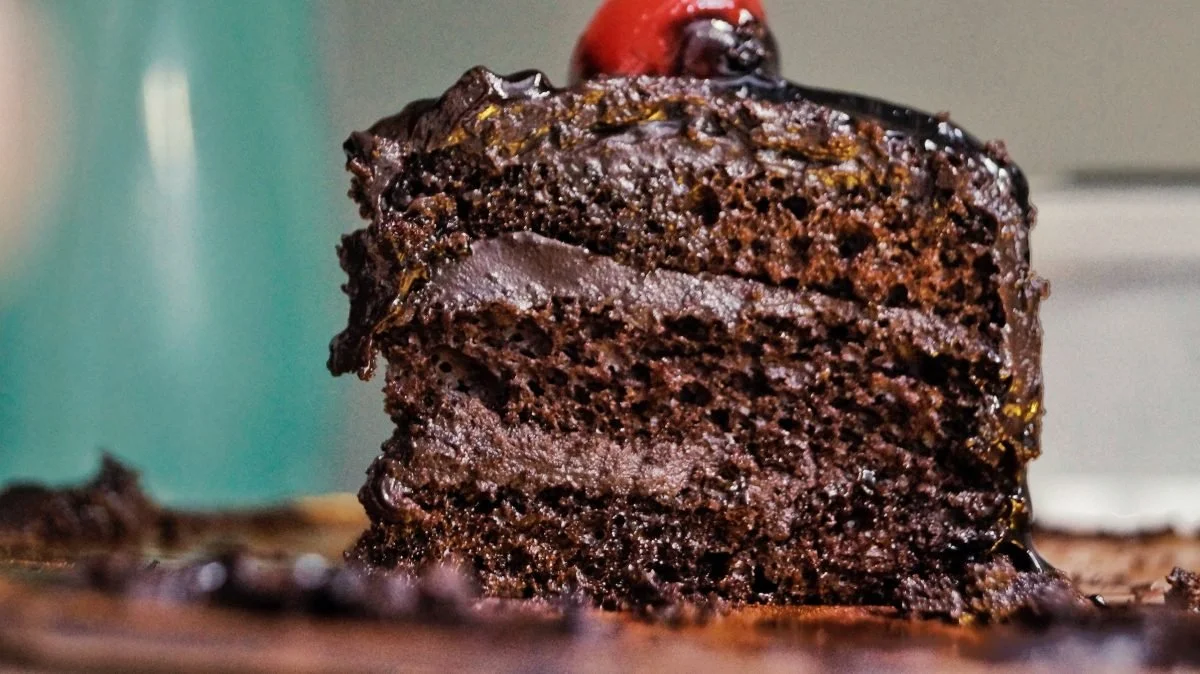
Imagine two plates in front of you: one a piece of chocolate cake; the other a piece of broccoli. Which do you want to take a bite of? Chances are, you want the cake.
Even though the neocortex may rationally calculate that eating the broccoli might keep us alive longer, everyone knows from their own experience that such rational thoughts often lose out to primal cravings. We can’t seem to stop ourselves as we reach for the cake.
As an investor, you face this same tension between the part of your brain that longs for the sweet and satisfying versus the rational (and often boring) part that chooses based on actual data.
Chocolate Cake Investing
The Chocolate Cake mindset toward investing presumes that we control much of our own destiny when it comes to how our portfolios perform. It appeals to a romantic narrative about investing, in which smart people beat the stock market through shrewd insights and knowledge. Unfortunately, it doesn’t reflect reality all that well. To illustrate the difference between the Chocolate Cake mindset and the Broccoli mindset, we’ll focus on four key parts of investing: return, risk, fees, and taxes.
If you ask Chocolate Cake investors to rank these four items by which they intuitively believe matters most, they’ll put them in the following order.
To continue reading, please go to the original article here:
https://www.evidenceinvestor.com/chocolate-cake-investor-or-broccoli-investor-which-one-are-you/
How To Avoid Being Scammed This Valentine’s Day
.How To Avoid Being Scammed This Valentine’s Day
Posted: February 7, 2022 by Jovi Umawing
With Valentine’s Day approaching, you can be sure that the scammers will want to take advantage of lovebirds everywhere. From romance scams and sextortion, to fake dating sites and phishing campaigns, here’s how to avoid a sting in the tail this Valentine’s Day.
Romance scams
Stories of online romance scams are abundant on the internet. And with COVID-19 having forced everyone to stay home much more and not meet in real life, it’s no wonder that reports of these sorts of scams have significantly increased since the start of the pandemic. LINK
So whether you meet someone on a dating site or social media, here are some common red flags to look out for:
How To Avoid Being Scammed This Valentine’s Day
Posted: February 7, 2022 by Jovi Umawing
With Valentine’s Day approaching, you can be sure that the scammers will want to take advantage of lovebirds everywhere. From romance scams and sextortion, to fake dating sites and phishing campaigns, here’s how to avoid a sting in the tail this Valentine’s Day.
Romance scams
Stories of online romance scams are abundant on the internet. And with COVID-19 having forced everyone to stay home much more and not meet in real life, it’s no wonder that reports of these sorts of scams have significantly increased since the start of the pandemic. LINK
So whether you meet someone on a dating site or social media, here are some common red flags to look out for:
Their profile and picture seem too good to be true.
They profess their love very quickly.
They share a lot about themselves—often personal stuff—in the first meeting.
They claim to be overseas and cannot stay in one place for long.
They try to lure you from whatever platform you are on to talk to you via email or video chat.
They claim to need money for something, such as to help their friends or family, repatriation, or something else entirely.
How to avoid romance scams:
Don’t give scammers the information they need. Scammers rely on what you volunteer about yourself online to tweak their script and lure you in.
Do an image search of the photo and the name of the person you’re in touch with. Scammers often steal someone else’s image to use as bait.
Go slow. Scammers tend to rush, building rapport with their victims as quickly as possible to fleece them of their money as equally quickly.
If they encourage you to invest in something—be suspicious. Start digging around online about the company that, they say, is worth investing in. Never send them money.
Follow your gut instinct. If something feels off, cut off contact immediately and report your experience to the police, the Internet Crime Complaint Center (IC3), and the dating or social media site where you met the scammer.
To continue reading, please go to the original article here: LINK
Pros and Cons of Living in a State With No Income Tax
.Pros and Cons of Living in a State With No Income Tax
John Csiszar Fri, February 11, 2022
Every U.S. citizen is responsible for paying federal income tax, and some taxpayers also must pay a separate state income tax. As of 2022, just nine states don’t impose any additional income tax: Alaska, Florida, Nevada, New Hampshire, South Dakota, Tennessee, Texas, Washington and Wyoming.
At first glance, it might seem as if there’s no reason to live in a state with income tax, as it simply adds an additional financial burden to your budget. But there are both pros and cons to living in a state that has no income tax.
Pros and Cons of Living in a State With No Income Tax
John Csiszar Fri, February 11, 2022
Every U.S. citizen is responsible for paying federal income tax, and some taxpayers also must pay a separate state income tax. As of 2022, just nine states don’t impose any additional income tax: Alaska, Florida, Nevada, New Hampshire, South Dakota, Tennessee, Texas, Washington and Wyoming.
At first glance, it might seem as if there’s no reason to live in a state with income tax, as it simply adds an additional financial burden to your budget. But there are both pros and cons to living in a state that has no income tax.
Pro: You’ll Have To Pay Only Federal Income Tax
The top federal income tax bracket for 2022 is 37%. If you find yourself in that bracket, you’ll already be forking over a significant amount of your income to the federal government. Adding state income tax on top of that, especially in a high-tax state like California, can push your total income tax bill to over 50%. Rates like that are enough to push some high earners away from high-tax states like California to no-tax states like Texas.
Con: Other Taxes Might Be Higher
States that have no income tax aren’t excessively wealthy and benevolent. They simply have a different structure for raising revenue. With no income tax dollars coming in, these states must get that revenue from other sources.
Typically, this translates to higher sales taxes, property taxes and/or gasoline taxes. For example, homeowners in New Hampshire and Texas pay some of the highest property taxes in the country, at 1.89% and 1.6%. Washington charges the third-highest gasoline taxes in the country, at 49.4 cents per gallon.
While you might not have to pay state income tax, your overall tax bill actually might end up being higher, depending on your lifestyle. If you don’t own property and you use public transportation, for example, your tax bill likely will be significantly lower. But if you own some expensive real estate and drive a gas-guzzling car for your daily commute, your tax bill could be significant.
Con: Lower Infrastructure and Education Spending
In some cases, having no state income tax does translate to lower revenue for individual states. In turn, this may result in lower state spending on basic services. According to a 2021 analysis by the U.S. Census Bureau, South Dakota and Wyoming — two states with no income tax — spent the least amount on education of all 50 states.
Other states with no income tax revenue may lower spending in other areas, such as infrastructure. As a resident, you’ll have to decide whether that tradeoff is worth it.
Is It Better To Live in a State With No Income Tax?
To continue reading, please go to the original article here:
https://news.yahoo.com/pros-cons-living-state-no-153017752.html
The Savvy Investor’s Guide to the Capital Gains Tax
.The Savvy Investor’s Guide to the Capital Gains Tax
Chris Thompson, CEPF® Fri, February 11, 2022, 11:19 AM·11 min read
If you make money from just about any source, you’re likely to find Uncle Sam nearby. It’s true of money you earn from a job, and it’s true of money you earn from investments – whether that’s stocks, real estate or collectibles. Any profit you earn from selling an investment is known as a capital gain, and the tax on this form of income is called the capital gains tax. Depending on how long you’ve held the asset before selling it, you’ll be taxed at either the short-term or long-term capital gains rate. In this article we’ll explain how the capital gains tax works, the difference between long- and short-term capital gains, the rates you’ll pay on the federal and state levels, and how to minimize the tax impact on your investments.
The Savvy Investor’s Guide to the Capital Gains Tax
Chris Thompson, CEPF® Fri, February 11, 2022, 11:19 AM·11 min read
If you make money from just about any source, you’re likely to find Uncle Sam nearby. It’s true of money you earn from a job, and it’s true of money you earn from investments – whether that’s stocks, real estate or collectibles. Any profit you earn from selling an investment is known as a capital gain, and the tax on this form of income is called the capital gains tax. Depending on how long you’ve held the asset before selling it, you’ll be taxed at either the short-term or long-term capital gains rate. In this article we’ll explain how the capital gains tax works, the difference between long- and short-term capital gains, the rates you’ll pay on the federal and state levels, and how to minimize the tax impact on your investments.
A financial advisor can help you tax-optimize your investment portfolio.
What Are Capital Gains, and How Are They Taxed?
When you buy an investment asset, you’re hoping that it will appreciate in value, thereby giving you the option to sell it for more than you initially paid for it. If you do, these profits are referred to as “capital gains” by the government.
For example, let’s say you buy 10 stocks in a company at $12, then later sell them at $15 a share. In this case, you have capital gains of $30.
Of course, you won’t always be so lucky. Let’s say another investment doesn’t do as well, and you sell it for less than what you originally paid for it. This is referred to as a capital loss.
At the end of the year, you tally up your capital gains and losses; if you’ve had a good year and your gains exceed your losses, then you deduct your losses from your gains to find your net capital gains.
These gains constitute income, so the federal government (as well as some state governments) will tax them. This is known as the capital gains tax.
Capital Gains Tax Rates: Short-Term vs. Long-Term
The timeline on which you purchase and sell your assets comes into play for capital gains taxes. The government splits capital gains into two categories: short-term and long-term. For investment profits to be considered “long-term,” the asset must be held by the owner for at least one year before sale. Any profits from the sale of assets held for less time than that are considered “short-term” capital gains.
Short-term capital gains are taxed at ordinary income tax rates. This can become problematic for those with a high income, as federal income tax rates can reach as high as 37%. And that doesn’t even account for state taxes.
Long-term capital gains, on the other hand, receive special tax treatment if you reach that one-year threshold. The top federal long-term capital gains rate is 20%, which is lower than all but two of the seven ordinary income tax rates. The other long-term capital gains tax rates are 0% and 15%.
To continue reading, please go to the original article here:
https://news.yahoo.com/savvy-investor-guide-capital-gains-161914828.html
The Money Decisions People Most Regret
.The Money Decisions People Most Regret
Neil Irwin Sat, February 12, 2022, 7:31 AM·1 min read
In this article: Daniel H. Pink American business writer
When it comes to financial decisions, it's easy to have regrets. How many people wish they hadn't sold their Amazon stock in the dot-com crash, for example, or coulda-shoulda-woulda bought bitcoin in 2013?
Yes, but: That isn't the type financial regret that is most common, Daniel H. Pink, author of a new book on regret, tells Axios. Pink collected regrets of 16,000 people in 105 countries for The Power of Regret — and the financial regrets people have fall most often into two buckets.
The Money Decisions People Most Regret
Neil Irwin Sat, February 12, 2022, 7:31 AM·1 min read
In this article: Daniel H. Pink American business writer
When it comes to financial decisions, it's easy to have regrets. How many people wish they hadn't sold their Amazon stock in the dot-com crash, for example, or coulda-shoulda-woulda bought bitcoin in 2013?
Yes, but: That isn't the type financial regret that is most common, Daniel H. Pink, author of a new book on regret, tells Axios. Pink collected regrets of 16,000 people in 105 countries for The Power of Regret — and the financial regrets people have fall most often into two buckets.
"First, people regret not building a strong foundation — that is, not saving money early, not being prudent," Pink says. "With financial regrets, they're less about not hitting a home run and more about not regularly getting on base."
"Second, people regret not being bolder in their careers," he add. "For instance, lots of folks regret staying in lackluster jobs instead of starting a business or even not being more entrepreneurial in their job-holding careers."
More broadly, Pink urges people to cast aside "no regrets" as a life motto and focus on how, properly channeled, regrets can make us happier and wiser.
To continue reading, please go to the original article here:
https://news.yahoo.com/money-decisions-people-most-regret-123111597.html?fr=sychp_catchall
Ask an Advisor: Do I Really Need a Trust?
.Ask an Advisor: Do I Really Need a Trust?
Tanza Loudenback, CFP® Mon, February 7, 2022,
I retired a few years ago and have a will and power of attorney, a reasonably good-sized net worth, mutual funds, annuities, cash, a home with no mortgage and a long-term health policy. I’ve read about trusts, but I’m still not clear on the pluses and minuses of setting one up. Why is that better than just the will and power of attorney? – Michael
I think many people ignore trusts because they seem elite. But you don’t have to be a multi-millionaire to set one up. Reader, it sounds like you’ve already created a solid estate plan with a will and a power of attorney. But these tools on their own, and without a larger plan, have limitations. Here’s why it might still make sense to get a trust. A financial advisor can help you create a financial plan that leaves a legacy to your heirs.
Ask an Advisor: Do I Really Need a Trust?
Tanza Loudenback, CFP® Mon, February 7, 2022,
I retired a few years ago and have a will and power of attorney, a reasonably good-sized net worth, mutual funds, annuities, cash, a home with no mortgage and a long-term health policy. I’ve read about trusts, but I’m still not clear on the pluses and minuses of setting one up. Why is that better than just the will and power of attorney? – Michael
I think many people ignore trusts because they seem elite. But you don’t have to be a multi-millionaire to set one up. Reader, it sounds like you’ve already created a solid estate plan with a will and a power of attorney. But these tools on their own, and without a larger plan, have limitations. Here’s why it might still make sense to get a trust. A financial advisor can help you create a financial plan that leaves a legacy to your heirs.
Why a Will Might Not Be Enough
A will is like a basic instruction manual. It outlines how the assets that don’t get transferred via a designated beneficiary should be distributed upon your death.
However, a will has to be verified by your state’s court system in a process called probate, which can be long and costly for your heirs. This is doubly true if you own property in multiple states. Additionally, probate also means your estate becomes public record.
A power of attorney gives a trusted advisor or relative the legal authority to make decisions about your property, finances or healthcare, but only while you’re still alive. That last part is crucial: Upon your death, the agreement dissolves entirely. So, if you want your assets to pass to your heirs swiftly, specifically and privately, then a trust is worth considering.
The Benefits of Using a Trust
There are several situations in which a trust is better than just a will and power of attorney.
You have multiple heirs. If you plan to pass wealth to more than one person, such as your spouse, adult children or grandchildren, a trust can streamline the transfer of assets and establish if/then rules. This can be difficult to clearly and legally explain in a will. There are also specific trusts you can set up to pass all of your assets to your spouse at your death and allow you to decide who will get what’s remaining at your spouse’s death. You can’t guarantee this type of specificity with a will.
To continue reading, please go to the original article here:
https://news.yahoo.com/ask-advisor-really-trust-200505368.html