
No Such Thing as Enough Money
No Such Thing as Enough Money
Jacob Schroeder Oct 27, 2021
How much money is enough?
It’s a philosophical money question that often arises out of discontent. We see someone of substantial means, like a celebrity, live a troubled life. Or, we ourselves experience great fortune yet feel unhappy.
It makes us wonder where the finish line is, the point when you can stop striving for more and settle into a life of satisfaction.
No Such Thing as Enough Money
Jacob Schroeder Oct 27, 2021
How much money is enough?
It’s a philosophical money question that often arises out of discontent. We see someone of substantial means, like a celebrity, live a troubled life. Or, we ourselves experience great fortune yet feel unhappy.
It makes us wonder where the finish line is, the point when you can stop striving for more and settle into a life of satisfaction.
There are some great financial blogs that provide good answers, such as here and here. And then there are a variety of books that tackle this question in their own ways: Ego Is the Enemy, The Last Lecture, the Bible, to name a few.
Another book that resonates with me, perhaps because of its instructive format, is How Will You Measure Your Life? by the late Clayton Christensen.
He comes to the startling realization:
“I had thought the destination was what was important, but it turned out it was the journey.”
That to me is the answer to the question. Though it is, in a way, a non-answer. As with many of life’s mysteries, there is no definitive conclusion.
There is never enough money.
Don’t get me wrong. I don’t mean that you can always use more money to achieve a perfect life. Rather, I mean the exact opposite.
No amount of money will insulate you from suffering.
This week Elon Musk’s wealth jumped by $36 billion in a single day, bringing his net worth close to $300 billion. Yet, even he has experienced some very public setbacks, including the tragedy of losing his first child.
“The race is not to the swift or the battle to the strong, nor does food come to the wise or wealth to the brilliant or favor to the learned; but time and chance happen to them all.” (Eccles. 9:11)
There is no such thing as enough money, as there is no destination of absolute happiness. It’s all about simply having the capacity to notice the truly joyful things along the journey.
Pay attention to the wrong things, and life starts to feel empty. As Christensen writes:
“In your life, there are going to be constant demands for your time and attention. How are you going to decide which of those demands gets resources? The trap many people fall into is to allocate their time to whoever screams loudest, and their talent to whatever offers them the fastest reward.”
His solution is to focus on what provides lasting happiness:
“Intimate, loving, and enduring relationships with our family and close friends will be among the sources of the deepest joy in our lives.”
I am writing this because yesterday we had to say good-bye to a special member of our family. Our dog Sunny, who I referenced in this previous blog, developed a severe case of intervertebral disc disease. We woke one morning to find her acting strange, and within 48 hours she was paralyzed. With a heavy sigh, the neurologist gave us the bad news that her chances of any type of recovery were minimal. At best, she would need consistent pain management. That was no way for her to live.
I am extremely grateful for the gift of having her in my life.
In the afternoon, my wife took Sunny for her last walk. We gently set her in the kids’ red wagon. Then she pulled her around the neighborhood, taking her one last time around her favorite trees and brightly colored fire hydrants. The late October sky was unseasonably warm and clear. The white sun brightened Sunny’s golden fur.
When my wife and Sunny came back around the corner, I felt as rich as possible -- to have known Sunny, to have such a caring and loving partner, to have a tragic day made picture perfect in so many ways.
That’s enough.
There is never enough money, if you can’t see the riches in front of you now.
The question shouldn’t be: how much money is enough? It should be: how much more clarity do you need to see the rich, joyful things happening all around you?
https://rootofall.substack.com/p/no-such-thing-as-enough-money
Friday “Iraq News” Posted by Tishwash at TNT 6-5-2026
TNT:
Tishwash: MP: The coordination framework supports holding an extraordinary session to complete the vote on the government.
On Thursday, June 4, 2026, MP Ibtisam Al-Hilali, from the State of Law Coalition, revealed a political movement led by the Coordination Framework forces to hold an extraordinary session of the House of Representatives to complete the vote on the vacant ministries within the cabinet of Prime Minister Ali Al-Zidi’s government.
Al-Hilali told the official agency, as reported by Baghdad Today, that: “There is a political movement, confirmation, and insistence by the forces of the Coordination Framework to hold an extraordinary session to complete the vote on the ministerial cabinet of Prime Minister Ali al-Zidi’s government.”
TNT:
Tishwash: MP: The coordination framework supports holding an extraordinary session to complete the vote on the government.
On Thursday, June 4, 2026, MP Ibtisam Al-Hilali, from the State of Law Coalition, revealed a political movement led by the Coordination Framework forces to hold an extraordinary session of the House of Representatives to complete the vote on the vacant ministries within the cabinet of Prime Minister Ali Al-Zidi’s government.
Al-Hilali told the official agency, as reported by Baghdad Today, that: “There is a political movement, confirmation, and insistence by the forces of the Coordination Framework to hold an extraordinary session to complete the vote on the ministerial cabinet of Prime Minister Ali al-Zidi’s government.”
She added that "the last meeting of the coordination framework, which was held in the presence of Prime Minister Ali al-Zidi, witnessed the attendees confirming the completion of the vote on the vacant ministries during the coming period."
Al-Hilali pointed to "political movements and calls to hold an extraordinary session of the House of Representatives during the coming week, with the aim of completing the vote on Al-Zidi's government." link
Tishwash: The Association of Iraqi Private Banks participates in the Arab-European Summit in Paris
The Association of Iraqi Private Banks participated today, Thursday, in the Arab-European Banking and Economic Summit 2026, hosted by the French capital, Paris, with a delegation headed by the Association’s President, Wadih Al-Hanzal.
The association stated in a statement received by Kalima News that its participation came within the framework of the summit organized by the Union of Arab Banks and sponsored by French President Emmanuel Macron, with the aim of discussing the most prominent global financial challenges and strengthening economic partnerships.
The statement added that the Iraqi delegation reviewed before the participants the role played by the Iraqi government in managing economic challenges and moving towards achieving sustainable development, in addition to the efforts made to reform the banking sector.
During his participation, Al-Hanzal stressed that the formation of the new Iraqi government headed by Ali Al-Zidi represents an important step in a stage that requires an advanced economic vision, noting that the emergence of its leadership from the private and banking sector environment enhances the chances of adopting modern management methods based on efficiency and speed of decision-making.
He explained that the Central Bank of Iraq is leading a program of structural reforms in the banking sector, which included raising the capital of banks, re-evaluating the branches of foreign banks, and issuing instructions specific to digital banks.
He pointed out that the efforts of digital transformation and financial inclusion resulted in achieving positive indicators, including exceeding the number of bank accounts to 15 million, issuing more than 20 million bank cards, as well as deploying about 179,000 electronic payment devices, while electronic government levies exceeded 15 trillion dinars. link
************
Tishwash: The Ministry of Finance includes "daily wages and contracts" in the 2026 budget (document)
An official document revealed on Wednesday that Finance Minister Faleh al-Sari approved the inclusion and regularization of daily wage and contract employees within the 2026 budget, and referred the file to the Budget Department to take the necessary measures.
According to an official letter issued by the Chairman of the Finance Committee, MP Aziz Sharif Al-Mayahi, and addressed to the Minister of Finance, he requests that daily wage employees in ministries and service departments in the governorates, who have served for more than four years, be included in the 2026 budget and placed on permanent staff.
The document included a note from the Minister of Finance addressed to the Budget Department stipulating that contract and daily wage employees be included in the upcoming budget, in accordance with the approved procedures. link
Tishwash: Financial expert identifies tools to "save Baghdad" from the liquidity crisis - Urgent
Iraq's public finances are under increasing pressure due to declining oil revenues and the continued near-total reliance on crude oil as the primary source of budget funding. This has impacted liquidity levels and the government's ability to meet its growing obligations.
Amid these challenges, economic calls are mounting for a review of the public revenue structure, expanding the tax base from non-oil sectors, reforming financial collection systems, combating corruption, and reducing waste in government spending.
These measures aim to enhance financial stability and mitigate the severity of recurring crises. Financial expert Saleh Rashid outlined several tools Baghdad could adopt to successfully manage the liquidity crisis, given the alarming decline in the country's treasury revenues for the third consecutive month.
Rashid told Baghdad Today that “Baghdad is facing a major, sensitive and complex financial crisis, especially after losing an important part of its crude oil export revenues as a result of the disturbances in the Strait of Hormuz, which has made Iraq one of the most affected countries in the region, as it depends on oil for more than 90% of its resources.”
He explained that "the government has limited options for addressing the financial gap, foremost among them developing non-oil revenues, which has multiple dimensions, most notably the issue of collecting money from services provided to citizens, as this issue is witnessing high levels of corruption that require a comprehensive review."
He added that "the introduction of modern technologies in collecting money, especially in the electricity and water sectors, has become an urgent necessity, provided that the collection is fair and equitable, takes into account the conditions of the poor and the simple, and contributes to reducing losses, as well as developing the collection of the rest of the other services."
Rashid pointed out that “warnings against relying on oil as a primary resource for Iraq’s treasury were issued more than 30 years ago, while many oil-producing countries, especially in the Arabian Gulf, realized the danger of this approach and began to change it, but successive governments in Baghdad did not give this issue sufficient attention.”
He added that "the picture today is clearer than ever before, which necessitates changing the economic view of oil and moving to a diversified economy in which oil is a part but not the whole," stressing "the importance of controlling the pace of spending in state institutions and strengthening efforts to combat corruption."
He concluded by saying: "A large part of Iraq's wealth is being drained due to corruption, and addressing this issue is a fundamental step for any real financial or economic reform."
The Iraqi economy is heavily dependent on crude oil export revenues, which constitute more than 90% of the country's resources, making it highly vulnerable to fluctuations in oil prices and geopolitical conditions in the region.
In recent years, warnings about the dangers of this unilateral reliance have increased, especially with the recurrence of financial crises and delays in paying salaries and government obligations at certain times. link
MilitiaMan & CREW IRAQ DINAR UPDATE-"The Tide is Turning: Real Progress Accelerating Across Iraq" REER next?
MilitiaMan & CREW IRAQ DINAR UPDATE-"The Tide is Turning: Real Progress Accelerating Across Iraq" REER next?
6-4-2026
The Crew: Samson, PompeyPeter, Petra, Daytrader, Sunkissed, GIGI and Militia Man
No drama. No intrigue. No songs and dances. Just straight, factual news that I read and interpret to the best of my ability after being an avid Dinar investor and insanely obsessed Dinarian for over 15 years.
MilitiaMan & CREW IRAQ DINAR UPDATE-"The Tide is Turning: Real Progress Accelerating Across Iraq" REER next?
6-4-2026
The Crew: Samson, PompeyPeter, Petra, Daytrader, Sunkissed, GIGI and Militia Man
No drama. No intrigue. No songs and dances. Just straight, factual news that I read and interpret to the best of my ability after being an avid Dinar investor and insanely obsessed Dinarian for over 15 years.
Follow MM on X == https://x.com/Slashn
Be sure to listen to full video for all the news……..
Iraq Economic News and Points To Ponder Thursday Afternoon 6-4-26
Financial expert identifies tools to "save Baghdad" from the liquidity crisis - Urgent
Baghdad Today - Special Report Iraq's public finances are under increasing pressure due to declining oil revenues and the continued near-total reliance on crude oil as the primary source of budget funding. This has impacted liquidity levels and the government's ability to meet its growing obligations. Amid these challenges, economic calls are mounting for a review of the public revenue structure, expanding the tax base from non-oil sectors, reforming financial collection systems, combating corruption, and reducing waste in government spending.
Financial expert identifies tools to "save Baghdad" from the liquidity crisis - Urgent
Baghdad Today - Special Report Iraq's public finances are under increasing pressure due to declining oil revenues and the continued near-total reliance on crude oil as the primary source of budget funding. This has impacted liquidity levels and the government's ability to meet its growing obligations. Amid these challenges, economic calls are mounting for a review of the public revenue structure, expanding the tax base from non-oil sectors, reforming financial collection systems, combating corruption, and reducing waste in government spending.
These measures aim to enhance financial stability and mitigate the severity of recurring crises. Financial expert Saleh Rashid outlined several tools Baghdad could adopt to successfully manage the liquidity crisis, given the alarming decline in the country's treasury revenues for the third consecutive month.
Rashid told Baghdad Today that “Baghdad is facing a major, sensitive and complex financial crisis, especially after losing an important part of its crude oil export revenues as a result of the disturbances in the Strait of Hormuz, which has made Iraq one of the most affected countries in the region, as it depends on oil for more than 90% of its resources.”
He explained that "the government has limited options for addressing the financial gap, foremost among them developing non-oil revenues, which has multiple dimensions, most notably the issue of collecting money from services provided to citizens, as this issue is witnessing high levels of corruption that require a comprehensive review."
He added that "the introduction of modern technologies in collecting money, especially in the electricity and water sectors, has become an urgent necessity, provided that the collection is fair and equitable, takes into account the conditions of the poor and the simple, and contributes to reducing losses, as well as developing the collection of the rest of the other services."
Rashid pointed out that “warnings against relying on oil as a primary resource for Iraq’s treasury were issued more than 30 years ago, while many oil-producing countries, especially in the Arabian Gulf, realized the danger of this approach and began to change it, but successive governments in Baghdad did not give this issue sufficient attention.”
He added that "the picture today is clearer than ever before, which necessitates changing the economic view of oil and moving to a diversified economy in which oil is a part but not the whole," stressing "the importance of controlling the pace of spending in state institutions and strengthening efforts to combat corruption."
He concluded by saying: "A large part of Iraq's wealth is being drained due to corruption, and addressing this issue is a fundamental step for any real financial or economic reform."
The Iraqi economy is heavily dependent on crude oil export revenues, which constitute more than 90% of the country's resources, making it highly vulnerable to fluctuations in oil prices and geopolitical conditions in the region.
In recent years, warnings about the dangers of this unilateral reliance have increased, especially with the recurrence of financial crises and delays in paying salaries and government obligations at certain times.
https://baghdadtoday.news/300574-.html
An Economist Says Increased Money Printing "Threatens Financial Stability."
Information / Special: Economic expert Dirgham Muhammad Ali confirmed on Monday that the reopening of the Strait of Hormuz does not mean Iraq's immediate return to previous export levels, noting that increasing the printing of currency to cover the financial deficit threatens the economy.
Ali told Al-Maalomah that "crude oil production has declined as a result of the decrease in reservoir pressure in some fields and the shutdown of a number of wells, which requires technical procedures and sufficient time to rehabilitate them and resume work at full capacity," indicating that "restoring previous export rates will not be achieved directly just by opening the strait."
On the financial front, Ali warned against “rushing to adopt the option of printing money to address economic pressures,” stressing that “this step needs careful study to assess its potential effects on the national economy.”
He explained that “increasing the money supply without a real economic backing or parallel growth in foreign reserves could put pressure on the value of the Iraqi dinar and exacerbate financial imbalances,” noting that “this option entails significant economic risks.”
Ali pointed out that "resorting to external borrowing is not an easy solution, due to the legal restrictions that regulate borrowing operations and impose specific ceilings on it, as well as the limited availability of financing alternatives at the present time."
He added that "non-oil revenues are still of limited impact," explaining that "customs revenues have been affected by the decrease in the volume of imports during the recent period as a result of the implementation of the ASYCUDA system, which has been reflected in the volume of resources collected from customs and Levies."
He explained that "the continued repercussions of the Strait of Hormuz closure are placing additional pressure on the country's financial situation, given its heavy reliance on oil revenues and the absence of alternative export outlets capable of compensating for the losses, thus making the available economic options for addressing the crisis more complex." (End
Parliamentary Request To Hold An Emergency Session To Complete The Government Cabinet And Approve The Budget
6/3/2026 TRANSLATION: Republic of Iraq, Iraqi Parliament, Office of Attorney Ammer Nasrallah, Number: 315, Date: 3/6/2026, In the Name of God, the Most Gracious, the Most Merciful.
Republic of Iraq, Iraqi Parliament, Office of Attorney Ammer Rahim Nasrallah, Parliamentary Services Bloc. To the Honorable Speaker of the Parliament: Convening an Emergency Session.
Greetings. Pursuant to Article (61) and Article 73 - Fourth) of the Constitution and the Parliament Law No.(13 of 2018 ), in response to the public interest and the requirements of the current stage, and given the importance of completing the requirements of the current stage and its direct repercussions on providing services to citizens and enhancing government performance, we kindly request that you take the necessary steps to convene an emergency session of the esteemed Parliament to complete the vote on the cabinet and finalize the vacant ministerial positions, thereby contributing to strengthening institutional stability and enabling the government to perform its duties optimally.
We also emphasize the importance of expediting the submission and discussion of the schedules for the 2026 Federal General Budget, given its significant impact on the implementation of service and development projects and meeting the needs of the people.
The provinces, as well as ensuring the continuation of reconstruction plans and improving the level of services
provided to citizens. These files represent a national priority that requires concerted efforts and expedited procedures to serve our beloved country and fulfill the aspirations of our noble people.
With our deepest gratitude and appreciation. A copy of this document is sent to: - The Office of the Speaker of the House of Representatives / For your kind review. - The Office of the First Deputy Speaker of the House of Representatives / For your kind review. - The Office of the Deputy Speaker of the House of Representatives /
For your kind review. Address: Najaf - Emad Sukkar Complex.
Representative Amer Rahim Nasrallah, Member of the Iraqi Parliament, 2/2026/6.
Al-Azirjawi Warns Of The Dangers Of Borrowing To Secure Salaries: It Exacerbates Iraq's Debt.
The Information Agency / Baghdad - MP Ali Al-Azirjawi warned on Tuesday against the government's continued reliance on borrowing to secure salaries and operational expenses, stressing that this approach exacerbates the debt burden and directly impacts the national economy.
Al-Azirjawi told the Information Agency that “Iraq is suffering from increasing debt that is casting a shadow over the overall economic situation,” explaining that “the continued reliance on loans reflects the absence of clear financial plans for managing resources.”
He added that "the continuation of the borrowing policy without real solutions will lead to a further deterioration in the national economy and increase the financial burdens on the state," emphasizing "the necessity of developing a reform vision to manage the financial file more efficiently and sustainably."
He affirmed that "addressing the financial crisis requires radical solutions, far removed from temporary solutions that rely on borrowing to cover operational expenses." End/25
The Relationship Between Money and Marriage
The Relationship Between Money and Marriage
Jacob Schroeder Oct 12, 2021
I love scotch; she hates it.
There are many things my wife and I don't agree on, but money isn't one of them. We are intentional spenders, buying only what mutually aligns with our needs or values. For instance, disinterested in paying for the trappings of an ostentatious wedding, we tied the knot at New York's City Hall; our reception was watching our first son play at a public playground in the East Village on a warm fall afternoon.
We've been happily together for 16 years, which makes me wonder: Does love make the financial side of marriage work, or is it the other way around?
The Relationship Between Money and Marriage
Jacob Schroeder Oct 12, 2021
I love scotch; she hates it.
There are many things my wife and I don't agree on, but money isn't one of them. We are intentional spenders, buying only what mutually aligns with our needs or values. For instance, disinterested in paying for the trappings of an ostentatious wedding, we tied the knot at New York's City Hall; our reception was watching our first son play at a public playground in the East Village on a warm fall afternoon.
We've been happily together for 16 years, which makes me wonder: Does love make the financial side of marriage work, or is it the other way around?
The most important decision you'll ever make
Warren Buffett's financial wealth is only rivaled by his wealth of wisdom. Rarely does a day pass without someone in the finance industry quoting the Oracle of Omaha on social media. Heck, Warren Buffett's influence is so great, people have essentially made careers out of quoting him.
Yet, with all of his knowledge on investing and business, he says the most important decision a person can make has nothing to do with investing and business. At the 2009 Berkshire Hathaway annual meeting, he said:
“Marry the right person. I’m serious about that. It will make more difference in your life. It will change your aspirations, all kinds of things.”
You don't make it to Buffett's level of stature with a track record of being wrong often, and researchers seem to agree with him on this point. Studies show that marrying the right person can significantly improve our health, career success and wealth.
Marriage will change you in many ways. By definition, marriage -- joining two into one -- is disruptive. Often, for the better. It is about pursuing new things while sacrificing others. A major contributor to that disruption though is money.
Although we've long moved on from the ancient practice of marrying for the sake of status, money is an irrevocable part of marriage, at times, for better, and at times, for worse. Here is what research has uncovered about the relationship between money and marriage.
The relationship between money and marriage
Married people are wealthier than single people.
A 2005 study tracking people in their 20s, 30s and 40s found that married people experienced a 77% increase in wealth over single people. In fact, married individuals in the study saw their wealth rise 16% for each year of marriage. This makes sense considering married couples can combine incomes and share expenses.
However, it may not tell the whole story. You can't expect to tie the knot and just start watching the money roll right in. More affluent people are more likelier to get married in the first place. A report by the American Enterprise Institute details the wide gap in marriage rates by income. About a quarter of “poor” adults aged 18 to 55 are currently married, compared to 56% of middle- and upper-class adults.
Wealthier couples are happier.
A study published in the Journal of Happiness Studies suggests that married individuals are generally happier than the unmarried.
What about happiness among married couples?
Turns out, money is one of the biggest contributors to marital happiness. That's what University of Maryland sociology professor Philip Cohen found after analyzing data from the General Social Survey, a long-running study of Americans’ views and behaviors.
The survey shows a class divide when it comes to marital happiness. Of upper-class married couples, 70% said they are "very happy" while only 53% of lower-income couples could say the same.
TO READ MORE: https://rootofall.substack.com/p/the-relationship-between-money-and-marriage
The Dollar's Gold Problem Just Got Bigger
The Dollar's Gold Problem Just Got Bigger
Taylor Kenny: 6-4-2026
The safest asset in the world may no longer be the asset central banks trust most.
In this video, Taylor breaks down the dollar’s growing gold problem — and why this may be one of the clearest warnings yet that the monetary system is changing
The Dollar's Gold Problem Just Got Bigger
Taylor Kenny: 6-4-2026
The safest asset in the world may no longer be the asset central banks trust most.
In this video, Taylor breaks down the dollar’s growing gold problem — and why this may be one of the clearest warnings yet that the monetary system is changing
CHAPTERS:
0:00 The “Safest Asset” Narrative Just Cracked
0:57 Gold Overtakes U.S. Treasuries
1:27 Why Treasuries Dominated for 80 Years
2:20 The Stealth Default Hiding in Plain Sight
3:15 Central Banks Started Buying Gold at Record Levels
4:12 Russia’s Frozen Reserves Changed Everything
6:07 Why Gold Has No Counterparty Risk
9:29 Gold, Silver, and the New Monetary System
FRANK26….6-4-26….THE SPEED OF TRUMP
KTFA
Thursday Night Video
FRANK26….6-4-26….THE SPEED OF TRUMP
A big Powwow today ….lots of entities meeting including the World Bank.. IMO it will be a RI (Re-Instatement)
This video is in Frank’s and his team’s opinion only
Frank’s team is Walkingstick, Eddie and Omar in Iraq and guests
KTFA
Thursday Night Video
FRANK26….6-4-26….THE SPEED OF TRUMP
A big Powwow today ….lots of entities meeting including the World Bank.. IMO it will be a RI (Re-Instatement)
This video is in Frank’s and his team’s opinion only
Frank’s team is Walkingstick, Eddie and Omar in Iraq and guests
Playback Number: 605-313-5163 PIN: 156996#
Seeds of Wisdom RV and Economics Updates Thursday Afternoon 6-4-26
Good Afternoon Dinar Recaps,
Crypto Enters Mainstream Housing Market as Coinbase Launches Token-Backed Mortgages
The integration of cryptocurrency into mortgage lending marks a significant step toward the convergence of digital assets and traditional finance.
Good Afternoon Dinar Recaps,
Crypto Enters Mainstream Housing Market as Coinbase Launches Token-Backed Mortgages
The integration of cryptocurrency into mortgage lending marks a significant step toward the convergence of digital assets and traditional finance.
Overview
Coinbase and Better Home & Finance have announced plans to launch a new mortgage program this summer that will allow qualified borrowers to use Bitcoin and USDC as collateral for home loan down payments. The initiative, backed through Fannie Mae-approved mortgage structures, represents one of the most significant integrations of digital assets into the U.S. housing finance system to date.
The move reflects a broader trend of digital assets becoming increasingly intertwined with traditional financial services. Supporters view the program as an innovative way to unlock wealth held in cryptocurrency, while critics warn about the risks associated with asset volatility and financial stability.
Key Developments
1. Coinbase Launches Token-Backed Mortgage Program
Qualified borrowers will soon be able to use Bitcoin (BTC) and USD Coin (USDC) as collateral to help fund mortgage down payments. The program is being developed through a partnership between Coinbase and Better Home & Finance and is expected to launch during the summer of 2026.
The initiative aims to help homebuyers access homeownership without first liquidating their digital asset holdings.
2. Fannie Mae Framework Opens the Door
The new mortgage structure follows policy changes made by the Federal Housing Finance Agency (FHFA), which directed Fannie Mae and Freddie Mac to consider cryptocurrency assets during mortgage risk assessments without requiring conversion into traditional currency.
This policy shift has created new opportunities for digital assets to be recognized alongside conventional financial resources.
3. Traditional Finance and Digital Assets Continue to Merge
The mortgage initiative highlights the accelerating convergence between blockchain-based assets and traditional banking systems. Digital assets are increasingly being viewed not only as investments but also as usable financial collateral within mainstream lending markets.
This evolution could pave the way for additional tokenized financial products in the future.
4. Regulatory and Market Risks Remain
Despite the enthusiasm surrounding the program, concerns remain regarding the volatility of cryptocurrency prices. Significant fluctuations in Bitcoin values could create challenges for both borrowers and lenders if collateral values decline sharply.
Several lawmakers have also expressed concerns regarding the potential impact on housing market stability.
5. Digital Asset Adoption Expands Beyond Investing
The use of cryptocurrency for mortgage qualification reflects a broader trend toward integrating digital assets into everyday financial activities. Industry leaders believe that tokenized assets may eventually become a standard component of wealth management, lending, and real estate transactions.
Why It Matters
This initiative represents a major milestone in the ongoing evolution of financial markets. By allowing cryptocurrency holdings to support home purchases, traditional financial institutions are beginning to recognize digital assets as part of mainstream personal finance.
The development also demonstrates growing confidence among regulators and lenders that blockchain-based assets can play a larger role within the broader economy.
Why It Matters to Foreign Currency Holders
Digital assets are increasingly being treated as legitimate financial collateral.
Tokenized wealth may become more integrated into traditional lending systems.
Expanded digital asset adoption could influence future payment and settlement networks.
Alternative forms of collateral may reshape how wealth is evaluated globally.
Implications for the Global Reset
Pillar 1: Tokenization of Financial Assets
The acceptance of cryptocurrency-backed mortgages reflects the broader movement toward tokenized finance. Assets that once existed only within digital ecosystems are increasingly being integrated into traditional financial structures.
Pillar 2: Transformation of Lending and Credit Markets
As digital assets become recognized within lending frameworks, the criteria used to assess wealth and creditworthiness may evolve significantly. This could contribute to the modernization of financial infrastructure worldwide.
Closing Insight
The launch of token-backed mortgages demonstrates how rapidly the boundaries between traditional finance and digital assets are disappearing. While risks remain, the willingness of major institutions to incorporate cryptocurrency into housing finance signals a growing acceptance of blockchain-based wealth within the broader financial system.
This is not just a mortgage innovation—it is another step toward a financial system where digital assets function alongside traditional money and credit.
Seeds of Wisdom Team
Newshounds News™ Exclusive
Sources
~~~~~~~~~~
Seeds of Wisdom Team RV Currency Facts Youtube and Rumble
Newshound's News Telegram Room Link
RV Facts with Proof Links Link
RV Updates Proof links - Facts Link
Follow the Gold/Silver Rate COMEX
Follow Fast Facts
Seeds of Wisdom Team™Website
Thank you Dinar Recaps
Europe Just Bragged About Losing to Gold
Europe Just Bragged About Losing to Gold
Notes From the Field By James Hickman (Simon Black / Sovereign Man) June 4, 2026
When the euro launched on January 1, 1999, it was sold as the future. It would be a single currency to knit Europe together — to wipe out the exchange-rate friction between member states, complete the continent's single market, and bind a dozen squabbling nations into one economic bloc with one money.
And in the grander ambitions of its architects, it was meant to do something more: to grow up into a true global currency, the first serious rival the US dollar had faced since World War II.
Europe Just Bragged About Losing to Gold
Notes From the Field By James Hickman (Simon Black / Sovereign Man) June 4, 2026
When the euro launched on January 1, 1999, it was sold as the future. It would be a single currency to knit Europe together — to wipe out the exchange-rate friction between member states, complete the continent's single market, and bind a dozen squabbling nations into one economic bloc with one money.
And in the grander ambitions of its architects, it was meant to do something more: to grow up into a true global currency, the first serious rival the US dollar had faced since World War II.
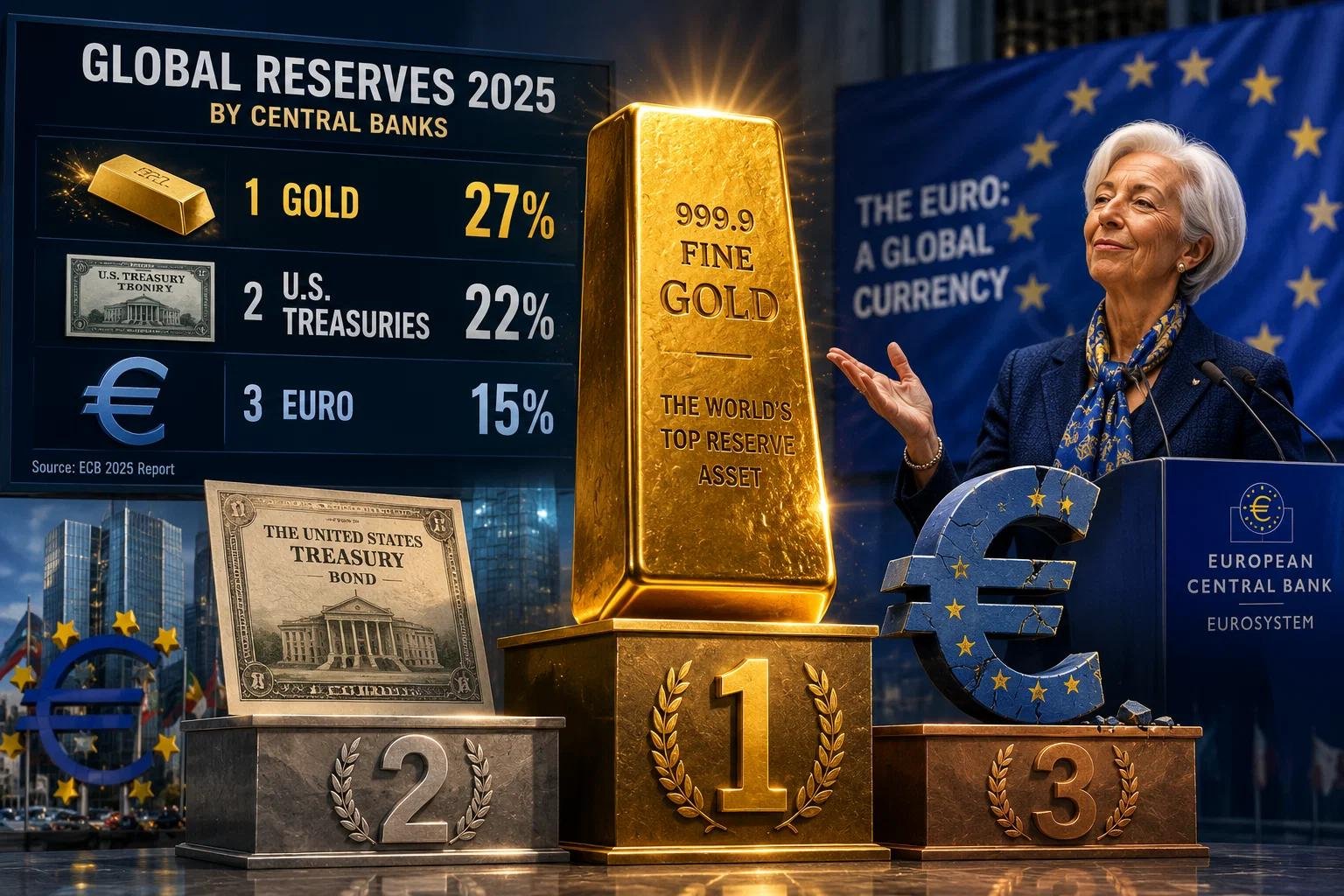
Last week, the European Central Bank published its 2025 report card, with ECB President Christine Lagarde celebrating “an opening for the euro to enhance its global appeal.”
The report bragged that the euro remains the second most used currency in the world, as well as the second most held in reserve, behind only the dollar.
The key word is “currency.”
Because in reality, 2025 was the year that gold took the top spot, making up 27% of global reserves held by governments and central banks. That pushed US Treasuries into second place with 22%, and the euro into third, making up 15% of global reserves.
A metal that pays no interest and earns no yield is now the biggest slice of global reserves, up from just 20% a year earlier.
The world is, in fact, trying to diversify away from the dollar. Central banks have spent years quietly trimming their dollar exposure, looking for somewhere safer to park their national savings.
But they are not choosing euros.
Then why, the ECB may counter, was 2025 a record year for international borrowing in euros?
Because there is more debt in everything than ever — global debt keeps smashing new highs, so a record pile of euro IOUs is less an achievement than a symptom of the times.
But to give credit where it's due, the euro is genuinely in first place in one market, according to Lagarde: "The euro became the leading currency in the green and sustainable international bond market."
That's the debt Europe sells to bankroll the very net-zero crusade that gutted its own economy. So the euro's crowning achievement of 2025 was becoming the world champion at borrowing money to make itself poorer.
If you ever needed one sentence to explain why nobody wants this currency, there it is.
Because leading the world in the things that make you poorer is the entire European model. Across the continent, governments spent two decades waging war on their own cheap energy in the name of net zero — turning their backs on nuclear power that supplied a third of Europe's electricity in 1990 and barely 15% today.
They saddled themselves with some of the highest power prices in the developed world and watched their industry pack up and leave. They threw open their borders, then aimed their police and courts at the citizens who objected.
The result is a continent so hollowed out that Mississippi, the poorest state in America, now produces more wealth per person than France or Italy.
But sure, this is the euro’s moment...
Meanwhile, central banks added roughly 850 tonnes of physical gold in 2025, a slight step down from the record-shattering pace of the prior two years, but bought at the highest prices in human history.
Poland led the gold-buying pack last year, followed by China, Turkey, and India.
But for a stretch of 2025, the single biggest gold buyer on the planet wasn't a country at all — it was Tether, the company behind the world's biggest dollar-backed stablecoin.
In the third quarter alone it bought more gold than any central bank on earth, and by the end of January it was sitting on roughly 148 tonnes — nearly 4.8 million ounces, worth about $22 billion — enough to rank among the top 30 gold holders in the world, ahead of the likes of Australia and South Korea.
This is exactly why the gold story is far from over.
The extra gold central banks have bought since 2022 laid the foundation for a price that has nearly tripled since — yet even that represents only a modest reallocation out of US dollars.
So what happens when they move even another 5% of their $10 trillion in reserves into gold?
With no single currency able to replace the dollar, and the reasons to diversify only growing, gold looks set to keep climbing as the world's largest reserve asset.
To your freedom, James Hickman Co-Founder, Schiff Sovereign LLC
P.S. Everyone from central banks to a stablecoin giant is racing into gold — which is why it's trading near record highs. We think owning the companies that produce it beats buying bullion at the top.
That's the whole idea behind Strategic Assets, Schiff Sovereign's monthly investment research. We hunt for profitable real-asset businesses with clean balance sheets, real catalysts, and a low multiple of free cash flow.
And it's working. We've seen it multiply the value of several precious metals companies, with others still in the buy range today. The same setup is now lining up well beyond the metals — in energy and other real assets — as nations around the world scramble to secure the critical resources a fragmenting world runs on.
Reset Intelligence: The Treasury Becomes the Teller
Reset Intelligence: The Treasury Becomes the Teller
6-4-2026
Reset Intelligence: The Treasury Becomes the Teller
By David E. Atterton | Reset Intelligence | @EXIT_FIAT
The dollar is being rebuilt from a promise you trust into a toll you pay through.
Iraq is the first place you can watch the whole motion at once.
And the dinar sits at the end of that line, the last to move and the one everyone is waiting on.
Reset Intelligence: The Treasury Becomes the Teller
6-4-2026
Reset Intelligence: The Treasury Becomes the Teller
By David E. Atterton | Reset Intelligence | @EXIT_FIAT
The dollar is being rebuilt from a promise you trust into a toll you pay through.
Iraq is the first place you can watch the whole motion at once.
And the dinar sits at the end of that line, the last to move and the one everyone is waiting on.
Marco Rubio said it on camera this week and almost everyone scrolled past it. Cuba, he said, is not run by its government. It is run by a military holding company called GAESA that owns nearly everything while not a dollar of it reaches the public treasury. He was describing Cuba. He was also describing the same layer the United States is now prying open in Iran, Iraq and Venezuela at once.
This week Treasury sanctioned Iran’s four largest crypto exchanges, and Scott Bessent said the regime’s economy is in free fall.
In Baghdad a corruption court seized forty properties, ten million dollars and a cache of weapons from one former oil official, the oil money and the militia guns turned out onto the same table. The cabinet then approved tripling its pipeline exports north and west, off the Strait of Hormuz that Iran can choke.
The other half of the story runs through Washington. Venezuela’s oil money now has to clear a US Treasury account before a cent reaches Caracas.
The GENIUS Act has turned every dollar stablecoin into a forced buyer of US Treasuries, making a single crypto company a bigger holder of American debt than South Korea. The Treasury Secretary called it a moment for dollar supremacy himself.
The dollar is being rebuilt from a promise you trust into a toll you pay through. Iraq is the first place you can watch the whole motion at once, and the dinar sits at the end of that line as the settlement variable, the last to move and the one everyone is waiting on.
That is the read in short. The full extended briefing, every source named and verified, is yours and your readers’ on a five day free trial: read the full briefing free for 5 days.
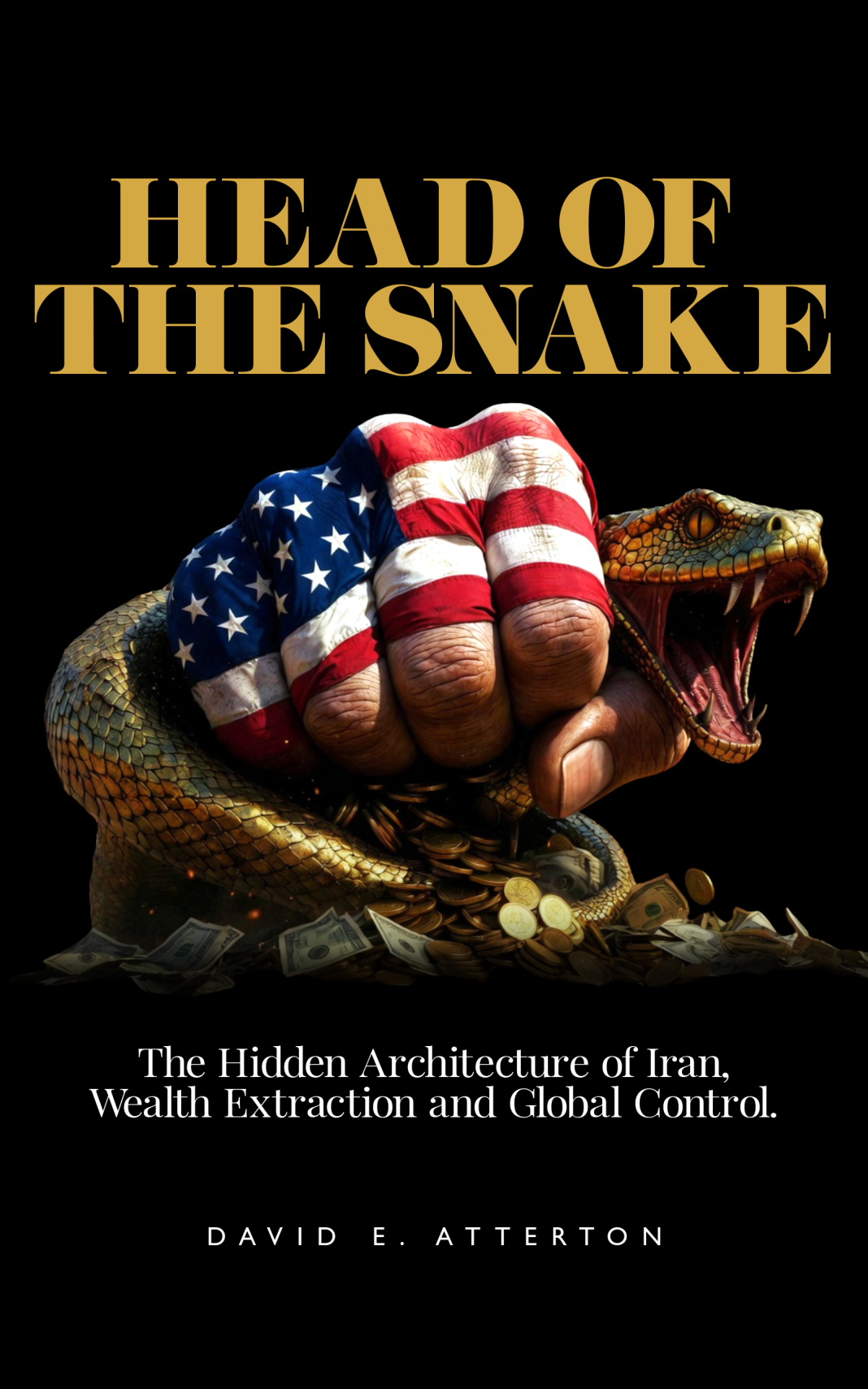
The full documented case behind all of it is the book, Head of the Snake, 25% off through Sunday with code 25XOFF: resetintelligence.com/head-of-the-snake.
This is the signal.
Coffee with MarkZ, joined by Dr. Scott Young. 06/04/2026
Coffee with MarkZ, joined by Dr. Scott Young. 06/04/2026
Some highlights by PDK-Not verbatim
MarkZ Disclaimer: Please consider everything on this call as my opinion. Be sure to consult a professional for any financial decisions
MZ: Iraq grinds forward, power shifts, and side effects. Dr. Scott Young joins us for some NESARA chat. StacieZ will join for a health chat after the news.
Coffee with MarkZ, joined by Dr. Scott Young. 06/04/2026
Some highlights by PDK-Not verbatim
MarkZ Disclaimer: Please consider everything on this call as my opinion. Be sure to consult a professional for any financial decisions
MZ: Iraq grinds forward, power shifts, and side effects. Dr. Scott Young joins us for some NESARA chat. StacieZ will join for a health chat after the news.
THE CONTENT IN THIS PODCAST IS FOR GENERAL & EDUCATIONAL PURPOSES ONLY&NOT INTENDED TO PROVIDE ANY PROFESSIONAL, FINANCIAL OR LEGAL ADVICE. PLEASE CONSIDER EVERYTHING DISCUSSED IN MARKZ’S OPINION ONLY
https://rumble.com/user/theoriginalmarkz
Kick: https://kick.com/theoriginalmarkz
Markz's linktree https://linktr.ee/theMarkZshow
FOLLOW MARKZ : TWITTER . https://twitter.com/originalmarkz?s=21. TRUTH SOCIAL . https://truthsocial.com/@theoriginalm...
Mod: MarkZ "Back To Basics" Pre-Recorded Call" for Newbies 10-19-2022 )https://www.youtube.com/watch?v=37oILmAlptM
MARKZ DAILY LINKS: https://theoriginalmarkz.com/home/
THANK YOU FOR JOINING. HAVE A BLESSED DAY. SEE YOU IN THE MORNING FOR COFFEE @ 10:00 AM EST ~ UNLESS BREAKING NEWS HAPPENS! FOR UPDATES ON MARK’S PODCAST GO TO: https://t.me/+b3hYhYlhKM1hYzcx