
Iraq Economic News and Points To Ponder Wednesday Evening 10-21-26
CBI Foreign Reserves Rise To $81.5B In August
2026-10-21 06:18 Shafaq News- Baghdad Iraq's foreign reserves rose to $81.538 billion at the end of August 2026, up from $80.633 billion a month earlier, according to Central Bank of Iraq (CBI) data released on Wednesday. The gain of about $905 million followed four straight monthly declines from April through July, according to the data reviewed by Shafaq News. Reserves are still $15.894 billion below the $97.432 billion recorded at the end of 2025, a drop of about 16.3% over the first eight months of the year.
CBI Foreign Reserves Rise To $81.5B In August
2026-10-21 06:18 Shafaq News- Baghdad Iraq's foreign reserves rose to $81.538 billion at the end of August 2026, up from $80.633 billion a month earlier, according to Central Bank of Iraq (CBI) data released on Wednesday. The gain of about $905 million followed four straight monthly declines from April through July, according to the data reviewed by Shafaq News. Reserves are still $15.894 billion below the $97.432 billion recorded at the end of 2025, a drop of about 16.3% over the first eight months of the year.
At the end of January, reserves stood at $101.082 billion. The CBI data puts them at $100.341 billion in March and $97.809 billion in April. They then fell to $93.673 billion in May, $86.175 billion in June and $80.633 billion in July.
Gold rose sharply in August even as CBI investments declined. Its value rose to 32.655 trillion dinars (about $25.1 billion) from 29.665 trillion dinars (about $22.8 billion) at the end of July, putting gold holdings above the $24.2 billion recorded at the end of 2025. CBI investments fell over the same month to 72.926 trillion dinars (about $56.1 billion) from 75.034 trillion dinars (about $57.7 billion).
The dollar equivalents in the data are based on an exchange rate of 1,300 dinars per dollar. The figures predate the government's decision to raise the official rate to 1,520 dinars per dollar, which took effect on Oct. 7.
Read more: CBI pledges unrestricted dollar supply after devaluation
https://shafaq.com/en/Economy/CBI-foreign-reserves-rise-to-81-5B-in-August
Iraq 2026 Domestic Debt Jumps 25%
2026-10-21 07:01 Shafaq News- Baghdad Iraq's domestic public debt climbed to 113.485 trillion dinars ($74.66B) at the end of August, up 25.4% from the end of 2025, according to data released by the Central Bank of Iraq (CBI).
Domestic debt rose by 3.969 trillion dinars ($2.61B) in August alone, from 109.516 trillion dinars ($72.05B) at the end of July. The total was 22.97 trillion dinars ($15.11B) higher than the 90.515 trillion dinars ($59.55B) recorded at the end of last year.
Claims by the Ministry of Finance in favor of the CBI accounted for the largest share of domestic debt, reaching 76.499 trillion dinars ($50.33B) at the end of August, up from 72.499 trillion dinars ($47.70B) a month earlier.
Treasury bills totaled 8.711 trillion dinars ($5.73B), while loans stood at 18.945 trillion dinars ($12.46B) and bonds reached 9.330 trillion dinars ($6.14B). https://shafaq.com/en/Economy/Iraq-2026-domestic-debt-jumps-25
Iraq Budget Deficit Records $30B Through August 2026
2026-10-21 08:07 Shafaq News- Baghdad Iraq recorded approximately 45.355 trillion dinars ($29.84 billion) in federal budget revenues through the end of August 2026, with oil accounting for around 77% of total state revenue, according to Finance Ministry data.
Reviewed by Shafaq News, the figures show that oil revenues reached approximately 34.726 trillion dinars ($22.85 billion), while non-oil revenues totaled around 10.629 trillion dinars ($6.99 billion), representing about 23% of the total.
Total expenditure, meanwhile, reached approximately 75.787 trillion dinars ($49.86 billion), leaving a budget deficit of around 30.432 trillion dinars ($20.02 billion) during the first eight months of the year.
Employee compensation accounted for the largest share of current spending, at approximately 40.994 trillion dinars ($26.97 billion), followed by social welfare expenditure at around 18.443 trillion dinars ($12.13 billion). Grants, subsidies, interest payments, and other expenses totaled approximately 6.011 trillion dinars ($3.95 billion).
Spending on commodity supplies reached around 2.454 trillion dinars ($1.61 billion), while expenditure on services totaled approximately 156 billion dinars ($102.6 million). Maintenance of assets accounted for about 48.5 billion dinars ($31.9 million).
Debt servicing totaled approximately 7.561 trillion dinars ($4.97 billion) through the end of August, while capital expenditure stood at around 30.1 billion dinars ($19.8 million), according to the ministry’s economic classification of spending.
Read more: $45B deficit looms over Iraq’s draft 2027 budget
https://shafaq.com/en/Economy/Iraq-records-20-billion-budget-deficit-through-August-2026
Rafidain Bank Recovers Over $15M In Overdue Debts
2026-10-21 11:22 Shafaq News- Baghdad Iraq's state-owned Rafidain Bank collected more than 23.3 billion dinars (about $15.3 million) and nearly $280,000 in overdue credit repayments during the third quarter of 2026, the bank said on Wednesday.
From July 1 to Sept. 30, the bank recovered 23,325,910,931 dinars and $279,862, according to a statement. The bank said the funds would strengthen its financial resources and support its banking and financing activities.
Rafidain said it would keep pursuing outstanding debts under its existing rules. Borrowers can visit its branches to confirm what they owe and arrange settlements within the law.
The announcement came two days after Finance Minister Falih Al-Sari directed the bank to resume lending to public-sector employees and expand financing for private businesses. Most state banks had halted loans and salary advances by September because of liquidity shortages.
Read more: Iraq’s private banks: Capital Growth and the structural credit gap
https://shafaq.com/en/Economy/Rafidain-Bank-recovers-over-15M-in-overdue-debts
USD/IQD Climbs In Baghdad And Erbil Markets
2026-10-21 03:38 Shafaq News- Baghdad/ Erbil The US dollar opened higher in Iraq on Wednesday, trading around 170,000 dinars per $100.
According to a Shafaq News market survey, the dollar traded in Baghdad's Al-Kifah and Al-Harithiya exchanges at 168,900 dinars per 100 dollars, up from Tuesday's 168,250 dinars.
In the Iraqi capital, exchange shops sold the dollar at 169,500 dinars and bought it at 168,500 dinars, while in Erbil, selling prices stood at 168,900 dinars and buying prices at 168,800 dinars.
https://shafaq.com/en/Economy/USD-IQD-climbs-in-Baghdad-and-Erbil-markets-1-2
Gold Prices Fall In Baghdad And Erbil
2026-10-21 04:31 Shafaq News- Baghdad/ Erbil On Wednesday, gold prices hovered around 950,000 IQD per mithqal in Baghdad and Erbil markets, according to a Shafaq News market survey.
At Baghdad's Al-Nahr Street wholesale market, 21-carat Gulf, Turkish and European gold sold for 965,000 IQD per mithqal (equivalent to five grams) and was bought at 961,000 IQD, down from Tuesday's 974,000 IQD.
Iraqi 21-carat gold sold for 935,000 IQD per mithqal and was bought at 931,000 IQD.
At jewelry stores, 21-carat Gulf gold sold for between 965,000 and 975,000 IQD per mithqal, while Iraqi gold sold for between 935,000 and 945,000 IQD.
In Erbil, prices also fell. 22-carat gold sold for about 1.034 million IQD per mithqal, 21-carat for 988,000 IQD, and 18-carat for 846,000 IQD. https://shafaq.com/en/Economy/Gold-prices-fall-in-Baghdad-and-Erbil-1-1-7
Oil Prices Jump Amid Rising Middle East Threats
2026-10-21 01:15 Shafaq News Oil prices gained over $1 on Wednesday as escalating Middle East tensions fuelled fears of supply disruptions, while falling US crude and product inventories lent support to the market.
Brent crude futures rose $1.59, or 1.5%, to $110.38 per barrel as of 0350 GMT. US West Texas Intermediate (WTI) crude gained $1.36, or 1.4%, to $99.18 per barrel.
Prices fell in the previous trading session after Iran's president discussed mediation efforts in a meeting with Pakistan's army chief in Tehran, though Brent hit a five-month high before easing.
"Oil prices have been having a bit of wild ride in the last couple of sessions," said Suvro Sarkar, head of energy research at DBS.
"We believe this is a mix of profit taking and optimistic hopes of a Qatar- or Pakistan-brokered deal, countered by the realisation that any deal is still very distant and compounded further by inventory data from the American Petroleum Institute (API), which shows drawdowns continuing in the US for both crude and products."
Iran told Pakistan's army chief there would be no talks with Washington until its demands were met, Iranian media outlet Nournews reported on Tuesday, adding that a Qatari delegation had arrived in Tehran. There was no official confirmation of the reports.
Maritime security risks are also escalating. Shiptracker Kpler said on Monday that at least 18 vessel attacks were recorded over the past two weeks, while LSEG analysts warned Iran was targeting tankers well beyond the Strait of Hormuz, reaching into the Gulf of Oman and jeopardising Gulf crude loadings and the ship-to-ship transfers supporting regional loadings.
In Saudi Arabia, the Houthis on Monday claimed responsibility for attacks on a Saudi Aramco site in Yanbu, the Shaybah oilfield and Saudi Arabia's Riyadh and Abha airports.
The death toll from a Houthi attack on Yemeni government forces on Monday rose to 73 as fighting intensified.
Iranian Foreign Minister Abbas Araqchi said in a television interview aired on Tuesday that Iran has not received a response from Saudi Arabia or Yemen's Houthis to its offer to help broker peace talks.
In the US, two Energy Department officials said on Tuesday they were working with refiners around the world to boost fuel output as a diesel shortage has raised prices.
According to market sources citing API data, US crude stocks fell by 4.9 million barrels in the week ended October 16. (REUTERS) https://shafaq.com/en/Economy/Oil-prices-jump-amid-rising-Middle-East-threats
Ariel: Iraqi Dinar Update, Acceleration and Recalibration
Ariel: Iraqi Dinar Update, Acceleration and Recalibration
10-21-2026
Iraqi Dinar Update: Acceleration & Recalibration (Where We Are)
ACCELERATION SEQUENCE POST-IMF, POST-CABINET, POST-TREASURY LIFT — INVESTOR PROJECTION WINDOW
Iraq isn’t moving fast because they’re panicking. They’re moving fast because the infrastructure is finally in place.
Ariel: Iraqi Dinar Update, Acceleration and Recalibration
10-21-2026
Iraqi Dinar Update: Acceleration & Recalibration (Where We Are)
ACCELERATION SEQUENCE POST-IMF, POST-CABINET, POST-TREASURY LIFT — INVESTOR PROJECTION WINDOW
Iraq isn’t moving fast because they’re panicking. They’re moving fast because the infrastructure is finally in place.
The IMF gave clearance. The cabinet gave authorization. The Treasury gave the distribution layer. The CBI gave the operational window. The electronic note system gave the physical transition mechanism.
Every prerequisite has been met. The extended hours through November 30 are the runway. The rate is the aircraft. It’s already taxiing.
October 21 — banks open extended hours.
October 21-November 3 — volume testing, note distribution, remittance activation.
November 3-10 — highest-probability window for formal rate adjustment.
November 10-30 — transition stabilization, new note circulation, budget finalization.
The program rate dies in this window. The 2027 budget doesn’t work with it. Iraqi officials said so. The infrastructure they’re building this week only makes sense if the rate changes. Nobody builds a runway for an aircraft that isn’t coming.
The black pill crowd will tell you the devaluation to 1520 means the dinar is dying. It means the opposite. You don’t devalue a currency to kill it. You devalue it to create room for the next move.
1520 is the crouch before the jump. The extended hours, the Treasury lift, the note replacement system, the cabinet acceleration that’s the jump. The 2027 budget is the landing. And the landing requires a rate that makes the math work.*
You don’t extend banking hours for two months unless you expect a flood.
You don’t lift exchange company restrictions unless you need the distribution layer operational.
You don’t build an electronic note replacement system unless you’re preparing for volume that the old system can’t handle.
The Iraqi government just told you what’s coming. They said it in the cabinet statement. They said it in the extended hours directive. They said it in the note replacement system. They said it in the 2027 budget admission about salaries.
The only people who don’t hear it are the ones who were never listening.
Read Full Article:
https://www.patreon.com/Prolotario1/posts/iraqi-dinar-we-172899559
https://dinarchronicles.com/2026/10/20/prolotario-iraqi-dinar-update-acceleration-and-recalibration/
Seeds of Wisdom RV and Economics Updates Wednesday Afternoon 10-21-26
Good Afternoon Dinar Recaps,
GLOBAL TRADE RESET WATCH: APEC WARNS GROWING IMBALANCES THREATEN ECONOMIC STABILITY
Asia-Pacific finance leaders call for stronger economic coordination as trade imbalances, rising debt and digital investment reshape the global financial landscape.
Good Afternoon Dinar Recaps,
GLOBAL TRADE RESET WATCH: APEC WARNS GROWING IMBALANCES THREATEN ECONOMIC STABILITY
Asia-Pacific finance leaders call for stronger economic coordination as trade imbalances, rising debt and digital investment reshape the global financial landscape.
OVERVIEW
APEC finance ministers warn that persistent global imbalances threaten economic growth and financial stability, pledging stronger communication and cooperation.
Officials highlighted vulnerable supply chains, tighter financing conditions, geopolitical tensions and debt pressures as challenges facing the global economy.
APEC also endorsed a voluntary policy statement on digital infrastructure financing, connecting trade resilience with the technology investment needed for future growth.
KEY DEVELOPMENTS
1. APEC Calls for Greater Cooperation on Global Imbalances
On October 21, finance ministers from the 21 economies of the Asia-Pacific Economic Cooperation forum concluded a two-day meeting in Hong Kong, China, with a joint statement addressing mounting economic uncertainties.
The officials acknowledged that persistent global imbalances pose risks to growth and stability. They agreed that global rebalancing is in the common interest of participating economies and called for stronger policy communication and cooperation.
Global imbalances occur when economies maintain substantial differences in saving, spending, investment, imports and exports. Persistent surpluses in some economies and deficits in others can contribute to trade disputes, financing pressures and disagreements over economic policy.
However, the ministers did not announce binding trade targets or a specific program to eliminate these imbalances. Their statement establishes a shared policy direction rather than a completed economic agreement.
2. China’s Trade Surplus Adds to Pressure for Rebalancing
China’s expanding exports remain an important part of the international trade debate. Associated Press reported that China’s trade surplus was expected to exceed its 2025 record of approximately $1.2 trillion.
China’s export strength, including high-technology products such as electric vehicles and lithium-ion batteries, reflects its growing role in global manufacturing and supply chains.
For trading partners, the challenge is balancing access to competitively priced goods with concerns about domestic industries, market access and the distribution of economic benefits.
The central issue is not simply which country exports the most. It is whether the international trading system can accommodate these differences without escalating protectionism or destabilizing financial relationships.
APEC’s statement recognizes the need for cooperation, but it does not resolve the underlying disagreements or establish a new global trade framework.
3. Digital Infrastructure Becomes Part of the Economic Strategy
Alongside its discussion of trade and financial stability, APEC endorsed a Policy Statement on Digital Infrastructure Financing Across the Asia-Pacific Region.
The initiative promotes voluntary cooperation to help attract investment, address financing gaps and expand the digital infrastructure needed to support economic development.
Reliable digital networks can help businesses participate in international markets, improve financial access and support newer technologies, including artificial intelligence and digital payment systems.
But infrastructure requires capital, dependable regulation, cybersecurity and access to financing. Countries that cannot fund these investments risk falling behind in productivity and digital commerce.
The initiative therefore links technology development with the broader question of how capital is allocated across the global economy. It is a policy direction—not a commitment to a single funding pool, a new international currency or a binding financial agreement.
WHY IT MATTERS
International trade and finance are deeply connected. Trade imbalances influence the movement of capital between countries, while borrowing costs, currency movements and government policies affect businesses’ ability to import, export and invest.
When these pressures intensify, governments may face difficult choices involving domestic industries, public debt, consumer prices and international cooperation.
APEC’s statement is important because it recognizes that trade, fiscal policy, technology investment and financial stability cannot be treated as separate issues.
Its practical impact will depend on whether member economies translate broad commitments into policies that improve market access, strengthen supply chains and support sustainable investment.
For the global financial reset discussion, this is evidence of governments responding to structural pressures within the existing system—not confirmation that a new monetary system has already been established.
WHY IT MATTERS TO FOREIGN CURRENCY HOLDERS
Trade relationships can influence currency demand because exports, imports, investment and debt payments affect cross-border money flows.
Changes in trade policy can also influence inflation, economic growth and central-bank decisions, which may affect exchange rates over time.
However, a trade imbalance does not automatically produce a currency revaluation. Currency values depend on many factors, including interest rates, economic performance, capital flows, market confidence and government policy.
Foreign currency holders should distinguish between official policy developments and predictions about future exchange rates.
Hope, not hype: Follow the agreements that governments actually implement, and do not make life-changing financial decisions based on speculation about a global reset.
THE FIVE PILLARS CONNECTION
Pillar 1: Debt
Tighter financing conditions and public debt pressures can limit governments’ ability to support households, invest in infrastructure and respond to economic shocks. APEC emphasized the need for credible fiscal frameworks that preserve long-term financial stability.
Pillar 2: Trade
This is the central pillar of the story. Persistent trade imbalances and vulnerable supply chains are prompting governments to discuss stronger cooperation. Whether those discussions change global trade flows will depend on future policy decisions.
Pillar 3: Assets
Trade surpluses and deficits influence cross-border capital movements and the demand for financial assets. Changes in investment patterns could affect bond markets and currencies, but the direction and scale of any effects are not predetermined.
Pillar 4: Technology
APEC’s digital infrastructure financing initiative recognizes that connectivity, digital services and responsible technology adoption are increasingly important to productivity and international competitiveness.
Pillar 5: Energy
Commodity price volatility and geopolitical tensions can raise production and transportation costs, placing additional pressure on trade balances and inflation. Energy resilience remains an important part of the broader economic stability challenge.
THE BOTTOM LINE
APEC’s latest statement highlights the growing recognition that global trade imbalances, debt pressures, technology investment and financial stability are interconnected challenges.
The commitment to stronger cooperation is a meaningful development, but implementation—not the language of a declaration—will determine whether it produces lasting change.
The evolution of the global financial system will be shaped by how nations rebalance trade, finance new infrastructure and cooperate across borders—not by a single announcement, but by the practical decisions that follow.
Seeds of Wisdom Team
SOURCES
1. Asia-Pacific Economic Cooperation (APEC) — “APEC Finance Ministers Issue Joint Statement”
~~~~~~~~~~
RV Facts with Proof - Step 1🌱 Link
RV Intel Highlights - Step 2🔥 Link
Start Here room with over 110 RV Topics Link
Ask Your ❓Questions❓ in the Q & A Room Link
Seeds of Wisdom Team Rooms Directory Link
Follow the Gold/Silver Rate COMEX
Follow Fast Facts
Seeds of Wisdom Team™ Website
Seeds of Wisdom Team™ Rumble
Thank you Dinar Recaps
Reset Intelligence: The Dollar Gap Runs Through Iran.
Emailed to Recaps~ Thank you David
Reset Intelligence: The Dollar Gap Runs Through Iran.
By Reset Intelligence | @EXIT_FIAT
Iraq's Central Bank says trade with Iran is one reason Baghdad's street dollar stays above the bank's rate.
On Tuesday night, an official source said, Baghdad ordered its first crossing with Iran shut, with the rest to follow.
Emailed to Recaps~ Thank you David
Reset Intelligence: The Dollar Gap Runs Through Iran.
By Reset Intelligence | @EXIT_FIAT
Iraq's Central Bank says trade with Iran is one reason Baghdad's street dollar stays above the bank's rate.
On Tuesday night, an official source said, Baghdad ordered its first crossing with Iran shut, with the rest to follow.
The tell
Mahmoud Dagher, who advises and speaks for Iraq's Central Bank, said on Tuesday that much of Iraq's trade with Iran cannot be paid through Iraqi banks because of sanctions, so the traders who run it buy cash dollars on the street. In his words, in our translation, the gap "will continue as long as there is informal demand for dollars for cash trade transactions."
What moved this week
The street - Baghdad closed Tuesday at 168,700 IQD for $100, against the bank's 152,000 and the government's target of 155,000.
The dollar doors - travellers can now buy their $2,000 allowance at the official rate 6 times a year, exchange companies were cleared to sell to travellers again, and the Central Bank says it has paid the import transfers held up from before the rate change.
The border - on the Prime Minister's direction, per an official source, the Al-Sheeb crossing with Iran closed from Wednesday morning, with the other Iran crossings to close gradually. No reason was given.
The weapons - on Monday the government ordered criminal complaints under the 2005 Anti-Terrorism Law against anyone who incites violence or obstructs bringing weapons under the state.
The question
One official dollar door after another opened this week, and the street still went higher. If part of the gap runs through Iran, where does that part close, and which number tells you it is working?
That is the short version. Why the bank's counter cannot reach that trade, and what a holder should watch next - that is the daily read.
Read the full daily briefing free for 5 days. Sign up here: the daily Iraqi dinar briefing
Want it straight from the horse's mouth? The CBI Rate Alert pings you the moment the Central Bank of Iraq moves the official rate. The number itself, not a rumour about it. It comes with our free resource library and the daily breakdown of what is actually moving in Iraq. Sign up free: The CBI Rate Alert
Got a dinar question? Reset Intelligence runs an on-call research assistant: ask it anything they have published. It answers in seconds and will conduct deep research to find you the answer. Try it: the Iraqi dinar research assistant
Common questions, answered straight: When will the Iraqi dinar revalue? and Is the Iraqi dinar revaluation real?
The design behind all of it is mapped in Head of the Snake, and the free guides live in the Iraqi dinar resource library.
Follow the daily intel free: Telegram · Facebook · Spotify · Odysee
Wed. Iraq News Posted by Tishwash at TNT 10-21-2026
TNT:
Tishwash: The Central Bank extends bank working hours and directs them to open during official holidays.
The Central Bank of Iraq directed banks with outstanding remittances to work on Fridays to avoid delays caused by official holidays, while it completed covering all remittances before the exchange rate change, with a total amount of $3 billion.
TNT:
Tishwash: The Central Bank extends bank working hours and directs them to open during official holidays.
The Central Bank of Iraq directed banks with outstanding remittances to work on Fridays to avoid delays caused by official holidays, while it completed covering all remittances before the exchange rate change, with a total amount of $3 billion. link
Tishwash: Parliamentarian: The 2027 budget has not yet reached the House of Representatives and is still with the government.
MP Khaled Seido Azir confirmed on Tuesday that the 2027 budget bill has not yet reached the House of Representatives.
Azir explained, in a statement to (Al-Mada), that the draft budget law is still being prepared and reviewed in the Cabinet and the Ministry of Finance.
Jamal Kojar, a member of the parliamentary finance committee, had previously revealed to Al-Mada that the committee had been informed by Finance Minister Falih Sari that the draft law would be sent to the House of Representatives on October 15, according to the timelines established in the Financial Management Law.
This is the deadline that was exceeded by five days without the budget reaching the halls of parliament. link
*******************
Tishwash: The Iraqi dinar is the second worst-performing Arab currency; dollar pressures pose a difficult test for monetary policy.
The classification of the Iraqi dinar among the Arab currencies that have declined the most against the US dollar has raised widespread questions about the future of monetary stability in Iraq, and the ability of the Central Bank to contain the increasing pressures on the exchange market, at a time when the economy is facing challenges related to oil revenues, government spending and the heavy reliance on imports.
Data circulating and attributed to Bloomberg indicates that the Iraqi dinar ranks second in the Arab world in terms of poor performance, after the Libyan dinar. This development reflects the magnitude of the challenges facing monetary policy, but it does not necessarily mean that Iraq has the second weakest currency in the world in terms of its nominal value.
These indicators are of particular importance given the sensitivity of the Iraqi economy to dollar movements, due to the country's reliance on oil revenues denominated in US dollars, while local markets depend on imports to meet a large part of citizens' needs.
According to a report published by Asharq Bloomberg on October 19, 2026, the currencies of four Arab countries were among the worst-performing currencies since the beginning of the year. Data reports indicated that the Libyan dinar declined by 15.6%, followed by the Iraqi dinar at 14.2%. However, this ranking alone is insufficient to prove that the Iraqi dinar is the second worst-performing currency globally.
This classification comes after the decision taken by the Iraqi authorities on October 7 to amend the official selling price of the dollar to the public from 1320 to 1520 dinars, in response to the economic and financial conditions the country is going through, particularly the disruptions that have affected oil exports through the Strait of Hormuz.
Under the new pricing, the Ministry of Finance set the dollar purchase price at 1,500 dinars and the selling price to banks at 1,510 dinars, reaching 1,520 dinars for the end user. This represents an increase in the official dollar exchange rate of approximately 15.2%, while the dinar's value, when calculated in dollar terms, has decreased by about 13.2%.
From an economic standpoint, devaluing the dinar gives the government greater ability to convert dollar-denominated oil revenues into larger amounts in the local currency, which could help it finance salaries, operating expenses, and public obligations. However, these financial gains are offset by a cost borne by the consumer, due to higher prices for imported goods and a decline in the purchasing power of incomes denominated in dinars.
The danger of this shift lies in the fact that the Iraqi economy is heavily reliant on imports, including food, medicine, electrical appliances, and production inputs. Therefore, the increased cost of obtaining dollars could gradually be passed on to the prices of goods and services, even in sectors that do not directly deal in US currency.
In this context, economic experts who spoke to Asharq Bloomberg warned of the transfer of the effects of the exchange rate adjustment to local markets, with the possibility that some traders may resort to raising prices as a precaution in anticipation of further fluctuations, which may lead to increases that exceed the direct impact of the exchange rate change.
The challenges do not stop at the official rate, as the difference between the rate adopted by the central bank and the rates traded in the parallel market is an important indicator of the level of demand for the dollar and the extent to which official banking channels are able to meet market needs.
The wider the gap between the two exchange rates, the greater the pressure on traders, importers, and citizens, and the higher the likelihood of speculation and price volatility. Conversely, narrowing this gap requires consistent financing of foreign trade, strengthening confidence in banks, and providing clear mechanisms for obtaining foreign currency within legal frameworks.
Despite these pressures, the Central Bank of Iraq, when announcing the exchange rate adjustment, affirmed that its foreign reserves were sufficient to finance foreign trade, settle international bank card transactions, and meet the cash needs of travelers. This assertion indicates that the exchange rate adjustment does not necessarily mean that reserves have been depleted or that the country is unable to finance its imports.
Recent developments reveal a deeper economic problem: Iraq’s financial stability is linked to oil price movements and export volumes, while non-oil productive sectors contribute only to providing sustainable sources of foreign currency.
The heavy reliance on government spending also means that any decrease in oil revenues is quickly passed on to the general budget, and puts decision-makers in front of difficult choices regarding spending, borrowing, monetary policy and the exchange rate.
The future trajectory of the dinar is expected to depend on a number of key factors, most notably the regularity of oil exports, the volume of dollar revenues, the level of foreign reserves, the central bank’s ability to manage demand for dollars, and the government’s success in controlling spending and boosting non-oil resources.
If pressure on oil revenues persists and the gap between the official and parallel exchange rates widens, markets could face increased volatility and higher living costs. However, improved dollar inflows, stable exports, and strengthened confidence in the banking system could help alleviate these pressures without necessarily requiring a further adjustment to the exchange rate.
The ranking of the Iraqi dinar among the worst-performing Arab currencies during 2026 puts economic policy to a test that goes beyond simply defending the value of the currency, to include the state’s ability to protect the purchasing power of citizens and achieve a balance between the requirements of the budget and monetary stability.
The most important question remains: Does the decline of the dinar represent an exceptional measure imposed by economic circumstances, or is it an indication of structural imbalances that call for deeper reforms in the management of public finances, the banking sector, and the Iraqi economy?
Between these two possibilities, the movement of the dollar, commodity prices, and the level of oil revenues during the coming months will be crucial indicators for assessing the results of the decision and its repercussions on the economy and the citizen link
Tishwsh: Kurdistan Region Government Bans Digital Currency Trading And Electronic Forex Exchange
The directive is addressed to all internet service providers for immediate implementation and is based on a Council of Ministers Diwan decision from September and a Central Bank of Iraq directive banning forex company operations in the Kurdistan Region
The Kurdistan Regional Government's Ministry of Transport and Communications issued a directive banning transactions in digital currencies and electronic exchange known as forex, addressed to all internet service providers in the Kurdistan Region for immediate implementation, in a move that applies a Central Bank of Iraq regulatory framework to the Region's digital financial sector.
According to an official document signed by Minister of Transport and Communications Anno Jawhar, all internet service providers have been asked to block all platforms operating in electronic exchange and digital currency trading. The decision falls within the framework of implementing the directives of the Central Bank of Iraq.
The Ministry's step is backed by a decision issued by the Presidency of the Council of Ministers Diwan in September 2026 aimed at preventing forex company operations in the Kurdistan Region. On October 9, 2026, the Presidency of the Council of Ministers Diwan formally instructed the Interior Ministry to immediately close all electronic exchange companies and offices operating in the Kurdistan Region, simultaneously emphasizing a complete ban on digital currency transactions to prevent illegal trading in currency.
The ban on digital currency trading and electronic forex exchange reflects a broader Iraqi and Kurdish effort to align the Region's financial sector with Central Bank of Iraq regulations designed to reduce illicit dollar flows and curb currency speculation.
Kurdistan 24 previously reported that the US Treasury imposed sanctions on Iraq's International Development Bank for facilitating Iranian access to US dollars, and that the Central Bank of Iraq has sanctioned more than 14 Iraqi banks in coordination with Washington to prevent dollar transfers to sanctioned parties. The KRG's digital currency ban is consistent with that enforcement direction, closing a channel through which currency could move outside the formally regulated banking system. link
************
Tishwash: In a surprising move, Al-Zaydi orders the closure of Al-Shaib and intends to gradually close Iran's border crossings.
An Iraqi government source told Al Jazeera, as reported by Al Sa’a Network, that Prime Minister Ali al-Zaidi ordered the closure of the al-Shaib border crossing with Iran, without announcing the reasons .
The source added that "the closure will include the movement of people and goods starting Wednesday until further notice," noting that "a number of other border crossings with Iran will be gradually closed in the coming days
Iraqi authorities are preparing to close more border crossings with Iran. link
************
Tishwash: An Iraqi government source reported on Wednesday that authorities have begun procedures to close the Al-Shaib border crossing with Iran, and are preparing to close other border crossings in the coming days.
The source told Al Jazeera, as reported by Al Sa’a Network, that the closure of the Al Shaib crossing includes the movement of people and goods, and will continue until further notice, noting that the closure of other crossings will be carried out gradually.
No official announcement has been issued clarifying the final number of outlets that will be covered by the decision or the detailed reasons behind these measures.
Earlier today, Iraqi authorities closed the Al-Shaib border crossing in Maysan province with Iran to all passenger and cargo traffic until further notice. Government and security sources stated that the closure aims to review security arrangements at the crossing and verify screening procedures to prevent the smuggling of prohibited materials. The decision took effect at 6:00 AM.
Iraqi authorities have previously announced, on several occasions, the thwarting of attempts to smuggle drugs across border crossings with Iran, the seizure of shipments of narcotics, and the arrest of those involved in smuggling operations, as part of measures aimed at combating drug trafficking and tightening control over the movement of people and goods across the borders. link
MilitiaMan & Crew: CBI Policy Update: What You Need to Know About the IQD
MilitiaMan & Crew: CBI Policy Update: What You Need to Know About the IQD
10-21-2026
The Crew: Samson, PompeyPeter, Petra, Daytrader, Sunkissed, GIGI and Militia Man
No drama. No intrigue. No songs and dances. Just straight, factual news that I read and interpret to the best of my ability after being an avid Dinar investor and insanely obsessed Dinarian for over 15 years.
Follow MM on X == https://x.com/Slashn
MilitiaMan & Crew: CBI Policy Update: What You Need to Know About the IQD
10-21-2026
The Crew: Samson, PompeyPeter, Petra, Daytrader, Sunkissed, GIGI and Militia Man
No drama. No intrigue. No songs and dances. Just straight, factual news that I read and interpret to the best of my ability after being an avid Dinar investor and insanely obsessed Dinarian for over 15 years.
Follow MM on X == https://x.com/Slashn
Be sure to listen to full video for all the news……..
Seeds of Wisdom RV and Economics Updates Wednesday Morning 10-21-26
Good Morning Dinar Recaps,
GLOBAL CURRENCY RESET WATCH: ECB SEEKS TO EXPAND THE EURO’S GLOBAL ROLE
The European Central Bank is widening access to euro liquidity, strengthening Europe’s financial reach as central banks reassess the international monetary landscape.
Good Morning Dinar Recaps,
GLOBAL CURRENCY RESET WATCH: ECB SEEKS TO EXPAND THE EURO’S GLOBAL ROLE
The European Central Bank is widening access to euro liquidity, strengthening Europe’s financial reach as central banks reassess the international monetary landscape.
OVERVIEW
More than 30 central banks have expressed interest in the ECB’s expanded euro liquidity facility, signaling demand for additional access to euros.
The facility allows eligible foreign central banks to obtain euros against high-quality, euro-denominated collateral, providing a financial backstop during market stress.
The initiative could support euro-denominated bonds and international trade, but it does not mean the euro is replacing the U.S. dollar.
KEY DEVELOPMENTS
1. The ECB Expands Its International Liquidity Network
On October 21, ECB Executive Board member Philip Lane highlighted the growing international interest in the bank’s enhanced euro liquidity framework during remarks in Shanghai at an event titled “Monetary System Beyond the Dollar.”
The framework, known as the Eurosystem Repo Facility for Central Banks (EUREP), allows eligible central banks outside the euro area to access euros in exchange for high-quality euro-denominated collateral.
The expanded facility is designed to provide a financial safety net when international markets experience disruption or access to euro funding becomes difficult. Its broader availability may help reduce pressure on European financial markets during periods of uncertainty.
2. Euro Liquidity Could Support European Bond Markets
The ECB’s expanded facility has a potential maximum lending amount of €50 billion per participating central bank. Loans are intended as a backstop during periods of financial stress, rather than a source of routine, unrestricted financing.
By making euro liquidity more accessible, the ECB hopes to encourage foreign reserve managers to hold euro-denominated assets, including government and other eligible bonds. Greater confidence in access to liquidity may make these assets more attractive to some international investors.
However, interest in the facility does not guarantee that participating central banks will borrow euros or increase their euro holdings. Actual demand will depend on financial conditions, reserve strategies and the relative attractiveness of competing assets.
3. Europe Seeks a Stronger Position in the International Monetary System
The ECB’s initiative comes amid broader questions about the future structure of global finance, including the role of the U.S. dollar, the diversification of central-bank reserves and the resilience of cross-border funding.
The euro already serves as a major international currency. Strengthening the financial infrastructure behind it could make the currency more useful for international borrowing, trade invoicing and settlement.
The ECB is also reviewing its network of currency swap arrangements. Such arrangements allow central banks to exchange currencies under agreed terms and can help address funding shortages during market disruption.
These measures represent an effort to strengthen the existing international monetary system and Europe’s place within it, rather than an announcement of a new global currency regime.
WHY IT MATTERS
Global financial influence depends on more than a currency’s exchange rate. It also depends on the availability of safe assets, reliable payment channels, access to liquidity and confidence in the institutions supporting that currency.
The ECB’s initiative addresses one important part of this structure: ensuring that eligible central banks can obtain euros when markets are under pressure.
If international use of the euro expands, European bond markets could benefit from additional demand, while businesses and financial institutions may gain more options for borrowing and settling transactions.
The broader significance is diversification and resilience—not an immediate transfer of global monetary leadership.
WHY IT MATTERS TO FOREIGN CURRENCY HOLDERS
For people holding foreign currencies, developments in central-bank liquidity networks are worth watching because they can influence how currencies are used and supported internationally.
The ECB’s initiative may reinforce the euro’s role in global finance over time. But it does not establish a new exchange rate, guarantee appreciation, or confirm that any privately held currency will be revalued.
Currency values continue to depend on economic fundamentals, monetary policy, market demand, convertibility and political conditions.
Hope, not hype: Track what central banks actually implement, not what commentators predict those changes will mean for individual currency holders.
THE FIVE PILLARS CONNECTION
Pillar 1: Debt
Greater access to euro liquidity may support demand for euro-denominated debt securities. The scale of any effect will depend on actual reserve allocations and market conditions.
Pillar 2: Trade
More reliable access to euros could support trade invoicing and settlement where businesses and financial institutions choose to use the currency.
Pillar 3: Assets
European government and other euro-denominated bonds may benefit if international reserve managers increase their holdings. This remains a potential outcome, not a guaranteed result.
Pillar 4: Technology
Liquidity facilities rely on financial infrastructure and operational coordination between central banks. The initiative is primarily a liquidity-policy development, not an announcement of a new digital currency or payment technology.
Pillar 5: Energy
Energy imports and commodity transactions can influence demand for major currencies. A stronger international role for the euro could offer another option for some transactions, but the facility itself does not change how energy commodities are priced worldwide.
THE BOTTOM LINE
The ECB is taking practical steps to make euro liquidity more accessible internationally, potentially strengthening confidence in the currency and supporting European financial markets.
The key development is not that the dollar is being displaced, but that the infrastructure supporting the euro is being strengthened to give central banks more options during financial stress.
The global financial system evolves not through rumors of an overnight reset, but through the steady rebuilding of the institutions, assets and currency networks that underpin international trust.
Seeds of Wisdom Team
SOURCES
~~~~~~~~~~
🌱 A Message to Our Currency Holders🌱
If you’ve been holding foreign currency for many years, you were not foolish.
You were not wrong to believe the global financial system would change.
What failed was not your patience — it was the information you were given.
For years, dates, rumors, and personalities replaced facts, structure, and proof. “This week” predictions created cycles of hope and disappointment that were never based on how currencies actually change.
That is not your failure.
Our mission here is different: • No dates • No rates • No hype • No gurus
Instead, we focus on:
• Verifiable developments • Institutional evidence
• Global financial structure • Where countries actually sit in the process
Currency value changes only come after sovereignty, trade, banking, settlement systems, and fiscal coordination are in place. History and institutions confirm this sequence.
You will see silence. You will see denials. That is not delay — that is discipline.
Protect your identity. Organize your documents. Verify everything.
Never hand your discernment to anyone who cannot show proof.
You deserve truth — not timelines.
Seeds of Wisdom Team
~~~~~~~~~~
RV Facts with Proof - Step 1🌱 Link
RV Intel Highlights - Step 2🔥 Link
Start Here room with over 110 RV Topics Link
Ask Your ❓Questions❓ in the Q & A Room Link
Seeds of Wisdom Team Rooms Directory Link
Follow the Gold/Silver Rate COMEX
Follow Fast Facts
Seeds of Wisdom Team™ Website
Seeds of Wisdom Team™ Rumble
Thank you Dinar Recaps
Physical Gold vs. Digital Gold: Which Is the Ultimate Safe Haven?
Physical Gold vs. Digital Gold: Which Is the Ultimate Safe Haven?
Published: 05-20-2026
Gold is trading at approximately $4,500 per troy ounce as of May 20, 2026 [World Gold Council]. However, the debate about physical gold vs digital gold matters more than most investors realise — because not all of these products are the same thing. Both show up on a brokerage statement with a dollar value attached. But what you actually own — what you hold, what you control, what survives a real crisis — is a very different story. This isn’t a debate about returns. It’s a debate about what “safe haven” actually means.
Physical Gold vs. Digital Gold: Which Is the Ultimate Safe Haven?
Published: 05-20-2026
Gold is trading at approximately $4,500 per troy ounce as of May 20, 2026 [World Gold Council]. However, the debate about physical gold vs digital gold matters more than most investors realise — because not all of these products are the same thing. Both show up on a brokerage statement with a dollar value attached. But what you actually own — what you hold, what you control, what survives a real crisis — is a very different story. This isn’t a debate about returns. It’s a debate about what “safe haven” actually means.
Key Takeaways
Gold ETFs, futures, and tokenized products track the gold price — but they are paper claims, not gold. In a crisis, that distinction can matter enormously.
Physical gold carries no counterparty risk. No custodian, fund, or institution stands between you and your asset.
Professional vault storage eliminates the storage problem. You can own allocated physical gold with the same convenience as a brokerage account.
What Counts as “Digital Gold”?
The term gets used loosely. Here, specifically, is what it covers.
Gold ETFs — funds like SPDR Gold Shares (GLD) or iShares Gold Trust (IAU) — hold physical gold in vaults on behalf of shareholders. However, you own shares in the fund, not the gold itself. You can’t take delivery of your pro-rata bar. When you sell, you receive dollars, not metal [World Gold Council].
Gold futures and options, meanwhile, are contracts on the price of gold. No metal changes hands in most cases. Instead, you own a legal claim that expires — useful for hedging or speculation, but nothing more.
Tokenized gold products like Paxos Gold (PAXG) and Tether Gold (XAUt) — the most traded examples — represent gold positions on a blockchain. In theory, each token equals one troy ounce in a vault. In practice, however, the infrastructure, regulation, and redemption mechanics vary considerably between providers. Moreover, in most cases, retail investors cannot easily redeem for metal.
Gold savings accounts from banks and fintech platforms, similarly, let you buy “fractional gold” in paper form. These are typically unallocated — meaning you hold a proportional claim against a pool, not a specific bar.
All of these are paper claims on gold. Their value is derived from gold. But they are not gold.
What Physical Gold Actually Is
Physical gold — coins, bars, and rounds — is the metal itself.
A one-ounce American Gold Eagle, for example, isn’t a claim on anything. It doesn’t depend on a counterparty staying solvent, a blockchain functioning, or a custodian keeping its license. Specifically, it contains a guaranteed troy ounce of fine gold — alloyed with silver and copper for durability, with every grain of its gold content backed by the US Mint [US Mint]. Furthermore, gold in that form has been accepted as money for 5,000 years.
That distinction isn’t philosophical. It’s structural. And it matters most precisely when markets are under the most stress.
When Does the Physical Gold vs Digital Gold Difference Actually Matter?
In March 2020, COVID uncertainty hit markets hard. As a result, gold ETFs sold off alongside equities as investors scrambled for cash. GLD dropped roughly 13–14% from its February high. Physical gold premiums at dealers rose at the same time — in other words, the metal became harder to acquire even as its paper price fell [World Gold Council].
April 2025 saw the same dynamic, more severely. Paper gold sold off on margin calls and forced liquidations. Consequently, physical premiums widened to levels not seen in decades.
This is the paper vs. physical divergence. Paper gold responds to financial market signals — including forced selling by leveraged investors with no fundamental view on gold. Physical gold, by contrast, responds to actual monetary demand. As a result, the two can split apart exactly when you need your safe haven to hold.
There is also a structural issue with ETFs. When you hold one, you hold shares in a trust that relies on authorized participants, custodians, and the continuous functioning of the financial system. In a genuine crisis — a banking freeze, a settlement failure, a custody dispute — your recourse runs through those same institutions. Physical gold, however, has no counterparty. No one can default on a bar you possess.
What Does Digital Gold Actually Get Right?
Gold ETFs aren’t a bad product. For most investors, most of the time, they work fine.
They’re liquid and cheap to trade. Additionally, they sit easily inside brokerage accounts and retirement vehicles. GLD charges 0.40% annually [SPDR Gold Shares] — low friction for a tactical position. For a trader hedging equity risk over three to six months, therefore, an ETF is the right tool.
There are no storage decisions to make. There’s no insurance to arrange, and no logistics to manage.
Furthermore, ETFs held in tax-advantaged accounts offer benefits physical gold simply can’t match. That’s a genuine structural advantage for long-term retirement investors who prioritise tax efficiency over direct ownership.
In summary, the honest case for digital gold is this: it’s efficient, accessible, and purpose-built for financial market exposure.
Why Does Physical Gold Win Long-Term?
Physical gold’s advantages aren’t tactical. They’re structural. Specifically, four properties set it apart.
First, ownership is direct. No custodian sits between you and your wealth. In an era of rising financial surveillance and capital controls, that matters more than it used to.
Second, supply is genuinely finite. A government can print more dollars — it cannot, however, mine more gold on demand. Roughly 3,661 tonnes are produced globally each year, against an above-ground stock of approximately 216,000 tonnes [World Gold Council]. That ratio barely moves.
Third, gold exists outside the financial system entirely. Central banks hold over 36,000 tonnes collectively — not out of sentiment, but because gold carries no one else’s liability [IMF / World Gold Council]. It cannot be frozen, inflated away, or rehypothecated by someone else’s decision. When financial systems seize, therefore, gold doesn’t.
Fourth, it is portable, private, and sovereign. France repatriated its gold from US custody between mid-2025 and early 2026. As a result, central banks act on the same logic retail investors often forget: there is a meaningful difference between owning gold and owning a claim on it.
Do You Have to Choose Between Convenience and Real Ownership?
The most common objection to physical gold is straightforward: storage.
Fortunately, GoldSilver’s vault storage program removes that friction entirely. Investors own allocated physical gold — their own specific bars and coins — stored in highly secure, insured vaults with institutional-grade infrastructure.
InstaVault, GoldSilver’s flagship product, makes this process straightforward. You can buy and hold allocated physical gold and silver at low storage rates. In addition, you can take physical delivery whenever you choose. Your metal is segregated, insured, and audited — not pooled with other clients, and not held on a financial institution’s balance sheet.
As a result, the old trade-off no longer holds. Genuine physical ownership and operational convenience are no longer mutually exclusive.
Which Type of Gold Is Right for You?
Iraq Orders Banks to Work OVERTIME! Why Now?
Iraq Orders Banks to Work OVERTIME! Why Now?
The Dinar Den: 10-20-2026
Stephen: Hey everyone, welcome back to the channel. We have some exciting and breaking news that came out of the central bank of Iraq today. So, I'm going to cover and go over those few articles that I think as dinar investors are um just exciting and I think they are very telling as to what the future might possibly hold.
And I'm gonna tie it all together and share how I think these things could possibly be related to a higher dinar exchange rate.
Iraq Orders Banks to Work OVERTIME! Why Now?
The Dinar Den: 10-20-2026
Stephen: Hey everyone, welcome back to the channel. We have some exciting and breaking news that came out of the central bank of Iraq today. So, I'm going to cover and go over those few articles that I think as dinar investors are um just exciting and I think they are very telling as to what the future might possibly hold.
And I'm gonna tie it all together and share how I think these things could possibly be related to a higher dinar exchange rate.
So let's jump into it. Here's what we got today. There's only two articles I'm covering, but I did break them down using some AI to dissect it and uh and really try to pull, you know, the most applicable information as I could as to why it's important if we are or if you are an Iraqi dinar investor.
Okay, the first article I want to cover, it says banks to operate on official Friday hours to complete their pending tasks. The central bank allocates $3 billion to cover remittances before the exchange rate change date.
Did you read that last part?
It says the central bank allocates $3 billion to cover remittances before the exchange rate change date. Okay, when I saw that, I was like, huh, interesting. I actually shared this article with my private dinard community this morning and shared my thoughts on it and I'm going to share those same thoughts with you here.
Okay, so um the headline dated October 20th, 2026 makes three important claims.
The first claim, Iraqi banks are being instructed to work on Friday, which is normally a day off. If you don't know that in Iraq, Friday is normally a day off. Like we have the weekend here, you know, in the States, right? Most people are off Saturday, Sunday. They're, you know, typically they're off on Fridays.
Okay. Um, so that's normally a day off while Iraqi banks are being instructed to work on Friday.
Point number two, the central bank of Iraq is allocating $3 billion to cover outstanding remittances.
And number three, these activities are taking place before a scheduled exchange rate change.
Important. Right now, that third point is the one that immediately catches my attention.
If the report is accurate, it could indicate that Iraq is preparing its banking system for a monetary policy adjustment. However, we need to distinguish a potential exchange rate adjustment from a major revaluation.
Please listen to the video for all the information and article analysis……..
Iraq Economic News and Points To Ponder Tuesday Evening 10-20-26
The Iraqi Dinar Is The Second Worst-Performing Arab Currency; Dollar Pressures Pose A Difficult Test For Monetary Policy.
October 20, 2026 The Independent - The classification of the Iraqi dinar among the Arab currencies that have declined the most against the US dollar has raised widespread questions about the future of monetary stability in Iraq, and the ability of the Central Bank to contain the increasing pressures on the exchange market, at a time when the economy is facing challenges related to oil revenues, government spending and the heavy reliance on imports.
The Iraqi Dinar Is The Second Worst-Performing Arab Currency; Dollar Pressures Pose A Difficult Test For Monetary Policy.
October 20, 2026 The Independent - The classification of the Iraqi dinar among the Arab currencies that have declined the most against the US dollar has raised widespread questions about the future of monetary stability in Iraq, and the ability of the Central Bank to contain the increasing pressures on the exchange market, at a time when the economy is facing challenges related to oil revenues, government spending and the heavy reliance on imports.
Data circulating and attributed to Bloomberg indicates that the Iraqi dinar ranks second in the Arab world in terms of poor performance, after the Libyan dinar. This development reflects the magnitude of the challenges facing monetary policy, but it does not necessarily mean that Iraq has the second weakest currency in the world in terms of its nominal value.
These indicators are of particular importance given the sensitivity of the Iraqi economy to dollar movements, due to the country's reliance on oil revenues denominated in US dollars, while local markets depend on imports to meet a large part of citizens' needs.
According to a report published by Asharq Bloomberg on October 19, 2026, the currencies of four Arab countries were among the worst-performing currencies since the beginning of the year. Data reports indicated that the Libyan dinar declined by 15.6%, followed by the Iraqi dinar at 14.2%. However, this ranking alone is insufficient to prove that the Iraqi dinar is the second worst-performing currency globally.
This classification comes after the decision taken by the Iraqi authorities on October 7 to amend the official selling price of the dollar to the public from 1320 to 1520 dinars, in response to the economic and financial conditions the country is going through, particularly the disruptions that have affected oil exports through the Strait of Hormuz.
Under the new pricing, the Ministry of Finance set the dollar purchase price at 1,500 dinars and the selling price to banks at 1,510 dinars, reaching 1,520 dinars for the end user. This represents an increase in the official dollar exchange rate of approximately 15.2%, while the dinar's value, when calculated in dollar terms, has decreased by about 13.2%.
From an economic standpoint, devaluing the dinar gives the government greater ability to convert dollar-denominated oil revenues into larger amounts in the local currency, which could help it finance salaries, operating expenses, and public obligations. However, these financial gains are offset by a cost borne by the consumer, due to higher prices for imported goods and a decline in the purchasing power of incomes denominated in dinars.
The danger of this shift lies in the fact that the Iraqi economy is heavily reliant on imports, including food, medicine, electrical appliances, and production inputs. Therefore, the increased cost of obtaining dollars could gradually be passed on to the prices of goods and services, even in sectors that do not directly deal in US currency.
In this context, economic experts who spoke to Asharq Bloomberg warned of the transfer of the effects of the exchange rate adjustment to local markets, with the possibility that some traders may resort to raising prices as a precaution in anticipation of further fluctuations, which may lead to increases that exceed the direct impact of the exchange rate change.
The challenges do not stop at the official rate, as the difference between the rate adopted by the central bank and the rates traded in the parallel market is an important indicator of the level of demand for the dollar and the extent to which official banking channels are able to meet market needs.
The wider the gap between the two exchange rates, the greater the pressure on traders, importers, and citizens, and the higher the likelihood of speculation and price volatility. Conversely, narrowing this gap requires consistent financing of foreign trade, strengthening confidence in banks, and providing clear mechanisms for obtaining foreign currency within legal frameworks.
Despite these pressures, the Central Bank of Iraq, when announcing the exchange rate adjustment, affirmed that its foreign reserves were sufficient to finance foreign trade, settle international bank card transactions, and meet the cash needs of travelers. This assertion indicates that the exchange rate adjustment does not necessarily mean that reserves have been depleted or that the country is unable to finance its imports.
Recent developments reveal a deeper economic problem: Iraq’s financial stability is linked to oil price movements and export volumes, while non-oil productive sectors contribute only to providing sustainable sources of foreign currency.
The heavy reliance on government spending also means that any decrease in oil revenues is quickly passed on to the general budget, and puts decision-makers in front of difficult choices regarding spending, borrowing, monetary policy and the exchange rate.
The future trajectory of the dinar is expected to depend on a number of key factors, most notably the regularity of oil exports, the volume of dollar revenues, the level of foreign reserves, the central bank’s ability to manage demand for dollars, and the government’s success in controlling spending and boosting non-oil resources.
If pressure on oil revenues persists and the gap between the official and parallel exchange rates widens, markets could face increased volatility and higher living costs. However, improved dollar inflows, stable exports, and strengthened confidence in the banking system could help alleviate these pressures without necessarily requiring a further adjustment to the exchange rate.
The ranking of the Iraqi dinar among the worst-performing Arab currencies during 2026 puts economic policy to a test that goes beyond simply defending the value of the currency, to include the state’s ability to protect the purchasing power of citizens and achieve a balance between the requirements of the budget and monetary stability.
The most important question remains: Does the decline of the dinar represent an exceptional measure imposed by economic circumstances, or is it an indication of structural imbalances that call for deeper reforms in the management of public finances, the banking sector, and the Iraqi economy?
Between these two possibilities, the movement of the dollar, commodity prices, and the level of oil revenues during the coming months will be crucial indicators for assessing the results of the decision and its repercussions on the economy and the citizen. https://mustaqila.com/الدينار-العراقي-ثاني-أسوأ-العملات-الع/
"Our Government Is A Government Of Honor And Integrity," Al-Zaydi Calls On The New Ministers To Combat Corruption And Change The Negative Perception Of The Political System
Baghdad - One News - 10/20/2026 Prime Minister Ali Faleh al-Zaidi affirmed that his government is based on the principles of honor, integrity, and serving the Iraqi people, stressing the need to prioritize national interests over personal and partisan interests, and to work on changing the prevailing negative view towards state institutions and the political system.
During the swearing-in ceremony of the new ministers and deputy prime ministers at the cabinet meeting, Al-Zaydi said that governmental responsibility requires a willingness to make sacrifices for the homeland, adding: “We want to offer our lives as a dowry for the country,” and stressing that his government is “a government of honor and integrity.”
The Prime Minister warned of the repercussions of having corrupt individuals within government institutions, noting that the entry of any corrupt official into the government damages its entire reputation and undermines citizens’ confidence in its performance and institutions.
Al-Zaydi pointed out that there is a perception among the public that the political system suffers from corruption, stressing that the responsibility lies with the government to prove otherwise through integrity in work and actual practice, and to show that the current government is not corrupt.
As part of expanding commitment to the principles of integrity and professional responsibility, the Prime Minister directed all governors and heads of independent bodies to recite the oath of honor, along with directors-general, thereby strengthening ethical and professional commitment across all levels of the state.
https://1news-iq.net/حكومتنا-حكومة-شرف-ونزاهة-الزيدي-يدع/
Iraq Closes The Al-Shaib Border Crossing With Iran And Moves To Reduce The Number Of Open Crossings
Gray hair - One News - 10/20/2026 Sources from Al-Hadath TV reported the complete closure of the Al-Shaib border crossing between Iraq and Iran, amid government plans to close other border crossings between the two countries in the coming period.
According to the sources, Iraq is moving towards closing all border crossings with Iran except for two, in a move that would reduce the number of open crossings between the two sides.
No official details have yet been released regarding the other outlets included in the anticipated closure or the date of implementation of the measures, pending clarifications from the relevant government authorities. https://1news-iq.net/العراق-يغلق-منفذ-الشيب-الحدودي-مع-إيرا/
Iraq's Oil Exports To China Surge 248%
2026-10-20 / 03:58 Shafaq News- Baghdad/ Beijing China's crude oil imports from Iraq surged 248% from August to September, reaching 4.84 million tons, or about 1.18 million barrels per day (bpd), despite falling 19% year-on-year, according to Chinese customs data.
Read more: Iraqi oil exports recover after regional conflict
Russia remained China's largest crude supplier, shipping 9.94 million tons, or about 2.42 million bpd, up 20% from a year earlier but down 11% from August. Brazil supplied 5.15 million tons, or about 1.25 million bpd, an 18% annual increase, while Saudi shipments fell 62% to 2.70 million tons, or roughly 660,000 bpd.
Brazil also overtook Saudi Arabia as China's second-largest crude supplier in the first nine months of 2026, shipping 44.29 million tons compared with 43.12 million tons from the Kingdom.
Elsewhere, Chinese imports from Oman reached 1.22 million tons, or about 300,000 bpd, down 54% year-on-year but up 30% from August. Imports from Malaysia, a major transshipment hub for sanctioned Iranian oil, fell 70% year-on-year and 56% from August to 1.16 million tons, or about 280,000 bpd.
Chinese customs recorded no crude imports from the United States, Venezuela, or Iran in September, unchanged from the same month last year. https://www.shafaq.com/en/Economy/Iraq-s-oil-exports-to-China-surge-248
60 Million Dinars And No Interest .. Next January, The Launch Date Of The Housing Fund Loans
Money and business Economy News — Baghdad The Ministry of Construction, Housing and Public Municipalities will launch loans for the Housing Fund in January.
The official spokesman of the ministry, Eng. Astbaraq Sabah, said in a statement to the official newspaper that the ministry had already launched a link to apply for loans to the Housing Fund in Baghdad and the provinces at the end of last August, and applications for ten thousand borrowers were accepted, in addition to the walk of six thousand recycled transactions from last year.
He added that "the Housing Fund began after accepting the applications, the procedures for completing the transactions of borrowers through its own application on mobile phones, indicating that the total amount per loan reaches a maximum of 60 million dinars, according to the area of the property and the salary of the employee or sponsor, with the adoption of a repayment period of up to 15 years.
Sabah explained that "the Fund is self-funded, and therefore adopts a policy that focuses on opening the application link whenever the opportunity arises after collecting a certain amount of borrower installments and completing the administrative and technical procedures in this regard.
He pointed out that "the ministry has an action plan to launch loans during the next year according to the same period of repayment, pointing out that there is a large demand from borrowers because there are no interest only simple administrative loads not exceeding 2 percent of the value of the loan.
The ministry’s spokesman called on the former borrowers to abide by the payment of installments, because the amounts are being recycled for other beneficiaries, expressing his hope to launch initiatives to finance the fund in line with the government’s approach to support the housing sector. https://www.economy-news.net/content.php?id=75203
The Iran War Will End. Expensive Diesel Won’t
The Iran War Will End. Expensive Diesel Won’t
Notes From the Field By James Hickman (Simon Black / sovereign Man) October 20, 2026
There’s a college degree that pays about $100,000 right out of school, which is pretty good money for a 22-year old. Within a few years, that pay could easily double.
Yet hardly any young person wants the job.
It’s not dangerous, it’s not dirty, and it doesn’t require superhuman work hours. The only reason young people aren’t interested is because Greta Thunberg told them it wasn’t cool.
The Iran War Will End. Expensive Diesel Won’t
Notes From the Field By James Hickman (Simon Black / sovereign Man) October 20, 2026
There’s a college degree that pays about $100,000 right out of school, which is pretty good money for a 22-year old. Within a few years, that pay could easily double.
Yet hardly any young person wants the job.
It’s not dangerous, it’s not dirty, and it doesn’t require superhuman work hours. The only reason young people aren’t interested is because Greta Thunberg told them it wasn’t cool.
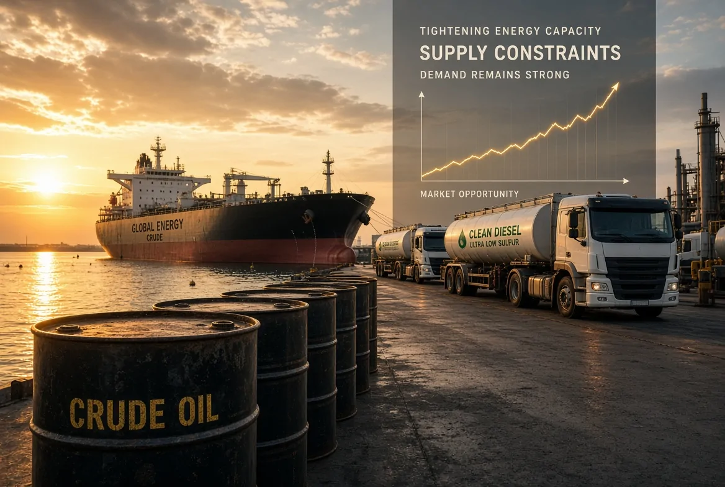
I’m talking about petroleum engineering. And as recently as 2014 (at the height of the shale boom), a record number of students at US universities were studying hard to enter the field.
That was before Greta... and the “JUST STOP OIL” movement.
Today petroleum engineering majors are down by about 75%. The University of Oklahoma’s program alone has lost 90% of its students.
Young people around the world have been so brainwashed that no one wants to go into the oil and gas sector, for fear of public humiliation and “being on the wrong side of history.”
This is a big problem; every industry requires a flow of talent to learn from and eventually replace experienced workers. It’s not different with oil— seasoned engineers (who actually know how to find oil) are retiring, and there’s hardly anyone coming in behind them to pass on their knowledge.
Diesel is above $6 a gallon right now, and everyone wants to blame Iran. But the war didn’t empty those university classrooms. That happened because of a decade of climate fanaticism— and they didn’t stop with academics.
The obsession with “ESG” also chased away financial investors.
‘Enlightened’ fund managers like Larry Fink (a WEF trustee whose firm BlackRock controls more than $15 trillion of other people’s money) spent the past decade insisting that oil was evil.
Fink led an entire investor movement to pull their capital from the industry. Banks stopped lending. Pension funds stopped investing.
Bear in mind that oil is a really capital intensive industry. It takes a lot of money to finance new discoveries and bring new production online. So, starved of capital, discoveries started to wane.
This is a really big deal. The oil that we consume today was discovered years... even decades ago. The oil that we will consume in the future needs to be discovered today... if not several years ago.
So these trends— lack of capital, lack of talent— started to hit discoveries (and hence future production) more than a decade ago.
In 2024, for example, the industry found less than two billion barrels of new oil… yet pumped thirty billion barrels that same year. Even ExxonMobil’s big find off Guyana, the one real exception, produces only about 1% of the world’s oil.
America’s shale oil boom covered the gap for years. But the best shale wells have already been drilled, and what’s left costs more and yields less.
None of this gets fixed quickly, because a new oil field now takes almost twenty years from exploration license to first barrel. So the oil nobody was looking for five years ago will result in a shortage in the 2030s.
That future shortage is already locked in, war or no war.
And we’re just talking about crude oil. It’s important to note that a barrel of crude oil is almost useless until somebody turns it into something, i.e. refines it into diesel or jet fuel or unleaded gasoline.
And right now there’s zero spare refining capacity... because governments have treated refining as the enemy of humanity for the past decade.
Britain had six refineries a decade ago and has four today, after the UK government announced a ban on new gasoline and diesel cars and spent a decade telling the industry it had no future.
California threatened its refiners with a penalty for “excess” profits, piled on impossible climate rules.
What a surprise— two refineries, nearly a fifth of the state’s capacity, announced they were leaving. Governor Gavin Newsom begged them to stay. They left anyway.
So it’s not just about oil prices— it’s about refining capacity as well. Some of that capacity has been destroyed by war. Other capacity has been destroyed by extreme stupidity.
It’s true that the war in Iran has turned into an embarrassing quagmire. And that has certainly had a significant role to play in higher energy prices.
But blaming today’s higher prices exclusively on Iran totally misses the impact of anti-oil fanaticism; the problems have been building for years, and the consequences will continue long after the war ends.
Iran is a supply shock, and supply shocks eventually heal. The shooting stops, the tankers sail through Hormuz again, and whatever the war added to the price of crude will fall.
What doesn’t heal is a decade of not finding oil, not refining it, and not training anyone to do either.
All of this matters. The price of energy impacts the prices of nearly everything else.
Diesel is in the price of everything that’s driven, shipped, or farmed. Trucks haul nearly three-quarters of America’s freight, and almost every one of them runs on diesel. So the farmer pays $6 a gallon for his tractor, the trucker pays $6 a gallon to haul… and consumers reimburse these costs in the form of higher prices.
It all spells more inflation. And that comes on top of the inflation the government is already manufacturing on its own.
With $40 trillion of debt and a shrinking pool of willing lenders, the Federal Reserve will almost certainly have to step in and ‘print’ the money to fill the gap.
There’s a flip side to this story: when there is no spare capacity, every disruption gets settled by the market, i.e. higher prices.
This means that the companies that own the scarce assets collect the difference: the tanker owners, whose ships are tied up a LOT longer on every voyage around the war, and the companies that still have oil in the ground.
And owning a piece of those companies yourself is a great way to protect yourself from higher prices and inflation.
To your freedom, James Hickman Co-Founder, Schiff Sovereign LLC
P.S. Schiff Sovereign’s investment research newsletter, Strategic Assets, exists to find exactly those companies: businesses that are already profitable, carry little or no debt, and trade cheap against the cash they’re generating.
Two oil tanker owners we featured in 2023 and 2024, when nobody wanted them, are up more than 180% and 130%, and one of them runs the ships that haul diesel. Right now we’re giving away a free sample issue so you can see what’s inside.