
Gold and S&P 500 Peaking Together 6 Times in 2025 — A 1970s Echo of Financial Chaos?
Gold and S&P 500 Peaking Together 6 Times in 2025 — A 1970s Echo of Financial Chaos?
Daniela Cambone: 10-7-2025
In finance, conventional wisdom often holds that when stocks soar, safe havens like gold languish. They are supposed to be inverse reflections of economic confidence.
But what happens when both are hitting all-time highs simultaneously?
Gold and S&P 500 Peaking Together 6 Times in 2025 — A 1970s Echo of Financial Chaos?
Daniela Cambone: 10-7-2025
In finance, conventional wisdom often holds that when stocks soar, safe havens like gold languish. They are supposed to be inverse reflections of economic confidence.
But what happens when both are hitting all-time highs simultaneously?
This rare and fascinating convergence was the subject of a recent, insightful discussion on the Della Kambon show at ITM Trading, featuring host Danny and guest Joel Litman, a finance professor and Chief Investment Strategist at Ultimatry.
Litman explains that this unprecedented dual peak—a phenomenon that has occurred only six times since the 1970s—is not a glitch in the simulation. It’s a powerful signal driven by fundamentally separate forces, demanding a new level of diversification from investors.
The simultaneous ascent of gold and the S&P 500 paints a contradictory picture of the current global economy:
Gold has experienced an explosive surge, rising 44% this year and nearing the significant milestone of $4,000 an ounce. This movement is a classic reflection of global fear and systemic uncertainty.
Meanwhile, the S&P 500 has climbed 14% to set new records. This surge is predicated on a narrative of optimism surrounding U.S. corporate performance.
The contradiction resolves when you stop viewing the market as a single engine. Litman stresses that gold and stocks are being propelled by entirely different—but equally powerful—engines.
Gold is thriving because of global risk and instability. Stocks are thriving because of specific, idiosyncratic strength within the U.S. corporate sector.
“Gold is the hedge against global crisis and instability. Stocks are the reward for U.S. corporate innovation and strong earnings growth,” Litman explained.
A persistent critique of the current stock rally is that it’s purely dependent on a handful of mega-cap tech companies (the “Magnificent 7”). Litman thoroughly refutes this notion, providing evidence that the market’s strength is far broader than headlines suggest.
He revealed that over 400 stocks in the S&P 500 have more than doubled in value this year.
This breadth signals that the rally is robust and driven by genuine productivity gains across various sectors, not just concentrated momentum in tech giants. This reality opens up significant opportunities for selective stock pickers willing to look beyond the largest market caps.
Another source of investor confusion is the disconnect between mixed economic surveys (weak PMI, consumer spending concerns) and the strong performance of corporate earnings.
Litman clarifies that economic growth and corporate earnings growth are not synonymous. Many American companies can generate high economic profit even when the broader economy faces headwinds.
This resilience is largely attributed to the robust discretionary income of the U.S. consumer compared to consumers in other developed nations.
When assessing the risk of a prolonged bear market, Litman points to the historical precedence: bear markets almost always coincide with corporate credit crises.
Critically, the U.S. currently exhibits low credit risk. Conversely, Litman highlights that credit risks are perilously concentrated in China, where many companies—when reviewed under Western accounting standards—are barely profitable or effectively insolvent. This fundamental contrast supports a relatively optimistic view on the trajectory of U.S. equities.
The discussion also touched on global efforts to challenge the U.S. dollar’s dominance, including Russia’s financial strain and China’s strategic shifts, such as the proposed “China super monetary highway” involving gold trading in Hong Kong and Saudi Arabia.
While acknowledging these shifts, Litman remains skeptical that the complex structural and political hurdles facing these nations will allow them to unseat the USD’s dominance anytime soon.
The convergence of record-high gold and stocks is not a signal to panic, nor is it a sign to go all-in on one asset class. Instead, it underscores the profound importance of intelligent diversification.
This moment in history—where two opposing forces of the financial world hit their zenith together—is rare. It provides a unique opportunity for investors to hedge their global risks while capitalizing on the extraordinary strength and innovation of the U.S. corporate sector.
Iraq Economic News and Points To Ponder Tuesday Evening 10-7-25
The World Bank Expects Iraq To Lead Arab Countries In Economic Growth By 2026
Political | 07/10/2025 Mawazine News - Baghdad - The World Bank forecast on Tuesday that the Iraqi economy will record the highest growth rate among Arab countries in 2026, reaching 6.7%, ranking first in the Arab world in the list of expected economic performance growth next year.
The World Bank Expects Iraq To Lead Arab Countries In Economic Growth By 2026
Political | 07/10/2025 Mawazine News - Baghdad - The World Bank forecast on Tuesday that the Iraqi economy will record the highest growth rate among Arab countries in 2026, reaching 6.7%, ranking first in the Arab world in the list of expected economic performance growth next year.
This high growth reflects a clear improvement compared to the June 2025 forecast, supported by the recovery of the energy sector and the rise in oil exports, in addition to the government's efforts to enhance investment in infrastructure and diversify sources of income.
This expected performance is a positive indicator of the recovery of the Iraqi economy and the restoration of its activity, in light of global and regional economic challenges.
Djibouti came in second place with an expected growth rate of 6.1%, followed by Qatar at 5.3%, then Palestine at 5.1%, while the UAE recorded growth at 5%.
Saudi Arabia's growth forecast reached 4.3%, followed by Egypt and Morocco with rates close to 4.2%, while growth rates in Lebanon, Oman, and Libya ranged between 3.5% and 3.6%.
Algeria, Bahrain, and Kuwait recorded moderate rates ranging between 2.5 and 3.1%, while Jordan and Tunisia recorded rates below 2.7%, and Yemen remained unchanged at 2.5%. https://www.mawazin.net/Details.aspx?jimare=267977
The Dollar Exchange Rate Stabilizes. The Note Is Worth 142,500 Iraqi Dinars.
Economy | 07/10/2025 Mawazine News - Baghdad - The dollar exchange rate witnessed remarkable stability against the Iraqi dinar in local markets on Tuesday. The prices were as follows:
Selling prices: 142.500 dinars per $100. Buying prices: 140.500 dinars per $100.
https://www.mawazin.net/Details.aspx?jimare=267964
Oil Prices Continue To Rise After OPEC+ Production Increases
Economy | 07/10/2025 Mawazine News - Follow-up: Oil prices rebounded on Tuesday, thanks to a smaller-than-expected increase in OPEC+ production, which helped ease concerns about a supply glut.
Brent crude futures rose 23 cents, or 0.35%, to $65.70 a barrel by 03:56 GMT. U.S. West Texas Intermediate (WTI) crude rose 21 cents, or 0.34%, to $61.90 a barrel.
Both contracts settled more than 1% higher in the previous session after OPEC+, which includes the Organization of the Petroleum Exporting Countries (OPEC), Russia, and some smaller producers, decided to increase its oil production by 137,000 barrels per day starting in November, according to Reuters.
Analysts at ING said the move contradicts market expectations for a stronger return to supply and is a sign that the group remains cautious about increasing its production share in the global oil market amid expectations of a supply surplus in the fourth quarter and next year.
The group raised its oil production target by more than 2.7 million barrels per day this year, equivalent to about 2.5% of global demand.
Geopolitical factors supported prices, as the conflict between Russia and Ukraine impacted energy assets and fueled uncertainty about Russian crude supplies.
Two industry sources said on Monday that Russia's Kirishi oil refinery shut down its most productive distillation unit after a drone attack that caused a fire on October 4, and that repairs were likely to take about a month.
However, analysts said oil prices came under pressure as investors see the potential for a supply surplus amid increased supplies from OPEC+ and non-OPEC producers. Furthermore, any slowdown in demand due to weak economic growth caused by US tariffs is likely to exacerbate the surplus. https://www.mawazin.net/Details.aspx?jimare=267957
Yellow Metal Prices Reach An All-Time High
Economy | 09:09 - 07/10/2025 Mawazine News - Follow-up Gold hit a record high on Tuesday as political tensions between the two chambers of the US Congress that led to a government shutdown continued, while expectations of a near-certain Federal Reserve interest rate cut this month supported prices.
Spot gold was up 0.1% at $3,965.39 per ounce by 03:08 GMT, after hitting an all-time high of $3,977.19 earlier in the session. US gold futures for December delivery also rose 0.3% to $3,988.10.
Markets continue to price in an additional 25 basis point rate cuts in both October and December, with 95% and 83% odds, respectively, according to the CME FedWatch tool.
Gold thrives in a low interest rate environment and during economic uncertainty.
Gold has risen 51% so far this year, driven by strong central bank buying, increased demand for gold-backed exchange-traded funds (ETFs), a weaker dollar, and increased interest from individual investors seeking to hedge amid escalating trade and geopolitical tensions.
Among other precious metals, spot silver fell 0.1% to $48.49 an ounce, platinum fell 0.4% to $1,619.62, and palladium rose 0.1% to $1,325.71. https://www.mawazin.net/Details.aspx?jimare=267955
For current and reliable Iraqi news please visit: https://www.bondladyscorner.com
10 Genius Things Warren Buffett Says To Do With Your Money
10 Genius Things Warren Buffett Says To Do With Your Money
September 21, 2025 by Elyssa Kirkham
Warren Buffett is commonly referred to as the most prophetic and respected investor of all time. He is also known for his folksy charm and memorable quotes about the art of investing. As the “Oracle of Ohama” has an estimated net worth of around $150 billion, the proof is in the pudding.
10 Genius Things Warren Buffett Says To Do With Your Money
September 21, 2025 by Elyssa Kirkham
Warren Buffett is commonly referred to as the most prophetic and respected investor of all time. He is also known for his folksy charm and memorable quotes about the art of investing. As the “Oracle of Ohama” has an estimated net worth of around $150 billion, the proof is in the pudding.
When you’re aiming to reach the top of the mountain and want a competitive advantage, it’s usually wise to follow the footprints of those who have successfully made the climb before you, to the tune of billions of dollars. Your odds of investing success can increase exponentially if you learn and apply Buffett’s best investing tips.
Never Lose Money
One of the most popular pieces of Buffett advice is as follows: “Rule No. 1: Never lose money. Rule No. 2: Never forget rule No. 1.” If you’re working from a loss, it’s that much harder to get back to where you started, let alone to earn gains.
Get High Value at a Low Price
Another key principle Buffett has shared is, “Price is what you pay; value is what you get.” Losing money can happen when you pay a price that doesn’t match the value you get — such as when you pay high interest on credit card debt or spend on items you’ll rarely use.
Instead, live modestly, or in the case of stocks Buffett recommends when approaching your investment strategy, start by looking for opportunities to get more value at a lower price. “Whether we’re talking about socks or stocks, I like buying quality merchandise when it is marked down,” he wrote.
Form Healthy Money Habits
In an address at the University of Florida, Buffett said, “Most behavior is habitual, and they say that the chains of habit are too light to be felt until they are too heavy to be broken.” Work on building positive money habits — and breaking those that hurt your wallet.
Avoid Debt, Especially Credit Card Debt
Buffett built his wealth by getting interest to work for him — instead of working to pay interest, as many Americans do. “I’ve seen more people fail because of liquor and leverage — leverage being borrowed money,” Buffett said in a 1991 speech at the University of Notre Dame. “You really don’t need leverage in this world much. If you’re smart, you’re going to make a lot of money without borrowing.”
Buffett is especially wary of credit cards. His advice is to avoid them altogether. “Interest rates are very high on credit cards,” Buffett once said. “Sometimes they are 18%. Sometimes they are 20%. If I borrowed money at 18% or 20%, I’d be broke.”
Keep Cash on Hand
TO READ MORE: https://www.gobankingrates.com/money/financial-planning/10-best-money-tips-warren-buffett-all-time/?hyperlink_type=manual
FRANK26….10-7-25….THE 3 TALK TO CITIZENS
KTFA
Tuesday Night video
FRANK26….10-7-25….THE 3 TALK TO CITIZENS
This video is in Frank’s and his team’s opinion only
Frank’s team is Walkingstick, Eddie in Iraq and guests
Playback Number: 605-313-5163 PIN: 156996#
KTFA
Tuesday Night video
FRANK26….10-7-25….THE 3 TALK TO CITIZENS
This video is in Frank’s and his team’s opinion only
Frank’s team is Walkingstick, Eddie in Iraq and guests
Playback Number: 605-313-5163 PIN: 156996#
What Frank’s suit color’s mean…. FRANKS SUIT COLORS FOR CC'S..... WHITE = NEW INFO…. SILVER = INTEL FROZEN…. RED= HIGH ALERT… PURPLE=GUEST WITH US…. BLUE = AIR FORCE…. BLACK = GROUND/FF’S…. GREEN= MR OR FAB 4 ... GOLD = CHANGE… ORANGE=IMPLEMENTATION
You Can Bank On It by Dr. Dinar
You Can Bank On It by Dr. Dinar
10-7-2025
In the beginning, when the most talked about RV rumors circled around the prices being changed in all the stores in Iraq. When rumors were running rampant of Contractors in the Green Zone(wherever the heck that was) now being paid at the "new rate".
When the infamous "boots on the ground" sources were able to pay for their new shoelaces at the new rate, the one thing that still hit closest to home were the bank stories.
You Can Bank On It by Dr. Dinar
10-7-2025
In the beginning, when the most talked about RV rumors circled around the prices being changed in all the stores in Iraq. When rumors were running rampant of Contractors in the Green Zone(wherever the heck that was) now being paid at the "new rate".
When the infamous "boots on the ground" sources were able to pay for their new shoelaces at the new rate, the one thing that still hit closest to home were the bank stories.
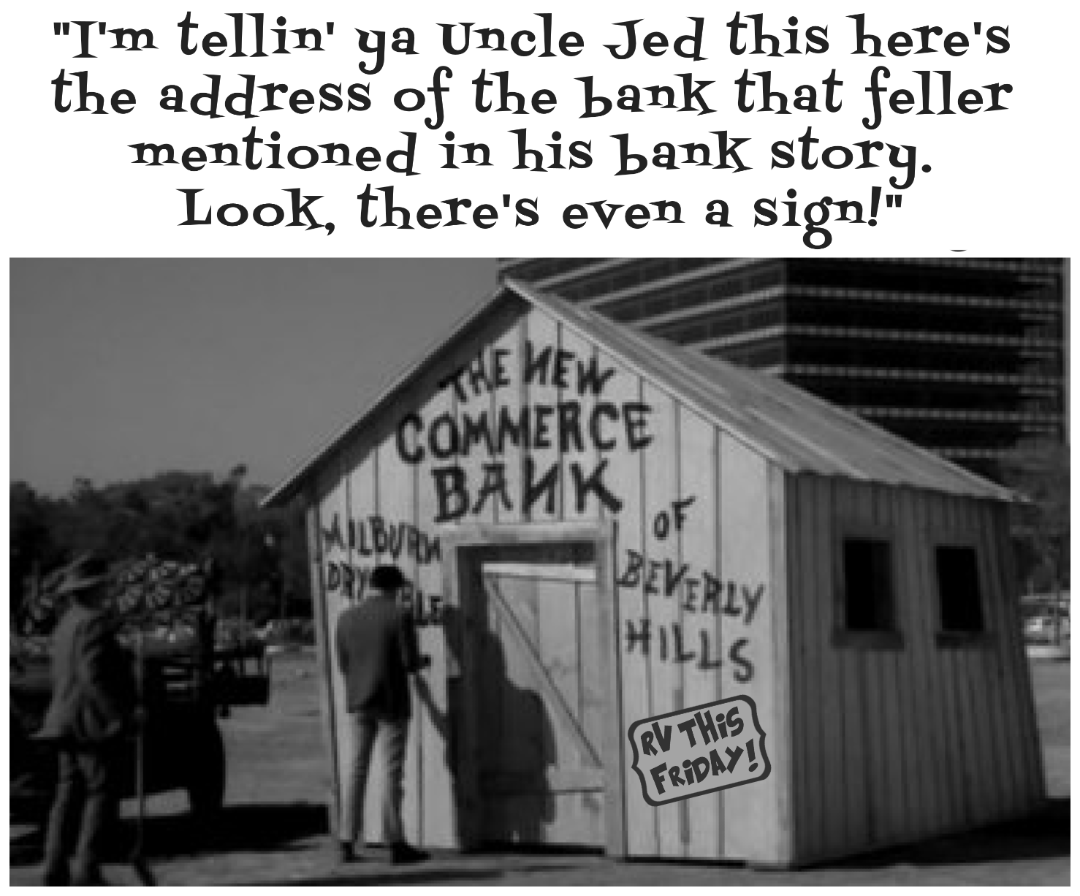
It wasn't the printing in the Gazette, the new budget being announced(that mysteriously kept getting postponed), Article 140 being implemented, the HCL, the Kurd's getting reimbursed, the announcements in the Mosques, not even the sandal toss games. None of that got the juices flowing like the tried and untrue Bank Stories.
While all those other sandbox suspicions were fine and dandy, it was the bank stories that, for me anyway, and most likely many others, were the most relatable. Not that I necessarily believed them but at least I could picture them taking place in my mind's eye. After all, in those days online banking wasn't what it is today.
Back then there were numerous bank branches open all over the place. Seemed as if there was a different branch on every corner. You couldn't drive two blocks without seeing a bank or a credit union ready to hold your money for them... I mean you.
Recently I found myself reflecting back on all the bank stories I've read throughout the years. Some of them being so realistic you almost felt as if you were right there along with them. Gnawin' on a hotdog while waiting impatiently for the doors to open promptly at 9am.
Not only from the customer's side of the counter but we were also hearing from the Tellers side as well. And supposedly some "in the know" Managers just to give it that extra jolt of believability.
On ledger, off ledger. front screen, back screen, green screen, black screen, screen door. You screen, I screen, we all screen for ice cream. Oops, sorry. Got a bit carried away there.
Be it cubicle, kiosk, random room of any sort, it was easy to picture yourself right along with that person sharing their experience. Lots of talk of new signage materializing overnight.
Same with the new RV exchange "instarooms" being built by the bunches. Yep, all the signs were right there, impossible to ignore. We were right on the cusp of the biggest wealth transfer to hit since the California Gold Rush of the 1880's.
Nervous? You betcha. After all, we were about to make history. Us Toothless Crackheads, as they use to refer to us, were about to enter the big leagues. We were going to finally get a chance to show all those naysayers just how wrong they were.
Ready? You're darn right we were ready. And then some. With our trusty, albeit a bit dusty, "To Go" bags sitting diligently right by the front door just like we were instructed to do oh so long ago.
Matter of fact they've been there so long I'm sure most, if not all, of us couldn't recall all of what was actually in them but we were ready nonetheless.
Did you bring all your currency. Was it all neatly in order, right side up, left side down, lowest to highest, all facing the same direction, and so on. Which was odd because in the beginning there was only one currency to deal with. One of any concern. The Iraqi Dinar.
The be all, end all, of every up and coming exchange. Life revolved around that one single currency. And to make matters that much easier, it was always the 25K notes that stood at the top of the stack.
Better yet, they all had what appeared to be the exact same serial numbers. How much easier could it get.
Sure, there were other "versions" of the dinar but we were only concerned with the one version. That's it. And beware of those notes with that no good evil do'er Saddam's face on them. They had been rendered worthless since the new and improved, sixty three built-in safety features had been released in 2003.
At a printing cost of $0.06 per note they made our USD look like Monopoly money. Heck, that actually sounds like an insult to Monopoly money. My apologies.
Yeah, some of us did hold a few of the other variations but mostly because they were gifted to us as "Thank You's" for previously purchasing the Big Dog 25K's. Oh wait, there was one other item of concern. Circulated or uncirculated.
That debate went on for years. What was the difference. Was there even a difference. In reality there was one main difference. Odd as it sounds, it was the smell. Yep, that undeniable aroma.
Same exchangeable value but one didn't really smell like anything in particular whereas the "used" version smelled like it had been everywhere. And I mean EVERYWHERE! And not in a good way.
It was difficult to explain. Not like anything I'd ever smelled before but man oh man, there was no hiding from it. Wrap it up in ten freezer bags, the funk still got out.
I only know this because I made the mistake of taking the cheap route (as there was a hefty price difference between the two at the time) a couple of times and lived to smell... I mean tell about it.
From then on, whenever I was fortunate enough to find the funds, it was all uncirculated or nothing at all. The small price savings wasn't worth living with the circulated funkification. That's one stinky sock drawer I wanted nothing to do with.
Not to mention running those notes through the De la Rue machines, the smell wafting wildly windward would be more than amplified at the speed those things run the currency through.
Speaking of the De la Rue machines, there was also lots of talk running around about those at the time as well. Supposedly every bank branch was going to have at least one machine available for the RV exchanges but at a cost of $30K each, that one was a bit difficult to swallow.
But heck, with the rumored multi million billions that would be flyin' around all willy nilly 'n such, what's an extra $30K between friends.
And yes, friends of the banks we would be. Finally. At that stage of the process we will have officially been morphed from penniless peasants to high net worth individuals, our status skyrocketing at the same time. So called "Intelligent Investors" as it were.
Wealth Managers, Financial Advisors, Private Bankers, Family Office officers, you name it. All of them at our beck and call. Clamoring for our attention, screaming "Pick me, pick me" as the De La Rue machines whirred away at lightning speed.
Who would we choose. More importantly how would we choose them. Would it be based simply on us having introduced ourselves pre-RV or would that even be necessary.
Rumors were rampantly swirling at the time of those folks that attempted to make contact with a representative of the bank only to basically be laughed right out of the bank. Door locked swiftly behind 'em.
Sure, there were a couple of wink wink, nod nod's rumored to have taken place as well but for the most part it was complete denial on the bank's part. While many of us had made some of our earliest currency purchases at the bank, growing tired of the constant "I'm calling about the upcoming RV happening this Friday" jibber jabber, they took it upon themselves to flip the script.
Not only did they stop selling the currency but they took it even a few steps further, changing their voicemail messages to reflect the RV itself being a total scam as well as their non-participation in anything having to do with the RV on any level. Even crazier yet they began telling their employees they weren't allowed to purchase nor own any IQD.
That's about the time the latest and greatest rumors began to float around. Those surrounding the hints of just how unhappy the Tellers and other bank employees were going to be once us exchangers showed up to exchange our currency post RV and them having been told it was all a scam and nothing they need be interested in nor concerned with.
They would be working for us, not with us, and having to do it with a smile. Who could blame them for being upset about missing out on a once in a lifetime opportunity simply because the boss says so. Thankfully word began to spread of those taking the risk and getting involved anyway. And good for them.
As we morphed into the whole GCR thing the bank stories were fewer and further between. Was that due in large part to the rise in bank branch closures combined with the whole online banking takeover?
Not exactly sure but no doubt they began to show up less and less. To the point where they no longer happened. Or at least weren't boasted about, even if they did continue to happen on occasion.
Perhaps those experiencing them felt less and less secure in sharing their perceived close calls. Becoming non-believers themselves in the process. Whatever it was, someone turned off the spigot and they just dried up.
It's a shame as I'm sure many folks enjoyed hearing them. Nowadays it seems to be all about the gold. Gold this, gold that. Gold is skyrocketing, reaching levels never seen before.
Which is all fine and good but likely for a majority of folks they are unable to see the correlation between gold and the RV/GCR. Whereas a relatable banking story with their good buddy Brad down at their local branch made them feel as if they weren't alone on this journey. That someone else, someone supposedly much better "connected", was actually experiencing some behind the scenes stuff.
For me it's another part of the far too long list of things that have changed over the years. But I can't deny I do miss a good ol' wink wink, nod nod story every now and again, just to keep the close call vibes alive.
Hang in there folks, this here GCR is eventually going to happen. It has to happen. The global economy is depending on it. It's only a matter of time.
By the way, am I the only one or have you noticed the big time golden makeover inside the Oval Office? Do you think that happened by happenstance. I don't think so. Wink wink, nod nod.
Kindly,
Dr. Dinar
Disclaimer; I'm not a Wealth Manager, Financial Advisor, CPA, Tax Attorney, RV/GCR Committee member, Private Banker, Family Office Officer, Bank Manager, Bank Teller, Magic 8 Ball Reader, nor am I a professional wink wink, nod nod'er. I'm simply someone that chooses to believe in the power of positive thinking and on the odd chance this thing truly is real, I want to make sure I'm there at the finish line to enjoy it.
Seeds of Wisdom RV and Economics Updates Tuesday Afternoon 10-7-25
Good Afternoon Dinar Recaps,
BRICS Unveils Plan to Replace the U.S. Dollar — While India Runs a Bold Gold Auction
Two concurrent moves from the bloc suggest an accelerating shift in monetary architecture and reserve strategy.
Good Afternoon Dinar Recaps,
BRICS Unveils Plan to Replace the U.S. Dollar — While India Runs a Bold Gold Auction
Two concurrent moves from the bloc suggest an accelerating shift in monetary architecture and reserve strategy.
BRICS’ Bold Dollar Challenge
● Precious Metals Exchange Launch: At the 2025 Moscow Financial Forum, BRICS announced plans for a trading platform allowing countries to settle in gold, platinum, diamonds, and rare earths — sidestepping SWIFT and traditional commodity exchanges.
● Resource Leverage: BRICS controls ~72% of rare earth reserves, anchoring their plan not on fiat alone, but on tangible assets.
● Trade Bypass: As of now, ~68% of BRICS trade is alleged to bypass the dollar, and 90% of Russia–China trade occurs in local currencies.
● Not a New Currency (Yet): Rather than founding a fresh fiat, BRICS seems to be constructing alternative rails and asset-backed exchanges to challenge dollar dominance.
The strategy is not about sudden overthrow — it’s about building parallel systems that gradually erode dollar dependence.
India’s Gold Auction: Strategic Signal in Reserve Strategy
● Gold Auction Mechanism: The Central Bank of India holds auctions of pledged gold (from defaulted loans) through online platforms, recovering owed amounts.
● Reserve Accumulation: The RBI added about 72.6 tons of gold in 2024, pushing India’s holdings toward 876 tons.
● Dual Strategy: This auctioning (liquidation) coexists with aggressive accumulation — reflecting a dual posture of discipline and expansion in gold reserves.
● Part of the Bloc Trend: India’s actions mirror a broader acceleration of gold acquisition by central banks within BRICS and beyond.
India’s move is more than internal reserve management — it signals alignment with BRICS’ structural shift in monetary strategy.
How This Fits Into the Global Restructuring
From Fiat to Asset Anchors: The shift from purely fiat systems toward gold- or resource-backed exchanges signals a redefinition of what constitutes money.
Parallel Rails Over Revolution: Rather than overthrowing the dollar outright, BRICS is building alternatives (payment systems, commodity-based settlement, resource exchanges).
Sovereignty Over Dependence: Nations using these new rails gain independence from U.S. sanctions, dollar volatility, and centralized financial control.
Multipolar Monetary Architecture: These initiatives fragment the once-monolithic dollar regime, enabling a world where multiple reserve systems co-exist.
As these systems scale, capital, credit, and trade flows will gravitate toward those offering reliability, autonomy, and immunity from centralized leverage.
Why This Matters / Key Takeaway
BRICS’ unveiling of a precious minerals settlement exchange, paired with India’s assertive gold auction and reserve build, is not mere symbolism — it’s the architecture of a new financial order being erected.
These parallel rails and asset-anchored structures are extracting power from legacy systems and redistributing it across sovereign partners.
This is not just politics — it’s global finance restructuring before our eyes.
@ Newshounds News™ Exclusive
Sources: Watcher Guru, Watcher Guru, Investing News Network (INN), CryptoRank
~~~~~~~~~
Seeds of Wisdom Team RV Currency Facts Youtube and Rumble
Newshound's News Telegram Room Link
Follow the Gold/Silver Rate COMEX
Follow Fast Facts
Seeds of Wisdom Team™ Website
Thank you Dinar Recaps
$4,000 Gold: Is It Time To Sell?
$4,000 Gold: Is It Time To Sell?
Notes From the Field By James Hickman (Simon Black) October 7, 2025
You’d think Charles de Gaulle would have been a little bit more grateful to America.
As head of the Free French Forces during World War II, de Gaulle was essentially a leader in exile, and he had to base himself in England for the majority of the war after the Nazis took Paris.
It was only because of the sacrifices made by American troops-- and exceptional generosity from US general Dwight Eisenhower-- that de Gaulle was allowed to enter Paris on August 25, 1944.
$4,000 Gold: Is It Time To Sell?
Notes From the Field By James Hickman (Simon Black) October 7, 2025
You’d think Charles de Gaulle would have been a little bit more grateful to America.
As head of the Free French Forces during World War II, de Gaulle was essentially a leader in exile, and he had to base himself in England for the majority of the war after the Nazis took Paris.
It was only because of the sacrifices made by American troops-- and exceptional generosity from US general Dwight Eisenhower-- that de Gaulle was allowed to enter Paris on August 25, 1944.

America had already done all the fighting. But de Gaulle marched through the streets in triumph as if he had personally won the war.
The US government then went on to cement his power, so de Gaulle became head of France’s post-war provisional government, then later French president. France also received billions in aid from the Marshall Plan, courtesy of US taxpayers.
The guy pretty much owed his entire political career, not to mention the liberation and economic solvency of his country, to the United States.
But de Gaulle’s ego was far greater than his sense of gratitude; in fact in his own memoirs he compared himself to Joanne of Arc. He even whined that he didn’t receive enough US support.
The ultimate disrespect came on February 4, 1965. De Gaulle called a press conference to criticize America’s “exorbitant privilege” in global finance, concluding that the world needed to return to a classical gold standard.
Ever since July of 1944, the world had been on the “Bretton Woods” system. Every currency was pegged to the US dollar, and the US dollar was pegged to gold at a price of $35 per ounce.
Having the global reserve currency meant that America could finance its government deficits by simply printing more money. This is still the case today. De Gaulle was jealous of this benefit, so he tried wrecking the financial system.
In addition to demanding a return to the classical gold standard, de Gaulle also insisted that the US government redeem France’s dollar reserves for gold.
The idea caught on. Governments around the world, along with financial speculators and investors, started paying attention… and many began trading their dollars for gold as well.
This trend picked up steam over the next several years until, finally, in 1971, Richard Nixon shut it down… announcing that the United States would no longer redeem US dollars for gold.
The gold price naturally started to rise. Within a few months, gold was already above $40, up 13.5%. It reached $60 in 1972 (up 42%), nearly $100 in 1973 (up 66%), and $180 in 1974 (up 80%).
It’s not hard to understand why. Inflation was soaring. The world was a geopolitical hot mess. Then there was the Nixon political scandal at home. Uncertainty abounded, and gold was the remedy.
But then something interesting happened: Congress passed a law finally allowing private ownership of gold.
It seems crazy today, but ever since 1933, it had actually been illegal for Americans to own gold. Congress reversed this in 1974.
So just imagine you’re an average American in the 1970s watching gold rise more than 5x, from $35 to $180… but you can’t do anything about it because it’s illegal to buy. Then suddenly the law changes. Almost overnight, US investors started aggressively investing in gold.
Back then, of course, people didn’t have brokerage accounts, let alone access to futures exchanges. And there were no ETFs.
So instead people bought physical gold coins-- Krugerrands, Eagles, etc. And there was booming demand for a while.
But right around this time, large investors, hedge funds, etc. started feeling like gold was overbought… and that the price had risen too far, too fast. So they started selling. In fact many funds were selling as small retail investors were buying.
And as you can imagine, the gold price soon started to fall; in fact the correction lasted roughly 18 months. Gold eventually hit a low of ~$100 in August 1976-- a drop of more than 40% from its record high in 1975.
Yet even though speculators were selling, the fundamentals of gold had not changed.
Specifically, foreign governments and central banks were still seeking to diversify from their US dollar holdings. And more importantly, the US government financial condition was still atrocious.
So after an 18-month hiatus, the gold price started rising again in August 1976… from ~$100 to $800+ in December 1979.
So even though gold had reached a record high in 1974, people who understood the long-term fundamentals, i.e. why the gold price was going higher, saw an additional 4x return. People that were smart enough to buy more when the price fell did even better-- 8x in less than four years.
And people who sold their gold in 1975 missed the rise from $185 to $850.
Gold just hit $4,000 today. It’s up more than 50% in a year, and up 100% in two years. So is it time to sell?
In our view, this is like 1975 again. Gold may be overbought now; after all, nothing is supposed to go up (or down) in a straight line.
We’re also seeing interesting data from ETFs. The “GLD”, for example, the world’s largest gold ETF, is seeing record inflows, including more than $2 billion in a single day last month.
This is a sign that, just like 1975, individual investors are piling in to gold after sitting on the sidelines for the past few years.
Strong, sudden retail demand is often a top signal, at least temporarily. And it’s possible that there could be a short-term correction.
But even if that happens, it doesn’t change the fundamental story of gold. Just like the 1970s, foreign governments and central banks today are aggressively diversifying their US dollar holdings, and gold is the most convenient asset for them to buy.
We don’t believe this has changed at all. Foreign governments and central banks might pull back on their purchases temporarily to see what happens in the market. But long-term they are still strong buyers of gold thanks to the US government’s terrible fiscal trajectory.
And despite any short-term corrections, this is what will ultimately drive gold prices higher over the next several years.
To your freedom, James Hickman Co-Founder, Schiff Sovereign LLC
Dr. Scott Young: The US 1861-1865 Banking Crisis
Dr. Scott Young: The US 1861-1865 Banking Crisis
10-7-2025
We often think we know American history, especially pivotal moments like the Civil War. But what if there’s a crucial, often overlooked, layer to the story – one woven deeply into the very fabric of our financial system?
Dr. Scott Young is here to peel back those layers in his new four-part series, introducing us to a fascinating and complex era he aptly terms “pre-fed banking.”
Dr. Scott Young: The US 1861-1865 Banking Crisis
10-7-2025
We often think we know American history, especially pivotal moments like the Civil War. But what if there’s a crucial, often overlooked, layer to the story – one woven deeply into the very fabric of our financial system?
Dr. Scott Young is here to peel back those layers in his new four-part series, introducing us to a fascinating and complex era he aptly terms “pre-fed banking.”
This isn’t just about dusty ledgers; it’s about understanding the financial and political dynamics that shaped a nation. Dr. Young’s inaugural episode dives headfirst into the period from the Civil War era through 1913, asserting that to truly grasp the monumental conflict, we must examine more than just the moral imperative against slavery.
While the moral abomination of slavery was undeniably a central conflict, Dr. Young encourages us to look deeper, to the intricate web of economic and banking interests that fueled the divide.
He highlights how banking crises, fragmented currency systems, and the very nature of collateral created a precarious financial landscape, particularly in the South.
Imagine a financial system where a significant portion of your capital, and thus your ability to secure loans, is tied to human beings. In the South, this was the stark reality.
Plantations and enslaved people served as primary collateral, creating a fragile and ethically bankrupt economic backbone. This contrasted sharply with the North’s burgeoning industrial and banking strength, a system built on diversified assets and commercial enterprises.
This fundamental economic divergence, Dr. Young argues, played a far greater role in escalating tensions than commonly acknowledged.
These actions weren’t just wartime necessities; they were foundational shifts that led to long-term consequences for American financial sovereignty and the power of the federal government.
Perhaps one of the most profound, yet subtle, shifts Dr. Young highlights is the metamorphosis of the American identity itself. Before the Civil War, it was common to hear “the United States are,” implying a coalition of independent states. Post-war, it emphatically became “the United States is,” reflecting a fundamental transformation from a confederation of states to a singular, national entity with a strong central government – a shift solidified by the very banking and financial structures put in place.
Dr. Scott Young’s initial installment is a powerful reminder that history is rarely as simple as it seems. By coining the term “pre-fed banking,” he invites us to explore a crucial chapter in American economic history, one that profoundly influenced the Civil War and set the stage for the federal banking developments and complex corporate formations to come.
This is just the beginning of a fascinating four-part series that promises to unpack the long-term consequences and the evolution of American financial sovereignty right up to the establishment of the Federal Reserve.
Ready to dive deeper into this untold history?
https://dinarchronicles.com/2025/10/07/dr-scott-young-the-us-1861-1865-banking-crisis/
News, Rumors and Opinions Tuesday 10-7-2025
Note: All intel should be considered as "Rumors" until we receive official announcements ...and “Rates and Dates” could change anytime until we get to the banks/redemption centers.
RV Excerpts from the Restored Republic via a GCR: Update as of Tues. 7 Oct. 2025
Compiled Tues. 7 Oct. 2025 12:01 am EST by Judy Byington
QFS INTEGRATION – CONTROL TRANSFER UNDERWAY: Over 91% of SWIFT corridors are (allegedly) now mirrored under QFS surveillance. Central banks are being algorithmically drained. Military teams are (allegedly) physically inside former IMF and BIS command rooms. The IRS is (allegedly) dismantled, with less than 7% of servers under military lockdown.
Note: All intel should be considered as "Rumors" until we receive official announcements ...and “Rates and Dates” could change anytime until we get to the banks/redemption centers.
RV Excerpts from the Restored Republic via a GCR: Update as of Tues. 7 Oct. 2025
Compiled Tues. 7 Oct. 2025 12:01 am EST by Judy Byington
QFS INTEGRATION – CONTROL TRANSFER UNDERWAY: Over 91% of SWIFT corridors are (allegedly) now mirrored under QFS surveillance. Central banks are being algorithmically drained. Military teams are (allegedly) physically inside former IMF and BIS command rooms. The IRS is (allegedly) dismantled, with less than 7% of servers under military lockdown.
Mon. 6 Oct. 2025 THE SILENCE BEFORE THE SWITCH …Mr. Pool on Telegram
DURING THE ONGOING SHUTDOWN, ALL FEDERAL PAYMENT SYSTEMS HAVE BEEN QUIETLY (allegedly) ROUTED THROUGH TEMPORARY MILITARY CHANNELS. CIVILIAN BANKING NETWORKS ARE STILL RUNNING, BUT UNDER MONITORED STATUS. A FINAL TRANSFER COMMAND IS (allegedly) WAITING FOR AUTHORIZATION.
INSIDE THE TREASURY, SECURE TEAMS ARE (allegedly) VERIFYING GOLD RESERVES AND REASSIGNING DIGITAL CODES TO QFS-APPROVED ACCOUNTS. EVERY OUNCE, EVERY LEDGER, EVERY SIGNATURE IS (allegedly) BEING CROSSCHECKED. THIS IS NOT AUDITING, THIS IS RECLAMATION.
THE FEDERAL RESERVE HEADQUARTERS (allegedly) REMAINS LIT AT NIGHT, BUT ONLY MILITARY PERSONNEL (allegedly) ENTER AND EXIT. INTERNAL SERVERS ARE(allegedly) BEING DRAINED AND MIRRORED INTO THE QUANTUM MAINFRAME. THE OLD ECONOMIC ENGINE IS BEING (allegedly) SWITCHED OFF FROM WITHIN.
EBS TESTS CONTINUE UNDERGROUND. WHEN THE FINAL REBOOT OCCURS, EVERY DEVICE ON EARTH WILL (allegedly) RECEIVE THE SAME MESSAGE – THE ANNOUNCEMENT OF A NEW SYSTEM, GOLD-BACKED AND PEOPLE-OWNED.
The shutdown was never a breakdown. It was preparation for transition. The world stands one signal away from the reset.
~~~~~~~~~~~~~
Possible Timing:
Mon. 6 Oct. 2025 INTELLIGENCE BRIEF – THE QUANTUM WEEK
Sat. 4 Oct 2025 — Baghdad Signal Initiated. The Prime Minister of Iraq ordered 7 days of national celebration. Hidden inside that decree: Iraq’s Central Bank (allegedly) connected to the Quantum Mainframe. The signal went live.
Mon. 13 Oct — Market Fracture Point 209 banks across the world (allegedly) linked to the gold-backed QFS. 97 Central Banks fully integrated, 82 pending. The old fiat code started (allegedly) dying from within.
Tues. 14 Oct — WORLD QUANTUM DAY Bitcoin = Null. SWIFT = Terminated. Data centers = Gone. Only ISO20022 gold-backed assets survived. The stock market cratered. The death of the old became the birth of the new.
Wed. 15 Oct — The Broadcast Trigger Global blackout. EBS (allegedly) active. Communications collapsing in waves. Trump’s Global Military Alliance (allegedly) seizing control. Truth unleashed. Justice transmitted. Federal Reserve & IRS (allegedly) abolished. Income tax (allegedly) gone — replaced by 14% on luxury only. Common Law (allegedly) restored. The Republic(allegedly) reborn
Read full post here: https://dinarchronicles.com/2025/10/07/restored-republic-via-a-gcr-update-as-of-october-7-2025/
***************
Courtesy of Dinar Guru: https://www.dinarguru.com/
Frank26 This thing Sudani did [Extend the national holiday to 7 days] was interesting...This is the perfect time for Sudani to release the new exchange rate...
Militia Man When they do adjustments to currencies, Central Banks and the powers that be are very tight lipped about it and that's why we don't have a specific date and rate.
Militia Man Article: "Iranian Parliament approves the deletion of the 4 zeros from the national currency". It's about the Iranian parliament...This isn't the first time we've heard this. Quote: "Converting 10,000 old rials to 1 new rial to simplify transactions amid hyperinflation and sanctions because it's 900,000 rials to the dollar." 900,000. Iraqi dinar is 1310. This isn't Iraq's path, but it shows regional currency reforms and efforts. Iraq is a totally different story. It has completely different circumstances. Definitely don't compare the two like being one...Iran's move addresses devaluation without a full revaluation. Iraq has 8% inflation in the first half of 2025 which is historically low...
Pentagon Iraq Announcement | Forex Market | Eric Trump's Prediction
Edu Matrix: 10-7-2025
In today’s video, we’re diving into two explosive stories — one from Iraq’s shifting military landscape and another from the crypto world that could change everything for investors.
The Pentagon has confirmed it’s scaling back its mission in Iraq, which could open the door for Israel’s next strategic moves against militants backed by Iran. With U.S. troops reducing their presence, the balance of power in the Middle East could shift dramatically.
Meanwhile, in currency and crypto news, global forex trading has surged to a record $9.6 trillion a day, proving the dollar’s dominance — but there’s a twist.
Eric Trump recently predicted Bitcoin could hit $1 million, and while critics didn’t fully agree… they didn’t disagree either
MilitiaMan and Crew: IQD News Update-Digital Trade-Gold-Electronic Mechanisms
MilitiaMan and Crew: IQD News Update-Digital Trade-Gold-Electronic Mechanisms
10-7-2025
The Crew: Samson, PompeyPeter, Petra, Daytrader, Sunkissed, GIGI and Militia Man
Follow MM on X == https://x.com/Slashn
Be sure to listen to full video for all the news……..
MilitiaMan and Crew: IQD News Update-Digital Trade-Gold-Electronic Mechanisms
10-7-2025
The Crew: Samson, PompeyPeter, Petra, Daytrader, Sunkissed, GIGI and Militia Man
Follow MM on X == https://x.com/Slashn
Be sure to listen to full video for all the news……..
Iraq Economic News and Points To Ponder Tuesday Morning 10-7-25
Iraqi Securities Commission launches major reforms to boost investment and meet Vision 2030
IRAQ Jawad Al-Samarraie October 6, 2025
Baghdad (IraqiNews.com) – The Iraqi Securities Commission (ISC) announced today, Monday (October 6, 2025), a comprehensive strategy to modernize the country’s capital market, asserting that the reforms are fundamental to achieving Iraq’s Economic Vision 2030. The announcement was made by Chairman Faisal Al-Himais during the “Global Investor Week” conference, marking the ISC’s 21st anniversary.
Iraqi Securities Commission launches major reforms to boost investment and meet Vision 2030
IRAQ Jawad Al-Samarraie October 6, 2025
Baghdad (IraqiNews.com) – The Iraqi Securities Commission (ISC) announced today, Monday (October 6, 2025), a comprehensive strategy to modernize the country’s capital market, asserting that the reforms are fundamental to achieving Iraq’s Economic Vision 2030. The announcement was made by Chairman Faisal Al-Himais during the “Global Investor Week” conference, marking the ISC’s 21st anniversary.
Al-Himais emphasized that the government, under Prime Minister Mohammed Shia Al-Sudani’s patronage, is committed to creating a transparent environment, positioning the Iraq Stock Exchange (ISX) as a key engine for economic growth. This commitment involves modernizing both the legal and technical foundations of the market.
Yasin Taha Weis, a member of the ISC Council, detailed the legal reforms, confirming that the ISC is working to replace the outdated Coalition Provisional Authority (CPA) legislative order of 2004 with a new law that will increase investment guarantees.
This proposed law has already had its second reading in Parliament. Additionally, the ISC is upgrading the infrastructure and work methods of the ISX by collaborating with major international companies that specialize in electronic trading systems.
The commission’s strategy is twofold: to enhance oversight and organization, and to significantly expand the base of listed companies. According to Weis, increasing the number of listed companies and improving their performance is vital, as it directly correlates with greater investor engagement and a rise in the total volume of investment in the market. https://www.iraqinews.com/iraq/iraqi-securities-commission-vision-2030-reform/
Kirkuk-Banias Pipeline And Its Strategic Importance
Economic 2025/10/07 Dr. Hamid Rahim Janani Concerns remain about the fate of Iraq's oil export capacity in the event of conflicts in the region. It is illogical for 90 percent of exports to be dependent on the Strait of Hormuz, which is under constant security and military pressures, evident in the escalating statements of the warring states from time to time.
Radical solutions may require specific approaches, projects, and significant effort, and even a relatively long period of time to achieve a high degree of flexibility in export outlets. What is important is to implement short- and medium-term measures to achieve radical strategic solutions in the long term.
The issue of the oil pipeline from Kirkuk Governorate to the Baniyas oil port in Tartous Governorate, northwest of Syria, on the Mediterranean coast, was recently raised. This issue could constitute a pivotal point in Iraq’s export policy.
This pipeline was established in the 1950s with an export capacity of up to (300) barrels per day, with a length of (891) km and a diameter of (30) inches. Pumping in the pipeline stopped during the Iran-Iraq war.
The pipeline was restarted in 2000, but it broke down again. It was exposed to significant damage after 2003 and is still stopped.
The efforts of the governments in Iraq and Syria to revive this pipeline have surfaced, and here comes the role of economic analysis in determining the importance of this step if it is successful, as the rehabilitation costs are estimated at (8) billion dollars, and it is possible to change the export capacity to reach (700) thousand, which is a relatively good thing, and may largely justify the size of the costs necessary for re-operation.
This pipeline also constitutes an important factor in diversifying export outlets and alleviating the state of Focusing on the Strait of Hormuz, and as is clear, transport via pipelines is the least expensive of all means of transport, which enhances the chances of maximizing oil profits if it is possible to export a larger quantity of oil via pipelines instead of sea tankers and land transport.
It is important to point out a very important issue, which is the possibility of Iraq possessing a card that gives it strength in its negotiations with the Turks regarding the (Ceyhan) pipeline, given that the outlets will be more available to Iraq and will not be limited to the Turkish side only.
The project is large and will represent a qualitative shift that enhances Iraq’s oil status, so the pace must be accelerated and solutions must be found to the outstanding problems, especially the security one.
It is also necessary to involve foreign parties in financing, consulting or investment partnerships to link interests, while studying the possibility of increasing the export capacity to numbers greater than what was mentioned. https://alsabaah.iq/121711-.html
For current and reliable Iraqi news please visit: https://www.bondladyscorner.com