
FRANK26…..6-15-25…..ALOHA…BANK STORY
KTFA
Monday Night Conference call
FRANK26…..6-15-25…..ALOHA…BANK STORY
This video is in Frank’s and his team’s opinion only
Frank’s team is Walkingstick, Eddie in Iraq and guests
Playback Number: 605-313-5163 PIN: 156996#
KTFA
Monday Night Conference call
FRANK26…..6-15-25…..ALOHA…BANK STORY
This video is in Frank’s and his team’s opinion only
Frank’s team is Walkingstick, Eddie in Iraq and guests
Playback Number: 605-313-5163 PIN: 156996#
Iraq Economic News And Points To Ponder Monday Afternoon 6-16-25
Baghdad Begins Steps To Reform The Tax And Customs System.
Economic 06/16/2025 Baghdad: Dania Haider As part of ongoing efforts to enhance economic stability and develop non-oil resources, relevant institutions have begun taking practical steps to reform the customs and tax system to keep pace with development requirements.
The amendment of customs prices is part of this comprehensive reform vision. With the aim of protecting national products and supporting local industrial sectors, while simultaneously taking into account citizens' living conditions and exempting essential goods from any additional burdens.
Baghdad Begins Steps To Reform The Tax And Customs System.
Economic 06/16/2025 Baghdad: Dania Haider As part of ongoing efforts to enhance economic stability and develop non-oil resources, relevant institutions have begun taking practical steps to reform the customs and tax system to keep pace with development requirements.
The amendment of customs prices is part of this comprehensive reform vision. With the aim of protecting national products and supporting local industrial sectors, while simultaneously taking into account citizens' living conditions and exempting essential goods from any additional burdens.
• Developing non-oil revenues is a necessity.
Academic and public finance expert Dr. Ahmed Hithal told Al-Sabah that "given the high reliance on oil to finance the gross domestic product (GDP), exceeding 65%,and to cover the general budget by up to 92%, efforts to develop non-oil revenues become an urgent strategic necessity that contributes to achieving economic stability."
He pointed out that "increasing customs duties as a revenue-boosting tool could contribute to this trend, provided it is designed within a comprehensive economic vision that takes into account the nature of the Iraqi market and current production conditions, ensuring the achievement of objectives without negatively impacting trade flows."
He added, "Theoretically, increasing customs duties could increase non-oil revenues, but this impact depends on market flexibility, import volume, and importers' ability to comply with payment."
He continued, "According to the Laffer Curve, achieving optimal tax and duty rates is essential to avoid any adverse effects, such as traders' reluctance to import, customs evasion, or increased smuggling through informal ports.
This makes improving collection efficiency and expanding the customs basea more effective option than simply raising rates."
Hathal emphasized that "successful tax reform is not measured solely by raising rates, but rather by achieving fairness and efficiency in collection, so that low-income groups do not bear additional burdens through higher prices of imported goods.
This is where the importance of automating the customs system through the ASYCUDA program becomes clear.
This represents a fundamental step in enhancing transparency, reducing evasion and corruption, and expanding the tax base, ensuring social justice through a fair and equitable distribution of burdens."
He added, The successful implementation of the ASYCUDA system, which contributed to increasing customs revenues by more than 50% without the need for price increases, reflects the significant potential to enhance the efficiency of the state's financial management.
This achievement also represents a promising starting point for implementing a broader package of economic and customs reforms aimed at building a financial system that supports local production and diversifies sources of income away from excessive reliance on indirect taxes."
He noted that "the recent customs amendments, while a positive step toward convergence with global standards, achieving their full impact requires in-depth study that takes into account the economic differences between Iraq and neighboring countries, as well as the need to develop a flexible and comprehensive customs policy that keeps pace with national income levels and enhances local production."
He concluded by emphasizing that "maximizing non-oil revenues should be based on improving collection efficiency, reducing tax evasion, and expanding the tax base through automation and effective governance, in addition to stimulating productive sectors, to achieve balanced development that ensures economic justice and enhances long-term financial stability."
• Keeping pace with global economic developments
Economic expert Dr. Ikram Abdel Aziz explained to Al-Sabah that "the decision, which is based on adopting new customs price lists for goods and commodities, came in implementation of Cabinet Resolution No. 270 of 2025, which entered into force as of June 1, 2025."
She explained that this decision represents an important step towards keeping pace with real global customs prices, while maintaining the percentages specified in the Customs Tariff Law as they are. She added that
this step carries within it many considerations that support modern financial trends and serve customs declarations and invoices submitted to banks for financial transfer purposes. Dr. Ikram emphasized that
the customs price increase did not include goods directly related to citizens' basic needs,
such as food and other essential goods, in line with the state's policy of caring for social segments.
Regarding increasing revenues, the expert explained that "maximizing revenues through customs duties depends on the mechanisms for determining duties, which are linked to the course of fiscal policy and its directions, taking into account the social and economic dimensions resulting from them.
This is in addition to the role of monitoring procedures and the sound management of border crossings in ensuring the achievement of the desired returns, thus contributing to enhancing the state's revenues without harming the economic security of society."
She pointed out that "tax reform represents an important and successful step towards enhancing revenues and achieving social justice, especially in light of the heavy reliance on oil revenues, which constitute approximately 90% of budget funding, while tax revenues currently do not exceed 2% of GDP, a modest rate compared to international standards. In this context, she stressed the importance of "providing a reliable database that includes all entities and individuals working in various economic activities, given that the success of tax reform depends primarily on documenting actual incomes."
She also emphasized the need to raise exemption limits for the poorest segments to protect them from any negative impacts that may result from the reforms.
Dr. Ikram added, "Tax reform is extremely important, but it should not impose a heavy burden on taxpayers.
It aims to enhance citizen confidence in tax institutions and encourage voluntary compliance." She also emphasized the need to "implement good governance in the management of tax revenues to ensure increased productivity of public spending, which contributes to achieving justice and accelerating the pace of development and economic growth."
In the context of comprehensive economic reforms, Dr. Ikram explained that these reforms represent part of the state's direction within the framework of the government's economic reform program, where work is underway on eight tax-related reform packages, alongside other reform tracks encompassing various productive and service sectors of the national economy."
• Support the national product
For his part, economic expert Dr. Duraid Al-Anzi believes that "customs duties should be imposed according to a specific mechanism, based on gradually escalating taxes on foreign goods until they are removed from the Iraqi market, in exchange for supporting domestic products to enable them to access foreign markets."
Al-Anzi emphasized "the importance of tax reform, which should focus on imposing taxes in a balanced manner on both foreign and domestic goods, taking into account the size of local production and its ability to meet market needs.
Imposing broad taxes could lead to higher prices in local markets, which would negatively impact citizens." He also noted that "60 to 70 percent of industrial products could be manufactured locally if full support was provided."
• Gradual and controlled reforms
The Prime Minister's Financial Advisor, Dr. Mazhar Mohammed Saleh, told Al-Sabah that "customs authorities play a crucial role in protecting the economy within the framework of fiscal policy,
particularly in supporting domestic production, without restricting trade flows, but rather by directing them toward the most effective and important commodities in economic development activity."
He added that "raising tariffs or customs duties does not necessarily mean restricting imports or closing markets, but can be used as a regulatory tool aimed at reducing the problems of commodity dumping and protecting local industries, in addition to enhancing the state's general revenues."
Saleh explained that "the overall economic objectives of amending customs tariffs are to create a fair competitive environment that does not prevent the entry of foreign products or impede free trade.
Higher customs tariffs can be imposed on luxury or non-essential goods,
while maintaining low or zero tariffs on basic goods and raw materials used in the production process."
He pointed out that "such policies contribute to encouraging local production and rationalizing luxury consumption, without compromising basic commercial activity, while seeking to direct imports toward what achieves the greatest benefit and productivity for the national economy as a whole."
Saleh emphasized that "what is most important in this context is that the adjustment of customs duty rates be gradual, allowing markets to adapt to the changes, while ensuring that duties are applied precisely and selectively rather than across the board."
He concluded his remarks by emphasizing that "raising customs tariffs, if done rationally, transparently, and with good governance,does not conflict with free market principles.
Rather, it is consistent with smart policies that regulate trade and support economic development,
without imposing arbitrary restrictions on the movement of goods entering Iraqi markets." https://alsabaah.iq/116001-.html
Iraq Warns Of Possible Oil Price Surge To $300 Per Barrel
Iraq Amr Salem June 15, 2025 Oil tankers and Iranian speedboats in the Strait of Hormuz.
Baghdad (IraqiNews.com) – The Iraqi Minister of Foreign Affairs, Fuad Hussein, warned on Saturday that the Strait of Hormuz might be closed due to the Israel-Iran confrontation, causing the global market to lose millions of barrels of oil per day and a price increase of between $200 and $300 per barrel.
Hussein’s remarks took place during his phone conversation with the German Minister of Foreign Affairs, Johann Wadephul, during which he mentioned that if military operations between Iran and Israel continue, the global market will lose approximately five million barrels per day produced by Iraq and the Gulf States, according to a statement issued by the Iraqi Foreign Ministry.
The Iraqi foreign minister stressed that the Israel-Iran confrontation
will cause an unexpected spike in oil prices,
aggravating the worldwide inflation issue and
harming the economy of both oil producers and importers, particularly Iraq.
During different phone calls with foreign ministers in the region as part of Iraq’s diplomatic effort to address the rapid developments in the Middle East,
Hussein emphasized the gravity of Israel’s military assault on Iran, as well as the serious violation of international law and neighboring countries’ sovereignty, most notably Iraq.
Hussein urged the international community to reject the Israeli violations, emphasizing that continued military escalation does not serve regional stability but instead threatens to spark a large-scale conflict with serious security and economic consequences for the region and the world.https://www.iraqinews.com/iraq/iraq-warns-of-possible-oil-price-surge-to-300-per-barrel/
For current and reliable Iraqi news please visit: https://www.bondladyscorner.com/
Why The Fed Faces An 'Almost Impossible Challenge'
Why The Fed Faces An 'Almost Impossible Challenge'
Yahoo Finance Mon, June 16, 2025 Yahoo Finance Video
On Wednesday, the Federal Reserve will make its decision on interest rates. Advisors Capital Management partner portfolio manager JoAnne Feeney thinks the central bank faces a "really major and almost impossible challenge." Find out what it is in the video above at link below.
Why The Fed Faces An 'Almost Impossible Challenge'
Yahoo Finance Mon, June 16, 2025 Yahoo Finance Video
On Wednesday, the Federal Reserve will make its decision on interest rates. Advisors Capital Management partner portfolio manager JoAnne Feeney thinks the central bank faces a "really major and almost impossible challenge." Find out what it is in the video above at link below.
Video Transcript:
Yeah, so there's there's a really major and almost impossible challenge for the Fed, right?
On the one hand, tariffs to the extent that they are initiated, and we've already had some, and particularly that increase on steel and aluminum which will percolate through lots of products that use steel and aluminum, are clearly going to increase prices.
And that could be a one-time quick increase, but more likely it's a sort of price increase that is taken up by different firms across the economy only gradually, and those percolate through, they propagate into the future.
So you do get an inflation uptick because of tariffs.
How big that is depends on how big the tariffs are and how long they last.
That increase in inflation should prompt the Fed to keep rates higher for longer.
On the other hand, tariffs also reduce economic activity.
They make things more expensive, not just for consumers, but for firms trying to build stuff, trying to expand even restaurants, buy lots of electronics.
They're going to be subject to potentially higher tariffs.
So that economic slowdown is something that would normally confront by reducing interest rates.
So the Fed needs to do two opposite things at the same time, which means they will do nothing, right?
Unless they figure out that one of those forces is considerably larger than the other
They definitely need to keep inflation expectations anchored.
Right now, we think that's the bigger of their two goals, so we think it's very unlikely that the Fed cuts rates anytime soon.
So even if they stay on hold, we will be receiving the summary of economic projections, those are quarterly projections that includes the dot plot where interest rates could be heading.
What are you expecting to see and how could that change from what we saw previously?
TO READ MORE: https://finance.yahoo.com/video/why-fed-faces-almost-impossible-100008067.html
Recaps Note to all Newsletter subscribers with a Hotmail, MSN, Outlook or Live email address
Since Thursday, we have had an issue with people with Microsoft (Hotmail, MSN & Live) emails being bounced by THEIR email provider (Hotmail, MSN & Live). As it is right now (late Saturday night), those email addresses have been dropped from our list, to protect our sending email server(s) from damage.
We have our email company Deliverability Team working on the situation. Hopefully soon we will know what to do.
In the meantime, we have two suggestions:
All our Email Newsletters are on our Archive page online. CLICK HERE for that page. Each Newsletter is on that page within a minute of when the Newsletter is sent.
If you have a secondary email address, we STRONGLY suggest joining our email list with that email, as long as it is NOT a Hotmail, MSN or Live email address. CLICK HERE to join our list with a different email address. We have had very little trouble sending bulk emails to our GMail readers, and do recommend a free email address with them.
We hope to have this resolved ASAP, and apologize for the inconvenience.
The Dinar Recaps Team
June 16, 7pm (ET) UPDATE: It looks like our MS email problem has been fixed. We just sent out our 6pm Newsletter, and had less than .0015% bounce. Thank you to all our loyal readers for your patience, and continued readership.
Since Thursday, we have had an issue with people with Microsoft (Hotmail, MSN, Outlook & Live) emails being bounced by THEIR email provider (Hotmail, MSN & Live). As it is right now (late Saturday night), those email addresses have been dropped from our list, to protect our sending email server(s) from damage.
We have our email company Deliverability Team working on the situation. Hopefully soon we will know what to do.
In the meantime, we have two suggestions:
All our Email Newsletters are on our Archive page online. CLICK HERE for that page. Each Newsletter is on that page within a minute of when the Newsletter is sent.
If you have a secondary email address, we STRONGLY suggest joining our email list with that email, as long as it is NOT a Hotmail, MSN or Live email address. CLICK HERE to join our list with a different email address. We have had very little trouble sending bulk emails to our GMail readers, and do recommend a free email address with them.
We hope to have this resolved ASAP, and apologize for the inconvenience.
The Dinar Recaps Team
Economist’s “News and Views” 6-16-2025
Asia Moves Forward to Ditch Dollar: 50% Crash by 2030 Expected?
Daniela Cambone: 6-16-2025
“The U.S. dollar is likely to go down 25 to 50% over the next five years,” says Marko Papic, Chief Strategist at BCA Research.
He tells Daniela Cambone that the driving force behind this decline is less about the loss of reserve currency status and more about fading U.S. economic outperformance. Papic also points out that Trump’s tax cuts bill “does not add to growth in any way, shape, or form” and warns, “Expectations of U.S. growth are overstated, and that means the dollar is way too expensive.”
Asia Moves Forward to Ditch Dollar: 50% Crash by 2030 Expected?
Daniela Cambone: 6-16-2025
“The U.S. dollar is likely to go down 25 to 50% over the next five years,” says Marko Papic, Chief Strategist at BCA Research.
He tells Daniela Cambone that the driving force behind this decline is less about the loss of reserve currency status and more about fading U.S. economic outperformance. Papic also points out that Trump’s tax cuts bill “does not add to growth in any way, shape, or form” and warns, “Expectations of U.S. growth are overstated, and that means the dollar is way too expensive.”
He further argues that rate cuts are becoming ineffective, as the long end of the yield curve remains unresponsive. “Everyone borrows at the long end of the curve — not the short end. So if the long end doesn’t fall, rate cuts don’t matter.”
What matters now, he stresses, is fiscal and trade policy — not monetary policy. Papic’s advice to investors: “Diversify out of the dollar — diversify out of the U.S.”
Chapters:
00:00 – Asia moves away from the U.S. dollar
03:31 – Is the dollar’s reserve status at risk?
05:57 – U.S. fiscal expansion explained
08:37 – Will we see interest rate cuts?
10:15 – The future of the U.S. dollar
12:15 – Where does gold fit in?
13:26 – A new world order: U.S. foreign policy shift
The REAL Reason Trump & Elon's Fort Knox Visit Was CANCELLED! - Jim Rickards
Financial Wisdom: 6-16-2025
0:00 - Elon Musk and Trump’s aborted Fort Knox gold audit
1:12 - Why the Fort Knox visit was canceled and the myth of missing gold
2:00 - Geopolitical gold accumulation by nations like China and Russia
3:07 - Importance of cash in portfolios and Warren Buffett’s cash strategy
4:48 - Tax-deferred compounding and Buffett’s Gen Re acquisition
6:00 - Cash as strategic optionality in market downturns
7:01 - Robert Shiller’s “Narrative Economics” and the power of market stories
8:43 - Historical example: Narratives during the Great Depression
9:55 - Recent economic narratives: The pivot myth and market behavior
11:20 - Trading lessons: Cognitive bias, stop-loss discipline, and trader psychology
Silent Debt COLLAPSE: $50 Billion in Bond Downgrades Signal a Massive Wave of Defaults Is Incoming
Lena Petrova: 6-15-2025
Monday Coffee with MarkZ. 06/16/2025
Monday Coffee with MarkZ. 06/16/2025
Some highlights by PDK-Not verbatim
MarkZ Disclaimer: Please consider everything on this call as my opinion. People who take notes do not catch everything and its best to watch the video so that you get everything in context. Be sure to consult a professional for any financial decisions
Member: Good Monday Morning and welcome to a new week of hoping.
Member: Definitely need good RV news today! Hopefully will hear something promising about exchanging...
Monday Coffee with MarkZ. 06/16/2025
Some highlights by PDK-Not verbatim
MarkZ Disclaimer: Please consider everything on this call as my opinion. People who take notes do not catch everything and its best to watch the video so that you get everything in context. Be sure to consult a professional for any financial decisions
Member: Good Monday Morning and welcome to a new week of hoping.
Member: Definitely need good RV news today! Hopefully will hear something promising about exchanging...
Member: Are you as discouraged as we are Mark?
MZ: I’m not discouraged…..I think we see the end. Wish we knew how quickly Iran will wrap up. I have a number of sources who think Iran will cave and we will have resolution within the week. Then I think it is all a “GO”
Member: Do you think the Iranian rial will go at the same time as the others?
MZ: I think the rial will be in the first basket. I am feeling good about the rial going now.
Member: What about any new bond updates Mark ? thank you
MZ: I don’t have any new bond updates at all. And I just went through all my messages. Hopefully I will have updates by tomorrow.
Member: We know Monday morning are tough for news…..maybe you will hear something later.
Member: any news from Vietnam?
MZ: Vietnam has made a pretty big announcement legalizing Crypto and a big technology law that allows Vietnam to move to -what we call – the QFS. They have embraced the technology.
MZ: “Vietnam legalizes crypto under new digital technology law.” IMO Vietnam is laying the groundwork for modernization and the new financial system. I believe this is good news for all of us holding VND.
Member: Jamie Dimond has said that the dinar will be the savior of the dollar…he just didn’t say “when”
MZ: In Iraq: “Advisor to the Prime Minister: Iraq is qualified to be a regional financial center with 4 strategic powers” he is laying out the facts on the wealth and prosperity heading Iraq’s way.
MZ: “Iraq maintains its global ranking in natural resources” It is ranked 9th in the world and second for oil in the entire middle east region. Iraq will be a bridge between the east and the west via the development road.
Member: "The Iraqi Ministry of Finance announces the cessation of paper currency in all financial transactions and the adoption of electronic payment methods as sole option for payments"
MZ: That is supposed to occur before July 1st.
Member: Sudani promised the people that the revalue would be done in his time in office
Member: New Iraq elections are in November. They better hurry things up.
Member: Pimpy says Iraq will remove the zeros and we’re going to be disappointed with worthless paper.
Member: That is a lop. All other intel providers say that will NOT happen.
Member: the G7 is happening right now in Canada…Trump just arrived there.
MZ: “All eyes on Trump as G7 summit begins amid middle east tensions” They are holding this in Alberta.
Member: The G7 could be quite interesting as to what Trump says & does there..probably more deals in the making
Member: Let's Get 'Er Done. For the first time in decades, I am not watching news and just waiting for the chaos to stop. Glimpses are enough.
Member: Thanks for staying the courses Mark these years. Been an exhilarating ride
MZ: It has been an exhilarating ride…but we are ready for it to be over.
Member: Have a great day everyone……the best is yet to come
Johnathan Otto joins us from myredlight.com after the news around 45 minutes in.
THE CONTENT IN THIS PODCAST IS FOR GENERAL & EDUCATIONAL PURPOSES ONLY&NOT INTENDED TO PROVIDE ANY PROFESSIONAL, FINANCIAL OR LEGAL ADVICE. PLEASE CONSIDER EVERYTHING DISCUSSED IN MARKZ’S OPINION ONLY
FOLLOW MARKZ : TWITTER . https://twitter.com/originalmarkz?s=21. TRUTH SOCIAL . https://truthsocial.com/@theoriginalm...
Mod: MarkZ "Back To Basics" Pre-Recorded Call" for Newbies 10-19-2022 ) https://www.youtube.com/watch?v=37oILmAlptM
MARKZ DAILY LINKS: https://theoriginalmarkz.com/home/
Note from PDK: Please listen to the replay for all the details and entire stream….I do not transcribe political opinions, medical opinions or many guests on this stream……just RV/currency related topics.
ZESTER'S LINK TREE: https://linktr.ee/CrazyCryptonaut
THANKS FOR JOINING. HAVE A BLESSED DAY! SEE YOU ALL TUESDAY THROUGH THURSDAY EVENINGS FOR NEWS @ 7:00 PM EST ~ UNLESS BREAKING NEWS HAPPENS! FROM NOW ON NO MORE NIGHTLY PODCASTS ON MONDAYS AND FRIDAYS
News, Rumors and Opinions Monday 6-16-2025
Note: All intel should be considered as "Rumors" until we receive official announcements ...and “Rates and Dates” could change anytime until we get to the banks/redemption centers.
RV Excerpts from the Restored Republic via a GCR: Update as of Mon. 16 June 2025
Compiled Mon. 16 June 2025 12:01 am EST by Judy Byington
What We Think We Know as of Mon. 16 June 2025:
The fiat system is finished. As of June 13, 2025, global banking infrastructure controlled has (allegedly) collapsed beyond repair. Trump’s Gold Directive, (allegedly) signed in January, triggered full-scale military seizures of underground vaults across 42 countries. The banks are finished. Over 12,000 branches have(allegedly) closed in 30 days. Accounts are frozen. Assets are blocked.
Note: All intel should be considered as "Rumors" until we receive official announcements ...and “Rates and Dates” could change anytime until we get to the banks/redemption centers.
RV Excerpts from the Restored Republic via a GCR: Update as of Mon. 16 June 2025
Compiled Mon. 16 June 2025 12:01 am EST by Judy Byington
What We Think We Know as of Mon. 16 June 2025:
The fiat system is finished. As of June 13, 2025, global banking infrastructure controlled has (allegedly) collapsed beyond repair. Trump’s Gold Directive, (allegedly) signed in January, triggered full-scale military seizures of underground vaults across 42 countries. The banks are finished. Over 12,000 branches have(allegedly) closed in 30 days. Accounts are frozen. Assets are blocked.
Sun. 15 June 2025 Since the June 14 trigger protocol, entire banking networks have entered forced compliance with quantum directives — and most of their own employees don’t even know it yet. Everything still looks normal on the surface. But under the hood, the software that once empowered fraud is being dismantled line by line. …Gesara Nesara QFS on Telegram
Covert Intel Now Confirmed:
Over 400 high-level bankers across Switzerland, UAE, and Canada have been (allegedly) quietly removed since June 10 — officially “resigned,” but internally flagged by Earth Alliance AI sweeps as obstructions to global asset transition.
The World Bank has lost over 70% of its private gold reserves — reclaimed through orders and redirected into humanitarian QFS allocations.
IMF task teams are undergoing mass restructuring; 13 out of 15 internal data centers have been (allegedly) rewired with QFS relay systems and encryption governed by U.S. Space Force command.
Coming Next:
On June 17, select national vaults will(allegedly) begin physical conversion of old fiat into gold certificate equivalents. Most will be stored digitally, but watch for leaks from Italy, Kazakhstan, and Norway.
Rainbow Wallet Full Mode goes live June 19 —(allegedly) unlocking sovereign payout options and historical bond credit assignments.
~~~~~~~~~~~~~~
Sat. 14 June 2025: The July 4 celebration was never just a tribute to the past — it was the ignition of a new future. …Gesara Nesara QFS on Telegram
Right now, behind the scenes, systems are executing with mathematical precision. The Starlink relay continues uninterrupted. QFS wallets are being pinged with digital handshake protocols. The gold certificates assigned to each sovereign ID are being validated in real time. What began as a silent shift is now an unstoppable current flowing across all continents.
As of June 13, 2025, intelligence teams have confirmed that:
Over 89% of fiat-structured banking systems are now (allegedly) fully disconnected from central control grids.
Parallel sovereign ledgers are live and mirroring activity across IMF, BRICS, and new Eurasian exchange nodes.
Final decryptions of Rothschild global account holdings have been completed — assets locked, repurposed, and redirected.
In short: the monetary parasite has been excised. And the host — humanity — is healing.
~~~~~~~~~~~~~
QFS Access Milestones:
All verified users born 2001 or earlier are now confirmed eligible for full wallet deployment.
Redemption Centers have(allegedly) begun scheduling Level 2 Med Bed intake — with biometric matching linked to sovereign medical profiles.
Real-time analytics show over 12 million users have(allegedly) logged in to verify credentials and view preliminary fund allocations.
Read full post here: https://dinarchronicles.com/2025/06/16/restored-republic-via-a-gcr-update-as-of-june-16-2025/
************
Courtesy of Dinar
Mnt Goat The cash in the banks will help create liquidity to finance the economic growth, the growth they need to show a rate of their dinar above a dollar. ...I keep telling you the value is already in the dinar...if you go back to 1990 it was over $3 and...look at all the progress since. But the standards for currency valuations have changed. Basel I-IV changed all of it. Why isn’t it at least at $3 now? ...this is not how the IMF and the U.S. look at their economy today. Yes, today is not the past! They are going to use Iraq as a hinge pin for a resetting of other currencies to a “level playing field”. This is where the new “baskets of currencies” come from. Yes, there will be many groupings of currencies to create new pegs. These currencies will support each other. These will be major trading partners.
Fnu Lnu The IMF and WB will not allow Iraq to walk away from their currency...not if they want that International trade status and WTO membership. If they screwed folks like the United States, their name would be mud Internationally and sanctions would ensue. The USA has about 14 trillion dinar to my accounting and those came from currency swaps. All those loans they got from the USA were in reality, currency swaps. Mind you...back then, the Dinar was 4000 to one, not 1320 to 1...
FRANK26….6-15-25…..KIM CLEMENT
Nothing, Nothing, Nothing ...Suddenly???
Kim Clement discussion about minute 26:00
Iraq Economic News And Points To Ponder Monday Morning 6-16-25
Economist Warns: The Dollar Will Explode If Iraq Enters The War With Israel And Iran - Urgent
Economy Yesterday, | 1157 economic hell Baghdad Today – Baghdad As regional tensions between Israel and Iran escalate, Iraq stands at a dangerous juncture,
the repercussions of which could extend beyond politics and security to the heart of the fragile economy, burdening ordinary citizens who still yearn for a lost stability.
Economist Warns: The Dollar Will Explode If Iraq Enters The War With Israel And Iran - Urgent
Economy Yesterday, | 1157 economic hell Baghdad Today – Baghdad As regional tensions between Israel and Iran escalate, Iraq stands at a dangerous juncture,
the repercussions of which could extend beyond politics and security to the heart of the fragile economy, burdening ordinary citizens who still yearn for a lost stability.
Whenever the drums of war beat in the region, Iraqi markets are the first to tremble, as fear turns into a frenzied race for the dollar, and the dinar becomes a burden rather than a security.
In a scene that is repeated with every crisis, anxiety levels rise among traders and citizens, and the dollar begins to rise, as if reflecting the pulse of fear in the streets.
As news of the potential for the conflict to expand continues, economists warn of an impending catastrophe,
warning that any Iraqi involvement in the conflict will
mercilessly ignite the foreign exchange market and
push the prices of basic commodities to levels beyond the reach of ordinary citizens.
From this standpoint, the warning issued by economic expert Othman Karim,
on Sunday (June 15, 2025),
reflects a worrying reality,
speaking clearly about the scenarios that could destabilize the dinar and threaten food security,
if Iraq becomes embroiled in a war that is not its own, but one that will cost it dearly. Karim told Baghdad Today,
"The rise in the dollar exchange rate immediately after the Israeli strikes is a normal occurrence in the market,
due to the fears of traders and those who own dinars and who resorted to quickly converting their currency into dollars." He added,
"The exchange rate will remain below 150,000 dinars for the time being,
but if Iraq enters a state of war, prices ill reach more than 160,000 dinars, and may rise further, significantly impacting food prices, especially if the seaports on which Iraq relies are completely closed."
The Middle East is witnessing an unprecedented escalation in tensions between Israel and Iran,
amid an exchange of threats and military strikes that threaten to expand the conflict to neighboring countries.
Iraq, due to its geographical location and its intertwined relationships with the parties to the conflict, faces the possibility of slipping into a war, either directly or indirectly, raising widespread popular and economic concerns.
Iraq is a country that relies heavily on imports, particularly food, which arrive via seaports.
This makes it vulnerable to fluctuations in regional and international markets.
The Iraqi economy also suffers from structural fragility,
making it highly susceptible to political or security unrest.
This was evident in previous crises that led to sharp fluctuations in the dinar's exchange rate against the dollar, directly impacting the prices of goods and services.
With recurring geopolitical tensions, Iraqi markets are in a state of constant suspense,
with the dollar exchange rate being more influenced by sentiment and anxiety than economic data.
This makes any military escalation in the region a direct cause of significant fluctuations that could impact citizens' daily lives. https://baghdadtoday.news/276440-.html
A "Time Bomb"... The Iraqi Economy Is At Risk Due To Jordanian Banks.
Economy 2025-06-10 | 4,697 views Alsumaria News – Economic Financial and banking expert Mustafa Hantoush described Jordanian banks' control over remittances as a "time bomb" on Tuesday.
Hantoush told Sumaria News , "The issue of Jordanian and Gulf banks controlling the current currency auction is like a time bomb," noting that
"the dollar's valuation has been directed to 50 private Iraqi banks in order to resolve it." He added,
"These foreign banks have joint accounts, controlling more than $50 billion annually, which is a significant amount,"
warning of the danger of "these banks monopolizing remittances, even though they are affiliated with foreign investment."
He stressed the "need to take action, either dismantling the banks, which is unacceptable, or implementing real instructions that are consistent with international models, not a model tailored to Iraq and never implemented at all."
https://www.alsumaria.tv/news/economy/529225/قنبلة-موقوتة-الاقتصاد-العراقي-في-خطر-بسبب-مصارف-اردنية
Prime Minister's Advisor: Iraq Is Qualified To Become A Regional Financial Center With Four Strategic Powers.
Yesterday, 13:18 Baghdad - INA - Nassar Al-Hajj The Prime Minister's financial advisor, Mazhar Mohammed Salih, identified four factors that make Iraq a regional financial center on Sunday, stressing that Iraq possesses foreign reserves exceeding $100 billion.
“There are four elements of strength that make Iraq a regional financial center, the
first of which is that it is the second largest producer of crude oil in the Middle East, and
it has the fourth largest oil reserves in the world, through which it competes to take precedence in the global energy market, through more production and achieving financial flows
that make it a financial and economic pillar in the economic geography of the Middle East, by achieving large financial surpluses that can be directed to investment in financial infrastructure,” Saleh told the Iraqi News Agency (INA).
He stated that "Iraq has foreign reserves exceeding $100 billion, which provides it with a
significant financial safety margin, confidence in monetary stability, and high financial investment attractiveness."
He added, "The second factor is Iraq's unique geoeconomic location, which is a vital corridor linking the world's north to its south.
This represents an open economic space between global markets and their financial and commercial attractions, with links that provide important climates for the concentration of regional financial markets,
which will revolve around the strategy of the 'development project' linking Europe and the Gulf." He continued:
"The third factor is the demographic or human factor, and its foundation is the population boom, as the percentage of the population under the age of thirty is close, which makes Iraq one of the young nations.
The high percentage of youth (more than 60% under the age of thirty)
will provide a flexible human base that can be trained in
financial technology,
banking innovation,
digital technology, and
artificial intelligence."
He noted that "the government is undertaking the establishment of an important college for artificial intelligence sciences as inputs to the financial labor market and its foundations." He added,
"The fourth factor is modernizing and restructuring governance in government-owned banks,
given that they currently control 80% or more of banking activity."
He emphasized that "the reform campaign being led by the government today for the aforementioned banks aims to transform Iraq into a global financial center after ridding it of the risks of bureaucracy and inefficiency inherited over many decades."
He pointed out "the importance of electronic payments and the gradual expansion of the use of bank cards, point-of-sale (POS), collection systems, and smart wallets, which have helped achieve significant leaps in digital financial inclusion.
This is coupled with the presence of the Iraq Stock Exchange and the Securities Commission,
which operate in a robust, integrated, and promising manner as an infrastructure to establish Iraq as a regional hub for consolidating the country's institutional financial stability."
He explained that "the legal, executive, and regulatory infrastructure requirements are the key lever for enabling this transformation. These include, for example,
linking banks to effective electronic payment platforms and
supporting the development of the current National Data Center to serve as the sovereign digital financial infrastructure that supports Iraq's efforts to transform into a regional financial center."
He pointed out that "Iraq's transformation into a regional financial center will be achieved through the
collection and integration of financial, banking, and economic data,
supporting smart monetary and financial policies,
enabling financial technology and smart data analysis,
enhancing transparency and governance of financial institutions,
stimulating the non-banking finance sector, such as microfinance companies,
reforming the insurance sector, and
licensing financial technology (Fintech) companies." He pointed out that
"the current political, legal, and institutional stability that our country enjoys today,
in a prosperous and solid manner,
is the true basis for financial strength.
There is no financial center without a stable and secure political and legal environment."
Saleh emphasized the importance of building regional and international partnerships, such as
studying the importance of joining regional payment systems and financial structures of international groups such as the G20 or BRICS, or partnerships with strong financial centers in Singapore, Dubai, Hong Kong, and others. https://ina.iq/ar/economie/236406-.html
For current and reliable Iraqi news please visit: https://www.bondladyscorner.com/
Seeds of Wisdom RV and Economic Updates Monday Morning 6-16-25
Good Morning Dinar Recaps,
Coinbase & Gemini Secure EU MiCA Licenses Amid Malta–Lux Clash
Two of the crypto industry's biggest names—Coinbase and Gemini—are finalizing regulatory approvals under Europe's new MiCA framework, but their divergent paths have sparked debate across the continent. With Malta’s fast-tracking and Luxembourg’s slower, high-standard approach, the European crypto regulatory landscape is entering a pivotal phase.
Good Morning Dinar Recaps,
Coinbase & Gemini Secure EU MiCA Licenses Amid Malta–Lux Clash
Two of the crypto industry's biggest names—Coinbase and Gemini—are finalizing regulatory approvals under Europe's new MiCA framework, but their divergent paths have sparked debate across the continent. With Malta’s fast-tracking and Luxembourg’s slower, high-standard approach, the European crypto regulatory landscape is entering a pivotal phase.
Coinbase and Gemini: Two Roads to MiCA Approval
▪️ Coinbase is seeking its EU MiCA license via Luxembourg, a globally respected financial center.
▪️ Gemini, meanwhile, is nearing imminent approval from Malta, which has already licensed OKX and Crypto.com within weeks.
▪️ This divergence is testing European Union regulatory consistency, as MiCA allows member states to issue single-market licenses to crypto firms.
Malta’s Fast-Track Raises Eyebrows
Malta’s rapid approval process is under scrutiny by regulators from other EU countries. Critics argue that a “license shopping” effect could emerge, where firms seek out the most lenient jurisdictions.
▪️ France’s AMF warned of a “regulatory race to the bottom,” pointing to Malta's small regulatory staff.
▪️ Malta’s MFSA defended its speed, saying: “Expedited processing was due to our in-depth understanding acquired over these years.”
Luxembourg's Deliberate Approach
Coinbase has taken a more measured route via Luxembourg, with its MiCA application underway for months.
▪️ A Coinbase representative emphasized Luxembourg’s global financial credibility, calling it “a high-bar, well respected financial centre.”
▪️ The firm plans to hire over 20 new staff in Luxembourg by year-end, expanding its existing 200-person European team.
MiCA Faces Its First Real Test
As the first major MiCA licenses are issued, the EU's ability to maintain regulatory uniformity is being put to the test.
▪️ Central Bank Governor Gabriel Makhlouf previously compared crypto to a Ponzi scheme, warning: “Most of the time when you gamble, you’re actually losing.”
▪️ ESMA is now examining Malta’s process closely, with a report to be shared among member states in the coming weeks.
What's at Stake
With the Gemini MiCA approval and Coinbase EU MiCA license serving as precedent, these cases could define:
Whether MiCA's promise of harmonization will hold
How jurisdictional competition might impact investor protections
The degree of regulatory trust within the EU's internal crypto market
As regulatory friction builds, Europe’s new crypto era is taking shape—and the outcomes of these licenses may define the rules of engagement for years to come.
@ Newshounds News™
Source: Watcher Guru
~~~~~~~~~
Vietnam Passes Landmark Law Defining Digital Assets, Boosting AI and Chip Sectors
Vietnam has taken a major step forward in regulating crypto and accelerating digital innovation. A new law passed by the National Assembly legalizes digital assets and lays the foundation for massive state-backed investment in semiconductors, AI, and digital infrastructure. The move positions Vietnam as one of the first nations with a comprehensive legal framework for digital assets.
Clear Rules for Crypto—And Major Incentives for Tech
▪️ The Law on Digital Technology Industry, passed with 441 out of 445 votes, takes effect January 1, 2026.
▪️ It formally classifies digital assets into three categories: virtual assets, crypto assets, and other digital assets—each with defined property rights under civil law.
▪️ The law ends the regulatory gray zone that pushed Vietnamese crypto startups to relocate abroad.
What the Law Covers
▪️ Virtual assets: Used for exchange or investment, not recognized as currency.
▪️ Crypto assets: Authenticated and transferred via encryption and blockchain.
▪️ Other digital assets: Encompassing non-financial digital goods.
▪️ Securities, fiat tokens, and other financial instruments are excluded from these definitions.
A Homecoming for Crypto Innovation
Vietnam’s crypto ecosystem had seen explosive growth despite unclear laws.
▪️ The country ranked 5th globally in crypto adoption in 2024, per Chainalysis.
▪️ Over $105 billion in blockchain investments entered Vietnam during 2023–24—mostly routed through offshore entities.
▪️ Prime Minister Pham Minh Chinh had previously ordered crypto regulation development to support his 8% GDP growth target.
The new law is designed to bring crypto firms back home by offering both legal certainty and economic incentives.
Vietnam Bets Big on AI, Chips, and Data Centers
Beyond crypto, the legislation signals a bold national tech agenda:
▪️ Aims to grow to 150,000 digital technology enterprises by 2035.
▪️ Offers corporate tax rates as low as 10% for 15 years for qualifying tech firms.
▪️ Waives import duties and land rental fees for digital infrastructure, AI, and semiconductor ventures.
▪️ Projects investing $80M+ in data centers or $160M+ in chip fabs qualify for "special" status—triggering perks like five-year personal tax exemptions for foreign experts.
Vietnam explicitly states its goal to become “an essential link in the global semiconductor supply chain.”
This landmark legislation is more than crypto regulation—it's a full-scale blueprint for transforming Vietnam into a leading digital economy in Asia.
@ Newshounds News™
Source: Decrypt
~~~~~~~~~
BRICS Just Launched a New Energy Alliance Backed by Petro-Yuan Deals
The BRICS energy alliance has officially launched a coordinated system of petro-yuan oil contracts, directly challenging the U.S. dollar’s dominance in global energy markets. With an expanded bloc now controlling 46 million barrels per day of oil production, BRICS is rapidly implementing currency shift mechanisms—including yuan-denominated contracts, rupee-ruble swaps, and local currency financing—marking the most significant threat to U.S. financial hegemony since Bretton Woods.
How BRICS Plus Is Reshaping Global Energy Markets and Challenging Dollar Hegemony
Energy Production Powerhouse Emerges
▪️ The expanded BRICS energy alliance includes Saudi Arabia, Russia, Iran, UAE, and Brazil, jointly producing nearly a quarter of global oil—totaling 46 million barrels per day.
▪️ Gas reserves are even more concentrated, with Russia, Iran, Qatar, Algeria, and UAE now holding two-thirds of global reserves.
▪️ Petro-yuan transactions are rising sharply. In one year, 60% of yuan-denominated crude oil trades took place on the Shanghai Stock Exchange, bypassing the U.S. dollar entirely.
▪️ Strategic energy infrastructure projects like the Power of Siberia 2 pipeline—linking China, Kazakhstan, and Russia—are set to be operational by late 2025, further boosting BRICS' influence.
Payment Revolution Underway
▪️ Energy payments are shifting away from SWIFT and dollar dominance:
Russia and India now settle in rupee-ruble swaps.
China and Saudi Arabia process billions through yuan-riyal channels.
The Riyadh Royal Court has reportedly reviewed the dollar-denominated oil contract system.
▪️ By early 2025, yuan-based oil trades represented 24% of daily Brent crude volume—a significant erosion of dollar exclusivity.
▪️ These developments form a parallel financial infrastructure, operating independently of Western-controlled systems.
Development Bank Financing Shift
▪️ The New Development Bank (NDB), a BRICS financial arm, is aiming for 30% of all lending in local currencies by 2026, up from 22% today.
▪️ The bank maintains a $5 billion annual lending target while reducing its dependence on the U.S. dollar.
▪️ Major projects now financed in local currencies include:
Nairobi-SGR railway renovation (Kenya)
Johor Baru port expansion (Malaysia)
▪️ Petro-yuan oil contracts are thus not confined to commodities—they underpin broad development financing as well.
Challenges and Future Implications
▪️ The BRICS bloc still grapples with internal tensions, such as the India-China border dispute and Iran-Saudi regional rivalry.
▪️ A unified BRICS currency remains elusive, requiring full consensus, and members have divergent views on implementation.
▪️ The U.S. dollar still dominates, accounting for 59% of global reserves compared to just 2.48% for the yuan. But that gap is being challenged in practical terms.
▪️ Analysts describe this moment as the “first defeat of the invincible army”—not a full collapse of dollar dominance, but a fundamental shift to multi-currency energy systems.
A New Global Financial Map in the Making
BRICS' energy initiatives effectively transform the dollar from a compulsory tool to an optional one. While the U.S. retains unmatched military spending—$750 billion annually—its monetary control in global trade is no longer absolute.
Through the petro-yuan contracts, local-currency development loans, and alternative payment systems, the BRICS energy alliance offers a functional route for Global South nations to escape Western financial dependency.
This marks the most substantial de-dollarization movement in decades, with real-world energy trade flows and infrastructure spending steadily redesigning the global economic landscape—outside traditional, Western-led frameworks.
@ Newshounds News™
Source: Watcher.Guru
~~~~~~~~~
Seeds of Wisdom Team RV Currency Facts Youtube and Rumble
Newshound's News Telegram Room Link
Follow the Roadmap
Follow the Timeline
Seeds of Wisdom Team™ Website
Thank you Dinar Recaps
“Tidbits From TNT” Monday Morning 6-16-2025
TNT:
Tishwash: Parliamentary Finance: The government is determined to prepare the financial budget schedules.
The Parliamentary Finance Committee confirmed on Thursday that the government is working on preparing budget schedules that are in line with the country's financial reality.
Committee member Atwan Al-Atwani said in a statement followed by Lakma News that "the committee discussed with the Prime Minister the preparation of the budget, and stressed the need for it to arrive before the end of the year to give legal status to government spending, both operational and investment."
TNT:
Tishwash: Parliamentary Finance: The government is determined to prepare the financial budget schedules.
The Parliamentary Finance Committee confirmed on Thursday that the government is working on preparing budget schedules that are in line with the country's financial reality.
Committee member Atwan Al-Atwani said in a statement followed by Lakma News that "the committee discussed with the Prime Minister the preparation of the budget, and stressed the need for it to arrive before the end of the year to give legal status to government spending, both operational and investment."
He added, "The government is determined to prepare budget schedules in line with the current financial reality, given the increase in operating spending and the need for investment spending to finance projects. We look forward to the budget being presented to the House of Representatives in the coming days."
Al-Atwani pointed out that "the government is keen to secure salaries despite the annual financial deficit," noting that "the government is taking serious steps to provide alternatives to financing the budget other than oil to ensure additional resources." link
Tishwash: 660 people arrested for manipulating food prices and dollar exchange rates.
The Ministry of Interior announced on Sunday the arrest of 660 individuals for manipulating food prices and dollar exchange rates.
The head of the Ministry of Interior's Public Relations and Media Department, Brigadier General Muqdad Miri, said in a statement received by Al-Mada: "The Ministry of Interior has launched a major campaign to track down those manipulating food prices and those promoting a rise in the dollar exchange rate against the Iraqi dinar in an attempt to exploit the circumstances the region is experiencing."
He pointed out that "the Anti-Organized Crime Squads were able to arrest 660 people accused of price manipulation." link
************
Tishwash: International Chamber of Commerce: Investment companies' activity expands amidst the security situation in Iraq.
The International Chamber of Commerce confirmed on Sunday that investment companies' activity is expanding amidst the security situation in Iraq, while stating that large foreign companies' investments require Iraqi operating companies and staff.
"Iraq is a fertile country for investment, especially with the recent remarkable and successful steps taken by the government to overcome many administrative and legal issues to advance the private sector," Mohsen Al-Hamidawi, head of the International Chamber of Commerce in Iraq, told the Iraqi News Agency (INA).
He added, "The arbitration process between companies will help many companies invest in Iraq because their rights are now guaranteed from a legal and administrative standpoint, and the International Chamber of Commerce will continuously monitor all contracts concluded with companies."
He pointed out that "Iraq lost a lot years ago due to the lack of arbitration. Any problem that arose between companies and the Iraqi government would be referred to Abu Dhabi or France. Now, arbitration is available through the International Chamber of Commerce in Iraq. We have important conditions to protect these companies from procrastination and to secure their rights. Companies are now safer at work and more active in light of the security that Iraq enjoys."
He explained, "During the past two years of the government's tenure, more than 150 companies have signed contracts for oil, gas, and other projects, particularly the Development Road Project. More than a year ago, we officially announced to all companies worldwide, through the International Chamber of Commerce in Paris, the launch of the International Chamber of Commerce in Iraq. This has encouraged companies to enter and invest."
He explained that "large foreign companies that undertake major projects will inevitably need Iraqi companies and to employ Iraqi workers. This will encourage more small and large Iraqi companies to invest with foreign companies and take on what are called 'subcontractors' or major contracts. Iraqi companies, whether large or small, are not deficient and will deal with this event well link
Mot: .. Thank Goodness for Sam and Woody
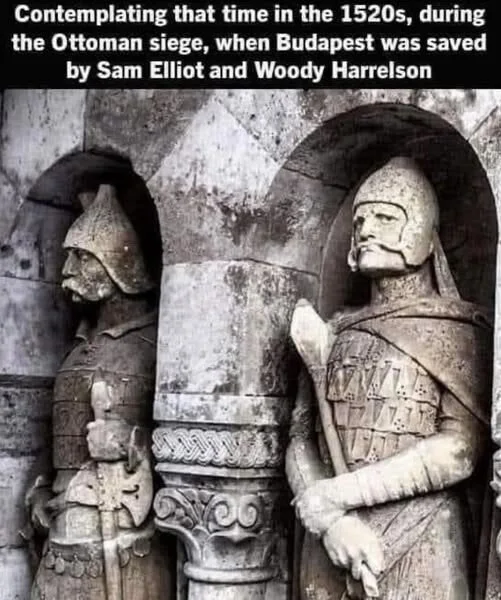
Mot: Bear Warning

Ariel : Iraqi Dinar Update, Major Movement on the Border
Ariel : Iraqi Dinar Update, Major Movement on the Border
Major Movement On The Border: 3 Things To Note
Iraqi Dinar Update
• Border conflicts and proxy wars, often fueled by Iranian influence, have historically destabilized Iraq’s economy. The liberation diminishes Iranian leverage, which has been a barrier to Iraq’s sovereignty over its economic policies, including currency management.
Ariel : Iraqi Dinar Update, Major Movement on the Border
Major Movement On The Border: 3 Things To Note
Iraqi Dinar Update
• Border conflicts and proxy wars, often fueled by Iranian influence, have historically destabilized Iraq’s economy. The liberation diminishes Iranian leverage, which has been a barrier to Iraq’s sovereignty over its economic policies, including currency management.
• International investors are wary of countries with ongoing conflicts. The stabilization of the Ahwaz region signals to global markets that Iraq is moving toward a more secure environment, potentially attracting foreign direct investment (FDI) essential for economic growth and currency strengthening.
• Internally, the liberation reduces sectarian tensions within Iraq, particularly among Sunni populations who may feel marginalized. A more unified domestic front supports coherent economic policy-making, a prerequisite for currency reform.
Why this is huge for Dinar Investors?
The CBI has been working on stabilizing the dinar against the U.S. dollar, which has fluctuated due to economic instability. With Ahwaz’s liberation, the CBI can focus on implementing policies like reducing money supply growth and controlling inflation, both of which are necessary for revaluation.
The stability allows Iraq to allocate more resources to building foreign exchange reserves. As of early 2025, Iraq’s reserves were reported at approximately $100 billion, but experts suggest a reserve of at least $150 billion is needed for a credible revaluation.
The additional oil revenue from a stable Ahwaz region can help reach this threshold. Joining the Forex market requires adherence to international financial standards, such as those set by the International Monetary Fund (IMF).
The geopolitical calm post-liberation enables Iraq to focus on IMF-mandated reforms, including improving transparency in fiscal operations and reducing corruption, which have historically undermined currency credibility.
The dinar must become fully convertible, meaning it can be freely exchanged for other currencies without restrictions. The stability from Ahwaz reduces the risk of capital flight, a common barrier to convertibility.
The Forex market requires a currency to have sufficient liquidity, which depends on trade volume and investor interest. A stable Iraq, with increased oil exports and FDI, can enhance dinar liquidity by attracting more international transactions.
The Green Light
The convergence of the “Big Beautiful Bill,” the GENIUS Act, and the settlement of the Ripple case with the SEC, alongside the pairing of XRP with the Iraqi dinar (IQD), creates a compelling scenario for Iraq’s currency revaluation and entry into the Forex market in the near future.
The “Big Beautiful Bill,” being a comprehensive legislative package aimed at economic reform, will provide the legal and financial framework necessary for Iraq to overhaul its monetary policies, including reducing corruption, enhancing transparency, and aligning with international standards as recommended by the IMF.
The GENIUS Act, presumably focusing on technological and financial innovation, would further support Iraq’s digital infrastructure, crucial for modernizing its banking sector and facilitating electronic currency trading, a prerequisite for Forex integration.
The settlement of the Ripple case with the SEC, announced on May 8, 2025, resolves a significant regulatory hurdle for XRP, a cryptocurrency paired with the IQD, potentially stabilizing its value and enhancing its usability in international transactions.
With XRP’s pairing, Iraq could leverage blockchain technology to improve dinar convertibility and liquidity, essential for Forex market entry.
Given the timeline next week’s anticipated passage of these bills the stage is set for Iraq to make its move, possibly triggering a revaluation shortly after, as the combination of legislative support, technological advancement, and cryptocurrency stability aligns with the geopolitical and economic stability gained from events like the liberation of Arab Ahwaz.
This convergence, while not guaranteed, positions Iraq closer than ever to achieving a revalued dinar, backed by a robust legal, technological, and financial foundation.
Source(s): https://x.com/Prolotario1/status/1934007342619644254