
How to Find Your Money ‘Why’
.How to Find Your Money ‘Why’
By Katherine Fusco
There are lots of reasons to spend money, some good, some bad, most compelling. Of course, this is by design. Not spending money, though… that’s a trickier thing. The reasons not to spend—or to save, if you’d like to put it more positively—are often vague, rooted in a fuzzy sense of what one should do.
When people are tired or temptations are especially aggressive (hello, holiday season!), the vague I should pay off my debt crumbles in the face of beautiful store displays or delicious scents wafting from strategically open bakery doors.
How to Find Your Money ‘Why’
By Katherine Fusco
There are lots of reasons to spend money, some good, some bad, most compelling. Of course, this is by design. Not spending money, though… that’s a trickier thing. The reasons not to spend—or to save, if you’d like to put it more positively—are often vague, rooted in a fuzzy sense of what one should do.
When people are tired or temptations are especially aggressive (hello, holiday season!), the vague I should pay off my debt crumbles in the face of beautiful store displays or delicious scents wafting from strategically open bakery doors.
More than this, advertising often appeals to our sense of self, frequently tying products to concepts or feelings that we truly believe in. How many bath bombs have been purchased on credit cards in the name of self-care? How many unused vitamins and supplements under the name of wellness?
Pink things for breast cancer awareness? Maybe an embarrassment of water bottles and reusable bags under the name of environmentalism, even though the environmental thing would be shopping less overall?
Against all these compelling, ego-supporting reasons to shop, the vague “adulting” calls to save more and spend less don’t stand a chance.
Just as advertisers know to tap into your sense of self through fairly specific identity appeals—Are you a dog-loving hiker? Here’s a four-wheel drive station wagon—you can also meet your own financial needs by developing your own money mantra, or “why.”
The importance of considering our feelings and values when it comes to money has gained traction in the field of economics. As the journal Applied Economics reports, “individualized cultural values measures do indeed explain part of the financial behaviour of households.”
Becoming more concretely aware of cultural, familial and personal values might thus be an important key to better personal finance.
Here are a few techniques to use for getting in touch with your money “why”:
1. Tap Into Your Core Values
What’s most important to you? Unlike with the next two exercises, you’re allowed to be a bit vague here. You might find yourself naming things like “beauty,” “health,” “community,” “family” or even something grander like “justice.”
To continue reading, please go to the original article here:
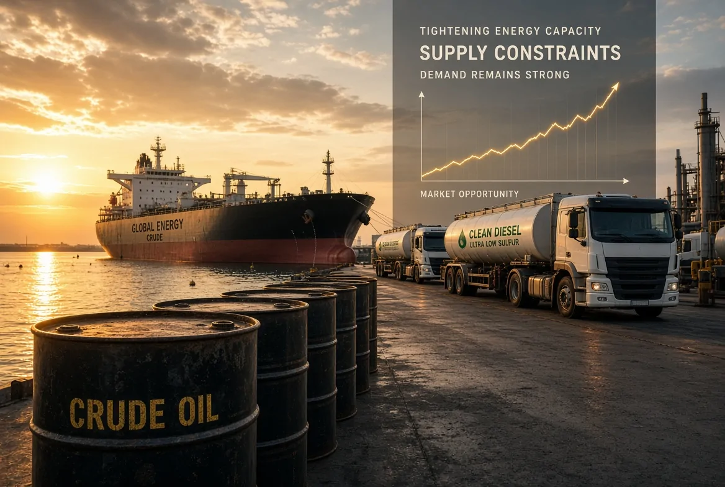
The Iran War Will End. Expensive Diesel Won’t
Notes From the Field By James Hickman (Simon Black / sovereign Man) October 20, 2026
There’s a college degree that pays about $100,000 right out of school, which is pretty good money for a 22-year old. Within a few years, that pay could easily double.
Yet hardly any young person wants the job.
It’s not dangerous, it’s not dirty, and it doesn’t require superhuman work hours. The only reason young people aren’t interested is because Greta Thunberg told them it wasn’t cool.
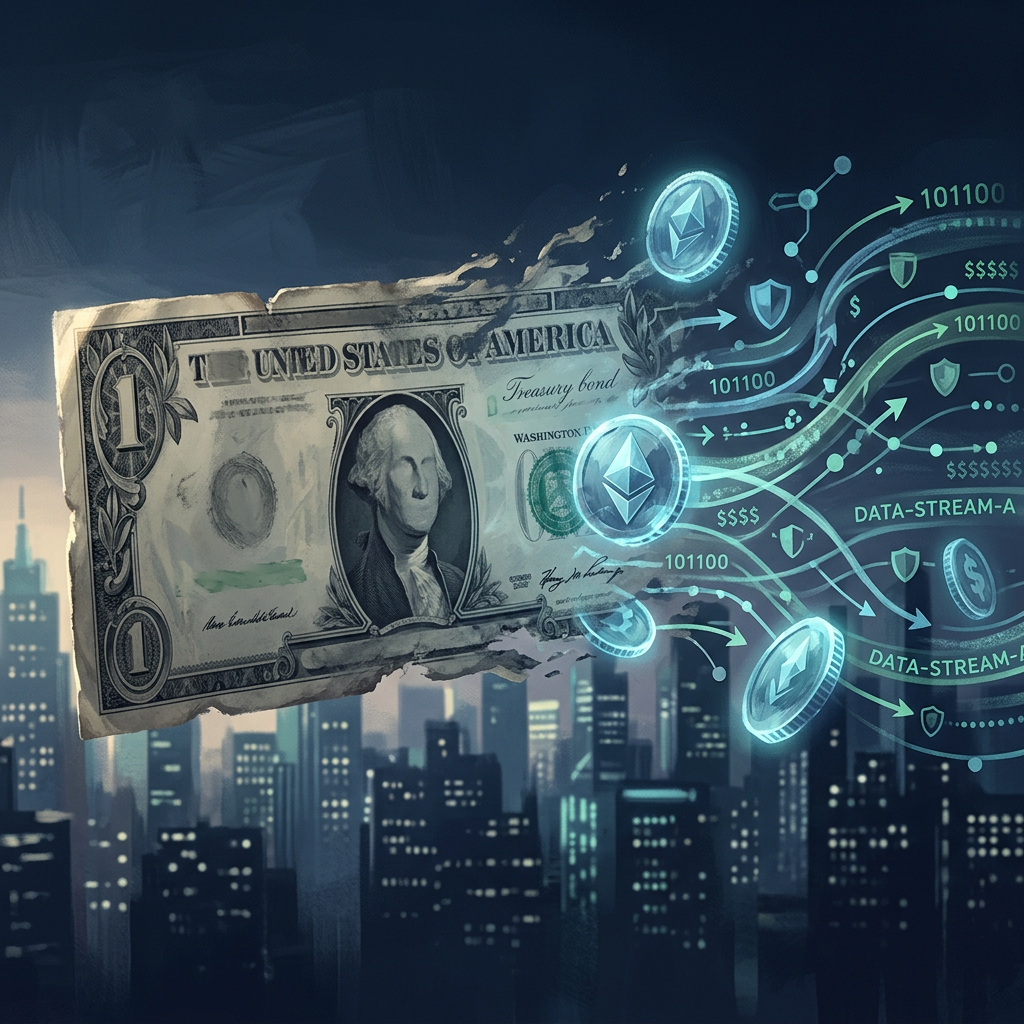
GP Q: US Dollar Upgrade or Collapse?
10-20-2026
“Is the dollar dying… or is it about to get a major upgrade?”
MONEY MONEY MONEY
Most people are only watching the old fiat dollar.
They’re completely missing the new system the U.S. is building right now under the GENIUS Act. Here’s the simple version:

Rob Cunningham: If the World Could Choose Only One Blockchain
10-20-2026
On a go forward basis, “all things considered”, based on the comprehensive utility and liquidity needs of the entire world, “if” only one blockchain was allowed to exist, which should it be?
My choice: the XRP Ledger.
Under this hypothetical – one blockchain serving the world’s combined needs for payments, currencies, tokenized assets, exchange and settlement – XRPL offers the strongest fit in my judgment.
The Central Bank Of Iraq Resolves The Issue Of Merchants' Remittances And Confirms The Continuation Of Import Financing In Dollars.
October 20, 2026Last updated: October 20, 2026 The Central Bank of Iraq confirmed on Tuesday, October 20, 2026, the continuation of financing imports and providing foreign currency through official banking channels, announcing the completion of fulfilling external transfer requests that were suspended before the adjustment of the dinar exchange rate on October 7, in a step aimed at addressing outstanding issues, protecting the rights of traders and ensuring the smooth flow of foreign trade.
Good Afternoon Dinar Recaps,
GLOBAL ASSET RESET WATCH: DEBT, AI UNCERTAINTY AND ENERGY RISKS RESHAPE SAFE-HAVEN DEMAND
Investors are reassessing where to protect their wealth as geopolitical conflict, rising energy prices, government debt and uncertainty surrounding artificial intelligence reshape global markets.
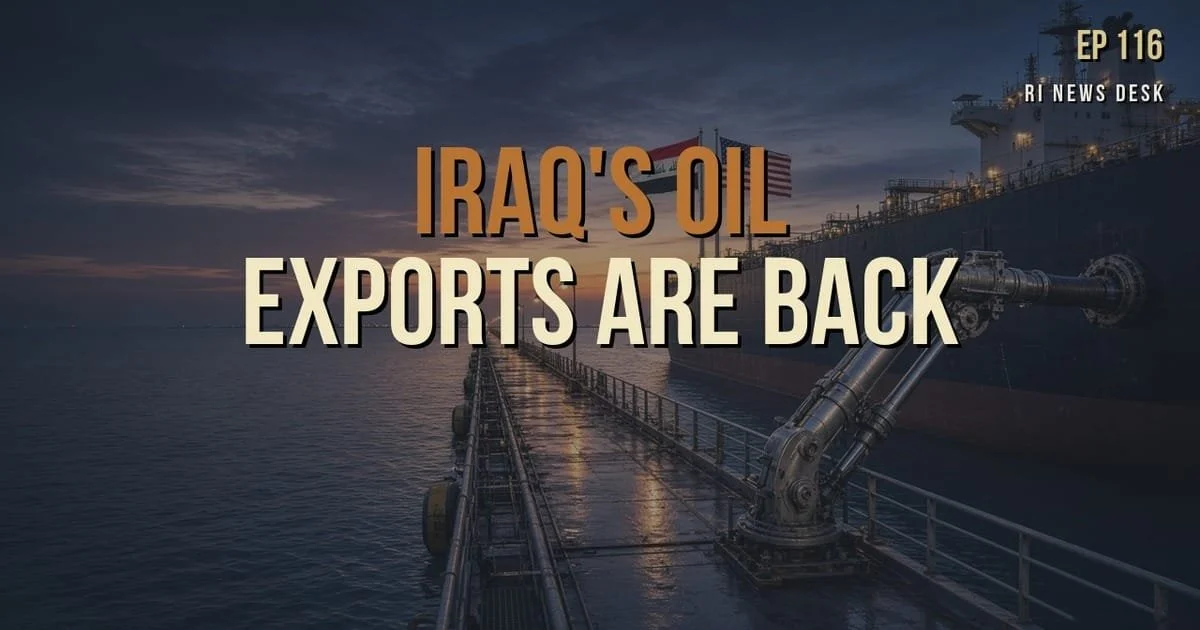
Reset Intelligence: Iraq's Oil Exports Are Back.
By Reset Intelligence | @EXIT_FIAT
Iraq's oil exports are back above 3.4 million barrels a day, close to where they stood before the war.
The same weekend the IMF and Washington both moved toward Baghdad, and the street dollar went the other way.
TNT:
Tishwash: 45 trillion outside the banks... Parliamentary Finance Committee reveals the extent of the crisis of confidence in banks
The head of the parliamentary finance committee, Uday Awad, revealed the existence of a cash mass ranging between 40 and 45 trillion dinars outside the Iraqi banking system, attributing this to the weak confidence of citizens in banks, while stressing the work to find solutions to return these funds to the banking cycle .
Awad said during a televised interview followed by Al-Sa’a Network that “there is a cash mass estimated at about 40 to 45 trillion dinars outside the banking system,” noting that “the lack of confidence in banks has led citizens to keep their money away from them.”
Stern Drew: The BIS Conducted the Most Important Blockchain Experiment of the Year
10-20-2026
The BIS Conducted The Most Important Blockchain Experiment of The Year On a Public Ledger.
The bank for central banks quietly put official data on a public ledger.
Ripple, the crypto firm behind the XRP Ledger blockchain, just became the quiet infrastructure pick for the Bank for International Settlements.
Iraq Absent From Top US Treasury Holders List
2026-10-19 17:56 Shafaq News- Washington Iraq was absent from the list of major foreign holders of US Treasury securities in August 2026, as total foreign holdings rose to $9.3317 trillion from $9.2484 trillion in July, according to US Treasury Department data released on October 16.
Good Morning Dinar Recaps,
GLOBAL DEBT RESET WATCH: U.S. TREASURY FINANCING PLANS FACE GROWING MARKET PRESSURE
Rising borrowing costs, heavy government debt and uncertainty over future bond sales are testing the U.S. Treasury market and raising questions about the cost of financing America's deficits.
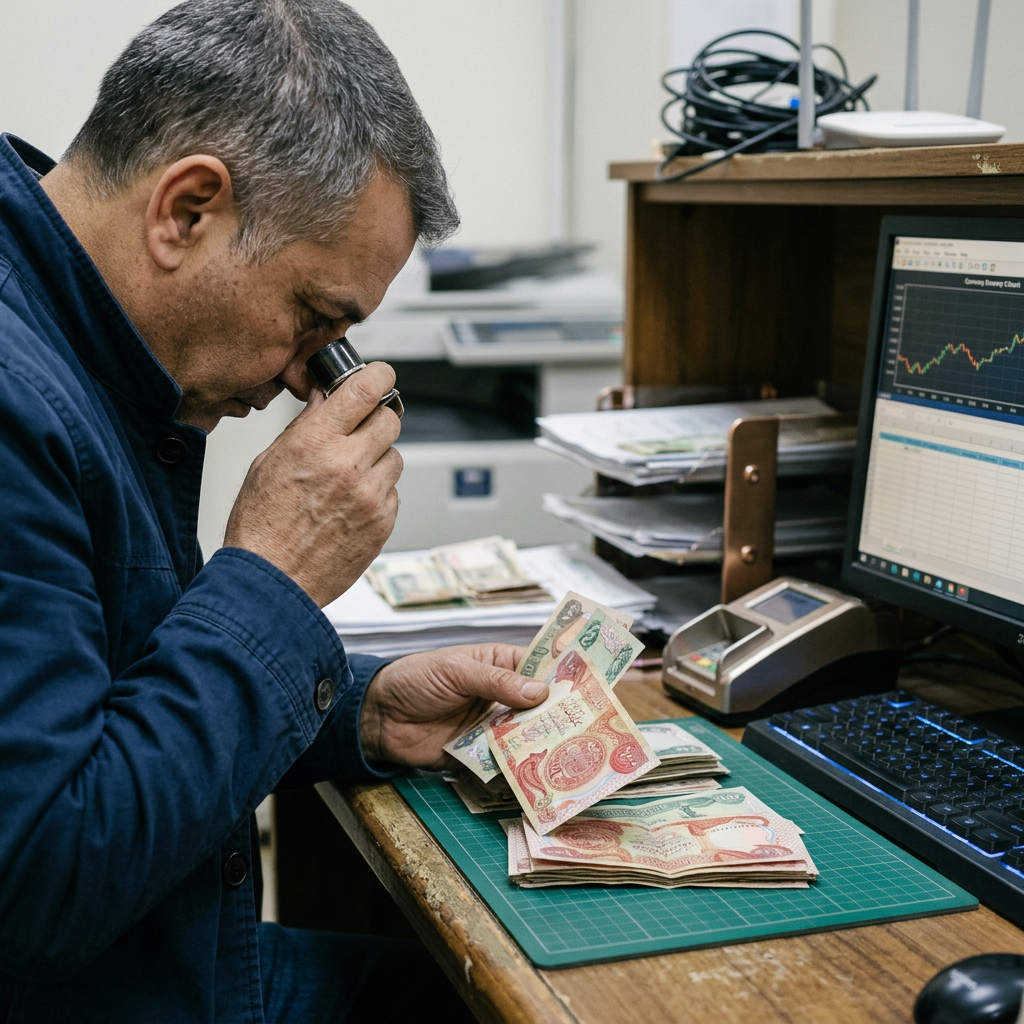
GP Q: IMF Discussions on Possible Financing Package for Iraq
10-20-2026
IRAQ
RV etc
MarkZ et al
• No confirmed recipients of asset-backed funds could be found
• Questions (including from James / James K) about whether anyone has received monetary / asset-backed funds
KTFA
Monday Night Video
FRANK26….10-19-26…..THREE ZERO LIFTING FINALIZED
This video is in Frank’s and his team’s opinion only
Frank’s team is Walkingstick, Eddie and Omar in Iraq and guests
Playback Number: 605-313-5163 PIN: 156996#
The Central Bank Told Nina: Removing Zeros Is Not Within Our Authority And Requires A Legal And Legislative Process
Baghdad/ NINA / The Central Bank of Iraq confirmed that the issue of removing zeros from the currency is not within its jurisdiction, but rather requires legislation. The bank's media director, Haider Ghazi, told the Iraqi National News Agency ( NINA 😞 "The issue of removing zeros is not within the bank's authority; it requires legislation, as it is linked to the settlement of debts, legal obligations, and punitive fines under current Iraqi laws.
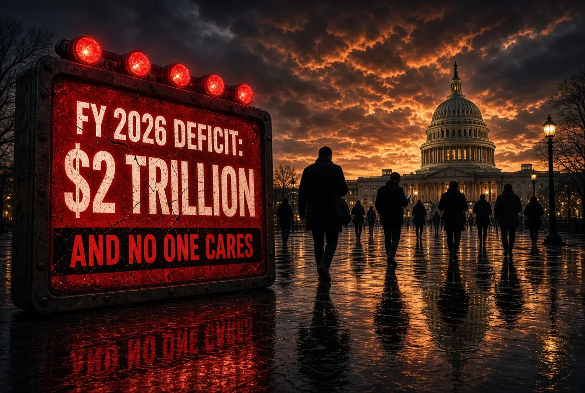
The FY 2026 Deficit Was $2 Trillion... And No One Cares
Notes From the Field By James Hickman (Simon Black / Sovereign Man) October 19, 2026
On Friday afternoon the Treasury Department released its final numbers for fiscal year 2026, which just ended on September 30, and the results are pretty much what you’d expect: horrible, appalling, inexcusable.
Treasury reported a total budget deficit of $2 trillion, $220 billion worse than the year before.
GP Q: Iraq Just Moved its First International Cargo on an Iraqi Truck
Iraq Just Moved Its First International Cargo on an Iraqi Truck:
Turkey to UAE
Iraq’s customs authority announced that an Iraqi truck has completed its first international transit shipment — carrying goods from Turkey to the United Arab Emirates across Iraqi territory.
Finance Minister Orders Rafidain Bank To Resume Lending
2026-10-19 Shafaq News- Baghdad Iraq’s Finance Minister Falih Al-Sari on Monday instructed state-owned Rafidain Bank to resume lending to public-sector employees, streamline loan applications, and expand financing for private businesses.
Good Afternoon Dinar Recaps,
GLOBAL PAYMENTS RESET WATCH: BIS EXAMINES THE RACE BETWEEN BANKS, FINTECHS AND STABLECOINS
New research from the Bank for International Settlements compares the costs and limitations of competing cross-border payment systems as the global financial industry searches for faster, more affordable ways to move money.
TNT:
Tishwash: Finance Ministry and World Bank discuss banking sector reform and enhancing financial management efficiency in Iraq
The Undersecretary of the Ministry of Finance, Abdul Hassan Jamal, discussed with a delegation from the World Bank ways to enhance cooperation in financial policies and develop the financial and banking sectors in Iraq.
The ministry stated in a statement followed by “Iraq Observer” issued on Sunday, October 18, 2026, that the meeting witnessed a discussion of the next steps to expand the dialogue on financial reform and the development of the banking sector, in a way that contributes to raising the efficiency of financial management in the country.
Swisher1776: Incoming RV for Iraq
10-18-2026
INCOMING RV: CBI INTRODUCES ELECTRIC SYSTEM FOR REPLACING DAMAGED CURRENCY
The Central Bank of Iraq has introduced a new electronic system for replacing damaged currency, as part of its efforts to simplify procedures and make it easier for citizens to access this service more quickly and efficiently.
The system allows citizens to submit requests to replace damaged currency electronically via the “Aur” platform, by entering and confirming the required data, and the competent authorities in the Central Bank of Iraq will complete the necessary procedures to complete the replacement process.
Risk Is What You Don’t See
.Risk Is What You Don’t See
Jan 14, 2020 by Morgan Housel
Harry Houdini was more than an escape artist. Anything that made people gasp interested him and was something he would try. One of his famous tricks was letting big men punch him in the gut as hard as they could. Houdini – an amateur boxer before becoming a magician – said he could flex his muscles in a way that could absorb any blow. The stunt matched what people loved about his escapes: the idea that his body could conquer physics.
One day in 1926 Houdini was resting in his dressing room after a performance when a group of students from McGill came in to visit. One of the students, Jocelyn Gordon Whitehead, asked, “Is it true, Mr. Houdini, that you can resist the hardest blows struck to the abdomen?”
Without warning he then began slamming his fist into Houdini.
Risk Is What You Don’t See
Jan 14, 2020 by Morgan Housel
Harry Houdini was more than an escape artist. Anything that made people gasp interested him and was something he would try. One of his famous tricks was letting big men punch him in the gut as hard as they could. Houdini – an amateur boxer before becoming a magician – said he could flex his muscles in a way that could absorb any blow. The stunt matched what people loved about his escapes: the idea that his body could conquer physics.
One day in 1926 Houdini was resting in his dressing room after a performance when a group of students from McGill came in to visit. One of the students, Jocelyn Gordon Whitehead, asked, “Is it true, Mr. Houdini, that you can resist the hardest blows struck to the abdomen?”
Without warning he then began slamming his fist into Houdini.
Arthur Conan Doyle’s book The Edge of Unknown writes:
Houdini stopped him suddenly in the midst of a punch, with a gesture that he had had enough.
Houdini immediately after stated that he had had no opportunity to prepare himself against the blows, as he did not think that Whitehead would strike him as suddenly as he did and with such force, and that he would have been in a better position to prepare for the blows if he had arisen from the couch for this purpose.
A day later Houdini was doubled over with abdominal pain. His appendix was ruptured, almost certainty from Whitehead’s blows.
And then Harry Houdini died.
The riskiest stuff is always what you don’t see coming.
Risk is complicated, which is why we’re not great at dealing with it. It’s more than just something bad happening. How risky something is depends on whether its target is prepared for it. A big event people have time to prepare for can be handled without much fuss. A smaller one out of the blue can be deadly.
Houdini – who buried himself under six feet of dirt in a straight jacket and dug himself out weeks before he was killed by a student’s jab – learned this the hard way.
It’s also something we should remember when thinking about the economy and our investments.
The biggest economic risk is what no one’s talking about, because if no one’s talking about no one’s prepared for it, and if no one’s prepared for it its damage will be amplified when it arrives.
To continue reading, please go to the original article here:
https://www.collaborativefund.com/blog/risk-is-what-you-dont-see/
The Iraqi Dinar Is The Second Worst-Performing Arab Currency; Dollar Pressures Pose A Difficult Test For Monetary Policy.
October 20, 2026 The Independent - The classification of the Iraqi dinar among the Arab currencies that have declined the most against the US dollar has raised widespread questions about the future of monetary stability in Iraq, and the ability of the Central Bank to contain the increasing pressures on the exchange market, at a time when the economy is facing challenges related to oil revenues, government spending and the heavy reliance on imports.
The Iran War Will End. Expensive Diesel Won’t
Notes From the Field By James Hickman (Simon Black / sovereign Man) October 20, 2026
There’s a college degree that pays about $100,000 right out of school, which is pretty good money for a 22-year old. Within a few years, that pay could easily double.
Yet hardly any young person wants the job.
It’s not dangerous, it’s not dirty, and it doesn’t require superhuman work hours. The only reason young people aren’t interested is because Greta Thunberg told them it wasn’t cool.
GP Q: US Dollar Upgrade or Collapse?
10-20-2026
“Is the dollar dying… or is it about to get a major upgrade?”
MONEY MONEY MONEY
Most people are only watching the old fiat dollar.
They’re completely missing the new system the U.S. is building right now under the GENIUS Act. Here’s the simple version:
Rob Cunningham: If the World Could Choose Only One Blockchain
10-20-2026
On a go forward basis, “all things considered”, based on the comprehensive utility and liquidity needs of the entire world, “if” only one blockchain was allowed to exist, which should it be?
My choice: the XRP Ledger.
Under this hypothetical – one blockchain serving the world’s combined needs for payments, currencies, tokenized assets, exchange and settlement – XRPL offers the strongest fit in my judgment.
The Central Bank Of Iraq Resolves The Issue Of Merchants' Remittances And Confirms The Continuation Of Import Financing In Dollars.
October 20, 2026Last updated: October 20, 2026 The Central Bank of Iraq confirmed on Tuesday, October 20, 2026, the continuation of financing imports and providing foreign currency through official banking channels, announcing the completion of fulfilling external transfer requests that were suspended before the adjustment of the dinar exchange rate on October 7, in a step aimed at addressing outstanding issues, protecting the rights of traders and ensuring the smooth flow of foreign trade.
Good Afternoon Dinar Recaps,
GLOBAL ASSET RESET WATCH: DEBT, AI UNCERTAINTY AND ENERGY RISKS RESHAPE SAFE-HAVEN DEMAND
Investors are reassessing where to protect their wealth as geopolitical conflict, rising energy prices, government debt and uncertainty surrounding artificial intelligence reshape global markets.
Reset Intelligence: Iraq's Oil Exports Are Back.
By Reset Intelligence | @EXIT_FIAT
Iraq's oil exports are back above 3.4 million barrels a day, close to where they stood before the war.
The same weekend the IMF and Washington both moved toward Baghdad, and the street dollar went the other way.
TNT:
Tishwash: 45 trillion outside the banks... Parliamentary Finance Committee reveals the extent of the crisis of confidence in banks
The head of the parliamentary finance committee, Uday Awad, revealed the existence of a cash mass ranging between 40 and 45 trillion dinars outside the Iraqi banking system, attributing this to the weak confidence of citizens in banks, while stressing the work to find solutions to return these funds to the banking cycle .
Awad said during a televised interview followed by Al-Sa’a Network that “there is a cash mass estimated at about 40 to 45 trillion dinars outside the banking system,” noting that “the lack of confidence in banks has led citizens to keep their money away from them.”
Stern Drew: The BIS Conducted the Most Important Blockchain Experiment of the Year
10-20-2026
The BIS Conducted The Most Important Blockchain Experiment of The Year On a Public Ledger.
The bank for central banks quietly put official data on a public ledger.
Ripple, the crypto firm behind the XRP Ledger blockchain, just became the quiet infrastructure pick for the Bank for International Settlements.
Iraq Absent From Top US Treasury Holders List
2026-10-19 17:56 Shafaq News- Washington Iraq was absent from the list of major foreign holders of US Treasury securities in August 2026, as total foreign holdings rose to $9.3317 trillion from $9.2484 trillion in July, according to US Treasury Department data released on October 16.
Good Morning Dinar Recaps,
GLOBAL DEBT RESET WATCH: U.S. TREASURY FINANCING PLANS FACE GROWING MARKET PRESSURE
Rising borrowing costs, heavy government debt and uncertainty over future bond sales are testing the U.S. Treasury market and raising questions about the cost of financing America's deficits.
GP Q: IMF Discussions on Possible Financing Package for Iraq
10-20-2026
IRAQ
RV etc
MarkZ et al
• No confirmed recipients of asset-backed funds could be found
• Questions (including from James / James K) about whether anyone has received monetary / asset-backed funds
KTFA
Monday Night Video
FRANK26….10-19-26…..THREE ZERO LIFTING FINALIZED
This video is in Frank’s and his team’s opinion only
Frank’s team is Walkingstick, Eddie and Omar in Iraq and guests
Playback Number: 605-313-5163 PIN: 156996#
The Central Bank Told Nina: Removing Zeros Is Not Within Our Authority And Requires A Legal And Legislative Process
Baghdad/ NINA / The Central Bank of Iraq confirmed that the issue of removing zeros from the currency is not within its jurisdiction, but rather requires legislation. The bank's media director, Haider Ghazi, told the Iraqi National News Agency ( NINA 😞 "The issue of removing zeros is not within the bank's authority; it requires legislation, as it is linked to the settlement of debts, legal obligations, and punitive fines under current Iraqi laws.
The FY 2026 Deficit Was $2 Trillion... And No One Cares
Notes From the Field By James Hickman (Simon Black / Sovereign Man) October 19, 2026
On Friday afternoon the Treasury Department released its final numbers for fiscal year 2026, which just ended on September 30, and the results are pretty much what you’d expect: horrible, appalling, inexcusable.
Treasury reported a total budget deficit of $2 trillion, $220 billion worse than the year before.
GP Q: Iraq Just Moved its First International Cargo on an Iraqi Truck
Iraq Just Moved Its First International Cargo on an Iraqi Truck:
Turkey to UAE
Iraq’s customs authority announced that an Iraqi truck has completed its first international transit shipment — carrying goods from Turkey to the United Arab Emirates across Iraqi territory.
Finance Minister Orders Rafidain Bank To Resume Lending
2026-10-19 Shafaq News- Baghdad Iraq’s Finance Minister Falih Al-Sari on Monday instructed state-owned Rafidain Bank to resume lending to public-sector employees, streamline loan applications, and expand financing for private businesses.
Good Afternoon Dinar Recaps,
GLOBAL PAYMENTS RESET WATCH: BIS EXAMINES THE RACE BETWEEN BANKS, FINTECHS AND STABLECOINS
New research from the Bank for International Settlements compares the costs and limitations of competing cross-border payment systems as the global financial industry searches for faster, more affordable ways to move money.
TNT:
Tishwash: Finance Ministry and World Bank discuss banking sector reform and enhancing financial management efficiency in Iraq
The Undersecretary of the Ministry of Finance, Abdul Hassan Jamal, discussed with a delegation from the World Bank ways to enhance cooperation in financial policies and develop the financial and banking sectors in Iraq.
The ministry stated in a statement followed by “Iraq Observer” issued on Sunday, October 18, 2026, that the meeting witnessed a discussion of the next steps to expand the dialogue on financial reform and the development of the banking sector, in a way that contributes to raising the efficiency of financial management in the country.
Swisher1776: Incoming RV for Iraq
10-18-2026
INCOMING RV: CBI INTRODUCES ELECTRIC SYSTEM FOR REPLACING DAMAGED CURRENCY
The Central Bank of Iraq has introduced a new electronic system for replacing damaged currency, as part of its efforts to simplify procedures and make it easier for citizens to access this service more quickly and efficiently.
The system allows citizens to submit requests to replace damaged currency electronically via the “Aur” platform, by entering and confirming the required data, and the competent authorities in the Central Bank of Iraq will complete the necessary procedures to complete the replacement process.
5 Ways To Cash In on Your Spare Change
.5 Ways To Cash In on Your Spare Change
Jennifer Taylor Fri, April 22, 2022
You’ve been collecting spare change for quite some time now, and your piggy bank is about to bust. The time has come to empty it, but first you want to decide how to put your savings to good use.
After spending months — or even years — collecting these coins, you want to do something meaningful with the money. Here are five ideas to consider as the best use for your spare change.
5 Ways To Cash In on Your Spare Change
Jennifer Taylor Fri, April 22, 2022
You’ve been collecting spare change for quite some time now, and your piggy bank is about to bust. The time has come to empty it, but first you want to decide how to put your savings to good use.
After spending months — or even years — collecting these coins, you want to do something meaningful with the money. Here are five ideas to consider as the best use for your spare change.
Save for Holiday Gifts
While the holidays might be the farthest thing from your mind right now, Holly Andrews, loans manager and managing director at KIS Finance, a financial brokerage firm based in the United Kingdom, suggested using your spare change to start saving for this expensive season.
“Putting away your spare change right from the start of the year means you have the maximum amount of time to save for the holidays, and you’ll probably be surprised at just how much this will add up to over 10 or 11 months,” she said. “It may not cover everything, but it will certainly give you a very big head start, and you won’t have to worry about how you’ll afford everything as the holidays get closer.”
Imagine not having to scramble to cover all those holiday expenses this year, because you’ve already planned ahead. Enjoy the feeling!
Add It to Your Debt Repayments
If you’re trying to pay off credit card balances, Andrews said anything you can contribute to the cause will be a great help.
“Keep adding your spare change to a jar and every time you reach $10 or $20 dollars, put it in your bank account and add it to your next credit card payment,” she said. “It might not seem like much at the time, but every dollar that you can add towards debt repayment will benefit you in the long-run.”
In no time at all, you might make a serious dent in your debt repayments.
Start an Emergency Fund
If you don’t already have an emergency fund, your spare change is a great starting point, said Alissa Krasner Maizes, financial planner and founder of the investment advising firm, Amplify My Wealth.
To continue reading, please go to the original article here:
https://finance.yahoo.com/news/5-ways-cash-spare-change-180105626.html
The Iraqi Dinar Is The Second Worst-Performing Arab Currency; Dollar Pressures Pose A Difficult Test For Monetary Policy.
October 20, 2026 The Independent - The classification of the Iraqi dinar among the Arab currencies that have declined the most against the US dollar has raised widespread questions about the future of monetary stability in Iraq, and the ability of the Central Bank to contain the increasing pressures on the exchange market, at a time when the economy is facing challenges related to oil revenues, government spending and the heavy reliance on imports.
The Iran War Will End. Expensive Diesel Won’t
Notes From the Field By James Hickman (Simon Black / sovereign Man) October 20, 2026
There’s a college degree that pays about $100,000 right out of school, which is pretty good money for a 22-year old. Within a few years, that pay could easily double.
Yet hardly any young person wants the job.
It’s not dangerous, it’s not dirty, and it doesn’t require superhuman work hours. The only reason young people aren’t interested is because Greta Thunberg told them it wasn’t cool.
GP Q: US Dollar Upgrade or Collapse?
10-20-2026
“Is the dollar dying… or is it about to get a major upgrade?”
MONEY MONEY MONEY
Most people are only watching the old fiat dollar.
They’re completely missing the new system the U.S. is building right now under the GENIUS Act. Here’s the simple version:
Rob Cunningham: If the World Could Choose Only One Blockchain
10-20-2026
On a go forward basis, “all things considered”, based on the comprehensive utility and liquidity needs of the entire world, “if” only one blockchain was allowed to exist, which should it be?
My choice: the XRP Ledger.
Under this hypothetical – one blockchain serving the world’s combined needs for payments, currencies, tokenized assets, exchange and settlement – XRPL offers the strongest fit in my judgment.
The Central Bank Of Iraq Resolves The Issue Of Merchants' Remittances And Confirms The Continuation Of Import Financing In Dollars.
October 20, 2026Last updated: October 20, 2026 The Central Bank of Iraq confirmed on Tuesday, October 20, 2026, the continuation of financing imports and providing foreign currency through official banking channels, announcing the completion of fulfilling external transfer requests that were suspended before the adjustment of the dinar exchange rate on October 7, in a step aimed at addressing outstanding issues, protecting the rights of traders and ensuring the smooth flow of foreign trade.
Good Afternoon Dinar Recaps,
GLOBAL ASSET RESET WATCH: DEBT, AI UNCERTAINTY AND ENERGY RISKS RESHAPE SAFE-HAVEN DEMAND
Investors are reassessing where to protect their wealth as geopolitical conflict, rising energy prices, government debt and uncertainty surrounding artificial intelligence reshape global markets.
Reset Intelligence: Iraq's Oil Exports Are Back.
By Reset Intelligence | @EXIT_FIAT
Iraq's oil exports are back above 3.4 million barrels a day, close to where they stood before the war.
The same weekend the IMF and Washington both moved toward Baghdad, and the street dollar went the other way.
TNT:
Tishwash: 45 trillion outside the banks... Parliamentary Finance Committee reveals the extent of the crisis of confidence in banks
The head of the parliamentary finance committee, Uday Awad, revealed the existence of a cash mass ranging between 40 and 45 trillion dinars outside the Iraqi banking system, attributing this to the weak confidence of citizens in banks, while stressing the work to find solutions to return these funds to the banking cycle .
Awad said during a televised interview followed by Al-Sa’a Network that “there is a cash mass estimated at about 40 to 45 trillion dinars outside the banking system,” noting that “the lack of confidence in banks has led citizens to keep their money away from them.”
Stern Drew: The BIS Conducted the Most Important Blockchain Experiment of the Year
10-20-2026
The BIS Conducted The Most Important Blockchain Experiment of The Year On a Public Ledger.
The bank for central banks quietly put official data on a public ledger.
Ripple, the crypto firm behind the XRP Ledger blockchain, just became the quiet infrastructure pick for the Bank for International Settlements.
Iraq Absent From Top US Treasury Holders List
2026-10-19 17:56 Shafaq News- Washington Iraq was absent from the list of major foreign holders of US Treasury securities in August 2026, as total foreign holdings rose to $9.3317 trillion from $9.2484 trillion in July, according to US Treasury Department data released on October 16.
Good Morning Dinar Recaps,
GLOBAL DEBT RESET WATCH: U.S. TREASURY FINANCING PLANS FACE GROWING MARKET PRESSURE
Rising borrowing costs, heavy government debt and uncertainty over future bond sales are testing the U.S. Treasury market and raising questions about the cost of financing America's deficits.
GP Q: IMF Discussions on Possible Financing Package for Iraq
10-20-2026
IRAQ
RV etc
MarkZ et al
• No confirmed recipients of asset-backed funds could be found
• Questions (including from James / James K) about whether anyone has received monetary / asset-backed funds
KTFA
Monday Night Video
FRANK26….10-19-26…..THREE ZERO LIFTING FINALIZED
This video is in Frank’s and his team’s opinion only
Frank’s team is Walkingstick, Eddie and Omar in Iraq and guests
Playback Number: 605-313-5163 PIN: 156996#
The Central Bank Told Nina: Removing Zeros Is Not Within Our Authority And Requires A Legal And Legislative Process
Baghdad/ NINA / The Central Bank of Iraq confirmed that the issue of removing zeros from the currency is not within its jurisdiction, but rather requires legislation. The bank's media director, Haider Ghazi, told the Iraqi National News Agency ( NINA 😞 "The issue of removing zeros is not within the bank's authority; it requires legislation, as it is linked to the settlement of debts, legal obligations, and punitive fines under current Iraqi laws.
The FY 2026 Deficit Was $2 Trillion... And No One Cares
Notes From the Field By James Hickman (Simon Black / Sovereign Man) October 19, 2026
On Friday afternoon the Treasury Department released its final numbers for fiscal year 2026, which just ended on September 30, and the results are pretty much what you’d expect: horrible, appalling, inexcusable.
Treasury reported a total budget deficit of $2 trillion, $220 billion worse than the year before.
GP Q: Iraq Just Moved its First International Cargo on an Iraqi Truck
Iraq Just Moved Its First International Cargo on an Iraqi Truck:
Turkey to UAE
Iraq’s customs authority announced that an Iraqi truck has completed its first international transit shipment — carrying goods from Turkey to the United Arab Emirates across Iraqi territory.
Finance Minister Orders Rafidain Bank To Resume Lending
2026-10-19 Shafaq News- Baghdad Iraq’s Finance Minister Falih Al-Sari on Monday instructed state-owned Rafidain Bank to resume lending to public-sector employees, streamline loan applications, and expand financing for private businesses.
Good Afternoon Dinar Recaps,
GLOBAL PAYMENTS RESET WATCH: BIS EXAMINES THE RACE BETWEEN BANKS, FINTECHS AND STABLECOINS
New research from the Bank for International Settlements compares the costs and limitations of competing cross-border payment systems as the global financial industry searches for faster, more affordable ways to move money.
TNT:
Tishwash: Finance Ministry and World Bank discuss banking sector reform and enhancing financial management efficiency in Iraq
The Undersecretary of the Ministry of Finance, Abdul Hassan Jamal, discussed with a delegation from the World Bank ways to enhance cooperation in financial policies and develop the financial and banking sectors in Iraq.
The ministry stated in a statement followed by “Iraq Observer” issued on Sunday, October 18, 2026, that the meeting witnessed a discussion of the next steps to expand the dialogue on financial reform and the development of the banking sector, in a way that contributes to raising the efficiency of financial management in the country.
Swisher1776: Incoming RV for Iraq
10-18-2026
INCOMING RV: CBI INTRODUCES ELECTRIC SYSTEM FOR REPLACING DAMAGED CURRENCY
The Central Bank of Iraq has introduced a new electronic system for replacing damaged currency, as part of its efforts to simplify procedures and make it easier for citizens to access this service more quickly and efficiently.
The system allows citizens to submit requests to replace damaged currency electronically via the “Aur” platform, by entering and confirming the required data, and the competent authorities in the Central Bank of Iraq will complete the necessary procedures to complete the replacement process.
How to Make Better Financial Decisions
.How to Make Better Financial Decisions
By Barbara O’Neill
A key financial decision people struggle to make is how to allocate savings for multiple financial goals. Do you save for several goals at the same time or fund them one-by-one in a series of steps? Basically, there are two ways to approach financial goal-setting:
Concurrently: Saving for two or more financial goals at the same time.
Sequentially: Saving for one financial goal at a time in a series of steps.
Each method has its pros and cons. Here's how to decide which method is best for you.
How to Make Better Financial Decisions
By Barbara O’Neill
A key financial decision people struggle to make is how to allocate savings for multiple financial goals. Do you save for several goals at the same time or fund them one-by-one in a series of steps? Basically, there are two ways to approach financial goal-setting:
Concurrently: Saving for two or more financial goals at the same time.
Sequentially: Saving for one financial goal at a time in a series of steps.
Each method has its pros and cons. Here's how to decide which method is best for you.
Sequential goal-setting
Pros
You can focus intensely on one goal at a time and feel a sense of completion when each goal is achieved. It's also simpler to set up and manage single-goal savings than plans for multiple goals. You only need to set up and manage one account.
Cons
Compound interest is not retroactive. If it takes up to a decade to get around to long-term savings goals (e.g., funding a retirement savings plan), that's time that interest is not earned.
Concurrent goal-setting
Pros
Compound interest is not delayed on savings for goals that come later in life. The earlier money is set aside, the longer it can grow. Based on the Rule of 72, you can double a sum of money in nine years with an 8 percent average return. The earliest years of savings toward long-term goals are the most powerful ones.
Cons
Funding multiple financial goals is more complex than single-tasking. Income needs to be earmarked separately for each goal and often placed in different accounts. In addition, it will probably take longer to complete any one goal because savings is being placed in multiple locations.
Research findings
To continue reading, please go to the original article here:
https://www.wisebread.com/how-to-make-better-financial-decisions?ref=relatedbox
The Iraqi Dinar Is The Second Worst-Performing Arab Currency; Dollar Pressures Pose A Difficult Test For Monetary Policy.
October 20, 2026 The Independent - The classification of the Iraqi dinar among the Arab currencies that have declined the most against the US dollar has raised widespread questions about the future of monetary stability in Iraq, and the ability of the Central Bank to contain the increasing pressures on the exchange market, at a time when the economy is facing challenges related to oil revenues, government spending and the heavy reliance on imports.
The Iran War Will End. Expensive Diesel Won’t
Notes From the Field By James Hickman (Simon Black / sovereign Man) October 20, 2026
There’s a college degree that pays about $100,000 right out of school, which is pretty good money for a 22-year old. Within a few years, that pay could easily double.
Yet hardly any young person wants the job.
It’s not dangerous, it’s not dirty, and it doesn’t require superhuman work hours. The only reason young people aren’t interested is because Greta Thunberg told them it wasn’t cool.
GP Q: US Dollar Upgrade or Collapse?
10-20-2026
“Is the dollar dying… or is it about to get a major upgrade?”
MONEY MONEY MONEY
Most people are only watching the old fiat dollar.
They’re completely missing the new system the U.S. is building right now under the GENIUS Act. Here’s the simple version:
Rob Cunningham: If the World Could Choose Only One Blockchain
10-20-2026
On a go forward basis, “all things considered”, based on the comprehensive utility and liquidity needs of the entire world, “if” only one blockchain was allowed to exist, which should it be?
My choice: the XRP Ledger.
Under this hypothetical – one blockchain serving the world’s combined needs for payments, currencies, tokenized assets, exchange and settlement – XRPL offers the strongest fit in my judgment.
The Central Bank Of Iraq Resolves The Issue Of Merchants' Remittances And Confirms The Continuation Of Import Financing In Dollars.
October 20, 2026Last updated: October 20, 2026 The Central Bank of Iraq confirmed on Tuesday, October 20, 2026, the continuation of financing imports and providing foreign currency through official banking channels, announcing the completion of fulfilling external transfer requests that were suspended before the adjustment of the dinar exchange rate on October 7, in a step aimed at addressing outstanding issues, protecting the rights of traders and ensuring the smooth flow of foreign trade.
Good Afternoon Dinar Recaps,
GLOBAL ASSET RESET WATCH: DEBT, AI UNCERTAINTY AND ENERGY RISKS RESHAPE SAFE-HAVEN DEMAND
Investors are reassessing where to protect their wealth as geopolitical conflict, rising energy prices, government debt and uncertainty surrounding artificial intelligence reshape global markets.
Reset Intelligence: Iraq's Oil Exports Are Back.
By Reset Intelligence | @EXIT_FIAT
Iraq's oil exports are back above 3.4 million barrels a day, close to where they stood before the war.
The same weekend the IMF and Washington both moved toward Baghdad, and the street dollar went the other way.
TNT:
Tishwash: 45 trillion outside the banks... Parliamentary Finance Committee reveals the extent of the crisis of confidence in banks
The head of the parliamentary finance committee, Uday Awad, revealed the existence of a cash mass ranging between 40 and 45 trillion dinars outside the Iraqi banking system, attributing this to the weak confidence of citizens in banks, while stressing the work to find solutions to return these funds to the banking cycle .
Awad said during a televised interview followed by Al-Sa’a Network that “there is a cash mass estimated at about 40 to 45 trillion dinars outside the banking system,” noting that “the lack of confidence in banks has led citizens to keep their money away from them.”
Stern Drew: The BIS Conducted the Most Important Blockchain Experiment of the Year
10-20-2026
The BIS Conducted The Most Important Blockchain Experiment of The Year On a Public Ledger.
The bank for central banks quietly put official data on a public ledger.
Ripple, the crypto firm behind the XRP Ledger blockchain, just became the quiet infrastructure pick for the Bank for International Settlements.
Iraq Absent From Top US Treasury Holders List
2026-10-19 17:56 Shafaq News- Washington Iraq was absent from the list of major foreign holders of US Treasury securities in August 2026, as total foreign holdings rose to $9.3317 trillion from $9.2484 trillion in July, according to US Treasury Department data released on October 16.
Good Morning Dinar Recaps,
GLOBAL DEBT RESET WATCH: U.S. TREASURY FINANCING PLANS FACE GROWING MARKET PRESSURE
Rising borrowing costs, heavy government debt and uncertainty over future bond sales are testing the U.S. Treasury market and raising questions about the cost of financing America's deficits.
GP Q: IMF Discussions on Possible Financing Package for Iraq
10-20-2026
IRAQ
RV etc
MarkZ et al
• No confirmed recipients of asset-backed funds could be found
• Questions (including from James / James K) about whether anyone has received monetary / asset-backed funds
KTFA
Monday Night Video
FRANK26….10-19-26…..THREE ZERO LIFTING FINALIZED
This video is in Frank’s and his team’s opinion only
Frank’s team is Walkingstick, Eddie and Omar in Iraq and guests
Playback Number: 605-313-5163 PIN: 156996#
The Central Bank Told Nina: Removing Zeros Is Not Within Our Authority And Requires A Legal And Legislative Process
Baghdad/ NINA / The Central Bank of Iraq confirmed that the issue of removing zeros from the currency is not within its jurisdiction, but rather requires legislation. The bank's media director, Haider Ghazi, told the Iraqi National News Agency ( NINA 😞 "The issue of removing zeros is not within the bank's authority; it requires legislation, as it is linked to the settlement of debts, legal obligations, and punitive fines under current Iraqi laws.
The FY 2026 Deficit Was $2 Trillion... And No One Cares
Notes From the Field By James Hickman (Simon Black / Sovereign Man) October 19, 2026
On Friday afternoon the Treasury Department released its final numbers for fiscal year 2026, which just ended on September 30, and the results are pretty much what you’d expect: horrible, appalling, inexcusable.
Treasury reported a total budget deficit of $2 trillion, $220 billion worse than the year before.
GP Q: Iraq Just Moved its First International Cargo on an Iraqi Truck
Iraq Just Moved Its First International Cargo on an Iraqi Truck:
Turkey to UAE
Iraq’s customs authority announced that an Iraqi truck has completed its first international transit shipment — carrying goods from Turkey to the United Arab Emirates across Iraqi territory.
Finance Minister Orders Rafidain Bank To Resume Lending
2026-10-19 Shafaq News- Baghdad Iraq’s Finance Minister Falih Al-Sari on Monday instructed state-owned Rafidain Bank to resume lending to public-sector employees, streamline loan applications, and expand financing for private businesses.
Good Afternoon Dinar Recaps,
GLOBAL PAYMENTS RESET WATCH: BIS EXAMINES THE RACE BETWEEN BANKS, FINTECHS AND STABLECOINS
New research from the Bank for International Settlements compares the costs and limitations of competing cross-border payment systems as the global financial industry searches for faster, more affordable ways to move money.
TNT:
Tishwash: Finance Ministry and World Bank discuss banking sector reform and enhancing financial management efficiency in Iraq
The Undersecretary of the Ministry of Finance, Abdul Hassan Jamal, discussed with a delegation from the World Bank ways to enhance cooperation in financial policies and develop the financial and banking sectors in Iraq.
The ministry stated in a statement followed by “Iraq Observer” issued on Sunday, October 18, 2026, that the meeting witnessed a discussion of the next steps to expand the dialogue on financial reform and the development of the banking sector, in a way that contributes to raising the efficiency of financial management in the country.
Swisher1776: Incoming RV for Iraq
10-18-2026
INCOMING RV: CBI INTRODUCES ELECTRIC SYSTEM FOR REPLACING DAMAGED CURRENCY
The Central Bank of Iraq has introduced a new electronic system for replacing damaged currency, as part of its efforts to simplify procedures and make it easier for citizens to access this service more quickly and efficiently.
The system allows citizens to submit requests to replace damaged currency electronically via the “Aur” platform, by entering and confirming the required data, and the competent authorities in the Central Bank of Iraq will complete the necessary procedures to complete the replacement process.
Financial Gurus: Who Are They and What Can They Teach Us?
.Financial Gurus: Who Are They and What Can They Teach Us?
Wed, April 20, 2022, Top 10 Financial Gurus to Learn From
By Eric Whiteside Updated April 20, 2022 Reviewed By Thomas Brock
Learn more about investing by reviewing lessons from major financial advisors
History's most famous financial advisors are known for very different reasons. They include successful investors who share their knowledge with the masses, television celebrities who write books, and criminals who stole millions of dollars. Ten of the most famous financial advisors are discussed below.
Financial Gurus: Who Are They and What Can They Teach Us?
Wed, April 20, 2022, Top 10 Financial Gurus to Learn From
By Eric Whiteside Updated April 20, 2022 Reviewed By Thomas Brock
Learn more about investing by reviewing lessons from major financial advisors
History's most famous financial advisors are known for very different reasons. They include successful investors who share their knowledge with the masses, television celebrities who write books, and criminals who stole millions of dollars. Ten of the most famous financial advisors are discussed below.
KEY TAKEAWAYS
Famous financial advisors became household names for a variety of reasons.
Benjamin Graham and Warren Buffet are among the most common traditional financial advisors that relied heavily on value investing.
Several financial advisors such as Dave Ramsey and Robert Kiyosaki are most known for their print publications.
TV personals including Suze Orman and Ben Stein are recognizable financial advisors.
Charles Ponzi and Bernie Madoff made a name for themselves due to their financial crimes.
Benjamin Graham
Benjamin Graham is known as the father of value investing which involves identifying and buying undervalued stocks that have the potential to grow over time.1 To calculate a company's intrinsic value, his approach eschews trends and hot ideas and relies instead on diligent research, thorough financial analysis, and patience— standard concepts today, but revolutionary when he introduced it in the 1930s.
Graham’s disciples include many of the most successful investors of the last 70 years. His 1949 book The Intelligent Investor remains a must-read for all asset managers and stock traders, whatever their investment approach.2
Warren Buffett
Investor Warren Buffett, the "Oracle of Omaha," is one of Graham’s most famous followers. Buffett has openly attributed his remarkable track record to Graham's principles.2 The one rule of Graham's that Buffett does not always follow is to diversify: He often prefers to concentrate investments in companies.
3,641,613% Gain
Had you invested $1 in Berkshire Hathaway in 1964, your investment would have been worth $3,641,613 at the end of 2021.3
To continue reading, please go to the original article here:
The Iraqi Dinar Is The Second Worst-Performing Arab Currency; Dollar Pressures Pose A Difficult Test For Monetary Policy.
October 20, 2026 The Independent - The classification of the Iraqi dinar among the Arab currencies that have declined the most against the US dollar has raised widespread questions about the future of monetary stability in Iraq, and the ability of the Central Bank to contain the increasing pressures on the exchange market, at a time when the economy is facing challenges related to oil revenues, government spending and the heavy reliance on imports.
The Iran War Will End. Expensive Diesel Won’t
Notes From the Field By James Hickman (Simon Black / sovereign Man) October 20, 2026
There’s a college degree that pays about $100,000 right out of school, which is pretty good money for a 22-year old. Within a few years, that pay could easily double.
Yet hardly any young person wants the job.
It’s not dangerous, it’s not dirty, and it doesn’t require superhuman work hours. The only reason young people aren’t interested is because Greta Thunberg told them it wasn’t cool.
GP Q: US Dollar Upgrade or Collapse?
10-20-2026
“Is the dollar dying… or is it about to get a major upgrade?”
MONEY MONEY MONEY
Most people are only watching the old fiat dollar.
They’re completely missing the new system the U.S. is building right now under the GENIUS Act. Here’s the simple version:
Rob Cunningham: If the World Could Choose Only One Blockchain
10-20-2026
On a go forward basis, “all things considered”, based on the comprehensive utility and liquidity needs of the entire world, “if” only one blockchain was allowed to exist, which should it be?
My choice: the XRP Ledger.
Under this hypothetical – one blockchain serving the world’s combined needs for payments, currencies, tokenized assets, exchange and settlement – XRPL offers the strongest fit in my judgment.
The Central Bank Of Iraq Resolves The Issue Of Merchants' Remittances And Confirms The Continuation Of Import Financing In Dollars.
October 20, 2026Last updated: October 20, 2026 The Central Bank of Iraq confirmed on Tuesday, October 20, 2026, the continuation of financing imports and providing foreign currency through official banking channels, announcing the completion of fulfilling external transfer requests that were suspended before the adjustment of the dinar exchange rate on October 7, in a step aimed at addressing outstanding issues, protecting the rights of traders and ensuring the smooth flow of foreign trade.
Good Afternoon Dinar Recaps,
GLOBAL ASSET RESET WATCH: DEBT, AI UNCERTAINTY AND ENERGY RISKS RESHAPE SAFE-HAVEN DEMAND
Investors are reassessing where to protect their wealth as geopolitical conflict, rising energy prices, government debt and uncertainty surrounding artificial intelligence reshape global markets.
Reset Intelligence: Iraq's Oil Exports Are Back.
By Reset Intelligence | @EXIT_FIAT
Iraq's oil exports are back above 3.4 million barrels a day, close to where they stood before the war.
The same weekend the IMF and Washington both moved toward Baghdad, and the street dollar went the other way.
TNT:
Tishwash: 45 trillion outside the banks... Parliamentary Finance Committee reveals the extent of the crisis of confidence in banks
The head of the parliamentary finance committee, Uday Awad, revealed the existence of a cash mass ranging between 40 and 45 trillion dinars outside the Iraqi banking system, attributing this to the weak confidence of citizens in banks, while stressing the work to find solutions to return these funds to the banking cycle .
Awad said during a televised interview followed by Al-Sa’a Network that “there is a cash mass estimated at about 40 to 45 trillion dinars outside the banking system,” noting that “the lack of confidence in banks has led citizens to keep their money away from them.”
Stern Drew: The BIS Conducted the Most Important Blockchain Experiment of the Year
10-20-2026
The BIS Conducted The Most Important Blockchain Experiment of The Year On a Public Ledger.
The bank for central banks quietly put official data on a public ledger.
Ripple, the crypto firm behind the XRP Ledger blockchain, just became the quiet infrastructure pick for the Bank for International Settlements.
Iraq Absent From Top US Treasury Holders List
2026-10-19 17:56 Shafaq News- Washington Iraq was absent from the list of major foreign holders of US Treasury securities in August 2026, as total foreign holdings rose to $9.3317 trillion from $9.2484 trillion in July, according to US Treasury Department data released on October 16.
Good Morning Dinar Recaps,
GLOBAL DEBT RESET WATCH: U.S. TREASURY FINANCING PLANS FACE GROWING MARKET PRESSURE
Rising borrowing costs, heavy government debt and uncertainty over future bond sales are testing the U.S. Treasury market and raising questions about the cost of financing America's deficits.
GP Q: IMF Discussions on Possible Financing Package for Iraq
10-20-2026
IRAQ
RV etc
MarkZ et al
• No confirmed recipients of asset-backed funds could be found
• Questions (including from James / James K) about whether anyone has received monetary / asset-backed funds
KTFA
Monday Night Video
FRANK26….10-19-26…..THREE ZERO LIFTING FINALIZED
This video is in Frank’s and his team’s opinion only
Frank’s team is Walkingstick, Eddie and Omar in Iraq and guests
Playback Number: 605-313-5163 PIN: 156996#
The Central Bank Told Nina: Removing Zeros Is Not Within Our Authority And Requires A Legal And Legislative Process
Baghdad/ NINA / The Central Bank of Iraq confirmed that the issue of removing zeros from the currency is not within its jurisdiction, but rather requires legislation. The bank's media director, Haider Ghazi, told the Iraqi National News Agency ( NINA 😞 "The issue of removing zeros is not within the bank's authority; it requires legislation, as it is linked to the settlement of debts, legal obligations, and punitive fines under current Iraqi laws.
The FY 2026 Deficit Was $2 Trillion... And No One Cares
Notes From the Field By James Hickman (Simon Black / Sovereign Man) October 19, 2026
On Friday afternoon the Treasury Department released its final numbers for fiscal year 2026, which just ended on September 30, and the results are pretty much what you’d expect: horrible, appalling, inexcusable.
Treasury reported a total budget deficit of $2 trillion, $220 billion worse than the year before.
GP Q: Iraq Just Moved its First International Cargo on an Iraqi Truck
Iraq Just Moved Its First International Cargo on an Iraqi Truck:
Turkey to UAE
Iraq’s customs authority announced that an Iraqi truck has completed its first international transit shipment — carrying goods from Turkey to the United Arab Emirates across Iraqi territory.
Finance Minister Orders Rafidain Bank To Resume Lending
2026-10-19 Shafaq News- Baghdad Iraq’s Finance Minister Falih Al-Sari on Monday instructed state-owned Rafidain Bank to resume lending to public-sector employees, streamline loan applications, and expand financing for private businesses.
Good Afternoon Dinar Recaps,
GLOBAL PAYMENTS RESET WATCH: BIS EXAMINES THE RACE BETWEEN BANKS, FINTECHS AND STABLECOINS
New research from the Bank for International Settlements compares the costs and limitations of competing cross-border payment systems as the global financial industry searches for faster, more affordable ways to move money.
TNT:
Tishwash: Finance Ministry and World Bank discuss banking sector reform and enhancing financial management efficiency in Iraq
The Undersecretary of the Ministry of Finance, Abdul Hassan Jamal, discussed with a delegation from the World Bank ways to enhance cooperation in financial policies and develop the financial and banking sectors in Iraq.
The ministry stated in a statement followed by “Iraq Observer” issued on Sunday, October 18, 2026, that the meeting witnessed a discussion of the next steps to expand the dialogue on financial reform and the development of the banking sector, in a way that contributes to raising the efficiency of financial management in the country.
Swisher1776: Incoming RV for Iraq
10-18-2026
INCOMING RV: CBI INTRODUCES ELECTRIC SYSTEM FOR REPLACING DAMAGED CURRENCY
The Central Bank of Iraq has introduced a new electronic system for replacing damaged currency, as part of its efforts to simplify procedures and make it easier for citizens to access this service more quickly and efficiently.
The system allows citizens to submit requests to replace damaged currency electronically via the “Aur” platform, by entering and confirming the required data, and the competent authorities in the Central Bank of Iraq will complete the necessary procedures to complete the replacement process.
How Financial Literacy Changes Once You’re Retired
.How Financial Literacy Changes Once You’re Retired
John Csiszar Wed, April 20, 2022
Financial literacy covers a wide range of topics, from budgeting and saving to investing and planning for retirement. Once you retire, however, financial literacy broadens to include scenarios that may not have been as relevant during your working life. For example, income typically drops in retirement, while expenses may remain the same or even rise, depending on the type of lifestyle you lead and the condition of your general health.
Financial Literacy Month is a great time for both seniors and those about to retire to review their planning and make sure they're prepared for the changes encountered in retirement. Here are seven topics that are important to understand if you want to avoid any financial landmines in retirement.
How Financial Literacy Changes Once You’re Retired
John Csiszar Wed, April 20, 2022
Financial literacy covers a wide range of topics, from budgeting and saving to investing and planning for retirement. Once you retire, however, financial literacy broadens to include scenarios that may not have been as relevant during your working life. For example, income typically drops in retirement, while expenses may remain the same or even rise, depending on the type of lifestyle you lead and the condition of your general health.
Financial Literacy Month is a great time for both seniors and those about to retire to review their planning and make sure they're prepared for the changes encountered in retirement. Here are seven topics that are important to understand if you want to avoid any financial landmines in retirement.
Social Security
From the time you start receiving your first paychecks, you've been paying into the Social Security system. But as you approach retirement, it's time to start planning your Social Security withdrawal strategy instead. Before you hit retirement, it pays to maximize your income in any way possible, as your Social Security payout is based in large part on how much you earn during your working career. You'll also want to sit with a tax or financial advisor and determine whether you should initiate your payments early, at full retirement age or as late as age 70.
Medicare
Medicare is a health insurance program for seniors, but it's a complicated system with various parts. To use it effectively, you'll have to become literate on how it works. In a nutshell, Medicare consists of two original parts, A and B, which cover hospital and medical expenses, respectively. Part B requires a monthly premium. You can also add Part D if you require prescription drug coverage.
Medicare Advantage, also known as Medicare Part C, is an alternative to Original Medicare that is run by a private company. As the choices can get complicated, you'll likely need to speak to an expert to get financially literate when it comes to Medicare. Note that neither Original Medicare nor Medicare Advantage are likely to cover care outside of the United States.
Required Minimum Distributions
To continue reading, please go to the original article here:
https://finance.yahoo.com/news/financial-literacy-changes-once-retired-130003742.html
The Iraqi Dinar Is The Second Worst-Performing Arab Currency; Dollar Pressures Pose A Difficult Test For Monetary Policy.
October 20, 2026 The Independent - The classification of the Iraqi dinar among the Arab currencies that have declined the most against the US dollar has raised widespread questions about the future of monetary stability in Iraq, and the ability of the Central Bank to contain the increasing pressures on the exchange market, at a time when the economy is facing challenges related to oil revenues, government spending and the heavy reliance on imports.
The Iran War Will End. Expensive Diesel Won’t
Notes From the Field By James Hickman (Simon Black / sovereign Man) October 20, 2026
There’s a college degree that pays about $100,000 right out of school, which is pretty good money for a 22-year old. Within a few years, that pay could easily double.
Yet hardly any young person wants the job.
It’s not dangerous, it’s not dirty, and it doesn’t require superhuman work hours. The only reason young people aren’t interested is because Greta Thunberg told them it wasn’t cool.
GP Q: US Dollar Upgrade or Collapse?
10-20-2026
“Is the dollar dying… or is it about to get a major upgrade?”
MONEY MONEY MONEY
Most people are only watching the old fiat dollar.
They’re completely missing the new system the U.S. is building right now under the GENIUS Act. Here’s the simple version:
Rob Cunningham: If the World Could Choose Only One Blockchain
10-20-2026
On a go forward basis, “all things considered”, based on the comprehensive utility and liquidity needs of the entire world, “if” only one blockchain was allowed to exist, which should it be?
My choice: the XRP Ledger.
Under this hypothetical – one blockchain serving the world’s combined needs for payments, currencies, tokenized assets, exchange and settlement – XRPL offers the strongest fit in my judgment.
The Central Bank Of Iraq Resolves The Issue Of Merchants' Remittances And Confirms The Continuation Of Import Financing In Dollars.
October 20, 2026Last updated: October 20, 2026 The Central Bank of Iraq confirmed on Tuesday, October 20, 2026, the continuation of financing imports and providing foreign currency through official banking channels, announcing the completion of fulfilling external transfer requests that were suspended before the adjustment of the dinar exchange rate on October 7, in a step aimed at addressing outstanding issues, protecting the rights of traders and ensuring the smooth flow of foreign trade.
Good Afternoon Dinar Recaps,
GLOBAL ASSET RESET WATCH: DEBT, AI UNCERTAINTY AND ENERGY RISKS RESHAPE SAFE-HAVEN DEMAND
Investors are reassessing where to protect their wealth as geopolitical conflict, rising energy prices, government debt and uncertainty surrounding artificial intelligence reshape global markets.
Reset Intelligence: Iraq's Oil Exports Are Back.
By Reset Intelligence | @EXIT_FIAT
Iraq's oil exports are back above 3.4 million barrels a day, close to where they stood before the war.
The same weekend the IMF and Washington both moved toward Baghdad, and the street dollar went the other way.
TNT:
Tishwash: 45 trillion outside the banks... Parliamentary Finance Committee reveals the extent of the crisis of confidence in banks
The head of the parliamentary finance committee, Uday Awad, revealed the existence of a cash mass ranging between 40 and 45 trillion dinars outside the Iraqi banking system, attributing this to the weak confidence of citizens in banks, while stressing the work to find solutions to return these funds to the banking cycle .
Awad said during a televised interview followed by Al-Sa’a Network that “there is a cash mass estimated at about 40 to 45 trillion dinars outside the banking system,” noting that “the lack of confidence in banks has led citizens to keep their money away from them.”
Stern Drew: The BIS Conducted the Most Important Blockchain Experiment of the Year
10-20-2026
The BIS Conducted The Most Important Blockchain Experiment of The Year On a Public Ledger.
The bank for central banks quietly put official data on a public ledger.
Ripple, the crypto firm behind the XRP Ledger blockchain, just became the quiet infrastructure pick for the Bank for International Settlements.
Iraq Absent From Top US Treasury Holders List
2026-10-19 17:56 Shafaq News- Washington Iraq was absent from the list of major foreign holders of US Treasury securities in August 2026, as total foreign holdings rose to $9.3317 trillion from $9.2484 trillion in July, according to US Treasury Department data released on October 16.
Good Morning Dinar Recaps,
GLOBAL DEBT RESET WATCH: U.S. TREASURY FINANCING PLANS FACE GROWING MARKET PRESSURE
Rising borrowing costs, heavy government debt and uncertainty over future bond sales are testing the U.S. Treasury market and raising questions about the cost of financing America's deficits.
GP Q: IMF Discussions on Possible Financing Package for Iraq
10-20-2026
IRAQ
RV etc
MarkZ et al
• No confirmed recipients of asset-backed funds could be found
• Questions (including from James / James K) about whether anyone has received monetary / asset-backed funds
KTFA
Monday Night Video
FRANK26….10-19-26…..THREE ZERO LIFTING FINALIZED
This video is in Frank’s and his team’s opinion only
Frank’s team is Walkingstick, Eddie and Omar in Iraq and guests
Playback Number: 605-313-5163 PIN: 156996#
The Central Bank Told Nina: Removing Zeros Is Not Within Our Authority And Requires A Legal And Legislative Process
Baghdad/ NINA / The Central Bank of Iraq confirmed that the issue of removing zeros from the currency is not within its jurisdiction, but rather requires legislation. The bank's media director, Haider Ghazi, told the Iraqi National News Agency ( NINA 😞 "The issue of removing zeros is not within the bank's authority; it requires legislation, as it is linked to the settlement of debts, legal obligations, and punitive fines under current Iraqi laws.
The FY 2026 Deficit Was $2 Trillion... And No One Cares
Notes From the Field By James Hickman (Simon Black / Sovereign Man) October 19, 2026
On Friday afternoon the Treasury Department released its final numbers for fiscal year 2026, which just ended on September 30, and the results are pretty much what you’d expect: horrible, appalling, inexcusable.
Treasury reported a total budget deficit of $2 trillion, $220 billion worse than the year before.
GP Q: Iraq Just Moved its First International Cargo on an Iraqi Truck
Iraq Just Moved Its First International Cargo on an Iraqi Truck:
Turkey to UAE
Iraq’s customs authority announced that an Iraqi truck has completed its first international transit shipment — carrying goods from Turkey to the United Arab Emirates across Iraqi territory.
Finance Minister Orders Rafidain Bank To Resume Lending
2026-10-19 Shafaq News- Baghdad Iraq’s Finance Minister Falih Al-Sari on Monday instructed state-owned Rafidain Bank to resume lending to public-sector employees, streamline loan applications, and expand financing for private businesses.
Good Afternoon Dinar Recaps,
GLOBAL PAYMENTS RESET WATCH: BIS EXAMINES THE RACE BETWEEN BANKS, FINTECHS AND STABLECOINS
New research from the Bank for International Settlements compares the costs and limitations of competing cross-border payment systems as the global financial industry searches for faster, more affordable ways to move money.
TNT:
Tishwash: Finance Ministry and World Bank discuss banking sector reform and enhancing financial management efficiency in Iraq
The Undersecretary of the Ministry of Finance, Abdul Hassan Jamal, discussed with a delegation from the World Bank ways to enhance cooperation in financial policies and develop the financial and banking sectors in Iraq.
The ministry stated in a statement followed by “Iraq Observer” issued on Sunday, October 18, 2026, that the meeting witnessed a discussion of the next steps to expand the dialogue on financial reform and the development of the banking sector, in a way that contributes to raising the efficiency of financial management in the country.
Swisher1776: Incoming RV for Iraq
10-18-2026
INCOMING RV: CBI INTRODUCES ELECTRIC SYSTEM FOR REPLACING DAMAGED CURRENCY
The Central Bank of Iraq has introduced a new electronic system for replacing damaged currency, as part of its efforts to simplify procedures and make it easier for citizens to access this service more quickly and efficiently.
The system allows citizens to submit requests to replace damaged currency electronically via the “Aur” platform, by entering and confirming the required data, and the competent authorities in the Central Bank of Iraq will complete the necessary procedures to complete the replacement process.
5 Pieces Of Money Advice That No Longer Apply
.5 Pieces Of Money Advice That No Longer Apply (And Updated Advice)
Tue, April 19, 2022
The world has changed A LOT in the past two years, and money advice that worked in 1978 doesn't work today. So here are five pieces of advice I think we all need to say goodbye to, and what to do instead.
1. Old School Money Tip: Always share your money with a married partner.
Common financial advice says that splitting bank accounts, investments accounts, and every day spending 50/50 with your spouse is the only way to go. The thinking is that shared accounts provide greater transparency and that once you're officially married, you stop being separate financial entities and become one. You should be working together on all financial goals and joint finances allows that.
5 Pieces Of Money Advice That No Longer Apply (And Updated Advice)
Tue, April 19, 2022
The world has changed A LOT in the past two years, and money advice that worked in 1978 doesn't work today. So here are five pieces of advice I think we all need to say goodbye to, and what to do instead.
1. Old School Money Tip: Always share your money with a married partner.
Common financial advice says that splitting bank accounts, investments accounts, and every day spending 50/50 with your spouse is the only way to go. The thinking is that shared accounts provide greater transparency and that once you're officially married, you stop being separate financial entities and become one. You should be working together on all financial goals and joint finances allows that.
Why It's Time to Say Goodbye: A recent survey found that almost 70% of millennial women who responded had experienced some form of financial abuse.
2. Old School Money Tip: Always put 20% down on a house.
How many times have you had a parent or family member tell you that you *need* 20% down for a house? 20% is the amount that allows you to bypass PMI, aka private mortgage insurance, an additional fee that's tacked onto your monthly payment if you don't put 20% down. Here's the thing though: in this market, 20% is often north of six figures. A $600,000 house means 20% down is $120,000.
Why It's Time to Say Goodbye: Prices are rising so fast you get priced out trying to do that.
According to a recent study from Redfin, "5,897 homes in 50 of the biggest US metropolitan areas by population have sold this year for at least $100,000 above their listed price, more than double a year ago." And while the Federal Reserve interest rate increase should help slow the demand for housing, the lack of housing available is still pushing prices up.
Waiting to have 20% of an ever-increasing housing price is likely to price you out of the market. There are many loans available where you can put down as low as 5%, leaving you with more money available for home repairs or to increase your bid if need be.
And on the PMI front, your credit score, debt-to-income ratio, and loan-to-value ratio can all affect your PMI rate, so if you have a great credit score and low debt amounts, your PMI may be low enough to make it well worth putting less than 20% down.
To continue reading, please go to the original article here:
https://www.yahoo.com/lifestyle/5-outdated-money-rules-die-164602133.html
The Iraqi Dinar Is The Second Worst-Performing Arab Currency; Dollar Pressures Pose A Difficult Test For Monetary Policy.
October 20, 2026 The Independent - The classification of the Iraqi dinar among the Arab currencies that have declined the most against the US dollar has raised widespread questions about the future of monetary stability in Iraq, and the ability of the Central Bank to contain the increasing pressures on the exchange market, at a time when the economy is facing challenges related to oil revenues, government spending and the heavy reliance on imports.
The Iran War Will End. Expensive Diesel Won’t
Notes From the Field By James Hickman (Simon Black / sovereign Man) October 20, 2026
There’s a college degree that pays about $100,000 right out of school, which is pretty good money for a 22-year old. Within a few years, that pay could easily double.
Yet hardly any young person wants the job.
It’s not dangerous, it’s not dirty, and it doesn’t require superhuman work hours. The only reason young people aren’t interested is because Greta Thunberg told them it wasn’t cool.
GP Q: US Dollar Upgrade or Collapse?
10-20-2026
“Is the dollar dying… or is it about to get a major upgrade?”
MONEY MONEY MONEY
Most people are only watching the old fiat dollar.
They’re completely missing the new system the U.S. is building right now under the GENIUS Act. Here’s the simple version:
Rob Cunningham: If the World Could Choose Only One Blockchain
10-20-2026
On a go forward basis, “all things considered”, based on the comprehensive utility and liquidity needs of the entire world, “if” only one blockchain was allowed to exist, which should it be?
My choice: the XRP Ledger.
Under this hypothetical – one blockchain serving the world’s combined needs for payments, currencies, tokenized assets, exchange and settlement – XRPL offers the strongest fit in my judgment.
The Central Bank Of Iraq Resolves The Issue Of Merchants' Remittances And Confirms The Continuation Of Import Financing In Dollars.
October 20, 2026Last updated: October 20, 2026 The Central Bank of Iraq confirmed on Tuesday, October 20, 2026, the continuation of financing imports and providing foreign currency through official banking channels, announcing the completion of fulfilling external transfer requests that were suspended before the adjustment of the dinar exchange rate on October 7, in a step aimed at addressing outstanding issues, protecting the rights of traders and ensuring the smooth flow of foreign trade.
Good Afternoon Dinar Recaps,
GLOBAL ASSET RESET WATCH: DEBT, AI UNCERTAINTY AND ENERGY RISKS RESHAPE SAFE-HAVEN DEMAND
Investors are reassessing where to protect their wealth as geopolitical conflict, rising energy prices, government debt and uncertainty surrounding artificial intelligence reshape global markets.
Reset Intelligence: Iraq's Oil Exports Are Back.
By Reset Intelligence | @EXIT_FIAT
Iraq's oil exports are back above 3.4 million barrels a day, close to where they stood before the war.
The same weekend the IMF and Washington both moved toward Baghdad, and the street dollar went the other way.
TNT:
Tishwash: 45 trillion outside the banks... Parliamentary Finance Committee reveals the extent of the crisis of confidence in banks
The head of the parliamentary finance committee, Uday Awad, revealed the existence of a cash mass ranging between 40 and 45 trillion dinars outside the Iraqi banking system, attributing this to the weak confidence of citizens in banks, while stressing the work to find solutions to return these funds to the banking cycle .
Awad said during a televised interview followed by Al-Sa’a Network that “there is a cash mass estimated at about 40 to 45 trillion dinars outside the banking system,” noting that “the lack of confidence in banks has led citizens to keep their money away from them.”
Stern Drew: The BIS Conducted the Most Important Blockchain Experiment of the Year
10-20-2026
The BIS Conducted The Most Important Blockchain Experiment of The Year On a Public Ledger.
The bank for central banks quietly put official data on a public ledger.
Ripple, the crypto firm behind the XRP Ledger blockchain, just became the quiet infrastructure pick for the Bank for International Settlements.
Iraq Absent From Top US Treasury Holders List
2026-10-19 17:56 Shafaq News- Washington Iraq was absent from the list of major foreign holders of US Treasury securities in August 2026, as total foreign holdings rose to $9.3317 trillion from $9.2484 trillion in July, according to US Treasury Department data released on October 16.
Good Morning Dinar Recaps,
GLOBAL DEBT RESET WATCH: U.S. TREASURY FINANCING PLANS FACE GROWING MARKET PRESSURE
Rising borrowing costs, heavy government debt and uncertainty over future bond sales are testing the U.S. Treasury market and raising questions about the cost of financing America's deficits.
GP Q: IMF Discussions on Possible Financing Package for Iraq
10-20-2026
IRAQ
RV etc
MarkZ et al
• No confirmed recipients of asset-backed funds could be found
• Questions (including from James / James K) about whether anyone has received monetary / asset-backed funds
KTFA
Monday Night Video
FRANK26….10-19-26…..THREE ZERO LIFTING FINALIZED
This video is in Frank’s and his team’s opinion only
Frank’s team is Walkingstick, Eddie and Omar in Iraq and guests
Playback Number: 605-313-5163 PIN: 156996#
The Central Bank Told Nina: Removing Zeros Is Not Within Our Authority And Requires A Legal And Legislative Process
Baghdad/ NINA / The Central Bank of Iraq confirmed that the issue of removing zeros from the currency is not within its jurisdiction, but rather requires legislation. The bank's media director, Haider Ghazi, told the Iraqi National News Agency ( NINA 😞 "The issue of removing zeros is not within the bank's authority; it requires legislation, as it is linked to the settlement of debts, legal obligations, and punitive fines under current Iraqi laws.
The FY 2026 Deficit Was $2 Trillion... And No One Cares
Notes From the Field By James Hickman (Simon Black / Sovereign Man) October 19, 2026
On Friday afternoon the Treasury Department released its final numbers for fiscal year 2026, which just ended on September 30, and the results are pretty much what you’d expect: horrible, appalling, inexcusable.
Treasury reported a total budget deficit of $2 trillion, $220 billion worse than the year before.
GP Q: Iraq Just Moved its First International Cargo on an Iraqi Truck
Iraq Just Moved Its First International Cargo on an Iraqi Truck:
Turkey to UAE
Iraq’s customs authority announced that an Iraqi truck has completed its first international transit shipment — carrying goods from Turkey to the United Arab Emirates across Iraqi territory.
Finance Minister Orders Rafidain Bank To Resume Lending
2026-10-19 Shafaq News- Baghdad Iraq’s Finance Minister Falih Al-Sari on Monday instructed state-owned Rafidain Bank to resume lending to public-sector employees, streamline loan applications, and expand financing for private businesses.
Good Afternoon Dinar Recaps,
GLOBAL PAYMENTS RESET WATCH: BIS EXAMINES THE RACE BETWEEN BANKS, FINTECHS AND STABLECOINS
New research from the Bank for International Settlements compares the costs and limitations of competing cross-border payment systems as the global financial industry searches for faster, more affordable ways to move money.
TNT:
Tishwash: Finance Ministry and World Bank discuss banking sector reform and enhancing financial management efficiency in Iraq
The Undersecretary of the Ministry of Finance, Abdul Hassan Jamal, discussed with a delegation from the World Bank ways to enhance cooperation in financial policies and develop the financial and banking sectors in Iraq.
The ministry stated in a statement followed by “Iraq Observer” issued on Sunday, October 18, 2026, that the meeting witnessed a discussion of the next steps to expand the dialogue on financial reform and the development of the banking sector, in a way that contributes to raising the efficiency of financial management in the country.
Swisher1776: Incoming RV for Iraq
10-18-2026
INCOMING RV: CBI INTRODUCES ELECTRIC SYSTEM FOR REPLACING DAMAGED CURRENCY
The Central Bank of Iraq has introduced a new electronic system for replacing damaged currency, as part of its efforts to simplify procedures and make it easier for citizens to access this service more quickly and efficiently.
The system allows citizens to submit requests to replace damaged currency electronically via the “Aur” platform, by entering and confirming the required data, and the competent authorities in the Central Bank of Iraq will complete the necessary procedures to complete the replacement process.
What Happens to Your Mortgage When You Die?
.What Happens to Your Mortgage When You Die?
Mark Henricks Mon, April 18, 2022
If you die owing money on a mortgage, the mortgage remains in force. If you have a co-signer, the co-signer may still be obligated to pay back the loan. A spouse or other family member who inherits a house generally has the right to take over the payments and keep the home. Alternatively, terms of a will may direct that the estate’s assets be used to pay off the mortgage, and sometimes a life insurance policy will pay off the mortgage if the original borrower dies. If no one will assume the mortgage and there is no provision to pay it off, the lender may foreclose on the property and sell it. A financial advisor can help you deal with mortgage challenges during the estate planning process.
What Happens to Your Mortgage When You Die?
Mark Henricks Mon, April 18, 2022
If you die owing money on a mortgage, the mortgage remains in force. If you have a co-signer, the co-signer may still be obligated to pay back the loan. A spouse or other family member who inherits a house generally has the right to take over the payments and keep the home. Alternatively, terms of a will may direct that the estate’s assets be used to pay off the mortgage, and sometimes a life insurance policy will pay off the mortgage if the original borrower dies. If no one will assume the mortgage and there is no provision to pay it off, the lender may foreclose on the property and sell it. A financial advisor can help you deal with mortgage challenges during the estate planning process.
What Happens to Your Mortgage After Your Death?
Mortgages, unlike most other debts, don’t usually have to be paid back from the estate of a deceased person. With credit cards, car loans and similar debts, family members generally aren’t directly responsible. Instead, debts will be settled with funds from or generated by sales of assets in the estate before anything is distributed to heirs.
When the deceased person was married, the situation is different in community property states. Community property states include Arizona, California, Idaho, Louisiana, Nevada, New Mexico, Texas, Washington and Wisconsin. In these states, surviving spouses may be responsible for paying back mortgages as well as other debts assumed by a deceased spouse during the course of the marriage. Note that debts assumed before the start of the marriage are normally not the responsibility of the surviving spouse. The specifics vary significantly from state to state, however.
With a mortgage, only the specific property that secures the loan is affected. Unless the will specifies otherwise, the other assets in the estate can be distributed to beneficiaries through probate rather than being applied to the mortgage.
While the mortgage debt survives the deceased person, the responsibility for paying it back doesn’t automatically transfer to anyone other than a surviving spouse in a community property state, again unless there is a co-signer. If there is a co-signer, that person remains responsible for the mortgage debt after the death of the other co-borrower.
To continue reading, please go to the original article here:
https://finance.yahoo.com/news/happens-mortgage-die-150414432.html
The Iraqi Dinar Is The Second Worst-Performing Arab Currency; Dollar Pressures Pose A Difficult Test For Monetary Policy.
October 20, 2026 The Independent - The classification of the Iraqi dinar among the Arab currencies that have declined the most against the US dollar has raised widespread questions about the future of monetary stability in Iraq, and the ability of the Central Bank to contain the increasing pressures on the exchange market, at a time when the economy is facing challenges related to oil revenues, government spending and the heavy reliance on imports.
The Iran War Will End. Expensive Diesel Won’t
Notes From the Field By James Hickman (Simon Black / sovereign Man) October 20, 2026
There’s a college degree that pays about $100,000 right out of school, which is pretty good money for a 22-year old. Within a few years, that pay could easily double.
Yet hardly any young person wants the job.
It’s not dangerous, it’s not dirty, and it doesn’t require superhuman work hours. The only reason young people aren’t interested is because Greta Thunberg told them it wasn’t cool.
GP Q: US Dollar Upgrade or Collapse?
10-20-2026
“Is the dollar dying… or is it about to get a major upgrade?”
MONEY MONEY MONEY
Most people are only watching the old fiat dollar.
They’re completely missing the new system the U.S. is building right now under the GENIUS Act. Here’s the simple version:
Rob Cunningham: If the World Could Choose Only One Blockchain
10-20-2026
On a go forward basis, “all things considered”, based on the comprehensive utility and liquidity needs of the entire world, “if” only one blockchain was allowed to exist, which should it be?
My choice: the XRP Ledger.
Under this hypothetical – one blockchain serving the world’s combined needs for payments, currencies, tokenized assets, exchange and settlement – XRPL offers the strongest fit in my judgment.
The Central Bank Of Iraq Resolves The Issue Of Merchants' Remittances And Confirms The Continuation Of Import Financing In Dollars.
October 20, 2026Last updated: October 20, 2026 The Central Bank of Iraq confirmed on Tuesday, October 20, 2026, the continuation of financing imports and providing foreign currency through official banking channels, announcing the completion of fulfilling external transfer requests that were suspended before the adjustment of the dinar exchange rate on October 7, in a step aimed at addressing outstanding issues, protecting the rights of traders and ensuring the smooth flow of foreign trade.
Good Afternoon Dinar Recaps,
GLOBAL ASSET RESET WATCH: DEBT, AI UNCERTAINTY AND ENERGY RISKS RESHAPE SAFE-HAVEN DEMAND
Investors are reassessing where to protect their wealth as geopolitical conflict, rising energy prices, government debt and uncertainty surrounding artificial intelligence reshape global markets.
Reset Intelligence: Iraq's Oil Exports Are Back.
By Reset Intelligence | @EXIT_FIAT
Iraq's oil exports are back above 3.4 million barrels a day, close to where they stood before the war.
The same weekend the IMF and Washington both moved toward Baghdad, and the street dollar went the other way.
TNT:
Tishwash: 45 trillion outside the banks... Parliamentary Finance Committee reveals the extent of the crisis of confidence in banks
The head of the parliamentary finance committee, Uday Awad, revealed the existence of a cash mass ranging between 40 and 45 trillion dinars outside the Iraqi banking system, attributing this to the weak confidence of citizens in banks, while stressing the work to find solutions to return these funds to the banking cycle .
Awad said during a televised interview followed by Al-Sa’a Network that “there is a cash mass estimated at about 40 to 45 trillion dinars outside the banking system,” noting that “the lack of confidence in banks has led citizens to keep their money away from them.”
Stern Drew: The BIS Conducted the Most Important Blockchain Experiment of the Year
10-20-2026
The BIS Conducted The Most Important Blockchain Experiment of The Year On a Public Ledger.
The bank for central banks quietly put official data on a public ledger.
Ripple, the crypto firm behind the XRP Ledger blockchain, just became the quiet infrastructure pick for the Bank for International Settlements.
Iraq Absent From Top US Treasury Holders List
2026-10-19 17:56 Shafaq News- Washington Iraq was absent from the list of major foreign holders of US Treasury securities in August 2026, as total foreign holdings rose to $9.3317 trillion from $9.2484 trillion in July, according to US Treasury Department data released on October 16.
Good Morning Dinar Recaps,
GLOBAL DEBT RESET WATCH: U.S. TREASURY FINANCING PLANS FACE GROWING MARKET PRESSURE
Rising borrowing costs, heavy government debt and uncertainty over future bond sales are testing the U.S. Treasury market and raising questions about the cost of financing America's deficits.
GP Q: IMF Discussions on Possible Financing Package for Iraq
10-20-2026
IRAQ
RV etc
MarkZ et al
• No confirmed recipients of asset-backed funds could be found
• Questions (including from James / James K) about whether anyone has received monetary / asset-backed funds
KTFA
Monday Night Video
FRANK26….10-19-26…..THREE ZERO LIFTING FINALIZED
This video is in Frank’s and his team’s opinion only
Frank’s team is Walkingstick, Eddie and Omar in Iraq and guests
Playback Number: 605-313-5163 PIN: 156996#
The Central Bank Told Nina: Removing Zeros Is Not Within Our Authority And Requires A Legal And Legislative Process
Baghdad/ NINA / The Central Bank of Iraq confirmed that the issue of removing zeros from the currency is not within its jurisdiction, but rather requires legislation. The bank's media director, Haider Ghazi, told the Iraqi National News Agency ( NINA 😞 "The issue of removing zeros is not within the bank's authority; it requires legislation, as it is linked to the settlement of debts, legal obligations, and punitive fines under current Iraqi laws.
The FY 2026 Deficit Was $2 Trillion... And No One Cares
Notes From the Field By James Hickman (Simon Black / Sovereign Man) October 19, 2026
On Friday afternoon the Treasury Department released its final numbers for fiscal year 2026, which just ended on September 30, and the results are pretty much what you’d expect: horrible, appalling, inexcusable.
Treasury reported a total budget deficit of $2 trillion, $220 billion worse than the year before.
GP Q: Iraq Just Moved its First International Cargo on an Iraqi Truck
Iraq Just Moved Its First International Cargo on an Iraqi Truck:
Turkey to UAE
Iraq’s customs authority announced that an Iraqi truck has completed its first international transit shipment — carrying goods from Turkey to the United Arab Emirates across Iraqi territory.
Finance Minister Orders Rafidain Bank To Resume Lending
2026-10-19 Shafaq News- Baghdad Iraq’s Finance Minister Falih Al-Sari on Monday instructed state-owned Rafidain Bank to resume lending to public-sector employees, streamline loan applications, and expand financing for private businesses.
Good Afternoon Dinar Recaps,
GLOBAL PAYMENTS RESET WATCH: BIS EXAMINES THE RACE BETWEEN BANKS, FINTECHS AND STABLECOINS
New research from the Bank for International Settlements compares the costs and limitations of competing cross-border payment systems as the global financial industry searches for faster, more affordable ways to move money.
TNT:
Tishwash: Finance Ministry and World Bank discuss banking sector reform and enhancing financial management efficiency in Iraq
The Undersecretary of the Ministry of Finance, Abdul Hassan Jamal, discussed with a delegation from the World Bank ways to enhance cooperation in financial policies and develop the financial and banking sectors in Iraq.
The ministry stated in a statement followed by “Iraq Observer” issued on Sunday, October 18, 2026, that the meeting witnessed a discussion of the next steps to expand the dialogue on financial reform and the development of the banking sector, in a way that contributes to raising the efficiency of financial management in the country.
Swisher1776: Incoming RV for Iraq
10-18-2026
INCOMING RV: CBI INTRODUCES ELECTRIC SYSTEM FOR REPLACING DAMAGED CURRENCY
The Central Bank of Iraq has introduced a new electronic system for replacing damaged currency, as part of its efforts to simplify procedures and make it easier for citizens to access this service more quickly and efficiently.
The system allows citizens to submit requests to replace damaged currency electronically via the “Aur” platform, by entering and confirming the required data, and the competent authorities in the Central Bank of Iraq will complete the necessary procedures to complete the replacement process.
The 11 Most Extravagant, Exclusive and Surprising Credit Card Perks
.The 11 Most Extravagant, Exclusive and Surprising Credit Card Perks
Don't miss out on these impressive credit card perks.
Cameron Huddleston Life and Money Columnist Jun 3, 2019
Cash back, free hotel stays and flights are among the more common perks of having a rewards credit card. Certainly, these perks are great — and an easy way to have your credit cards work for you. However, some high-end cards dole out benefits that make you truly feel like a VIP.
To qualify for some of these perks, though, you need to get an excellent credit score. You might also have to pay steep annual credit card fees. Fortunately, not all rewards credit cards come with fees or are quite so exclusive.
The 11 Most Extravagant, Exclusive and Surprising Credit Card Perks
Don't miss out on these impressive credit card perks.
Cameron Huddleston Life and Money Columnist Jun 3, 2019
Cash back, free hotel stays and flights are among the more common perks of having a rewards credit card. Certainly, these perks are great — and an easy way to have your credit cards work for you. However, some high-end cards dole out benefits that make you truly feel like a VIP.
To qualify for some of these perks, though, you need to get an excellent credit score. You might also have to pay steep annual credit card fees. Fortunately, not all rewards credit cards come with fees or are quite so exclusive.
A Chance to Meet Mickey Mouse
If you’re a die-hard Disney fan, you can meet some of your favorite characters such as Mickey Mouse if you take advantage of this credit card perk.
“The Disney and Disney Premier Visa cards from Chase offer cardmember exclusive photo opportunities at a private card member location at the Disneyland and Walt Disney World resorts,” said credit card expert Jason Steele. You also get free downloads of your photos.
The cards also let you earn rewards points for purchases that can be redeemed for Disney theme park tickets, Disney movie tickets, resort stays and more. The Disney Premier Visa has a $49 annual fee, but the Disney Visa has no annual fee.
Tickets to the Emmy Awards
You don’t have to be a celebrity to go to the Primetime Emmy Awards. Having the right credit card can get you access. As a Chase Sapphire cardholder, Steele was able to attend the 68th Emmy Awards in 2016.
Chase Sapphire cardholders can use rewards points — or cash — to purchase special events packages, such as the Emmy Awards that Steele attended. The events that are accessible vary from year to year. Some of the current experiences available to Chase Sapphire Reserve cardholders are a 2019 Sundance Film Festival package, tickets to the Rockettes’ Christmas Spectacular at Radio City Music Hall and a pre-show reception with two of the Rockettes. However, the annual fee for the Chase Sapphire Reserve is a hefty $450.
To continue reading, please go to the original article here:
https://www.gobankingrates.com/credit-cards/advice/most-exclusive-credit-card-perks/
The Iraqi Dinar Is The Second Worst-Performing Arab Currency; Dollar Pressures Pose A Difficult Test For Monetary Policy.
October 20, 2026 The Independent - The classification of the Iraqi dinar among the Arab currencies that have declined the most against the US dollar has raised widespread questions about the future of monetary stability in Iraq, and the ability of the Central Bank to contain the increasing pressures on the exchange market, at a time when the economy is facing challenges related to oil revenues, government spending and the heavy reliance on imports.
The Iran War Will End. Expensive Diesel Won’t
Notes From the Field By James Hickman (Simon Black / sovereign Man) October 20, 2026
There’s a college degree that pays about $100,000 right out of school, which is pretty good money for a 22-year old. Within a few years, that pay could easily double.
Yet hardly any young person wants the job.
It’s not dangerous, it’s not dirty, and it doesn’t require superhuman work hours. The only reason young people aren’t interested is because Greta Thunberg told them it wasn’t cool.
GP Q: US Dollar Upgrade or Collapse?
10-20-2026
“Is the dollar dying… or is it about to get a major upgrade?”
MONEY MONEY MONEY
Most people are only watching the old fiat dollar.
They’re completely missing the new system the U.S. is building right now under the GENIUS Act. Here’s the simple version:
Rob Cunningham: If the World Could Choose Only One Blockchain
10-20-2026
On a go forward basis, “all things considered”, based on the comprehensive utility and liquidity needs of the entire world, “if” only one blockchain was allowed to exist, which should it be?
My choice: the XRP Ledger.
Under this hypothetical – one blockchain serving the world’s combined needs for payments, currencies, tokenized assets, exchange and settlement – XRPL offers the strongest fit in my judgment.
The Central Bank Of Iraq Resolves The Issue Of Merchants' Remittances And Confirms The Continuation Of Import Financing In Dollars.
October 20, 2026Last updated: October 20, 2026 The Central Bank of Iraq confirmed on Tuesday, October 20, 2026, the continuation of financing imports and providing foreign currency through official banking channels, announcing the completion of fulfilling external transfer requests that were suspended before the adjustment of the dinar exchange rate on October 7, in a step aimed at addressing outstanding issues, protecting the rights of traders and ensuring the smooth flow of foreign trade.
Good Afternoon Dinar Recaps,
GLOBAL ASSET RESET WATCH: DEBT, AI UNCERTAINTY AND ENERGY RISKS RESHAPE SAFE-HAVEN DEMAND
Investors are reassessing where to protect their wealth as geopolitical conflict, rising energy prices, government debt and uncertainty surrounding artificial intelligence reshape global markets.
Reset Intelligence: Iraq's Oil Exports Are Back.
By Reset Intelligence | @EXIT_FIAT
Iraq's oil exports are back above 3.4 million barrels a day, close to where they stood before the war.
The same weekend the IMF and Washington both moved toward Baghdad, and the street dollar went the other way.
TNT:
Tishwash: 45 trillion outside the banks... Parliamentary Finance Committee reveals the extent of the crisis of confidence in banks
The head of the parliamentary finance committee, Uday Awad, revealed the existence of a cash mass ranging between 40 and 45 trillion dinars outside the Iraqi banking system, attributing this to the weak confidence of citizens in banks, while stressing the work to find solutions to return these funds to the banking cycle .
Awad said during a televised interview followed by Al-Sa’a Network that “there is a cash mass estimated at about 40 to 45 trillion dinars outside the banking system,” noting that “the lack of confidence in banks has led citizens to keep their money away from them.”
Stern Drew: The BIS Conducted the Most Important Blockchain Experiment of the Year
10-20-2026
The BIS Conducted The Most Important Blockchain Experiment of The Year On a Public Ledger.
The bank for central banks quietly put official data on a public ledger.
Ripple, the crypto firm behind the XRP Ledger blockchain, just became the quiet infrastructure pick for the Bank for International Settlements.
Iraq Absent From Top US Treasury Holders List
2026-10-19 17:56 Shafaq News- Washington Iraq was absent from the list of major foreign holders of US Treasury securities in August 2026, as total foreign holdings rose to $9.3317 trillion from $9.2484 trillion in July, according to US Treasury Department data released on October 16.
Good Morning Dinar Recaps,
GLOBAL DEBT RESET WATCH: U.S. TREASURY FINANCING PLANS FACE GROWING MARKET PRESSURE
Rising borrowing costs, heavy government debt and uncertainty over future bond sales are testing the U.S. Treasury market and raising questions about the cost of financing America's deficits.
GP Q: IMF Discussions on Possible Financing Package for Iraq
10-20-2026
IRAQ
RV etc
MarkZ et al
• No confirmed recipients of asset-backed funds could be found
• Questions (including from James / James K) about whether anyone has received monetary / asset-backed funds
KTFA
Monday Night Video
FRANK26….10-19-26…..THREE ZERO LIFTING FINALIZED
This video is in Frank’s and his team’s opinion only
Frank’s team is Walkingstick, Eddie and Omar in Iraq and guests
Playback Number: 605-313-5163 PIN: 156996#
The Central Bank Told Nina: Removing Zeros Is Not Within Our Authority And Requires A Legal And Legislative Process
Baghdad/ NINA / The Central Bank of Iraq confirmed that the issue of removing zeros from the currency is not within its jurisdiction, but rather requires legislation. The bank's media director, Haider Ghazi, told the Iraqi National News Agency ( NINA 😞 "The issue of removing zeros is not within the bank's authority; it requires legislation, as it is linked to the settlement of debts, legal obligations, and punitive fines under current Iraqi laws.
The FY 2026 Deficit Was $2 Trillion... And No One Cares
Notes From the Field By James Hickman (Simon Black / Sovereign Man) October 19, 2026
On Friday afternoon the Treasury Department released its final numbers for fiscal year 2026, which just ended on September 30, and the results are pretty much what you’d expect: horrible, appalling, inexcusable.
Treasury reported a total budget deficit of $2 trillion, $220 billion worse than the year before.
GP Q: Iraq Just Moved its First International Cargo on an Iraqi Truck
Iraq Just Moved Its First International Cargo on an Iraqi Truck:
Turkey to UAE
Iraq’s customs authority announced that an Iraqi truck has completed its first international transit shipment — carrying goods from Turkey to the United Arab Emirates across Iraqi territory.
Finance Minister Orders Rafidain Bank To Resume Lending
2026-10-19 Shafaq News- Baghdad Iraq’s Finance Minister Falih Al-Sari on Monday instructed state-owned Rafidain Bank to resume lending to public-sector employees, streamline loan applications, and expand financing for private businesses.
Good Afternoon Dinar Recaps,
GLOBAL PAYMENTS RESET WATCH: BIS EXAMINES THE RACE BETWEEN BANKS, FINTECHS AND STABLECOINS
New research from the Bank for International Settlements compares the costs and limitations of competing cross-border payment systems as the global financial industry searches for faster, more affordable ways to move money.
TNT:
Tishwash: Finance Ministry and World Bank discuss banking sector reform and enhancing financial management efficiency in Iraq
The Undersecretary of the Ministry of Finance, Abdul Hassan Jamal, discussed with a delegation from the World Bank ways to enhance cooperation in financial policies and develop the financial and banking sectors in Iraq.
The ministry stated in a statement followed by “Iraq Observer” issued on Sunday, October 18, 2026, that the meeting witnessed a discussion of the next steps to expand the dialogue on financial reform and the development of the banking sector, in a way that contributes to raising the efficiency of financial management in the country.
Swisher1776: Incoming RV for Iraq
10-18-2026
INCOMING RV: CBI INTRODUCES ELECTRIC SYSTEM FOR REPLACING DAMAGED CURRENCY
The Central Bank of Iraq has introduced a new electronic system for replacing damaged currency, as part of its efforts to simplify procedures and make it easier for citizens to access this service more quickly and efficiently.
The system allows citizens to submit requests to replace damaged currency electronically via the “Aur” platform, by entering and confirming the required data, and the competent authorities in the Central Bank of Iraq will complete the necessary procedures to complete the replacement process.
The Top Purchases You Should Always Make With a Credit Card
.The Top Purchases You Should Always Make With a Credit Card
Don't miss out on the perks of using your card in smart ways.
By John Csiszar Apr 18, 2022 Get Credit Advice
Some financial advisors suggest that consumers should never buy anything with a credit card and should only use cash for purchases. The philosophy behind this advice does have some merit, but for those that use credit responsibly, there’s a whole host of benefits. In fact, for some types of purchases, failure to use a credit card can actually be a mistake, as you’d be forsaking various forms of protection and benefits.
Although the caveat is always there that you must use your credit responsibly, here’s a list of purchases that you should always consider making with a credit card.
The Top Purchases You Should Always Make With a Credit Card
Don't miss out on the perks of using your card in smart ways.
By John Csiszar Apr 18, 2022 Get Credit Advice
Some financial advisors suggest that consumers should never buy anything with a credit card and should only use cash for purchases. The philosophy behind this advice does have some merit, but for those that use credit responsibly, there’s a whole host of benefits. In fact, for some types of purchases, failure to use a credit card can actually be a mistake, as you’d be forsaking various forms of protection and benefits.
Although the caveat is always there that you must use your credit responsibly, here’s a list of purchases that you should always consider making with a credit card.
Electronics and Appliances
Depending on the type of card you have, you should always buy appliances and electronics on credit. Beyond any points that you might earn, many credit cards offer extended warranties on purchases of electronics and appliances. For example, if you buy a dishwasher with a one-year manufacturer’s warranty, your credit card company may double that warranty period to two years. Some credit cards also offer damage and theft purchase protection. If your purchase is damaged or stolen within a certain time period, usually 90 to 120 days, your card company will repair it or reimburse you for the purchase, up to certain limits.
Bonus Categories
Credit card issuers operate in a competitive field, and that has benefitted credit card customers immensely. Most rewards cards now offer bonus multipliers in various categories, such as three times points on travel and dining or two times points on groceries. The key to maximizing these bonus points is to pick a card that provides enhancements for things that you normally spend your money on. For example, if you spend a lot of money on groceries and gas, you’ll want to direct that spend toward a card that provides bonus points in those categories.
Airfare
Flights are among the most obvious purchases to make with credit cards. For starters, many rewards credit cards offer additional bonus points for the purchase of flights. However, most travel-oriented credit cards offer many additional perks for flight purchases.
Some cards offer free trip delay or cancellation insurance, while branded cards often grant free baggage privileges for flights purchased using the card. Many travel cards also offer lost luggage insurance, reimbursing you for your bags and their contents if they don’t turn up. Once you begin your trip, some cards offer free access to airport lounges as well.
To continue reading, please go to the original article here:
The Iraqi Dinar Is The Second Worst-Performing Arab Currency; Dollar Pressures Pose A Difficult Test For Monetary Policy.
October 20, 2026 The Independent - The classification of the Iraqi dinar among the Arab currencies that have declined the most against the US dollar has raised widespread questions about the future of monetary stability in Iraq, and the ability of the Central Bank to contain the increasing pressures on the exchange market, at a time when the economy is facing challenges related to oil revenues, government spending and the heavy reliance on imports.
The Iran War Will End. Expensive Diesel Won’t
Notes From the Field By James Hickman (Simon Black / sovereign Man) October 20, 2026
There’s a college degree that pays about $100,000 right out of school, which is pretty good money for a 22-year old. Within a few years, that pay could easily double.
Yet hardly any young person wants the job.
It’s not dangerous, it’s not dirty, and it doesn’t require superhuman work hours. The only reason young people aren’t interested is because Greta Thunberg told them it wasn’t cool.
GP Q: US Dollar Upgrade or Collapse?
10-20-2026
“Is the dollar dying… or is it about to get a major upgrade?”
MONEY MONEY MONEY
Most people are only watching the old fiat dollar.
They’re completely missing the new system the U.S. is building right now under the GENIUS Act. Here’s the simple version:
Rob Cunningham: If the World Could Choose Only One Blockchain
10-20-2026
On a go forward basis, “all things considered”, based on the comprehensive utility and liquidity needs of the entire world, “if” only one blockchain was allowed to exist, which should it be?
My choice: the XRP Ledger.
Under this hypothetical – one blockchain serving the world’s combined needs for payments, currencies, tokenized assets, exchange and settlement – XRPL offers the strongest fit in my judgment.
The Central Bank Of Iraq Resolves The Issue Of Merchants' Remittances And Confirms The Continuation Of Import Financing In Dollars.
October 20, 2026Last updated: October 20, 2026 The Central Bank of Iraq confirmed on Tuesday, October 20, 2026, the continuation of financing imports and providing foreign currency through official banking channels, announcing the completion of fulfilling external transfer requests that were suspended before the adjustment of the dinar exchange rate on October 7, in a step aimed at addressing outstanding issues, protecting the rights of traders and ensuring the smooth flow of foreign trade.
Good Afternoon Dinar Recaps,
GLOBAL ASSET RESET WATCH: DEBT, AI UNCERTAINTY AND ENERGY RISKS RESHAPE SAFE-HAVEN DEMAND
Investors are reassessing where to protect their wealth as geopolitical conflict, rising energy prices, government debt and uncertainty surrounding artificial intelligence reshape global markets.
Reset Intelligence: Iraq's Oil Exports Are Back.
By Reset Intelligence | @EXIT_FIAT
Iraq's oil exports are back above 3.4 million barrels a day, close to where they stood before the war.
The same weekend the IMF and Washington both moved toward Baghdad, and the street dollar went the other way.
TNT:
Tishwash: 45 trillion outside the banks... Parliamentary Finance Committee reveals the extent of the crisis of confidence in banks
The head of the parliamentary finance committee, Uday Awad, revealed the existence of a cash mass ranging between 40 and 45 trillion dinars outside the Iraqi banking system, attributing this to the weak confidence of citizens in banks, while stressing the work to find solutions to return these funds to the banking cycle .
Awad said during a televised interview followed by Al-Sa’a Network that “there is a cash mass estimated at about 40 to 45 trillion dinars outside the banking system,” noting that “the lack of confidence in banks has led citizens to keep their money away from them.”
Stern Drew: The BIS Conducted the Most Important Blockchain Experiment of the Year
10-20-2026
The BIS Conducted The Most Important Blockchain Experiment of The Year On a Public Ledger.
The bank for central banks quietly put official data on a public ledger.
Ripple, the crypto firm behind the XRP Ledger blockchain, just became the quiet infrastructure pick for the Bank for International Settlements.
Iraq Absent From Top US Treasury Holders List
2026-10-19 17:56 Shafaq News- Washington Iraq was absent from the list of major foreign holders of US Treasury securities in August 2026, as total foreign holdings rose to $9.3317 trillion from $9.2484 trillion in July, according to US Treasury Department data released on October 16.
Good Morning Dinar Recaps,
GLOBAL DEBT RESET WATCH: U.S. TREASURY FINANCING PLANS FACE GROWING MARKET PRESSURE
Rising borrowing costs, heavy government debt and uncertainty over future bond sales are testing the U.S. Treasury market and raising questions about the cost of financing America's deficits.
GP Q: IMF Discussions on Possible Financing Package for Iraq
10-20-2026
IRAQ
RV etc
MarkZ et al
• No confirmed recipients of asset-backed funds could be found
• Questions (including from James / James K) about whether anyone has received monetary / asset-backed funds
KTFA
Monday Night Video
FRANK26….10-19-26…..THREE ZERO LIFTING FINALIZED
This video is in Frank’s and his team’s opinion only
Frank’s team is Walkingstick, Eddie and Omar in Iraq and guests
Playback Number: 605-313-5163 PIN: 156996#
The Central Bank Told Nina: Removing Zeros Is Not Within Our Authority And Requires A Legal And Legislative Process
Baghdad/ NINA / The Central Bank of Iraq confirmed that the issue of removing zeros from the currency is not within its jurisdiction, but rather requires legislation. The bank's media director, Haider Ghazi, told the Iraqi National News Agency ( NINA 😞 "The issue of removing zeros is not within the bank's authority; it requires legislation, as it is linked to the settlement of debts, legal obligations, and punitive fines under current Iraqi laws.
The FY 2026 Deficit Was $2 Trillion... And No One Cares
Notes From the Field By James Hickman (Simon Black / Sovereign Man) October 19, 2026
On Friday afternoon the Treasury Department released its final numbers for fiscal year 2026, which just ended on September 30, and the results are pretty much what you’d expect: horrible, appalling, inexcusable.
Treasury reported a total budget deficit of $2 trillion, $220 billion worse than the year before.
GP Q: Iraq Just Moved its First International Cargo on an Iraqi Truck
Iraq Just Moved Its First International Cargo on an Iraqi Truck:
Turkey to UAE
Iraq’s customs authority announced that an Iraqi truck has completed its first international transit shipment — carrying goods from Turkey to the United Arab Emirates across Iraqi territory.
Finance Minister Orders Rafidain Bank To Resume Lending
2026-10-19 Shafaq News- Baghdad Iraq’s Finance Minister Falih Al-Sari on Monday instructed state-owned Rafidain Bank to resume lending to public-sector employees, streamline loan applications, and expand financing for private businesses.
Good Afternoon Dinar Recaps,
GLOBAL PAYMENTS RESET WATCH: BIS EXAMINES THE RACE BETWEEN BANKS, FINTECHS AND STABLECOINS
New research from the Bank for International Settlements compares the costs and limitations of competing cross-border payment systems as the global financial industry searches for faster, more affordable ways to move money.
TNT:
Tishwash: Finance Ministry and World Bank discuss banking sector reform and enhancing financial management efficiency in Iraq
The Undersecretary of the Ministry of Finance, Abdul Hassan Jamal, discussed with a delegation from the World Bank ways to enhance cooperation in financial policies and develop the financial and banking sectors in Iraq.
The ministry stated in a statement followed by “Iraq Observer” issued on Sunday, October 18, 2026, that the meeting witnessed a discussion of the next steps to expand the dialogue on financial reform and the development of the banking sector, in a way that contributes to raising the efficiency of financial management in the country.
Swisher1776: Incoming RV for Iraq
10-18-2026
INCOMING RV: CBI INTRODUCES ELECTRIC SYSTEM FOR REPLACING DAMAGED CURRENCY
The Central Bank of Iraq has introduced a new electronic system for replacing damaged currency, as part of its efforts to simplify procedures and make it easier for citizens to access this service more quickly and efficiently.
The system allows citizens to submit requests to replace damaged currency electronically via the “Aur” platform, by entering and confirming the required data, and the competent authorities in the Central Bank of Iraq will complete the necessary procedures to complete the replacement process.
Not Good With Money? These 5 Expert Tips Are Made for You
.Not Good With Money? These 5 Expert Tips Are Made for You
Casey Bond Mon, April 18, 2022
Being "good with money" means different things to different people. Maybe it's having a lot of savings, zero debt or a big investment portfolio.
For those who don't have those things, it can feel hopeless. The good news: If you consider yourself bad with money, that's probably not the case. You simply need to learn a few basics. So if you'd like to get your finances on track once and for all, consider these tips from money experts.
Not Good With Money? These 5 Expert Tips Are Made for You
Casey Bond Mon, April 18, 2022
Being "good with money" means different things to different people. Maybe it's having a lot of savings, zero debt or a big investment portfolio.
For those who don't have those things, it can feel hopeless. The good news: If you consider yourself bad with money, that's probably not the case. You simply need to learn a few basics. So if you'd like to get your finances on track once and for all, consider these tips from money experts.
Normalize Looking at Your Money
One of the major reasons why people don't develop good money habits is because they're ashamed or afraid to know what's really going on. "If, instead, an individual looks at their money regularly, they will be able to see it more objectively," said Kimbree Redburn, an accredited financial counselor and financial coach at Illuminate Financial. "They will notice trends and patterns and will better understand the flow of money into and out of their account."
Redburn suggested setting up a weekly check-in with your money -- 15 to 20 minutes is plenty. "Put the meeting on your calendar and honor it like you would any other commitment," she said. Next, sit down and look over your previous spending for the past week. Ask yourself whether it was in line with what you expected, or if changes need to be made. Then look ahead at the week ahead, and make a plan for covering the bills and other expenses you have coming up.
Try a Zero-Based Budget
To take control of your finances, you need to tell your money what to do and when to do it, explained Eric Bowie, owner and founder of Smart Money Bro. And that requires having a budget. "I recommend a zero-based budget," he said.
This means setting up your budget so that your income minus expenses equals zero. In other words, every dollar you earn has a job to do, whether that's paying a bill, paying down debt or going toward savings and investments. "A monthly budget where all of your money is spent on paper, is the ultimate top-down management of your finances," Bowie added.
To continue reading, please go to the original article here:
https://www.yahoo.com/finance/news/not-good-money-5-expert-190017174.html
The Iraqi Dinar Is The Second Worst-Performing Arab Currency; Dollar Pressures Pose A Difficult Test For Monetary Policy.
October 20, 2026 The Independent - The classification of the Iraqi dinar among the Arab currencies that have declined the most against the US dollar has raised widespread questions about the future of monetary stability in Iraq, and the ability of the Central Bank to contain the increasing pressures on the exchange market, at a time when the economy is facing challenges related to oil revenues, government spending and the heavy reliance on imports.
The Iran War Will End. Expensive Diesel Won’t
Notes From the Field By James Hickman (Simon Black / sovereign Man) October 20, 2026
There’s a college degree that pays about $100,000 right out of school, which is pretty good money for a 22-year old. Within a few years, that pay could easily double.
Yet hardly any young person wants the job.
It’s not dangerous, it’s not dirty, and it doesn’t require superhuman work hours. The only reason young people aren’t interested is because Greta Thunberg told them it wasn’t cool.
GP Q: US Dollar Upgrade or Collapse?
10-20-2026
“Is the dollar dying… or is it about to get a major upgrade?”
MONEY MONEY MONEY
Most people are only watching the old fiat dollar.
They’re completely missing the new system the U.S. is building right now under the GENIUS Act. Here’s the simple version:
Rob Cunningham: If the World Could Choose Only One Blockchain
10-20-2026
On a go forward basis, “all things considered”, based on the comprehensive utility and liquidity needs of the entire world, “if” only one blockchain was allowed to exist, which should it be?
My choice: the XRP Ledger.
Under this hypothetical – one blockchain serving the world’s combined needs for payments, currencies, tokenized assets, exchange and settlement – XRPL offers the strongest fit in my judgment.
The Central Bank Of Iraq Resolves The Issue Of Merchants' Remittances And Confirms The Continuation Of Import Financing In Dollars.
October 20, 2026Last updated: October 20, 2026 The Central Bank of Iraq confirmed on Tuesday, October 20, 2026, the continuation of financing imports and providing foreign currency through official banking channels, announcing the completion of fulfilling external transfer requests that were suspended before the adjustment of the dinar exchange rate on October 7, in a step aimed at addressing outstanding issues, protecting the rights of traders and ensuring the smooth flow of foreign trade.
Good Afternoon Dinar Recaps,
GLOBAL ASSET RESET WATCH: DEBT, AI UNCERTAINTY AND ENERGY RISKS RESHAPE SAFE-HAVEN DEMAND
Investors are reassessing where to protect their wealth as geopolitical conflict, rising energy prices, government debt and uncertainty surrounding artificial intelligence reshape global markets.
Reset Intelligence: Iraq's Oil Exports Are Back.
By Reset Intelligence | @EXIT_FIAT
Iraq's oil exports are back above 3.4 million barrels a day, close to where they stood before the war.
The same weekend the IMF and Washington both moved toward Baghdad, and the street dollar went the other way.
TNT:
Tishwash: 45 trillion outside the banks... Parliamentary Finance Committee reveals the extent of the crisis of confidence in banks
The head of the parliamentary finance committee, Uday Awad, revealed the existence of a cash mass ranging between 40 and 45 trillion dinars outside the Iraqi banking system, attributing this to the weak confidence of citizens in banks, while stressing the work to find solutions to return these funds to the banking cycle .
Awad said during a televised interview followed by Al-Sa’a Network that “there is a cash mass estimated at about 40 to 45 trillion dinars outside the banking system,” noting that “the lack of confidence in banks has led citizens to keep their money away from them.”
Stern Drew: The BIS Conducted the Most Important Blockchain Experiment of the Year
10-20-2026
The BIS Conducted The Most Important Blockchain Experiment of The Year On a Public Ledger.
The bank for central banks quietly put official data on a public ledger.
Ripple, the crypto firm behind the XRP Ledger blockchain, just became the quiet infrastructure pick for the Bank for International Settlements.
Iraq Absent From Top US Treasury Holders List
2026-10-19 17:56 Shafaq News- Washington Iraq was absent from the list of major foreign holders of US Treasury securities in August 2026, as total foreign holdings rose to $9.3317 trillion from $9.2484 trillion in July, according to US Treasury Department data released on October 16.
Good Morning Dinar Recaps,
GLOBAL DEBT RESET WATCH: U.S. TREASURY FINANCING PLANS FACE GROWING MARKET PRESSURE
Rising borrowing costs, heavy government debt and uncertainty over future bond sales are testing the U.S. Treasury market and raising questions about the cost of financing America's deficits.
GP Q: IMF Discussions on Possible Financing Package for Iraq
10-20-2026
IRAQ
RV etc
MarkZ et al
• No confirmed recipients of asset-backed funds could be found
• Questions (including from James / James K) about whether anyone has received monetary / asset-backed funds
KTFA
Monday Night Video
FRANK26….10-19-26…..THREE ZERO LIFTING FINALIZED
This video is in Frank’s and his team’s opinion only
Frank’s team is Walkingstick, Eddie and Omar in Iraq and guests
Playback Number: 605-313-5163 PIN: 156996#
The Central Bank Told Nina: Removing Zeros Is Not Within Our Authority And Requires A Legal And Legislative Process
Baghdad/ NINA / The Central Bank of Iraq confirmed that the issue of removing zeros from the currency is not within its jurisdiction, but rather requires legislation. The bank's media director, Haider Ghazi, told the Iraqi National News Agency ( NINA 😞 "The issue of removing zeros is not within the bank's authority; it requires legislation, as it is linked to the settlement of debts, legal obligations, and punitive fines under current Iraqi laws.
The FY 2026 Deficit Was $2 Trillion... And No One Cares
Notes From the Field By James Hickman (Simon Black / Sovereign Man) October 19, 2026
On Friday afternoon the Treasury Department released its final numbers for fiscal year 2026, which just ended on September 30, and the results are pretty much what you’d expect: horrible, appalling, inexcusable.
Treasury reported a total budget deficit of $2 trillion, $220 billion worse than the year before.
GP Q: Iraq Just Moved its First International Cargo on an Iraqi Truck
Iraq Just Moved Its First International Cargo on an Iraqi Truck:
Turkey to UAE
Iraq’s customs authority announced that an Iraqi truck has completed its first international transit shipment — carrying goods from Turkey to the United Arab Emirates across Iraqi territory.
Finance Minister Orders Rafidain Bank To Resume Lending
2026-10-19 Shafaq News- Baghdad Iraq’s Finance Minister Falih Al-Sari on Monday instructed state-owned Rafidain Bank to resume lending to public-sector employees, streamline loan applications, and expand financing for private businesses.
Good Afternoon Dinar Recaps,
GLOBAL PAYMENTS RESET WATCH: BIS EXAMINES THE RACE BETWEEN BANKS, FINTECHS AND STABLECOINS
New research from the Bank for International Settlements compares the costs and limitations of competing cross-border payment systems as the global financial industry searches for faster, more affordable ways to move money.
TNT:
Tishwash: Finance Ministry and World Bank discuss banking sector reform and enhancing financial management efficiency in Iraq
The Undersecretary of the Ministry of Finance, Abdul Hassan Jamal, discussed with a delegation from the World Bank ways to enhance cooperation in financial policies and develop the financial and banking sectors in Iraq.
The ministry stated in a statement followed by “Iraq Observer” issued on Sunday, October 18, 2026, that the meeting witnessed a discussion of the next steps to expand the dialogue on financial reform and the development of the banking sector, in a way that contributes to raising the efficiency of financial management in the country.
Swisher1776: Incoming RV for Iraq
10-18-2026
INCOMING RV: CBI INTRODUCES ELECTRIC SYSTEM FOR REPLACING DAMAGED CURRENCY
The Central Bank of Iraq has introduced a new electronic system for replacing damaged currency, as part of its efforts to simplify procedures and make it easier for citizens to access this service more quickly and efficiently.
The system allows citizens to submit requests to replace damaged currency electronically via the “Aur” platform, by entering and confirming the required data, and the competent authorities in the Central Bank of Iraq will complete the necessary procedures to complete the replacement process.
The Iraqi Dinar Is The Second Worst-Performing Arab Currency; Dollar Pressures Pose A Difficult Test For Monetary Policy.
October 20, 2026 The Independent - The classification of the Iraqi dinar among the Arab currencies that have declined the most against the US dollar has raised widespread questions about the future of monetary stability in Iraq, and the ability of the Central Bank to contain the increasing pressures on the exchange market, at a time when the economy is facing challenges related to oil revenues, government spending and the heavy reliance on imports.