
What Does Being ‘Good with Money’ Actually Look Like?
.What Does Being ‘Good with Money’ Actually Look Like?
Personal Finance / Zina Kumok
People tend to talk about being financially savvy in a black and white way. You’re either good with money or you’re not. But as with most things related to your finances, it’s a little more complicated than that. You could be great at earning money and terrible at saving it – or vice versa. You could have an impressive net worth and a terrible credit score. You could be the world’s greatest budgeter and the world’s worst investor.
In other words, being “good with money” can mean a lot of things. Let’s take a look at some of the most important factors to consider.
What Does Being ‘Good with Money’ Actually Look Like?
Personal Finance / Zina Kumok
People tend to talk about being financially savvy in a black and white way. You’re either good with money or you’re not. But as with most things related to your finances, it’s a little more complicated than that. You could be great at earning money and terrible at saving it – or vice versa. You could have an impressive net worth and a terrible credit score. You could be the world’s greatest budgeter and the world’s worst investor.
In other words, being “good with money” can mean a lot of things. Let’s take a look at some of the most important factors to consider.
Metrics to Track
While there’s not a single figure that shows you’re good with money, there are some numbers you can track to see how you’re doing (Mint tracks these for you):
Net Worth
Your net worth is your total assets minus your liabilities. Assets include the money in your bank accounts, investment accounts, collectible items, home equity and more. Liabilities include what you owe, like your credit card balance, auto loans, student loans, mortgage balance and more.
To calculate your net worth, add up your assets and liabilities separately. Then, subtract the liabilities from the assets. Don’t be surprised if your net worth is negative. That means you owe more money than you currently have. Recent graduates and young adults often have a negative net worth, especially if they have a lot of student loans.
But as you get older, your net worth should increase as you pay down debt and start investing consistently. Try to track your net worth a couple times a year. You can create your own spreadsheet or use Mint’s net worth tracker.
“Over time you will see your assets really starting to grow,” said Ryan C. Phillips, CFA, CFP, and founder of GuidePoint Financial Planning. “The success from this can be really motivating and many times will lead individuals to save and invest even more.”
Credit Score
Your credit score shows how responsible you are as a borrower. Potential lenders, utility companies, cell phone providers, car insurance companies and landlords will look at your credit score before approving you.
A credit score doesn’t take your savings rate or investment success into account, so it’s not a holistic number. But it does show if you’re good at borrowing money and paying it back. Even if you plan to avoid taking out loans, you may still need a good credit score.
Meeting Your Personal Goals
To continue reading, please go to the original article here:
https://mint.intuit.com/blog/personal-finance/what-does-being-good-with-money-actually-look-like/


Intellectual Freedom Started With The Elon Musk Of The 1600s
.Intellectual Freedom Started With The Elon Musk Of The 1600s
Simon Black Notes From The Field February 22, 2022
If Isaac Newton were alive today, he would almost certainly have over 100 million Twitter followers. He was something like the Elon Musk of his day– a bit controversial, incredibly innovative, and always the topic of conversation. People were obsessed with Newton’s every word and action. When news spread, for example, that Isaac Newton had invested in the famous South Sea Company, investors clamored to buy the stock… simply because Newton was in it. Sort of like Dogecoin.
The South Sea Company eventually collapsed after barely generating a penny in revenue; it still ranks as one of the biggest stock bubbles of all time, and Newton himself lost a fortune. But the obsession with Newton never stopped. People even paid attention to things that he didn’t say to infer what he might be thinking.
Intellectual Freedom Started With The Elon Musk Of The 1600s
Simon Black Notes From The Field February 22, 2022
If Isaac Newton were alive today, he would almost certainly have over 100 million Twitter followers. He was something like the Elon Musk of his day– a bit controversial, incredibly innovative, and always the topic of conversation. People were obsessed with Newton’s every word and action. When news spread, for example, that Isaac Newton had invested in the famous South Sea Company, investors clamored to buy the stock… simply because Newton was in it. Sort of like Dogecoin.
The South Sea Company eventually collapsed after barely generating a penny in revenue; it still ranks as one of the biggest stock bubbles of all time, and Newton himself lost a fortune. But the obsession with Newton never stopped. People even paid attention to things that he didn’t say to infer what he might be thinking.

In some of his earlier works, for example, Newton did not explicitly profess his faith in either the Catholic religion or the Church of England. Of course he didn’t explicitly state that the didn’t adhere to religious faith either. But people took the omission as a sign that Newton was an atheist. (He wasn’t.)
Bear in mind that England in the 1600s was a highly puritan society; “atheist” was one of the worst things you could call a human being back then.
Yet with so many people assuming that Newton was an atheist, there was a sudden surge of interest in alternative spirituality. It became cool to question mainstream religious beliefs. And a number of philosophers emerged from this new trend that Newton never intended to create.
One of those was Charles Blount, who argued in 1679 that organized religion was not the will of the divine, but the product of human beings seeking wealth and power over others.
Want to ensure you and your loved ones can survive and thrive, no matter what happens next? Download our FREE Ultimate Plan B Guide now to discover fully actionable strategies you can start putting in place right now...
He described clergymen as having a “vain opinion of their great knowledge” and that they “pretended to know all things which were done in Heaven and Earth.”
And he considered most stories of the Bible to be contrived works of men that were “irrational and repugnant”.
Primarily Blount was merely arguing for intellectual independence. He didn’t care what people believed, so long as they reached their own conclusions.
Blount himself was deeply spiritual. Yet he was instantly branded an atheist.
Blount pushed back. He argued that ‘atheist’ was just a word used to defame someone with different ideas.
He compared ‘atheist’ to how ancient Romans used the term ‘barbarian’ to describe Germanic tribes as feral savages, even though many of the barbarian kingdoms were extremely cultured and civilized.
But Blount was effectively canceled. His books were censored, and he was financially and socially ruined. He died by suicide in 1693.
Another writer named John Toland took on the fight for intellectual independence, and published his first book in 1696, three years after Blount’s death.
Toland argued that human beings should not have blind faith in anything without first engaging in discussion, exploration, and intellectual discourse.
Obviously this infuriated the authorities; Toland was immediately labeled an atheist, and his books were condemned.
In Dublin, the Irish parliament went so far as to hold a public burning of Toland’s works on the steps of the capital on September 18, 1697.
Several governments ordered Toland’s arrest. His ideas were simply too dangerous, and they couldn’t have an evil atheist on the loose.
Toland managed to escape to Hanover and remained in the protective care of the much more enlightened Queen of Prussia.
This is still the case today; if one society has totally lost its mind, there’s most likely another one where you can feel safe, free, and unconstrained. Hanover was Toland’s Plan B.
Toland continued his work while in Hanover, secure from all the crazies who wished him harm. He became a staunch advocate for freedom of thought, later writing:
“Let all men freely speak what they think, without being ever branded or punished. . . [only] then you are sure to hear the whole truth.”
It’s notable that Toland is the first person to coin the term “free thinker”, and he lived during an era when being one was a terrible crime.
While in Hanover, Toland was subjected to endless scorn from “experts” back in England; more than FIFTY books were written criticizing his work and demeaning his character as an evil atheist.
Obviously Toland wasn’t an atheist either. Like Charles Blount before him, he simply had a different viewpoint and believed wholeheartedly in everyone’s right to intellectual freedom.
But that was more than enough for the ‘experts’ to censor him.
Another major development during this era was the authorities’ attempts to control information.
At this point in history, the printing press was having an extraordinary impact on social development; new ideas could be published and widely circulated at a speed that had never been imaginable.
Many politicians and religious leaders wanted to restrict this technology in order to prevent the spread of misinformation.
The Archdeacon of Canterbury complained in the late 1600s, for example, that the printing press was making it too easy for the “ignorant and unlearned… plebeians and mechanics… to demonstrate out of The Leviathan that there is no God.”
They didn’t like the ideas that were spreading… so their solution was to control the spread.
Now, if what I’ve written above sounds vaguely similar to our modern world, here’s the good news:
Freedom prevailed. Cancel culture lost.
It took time. But eventually the critics and the censors and ‘experts’ (who were always wrong about everything) faded into obscurity, paving the way for the Age of Enlightenment in which scientific achievement and freedom of thought flourished like never before.
This is true about all forms of totalitarianism, whether you’re talking about the Soviet Union or extreme ideological intolerance. They always fail. Freedom wins.
But it’s a bumpy road to get there… which is why it’s always worth having a Plan B.
PS: Alternative residency or citizenship generally forms the backbone of any robust Plan B. But there are WAY more things to consider. That’s why we created our 31-page Ultimate Plan B report to help you get to grips with this topic, and you can download the full, unabridged report here - 100% FREE.
Rich vs Wealthy: How Are They Different?
.Rich vs Wealthy: How Are They Different?
August 26, 2021 by Steve Cummings
Rich and Wealthy are two words people talk about interchangeably, but why?
Is being rich the same thing as being wealthy? “NO!!!”
Being rich and being wealthy are two different things. Yes, a wealthy person can be rich, and a rich person can be wealthy, but we have seen that high-priced athletes make vast sums of money but end up broke while a janitor makes a little bit of money and ends up super-wealthy.
How does all of this make sense? There are significant differences between being rich vs wealthy.
Rich vs Wealthy: How Are They Different?
August 26, 2021 by Steve Cummings
Rich and Wealthy are two words people talk about interchangeably, but why?
Is being rich the same thing as being wealthy? “NO!!!”
Being rich and being wealthy are two different things. Yes, a wealthy person can be rich, and a rich person can be wealthy, but we have seen that high-priced athletes make vast sums of money but end up broke while a janitor makes a little bit of money and ends up super-wealthy.
How does all of this make sense? There are significant differences between being rich vs wealthy.
What Does It Mean to be Rich?
Rich is an adjective we use to describe how much money you are bringing in via your income. In the dictionary, it says having a great deal of money or assets. An athlete making over a million dollars a year is considered rich. They would be regarded as some of the richest people in America. A teacher bringing in $50,000 a year is considered not rich at all. They would be regarded as middle income or middle class.
Being rich may also mean that you have high expenses. Your house is the biggest on the street. You drive fancy cars. Going out to eat at excellent restaurants is a norm for you. These things come with massive debt as well. If you are rich and spend the money as a rich person would, you will be poor once that job and income cease to exist. You will have high debts but no way to pay them off.
How is being rich different than being wealthy?
What Does Being Wealthy Mean?
Being wealthy is about having the money to cover your expenses and being able to have the freedom to do as you like. Wealthy people have accumulated assets that help produce a good flow of income.
In the book, Rich Dad Poor Dad Rober Kiyosaki talks about accumulating assets. It is not about how much you make it is about how much you keep. The wealthy people work on using their money to accumulate assets that can produce wealth for them. It is not about spending the money; it is about accumulating assets that will make income to hit financial freedom.
Most Wealthy people have a few traits that have:
Buy Income producing assets
Own their own time
Can do what they like
Spend less than they earn
To continue reading, please go to the original article here:
Advice for Everyone Who’s Confused About Money Right Now
.Advice for Everyone Who’s Confused About Money Right Now
MY TWO CENTS FEB. 10, 2022 By Charlotte Cowles
Ramit Sethi’s no-nonsense book, I Will Teach You to Be Rich, became a New York Times best seller in 2009 and spawned an eponymous podcast, newsletter, and range of personal finance courses that have made Sethi very, well, rich. It’s easy to be skeptical of what Sethi is selling, but dig under his bold promises and you’ll find approachable, empathetic advice on saving, spending, and organizing your money.
He’s also something of an anti-finance guru in that he eschews jargon and doesn’t lecture people about credit-card points and other minutiae. Instead, he has a talent for breaking down big-picture financial concepts into real-life steps. Which is why I wanted to talk to him right now, at a time when money seems especially complicated (Inflation! Interest rates! Crypto!). Here, we discussed why moments like this can be ideal for taking charge of your finances, and what that process can look like.
Advice for Everyone Who’s Confused About Money Right Now
MY TWO CENTS FEB. 10, 2022 By Charlotte Cowles
Ramit Sethi’s no-nonsense book, I Will Teach You to Be Rich, became a New York Times best seller in 2009 and spawned an eponymous podcast, newsletter, and range of personal finance courses that have made Sethi very, well, rich. It’s easy to be skeptical of what Sethi is selling, but dig under his bold promises and you’ll find approachable, empathetic advice on saving, spending, and organizing your money.
He’s also something of an anti-finance guru in that he eschews jargon and doesn’t lecture people about credit-card points and other minutiae. Instead, he has a talent for breaking down big-picture financial concepts into real-life steps. Which is why I wanted to talk to him right now, at a time when money seems especially complicated (Inflation! Interest rates! Crypto!). Here, we discussed why moments like this can be ideal for taking charge of your finances, and what that process can look like.
It’s a confusing time to be making decisions about money. The economy is all over the place, the pandemic is still happening — it just seems impossible to plan for the future. What’s your advice on how to make sense of this moment, financially?
I get over 2,000 messages a day, from people of different ages and different socioeconomic backgrounds. Over the past two years, I’ve heard from people who have lost jobs, had loved ones die, had to cancel their weddings — people have had a total disruption in their expectations for what they thought life was going to be like.
But there has also been this rare opportunity for people to take control of their money. I’ve seen a huge growth in interest in personal finance. Savings rates were at a historic high. People actually saw the value of things like an emergency fund. Especially back in March and April of 2020, they started to realize, “Oh my God, I know I should have saved, but I never actually did it. Now, I understand. What do I do?”
Right. It was a moment of reckoning.
There are several pivotal moments in somebody’s life when they decide to take control of their money — when they’re graduating from college, getting married, having children, getting divorced, getting a new job. There’s a few others. But usually it’s a time with high stakes, where there’s an external force that gets them to take stock.
It’s the rare person who just wakes up and goes, “I’m going to sit down and make a long-term plan with a low-cost investing strategy.” That almost never happens. Instead, something external causes us to say, “I’ve got to do this now.”
When that moment happens, what’s the best way to harness it? I think a lot of people try to dive in and then get overwhelmed and give up.
Well, you can read a book. I mean, the majority of people who complain about personal finance, who worry about personal finance, who feel guilty about personal finance, have never read a single book on personal finance. It’s pretty straightforward. A lot of people ask, how do I get confident with my money?
The way you get confident is through competence. In order to be competent, you have to learn the basic language of money. This is not complicated stuff. The words are a little unapproachable. If it were me, I would not have called it a 401(k). The reason most people do not engage with their money is simply that money is talked about in a restrictive and unappealing way.
I personally hold a lot of the financial media to account for this. They tell people all the things you can’t do with your money — “No, you can’t buy jeans. No, you can’t go on vacation.” No wonder people are turned off.
I want to use money to say yes. I want to tell people that they can spend extravagantly on the things they love if they cut costs mercilessly on the things they don’t. That gets into prioritizing, and designing and crafting what a rich life looks like to you, which is different for every person. As you start to dial in on this concept, it gets exciting and appealing, and it makes you want to read about IRAs and investments.
How do people actually go about determining what they actually want, though? It can be hard to figure that out — financially and otherwise. And it can change.
To continue reading, please go to the original article here:
https://www.thecut.com/2022/02/money-advice-confusing-times.html
A Halsted vs. Dwight Eisenhower Investor - Over Confident vs Healthy Confident - Risk vs Opportunity
.A Halsted vs. Dwight Eisenhower Investor - Over Confident vs Healthy Confident - Risk vs Opportunity
Write Two Letters Feb 22, 2022 by Ted Lamade Collaborative Fund
Guest post by Ted Lamade, Managing Director at The Carnegie Institution for Science
So, what differentiates someone with a healthy amount of confidence from someone with too much of it? In my experience, people with the right amount of confidence share the credit when they succeed, but more importantly, accept the responsibility when they fail. This combination translates into an ability to admit when they’re wrong and change direction if needed.
Overconfidence is everywhere in life. In finance, it is what caused John Merriweather, Dick Fuld, and Jeff Immelt to destroy billions in shareholder value. In sports, Barry Bonds, Roger Clemens, and Pete Rose are three of the greatest baseball players of all-time, yet none are in the Hall of Fame because of it. In entertainment, Martha Stewart, Michael Eisner in his last few years at Disney, and John Antico at Blockbuster all fell victim to it. In politics, the list is simply too long to get started.
A Halsted vs. Dwight Eisenhower Investor - Over Confident vs Healthy Confident - Risk vs Opportunity
Write Two Letters Feb 22, 2022 by Ted Lamade Collaborative Fund
Guest post by Ted Lamade, Managing Director at The Carnegie Institution for Science
So, what differentiates someone with a healthy amount of confidence from someone with too much of it? In my experience, people with the right amount of confidence share the credit when they succeed, but more importantly, accept the responsibility when they fail. This combination translates into an ability to admit when they’re wrong and change direction if needed.
Overconfidence is everywhere in life. In finance, it is what caused John Merriweather, Dick Fuld, and Jeff Immelt to destroy billions in shareholder value. In sports, Barry Bonds, Roger Clemens, and Pete Rose are three of the greatest baseball players of all-time, yet none are in the Hall of Fame because of it. In entertainment, Martha Stewart, Michael Eisner in his last few years at Disney, and John Antico at Blockbuster all fell victim to it. In politics, the list is simply too long to get started.
William Halsted is widely regarded as one of the “Fathers of Modern Surgery.” He is also known for being an extremely confident surgeon, co-founding Johns Hopkins Hospital, creating multiple surgical techniques, introducing sterilization procedures in the operating room, helping develop anesthesia, and creating the first formal surgical residency training program in the United States.
One of the notable surgical techniques Halsted pioneered was the “radical mastectomy”, which was a novel approach to treating breast cancer. Designed to go well beyond the breast tissue, the procedure would remove pectoral muscles, the mammary gland, lymph nodes under the armpit, and even extend down to the ribcage if necessary in an attempt to more effectively rid the patient of malignant cells.
The radical mastectomy quickly became the preferred method for treating breast cancer and would remain so for decades. There was just one problem. It didn’t work. Halsted was wrong.
Instead of curing breast cancer, the radical mastectomy was overly invasive, debilitating, and ineffective for most patients. Yet, Halsted failed to acknowledge this reality. In fact, he and countless other surgeons continued to perform it even as studies increasingly showed that the ultimate survival from breast cancer had more to do with how extensively the cancer had spread before surgery than how extensively a surgeon operated.
The logical question then is, why did Halsted continue performing and promoting the radical mastectomy in the face of disconfirming evidence?
As Siddhartha Mukherjee describes in his seminal book on Cancer, “The Emperor of all Maladies,”
The Gospel of the surgical profession was ideally arranged to resist change and to perpetuate an orthodoxy. Rather than address the real question raised by the data – did radical mastectomy truly extend lives? – they clutched to their theories even more adamantly. Where others might have seen reason for caution, Halsted only saw opportunity.
Halsted was blinded by what he wanted to believe. Instead of seeking the truth, he sought confirming evidence. When the results weren’t what he had hoped for, he would often make the case that he simply needed to go further.
To continue reading, please go to the original article here:
Saving Happiness
.Saving Happiness
Jiab Wasserman
RESEARCHERS HAVE spent decades probing the connection between money and happiness. For instance, a much-cited 2010 study by academics Daniel Kahneman and Angus Deaton found that folks tend to feel happier the more money they make—but only up to a point, which they estimated to be about $75,000 a year.
But using only income to measure the link between money and happiness is incomplete. Another study, entitled “How Your Bank Balance Buys Happiness,” analyzed the connection to people’s “cash on hand.” The researchers found that having more money in checking and savings accounts was associated with higher levels of life satisfaction. But similar to the income studies, so-called liquid wealth appeared to be subject to diminishing returns, with the impact on life satisfaction tapering off as folks have more.
Saving Happiness
Jiab Wasserman
RESEARCHERS HAVE spent decades probing the connection between money and happiness. For instance, a much-cited 2010 study by academics Daniel Kahneman and Angus Deaton found that folks tend to feel happier the more money they make—but only up to a point, which they estimated to be about $75,000 a year.
But using only income to measure the link between money and happiness is incomplete. Another study, entitled “How Your Bank Balance Buys Happiness,” analyzed the connection to people’s “cash on hand.” The researchers found that having more money in checking and savings accounts was associated with higher levels of life satisfaction. But similar to the income studies, so-called liquid wealth appeared to be subject to diminishing returns, with the impact on life satisfaction tapering off as folks have more.
Which brings me to tennis. We recently moved from Granada, Spain, to Alicante, which is about 220 miles to the east and right on the Mediterranean. Alicante has milder weather that’s conducive to outdoor sports all year round, so most apartment complexes have tennis courts. My husband Jim accused me of looking for our new apartment based on the condition of the tennis courts first and the apartment second. Yes, I love playing tennis.
I also have a fondness for tennis analogies. I think saving money is like playing good tennis defense, while making more money is like playing offense. There are plenty of YouTube videos of the best winning shots, but relatively few that focus on the defensive skill that’s needed to keep the ball in play. Playing defense isn’t flashy. Yet Novak Djokovic, arguably the world’s top player, is renowned for his defensive play and for his ability to turn defense into offense.
Along the same lines, making more money, moving up the corporate ladder and building your own business are all exciting. People love to talk about such successes and to show off what this money has bought them, whether it’s the new car or the bigger house. But they never pull out their latest portfolio statement and say, “Look at my balance.” There’s nothing showy about saving money. We often celebrate a pay raise, a promotion or a business success, but we seldom celebrate when we’ve maxed out our 401(k) plan or reached a financial milestone.
In tennis, playing defense is mostly about limiting your mistakes, while waiting for the opportunity to strike. In football, it’s said that “defense wins championships.” Isn’t it the same in life? Progress—and ultimate success—are typically achieved through hundreds of smart, boring, stay-the-course decisions, rather than through flashy gambles.
Indeed, for most people, financial success is more about limiting mistakes and less about striking it big. Limiting mistakes means minimizing expenses by investing in index funds, living within your means, making the most of your 401(k) and so on. Like the turtle, it’s slow and steady that wins the race.
Happiness – It’s a Rat Race Out There!!
32,260,804 views • Nov 24, 2017 • The story of a rodent's unrelenting quest for happiness and fulfillment.
https://www.youtube.com/watch?v=e9dZQelULDk&t=251s
To continue reading, please go to the original article here:
What Is A Multicurrency Account, And Should You Get One?
.What Is A Multicurrency Account, And Should You Get One?
Spencer Tierney Tue, February 15, 2022,
You might need a more global account for certain banking needs. That’s where a multicurrency account comes in. How it works, and other options that may work better for you
The minute you use your U.S. debit card or bank account abroad, your wallet may feel the impact. You may incur foreign transaction and ATM fees. Or your bank may decline debit card purchases if it doesn’t know you’re traveling. If you live or have close connections outside the U.S., you might need a more global account for certain banking needs. That’s where a multicurrency account comes in. Here’s how it works and how to know if one’s right for you.
What Is A Multicurrency Account, And Should You Get One?
Spencer Tierney Tue, February 15, 2022,
You might need a more global account for certain banking needs. That’s where a multicurrency account comes in. How it works, and other options that may work better for you
The minute you use your U.S. debit card or bank account abroad, your wallet may feel the impact. You may incur foreign transaction and ATM fees. Or your bank may decline debit card purchases if it doesn’t know you’re traveling. If you live or have close connections outside the U.S., you might need a more global account for certain banking needs. That’s where a multicurrency account comes in. Here’s how it works and how to know if one’s right for you.
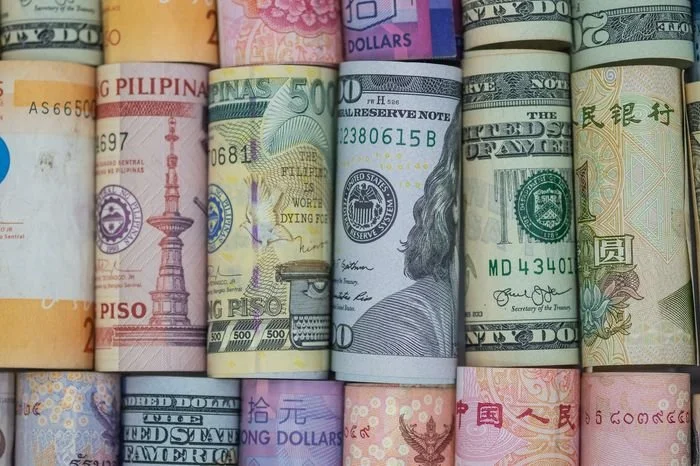
What is a multicurrency account?
A multicurrency account is typically an account at a bank or financial tech firm that lets you spend, receive and hold multiple currencies. It can work like an international checking account with multiple subaccounts, each with a different currency. This lets you manage payments in a foreign currency instead of opening a new bank account overseas.
“Credit cards and multicurrency accounts allow you to spend as a local, but only multicurrency accounts allow you to quickly transfer and receive money,” says Leyla Beriker, product owner of U.S. payments at Revolut.
Most multicurrency accounts — also called foreign currency accounts — are reserved for businesses and high net worth individuals through international or private banking services at banks such as Citibank C, -0.07% and HSBC HSBC, -0.69%. Two notable exceptions are Wise WPLCF, -0.74% and Revolut, two fintech companies that offer multicurrency accounts for the general public and businesses.
When to choose a multicurrency account
1. You live or work outside the U.S.
A multicurrency account can be an easy way to avoid currency conversions every time you make a transaction. This removes the uncertainty in cost from constant exchange rate fluctuations.
To continue reading, please go to the original article here:
Where To Invest Your Money When Inflation Is High — and What Investments To Avoid
.Where To Invest Your Money When Inflation Is High — and What Investments To Avoid
Vance Cariaga Mon, February 14, 2022
Inflation fears in the United States have many Americans thinking about how to protect their money against rising prices and higher costs of living. This requires strategizing on which investments to gravitate toward — and which to avoid.
Inflation fears in the United States have many Americans thinking about how to protect their money against rising prices and higher costs of living. This requires strategizing on which investments to gravitate toward — and which to avoid.
Where To Invest Your Money When Inflation Is High — and What Investments To Avoid
Vance Cariaga Mon, February 14, 2022
Inflation fears in the United States have many Americans thinking about how to protect their money against rising prices and higher costs of living. This requires strategizing on which investments to gravitate toward — and which to avoid.
Inflation fears in the United States have many Americans thinking about how to protect their money against rising prices and higher costs of living. This requires strategizing on which investments to gravitate toward — and which to avoid.
As the BBC reported in May 2021, consumer prices in the U.S. rose 4.2% during the 12 months ending in April, which was the biggest increase since September 2008. Higher prices for cars and food drove much of the increase. When prices push higher, your money doesn’t go as far — especially for those on fixed incomes, like retirees. Rising prices also bring the threat of higher interest rates, which tend to drag down equities, CNBC reported.
So where should you put your money?
First off, if you have investments in stocks, don’t start panicking just yet. It’s still too early to know if the U.S. is headed for an extended period of inflation or if the current situation is a temporary blip caused by COVID-19 restrictions and lockdowns.
Moreover, financial experts point out that historically, stocks tend to do well even during periods of inflation. CNBC referenced comments from Steve Hanke, a professor of applied economics at Johns Hopkins University, who said the average annual return on stocks between 1990 and 2017 was 11%. Even when you factor in the cost of inflation, the average annual return was 8%.
Before looking at the best investments during inflation, it’s a good idea to know which ones to avoid. Experts interviewed by CNBC say you should shy away from long-term bonds and certificates of deposit, because buying them during periods of inflation means you might miss out on higher rates later. Short- to intermediate-term bonds are a better choice.
You might also want to avoid growth stocks, which are companies with above-average expected earnings, during inflation. Alex Doll, president of Anfield Wealth Management in Cleveland, told CNBC that growth stocks “tend to perform worse because they expect to earn the bulk of their cash flow in the future. And as inflation increases, those future cash flows are worth less.”
In terms of investments that make good hedges against inflation, Business Insider listed the following:
To continue reading, please go to the original article here:
https://finance.yahoo.com/news/where-invest-money-inflation-high-200001918.html
Where To Invest Your Money When Inflation Is High — and What Investments To Avoid
.Where To Invest Your Money When Inflation Is High — and What Investments To Avoid
Vance Cariaga Mon, February 14, 2022
Inflation fears in the United States have many Americans thinking about how to protect their money against rising prices and higher costs of living. This requires strategizing on which investments to gravitate toward — and which to avoid.
Inflation fears in the United States have many Americans thinking about how to protect their money against rising prices and higher costs of living. This requires strategizing on which investments to gravitate toward — and which to avoid.
Where To Invest Your Money When Inflation Is High — and What Investments To Avoid
Vance Cariaga Mon, February 14, 2022
Inflation fears in the United States have many Americans thinking about how to protect their money against rising prices and higher costs of living. This requires strategizing on which investments to gravitate toward — and which to avoid.
Inflation fears in the United States have many Americans thinking about how to protect their money against rising prices and higher costs of living. This requires strategizing on which investments to gravitate toward — and which to avoid.
As the BBC reported in May 2021, consumer prices in the U.S. rose 4.2% during the 12 months ending in April, which was the biggest increase since September 2008. Higher prices for cars and food drove much of the increase.
When prices push higher, your money doesn’t go as far — especially for those on fixed incomes, like retirees. Rising prices also bring the threat of higher interest rates, which tend to drag down equities, CNBC reported.
So where should you put your money?
First off, if you have investments in stocks, don’t start panicking just yet. It’s still too early to know if the U.S. is headed for an extended period of inflation or if the current situation is a temporary blip caused by COVID-19 restrictions and lockdowns.
Moreover, financial experts point out that historically, stocks tend to do well even during periods of inflation. CNBC referenced comments from Steve Hanke, a professor of applied economics at Johns Hopkins University, who said the average annual return on stocks between 1990 and 2017 was 11%. Even when you factor in the cost of inflation, the average annual return was 8%.
Before looking at the best investments during inflation, it’s a good idea to know which ones to avoid. Experts interviewed by CNBC say you should shy away from long-term bonds and certificates of deposit, because buying them during periods of inflation means you might miss out on higher rates later. Short- to intermediate-term bonds are a better choice.
To continue reading, please go to the original article here:
https://finance.yahoo.com/news/where-invest-money-inflation-high-200001918.html
One Of The Best Pieces Of Advice I Ever Heard
.One Of The Best Pieces Of Advice I Ever Heard
Notes From The Field By Simon Black February 15, 2022
Thursday, November 29, 2001 felt like any other day in Argentina. People woke up, went to work, and lived their lives. There was nothing really unusual about that day, everything seemed fine. Sure, Argentina’s economy had been in a severe recession for three years, so life was difficult. But it was still normal. By the end of the day, however, a major bank run had started in the country, and life changed forever.
For years, up to that point, Argentina had pegged its currency at a 1:1 rate to the US dollar; this meant that anyone holding local currency could freely convert their Argentine pesos to US dollars. The government’s goal behind this scheme was to reign in inflation and demonstrate that their currency was strong. And it worked for a few years.
One Of The Best Pieces Of Advice I Ever Heard
Notes From The Field By Simon Black February 15, 2022
Thursday, November 29, 2001 felt like any other day in Argentina. People woke up, went to work, and lived their lives. There was nothing really unusual about that day, everything seemed fine. Sure, Argentina’s economy had been in a severe recession for three years, so life was difficult. But it was still normal. By the end of the day, however, a major bank run had started in the country, and life changed forever.
For years, up to that point, Argentina had pegged its currency at a 1:1 rate to the US dollar; this meant that anyone holding local currency could freely convert their Argentine pesos to US dollars. The government’s goal behind this scheme was to reign in inflation and demonstrate that their currency was strong. And it worked for a few years.
But eventually the convertibility became unsustainable. As more and more businesses and individuals converted their pesos into dollars, the government started running out of dollars.
So they went into debt.
Argentina’s government borrowed a mountain of US dollars from foreign investors, solely to maintain this artificial exchange rate. Nearly every dollar they borrowed was almost immediately exchanged for pesos, forcing the government to borrow even more dollars.
By November 2001 the situation reached its crisis moment; large depositors became spooked that the heavily indebted government was about to break the unsustainable exchange rate and devalue the peso. So they started withdrawing their money and converting into dollars.
Panic quickly set in. The next day, Friday November 30th, everyone in the country was rushing to get their money out and convert to dollars.
Then it happened: the next morning, on Saturday December 1st, the government announced that they were freezing every bank account in the country in order to stop the panic.
Needless to say the bank freeze had the opposite effect. People went out into the streets to riot like never before. Workers went on strike. Looting and crime rates soared. Grocery store shelves emptied out.
The government quickly deployed federal forces to quell violence and restore order, but the ‘mostly peaceful’ protests continued.
By December 20th the situation was so untenable that the President resigned from office and was forced to escape the capital by helicopter.
The new President almost immediately defaulted on Argentina’s $132 billion national debt, and then devalued peso.
The whole episode took less than five weeks-- from November 29, when everything still felt ‘normal’, to early January 2002 when they had blood in the streets, looting, empty grocery shelves, frozen bank accounts, debt default, and a currency crisis.
My friend Marco was there for it. Originally from Argentina, Marco was studying at Harvard at the time, but he flew back to Buenos Aires to help his family.
He once told me a story about how he went with his father to the bank in December 2001, after the national freeze. Marco’s dad was holding his life’s savings in physical cash US dollars inside a safety deposit box at the bank.
They had to bribe a guard to let them in and access the box; Marco and his dad then stuffed bricks of cash down their pants, then escaped by making their way past the violent mob outside.
It’s not a situation anyone ever expects to find themselves in. Again, it had only been a few days prior that everything still felt normal. But then the unthinkable happened.
This shouldn’t be so far-fetched anymore. The last few years should have taught all of us that absolutely anything can happen. And just because something hasn’t happened yet doesn’t mean that it won’t happen.
Marco recently told me the best piece of advice his dad ever gave him. He said, “Son, learn English… and know how to swim. Because by the time you’re going to really need those skills, it will be too late.”
That’s incredible advice. But I would add to that list-- Have a Plan B! Because by the time you need one, it will be too late.
Marco’s father did have a Plan B; he was smart enough to realize that the exchange rate wouldn’t last, and that the government would freeze everyone’s bank account. So he held his savings in US dollar cash.
The flaw, of course, was that the money was still held inside of a bank building, in a safety deposit box. They were lucky to have been able to bribe their way into the bank.
A great Plan B covers a lot of ground. It ensures that, no matter what happens or doesn’t happen next, you’ll be in a position of strength. Critically-- a Plan B is NOT the same as having a bunker mentality.
I know there are a lot of people who are deeply concerned about the risks in the world and the astonishing erosion of individual liberty. And it’s natural that stressing out over those risks can prompt an emotional reaction, often resulting in a bunker mentality where people feel like they need to prepare for the end of the world.
The emotional response is understandable. But, rationally, the world is not coming to an end. And when you have a bunker mentality, you end up spending a lot of time, money, and energy wallowing in negativity and preparing for a very specific scenario that is extremely unlikely.
A bunker mentality is like having a REALLY expensive insurance policy on your home that will pay you out $1 BILLION… but only if your home gets struck by lightening.
Sure, if your house is struck by lightening you’ll clean up. But that specific insurance policy costs you a lot of money and misses 99.99999% of other potential risks.
A great Plan B, on the other hand, enables you to go on living your life with a lot more confidence that your risk exposure is greatly reduced across the board.
For example, if you’re concerned what our public health dictators will do the next time a new virus pops up, you might consider having a second residency in a country that’s more respectful to individual freedom. (You could even have a third, fourth, fifth, etc. residency to increase your options.)
If you’re concerned about the privacy, control, and censorship from Big Tech companies, you can stop using them. There are dozens of different options to set up your digital life in a way that reduces or eliminates Big Tech’s dominance over you.
And sure, if you’re concerned about thinning grocery store shelves and ongoing supply chain dysfunction, it doesn’t hurt to have some extra nonperishable food and water at home. Or even a small generator. But if those risks never really play out, you won’t be worse off for having taken those steps.
If the supply chain magically clears up, you won’t be worse off for having some extra food in your pantry, or tending a small garden. If the Big Tech companies suddenly embrace Free Speech, you won’t be worse off securing your data from them.
And you’ll hardly be worse off having another option where you and your family have the right to live, work, and visit whenever you want.
That’s the key difference in what makes a great Plan B: you’re not planning for the end of the world, or even a specific outcome. It’s about taking a rational view of obvious risks, and finding sensible, cost-effective ways to mitigate them.
And it’s definitely something you want to have as soon as possible. Because, just like knowing how to swim, by the time you need it, it will be too late.
Simon Black, Founder, SovereignMan.com
https://www.sovereignman.com/trends/one-of-the-best-pieces-of-advice-i-ever-heard-34643/
Chocolate Cake Investor Or Broccoli Investor — Which One Are You?
.Chocolate Cake Investor Or Broccoli Investor — Which One Are You?
Posted by TEBI on February 10, 2022 By Patrick Geddes
We all know from experience that rational thoughts often lose out to primal cravings. If someone handed you a plate of chocolate cake and a plate of broccoli right now, which would you instinctively reach for? As PATRICK GEDDES explains in his new book Transparent Investing, you face this same tension as an investor — between the part of your brain that longs for the sweet, satisfying allure of beating the market versus the rational and wise part that chooses the boring solution offering better results. You also face an uphill battle against an industry that makes more money selling you the finance equivalent of chocolate cake. Just because the evolution of our brain has left some blind spots doesn’t mean we’ve somehow lost our ability to reason or make good decisions. Yet documented biases like the illusion of control set us up for behavioural patterns that aren’t ideal for decision-making.
Chocolate Cake Investor Or Broccoli Investor — Which One Are You?
Posted by TEBI on February 10, 2022 By Patrick Geddes
We all know from experience that rational thoughts often lose out to primal cravings. If someone handed you a plate of chocolate cake and a plate of broccoli right now, which would you instinctively reach for? As PATRICK GEDDES explains in his new book Transparent Investing, you face this same tension as an investor — between the part of your brain that longs for the sweet, satisfying allure of beating the market versus the rational and wise part that chooses the boring solution offering better results. You also face an uphill battle against an industry that makes more money selling you the finance equivalent of chocolate cake. Just because the evolution of our brain has left some blind spots doesn’t mean we’ve somehow lost our ability to reason or make good decisions. Yet documented biases like the illusion of control set us up for behavioural patterns that aren’t ideal for decision-making.
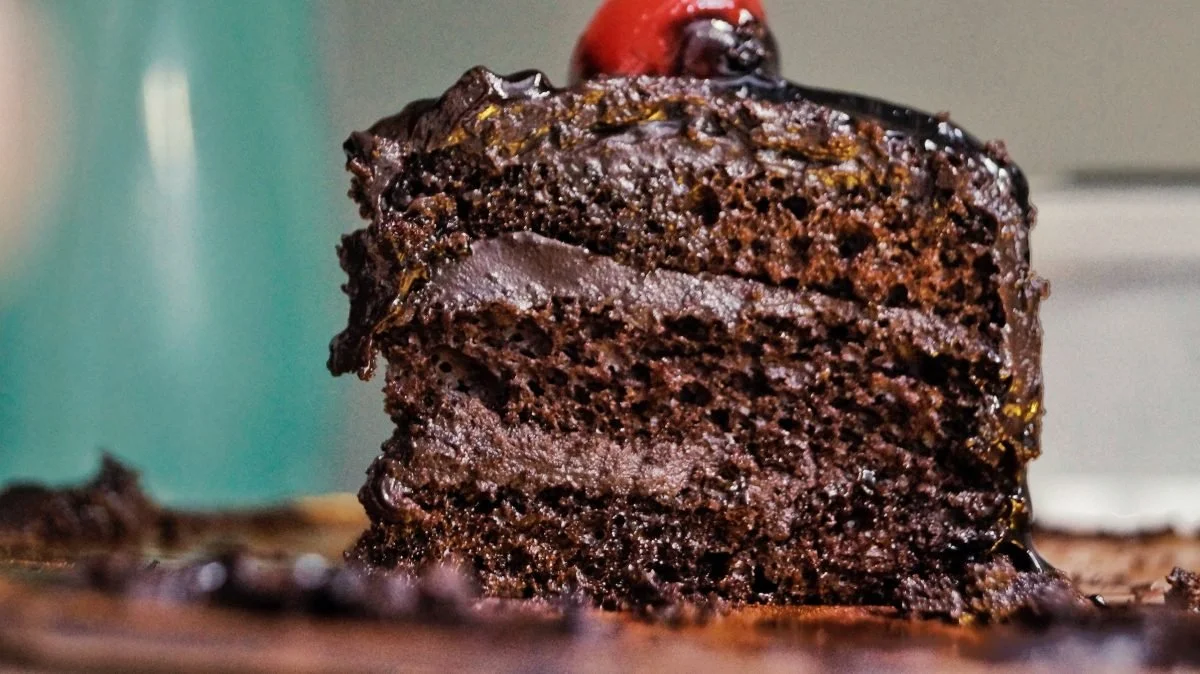
I sometimes put a spin on the phrase “hazardous for your health” by saying that “your brain is hazardous to your wealth”. But health — especially how we eat — is a good analogy for how we invest. One could argue that many modern health problems related to diet stem from the now wide availability of the sweet or fatty foods our brains evolved to crave millions of years ago. Unfortunately, that hard-wiring of the brain now leads to problems like obesity, since fatty and sweet foods are widely available in the developed world.
This food analogy extends into the two main — and competing — approaches to investing, which I call Chocolate Cake versus Broccoli.
Imagine two plates in front of you: one a piece of chocolate cake; the other a piece of broccoli. Which do you want to take a bite of? Chances are, you want the cake.
Even though the neocortex may rationally calculate that eating the broccoli might keep us alive longer, everyone knows from their own experience that such rational thoughts often lose out to primal cravings. We can’t seem to stop ourselves as we reach for the cake.
As an investor, you face this same tension between the part of your brain that longs for the sweet and satisfying versus the rational (and often boring) part that chooses based on actual data.
Chocolate Cake Investing
The Chocolate Cake mindset toward investing presumes that we control much of our own destiny when it comes to how our portfolios perform. It appeals to a romantic narrative about investing, in which smart people beat the stock market through shrewd insights and knowledge. Unfortunately, it doesn’t reflect reality all that well. To illustrate the difference between the Chocolate Cake mindset and the Broccoli mindset, we’ll focus on four key parts of investing: return, risk, fees, and taxes.
If you ask Chocolate Cake investors to rank these four items by which they intuitively believe matters most, they’ll put them in the following order.
To continue reading, please go to the original article here:
https://www.evidenceinvestor.com/chocolate-cake-investor-or-broccoli-investor-which-one-are-you/
TNT:
Tishwash: The Central Bank extends bank working hours and directs them to open during official holidays.
The Central Bank of Iraq directed banks with outstanding remittances to work on Fridays to avoid delays caused by official holidays, while it completed covering all remittances before the exchange rate change, with a total amount of $3 billion.