
Count the Cash
.Count the Cash
Jonathan Clements | November 16, 2019
When we think about portfolio building, we tend to think first about stocks. They’re our engine of investment growth—and the source of endless anxiety. Indeed, to make stock market investing palatable, we take all kinds of precautionary measures, including diversifying broadly, adding bonds, throwing in cash, purchasing gold and goodness knows what else.
But maybe we have this all wrong. Perhaps, instead, we should start with cash: how much we currently have in safe, liquid investments, how much we expect to receive in the years ahead and how much we’ll need in the near future. Once we have a handle on our cash situation, we’re free to invest the rest of our portfolio as we wish—including potentially stashing much or all of our money in stocks.
Sitting pretty. How much cash should we hold? In addition to a modest sum in our checking account to cover the next month’s bills, we should all hold some cash or cash-like investments, whether we’re in our 20s or our 80s. This money might sit in a savings account, certificates of deposit or a high-quality short-term bond fund.
Think of it as comfort cash. It can ease our worries, knowing we have a backstop if we have a surprisingly expensive month—and it can help us avoid the financial anxiety suffered by four out of 10 Americans, who apparently either couldn’t cover a $400 unexpected expense or, to do so, would need to borrow or sell possessions.
Count the Cash
Jonathan Clements | November 16, 2019
When we think about portfolio building, we tend to think first about stocks. They’re our engine of investment growth—and the source of endless anxiety. Indeed, to make stock market investing palatable, we take all kinds of precautionary measures, including diversifying broadly, adding bonds, throwing in cash, purchasing gold and goodness knows what else.
But maybe we have this all wrong. Perhaps, instead, we should start with cash: how much we currently have in safe, liquid investments, how much we expect to receive in the years ahead and how much we’ll need in the near future. Once we have a handle on our cash situation, we’re free to invest the rest of our portfolio as we wish—including potentially stashing much or all of our money in stocks.
Sitting pretty. How much cash should we hold? In addition to a modest sum in our checking account to cover the next month’s bills, we should all hold some cash or cash-like investments, whether we’re in our 20s or our 80s. This money might sit in a savings account, certificates of deposit or a high-quality short-term bond fund.
Think of it as comfort cash. It can ease our worries, knowing we have a backstop if we have a surprisingly expensive month—and it can help us avoid the financial anxiety suffered by four out of 10 Americans, who apparently either couldn’t cover a $400 unexpected expense or, to do so, would need to borrow or sell possessions.
How much comfort cash should we keep? It’s partly about sleeping at night, but also partly about being prepared for financial emergencies. That’s an especially big issue for those in the workforce, because the big financial emergency is getting laid off.
What about retirees? Because losing their job is no longer a risk, arguably they need little or no emergency money. But they may still need a heap of cash for another reason: to cover their spending needs in the years ahead.
Coming in. As a rule of thumb, money we’ll spend over the next five years should be out of stocks and riskier bonds. Instead, it should be invested in nothing more daring than a short-term bond fund. So how much cash do you need from your portfolio over the next five years?
For many folks, the answer will be zero—because they have enough cash coming in from elsewhere. If you’re in the workforce, your spending over the next five years will likely be more than covered by your paycheck, and thus there’s no need to hold anything more than comfort cash. Ditto for retirees who can cover their entire living costs with Social Security, plus any pension, annuity and rental income. For both these groups, investing heavily in stocks could make sense, provided they have the tenacity to stick with their holdings through the inevitable market turmoil.
The case for investing heavily in stocks is especially strong for those in their 20s and 30s, and not just because they have a long investment time horizon. A digression: There was a rather tedious debate in the 1990s about whether stock market returns are mean reverting.
If they are, periods of bad returns will be followed by stretches of good performance, and thus long-term stock investors with diversified portfolios should eventually get rewarded. But if markets aren’t mean reverting and instead performance is totally random, there’s no assurance stocks will deliver the highest return, no matter how long we hang on.
To continue reading, please go to the original article here:
After RV Security
.After RV Security
#8 By Muhammad Ali
I have said many times to my group here in Malaysia, that you will need to be security minded after the RV.
You don't need to worry much about the guy who holds a gun to you in the streets because he only wants what is in your wallet.
There are two other people who are more dangerous to your security.
The first is the person that approaches you with a suit and tie. He will come to you with a grand looking proposal. Complete with all the reports and location maps and finance plans.
However, it will all be bogus. He is not after what’s in your wallet but about 80% of your bank account. The think is with this type of person, he will meet with you face to face.
The next person that you need to be even more cautious is a person whom you will probably never ever meet. The Hacker. Now he will go after your entire bank account.
After RV Security
By Muhammad Ali
I have said many times to my group here in Malaysia, that you will need to be security minded after the RV.
You don't need to worry much about the guy who holds a gun to you in the streets because he only wants what is in your wallet.
There are two other people who are more dangerous to your security.
The first is the person that approaches you with a suit and tie. He will come to you with a grand looking proposal. Complete with all the reports and location maps and finance plans.
However, it will all be bogus. He is not after what’s in your wallet but about 80% of your bank account. The think is with this type of person, he will meet with you face to face.
The next person that you need to be even more cautious is a person whom you will probably never ever meet. The Hacker. Now he will go after your entire bank account.
He could be sitting in a boat in the middle of the Mediterranean on his notebook and satellite internet connection or maybe sitting right across from you in a crowded restaurant.
And how did he hack you? Maybe thru your debit card or maybe through something that you carry around with you everywhere you go, yes your phone.
For expert hackers, they can gain access to your bank accounts and more thru your phone.
So you need to start to learn how they can hack your phone and how to prevent it from happening.
In my Currency Exchange Planner software, I give a special guide on setting up bank accounts using Master Accounts and Sub Accounts. This is how I plan to setup my bank accounts after RV.
I hope my article brings awareness and helps you to protect your bank account after RV.
Any questions please send me an email to currencyexchangeplanner@gmail.com
I am the creator of the Currency Exchange Planner, an excel spread sheet, which is the most advanced and affordable planning tool for the Dinar Community.
Try the FREE Download version to test run or BUY the full version for a One-Time low price of $25. This includes free updates in the future.
My website is www.CurrencyExchangePlanner .com
Click on this link and this blog will explain to you how hackers can take control of your phone and how you can protect yourselves.
Http://www.theretirementcafe.com/2019/08/how-to-secure-your-online-financial_6.html
Thank you so much, Muhammad Ali
Personal Lessons Learned Since The 2008 Financial Crisis
.Personal Lessons Learned Since The 2008 Financial Crisis
By Financial Samurai
On September 15, 2008, Lehman Brothers went bust. I remember this day clearly because I made a $200 side bet with my friend over the weekend that the US government would bail them out. To my surprise, the US government didn’t rescue Lehman, and the stock cratered that Monday and never recovered.
Despite all the economic devastation, I wish I could rewind time. I’d rather be 31 than 41, simply because I love life and want to live as many years as possible.
The period between 2008 – 2018 was the most exciting 10 years of my life. Here are some of the lessons I have learned since the financial crisis.
Lessons Learned Since The 2008 Financial Crisis
1) It’s really hard to go all-in, even when you know you should. Despite telling myself over and over again that we were in the buying opportunity of a lifetime, I couldn’t convince myself to invest much more than my usual 401(k) maximum because my world was falling apart.
A couple dozen friends had been laid off, including my best friend at the time, who worked at Lehman. I feared I might be next and would need as much cash as possible to hold me over just in case.
Personal Lessons Learned Since The 2008 Financial Crisis
By Financial Samurai
On September 15, 2008, Lehman Brothers went bust. I remember this day clearly because I made a $200 side bet with my friend over the weekend that the US government would bail them out. To my surprise, the US government didn’t rescue Lehman, and the stock cratered that Monday and never recovered.
Despite all the economic devastation, I wish I could rewind time. I’d rather be 31 than 41, simply because I love life and want to live as many years as possible.
The period between 2008 – 2018 was the most exciting 10 years of my life. Here are some of the lessons I have learned since the financial crisis.
Lessons Learned Since The 2008 Financial Crisis
1) It’s really hard to go all-in, even when you know you should. Despite telling myself over and over again that we were in the buying opportunity of a lifetime, I couldn’t convince myself to invest much more than my usual 401(k) maximum because my world was falling apart.
A couple dozen friends had been laid off, including my best friend at the time, who worked at Lehman. I feared I might be next and would need as much cash as possible to hold me over just in case.
In 2005, I had taken a $1,200,000 mortgage to buy a single family home. I already had around $380,000 in mortgage debt from the first property I bought in 2003. With property prices in San Francisco falling along with the stock market, bankruptcy was a very real possibility if I had lost my job.
Therefore, I built a significant CD portfolio with most of my excess cash instead. The best 5-year and 7-year rates were at 4.25% at the time, so I decided that was where most of my savings went.
The only things I did right were keeping my job and not selling any real estate or stocks in the middle of the downturn.
Events leading up and through the 2008 financial crisis
See: Your Risk Tolerance Is An Illusion: Just Wait Until You Lose A Lot Of Money
2) Chaos is a great motivator. I had been putting off starting Financial Samurai since 2006, but once the financial crisis hit, I decided to finally launch in the summer of 2009. If I got laid off, I needed a backup plan.
I also decided it was time to get married. I had known my wife since college, and she would be turning 28 in 2008. For some reason, 28 always stuck in my head as the perfect age for her to get married. Further, I had also wanted to focus on my career until 30 to see how far I could get.
The difficult times of 2008 made me want to hold onto her even more. I could lose everything, but I couldn’t lose her. Relationships were more important than money back then, and they are more important than money today.
3) You gain a tremendous amount of confidence and expertise in 10 years. Previously, I’d always been embarrassed to ever say I was an expert in anything. But once I turned 32, I felt I had developed some expertise in the Asian Equities market. And now that I’m in my 10th year building Financial Samurai, I have no problem believing and saying I have expertise in digital media.
Because of this experience, I also no longer fear financial ruin. If Financial Samurai shuts down and all my passive income goes away, I know I can get a job back in finance, fintech, or online marketing. The base pay would range between $150,000 – $250,000 + stock, and my family would be fine.
Age discrimination is no longer a fear either. Instead, you realize experience makes you incredibly valuable. Once you’ve been able to earn income by yourself for so many years, nothing will stop you from living the life you want.
To continue reading, please go to the original article here:
https://www.financialsamurai.com/personal-lessons-learned-since-the-2008-financial-crisis/
The 10 Most Valuable Financial Lessons I Learned in 2018
.The 10 Most Valuable Financial Lessons I Learned in 2018
By Trent Hamm Updated on 01-10-19
Getting Started
Each year, during the period between Christmas and New Year’s, I sit down and look over what happened during the past year, what I can learn from that, and what I can apply from that to the year to come.
I usually come up with a big handful of life lessons during that review, things I learned from situations in my life that didn’t quite go as I liked. What went wrong? Where did I go wrong? What can I do better?
These life lessons spread across all spheres of life and usually number in the dozens. I tend to literally make a list of them as I review the year as a way to figure out how to do better in the coming year.
Among the lessons I learned in the past year were 10 that have real personal finance implications, though some tend to branch over into other spheres of life. I thought it might be valuable to share those lessons, along with what I hope to do differently going forward.
Lesson #1: If the stock market is scaring you in terms of your future, you’re either not invested appropriately or don’t know what you’re invested in.
The 10 Most Valuable Financial Lessons I Learned in 2018
By Trent Hamm Updated on 01-10-19
Getting Started
Each year, during the period between Christmas and New Year’s, I sit down and look over what happened during the past year, what I can learn from that, and what I can apply from that to the year to come.
I usually come up with a big handful of life lessons during that review, things I learned from situations in my life that didn’t quite go as I liked. What went wrong? Where did I go wrong? What can I do better?
These life lessons spread across all spheres of life and usually number in the dozens. I tend to literally make a list of them as I review the year as a way to figure out how to do better in the coming year.
Among the lessons I learned in the past year were 10 that have real personal finance implications, though some tend to branch over into other spheres of life. I thought it might be valuable to share those lessons, along with what I hope to do differently going forward.
Lesson #1: If the stock market is scaring you in terms of your future, you’re either not invested appropriately or don’t know what you’re invested in.
This is something I did right this year, but the bumps in the stock market reminded me of the panic I felt in 2008 when I watched my retirement balance fall by 40%. I didn’t change anything back then, but I was often sick to my stomach about it and my instinct kept screaming to run away from the risk.
But then… things recovered. Between 2008 and 2018, my retirement accounts tripled in value.
The stock market is swooning again, but this time I don’t have the butterflies. Why?
First of all, I recognize that the stock market will rebound. The entirety of the American economy is not going to disappear in a puff of smoke. There are millions of Americans out there every day working hard and innovating, and that’s where the value of the stock market comes from. This is a correction, like every other, not an apocalypse.
Second, I recognize that the stock market is only a place for individual investors to put their money if they have long term goals. If you’re going to use that money within the next ten years, it shouldn’t be in the stock market.
Over a period of more than ten years, it will enjoy several years of growth and multiple corrections, which is enough time for that investment to start to approach the long term average annual return of a stock market investment, somewhere between 7% and 10% depending on how you calculate it. I have nothing in the stock market that I intend to use within the next ten years.
I’ve honestly barely paid any attention to the ongoing correction. It’s just another good sized correction, like 2008, like 2001, like 1992, like 1987, and so on. It’s part of having investments in stocks – every several years, the stock market corrects itself.
If you know this and you still feel the butterflies, one of two things are happening. One, you’ve got too much risk – you have money in stocks that you’re going to need within 10 years. You fix this by moving such money out of stocks.
Two, you’re looking at the trees and can’t see the forest – the success of long-term investments is judged over the long term, not over a few months.
To continue reading, please go to the original article here:
https://www.thesimpledollar.com/the-ten-most-valuable-financial-lessons-i-learned-in-2018/
One of the Toughest Things to Master for Your Financial Health
.One of the Toughest Things to Master for Your Financial Health
Invested Wallet
When it comes to your life, you want to stay physically and mentally healthy. And this also applies to your personal finances, which is commonly called your financial health.
While your physical and mental health is far superior to your financial health, it’s still crucial to work on this too. And as I know and you may too, finances can cause some serious stress.
That financial stress can then put a toll on your body, mind, and relationships.
Yet, when it comes to your personal finances and financial well-being there is one area that is critical to master: self-control. The challenge is, it might be the toughest thing to be consistent with throughout your lifetime.
What is Financial Health?
Before we get into how self-control affects your financial health, I think it’s important we are all on the same page on the definition.
Financial health is the term used to describe your own personal finances and how healthy it is. This includes things like how well your saving, what you put away for retirement, how little debt you have, etc.
There is a bit more to it than that, but for the sake of this post, we’ll keep it that simple.
One of the Toughest Things to Master for Your Financial Health
Invested Wallet
When it comes to your life, you want to stay physically and mentally healthy. And this also applies to your personal finances, which is commonly called your financial health.
While your physical and mental health is far superior to your financial health, it’s still crucial to work on this too. And as I know and you may too, finances can cause some serious stress.
That financial stress can then put a toll on your body, mind, and relationships.
Yet, when it comes to your personal finances and financial well-being there is one area that is critical to master: self-control. The challenge is, it might be the toughest thing to be consistent with throughout your lifetime.
What is Financial Health?
Before we get into how self-control affects your financial health, I think it’s important we are all on the same page on the definition.
Financial health is the term used to describe your own personal finances and how healthy it is. This includes things like how well your saving, what you put away for retirement, how little debt you have, etc.
There is a bit more to it than that, but for the sake of this post, we’ll keep it that simple.
Why Self-Control Matters to Your Financial Health
As I mentioned in the introduction, I think self-control is one of the toughest things to master for your financial health.
Your ability to control certain desires or urges with your money, can really determine your overall financial stability and results in the long-run.
It’s also incredibly challenging, especially if you are just starting to take control of your personal finances.
I see a need for discipline and self-control in four key financial areas:
Spending
Tax Refunds
Getting a Raise
Investing Money
Below, I’m going to dive into each area and why self-control plays a major role.
Also, I’m now going on five years of working on my financial health, and sometimes I still struggle in these areas too. It’s an ongoing practice to master self-control in your finances, but the rewards can certainly be life-changing.
Spending
For your financial health to really be awesome, you have to get your spending under control. But not only that, you need to continue to resist the urge to spend over time.
To continue reading, please go to the original article here:
Teaching People About Money Doesn’t Seem To Make Them Any Smarter About Money
.Teaching People About Money Doesn’t Seem To Make Them Any Smarter About Money
From Market Watch Oct 12, 2018 By Philip Fernbach & Abigail Sussman
Teaching people about money doesn’t seem to make them any smarter about money – here’s what might
Making Financial Decisions is hard, but three promising ideas are helping Americans Overcome Barriers
If the average American went in for a financial checkup, he or she might get rushed to the emergency room.
Forty-four percent of us can’t cover a $400 out-of-pocket expense, and 52% of American households have no retirement savings. We seem to be chronically poor at making financial decisions. We commit costly mistakes across all areas of personal finance including decisions about savings, investing, budgeting and borrowing.
Diagnosing the problem is easy: We make mistakes because financial decision making is hard, and we lack an understanding of the decisions we face. Finding a cure is much more difficult. To many, the obvious treatment is financial education, but recent research suggests that financial education is not effective.
Some promising new ideas such as “just-in-time” education and “nudges” to help us make better decisions are starting to emerge as alternative approaches.
Ineffective Programs
Governments around the world have invested huge resources in initiatives aimed at improving financial literacy, such as the Federal Deposit Insurance Corp.’s My Smart program, which helps low-income individuals develop financial skills.
Teaching People About Money Doesn’t Seem To Make Them Any Smarter About Money
From Market Watch Oct 12, 2018 By Philip Fernbach & Abigail Sussman
Teaching people about money doesn’t seem to make them any smarter about money – here’s what might
Making Financial Decisions is hard, but three promising ideas are helping Americans Overcome Barriers
If the average American went in for a financial checkup, he or she might get rushed to the emergency room.
Forty-four percent of us can’t cover a $400 out-of-pocket expense, and 52% of American households have no retirement savings. We seem to be chronically poor at making financial decisions. We commit costly mistakes across all areas of personal finance including decisions about savings, investing, budgeting and borrowing.
Diagnosing the problem is easy: We make mistakes because financial decision making is hard, and we lack an understanding of the decisions we face. Finding a cure is much more difficult. To many, the obvious treatment is financial education, but recent research suggests that financial education is not effective.
Some promising new ideas such as “just-in-time” education and “nudges” to help us make better decisions are starting to emerge as alternative approaches.
Ineffective Programs
Governments around the world have invested huge resources in initiatives aimed at improving financial literacy, such as the Federal Deposit Insurance Corp.’s My Smart program, which helps low-income individuals develop financial skills.
Unfortunately, research into the effectiveness of these programs paints a grim picture. A recent meta-analysis looked at every known study examining whether a financial-education intervention — such as training sessions, classes or one-on-one counseling — improves positive financial behaviors and financial health. Across all those studies, there was almost no benefit. Those participating in financial education were essentially no better off.
If we want to come up with better solutions, we need to understand the psychological barriers to financial education. Why is it so hard for people to learn?
Challenges To Learning
The first reason is relevance. The mind is not like a computer that can store arbitrary amounts of information. Instead, we tend to retain only what is useful for navigating our current circumstances.
For example, if you learn the abstruse mathematics of car leases to prepare for a negotiation at the dealership, you might be surprised to find how little you remember when renewing the lease years later. Financial education tends not to stick if it is not useful right away. Many curricula are flawed in precisely this way, teaching high schoolers about mortgages or debt management.
The second challenge is that the financial domain is a particularly complex one. You could call it a perfect storm. Many of the most important financial principles are highly counterintuitive. Take compound interest. Compounding is a nonlinear function.
The more you save, the more the savings accelerate, because the interest accrued in one period earns additional interest in the next period. In one study, participants were asked to guess how much money they would have after 40 years if they put $400 a month into a savings account that made a 10% annual return. The median guess was $223,000. The correct answer: $2.5 million.
To continue reading, please go to the original article here:
7 Steps That Protect You From Rising Interest Rates
.7 Steps That Protect You From Rising Interest Rates
How Rising Interest Rates Can Ruin Your Life
By Kimberly Amadeo Updated October 31, 2019
The Federal Reserve raised its benchmark fed funds rate to 2.5% at its December 19, 2018 meeting. Since then, it's lowered the rate three times. As of October 30, the current fed funds rate was 1.75%.
The fed funds rate affects all other interest rates. It directly affects rates for savings accounts, certificates of deposit, and money market accounts. Banks also use it to guide short-term interest rates. These include auto loans, credit cards, and home equity lines of credit. It also includes adjustable-rate loans.
The Fed's rate decision indirectly affects long-term rates as well, such as fixed-rate mortgages and student loans. It's one of the most critical factors in determining interest rates.
The lack of a Fed rate hike means banks won't pay you higher interest on your savings, but they also won't charge you more for loans. It affects wages and consumerism as well.
History
The Fed increased the federal funds rate a walloping 17 times between June 2004 and June 2006. Mortgage rates initially plummeted, but then they started to come back up. Ultimately, they were higher in June 2006 than they were two years earlier. Sometimes it can take 18 months for a fed rate hike to completely work its way through the economy.
7 Steps That Protect You From Rising Interest Rates
How Rising Interest Rates Can Ruin Your Life
By Kimberly Amadeo Updated October 31, 2019
The Federal Reserve raised its benchmark fed funds rate to 2.5% at its December 19, 2018 meeting. Since then, it's lowered the rate three times. As of October 30, the current fed funds rate was 1.75%.
The fed funds rate affects all other interest rates. It directly affects rates for savings accounts, certificates of deposit, and money market accounts. Banks also use it to guide short-term interest rates. These include auto loans, credit cards, and home equity lines of credit. It also includes adjustable-rate loans.
The Fed's rate decision indirectly affects long-term rates as well, such as fixed-rate mortgages and student loans. It's one of the most critical factors in determining interest rates.
The lack of a Fed rate hike means banks won't pay you higher interest on your savings, but they also won't charge you more for loans. It affects wages and consumerism as well.
History
The Fed increased the federal funds rate a walloping 17 times between June 2004 and June 2006. Mortgage rates initially plummeted, but then they started to come back up. Ultimately, they were higher in June 2006 than they were two years earlier. Sometimes it can take 18 months for a fed rate hike to completely work its way through the economy.
The December 2018 increase was the fourth that year, and the ninth in the last two years. The chart below illustrates the changing Federal funds rate from 2000 through today.
The Effect on Everyday Life
The demand for products and services increases when consumers have more money. That happens when they can borrow money at reasonable rates. Think of that pricey new car you want and the auto loan you'd be able to take out because rates are currently low. But there's a flip side. As rates rise, that car might be less pricey because loan costs will rise. An increase in the Fed's rate tends to keep prices more stable.
The opposite occurs when rates are high. The real estate market could soften in 2019 as higher mortgage rates make home loans more expensive.
The economy becomes sluggish when the federal funds rate is high. As a result, companies cut back on hiring. Employees become trapped at the pay rate they're currently receiving because raises and incentives are likewise curtailed. But the Fed believes that curbing inflation is worth it.
Savings Accounts, CDs, and Money Markets
Banks base interest rates for all fixed income accounts on the London Interbank Offer Rate (Libor). Libor is a few tenths of a point above the fed funds rate. It's the rate banks charge each other for short-term loans.
Fixed income accounts include savings accounts, money market funds, and CDs. Most of these follow the one-month Libor. Longer-term CDs follow longer-term Libor rates.
The rates in the Libor history compared to the fed funds rate might show that they trend along a similar path, but this hasn't always been the case, particularly in 2008 and 2009 when the two diverged during the recession.
Credit Card Rates
Banks base credit card rates on the prime rate. It's typically three points higher than the fed funds rate.
To continue reading, please go to the original article here:
https://www.thebalance.com/how-fed-rate-hike-affects-you-4119767
How to Create a Financial Binder
.How to Create a Financial Binder
Written by Sam
It’s a common worry. Am I spending more than I should? When are my bills due? Have I paid them? Am I on track to reach my financial goals? Am I going to be able to get out (or stay out) of debt? Financial worries are not only one of the greatest causes of personal anxiety; they can also be one of the biggest strains on a relationship.
Many people don’t have their finances well organized and therefore aren’t able to tell where they stand. Disorganized finances can have severe consequences; In the short-term, you may end up paying hundreds of dollars in late fees and penalties.
You may be digging yourself deeper into debt without even realizing it. In the long-term you won’t meet your high-level financial goals. Couples often end up re-hashing the same financial issues over and over again because they don’t have a way of tracking the decisions and progress they’ve made as a result of their arguments…er discussions. If your finances are not organized how can you ever have any hope of getting them under control?
The good news is that by taking one simple step you can start down the road of financial security and begin to get your finances in order. You can get a good overall view of your financial picture and establish a base from which you can build your financial future. It all starts with creating your financial binder.
What Is A Financial Binder?
How to Create a Financial Binder
Written by Sam
It’s a common worry. Am I spending more than I should? When are my bills due? Have I paid them? Am I on track to reach my financial goals? Am I going to be able to get out (or stay out) of debt? Financial worries are not only one of the greatest causes of personal anxiety; they can also be one of the biggest strains on a relationship.
Many people don’t have their finances well organized and therefore aren’t able to tell where they stand. Disorganized finances can have severe consequences; In the short-term, you may end up paying hundreds of dollars in late fees and penalties.
You may be digging yourself deeper into debt without even realizing it. In the long-term you won’t meet your high-level financial goals. Couples often end up re-hashing the same financial issues over and over again because they don’t have a way of tracking the decisions and progress they’ve made as a result of their arguments…er discussions. If your finances are not organized how can you ever have any hope of getting them under control?
The good news is that by taking one simple step you can start down the road of financial security and begin to get your finances in order. You can get a good overall view of your financial picture and establish a base from which you can build your financial future. It all starts with creating your financial binder.
What Is A Financial Binder?
A financial binder is a place to keep all of your high-level financial information including important decisions and goals you’ve made. Instead of containing transaction-level, detailed information about your finances, it is a place for summary-level information about such things as bank accounts, bills, financial decisions, savings goals, taxes, and credit reports.
Your financial binder doesn’t necessarily have to be a binder. Any form of organizing papers into categories could technically work. However, there are certain advantages to using a binder.
Binders are easy to expand. You can always add more tabs or upgrade to a larger binder (up to 5 inches).
Binders are easy to customize. You will inevitably want to create categories and information unique to your situation.
A Binder keeps items in one place and prevents them from getting misplaced.
Binders are portable. My wife and I sometimes like to review our financial progress during quarterly getaways. Being able to take our binder and go makes it easy to conduct these remote reviews.
Paper Vs. Digital Systems
Many people ask why they shouldn’t keep their binder information in digital form. Although your binder is paper based, many of the contents may be created digitally. Simply take the last step of printing out the documents after you work on them and you’ll have a nice backup.
Whenever you print a document, be sure to record both the date printed and the digital location of the file for later reference. While digital files do have advantages I discourage the use of exclusively digital storage for the following reasons.
The “did I change this?” factor. By printing out a hard copy of digital files, you put a stake in the ground so to speak. You establish that “on this date, I made this decision” rather than second guessing if you’re looking at the most recent version of a document.
Backup. If you haven’t had a hard drive crash on you yet, it’s just a matter of time. Most people don’t have adequate digital backup plans.
Here’s a handy tip: To make it easy to cross-reference your paper and digital files, alter your Microsoft Word or Excel settings to automatically print the date-printed and the digital location of each file.
In either program, from the menu select “View — Header and Footer.” You can then configure exactly what you want to appear at the top and bottom of the page. You may have to play with this a little to get exactly the effect you want.
What Should A Financial Binder Contain?
To continue reading, please go to the original article here:
http://www.gettingfinancesdone.com/blog/archives/2009/08/how-to-create-a-financial-binder/
Envelope Planning
.Envelope Planning
By Muhammad Ali
You're probably thinking, what the heck is that?
It's an idea that I suggested to my group here in Malaysia and I think it's great idea for those who want to take their planning to the next step.
Once you have entered all of your exchange plans into my Currency Exchange Planner software, this is the next logic step that can help you further get a clearer picture of your overall financial portfolio.
So how does this work, Muhammad?
You categorized your allocation of currency based upon your exchange plans. So let's see an example and then things will be more clear.
Below is a sample exchange plan from one of my group members. What he has done is made 16 envelopes and he put the required amount of currency in each labeled envelope based upon the amounts from his exchange planner.
Envelope Planning
By Muhammad Ali
You're probably thinking, what the heck is that?
It's an idea that I suggested to my group here in Malaysia and I think it's great idea for those who want to take their planning to the next step.
Once you have entered all of your exchange plans into my Currency Exchange Planner software, this is the next logic step that can help you further get a clearer picture of your overall financial portfolio.
So how does this work, Muhammad?
You categorized your allocation of currency based upon your exchange plans. So let's see an example and then things will be more clear.
Below is a sample exchange plan from one of my group members. What he has done is made 16 envelopes and he put the required amount of currency in each labeled envelope based upon the amounts from his exchange planner.
Remember that everyone's plans will be different, kind of like fingerprints, it's specific to each person. In this example, the person is holding Iraqi Dinar, Iranian Rial and Zimbabwe Dollar, you can substitute these for any other currencies you are holding, including Dong or Rupiah but just follow the logic flow of the example.
1. First RV exchange to secure Team (1 note IQD)
2. Pay current debts (1 note IQD)
3. Buy a house with land (40 notes x IRR)
4. Open a Private Bank account (10 notes x IRR)
5. Bank Investments (40 note iqd, 40 notes x IRR)
6. Farming/Agriculture business (15 notes x IQD)
7. Plan B - Precious Metals (50 notes x IRR)
8. Entertainment & Travel (2 notes x ZIM 100T)
9. Charity project 1 (15 notes x IQD 15 notes x IRR)
10. Charity project 2 (1 note x ZIM 100T)
11. Miscellaneous purchases (5 notes x IRR)
12. Family In-laws gifting (10 notes x IQD)
13. Taxes and expenses for 10 years (1 note x ZIM 100T)
14. Currencies to Exchange 5 years later (15 notes x IQD, 15 notes x IRR)
15. Basket 2, 3, 4 Reserve fund (5 notes x IRR)
16. Top up (If no RV as yet, buy more)
This particular Dinarian is holding quite a variety of currencies, may be you have less or may be you have more. The important aspect of all this, is this kind of creative thinking and planning will be what is required to keep you from losing your money in the future. I cannot stress how important money management is.
This Dinarian even allocated 1 envelope (#14) for currency to be exchanged in 5 years time, meaning that if he runs into any financial difficulties due to Sudden Wealth Syndrome (SWS), he still has back up currency to bail him out.
He also allocated taxes and expenses for 10 years (#13) and (#15) he allocated currencies that can used to buy more currencies for the upcoming baskets. Wasn't that very clever?
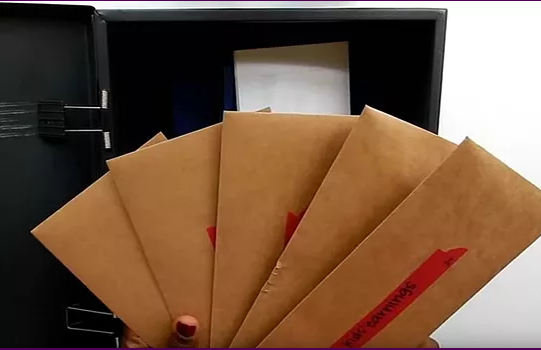
For those who are visually oriented, this kind of creative thinking and exchange planning will be right up your alley and even if you're not you may still be able to benefit from it.
And very important, once you are done, make sure you put those envelopes in a bank safety deposit box or home safe box, but some place secure.
I hope my article has sparked some creative thinking and opened up new ways to help you plan your exchange. Remember our ultimate goal is to be in the 30% group of those who will not suffer from SWS. This requires learning and education and whatever else it takes, let's get it done.
Thanks for reading my article, as a token of thanks here is a $5 off promo code that you can use at the checkout for any of my CEP products. (code: Article5).
Thank you and I wish you all the success in your currency exchange.
Muhammad Ali
www.CurrencyExchangePlanner.com
What Is Your Lifestyle After The RV?
.What Is Your Lifestyle After The RV?
By Muhammad Ali
I have been getting many questions about investing after RV and creating a steady stream of income so that you can have a work free lifestyle.
So I made this post for you all to think wisely and have the opportunity to top up your currency as required before the RV.
After the RV, the perfect scenario is: we do not want to work. We want to have our money work for us.
So we need to invest our money into places that will not run away with our money nor be shut down by corrupt/greedy CEO. No more money games!!!!
So the best and safest avenue will be thru the banks.
What Is Your Lifestyle After The RV?
By Muhammad Ali
I have been getting many questions about investing after RV and creating a steady stream of income so that you can have a work free lifestyle.
So I made this post for you all to think wisely and have the opportunity to top up your currency as required before the RV.
After the RV, the perfect scenario is: we do not want to work. We want to have our money work for us.
So we need to invest our money into places that will not run away with our money nor be shut down by corrupt/greedy CEO. No more money games!!!!
So the best and safest avenue will be thru the banks.
Just last week, I met with the manager of BIMB investments a subsidiary of a local bank in Malaysia, we met at my house. We had a 3 hour discussion of the BIMB investment program; this was our second meeting actually.
And I really like their programs and their results. This program is open to Singaporeans and foreigners from any country.
Their present returns have been around 11% per annum. This is very good.
So I want you to think carefully about this and ask yourselves this question.
How much do I need to lock-in, in order to generate a monthly/yearly income that I can live off of comfortably?
So for everyone, that answer will be different. Some will want to live like a King while others a few thousand a month will contend you.
Ok let's put some numbers down on paper then you can see.
Let's say, for example, we want to live a millionaire’s lifestyle, this means we need at least $1,000,000 per year to live on. We can pay all of our expenses, we can travel anywhere we want, we can buy anything we want and we can live very comfortably. (Large house, which includes maid, gardener, personal driver etc.)
So how much do we need to invest with the bank to generate $1 million per year?
So let's say we can get 10% return, we will need $10,000,000 invested.
Now what this means is:
We will actually need more than $10 million from our currency exchange after the RV.
$6,000,000 to open a private bank account
$3,000,000 to buy a new 10 bedroom house with renovations, new car and clothes.
$1,000,000 to pay off all current debts and pay to our charities.
(These amounts may be overestimated - depends on each person's debt capacity)
And then $10,000,000 for investing.
So that means we would need at least $20,000,000 after RV.
Now, no bank can guarantee a yearly return of 10% it would all depend on the markets. So you may need to have multiple investment accounts with various banks to generate your 10% per year.
So for example, let's say you had a principal amount of;
$10,000,000 invested at BIMB giving you a yearly average of 5%
$10,000,000 invested at HSBC giving you a yearly average of 5%
If the banks made more money for you, then bonus!
Total is 10% giving you, your $1,000,000 per year profit to live off this money, roughly about $83,000 per month.
So this also means you never touch your principal and you have money flowing in every month.
And if you think you'll need more than $1,000,000 a year, then you'll need to invest higher amounts.
If you want to live a simpler lifestyle, then you will invest smaller amounts.
What is important to note, is that this kind of investing will give you a work free lifestyle.
Is it making sense?
Another option is this can also be done by investing in a business or restaurant. But remember when you operate a business, you need to monitor it, you will have expenses, overhead, employees, a lot of the head aces that comes with running a business.
So if that is what you want then by all means you can work towards it. Work is the keyword. You will not have a work free lifestyle.
Ideally if you want that kind of working lifestyle and if you have enough currency after RV, then you may want to consider doing both, investing with the banks and to open a business.
This way if the business is down, you still have money coming in from your banking investments.
YOUR PRIORITY IS TO FIND A WAY TO HAVE MONEY FLOWING IN, THIS IS WHAT YOU HAVE TO THINK VERY, VERY CAREFULLY, RIGHT NOW.
If money is always flowing out and you have no money flowing in, then sooner or later the money will finish and then you will find yourselves with no money and you’re out looking for a job.
So it's very important you plan from now and have good money management.
The above examples that I made are based on 1 particular lifestyle, you can adjust the lifestyle as you require and therefore adjust the investing amounts. It's all up to you.
I know exactly what I want and I have bought enough currency for the lifestyle that I choose.
By now, you all know the estimated rates for IQD, Rial and Zim. Calculate how much your estimated net worth will be.
Use my currency exchange planner spread sheet and it will help you calculate your Net Worth very easily.
Once you see the numbers then you will know whether you have enough currency to maintain that lifestyle.
And if you don't have enough currency then find money and top up while you still can.
You will never have this opportunity again, for some of you, you have been buying currency.
For some of you, you are holding 4 or 5 notes.
Think wisely and make sure you have enough currency to create a work free lifestyle.
My Currency Exchange Planner has an Investment tab that you can enter in 3 investment risk types. High Risk, Medium Risk and Low/No Risk investments. You can put in estimated amounts and percentages and see how much income you can generate per year and per month. This is the first step to your planning a steady income stream.
Once you know your lifestyle then you know what amount of income that you need to generate every month.
Now, regardless of your lifestyle, we want to try and target 10% profit per annum (year) from your investments.
Maybe you'll be lucky and get higher than this, like 15%-20%. Consider this a bonus or maybe you'll even get lower than 10%.
But 10% per annum is our target. Now we have think, how will we achieve this?
Some investments will lose money and some will do better than others. This is where you need an investment plan B.
So just this line alone tells you not to put all your eggs (investments) into one basket (one bank).
You need to diversity.
Here is my personal investment strategy after RV. I hope you pay close attention.
I will put my money in several avenues to give me several types of yield.
1. High risk investments
2. Medium risk investments
3. No risk investments
4. Agriculture
For now, I will exclude number 4.
For example, let's say $10,000,000 is my investment allocated amount.
My target is 10% per year so this gives me $1,000,000 per year divide by 12 months = $83,000 per month to cover my expenses.
So now going back to 1, 2 and 3.
You need to determine how to classify the investment as high risk, medium risk and no risk. Now, how much of the $10 million i will divide into no. 1, no. 2 and no. 3? This question requires a lot of careful thought.
If you can afford to invest $10 million it means you have at least another $10 million in your bank account so you should also consider compounding the profits over 4 to 5 years before taking any profits. Let the money grow first, then starting the 6th year, start taking out your monthly profits.
For the first 1-5 years, control your spending and money out flow as you won't have money flowing in right away so you need to control the spending.
There are many articles available on compounding just do a search in Google and you’ll quickly be able to see the power of compounding.
So i hope my article helps you to plan your investments.
Any questions please send me an email to currencyexchangeplanner@gmail.com
I am the creator of the currency exchange planner, an excel spread sheet, which is the most advanced and affordable planning tool for the dinar community.
Try the free download version to test run or buy the full version for a one-time low price of $25. This includes free updates in the future.
My website is www.currencyexchangeplanner.com
Thank you so much, Muhammad Ali
Wealth Managers and Handling Losses
.Wealth Managers and Handling Losses
By Muhammad Ali
Imagine you invested the majority of your RV exchanged money or funds with a wealth manager and the guy lost 90% of your money.
Do you think this situation can never happen? How about telling that to this man and his wife.
He invested $250,000 with a Wealth Manger only to be left with $11,200.
So yes, it definitely can happen and it can happen to you.
What would you do?
Wealth Managers and Handling Losses.
By Muhammad Ali
Imagine you invested the majority of your RV exchanged money or funds with a wealth manager and the guy lost 90% of your money.
Do you think this situation can never happen? How about telling that to this man and his wife.
He invested $250,000 with a Wealth Manger only to be left with $11,200.
So yes, it definitely can happen and it can happen to you.
What would you do?
Probably, the same thing that this guy is doing in the article, protesting against the bank.
However, what is done is done.
Be careful and be cautious with any and all kinds of investments. Risk only a small percentage of your capital. Let's say you have $1,000,000 then advise your wealth manager to trade only 10%, $100,000 of that money. That's it, that's all. If they can make your money grow then great. If they lose it all well then you still have your $900,000 in the bank.
In the Investment tab of my Currency Exchange Planner, you can do simulations of various types of investments and profit returns. However, I also recommend that you only invest 10% to 20% of your remaining net worth.
You control your money. Don't let the banker sweet talk you to invest more.
One avenue to invest your money is in Government Bonds or Treasury Bills. These do not necessarily have to be done in your country. You can invest in let’s Iraqi Treasury Bills. The percentage of return may be smaller but the return and your capital is guaranteed. You will not lose any of your capital.
So do your own research on what to invest. Think smart and protect your money at all costs.
You will not get a second chance to buy more Dinars or Rials after the RV, so when you have lost all your money, the panic will start to kick in.
Take note to this post and pay serious attention to what I have said.
I hope my article has been of some interest to you.
Any questions please send me an email to currencyexchangeplanner@gmail.com
I am the creator of the Currency Exchange Planner, an excel spread sheet, which is the most advanced and affordable planning tool for the Dinar Community.
Try the FREE Download version to test run or BUY the full version for a One-Time low price of $25. This includes free updates in the future.
My website is www.CurrencyExchangePlanner. com
Thank you so much, Muhammad Ali
https://www.currencyexchangeplanner.com/article-6-wealth-mangers-lose-money