
Real Estate Shake Out
.Real Estate Shake Out
The Final Wake Up Call By Peter B Meyer
Global Paralysis
Lies, counterfeit money, corruption, greed and human folly; the scale of these folies is enormous; big enough to cripple the financial well-being and financial stability of nations worldwide. It is becoming particularly unpleasant for the big banks. Bank share prices are showing a clear downward trend, especially for European banks. Many banks are awash with unsecured loans that can never be repaid and must be written off as losses. With economies around the world noticeably weakened, the tide is inevitably turning against the establishment and the despair of the cabal is growing. This makes the financial cabal structure more vulnerable by the day.
Real Estate Shake Out
The Final Wake Up Call By Peter B Meyer
Global Paralysis
Lies, counterfeit money, corruption, greed and human folly; the scale of these folies is enormous; big enough to cripple the financial well-being and financial stability of nations worldwide. It is becoming particularly unpleasant for the big banks. Bank share prices are showing a clear downward trend, especially for European banks. Many banks are awash with unsecured loans that can never be repaid and must be written off as losses. With economies around the world noticeably weakened, the tide is inevitably turning against the establishment and the despair of the cabal is growing. This makes the financial cabal structure more vulnerable by the day.
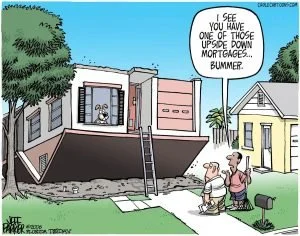
People go to bed on Friday and on Monday morning, if the markets do not open, until they do, that is the reset, or the beginning of it. This is finally the moment the awakened have been waiting for. Read on to the end of this article to understand what is to come.
Final Chapter
The world is about to see the final chapter of the biggest real estate shake out in human history. One of the classic rules of bubbles is that they usually deflate to at least the level at which they started – and often a little lower.
That means that “house prices should fall 80% to 95% from their current highs. House prices may fall back to 1950 levels. As a result, 80% of houses would end up in negative equity territory. The number of defaults and foreclosures will increase.
These economic components together form the perfect storm that is raging through today’s economy.
The last of the greatest generation of spenders in history – the prosperous baby boomers – are leaving their best spending years behind. Deflation will increasingly become the dominant trend as the economy slows and debts rise.
The consequences of these events lead to one thing: a severe tightening of credit – and write-offs of tens of trillions in loans and receivables. That means less money in the system – less spending – less demand – falling prices – and ultimately: Depression and deflation.
This is reality of the cabal economy and the most likely path it will follow, based on historical and empirical research.
People all over the world have taken it for granted that money is a worthless piece of paper, an absolutely insane collective delusion forced upon them to believe.
Intrinsic Value
Hundreds of years ago, travellers accepted banknotes called traveller’s cheques because they believed that the banks issuing them had a good reputation. Once these cheques were presented at a local bank, they would receive the notes back in the local currency, with no central authority to authenticate them. But today, people do not think this way. They believe that a government is needed to ensure the value of money.
But real money is based on natural characteristics, such as intrinsic value, durability, divisibility, uniformity, portability, scarcity and public acceptance. These characteristics are essential for a medium of exchange to function as an honest standard of payment, which is not the case with currencies issued by central banks.
Once established, Rothschild money changers transferred the valuable energy of labour from the people to themselves.
Money, created out of nothing and backed by debt, cannot and does not buy valuables, it is a fraud. As long as the illusion exists that “debt money” has value, and the sheep continue to consent to this illusion by participating in it, they will not be freed from their debt slavery.
When people wake up and realise that most banks are not only bankrupt but also corrupt, they will switch en masse to gold as a means of payment, just as they have done before for centuries.
Money Backed By Debt Is A Crime Against Humanity
In today’s society, people all over the world have taken for granted that ‘paper’ is money, but this is a nonsensical collective illusion that everyone was forced to believe. People thought that a government was needed to ensure the value of money.
Real money is based on natural properties, such as being intrinsically valuable, durable, divisible, uniform, portable, scarce and universally accepted. These properties are essential for a fair exchange standard to become universally accepted. This is not the case with currencies issued by Central Banks.
Unlike central bank issued currency, gold has always been valuable; today’s debt money is someone else’s burden, backed by unreliable promises that ultimately cannot be kept. Money is the opposite of debt and therefore money cannot be secured by debt. In other words, it is a crime against humanity.
Invented by Mayer Amschel Rothschild and built on the fact that money is a flow of energy known as currency, generated from the combination of raw materials, goods, services, and labour of the people.
Thus Rothschild gained a monopoly over all energy flows on planet Earth. A globally supported slave labour system based on debt money issued by their own central banks, infiltrated into every government and country.
The flow of money designed to return to them provides a rock-solid opportunity for complete financial and economic control.
By controlling the money supply and bribing governments, they have made their worthless debt money equal in value to the people’s energy money! A fraud of shameless proportions.
Money created out of nothing backed by debt should not buy valuables, because it is fraud. But, as long as people are under the illusion that “debt money” has value, and the sheep accept this illusion, peoples will not be freed from their debt bondage.
Hyper-Liquidity Becomes Hyperinflation
It is time to pay attention to what governments are doing, and take action accordingly by buying as much gold and silver as possible.
The problem with government debts growing fast and huge is that when the time comes, the Central Banks will have to raise interest rates, and will be very reluctant to do so, which then accelerates inflation.
So far, the excesses of money printing have been eliminated in the housing market, cryptos and stock prices, but it will not stay that way.
So the next stage in Hyperliquidity will be Hyperinflation due to the increased velocity of money in circulation. In a crisis of confidence in money. like the dollar, euro or yen, etc., is what causes hyperinflation, originated out of pure currency manipulation.
Consumer purchases have fallen sharply, which means that not all the new money is in circulation yet. Some has been used to pay off debts or is being saved, because nobody is investing.
Sooner or later this money will have to come back into circulation, and this will herald a period of hyperinflation, which means: too much money for fewer goods.
The Deep State Establishment is afraid of the movements and actions of the people, such as; ‘Stop the Fed’, and in fact; end all central banks. And that is exactly what is about to happen. Caused, by the banking system itself.
The moment this happens, the new QFS money system will be introduced, controlled by the people. The patriot policy is; to let the enemy destroy itself and that is now happening in real time, before our eyes. To be on the safe side; Stock up on water, food and necessities for the duration of a few weeks.
Awakening comes with a price. It may have been difficult and painful to get through the various stages of awakening, and especially to convince others. It is a challenge but opening the eyes and minds of the sheep, is even harder.
It is a struggle against time and injustice. The sheep are tossed to and fro without any idea of what is really happening, but they are eager to get in line for their free toxic Covid injection, which has predestined two-thirds of the population for an early departure from planet Earth.
https://finalwakeupcall.info/en/2022/09/03/real-estate-shake-out/

3 Reasons You Should Avoid Borrowing Against Your Home Right Now
.3 Reasons You Should Avoid Borrowing Against Your Home Right Now
Liz Weston Wed, September 7, 2022 MarketWatch
All that equity you're sitting on is tempting, but just because something can be done, doesn’t mean it should be done.
Soaring real estate values mean many homeowners are awash in equity — the difference between what they owe and what their homes are worth. The average-priced home is up 42% since the start of the pandemic, and the average homeowner with a mortgage can now tap over $207,000 in equity, according to Black Knight Inc., a mortgage and real estate data analysis company.
3 Reasons You Should Avoid Borrowing Against Your Home Right Now
Liz Weston Wed, September 7, 2022 MarketWatch
All that equity you're sitting on is tempting, but just because something can be done, doesn’t mean it should be done.
Soaring real estate values mean many homeowners are awash in equity — the difference between what they owe and what their homes are worth. The average-priced home is up 42% since the start of the pandemic, and the average homeowner with a mortgage can now tap over $207,000 in equity, according to Black Knight Inc., a mortgage and real estate data analysis company.
Spending that wealth can be tempting. Proceeds from home equity loans or lines of credit can fund home improvements, college tuition, debt consolidation, new cars, vacations — whatever the borrower wants.
But just because something can be done, of course, doesn’t mean it should be done. One risk of such borrowing should be pretty obvious: You’re putting your home at risk. If you can’t make the payments, the lender could foreclose and force you out of your house.
Also, as we learned during the Great Recession of 2008-2009, housing prices can go down as well as up. Borrowers who tapped their home equity were more likely to be “underwater” — or owe more on their houses than they were worth — than those who didn’t have home equity loans or lines of credit, according to a 2011 report by CoreLogic, a real estate data company.
Other risks are less obvious but worth considering.
To continue reading, please go to the original article here:
5 Ways How You Value Money Affects Your Finances
.5 Ways How You Value Money Affects Your Finances
Lee Huffman Sun, September 4, 2022
Investors value money differently based on their experiences, goals and beliefs. This process is known as mental accounting, and it often affects how we budget and spend our money. Mental accounting can also affect our investment decisions, leading us to make choices that make it harder to meet our goals. Learn more about mental accounting, including how it applies to finance and whether or not you should use it to make decisions.
For more help with financial planning, consider working with a financial advisor.
5 Ways How You Value Money Affects Your Finances
Lee Huffman Sun, September 4, 2022
Investors value money differently based on their experiences, goals and beliefs. This process is known as mental accounting, and it often affects how we budget and spend our money. Mental accounting can also affect our investment decisions, leading us to make choices that make it harder to meet our goals. Learn more about mental accounting, including how it applies to finance and whether or not you should use it to make decisions.
For more help with financial planning, consider working with a financial advisor.
Mental Accounting Definition
Mental accounting describes how two similar people choose to spend their income based on how each person values money differently. In many ways, these criteria are subjective, and investors weigh each of the categories differently, which complicates the topic even further.
Sometimes, mental accounting is detrimental and can make it harder for investors to reach their financial goals. This can happen when people view money decisions in relative terms instead of absolute terms.
Behavioral economists study the concept of mental accounting and how it affects our financial decisions ranging from daily spending to long-term investing. The concept was defined by famed economist Robert H. Thaler.
How to Use Mental Accounting in Financial Planning
In mental accounting, people treat money differently based on where it came from and how it is supposed to be used instead of treating every dollar the same. With investing and budgeting, people can treat their money differently in many ways. Here are a few examples:
Tax Refunds
Although a tax refund is getting a portion of the money withheld from your paycheck, many people view it as found money. They don’t always respect the time and effort it took to earn that money and, instead, feel that they can splurge when they get a refund. The money, which amounts to an interest-free loan to the government, may be used to fund a vacation, buy a big-screen TV or fund another purchase that they normally wouldn’t make.
To continue reading, please go to the original article here:
https://finance.yahoo.com/news/5-ways-value-money-affects-130001846.html
7 Things You Should Never Do When Planning For Retirement
.7 Things You Should Never Do When Planning For Retirement
ADAM MCFADDEN | Updated July 21, 2022
Looking to retire comfortably? Avoid these mistakes.
It’s never too early, or too late, to start thinking about your retirement goals. No matter if you’re hoping to retire early or work until you can’t any longer, having a plan for how you can retire comfortably is essential.
Get started on these steps right now so you can reach your retirement goals.
1. Not Having A Professional Review Your Plan
If you’re fortunate enough to have plenty of retirement savings and investments, now is the time to futureproof your funds. But that takes time and skills that most don’t have, so the best option is to turn to a professional financial advisor. The hard part is finding the right one.
7 Things You Should Never Do When Planning For Retirement
ADAM MCFADDEN | Updated July 21, 2022
Looking to retire comfortably? Avoid these mistakes.
It’s never too early, or too late, to start thinking about your retirement goals. No matter if you’re hoping to retire early or work until you can’t any longer, having a plan for how you can retire comfortably is essential.
Get started on these steps right now so you can reach your retirement goals.
1. Not Having A Professional Review Your Plan
If you’re fortunate enough to have plenty of retirement savings and investments, now is the time to futureproof your funds. But that takes time and skills that most don’t have, so the best option is to turn to a professional financial advisor. The hard part is finding the right one.
WiserAdvisor does all that work for you, matching you to the best financial advisor for your specific situation so you get in an expert in the areas you need.
There’s no cost to you and no obligation to hire the advisor, so there’s not much to lose.
2. Not Keeping An Emergency Fund
Common wisdom suggests you should keep three to six months of expenses in an emergency fund. Once you retire, however, you’ll likely want to bump up that amount. Generally speaking, accidents occur more often as you age, whether through accidental falls, reduction in driving abilities, loss of general dexterity or simply through spending more time at home rather than in an office. The best way to plan for emergency expenses in retirement is to build up your nest egg while you’re working, rather than making it a monthly line item in your budget.
Sign up for a new SoFi Checking and Savings Account today so that you can start stashing cash. You can earn a cash bonus of up to $300 with direct deposit and you can get up to 2.00% APY (Annual Percentage Yield) on all checking and savings balances with no balance cap restrictions*.
Plus, there are overdraft fees, no minimum balance fees and no monthly fees. You can even get paid up to two days early when you set up direct deposit.
To continue reading, please go to the original article here:
https://www.gobankingrates.com/things-you-should-never-do-when-planning-for-retirement-1383852/
6 Signs You Are Legitimately Financially Stable
.6 Signs You Are Legitimately Financially Stable
Heather Taylor Thu, September 1, 2022
How do you know when you are financially stable? There are subtle signs that determine if your overall financial health is in good standing. If you've ever wondered, "What are the signs I am financially stable?" -- see if you can check off the following boxes that indicate financial stability.
You Have a Savings Account and an Emergency Fund
Financially stable individuals tend to have a few savings vehicles at their disposal. They have a traditional savings account and an emergency fund in the event of emergencies. Saving from a fiscally healthy place means money isn't going toward a rainy day purchase. It's a savings for the future. Financially stable individuals consistently set money aside for saving toward retirement and meeting their future goals.
6 Signs You Are Legitimately Financially Stable
Heather Taylor Thu, September 1, 2022
How do you know when you are financially stable? There are subtle signs that determine if your overall financial health is in good standing. If you've ever wondered, "What are the signs I am financially stable?" -- see if you can check off the following boxes that indicate financial stability.
You Have a Savings Account and an Emergency Fund
Financially stable individuals tend to have a few savings vehicles at their disposal. They have a traditional savings account and an emergency fund in the event of emergencies. Saving from a fiscally healthy place means money isn't going toward a rainy day purchase. It's a savings for the future. Financially stable individuals consistently set money aside for saving toward retirement and meeting their future goals.
You Pay Your Bills on Time
What credit card debt? A financially stable individual pays their bills on time each month. If there's a balance, like on a credit card, they pay it off in full.
Those in fiscally good health do not make it a habit to pay bills when they are past due, pay the minimum on their balances, max out credit cards to their limits or allow collection agencies to contact them for past due bills. Credit cards in particular are used by financially stable individuals for rewards rather than as dependency for any and all purchases.
You Have Flexibility
What does this mean? Zachary Barton -- CFP, financial planner and owner at Barton Financial Group -- said financial flexibility is the ability to handle the unexpected and quickly get back to your previous position of financial strength.
This means if there's suddenly a large, unexpected expense, a financially stable person will not beat themselves up over it. Instead, they will recognize they can recover quickly. Barton uses the example of suddenly finding out you must pay an expensive auto repair bill. While you have the appropriate insurance to protect you against liability claims, you need to pay out of pocket for repairs and must pay the mechanic using your credit card.
This is okay because you have flexibility. "You'll know if you are strong financially if by the end of 60 days you have been able to pay off the credit card and replenish your emergency fund," said Barton.
You View Debt as a Leverage Tool
To continue reading, please go to the original article here:
https://finance.yahoo.com/news/6-signs-legitimately-financially-stable-190019426.html
How Much Cash To Have Stashed at Home at All Times
.How Much Cash To Have Stashed at Home at All Times
GoBankingRates
Digital payment platforms like Venmo, PayPal and CashApp have changed the way we use and keep physical cash on hand. Most people rarely keep cash on their person, much less at home.
However, there are always unexpected events that can lead to a necessity for having a bit of cash on hand, particularly emergencies ranging from catastrophic weather (hurricanes, wildfire), to power outages. If you can’t access your digital currency or your banking systems are down, having cash can allow you to get gas, food, and medicines with ease. However, just how much cash should you have on hand? We asked experts to weigh in and the answer is: It depends.
How Much Cash To Have Stashed at Home at All Times
GoBankingRates
Digital payment platforms like Venmo, PayPal and CashApp have changed the way we use and keep physical cash on hand. Most people rarely keep cash on their person, much less at home.
However, there are always unexpected events that can lead to a necessity for having a bit of cash on hand, particularly emergencies ranging from catastrophic weather (hurricanes, wildfire), to power outages. If you can’t access your digital currency or your banking systems are down, having cash can allow you to get gas, food, and medicines with ease. However, just how much cash should you have on hand? We asked experts to weigh in and the answer is: It depends.
Keep Cash to a Minimum
From a security point of view, cash is the most insecure asset you can have. Keeping it to a minimum in the house in the case of fire or theft is a good rule of thumb, said Ryan McCarty, CFP from McCarty Money Matters.
Just how minimum is up for debate among financial experts. Danielle Miura, CFP, the founder and owner of Spark Financials, suggested, “You should keep enough money on hand to get you a couple of gallons of gas, pay for a delivery tip, or to help in unfortunate events,” or around $100-$200 at a time. “Emergency funds should not be held at your home, they should be stored in a high-yield savings account of your choice.”
McCarty framed it more in terms of a ratio: “In terms of amount, don’t let your cash exceed 10% of your overall emergency fund and/or $10,000. You can’t deposit more than $10,000 in cash in a given year without raising red flags with the IRS.”
Enough for Emergency Expenses
Yasmin Purnell, a personal finance expert and founder of The Wallet Moth, a finance website, suggested you keep enough cash on hand in case of an emergency that would require you to access “temporary accommodation, food and drink, gasoline, and medication.” Purnell added, “As a general rule of thumb, having access to $1,000 in cash at home would ensure you can at least pay for immediate expenses in the case of a national emergency.”
To continue reading, please go to the original article here:
Why Is Money So Confusing?
.Why Is Money So Confusing?
Liz Weston, CFP®
Thu, September 1, 2022 NerdWallet
The investing information provided on this page is for educational purposes only. NerdWallet does not offer advisory or brokerage services, nor does it recommend or advise investors to buy or sell particular stocks, securities or other investments.
Managing money is an essential life skill, yet most U.S. adults would fail a financial literacy test. Consider the results of a survey meant to measure financial literacy, called the TIAA Institute-GFLEC Personal Finance Index. On average, U.S. adults correctly answered only 50% of its financial literacy questions in 2022.
Why Is Money So Confusing?
Liz Weston, CFP®
Thu, September 1, 2022 NerdWallet
The investing information provided on this page is for educational purposes only. NerdWallet does not offer advisory or brokerage services, nor does it recommend or advise investors to buy or sell particular stocks, securities or other investments.
Managing money is an essential life skill, yet most U.S. adults would fail a financial literacy test. Consider the results of a survey meant to measure financial literacy, called the TIAA Institute-GFLEC Personal Finance Index. On average, U.S. adults correctly answered only 50% of its financial literacy questions in 2022.
In other words: If you find money confusing, you’re far from alone. But the reasons you’re baffled may have more to do with how our brains work than how money does. Understanding some of the common barriers, along with strategies to cope, could help you finally get a handle on your finances.
Money is a new language
You wouldn’t expect to carry on a fluent conversation in Madrid or Mexico City if you only knew a few words of Spanish. Similarly, personal finance is loaded with terms, jargon and concepts that take a while to learn.
“Entering the world of money is like entering a whole new culture and learning a new language,” says Ed Coambs, a certified financial planner and couples therapist in Charlotte, North Carolina.
You shouldn’t feel stupid for not understanding everything instantly, and no one should make you feel that way. However, learning can be more difficult if we encounter judgmental, condescending or dogmatic people — which unfortunately describes many people who are fluent in personal finance lingo.
“Many money experts, professional or non-professional, can become varying degrees of authoritarian: ‘Yes, I know what's best for you. This is what you should do,’” Coambs says.
People with a rigid approach to personal finance may not understand the culture and life experiences that shaped you. They may insist you funnel every possible dollar into paying off debt or saving for retirement, for instance, but you may feel it’s important to tithe to your church or support your elderly parents.
Rather than dictating how you should spend your money, helpful advisors meet people where they are, says Rachael DeLeon, interim director of the Association for Financial Counseling & Planning Education, a nonprofit foundation that administers financial counseling credentials.
“It's figuring out: What are your values? What's important to you? And how do you make that work within your own financial situation?” DeLeon says.
To continue reading, please go to the original article here:
It’s A Crazy World When Zimbabwe Has The Most Stable Currency
.It’s A Crazy World When Zimbabwe Has The Most Stable Currency
Notes From the Field By Simon Black August 30, 2022
Robert Mugabe could have gone down in history with the same esteem and grandeur as Nelson Mandela.
Like Mandela, Mugabe was imprisoned for several years for being a prominent anti-colonialist leader in Zimbabwe— then called Rhodesia.
Upon release from prison, and with a little help from the international community, Mugabe became Prime Minister of Zimbabwe in 1980. And the first few years of his leadership were quite reasonable. But that all changed in 1987 when the constitution was amended and Mugabe gained dictatorial powers.
It’s A Crazy World When Zimbabwe Has The Most Stable Currency
Notes From the Field By Simon Black August 30, 2022
Robert Mugabe could have gone down in history with the same esteem and grandeur as Nelson Mandela.
Like Mandela, Mugabe was imprisoned for several years for being a prominent anti-colonialist leader in Zimbabwe— then called Rhodesia.
Upon release from prison, and with a little help from the international community, Mugabe became Prime Minister of Zimbabwe in 1980. And the first few years of his leadership were quite reasonable. But that all changed in 1987 when the constitution was amended and Mugabe gained dictatorial powers.

Mugabe destroyed the economy with insane regulations, fought expensive wars, and indebted the nation.
He also confiscated private land from established (mostly white) farmers, which he redistributed to his supporters, most of whom had no experience in farming.
Unsurprisingly, Zimbabwe’s once-booming agriculture exports collapsed almost overnight.
This authoritarian control pervaded across nearly all industries, and by the early 2000s, Zimbabwe’s economy was in shambles.
About half the country was unemployed and inflation skyrocketed.
In 2001 alone, retail prices doubled. But that was just the beginning. By 2003, inflation was nearly 600%. By 2006, more than 1,200%.
At its peak in 2008, Zimbabwe’s inflation was estimated by various economists to be somewhere between 500 billion and 89 SEXTILLIAN percent, which looks like this: 89,000,000,000,000,000,000,000%.
In 2009, the government finally capitulated and chose to abandon its currency altogether. And for the next several years, Zimbabwe had no official currency.
People transacted in dollars, euros, South African rand, Chinese renminbi… any foreign currency they could get their hands on.
I’ve been to Zimbabwe a few times; the people are intelligent, resourceful, and good-natured. And they have amazing stories to tell about living through hyperinflation.
By 2016, Zimbabwe’s government decided to give a national currency another chance. They started by issuing “bond notes”. And a couple years later they reestablished a new Zimbabwe dollar.
But this time, they promised to use restraint in printing money.
Now, I’m sure you will be shocked to learn that the central bank of Zimbabwe did not exercise restraint...
The new currency was introduced at parity with the US dollar, allegedly worth 1:1. And Zimbabwe’s government threatened to imprison anyone who ignored the official exchange rate.
Naturally, though, the government’s excessive spending and money printing caused the currency to lose value almost immediately. And soon they had to establish price controls based on an exchange rate of 25:1 to USD.
By the start of 2022, the Zimbabwean dollar was worth about 108:1 USD. And it’s now trading around 520:1.
But hey, that’s way better than the 35 quadrillion to 1 ratio of 2009...
There has been an interesting development, however. Instead of continuing with its failed policies, the central bank of Zimbabwe has begun issuing gold coins.
And the 91.67% pure, one ounce Zimbabwean gold coins are currently going for about $1,830 USD.
As of early August, about 4,500 had been sold to be used for local trade, which means they’re circulating as a legal currency in the Zimbabwean economy. That makes these gold coins the most stable currency in the world.
Now, personally I’m a bit skeptical and would love to see a full chemical assay to make sure the coins are actually as pure as the government claims.
Also, crypto would be a MUCH better medium of exchange for day-to-day transactions than gold coins.
But (assuming everything is legitimate) Zimbabwe is at least taking a step in the right direction, which is more than most western governments can say for themselves.
Sure, the US, UK, and Europe don’t have anywhere close to Zimbabwe’s level of inflation, which was more than 200% in the last 12 months.
But since 1971, when the US dollar was decoupled from gold, the value of the US dollar has fallen by nearly 87%.
Even worse is that interest rates in the US (when adjusted for inflation) have been negative for most of the past twenty years. Anyone who responsibly saved their money in, say, a savings account, LOST money after accounting for inflation and taxes.
Given that governments and central banks are key drivers of inflation and interest rates, this is tantamount to official theft.
And yet they keep doubling down on failed policies. They act like they can cure inflation, which in large part was caused by excessive government spending, with more government spending.
And they treat the absurdly-named Inflation Reduction Act as if it’s some sort of magical spell that can ward off the most destructive economic monsters.
If only that were true.
But in the real world, inflation will inevitably increase as they borrow another trillion dollars to pour into the IRS, triggering millions of new audits and causing American productivity to decline.
Forgiving student debt is another inflationary move. If nothing else, universities know that they can raise their tuition because all of the suckers taxpayers are footing the bill for an extra $10,000 to $20,000.
The US national debt now stands at $31 trillion, an increase of $2.4 trillion so far this fiscal year. And the Treasury Department is forecasting multi-trillion dollar deficits for years to come.
These deficits are extremely inflationary... because the government pays for them by having the central bank print more money.
At least Zimbabwe has figured it out. Western governments, on the other hand, still believe they can print and spend as much money as they like without consequence.
This is pure madness. But fortunately you don’t have to wait for the federal government to start acting responsibly.
You are perfectly free to store a portion of your savings in gold, silver, or any number of other real assets that hold value in times of inflation.
And with the way things are going, that might not be a bad idea to consider.
To your freedom, Simon Black, Founder, SovereignMan.com
What to Do With a Financial Windfall
.What to Do With a Financial Windfall
Rivan V. Stinson, Staff Writer Tue, August 30, 2022 Kiplinger
It’s a cliché, but it’s also true: Every cloud really does have a silver lining. That was hammered home for me after I was recently rear-ended in a car accident. I wasn’t hurt, but it was a frightening experience, and the amount of paperwork required in its aftermath was sometimes overwhelming.
After I filed my claim and it was processed, my auto insurer deemed my car a total loss. But before I had time to mourn the fact that I was carless—again—the silver lining emerged: I was refunded part of my auto insurance premium for the month, and I was cut a check for $11,000, which was what my auto insurance company concluded my 2014 Chevy Cruze was worth. While the settlement wasn’t a Powerball, “quit my job” amount, it did give me pause, because I had to decide what to do with it.
What to Do With a Financial Windfall
Rivan V. Stinson, Staff Writer Tue, August 30, 2022 Kiplinger
It’s a cliché, but it’s also true: Every cloud really does have a silver lining. That was hammered home for me after I was recently rear-ended in a car accident. I wasn’t hurt, but it was a frightening experience, and the amount of paperwork required in its aftermath was sometimes overwhelming.
After I filed my claim and it was processed, my auto insurer deemed my car a total loss. But before I had time to mourn the fact that I was carless—again—the silver lining emerged: I was refunded part of my auto insurance premium for the month, and I was cut a check for $11,000, which was what my auto insurance company concluded my 2014 Chevy Cruze was worth. While the settlement wasn’t a Powerball, “quit my job” amount, it did give me pause, because I had to decide what to do with it.
Back to Basics
I knew I didn’t want to run out and lock myself into an auto loan for another car. With prices for new and used vehicles still crazy high, adding a car payment didn’t sit well with me—especially since my old car was paid off. Plus, the Washington, D.C. metro area has a public transit system that I had used consistently before I had a car. So I did what I’ve been meaning to do for a while: I added money to my emergency fund.
You generally want to have at least three to six months’ worth of expenses stashed in a dedicated savings account in case of a job loss, medical emergency or costly car-repair bill. (Here's more on where to find emergency cash.) However, with inflation running at about 9%, you should stash more in the account.
Bulking up your savings by about 10% or more will give you more protection in the event of an emergency, says Samantha Gorelick, a certified financial planner with Brunch & Budget, a financial planning firm. You need to be prepared to cover your expenses at elevated prices if inflation continues, she says.
If you don’t have an emergency fund, an unexpected windfall is a good way to start one. Put your money to work by parking it an interest-bearing savings account. Rates are climbing for both savings and money market accounts at many financial institutions. (For current rates on top-yielding accounts, go to depositaccounts.com.)
Another personal finance basic to consider: Pay down any credit card debt you have. For those carrying a balance, using even a modest windfall to pay it down could put you on a better financial footing and potentially increase your credit score.
To continue reading, please go to the original article here:
The 8 Places Billionaires Keep Their Money
.The 8 Places Billionaires Keep Their Money
Andrew Dehan Tue, August 30, 2022
Billionaires have been able to not only acquire wealth but most have gradually built it over time. This means that many have had successful investments, which makes it natural for everyone else to wonder where they are investing or keeping their money in order to see that growth. We’ve compiled a list of some of the most common investments that billionaires make when looking for sustained growth of their money over time.
Keep in mind, though, that billionaires don’t typically manage their own money and instead choose to work with a financial advisor to help with their asset allocation.
The 8 Places Billionaires Keep Their Money
Andrew Dehan Tue, August 30, 2022
Billionaires have been able to not only acquire wealth but most have gradually built it over time. This means that many have had successful investments, which makes it natural for everyone else to wonder where they are investing or keeping their money in order to see that growth. We’ve compiled a list of some of the most common investments that billionaires make when looking for sustained growth of their money over time.
Keep in mind, though, that billionaires don’t typically manage their own money and instead choose to work with a financial advisor to help with their asset allocation.
1. Cash and Cash Equivalents
Cash and cash equivalents are common places where billionaires keep of some their money. Though not often thought of as an investment, cash is a liquid asset, meaning you can use it in a variety of ways as needs or desires arise. In a crisis, having cash on hand gives you the flexibility to respond. That’s why billionaires keep a significant portion of their money in cash and cash equivalents.
However, with current rates of inflation, cash has less of an emphasis. Inflation causes the value of money to drop, so having too much of it on hand during an inflationary period can mean you lose significantly.
2. Commodities
Commodities are often another piece of a billionaire’s portfolio, and having such assets can help hedge against risk, inflation and volatility. For instance, in a scenario where inflation is causing difficulty for the rest of the market, having investments in raw materials whose price is rising can help protect you if other parts of your portfolio are suffering. People and economies depend on commodities, and inflation makes them worth more money.
Raw materials and agricultural products – like precious metals, industrial metals like copper, oil and natural gas, coffee, corn, pork bellies and soy beans – are popular types of commodities held and traded by billionaires or their agents.
3. Foreign Currencies
Holding foreign currencies offers billionaires the potential to capitalize on fluctuations of value in various currencies. It is simply a form of diversification: Rather than have all their assets denominated in one currency, they spread some of their wealth to assets denominated in other currencies. That offers protection against one currency falling and capital appreciation if another currency in which they have assets gains value.
To continue reading, please go to the original article here:
https://finance.yahoo.com/news/8-places-billionaires-keep-money-130030395.html
Some Clear Thinking About Stagflation
.Some Clear Thinking About Stagflation
Notes From The Field By Simon Black August 29, 2022
Let’s not mince words: stagflation is here. Let’s also not overreact: the world is not coming to an end. And, like all things, there are both risks and rewards that will arise.
First, what do we know?
Historically high inflation is obvious. Plus many major economies around the world are already sputtering.
Germany’s economy stagnated with 0% growth last quarter. China’s economy practically ground to a halt. Economies in the UK and Hong Kong contracted slightly. And the US economy has already contracted for two consecutive quarters.
Some Clear Thinking About Stagflation
Notes From The Field By Simon Black August 29, 2022
Let’s not mince words: stagflation is here. Let’s also not overreact: the world is not coming to an end. And, like all things, there are both risks and rewards that will arise.
First, what do we know?
Historically high inflation is obvious. Plus many major economies around the world are already sputtering.
Germany’s economy stagnated with 0% growth last quarter. China’s economy practically ground to a halt. Economies in the UK and Hong Kong contracted slightly. And the US economy has already contracted for two consecutive quarters.
Now, in nearly every other country on the planet, when your economy shrinks for two consecutive quarters, they call that a recession.
But not in the Land of the Free.
In America, a recession is defined as whatever a special government committee within the National Bureau of Economic Research wants it to be.
I’m serious. The agency’s own website states that “the designation of a recession is the province of a committee of experts.”
Wonderful. More ‘experts’ who don’t have an iota of common sense among them. And this is why, at least in the United States, the government has thus far refused to call this a recession. In fact they insist we are NOT in a recession.
Definitions and “province” aside, however, a recession is more like what US Supreme Court Justice Potter Stewart said of obscenity in a famous 1964 case: “I know it when I see it.”
And normal people know recession when they see it. Recession is when people and businesses feel less prosperous. We start cutting back and stressing more about money. We dream less about the future and worry more about the present.
But even if the economy isn’t in recession yet, it seems fairly clear that one is coming. There’s already a mountain of evidence from corporate earnings reports showing steep declines in both consumer spending and business investment.
Those wonderfully infallible “experts” have certainly done a bang-up job steering us into this slowdown.
The Federal Reserve in particular slashed interest rates to zero and held them there for most of the last 14 years. They conjured trillions of dollars out of thin air, they grew their own balance sheet by a factor of TEN… and then kept insisting that there would never be any consequences EVER from such an absurd course of action.
Then, when inflation finally did take hold, they denied it at first. Then they called it transitory. Then they finally promised they would ‘do something’ about inflation… eventually.
Later on they even admitted to being totally ignorant, saying “we now understand better how little we understand about inflation.” (It seems like the first nine words should apply to all government experts.)
Now, at last, the Fed gave us the courtesy of speaking plainly and bluntly on Friday morning when the Chairman gave a terse warning about the US economy.
He stated that “the US economy is clearly slowing down” and that fixing inflation would likely “require a sustained period of below-trend growth” and “softening of labor market conditions.”
In other words, that means the economy will be sluggish, and a lot of people will lose their jobs. Sounds like a recession to me, even if the bureaucrats don’t want to admit it.
The real conundrum, however, is that inducing this economic pain won’t necessarily fix the inflation problem.
Any high school economics student knows about the Law of Supply and Demand. And it very easily explains why the world has so much inflation.
Policymakers artificially created soaring demand during the COVID pandemic when they conjured trillions of dollars out of thin air and gave everybody free money.
All the unemployment benefits, being paid to stay home, the PPP ‘loans’, etc. flooded the economy with cash. People have been spending it. And that created a surge in demand for goods and services-- everything from microchips to rentals on Airbnb.
Big increases in demand are fine, and don’t necessarily cause price increases… as long as the supply of goods and services is able to keep up.
But it didn’t. Supply collapsed-- again, primarily because of governments’ COVID response. With everyone being forced to stay at home, there were obviously far fewer goods and services being produced.
And those effects have lingered. Businesses everywhere are struggling to find enough workers. And labor shortages in critical vocations like trade and transportation have caused major supply chain bottlenecks.
(Obviously none of these issues existed prior to the public health dictators’ takeover of the global economy.)
On top of the pandemic-related supply challenges, however, businesses and workers have also had to contend with an avalanche of new rules and regulations that make it more difficult to produce.
Many of these debilitating rules single out oil and gas producers, which contributes to an ongoing energy crisis. And higher energy prices also make it more difficult to produce goods and services. So it’s quite a vicious circle.
All of this is to say that the Federal Reserve can raise interest rates and cause a recession to cool off demand.
But a decrease in demand isn’t enough. Inflation can only be tamed if there is a substantial increase in the supply of goods and services. And the Fed can’t really influence that.
Yet unless this happens, i.e. workers and businesses are once again free to produce, all we’ll be left with is stagflation: a recession combined with stubborn inflation that won’t go back to normal.
Now let’s go back to the beginning: do not overreact. The world is not coming to an end. ‘Stagflation’ doesn’t mean 20% inflation and 20% unemployment.
In fact it’s much more likely that inflation falls to 5%, unemployment rises to 8%… and the Fed will consider that a job well done.
It’s also temporary.
The constraints on supply being caused by political stupidity and geopolitical tension are, to borrow from the Fed, “transitory”.
While I generally place little hope in politicians, historically speaking, opposition candidates tend to win elections during economic stagnation. And that pattern should lead to more responsible, pro-business governments.
Then there’s the matter of our burgeoning energy crisis, which is also holding back supply.
This, too, is temporary. In fact the world is on the cusp on a new energy Renaissance that has the potential to fuel growth and prosperity for decades to come.
This is a really important (and uplifting) trend to understand, and we’ll discuss it very soon.
Last, rising interest rates and stagflation will likely have an adverse impact on both housing and the stock market.
Interest rates are a major factor in these asset prices; and higher rates mean that housing and stock prices will fall.
During the stagflation of the 1970s, home prices were relatively flat after adjusting for inflation. And stocks lost about 50%. But that was the average performance for all assets.
With housing, specific locations did extremely well. Home prices in Houston and California, for example, boomed during the 1970s, vastly outpacing inflation.
There were also plenty of companies that did extremely well. John Deere stock more than doubled in price between 1972 and 1979 after adjusting for inflation, and it paid a solid dividend at the same time.
Commodities performed strongly during the 1970s. Agriculture and farmland did extremely well. Gold was the best performing asset of the decade.
And there were plenty of startups, including Apple and Microsoft, that got their start during the stagflation of the 1970s.
The bottom line here is that there’s no reason to panic, and plenty of reason to be fairly optimistic about the future (once you understand long-term energy trends).
But it’s more important than ever to be extremely rational… even surgical… in your thinking.
To your freedom, Simon Black, Founder, SovereignMan.com
https://www.sovereignman.com/trends/some-clear-thinking-about-stagflation-36940/
TNT:
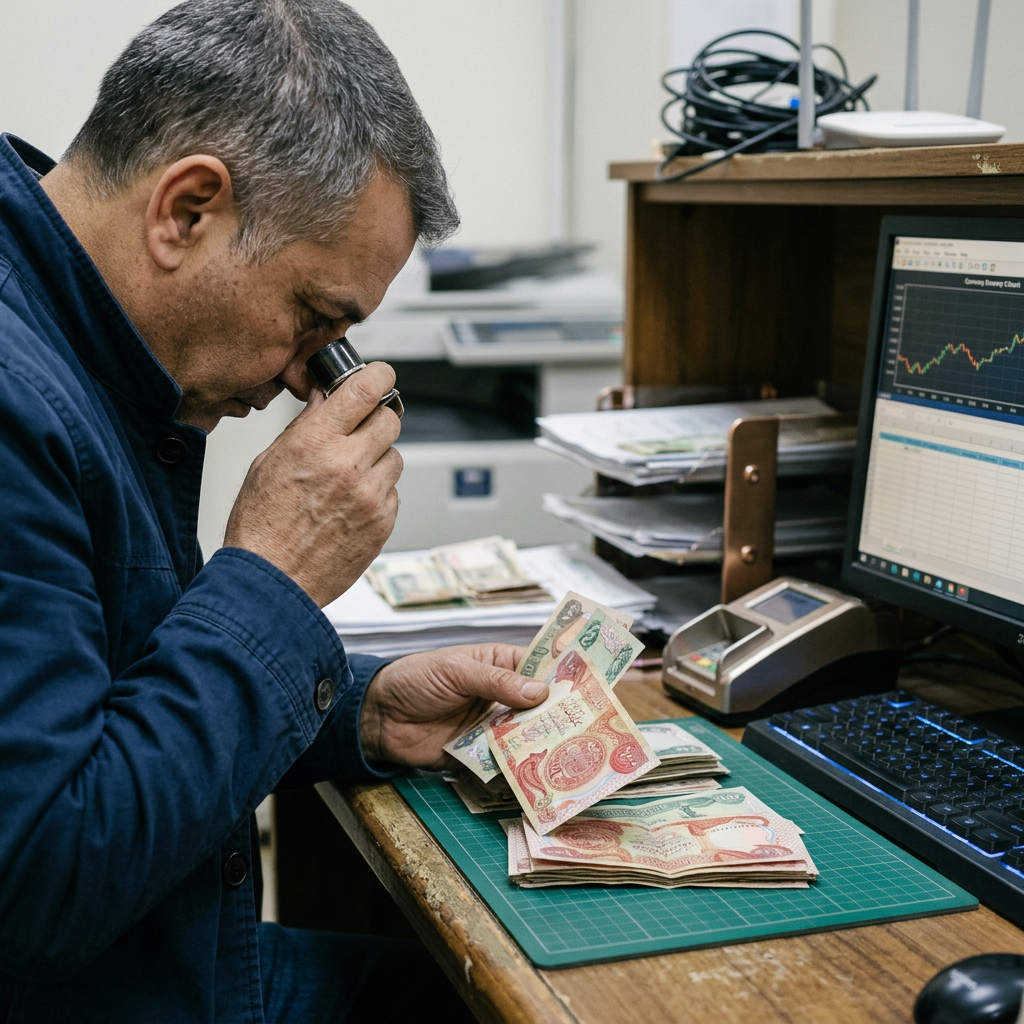
Tishwash: The Central Bank extends bank working hours and directs them to open during official holidays.
The Central Bank of Iraq directed banks with outstanding remittances to work on Fridays to avoid delays caused by official holidays, while it completed covering all remittances before the exchange rate change, with a total amount of $3 billion.