Tuesday Iraq News Posted by Tishwash at TNT 7-7-2026
TNT:
Tishwash: The House of Representatives concludes the first reading of the proposed law on combating information technology crimes.
The Iraqi parliament convened its first session of the second legislative term on Monday, 6 July 2026, under the chairmanship of parliament speaker, Haibat al-Halbousi.
According to a statement issued by the parliament's Media Office, the session included the first reading of two bills: the Combating Cybercrimes Bill and the First Amendment to the Law on the Care of Minors.
In a separate statement, the Media Office announced that the parliament's next session will be held on Thursday, 9 July, at 1:00 p.m.
The agenda will include the swearing-in of several replacement members of parliament, the questioning of the head of the National Investment Commission, and general discussions. link
Tishwash: After a two-year hiatus, the Iraqi government begins preparing the 2027 budget draft.
On Monday, Mazhar Muhammad Salih, advisor to the Iraqi Prime Minister for Financial Affairs, revealed that the Ministry of Finance has begun preparing the draft federal general budget law for 2027, in the first new budget that Iraq has begun preparing after two years without approving a federal budget.
Saleh told Shafaq News Agency that the Ministry of Finance began preparing the draft federal general budget law for 2027 during the month of July, based on the Financial Management Law, and that it will finish its work next September.
He added that the draft bill will then be referred to the Ministerial Council for the Economy for discussion, before being submitted to the Cabinet for approval and sent to the House of Representatives.
He pointed out that it is not possible at the present time to determine the financial size of the federal general budget for 2027, explaining that the total value of the budget will be determined after the Ministry of Finance completes the preparation of the draft law.
The government’s commencement of preparing the 2027 budget comes after two years of not approving a federal budget, as no budget was approved for the years 2025 and 2026, despite the previous government, headed by former Prime Minister Mohammed Shia Al-Sudani, enacting the three-year budget law for the years (2023-2025).
The 2025 budget could not be implemented after its amendment schedules were not approved within the House of Representatives and the time period of the law expired, which prompted the Ministry of Finance to adopt a temporary disbursement mechanism at a rate of (1/12) to secure salaries and mandatory expenses.
The 2026 budget was also not approved, due to the delay in forming the government, the economic repercussions of the regional war, and the fluctuations in energy markets, so Iraq continued to manage its spending according to the temporary spending mechanism. link
************
Tishwash: Al-Zaidi faces a test from the "big players"... Washington awaits proof of seriousness in the corruption and weapons files.
Approximately $300 billion has been smuggled out of Iraq.
Before Prime Minister Ali al-Zaidi arrived in Washington in mid-July, Baghdad found itself facing a sensitive political test: the funeral of former Iranian Supreme Leader Ayatollah Ali Khamenei and several members of his family in Iraq.
The event, which was supposed to be a religious ceremony, quickly transformed into a political issue where the interests of Baghdad, Tehran, and Washington intersected, becoming one of the first hurdles before the anticipated meeting between al-Zaidi and US President Donald Trump.
Although the visit to the White House comes amid signs of improving relations between Baghdad and Washington, serious questions remain about al-Zaidi's ability to implement the commitments outlined in the understandings reached between the two sides in what has become known as the "June Agreement."
Conversely, observers believe that the Prime Minister made significant progress toward the US administration in the past week, after launching a broad campaign to prosecute officials accused of corruption—a move seen as an attempt to demonstrate seriousness in fulfilling the pledges made to Washington.
Iranian pressure and Iraqi hesitation:
A well-informed political source revealed that approving the holding of Khamenei's funeral procession in Iraq on Wednesday was not an easy decision within the government. It was preceded by hesitant discussions before the scales tipped under Iranian pressure, supported by positions from forces within the coordination framework and armed factions.
The source, a member of parliament from one of the major Shiite parties, told Al-Mada on condition of anonymity that "Al-Zaidi realizes this issue could put him in an embarrassing position with Trump during his upcoming visit to Washington."
According to information circulating in political circles, the funeral program has undergone a significant change. Baghdad has been removed from the schedule of ceremonies, which were initially planned for the city of Kadhimiya. The visit will now be limited to Najaf and Karbala, with the possibility that Al-Zaidi will receive the body of the Supreme Leader at Najaf Airport.
Estimates suggest that a large funeral procession in the capital might have turned into anti-American demonstrations, punctuated by chants and slogans targeting the US president, similar to the scenes witnessed during funeral processions in Iran.
US President Donald Trump had expressed clear interest in the funeral processions that began earlier in the week in Iran.
In a press statement, commenting on the scenes showing thousands of participants weeping during the ceremonies, Trump said he was surprised by the scale of the public reaction, adding, "Maybe those were fake tears."
Iranian Foreign Minister Abbas Araqchi arrived in Baghdad for his first visit since the end of the last war in the region, coinciding with the launch of what has become known as "Operation Dawn," which targeted members of parliament and officials accused of corruption last week.
According to leaks following the visit, Araqchi discussed the details of the funeral processions with Iraqi officials, while initial reports indicated that Baghdad would be one of the main stops for the event.
However, the Iraqi committee responsible for organizing the pilgrimage quickly denied this information, before the outlines of the new program, limited to Najaf and Karbala, became clear.
Religious rituals, not political calculations.
In contrast, former diplomat Ghazi Faisal offers a different interpretation of the matter. He believes that Washington, including President Trump, understands that the funeral of the former Iranian Supreme Leader is not an official function of the Iraqi government, but rather falls within the realm of religious and sectarian rituals.
Faisal told Al-Mada, "Al-Zaidi is concerned with running the government, while Khamenei's funeral is part of religious tradition." He added that Baghdad's approval of holding the funeral ceremonies in Najaf and Karbala "is simply a response to religious traditions followed with religious figures, officials, or even ordinary citizens."
Faisal points out that Trump himself announced a week's grace period for Iran to complete the funeral ceremonies, out of respect for the occasion, without exerting pressure related to the negotiations between the two sides.
He believes that what transpired represents a "temporary truce" to allow for the conclusion of the ceremonies before the resumption of negotiations between Washington and Tehran.
The former diplomat concludes that the United States, as a multi-religious and multicultural country, generally views religious and sectarian diversity, and its associated rituals, with respect. This makes it unlikely that the funeral ceremonies, in themselves, will turn into a crisis in official relations between Baghdad and Washington, unless they are accompanied by political messages or stances that transcend their religious dimension.
How is al-Zaidi viewed in Washington now?
Regarding al-Zaidi's image in the United States, Kato Saadallah, a researcher specializing in American affairs, believes that Washington still grants al-Zaidi an important political opportunity, but at the same time links the continuation of this support to his ability to implement genuine reforms.
Saadallah tells Al-Mada that the Prime Minister's visit comes at the invitation of US President Donald Trump and coincides with the celebrations of the 250th anniversary of the founding of the United States. He adds that Trump will be attending the NATO summit in Ankara beforehand and will meet with al-Zaidi upon his return to Washington.
He points out that Trump had previously declared his support for al-Zaidi and the current government, a stance that granted Baghdad significant political leeway. However, according to Saadallah, this support will not be open-ended or unconditional.
He adds that the US president, through his envoy Tom Barrack, informed the Iraqi government of a set of priorities that must be addressed if Baghdad wants to maintain American backing.
Saadallah identifies three main priorities . The first is ending the proliferation of weapons outside state control and disbanding militias and armed factions, thereby restoring the state's monopoly on the use of force.
The second priority is combating corruption, which, according to the researcher, is the issue Trump focuses on more than any other, based on the conviction that corruption is the gateway through which all other Iraqi crises stem.
The third priority is halting the smuggling of hard currency and closing the channels that drain Iraq's financial reserves and fuel financial networks linked to foreign entities. Is "Operation Dawn" enough? Saadallah believes that the recent campaign launched by al-Zaidi against a number of those accused of corruption represents an important step, but it still requires further evidence.
link
Presidential advisor: Funds recovered from corrupt individuals will contribute to reducing the deficit gap and financing projects.
The Prime Minister’s financial advisor, Mazhar Muhammad Salih, confirmed on Tuesday that the funds recovered from corrupt individuals represent exceptional revenues that cannot be relied upon in preparing public budgets, while noting that these funds will contribute to reducing the deficit gap and financing projects.
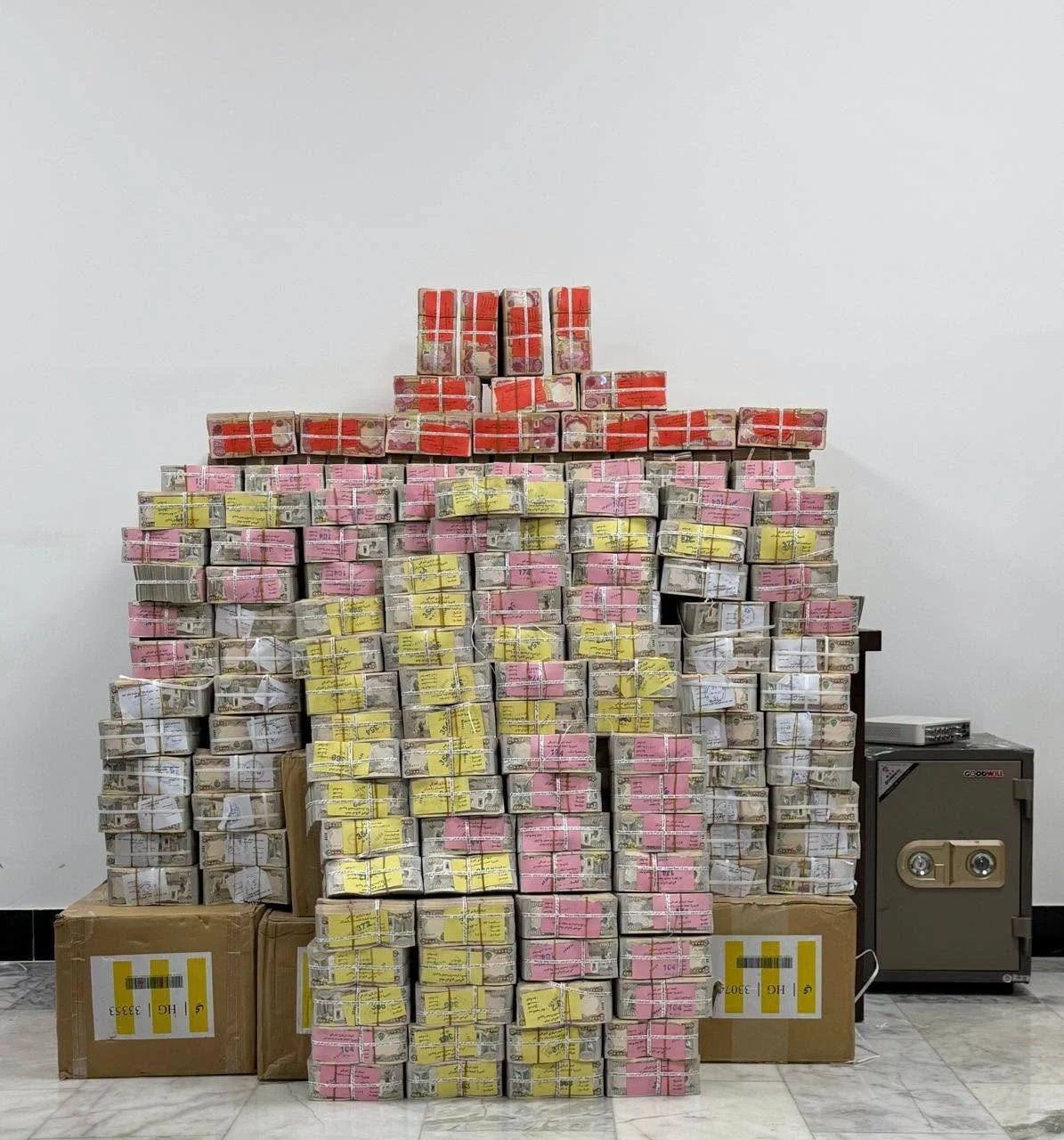
Saleh said in statements followed by Al-Mirbad that “the funds recovered from the corrupt are important and non-recurring exceptional revenues, as they cannot necessarily and permanently be relied upon in preparing public budgets, but they constitute an important source of revenue in financial planning.”
He continued: “These funds are often directed towards bridging the deficit gap or financing specific projects that directly affect the lives of individuals, or strengthening the country’s financial reserves, and not towards building the annual budget within a long-term fiscal policy, because that is linked to the ceilings and capabilities of fiscal policy within the framework of preparing and implementing public budgets.”
He stressed that "recovering corruption funds is important because it reduces financial waste, supports the public treasury, and enhances the confidence of citizens, investors, and the international financial community in the country's economic system," noting that "the funds recovered from corrupt individuals represent an important support tool for the national economy, but they are not necessarily a complete substitute for the general budget, as this depends on the size and ceilings of public spending." link
***************
Tishwash: Amid anti-corruption campaigns and efforts to recover stolen funds, for the first time in months, currency traders in Iraq are seeing the dollar fall to 152,000 Iraqi dinars
Currency markets in Iraq opened this morning (Tuesday) with a further decline in the exchange rate of the US dollar against a relative recovery of the Iraqi dinar.
Exchange bureaus in both the Kifah and Harithiya exchanges in Baghdad recorded a rate of 152,700 Iraqi dinars per 100 US dollars.
In Erbil, the dollar was offered at the Sheikh Allah market at the opening price of 152,650 dinars, and it was sold at the same price in Sulaimaniyah.
This relative decline is the first of its kind in months, as the dollar had approached 160,000 dinars in recent weeks, putting pressure on markets and traders.
Experts attribute this relative recovery to the strong anti-corruption campaigns led by Iraqi Prime Minister Ali Faleh al-Zubaidi, which have resulted in the arrest of dozens of corrupt officials and the recovery of billions of dinars from them. link