
How Has the COVID-19 Pandemic Changed Money Advice?
.How Has the COVID-19 Pandemic Changed Money Advice?
Jenny Rose Spaudo Mon, June 27, 2022,
Since the start of the pandemic, Americans have endured an economic rollercoaster with fluctuating interest rates, massive layoffs and skyrocketing inflation. It’s no surprise, then, that around half of non-retired adults say the pandemic has made it harder for them to achieve their financial goals, according to the Pew Research Center.
So how can you best manage your finances in today’s uneasy economy? GOBankingRates spoke with several financial experts to see how the pandemic has changed their money advice.
How Has the COVID-19 Pandemic Changed Money Advice?
Jenny Rose Spaudo Mon, June 27, 2022,
Since the start of the pandemic, Americans have endured an economic rollercoaster with fluctuating interest rates, massive layoffs and skyrocketing inflation. It’s no surprise, then, that around half of non-retired adults say the pandemic has made it harder for them to achieve their financial goals, according to the Pew Research Center.
So how can you best manage your finances in today’s uneasy economy? GOBankingRates spoke with several financial experts to see how the pandemic has changed their money advice.
Be Careful With Easy Online Spending
When lockdowns began, in-person shopping shrank while online shopping rose to new heights. In 2020 alone, e-commerce sales increased by 43%, according to U.S. Census data.
But the ease of online shopping can also make it more tempting to spend, said Tom Siomades, CFA and chief investment officer of AE Wealth Management.
“I believe the pandemic has further eroded people’s ability to gauge value and their view of money,” he said. “The pandemic accelerated all things online. People want stuff now, paying with electronic money. They no longer save or, worse yet, have the discipline to save. They don’t consider the cost–only convenience.”
While many Americans have increased their online spending, Brian Meiggs, founder of the personal finance site My Millennial Guide, said the pandemic is also forcing people to take a more practical approach to their personal finances.
“The pandemic has highlighted the need of having a budget, building emergency savings, and creating a financial plan that suits their lifestyle,” he said.
Timeless Financial Management Principles Still Apply
Christopher Drew, an investment advisor representative with Drew Capital Management, believes it’s more important than ever to follow timeless money management principles. With inflation at astonishing highs, Drew encourages his clients to spend less and save more.
“Be more cautious about your spending habits due to the increase in inflation,” he warned.
To continue reading, please go to the original article here:
https://finance.yahoo.com/news/covid-19-pandemic-changed-money-130041569.html
4 Financial Experts Reveal How They Spent Their First Big Paycheck
.4 Financial Experts Reveal How They Spent Their First Big Paycheck
Bob Haegele Mon, June 27, 2022
When you think about financial experts, you might imagine someone who is extremely savvy with their money, meticulously planning and optimizing their every penny for maximum wealth generation. While that can be true in some cases, it’s not as though there is some law or wealth accumulation creed to which every financial expert is beholden.
Sometimes, financial experts spend their money in ways that may seem consistent with how most people spend money. In other words, they spend money on things they want, or even on surprises for their loved ones. Sometimes, they spend their money on nothing more than paying down debt and shoring up their savings accounts.
4 Financial Experts Reveal How They Spent Their First Big Paycheck
Bob Haegele Mon, June 27, 2022
When you think about financial experts, you might imagine someone who is extremely savvy with their money, meticulously planning and optimizing their every penny for maximum wealth generation. While that can be true in some cases, it’s not as though there is some law or wealth accumulation creed to which every financial expert is beholden.
Sometimes, financial experts spend their money in ways that may seem consistent with how most people spend money. In other words, they spend money on things they want, or even on surprises for their loved ones. Sometimes, they spend their money on nothing more than paying down debt and shoring up their savings accounts.
I interviewed a few successful financial experts and, indeed, they spent their first big paychecks on things indicative of someone who is far from rich. Nevertheless, it’s clear they had a few more dollars in the bank than they had in the past.
Debt Repayment
According to the New York Fed, total household debt in the first quarter of 2022 was $15.84 trillion. With such a staggering number, it would serve most of us well to pay down those debts before spending on most other things. So, it’s no surprise that (at least) one expert focused on debt repayment with his first big paycheck.
“This is going to sound boring, but I simply paid down some debts and banked it, enjoying the feeling of not having to live paycheck-to-paycheck for the first time,” said Chris Motola, financial analyst at MerchantMaverick.com. It can be tough to make those debt repayments when you don’t have much. But when you start to earn a real paycheck, it makes sense to start repaying your debt.
Student Loans
Student loans are another form of debt, but they are worth mentioning separately because of how large the national student loan debt burden has become. According to Experian, student loans are now the second-largest type of debt, with only mortgages having a larger collective balance. Many jobs require at least a bachelor’s degree, but the cost of tuition at many schools has risen rapidly. This highlights the need to pay student loans down to avoid falling too far behind.
To continue reading, please go to the original article here:
https://finance.yahoo.com/news/4-financial-experts-reveal-spent-120007383.html
Your Financial Liability To Your Government Is Infinite
.Your Financial Liability To Your Government Is Infinite
Notes From the Field By Simon Black June 27, 2022
In the year 1255 AD, a prominent Italian businessman named Orlando Bonsignori launched a new venture that he boldly called the Gran Tavola, or “Great Table”. Despite the name, it wasn’t a medieval furniture shop. Bonsignori came from a family of wealthy bankers who had highly influential political connections across Europe. And Bonsignori’s idea was to create the biggest bank on the continent that would cater specifically to kings, popes, and emperors.
In a way, what Bonsignori created was a sort of proto International Monetary Fund; he took deposits from, and made loans to, governments and rulers all over Europe. And Bonsignori’s Gran Tavola had an especially cozy relationship with the Vatican.
Your Financial Liability To Your Government Is Infinite
Notes From the Field By Simon Black June 27, 2022
In the year 1255 AD, a prominent Italian businessman named Orlando Bonsignori launched a new venture that he boldly called the Gran Tavola, or “Great Table”. Despite the name, it wasn’t a medieval furniture shop. Bonsignori came from a family of wealthy bankers who had highly influential political connections across Europe. And Bonsignori’s idea was to create the biggest bank on the continent that would cater specifically to kings, popes, and emperors.
In a way, what Bonsignori created was a sort of proto International Monetary Fund; he took deposits from, and made loans to, governments and rulers all over Europe. And Bonsignori’s Gran Tavola had an especially cozy relationship with the Vatican.
Bonsignori raised money for his bank by using a relatively new legal structure called the compagnia, which came from the Latin companio, which referred to the sharing of bread.
The idea behind a compagnia is that individuals could get together and pool their money into a single enterprise (like Bonsignori’s bank), and they would share the profits of the business in accordance with their capital contributions.
This seems like a pretty basic concept for us today. But in the Middle Ages it was quite innovative.
There was just one problem with the compagnia structure: while the partners all shared in the profits of the business, they also shared in the liability.
This meant that, if the venture failed, investors could actually owe MORE than they originally invested. And that’s exactly what happened with the Gran Tavola.
At first the bank was a smashing success; by the mid 1260s, they had become the exclusive financial partner to the Vatican. And that momentum continued for decades.
But by the mid 1290s, long after Bonsignori had passed away, the bank started having serious problems.
King Philip IV of France, angry that the Gran Tavola had backed some of his rivals, confiscated many of the bank’s assets. The bank also lost its Vatican business, which was a huge financial blow.
Within a few years, the bank was insolvent. It was so short of cash, in fact, that there wasn’t enough money to pay depositors.
But since the bank was structured as a compagnia, the bank’s investors were all personally liable for the shortfall.
This was pretty typical back then; the concept of holding shareholders liable to pay the debts of a business goes back thousands of years to Roman law.
But eventually new legal structures were developed. Governments realized that they needed to encourage business investment in order to stimulate commerce and economic growth. And one of the ways they did that was by formalizing the concept of ‘limited liability’.
The Dutch East India Company was one of the most prominent early examples of this structure; it was established in 1602 as a ‘joint-stock company’, whereby investors contributed capital in exchange for shares in the business. But an investor’s financial risk was limited to the amount contributed.
In other words, if the Dutch East India Company succeeded, the investor would receive his share of the profit. But if the company failed, the investor would only lose, at most, his original investment amount. He could not be held personally liable for the company’s debts.
And for the most part, this is still the way business is done today. Shareholders in Apple are not personally liable for the debts and obligations of the business; their total financial risk is limited to the amount of money they’ve invested… but not a penny more.
What’s interesting, however, is that while you cannot generally be held responsible for the debts of any company in which you’ve invested, you WILL ABSOLUTELY be held responsible for the debts of your government.
And local government is a great example.
Over the weekend I was talking with a friend who wanted my opinion about a couple of places she was thinking about moving to in the United States. She has young children and cares deeply about the quality of schools… so we started reviewing the school districts’ financial statements to get a glimpse of the future.
I was pretty surprised at what I saw.
Granted, I only reviewed a small sample of about a dozen school districts in various states. But each of them is heavily in debt-- and these are in generally wealthy suburbs in North Texas, Virginia, Florida, Georgia, etc.
According to their audited financial reports, most of the districts I looked at took on hundreds of millions of dollars in new loans over the past two years because of COVID emergency measures they implemented. And now many districts are under pressure to increase security as well.
This is all financially crippling. Many are losing money or scrambling to come up with new funding sources. Some are considering closing down a few of their schools in order to cut costs. And almost all of them are proposing a tax increase.
This is where the concept of stakeholder liability starts to apply again.
Just like with the Gran Tavola where the shareholders were ultimately responsible for the company’s financial obligations, it’s the local residents who are ultimately on the hook for the school district’s debts.
Sure, a school district’s creditor won’t be able to sue the Jones family on Mulberry Street in order to collect. But citizens are absolutely liable to pay in the form of tax increases and service cuts.
And it’s really the same with all government-- state, local, federal, etc. Whenever your politicians screw up and the government is in financial distress, they pass the buck on to the taxpayers.
But unlike a shareholder in a company who has ‘limited liability’, i.e. your financial exposure is limited to the amount of your investment, citizens have no similar limitation when it comes to government.
Your financial liability to your government is infinite. They can tax you and deprive you of services forever. As long as you allow them to do so.
This is one of the biggest reasons why it makes sense to have a Plan B.
Without a Plan B, you have no other option, and you’re stuck with a government that will milk you like a dairy cow for the rest of your life.
Part of a Plan B means having another place to go. You might never need to use it. But, like an insurance policy, there’s no downside in having that option identified well in advance.
It doesn’t necessarily need to be a far away place on a distant continent overseas. But at a minimum, at least think about where you might move if you really needed to.
And I would humbly suggest you think about places that are financially solvent, or where you can be disconnected from the local government’s financial liability.
https://www.sovereignman.com/trends/your-financially-liability-to-your-government-is-infinite-35732/
To your freedom, Simon Black, Founder, SovereignMan.com
What to Do When You're Left out of a Will
.What to Do When You're Left out of a Will
By ANDREW BEATTIE Updated May 24, 2022
Reviewed By Andy Smith Fact Checked By Kirsten Rohrs Schmitt
Being left out of a will is not a situation most people want to be in. But sometimes when a person dies and their will comes to light, its contents throw survivors for a loop. The will can exclude people who had assumed they would be included, or in some cases, who were told that they would be included. If you are left out of a will, there are some time-sensitive steps you should take to at least clarify what has happened—and perhaps contest it. In most cases, you must prove coercion, diminished mental capacity, or outright fraud to have a will's terms dismissed.
What to Do When You're Left out of a Will
By ANDREW BEATTIE Updated May 24, 2022
Reviewed By Andy Smith Fact Checked By Kirsten Rohrs Schmitt
Being left out of a will is not a situation most people want to be in. But sometimes when a person dies and their will comes to light, its contents throw survivors for a loop. The will can exclude people who had assumed they would be included, or in some cases, who were told that they would be included. If you are left out of a will, there are some time-sensitive steps you should take to at least clarify what has happened—and perhaps contest it. In most cases, you must prove coercion, diminished mental capacity, or outright fraud to have a will's terms dismissed.
KEY TAKEAWAYS
If you are left out of a will and believe that you should contest it, prepare to face an uphill battle to get a portion of the estate.
Be certain that contesting the will makes financial sense, and that the potential gain will far outweigh the legal costs.
Also make sure that contesting the will makes emotional sense as the process is a long and often stressful one involving multiple steps.
To succeed, you must prove coercion, diminished mental capacity, or outright fraud—all difficult to prove, no matter your personal convictions.
Talk with your attorney about how realistic your chances are of getting the will invalidated and other alternatives that may exist.
Judge the Costs
Before you put a retainer on a lawyer, engage in some sober second thought. If you are not family and were never named in a previous will, you have no standing to contest the will. If the testator (the deceased) discussed an inheritance with you previously, write down as much as you can remember. Using this, estimate the dollar value (whether money or possessions). If it was never discussed but was implied, you will need to give a high and a low estimate on what you could have reasonably received based on your knowledge of the testator's estate.
If this amount isn't enough to cover the cost of a consultation with an estate lawyer, walk away. Even if it is twice as much as the retainer, walking away may still be the better course as some of the worst estate fights cost more in legal fees than the inheritance. So, think carefully before you lawyer up.
Make sure contesting a will is a winnable and financially smart battle—being left out of a will is terrible, but wasting time, money, and emotions fighting a losing battle is worse.
Get a Copy of the Will
To continue reading, please go to the original article here:
https://www.investopedia.com/articles/pf/12/left-out-of-the-will.asp
5 Things to Consider Before Becoming an Estate Executor
.5 Things to Consider Before Becoming an Estate Executor
By Andrew Beattie Updated February 25, 2021
Agreeing to be the executor of an estate is a bigger decision than most people realize. It is important to consider the responsibility of the position before agreeing to take on the role.
Below are five things you should know before signing on.
KEY TAKEAWAYS
While it is an honor to be selected as an executor, executing a will takes a lot of time and work.
Make sure you can handle all that is involved before accepting the responsibility.
5 Things to Consider Before Becoming an Estate Executor
Before you say yes to being the executor of an estate, read this
By Andrew Beattie Updated February 25, 2021
Reviewed By Khadija Khartit Fact Checked By Marcus Reeves
Agreeing to be the executor of an estate is a bigger decision than most people realize. It is important to consider the responsibility of the position before agreeing to take on the role.
Below are five things you should know before signing on.
KEY TAKEAWAYS
While it is an honor to be selected as an executor, executing a will takes a lot of time and work.
Make sure you can handle all that is involved before accepting the responsibility.
When deciding whether or not to accept, consider the complexity of the estate, whether you have the time to devote to the immediate responsibilities required, as well as the multitude of duties that come into play when the testator passes away.
1. The Complexity of the Estate
Taking on the role of executor (also known as a personal representative) is not simply a matter of reading the will and using it as a set of instructions for distributing someone's assets. An executor essentially steps in for the testator (the person who wrote the will) and sees to all of that person's final arrangements—financial and otherwise.
Generally speaking, the larger the estate—whether in terms of property, possessions, assets, or the number of beneficiaries—the more difficult and time consuming it will be to disperse. For example, a house, several bank accounts, a stock portfolio, and possessions will all have different steps to dispersal and hurdles to clear, like completing tax documents. This is why high-net-worth individuals usually use professionals to both set up an estate plan and then help execute it when they pass on.
That said, even small estates with only a few beneficiaries can become problematic if just one person contests the will or is otherwise inclined to throw a wrench into the process. The best way to assess how difficult the job will be is to ask to see a copy of the current will (or a draft of the will if one is in the works).
If there are obvious red flags—unequal distributions to children, trusts, or annuities to untangle, or anything else you feel uncomfortable handling—you might consider passing on the responsibility.
2. The Time Commitment
Being an executor takes time and energy, and requires a lot of attention to detail—in fact, it is almost solely concerned with details.
Before you agree to be executor, you should be certain that you have the time to do the job. If you have a busy professional life or a lot of family commitments, it may be difficult to set aside the needed time.
It is important to make a decision based on your current situation. As long as the testator is alive, you can be added or removed as the executor of the estate.
To continue reading, please go to the original article here:
https://www.investopedia.com/articles/pf/11/before-becoming-an-executor.asp
What's the Average Cost of a Making a Will?
.What's the Average Cost of a Making a Will?
By David Dierking Updated February 04, 2022
Let's face it. The last thing people want to do is plan for their death. There are a lot of important decisions you need to make—decisions you shouldn't leave to your loved ones. These include saving for and planning your funeral, appointing a power of attorney, designating beneficiaries for all your accounts, setting up your kids—especially if they're fairly young, planning your estate, and setting up your last will and testament.
This last one is probably one of the most important things you'll have to do. Below, we've outlined some important things you'll need to consider when you're putting together this important document.
What's the Average Cost of a Making a Will?
By David Dierking Updated February 04, 2022
Reviewed By Khadija Khartit Fact Checked By Suzanne Kvilhaug
Let's face it. The last thing people want to do is plan for their death. There are a lot of important decisions you need to make—decisions you shouldn't leave to your loved ones. These include saving for and planning your funeral, appointing a power of attorney, designating beneficiaries for all your accounts, setting up your kids—especially if they're fairly young, planning your estate, and setting up your last will and testament.
This last one is probably one of the most important things you'll have to do. Below, we've outlined some important things you'll need to consider when you're putting together this important document.
KEY TAKEAWAYS
Setting up a will is one of the most important parts of planning for your death.
Drafting the will yourself is less costly and may put you out about $150 or less.
Depending on your situation, expect to pay anywhere between $300 and $1,000 to hire a lawyer for your will.1
While do-it-yourself will kits may save you time and money, writing your will with a lawyer ensures it will be error-free.
A Complicated Process
Drawing up a will isn't as easy as you may imagine. Most people hear the word will and think it's a fairly simple process. The idea most people have is that it requires a few minutes to designate the recipients of all your worldly belongings. But that isn't true. In fact, there are many important facets to the document you have to consider—right down to how you word it.
If you have a lot of assets, run a business, and have more than one child or grandchildren, you need to take some time to make careful decisions about what happens after you die. Doing so now will help those you leave behind in the end.
Make a list of all your assets—your home, vehicles, any valuables—along with all of your financial accounts such as checking and savings accounts, certificates of deposit (CDs), and life insurance policies. Then jot down all of your dependents and who inherits each asset. Also note that if there are any special considerations you'd like to include in your will such as when minors inherit your assets, how accounts will be split up, or what happens to your home after you die.
You can try drafting the will yourself or you can hire a lawyer to do the work for you. But even if you hire an attorney, you'll still have to make these important decisions on your own. We'll look at the benefits and drawbacks of both a little later in this article.
The Cost of a Will
The fee for having a basic will written can be as little as $150—fairly reasonable and affordable for most people. Consider purchasing a do-it-yourself will creation kit that can be purchased online or in stores for less.
These are generally templates you can fill in with your pertinent information online. If you require more complicated or additional estate planning documents, be prepared to dish out more cash. It can cost $1,000 or more in advanced situations.
To continue reading, please go to the original article here:
https://www.investopedia.com/ask/answers/033116/what-average-cost-making-will.asp
Power of Attorney: When You Need One
.Power of Attorney: When You Need One
By Kimberly Rotter Updated May 18, 2022
Reviewed By Khadija Khartit Fact Checked By Ryan Eichler
A power of attorney (POA) is a legal document in which the principal (you) designates another person (called the agent or attorney-in-fact) to act on your behalf. The document authorizes the agent to make either a limited or broader set of decisions. The term "power of attorney" can also refer to the individual designated to act in this way.
KEY TAKEAWAYS
A power of attorney (POA) is a legal document that gives an individual, called the agent or attorney-in-fact, the authority to take action on behalf of someone else, called the principal.
The agent can have either extensive or limited authority to make legal decisions about the principal's property, finances, or healthcare, depending on the terms of the POA.
Power of Attorney: When You Need One
By Kimberly Rotter Updated May 18, 2022
Reviewed By Khadija Khartit Fact Checked By Ryan Eichler
A power of attorney (POA) is a legal document in which the principal (you) designates another person (called the agent or attorney-in-fact) to act on your behalf. The document authorizes the agent to make either a limited or broader set of decisions. The term "power of attorney" can also refer to the individual designated to act in this way.
KEY TAKEAWAYS
A power of attorney (POA) is a legal document that gives an individual, called the agent or attorney-in-fact, the authority to take action on behalf of someone else, called the principal.
The agent can have either extensive or limited authority to make legal decisions about the principal's property, finances, or healthcare, depending on the terms of the POA.
Types of POA include conventional, also known as a limited power of attorney, durable, which lasts for a lifetime unless you cancel it, springing, which only comes into play for specific events, and medical, also known as a durable power of attorney for healthcare.1
How a Power of Attorney (POA) Works
Certain circumstances may trigger the desire for a power of attorney (POA) for someone over the age of 18. For example, someone in the military might create a POA before deploying overseas so that another person can act on their behalf should they become incapacitated.
Incapacity isn't the only reason someone might need a POA, though. Expatriates workers and families need to set a POA for their affairs in America while doing their work overseas. Younger people who travel a great deal might set up a POA so that someone can handle their affairs in their absence, especially if they have no spouse to do so. However, POAs are most commonly established when someone is elderly or if they face a serious, more long-term health crisis.
If you have a POA and become unable to act on your own behalf due to mental or physical incapacity, your agent or attorney-in-fact may be called upon to make financial decisions to ensure your well-being and care. For example, they may need to pay bills, sell assets to pay for medical expenses, and take steps for Medicaid planning for you.
Other important tasks a POA can authorize someone to carry out are banking transactions, real estate decisions, dealing with government or retirement benefits, and healthcare billing.
How to Get a Power of Attorney (POA)
To continue reading, please go to the original article here:
https://www.investopedia.com/articles/personal-finance/101514/power-attorney-do-you-need-one.asp
6 Estate Planning Must-Haves
.6 Estate Planning Must-Haves
By GLENN CURTIS Updated February 27, 2022
Many people believe that having an estate plan simply means drafting a will or a trust. However, there is much more to include in your estate planning to make certain all of your assets are transferred seamlessly to your heirs upon your death. There are specific estate planning documents, like healthcare power of attorney and will or trust.
A successful estate plan also includes provisions allowing your family members to access or control your assets, should you become unable to do so yourself.
6 Estate Planning Must-Haves
By GLENN CURTIS Updated February 27, 2022
Reviewed By Khadija Khartit Fact Checked By Pete Rathburn
Many people believe that having an estate plan simply means drafting a will or a trust. However, there is much more to include in your estate planning to make certain all of your assets are transferred seamlessly to your heirs upon your death. There are specific estate planning documents, like healthcare power of attorney and will or trust.
A successful estate plan also includes provisions allowing your family members to access or control your assets, should you become unable to do so yourself.
KEY TAKEAWAYS
Estate planning is not only for the wealthy—everybody can benefit from ensuring their assets and finances are properly taken care of after their death.
Without a will, a probate court could lead to an unintended distribution of assets.
Estate planning is also useful if you become incapacitated.
A will is part of an estate plan.
If you have underage children, an estate plan is extremely important, as it will list their guardians, in the event your spouse cannot care for them after your death.
Estate Planning Basics
The Estate Planning Must-Haves
Here is an estate planning checklist of items every estate plan should include:
Will/Trust
Durable Power Of Attorney
Beneficiary Designations
Letter Of Intent
Healthcare Power Of Attorney
Guardianship Designations
In addition to these six documents and designations, a well-laid estate plan also should consider the purchase of insurance products such as long-term care insurance to cover old age, a lifetime annuity to generate some level of income until death, and life insurance to pass money to beneficiaries without the need for probate.
Does your estate plan measure up? Let's examine each item on this checklist to make sure you haven't left any decisions to chance.
1. Wills and Trusts
A will or a trust may sound complicated or expensive—something only rich people have. That is an incorrect assessment. A will or trust should be one of the main components of every estate plan, even if you don't have substantial assets. Wills ensure property is distributed according to an individual's wishes (if drafted according to state laws). Some trusts help limit estate taxes or legal challenges. However, simply having a will or trust isn't enough. The wording of the document is critically important.
A will or trust should be written in a manner consistent with how you've bequeathed the assets that pass outside of the will. For example, suppose you've already named your sister as a beneficiary on a retirement account or insurance policy (assets that typically pass outside of a will to a named beneficiary). In that case, you don't want to bequeath the same asset to a second cousin in the will because it could lead to a will contest. Not to mention that both individuals could become bitter toward each other (and you) during a legal battle.
Always name a guardian and a backup guardian for your underage children in your will. If you do not name a guardian, the courts may decide to place your young children with a family member (not of your choice) or even put them in the state's custody.
2. Durable Power of Attorney
https://www.investopedia.com/articles/pf/07/estate_plan_checklist.asp
Will vs. Trust: What’s the Difference?
.Will vs. Trust: What’s the Difference?
Both transfer an estate to heirs, but only a trust can skip probate court
By Matthew Jarrell Updated May 17, 2022
Wills vs. Trusts: An Overview
Trusts are legal arrangements that protect assets and direct their use and disposition in accordance with their owners’ intentions. While wills take effect upon death, trusts may be used both during the life and after the death of their creators. Separately or together, wills and trusts can serve effective estate planning.1
This article will examine how these estate-planning tools can provide for your heirs, including:
The need for a will, a trust, or both
The different types of trusts
The advantages and disadvantages of wills and trusts
Will vs. Trust: What’s the Difference?
Both transfer an estate to heirs, but only a trust can skip probate court
By Matthew Jarrell Updated May 17, 2022
Reviewed By Ebony Howard Fact Checked By Amanda Jackson
Wills vs. Trusts: An Overview
Trusts are legal arrangements that protect assets and direct their use and disposition in accordance with their owners’ intentions. While wills take effect upon death, trusts may be used both during the life and after the death of their creators. Separately or together, wills and trusts can serve effective estate planning.1
This article will examine how these estate-planning tools can provide for your heirs, including:
The need for a will, a trust, or both
The different types of trusts
The advantages and disadvantages of wills and trusts
KEY TAKEAWAYS
When creating a will or a trust, you should consult tax, investment, and legal advisors.
A will is a legal document that spells out how you want your affairs handled and assets distributed after you die.
A trust is a fiduciary arrangement whereby a grantor (also called a trustor) gives a trustee the right to hold and manage assets for the benefit of a specific purpose or person.
Trusts can have a limited term, the duration of the grantor’s or another person’s lifetime, and can hold assets and distribute them after the grantor’s or other person’s death.
If you die intestate (i.e., without a will) and have made no other estate planning provisions, the distribution of your assets will be determined by state law.
Wills
A will is a document that directs the distribution of your assets after your death to your designated heirs and beneficiaries. It also can include your instructions for matters that require decisions after your death, such as the appointment of an executor of the will and guardians for minor children, or directions for your funeral and burial.
A will can direct an executor to create a trust and appoint a trustee to hold assets for the benefit of particular persons, for example, for minor children until they reach majority or a specified age.
A will must be signed and witnessed as required by state law. Its implementation requires a legal process. It must be filed with the probate court in your jurisdiction and carried out by your designated executor. The document is publicly available in the records of the probate court which oversees its execution and has jurisdiction over any disputes.
Trusts
Trusts are legal arrangements that provide for the transfer of assets from their owner, called the grantor or trustor, to a trustee. They set the terms for the trustee’s management of the assets, for distributions to one or more designated beneficiaries, and for the ultimate disposition of the assets. The trustee is a fiduciary obligated to handle the trust assets in accordance with the terms of the trust document and solely in the best interests of the beneficiaries.
To continue reading, please go to the original article here:
Why One Of The Wealthiest Empires In History Disintegrated In 17 Years
.Why One Of The Wealthiest Empires In History Disintegrated In 17 Years
Notes From the Field By Simon Black June 20, 2022
On June 17, 1631, the 38-year old chief consort of Shah Jahan, head of the Mughal Empire, was giving birth to their 14th child in the central Indian city of Burhanpur.
It had been a long and extremely difficult labor-- more than 30 hours in total. But the consort persisted and gave birth to a healthy baby girl. The consort herself, unfortunately, succumbed to uncontrollable postpartum bleeding, and she passed away that same day.
Why One Of The Wealthiest Empires In History Disintegrated In 17 Years
Notes From the Field By Simon Black June 20, 2022
On June 17, 1631, the 38-year old chief consort of Shah Jahan, head of the Mughal Empire, was giving birth to their 14th child in the central Indian city of Burhanpur.
It had been a long and extremely difficult labor-- more than 30 hours in total. But the consort persisted and gave birth to a healthy baby girl. The consort herself, unfortunately, succumbed to uncontrollable postpartum bleeding, and she passed away that same day.
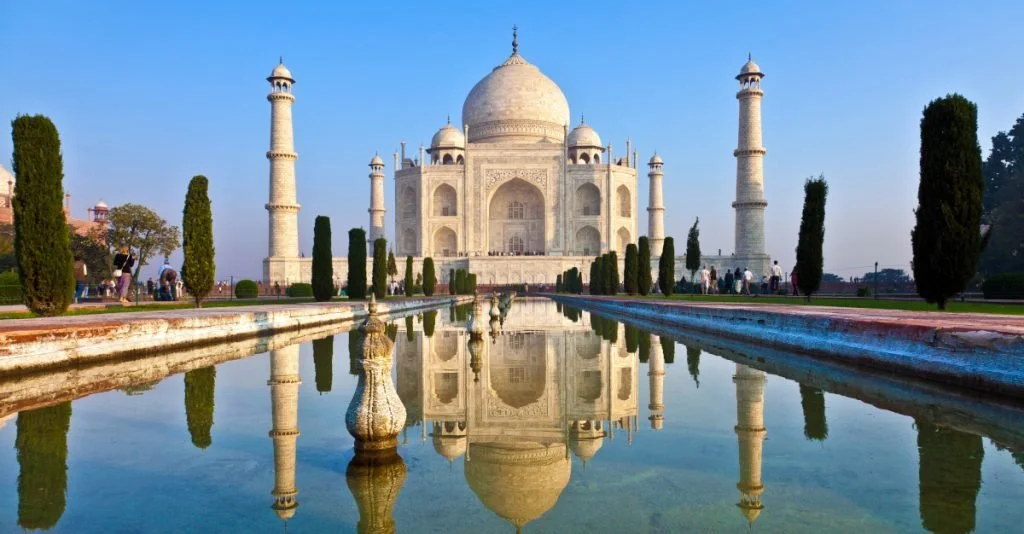
Her name was Mumtaz Mahal. And her husband the Emperor was so bereaved that, after a year-long period of mourning, he commissioned a palatial mausoleum to house her tomb.
We know this tomb today as the Taj Mahal. And Shah Jahan spared no expense on its grandeur. According to the scrupulously kept financial records of the time, the cost of the Taj Mahal totaled precisely 41,828,426.47 silver Rupees. Based on the today’s gold and silver prices, that works out to be more than $3 billion in today’s money.
Now, I’m sure Shah Jahan loved his wife very much. But that’s a lot of money to spend on a tomb… especially when the money comes from the public treasury.
But this sort of profligate spending was pretty typical of the Mughal Emperors at the time.
The Mughal Empire had only been founded roughly 100 years before, in 1526. And it rose to prominence under the reign of Akbar the Great during the late 1500s.
Akbar tripled the size and wealth of the Mughal Empire until it included virtually all of India, Pakistan, and parts of Bangladesh and Afghanistan.
Akbar also ensured that economic freedom reigned. He cut taxes. The coinage was stable. Infrastructure was highly advanced. People were free to engage in commerce and trade.
Akbar also held government bureaucracy to a minimum, and even kept his personal household spending quite low.
He famously ruled with a staff of just four ministers, and he set an example of routinely hiring people based purely on their talent, irrespective of someone’s religion, nationality, or class.
As a result, the Mughal Empire became a financial powerhouse, responsible for roughly 22% of global GDP. (This is approximately the same as the US is today.)
The empire quickly became known for its unimaginable wealth, and European travelers marveled at the Mughals’ high standard of living.
Naturally, the wealth didn’t last. The emperors who followed Akbar did not continue his policies of freedom, tolerance, and conservative spending.
Akbar’s son Jahangir was a cruel, drunken degenerate who reveled in flaying his political opponents; he also ballooned the expenses of his imperial court by establishing a harem of 6,000 women.
(The harem’s administrator was the emperor’s favorite wife-- a woman he married after brutally murdering her first husband.)
Jahangir’s son, Shah Jehan, was even more intemperate. He came to power by slaughtering his brothers, and then quickly raised government spending to epic levels.
In addition to the Taj Mahal, Shah Jehan built dozens of other lavish palaces, and he spent indiscriminately on other personal luxuries like jewelry.
He raised taxes and poisoned the economy with armies of bureaucrats. Shah Jehan was also highly intolerant of other religions and ideologies, and he imposed a special tax on all individuals who did not convert to his Muslim faith.
Shah Jehan was violently overthrown by his son Aurangzeb, a fanatic who sought to eradicate every other faith except for his own. He tore down monuments, smashed statues, and closed schools which did not conform to his ideology.
As Emperor, Aurangzeb raised taxes and accelerated expansion of regulation and government bureaucracy. He also constantly provoked foreign enemies and sunk a great deal of the Empire’s sagging treasury into a never-ending state of costly warfare.
Ironically, though, due to his personal faith, Aurangzeb was a pacifist at home. He frequently refused to enforce the laws and punish crime. Eventually Aurangzeb became legendary for his clemency and forgiveness, and criminals thrived under his reign.
Aurangzeb died in 1707. And just 17 year after his death, the Mughal Empire had disintegrated into fragments.
The Empire’s rise to wealth and prominence over just a few decades in the 1500s was astonishing. Its rapid decline was even more extraordinary. But it’s not hard to understand.
Between peak and decline, the Empire experienced terrible leadership. Weak and incompetent emperors spent lavishly, expanded the bureaucracy, raised taxes, increased regulation, and waged war. Some of those wars ended with humiliating defeats, resulting in a loss of national prestige.
They trampled on individual and economic liberty. They formalized extreme ideological intolerance and encouraged social divisions. They canceled, sometimes violently, anyone who didn’t espouse their beliefs.
They didn’t bother enforcing their own laws, and they let the lawless reign. They lost the ability to transfer power in an orderly manner between successive rulers.
They failed to protect their borders from foreigner invaders-- most notably the British East India Company. And they absolutely failed to recognize that rival powers around the world were rising and would take their place.
They foolishly and arrogantly assumed that their wealth and power would last forever. It didn’t. It never does.
This theme is as old as human civilization itself, and we can see many of the same extravagances and follies from the Mughal Empire in our world today.
This time is not different, and it’s why diversifying internationally makes so much sense… why having a Plan B makes so much sense.
To your freedom, Simon Black, Founder, SovereignMan.com
Estate Planning: 16 Things to Do Before You Die
.Estate Planning: 16 Things to Do Before You Die
When Aretha Franklin died intestate—without a legal will—in 2018, she joined a surprisingly long list of famous people, including Prince, who also did the same.12 By not preparing an estate plan, she made the task of settling her affairs more complicated for her survivors. While your estate may not be as large or complex as a famous singer's, it's still important to have a plan in place in the event of your death.
More Than a Last Will and Testament
Estate planning goes beyond drafting a will. Thorough planning means accounting for all of your assets and ensuring they transfer as smoothly as possible to the people or entities you wish to receive them. Along with implementing your plan, you must make sure others know about it and understand your wishes.
Estate Planning: 16 Things to Do Before You Die
This pre-death checklist will get your affairs in order
By Troy Segal Updated March 11, 2022
Reviewed By Marguerita Cheng Fact Checked By Melody Kazel
When Aretha Franklin died intestate—without a legal will—in 2018, she joined a surprisingly long list of famous people, including Prince, who also did the same.12 By not preparing an estate plan, she made the task of settling her affairs more complicated for her survivors. While your estate may not be as large or complex as a famous singer's, it's still important to have a plan in place in the event of your death.
More Than a Last Will and Testament
Estate planning goes beyond drafting a will. Thorough planning means accounting for all of your assets and ensuring they transfer as smoothly as possible to the people or entities you wish to receive them. Along with implementing your plan, you must make sure others know about it and understand your wishes.
Not sure how to get started? Follow this checklist, and you'll have covered most, if not all, of your bases.34
1. Itemize Your Inventory
To start things out, go through the inside and outside of your home, and make a list of all valuable items. Examples include the home itself, television sets, jewelry, collectibles, vehicles, art and antiques, computers or laptops, lawn equipment, and power tools.
The list will probably be a good deal longer than you may have expected. As you go, you may want to add notes if someone comes to mind that you'd like to have the item after your death.
2. Follow With Non-Physical Assets
Next, start adding your non-tangible assets to your list, such as things you own on paper or other entitlements that are predicated on your death. Items listed here would include brokerage accounts, 401(k) plans, IRAs, bank accounts, life insurance policies, and other policies such as long-term care, homeowners, auto, disability, and health insurance.
Include all account numbers and list the location of any physical documents you have in your possession. You may also want to list contact information for the firms holding these non-physical possessions.
3. Assemble a List of Debts
Then, make a separate list for open credit cards and other obligations you may have. This should include items such as auto loans, mortgages, home equity lines of credit (HELOCs), and any other debts you might owe. Again, add account numbers, the location of signed agreements, and the contact information of the companies holding the debt.
Include all your credit cards, noting which ones you use regularly and which ones tend to sit in a drawer unused.
To continue reading, please go to the original article here:
https://www.investopedia.com/articles/retirement/10/estate-planning-checklist.asp