Why Gold is Money: A Periodic Perspective
July 4, 2019 By Nicholas LePan
Why Gold is Money
Gold has been used as money for millennia. People often attribute this to beauty, but there are basic physical properties for why gold is money.
The economist John Maynard Keynes famously called gold a “barbarous relic”, suggesting that its usefulness as money is an artifact of the past. In an era filled with cashless transactions and hundreds of cryptocurrencies, this statement seems truer today than in Keynes’ time.
However, gold also possesses elemental properties that has made it an ideal metal for money throughout history.
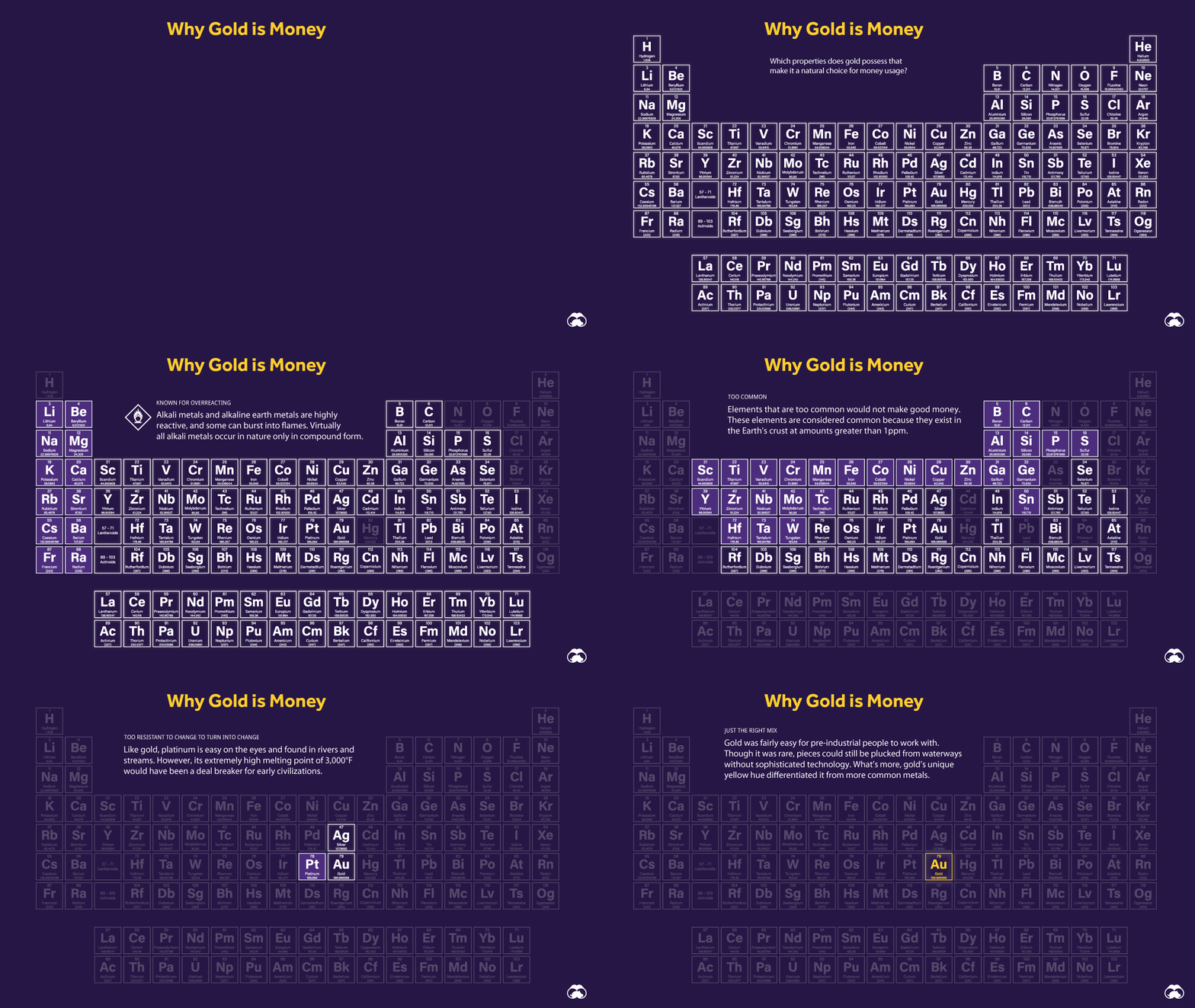
Sanat Kumar, a chemical engineer from Columbia University, broke down the periodic table to show why gold has been used as a monetary metal for thousands of years.
The Periodic Table
The periodic table organizes 118 elements in rows by increasing atomic number (periods) and columns (groups) with similar electron configurations.
Just as in today’s animation, let’s apply the process of elimination to the periodic table to see why gold is money:
Gases and Liquids
Noble gases (such as argon and helium), as well as elements such as hydrogen, nitrogen, oxygen, fluorine and chlorine are gaseous at room temperature and standard pressure. Meanwhile, mercury and bromine are liquids. As a form of money, these are implausible and impractical.
Lanthanides and Actinides
Next, lanthanides and actinides are both generally elements that can decay and become radioactive. If you were to carry these around in your pocket they could irradiate or poison you.
Alkali and Alkaline-Earth Metals
Alkali and alkaline earth metals are located on the left-hand side of the periodic table, and are highly reactive at standard pressure and room temperature. Some can even burst into flames.
To continue reading, please go to the original article here:
https://www.visualcapitalist.com/why-gold-is-money-a-periodic-perspective/
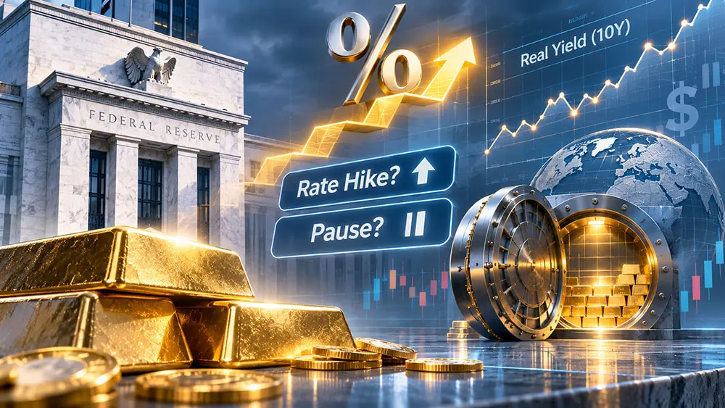
Gold Under A Hiking Fed: Central-Bank Demand Versus Real Rates
(Kitco Commentary) - Real rates are pricing gold by the minute while central banks buy by the quarter, and the next three weeks of data will show which clock is in charge.
The Federal Reserve published the minutes of its October meeting at 2 p.m. Eastern on November 18. Almost all officials thought more rate hikes would likely be appropriate, and a couple said a hike bigger than a quarter point could deserve a look in December if inflation data disappoint. By late afternoon gold was down 3.2% at $3,724 an ounce, its lowest since September 2025.
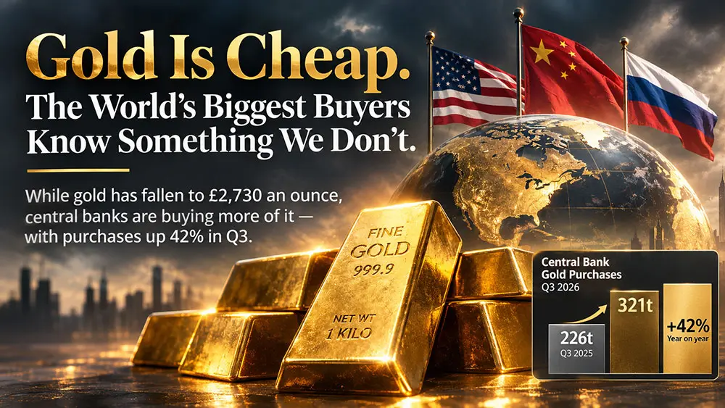
Gold Is Cheap. The World's Biggest Buyers Know Something We Don't
Matthew Jones (Kitco Commentary) - Gold has fallen again.
As I write, the price has slipped to approximately £2,730 per ounce, leaving investors wondering quite what it will take to reverse its recent decline.
War, geopolitical instability, unprecedented sovereign debt, currency debasement, cyber threats and growing concerns about the resilience of the global financial system.
One might reasonably ask what more gold needs.
Gold & Silver Crash! Temporary Dip Before the Dollar's Final Collapse | Phil Low
Liberty and Finance: 11-21-2026
Phil Low of The Bitter Draught joins Elijah K. Johnson to explain why he remains confident in gold and silver despite the recent market crash.
He argues that the global scramble for dollars is driving precious metals lower temporarily, but believes massive money printing will eventually send them sharply higher.
How Much Gold Should You Have In Your Portfolio? Experts Weigh In
Faith Wakefield, USA TODAY Sun, November 15, 2026
Gold is often viewed as a store of value and can help stabilize portfolios during times of inflation or market volatility. But how much gold should you have in your portfolio? And is it even necessary at all?
Experts tend to recommend investors hold between 0% and 15% of their portfolio in precious metals, with gold typically making up the largest share. A common starting point for moderate buyers is 5%.
Bix Weir - The Golden Age Was Planned A Long Time Ago, Hidden Gold Will Be Used For The New System
X22 Spotlight Report: 11-13-2026
The economic transition unfolding globally is depicted as a battle between the failing old guard of central banks and a rising new system championed by figures like Trump, who is implementing tariffs, exposing fraud, and targeting the Federal Reserve for dismantlement.
The exposure and collapse of the Great Reset agenda—characterized by scams like the green new deal that have devastated economies such as Germany's with soaring energy costs and remote control over infrastructure—contrasted with the Great Awakening, where unity, accountability, and reversals like domestic oil discoveries and deportation policies lower costs and reclaim national sovereignty.
Why Gold Is Falling While Central Banks Keep Buying | World Gold Council’s Joe Cavatoni
Kitco News: 11-13-2026
Gold fell as much as $135 an ounce on Nov. 12 to a new low for the year, even as central banks keep buying.
The World Gold Council estimates central banks bought 321 tons last quarter, but only 120 tons was reported, leaving 63% undisclosed.
Joe Cavatoni, the council's senior market strategist for the Americas, said the most active buyers "are either not reporting or reporting late," and that central banks tend to step in when prices dip. He said gold "overshot" in January and that the pullback is closer to what the council expected.
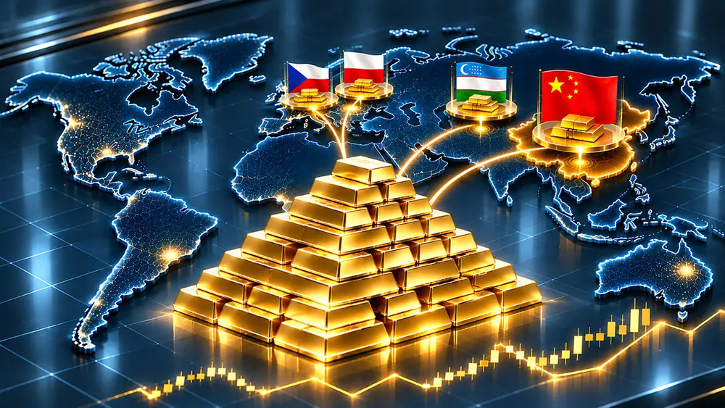
China Buys Gold For Two Straight Years As Central Bank Demand Remains A Key Pillar Of Support
Kitco News) - After a busy third quarter, central banks continue to take advantage of lower gold prices to increase their official reserves. China continues to play a dominant role in the marketplace, increasing its reserves for two straight years.
In social media posts highlighting October purchases, Krishan Gopaul, Senior Analyst, EMEA, at the World Gold Council, said that China bought 26 tonnes of gold, putting the nation’s official reserves on nearly equal footing with those of other developed nations.
GOLD: The World's Most Trusted Metal — But Why?
If gold is so rare, why can countries buy it by the ton? Who sells it? Why do central banks accumulate it? And is the world really preparing for gold-backed currencies?
For thousands of years, gold has fascinated humanity. Civilizations have fought over it, kings have accumulated it, governments have stored it, and investors have turned to it during times of uncertainty. But beneath gold's reputation as the ultimate symbol of wealth lies a surprisingly simple question:
Gold, Silver Advance As Dollar Weakens, Fed Rate Expectations Face Inflation Test - Kitco PM Report
(Kitco NewsWire) - Spot gold and silver prices were sharply higher in late U.S. trading Monday, supported by a weaker U.S. dollar and a steep decline in crude oil prices as investors responded to renewed hopes for a diplomatic resolution to the U.S.-Iran conflict.
The retreat in energy prices eased some inflation concerns ahead of Tuesday's U.S. consumer price index report, although Friday's stronger-than-expected employment figures continued to support expectations for another Federal Reserve interest rate increase in December.
Note: All intel should be considered as "Rumors" until we receive official announcements ...and “Rates and Dates” could change anytime until we get to the banks/redemption centers.
TIER 4B – ISO 20022: The Final Sequence is Underway
11-24-2026
UPDATE: [PHASE 3 — THE FINAL SEQUENCE]
The final sequence is underway.