What You Need to Know About Inflation
June 21, 2021 MST Category: General Investing
The rate of inflation went up this Spring and that has caused some significant fluctuations in the market as well as a lot of talk about inflation. Given the fact that inflation has been low for so long, novice and young investors may not know a lot about inflation, so today we're going to take an in-depth look at it.
What Is Inflation?
Inflation is a general increase in prices and thus a fall in the purchasing value of money. In essence, your money is worth less than it used to be. It buys a smaller quantity of goods and services.
How to Calculate Inflation
The most common measurement of inflation in the United States is the government's measurement, known as the Consumer Price Index (CPI). There are actually multiple CPIs. The most common is the CPI-U, the consumer price index for all urban consumers. However, there is also a CPI-W, the consumer price index for urban wage earners and clerical workers, and a CPI-E, the consumer price index for the elderly.
You may also hear about “chained CPI” or C-CPI-U. As a general rule, C-CPI-U is lower than CPI-U is lower than CPI-E and CPI-W varies. The government also measures inflation using the Personal Consumption Expenditures Price Index (PCEPI). The Federal Reserve uses this and considers it a bit more accurate than CPI. It generally runs lower than CPI-U by about 0.5% a year over the last 50 or 60 years.
For the most part, when people talk about the rate of inflation they are talking about the CPI-U. However, the inflation measurement used for Social Security inflation adjustments and federal pension inflation adjustments is actually CPI-W. CPI-U is used in many private collective bargaining agreements, however. The price of school lunches is also indexed against CPI-U. CPI-U is the one used to determine the rate paid by TIPS and I Bonds.
Core CPI (officially called “Consumer Price Index for All Urban Consumers: All Items Less Food & Energy”) is used by many economists and thought to be more useful than CPI-U. It is basically CPI minus some relatively volatile items such as food and fuel. It is much less volatile than CPI, although less broad.
“Chained” or “chain-weighted” simply takes into account product substitutions as discussed below.
Criticisms of CPI-U
There are many criticisms of the CPI process. Some are quite valid and reasonable while others are promoted by conspiracy theorists and can be nonsensical. Academics have criticized CPI-U for having an upward bias. Their argument is that CPI overstates inflation because:
It omits consumer substitution
It doesn't account fully for quality change and
It doesn't reflect the addition of new goods.
Consumer substitution is the effect that when the price of one thing goes up, people buy something else. So if the price of beef goes up, people buy less beef and more chicken. Quality change refers to the fact that when you buy a computer or a car these days, it is a far better product than what you could have bought 10 or 20 years ago. Essentially the thought is that it SHOULD cost more because it is better. It's not the same thing.
The same argument might be applied to housing, education, and health care as well. The “addition of new goods” argument is that when a new product or service is introduced to the market, it makes a dollar more valuable, since it can buy more. But that new item isn't in the CPI and so the CPI doesn't affect that additional value.
The financial community, particularly people with inflation-indexed salaries, pensions, or other financial benefits, often criticizes CPI-U for having a downward bias. This view is quite prevalent in the general public. There are a number of reasons for this view. Part of it is distrust of the government.
To continue reading, please go to the original article here:
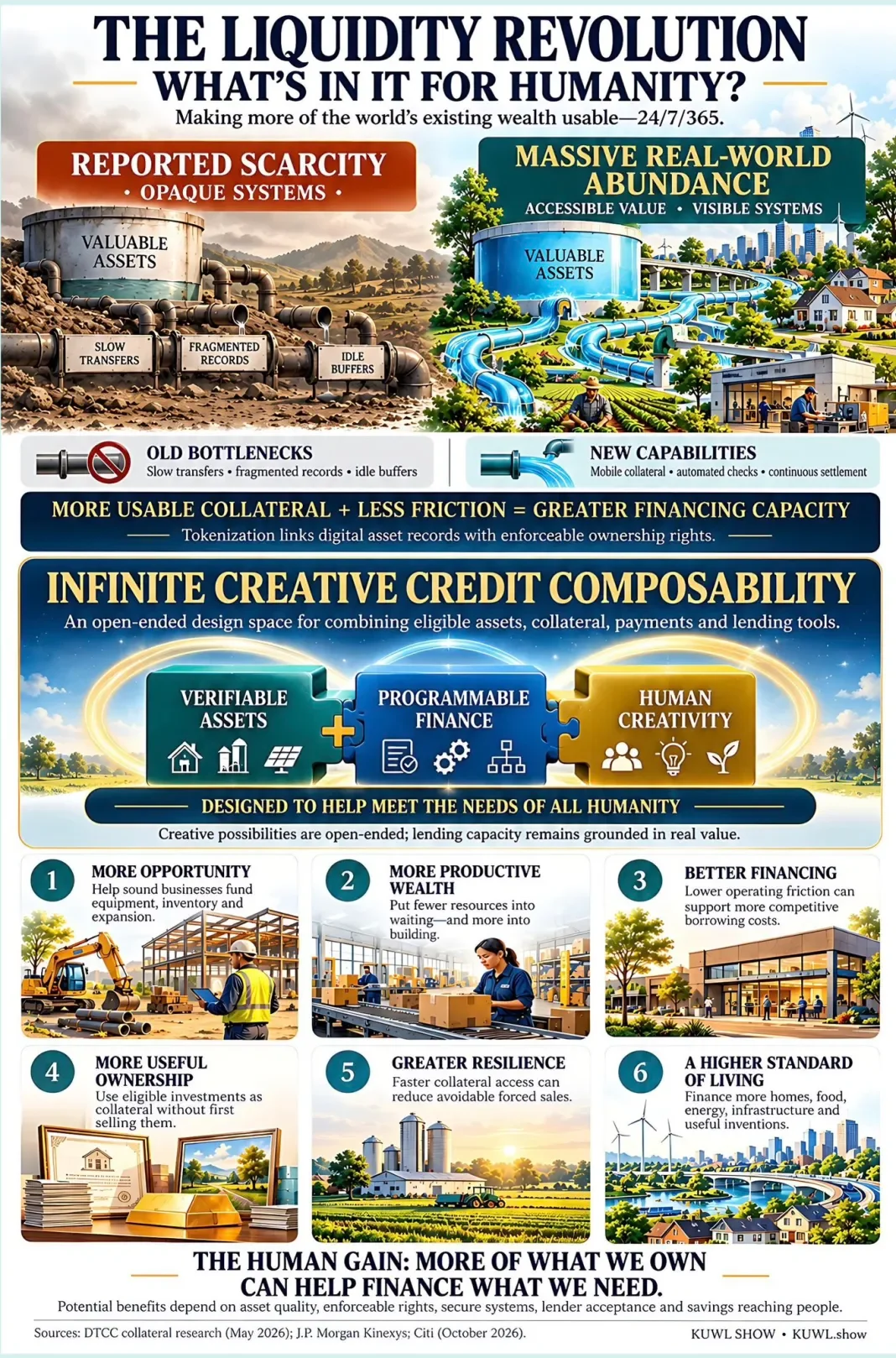
Rob Cunningham: The Liquidity Revolution
10-30-2026
THE LIQUIDITY REVOLUTION: WHAT’S IN IT FOR HUMANITY?
A world rich in assets should ask a profound question:
WHY IS FINANCING PRODUCTIVE WORK SO DIFFICULT?
A farmer owns land – but needs equipment.
A manufacturer owns assets – but needs working capital.
A community has builders, materials and willing workers – but needs financing.

Stern Drew: Russia Showcases New Payment Infrastructure using Blockchain
10-30-2026
Russia Has Officially Showcased A New Payment Infrastructure Using Blockchain To Ditch The Dollar
At the International Economic Forum, Putin had also dropped this absolute BOMBSHELL:
“Any country can at any moment be deprived of access to its legitimate assets, which are placed in dollars or euros, as well as to Western financial payment infrastructure.
Bruce’s Big Call Dinar Intel Thursday Night 10-29-26
Transcribed By WiserNow Emailed To Recaps (INTEL ONLY)
Welcome, everybody, to the Big Call tonight. It's Thursday, october 29, and you're listening to the Big Call. Thanks, everybody, for tuning in again. We're on our regular Tuesday, Thursday, Tuesday, Thursday night pattern, which is good. We're still we're back, and we look forward to putting out a nice call tonight for everybody.
The US Changed the Dollar Before. Why Wasn’t it political Suicide?
Lynette Zang: 10-28-2026
Could the U.S. reset the dollar overnight without political consequences?
Lynette Zang examines how the government changed the rules governing the dollar in 1933 and 1971, why Nixon won reelection after closing the gold window, and how these monetary shifts continue to impact your purchasing power.
Discover why understanding monetary history, inflation, and direct ownership of physical gold and silver matters when protecting your wealth and financial sovereignty.
Ariel: IQD Holders will want to Read this
10-29-2026
You Want To Read This IQD Holders:
RLUSD on Coinbase means Ripple’s stablecoin is now on the largest US crypto exchange. That expands access for retail and institutional players. RLUSD runs on the XRP Ledger (XRPL). The XRPL is an ISO-20022-compliant blockchain. The GENIUS Act framework governs stablecoins in the US. RLUSD has OCC approval for its national trust bank charter.
Why does this matter for IQD specifically?
Reset Intelligence: Iraq's Central Bank Denies Printing New Notes.
By Reset Intelligence | @EXIT_FIAT
On Thursday the governor of Iraq's Central Bank, Nizar Nasser Hussein, told parliament's Investment and Development Committee that talk of new banknotes being printed is inaccurate. There is no printing, he said, and the gap between the bank's dollar price and the street's is down from 24% to 9%.
In August, lawmakers who sat with the bank described the new series as designed and ordered. Days later the bank denied it.
IMF Prepares New Lending Program For Iraq
2026-10-29 Shafaq News- Washington/ Baghdad The International Monetary Fund (IMF) is preparing a new lending program for Iraq, whose economy has been severely affected by the fallout from the war on Iran, after beginning talks with authorities in Baghdad, IMF spokesperson Julie Kozack said on Thursday.
Good Morning Dinar Recaps,
GLOBAL ENERGY RESET WATCH: U.S.–IRAN DIPLOMACY PUTS OIL MARKETS AT A CROSSROADS
Oil prices eased as renewed diplomatic efforts raised hopes of progress between Washington and Tehran, but continuing military threats and risks to vital energy routes leave global markets on edge.
Dinar Update: CBI Makes Major Currency Announcement !
The Dinar Den: 10-29-2026
For anyone following the world of foreign currency investment, staying informed requires a steady nerve and a willingness to sift through conflicting reports.
Recently, Stephen, the experienced host of The Dinar Den, returned from a brief hiatus prompted by family illness and travel to share his latest thoughts with the investing community. Having been involved with the Iraqi dinar since 2011,
KTFA
Thursday Night Video
FRANK26…10-29-26….THE 15th/15%
This video is in Frank’s and his team’s opinion only
Frank’s team is Walkingstick, Eddie and Omar in Iraq and guests
Playback Number: 605-313-5163 PIN: 156996#
Iraq’s Central Bank Says Dollar Gap Narrowed To 9% From 24%
2026-10-29 | 17:34 BAGHDAD - 964 Media — Central Bank of Iraq Governor Nizar Nasser Hussein said Thursday that the gap between the official and parallel dollar rates had narrowed to 9% from 24%, and denied the bank was printing new currency.
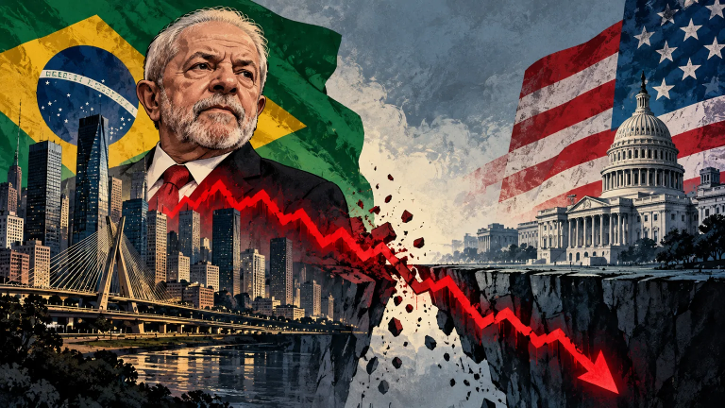
Brazil’s Massive Crash Is A Sign Of Things To Come In The West
Notes From the Field By James Hickman (Simon Black / Sovereign Man) October 29, 2026
On Sunday night, Brazil re-elected its left-wing president, Lula da Silva. On Monday morning the São Paulo stock market fell so hard at the open that the exchange halted trading for the first time since the pandemic. When trading resumed, Brazil’s stock market kept falling.

Rob Cunningham: XRP, the National and Global Opportunity
10-29-2026
XRP – THE NATIONAL AND GLOBAL OPPORTUNITY
An open-source XRP Ledger can serve a profoundly positive purpose: helping people and businesses move value with less delay, less friction, and greater choice.
The emerging connections are substantial.

Stern Drew: Trump himself Confessed about Upgrading the Financial System
10-29-2026
Donald Trump Himself Confessed About Upgrading the Financial System
This is not a conspiracy theory anymore!!
He said, “Many Americans are unaware that the current banking system is out of date. Payments are broken. The Crypto Bill will ensure a 21st century upgrade to our banking and financial system using the state of the art blockchain technology.”
Central Bank: Talk Of Printing New Currency Is Inaccurate, And The Gap With The Parallel Market Has Decreased To 9%
Baghdad/Iraq Observer The Governor of the Central Bank of Iraq, Nizar Nasser Hussein, confirmed on Thursday that there is no intention to print new currency, describing the news circulating in this regard as inaccurate. He also pointed out that the difference between the official exchange rate and the parallel market rate has decreased to 9%, after it had reached 24%.
Good Afternoon Dinar Recaps,
GLOBAL FINANCIAL RESET WATCH: BANK OF ENGLAND OPENS DOOR TO TOKENIZED COLLATERAL
The Bank of England has launched a consultation that could help financial institutions use tokenized assets more efficiently, marking another step toward modernizing traditional financial markets.
Coffee with MarkZ, joined by Dr. Scott Young. 10/29/2026
MarkZ Disclaimer: Please consider everything on this call as my opinion. Be sure to consult a professional for any financial decisions
MZ: Militias and fake dinars dominate the chat in Iraq, affordability, Iran and more before Dr. Scott takes your questions.
THE CONTENT IN THIS PODCAST IS FOR GENERAL & EDUCATIONAL PURPOSES ONLY&NOT INTENDED TO PROVIDE ANY PROFESSIONAL, FINANCIAL OR LEGAL ADVICE. PLEASE CONSIDER EVERYTHING DISCUSSED IN MARKZ’S OPINION ONLY
TNT:
Tishwash: The 2027 budget is nearing Parliament... This is its expected arrival date
Member of Parliament Rabie al-Moussawi revealed on Thursday the expected date for submitting the draft federal budget law for 2027 to Parliament, predicting its arrival by the middle of next month to begin discussions.
Al-Moussawi stated, in a statement reported by the Video News Agency, that the government is finalizing the draft budget in preparation for its official submission to Parliament. He noted that the Finance Committee and parliamentary blocs are awaiting its arrival to study its details and financial provisions.
Ariel: XRP and IQD, the Crossborder that Connects
10-29-2026
XRP & IQD: The Crossboarder That Connects (Integration To Acceleration)
Here’s what actually happened today and why it matters more than the noise.
Ripple’s stablecoin went live on the largest US crypto exchange. Retail access. Institutional access. Full XRP ledger support baked in.
TNT:
Tishwash: Al-Fariji: The revenue generated from the change in the exchange rate does not represent a profit.
Crisis expert Ali Al-Fariji confirmed that the revenue generated from the increase in the dollar exchange rate against the dinar does not represent a net gain added to the state treasury.
Al-Fariji told Al-Maalouma that "raising the exchange rate of the dollar against the Iraqi dinar in the local markets may provide quick liquidity, but it does not represent a financial reform in itself."
He added that "real reform lies in building a multi-source revenue system, recovering funds and assets, reducing waste, and transforming the economy from dependence on oil and dollar pricing to financial management that measures results and creates real and sustainable revenues for the state."