.The Price Of Gold Just Hit A Record High
Notes From The Field By Simon Black
September 12, 2019 San Juan, Puerto Rico
The Price Of Gold Just Hit A Record High
A few hours ago, the European Central Bank announced a bonanza stimulus package: interest rate cuts, money printing, quantitative easing, the whole nine yards.
Europe’s economic growth has ground to a halt. The German economy actually shrank last quarter, according to official statistics.
So the European Central Bank is throwing everything including the kitchen sink at this problem. Their stimulus package is like a monetary defibrillator trying to shock Europe’s economies back to growth.
It’s pretty amazing when you think about it: interest rates in Europe are already NEGATIVE. They’ve been cutting rates for years, and it hasn’t worked.
Back in July 2008, the European Central Bank’s main interest rate was 3.25%.
By the end of 2008, it was clear the global economy was slowing down, and the central bank had slashed interest rates to just 1%.
But they kept going.
By 2013, the ECB had reduced its primary interest rate all the way to zero.
And in 2014, they took the unprecedented step of cutting rates even further-- to NEGATIVE 0.10%.
European rates have been negative now for FIVE YEARS. Yet Europe’s economies are still in the dog house.
These results completely defy prevailing economic wisdom.
According to the ridiculous playbook that nearly all central bankers use, cutting interest rates is supposed to stimulate economic growth.
If interest rates are lower, it makes it easier and cheaper for people to borrow money. If it’s cheaper to borrow money, people buy more stuff… which creates more economic growth.
But that’s not happening.
They’ve been cutting rates, even below zero, to the point that you can actually get PAID to BORROW money in Europe. Yet those economies are still stagnating.
To continue reading, please go to the original article at
https://www.sovereignman.com/trends/the-price-of-gold-just-hit-a-record-high-25562/
To your freedom & prosperity, Simon Black Founder, SovereignMan.com
A Former Fed Official Finally Tells The Truth About Inflation…
Notes From The Field By James Hickman / Simon Black 7-29-24
My sister used to be a reporter for Fox News based in south Florida and would regularly be assigned to cover NASA press conferences.
And she’s often told me about how reporters were terrified to ask any real questions. They’re not astrophysicists and don’t understand the first thing about rocket propulsion, and most of the journalists never bothered to learn even the basics of the topic.
So, the majority of the questions were very superficial; quite simply the reporters didn’t want to embarrass themselves.
This is how the media covers the Federal Reserve. Most reporters don’t have a clue about central banking, so, not wanting to look stupid, they just sit quietly and give the Fed a pass. There’s no real scrutiny.
Some Thoughts On America For Her 248th Birthday
Notes From The Field by James Hickman (Simon Black Sovereign Man) July 3, 2024
When the 56 delegates to the Second Continental Congress ratified the Declaration of Independence 248 years ago tomorrow, they were creating much more than a nation. They were giving birth to an idea.
America, at its core, is an idea. And it’s one that ranks as one of the greatest innovations in the history of human civilization, right up there with the wheel, the steam engine, the printing press, and the Internet.
The idea of America wasn’t born in 1776, however. By then it had already evolved over thousands of years.
Five Predictions For The Coming Decade Of Decline
Notes From the Field By James Hickman (Simon Black) June 11, 2024
There is a well-known modern proverb (often attributed to the novelist G. Michael Hopf) that goes, "Weak men create hard times, hard times create strong men, strong men create good times, good times create weak men."
The saying sums up the cyclical nature of the rise and fall of societies– and it’s a topic in which I have tremendous personal interest.
Having recently reached middle age, I can comfortably say with the benefit of hindsight that I was born and grew up during the American prime time– the time at which the wealthiest and most powerful country in the history of the world was at its peak.
Gold Will Soon Displace The US Dollar, And Americans Are Missing Out
Notes From the Field By James Hickman (Simon Black) June 3 2024
Next month will mark 80 years since the US dollar was formally anointed as the world’s reserve currency.
It was July 1944. And with the war in Europe near its denouement, governments were already trying to plan what the postwar world would look like. Most urgently, they needed to figure out how to rebuild their devastated economies.
Just think about the mess they were in: nearly every industrialized country in Europe had been destroyed by war. Manufacturing and farming were both in the dumps, and they had very little savings to invest in economic revival.
They also had a gigantic mess when it came to international trade. Dozens of countries each had their own currencies, so commercial trade meant each government keeping 20-30 currencies in reserve.
France, for example, would have to hold Austrian schillings, British pounds, Spanish pesetas, Italian lira, Dutch guilders, Soviet rubles, etc. in reserve, just to be able to trade.
Would You Pay €1 For This House?
Notes From the Field by James Hickman (Simon Black) May 29, 2024
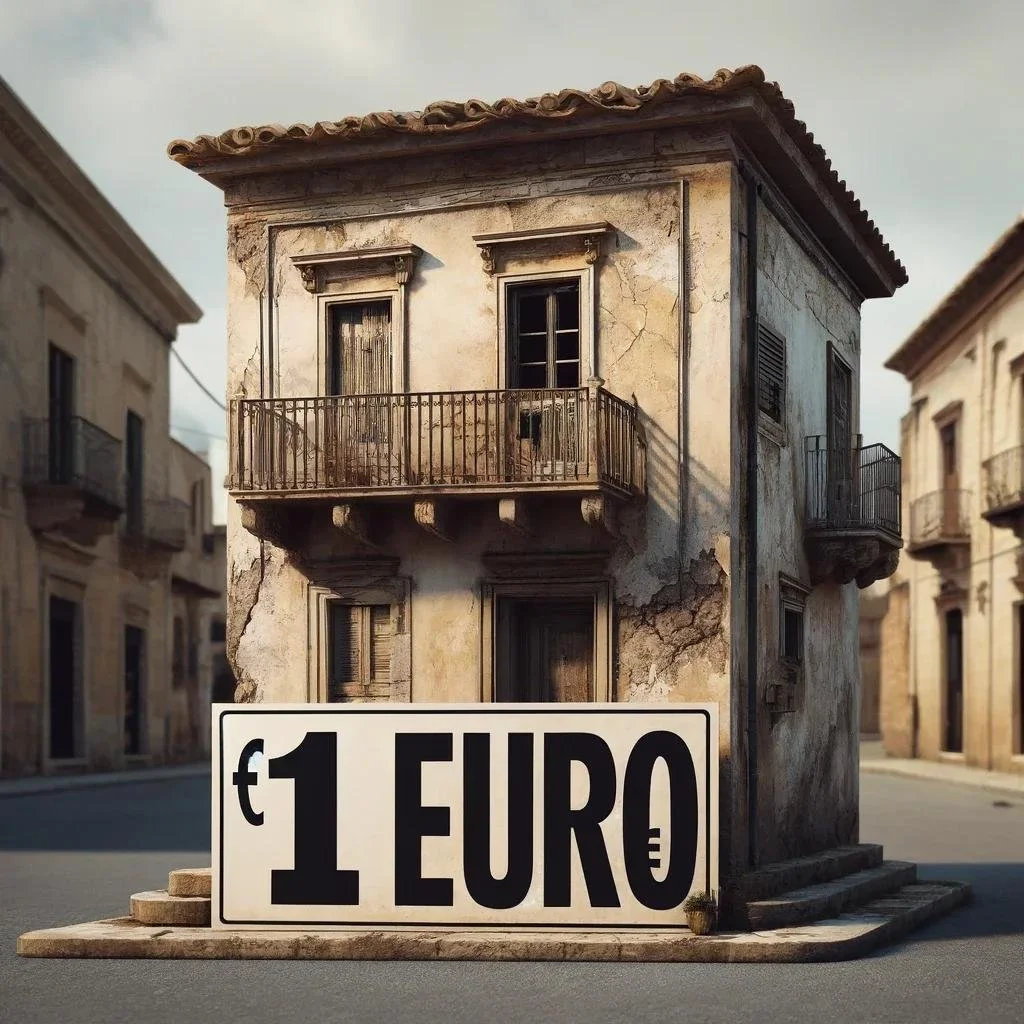
In 2007, Giuseppe Ferrarello found himself facing a monumental challenge as the newly-elected mayor of Gangi, Italy — an incredibly picturesque yet dwindling town nestled in the mountains of Sicily.
Like many rural communities across Italy and beyond, the village of Gangi was grappling with depopulation and economic decline. Once home to 15,000 people, its population by 2007 stood at just 7,000. Young people in particular were leaving to seek job opportunities in northern Italy and elsewhere in Europe, leaving behind aging parents and empty houses.
At first glance, the situation seemed hopeless. Gangi’s inland location far from the coast rendered it unattractive to tourists.
Where The Price Of Oil Is Just $15/Barrel
Notes From the Field By James Hickman (Simon Black) Tues May 28 2024
In the year 1712, an English ironworker and part-time Baptist preacher named Thomas Newcomen finally put the finishing touches on a new invention that had been more than a century in the making.
Newcomen called it the ‘atmospheric engine’, and it was essentially a very crude, rudimentary steam engine that he used to pump water.
The idea had existed since the early 1600s, and a number of inventors had attempted to create something similar. But Newcomen was the first to develop a functioning engine, and his key breakthrough was including a fuel source (wood) to heat up water and create steam.
It’s remarkable that, even to this day, most automobile engines, generators, and electrical power plants still rely on Newcomen’s basic concept: burn a fuel to create heat, then harness that heat energy to generate motion and mechanical work.
Civil War… Really?
Notes From the Field By James Hickman (Simon Black) May 20, 2024
On July 12, 1648, dozens of angry French politicians gathered at the hallowed Palais de Justice in Paris to draft the final ultimatum that would be sent to their nine-year-old king, Louis XIV.
The politicians were all members of France’s national parliament, and, like most modern politicians, they were almost all lawyers who lived extremely privileged lives at the expense of French taxpayers.
In France, most aristocrats historically came from a group known as the noblesse d'épée, essentially Knights of the Sword. They were warriors who had fought valiantly and had won their power for their dedicated service to France.
This new class of politicians, however, came from a different group known as the noblesse de robe. They had never fought or bled for France, and rather had spent their lives in academia and law school without any understanding of the real world.
Why The Dollar Will Lose Its Status As The Global Reserve Currency
Notes From the Field By James Hickman (Simon Black) May 13, 2024
By the early 400s, the Roman Empire was coming apart at the seams and in desperate need of strong, competent leadership. In theory, Honorius should have been the right man for the job.
Born into the royal household in Constantinople, Honorius had been groomed to rule, practically since birth, by the finest experts in the realm. So even as a young man, Honorius had already accumulated decades of experience.
Yet Rome’s foreign adversaries rightfully believed Honorius to be weak, out of touch, divisive, and completely inept.
He had entered into bonehead peace treaties that strengthened Rome’s enemies. He paid vast sums of money to some of their most powerful rivals and received practically nothing in return. He made virtually no attempt to secure Roman borders, leaving the empire open to be ravaged by barbarians.
Settling the Gold Versus Crypto Debate
Notes From The Field by James Hickman April 24, 2024
In 1972, while excavating to build a factory on the Black Sea coast of Bulgaria, a backhoe operator noticed gold objects glimmering in the bucket of his machine.
The construction worker had accidentally discovered the Varna Necropolis.
Dating back to around 4500 BC, the jewelry found in this ancient burial site is the earliest evidence of the use of gold by humans, and archeologists believe that they were considered a status symbol in ancient burial rituals.
Thousands of years ago, gold was likely collected from the earth’s surface in the form of nuggets or river dust.
It wasn’t until about 3500 BC, on a hilltop located in the modern-day country of Georgia, that a group of people from the prehistoric Kura-Araxes dug the oldest known gold mine.
Known as Sakdrisi-Kachagiani, the gold mine predates Ancient Egypt and even Mesopotamia.
This Is What You Call A Win/Win Deal. US Steel Wins. Nippon Steel Wins. America Wins. Japan Wins
Notes From the Field By James Hickman / Simon Black January 7, 2025
The year was 1901, and it was pretty much a who’s who of American business and finance at the time. Andrew Carnegie. JP Morgan. Charles M. Schwab. Elbert Gary (namesake of the city Gary, Indiana).
It would be as if Elon Musk, Billy Gates, and Carl Icahn all got together on a new venture. It would be pretty much guaranteed to be a big deal. Those early 20th century titans formed what would become the world’s largest and most important company in that era— US Steel.