Blain: "A Global Reset Is Coming"
By Tyler Durden Thu, 03/19/2020
Authored by Bill Blain via MorningPorridge.com,
“My centre is yielding, my right is retreating. Situation Excellent. I am attacking!”
No matter what the doomsters say... the Coronavirus is not the end of the world. But, it might still have trigged the global economic reset we’ve long feared...
Let’s talk about the virus first:
That the virus will abate is a simple matter of fact. Just as suddenly and quickly as it struck, it will feel like it fizzles out much faster than we expect. Its simple maths.
The modelers I’m working with show the Virus will peak in around 6-8 weeks, and then infections will start to fall. There will be future successive waves – which will be damaging and trigger market reactions before immunity is gradually built up. The virus will have a volatility all of its own. Understanding that will be key to understanding economic and market consequences.

Other models show similar results. Watching the various scenarios play out on cluster charts on the Laptop yesterday was fascinating – rings of infection creating walls of immunity, while the virus seems to sleep before exploding elsewhere. Understanding how the successive waves of the virus will trigger new clusters, how it hides, and especially how it will impact the economy is going to be ... educational.
Its complex math – but makes sense. Earlier this week, Rob Hillman, the quant behind the model I’m working with, confidently predicted UK schools would close. It happened. Next up is the rumoured London lockdown – and I hear 40 tube stations are closing this morning. Its not the end of the World – but it feels like it and its unprecedented.
Everything we do to reduce infection rates – social distancing, working from home, self-isolation, and not socialising widely slows the transmission rate – so the overall infection rate goes down. There is a great article on Calcalist which describes similar modelling: Corona is Slowing Down, Humanity will Survive, Says Biophysicist Michael Levitt.
Unfortunately….
While the Virus may quickly abate, the damage done to global markets and the world economy will not be cured as fast. Despite the UK, USA, and last night, the ECB tweeting its Euro 750 bln PEPPS bond buying bonanza – it feels we’re now heading into the abyss.
Today we are blaming it on a global dollar shortage, but the real issue is the damage to sentiment, expectations and the burnt-finger syndrome. We’re hearing lots of funds have been caught wrong, thumped, crippled and are struggling – lesson learnt till next time.
We can all understand why equities are tumbling on the recessionary, depressionary, and demand side shock. I get that safe assets like Gold and Government bonds like Treasuries and Gilts are under selling pressure – because nothing else is liquid and they are the only assets likely to attract a bid.
Everyone wants dollars – all around the globe forget anything else.. Gimme dollars! As a result, US banks with access to the Fed are at a competitive advantage. I guess access to global dollars will be the next issue to be addressed?
The dollar shortage partly explains the tumble in Sterling, but I struggle to understand why Sterling has taken such a spanking against the Euro?
To continue reading, please go to the original article here:
https://www.zerohedge.com/markets/blain-global-reset-coming
From Windfall to Financial Foundation
Marguerite C. Weese Chief Wealth Strategist
Practical first steps for turning unexpected money into greater security and long-term opportunity
Key Takeaways
Pause before making major decisions by keeping the money secure, gathering information, and avoiding pressure to spend, invest, or give before you have a plan
Match the money to your goals by separating short-term needs from long-term priorities so you know what should stay accessible and what may be invested for future growth
Get guidance before complexity creates mistakes, especially when taxes, inherited assets, debt, family requests, or investment choices may affect your next steps
5 Questions To Ask An Advisor About A Financial Windfall
Get help turning sudden wealth into a sustainable plan.
Fidelity Wealth Management
Key takeaways
A windfall can create new opportunities, but it can also bring emotional and financial complexity. Taking time to understand your new financial picture can help you avoid costly mistakes.
Significant increases in net worth may require updates to your portfolio, insurance coverage, estate plan, and approach to family and charitable giving.
Building the right team of financial, tax, legal, and insurance professionals can help you navigate new opportunities and challenges with confidence.
Did You Get Rich Quick? These 4 Steps Can Help You Stay That Way
By Jeremy DiTullio, CFP®, AWMA®, CRPC® Reviewed by Lisa Hitt
Published August 29, 2026 In Features
Sudden wealth is less about the money and more about the discipline required to manage it, so it's critical to pause and plan before making any major financial moves
Sudden wealth doesn't change who you are. It does reveal how prepared you are.
I recently read a news story in which a lottery winner who received a jackpot worth more than $167 million had reportedly been arrested four times within 14 months of receiving the money.
Rethinking the Inheritance Timeline
November 13, 2026 Wendy Farrissey
As lifespans increase, affluent investors may want to consider accelerating inheritances to help heirs at critical junctures in their lives.
For years, wealth advisors have been discussing the implications of the Great Wealth Transfer—the expected shift of some $124 trillion from older to younger generations over the next two decades.1
How Much Gold Should You Have In Your Portfolio? Experts Weigh In
Faith Wakefield, USA TODAY Sun, November 15, 2026
Gold is often viewed as a store of value and can help stabilize portfolios during times of inflation or market volatility. But how much gold should you have in your portfolio? And is it even necessary at all?
Experts tend to recommend investors hold between 0% and 15% of their portfolio in precious metals, with gold typically making up the largest share. A common starting point for moderate buyers is 5%.

There’s a Different Way
Notes From the Field By James Hickman (Simon Black / Sovereign Man) November 6, 2026
A friend of mine got legal residency in New Zealand a couple of years ago as global tensions rose around wars in Ukraine and the Middle East. He was only half joking about why. His reasoning is that if WW3 breaks out and the nukes start flying, he would want to be in New Zealand.
But he’s not picking up his life, abandoning all caution, and permanently moving to a new country. He just has a plan, and the basics in place.
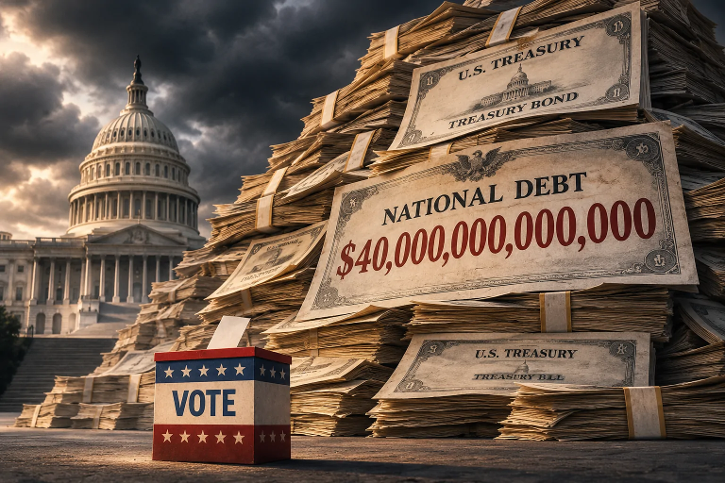
Tomorrow’s Election Changes Nothing About The National Debt
Notes From the Field By james Hickman (Simon Black/Sovereign Man) November 2, 2026
Johnny Moon was homeless and unemployed in the early 2000s. A high school dropout with a bad drug habit, Moon was hardly someone that banks would consider creditworthy.
And yet, over the course of a single year, he was able to borrow more than $600,000 to buy five different investment properties.
7 Surprising Benefits of Failure
By Kentin Waits WISEBREAD
Everyone loves a success story, and the world is filled with them. But what about stories of failure? Can't they be as just as educational? Just as inspirational? Equally insightful?
After all, a single big win is often built on several losses. It's a truth perfectly captured in the words of Japanese industrialist and automaker, Soichiro Honda, "Success is 99% failure."

Brazil’s Massive Crash Is A Sign Of Things To Come In The West
Notes From the Field By James Hickman (Simon Black / Sovereign Man) October 29, 2026
On Sunday night, Brazil re-elected its left-wing president, Lula da Silva. On Monday morning the São Paulo stock market fell so hard at the open that the exchange halted trading for the first time since the pandemic. When trading resumed, Brazil’s stock market kept falling.
6 Attitudes That Breed Financial Failure
By Kentin Waits WiseBread
Financial success or failure is often the result of attitudes — both conscious and unconscious — that affect our behavior. No amount of budgeting and self-control can help us when we’re up against ingrained ideas about money management, spending, and debt. If you’re having a tough time shifting your financial behavior, maybe it’s time to change your mind about money. Here are six common attitudes that work against us financially.

Plan B Options for folks on Social Security
Notes From the Field By James Hickman (Simon Black / Sovereign Man) October 27, 2026
In the early morning hours of February 7, 1937, a young American named Stirling Dickinson got off a train in central Mexico and rode into San Miguel de Allende on a mule-drawn cart.
He and a Princeton classmate were months into a trip around Mexico looking for a quiet place to write, and a Mexican opera singer had told them to try San Miguel.

A Condo in this Ghost City Gets You Ten Years Residency
Notes From the Field By James Hickman (Simon Black / Sovereign Man) October 22, 2026
On March 6, 2016, Malaysia’s prime minister, Najib Razak, turned up for the grand opening of a city that did not exist yet, two kilometers off the coast from Singapore.
It was called Forest City, and the plan was enormous. One of the largest property developers in the world came in to build four artificial islands in the strait and put a “smart, green” city of 700,000 people on them, at a cost of roughly $100 billion.
Avoid These 4 Common Mistakes When You Get Rich Overnight
September 4, 2025 by Laura Bogart GoBankingRates
You’re about to score a financial touchdown. Maybe you’ve crushed it at work and landed a sweet promotion. Perhaps you’ve won a lottery or stumbled into a side hustle that suddenly pays off. As you near the end zone, heart pounding, head full of dreams, you can’t afford (literally) to fumble. Whether you’re blindsided by unexpected taxes or tripped up by bad financial advice, you have a lot to lose if you drop the ball.
6 Common Excuses for Not Saving Money By Tara Struyk
Have you ever settled on a new exercise program, only to get a bad cold a few days in and happily throw yourself on the couch, relieved to have a handy excuse? Excuses must be human nature; I know I usually make them when I'm facing something that’s new, that's hard, or that I just don’t enjoy. And I’ve certainly made excuses when it comes to money.
In the years that I’ve been writing about personal finance and investing, I’ve also heard my fair share of excuses, mostly from readers who don’t agree with my advice. The problem is, unlike good financial habits, excuses are easy to come by, even though most of them just don’t stand up to reason. Check out some of the ones I’ve heard most frequently so far.
How To Make Strategic Cash Bucketing Work For You
Last Edited Sep 16, 2026| Angelena Mascilli
Cash bucketing – or categorizing your funds based on specific expenses or goals – can help you organize your financial life.
Cash and other liquid assets may be the ideal place for buckets of money that you may need to access soon to cover expenses or capitalize on new investment opportunities.
3 Savings Moves To Make Post-Fed Rate Hike
By Matt Richardson September 17, 2026 CBS News MoneyWatch: Managing Your Money
With interest rates rising again, savers will want to take certain steps now to take advantage.
Savers on Thursday woke up to a new financial climate marked by the first interest rate hike from the Federal Reserve in more than three years. Now at a range between 3.75% and 4.00%, a new, higher federal funds rate is expected to lead to even higher rates for savers than they've already been accustomed to in recent years. And while that change will look different based on the account type and the bank in question, savers are undoubtedly now entering a more profitable period, especially if the Fed proceeds with another interest rate hike when it meets again in October.
5 Steps To Master Your Money
Simple strategies to help fund your future.
Fidelity Viewpoints
Key takeaways
Define clear goals and make a plan to help guide your financial decisions.
Set up automatic transfers to help boost your savings and keep you on track.
Build up your emergency savings to cover unexpected essential expenses
Debt management: How To Avoid Common, But Costly, Money Mistakes
May 27, 2026 Malena de la Fuente and Aaron Goodman
Americans are carrying more debt than ever before. Total household balances now approach $19 trillion, reflecting a steady increase over the past decade.1 In 2025, millennials in their mid-30s held roughly twice as much nonhousing debt—including student loans, auto loans, and credit card debt—as baby boomers did at a similar age.2
9 Ways Retirement Will Be Different in 2026
By Cameron Huddleston and Deirdre Shesgreen, AARP
How changes to Social Security, Medicare, 401(k) contributions and more will affect your finances
Retirement may seem like the most stable period of your life, with no work demands, no kids to cart around and lots of free time. But this dynamic new chapter comes with its own twists and turns. Your lifestyle, expectations and finances continue to change. And in 2026, big shifts are coming — from Social Security payments and Medicare expenses to how you save and spend.
12 Key Habits for Achieving Financial Freedom
Set yourself on the path to saving with these habits
By Matt Danielsson Updated March 06, 2026
Key Takeaways
Set financial goals and create a plan to achieve them.
Make and stick to a budget covering all financial needs.
Pay off credit cards monthly and minimize debt.
Automate savings with an emergency fund and retirement contributions.
U.S. consumers can request a free annual credit report from major agencies.
The Seven Deadly Sins Of Personal Finance
By J.D. Roth —03 June 2019
I've been reading and writing about personal finance for more than thirteen years. In that time, I've consumed a lot of books about money. Lately, I've found that it's fun to revisit old favorites.
Recently, for instance, I've been re-reading Brett Wilder's The Quiet Millionaire [my review]. It's different than most personal finance books. It's targeted at those who are farther along their financial journeys rather than at those just starting out. Still, there are bits and pieces in The Quiet Millionaire that are applicable to everyone.
What To Do With A Windfall
Considerations to help you make the most of your good fortune.
Fidelity Wealth Management
Key takeaways
Even though it may be tempting to treat yourself right away, it's important to step back and thoughtfully assess your full financial picture.
Taxes and other costs may impact the net value of your windfall.
Consider how you may want to change your asset allocation, giving strategy, and estate plan.