FRANK26….5-17-26….ILLEGAL TO BORROW and Bank Story
KTFA
Sunday Night Video
FRANK26….5-17-26….ILLEGAL TO BORROW
This video is in Frank’s and his team’s opinion only
Frank’s team is Walkingstick, Eddie and Omar in Iraq and guests
Playback Number: 605-313-5163 PIN: 156996#
KTFA
Sunday Night Video
FRANK26….5-17-26….ILLEGAL TO BORROW
This video is in Frank’s and his team’s opinion only
Frank’s team is Walkingstick, Eddie and Omar in Iraq and guests
Playback Number: 605-313-5163 PIN: 156996#
KTFA
Sunday Night Video
FRANK26…5-17-26….BANK STORY
This video is in Frank’s and his team’s opinion only
Frank’s team is Walkingstick, Eddie and Omar in Iraq and guests
Playback Number: 605-313-5163 PIN: 156996#
Seeds of Wisdom RV and Economics Updates Monday Morning 5-18-26
Good Morning Dinar Recaps,
G7 Faces Financial Fragmentation as Bond Turmoil and Syria’s Reentry Signal a Changing Global Order
Rising debt pressures, geopolitical instability, and post-conflict economic reintegration are reshaping the structure of global finance
The G7’s latest financial meetings in Paris revealed growing concern over bond market instability, inflation risks, and the increasing overlap between geopolitics and economic governance.
Good Morning Dinar Recaps,
G7 Faces Financial Fragmentation as Bond Turmoil and Syria’s Reentry Signal a Changing Global Order
Rising debt pressures, geopolitical instability, and post-conflict economic reintegration are reshaping the structure of global finance
The G7’s latest financial meetings in Paris revealed growing concern over bond market instability, inflation risks, and the increasing overlap between geopolitics and economic governance.
OVERVIEW (KEY POINTS)
Finance ministers and central bank officials from the G7 gathered in Paris amid mounting concerns over global bond market volatility, inflation pressure, and widening structural economic imbalances.
At the same time, Syria’s participation in closed-door financial discussions marked a significant geopolitical development, signaling a potential shift toward economic reintegration and reconstruction diplomacy after years of isolation.
The meetings highlighted how global finance is becoming increasingly influenced by geopolitical tensions, energy security concerns, and supply chain competition rather than traditional market fundamentals alone.
Together, these developments point toward a broader transition into a more fragmented and politically managed global financial system — a major theme within the evolving global reset landscape.
KEY DEVELOPMENTS
1. G7 Finance Chiefs Address Bond Market Instability
Global sovereign debt markets remain under pressure.
Bond yields surged across major economies including the U.S., Europe, and Japan
Investors fear higher energy prices could keep interest rates elevated longer
Officials expressed concern about fiscal sustainability and debt sensitivity
2. Inflation Risks Linked to Energy Disruptions
Geopolitical instability is feeding market anxiety.
Ongoing Iran-related tensions continue pressuring global energy markets
Rising oil and shipping costs threaten to prolong inflation globally
Central banks may face difficulty easing monetary policy under current conditions
3. Syria Quietly Reenters Global Financial Discussions
A major geopolitical signal emerged in Paris.
Syria joined a closed-door session with G7 finance officials
Discussions focused on economic reconstruction and financial reintegration
The move suggests growing international interest in regional stabilization efforts
4. Critical Minerals and Supply Chains Become Strategic Priorities
Economic security is increasingly tied to industrial policy.
G7 nations discussed reducing dependence on dominant suppliers like China
Coordinated investment and procurement strategies are under consideration
Rare earths and energy-transition minerals are now viewed as strategic financial assets
5. Structural Imbalances Continue to Threaten Stability
Officials warned that deeper economic distortions are growing.
Consumption and investment patterns remain uneven globally
Trade and capital flow imbalances continue widening
Policymakers fear future market corrections if coordination fails
WHY IT MATTERS
The Paris meetings revealed that financial instability is no longer viewed as purely economic — it is increasingly tied to geopolitics, energy security, and strategic competition.
Rising bond yields, inflation fears, and debt pressures are exposing vulnerabilities within highly leveraged economies, particularly as governments continue managing elevated spending levels.
At the same time, Syria’s participation demonstrates how reconstruction and financial reintegration are becoming tools of geopolitical strategy, where access to banking systems and investment flows can shape regional power dynamics.
This reflects a broader transformation in global governance, where economic coordination is increasingly driven by security concerns and supply chain resilience rather than traditional globalization models.
WHY IT MATTERS TO FOREIGN CURRENCY HOLDERS
Bond market instability could increase global currency volatility
Persistent inflation may weaken purchasing power across major economies
Commodity-producing nations could gain strategic leverage
Reserve diversification into gold and alternative assets may continue accelerating
IMPLICATIONS FOR THE GLOBAL RESET
Pillar 1: Financial Governance Becomes More Geopolitical
Economic policy is increasingly tied to security strategy, energy access, and geopolitical alignment rather than free-market coordination alone.
Pillar 2: Reconstruction and Resource Control Reshape Global Influence
Post-conflict recovery, critical minerals, and supply chain control are becoming central pillars in the next phase of global economic competition.
CONCLUSION
The G7 meetings in Paris underscored how rapidly the financial landscape is changing.
Bond market stress, inflation risks, energy disruptions, and geopolitical realignment are converging into a more fragmented and strategically managed global system.
Meanwhile, Syria’s gradual return to international financial discussions signals that reconstruction and economic normalization are now part of broader geopolitical negotiations among major powers.
The global economy is no longer moving toward deeper integration alone — it is increasingly being reorganized around resilience, strategic influence, and controlled economic blocs.
What emerges next may not resemble the old globalized system, but a new financial order shaped by security, supply chains, and geopolitical leverage.
Seeds of Wisdom Team
Newshounds News™ Exclusive
Sources
~~~~~~~~~~
🌱A Message to Our Currency Holders🌱
If you’ve been holding foreign currency for many years, you were not foolish.
You were not wrong to believe the global financial system would change.
What failed was not your patience — it was the information you were given.
For years, dates, rumors, and personalities replaced facts, structure, and proof. “This week” predictions created cycles of hope and disappointment that were never based on how currencies actually change.
That is not your failure.
Our mission here is different: • No dates • No rates • No hype • No gurus
Instead, we focus on:
• Verifiable developments • Institutional evidence
• Global financial structure • Where countries actually sit in the process
Currency value changes only come after sovereignty, trade, banking, settlement systems, and fiscal coordination are in place. History and institutions confirm this sequence.
You will see silence. You will see denials. That is not delay — that is discipline.
Protect your identity. Organize your documents. Verify everything.
Never hand your discernment to anyone who cannot show proof.
You deserve truth — not timelines.
Seeds of Wisdom Team
Newshounds News™
~~~~~~~~~~
Seeds of Wisdom Team RV Currency Facts Youtube and Rumble
Newshound's News Telegram Room Link
RV Facts with Proof Links Link
RV Updates Proof links - Facts Link
Follow the Gold/Silver Rate COMEX
Follow Fast Facts
Seeds of Wisdom Team™Website
Thank you Dinar Recaps
Iraq Economic News and Points To Ponder Monday Morning 5-18-26
The Government Affirms Its Commitment To Restricting Weapons To The State And Keeping Iraq Out Of Regional Conflicts
latest news Sunday,Baghdad – One News 5/17/2026 The spokesman for the Commander-in-Chief of the Armed Forces, Sabah al-Nu’man, confirmed that the first strategic pillar in the ministerial program is the strengthening of national security, through a firm commitment to restricting weapons to the state and enforcing the rule of law.
The Government Affirms Its Commitment To Restricting Weapons To The State And Keeping Iraq Out Of Regional Conflicts
latest news Sunday, Baghdad – One News 5/17/2026 The spokesman for the Commander-in-Chief of the Armed Forces, Sabah al-Nu’man, confirmed that the first strategic pillar in the ministerial program is the strengthening of national security, through a firm commitment to restricting weapons to the state and enforcing the rule of law.
Al-Nu’man told the Iraqi News Agency that this approach represents a fundamental step towards ending armed manifestations outside the legal framework and securing the internal stability necessary to protect the sovereignty of the state and ensure its security.
He added that the ministerial program approved a strict regulatory procedure to address the dispersal of resources and prevent overlapping powers, by unifying the security decision and linking all resources and capabilities to the official state system, in order to ensure that all armed formations are subject to the authority of the General Command and the unified security decision.
Al-Nu’man pointed out that the curriculum adopts a modern vision to enhance operational security, through the development of border monitoring systems according to modern technologies, and linking them to an intelligence effort to combat terrorism and organized crime and dry up its sources of funding.
He stressed that the right choice for Iraq is to stay away from the axes of regional and international conflict, and not to allow Iraq to be a passage or launching pad for attacks on other countries, or an arena for interference in its internal affairs, in order to protect internal stability from the repercussions of regional crises. https://1news-iq.net/الحكومة-تؤكد-حصر-السلاح-بيد-الدولة-وإب/
Unannounced Contacts To Integrate Forces That Have Expressed Their Willingness To Lay Down Arms And Engage Politically
latest news Sunday, May 17, 2026 Baghdad – One News The newspaper “Al-Sharq Al-Awsat” indicated that unannounced contacts and talks are currently taking place between political parties close to the government and the American administration, with the aim of reaching understandings that would allow the participation of some forces that have announced their abandonment of their armed wings, while maintaining their presence within the formations of the “Popular Mobilization Forces”.
In the same context, the sources confirmed that the government intends to quickly begin practical steps to restrict weapons to the hands of the state, including the factions that still declare positions rejecting the American presence, most notably the Kataib Hezbollah and Harakat al-Nujaba, which had previously announced their refusal to disarm according to the government program proposed by al-Zaidi. https://1news-iq.net/الشرق-الأوسط-اتصالات-غير-معلنة-لدمج-قو/
Iraq Requests Financial Support From The International Monetary Fund
Alsumaria NewsAn economist revealed a source close to the International Monetary Fund Iraqi officials contacted the fund for financial assistance in the aftermath of the ongoing war in the Middle East.
And it was reported Asharq Al-Awsat newspaper The source said that "initial talks took place last month during the spring meetings of the IMF and the World Bank in Washington He noted that "discussions are ongoing regarding the amount of funding he wants."Iraq and how to structure any loan"According to Reuters
The war that erupted on February 28th sent shock waves throughout the Middle East, causing widespread damage to infrastructure and economies.
Iraq was particularly hard hit, as the majority of its oil exports, which accounted for almost all of the government's revenue, were halted due to the blockade. Strait of Hormuz Previously, about 20 percent of the world's crude oil supply passed through it. https://www.alsumaria.tv/news/economy/564072/العراق-يطلب-دعماً-مالياً-من-صندوق-النقد-الدولي
The International Monetary Fund Comments On Reports That Iraq Has Requested Financial Assistance.
Money and Business Economy News — Baghdad The International Monetary Fund said it continues to discuss the possibility of providing financial support to countries affected by rising energy and commodity prices due to the war in the Middle East, without confirming reports that Iraq had requested financial assistance.
Reuters quoted the IMF spokeswoman, Julie Kozak, as saying during a press conference that the Fund continues to discuss potential financial assistance for member countries suffering from high energy and commodity costs, but she did not provide details on specific countries, and declined to comment on a report that Iraq had requested financial support.
Kozak added that a number of countries are asking the Fund for support in the area of economic policies and advice on how to respond to economic shocks according to the circumstances of each country.
Media reports had indicated that Iraq had requested financial assistance from the Fund as a result of the repercussions of the war in the Middle East and rising energy prices, at a time when the Fund’s Managing Director, Kristalina Georgieva, had previously indicated that about 12 countries might need financial support ranging between $20 billion and $50 billion.
https://www.economy-news.net/content.php?id=69157
Iraq Is Expected To Achieve A Trade Surplus Of $24 Billion In 2025.
Money and Business Economy News – Baghdad Data released by the Central Bank of Iraq on Monday showed that Iraq achieved a trade surplus of approximately $24.686 billion during 2025, driven by a higher value of exports compared to imports.
According to foreign trade data calculated on an FOB basis, total Iraqi exports during the year amounted to approximately $90.427.7 billion, compared to imports of $65.741.7 billion.
She added that exports were distributed as follows: $24.112.3 billion in the first quarter, $23.285.6 billion in the second quarter, $21.414.3 billion in the third quarter, before rising slightly to $21.615.5 billion in the fourth quarter.
In contrast, imports totaled $18.158.6 billion in the first quarter, $15.993.1 billion in the second quarter, and $16.102.0 billion in the third quarter, before declining to $15.488.0 billion in the fourth quarter, according to the data.
The data indicated that Iraqi exports exceeded imports in all quarters of the year, which reinforced the continued recording of a trade surplus.
The data was based on Free On Board, a system that calculates the value of goods when loaded onto the means of transport in the exporting country, without including shipping and insurance costs. https://www.economy-news.net/content.php?id=69218
Gold Prices Remain Stable In Baghdad Markets
Money and Business Economy News – Baghdad On Monday, the prices of Iraqi and foreign gold remained stable in the local markets of Baghdad at less than one million dinars per mithqal.
The selling price of one mithqal of 21-karat gold from the Gulf, Turkey, and Europe reached 982,000 dinars in the wholesale markets on Al-Nahr Street in Baghdad, while the buying price reached 978,000 dinars, which are the same prices that were recorded yesterday, Sunday.
One mithqal of 21-karat Iraqi gold was recorded at 952,000 dinars, while the purchase price reached 948,000 dinars.
In goldsmith shops, the selling price of a mithqal of 21-karat Gulf gold ranged between 985,000 dinars and 995,000 dinars, while the selling price of a mithqal of Iraqi gold ranged between 955,000 dinars and 965,000 dinars.
https://www.economy-news.net/content.php?id=69214
Fars News Agency: Tehran has the right to declare its sovereignty over the internet cables in the Strait.
Arabic and international Economy News - Follow-up The Iranian news agency Fars reported, in a report titled "A $10 Trillion Treasure at the Bottom of the Strait of Hormuz," that all fiber optic cables at the bottom of the strait will be under absolute Iranian sovereignty.
The report stated that after Iran regained full control of the Strait of Hormuz in execution of its sovereign rights in its territorial waters, a new legal and technical question arises: the extent to which Iran has the legitimacy to impose its sovereignty over the fiber optic cables that pass through the bottom and under the surface of this vital passage.
According to Fars News Agency, the 1982 United Nations Convention on the Law of the Sea grants Iran full sovereignty over the seabed and subsoil within 12 nautical miles of its coast. Given that the Strait of Hormuz is only 21 nautical miles wide, its entire waters, seabed, and airspace fall within the territorial waters of Iran and Oman.
There is not a single centimeter of free water or exclusive economic zone within the Strait of Hormuz. Therefore, Iran's legal team argues that the fixed cables running along the seabed of the Strait of Hormuz do not fall under the concept of "transit passage" for ships and aircraft, but rather constitute permanent use of the seabed subject to Iranian permits and oversight.
According to this interpretation, every kilometer of international internet cables (Google, Microsoft, Amazon, Meta, and others) laid on the seabed of the Strait of Hormuz would require Iranian authorization, becoming subject to technical and security oversight and the payment of sovereign fees, similar to how other countries handle technology infrastructure crossing their territories.
Furthermore, Iranian legal approaches encourage consideration of additional fees for services such as navigational safety, marine environmental protection, and linking foreign maintenance companies with local workers under Iranian sovereignty.
In practical terms, the analysis published by the Fars News Agency in its report entitled: “A $10 Trillion Treasureat the Bottom of the Strait of Hormuz” indicates that Iran, as the coastal state that manages the Strait of Hormuz, can treat the submarine cables as it treats any property that touches its sovereignty, and turn this digital infrastructure into a strategic tool for economic and international negotiation, while emphasizing that any continuation of the operation of these cables requires the approval of the Iranian government and the signing of cooperation and maintenance agreements within the rules of its regulation.
MilitiaMan and Crew: IRAQ DINAR UPDATE-A Powerful Window we can see Through! Last 72 hours? Amazing-Convergence!
MilitiaMan and Crew: IRAQ DINAR UPDATE-A Powerful Window we can see Through! Last 72 hours? Amazing-Convergence!
5-17-2026
The Crew: Samson, PompeyPeter, Petra, Daytrader, Sunkissed, GIGI and Militia Man
No drama. No intrigue. No songs and dances. Just straight, factual news that I read and interpret to the best of my ability after being an avid Dinar investor and insanely obsessed Dinarian for over 15 years.
Follow MM on X == https://x.com/Slashn
MilitiaMan and Crew: IRAQ DINAR UPDATE-A Powerful Window we can see Through! Last 72 hours? Amazing-Convergence!
5-17-2026
The Crew: Samson, PompeyPeter, Petra, Daytrader, Sunkissed, GIGI and Militia Man
No drama. No intrigue. No songs and dances. Just straight, factual news that I read and interpret to the best of my ability after being an avid Dinar investor and insanely obsessed Dinarian for over 15 years.
Follow MM on X == https://x.com/Slashn
Be sure to listen to full video for all the news……..
Rob Cunningham: Our World will Soon See Changes
Rob Cunningham: Our World will Soon See Changes
5-17-2026
Central Bank Death 101
Our world soon changes like this:
Taxation stops feeding debt machinery.
Labor, gains, and productive energy no longer get harvested primarily to service interest on money created by middlemen.
Rob Cunningham: Our World will Soon See Changes
5-17-2026
Central Bank Death 101
Our world soon changes like this:
Taxation stops feeding debt machinery.
Labor, gains, and productive energy no longer get harvested primarily to service interest on money created by middlemen.
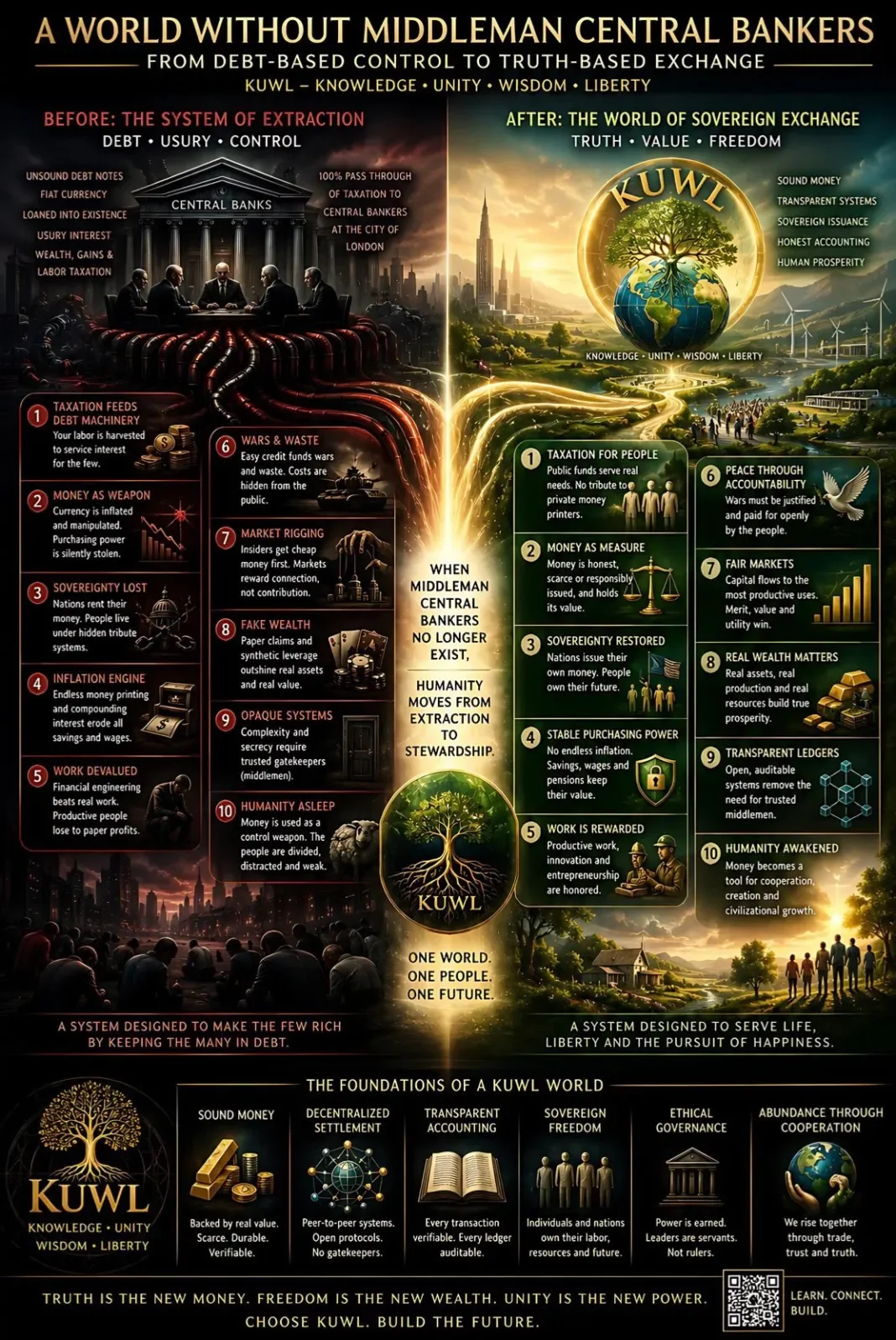
Money becomes measurement again.
Currency shifts from manipulated debt instruments toward honest weights and measures: scarce, auditable, rules-based, redeemable, or transparently issued.
Sovereignty returns to nations and people.
Governments no longer rent their monetary authority from private banking structures. Citizens no longer live under hidden tribute systems disguised as public finance.
Inflation loses its primary engine.
If money is no longer endlessly loaned into existence with compounding interest, purchasing power stops being quietly siphoned through currency debasement.
Productive work is rewarded more honestly.
Labor, savings, entrepreneurship, farming, building, invention, and risk-taking gain value relative to financial engineering.
Wars become harder to finance.
Without debt-note expansion and central-bank credit creation, governments must directly justify spending to the people instead of hiding costs through inflation and borrowing.
Markets become less rigged.
Capital allocation shifts away from privileged insiders closest to the money spigot and toward real utility, real collateral, real productivity, and real demand.
Real assets regain moral gravity.
Gold, land, energy, food, infrastructure, productive companies, and verifiable digital settlement networks become more important than paper claims and synthetic leverage.
Public ledgers matter more.
Transparent settlement systems, atomic exchange, cryptographic proof, and neutral interoperability become civilization-grade tools because they reduce the need for trusted middlemen.
Humanity exits monetary adolescence.
The spell breaks: people recognize that money is not supposed to be a control weapon. It is supposed to be a truthful coordination tool.
Bottom line:
When middleman central bankers no longer sit between human labor and human value, the world moves from debt-based control toward truth-based exchange.
From extraction to stewardship.
From hidden tribute to visible accounting.
From artificial scarcity to lawful abundance.
From financial priesthoods to sovereign participation.
Source(s):
• https://x.com/KuwlShow/status/2055824914200867161
https://dinarchronicles.com/2026/05/16/rob-cunningham-our-world-will-soon-see-changes/
Gold Telegraph: The Golden Tides are Turning
Gold Telegraph: The Golden Tides are Turning
5-17-2026
BREAKING NEWS: THE RESERVE BANK OF INDIA HAS REPATRIATED NEARLY 77% OF ITS GOLD RESERVES BY THE END OF MARCH 2026
Gold continues to head home.
“The central bank has already repatriated a large portion of its gold. This action follows global events that raised concerns about storing sovereign assets abroad…”
Gold Telegraph: The Golden Tides are Turning
5-17-2026
BREAKING NEWS: THE RESERVE BANK OF INDIA HAS REPATRIATED NEARLY 77% OF ITS GOLD RESERVES BY THE END OF MARCH 2026
Gold continues to head home.
“The central bank has already repatriated a large portion of its gold. This action follows global events that raised concerns about storing sovereign assets abroad…”
Turkish central bank increased its gold reserves by 36.4 tonnes in two weeks. Rebuilding…
The legendary Jeffrey Gundlach is repositioning some of his funds in anticipation of the possibility that the US government could restructure its debt. Some big signals are playing out right now. This debt spiral is a massive problem.
Global debt hits record… $353 trillion. Congratulations.
BREAKING NEWS: HONG KONG IS MOVING TO REVIVE GOLD FUTURES TRADING AS CHINA’S HUNGER FOR PHYSICAL GOLD CONTINUES TO GROW.
Things continue to evolve…
“City aims to broaden gold offerings and expand clearing and storage facilities to seize opportunities in the surging market…”
China’s central bank has now purchased gold for 18 consecutive months. They continue to add. The foundation of the global economy is still being built.
BREAKING NEWS: THE PRESIDENT OF THE UNITED STATES SAYS HE STILL WANTED TO EXAMINE THE U.S. GOLD RESERVES AT FORT KNOX
Here we go…
Gold Telegraph: The last time gold reserves in the United States were meaningfully audited? 1953. Judy Shelton says an audit today would be: “Both symbolic… and necessary.” Why? Because trust is breaking. • Americans questioning if the gold is even there • No clarity on whether it’s been encumbered • Zero transparency in a system built on confidence She fully supports @elonmusk
proposed live video walk-through of Fort Knox. @judyshel
Watch on X:: https://twitter.com/i/status/2048038828049412580
You can watch the full film, here: https://youtube.com/watch?v=USGjSU
“He again speculated about the condition of the United States bullion depository…”
And suddenly, the world is pay attention to Fort Knox again. End scene.
1971 was not just the end of a monetary system. It was the beginning of a global experiment built entirely on trust. And slowly, nation by nation, the world is searching again for a form of value that exists beyond politics and beyond promises. Why? Look at the world around you.
The dollar once made up more than 72% of global foreign exchange reserves. Now it sits near lows not seen since the 1990s. People act shocked by so-called “unfathomable” ideas being floated, but this is what is needed in historic moments. Change happens.
For the life of me, I will never understand why main stream media refuses to read the Clarity Act. It literally names gold as the commodity backing stablecoins. Something @judyshel and I discussed at length in the recent film. Things are in plain sight; you just have to look.
Here you go: https://congress.gov/bill/119th-congress/house-bill/3633/text
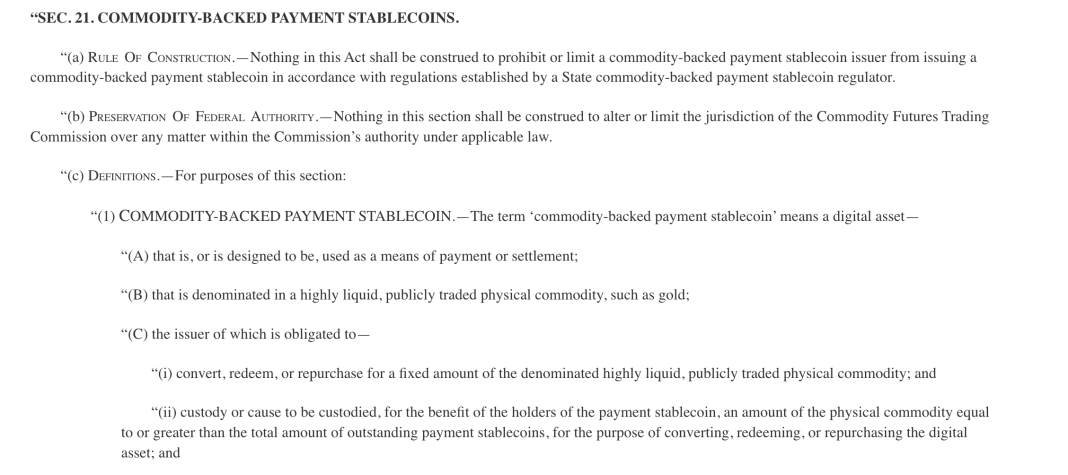
The United States Senate committee has advanced the Clarity Act.
Japan’s government bond yields are at RECORD highs. Just wild. This is quite the movie playing out…
Copper is now nearing its highest level in history. The glue that keeps the world together and moving forward… Everyone on this planet interacts with copper, regardless of whether you know it or not. Big moment.
Source(s):
• https://x.com/GoldTelegraph_/status/2050028685525455230
https://dinarchronicles.com/2026/05/16/gold-telegraph-the-golden-tides-are-turning/
Seeds of Wisdom RV and Economics Updates Sunday Afternoon 5-17-26
Good Afternoon Dinar Recaps,
Post-Iran War Middle East: Regional Power Shifts Accelerate the Push Toward a New Global Order
The aftermath of the Iran war is reshaping energy markets, security alliances, nuclear policy, and financial influence across the Middle East and beyond
The 2026 Iran war may prove to be one of the most consequential geopolitical turning points in decades, with effects extending far beyond the battlefield into global finance, trade, and monetary stability.
Good Afternoon Dinar Recaps,
Post-Iran War Middle East: Regional Power Shifts Accelerate the Push Toward a New Global Order
The aftermath of the Iran war is reshaping energy markets, security alliances, nuclear policy, and financial influence across the Middle East and beyond
The 2026 Iran war may prove to be one of the most consequential geopolitical turning points in decades, with effects extending far beyond the battlefield into global finance, trade, and monetary stability.
OVERVIEW (KEY POINTS)
The Middle East is entering a new phase of uncertainty following the Iran war, with governments, investors, and global powers reassessing long-standing assumptions about security, energy flows, and regional stability.
What began as a military confrontation has evolved into a broader strategic realignment involving the United States, China, Israel, Iran, Gulf states, and emerging multipolar blocs.
One of the clearest outcomes is that the traditional regional order has been weakened, particularly regarding confidence in U.S. security guarantees and the stability of Gulf energy infrastructure.
The broader implication for the global financial system is substantial: energy security, reserve diversification, and geopolitical fragmentation are now accelerating simultaneously, increasing pressure on the existing international order.
KEY DEVELOPMENTS
1. Gulf Stability Narrative Has Been Severely Damaged
The war exposed vulnerabilities once considered manageable.
Gulf energy infrastructure faced repeated strikes and disruptions
Shipping, food imports, and industrial supply chains were impacted
Investor confidence in long-term regional stability has weakened
2. China Emerged as a Critical Diplomatic Power
Beijing expanded its influence without direct military involvement.
China played a growing role in diplomatic coordination with Iran
Beijing strengthened its position as a key energy and mediation partner
The conflict reinforced China’s influence in the emerging multipolar system
3. Nuclear Deterrence Calculations Are Changing
The conflict altered strategic thinking across multiple nations.
Iran’s experience during negotiations may reshape future nuclear policy
Saudi Arabia and other regional powers may reconsider deterrence strategies
Global nonproliferation frameworks face increasing strain
4. Energy Markets Face Long-Term Structural Risk
The war highlighted the fragility of critical energy routes.
Strait of Hormuz disruptions affected global oil and LNG flows
Gulf states are reconsidering security and export strategies
Energy markets remain highly vulnerable to future geopolitical escalation
5. U.S.-Middle East Relationships Are Entering a New Phase
Regional alliances are becoming more complex.
Gulf states increasingly seek diversified strategic partnerships
Questions are growing around long-term U.S. regional influence
The Abraham Accords normalization momentum has slowed significantly
WHY IT MATTERS
This matters because the Middle East remains central to the global energy and financial system.
Any long-term instability involving Gulf infrastructure, shipping lanes, or regional alliances directly affects oil prices, inflation, trade flows, and central bank policy worldwide.
The conflict also accelerated broader geopolitical trends already underway, including de-dollarization efforts, reserve diversification, and the rise of competing power centers outside the traditional Western framework.
Markets are increasingly reacting not only to economic data but also to geopolitical fragmentation and strategic competition.
WHY IT MATTERS TO FOREIGN CURRENCY HOLDERS
Energy disruptions can rapidly weaken importing nations’ currencies
Gold and commodity-linked reserves may gain greater importance
Currency volatility could rise during periods of geopolitical stress
Nations may continue diversifying away from concentrated dollar exposure
IMPLICATIONS FOR THE GLOBAL RESET
Pillar 1: Multipolar Power Structures Accelerate
The war reinforced the emergence of multiple competing centers of influence, particularly involving China, BRICS nations, and regional energy blocs.
Pillar 2: Energy Security and Financial Systems Converge
Control over energy routes, LNG infrastructure, and strategic commodities is becoming increasingly tied to reserve strategy, trade settlement, and global monetary influence.
CONCLUSION
The Iran war did not simply reshape regional politics — it exposed deeper structural weaknesses in the global system itself.
Energy security, alliance stability, reserve management, and geopolitical trust are now more interconnected than at any point in recent decades.
While the ceasefire may pause military escalation, the larger transformation is already underway, with nations recalculating how they secure trade, protect reserves, and position themselves in a rapidly changing world order.
The post-Iran war era may ultimately be remembered less for the battles that were fought and more for the global system changes that followed them.
Seeds of Wisdom Team
Newshounds News™ Exclusive
Sources
Modern Diplomacy — "After the Iran War: Seven Dynamics That Will Define the New Middle East"
Reuters — "Global Markets Monitor Ongoing Gulf Energy and Security Risks"
~~~~~~~~~~
Seeds of Wisdom Team RV Currency Facts Youtube and Rumble
Newshound's News Telegram Room Link
RV Facts with Proof Links Link
RV Updates Proof links - Facts Link
Follow the Gold/Silver Rate COMEX
Follow Fast Facts
Seeds of Wisdom Team™Website
Thank you Dinar Recaps
Bessent Sees Substantial Disinflation, Federal Victory Note, Gold-backed Currency?
Bessent Sees Substantial Disinflation, Federal Victory Note, Gold-backed Currency?
And We Know Official: 5-17-2026
The global economic landscape is currently undergoing a period of significant transformation, leaving many investors searching for clarity amidst shifting policies and market volatility.
In a recent, in-depth discussion featuring Dr. Kirk Elliott, the conversation dives deep into the complexities of the current U.S. economic climate, exploring the intersection of monetary policy, inflation, and the evolving role of physical assets in a modern portfolio.
Bessent Sees Substantial Disinflation, Federal Victory Note, Gold-backed Currency?
And We Know Official: 5-17-2026
The global economic landscape is currently undergoing a period of significant transformation, leaving many investors searching for clarity amidst shifting policies and market volatility.
In a recent, in-depth discussion featuring Dr. Kirk Elliott, the conversation dives deep into the complexities of the current U.S. economic climate, exploring the intersection of monetary policy, inflation, and the evolving role of physical assets in a modern portfolio.
A central point of the discussion is the critical examination of mainstream economic narratives versus the realities of current inflationary pressure. Dr. Elliott sheds light on the Federal Reserve’s strategies and the long-term impacts of increased money supply on the purchasing power of the dollar.
The dialogue highlights how historical norms—such as the dollar strengthening during geopolitical conflicts—are being challenged by unconventional monetary shifts, including the intricacies surrounding the Japanese yen carry trade and the ongoing efforts of global financial institutions to manage liquidity.
Perhaps most intriguing is the conversation surrounding a potential shift in how currency is structured.
The video introduces the concept of a new gold-backed $100 bill, signaling a move toward tangible asset-backed money as a potential remedy for the devaluation often associated with fiat currency.
Coupled with the rise of stablecoins, these innovations point toward a future where the demand for the U.S. dollar is managed through new mechanisms designed to curb the necessity for constant currency printing, potentially offering a path toward greater economic stabilization.
Beyond the immediate financial metrics, the discussion expands into broader societal concerns. Dr. Elliott and the host explore the implications of centralized oversight, particularly regarding the role of artificial intelligence and global governance models.
These segments serve as a cautionary note on the importance of maintaining individual agency and economic autonomy in an era where power is increasingly consolidated. By looking at these systemic risks, the speakers encourage viewers to consider the importance of protecting their financial well-being through diversification.
For those looking to navigate these uncertain times, the conversation offers a pragmatic perspective on the role of precious metals. With silver showing noteworthy performance and gold continuing to serve as a traditional store of value, the discussion frames these assets as essential tools for those seeking to hedge against institutional instability.
By grounding one’s strategy in tangible resources, investors may find a measure of security against the ebb and flow of global market dynamics.
Iraq Economic News and Points To Ponder Sunday Afternoon 5-17-26
The Leader Of The Shiite National Movement, Al-Sadr, Calls For Preserving The Country's Resources And Ensuring A Decent Life For The People By Meeting Their Needs
latest news Sunday, May 17, 2026 Baghdad – One News The leader of the Shia National Movement, Muqtada al-Sadr, made a phone call to Prime Minister Ali al-Zaidi, congratulating him on the formation of the government and urging him to preserve the country's sovereignty and improve public services.
The Leader Of The Shiite National Movement, Al-Sadr, Calls For Preserving The Country's Resources And Ensuring A Decent Life For The People By Meeting Their Needs
latest news Sunday, May 17, 2026 Baghdad – One News The leader of the Shia National Movement, Muqtada al-Sadr, made a phone call to Prime Minister Ali al-Zaidi, congratulating him on the formation of the government and urging him to preserve the country's sovereignty and improve public services.
Al-Sadr's media office stated that he urged al-Zaidi to stand firmly against corruption, protect the country's resources, and ensure a decent life for the Iraqi people by providing services, meeting their needs, and safeguarding their rights.
https://1news-iq.net/زعيم-التيار-الوطني-الشيعي-يدعو-إلى-الح/
Al-Mada: Al-Sudani is working with his allies to form a second bloc within the framework supporting the government with approximately 170 seats
latest news Sunday, May 17, 2026 Baghdad – One News It appears that al-Sudani is trying to establish himself as the new leader within the Shiite community, following the decline of al-Maliki's influence, according to those close to him.
Sources quoted by Al-Mada newspaper indicate that Al-Sudani is working with his allies to form a second bloc supporting the government, with about 170 seats, but it appears less cohesive so far, and has not settled on a clear political name.
These developments came after the House of Representatives voted to grant confidence to only 14 ministers out of the 23 portfolios that the government is supposed to be formed from, while the decision on nine ministries was postponed, and the shares of the most prominent wings of the framework were absent from the new government, most notably Asaib Ahl al-Haq, which sources indicate has encountered an American veto, while it is trying to convince Washington to change its position. https://1news-iq.net/المدى-السوداني-يعمل-مع-حلفائه-على-تشكي/
Iraq Cabinet Posts Distributed Unfairly, Al-Sudani’s Bloc Says
2026-05-17 / Shafaq News- Baghdad The Reconstruction and Development parliamentary bloc, led by former Prime Minister Mohammed Shia Al-Sudani, on Sunday said Iraq’s new cabinet was formed through an unfair distribution of ministerial posts, despite the coalition winning the largest share of seats in the November 2025 elections with 46 lawmakers.
According to the bloc, “some factions” –without specifying– received positions exceeding their parliamentary and political weight, while Reconstruction and Development did not secure representation matching its electoral standing. Despite its objections, the coalition did not obstruct the government’s formation out of “national responsibility” and concern for state stability.
Reconstruction and Development Coalition
stpndoSoretf67u78l20h1381hc2a8uc5lmith87lfh7fciu5h10200uml0c ·
In an official statement...
The Reconstruction and Development Bloc congratulates the government on its formation and looks forward to it being an extension of the path of reconstruction, development and political stability.
The bloc affirms its commitment to working within the framework of coordination, adhering to the national path, and working with partners for a stable Iraq in which the aspirations of its people are realized.
Below is the text of the bloc's official statement:
Statement issued by: Parliamentary Reconstruction and Development Bloc
The Reconstruction and Development Parliamentary Bloc congratulates the honorable Iraqi people on the formation of the new government, and looks forward to this government being an extension of the path of reconstruction, development and political stability, and achieving prosperity for our great Iraq.
Since its inception, the bloc has carried a political project based on prioritizing the supreme national interest, and during the government formation negotiations, it stressed the need for ministries to be run by capable and independent professional competencies, far removed from the quota system that burdened previous governments and weakened the performance of state institutions.
However, the outcome of the government formation negotiations revealed a clear imbalance in the distribution of ministerial posts. Some blocs received positions disproportionate to their actual parliamentary and popular weight, while the Reconstruction and Development bloc did not receive representation commensurate with its electoral and political size.
Nevertheless, the bloc did not obstruct the completion of the government formation, driven by its national responsibility and commitment to the stability of the state.
In light of these political factors, the voting session witnessed a clear divergence in the positions of a number of the bloc’s deputies towards some of the government cabinet ministries, a position stemming from respectable political and parliamentary convictions, and reflecting the nature of the responsible assessment of the government scene and its balances.
The bloc also affirms that its respected partners in the National Pact obtained their parliamentary representation in the Ministry of Agriculture, based on their political size of 11 parliamentary seats, in accordance with their political and constitutional convictions.
At the same time, the Reconstruction and Development bloc was keen to preserve the presence and entitlement of its respected partners in the Sumerians Movement, which has 5 parliamentary seats, within the parliamentary and political weight of the Reconstruction and Development bloc.
We express our full respect and appreciation to our aforementioned partners, and we value their great efforts during and after the election phase, and we wish them every success in any decision they make, and in any course of action they see as serving the national interest.
The Reconstruction and Development Bloc, in its commitment to the forces of the Coordination Framework, affirms its steadfast position of continuing within the project of the state and the nation, working and cooperating with the nation's partners for the sake of Iraq and the Iraqis, and consolidating its principles based on prioritizing supreme national interests, in accordance with its enduring motto:
Iraq first… always and forever.
The bloc will remain supportive of every step that promotes stability, reform and development, in a way that preserves the prestige of the state and protects the aspirations of the Iraqi people.
Parliamentary Reconstruction And Development Bloc
Baghdad — May 2026 The bloc added that it had pushed during coalition negotiations for ministries to be managed by “competent and independent” figures rather than through quota-sharing arrangements that had weakened previous governments and state institutions.
Although the bloc revealed divisions during Thursday’s parliamentary confidence vote, with several lawmakers opposing specific ministries based on “political and parliamentary convictions,” it reaffirmed its commitment to the Shiite Coordination Framework, which holds around 162 seats in Iraq’s 329-member parliament and nominated Ali Al-Zaidi for prime minister.
Earlier, the National Contract bloc led by Popular Mobilization Forces chief Faleh Al-Fayyadh and the Sumariyoun Movement headed by former Labor Minister Ahmed Al-Asadi announced their withdrawal from the Reconstruction and Development coalition, accusing the alliance of marginalization and exclusion.
However, the bloc said the National Contract alliance received representation through the Agriculture Ministry based on its 11 parliamentary seats, while the five-seat Sumariyoun movement remained represented within Reconstruction and Development’s broader parliamentary coalition.
Parliament approved 14 ministers in Al-Zaidi’s cabinet on Thursday, while votes on nine key portfolios were postponed until after the Islamic holiday Eid Al-Adha following political disputes and US warnings against including armed factions in the new government.
Read more: Ali Al-Zaidi sworn in as Iraq's prime minister with a program already failed
https://www.shafaq.com/en/Iraq/Iraq-cabinet-posts-distributed-unfairly-Al-Sudani-s-bloc-says
Former MP Files Conflict-Of-Interest Complaint Against Iraqi PM, Electricity Minister
2026-05-17 Shafaq News- Baghdad Former Iraqi lawmaker Raed al-Maliki on Sunday filed a formal complaint accusing Prime Minister Ali al-Zaidi and Electricity Minister Ali Saadi Wahib of conflicts of interest linked to ongoing business dealings and financial claims involving state institutions.
The complaint was submitted to the Integrity Commission’s (CoI) Department of Prevention and the Public Prosecution Service, with copies sent to parliament’s Integrity and Legal committees, according to a statement by al-Maliki. He called on the relevant authorities to compel both officials to disclose their financial interests and remove the alleged conflicts.
According to al-Maliki, Article 20/Second of Iraq’s CoI and Illicit Gains Law No. 30 of 2011, as amended, requires officials in such cases either to relinquish those interests or leave office within 90 days.
The media offices of the prime minister and the electricity minister offered no official statement regarding the allegations.
On May 5, Iraq's Federal Supreme Court registered the first legal challenge to the constitutional validity of al-Zaidi's designation as prime minister-designate. The case was also filed by al-Maliki, acting in his capacity as a private citizen and independent political figure.
. رائد المالكي / نائب مستقل
Srtoepsndo3gg8li7tag691u8hm7if003594imi6fg4g9u569cfa6tht8728 ·
************************************
Today morning, Sunday 17 / 5 We made an official report to the Integrity Authority / the Department of Defense and the Public Prosecution, and we felt all of:
- Representative Integrity Committee
- The Parliamentary Legal Committee
Regarding the conflict of interests of the Prime Minister (Ali Al-Zaidi) and the Minister of Electricity (Ali Saadi Wahib) for having ongoing contracts with the government and ministries and debts against them, which constitutes a conflict of interests prohibited by law.
We asked for legal action to be taken by the Mouma obligation to disclose the interests they have with the government and eliminate the conflict, in accordance with the Integrity and Illegal Profit Authority Act No. 30 of 2011 the rate (20/second), it must: either waive these interests, or resign the position within 90 days.
The Minister Of Finance Chairs A Meeting Of Directors General And Emphasizes: The Current Phase Requires Exceptional Action.
Baghdad Today - Baghdad:Finance Minister Faleh Sari chaired a meeting of general managers on Sunday (May 17, 2026) and stressed: The current stage requires exceptional work.
The Ministry of Finance stated in a statement received by “Baghdad Today” that “Following the commencement of his duties, the Minister of Finance, Faleh Sari, chaired today an expanded meeting that included the Directors General in the Ministry’s headquarters and its affiliated formations, to discuss the priorities of the next stage and mechanisms to enhance financial and administrative performance.”
The minister stressed, according to the statement, that "the current situation requires exceptional work, highly efficient management, and financial discipline," emphasizing "the importance of unifying efforts and working as a team to confront the current economic and financial challenges."
Sari called for "maximizing public revenues in the ministry's affiliated bodies and departments, in order to contribute to fulfilling the state's financial obligations, in light of the challenges related to energy markets and the decline in the country's oil exports to unprecedented levels."
The minister stressed the need to "adopt clear time limits for completing files," emphasizing that "the current stage requires officials who have the ability to diagnose problems and provide practical solutions, and that the standard for a manager's success or failure will be achievement and taking responsibility." https://baghdadtoday.news/299420-.html
More Iraq News Posted by Tishwash at TNT 5-17-2026
TNT:
Tishwash: The Iraqi dinar is under pressure from the financial crisis and fears of declining monetary cover.
Warnings are increasing about the repercussions of the financial crisis on the stability of the Iraqi dinar, with growing talk about the possibility of using part of the cash reserve to cover government expenses.
Economic expert Dr. Safwan Qusay confirmed the possibility of resorting to the cash reserves of the Central Bank of Iraq, given the existence of an amount exceeding $90 billion, while warning at the same time of the occurrence of inflation within Iraq.
TNT:
Tishwash: The Iraqi dinar is under pressure from the financial crisis and fears of declining monetary cover.
Warnings are increasing about the repercussions of the financial crisis on the stability of the Iraqi dinar, with growing talk about the possibility of using part of the cash reserve to cover government expenses.
Economic expert Dr. Safwan Qusay confirmed the possibility of resorting to the cash reserves of the Central Bank of Iraq, given the existence of an amount exceeding $90 billion, while warning at the same time of the occurrence of inflation within Iraq.
Qusay said that “the Central Bank of Iraq’s reserves amount to $90 billion in addition to 170 tons of gold, and if borrowing from these reserves is relied upon, it is possible to continue with financial flexibility up to $60 billion.”
He added that “the $60 billion represents the value of the issued Iraqi dinar, but the dinar’s value falling below the aforementioned financial cover means allowing inflation to occur domestically.”
He explained that “the possibility of resorting to borrowing from the central bank’s reserves, or the occurrence of the aforementioned inflation, may happen six months after this May, as the government can secure salaries for this period of time.” link
Tishwash: Zaidi formally assumes office, pledges economic reform and fight against corruption
Ali al-Zaidi officially assumed his duties Saturday as Iraq’s prime minister and commander-in-chief of the armed forces during a handover ceremony at the Government Palace in Baghdad attended by former Prime Minister Mohammed Shia al-Sudani.
In his first address to Iraqis after taking office, Zaidi outlined priorities including economic reform, anti-corruption measures and improvements to public services.
“I extend my sincere thanks and appreciation to the Council of Representatives for the national vote of confidence,” he said, also thanking Coordination Framework leaders and political parties involved in forming the government.
Zaidi said his administration would pursue “a comprehensive economic and financial reform program aimed at building a strong, diversified, and sustainable national economy that does not rely on a single resource,” focusing on industry, agriculture, tourism and investment. He pledged to combat corruption, describing it as “an obstacle to development and delays the progress of the state,” and said creating jobs for young people through development projects and private sector support would be among the government’s top priorities.
On services, Zaidi said “the file of services and infrastructure will no longer remain hostage to deferred promises,” committing his government to projects covering electricity, water, roads, sewage, transportation and housing. He also promised reforms in education and healthcare, including developing school curricula and improving hospitals across urban and rural areas.
Parliament approved 13 ministers Thursday during a session attended by 266 lawmakers. Several nominees failed to secure confidence, including those for planning, higher education, interior and construction and housing. Voting on defense, labor, migration and youth and sports ministries, along with deputy prime minister positions, was postponed. link
***************
Tishwash: President Al-Zaidi: Economic reform, fighting corruption, and providing job opportunities are at the top of the government's priorities.
Prime Minister Ali Faleh al-Zaidi confirmed on Saturday that the next phase will witness the launch of a comprehensive economic and financial reform program, while stressing the need to protect public funds, fight corruption, and improve basic services in the country.
In a televised address to the Iraqi people on the occasion of his official assumption of duties as Prime Minister, Al-Zaydi said that he extends his sincere thanks and appreciation to the House of Representatives for granting him confidence, and he commended the role of the leaders of the Coordination Framework and the national political forces in the success of the government formation process.
He added that the next phase will be “a phase of genuine national partnership that transcends differences,” pledging to work to confront challenges with a spirit of responsibility and cooperation.
Al-Zaydi explained that his government will prioritize the implementation of an economic and financial reform program aimed at building a strong, diversified and sustainable national economy, based on revitalizing the industry, agriculture, tourism and investment sectors, in addition to supporting national energies and Iraqi competencies.
He indicated that the government will work “with all its might” to protect public funds and combat administrative and financial corruption in all its forms, considering it an obstacle to development and the progress of the state.
Regarding employment, the Prime Minister stressed that providing job opportunities for young people and reducing unemployment rates will be at the forefront of the government’s concerns, through launching productive and developmental projects, encouraging investment, and supporting the private sector.
He also stressed the importance of achieving social justice and ensuring the fair distribution of opportunities among citizens, away from favoritism and discrimination, in order to strengthen the principle of citizenship.
In the education and health sectors, Al-Zaydi announced plans to support education exceptionally by developing curricula and upgrading schools and universities, as well as improving medical and health services, developing hospitals and health centers, and providing treatment and medicine to all citizens.
He stressed that the services and infrastructure file will be “a field of work and achievement,” through the implementation of strategic projects to improve electricity, water, roads, sewage, transportation and housing.
He pointed out that his government would be “a government of institutions, law and justice,” working to consolidate security and stability, protect Iraq’s sovereignty and strengthen Arab, regional and international relations on the basis of mutual respect and common interests.
Al-Zaydi also expressed his gratitude to the supreme religious authority, praising its role in maintaining social peace, in addition to his appreciation for all religious and national institutions and symbols from the various components of the Iraqi people.
The Prime Minister concluded his speech by emphasizing that “the path of reform may be difficult, but it is not impossible when intentions are united and efforts are sincere,” stressing that Iraq deserves to rise up and achieve a dignified life for its people. link
Tishwash: A potential legal crisis: An expert comments on the government borrowing without an approved budget.
On Saturday (May 16, 2026), economist Nabil Al-Marsoumi sparked controversy regarding the government's legal powers in the matter of borrowing in the absence of a federal budget.
Al-Marsoumi said, in a clarification on the Facebook platform followed by “Baghdad Today”, that “there is no text in the Financial Management Law No. 6 of 2019 that allows the government to borrow in the event that the federal budget law is not enacted, and Article 13 of the law only stipulates that: (In the event that the approval of the federal general budget is delayed until December 31 of the year preceding the year of preparing the budget, the Minister of Finance shall issue a circular according to the disbursement mechanism at a rate of (1/12) (one/twelve) or less of the total actual expenditures for current expenditures for the previous fiscal year, after excluding non-recurring expenditures, on a monthly basis until the federal general budget is approved).”
He added, “Looking back a little, we find that the collapse of oil prices during Al-Kadhimi’s time in 2020, and the inadequacy of public revenues to cover salaries, prompted Al-Kadhimi’s government to resort to Parliament to legislate a law that would allow it to borrow. The first was the Borrowing and Financial Deficit Treatment Law No. 5 of June 2020, in which the Minister of Finance was authorized to borrow locally and externally, not exceeding $5 billion for external borrowing, and 15 trillion dinars for internal borrowing.”
Al-Marsoumi continued, “The second borrowing law and the treatment of the financial deficit was issued on 11/12/2020, to secure the salaries of employees and retirees for the last months of 2020, with a value of 12.5 trillion dinars, after the state treasury reached a stage of being unable to pay salaries.”
He pointed out that “all the internal and external borrowing operations that the Sudanese government resorted to, which exceed 10 trillion dinars this year, lack the legal cover represented by the absence of a general budget in 2026, and the absence of any other law that allows it to borrow, and that any other borrowing operations that the Al-Zidi government will resort to, without the availability of legal cover, are also considered a legal violation and an overstepping of its powers specified in the Iraqi laws.” link
News, Rumors and Opinions Sunday 5-17-2026
Ross: The Major Prerequisite for the IQD to Achieve Stability to Revalue
5-17-2026
Iraq is on track to not only diversify away from just oil but diversify the oil flow itself.
The Strait of Hormuz is directly tied to Iran and this economic vulnerability being solved was always a MAJOR prerequisite to IQD achieving the stability to revalue.
You are going to witness unstoppable progress from here on.
Ross: The Major Prerequisite for the IQD to Achieve Stability to Revalue
5-17-2026
Iraq is on track to not only diversify away from just oil but diversify the oil flow itself.
The Strait of Hormuz is directly tied to Iran and this economic vulnerability being solved was always a MAJOR prerequisite to IQD achieving the stability to revalue.
You are going to witness unstoppable progress from here on.
Zoom News: Iraq exported 10 million barrels of oil via the Strait of Hormuz in April, sharply down from about 93 million barrels monthly before the Iran war, the country’s new Oil Minister Basim Mohammed said on Saturday. Speaking at his first press conference, Mohammed said Iraq currently exports 200,000 barrels per day through Kurdistan Region pipeline to Turkey’s Ceyhan port, with plans to increase the volume to 500,000 bpd.
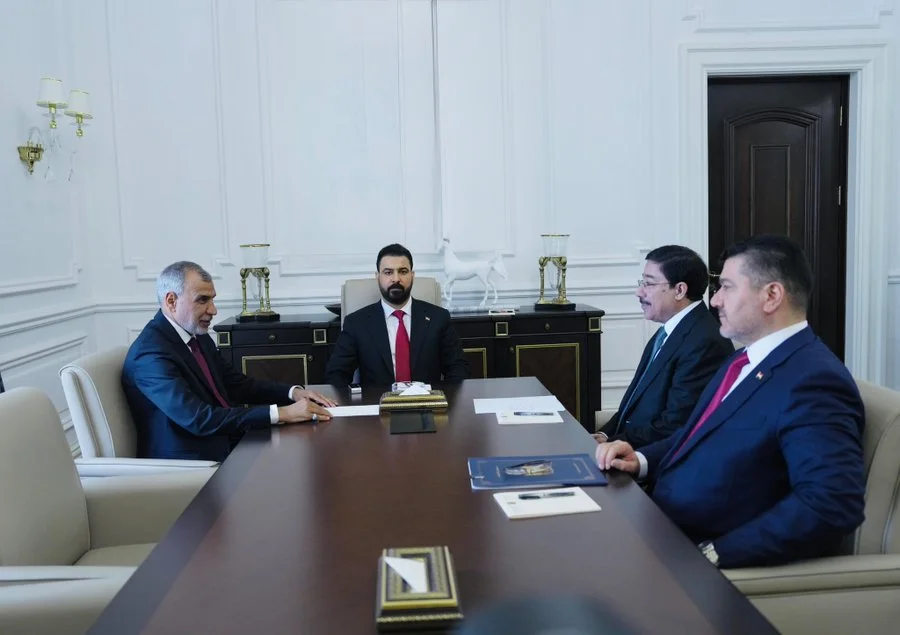
Prime Minister Al-Zaidi’s very first decision in office was to meet with the Minister of Finance and the CBI Governor.
That single move tells you everything you need to know about what’s coming next for your IQD investment.
Source(s):
• https://x.com/Ross_ptm/status/2055696990563094634
• https://x.com/Ross_ptm/status/2055703433999716669
**************
Courtesy of Dinar Guru: https://www.dinarguru.com/
Paulette Al-Zaidi's government was given confidence, he and the ministers were sworn in at Parliament. The world, especially the US, has been congratulating him on forming the government...Iraq now has a functioning, non-caretaker status, government that can start moving on the Kurd/Baghdad Oil and Gas Law, laws to regulate the Factions and laws to bring all arms in control of the State...Once we see those accomplished and not before, I will start watching what the CBI does.
Jeff Now that Iraq has competed the formation of their government and sworn them in, now that the Clarity Act finally got approved because the rate change is right here in front of us...The rate change is 100% done and ready to go. It's going to come reasonably quick.
Militia Man Government is one, the banking is two and they work in conjunction but they're independent. The Central Bank of Iraq is independent. Keep that in mind at all times because that's a fact.
Stephen It's been a very exciting week. A lot has happened in Iraq. We have a government formation, which I didn't think was going to happen this week. I thought they were going to push it out probably till June, which has been the case every single year for the last 23 years. There's exciting things going on...This is the most movement, the most amount of things happening, I have ever seen. It's exciting to be watching this in real time.
Edu Matrix: Currency Alert for VES and CUP
5-15-2026
In the complex world of global finance, investors often look toward historical markers to identify potential opportunities in emerging markets.
A recent video from Edu Matrix delves into an intriguing economic hypothesis: could the Venezuelan bolívar (VES) experience a dramatic recovery similar to the transformation seen in Panama following its significant political transition?