Iraq Economic News and Points To Ponder Sunday Morning 5-17-26
The International Monetary Fund Comments On Reports That Iraq Has Requested Financial Assistance.
Money and Business Economy News — Baghdad The International Monetary Fund said it continues to discuss the possibility of providing financial support to countries affected by rising energy and commodity prices due to the war in the Middle East, without confirming reports that Iraq had requested financial assistance.
Reuters quoted the IMF spokeswoman, Julie Kozak, as saying during a press conference that the Fund continues to discuss potential financial assistance for member countries suffering from high energy and commodity costs, but she did not provide details on specific countries, and declined to comment on a report that Iraq had requested financial support.
The International Monetary Fund Comments On Reports That Iraq Has Requested Financial Assistance.
Money and Business Economy News — Baghdad The International Monetary Fund said it continues to discuss the possibility of providing financial support to countries affected by rising energy and commodity prices due to the war in the Middle East, without confirming reports that Iraq had requested financial assistance.
Reuters quoted the IMF spokeswoman, Julie Kozak, as saying during a press conference that the Fund continues to discuss potential financial assistance for member countries suffering from high energy and commodity costs, but she did not provide details on specific countries, and declined to comment on a report that Iraq had requested financial support.
Kozak added that a number of countries are asking the Fund for support in the area of economic policies and advice on how to respond to economic shocks according to the circumstances of each country.
Media reports had indicated that Iraq had requested financial assistance from the Fund as a result of the repercussions of the war in the Middle East and rising energy prices, at a time when the Fund’s Managing Director, Kristalina Georgieva, had previously indicated that about 12 countries might need financial support ranging between $20 billion and $50 billion.
https://www.economy-news.net/content.php?id=69157
Finance Minister: The Current Stage Requires Exceptional Work And Rapid Progress
Economy News – Baghdad On Sunday, Iraqi Finance Minister Faleh Sari chaired an expanded meeting with the directors general of the ministry's headquarters and its affiliated departments, following his official commencement of duties, to discuss the priorities of the next phase and mechanisms for enhancing financial and administrative performance.
During the meeting, the minister stressed that the current stage requires “exceptional work, highly efficient management, and financial discipline,” emphasizing the importance of unifying efforts and working as a team to confront the current economic and financial challenges.
Sari called for maximizing public revenues in the ministry’s affiliated bodies and departments, in order to contribute to fulfilling the state’s financial obligations, in light of the challenges related to energy markets and the decline in Iraqi oil exports to levels he described as “unprecedented”.
The Minister of Finance also stressed the need to adopt clear time limits for completing files, stressing that the current stage requires officials capable of diagnosing problems and providing practical solutions, and that the standard of success will be linked to achievement and taking responsibility. https://www.economy-news.net/content.php?id=69170
Russian Banks Enter Into Financial Cooperation With Iran
banks Economy News - Follow-up The former head of Iran’s Trade Development Organization, Peyman Pak, announced on Saturday that a number of major Russian banks, including Sberbank and VTB Bank, have established active correspondent accounts with the Central Bank of Iran and banks operating in the country.
Fars News Agency quoted Pak as saying that the assets of these banks range between $400 and $500 billion for each bank, which is almost double the total assets of Iranian banks, providing a great capacity to expand financial exchanges between the two sides.
He added that linking the Iranian financial payment system “SPAM” to the Russian SPFS network contributed to reducing the time required for currency transfers for traders from several months to about 48 hours, which led to a significant increase in the volume of cash exchanges.
The financial cooperation between the two sides comes at a time when the US Treasury Department imposed new sanctions on Monday related to Iran, targeting individuals and companies run from several countries, including China.
On April 28, 2026, the US Treasury Department announced sanctions against 35 entities and individuals in Iran for helping them evade sanctions. https://www.economy-news.net/content.php?id=69127
Financial Times: Shipping Companies Are Transporting Fuel By Truck Amid The Strait Of Hormuz Crisis.
energy Economy News - Follow-up The Financial Times reported that major shipping companies have begun using trucks to transport fuel amid the partial closure of the Strait of Hormuz due to the crisis in the Middle East.
The newspaper confirmed that, with the Strait of Hormuz closed, shipping rates on the Shanghai-Gulf and Red Sea route reached record levels this week, exceeding the levels recorded during the COVID-19 pandemic.
Citing data from Clarksons research firm, she noted that the shipping cost for a standard container on this route has risen from $980 to $4,131 since May 15.
The magazine stated that "all major shipping companies, including Mediterranean Shipping Company (MSK), Maersk, CMA-CGM and Hapag-Lloyd, have opened routes to transport goods from Red Sea and Gulf of Oman ports."
The Financial Times quoted Maersk CEO Vincent Clerc as saying that a large number of trucks were used to transport the shipments.
He noted that Saudi Arabia and Iraq have allowed large numbers of trucks to enter from Iraq, Jordan and Turkey.
However, the newspaper stressed that trucks can only partially replace the capacity of container ships and large cargo vessels that used to serve the Arab Gulf states via the Strait of Hormuz. https://www.economy-news.net/content.php?id=69171
EIA: Iraq’s Oil Exports To US Rise Over The Week
2026-05-17 Shafaq News- Baghdad/ Washington Iraq’s crude oil exports to the United States rose 24,000 barrels per day (bpd) last week, US Energy Information Administration (EIA) data showed on Sunday.
Iraqi shipments averaged 100,000 bpd last week, 31.6% higher than the previous week’s average of 76,000 bpd.
Total US crude imports from nine major suppliers reached 5.404 million bpd last week. Canada remained the top supplier at 4.067 million bpd, followed by Venezuela with 588,000 bpd, Colombia with 164,000 bpd, Saudi Arabia with 154,000 bpd, and Brazil with 109,000 bpd.
Imports also included Nigeria at 87,000 bpd, Mexico at 71,000 bpd, and Ecuador at 64,000 bpd. No oil was imported from Libya this week. https://www.shafaq.com/en/Economy/EIA-Iraq-s-oil-exports-to-US-rise-over-the-week
Dollar Slips In Baghdad, Steady In Erbil
2026-05-17 Shafaq News- Baghdad/ Erbil The US dollar opened Sunday's trading slightly lower in Baghdad and unchanged in Erbil, hovering around 154,000 dinars per 100 dollars.
According to Shafaq News market survey, the dollar traded in Baghdad's Al-Kifah and Al-Harithiya exchanges at 153,800 dinars per 100 dollars, down from Saturday's 153,900 dinars.
In the Iraqi capital, exchange shops sold the dollar at 154,500 dinars and bought it at 153,500 dinars, while in Erbil, selling prices stood at 153,500 dinars and buying prices at 153,400 dinars.
https://www.shafaq.com/en/Economy/Dollar-slips-in-Baghdad-steady-in-Erbil
Gold Prices Stable In Baghdad And Erbil
2026-05-17 Shafaq News- Baghdad/ Erbil Gold prices on Sunday remained constant in Baghdad and Erbil markets, hovering below the million-dinar mark, according to Shafaq News market survey.
On Baghdad's Al-Nahr Street, wholesale markets recorded a selling price of 982,000 IQD per mithqal (equivalent to five grams) for 21-carat Gulf, Turkish, and European gold, with a buying price of 978,000 IQD, the same as the previous session.
Iraqi 21-carat gold sold at 952,000 IQD per mithqal, with a buying price of 948,000 IQD.
In jewelry stores, 21-carat Gulf gold ranged between 985,000 and 995,000 IQD per mithqal, while Iraqi gold sold between 955,000 and 965,000 IQD.
In Erbil, prices also declined, with 22-carat gold selling at 1.021 million IQD per mithqal, 21-carat at 975,000 IQD, and 18-carat at 835,000 IQD. https://www.shafaq.com/en/Economy/Gold-prices-stable-in-Baghdad-and-Erbil
CBI: Iraq's Foreign Reserves Shed $1.8 Billion In A Single Week
2026-05-17 Shafaq News- Baghdad Iraq's foreign currency reserves fell sharply in the final week of April, according to fresh financial indicators published by the Central Bank of Iraq (CBI).
Net foreign assets held by the central bank declined from 125.614 trillion dinars on April 23 to 123.269 trillion dinars —approximately $93.3 billion— by the end of the month, a drop of 2.345 trillion dinars in seven days, equivalent to some $1.8 billion based on a Shafaq News calculation derived from central bank data. Other official reserves fell in parallel, settling at 122.780 trillion dinars.
Economic analyst Nabil al-Marsoumi attributed the continued decline directly to falling oil revenues.
CBI: Iraq's foreign reserves shed $1.8 billion in a single week - Shafaq News
https://www.shafaq.com/en/Economy/CBI-Iraq-s-foreign-reserves-shed-1-8-billion-in-a-single-week
Seeds of Wisdom RV and Economics Updates Sunday Morning 5-17-26
Good Morning Dinar Recaps,
Taiwan Independence Remarks Raise New Flashpoint in US–China Power Struggle
Taipei’s latest sovereignty declaration is intensifying geopolitical tensions at a time when global markets are already facing mounting uncertainty over trade, military alliances, and the future balance of economic power.
Good Morning Dinar Recaps,
Taiwan Independence Remarks Raise New Flashpoint in US–China Power Struggle
Taipei’s latest sovereignty declaration is intensifying geopolitical tensions at a time when global markets are already facing mounting uncertainty over trade, military alliances, and the future balance of economic power.
Overview
Taiwan President Lai Ching-te declared that “Taiwan independence” means the island does not belong to Beijing and that only Taiwan’s people can determine their future. The comments followed the recent summit between US President Donald Trump and Chinese President Xi Jinping, where Trump reiterated that Washington does not officially support Taiwanese independence.
The remarks are significant because they touch one of the most sensitive issues in global geopolitics. China continues to view Taiwan as part of its territory and has repeatedly warned that formal moves toward independence could trigger military action.
Markets and governments are closely watching the situation because any escalation involving Taiwan could disrupt global trade routes, semiconductor production, energy markets, and international supply chains — all of which are deeply connected to the evolving discussions surrounding a global financial reset and the emergence of a more fragmented multipolar world order.
Key Developments
1. Taiwan Reasserts Sovereignty Position
President Lai emphasized that Taiwan is already a sovereign nation operating under the Republic of China framework and is not subordinate to the People’s Republic of China.
His statement reinforced Taiwan’s long-standing position that the island’s future should only be determined by its own citizens, not by Beijing.
The comments are likely to intensify pressure from China, which views such language as crossing political red lines.
2. US–China Relations Enter Another Sensitive Phase
The timing of Lai’s comments is especially important because they came immediately after the Trump–Xi summit.
Trump stated that the United States is not encouraging Taiwanese independence, signaling Washington’s attempt to avoid direct escalation while still maintaining strategic support for Taipei.
This balancing act reflects the increasingly fragile relationship between the world’s two largest economies.
3. Taiwan Remains Critical to the Global Economy
Taiwan sits at the center of the global semiconductor industry, making it one of the most strategically important economies in the world.
Any instability involving Taiwan could impact:
Technology supply chains
Artificial intelligence development
Global manufacturing
Shipping routes in the Indo-Pacific
Currency and commodity markets
Investors increasingly view Taiwan tensions as one of the biggest long-term threats to global economic stability.
4. Multipolar Financial Realignment Continues
The Taiwan issue is also becoming tied to the broader geopolitical realignment now underway between the United States, China, BRICS nations, and regional powers across Asia and the Middle East.
As tensions rise, countries continue accelerating efforts to:
Diversify trade partnerships
Reduce reliance on Western financial systems
Strengthen regional alliances
Expand local currency trade mechanisms
Increase gold and strategic reserve holdings
This gradual fragmentation is one of the defining trends driving discussions around a possible global financial reset.
Why It Matters
The Taiwan issue is no longer just a regional political dispute. It now represents a major fault line in the global economic system.
The world economy depends heavily on stable trade flows through Asia, semiconductor production from Taiwan, and cooperation between the United States and China.
Any escalation could trigger:
Supply chain disruptions
Energy price volatility
Currency instability
Stock market selloffs
Acceleration of de-dollarization efforts
Global investors are increasingly treating geopolitical risk as a direct financial risk.
Why It Matters to Foreign Currency Holders
For foreign currency and precious metals investors, Taiwan tensions reinforce the growing importance of geopolitical positioning in global finance.
Periods of rising instability often increase interest in:
Gold and silver
Alternative reserve currencies
BRICS trade systems
Energy-backed agreements
Strategic commodity investments
The deeper the divide becomes between major powers, the faster the world may move toward competing financial blocs rather than a single unified economic system.
Implications for the Global Reset
Pillar 1: Geopolitical Fragmentation
Taiwan remains one of the most dangerous geopolitical flashpoints on Earth. Escalation could accelerate the transition toward a multipolar global order divided into competing economic and military spheres.
Pillar 2: Financial System Realignment
As tensions grow between Washington and Beijing, nations may continue reducing exposure to systems controlled by geopolitical rivals, increasing momentum behind local currency settlements, reserve diversification, and regional financial cooperation.
Conclusion
President Lai’s remarks have once again placed Taiwan at the center of the global geopolitical conversation.
While no immediate confrontation appears imminent, the situation highlights how fragile international stability has become as economic competition, military strategy, and financial realignment increasingly overlap.
For markets, governments, and investors alike, Taiwan is no longer simply a diplomatic issue — it is a central piece of the evolving struggle over the future structure of global power and finance.
This is not just politics — it’s global finance restructuring before our eyes.
Seeds of Wisdom Team
Newshounds News™ Exclusive
Sources
~~~~~~~~~~
🌱A Message to Our Currency Holders🌱
If you’ve been holding foreign currency for many years, you were not foolish.
You were not wrong to believe the global financial system would change.
What failed was not your patience — it was the information you were given.
For years, dates, rumors, and personalities replaced facts, structure, and proof. “This week” predictions created cycles of hope and disappointment that were never based on how currencies actually change.
That is not your failure.
Our mission here is different: • No dates • No rates • No hype • No gurus
Instead, we focus on:
• Verifiable developments • Institutional evidence
• Global financial structure • Where countries actually sit in the process
Currency value changes only come after sovereignty, trade, banking, settlement systems, and fiscal coordination are in place. History and institutions confirm this sequence.
You will see silence. You will see denials. That is not delay — that is discipline.
Protect your identity. Organize your documents. Verify everything.
Never hand your discernment to anyone who cannot show proof.
You deserve truth — not timelines.
Seeds of Wisdom Team
Newshounds News™
~~~~~~~~~~
Seeds of Wisdom Team RV Currency Facts Youtube and Rumble
Newshound's News Telegram Room Link
RV Facts with Proof Links Link
RV Updates Proof links - Facts Link
Follow the Gold/Silver Rate COMEX
Follow Fast Facts
Seeds of Wisdom Team™Website
Thank you Dinar Recaps
Iraq Economic News And Points To Ponder Late Saturday Evening 5-16-26
An Economist Confirms The Possibility Of Resorting To The Central Bank's Reserves To Compensate For The Deficit.
Baghdad... Economic expert Dr. Safwan Qusay confirmed the possibility of resorting to the Central Bank of Iraq's cash reserves, which exceed $90 billion, while simultaneously warning of the potential for inflation within Iraq.
Qusay told Al-Maalouma, "The Central Bank of Iraq's reserves amount to $90 billion, in addition to 170 tons of gold. If borrowing from these reserves is adopted, it is possible to maintain financial flexibility down to $60 billion."
He added, "The $60 billion represents the value of the issued Iraqi dinar, but a decrease in the dinar's value below this financial backing would allow for domestic inflation."
An Economist Confirms The Possibility Of Resorting To The Central Bank's Reserves To Compensate For The Deficit.
Baghdad... Economic expert Dr. Safwan Qusay confirmed the possibility of resorting to the Central Bank of Iraq's cash reserves, which exceed $90 billion, while simultaneously warning of the potential for inflation within Iraq.
Qusay told Al-Maalouma, "The Central Bank of Iraq's reserves amount to $90 billion, in addition to 170 tons of gold. If borrowing from these reserves is adopted, it is possible to maintain financial flexibility down to $60 billion."
He added, "The $60 billion represents the value of the issued Iraqi dinar, but a decrease in the dinar's value below this financial backing would allow for domestic inflation."
**********************************
He indicated that "the possibility of resorting to borrowing from the Central Bank's reserves, or the aforementioned inflation, could occur six months after this May, as the government can secure salaries for this period." End 25N
Al-Hilali Reveals Details Of The US Deadline For Al-Zidi's Government: Six Months For Evaluation And Another To Decide On Support
latest news Saturday, May 16, 2026 Baghdad - One News The Arabic 21 website quoted former Prime Minister's advisor Ayed Al-Hilali as saying that Prime Minister Ali Al-Zaidi is required to make very significant changes in order to implement what he described as the United States' conditions.
Al-Hilali explained that Washington gave Al-Zaidi an initial six-month grace period to assess the performance of his government, followed by a similar extension before making a decision on whether to continue supporting him or abandon him.
He added that American officials, including Ambassador Tom Barrack, expressed a clear desire to deal with Al-Zaidi's government, noting that American support would not be free, but rather linked to the existence of a political and executive quid pro quo for this support. https://1news-iq.net/الهلالي-يكشف-تفاصيل-المهلة-الأمريكية/
A Member Of The Parliamentary Finance Committee Told NINA: "The Next Stage Will Be Very Difficult... Economically."
Saturday, May 16, 2026 08:49 | Economy Baghdad / NINA / Member of the Parliamentary Finance Committee, MP Mustafa al-Karawi, affirmed that Iraq is facing a very difficult economic phase, attributing this to the widening budget deficit, low revenues, and the failure to find alternatives to oil to finance the country's economy.
Al-Karawi told the Iraqi National News Agency ( NINA 😞 "Following the economic crisis that occurred in the region due to the Iran-US war and the previous Iraqi government's inability to find solutions for oil exports, the budget deficit and low revenues have widened due to the failure to find alternatives to oil by increasing non-oil revenues."
The Finance Committee member emphasized: "The coming period will be very difficult due to the lack of non-oil funding sources, as non-oil revenues constitute only 10% of total revenues. This will significantly impact the revenue generated and its direct dependence on external regional conditions." He explained: "The continuation of this situation will greatly affect the provision of services and the implementation of investment projects due to the lack of financial liquidity."
He expressed his hope that the new government would find real solutions to build a strong domestic economy and establish systems to effectively manage non-oil revenues, significantly reducing dependence on oil. https://ninanews.com/Website/News/Details?key=1295740
******************************
Government Advisor: The Budget Is Going Through A Complex Funding Crisis And Salaries Are A "Sacred Issue"
Exclusive to Alsumaria 2026-05-16 | 13:07 The economic and financial advisor to the Prime Minister said, Mazhar Muhammad Salih On Saturday, he said the general budget is facing a major crisis as a result of funding disruptions, attributing this to what he described as the shock of the shutdown. Strait of Hormuz Against the backdrop of tensions betweenIranAnd the United States, which was reflected in the smooth and proper delivery of about 90% of the budget resources.
Saleh stated in an interview with Alsumaria News He noted that "short-term measures are being worked on," indicating that there is significant coordination and cooperation between fiscal and monetary policies to ensure the continued functioning of the government and the fulfillment of essential obligations.
He explained that "the ongoing war is short-term in nature, and that government efforts are currently focused on overcoming this phase and mitigating its economic impact."
The advisor emphasized that the issue of salaries is a "sacred matter" affecting the lives of approximately 9 million employees and nearly 40 million citizens, noting that each salary supports an entire family, and that in a rentier state like Iraq Not possible Acceptance Any discussion about compromising it is unacceptable, as it is at the forefront of government priorities.
Kujer To Nina: Iraq Is The Biggest Economically Affected By The US-Iran War
Saturday, May 16, 2026 09:38 | Economy Baghdad/ NINA / Jamal Kojar, a member of the Parliamentary Finance Committee, affirmed that Iraq is the country most economically affected by the regional Iranian-American conflict. He explained that most capital has fled Iraq due to the unstable security and military situation.
In a statement to the Iraqi National News Agency ( NINA ), Kojar said, "The security and regional situation has direct and indirect effects on the Iraqi economy in several aspects. The first, main, and most impactful aspect is the oil sector, as oil production has decreased by at least three-quarters, and the oil being sold now costs more than before the war."
He added, "The second affected sector is trade, especially border crossings, as maritime traffic has been significantly impacted and complicated. The third affected sector is investment, which is experiencing near-paralysis."
Kujer continued: "The fourth aspect affected was foreign capital. After this battle and the attempts to drag Iraq into the Iran-US war, much capital fled the country, and investments were withdrawn. The fifth aspect that impacted the economy and financial situation was the measures accompanying the military operation, such as the cessation of liquidity and foreign currency support, and a long list of other effects left by the war in the region, making Iraq the most economically damaged country." /End 8. https://ninanews.com/Website/News/Details?key=1295749
************************************
An Iraqi Observatory Presents Three Options To The Al-Zaidi Government To Address The Financial Crisis.
Energy and Business breaking 2026-05-16 Shafaq News - Baghdad On Saturday, the "Eco Iraq" economic observatory presented three options to the government of Prime Minister Ali Faleh al-Zaidi to confront the financial crisis.
The observatory said in a statement received by Shafaq News Agency that "the Strait of Hormuz crisis has significantly affected Iraq's financial revenues, in addition to a pre-existing financial deficit and an increase in the size of the internal debt."
He added that "there are three main options before the new government headed by Ali al-Zaidi to address the crisis, the first of which is internal borrowing."
The observatory explained that "domestic borrowing is done through the issuance of bonds or treasury bills by the Ministry of Finance, which are purchased by the Central Bank of Iraq, in exchange for providing financial liquidity to the government at specific interest rates."
He pointed out that "the previous government adopted this option during the past years, which contributed to the decline of the official reserve to about 125.6 trillion Iraqi dinars."
The observatory explained that "the second option is to adjust the exchange rate of the Iraqi dinar to 150,000 dinars per 100 dollars, instead of 132,000 dinars, with the aim of increasing government revenues in dinars and reducing the financial deficit."
He explained that "this option was previously used during the government of former Prime Minister Mustafa Al-Kadhimi following the financial crisis and the drop in oil prices, with the possibility of restoring the exchange rate to previous levels if oil and financial revenues improve."
The observatory concluded its statement by saying, “The third option is to resort to external borrowing, as happened during Haider al-Abadi’s government, where some international loans were linked to reform measures and financial and economic conditions related to public spending, employment and fiscal policies.”
A source close to the International Monetary Fund revealed on Thursday that Iraq is seeking financial support from the Fund as a result of the consequences of the war in the Middle East, which has affected the flow of oil and energy supplies from producing countries. https://www.shafaq.com/ar
FRANK26….5-16-26…..ONLY Z
KTFA
Saturday Night Video
FRANK26….5-16-26…..ONLY Z
This video is in Frank’s and his team’s opinion only
Frank’s team is Walkingstick, Eddie and Omar in Iraq and guests
Playback Number: 605-313-5163 PIN: 156996#
KTFA
Saturday Night Video
FRANK26….5-16-26…..ONLY Z
This video is in Frank’s and his team’s opinion only
Frank’s team is Walkingstick, Eddie and Omar in Iraq and guests
Playback Number: 605-313-5163 PIN: 156996#
Why Silver Will Explode – Mike Maloney Warns of Oil Crisis & Market Crash
Why Silver Will Explode – Mike Maloney Warns of Oil Crisis & Market Crash
5-15-2026
In this powerful new presentation, Mike Maloney joins Robert Helms of The Real Estate Guys live from Puerto Rico to break down the perfect storm hitting the global economy right now.
The escalating conflict in Iran has devastated critical oil and natural gas infrastructure in the Strait of Hormuz — where roughly one-third of the world’s oil and fertilizer supply flows. Traffic has collapsed for over a month, driving oil prices sharply higher, fertilizer prices nearly doubling, and threatening food shortages and crop failures worldwide.
Why Silver Will Explode – Mike Maloney Warns of Oil Crisis & Market Crash
5-15-2026
In this powerful new presentation, Mike Maloney joins Robert Helms of The Real Estate Guys live from Puerto Rico to break down the perfect storm hitting the global economy right now.
The escalating conflict in Iran has devastated critical oil and natural gas infrastructure in the Strait of Hormuz — where roughly one-third of the world’s oil and fertilizer supply flows. Traffic has collapsed for over a month, driving oil prices sharply higher, fertilizer prices nearly doubling, and threatening food shortages and crop failures worldwide.
Mike reveals eye-opening charts showing:
• The Buffett Indicator at a record 232% — far beyond the 1929, 2000, and 2007 peaks
• Sky-high PE ratios and hours-of-work needed to buy stocks
• Energy price spikes that have preceded every major recession
• Banks upside-down on bonds and commercial real estate delinquencies worse than 2008
He explains why fiat currency can’t store value, why real assets are essential, and why gold and silver have been the top-performing assets of the 21st century.
Mike also shares his personal move to build 900-acre Freedom Farms in Puerto Rico as a model for true resilience and self-sufficiency.
Whether you’re a real estate investor, precious metals owner, or simply want to protect your family, this is a must-watch roadmap for what’s coming.
Freedom Fighter: Attention Regarding the Iraqi Dinar
Freedom Fighter: Attention Regarding the Iraqi Dinar
5-16-2026
Attention re: (Iraq Dinar)
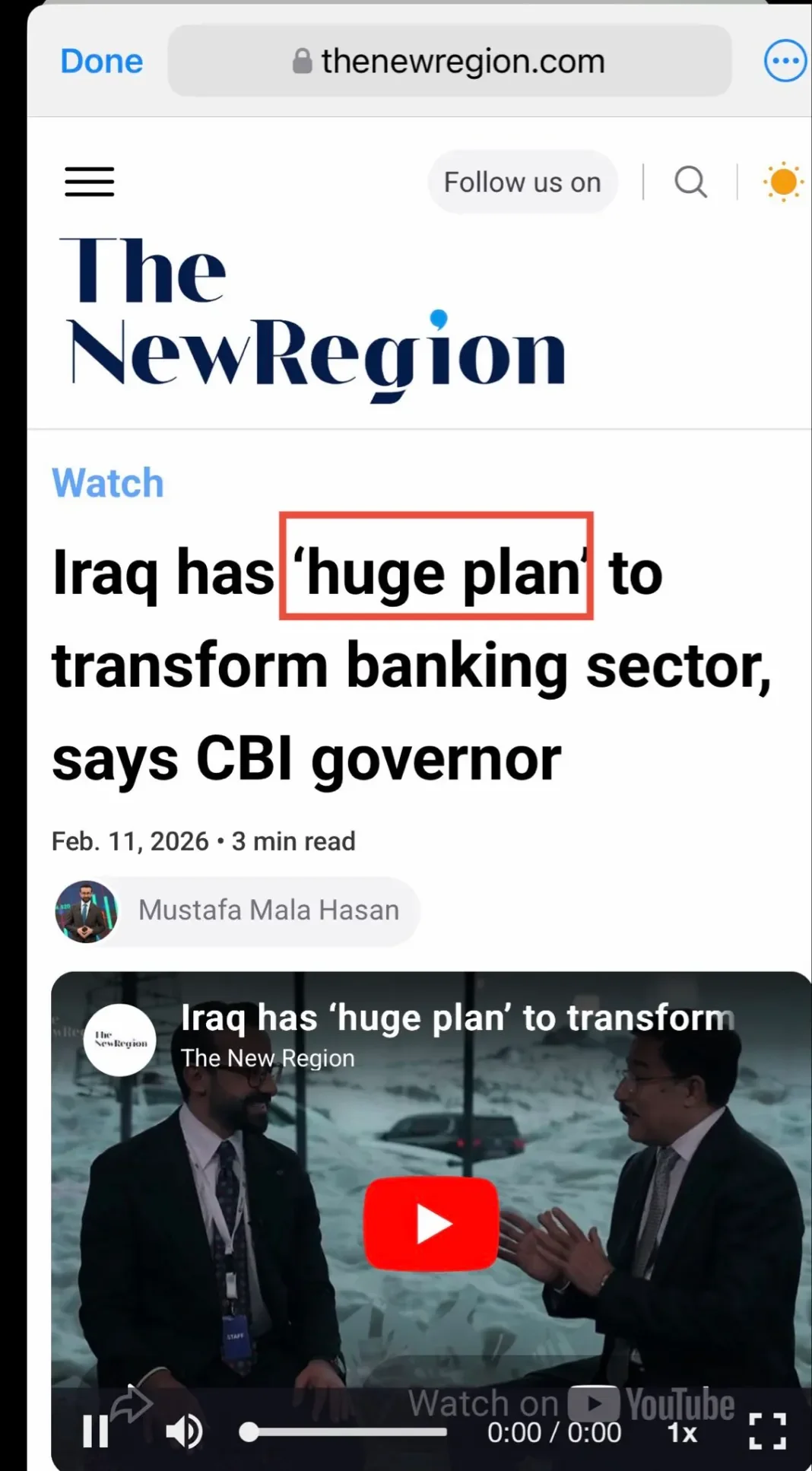
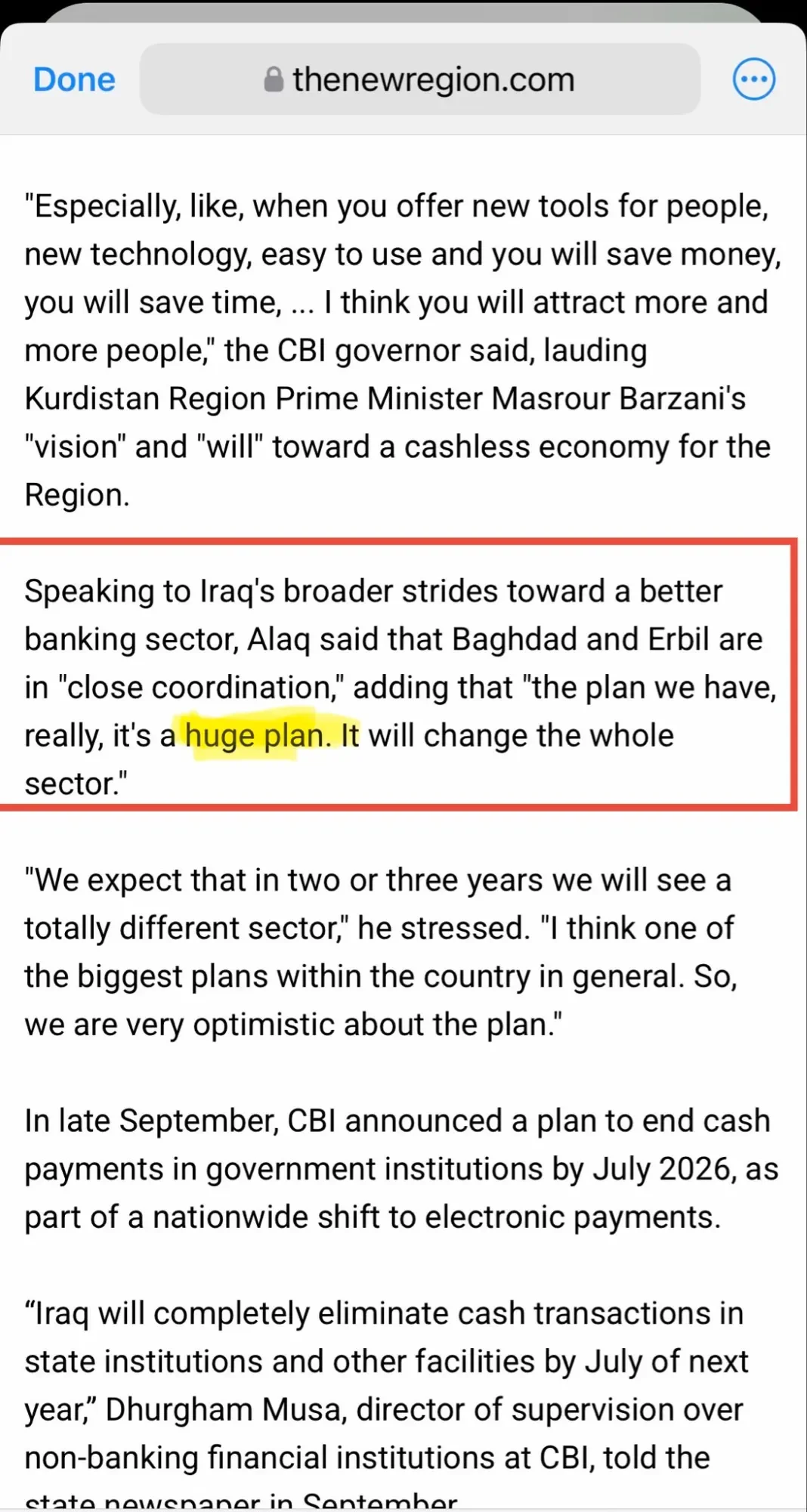
Iraq’s Central Bank governor says they are coordinating a “huge plan” that will “change the whole sector.”
• Banking sector transformation
• Electronic payment expansion
• Nationwide cashless transition by July 2026
• Major financial sector modernization
• Structural changes expected to impact the Iraqi dinar and Iraq’s banking system
Freedom Fighter: Attention Regarding the Iraqi Dinar
5-16-2026
Attention re: (Iraq Dinar)
Iraq’s Central Bank governor says they are coordinating a “huge plan” that will “change the whole sector.”
• Banking sector transformation
• Electronic payment expansion
• Nationwide cashless transition by July 2026
• Major financial sector modernization
• Structural changes expected to impact the Iraqi dinar and Iraq’s banking system
These are not internet rumors.
These are direct statements from Iraq’s central banking leadership and ongoing reform framework.
Full breakdown from Saturday Night Dialogues below.
Receipts:
Seeds of Wisdom RV and Economics Updates Saturday Afternoon 5-16-26
UK Political Shockwave: Labour Crisis and Reform UK Surge Signal Deep Western Realignment
Mounting instability inside Britain’s ruling government is raising broader questions about political legitimacy, economic confidence, and the future direction of Western financial systems
The collapse in support for the UK Labour government reflects a wider global trend of political fragmentation, voter dissatisfaction, and growing pressure on establishment institutions.
UK Political Shockwave: Labour Crisis and Reform UK Surge Signal Deep Western Realignment
Mounting instability inside Britain’s ruling government is raising broader questions about political legitimacy, economic confidence, and the future direction of Western financial systems
The collapse in support for the UK Labour government reflects a wider global trend of political fragmentation, voter dissatisfaction, and growing pressure on establishment institutions.
OVERVIEW (KEY POINTS)
The British political system was shaken following major local election losses for Prime Minister Keir Starmer’s Labour government, triggering reports of internal party unrest, leadership pressure, and cabinet instability.
At the center of the turmoil is the rapid rise of Reform UK, led by Nigel Farage, which gained significant ground in local elections and expanded support among working-class voters traditionally aligned with Labour.
The political instability comes as Britain continues facing economic stagnation, inflation concerns, energy pressure, and growing public dissatisfaction with establishment leadership across Europe and the West.
The broader implication extends beyond UK politics alone. Financial markets closely monitor political stability in major Western economies because leadership uncertainty can affect currency confidence, fiscal policy, trade relations, and investor sentiment.
KEY DEVELOPMENTS
1. Labour Suffers Major Local Election Losses
The local election results delivered a major setback to Labour leadership.
Reform UK reportedly gained more than 1,400 council seats
Labour lost significant support in traditional working-class regions
Analysts described the results as a major political realignment
2. Leadership Pressure Intensifies Around Keir Starmer
Internal party tensions reportedly escalated rapidly after the elections.
Multiple reports described growing dissatisfaction among Labour MPs
Calls for leadership accountability increased inside the party
Questions emerged about Labour’s long-term electoral strategy
3. Reform UK Expands National Influence
The rise of Reform UK reflects broader populist momentum.
The party continues gaining support among voters frustrated with establishment politics
Immigration, cost-of-living pressures, and economic concerns remain central issues
Political analysts increasingly view Reform UK as a significant force in future elections
4. Markets Watch Political Stability Closely
Political fragmentation can directly affect financial confidence.
UK government instability may increase uncertainty around fiscal policy
Currency markets remain sensitive to leadership disruptions in major economies
Investors continue monitoring European political shifts alongside global energy tensions
5. Wider Western Political Realignment Continues
The UK developments mirror trends seen across multiple Western nations.
Establishment parties in Europe and North America continue facing voter backlash
Economic pressure and inflation remain major political drivers
Populist and nationalist movements are gaining influence across several regions
WHY IT MATTERS
Political stability is a major pillar of modern financial systems. When governments face internal fractures and declining public support, markets begin reassessing long-term economic confidence and policy continuity.
Britain remains one of the world’s largest financial centers through the City of London. Significant political instability can therefore influence global investment flows, bond markets, currency sentiment, and broader Western economic confidence.
The growing disconnect between political institutions and working-class voters is also becoming a defining issue across many developed economies, increasing pressure on governments to rethink economic and trade policies.
At the global level, rising political fragmentation across Western nations may accelerate the transition toward a more multipolar geopolitical and financial environment.
WHY IT MATTERS TO FOREIGN CURRENCY HOLDERS
Political instability can weaken confidence in major currencies over time
Investor uncertainty may increase volatility in the British pound
Global capital may continue diversifying into commodities and gold
Shifting political coalitions could reshape fiscal and monetary priorities
IMPLICATIONS FOR THE GLOBAL RESET
Pillar 1: Western Political Fragmentation Weakens Centralized Consensus
Growing instability across major Western democracies may reduce the ability of governments to maintain unified economic and geopolitical strategies.
Pillar 2: Multipolar Financial and Political Systems Continue Emerging
As trust in traditional institutions declines, countries and markets increasingly explore alternative alliances, reserve structures, and economic partnerships outside legacy frameworks.
CONCLUSION
The political turbulence unfolding in the United Kingdom reflects more than a domestic leadership challenge.
It highlights deeper pressures building across Western democracies as voters respond to economic stress, inflation, migration debates, and dissatisfaction with traditional political structures.
While Britain’s financial system remains globally important, rising political instability adds another layer of uncertainty at a time when the global economy is already navigating energy disruptions, geopolitical tensions, and structural financial change.
Political realignment and financial realignment are increasingly unfolding at the same time — and markets are paying close attention to both.
Seeds of Wisdom Team
Newshounds News™ Exclusive
Sources
~~~~~~~~~~
Seeds of Wisdom Team RV Currency Facts Youtube and Rumble
Newshound's News Telegram Room Link
RV Facts with Proof Links Link
RV Updates Proof links - Facts Link
Follow the Gold/Silver Rate COMEX
Follow Fast Facts
Seeds of Wisdom Team™Website
Thank you Dinar Recaps
Iraq Economic News And Points To Ponder Saturday Afternoon 5-16-26
Baghdad Targets 500k Bpd Export Goal Via Turkiye Amid Increased Hormuz Risks
2026-05-16 Shafaq News- Baghdad Iraq’s new Oil Minister Basim Khudhair al-Abadi warned on Saturday that escalating regional tensions threaten energy flows through the Strait of Hormuz, as Baghdad moves to ramp up crude exports via Turkiye and address long-standing production disputes with the Kurdistan Region.
Speaking during a press conference at the ministry on his first day in office, he pointed to a sharp decline in exports, stating that Iraq shipped an average of 93 million barrels per month before the latest US-Iran escalation, while volumes fell to around 10 million barrels in April.
Baghdad Targets 500k Bpd Export Goal Via Turkiye Amid Increased Hormuz Risks
2026-05-16 Shafaq News- Baghdad Iraq’s new Oil Minister Basim Khudhair al-Abadi warned on Saturday that escalating regional tensions threaten energy flows through the Strait of Hormuz, as Baghdad moves to ramp up crude exports via Turkiye and address long-standing production disputes with the Kurdistan Region.
Speaking during a press conference at the ministry on his first day in office, he pointed to a sharp decline in exports, stating that Iraq shipped an average of 93 million barrels per month before the latest US-Iran escalation, while volumes fell to around 10 million barrels in April.
Despite the slowdown, Iraq continues to export around 200,000 bpd from Kirkuk through Turkiye’s Ceyhan port, with plans to raise flows to as much as 500,000 bpd. Achieving that target, he remarked, depends on the return of international oil companies operating in the Kurdistan Region, several of which have recently suspended operations.
“The government is treating the energy file in the Kurdistan Region as a priority,” he added, referring to efforts aimed at narrowing gaps between Baghdad and Erbil and aligning production frameworks across the country.
Khudhair noted that crude production from Basra and Kirkuk currently stands at no more than 1.4 million barrels per day (bpd), reflecting continued uncertainty in one of the country’s key economic sectors.
He also urged the Organization of the Petroleum Exporting Countries (OPEC) and the international community to support an increase in Iraq’s production ceiling, arguing that higher output is needed to fund infrastructure, public services, and state operating costs.
Read more: Iraq's oil lifeline is blocked: Here is why the crisis runs deeper than Hormuz
Dollar Dips In Baghdad, Rises In Erbil
2026-05-16 Shafaq News- Baghdad/ Erbil The US dollar closed Saturday's trading lower in Baghdad and higher in Erbil, hovering around 154,000 dinars per 100 dollars.
According to Shafaq News market survey, the dollar traded in Baghdad's Al-Kifah and Al-Harithiya exchanges at 153,800 dinars per 100 dollars, down from the morning session’s 153,900 dinars.
In the Iraqi capital, exchange shops sold the dollar at 154,250 dinars and bought it at 153,250 dinars, while in Erbil, selling prices stood at 153,600 dinars and buying prices at 153,500 dinars.
Speaking to Shafaq News, Jabbar Goran, spokesperson for the currency market in al-Sulaymaniyah, Iraqi Kurdistan, expected the formation of Iraq’s new government to help lower the dollar exchange rate against the dinar in local markets, citing anticipated “US support” that could positively affect the financial market.
Goran predicted the exchange rate could fall below 150,000 dinars per 100 dollars in the coming period if regional conditions stabilize. He added that the gap between the official exchange rate of 132,000 dinars and the market rate should normally remain within 12,000 to 13,000 dinars. https://www.shafaq.com/en/Economy/Dollar-dips-in-Baghdad-rises-in-Erbil
Gold Prices Slip In Baghdad And Erbil
2026-05-16 Shafaq News- Baghdad/ Erbil Gold prices fell Saturday in Baghdad and Erbil markets, hovering below the million-dinar mark, according to Shafaq News market survey.
On Baghdad's Al-Nahr Street, wholesale markets recorded a selling price of 982,000 IQD per mithqal (equivalent to five grams) for 21-carat Gulf, Turkish, and European gold, with a buying price of 978,000 IQD, down from the previous session's 1.012 million IQD.
Iraqi 21-carat gold sold at 952,000 IQD per mithqal, with a buying price of 948,000 IQD.
In jewelry stores, 21-carat Gulf gold ranged between 985,000 and 995,000 IQD per mithqal, while Iraqi gold sold between 955,000 and 965,000 IQD.
In Erbil, prices also declined, with 22-carat gold selling at 1.021 million IQD per mithqal, 21-carat at 975,000 IQD, and 18-carat at 835,000 IQD. https://www.shafaq.com/en/Economy/Gold-prices-slip-in-Baghdad-and-Erbil-5
Iraq’s Gulf Power Project To Supply 500 Megawatts
2026-05-16 Shafaq News- Baghdad/ Basra The Gulf electricity interconnection project with Iraq has reached 94% completion, with the first phase expected to supply 500 megawatts of additional electricity to the national grid, Iraq’s Electricity Ministry announced on Saturday.
The Gulf Cooperation Council (GCC) states signed the implementation contract for the project in October 2024, aiming to supply Iraq with around 3.94 terawatt-hours of electricity annually at prices lower than domestic production costs. The project's original completion deadline of end-2025 was missed, with the launch subsequently pushed back without a revised date confirmed by officials.
Completed works include full construction of concrete tower foundations, installation of 112 out of 221 transmission towers within the Iraqi section, and the completion of 73 kilometers of power line wiring alongside 63 kilometers of Optical Ground Wire (OPGW) communications cable.
Technical teams from the South Electricity Transmission Company continue work on the 400-kilovolt interconnection line linking Kuwait’s Al-Wafra power station to the Al-Faw converter station in southern Iraq as part of what the ministry described as strategic projects aimed at supporting grid stability during the summer season. The project stretches approximately 285 kilometers, including 76.7 kilometers inside Iraqi territory from the Safwan border area to Al-Faw station.
Read more: Iraq power 2026: war collapses the grid's defenses ahead of peak summer
https://www.shafaq.com/en/Economy/Iraq-s-Gulf-power-project-to-supply-500-megawatts
PM Al-Zaidi Chairs First Financial Stability Council Meeting Hours After Launch
2026-05-16 Shafaq News- Baghdad Iraqi Prime Minister Ali al-Zaidi on Saturday chaired the first meeting of the newly established Financial Stability Council, only hours after ordering its creation during his cabinet’s inaugural session.
The council includes Finance Minister Falih al-Sari and the governor of the Central Bank of Iraq (CBI), Ali al-Alaq.
Al-Zaidi stressed the importance of financial stability and its impact on Iraq’s economic and development plans, calling for close coordination between the Finance Ministry and CBI. He also emphasized the need for financial decisions that support economic stability and strengthen the government’s service, development, and economic agenda.
What the Program Says?
Al-Zaidi's ministerial program commits to establishing a Supreme Council for Financial Stability to coordinate between fiscal and monetary policy, the body that held its first meeting on Saturday.
The program assigns the council a specific economic agenda: financial discipline, restructuring of public expenditure, enhancing non-oil revenues, and digitizing revenue collection in cooperation with relevant international institutions.
On banking, the program commits to reform aligned with international standards, anti-money laundering compliance, and structured coordination between the Central Bank and the fiscal authority.
The council is one of three new economic bodies mandated by the program. The other two are a Supreme Investment Council for foreign direct investment, and a Generations Fund to preserve Iraqi citizens' share of oil and natural resource revenues.
Read more: Ali Al-Zaidi sworn in with a program already failed
Who Stole Our Marble?
Mazhar Muhammad Salih Articles Economy News – Baghdad A heated intellectual debate raged in the corridors of research, where monetary policy was formulated in the heart of Baghdad. Marxists, graduates of British universities, argued with liberals, graduates of Iraqi universities, in a debate that spanned the 1950s and 1970s.
The central point of contention was the concept of the "public good"—that benefit created for all people, from which no one is excluded, and whose use by one individual does not diminish the rights of others, such as security, bridges, parks, and public lighting.
The name of Paul Samuelson was frequently invoked as one of the most prominent theorists of this concept in modern economics, as he argued that a state is not measured solely by its wealth, but also by its capacity to protect what belongs to everyone.
But the question that lingered above all that debate was even more brutal than the theories themselves:
Did people really need that extravagant display of civilization represented by the escalators in the Tahrir Square tunnel in the 1970s?
That tunnel, which was built as a symbol of modern Baghdad, is surrounded by shops in an elegant circular formation, and topped with captivating architectural details, until its walls and columns became covered with shiny Italian marble, as if the city wanted to give its citizens something of the dignity and beauty of great cities.
Marxists saw this as a victory for the idea of the common right.
In their view, beauty was not a privilege reserved for the wealthy alone, but a right for all people. They echoed Karl Marx's ideas about the alienation of individuals when their shared wealth is taken from them, and the fruits of society become the private property of a few. Liberals, on the other hand, considered it a luxury incompatible with an economy burdened by poverty and inequality, arguing that the state should spend on necessities, not on marble and escalators.
Then the years passed, wars followed one another, the electricity went out, the stairs broke down, the maintenance systems deteriorated, and Iraq entered the era of the long siege as a silent war, an era that not only destroyed the economy, but also destroyed the very meaning of things, until the “public good” became an orphaned entity with no one to protect it.
And the marble remained alone.
It shines with a sad silence in an empty tunnel, its whiteness reflected on the facades of empty shops, as if trying to remember the Baghdad that was once here.
Until one morning the city awoke to a heavy whisper circulating in our research circles:
The marble has disappeared.
The Italian marble that once adorned the Tahrir Square tunnel has vanished, replaced by drab, gloomy stones that have robbed the place of its last vestiges of beauty. Everyone stood stunned, Marxists and liberals alike, all intellectual distance between them suddenly collapsing before this painful truth:
Marble from the "public good" was smuggled to complete the decoration of a palace.
Thus, what was made for all people became the private property of one individual.
But the story didn't end with the tunnel. A few days later, one of the largest government buildings, clad in the same Italian marble, was stripped bare and replaced with somber, gloomy rocks, while fearful whispers spread the same truth:
State marble joined the tunnel marble, and settled there… in the same palaces.
Only then did it seem as though Baghdad was reliving all the philosophers' warnings at once. Jean-Jacques Rousseau believed that the erosion of justice begins when what is common among people is seized, because the social contract itself is based on upholding the common good, not usurping it.
Hannah Arendt, on the other hand, saw the erosion of the public sphere as beginning when the things that unite people become instruments of domination and privilege. At that point, cities not only lose their beauty but also their capacity to be a home for all. And then, the collapse of the public sphere signifies the decline of politics itself, its transformation into domination or fear.
Thus, the stolen marble was not merely white stone moved from one wall to another; it was a piece of the city's memory being silently torn away, a painful declaration of the transformation of "public property" from a shared right into plunder, from beauty belonging to the people into ornamentation belonging to the authorities.
And the ruin of a state begins when public affairs become tools in the hands of power or fear.
And the question remains, after all these years: When will the people's marble return to the people?
When will the state regain the meaning of public interest before it loses even its memory?
Alasdair Macleod: Dollar Collapse Accelerating, Here's What Happens Next
Alasdair Macleod: Dollar Collapse Accelerating, Here's What Happens Next
WTFinance: 5-16-2026
On this episode of the WTFinance podcast I had the pleasure of welcoming back Alasdair Macleod.
Alasdair Macleod has over decades of experience in financial markets, with a focus on monetary history, systemic risk, and the enduring role of gold.
He is one of the most respected voices on sound money and wealth preservation.
During our conversation we spoke about the Middle East conflict, shifting world order, neutralising the US military, Petroyuan, precious metals future and more. I hope you enjoy!
Alasdair Macleod: Dollar Collapse Accelerating, Here's What Happens Next
WTFinance: 5-16-2026
On this episode of the WTFinance podcast I had the pleasure of welcoming back Alasdair Macleod.
Alasdair Macleod has over decades of experience in financial markets, with a focus on monetary history, systemic risk, and the enduring role of gold.
He is one of the most respected voices on sound money and wealth preservation.
During our conversation we spoke about the Middle East conflict, shifting world order, neutralising the US military, Petroyuan, precious metals future and more. I hope you enjoy!
0:00 - Introduction
1:50 - Middle East conflict
7:43 - Neutralising US military
10:40 - Taiwan
14:32 - Multipolar world?
19:00 - Saudi Arabia vs Iran
24:34 – Petroyuan
28:57 - China fixed currency
32:04 - Precious metals prices
37:10 - Liquidating gold
39:23 - Comex defaults
42:20 - One message to takeaway?
Iraqi Dinar News: Breaking: Iraq Approves New Cabinet - Market Implications
Iraqi Dinar News: Breaking: Iraq Approves New Cabinet - Market Implications
Edu Matrix: 5-16-2026
Iraqi Dinar News: Breaking Iraq News Approves New Cabinet - Market Implications - Iraq’s New Prime Minister Faces Immediate Pressure — Could This Affect the IQD?
Political News In this video, we discuss the growing tensions surrounding Iraq’s new Prime Minister Ali al-Zaidi and the mounting pressure to disarm Iran-backed militants inside Iraq.
Iraqi Dinar News: Breaking: Iraq Approves New Cabinet - Market Implications
Edu Matrix: 5-16-2026
Iraqi Dinar News: Breaking Iraq News Approves New Cabinet - Market Implications - Iraq’s New Prime Minister Faces Immediate Pressure — Could This Affect the IQD?
Political News In this video, we discuss the growing tensions surrounding Iraq’s new Prime Minister Ali al-Zaidi and the mounting pressure to disarm Iran-backed militants inside Iraq.
According to U.S. officials, Iraq’s future economic success and international stability may depend on reducing militia influence and strengthening central government control.
Iraq’s parliament recently approved parts of the new government, but major political disagreements continue over key cabinet positions.
Prime Minister al-Zaidi, Iraq’s youngest prime minister, now faces one of the most dangerous political balancing acts in modern Iraqi history. Will Iraq move toward greater stability and international cooperation — or will internal divisions delay progress even further?
For IQD investors, these developments matter because political stability, security, and international confidence remain critical factors tied to Iraq’s long-term economic future and any potential changes involving the Iraqi dinar.
Topics Covered:
• Iraq political news
• Iraqi dinar latest update
• IQD investor concerns
• Iran-backed militants in Iraq
• Iraq parliament update
• U.S. and Iraq relations
• Iraq economic future
• Prime Minister Ali al-Zaidi
• Middle East geopolitical tensions
• Iraq security situation
Please remember: all investments involve risk. This video is for informational and educational purposes only.
News, Rumors and Opinions Saturday 5-16-2026
Ariel: What I Personally See Happening Between Now and July 4th
5-16-2026
Money – The Visible Wealth Transfer
Warsh takes the Fed chair on 15 May and immediately signals aggressive balance-sheet shrinkage plus revised Treasury-Fed Accord.
This forces real yield discipline and ends the post-2008 free-money spigot that funded black budgets and extraction.
Ariel: What I Personally See Happening Between Now and July 4th
5-16-2026
Money – The Visible Wealth Transfer
Warsh takes the Fed chair on 15 May and immediately signals aggressive balance-sheet shrinkage plus revised Treasury-Fed Accord.
This forces real yield discipline and ends the post-2008 free-money spigot that funded black budgets and extraction.
Rate cuts follow under controlled conditions, injecting liquidity into the new rails instead of legacy asset bubbles.
CLARITY Act advances out of Senate Banking (already marked up bipartisan) and hits floor vote by late May/early June. ISO-20022 + XRPL/RLUSD bridges go live.
Suppressed currency corridors unlock in sequence: Venezuela’s forex-aligned wage mechanics (May 1 test) expand, Iraq’s post-cabinet HCL passage (partial cabinet seated 14 May under Ali al-Zaidi) opens dinar bridge flows by June.
Tokenized assets (BlackRock DNA/identity plays included) migrate on-chain.
Shock: Visible citizen-level gains higher real wages in reshoring states (Texas, California, Midwest ag), export surges to China post-summit, and revaluation payoffs hitting accounts.
The old inflation tax reverses. People feel actual purchasing power return for the first time in decades.
Gold continues record climbs as central banks and smart money (Lauder/Warsh circles) re-anchor.
The wealth that was extracted flows back visibly.
Read Full Article:
https://www.patreon.com/posts/media-think-tank-158371971
************
Courtesy of Dinar Guru: https://www.dinarguru.com/
Thom There is more traction on both the IQD and VND since both of these nations elected new Prime Ministers, both of which are former Bankers. And it is moving faster than I have ever seen.
Reset Intelligence Yesterday, Baghdad swore in 14 ministers in a single chamber session...Al-Zaidi is 40, the youngest premier Iraq has had, and Trump personally intervened in April to block former PM Nouri al-Maliki's run at the seat...9 of the 23 posts remain unfilled and the security-facing ministries are among them...Half of the cabinet that runs the economy is in place. The other half that defends Babylon isn't...Within hours of the vote, US Special Envoy Tom Barrack posted that Washington stands ready to work with the new government on "the elimination of terrorism."
Frank26 Do we have a fully seated government? No. Do we have a majority vote for a seated a government? Yes...You need a fully seated government to pass the laws. You still have a "caretaker" government. That's not the goal. That's not what we want. We're getting there. I'm happy with what happened but I want more.
The Dinar Momentum Is Building Fast
Diinar For Dummies: 5-15-2026
It has been a big week for the country of Iraq and the Iraqi Dinar. In this video Thom and I wrap up the week and give an update on where things currently stand.