
Seeds of Wisdom RV and Economics Updates Friday Afternoon 10-9-26
Good Afternoon Dinar Recaps,
GLOBAL FINANCIAL INFRASTRUCTURE RESET: WALL STREET MOVES TOWARD TOKENIZED SECURITIES AS IMF WARNS OF NEW RISKS
Blockchain-based securities are moving closer to mainstream financial markets, while new warnings from the International Monetary Fund highlight why secure settlement, clear rules and investor protection will be essential to the next phase of digital finance.
Good Afternoon Dinar Recaps,
GLOBAL FINANCIAL INFRASTRUCTURE RESET: WALL STREET MOVES TOWARD TOKENIZED SECURITIES AS IMF WARNS OF NEW RISKS
Blockchain-based securities are moving closer to mainstream financial markets, while new warnings from the International Monetary Fund highlight why secure settlement, clear rules and investor protection will be essential to the next phase of digital finance.
OVERVIEW
Wall Street is advancing blockchain-based securities trading, with major financial institutions preparing systems that could make certain transactions faster and easier to transfer.
The IMF has warned that tokenization can introduce new risks, including liquidity pressures, operational failures and the possibility that automated trading could amplify market disruptions.
The global financial system is evolving through infrastructure changes, but adoption will depend on regulation, interoperability and confidence in the assets backing digital tokens.
KEY DEVELOPMENTS
1. Wall Street Pushes Blockchain Closer to Mainstream Markets
Financial firms are developing ways to represent traditional assets—including stocks, bonds and investment funds—as digital tokens recorded on blockchain networks.
A report published by Barron’s on October 9 describes efforts by major institutions to bring tokenization deeper into securities trading. The Depository Trust & Clearing Corporation (DTCC), a central part of U.S. securities-market infrastructure, is preparing a tokenization initiative, while firms including JPMorgan, Goldman Sachs and Nasdaq are participating in broader efforts to develop blockchain-based markets.
The potential benefits include faster transfers, more flexible trading hours and less capital tied up in separate settlement processes. However, the degree of improvement will depend on how the systems are implemented and connected to existing markets.
The important distinction: Tokenizing a stock does not automatically increase its value. It changes how the asset may be represented, transferred or settled—not the underlying company's financial performance.
2. The IMF Highlights Both Efficiency and Risk
The International Monetary Fund's October financial-stability analysis examines the opportunities and risks associated with tokenized financial assets.
Tokenization could reduce transaction costs and shorten settlement times. But the IMF has also highlighted vulnerabilities involving operational systems, smart contracts, liquidity, collateral and connections between different digital networks.
If automated transactions or liquidations occur rapidly during market stress, losses could spread more quickly. Unclear ownership rights, weak oversight or uncertainty about the asset backing a token could also undermine confidence.
The IMF's analysis does not suggest that tokenization must fail. Rather, it emphasizes that new technology does not eliminate traditional financial risks; it can change how those risks develop and spread.
3. The Settlement Question Becomes Central
One of the most important questions in digital finance is what money should be used to settle a tokenized transaction.
Some systems may use stablecoins—digital tokens designed to maintain a stable value, often by being linked to a national currency. Other approaches seek to settle transactions using central-bank money or tokenized commercial-bank deposits.
These are not interchangeable arrangements. Stablecoins depend on their issuers, reserves and redemption mechanisms, while central-bank money represents a direct claim on a central bank. Tokenized bank deposits remain claims on commercial banks.
The choice affects settlement confidence, liquidity and the way risks can move between financial institutions.
For global markets, interoperability and reliable settlement may matter as much as the blockchain technology itself.
WHY IT MATTERS
The modernization of financial infrastructure is an important development because the global economy depends on systems that move money, securities and collateral between institutions and countries.
If tokenization becomes widely adopted, it could reshape how securities are issued, transferred and settled. Transactions that once required several intermediaries and separate records could eventually be processed through more integrated digital systems.
But progress will not be measured simply by how many assets become tokens. Markets will also need enforceable ownership rights, reliable technology, clear regulatory standards and safeguards against fraud and instability.
The transition is likely to be gradual and uneven. Some applications may gain traction quickly, while others may remain limited by legal, technical or commercial barriers.
WHY IT MATTERS TO FOREIGN CURRENCY HOLDERS
For foreign currency holders following the Global Financial Reset, these developments are worth watching because the infrastructure supporting international finance is changing.
Tokenized assets, digital payments and new settlement systems could influence how institutions transfer funds and manage liquidity across borders. These changes may eventually affect access to financial services and the way different currencies are used in particular transactions.
However, blockchain adoption does not guarantee that any country's currency will appreciate or be revalued. A currency's value continues to depend on economic fundamentals, monetary policy, inflation, confidence, market liquidity and other factors.
The constructive takeaway is that real financial modernization can be tracked through implemented systems, published rules, completed transactions and measurable adoption—not through predictions of sudden currency windfalls.
IMPLICATIONS FOR THE GLOBAL RESET
Pillar 1: Payments
Digital infrastructure may make some transfers faster and more efficient. The key test will be whether new networks can connect safely with existing domestic and cross-border payment systems.
Pillar 2: Assets
Tokenization could change how securities and other financial assets are recorded and transferred. The underlying legal rights and economic value of those assets still matter.
Pillar 3: Technology
Blockchain and smart contracts may automate parts of financial processing, but reliable cybersecurity, governance and operational controls will be essential.
Pillar 4: Regulation and Trust
Common standards, enforceable rules and dependable settlement assets will help determine whether tokenized markets can expand without creating unacceptable risks.
THE BOTTOM LINE
The movement toward tokenized securities is evidence of a serious effort to modernize financial-market infrastructure, not proof of a predetermined global currency reset. The strongest signs of progress will be systems that work in real transactions, protect participants and connect securely across institutions and borders.
The next phase of global finance will be shaped not simply by new digital assets, but by the trusted infrastructure that makes them usable.
Seeds of Wisdom Team
Newshounds News
SOURCES
Barron’s — “The Biggest Change to Stock Trading in Decades Is Coming to Wall Street”
Seoul Economic Daily — “IMF Warns Asset Tokenization Breeds New Vulnerabilities”
~~~~~~~~~~
Seeds of Wisdom Team RV Currency Facts Youtube and Rumble
Newshound's News Telegram Room Link
RV Facts with Proof Links Link
RV Updates Proof links - Facts Link
Start Here room with Most Asked Questions Link
Follow the Gold/Silver Rate COMEX
Follow Fast Facts
Seeds of Wisdom Team™ Website
Thank you Dinar Recaps
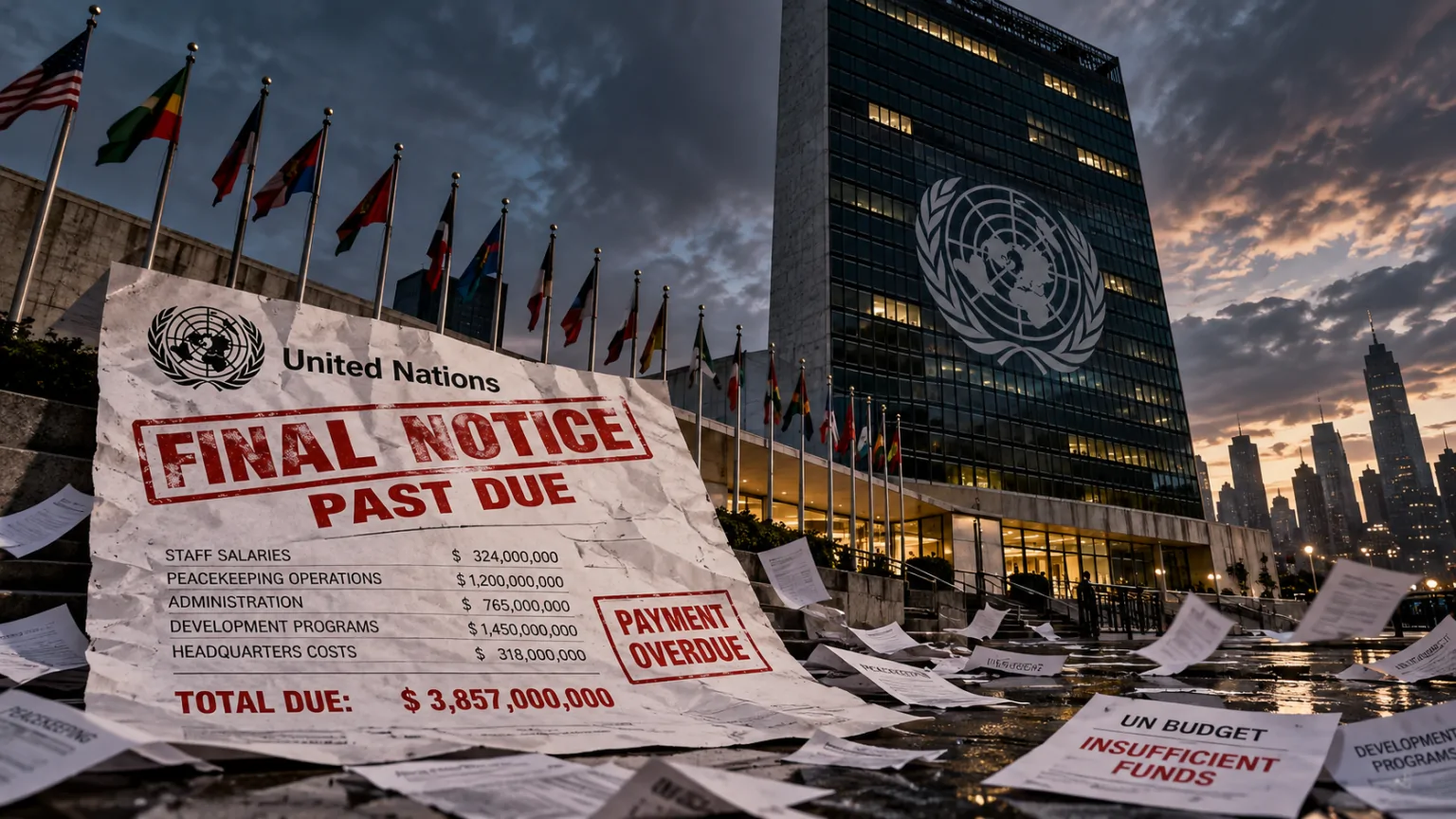
The UN’s Bankruptcy Can’t Happen Fast Enough
The UN’s Bankruptcy Can’t Happen Fast Enough
Notes From the Field By James Hickman (Simon Black / Sovereign Man) September 28, 2026
Every September, world leaders take turns at the podium of the United Nations General Assembly in New York and give pointless speeches. If they really cared about CO2 emissions, they’d skip the event entirely, because the only thing coming out of their mouths is lies and hot air. But a few days ago when it was Argentina's turn, President Javier Milei spoke honestly and boldly.
The UN’s Bankruptcy Can’t Happen Fast Enough
Notes From the Field By James Hickman (Simon Black / Sovereign Man) September 28, 2026
Every September, world leaders take turns at the podium of the United Nations General Assembly in New York and give pointless speeches. If they really cared about CO2 emissions, they’d skip the event entirely, because the only thing coming out of their mouths is lies and hot air. But a few days ago when it was Argentina's turn, President Javier Milei spoke honestly and boldly.
He told the auditorium the UN "has become a useless organization whose only purpose is to sustain a caste of fatally arrogant parasites masquerading as well-intentioned bureaucrats."
He then piled on a heap of charges to prove his point.
Milei e said the UN "allowed chaos, violence and international terrorism to flourish," and that it had "sheltered bloodthirsty dictatorships and regimes that stone women in the streets."
Of course, this type of hypocrisy is nothing new for the UN.
We're talking about a body that has appointed China, Cuba, and Venezuela to their Human Rights Council.
Then Milei turned to the pandemic. He said UN agencies pushed lockdowns that were "a global experiment in social control disguised as science," which he said is why Argentina quit the World Health Organization.
"There's no shortage of words or resolutions. What is lacking is consequences."
He's right, and the proof is the people in that very room who run the place.
The United Nations, along with other ‘supranational’ bodies like the EU and NATO, has become a sort of retirement home for failed politicians who destroyed their own countries with terrible ideas and worse execution.
In June 2024, after running his country into the ground, Belgian prime minister Alexander De Croo came out of a national election with barely 5% of the vote.
He resigned that night and left behind a deficit so large that the EU opened disciplinary proceedings against Belgium.
Yet while Belgian voters threw him out for being incompetent, the United Nations made de Croo the head of its its development agency (UNDP) with a $5 billion annual budget to advise poor countries on how to manage their finances.
It's the same job the UN gave to former New Zealand prime minister Helen Clark in 2009, a few months after voters threw her out.
Then theres António Guterres, former Portuguese prime minister who was thrown out of elected office by the voters. The UN then elevated Guterres to the unelected office of running its refugee agency. And he later became Secretary General in 2017.
Speaking of former Portuguese politicians, António Costa resigned as prime minister of Portugal in November 2023, hours after police arrested his chief of staff in a corruption investigation.
Police found more than €75,000 in cash inside the prime minister's official residence, stuffed in envelopes hidden between books and in champagne crates.
Prosecutors put Costa himself under investigation, after which EU leaders decided he was fit to be President of the European Council, the group of the EU's 27 national leaders that sets the bloc's direction.
Former British prime minister Gordon Brown was thrown out of office by his voters in 2010. The UN subsequently invented a brand-new title for him: "Special Envoy for Global Education."
And another ex-prime minister who was ousted from office, the ridiculously unpopular and failed Keir Starmer, is reportedly waiting in the wings for his fancy (and unelected) EU/UN post. Rumor has it that he wants to be the next secretary general of NATO… or even of the UN.
This is the pattern that Argentina’s president has correctly identified: incompetent politicians who couldn't manage their own countries are often put in charge of global organizations.
Unsurprisingly, the UN's track record looks exactly like you'd expect.
Last year the world had more armed conflicts than in any year since it was founded in 1945; ironically, the UN was founded "to save succeeding generations from the scourge of war." Great work!
The UN passed nine rounds of sanctions to stop North Korea's nuclear program. North Korea carried out six nuclear tests anyway.
UN peacekeepers have spent 20 years trying to keep Hezbollah's weapons out of southern Lebanon. Hezbollah armed itself anyway.
In 2015, it promised to end extreme poverty by 2030. Poverty is still everywhere.
The UN is also a gigantic financial failure. All of these ex-politicians rake in pretty serious salaries, in addition to massive benefits ranging from security details to tax-free earnings. It literally pays to be a failed politician.
Partly as a result of such lavish spending, the UN is now in serious financial straits...
In January, the UN's secretary-general even warned of the organization's "imminent financial collapse" and "race to bankruptcy".
The same guys who want to tell developing nations how to manage their finances can't manage to stay afloat themselves.
The biggest irony is that these are the same politicians that their respective democratic nations already threw out. Yet now they've all been elevated to jobs where they can't be fired, don't answer to voters, and were never elected by anyone.
Milei was right: what is lacking is consequences.
The only real consequence the UN may ever face is bankruptcy… and that can't come fast enough.
To your freedom, James Hickman Co-Founder, Schiff Sovereign LLC
Seeds of Wisdom RV and Economics Updates Saturday Morning 9-26-26
Good Morning Dinar Recaps,
IRAN RESET WATCH: U.S. REJECTS 7-DAY HORMUZ PLAN AS OIL AND GLOBAL MARKETS REMAIN ON EDGE
The reported U.S. rejection of Iran’s seven-day proposal keeps the Strait of Hormuz at the center of global energy, trade and financial-market uncertainty.
Good Morning Dinar Recaps,
IRAN RESET WATCH: U.S. REJECTS 7-DAY HORMUZ PLAN AS OIL AND GLOBAL MARKETS REMAIN ON EDGE
The reported U.S. rejection of Iran’s seven-day proposal keeps the Strait of Hormuz at the center of global energy, trade and financial-market uncertainty.
OVERVIEW
Iran has proposed a seven-day pathway that would halt regional fighting, reopen the Strait of Hormuz and restart broader negotiations, including discussions involving its nuclear program.
The United States has reportedly rejected the proposal, according to a Wall Street Journal report cited by Reuters, although Tehran was still awaiting an official U.S. response as of September 26.
Hormuz remains a major pressure point for the global economy, with disruption to the waterway affecting oil transportation, shipping costs, inflation expectations and financial markets.
KEY DEVELOPMENTS
1. Iran Puts a Seven-Day Hormuz Roadmap on the Table
Iranian Foreign Minister Abbas Araghchi said Tehran had delivered its proposal to the United States through intermediaries.
Under the plan, the process would begin if Washington accepted the proposal. Initial steps would include a ceasefire and changes to the U.S. blockade and sanctions position. The Strait of Hormuz would then reopen within the seven-day timetable, followed by broader negotiations.
The proposal would also revive discussions involving Iran’s nuclear program, making the plan broader than simply reopening the waterway.
2. Washington Is Reported to Have Rejected the Proposal
A Reuters report published September 26 said Iran was awaiting a U.S. response after the Wall Street Journal reported that President Donald Trump had rejected the proposal.
The distinction is important: the reported rejection has been attributed to unnamed U.S. officials, while Iranian officials continued to await Washington’s formal response. This means the seven-day plan should be viewed as a diplomatic proposal rather than an agreement.
3. Hormuz Remains a Financial Pressure Point
The Strait of Hormuz is one of the world's most important energy shipping corridors. Continued disruption has forced oil producers and shipping companies to find alternative ways to move crude.
Reuters reported that ship-to-ship transfers near Oman have expanded as producers attempt to keep exports moving despite the conflict. The workaround has helped maintain oil flows, but at a much higher transportation cost, with tanker freight rates rising sharply.
That creates a broader economic chain reaction: geopolitical tension → energy disruption → higher transportation costs → inflation pressure → interest-rate pressure → currency and capital-flow effects.
WHY IT MATTERS
The Strait of Hormuz has become more than a regional security issue. It is now directly connected to energy prices, international trade, shipping costs, inflation and financial-market expectations.
When the world's energy supply routes become more expensive or uncertain, the effects can spread through the global economy. Higher energy and transportation costs can influence inflation, while inflation can affect central-bank policy and interest rates.
At the same time, countries and companies are being forced to develop alternative transportation and settlement arrangements to keep international commerce moving.
The Hormuz situation demonstrates how geopolitical events can accelerate changes in the infrastructure supporting global trade and finance.
WHY IT MATTERS TO FOREIGN CURRENCY HOLDERS
For foreign currency holders, the important issue is not that the Hormuz situation guarantees a currency revaluation. It does not.
The significance is that energy prices, inflation, interest rates and international capital flows all influence the environment in which currencies are valued.
A prolonged disruption could increase pressure on countries that depend heavily on imported energy. Conversely, a durable diplomatic agreement that restores normal shipping could reduce some of that pressure.
The seven-day proposal therefore represents a potential turning point to watch, rather than proof that a financial reset or currency revaluation is about to occur.
IMPLICATIONS FOR THE GLOBAL RESET
Pillar 1: Trade
Continued disruption around Hormuz is forcing energy producers and shipping companies to redesign transportation routes and develop costly alternatives. This highlights how geopolitical events can reshape the infrastructure underlying global trade.
Pillar 2: Debt
Higher energy and transportation costs can contribute to inflation and increase pressure on governments and central banks. If higher inflation keeps interest rates elevated, the cost of servicing government debt can become an even greater issue.
Pillar 3: Energy
Energy security is becoming increasingly interconnected with financial stability. The effort to keep oil moving through alternative routes demonstrates how critical energy infrastructure is to the functioning of the global economy.
Pillar 4: Technology
The expansion of ship-to-ship transfers and alternative logistics networks shows how global commerce is adapting to disruption. Over time, similar pressures can encourage greater investment in digital tracking, automated logistics and new forms of financial settlement.
THE BOTTOM LINE
Iran's seven-day Hormuz proposal is a significant diplomatic development, but it remains a proposal rather than a completed agreement.
The reported U.S. rejection means the immediate uncertainty surrounding the Strait continues, while markets remain sensitive to the effects on oil, shipping, inflation and global trade.
For Global Reset watchers, the larger lesson is that energy security, geopolitical relationships and financial stability are becoming increasingly interconnected.
The bigger story is not simply whether the Strait of Hormuz reopens—it is how every major disruption is pushing nations, markets and businesses to rethink the infrastructure that supports the global financial system.
Seeds of Wisdom Team
Newshounds News™ Exclusive
SOURCES
Reuters — "Iran awaits US response on Strait of Hormuz plan after Trump reportedly rejects deal"
Reuters — "Iran ready to reopen Strait of Hormuz if US eases military pressure and lifts blockade"
~~~~~~~~~~
🌱 A Message to Our Currency Holders🌱
If you’ve been holding foreign currency for many years, you were not foolish.
You were not wrong to believe the global financial system would change.
What failed was not your patience — it was the information you were given.
For years, dates, rumors, and personalities replaced facts, structure, and proof. “This week” predictions created cycles of hope and disappointment that were never based on how currencies actually change.
That is not your failure.
Our mission here is different: • No dates • No rates • No hype • No gurus
Instead, we focus on:
• Verifiable developments • Institutional evidence
• Global financial structure • Where countries actually sit in the process
Currency value changes only come after sovereignty, trade, banking, settlement systems, and fiscal coordination are in place. History and institutions confirm this sequence.
You will see silence. You will see denials. That is not delay — that is discipline.
Protect your identity. Organize your documents. Verify everything.
Never hand your discernment to anyone who cannot show proof.
You deserve truth — not timelines.
Seeds of Wisdom Team
Newshounds News
~~~~~~~~~~
Seeds of Wisdom Team RV Currency Facts Youtube and Rumble
Newshound's News Telegram Room Link
RV Facts with Proof Links Link
RV Updates Proof links - Facts Link
Start Here room with Most Asked Questions Link
Follow the Gold/Silver Rate COMEX
Follow Fast Facts
Seeds of Wisdom Team™ Website
Thank you Dinar Recaps
How Medicare Became a Slush Fund
How Medicare Became a Slush Fund
Notes From the Field By James Hickman (Simon Black / Sovereign Man) August 18, 2026
Four years ago this month, Washington passed a law and named it, with a straight face, the Inflation Reduction Act. Bizarrely, their plan to ‘reduce inflation’, which had been caused by excessive government spending, was for the government to spend even more money. It’s genius!
How Medicare Became a Slush Fund
Notes From the Field By James Hickman (Simon Black / Sovereign Man) August 18, 2026
Four years ago this month, Washington passed a law and named it, with a straight face, the Inflation Reduction Act. Bizarrely, their plan to ‘reduce inflation’, which had been caused by excessive government spending, was for the government to spend even more money. It’s genius!
Among its various provisions, part of the legislation authorized the government to negotiate prescription drug prices. Seems like a nice idea in principle... but in practice it’s been a disaster.
The Congressional Budget Office released the results late last month: the Medicare drug provisions that were supposed to generate $129 billion in savings will now add $700 billion to the deficit.
Sometimes it seems like this is the whole idea; given the rampant Medicare fraud that gets uncovered on a daily basis, it’s clear that politicians have an incentive to steer MORE money into the program.
Healthcare is the easiest spending in Washington to justify. Every dollar comes with the same argument: if we don't spend on healthcare, people will die!
It ends up being so much money— a giant, dark pool of corruption— and a lot of it gets funneled straight back into the political process as campaign contributions. And it’s been going on for ages.
Back in 2002, for example, America’s biggest health-care workers union spent about $800,000 electing Rod Blagojevich governor of Illinois. He later thanked them "for electing me governor."
Weeks after he took office, Blagojevich signed multiple executive orders that fattened the union’s pockets, like forcing more healthcare workers to join... and automatically deducting union dues from their paychecks. Bad for the unionized workers, but great for the union bosses.
In New York, the Greater New York Hospital Association wrote two checks totaling more than $1 million to the state Democratic Party in August 2018, at then-Governor Andrew Cuomo's campaign's request.
Three months later the state ordered its first across-the-board Medicaid rate increase since 2008, worth about $140 million a year. Great news for the hospital association.
The cycle never ends— the unions and associations scratch the politicians’ backs, and in turn get their backs scratched. No one can rationally expect those parties to walk away from their mutual benefit.
And this is just the ‘honest’ graft and corruption... it doesn’t take into account the outright fraud.
During COVID, Medicare paid for eight test kits per month, per person, in America. Yet an inspector general later found it paid up to $454 million for nearly 39 million kits over that limit.
In June, the Justice Department found over $6.5 billion in fake health-care claims. Yet agents recovered only $182 million in cash and assets, less than three cents per dollar of fraud.
In one instance, a pair of adult day care operators fraudulently billed Medicare and Medicaid $120 million over a decade. One of their centers claimed 1,041 attendees in a single day while the building's occupancy limit was 81.
Then Nick Shirley walked into the neighborhood's facilities with a camera this summer and turned up $190 million more in suspicious billing.
And yet very little of the fraud gets stopped... in large part because a portion of what they steal from the government is funneled back to the politicians (mostly on the Left) who vote for more Medicare spending.
These same politicians install activist judges at the state and federal level, ensuring that anyone who tries to stop the fraud will be sued... and blocked by the courts.
As an example, last year Congress voted to cut off Planned Parenthood from Medicaid for one year.
Planned Parenthood sued. Judge Indira Talwani, an Obama appointee in Boston, dutifully blocked the cut within weeks, and the appeals court had to overrule her twice before the law could take effect.
Feeding Our Future, the Minnesota child-meal Somali fraud network, had the audacity to sue the state for racial discrimination when the fraudulent money train slowed down.
It’s extraordinary; there are so many checks-and-balances in place to keep the graft going.
The politicians vote to keep the money moving. The judges defend it to the last Somali. And the activists and the media scream that anyone asking questions is racist; Governor Tim Walz called the fraud talk "vile, racist lies."
The teachers' unions march the kids out of school for union causes and No Kings rallies, as if the kids had any idea what they were marching for. And the universities continue the socialist indoctrination.
Media, education, courts: the whole institutional layer exists to keep the money flowing.
So of course they want more of it.
Senator Bernie Sanders reintroduced Medicare for All last year, and the movement that just made Zohran Mamdani mayor of New York wants to make this slush fund the entire health-care system.
Even the most conservative estimate puts the price at $32.6 trillion over the first decade; that’s an astonishing amount of potential fraud.
The US could get its fiscal house in order if it shut this slush fund down. But the graft is deeply entrenched... so it’s likely that US deficit spending will continue in order to pay for it all.
Foreign governments have reached the same conclusion: The US has to go deeper into debt in order to finance hundreds of billions of dollars in fraud.
That's a major reason why foreign governments and central banks are diversifying away from the dollar. And with no obvious global currency to park their financial reserves into, they buy gold.
We have been making this argument for the past few years, since gold was below $1800. This sort of news makes the case even more strongly: the story hasn’t changed... and gold remains a great hedge for the fiscal uncertainty to come.
To your freedom, James Hickman Co-Founder, Schiff Sovereign LLC
PS: In this month’s Schiff Sovereign Premium, we made the case for a gold producer built for exactly this outlook: a debt-free, dividend-paying, highly successful gold company which just had the most profitable first-half in its company history. But it only trades at 2x cash flow.
If the fraud and deficits continue, gold should do very well... and successful producers can do even better.
https://www.schiffsovereign.com/trends/how-medicare-became-a-slush-fund-155635/?inf_contact_key=45b23aa345ce3789b19a50db4e04df60121216c3a82d754a88f6751e8a28a7b5
Japan's Crisis Could Trigger the Global Financial Reset | Alasdair Macleod
Japan's Crisis Could Trigger the Global Financial Reset | Alasdair Macleod
Liberty and Finance: 7-24-2026
Alasdair Macleod joins Liberty and Finance to explain why Japan's mounting debt crisis, rising global bond yields, and geopolitical turmoil could mark the beginning of the end for the fiat currency system.
He discusses how the unraveling yen carry trade, soaring government borrowing costs, and weakening demand for U.S. Treasuries could trigger a historic financial reset.
Japan's Crisis Could Trigger the Global Financial Reset | Alasdair Macleod
Liberty and Finance: 7-24-2026
Alasdair Macleod joins Liberty and Finance to explain why Japan's mounting debt crisis, rising global bond yields, and geopolitical turmoil could mark the beginning of the end for the fiat currency system.
He discusses how the unraveling yen carry trade, soaring government borrowing costs, and weakening demand for U.S. Treasuries could trigger a historic financial reset.
Macleod also warns that energy shortages, inflation, and government intervention may accelerate the crisis while pushing investors toward tangible assets.
Throughout the interview, he explains why central banks continue accumulating gold and why he believes physical precious metals offer protection as credit markets become increasingly unstable.
Watch to hear his outlook on gold, silver, the dollar, and the global economy during what he calls the next phase of the debt endgame.
INTERVIEW TIMELINE:
0:00 Intro
2:44 US Debt Trap
21:00 Oil shortages
27:30 Gold & silver
The Fed Days are Numbered, Treasury Secretary Bessent Already Initiated the Plan
The Fed Days are Numbered, Treasury Secretary Bessent Already Initiated the Plan
X22 Report (with Dr. Scott Young): 7-18-2026
A recent X22 Report interview featured Dr. Scott Young, a historian and financial researcher, who offered a compelling perspective on the current state of gold reserves, the fiat currency system, and a broader economic transformation involving key institutions like the Federal Reserve (Fed) and the IRS.
His insights paint a picture of impending change, suggesting a radical departure from the financial systems we’ve known.
The Fed Days are Numbered, Treasury Secretary Bessent Already Initiated the Plan
X22 Report (with Dr. Scott Young): 7-18-2026
A recent X22 Report interview featured Dr. Scott Young, a historian and financial researcher, who offered a compelling perspective on the current state of gold reserves, the fiat currency system, and a broader economic transformation involving key institutions like the Federal Reserve (Fed) and the IRS.
His insights paint a picture of impending change, suggesting a radical departure from the financial systems we’ve known.
One of the most striking points raised by Dr. Young in the interview revolves around the true location and quantity of gold reserves. He challenges the commonly held belief that significant bullion is held at Fort Knox, suggesting instead a widespread dispersion of gold holdings globally.
According to Dr. Young, major global currencies are increasingly backed by real assets, with substantial physical gold now believed to reside in places like the Philippines and China, rather than solely within the United States. This re-evaluation of gold’s physical location sets the stage for his prediction of an unprecedented gold revaluation.
Dr. Young posits that the world is on the cusp of a profound gold revaluation, an event he believes could radically alter both the U.S. and global economies.
His perspective suggests that the current fiat currency system, which he describes as failing, is moving towards a gold-backed sound money system.
This transition would mark a historic shift, moving away from currencies based solely on government trust and toward a system anchored by tangible assets. The implications for inflation, purchasing power, and international trade would be far-reaching, fundamentally reshaping the financial instruments we utilize daily.
Beyond gold, Dr. Young delves into the structural changes he anticipates within national economies. He discusses a proposed reform involving tariffs replacing income tax, aiming to streamline revenue collection and foster domestic economic growth.
This radical shift, if implemented, would represent a significant economic transformation, impacting every individual and business. Furthermore, the interview sheds light on Dr. Young’s critical view of existing tax systems, particularly the IRS and state tax structures, which he suggests are ripe for systemic reform as part of this broader economic reset.
The discussion extends into the geopolitical implications of these economic shifts. Dr. Young touches upon the concept of economic warfare and the strategic importance of oil in influencing global power dynamics. He observes a slow but steady dismantling of fiat currencies worldwide, driven by strategic economic pressures. Compellingly, Dr. Young predicts a near-term reset within months, driven by these multifaceted economic pressures and underlying military-economic strategies. He suggests that these anticipated reforms are not merely theoretical but are actively being orchestrated to bring about a new global financial order.
Dr. Scott Young’s interview on the X22 Report offers a thought-provoking and at times provocative insight into the potential trajectory of global economics. From questioning the location of gold reserves to forecasting a gold revaluation and a fundamental economic transformation involving the Federal Reserve and IRS, his analysis suggests a world poised for significant change.
While these are complex issues with varying expert opinions, Dr. Young’s perspective provides a compelling framework for understanding the forces that could shape our financial future.
Nobody Is Talking About The July 1st Deadline: Joel Skousen's Stark Warning
Nobody Is Talking About The July 1st Deadline: Joel Skousen's Stark Warning
Liberty and Finance: 6-20-2026
Joel Skousen warns that investors may be underestimating the long term risks of escalating global conflict, arguing that the current relief in markets could prove temporary.
He explains why he believes a wider World War III scenario, including the possibility of an EMP attack and prolonged infrastructure disruption, could trigger a historic collapse in financial markets, leaving stocks, cryptocurrencies, and even bank accounts inaccessible.
Nobody Is Talking About The July 1st Deadline: Joel Skousen's Stark Warning
Liberty and Finance: 6-20-2026
Joel Skousen warns that investors may be underestimating the long term risks of escalating global conflict, arguing that the current relief in markets could prove temporary.
He explains why he believes a wider World War III scenario, including the possibility of an EMP attack and prolonged infrastructure disruption, could trigger a historic collapse in financial markets, leaving stocks, cryptocurrencies, and even bank accounts inaccessible.
Skousen also discusses why he believes preparedness, self sufficiency, and strategic planning are essential in a world facing growing geopolitical and economic instability.
INTERVIEW TIMELINE:
0:00 Intro
1:30 Israeli influence on Iran war
6:00 Oil shock timeframe and shaky Iran deal
23:00 Preparedness steps
China Just Beat the US at Its Own Game | Vince Lanci
China Just Beat the US at Its Own Game | Vince Lanci
TFTC: 6-14-2026
In the modern financial world, we often spend our time debating the strength of currencies—the dollar, the euro, or the yen. However, a deeper shift is occurring beneath the surface of the global economy. According to Vince, author of As Good as Gold: The Return to Real Money, the real story isn’t just about the currency we spend, but the collateral that backs it.
In a recent discussion on TFTC, Vince explores how the foundation of global finance is moving away from a US Treasury-centric model toward a more diversified framework involving gold, Bitcoin, and other hard assets.
China Just Beat the US at Its Own Game | Vince Lanci
TFTC: 6-14-2026
In the modern financial world, we often spend our time debating the strength of currencies—the dollar, the euro, or the yen. However, a deeper shift is occurring beneath the surface of the global economy. According to Vince, author of As Good as Gold: The Return to Real Money, the real story isn’t just about the currency we spend, but the collateral that backs it.
In a recent discussion on TFTC, Vince explores how the foundation of global finance is moving away from a US Treasury-centric model toward a more diversified framework involving gold, Bitcoin, and other hard assets.
To understand the global monetary system, one must distinguish between currency and collateral. While currency acts as the medium for daily transactions, collateral is the “trust” that allows the entire financial architecture to function.
For decades, US Treasury securities were the undisputed gold standard of collateral. However, as geopolitical landscapes shift and economic pressures mount, the world is beginning to look for alternatives.
Historically, gold held all three properties of money: a store of value, a medium of exchange, and a unit of account. After the breakdown of the Bretton Woods system in 1971, these roles were split; the US dollar became the primary unit of account and medium of exchange, while gold was relegated to a store of value.
Today, we are seeing a reversal of this trend. Gold is once again overtaking Treasuries as a preferred reserve asset for many central banks, signaling a return to tangible backing in an era of uncertainty.
This transition is particularly evident in the actions of the BRICS nations and China. These regions are actively establishing global gold vaults and developing parallel collateral markets. By leveraging gold reserves, these nations can secure financing for infrastructure and development projects without relying solely on the US Treasury repo markets.
Even the European Central Bank (ECB) has noted this transformation. While traditional institutions express concerns over the rise of private digital currencies and stablecoin dollars—which could threaten centralized monetary control—they are also forced to navigate a world where the US dollar is no longer the only game in town. This strategic effort by various nations aims to create a “multi-polar” economy, reducing dependence on any single national instrument.
As the global economy “swaps its engine while the car is still moving,” technology is playing a pivotal role.
The transition to a new system is being handled methodically to avoid financial chaos, utilizing innovations like digital currencies and evolving policy structures.
Bitcoin, specifically, is emerging as a unique piece of this puzzle. Unlike centralized digital assets or government-issued stablecoins, Bitcoin’s decentralized nature offers an alternative monetary system that operates outside of traditional control.
While governments may attempt to regulate these assets to maintain oversight, the existence of a decentralized option provides a failsafe or “exit ramp” during times of economic crisis or authoritarian overreach.
The shift in our monetary foundation is happening against a backdrop of significant socio-political and economic challenges.
From the pressures of inflation and energy constraints to the disruptive potential of AI and robotics, the sustainability of current economic models is being tested. Success in this new era will likely require a delicate balance of technological innovation and fiscal responsibility.
As Vince concludes, while money often gets the spotlight in public discourse, collateral does the foundational work. We are entering a period where trust is being redefined, and the assets we choose to back our systems will determine the stability of our economic future.
0:00 – Intro
0:37 - Collateral versus currency
3:52 - Gold to treasury transition
6:10 - ECB gold reserve overtakes
7:01 - Digital euro and stablecoins
18:08 - Repo markets and plumbing
20:26 - Gold vault network development
23:36 - Bitcoin strategic reserve act
28:36 - Impact of collateral shift
2:13 - AI race and policy
47:31 - Current gold market outlook
53:26 - Inflation and Fed response
56:26 - 1970s inflation parallels
1:03:09 - Book summary and takeaways
Here’s Where U.S. Debt May Become Unsustainable With Interest Payments Triggering A Default Crisis That Even Steep Tax Hikes Can’t Fix
Here’s Where U.S. Debt May Become Unsustainable With Interest Payments Triggering A Default Crisis That Even Steep Tax Hikes Can’t Fix
Jason Ma Sat, June 6, 2026 Soaring U.S. debt and projections that put it at astronomical levels in the coming years have set off increasing panic, though the precise level that sparks a crisis is unknown. But the Penn Wharton Budget Model may have an answer: more than 210% of GDP.
Above that “outer bound” threshold, there’s no feasible tax on labor income that can finance interest payments on U.S. debt at returns acceptable to investors, PWBM warned in a report Thursday.
Here’s Where U.S. Debt May Become Unsustainable With Interest Payments Triggering A Default Crisis That Even Steep Tax Hikes Can’t Fix
Jason Ma Sat, June 6, 2026 Soaring U.S. debt and projections that put it at astronomical levels in the coming years have set off increasing panic, though the precise level that sparks a crisis is unknown. But the Penn Wharton Budget Model may have an answer: more than 210% of GDP.
Above that “outer bound” threshold, there’s no feasible tax on labor income that can finance interest payments on U.S. debt at returns acceptable to investors, PWBM warned in a report Thursday.
According to PWBM, the outer bound of federal debt is the solvency limit, beyond which defaulting on either Treasury debt or pay-as-you-go transfers like Social Security becomes a near certainty on an inflation-adjusted basis.
The debt-to-GDP ratio is about 100% today, and forecasts from the Congressional Budget Office see it hitting 175% by 2056—suggesting 210% is decades away on its current trajectory.
But depending on how much healthcare costs rise and boost Medicare spending, that threshold could come much sooner.
The U.S. has 25 more years in a lower-growth scenario, 22 years with medium growth, and 19 years with higher growth, PWBM estimated. But even that may downplay the risk.
“Under the historical growth rate of healthcare costs, there is a 25% chance of hitting the debt maximum in 14 years,” it added.
Fixing federal finances before it’s too late would require a permanent tax hike of about 15 percentage points on all labor income, the report said, meaning there would no longer be caps that exempt income above a certain level.
Other factors could also affect these calculations, such as higher interest rates, a smaller tax base, and labor-supply responses. Rising debt would inflict economic costs, like weaker wages, slower GDP growth, and less consumption.
Capital also becomes scarcer as debt sucks up money that would otherwise go to more productive investments. Meanwhile, sustained tariffs that reduce the inflow of international capital could shorten U.S. leeway by two to four years, PWBM said.
Two big assumptions are baked into the forecast as well. One is that capital market values are efficiently priced and not in bubble territory. But if they aren’t and there’s a sudden market crash, it would increase the overall debt-to-capital ratio, causing debt holders to demand higher yields that add further to debt interest costs.
https://finance.yahoo.com/economy/policy/articles/may-maximum-level-u-debt-174555851.html
READ MORE HERE: https://budgetmodel.wharton.upenn.edu/p/2026-06-02-when-does-federal-debt-reach-unsustainable-levels/
Iraqi Dinar News: Breaking: Iraq Approves New Cabinet - Market Implications
Iraqi Dinar News: Breaking: Iraq Approves New Cabinet - Market Implications
Edu Matrix: 5-16-2026
Iraqi Dinar News: Breaking Iraq News Approves New Cabinet - Market Implications - Iraq’s New Prime Minister Faces Immediate Pressure — Could This Affect the IQD?
Political News In this video, we discuss the growing tensions surrounding Iraq’s new Prime Minister Ali al-Zaidi and the mounting pressure to disarm Iran-backed militants inside Iraq.
Iraqi Dinar News: Breaking: Iraq Approves New Cabinet - Market Implications
Edu Matrix: 5-16-2026
Iraqi Dinar News: Breaking Iraq News Approves New Cabinet - Market Implications - Iraq’s New Prime Minister Faces Immediate Pressure — Could This Affect the IQD?
Political News In this video, we discuss the growing tensions surrounding Iraq’s new Prime Minister Ali al-Zaidi and the mounting pressure to disarm Iran-backed militants inside Iraq.
According to U.S. officials, Iraq’s future economic success and international stability may depend on reducing militia influence and strengthening central government control.
Iraq’s parliament recently approved parts of the new government, but major political disagreements continue over key cabinet positions.
Prime Minister al-Zaidi, Iraq’s youngest prime minister, now faces one of the most dangerous political balancing acts in modern Iraqi history. Will Iraq move toward greater stability and international cooperation — or will internal divisions delay progress even further?
For IQD investors, these developments matter because political stability, security, and international confidence remain critical factors tied to Iraq’s long-term economic future and any potential changes involving the Iraqi dinar.
Topics Covered:
• Iraq political news
• Iraqi dinar latest update
• IQD investor concerns
• Iran-backed militants in Iraq
• Iraq parliament update
• U.S. and Iraq relations
• Iraq economic future
• Prime Minister Ali al-Zaidi
• Middle East geopolitical tensions
• Iraq security situation
Please remember: all investments involve risk. This video is for informational and educational purposes only.
Seeds of Wisdom RV and Economics Updates Sunday Afternoon 4-12-26
Good Afternoon Dinar Recaps,
Ceasefire Stalls, Hormuz Gridlock Deepens, and Energy Shock Expands Beyond the Battlefield
Failed U.S.–Iran talks and frozen shipping flows signal the crisis is shifting from war to global economic disruption
Good Afternoon Dinar Recaps,
Ceasefire Stalls, Hormuz Gridlock Deepens, and Energy Shock Expands Beyond the Battlefield
Failed U.S.–Iran talks and frozen shipping flows signal the crisis is shifting from war to global economic disruption
Overview
Since last night, the situation has deteriorated from fragile diplomacy into strategic uncertainty. U.S.–Iran peace talks in Pakistan ended without agreement, while the Strait of Hormuz remains functionally constrained, preventing a true return to normal energy flows.
The result is a transition from military conflict to economic disruption, where energy logistics, global trade, and financial stability are now the primary battlegrounds. This shift carries significant consequences for the region, the global economy, and currency markets.
Key Developments
1. U.S.–Iran Peace Talks Collapse, Ceasefire Stability in Question
High-level negotiations in Islamabad ended in a stalemate after 21 hours, with both sides blaming each other.
First direct talks in over a decade failed to produce agreement
Major sticking points include nuclear policy and control of the Strait of Hormuz
A temporary ceasefire remains, but long-term stability is uncertain
Why it matters: The failure to secure a deal signals that geopolitical risk remains elevated, limiting any near-term normalization.
2. Strait of Hormuz Still Constrained Despite Ceasefire
While active conflict has paused, the world’s most critical oil corridor is not functioning normally.
Only a fraction of normal tanker traffic has resumed
Ships remain stranded or delayed due to security and insurance risks
Roughly 20% of global oil and major LNG flows depend on this route
Why it matters: This confirms the crisis has shifted from combat to logistics, which historically takes far longer to resolve.
3. Energy Markets Reflect False Calm as Physical Shortages Persist
Oil prices have pulled back from peak panic levels, but underlying supply conditions remain tight.
Physical oil previously surged near $150 per barrel during peak disruption
Current pricing does not fully reflect restricted access to deliverable supply
LNG systems, particularly in Qatar, may take weeks or months to normalize
Why it matters: Markets are reacting to headlines, not actual supply restoration—creating a disconnect between price and reality.
4. Economic Impact Expands Beyond Energy Into Global System
The crisis is now feeding into broader economic pressures, with global institutions raising concerns.
IMF warns demand for financial assistance could rise $20B–$50B
World Bank signals potential global growth losses up to 1%
Fertilizer and shipping disruptions threaten food supply chains
Why it matters: This is no longer just an energy story—it is becoming a multi-sector global economic shock.
Why It Matters
What has changed in the last 24 hours is critical: the crisis is no longer defined by active conflict, but by systemic disruption.
Diplomatic failure prolongs uncertainty
Energy flows remain restricted despite ceasefire headlines
Supply chains and logistics now drive the crisis timeline
Economic consequences are spreading globally
This marks a transition from a geopolitical event to a financial and economic restructuring phase.
Why It Matters to Foreign Currency Holders
Sustained energy disruption can drive inflation across multiple economies, weakening purchasing power
Countries dependent on energy imports may face currency depreciation and balance-of-payments stress
Prolonged instability increases the likelihood of alternative trade and settlement systems
Capital flows may shift rapidly as investors seek stability and resource security
Implications for the Global Reset
Pillar 1: Energy System Fragility
The Hormuz disruption highlights how concentrated andvulnerable global energy infrastructure remains, reinforcing the need for diversification and regionalization.
Pillar 2: Transition from Military to Financial Impact
As the conflict moves from battlefield to economics, the pressure shifts toward currencies, debt markets, and global trade systems.
Closing Perspective
The ceasefire may have paused the war—but it has not repaired the system.
When diplomacy stalls, shipping remains constrained, and economic pressure builds simultaneously, the result is not stabilization—it is prolonged disruption with global consequences.
This is not just a regional conflict — it is a stress test of the global financial system.
Sources
“U.S.–Iran peace talks in Pakistan end in stalemate” – Modern Diplomacy
“The real energy crisis begins after the ceasefire” – Modern Diplomacy
~~~~~~~~~~
U.S. Announces Hormuz Blockade After Failed Talks, Marking Major Escalation in Global Energy Conflict
New confirmation signals a shift from fragile ceasefire to direct control over the world’s most critical oil chokepoint
Overview
In the last 24 hours, the situation has escalated significantly following confirmation from multiple credible outlets that President Donald Trump has ordered a U.S. Navy blockade of the Strait of Hormuz.
This development comes immediately after failed U.S.–Iran peace talks and represents a major turning point—from stalled diplomacy to direct economic and military intervention in global energy flows.
The implications extend far beyond the region, impacting oil supply, global trade, financial markets, and currency stability.
Key Developments
1. U.S. Confirms Plan to Blockade the Strait of Hormuz
Multiple reports, including Reuters-backed coverage and major outlets, confirm the U.S. intends to interdict vessels and assert control over the strait.
Blockade described as “effective immediately,” though implementation may take time
U.S. may target vessels paying tolls to Iran
Naval operations include mine-clearing and maritime enforcement
Why it matters: This marks a direct intervention in a global energy chokepoint, escalating from regional conflict to control over international shipping flows.
2. Escalation Follows Collapse of U.S.–Iran Peace Talks
The blockade announcement came within hours of failed negotiations in Pakistan, signaling a rapid shift in strategy.
Talks ended without agreement on nuclear policy or Hormuz control
Both sides remain deeply divided on core demands
Ceasefire now exists under heightened tension and uncertainty
Why it matters: The failure of diplomacy followed by military-economic action indicates a transition from negotiation to enforcement.
3. Strait of Hormuz Becomes the Central Pressure Point in Global Economy
The blockade directly impacts one of the most critical arteries in global trade and energy supply.
Roughly 20% of global oil and significant LNG flows pass through the strait
Hundreds of vessels previously delayed or stranded
Any restriction or control shifts influence over global energy pricing
Why it matters: Control of Hormuz effectively means influence over global inflation, energy markets, and economic stability.
4. Global Markets and Supply Chains Face Prolonged Disruption Risk
Even before full enforcement, the announcement is expected to intensify uncertainty across markets.
Insurance, shipping, and logistics sectors likely to delay normalization
Energy markets may price in long-term disruption risk
Governments may respond with emergency supply measures
Why it matters: The crisis is no longer temporary—it is evolving into a prolonged structural disruption.
Why It Matters
This is a defining escalation that shifts the crisis into a new phase:
From ceasefire to controlled access of global trade routes
From regional conflict to global economic leverage
From supply disruption to strategic control of energy flow
The system is moving toward a reality where geopolitics directly governs economic infrastructure.
Why It Matters to Foreign Currency Holders
Energy control can drive inflation spikes and currency instability worldwide
Countries dependent on imported energy face heightened devaluation risk
Capital may flow toward resource-backed or stable economies
Increased fragmentation supports movement toward multi-currency and regional trade systems
Implications for the Global Reset
Pillar 1: Strategic Control of Energy Infrastructure
The blockade underscores how critical chokepoints can be leveraged, accelerating shifts toward regional energy independence and alternative routes.
Pillar 2: Transition from Free Markets to Controlled Systems
Direct intervention in shipping lanes signals a move away from open global markets toward strategically managed economic systems.
Closing Perspective
This is no longer just a disruption—it is a redefinition of control over global trade and energy.
When a major power moves to blockade a critical global chokepoint, it signals a shift from market-driven systems to power-driven systems.
This is not just escalation — it’s a restructuring of how global commerce is governed.
Sources
~~~~~~~~~~
Seeds of Wisdom Team RV Currency Facts Youtube and Rumble
Newshound's News Telegram Room Link
RV Facts with Proof Links Link
RV Updates Proof links - Facts Link
Follow the Gold/Silver Rate COMEX
Follow Fast Facts
Seeds of Wisdom Team™Website
Thank you Dinar Recaps