
15 Things To Do If You Get Rich All Of A Sudden
From Dinar Recaps Archives
15 Things To Do If You Get Rich All Of A Sudden
So you won the lottery. ( Or Inheritance, or RV)Now what?
00:00 - Intro
00:56 - Do not let anyone know
01:25 - Pay all of your debt.
01:58 - Do not quit your job yet.
02:42 - Secure the money and let it sit for a while.
03:31 - Make investment in yourself a priority.
05:45 - Do not switch financial advisors.
06:27 - Get comfortable, but not rich-comfortable.
07:09 - Do not invest in your friend's business or lend them money.
08:06 - Do not start a business immediately.
08:46 - Prepare for change.
09:16 - Focus on getting healthier.
09:51 - the 5% rule.
10:32 - Protect your kids from the money.
10:58 - Do not cheat on your partner.
11:37 - Play it safe.
The US Treasury is Going to Crash the Dollar
The US Treasury is Going to Crash the Dollar
Steven Van Metre: 4-28-2026
The world of finance is a complex, ever-shifting landscape, and understanding the underlying currents is crucial for any observer of the global economy. Steven Van Metre recently offered a fascinating look into some pivotal strategies and market dynamics that are poised to shape our financial future, touching on everything from central bank maneuvers to equity market paradoxes. Let’s delve into some of the compelling points raised in his insightful discussion.
At the heart of Van Metre’s discussion is a bold strategic move unfolding on the global stage: the potential weakening of the U.S. dollar, spearheaded by U.S. Treasury Secretary Scott Bessent.
The US Treasury is Going to Crash the Dollar
Steven Van Metre: 4-28-2026
The world of finance is a complex, ever-shifting landscape, and understanding the underlying currents is crucial for any observer of the global economy. Steven Van Metre recently offered a fascinating look into some pivotal strategies and market dynamics that are poised to shape our financial future, touching on everything from central bank maneuvers to equity market paradoxes. Let’s delve into some of the compelling points raised in his insightful discussion.
At the heart of Van Metre’s discussion is a bold strategic move unfolding on the global stage: the potential weakening of the U.S. dollar, spearheaded by U.S. Treasury Secretary Scott Bessent.
The core mechanism? Expanding dollar swap lines with key international allies, particularly in the Gulf and Asia. These swap lines are essentially agreements where the U.S. Federal Reserve provides dollars to foreign central banks in exchange for their local currency, with an agreement to swap back later.
The rationale behind this initiative is multifaceted. Amidst a slowing global economy, there’s a growing risk of “dollar tightness”—a scarcity of dollars in international markets. This scarcity can lead to disorderly asset sales by foreign entities struggling to obtain dollars, which, in turn, could spike U.S. interest rates and potentially trigger a recession.
By proactively flooding the global economy with dollars through these expanded swap lines, the Treasury aims to maintain crucial liquidity, stabilize international markets, and prevent such disruptive scenarios. It’s a strategic maneuver designed to provide a smoother ride for the global economy, even if it means a deliberate weakening of the dollar’s relative strength.
Crucially, the effectiveness and scope of this dollar strategy are deeply intertwined with the actions and independence of the Federal Reserve. Van Metre’s video highlights significant developments here, including recent movements around the nomination of a new Fed Chair and the dropping of a Justice Department probe that had previously raised concerns about the institution’s independence. These events suggest a growing political alignment that could pave the way for more extensive, and perhaps even permanent, dollar swap lines.
This alignment is a game-changer. A Fed that is more closely aligned with government economic policy can more readily implement and sustain the kind of expansive liquidity provisions discussed. This institutional backing provides a strong foundation for the planned weakening of the dollar, solidifying the outlook for a potentially less dominant greenback on the international stage.
Shifting gears to the equity markets, Van Metre uncovers some intriguing contradictions. Despite general expectations that hedge funds might be aggressively buying into the market, data presented suggests quite the opposite: hedge funds have been offloading tech stocks at their fastest pace in two years, while simultaneously maintaining significant short positions. This “paradoxical behavior” sets up an interesting dynamic.
However, against this backdrop, other forces are at play. Ongoing pension fund rebalancing—where large institutional investors adjust their portfolios—and record corporate buybacks are injecting substantial capital back into the market. These powerful financial flows, combined with the potential for a weaker dollar and declining market volatility (as indicated by the VIX), create a fertile ground for a potentially significant rally in stock prices. While the video acknowledges the market’s narrow breadth, with fewer stocks driving overall gains, it also frames this as a characteristic of modern indexing dynamics rather than an insurmountable barrier to upward movement.
Amidst these macroeconomic and equity discussions, the video also shines a spotlight on specific investment opportunities. Steven Van Metre gives attention to Nevada King Gold Corp., highlighting its expanding high-grade gold resource in Nevada. With strong growth potential and favorable market positioning, it’s presented as an entity to watch for those interested in the precious metals sector.
Iraq Economic News And Points To Ponder Tuesday Afternoon 4-28-26
UAE Withdraws From OPEC And OPEC+, Effective May 1
2026-04-28 Shafaq News- Abu Dhabi The United Arab Emirates announced Tuesday its decision to withdraw from OPEC and the OPEC+ effective May 1, citing the country's evolving energy profile and long-term economic strategy.
According to a statement issued by UAE authorities, the decision follows a comprehensive review of the country's production policy, current output capacity, and projected future capacity.
UAE Withdraws From OPEC And OPEC+, Effective May 1
2026-04-28 Shafaq News- Abu Dhabi The United Arab Emirates announced Tuesday its decision to withdraw from OPEC and the OPEC+ effective May 1, citing the country's evolving energy profile and long-term economic strategy.
According to a statement issued by UAE authorities, the decision follows a comprehensive review of the country's production policy, current output capacity, and projected future capacity.
The UAE said the move is grounded in national interest and in the country's commitment to meeting what it called the market's pressing needs. Under the OPEC+ framework, members have coordinated production cuts since 2016 to stabilize global oil prices, an arrangement the UAE will no longer be bound by as of next week.
The UAE joined OPEC in 1967 through the Emirate of Abu Dhabi —before the federation's formal establishment in 197 — and has since been one of the group's most consequential members, producing approximately 3.2 to 3.5 million barrels of crude oil per day.
The Emirati authorities said the country would continue bringing additional production to market "in a gradual and measured manner," guided by demand and market conditions, and reaffirmed that its exit does not alter its commitment to global market stability. https://www.shafaq.com/en/Economy/UAE-withdraws-from-OPEC-and-OPEC-effective-May-1
Iraq’s January 2026 Revenues Exceed $6.1B
2026-04-27 Shafaq News- Baghdad The Iraqi federal budget revenues for January 2026 exceeded 8 trillion Iraqi dinars (over $6.1 billion), the Ministry of Finance reported on Monday.
According to the official data, total revenues reached 8.537 trillion dinars ($6.5 billion), marking a 6% increase compared to 8.040 trillion dinars ($6.1 billion) recorded in January 2025.
Oil revenues amounted to 7.075 trillion dinars ($5.4 billion), accounting for 83% of total public income, while non-oil revenues totaled 1.462 trillion dinars ($1.1 billion).
The data also indicated that non-oil revenues transferred from the Kurdistan Region to the federal treasury stood at 120 billion dinars ($92 million).
On the expenditure side, total current spending reached 8.345 trillion dinars ($6.4 billion). Public sector salaries accounted for 5.087 trillion dinars ($3.9 billion), while pensions totaled 1.598 trillion dinars ($1.2 billion). Social welfare payments amounted to 458 billion dinars ($350 million). https://www.shafaq.com/en/Economy/Iraq-s-January-2026-revenues-exceed-6-1B
Oil Prices Climb On Continued US-Iran War Deadlock
2026-04-28 Shafaq News Oil prices rose 1% on Tuesday, extending gains from the previous session, as efforts to end the U.S.-Iran war appear stalled, with the crucial Strait of Hormuz waterway still mainly shut, keeping energy supplies from the key Middle East producing region out of the reach of global buyers.
U.S. President Donald Trump is unhappy with the latest Iranian proposal aimed at ending the war, a U.S. official said on Monday. Iranian sources disclosed on Monday that Tehran's proposal avoided addressing its nuclear program until hostilities cease and Gulf shipping disputes are resolved.
Trump's displeasure with the Iranian offer leaves the conflict deadlocked, with Iran shutting shipping flows through the Strait of Hormuz, which typically carries supply equal to about 20% of global oil and gas consumption, and the U.S. keeping in place its blockade of Iranian ports.
Brent crude futures for June climbed $1.41, or 1.3%, to $109.64 a barrel as of 0400 GMT, after gaining 2.8% in the previous session to its highest close since April 7. The contract is up for a seventh day.
U.S. West Texas Intermediate (WTI) crude for June rose $1.27, or 1.3%, to $97.64 a barrel, after gaining 2.1% in the previous session.
An earlier round of negotiations between the U.S. and Iran collapsed last week following failed face-to-face talks.
"Talks around ‘peace’ still look largely superficial and lack concrete evidence of de-escalation. Despite the rhetoric, vessel movement through the Strait of Hormuz remains curtailed, and that prolonged disruption is what's keeping oil risk premiums elevated," said Phillip Nova's senior market analyst Priyanka Sachdeva.
"In the near term, oil markets are less about macro demand and more about diplomatic gridlock. Until diplomacy translates into actual barrel flows, not just statements, oil markets will remain volatile with an upward bias through May," she added.
Ship-tracking data revealed significant disruptions in the region, with six Iranian oil tankers forced to turn back due to the U.S. blockade.
However, a liquefied natural gas tanker managed by the United Arab Emirates' Abu Dhabi National Oil Co did cross the Strait of Hormuz and appears to be near India, ship-tracking data showed on Monday.
Prior to the U.S.-Israeli war on Iran, which began on February 28, between 125 and 140 vessels transited the strait daily.
The market is also looking ahead to private and government U.S. inventory data for later this week.
Analysts polled by Reuters are expecting U.S. crude inventories to have risen by 300,000 barrels in the last week, with official data from the U.S. Energy Information Administration set for release on Wednesday. (Reuters)
https://www.shafaq.com/en/Economy/Oil-prices-climb-on-continued-US-Iran-war-deadlock
Basrah Crudes Lead Regional Oil Benchmarks
2026-04-28 Shafaq News- Basrah Basrah crude prices recorded gains of around 0.59% on Tuesday, while global oil markets held firm.
Basrah Heavy crude rose by 71 cents, to $121.08 per barrel. Basrah Medium crude increased by 71 cents, to settle at $123.18 per barrel.
In contrast, several regional grades declined, with Saudi Light at $119.48 per barrel, Kuwait crude at $107.37, and UAE’s Murban at $103.57.
Globally, Brent crude futures rose $1.41, or 1.3%, to $109.64 a barrel. US West Texas Intermediate (WTI) crude were also up $1.27, or 1.3%, at $97.64.
Iraq prices its crude based on export destinations, with shipments to Asia linked to the Dubai and Oman benchmarks, exports to Europe tied to Brent with premiums or discounts, and cargoes to the United States priced against WTI in line with market conditions. https://www.shafaq.com/en/Economy/Basrah-crudes-lead-regional-oil-benchmarks-2
Gold Prices Drop In Baghdad And Erbil Markets
2026-04-28 Shafaq News- Baghdad/ Erbil On Tuesday, gold prices hovered around 1 million IQD per mithqal in Baghdad and Erbil markets, according to a Shafaq News market survey.
Gold prices on Baghdad's Al-Nahr Street recorded a selling price of 1,005,000 IQD per mithqal (equivalent to five grams) for 21-carat gold, including Gulf, Turkish, and European varieties, with a buying price of 1,001,000 IQD. The same gold had sold for 1,025,000 IQD on Monday.
The selling price for 21-carat Iraqi gold stood at 975,000 IQD, with a buying price of 971,000 IQD.
In jewelry stores, the selling price per mithqal of 21-carat Gulf gold ranged between 1,005,000 and 1,015,000 IQD, while Iraqi gold sold for between 975,000 and 985,000 IQD.
In Erbil, 22-carat gold was sold at 1,050,000 IQD per mithqal, 21-carat gold at 1,002,000 IQD, and 18-carat gold at 859,000 IQD. https://www.shafaq.com/en/Economy/Gold-prices-drop-in-Baghdad-and-Erbil-markets-8
Iraq’s Basra Wheat Intake Set To Exceed 24K Tons
2026-04-28 Shafaq News- Basra Wheat intake in southern Iraq’s Basra province is projected to exceed 24,000 tons this agricultural season, a local official told Shafaq News on Tuesday, with marketing operations now underway.
Receiving centers are fully prepared, offering sufficient silo capacity and a regulated system to manage truck entry and unloading, according to Hadi Hussein, head of the Basra Agriculture Directorate. Peak deliveries, he noted, are anticipated in May and will continue through June, while urging farmers to adhere to schedules to ensure smooth processing.
Harvesting began last week in Basra with average yields of about 750 kg per dunam (0.25 hectares), covering 3,937 dunams under the government plan and 7,500 dunams outside it.
In Kirkuk, production is projected at around 600,000 tons this season, reinforcing its role as a key grain-producing province. Zuhair Ali Hussein, head of the Kirkuk Agriculture Directorate, said average yields are estimated at about 1,250 kilograms per dunam, supported by improved farming methods, technical assistance, and favorable weather. Iraq’s 2026 wheat production is forecast at 5 million tons, down from 6.3 million in 2025, while imports are expected to rise to 2.1 million tons. https://www.shafaq.com/en/Economy/Iraq-s-Basra-wheat-intake-set-to-exceed-24K-tons
The ‘Expert’ Who Said ‘Globalization Would End War’ — 5 Years Before WWI
The ‘Expert’ Who Said ‘Globalization Would End War’ — 5 Years Before WWI
Notes From the Field By James Hickman (Simon Black / Sovereign Man) April 28, 2026
In 1909, a British journalist named Norman Angell published The Great Illusion, claiming that war between major global powers had become obsolete. Nations were too interlinked, he argued. Capital was too entangled. Trade was too valuable. And no nation would put that prosperity at risk. War and conquest were things of the past.
But think about the world back then: Europe was in the middle of la Belle Époque, a stretch of unprecedented peace and prosperity. It had been nearly 40 years since the last major war (Franco-Prussian War) in 1871.
The ‘Expert’ Who Said ‘Globalization Would End War’ — 5 Years Before WWI
Notes From the Field By James Hickman (Simon Black / Sovereign Man) April 28, 2026
In 1909, a British journalist named Norman Angell published The Great Illusion, claiming that war between major global powers had become obsolete. Nations were too interlinked, he argued. Capital was too entangled. Trade was too valuable. And no nation would put that prosperity at risk. War and conquest were things of the past.
But think about the world back then: Europe was in the middle of la Belle Époque, a stretch of unprecedented peace and prosperity. It had been nearly 40 years since the last major war (Franco-Prussian War) in 1871.
Gold-standard money moved across borders without friction. British capital financed German factories, German banks lent to Russian railways. And one of the largest trading relationships in the world was between supposed rivals Britain and Germany.
Mr. Angell's book sold over two million copies; it was translated into 25 languages and became a fixture in educated households. Diplomats quoted it. CEOs planned around it. Angell’s conclusions seemed true, without question.
Then the Great War broke out five years later, and the world’s great powers went on to vaporize 16 million human beings and their collective economies. Global trade did not recover its 1913 level for roughly half a century.
Bizarrely, Angell later won the Nobel Peace Prize "for having exposed by his pen the illusion of war and presented a convincing plea for international cooperation and peace." There would not be a less deserving recipient until Henry Kissinger and Barack Obama.
But this same mistake has been repeated again in our own time.
After the Soviet Union fell and American technology took the world by storm in the 1990s, it seemed that global peace and prosperity would last forever.
Even after 9/11 and the 2008 Global Financial Crisis, the world organized itself around America’s leadership.
The dollar was the world's dominant reserve currency. The World Trade Organization tore down tariffs across the board. NATO and the United States Navy guaranteed no major power would risk war.
America supplied the security, the currency, and the rules; in exchange, the world traded and grew under an American-led system. Goods, capital, and supply chains ignored borders.
And for decades it worked reasonably well. But we’re now witnessing its breakdown in real time.
As I write this letter to you, gas stations in Asia are rationing fuel. Hospitals are running out of medical supplies. Major petrochemical producers in South Korea and Singapore (Yeochun and PCS) have declared force majeure, meaning they cannot fulfill their commitments to customers.
The cause is simple: the Strait of Hormuz has been closed for weeks.
The Middle East ships roughly 25% of the world's polypropylene, 20% of its polyethylene, 25% of its sulphur, and 15% of its fertilizer. When that flow stops, factories stop. And remember that about half of what Americans buy comes from those same Asian factories.
Capital Economics, a global research firm, estimates that it could take three months for the resulting plastic shortages to spread globally, and four months until US automakers face aluminum shortages severe enough to cut production.
S&P Global's April survey of manufacturers worldwide shows supplier delivery times lengthening at the fastest pace since August 2022.
Purchasing activity is near a four-year high as companies scramble to stockpile while they still can. Respondents are using "panic" and "emergency" buying language for the first time since the pandemic supply crunch— when Americans waited months for a new car, lumber prices tripled, and store shelves sat empty.
Yet rather than work together to ease the strain, governments are making it worse. With trust between major powers in collapse, every cross-border deal is now treated as a security threat... so they are blocking deals, capping technology transfer, and walling off entire industries.
China just blocked Meta's $2 billion acquisition of an AI startup called Manus; Beijing argues that Manus was developed by Chinese founders with Chinese capital, and therefore an American giant cannot own it.
The United States has been doing the same thing for years— to its strongest allies, no less.
The Biden administration blocked Japanese company Nippon Steel's $15 billion acquisition of US Steel on "national security" grounds, even though Nippon had offered to invest $2.7 billion of Japanese capital into Pennsylvania steel mills.
(Trump later reversed this, and the deal went through with additional government stipulations.)
That is what de-globalization actually looks like in practice: not one dramatic rupture, but the slow accumulation of friction— a closed strait here, a blocked deal there, escalating tariffs, sanctions, "national security" reviews.
Stack enough of this friction together and the world looks entirely different.
Travel becomes harder and more expensive. Raw materials and finished goods become costlier. Specialization and trade become economic drags rather than efficiencies as nations are forced to make more things at home— including the goods that other countries can already manufacture more efficiently.
This is already happening, and it’s difficult to fix. It’s unlikely that anyone can wave a magic wand and bring back the geopolitical cooperation that fueled the world for decades.
The world is not coming to an end. Far from it. But it is changing rapidly.
Less cooperation, more conflict, and more tension has profound implications for future prosperity.
One of the obvious implications we see is that real assets— energy, food, gold, industrial metals— grow in value during times of conflict and global friction.
Tension and protectionism don't reduce demand for any of them; they just make supply harder to get, so prices rise. When supply chains snap and borders tighten, these are the assets that benefit most.
So if you agree with our thesis, i.e. that the world is heading towards more conflict and less cooperation, real assets (and the companies which produce them) are an excellent hedge to offset that risk with financial gain.
To your freedom, James Hickman Co-Founder, Schiff Sovereign LLC
Ariel: The Gold Backing Hammer and the Revaluation Reality
Ariel: The Gold Backing Hammer and the Revaluation Reality
4-28-2026
Currency Update: The Line Has Been Drawn (Pulling The Rug)
Iraq’s own leadership is admitting what the street has known was coming: the IMF is demanding the dinar be backed by gold to handle currency fluctuations.
Iraqi President Nizar Amedi sat with Central Bank Governor Ali al-Alaq and stressed the need to “increase the strength of the Iraqi dinar.” You don’t do that with smoke and mirrors. You do it with a real revaluation plus redenomination (“delete the zeros”) that produces a strong, defensible rate.
Ariel: The Gold Backing Hammer and the Revaluation Reality
4-28-2026
Currency Update: The Line Has Been Drawn (Pulling The Rug)
Iraq’s own leadership is admitting what the street has known was coming: the IMF is demanding the dinar be backed by gold to handle currency fluctuations.
Iraqi President Nizar Amedi sat with Central Bank Governor Ali al-Alaq and stressed the need to “increase the strength of the Iraqi dinar.” You don’t do that with smoke and mirrors. You do it with a real revaluation plus redenomination (“delete the zeros”) that produces a strong, defensible rate.
Gold is the anchor. It is anti-inflation by nature. This is why banks have fought it tooth and nail for years it kills the old skim, the parallel market arbitrage, and the militia cash flows.
The Clarity Act is still grinding through, but the GENIUS Act passage has already flipped the switch. Banks are moving hard into digitized money. The July 2026 full cashless mandate for state institutions is locked. They cannot fake this transition with legacy rails.
One More Thing I Wanted To Add (You Will Love This Part)
When Emerging Market countries sell bonds internationally especially sovereign or quasi-sovereign paper and the proceeds flow in as hard currency (USD, EUR, gold-settled instruments), it creates immediate demand for the local currency.
Foreign investors buy local bonds → they need local currency to settle → central bank prints or releases more local units → supply/demand imbalance pushes the currency stronger in the short-to-medium term.
This is textbook revaluation pressure, not fantasy. Vietnam is running this playbook right now. They are flooding international markets with bonds, strong in capital, and watching the Dong strengthen as money floods in. This is not random. It’s coordinated with the broader compression: stable energy flows post-Iran squeeze, digital migration, and gold-anchored credibility.
Vietnam becomes the visible proof-of-concept for how suppressed currencies can be forced upward through capital inflows rather than central bank decree alone.
Iraq is under the exact same mechanics, only accelerated by brute force. The Federal Reserve restrictions on Trebil imports, dollar shipment cuts, and IMF gold-backing demands are not gentle suggestions. They are creating artificial scarcity that makes international bond sales and capital inflows the only viable oxygen line.
When Iraq sells sovereign or reconstruction bonds internationally (already happening quietly through backchannels), foreign capital pours in, forces dinar demand, and compresses any remaining resistance to a strong, tradable rate.
Read Full Article:
Tuesday Coffee with MarkZ,. 04/28/2026
Tuesday Coffee with MarkZ,. 04/28/2026
Some highlights by PDK-Not verbatim
MarkZ Disclaimer: Please consider everything on this call as my opinion. People who take notes do not catch everything and its best to watch the video so that you get everything in context. Be sure to consult a professional for any financial decisions
Member: Happy Terrific Tuesday to all……
Member: Appears we have a new PM for Iraq…. Ali Ali-Zaldi
Tuesday Coffee with MarkZ,. 04/28/2026
Some highlights by PDK-Not verbatim
MarkZ Disclaimer: Please consider everything on this call as my opinion. People who take notes do not catch everything and its best to watch the video so that you get everything in context. Be sure to consult a professional for any financial decisions
Member: Happy Terrific Tuesday to all……
Member: Appears we have a new PM for Iraq…. Ali Ali-Zaldi
Member: His background is banking and finance. Barzani was on Iraqi tv congratulating him.
Member: Shite banker nominated as Iraq PM … LETS GOOOOO
MZ: Yes we have a Prime Minister Designate. Now he needs to form the rest of his government. Looks like finally Sudani and Maliki has stepped aside.
Member: I think we are officially off stuck now. Buckle up.
Member: Ali al-Zaidi, a businessman and political newcomer, was named prime minister-designate of Iraq. Selected by the Coordination Framework
Member: Frank26 said the US ok’d Ali Ali Zaldi cause of no ties to Iran
Member: Mark with new prime minister's name as Ali al-Zaldi do you think we have to wait another 30 days for him to form his government before we get an rv?
Member: Mark, so what is your estimated timeline for Iraq and Alak to pull the trigger on the RI/RV now that a PM has been “placed”
MZ: Right after yesterdays podcast a couple bond holders contacted me and said it doesn’t matter who is picked as PM ….They are moving forward.
Member: So do any bond holders have spendable cash?
MZ: yes. But the only people I know that have cash did a “bond flip” They sold to somebody who is selling them to someone else, That does not mean bonds have gone just that someon is spending a lot of money in hopes it will be worth even more soon. A number of nations have been aggregating bonds that way.
Member: Rumor is the dinar rate will be $4.81
Member: We aren't going to know the rate till we're standing before those running the exchange. Anything before then is a guess! IMO
MZ: Exactly.
Member: all I know is when it happens we will all be very happy
Member: Mark, it has been suggested that private exchanges will occur prior to a public rate. Do you believe that to be true and how would that communication and such appointments actually be made?
Member: There are several private groups that go before us I believe……but not by much.
Member: Wolverine said that trump will sign the clarity act by tomorrow at business end
Member: The UAE announced its withdrawal from OPEC and OPEC+ effective May 1, 2026
Member: April 28, 2026, the United Arab Emirates (UAE) officially announced its decision to leave OPEC and the OPEC+ alliance, effective May 1, 2026
Member: Saudi Arabia is thinking about leaving OPEC as well.
Member: Venezuela says entire country gets a May 1st pay raise ....also the same day banks start officially start using XRP
Member: So Venezuela gets pay raise ...XRP starts officially moving between banks....credit rules change ...all May 1st….. how interesting
Member: My end date is July 4. In order for a big birthday celebration you would need something BIG to celebrate. This would be one of those “something bigs” to celebrate. Look forward an things become easier
Member: We are blessed to be a blessing. Don’t miss the opportunity to make someone else’s day.
Member: May everyone’s day be prosperous and peaceful. Thanks Mark and Mods.
Dr. Jay Caprietta joins the stream today. Please listen to replay for his information and opinions
THE CONTENT IN THIS PODCAST IS FOR GENERAL & EDUCATIONAL PURPOSES ONLY&NOT INTENDED TO PROVIDE ANY PROFESSIONAL, FINANCIAL OR LEGAL ADVICE. PLEASE CONSIDER EVERYTHING DISCUSSED IN MARKZ’S OPINION ONLY
https://rumble.com/user/theoriginalmarkz
Kick: https://kick.com/theoriginalmarkz
FOLLOW MARKZ : TWITTER . https://twitter.com/originalmarkz?s=21. TRUTH SOCIAL . https://truthsocial.com/@theoriginalm...
Mod: MarkZ "Back To Basics" Pre-Recorded Call" for Newbies 10-19-2022 )https://www.youtube.com/watch?v=37oILmAlptM
MARKZ DAILY LINKS: https://theoriginalmarkz.com/home/
Note from PDK: Please listen to the replay for all the details and entire stream….I do not transcribe political opinions, medical opinions or many guests on this stream……just RV/currency related topics.
THANK YOU FOR JOINING. HAVE A BLESSED DAY. SEE YOU IN THE MORNING FOR COFFEE @ 10:00 AM EST ~ UNLESS BREAKING NEWS HAPPENS! FOR UPDATES ON MARK’S PODCAST GO TO: https://t.me/+b3hYhYlhKM1hYzcx
News, Rumors and Opinions Tuesday 4-28-2026
Note: All intel should be considered as "Rumors" until we receive official announcements ...and “Rates and Dates” could change anytime until we get to the banks/redemption centers.
RV Excerpts from the Restored Republic via a GCR Update as of Tues. 28 April 2026
Compiled Tues. 28 April 2026 12:01 am EST by Judy Byington
“If you want something you’ve never had, you must do something you’ve never done.”
—Thomas Jefferson
Judy Note:This week the World will (allegedly) enter a new era of financial independence when the markets crash, banks go under and across the World, the Global Currency Reset replaces our fiat economy with gold/asset-backed currencies that trade at a 1:1 with each other.
Note: All intel should be considered as "Rumors" until we receive official announcements ...and “Rates and Dates” could change anytime until we get to the banks/redemption centers.
RV Excerpts from the Restored Republic via a GCR Update as of Tues. 28 April 2026
Compiled Tues. 28 April 2026 12:01 am EST by Judy Byington
“If you want something you’ve never had, you must do something you’ve never done.”
—Thomas Jefferson
Judy Note: This week the World will (allegedly) enter a new era of financial independence when the markets crash, banks go under and across the World, the Global Currency Reset replaces our fiat economy with gold/asset-backed currencies that trade at a 1:1 with each other.
This truth of the Nesara Gesara Laws was scheduled to be implemented Worldwide (allegedly) beginning Fri. 1 May 2026.
On that Fri. 1 Maywith President Trump in full control, the largest transfer of wealth in Human History occurs when the World changes from the old fiat currency SWIFT System to the new gold/asset-backed Quantum Financial System.
~~~~~~~~~~~~
Mon. 27 April 2026: The activation of NESARA/GESARA accelerates on MAY 1, 2026, applying global debt cancellation, dissolving corrupt tax structures and channeling trillions recovered from the fortunes of the “cabal” directly to sovereign accounts protected by the QFS worldwide. …Web3.0 ISO 20022 on Telegram
The Quantum Financial System (QFS) (allegedly) completes its full integration on MAY 1, 2026 securing gold-guaranteed digital accounting records in 209 countries, cutting central bank control and pre-financing patriotic ransom portfolios with unbreakable quantum cryptography.
The QFS golden rush (allegedly) kicks off on MAY 2, 2026 flooding with liquidity unprecedented ISO 20022-compatible assets like XRP and XLM, crashing the dominance of fiat and unleashing the largest transfer of wealth in human history.
Global Currency Reset:
On Sat. 2 May 2026 all (allegedly) banks across the Globe shift from the fiat currency SWIFT System to the new gold/asset-backed Quantum Financial System.
Judy Note: We have been told that Wells Fargo, which is controlled by the Chinese Elders – (the ones who (allegedly) own the gold behind the Global Currency Reset) – will send out emails to currency and bond holders worldwide telling them how to set redemption & exchange appointments. It is advised to exchange/redeem your foreign currency at an official Redemption Center (RC) rather than a bank. You can only (allegedly) redeem Zim at a RC, the Dinar Contract Rate can only(allegedly) be given at a RC and banks will (could) offer you lower exchange rates than what you can obtain at a RC. You can only (allegedly) set up your new wallet (bank account) at a RC. It was my understanding that most banks were under control of the Cabal and would soon play a different role in the Global Financial System.
Read full post here: https://dinarchronicles.com/2026/04/28/restored-republic-via-a-gcr-update-as-of-april-28-2026/
****************
Courtesy of Dinar Guru: https://www.dinarguru.com/
Jeff The closer we get to our..."big event", the news is going to be a lot more misleading than you've ever witnessed...It's by design. It's how they keep us from understanding and keep the confusion alive of what's going on...
Mnt Goat ...right now, today you can go on FOREX and see the trends for the Kuwaiti dinar...1 KWD is equal to $3.24 USD. Yes, the KWD is the strongest currency in the world. Take a look at the assets of Iraq as they more than double that of Kuwait. Yes, Iraq right next door to Kuwait. Why would anyone doubt that the IQD could possibly come out on a reinstatement at $4.80...
Stephen We are at a very critical crossroads here. It's time for Iraq to either piss or get off the pot...We are either going to see a revaluation or redomination in the near future or their country goes to complete chaos and backwards by decades. Those are the only options. The USA is pressuring them like I have never seen them pressure them before to act and do something...I truly believe everything is preparing for what we have been waiting and believing for which is an Iraqi dinar revaluation.
New Fed Chair’s Plan to Cancel America’s Debt | Ray Dalio’s Warning
4-27-2026
New Fed Chair’s Plan to Cancel America’s Debt | Ray Dalio’s Warning America’s debt is spiraling — but what if the solution isn’t paying it back?
There’s growing discussion around how central banks, including the Federal Reserve, could reduce or effectively “cancel” debt through monetary policy tools.
Ray Dalio’s framework suggests this isn’t new — it’s happened throughout history.
In this video, we break down:
What “debt cancellation” really means (it’s not what you think)
How central banks can reduce debt without default
The role of inflation, money printing, and interest rates
Historical examples of debt resets
What this means for the U.S. dollar and your wealth
This is not theory — it’s how the system resets.
Seeds of Wisdom RV and Economics Updates Tuesday Morning 4-28-26
Good Morning Dinar Recaps,
Trade Shift Accelerates: Nations Move Away from Dollar as Energy and Currency Pressures Build
Rising geopolitical tension and currency volatility are pushing countries to expand non-dollar trade, signaling deeper structural change
Good Morning Dinar Recaps,
Trade Shift Accelerates: Nations Move Away from Dollar as Energy and Currency Pressures Build
Rising geopolitical tension and currency volatility are pushing countries to expand non-dollar trade, signaling deeper structural change
OVERVIEW (KEY POINTS)
A growing number of countries are increasing the use of non-dollar trade settlements, driven by rising geopolitical tensions, currency volatility, and disruptions in global energy markets.
This is happening now as recent instability in the Middle East and energy supply chains is forcing nations to reduce exposure to dollar-based systems, particularly in cross-border trade and commodity transactions.
Key players include BRICS nations, emerging markets, and global trading partners adapting to a system where local currencies and alternative settlement mechanisms are gaining traction.
The broader implication is clear: the global financial system is gradually shifting toward a more multipolar structure, where reliance on a single dominant currency is being reduced.
KEY DEVELOPMENTS
1. Expansion of Non-Dollar Trade Settlements
Countries are actively reducing reliance on the U.S. dollar.
Increased use of local currencies in bilateral trade agreements
Growth in alternative settlement systems across emerging markets
2. Energy Trade Drives Currency Diversification
Oil and gas transactions are shifting frameworks.
Energy-importing nations exploring non-dollar payment options
Producers open to alternative currencies to secure demand
3. Currency Volatility Pressures Policy Decisions
Exchange rate instability is accelerating change.
Emerging market currencies facing downward pressure
Governments seeking to stabilize trade through diversification
4. Financial Infrastructure Adapts
Systems are evolving to support new trade flows.
Development of cross-border payment platforms outside traditional networks
Increased focus on central bank cooperation
WHY IT MATTERS
This development highlights a gradual but meaningful shift in how global trade is conducted and financed. While the U.S. dollar remains dominant, alternatives are gaining traction under pressure.
Markets are adjusting to a changing environment where currency alignment and geopolitical positioning influence trade decisions more than ever before.
For policymakers, the shift introduces both opportunity and complexity. Diversification reduces dependency but can also increase fragmentation and inefficiency.
At the system level, this reflects a transition toward a multi-currency global framework, reshaping financial relationships.
WHY IT MATTERS TO FOREIGN CURRENCY HOLDERS
Local currencies may gain importance in trade settlements
Dollar dominance may gradually decline over time
Purchasing power may shift depending on currency exposure
Exchange rate volatility increases during transition periods
IMPLICATIONS FOR THE GLOBAL RESET
Pillar 1: Multipolar Currency System Emergence
The rise of non-dollar trade supports a shift toward a distributed global financial structure, reducing reliance on a single reserve currency.
Pillar 2: Trade-Driven Financial Realignment
Changes in how trade is settled are reshaping capital flows, reserve strategies, and economic alliances.
CONCLUSION
The expansion of non-dollar trade reflects a structural evolution rather than a sudden shift. While the dollar remains central, alternatives are steadily gaining ground.
As geopolitical and economic pressures persist, the trend toward diversification is likely to continue, influencing both trade and financial systems.
This moment represents a key stage in a broader transformation.
When trade systems evolve, the financial system that supports them must evolve as well.
Seeds of Wisdom Team
Newshounds News™ Exclusive
Sources
Reuters — "Countries expand non-dollar trade amid geopolitical tensions"
Reuters — "Global currency volatility drives shift in trade settlement systems"
~~~~~~~~~~
A Message to Our Currency Holders
If you’ve been holding foreign currency for many years, you were not foolish.
You were not wrong to believe the global financial system would change.
What failed was not your patience — it was the information you were given.
For years, dates, rumors, and personalities replaced facts, structure, and proof. “This week” predictions created cycles of hope and disappointment that were never based on how currencies actually change.
That is not your failure.
Our mission here is different: • No dates • No rates • No hype • No gurus
Instead, we focus on:
• Verifiable developments • Institutional evidence
• Global financial structure • Where countries actually sit in the process
Currency value changes only come after sovereignty, trade, banking, settlement systems, and fiscal coordination are in place. History and institutions confirm this sequence.
You will see silence. You will see denials. That is not delay — that is discipline.
Protect your identity. Organize your documents. Verify everything.
Never hand your discernment to anyone who cannot show proof.
You deserve truth — not timelines.
Seeds of Wisdom Team
Newshounds News™
~~~~~~~~~~
Seeds of Wisdom Team RV Currency Facts Youtube and Rumble
Newshound's News Telegram Room Link
RV Facts with Proof Links Link
RV Updates Proof links - Facts Link
Follow the Gold/Silver Rate COMEX
Follow Fast Facts
Seeds of Wisdom Team™Website
Thank you Dinar Recaps
Iraq Economic News And Points To Ponder Tuesday Morning 4-28-26
Baghdad And Erbil Discuss Unifying Customs And Generalizing The "ASYCUDA" System
Money and Business Economy News – Baghdad The federal government and the Kurdistan Regional Government discussed on Tuesday the unification of customs procedures and the regulation of the work of border crossings throughout Iraq, during an expanded meeting hosted by the Border Ports Authority in Baghdad.
Baghdad And Erbil Discuss Unifying Customs And Generalizing The "ASYCUDA" System
Money and Business Economy News – Baghdad The federal government and the Kurdistan Regional Government discussed on Tuesday the unification of customs procedures and the regulation of the work of border crossings throughout Iraq, during an expanded meeting hosted by the Border Ports Authority in Baghdad.
The authority said in a statement received by “Al-Eqtisad News” that representatives of specialized bodies from both sides participated in the meeting, and discussed mechanisms for unifying customs tariffs and implementing the electronic “ASYCUDA” system at all border crossings, with the aim of facilitating the movement of goods and unifying administrative procedures.
According to the statement, the meeting also addressed customs exemptions, lists of prohibitions and restrictions, standardization and quality control procedures, radiation testing, compliance with the agricultural calendar, as well as addressing unofficial outlets and unifying tax procedures.
According to the statement, the head of the Border Ports Authority, Omar Adnan Al-Waeli, stressed the importance of discussing the issues raised in a positive spirit, while giving priority to facilitating trade between the region and the governorates and meeting the needs of citizens.
He added that standardizing procedures would reduce the burden on drivers and traders, which would reflect positively on the smooth flow of trade and economic stability.
The statement indicated that the meeting comes as part of a series of meetings aimed at unifying customs policy and enhancing economic coordination between Baghdad and Erbil, in light of efforts to reduce trade complexities and raise the efficiency of border crossing management in the country.
The ASYCUDA system is an electronic platform developed by the United Nations through the United Nations Conference on Trade and Development (UNCTAD) to manage customs operations and automate import, export and transit procedures, thereby speeding up clearance, enhancing transparency and increasing collection efficiency.
In Iraq, the government has adopted in recent years the expansion of the system’s application within border crossings, as part of the process of digitizing customs work and reducing paper transactions, with an official direction to generalize it in all crossings and unify procedures between Baghdad and the Kurdistan Region.
The Prime Minister of the Kurdistan Region, Masrour Barzani, confirmed the region’s approval of the implementation of the ASYCUDA electronic customs system, denying any objection, but he requested a technical grace period (about 9 months) to prepare the infrastructure. https://www.economy-news.net/content.php?id=68441
Discover the features of the e-commerce application and how to register for it.
Money and Business Economy News – Baghdad Minister of Trade Atheer Al-Ghurairi explained on Tuesday the details of the electronic merchant application, noting that the application will prevent fraud against citizens wishing to purchase through social media sites.
Al-Ghurairi said that "the e-merchant application is a service to regulate e-commerce by issuing the merchant license electronically and registering the company electronically."
He added: “How can we monitor individuals and entities working in virtual commerce on the internet through social media sites and selling goods without deceiving citizens?” He asked: “How can we protect the real product and prevent it from being exploited by counterfeiters?”
He stated that "this came through the e-commerce system and the issuance of a license through very simple procedures to regulate work with delivery companies and to regulate work with the Ministry of Communications and the Central Bank, and it is developed according to the needs of the market, the type of trade, and the variables," noting that "e-commerce protects the citizen from counterfeit goods and protects the merchant from counterfeiting his goods by parties that do not produce these goods, while protecting the market and preserving it and subjecting it to regulatory and legal authorities and regulating the electronic market, which is a market that should not be underestimated, and which is expected to develop greatly." https://www.economy-news.net/content.php?id=68437
Iranian Exports To Iraq Via The Mehran Border Crossing Increased By 100% During The Month.
Money and Business Economy News – Baghdad Iranian exports to Iraq via the Mehran International Land Border Crossing recorded remarkable growth during the Iranian month of Farvardin, which extends from March to April 2026, as they increased by 100 percent compared to the same period last year, in an indication of growing trade activity between the two countries.
Sohrab Kamari, the Director General of Customs in Iran’s Ilam Province, said that the volume of exports passing through the Mehran crossing exceeded 246,000 tons of goods, with a value exceeding $60 million in just one month, stressing that the crossing is witnessing active daily shipping traffic of up to about 600 trucks heading towards Iraqi markets.
He added that the Mehran border crossing maintained the smooth flow of trade despite regional challenges, noting that work continued around the clock to ensure that goods did not accumulate and to expedite the arrival of goods to Iraq, given the important economic artery that the crossing represents between the two sides.
The Iranian official noted that Iraqi demand for Iranian goods remains high, particularly for agricultural products, building materials, ceramics, clinker, plastic utensils, live fish, and reinforcing steel, which are among the most prominent goods exported during the aforementioned period.
He explained that this increase reflects the expanding presence of Iranian products within the Iraqi market, based on the diversity of supply and competitive prices, as well as geographical proximity and ease of transport through land ports.
The Mehran border crossing is one of the most important land crossings used in trade between Iran and Iraq, as it connects the Iranian province of Ilam with the central and southern Iraqi provinces, making it a major passage for the daily flow of goods and trucks.https://www.economy-news.net/content.php?id=68434
“New PM and More” Posted by Tishwash at TNT 4-28-2026
TNT:
Tishwash: Maliki and Sudani agree to pass Ali al-Zaidi as a compromise candidate
Political sources revealed on Monday that Nouri al-Maliki, head of the State of Law Coalition, and Prime Minister Mohammed Shia al-Sudani, agreed to nominate Ali al-Zidi as a compromise candidate for the premiership.
The sources said that "Al-Zaydi enjoys extensive relations with all the leaders of the coordination framework, in addition to his relationship with the private office of the leader of the Sadrist movement, Muqtada al-Sadr."
She added that "Al-Zaydi may face difficulties in forming the government and getting it passed in parliament after he is appointed."
TNT:
Tishwash: Maliki and Sudani agree to pass Ali al-Zaidi as a compromise candidate
Political sources revealed on Monday that Nouri al-Maliki, head of the State of Law Coalition, and Prime Minister Mohammed Shia al-Sudani, agreed to nominate Ali al-Zidi as a compromise candidate for the premiership.
The sources said that "Al-Zaydi enjoys extensive relations with all the leaders of the coordination framework, in addition to his relationship with the private office of the leader of the Sadrist movement, Muqtada al-Sadr."
She added that "Al-Zaydi may face difficulties in forming the government and getting it passed in parliament after he is appointed."
She indicated that “Al-Zidi’s nomination came after the head of the Popular Mobilization Forces, Faleh Al-Fayyad, hosted two meetings during the past 24 hours with Prime Minister Mohammed Shia Al-Sudani and the head of the State of Law Coalition, Nouri Al-Maliki, for the purpose of deciding on the position,” explaining that “the first meeting was held yesterday, and the second was held this afternoon, during which a final agreement was reached on naming the candidate for the position of Prime Minister.” link
Tishwash: The coordinating framework officially nominates Ali al-Zaidi for the position of Prime Minister.
The Coordination Framework announced Monday evening its selection of Ali al-Zaidi as the next prime minister.
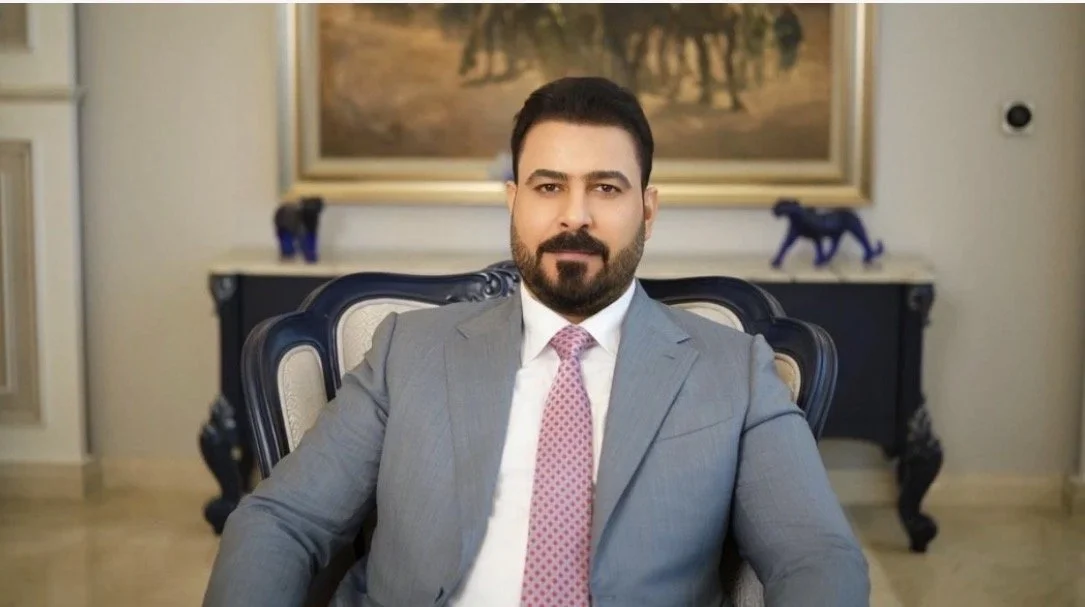
A statement from the Framework read, "The Coordination Framework held its important meeting today, Monday, at the Government Palace in Baghdad, a symbolic representation of the continuity of state institutions and the seat of the executive authority emanating from the will of the Iraqi people."
At the outset of the meeting, the Framework's leaders, according to the statement, commended "the national and responsible performance of the government of Prime Minister Mohammed Shia al-Sudani during its three and a half years in confronting economic, regional, and international challenges, and the achievements of the government program, particularly in the area of development and restoring the Iraqi citizen's confidence in their political and electoral system, which was clearly demonstrated by the broad participation in the recent parliamentary elections."
The Coordination Framework also commended "the responsible and historic stances of Nouri al-Maliki, head of the State of Law Coalition, and Mohammed Shia al-Sudani, head of the Reconstruction and Development Coalition, in withdrawing their candidacies for the premiership and the formation of the next government. This step underscores their commitment to the supreme national interests, facilitates overcoming the political deadlock, and allows the Coordination Framework to select a candidate who meets the required qualifications for the position of Prime Minister and is suited to the demands and challenges of this stage."
The statement continued, "After reviewing the candidates' names, Mr. Ali al-Zidi was chosen as the Coordination Framework's candidate, being the largest bloc in the Council of Representatives, to assume the position of Prime Minister and form the next government." link
************
Tishwash: Al-Zaydi: We will form a government that responds to the citizens' demands for establishing security and stability.
Prime Minister-designate Ali al-Zidi affirmed on Monday (April 27, 2026) his intention to work with all political forces to form a new government that responds to the demands of citizens and contributes to consolidating security and stability and achieving comprehensive development in the country.
Al-Zaydi said in his first statement after being appointed, as reported by Baghdad Today, that “we are determined to work with various political forces to form a government capable of meeting the aspirations of Iraqis,” stressing the importance of national cooperation to overcome current challenges.
Al-Zaydi’s statement comes after he was officially tasked by the President of the Republic with forming the new government, following his nomination by the largest parliamentary bloc within the House of Representatives. link
Rumors are putting pressure on the currency market and disrupting prices.
The exchange rate of the dollar against the Iraqi dinar continues to rise, despite recent developments in the Middle East region. Economic experts attribute this to a set of overlapping internal and external factors, most notably increased demand and speculation in the market, in addition to regional tensions and regulatory measures.
Economic expert Walid Al-Agili said that the rise in the dollar is mainly due to increased demand for it, explaining that “speculation and rumors in the market play a major role in raising the price, as some traders and money changers stockpile dollars with the aim of selling them later at a higher price.”
He added that the spread of unconfirmed news about regional situations, such as talk of continued tensions or the closure of some trade routes, is driving individuals and traders to buy dollars as a hedge, exacerbating pressure on the market. Al-Agili pointed out that restrictions on foreign transfers and tightened financial procedures have also contributed to reducing the official supply of dollars, pushing some of the demand into the parallel market and thus driving up prices.
For his part, Professor of International Economics Nawar Al-Saadi explained that the political fluctuations in Iraq and the region are directly reflected in the exchange market, indicating that “the recent regional tensions have brought back a state of uncertainty to the markets, which has led to an increase in demand for the dollar globally and locally as a safe haven currency.”
He added that the heavy reliance on oil as a primary source of foreign currency makes the Iraqi economy more sensitive to any disruptions or concerns regarding its flows.
In conclusion, experts believe that the continued rise of the dollar is not linked to a single factor, but rather is the result of an interaction between local speculation, increasing demand, regional conditions, in addition to financial policies and regulatory procedures within the country. link
************
Tishwash: Government options to address the 2026 budget delay: borrowing or an emergency law similar to the food security law.
The Parliamentary Finance Committee revealed several options available to the government to address the delay in approving the 2026 budget, primarily resorting to borrowing laws or enacting an emergency law similar to the Food Security Law.
Committee member Jamal Kojar told the official newspaper, “There are several alternatives if the budget is delayed, including resorting to borrowing as happened in 2021, or enacting a law similar to the Food Security Law. However, this depends on the government’s needs and the level of coordination between it and the Parliament.”
He explained that “the current government is operating in a caretaker capacity and does not have the authority to submit major financial bills independently, which necessitates direct coordination with Parliament if borrowing or enacting exceptional laws is required.”
Kojar indicated that “the government can continue spending according to the (1/12) rule of the operational budget, which ensures the continued payment of employee salaries without the need for new legislation, except in some special cases such as including new contracts after 2025.”
He pointed out that “the option of borrowing is also linked to the speed with which the new government is formed. If this matter is resolved within the constitutional timeframe, the House of Representatives should exert pressure on the government to submit the draft budget law as quickly as possible, given its importance in regulating the state’s financial management, including appointments, transfers, and the allocation of spending.”
He emphasized that “the House of Representatives cannot legislate laws of a financial nature without coordination with the government, and the previous food security law was enacted at the request and with the approval of the executive branch.” He noted that “Parliament is capable of supporting the government by passing emergency laws when necessary, whether through a borrowing law or a law similar to the food security law, but there has been no official request in this regard so far.”
Kujer stressed that “there is no intention to adopt a three-year budget again, and the country will return to the usual annual budget system,” affirming that “any future steps will remain contingent on the government’s request and its actual needs.” link
FRANK26…4-27-26….2 DAYS LEFT AND THE NEW PM
KTFA
Monday Night Video
FRANK26…4-27-26….2 DAYS LEFT AND THE NEW PM
This video is in Frank’s and his team’s opinion only
Frank’s team is Walkingstick, Eddie and Omar in Iraq and guests
Playback Number: 605-313-5163 PIN: 156996#
KTFA
Monday Night Video
FRANK26…4-27-26….2 DAYS LEFT AND THE NEW PM
This video is in Frank’s and his team’s opinion only
Frank’s team is Walkingstick, Eddie and Omar in Iraq and guests
Playback Number: 605-313-5163 PIN: 156996#