
Iraq Economic News and Points To Ponder Tuesday Afternoon 2-17-26
President Barzani Marks Ramadan With Call For Tolerance And Unity
2026-02-17 / Shafaq News- Erbil
Kurdish President Nechirvan Barzani on Tuesday extended Ramadan greetings to Muslims in the Kurdistan Region, Iraq, and worldwide.
In a post on X, Barzani said the holy month should strengthen tolerance, harmony, and coexistence, describing them as pillars of the Region’s social fabric. He expressed hope that Ramadan would help ease suffering and crises and amplify messages of unity and peace.
President Barzani Marks Ramadan With Call For Tolerance And Unity
2026-02-17 / Shafaq News- Erbil
Kurdish President Nechirvan Barzani on Tuesday extended Ramadan greetings to Muslims in the Kurdistan Region, Iraq, and worldwide.
In a post on X, Barzani said the holy month should strengthen tolerance, harmony, and coexistence, describing them as pillars of the Region’s social fabric. He expressed hope that Ramadan would help ease suffering and crises and amplify messages of unity and peace.
Nechirvan Barzani @IKRPresident
On the occasion of the arrival of the blessed month of Ramadan, I extend my warmest congratulations to the Muslim community of Kurdistan, Iraq, and the world. I hope that the coming of this blessed month becomes a source of goodness, prosperity, and resilience for the people of Kurdistan and the entire region.
May we seize this sacred occasion as an opportunity to deepen the spirit of tolerance, coexistence, and unity, which has always been the noble identity of our homeland Kurdistan.
From the Almighty God, we beseech that this blessed month becomes the beginning of the end of hardships and troubles, and that the message of peace and coexistence spreads throughout the world.
May Ramadan be blessed for all, and may every year bring goodness and joy.
Ramadan, the ninth month of the Islamic calendar, is observed through fasting from dawn to dusk and heightened spiritual reflection. Iraq’s Sunni Endowment and the Kurdistan Region’s religious authorities announced that Wednesday will mark the first day of Ramadan, while several other Muslim-majority countries declared Thursday as the start date due to differing moon-sighting criteria.
KDP Bloc Rejects Parliament Vote On Army Chief, Cites Lack Of Consensus
2026-02-17 Shafaq News- Baghdad The Kurdistan Democratic Party (KDP) parliamentary bloc objected to the mechanism used to vote on the position of Iraqi Army Chief of Staff during the parliamentary session, the bloc’s head, Shakhawan Abdullah, told Shafaq News on Tuesday.
Abdullah clarified that lawmakers had agreed beforehand to keep the agenda unchanged, “but the Speaker of Parliament (pro- Iran) introduced additional items, prompting objections from the Deputy Speaker in accordance with internal regulations.” He called the step a violation of the law and “an unsuccessful beginning,” noting that the KDP would address the matter later.
He also argued that presenting a candidate for a position and voting on it while the government is operating in a caretaker capacity constitutes “a constitutional violation.” Abdullah described the current Chief of Staff’s relationship with the Kurdistan Region as positive, stating that “this position was allocated to the Kurds and cannot be taken and given to another component. If the position of Chief of Staff is taken from the Kurds, dialogue must be pursued, and the issue discussed.”
In its latest session, the Iraqi Parliament confirmed the continuation of Baghdad Mayor Ammar Musa Kazem and Iraqi Army Chief of Staff Lieutenant General Abdul Amir Rashid Yarallah in their posts.
MPs from Al-Azm bloc, led by Muthanna Al-Samarrai, condemned “Iraqi Parliament’s presidency proceeding with measures that affect the political balance at the national level,” adding that these steps “do not take into account the principle of genuine partnership in managing state institutions and distributing senior positions.”
Iraqi Parliament Approves Amended Bylaws, Confirms Army Chief And Baghdad Mayor
2026-02-17 Shafaq News- Baghdad Iraq’s Council of Representatives voted on Tuesday to approve the amended internal bylaws related to parliamentary committees, and confirmed the continuation of Baghdad Mayor Ammar Musa Kazem and Iraqi Army Chief of Staff Lieutenant General Abdul Amir Rashid Yarallah in their posts.
Hamam Al-Tamimi, a lawmaker from the Badr bloc led by Hadi Al-Ameri, said during a press conference after the session that his bloc gathered the signatures required to confirm the Army Chief of Staff, adding that the bloc “takes responsibility for correcting the course of security leaders.” He noted that this step “is the first by the Council of Representatives to confirm a commander of the Iraqi Army, with the institution managed in an official capacity rather than by proxy.”
Earlier, the Council of Representatives issued a parliamentary order to form a temporary committee comprising 19 lawmakers to amend Internal Regulation No. (1) of 2022, specifically regarding permanent parliamentary committees. The order stipulated that the committee would be chaired by the First Deputy Speaker of Parliament and include a number of male and female lawmakers. The committee is tasked with amending provisions related to the permanent parliamentary committees.
Later, the Speakership of the Council announced the permanent parliamentary committees for the current legislative term, which are:
1- Legal Committee.
2- Finance Committee.
3- Security and Defense Committee.
4- Integrity Committee.
5- Oil, Gas and Natural Resources Committee.
6- Foreign Relations Committee.
7- Services and Reconstruction Committee.
8- Electricity and Energy Committee.
9- Economy, Industry and Trade Committee.
10- Investment and Development Committee.
11- Health and Narcotics Control Committee.
12- Regions and Governorates Not Organized in a Region, Planning and Government Program, and Endowments Committee.
13- Transport, Communications and Governance Committee.
14- Culture, Media, Tourism and Antiquities Committee.
15- Education Committee.
16- Higher Education Committee.
17- Agriculture, Water Resources and Environment Committee.
18- Labor, Civil Society Organizations, Federal Public Service, Youth and Sports Committee.
19- Migration, Displacement, Community Reconciliation and Tribes Committee.
20- Martyrs, Victims and Political Prisoners Committee.
21- Human Rights, Women, Family and Childhood Committee.
22- Border Crossings and Protection of National Product Committee.
Gold vs. the Federal Reserve, is America about to Reinvent its Money?
Gold Telegraph: Gold vs. the Federal Reserve, is America about to Reinvent its Money?
2-16-2026
Gold Telegraph @GoldTelegraph
Gold vs. The Federal Reserve: Is America About to Reinvent Its Money?
“Gold and silver are the only true measure of value.” — James Madison
For years, I have focused on restoring the conversation around sound money, not as some blind belief, but as a discipline.
Gold Telegraph: Gold vs. the Federal Reserve, is America about to Reinvent its Money?
2-16-2026
Gold Telegraph @GoldTelegraph
Gold vs. The Federal Reserve: Is America About to Reinvent Its Money?
“Gold and silver are the only true measure of value.” — James Madison
For years, I have focused on restoring the conversation around sound money, not as some blind belief, but as a discipline.
Today, the United States faces record sovereign debt, a weakening dollar, widening wealth inequality, and deep political division. These conditions are not isolated. They are monetary symptoms.
It is no coincidence that, in this environment, gold has quietly reasserted itself. Central banks are accumulating it. Nations are repatriating it. Investors are rediscovering it.
Gold is not simply a “safe haven.” It is a measuring stick, one that has endured for thousands of years when paper systems have failed.
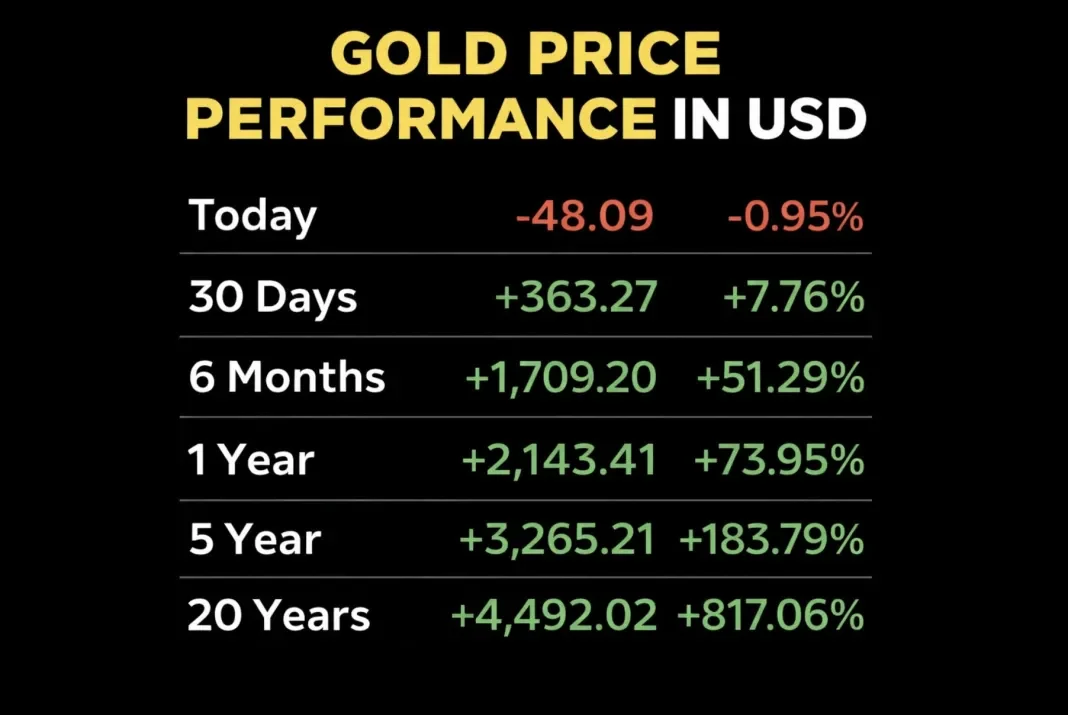
And now, as serious discussions around Federal Reserve reform begin to surface, a deeper question emerges:
Is America preparing to reconsider the foundation of its money?
Nearly two years ago, I raised a question that at the time seemed improbable:
Was the United States considering a gold-backed Treasury instrument?
Today, that question no longer feels speculative.
One of the world’s leading monetary thinkers and former economic advisor to the President of the United States Judy Shelton has continued to advance the idea of a 50-year gold-backed Treasury bond aimed at restoring discipline and credibility to the American financial system.
The signals surrounding a potential transition have not been subtle.
At the outset of the current presidential term, the sitting U.S. Treasury Secretary spoke openly of a coming “global economic reordering,” adding, “I’d like to be a part of it. I’ve studied this.”
Those words matter.
Because monetary systems do not change overnight, they evolve through deliberate signals, intellectual groundwork, and policy preparation.And the groundwork has been underway.
In fact, one can trace the modern political interest in gold directly to the sitting President of the United States.
Nearly a decade ago, President Trump said in an interview with GQ:
“Bringing back the gold standard would be very hard to do, but boy would it be wonderful. We’d have a standard on which to base our money.”
He also stated:
“We used to have a very, very solid country because it was based on a gold standard.”
Gold Telegraph: President-Elect Donald Trump in 2016: “We used to have a very, very solid country because it was based on a gold standard.” He added that America no longer has the gold.
Watch on X: https://twitter.com/i/status/1863321274463961552
At another point, he suggested that America may no longer have the gold and that this, in itself, is the problem.
Gold Telegraph: The last audit of the gold in Fort Knox was in 1953. Eisenhower was president. Elvis Presley hadn’t even released a record. Is this still happening? @elonmusk
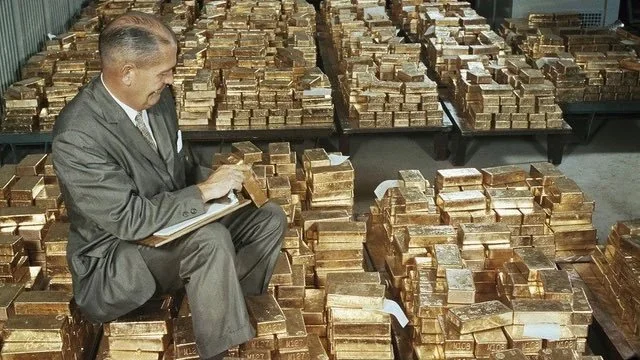
Then in 2025, something even more telling happened.
For months, both the President and Elon Musk publicly and repeatedly referenced a visit to Fort Knox.
The President stated: “We’re going to Fort Knox. I’m going to go with Elon. We want to see if the gold is still there.”
Gold Telegraph: The President of the United States: “We're going to Fort Knox. I'm going to go with Elon. We want to see if the gold is still there." The conversation across America on gold is alive. Talk about a plot twist.
Watch on X: https://twitter.com/i/status/1893536526425862435
Adding: “I don’t want to open it and the cupboards are bare. It could happen.”
Watch on X: https://twitter.com/i/status/1893035882501837106
To date, no formal audit or public verification of America’s gold reserves has been conducted under this administration.
But these remarks are not random.
The tension between gold and fiat currency has followed American presidents for decades even if the mainstream has often dismissed serious monetary debate as fringe thinking.
In January 1986, President Ronald Reagan walked into a meeting of his economic advisory board frustrated by inflation.
“I used to pay $50 for a suit,” he said. “Now $50 will hardly get it cleaned.”
Reagan pointed directly at fiat currency money not backed by gold or any tangible anchor, but created at will.
He questioned whether “mere human beings” should decide how much money enters circulation. In his view, inflation was not mysterious. It was structural. The remedy, as he saw it, was a return to monetary discipline to a time when money was tied to gold and could not be expanded by political discretion.
What is often overlooked is that during Reagan’s presidency, the United States returned to issuing a silver dollar, the American Silver Eagle not for commerce, but for savers, first issued in 1986.
While technically a bullion coin rather than circulating currency, it marked a symbolic return of precious metal coinage backed by the U.S. government.
It was not a restoration of the gold standard.
But it was not nothing.
Reagan left office in 1989. The modern monetary experiment continued.
Yet even in the height of the fiat era, the symbolic reappearance of government-issued silver suggested that the debate over sound money had never fully disappeared.
And if the United States were ever to reconnect its financial system directly to gold, something not seen since 1971, confidence in its physical reserves will be incredibly important.
This is not a new conversation.
It is a recurring one.
Which brings us back to the proposal advanced by Judy Shelton:
A 50-year gold-linked Treasury instrument, issued July 4, 2026, running through 2076 would offer a symbolic and structural bridge between the American founding and its monetary future.
Gold Telegraph: As reported by Bloomberg: Judy Shelton met privately with Treasury Secretary Scott Bessent to discuss Federal Reserve reform. Read that again. @judyshel
Judy Shelton is one of the most original monetary thinkers of our time... unapologetically focused on restoring discipline, credibility, and integrity to the American financial system. When serious minds start talking about reforming the Federal Reserve, watch closely. The United States Treasury Secretary has also hinted at full reform. In our conversation, she laid out a bold proposal: A U.S. Treasury GOLD-convertible bond: Issued July 4th, 2026 Maturing July 4th, 2076 A 50-year signal to the world that America is willing to anchor its debt to something real. Think about what that would mean for demand for U.S. debt.
Watch on X: https://x.com/i/status/2023133931957305650
The proposal may sound ambitious. It is not.
The United States cannot afford to wait while rival nations move to redefine the monetary order.
In October 2025, Judy Shelton published a Wall Street Journal op-ed titled How American Gold Can Shore Up the Dollar.
In it, she outlined a practical proposal: a U.S. Treasury security that would offer gold convertibility at maturity.
The idea is simple but powerful.
If investors knew that, decades from now, their Treasury bond could be redeemed in gold rather than depreciated dollars, it would send a message to markets, to allies, and to adversaries that the United States is serious about protecting the integrity of its currency.
This is not theoretical. It is geopolitical.
Xi Jinping has made it clear that China intends to elevate the renminbi onto the global reserve stage. Just last month, he publicly called for the Chinese currency to strengthen its international role his clearest statement yet on that objective.
Beijing has spent years building the infrastructure to support that ambition: expanding trade settlement agreements, developing alternative payment systems, and steadily accumulating gold.
The world is moving.
The real question is whether the United States moves first or reacts later.
Shelton’s proposal suggests the United States still has the ability to lead.
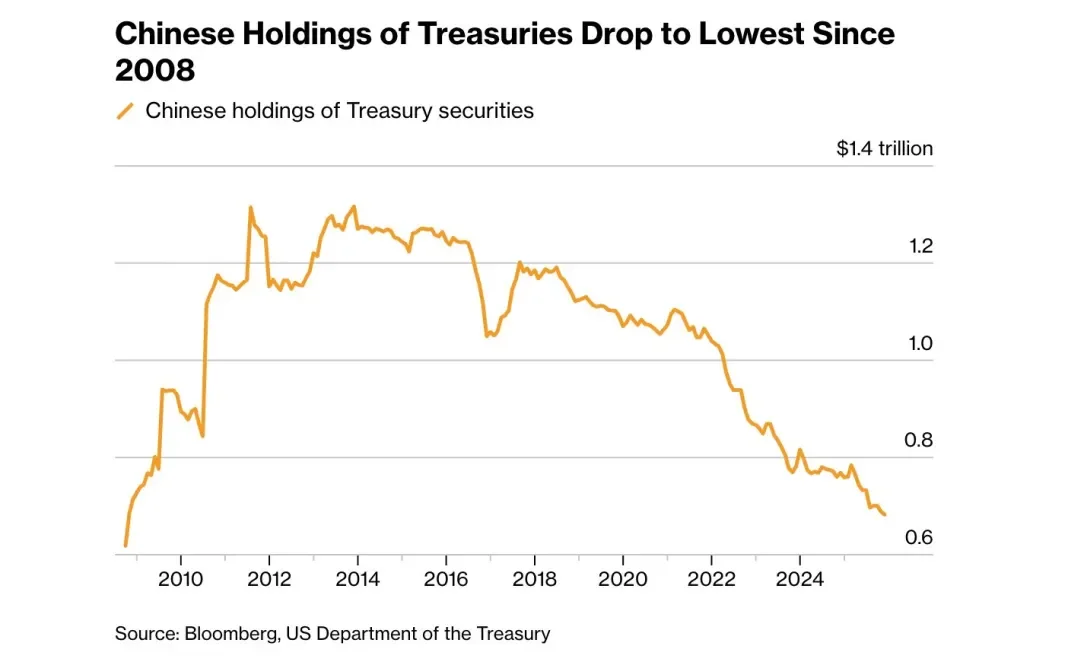
At the same time, the world has watched China steadily reduce its U.S. Treasury holdings now at their lowest level since 2008.
This is not accidental.
Chinese regulators have reportedly advised financial institutions to curb their exposure to U.S. government debt, citing concentration risks. Banks have been encouraged to limit new purchases of Treasuries, and those with elevated positions have been instructed to gradually reduce them.
Less dependence on U.S. paper. Greater emphasis elsewhere and most notably on gold.
There is still a larger question hovering over all of this:
How much gold does China truly own?
China’s central bank extended its official gold-buying streak to 15 consecutive months in January. Bullion held by the People’s Bank of China rose by another 40,000 troy ounces last month alone.
But the official numbers may only tell part of the story.
Even the mainstream financial press has begun to acknowledge what many have long suspected: China’s true gold accumulation may be far greater than publicly disclosed. The country is already the world’s largest producer and consumer of gold. The scale of its domestic supply chain provides structural opacity.
In late 2025, the Financial Times reported that China’s unreported gold purchases could be more than ten times its official figures as it quietly diversifies away from the U.S. dollar.
Unlike oil, which can be tracked via shipping data and satellite imagery, gold is far more difficult to trace once it enters vaults. There is no transparent ledger. No global tracking mechanism. Once refined and stored, it disappears into sovereign balance sheets.
And this direction is not new.
In the aftermath of the 2008 financial crisis, former People’s Bank of China Governor Zhou Xiaochuan published an essay titled Reform the International Monetary System.
His argument was direct: a dollar-centric system was structurally unstable. The world, he wrote, needed a reserve asset divorced from the political discretion of any single country.
That was 2009.
The actions since then speak louder than the essay.
Judy Shelton told me in late 2025 that it is reasonable to assume China is not fully transparent about its gold reserves. Historically, major powers have treated gold as a strategic state secret, the Soviet Union did exactly that and there is little reason to believe China would operate differently.
Through the Shanghai Gold Exchange and related yuan-linked pricing mechanisms, China has steadily built infrastructure that connects its currency more closely to physical gold markets.
Even Western policymakers including a former UK chancellor have publicly suggested that China could one day propose a new international monetary framework with gold playing a central role.
China has been accumulating gold quietly for years.
We do not know the full extent.
But there is a growing body of evidence suggesting it may be positioning itself for a larger role in the next phase of the monetary order.
Gold Telegraph: CHINA’S GOLD STRATEGY: THE QUIET ACCUMULATION Dr. Judy Shelton told me something striking. China, the world’s largest producer and consumer of gold, is almost certainly not being transparent about how much it really holds. Through the Shanghai Gold Exchange, Beijing has quietly built the infrastructure to merge gold and the yuan — setting the stage for settlement through digital instruments or stablecoins. She warned that China may soon propose a new international monetary system anchored to gold — a move that could redefine global finance. Her message was clear: “We still have the world’s largest gold reserves. Let’s use that to our advantage before China does.” The United States has a big opportunity to lead with gold... @judyshel
Watch with X: https://x.com/i/status/1977814268587454783
And China is not acting in isolation.
Over the past decade, countries including Germany, Poland, Hungary, Serbia, the Netherlands, Turkey and India and the list goes on have repatriated gold back to domestic soil or aggressively expanded their reserves.
Central banks globally are buying gold at the fastest pace in modern history.
That is not coincidence.
It is coordination through self-interest.
Gold repatriation is not about optics. It is about sovereignty. When nations bring their bullion home, they are reducing counterparty risk and preparing for a world where trust in paper promises may be tested.
The United States reportedly still holds the largest official gold reserve on the planet more than 8,000 metric tonnes.
That is a strategic advantage.
But advantage only matters if it is reinforced.
As debt climbs past historic thresholds and geopolitical realignment accelerates, the credibility of the dollar cannot rest solely on tradition. It must rest on structure.
The world is quietly rebuilding monetary defences.
Gold accumulation. Reserve diversification. Payment systems outside Western rails.
This is not theory. It is happening.
If the United States chooses to reconnect its financial system, even partially, to gold through a long-dated Treasury instrument, it would not signal weakness.
It would signal strength.
Recent reporting from Bloomberg noted that Judy Shelton has been in open dialogue with the current Treasury Secretary regarding monetary reform. That alone suggests the conversation is no longer confined to academic circles. It is entering policy space.
And that matters.
Because the real risk is not reform.
The real risk is assuming the existing order will endure unchanged while others prepare for what comes next.
Monetary history does not reward hesitation. It rewards those who anchor first. That moment is here.
Gold is not at the edge of this transition. It is at the center of it.
The only question now is whether the United States leads the next monetary chapter or is forced to adapt to one written by others.
Source(s): https://x.com/GoldTelegraph_/status/2023553212306030964
“Tidbits From TNT” Tuesday 2-17-2026
TNT:
Tishwash: Iraqi-UAE consortium to build $700 million 'WorldLink' fast data cable network
The project would comprise an undersea cable from Fujairah in the UAE to Iraq's Faw Peninsula on the Gulf, which will then run overland north to the Turkish border
An Iraqi-Emirati consortium plans a $700 million subsea-and-terrestrial data cable linking the United Arab Emirates to Turkey via Iraq, one of the backers said, just over a week after the announcement of a Saudi-backed fiber-optic project in Syria.
Gulf neighbors Saudi Arabia and the UAE are racing to tap into the demand for connectivity in the region and to attract investment into data centers.
TNT:
Tishwash: Iraqi-UAE consortium to build $700 million 'WorldLink' fast data cable network
The project would comprise an undersea cable from Fujairah in the UAE to Iraq's Faw Peninsula on the Gulf, which will then run overland north to the Turkish border
An Iraqi-Emirati consortium plans a $700 million subsea-and-terrestrial data cable linking the United Arab Emirates to Turkey via Iraq, one of the backers said, just over a week after the announcement of a Saudi-backed fiber-optic project in Syria.
Gulf neighbors Saudi Arabia and the UAE are racing to tap into the demand for connectivity in the region and to attract investment into data centers.
The Iraqi-UAE project, branded WorldLink, would comprise an undersea cable from Fujairah in the UAE to Iraq's Faw peninsula on the Gulf, which will then run overland north to the Turkish border, Ali El Ekabi, head of Iraq's Tech 964 —one of the three members of the consortium —told Reuters.
El Ekabi said the project would be privately funded, take four to five years to complete, and target "hyperscalers, international carriers, and AI applications."
It aims to ease congestion on existing east-west data routes and reduce transit times versus paths that run through the Suez Canal.
The Emirati foreign ministry did not respond to requests for comment.
Besides Tech 964, WorldLink's sponsors include Iraqi-Kurdish DIL Technologies and UAE-based Breeze Investments, according to El Ekabi, who is the son of Iraqi real estate billionaire Namir El Ekabi.
It is the second such new project planned in the region. Saudi Arabia and Syria announced on February 7 plans to set up a fiber-optic network under a wider investment package.
The project was described as a roughly $1 billion push to rehabilitate Syria's infrastructure and position it as a data route between Asia and Europe.
Iraq, which is trying to market itself as a stable transit corridor after decades of conflict, launched a $17 billion "Development Road" rail-and-road plan in 2023 to connect Faw to Turkey. link
************
Tishwash: Iraq increases its holdings of US Treasury bonds by more than $1 billion
The US Treasury Department announced on Monday that Iraq's holdings of US bonds have increased by more than $1 billion, reaching approximately $40.8 billion in December 2025.
According to official data from the US Treasury, which was audited and analyzed by Shafaq News Agency, “Iraq’s holdings of US Treasury bonds for December 2025 increased by $1.1 billion, reaching $40.8 billion, after being $39.7 billion during the previous month.”
She added that this holding increased by 74% compared to January 2025, when Iraq’s holdings of bonds amounted to $23.4 billion.
In the Arab world, Saudi Arabia topped the list of countries holding the most US bonds with a value of $148.8 billion, followed by the UAE with $101 billion, and then Kuwait in third place with $50.3 billion.
The data indicated that the largest holders of US bonds are Japan with $1.202 trillion, followed by the United Kingdom with $888 billion, then China with $682 billion, and then Belgium with $481 billion.
The total holdings of US Treasury securities by countries in December 2025 amounted to approximately $9.355.4 trillion, an increase of $736.1 billion from the same month in 2024, which was $8.619.3 trillion. link
************
Tishwash: Parliamentary move to host the Governor of the Central Bank of Iraq to discuss "salaries and citizens' income"
On Monday, MP Duha Al-Bahadli, from the National Approach bloc, revealed a parliamentary move to host the Governor of the Central Bank of Iraq, Ali Al-Alaq, to discuss the reasons for the fluctuation in cash liquidity and mechanisms for addressing it.
Al-Bahadli told Shafaq News Agency that "the purpose of the meeting is to inform the MPs in detail about the reasons for the fluctuation in cash liquidity, the mechanisms for addressing it, and the extent of the efficiency of monetary policy in facing the current challenges, in addition to ensuring that no financial crisis and its impact are reflected on the salaries of employees, or the state’s obligations."
She continued: "Also to review the measures taken to ensure market stability and protect the purchasing power of citizens," noting that "the date of the meeting will be determined later by the Council Presidency."
She pointed out that "the House of Representatives is exercising its oversight role with full responsibility, and there will be a commitment to complete transparency and reassuring the Iraqi public regarding the financial and monetary situation."
It is noted that informed sources revealed yesterday, Sunday, the worsening financial liquidity crisis in Iraq, confirming that the available resources are no longer sufficient to secure the payment of salaries for employees and retirees during the coming period.
Sources who spoke to Shafaq News Agency reported that the government was forced to withdraw about 20 trillion dinars from Al-Rafidain Bank, in addition to between 7 and 8 trillion dinars from Al-Rasheed Bank, as well as withdrawing about 7 billion dollars from another bank, along with sums of money from industrial and agricultural banks, in order to cover salaries during the past months.
She explained that these measures have led to the depletion of a large portion of the liquidity available in government banks, which makes the option of delaying the payment of employee salaries strongly on the table during the next stage if urgent financial solutions are not found to contain the crisis.
She pointed out that the continuation of these conditions may exacerbate the financial crisis, especially with the existence of observations related to mismanagement, waste of public money and suspicions in some files, which calls for taking urgent reform measures to ensure financial stability and secure the salaries of employees and retirees on their specified dates. link
Mot: Careful What Ya Wants!! --- Siiggghhhhhh

Mot: ole Mot Says!!! ~~~

News, Rumors and Opinions Tuesday 2-17-2026
Dinar Recaps Note:
It has always been our policy to never post political or controversial topics. We were told that our server and posting host would/could cancel us if we did. So, we only share RV or financial related information.
Our goal is be around for the final RV and share what exchange information for our readers that we are allowed. If we are canceled…..we would not be here to do this.
So if any intel providers are political or controversial – we will not post their information for our own protection. Thanks for understanding. Sincerely Dinar Recaps
Dinar Recaps Note:
It has always been our policy to never post political or controversial topics. We were told that our server and posting host would/could cancel us if we did. So, we only share RV or financial related information.
Our goal is be around for the final RV and share what exchange information for our readers that we are allowed. If we are canceled…..we would not be here to do this.
So if any intel providers are political or controversial – we will not post their information for our own protection. Thanks for understanding. Sincerely Dinar Recaps
Gold Telegraph: Judy Shelton met Privately with Treasury Secretary Scott Bessent
2-17-2026
Gold Telegraph @GoldTelegraph
As reported by Bloomberg:
Judy Shelton met privately with Treasury Secretary Scott Bessent to discuss Federal Reserve reform.
Read that again.
@judyshel is one of the most original monetary thinkers of our time… unapologetically focused on restoring discipline, credibility, and integrity to the American financial system.
When serious minds start talking about reforming the Federal Reserve, watch closely.
The United States Treasury Secretary has also hinted at full reform.
In our conversation, she laid out a bold proposal:
A U.S. Treasury GOLD-convertible bond:
Issued July 4th, 2026
Maturing July 4th, 2076
A 50-year signal to the world that America is willing to anchor its debt to something real.
Think about what that would mean for demand for U.S. debt.
Watch on X: https://twitter.com/i/status/2023133931957305650
Source(s): https://x.com/GoldTelegraph_/status/2023133931957305650
*****************
Courtesy of Dinar Guru: https://www.dinarguru.com/
Militia Man Iraq enters 2026 with political clarity, strong reserves, low inflation and digital readiness, coordinated reforms and trade banking, private sector, digital systems combined with gatekeeper support positions [Iraq] for sustained growth and full participation in the global financial system...So execution phase is underway. I think the trajectory is clear...They fired the shot.
Jeff Are they just trying to keep us in the dark about the formation of the government and its timing so we don't know when they're going to change the rate or is it the military actions of what the US government is doing towards Iran? There's two different scenarios...I think they're either trying to mask the rate change date from us so we don't really know what's going on, or the military actions towards reaching a nuclear agreement with Iran. One of those two factors is what's so-called delaying this.
Frank26 The IMF wants you to go international. They want you to float your currency. They want the dinar to gain value outside of your country because they know you are already set inside your country. You are already set to at least be 1 to 1 with the American dollar when they finally release the new rate the lower notes.
Hyperinflation Reset Looms: Why Gold is the ONLY Safe Haven
Daniela Cambone: 2-16-2026
“What we really know is coming is a hyperinflationary reset,” says Eric Griffin, President and CEO of ITM Trading.
In this exclusive New York City interview, Daniela Cambone sits down with Griffin to decode the truth behind the metals market's violent $700 drop in gold and $40 collapse in silver.
While the headlines scream volatility, Griffin warns investors not to get “sucked into the price action,” saying the machinery of the market is beginning to crack.
Drawing on lessons learned from the 2008 crash and his father’s warnings about the Federal Reserve dating back decades, Griffin breaks down his fair-value calculation for gold at $15,000-$16,000 per ounce.
Chapters:
00:00 Silver and Gold: Understanding the Volatility
02:03 Market Liquidity: What Dealers and Inventory Tell Us
04:48 Long-Term Mindset vs. Short-Term Moves
06:23 The "Reset" is Happening
10:07 Eric's Experience: Growing Up with Gold
11:21 Passing the Knowledge to the Next Generation
12:36 Eric's Thoughts on the New Fed Head
13:51 Daniela's View on the Fed Head
Seeds of Wisdom RV and Economics Updates Tuesday Morning 2-17-26
Good Morning Dinar Recaps,
Sovereign Stress Builds as Japan Stalls and Ukraine Secures IMF Lifeline
Fiscal expansion collides with monetary hesitation as markets price optimism into fragile conditions
Good Morning Dinar Recaps,
Sovereign Stress Builds as Japan Stalls and Ukraine Secures IMF Lifeline
Fiscal expansion collides with monetary hesitation as markets price optimism into fragile conditions
Overview
Japan’s economy expanded just 0.2% annualized in Q4 2025, far below forecasts, complicating the Bank of Japan’s rate path.
Asian markets traded cautiously as oil prices rose ahead of U.S.–Iran nuclear talks.
The U.S. dollar steadied while investors awaited Federal Reserve minutes and U.S. GDP data.
Ukraine expects IMF approval within weeks, constructing financial infrastructure to manage a $140 billion budget gap.
Key Developments
Global Markets and Oil Risk Premium
Asian equities opened tentatively in holiday-thinned trading. Oil rose more than 1% ahead of negotiations between Washington and Tehran, even as Iran conducted drills in the Strait of Hormuz — a passage responsible for roughly 20% of global oil shipments. U.S. Treasury yields slipped to 4.044%, their lowest level since early December, signaling cautious positioning rather than conviction.Dollar Steady, Central Banks at a Crossroads
The dollar held firm at 97.12 as markets awaited Federal Reserve minutes and advanced GDP data. Meanwhile, Japan’s weak growth numbers strengthened the political case for fiscal stimulus while reducing pressure on the Bank of Japan to raise rates. Markets are pricing only minimal tightening ahead, revealing uncertainty about policy direction.Japan’s GDP Miss Complicates Policy Alignment
Quarterly growth of just 0.1% underscores economic fragility. The data strengthens Prime Minister Takaichi’s reflation agenda while simultaneously undermining the central bank’s justification for continued tightening. This creates a potential policy imbalance between fiscal expansion and monetary restraint, historically associated with currency weakness.Ukraine Builds Wartime Financial Architecture
Ukraine expects board approval of an $8.2 billion IMF programme replacing its existing $15.6 billion facility. Combined with EU assistance, the framework helps manage a projected $140 billion shortfall over coming years. Kyiv is gradually easing wartime capital controls and positioning to re-enter emerging market bond indices, signaling preparation for prolonged conflict rather than imminent peace.
Why It Matters
Markets appear to be pricing best-case diplomatic and policy outcomes in environments where structural pressures remain unresolved. Oil optimism hinges on negotiations that have yet to deliver results. Japan’s fiscal push may collide with central bank caution. Ukraine’s financing assumes sustained Western commitment.
When markets price hope before policy delivers, volatility follows.
Why It Matters to Foreign Currency Holders
Many readers hold foreign currencies anticipating appreciation during a potential Global Reset. Japan’s fiscal expansion combined with monetary hesitation could weaken the yen further before any structural realignment occurs. Meanwhile, dollar stability amid geopolitical risk underscores its continued reserve strength. Ukraine’s IMF-backed restructuring demonstrates how sovereign currencies can become heavily influenced by external financing frameworks. Currency holders should recognize that policy misalignment and sovereign dependency directly influence exchange rate stability and long-term valuation prospects.
Sovereigns are stretching their balance sheets while monetary policy stands at the edge of restraint.
Implications for the Global Reset
Pillar 1: Fiscal Dominance Rising
Governments are leaning more heavily on deficit spending to stabilize growth. When fiscal authorities expand aggressively while central banks hesitate, monetary independence erodes. This dynamic reshapes global capital flows and reserve currency perceptions.
Pillar 2: Sovereign Financing Dependency
Ukraine’s reliance on multilateral institutions highlights a broader trend — sovereign nations increasingly depend on coordinated lending frameworks. This shifts power toward global financial institutions and away from purely domestic monetary control.
Fiscal expansion rises as central banks hesitate — the imbalance markets can’t ignore.
Seeds of Wisdom Team
Newshounds News™ Exclusive
Sources
Reuters – “Japan Q4 Growth Misses Forecast as Fiscal Debate Intensifies”
Modern Diplomacy – “Financial Brief: A Weekly Roundup on the Geopolitics of Money | Feb 17”
~~~~~~~~~~
BRICS Debuts Brazil-Backed Cross-Border Payment System
A new payment network built on Brazil’s Pix tech is operational in 2026, aiming to settle trade directly in local currencies and challenge dollar dominance.
Overview
BRICS members are launching a Brazil-based cross-border payment system intended to bypass reliance on the U.S. dollar and SWIFT in trade settlements.
The network leverages a Decentralized Cross-Border Messaging System (DCMS) architecture to connect central bank rails.
Brazil’s Pix instant payment technology provides the technical backbone for high-speed messaging and settlement.
The system is designed to integrate local currency settlement and digital currencies such as China’s digital yuan and Brazil’s Drex.
Key Developments
1. Operational Phase Activated in 2026
The BRICS payment platform is transitioning from pilot to operational scale, connecting central banks of China, India, Egypt, and the UAE through a Brazil-hosted network. Unlike SWIFT, the DCMS model has no single authority and ensures countries retain control of their own nodes.
2. .Brazil Leads Architecture with Pix Integration
Brazil’s Central Bank prepared the foundational framework and adapted its nationally successful Pix real-time payment technology to an international settlement context. President Luiz Inácio Lula da Silva framed the system as part of a multipolar financial architecture.
3. Dollar Dominance Under External Pressure
Surveys show net Bitcoin and FX exposure to the U.S. dollar at historic negative levels, with record short positioning and a softer outlook for U.S. growth and inflation. Market dynamics underscore the broader context in which BRICS payment alternatives are emerging.
4. Integration of Local Currency & CBDC Rails
Members have shifted more than 60% of trade into local currency settlements, with plans to integrate national digital currencies like Drex and the digital yuan. Saudi Arabia and Iran are among likely future participants, potentially extending the system into energy trade corridors.
Why It Matters
The launch of an operational BRICS payment network marks a strategic shift in cross-border finance infrastructure, directly reducing transaction friction and slowly displacing dollar-centric settlement norms. By moving trade settlement into local currencies and interoperable digital rails, member states are laying foundation stones for a multipolar monetary landscape.
A transactional architecture born in Brazil may be a cornerstone in the long arc of de-dollarization.
Why It Matters to Foreign Currency Holders
Holders of foreign currencies anticipating shifts in global reserve dynamics should take note:
• Reduced dollar settlement demand across BRICS trade corridors could dampen structural dollar demand over time.
• Broader adoption of local currencies, supported by interoperable payment rails, can redistribute liquidity flows in FX markets.
• Integration of digital currencies into trade settlement may accelerate new reserve asset frameworks beyond legacy fiat hierarchies.
Implications for the Global Reset
Pillar 1: Payments Infrastructure Evolution
By actualizing a decentralized cross-border payment system, BRICS is building alternative plumbing for global transactions. This foundational layer is a prerequisite for any sustained shift away from dollar-centric settlement systems and toward diversified international liquidity networks.
Pillar 2: Multipolar Currency Adoption
Integrating local currency settlement and digital currency rails increases demand for non-dollar currencies in real economic activity. This dynamic supports broader multipolar reserve diversification and weakens the historical automatic preference for dollar-denominated clearing.
This is not just politics — it’s global finance restructuring before our eyes.
Seeds of Wisdom Team
Newshounds News™ Exclusive
Sources
Watcher Guru – “BRICS Launches Brazil-Based Payment System, Challenging Dollar Power”
BRICS Info – “BRICS Shifts Focus to Unified Payment System as Strategic Financial Alternative”
~~~~~~~~~~
🌱 A Message to Our Currency Holders🌱
If you’ve been holding foreign currency for many years, you were not foolish.
You were not wrong to believe the global financial system would change.
What failed was not your patience — it was the information you were given.
For years, dates, rumors, and personalities replaced facts, structure, and proof. “This week” predictions created cycles of hope and disappointment that were never based on how currencies actually change.
That is not your failure.
Our mission here is different: • No dates • No rates • No hype • No gurus
Instead, we focus on:
• Verifiable developments • Institutional evidence
• Global financial structure • Where countries actually sit in the process
Currency value changes only come after sovereignty, trade, banking, settlement systems, and fiscal coordination are in place. History and institutions confirm this sequence.
You will see silence. You will see denials. That is not delay — that is discipline.
Protect your identity. Organize your documents. Verify everything.
Never hand your discernment to anyone who cannot show proof.
You deserve truth — not timelines.
Seeds of Wisdom Team
Newshounds News
~~~~~~~~~~
Seeds of Wisdom Team RV Currency Facts Youtube and Rumble
Newshound's News Telegram Room Link
RV Facts with Proof Links Link
RV Updates Proof links - Facts Link
Follow the Gold/Silver Rate COMEX
Follow Fast Facts
Seeds of Wisdom Team™ Website
Thank you Dinar Recaps
Iraq Economic News and Points To Ponder Tuesday Morning 2-17-26
Oil Market Sentiment Hinges On Geneva Negotiation Progress
2026-02-17 Shafaq News Brent oil prices drifted lower in Asian trade on Tuesday as investors assessed risks of supply disruption after Iran conducted naval drills near the Strait of Hormuz right ahead of nuclear talks with the U.S. later in the day. Brent crude futures were down 0.47%, or 32 cents, at $68.33 a barrel by 0430 GMT, following a 1.33% gain on Monday.
Oil Market Sentiment Hinges On Geneva Negotiation Progress
2026-02-17 Shafaq News Brent oil prices drifted lower in Asian trade on Tuesday as investors assessed risks of supply disruption after Iran conducted naval drills near the Strait of Hormuz right ahead of nuclear talks with the U.S. later in the day. Brent crude futures were down 0.47%, or 32 cents, at $68.33 a barrel by 0430 GMT, following a 1.33% gain on Monday.
U.S. West Texas Intermediate crude was at $63.51 a barrel, up 62 cents, or 0.99%, but the move included all of Monday's price action as the contract did not have settlement that day due to the U.S. Presidents Day holiday.
Many markets are closed on Tuesday for Lunar New Year holidays, including mainland China, Hong Kong, Taiwan, South Korea and Singapore.
U.S. President Donald Trump said on Monday that he would be involved "indirectly" in the talks in Geneva, adding he believes Tehran wants to make a deal. At the weekend, Trump said that regime change in Iran "would be the best thing that could happen."
"Market sentiment is closely tied to the tone and progress of these negotiations ... sustaining a geopolitical risk premium in prices," said Sugandha Sachdeva, founder of SS WealthStreet, a New Delhi-based research firm.
Oil prices are therefore likely to stay volatile, with sharp two-way swings driven by diplomatic signals rather than pure demand-supply fundamentals, Sachdeva added.
Iran began a military drill on Monday in the Strait of Hormuz, a vital international waterway and oil export route from Gulf Arab states, who have been appealing for diplomacy to end the dispute.
Iran along with fellow OPEC members Saudi Arabia, the United Arab Emirates, Kuwait, and Iraq export most of their crude via the strait, mainly to Asia.
Meanwhile, Citi said if disruptions to Russian supply keep Brent in a $65 to $70 per barrel range in coming months, OPEC+ is likely to respond by increasing output from spare capacity.
OPEC+ is leaning towards a resumption in oil output increases from April, three OPEC+ sources said, as the group prepares for peak summer demand and with prices bolstered by U.S.-Iran tensions.
"It is our base case that both Iran and Russia-Ukraine deals happen by or during the summer of this year, contributing to a decline in prices to $60-62/bbl Brent," Citi said.
(Reuters) https://www.shafaq.com/en/Economy/Oil-market-sentiment-hinges-on-Geneva-negotiation-progress
Basrah Crude Prices Rise As Global Oil Steadies
2026-02-17 Shafaq News- Basrah Basrah crude prices recorded gains of around 0.3% on Tuesday, while global oil markets held firm. Basrah Heavy crude rose by 31 cents, or 0.34%, to $62.74 per barrel, while Basra Medium crude increased by 21 cents, or 0.32%, to settle at $64.99 per barrel.
In international markets, Brent crude futures rose 32 cents, or 0.47%, to $68.33 a barrel. US West Texas Intermediate crude (WTI) climbed 62 cents, or 0.99%, to $63.51 a barrel. https://www.shafaq.com/en/Economy/Basrah-crude-prices-rise-as-global-oil-steadies-4
Iraq Oil Exports To US Drop To 7M Barrels In January
2026-02-17 Shafaq News- Baghdad/ Washington Iraq exported 7.037 million barrels of crude oil to the United States in January, down from 7.533 million barrels in December, according to the US Energy Information Administration (EIA).
EIA data showed that weekly shipments fluctuated, averaging 261,000 barrels per day in the first week, 83,000 bpd in the second, 325,000 bpd in the third, and 249,000 bpd in the fourth.
Iraq ranked fourth among crude suppliers to the US, behind Canada, Saudi Arabia, and Mexico. Among Arab exporters, Saudi Arabia led with 12.4 million barrels, followed by Iraq, while Libya shipped 1.54 million barrels.
The US remains a significant outlet for Iraqi crude, although Asia continues to receive the bulk of Iraq’s exports.
https://www.shafaq.com/en/Economy/Iraq-oil-exports-to-US-drop-to-7M-barrels-in-January
USD/IQD Exchange Rates Climb In Baghdad, Erbil
2026-02-17 Shafaq News- Baghdad/ Erbil The US dollar rose against the Iraqi dinar in Tuesday trading in Baghdad and Erbil, climbing by 300 dinars compared with Monday’s rates.
A Shafaq News survey showed the dollar trading at 151,500 dinars per 100 dollars in Baghdad’s Al-Kifah and Al-Harithiya central exchanges, up from 151,200 dinars recorded a day earlier.
In local currency shops across the capital, the dollar sold for 152,000 dinars per 100 dollars and bought at 151,000 dinars. In Erbil, the dollar also strengthened, selling at 151,400 dinars per 100 dollars and buying at 151,300 dinars.
https://www.shafaq.com/en/Economy/USD-IQD-exchange-rates-climb-in-Baghdad-Erbil-8
Gold Falls In Baghdad And Erbil Markets
2026-02-17 Shafaq News- Baghdad/ Erbil On Tuesday, gold prices hovered around 1.05 million IQD per mithqal in Baghdad and Erbil markets, marking a decline from the previous session, according to a survey by Shafaq News Agency.
Gold prices on Baghdad's Al-Nahr Street recorded a selling price of 1.048 million IQD per mithqal (equivalent to five grams) for 21-carat gold, including Gulf, Turkish, and European varieties, with a buying price of 1.044 million IQD. Prices had closed at 1.064 million IQD on Monday.
The selling price for 21-carat Iraqi gold stood at 1.018 million IQD, while the buying price reached 1.014 million IQD.
In jewelry stores, the selling price per mithqal of 21-carat Gulf gold ranged between 1.050 million and 1.060 million IQD, while Iraqi gold sold for between 1.020 million and 1.030 million IQD.
In Erbil, 22-carat gold was sold at 1.107 million IQD per mithqal, 21-carat gold at 1.057 million IQD, and 18-carat gold at 906,000 IQD. https://www.shafaq.com/en/Economy/Gold-falls-in-Baghdad-and-Erbil-markets
Iraq Boosts US Treasury Holdings To $40.8B In Dec. 2025
2026-02-16 Shafaq News- Baghdad Iraq increased its holdings of US Treasury securities by more than $1 billion in December 2025, pushing total investments to $40.8 billion, according to official US Treasury data.
The figures show Iraq’s holdings rose by $1.1 billion from November’s $39.7 billion, marking a 74% increase compared with January 2025, when Iraq held $23.4 billion in US Treasuries.
Regionally, Saudi Arabia remained the largest Arab holder with $148.8 billion, followed by the United Arab Emirates at $101 billion and Kuwait at $50.3 billion.
Globally, Japan ranked first with $1.202 trillion in holdings, followed by the United Kingdom at $888 billion, China at $682 billion, and Belgium at $481 billion.
Total foreign holdings of US Treasury securities reached $9.355 trillion in December 2025, up $736.1 billion from $8.619 trillion recorded in the same month of 2024. https://www.shafaq.com/en/Economy/Iraq-boosts-US-Treasury-holdings-to-40-8B-in-Dec-2025
MilitiaMan and Crew: IQD News Update-REER-Global Financial Integration-Stage is Set
MilitiaMan and Crew: IQD News Update-REER-Global Financial Integration-Stage is Set
2-16-2026
The Crew: Samson, PompeyPeter, Petra, Daytrader, Sunkissed, GIGI and Militia Man
Follow MM on X == https://x.com/Slashn
Be sure to listen to full video for all the news……..
MilitiaMan and Crew: IQD News Update-REER-Global Financial Integration-Stage is Set
2-16-2026
The Crew: Samson, PompeyPeter, Petra, Daytrader, Sunkissed, GIGI and Militia Man
Follow MM on X == https://x.com/Slashn
Be sure to listen to full video for all the news……..
Frank26 Monday Night Videos 2-16-2026
KTFA
Monday Night Video #1
FRANK26….2-16-26….CF… CAN’T FUNCTION
This video is in Frank’s and his team’s opinion only
Frank’s team is Walkingstick, Eddie and Omar in Iraq and guests
Playback Number: 605-313-5163 PIN: 156996#
KTFA
Monday Night Video #1
FRANK26….2-16-26….CF… CAN’T FUNCTION
This video is in Frank’s and his team’s opinion only
Frank’s team is Walkingstick, Eddie and Omar in Iraq and guests
Playback Number: 605-313-5163 PIN: 156996#
KTFA
Monday Night Video #2
FRANK26…..2-16-26….TOO LATE
Seeds of Wisdom RV and Economics Updates Monday Evening 2-16-26
Good Evening Dinar Recaps,
Euro Liquidity Lifeline Goes Global: ECB Makes Biggest Structural Move Yet
The European Central Bank is expanding its euro liquidity backstop for central banks worldwide — a milestone in rebalancing global reserve currency architecture.
Good Evening Dinar Recaps,
Euro Liquidity Lifeline Goes Global: ECB Makes Biggest Structural Move Yet
The European Central Bank is expanding its euro liquidity backstop for central banks worldwide — a milestone in rebalancing global reserve currency architecture.
Overview
• The European Central Bank (ECB) will make its euro liquidity backstop facility permanent and globally accessible.
• The move extends emergency euro liquidity lines to central banks outside the euro area starting Q3 2026.
• ECB leadership highlights preparation for greater volatility and geopolitical strain.
• The initiative strengthens the euro’s role as a global liquidity provider alongside the U.S. dollar.
Key Developments
• Permanent Global Access to Euro Backstop
The ECB will transition its emergency liquidity facility into a standing repo line that foreign central banks can tap in times of stress. This step symbolizes a strategic bet on the euro as a trusted international funding currency.
• Expanding the EUREP Framework
Under the revamped scheme, central banks across regions — subject to compliance checks — can access euros in exchange for high-quality collateral, reducing the risk of euro funding shortages.
• Policy Commentary Highlights Strategic Intent
ECB President Christine Lagarde emphasized the need to prepare for “a more volatile environment,” linking financial resilience with broader geopolitical and industrial tensions.
• Complement to Swap Lines, Not Replacement
The updated backstop complements existing swap arrangements and signals long-term confidence in the euro’s global utility, beyond short-term crisis intervention.
Why It Matters
This policy shift is a major structural enhancement to global liquidity infrastructure. By offering standing access to euro funding, the ECB is moving toward a multipolar liquidity network, breaking the historic near-exclusive dominance of the U.S. dollar in cross-border crisis financing.
Why It Matters to Foreign Currency Holders
For holders of foreign currency anticipating the Global Reset:
EUR could strengthen as a meaningful reserve alternative, not merely a regional currency.
Wider usage of euro liquidity lines may increase demand for euro-denominated assets.
Diversified infrastructure reduces systemic reliance on a single monetary anchor.
Currency flows and reserves are increasingly defined by network access as much as reserve shares, and this move marks a big step in that evolution.
Implications for the Global Reset
Pillar 1: Liquidity Architecture Rebalancing
Extending standing repo lines places the euro on infrastructure footing similar to the Federal Reserve’s global dollar facilities — a structural pivot in how emergency liquidity is supplied across borders.
Pillar 2: Multipolar Reserve Catalysts
Broad access to euro liquidity supports diversification of reserve holdings and trade settlement tools, anchoring the euro more firmly in global monetary arrangements.
The euro steps onto the global liquidity stage with structural confidence.
Seeds of Wisdom Team
Newshounds News™ Exclusive
Sources
~~~~~~~~~~
European Shares Mixed Amid Earnings and Volatility — Market Micro-Reset Incoming?
European equities wobble as earnings, sector rotations, and macro themes test market confidence.
Overview
European share markets showed modest gains but remain volatile in thin trading conditions.
Financials rallied, easing some recent sell-off pressure.
Technology and luxury sectors lagged, showing uneven investor sentiment.
Markets continue to parse corporate earnings and macroeconomic headwinds.
Key Developments
1. STOXX 600 Edges Higher
The pan-European STOXX 600 index rose modestly, led by financial and insurance companies rebounding from last week’s underperformance, signaling improving sentiment ahead of key earnings reports.
2. Sector Divergence Persists
While banks and insurers climbed, technology and luxury stocks lagged, reflecting ongoing concerns about earnings sustainability and competitive pressures within key industries.
3. Economic Data and Earnings in Focus
Markets are watching eurozone industrial production and corporate earnings reports that are arriving this week, which could influence broader confidence and risk pricing.
4. Volatility Underlying Broader Trends
Despite today’s gains, markets have exhibited sensitivity to macro themes including AI disruption, inflation expectations, and geopolitical pressures — suggesting structural realignment under market stress.
Why It Matters
Equity markets are reflecting more than near-term sentiment swings; they are pricing in uncertainty over growth, technology disruption, and the evolving monetary environment. This patchy performance could presage broader capital rotations in global portfolios as investors reassess risk in the face of shifting central bank alignments and fiscal policies.
Equity turbulence may be the market pricing in monetary transition.
Why It Matters to Foreign Currency Holders
For holders positioning ahead of a Global Reset:
Rotations between sectors can influence currency flows tied to equity and bond markets.
Renewed strength in financial stocks may support confidence in euro-area financial systems.
Uneven performance highlights the rebalancing dynamic between growth and traditional sectors — relevant for currency valuation trends.
Markets often signal deeper economic adjustments before monetary policy changes become evident.
Implications for the Global Reset
Pillar 1: Capital Market Sentiment as Monetary Indicator
Price action in equities is increasingly serving as a forward indicator for monetary and fiscal policy shifts — especially in regions adapting to multipolar monetary dynamics.
Pillar 2: Structural Sector Rotation
Sector divergences illustrate underlying recalibration of investment preferences, suggesting that capital is shifting toward assets perceived as stable amid global monetary uncertainty.
When markets hesitate at record highs, capital is repositioning.
Seeds of Wisdom Team
Newshounds News™ Exclusive
Sources
Reuters – “European shares edge higher, buoyed by financials ahead of key earnings”
Reuters – “Europe’s earnings gain pace while lofty valuations cap rewards”
~~~~~~~~~~
Seeds of Wisdom Team RV Currency Facts Youtube and Rumble
Newshound's News Telegram Room Link
RV Facts with Proof Links Link
RV Updates Proof links - Facts Link
Follow the Gold/Silver Rate COMEX
Follow Fast Facts
Seeds of Wisdom Team™ Website
Thank you Dinar Recaps
Iraq Economic News and Points To Ponder Monday Evening 2-16-26
Standard & Poor's International Agency: The Iraqi Economy Is Moving Steadily Towards Strengthening Financial Sustainability
Baghdad/ Nina / Standard & Poor's (S&P) credit rating agency confirmed that "the Iraqi economy is moving steadily towards strengthening financial sustainability despite regional challenges."
Standard & Poor's International Agency: The Iraqi Economy Is Moving Steadily Towards Strengthening Financial Sustainability
Baghdad/ Nina / Standard & Poor's (S&P) credit rating agency confirmed that "the Iraqi economy is moving steadily towards strengthening financial sustainability despite regional challenges."
According to a statement from the Ministry of Finance, the agency, in its February 2026 report, which affirmed Iraq's rating at (B-/B) with a positive outlook, anticipated that increased oil production during 2026 would provide crucial support for Iraq in the face of global price volatility and surrounding geopolitical tensions.
Regarding fiscal management, the report commended the government's successful implementation of its spending control policy, which directly led to a reduction in the fiscal deficit to 2.5% of GDP in 2025, a significant improvement compared to the 2.7% recorded in 2024.
The agency also highlighted the country's financial strength, noting that Iraq is expected to maintain average international reserves of approximately $100 billion until 2029, representing nearly 35% of GDP. This figure far exceeds the size of the public sector's external debt, thus bolstering international confidence in the country's financial solvency.
A Standard & Poor's report explained that "inflation rates in Iraq remain low and stable compared to regional standards, with expectations that the average annual inflation rate will decline to 1.9% in 2025 after reaching 2.6% in 2024."
The agency believes that "this stability is supported by improved tax collection mechanisms through the introduction of new digital systems in the customs sector, along with effective measures taken by the Central Bank of Iraq in the area of compliance to enhance transparency and governance and develop channels for foreign currency flows, in addition to the judicious use of monetary policy tools and the restructuring of the banking sector, which will in turn lead to raising the overall efficiency of the national economy." / https://www.ninanews.com/Website/News/Details?key=1278204
Sudanese: We Have Eradicated Corruption!!!!
Baghdad/Iraq News Network – The Iraqi government issued a statement today, Sunday (February 15, 2026), regarding the results of the Corruption Perceptions Index. The Prime Minister's Media Office stated that “the results of the Corruption Perceptions Index, issued on February 10, 2026, by Transparency International, show that Iraq has made significant and remarkable progress in its ranking among countries for 2025.
This reflects the government's unwavering commitment and the contribution of all public institutions towards enshrining the principles of transparency, integrity, and good governance in the public sector.
This improvement is also a positive indicator of the will to consolidate the principles of transparency and accountability, strengthen trust in public institutions, and implement the requirements related to combating and reducing corruption.”
The government added that “this progress in the international ranking, year after year, is a result of the comprehensive efforts led by the government and its adoption of several priorities in its government program, most notably combating corruption.
It also reflects the government's commitment to providing support to oversight bodies and continuing reforms in various areas to raise the levels of integrity in all government institutions, and its adoption of appropriate measures to improve and develop the overall performance level.”
This has resulted in tangible progress in the international ranking,” she noted, adding that “efforts are continuing to intensify at various levels to achieve the best results through the combined efforts of all.”
The government, according to its statement, affirms that “these results represent an incentive to increase efforts in the coming years in order to maintain and develop them, and we appreciate the roles of public institutions, each according to its specialization, that contributed to achieving these results.” https://aliraqnews.com/السودانيقضينا-على-الفساد/
The Central Bank Of Iraq Clarifies The Mechanisms For Dealing With The Dollar In All Its Issuances
Baghdad Today – Baghdad The Central Bank of Iraq issued a clarification today, Monday (February 16, 2026), regarding the mechanisms for dealing with the US dollar in all its versions, stressing the need to not differentiate between the old and new versions of the currency.
The bank stated in a statement received by “Baghdad Today” that “the directive aims to reduce the phenomenon of discrimination in the dollar exchange rate between different issues, while emphasizing the commitment of all banks and financial institutions to the instructions for trading and exchanging banknotes according to the approved standards for foreign banknotes, in order to ensure the safety of transactions and the stability of the market.”
The bank explained that "the applicable laws and instructions do not recognize any discrimination between editions of the US dollar," noting that it "continues to receive and deal with these editions through all authorized banks, provided that they are within the standards and controls approved locally and internationally."
This clarification comes within the framework of the Central Bank of Iraq’s commitment to enhancing transparency and discipline in the banking sector, protecting the rights of customers, and supporting monetary and financial stability in Iraq. https://baghdadtoday.news/293343-.html
Iraq’s Maliki Standoff: Three Exits, No Easy Way Out
Iraq’s political deadlock now turns on a single question: does Nouri al-Maliki come back?
His bid to return to power has pushed the government formation crisis into a more volatile phase, deepening divisions inside the Shiite Coordination Framework and drawing an unusually blunt warning from Washington.
For the second time, parliament failed to convene a session to elect a president and designate a prime minister. This time, the collapse was driven not by Kurdish infighting, but by disagreement over Maliki’s candidacy, according to sources inside the Coordination Framework, the Shiite coalition entitled to nominate the next government.
Nearly two weeks after President Donald Trump warned that Maliki’s return would have consequences for U.S.-Iraq relations, Shiite leaders remain deadlocked. A Framework official told Alhurra that three scenarios are now under discussion.
The first is persuading Maliki to withdraw in favor of a consensus figure acceptable domestically and internationally. The name most frequently mentioned is Hamid al-Shatri, Iraq’s intelligence chief, seen by several factions as a low-profile security figure with broad backing. This option hinges on Maliki stepping aside, which he has so far refused.
The second scenario is pressing ahead with Maliki’s nomination and forcing a parliamentary vote. That path faces stiff resistance. Sunni blocs and key Shiite factions, including Ammar al-Hakim’s Hikma Movement, have declared their opposition, making it difficult to secure the quorum and votes required.
A third option, now being discussed more openly, would keep Prime Minister Mohammed Shia al-Sudani’s caretaker government in place for up to a year with expanded authorities, effectively postponing resolution while negotiations continue.
In Washington, the standoff is seen as more than an internal Iraqi dispute. A former U.S. ambassador to Iraq told Alhurra that Trump’s opposition reflects a broader judgment about Iraq’s direction. “This isn’t about personalities,” he said. “There is a view in Washington that returning to that model of governance would deepen instability and complicate Iraq’s external relationships.”
Inside the Coordination Framework, intermediaries have tested whether the U.S. position is negotiable. According to a senior member, the response was clear: Trump’s opposition remains firm, and proceeding with Maliki would carry diplomatic and economic consequences.
Maliki has rejected what he calls “blatant American interference” in Iraq’s sovereignty. But his stance has sharpened internal rifts, where resistance to his candidacy existed even before Trump’s intervention.
For now, the Framework is stuck between escalation and retreat – pushing forward at the risk of confrontation with Washington or backing down at the cost of internal unity. With no consensus in sight, Iraq’s paralysis is deepening, and the question is no longer just who governs next, but how long the system can absorb the strain. https://alhurra.com/en/12521
Government Formation: Why Do Parties Treat The Constitution As A Non-Binding "Memorandum Of Understanding"?
Baghdad Today – Baghdad The stalled formation of a new Iraqi government is no longer merely a dispute over the prime minister's name or the distribution of ministerial portfolios. As political analyst Mohammed Ali al-Hakim told Baghdad Today, it has become "a clear indicator of a deep-seated dysfunction in the structure of public decision-making and the mechanisms of power production."
The prolonged waiting period following each election, and the protracted conflict over the government's form and composition, have made delays in its formation seem like the norm, while adherence to constitutional deadlines has become the exception.
The Constitution: From A Governing Authority To A Bargaining Chip
Al-Hakim believes that what is happening is not merely a matter of political disagreements, but rather a question of the constitution's place in public life. The constitutional articles that stipulate the deadlines for electing the president, appointing the prime minister, and approving the cabinet are treated in every crisis as clauses open to interpretation and obstruction, rather than as binding red lines for all.
In this way, the constitution is transformed from a governing framework that regulates the balance of power into a bargaining chip within the political arena, used when it serves a particular party's interests and disregarded or frozen when it becomes an obstacle to gains or compromises. This selective use of the text, as Al-Hakim warns, opens the door to the growing influence of external powers that find in internal division and the absence of a unified national will an opportunity to intervene and influence the course of sovereign decision-making.
Multiple Decision-Making Bodies: One State Or A Network Of Power Centers?
The failure to form a government also reveals the extent of fragmentation within decision-making centers. Political will does not emanate from a single, clear source, but rather from a wide network of actors.
Parliamentary blocs and alliances are vying for "entitlement" and influence.
-Political houses and authorities within the same component have the power to approve or reject.
-Armed forces with a field presence and direct or indirect political influence.
-Regional and international extensions that have the ability to exert pressure, provide support, or impose red lines.
In this context, the next government is not the natural outcome of a clear electoral process, but rather the result of a long series of compromises between these various power centers. Each party possesses, in one way or another, the ability to use a "veto" to obstruct the process if it does not receive what it deems appropriate in terms of shares and positions, thus transforming the formation process into a redistribution of influence rather than a response to the voters' choices.
Is It A Crisis Of Forming A Government Or A Crisis Of Sovereignty?
When Al-Hakim speaks of the "growing role of external powers," he is directly linking internal setbacks to Iraq's position on the map of regional and international conflicts. Every governmental crisis brings sensitive issues back to the forefront, including:
-The future of the foreign military presence in the country.
-The level of engagement between the United States and Iran on the Iraqi scene.
-Shaping Iraq's economic and energy relations with its surroundings and the world.
The longer a government vacuum persists or a fully empowered government is absent, the weaker the state's ability to make independent decisions on these issues becomes, and the wider the influence of foreign powers grows. At that point, the form and program of the government are no longer the product of purely internal will, but rather the result of a balance with external interests and pressures, thus transforming the crisis of government formation from a domestic political issue into one that touches the very core of sovereignty.
Public Trust: Between Erosion, Protest, And Withdrawal
The most dangerous aspect, according to Al-Hakim, is the impact this trajectory has on the relationship between citizens and the state. The difficulty in forming governments, the recurring crises of political deadlock, and the prioritization of elite deals over the needs of the people all weaken public trust in the political process.
The average citizen observing the situation sees that elections always end in closed-door meetings that redistribute power among the established elites, while issues like public services, unemployment, and corruption remain unresolved or postponed. Over time, a widespread conviction takes root that the political system is closed to genuine change, and that only the faces change, not the underlying principles.
This feeling leads to divergent behaviors: some citizens withdraw from participation and succumb to apathy and despair, while others lean towards more radical options, whether through new waves of protest or by seeking radical alternatives outside the existing system. In both cases, the gap between the public and the ruling class deepens, and the legitimacy of the state and its institutions is undermined in the public consciousness.
A Crossroads... Between The Logic Of The State And The Logic Of Guardianship
In concluding his remarks to “Baghdad Today”, Mohammed Ali Al-Hakim points out that “historical responsibility requires political forces to demonstrate political courage and move from the logic of obstruction and immediate gains to the logic of the state and national partnership, before the government formation crisis turns into an existential crisis that affects the very existence of the state.”
This warning places Iraq at a clear crossroads: either to restore the logic of the state, based on respect for the constitution as a governing reference, not a bargaining chip, and to prioritize the general national interest over sectarian interests, and to build an independent decision stemming from the internal will, or to remain in the circle of multiple tutelages and the struggle for internal and external influence, with all the cumulative risks this entails for sovereignty, stability, and the future of the entire political process.
Between these two options, there seems to be an urgent need for practical steps, not general slogans: transforming constitutional deadlines into an actual, non-negotiable commitment, stopping the use of obstruction as a negotiating tool, separating weapons from political decision-making, and gradually moving from broad power-sharing governments to governments with specific, measurable, and accountable programs.
Without this serious review, the failure to form governments will continue to occur in every cycle, not as an emergency crisis, but as part of the nature of the system itself, which turns the question from "When will the government be formed?" to "What country can be stable on this shaky foundation?" Source: Baghdad Today https://baghdadtoday.news/293349-.html
The New Fed Chair’s Plan to Reduce the National Debt
The New Fed Chair’s Plan to Reduce the National Debt
Heresy Financial: 2-16-2026
TIMECODES
0:00 What Happens When Government Can't Tax or Lower Rates
0:28 The Fed and Treasury Merger Has Happened Before
0:52 Kevin Warsh Is Trump's Fed Chair Pick for This Exact Purpose
1:04 Markets Rocked by Kevin Warsh Fed Treasury Accord Comments
The New Fed Chair’s Plan to Reduce the National Debt
Heresy Financial: 2-16-2026
TIMECODES
0:00 What Happens When Government Can't Tax or Lower Rates
0:28 The Fed and Treasury Merger Has Happened Before
0:52 Kevin Warsh Is Trump's Fed Chair Pick for This Exact Purpose
1:04 Markets Rocked by Kevin Warsh Fed Treasury Accord Comments
1:19 US Government Debt to GDP Ratio Is Back to WWII Levels
1:48 Government Successfully Deleveraged From 1945 to 1980s
2:10 Government Can't Tax Enough and Can't Lower Rates Without Inflation
2:32 The Same Problem the US Faced After World War II
2:43 Federal Reserve Did Yield Curve Control From 1942 to 1951
4:00 What Exactly Is Yield Curve Control
4:30 Fed Controls Short End Market Controls Long End of Curve
5:01 Fed Kept Short Rates Low Long Rates Rose From Inflation
5:26 Fed Pegged Short Term T Bills at 0.375% Long Term at 2.5%
6:26 Fed Had to Buy Treasuries to Keep Rates Pegged at Target
7:10 This Created Massive Inflation in the Late 1940s
7:56 The 1951 Accord Ended Yield Curve Control
8:38 Kevin Warsh Calling for a New Fed Treasury Accord
9:20 Four Ways to Deal With Unsustainable Debt
9:47 Option 1 Raise Taxes Not Politically Viable
10:00 Option 2 Default on Debt Highly Unlikely
10:24 Option 3 Economy Grows Faster Than Debt AI and Energy
11:19 Option 4 Inflate the Debt Away Most Likely Path
12:01 Higher Prices Are Coming We Pay Through Inflation
12:16 How Does This Work With Warsh Ending Yield Curve