So... Is The Gold Boom Over?
So... Is The Gold Boom Over?
Notes From the Field By James Hickman (Simon Black) February 2, 2026
It wasn’t until somewhat recent history that the price of gold was less than $1,000 per troy ounce. Now (as you probably know), the price of gold has just dropped by $1,000 in only a matter of days. Silver's decline was even more violent.
Much ink has already been spilled over this, suggesting that “the gold bubble has burst”. Naturally we have a different view. It started on Thursday when the White House announced that Kevin Warsh would be nominated as the next Federal Reserve Chairman.
So... Is The Gold Boom Over?
Notes From the Field By James Hickman (Simon Black) February 2, 2026
It wasn’t until somewhat recent history that the price of gold was less than $1,000 per troy ounce. Now (as you probably know), the price of gold has just dropped by $1,000 in only a matter of days. Silver's decline was even more violent.
Much ink has already been spilled over this, suggesting that “the gold bubble has burst”. Naturally we have a different view. It started on Thursday when the White House announced that Kevin Warsh would be nominated as the next Federal Reserve Chairman.
Warsh is known to be ‘hawkish’, prompting speculation that he would keep rates higher to combat inflation. A lot of people obviously viewed this as bad for gold, prompting an unprecedented wave of selling.
So is that it? Is the precious metals boom over?
Not by a long shot.
Again, I don't say that because of any fanaticism over precious metals. I don’t fall in love with any asset.
But I do understand the big picture story driving gold prices, and that story hasn't changed.
(Note: we're going to focus on gold in this article and leave silver for another time, since silver has different factors at play.)
The first thing that’s important to remember is the reason WHY gold reached such heights over the past few years: foreign central banks.
Central banks have always purchased gold as a strategic reserve asset; this is nothing new. In fact, in 2018 and 2019, before Covid upended the world, central bank gold purchases totaled roughly 650 metric tons.
By 2022, however, central banks started purchasing a LOT more gold— roughly 1,000 metric tons per year, a 50% increase over the long-term average.
The same thing happened in 2023. And again in 2024.
Those extra central bank gold purchases caused a surge in demand... and gold prices roughly doubled in price over that three-year period.
So what was so special about 2022 that prompted central banks to start buying more gold?
Simple. It was the start of a long-term trend of foreign countries losing faith in the US government.
They watched Joe Biden shake hands with thin air. They witnessed the humiliating debacle in Afghanistan. They observed rising US budget deficits and a national debt spiraling out of control. They saw inflation rising.
All of these events made foreign governments and central banks question how much they wanted to keep buying Treasury bonds.
But the real watershed moment came after the invasion of Ukraine.
The US government's response was to freeze Russian assets; Congress then soon passed the REPO Act, giving the President authority to seize Russian sovereign reserves.
This sent shockwaves through foreign governments around the world. Suddenly they felt like their money was no longer safe in America— that the US government could freeze their reserve assets without warning.
I'm not arguing whether this was right or wrong from a moral perspective. But from a practical standpoint, though, it had an obvious consequence: foreign countries wanted to start diversifying their reserve assets away from US dollars and from the United States.
And in their efforts to diversify away from the dollar, gold became the easiest strategic reserve asset for those foreign central banks to buy.
Again, the trend continued throughout 2023 and 2024.
2024 was particularly interesting because the gold price was clearly surging— almost exclusively due to foreign central bank demand.
Yet, despite gold’s obvious rise, individual investors weren’t having any of it. In fact, in 2024, gold ETF saw net OUTFLOWS totaling MINUS 2.9 metric tons. This means that individual investors were net sellers of gold, even as foreign central banks were buying by the ton.
2025 became the year gold went parabolic, rising to $4,500 by year end.
But the key growth driver in 2025 was not central banks. In fact, foreign central banks dialed back their purchases to around 800 metric tons last year—still more than normal, but less than the record 1,100 tons from 2024.
Individual investor demand made up the difference in a big way. Net ETF inflows swung from minus 2.9 tons to plus 801 tons. That's a massive turnaround. On top of that, there was significantly more demand for gold bars and coins.
Bottom line, much of gold’s very recent parabolic price move is because small (and large) investors piled in. Those investors are now dumping their gold because they’re spooked about Kevin Warsh.
Our readers should not be surprised by this pullback; we've been talking about the possibility of a short-term shakeout for some time.
And while I'm not smart enough to know what's going to happen next week or next month, it’s clear that the real story (i.e. foreign governments and central banks losing confidence in the United States Congress) has not gone away.
Think about it— America is deeply divided. The Federal Reserve is in crisis. The US government has shut down for the second time in four months. The national debt keeps rising (now $38.6 trillion). And hardly anyone in Congress seems to care.
Do you think all of this makes foreign governments and central banks want to hold more of their reserve assets in the US, or less?
We think the answer is clearly less, and hence the trend that began in 2022 will likely continue.
Foreign governments and central banks are sitting on $10+ trillion in foreign reserves— most of that parked in US dollars.
Their “extra” gold purchases since 2022 (i.e. they amount of gold they bought each year above the historic average) only totals around $100 billion, i.e. roughly ONE PERCENT of their reserves.
Would it be so crazy to assume that they might want to diversify TWO percent? Or maybe 5%? If so, there could be a LOT more money coming in to gold.
And if a mere 1% of foreign reserves cause the gold price to skyrocket, how high will the gold price go if they park 5% or more?
Again, this isn’t something that’s going to happen tomorrow. It’s a long-term trend. But the point is that the story hasn’t changed.
Remember that in the early 1970s, the gold price increased 5x for similar reasons— US deficits and fiscal woes. But gold peaked in 1975, then fell by a whopping 40%.
A lot of people thought the gold boom was over. But it wasn’t. Again, the story hadn’t changed.
And shortly after, gold resumed its rise, climbing another 8x. It took the election of Ronald Reagan in 1980— someone who was serious about restoring fiscal order— for the trend to finally stop.
I don’t know how far gold might fall. But I do know the fundamental story hasn’t changed.
It also seems pretty obvious that many gold companies (whose share prices have plummeted since Friday) are now quite cheap.
For example, one mining company we’ve written up in our premium investment research recently confirmed that their mining costs for this year will be $1,200 per ounce or less.
Their stock price is down substantially since Friday, which is crazy. The gold price could fall to $3,000, and the company would still be trading at a single-digit P/E ratio.
(Did I mention they’re debt-free and pay a healthy dividend?) There are plenty of other undervalued gold companies out there, so definitely consider giving our premium investment research a try.
To your freedom, James Hickman Co-Founder, Schiff Sovereign LLC
“Tidbits From TNT” Monday 2-2-2026
TNT:
Tishwash: Sudani arrives in Kurdistan Region at the head of a high-level political delegation
A visit that includes Erbil and Sulaymaniyah
Prime Minister Mohammed Shia al-Sudani arrived in the Kurdistan Region on Monday, leading a high-level political delegation, on an official visit that includes the governorates of Erbil and Sulaymaniyah.
The media office of Al-Sudani stated in a statement received by 964 Network that “Prime Minister Mr. Mohammed Shia Al-Sudani arrives in the Kurdistan Region of Iraq accompanied by a high-level political delegation on a visit that includes the governorates of Erbil and Sulaymaniyah.”
TNT:
Tishwash: Sudani arrives in Kurdistan Region at the head of a high-level political delegation
A visit that includes Erbil and Sulaymaniyah
Prime Minister Mohammed Shia al-Sudani arrived in the Kurdistan Region on Monday, leading a high-level political delegation, on an official visit that includes the governorates of Erbil and Sulaymaniyah.
The media office of Al-Sudani stated in a statement received by 964 Network that “Prime Minister Mr. Mohammed Shia Al-Sudani arrives in the Kurdistan Region of Iraq accompanied by a high-level political delegation on a visit that includes the governorates of Erbil and Sulaymaniyah.” link
Tishwash: President Barzani receives the Chargé d'Affaires of the US Embassy in Iraq
President Masoud Barzani received, on Sunday, February 1, 2026, in Pirmam, the Chargé d'Affaires of the US Embassy in Iraq, Joshua Harris, and the US Consul General in the Kurdistan Region, Wendy Green.
During the meeting, the US Chargé d'Affaires conveyed the thanks and appreciation of the President and Government of the United States to President Barzani for all the support and assistance he provided in order to reach the recent agreement between the Syrian government and the Syrian Democratic Forces.
Regarding the political process in Iraq, the US Chargé d'Affaires reiterated once again that the United States continues to support and stand for a strong Kurdistan Region within the framework of federal Iraq.
For his part, President Barzani welcomed the visiting delegation and expressed his gratitude for America’s role and supportive stances towards the people of Kurdistan, noting that without the United States’ position and support in 1991, we would not have been able to protect the achievements of the uprising or establish the Kurdistan Region’s parliament and government.
The two sides also exchanged views in detail and in depth on the political process in Iraq, and stressed the importance of adhering to the constitution. They also agreed on the need for Iraqis to decide their own affairs, on the basis of partnership, balance and consensus.
In this context, both sides expressed their welcome for the dialogues and consultations that were recently held in Baghdad to develop and formulate political mechanisms and scenarios that take into account the interests of Iraqis and ensure the strengthening of the American-Iraqi partnership in various fields. link
************
Tishwash: "By order of the President"... Iranian-American negotiations to begin within days
Iranian media reported on Monday that negotiations between Iran and the United States could begin in the next few days, with the participation of high-level officials from both sides.
The Tasnim news agency, which is close to the Iranian Revolutionary Guard, quoted an informed source as saying that the chances of negotiations starting have become high, noting that the place and time of the meeting have not yet been decided.
The source explained that the negotiations are likely to be held at the level of Foreign Minister Abbas Araqchi and US envoy Steve Wittkopf, if a final framework is agreed upon in the coming days.
Fars News Agency quoted an informed source in the Iranian government as saying that the Iranian president had ordered the start of negotiations with the United States, noting that talks with the United States would most likely be held in Turkey within days.
Iranian Foreign Ministry spokesman Ismail Baghaei said during a press conference today that Tehran is studying the details of various diplomatic avenues to address tensions with the United States, adding that Iran hopes to reach results in the coming days.
Earlier, the Hebrew newspaper Maariv quoted an Israeli source as saying that US President Donald Trump is demanding five main conditions from Iran: handing over about 400 kilograms of enriched uranium, dismantling the nuclear and ballistic missile programs, halting the missile program, and ending support for proxies in Yemen, Iraq, Syria, and Lebanon.
The source added that "Israel realizes that Iran will not be willing to discuss these demands collectively or individually," considering that "the current stage is characterized by procrastination." link
************
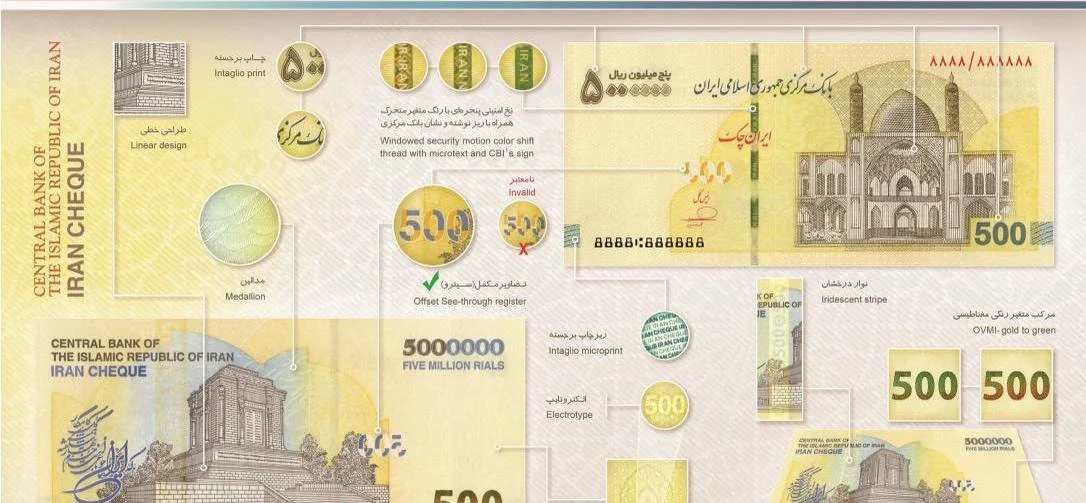
The Central Bank of Iran is distributing the 500,000 toman note through the banking network, featuring 11 security features.
The Central Bank of Iran announced that the distribution of the 500,000 toman note (equivalent to 5 million rials), which was printed in advance, will begin in the banking network starting from February 1, 2026.
This step comes within the framework of managing and regulating cash transactions and facilitating financial transactions, with the aim of speeding up the completion of cash transactions, as the Central Bank has begun distributing this new category in banks within the banking network in the country link
Mot: Sorry!! -- But HadTa!!!!

Mot: . Kool!! -- Problem Solved!!!

Monday Coffee with MarkZ. 02/02/2026
Monday Coffee with MarkZ. 02/02/2026
Some highlights by PDK-Not verbatim
MarkZ Disclaimer: Please consider everything on this call as my opinion. People who take notes do not catch everything and its best to watch the video so that you get everything in context. Be sure to consult a professional for any financial decisions
Member: Happy Groundhog day. Unfortunately he saw his shadow so 6 more weeks of winter.
Member: Does anyone else feel we are in “Groundhog Day” for real?
Monday Coffee with MarkZ. 02/02/2026
Some highlights by PDK-Not verbatim
MarkZ Disclaimer: Please consider everything on this call as my opinion. People who take notes do not catch everything and its best to watch the video so that you get everything in context. Be sure to consult a professional for any financial decisions
Member: Happy Groundhog day. Unfortunately he saw his shadow so 6 more weeks of winter.
Member: Does anyone else feel we are in “Groundhog Day” for real?
MZ: I think we all do….but there is light at the end of the tunnel.
Member: Groundhog Day! What better day is there for breaking the cycle and moving on up?!
Member: That creature known as THE RV is lurking in the shadows watching and waiting for the right time to emerge
Member: Mark, No vote in Iraq yesterday for President why???
MZ: “Deadline for the Presidential election revealed” they sat down and had a big meeting yesterday then first thing this morning they came up with some BS. They gave themselves a deadline…even though they already had deadlines that were written in their constitution….but they gave themselves a new deadline of this Thursday .
MZ: Lots of meetings still going on. Sudani has gone to Kurdistan to talk to Barzani about getting this thing finished. Once they finish seating the President they will announce candidates for Prime Minister. Sudani is still in the running.
MZ: Many still feel that Maliki could be the one…..lots of back and forth going on. They actually were working on HCL in some of the meetings today.
Member: Frank says the Maliki and Alak are good friends and Maliki doesn’t want Iraq to rv
Member: Milita Man had a good show. I like that he states the Iraq politics and financial reforms are 2 different things and were still moving in the right direction
MZ: The CBI has been very clear about that. They back their money with assets and a basket of other currencies….and is separate from the government.
Member: So with Iraq being seemingly postponed for now- Why couldn’t Vietnam just RV now?
MZ: They will go at the same time….they are intertwined and it would crush their treasuries to go separately …..that is how it was told to me by someone who works in the Finance Ministry in Iraq.
Member: Costco sold out of all their silver over the weekend. Their warehouse is completely drained no silver left and they got rid of it at the $78 price.
Member: I hear Wells Fargo Wealth Management headquarters is moving to Palm Beach, Florida.
MZ: Yes…it’s leaving California and moving to Florida. They are tired of the taxes and over regulations. They say most of their clients are leaving California for Florida and Texas. Why would they want to stay in California if their clients are not there? Its just math.
Member: BOA just announced they will start accepting XRP for payments !!!
Member: Mark, what's the latest on your bond contact talking about currency starting to move?
MZ: No updates yet from Bond folks. It’s a Monday and its rare to get any bond updates over the weekend. Its usually late on Monday or early on Tuesdays that we get any bond updates.
Member: Hope deferred make the heart sick. But a joy realized is a well spring of life!
Member: Everyone stay warm this week……and have a good day today. The best is yet to come.
THE CONTENT IN THIS PODCAST IS FOR GENERAL & EDUCATIONAL PURPOSES ONLY&NOT INTENDED TO PROVIDE ANY PROFESSIONAL, FINANCIAL OR LEGAL ADVICE. PLEASE CONSIDER EVERYTHING DISCUSSED IN MARKZ’S OPINION ONLY
https://rumble.com/user/theoriginalmarkz
Kick: https://kick.com/theoriginalmarkz
FOLLOW MARKZ : TWITTER . https://twitter.com/originalmarkz?s=21. TRUTH SOCIAL . https://truthsocial.com/@theoriginalm...
Mod: MarkZ "Back To Basics" Pre-Recorded Call" for Newbies 10-19-2022 ) https://www.youtube.com/watch?v=37oILmAlptM
MARKZ DAILY LINKS: https://theoriginalmarkz.com/home/
Note from PDK: Please listen to the replay for all the details and entire stream….I do not transcribe political opinions, medical opinions or many guests on this stream……just RV/currency related topics.
THANK YOU ALL FOR JOINING. HAVE A BLESSED NIGHT! SEE YOU ALL TONIGHT AT 7:00 PM EST OR IN THE MORNING FOR COFFEE @ 10:00 AM EST ~ UNLESS BREAKING NEWS HAPPENS!
News, Rumors and Opinions Monday 2-2-2026
Note: All intel should be considered as "Rumors" until we receive official announcements ...and “Rates and Dates” could change anytime until we get to the banks/redemption centers.
RV Excerpts from the Restored Republic via a GCR Update as of Mon. 2 Feb. 2026
Compiled Mon. 2 Feb. 2026 12:01 am EST by Judy Byington
Sun. 1 Feb. 2026: TIER 4B WAS NEVER DESIGNED TO BE ANNOUNCED. IT WAS DESIGNED TO BE RECOGNIZED. …
FOR YEARS PEOPLE WERE CONDITIONED TO WAIT FOR EVENTS, DATES, PAYOUTS, AND OFFICIAL STATEMENTS. THAT WAITING STATE WAS THE TRAP. WHILE ATTENTION WAS LOCKED ON POLITICS, WARS, AND ECONOMIC PANIC, THE REAL OPERATION MOVED QUIETLY UNDERNEATH THE NOISE.
Note: All intel should be considered as "Rumors" until we receive official announcements ...and “Rates and Dates” could change anytime until we get to the banks/redemption centers.
RV Excerpts from the Restored Republic via a GCR Update as of Mon. 2 Feb. 2026
Compiled Mon. 2 Feb. 2026 12:01 am EST by Judy Byington
Sun. 1 Feb. 2026: TIER 4B WAS NEVER DESIGNED TO BE ANNOUNCED. IT WAS DESIGNED TO BE RECOGNIZED. …
FOR YEARS PEOPLE WERE CONDITIONED TO WAIT FOR EVENTS, DATES, PAYOUTS, AND OFFICIAL STATEMENTS. THAT WAITING STATE WAS THE TRAP. WHILE ATTENTION WAS LOCKED ON POLITICS, WARS, AND ECONOMIC PANIC, THE REAL OPERATION MOVED QUIETLY UNDERNEATH THE NOISE.
THE SYSTEM DID NOT COLLAPSE. IT CHANGED ITS OPERATING STANDARD. WHEN OLD PARAMETERS CAN NO LONGER SUSTAIN VOLUME, CONTROL, AND TRUST, A NEW LAYER IS INTRODUCED. NOT PUBLICLY. NOT DEMOCRATICALLY. SILENTLY. THIS IS WHERE TIER 4B ENTERS THE PICTURE. NOT AS A PAYMENT GROUP, BUT AS A POSITIONAL CLASSIFICATION. A WAY TO IDENTIFY WHO ADAPTS TO THE NEW FLOW WITHOUT NEEDING INSTRUCTIONS.
TIER 4B DESCRIBES THE PEOPLE WHO REMAINED ONLINE WHEN THE GRID WENT QUIET. THE ONES WHO WATCHED SYSTEM BEHAVIOR INSTEAD OF HEADLINES. THE ONES WHO NOTICED THAT LANGUAGE STARTED CHANGING BEFORE REALITY DID. REGULATIONS BEGAN SOUNDING LIKE SIGNALS. INDUSTRIAL STANDARDS SHARED WORDS WITH FINANCIAL RUMORS. THIS OVERLAP IS NOT ACCIDENTAL. IT IS HOW TRANSITIONS ARE HIDDEN IN PLAIN SIGHT.
WHEN ENGINES CAN NO LONGER OPERATE UNDER OLD LIMITS, THEY ARE FORCED TO BECOME CLEANER. WHEN NETWORKS CAN NO LONGER HANDLE TRAFFIC, THEY ARE FORCED TO BECOME QUIETER. WHEN BANKS CAN NO LONGER MOVE WEIGHT VISIBLY, THEY ARE FORCED TO BECOME INVISIBLE. THIS IS THE FINAL PHASE OF ANY SYSTEM: NOT COLLAPSE, BUT INVISIBILITY.
THIS IS WHY THERE ARE NO REAL ANNOUNCEMENTS. NO CONFIRMATION CALLS. NO OFFICIAL DATES. REAL SHIFTS DO NOT REQUIRE PERMISSION. THEY REQUIRE ALIGNMENT. THE PEOPLE WAITING FOR A SIGNAL TO ACT WERE NEVER PART OF THE SIGNAL ITSELF. THE PEOPLE WHO EXPECT A MESSAGE MISSED THE PATTERN.
TIER 4B DOES NOT CONTACT YOU. IT OBSERVES YOU. RECOGNITION IS NOT BASED ON BELIEF OR LOYALTY. IT IS BASED ON RESPONSE. WHO STAYS CALM DURING CHAOS. WHO TRACKS FLOW INSTEAD OF FEAR. WHO ADJUSTS WITHOUT PANIC. THIS IS WHY SCAMS ATTACH THEMSELVES TO THE TERM. THEY NEED URGENCY, CONFUSION, AND YOUR ATTENTION. THE REAL PROCESS NEEDS NONE OF THAT. IT IS ALREADY MOVING.
TIER 4B IS NOT THE ENDGAME. IT IS THE HANDOVER POINT. THE MOMENT WHEN THE OLD STRUCTURE CAN NO LONGER CONTINUE WITHOUT BECOMING SOMETHING ELSE. BY THE TIME THE PUBLIC REALIZES WHAT HAS CHANGED, THE CHANGE WILL ALREADY FEEL NORMAL. THAT IS HOW YOU KNOW IT WORKED.
STAY STILL. STAY AWARE. DO NOT LOOK FOR THE NOISE. WATCH THE ROUTES. THE GRID IS QUIET FOR A REASON.
THE GREEN LIGHT IS ALREADY GIVEN. MOST WILL HEAR ABOUT THIS LATER. A FEW WILL SEE IT FIRST.
~~~~~~~~~~~~
Sun. 1 Feb. 2026 Right now in the United States, there are too many “coincidences” happening at once to ignore. …Nesara Gesara Secrets on Telegram
This is where the NESARA / GESARA narrative starts to make sense for many people watching closely. The shift away from pure speculation toward asset-backed value, the quiet emphasis on settlement over debt, and the gradual removal of middlemen all point in the same direction. The QFS doesn’t arrive with a headline or a press conference. It shows up as cleaner transaction flows, different timing, and systems that no longer behave the way the old model did.
Read full post here: https://dinarchronicles.com/2026/02/02/restored-republic-via-a-gcr-update-as-of-february-2-2026/
Courtesy of Dinar Guru: https://www.dinarguru.com/
Militia Man The government has been talking about local and regional development, activation...of the private sector... establishing commercial, industrial, agricultural and tourism clusters. Each and every single one of those is going to be a revenue stream from the private sector. That's what it's all about. It's about having a real effective exchange rate. They're going to support it through the private sector. That's what we've been waiting for...We're almost there. They've been implementing all of this strategy for so long. It looks like they've refined it in detail...I believe the execution phase is underway.
Militia Man Reforms are a coordinated effort. They're executing what they're doing...What they're doing is a deliberate approach but they're doing it quietly...They're giving confidence to the gatekeepers, the WTO, WCO...BIS, World Bank, all these different people.
Jeff They're past their constitutional period right now, the 30-day mark, of voting on and completing the step of the president, which is step two out of four within their government formation. Their constitutional period reached its deadline as of Wednesday the 28th. They're now past that...When the formation of the government started, I told you Maliki is not going to get this. It will be Sudani...They stated [Maliki] is the top pick but Trump's got some big cojones and came forward saying, 'Hey, Iraq, you put Maliki in and we're done helping you 100%.' ...Trump put a roadblock right in front of them...and it's in limbo.
************
The Fed “RESET” Is a LIE: Wall Street Is Bracing for Trump's Fed Chair Kevin Warsh
Lena Petrova: 2-2-2026
Kevin Warsh at the Federal Reserve is being sold as a radical reset — but is it really?
In this video, we cut through the hype to explain who Kevin Warsh actually is, what a Fed chair can and cannot do, and what a Warsh-led Federal Reserve would realistically mean for interest rates, inflation, liquidity, and the U.S. dollar.
From the 2008 financial crisis to today’s balance-sheet debate, this is a clear, sober look at why the coming shift in monetary policy is likely managed — not revolutionary.
Seeds of Wisdom RV and Economics Updates Monday Morning 2-2-26
Good Morning Dinar Recaps,
Historic Metals Market Crash — Dollar Strength & Risk Reallocation
Gold and silver suffer one of their most violent reversals in decades, signaling a shift in investor positioning and dollar dominance.
Good Morning Dinar Recaps,
Historic Metals Market Crash — Dollar Strength & Risk Reallocation
Gold and silver suffer one of their most violent reversals in decades, signaling a shift in investor positioning and dollar dominance.
Overview
The precious metals complex experienced a dramatic sell-off in late January and early February 2026, with silver posting historic one-day declines and gold plunging sharply from record highs. This “metals meltdown” reversed months of parabolic rally gains and rippled through global financial markets, driven by a confluence of market forces — including a stronger U.S. dollar, forced liquidations, and tightening futures market conditions.
Key Developments
1. Historic Plunge in Gold and Silver Prices
Gold and silver saw unprecedented intraday volatility. Silver’s price collapsed by more than 30% in a single session, marking one of the worst drops on record, while gold endured its biggest daily dollar decline in decades. Silver closed around the $80 per ounce area after a brutal sell-off from parabolic highs, and gold slid nearly $1,000 from its peak near $5,600 per ounce.
2. Dollar Strength Intensifies the Sell-Off
The rebound in the U.S. dollar — spurred largely by the market’s reaction to President Trump’s nomination of Kevin Warsh as Federal Reserve Chair — weighed heavily on non-yielding assets like precious metals. A firmer dollar typically makes gold and silver more expensive in other currencies, prompting traders to exit positions and rotate capital into dollar-linked instruments.
3. Forced Liquidations and Margin Pressure
The metals crash did not occur in isolation. Exchange operators, including the CME Group, raised margin requirements on futures contracts to contain extreme volatility. This move squeezed leveraged positions and triggered cascading liquidations as traders were forced out of crowded trades, accelerating the downward spiral in prices.
4. Broader Commodities and Market Impact
The sell-off in precious metals extended beyond gold and silver. Industrial metals like copper, tin, and zinc also fell sharply as markets unwound crowded positions. The broader commodities slump pressured Asian equity markets, especially in Korea and Indonesia, illustrating how volatility in one corner of markets can quickly propagate across asset classes.
Why It Matters
This metals rout underscores key shifts in investor behavior and global asset allocation:
Safe-haven assets can lose appeal rapidly when macro drivers pivot — especially when interest rate expectations and currency strength change suddenly.
Leverage and positioning matter: crowded trades built on speculative momentum can unwind violently, amplifying moves far beyond fundamentals.
Why It Matters to Foreign Currency Holders
For those managing currency exposure or reserve portfolios, the metals crash is a reminder that:
Currency strength — particularly in the dollar — can dramatically alter perceived hedges.
Traditional “safe haven” comparisons may fail during rapid repricing events, prompting re-evaluations of diversification strategies.
This dynamic feeds into broader discussions of reserve asset allocation in an increasingly multipolar financial system.
Implications for the Global Reset
Pillar 1 – Market Fragility Exposed
The metals price collapse highlights structural weaknesses in futures markets, especially when speculative positioning and leverage collide with tightening conditions. Stress in one global asset class can quickly transmit to FX and broader financial markets.
Pillar 2 – Confidence Shifts and Reserve Rethinking
A sharp move away from gold and silver — typically seen as stores of value — in favor of dollar strength reflects a temporary confidence shift that can influence central bank reserve strategy and global asset hierarchies.
This isn’t just a correction — it’s a stress test of how markets balance risk, leverage, and safe-haven appeal in a new era of volatility.
Seeds of Wisdom Team
Newshounds News™ Exclusive
Sources
Gold and silver slide in ‘metals meltdown’; UK factory growth hits 17-month high — The Guardian
Gold now down nearly $1,000 from peak as silver struggles after record slump — MarketWatch
~~~~~~~~~~
Stablecoin and Money System Debate Heats Up
Wall Street, regulators, and crypto innovators clash over the future of money — with stablecoins at the center of a systemic shift in payments and financial architecture.
Overview
The battle over stablecoins — digital assets designed to maintain price stability relative to a fiat currency — has intensified into a full-blown debate over the future of money, financial stability, and monetary innovation. Traditional banks and Wall Street giants are pushing for tighter controls or bank-led stablecoin initiatives, while crypto firms argue for more openness and expanded use cases. Meanwhile, regulators in multiple jurisdictions are racing to craft frameworks that balance innovation with systemic risk.
Key Developments
1. Wall Street vs Crypto: A High-Stakes Stablecoin Power Struggle
A major Financial Times report highlights how traditional banks and crypto firms are locked in a struggle over stablecoin regulation and market access. Banks argue that unregulated stablecoin products — especially those offering interest — could threaten financial stability and lead to deposit flight, while crypto advocates counter that restrictive rules would stifle innovation and competition. Washington has become a key battleground, with intense lobbying from both sides shaping proposed legislation.
2. Emerging Regulation in Asia Signals Global Momentum
In Asia, regulators are progressing rapidly — the Hong Kong Monetary Authority (HKMA) plans to issue its first stablecoin licenses in March 2026, signaling a major step toward formalizing digital currency infrastructure in a leading financial hub. These licenses will require strong anti-money-laundering measures and robust risk-management practices, but they also open the door to institutional actors participating legally in stablecoin issuance.
3. Banks Warn of Deposit Risks and Competitive Pressure
Independent research from Standard Chartered estimates stablecoins could pull up to $500 billion in deposits out of U.S. banks by 2028, intensifying competition for core banking functions such as deposits and payments. This projection highlights the structural threat stablecoins pose when they are widely adopted for everyday financial use.
4. Broader Use Cases and Institutional Adoption Grow
Beyond crypto trading, stablecoins are increasingly used in cross-border payments, remittances, and digital settlements, as noted by market research. Stablecoin market capitalizations continue to expand, and financial institutions are exploring tokenized payments and integration with existing treasury systems. This evolution suggests stablecoins are transitioning from niche crypto instruments to mainstream financial infrastructure.
Why It Matters
Stablecoins sit at the intersection of traditional finance and digital innovation. How they are regulated and integrated will shape:
The structure of global payment systems
The role of central banks and commercial banks in digital money
The velocity and liquidity of cross-border capital flows
A regulatory regime that favors crypto issuance could accelerate a shift away from legacy financial rails and toward 24/7 digital settlement infrastructure.
Why It Matters to Foreign Currency Holders
Stablecoins tied to major currencies (especially the U.S. dollar and euro) influence:
Liquidity preferences in FX markets
Portfolio allocations toward digital assets
Reserve diversification strategies
If stablecoins capture more utility beyond trading — such as global payments or treasury functions — they could reduce reliance on traditional FX corridors and dollar liquidity provisioning.
Implications for the Global Reset
Pillar 1 — Monetary Innovation Meets Policy Frameworks
Stablecoins are forcing policymakers to reconsider what constitutes money, credit, and payment systems in a digitally native era. Establishing secure, scalable legal frameworks may redefine how value is transferred and stored globally.
Pillar 2 — Fragmenting or Reinforcing the Dollar Regime
Stablecoins denominated in USD can either reinforce dollar dominance by providing new rails and liquidity or erode it by enabling alternative clearing systems and bypassing traditional banking intermediaries.
Stablecoins aren’t a fringe innovation — they’re shaping the next chapter of money.
Seeds of Wisdom Team
Newshounds News™ Exclusive
Sources
The stablecoin war: Wall Street vs crypto over the future of money — Financial Times
Hong Kong to issue first stablecoin licenses in March 2026 — Reuters
~~~~~~~~~~
Global Equity Markets and FX React to Fed Nomination
Trump’s choice for Federal Reserve Chair rattles markets — equities slide, currencies shift, and global risk sentiment realigns.
Overview
Global financial markets dipped sharply as investors reacted to growing uncertainty over President Donald Trump’s nomination of Kevin Warsh as the next Federal Reserve Chair. Equity futures, major international indices, and currency markets showed heightened volatility as traders reassessed expectations for U.S. monetary policy and central bank independence. The move is widely interpreted as a potential shift toward tighter monetary policy and reduced market support — sparking broader reactions across global risk assets.
Key Developments
1. U.S. Futures and Global Shares Slide
Equity futures in the United States fell, with major indices such as the S&P 500 and Dow Jones Industrial Average showing losses ahead of the trading week. Asian markets also declined, with South Korea’s benchmark Kospi falling more than 5%, while European indices opened modestly lower. Losses were broad-based, hitting tech, industrial, and financial sectors alike as risk assets shed value.
2. Impact on Currencies and Safe Havens
Concerns about potential changes in the Fed’s direction bolstered the U.S. dollar relative to major peers, reducing the appeal of non-yielding assets. The retreat in gold and silver prices, which had previously benefitted from safe-haven demand amid uncertainty, reflects renewed confidence in policy clarity but also underscores the complexity of market reactions.
3. Policy Independence and Market Confidence
Investors are closely watching whether Warsh’s nomination signals a shift in the Federal Reserve’s independence from presidential influence. Some market participants fear political pressures could influence rate decisions or balance-sheet policies, raising questions about central bank credibility and the future trajectory of interest rates.
4. Broader Commodities and Risk Assets Slide
The sell-off in equity markets was accompanied by weakness in commodities. Precious metals, energy, and industrial metals reflected broader risk aversion and changing expectations for global demand and financial conditions. This dynamic suggests that the ripple effects from a major central bank leadership change can extend far beyond U.S. markets.
Why It Matters
Central banks are fundamental pillars of the modern financial system. Market reactions to leadership changes at the Federal Reserve don’t just influence short-term asset prices — they impact global liquidity, currency valuations, risk premiums, and capital flows. A perception of reduced independence or altered policy stance can reshape investment decisions from New York to Shanghai.
Why It Matters to Foreign Currency Holders
FX markets are highly sensitive to monetary policy shifts and perceived shifts in central banking philosophy:
A stronger dollar makes foreign debt service more expensive for emerging markets;
Currency diversification strategies may accelerate when reserve expectations change;
Cross-border flows can shift rapidly in response to policy uncertainty.
These dynamics often operate beneath headline headlines but ultimately shape reserve management and international investment decisions.
Implications for the Global Reset
Pillar 1 — Policy Certainty vs Market Nervousness
Uncertainty about the Fed’s future priorities may accelerate structural reallocation of assets — from riskier equities to more defensive positions — and highlight how central bank policy influences global financial equilibrium.
Pillar 2 — Interconnectedness of Markets and Monetary Signals
Equity, FX, and commodity markets are now tightly coupled with expectations for major central bank leadership. This coupling suggests that monetary policy shifts — or even the perception of such shifts — are potent forces in global economic realignment.
Central bank leadership isn’t just a Washington story — it’s a pivot point for global money flows and market psychology.
Seeds of Wisdom Team
Newshounds News™ Exclusive
Sources
US futures and world shares slip as worries over Trump’s Fed chief pick and AI weigh on markets (AP News) — International markets reacted to uncertainty around the Fed nomination with broad equity and FX weakness.
Slump in commodities rattles global markets (Reuters) — Commodity markets and risk assets also sold off on renewed dollar strength and policy concerns.
~~~~~~~~~~
🌱 A Message to Our Currency Holders🌱
If you’ve been holding foreign currency for many years, you were not foolish.
You were not wrong to believe the global financial system would change.
What failed was not your patience — it was the information you were given.
For years, dates, rumors, and personalities replaced facts, structure, and proof. “This week” predictions created cycles of hope and disappointment that were never based on how currencies actually change.
That is not your failure.
Our mission here is different: • No dates • No rates • No hype • No gurus
Instead, we focus on:
• Verifiable developments • Institutional evidence
• Global financial structure • Where countries actually sit in the process
Currency value changes only come after sovereignty, trade, banking, settlement systems, and fiscal coordination are in place. History and institutions confirm this sequence.
You will see silence. You will see denials. That is not delay — that is discipline.
Protect your identity. Organize your documents. Verify everything.
Never hand your discernment to anyone who cannot show proof.
You deserve truth — not timelines.
Seeds of Wisdom Team
Newshounds News
~~~~~~~~~~
Seeds of Wisdom Team RV Currency Facts Youtube and Rumble
Newshound's News Telegram Room Link
RV Facts with Proof Links Link
RV Updates Proof links - Facts Link
Follow the Gold/Silver Rate COMEX
Follow Fast Facts
Seeds of Wisdom Team™ Website
Thank you Dinar Recaps
Iraq Economic News and Points To Ponder Monday Morning 2-2-26
The Iraqi Dinar Continues To Recover Against The Dollar In Baghdad Markets.
Money and Business Economy News – Baghdad The Iraqi dinar continued its gradual improvement against the US dollar in Baghdad markets on Monday, recording a new decline in exchange rates compared to yesterday's trading.
Baghdad markets witnessed a decrease in the exchange rate of the US dollar against the Iraqi dinar, as part of a gradual recovery of the local currency in recent days.
The Iraqi Dinar Continues To Recover Against The Dollar In Baghdad Markets.
Money and Business Economy News – Baghdad The Iraqi dinar continued its gradual improvement against the US dollar in Baghdad markets on Monday, recording a new decline in exchange rates compared to yesterday's trading.
Baghdad markets witnessed a decrease in the exchange rate of the US dollar against the Iraqi dinar, as part of a gradual recovery of the local currency in recent days.
The dollar exchange rate in the local market reached about 148,000 dinars per 100 dollars, recording an additional decline compared to yesterday’s price of 149,300 dinars per 100 dollars in the Al-Kifah exchange. https://economy-news.net/content.php?id=65242
IMF Managing Director: We Expect Global Inflation To Fall To 3.8% This Year
Money and Business Economy News - Follow-up The head of the International Monetary Fund predicted on Monday that global inflation would fall to 3.8% this year and to 3.4% in 2027 as demand declines and energy prices fall.
Kristalina Georgieva said in a speech at a forum in Dubai that global growth has maintained its level "remarkably" despite profound shifts in geopolitical conditions, trade policies, technology and demographics, according to Reuters. https://economy-news.net/content.php?id=65234
Iraq Records An Increase In Accumulated Domestic Debt To 89 Trillion Dinars
Money and Business Economy News – Baghdad The economic advisor to the Prime Minister, Mazhar Muhammad Salih, announced that Iraq's accumulated domestic debt has risen to 89 trillion dinars.
According to the official newspaper, Mazhar Muhammad Saleh said that the solutions adopted by the financial authority, within the framework of the government program, are aimed at diversifying sources of income and reducing dependence on external loans, in parallel with proceeding with the path of economic reform through the restructuring of government banks, stressing that the state is moving towards consolidating the philosophy of partnership with the private sector.
Saleh revealed that Iraq’s external public debt amounts to only $13 billion, while the accumulated internal public debt has risen to about 89 trillion dinars, stressing that there is a governmental direction to transform this “internal” debt from a financial burden into an opportunity for development and investment, but he acknowledged that the escalating pressures of servicing the internal debt may negatively affect the standard of living of citizens.
He added that “under the influence of fluctuations in the oil asset cycle, and the escalation of geopolitical pressures in energy belt regions since the middle of last year, along with the slowdown in global economic growth and the rise in levels of uncertainty in international real investment – whose growth is a strategic factor in energy demand – the financial situation in Iraq has faced major challenges, given its dependence on oil export revenues of nearly 88%.”
The Prime Minister’s economic advisor explained that “in this context, the accumulated domestic public debt over the years has increased to about 89 trillion Iraqi dinars (equivalent to about 67 billion dollars) at the end of 2025, an increase of nearly 6% compared to 2024,” attributing this increase mainly to the public finances’ reliance on domestic borrowing from government banks to finance the temporary budget deficit resulting from the decline in oil prices and the fluctuation of oil revenues.
He explained, "This path has produced tangible effects on the liquidity of the economy, as the continuation of the fiscal deficit and the recourse to internal financing, in conjunction with the rise in government expenditures, would deepen the actual deficit in the budget and leave negative effects on economic growth," indicating that "this problem is exacerbated in light of the limited non-oil revenues, which have become close in size to the costs of servicing the debt itself, if this path is not addressed radically."
He added, "Moreover, increased investment in government debt instruments has become more attractive to government banks than lending to the private sector, which limits the role of credit in stimulating productive activity. In addition, the rising pressures of servicing domestic debt may negatively affect the standard of living of citizens if it begins to burden price support programs and social welfare networks."
Saleh explained that “in contrast, Iraq’s external debt is only about $13 billion, which is a low level compared to the gross domestic product. International creditors appreciate Iraq’s ability to meet its external obligations thanks to the strength of its foreign reserves and its financial stability, which has contributed to giving it a stable and promising credit rating.”
He revealed that “based on this, the solutions adopted by the financial authority, within the framework of the government program, are aimed at diversifying sources of income and reducing dependence on external loans, in parallel with proceeding with the path of economic reform through restructuring government banks, improving the efficiency of the financial sector, and enhancing transparency and accountability in public finance management through digital governance and expanding digital financial inclusion.”
The economic advisor pointed out that "there are clear trends to transform internal public debt from a financial burden into opportunities for development and productive investment in real assets, through adopting the philosophy of partnership between the state and the private sector, especially in the real sectors with high productivity, which is expected to form one of the axes of the economic program for the next stage." https://economy-news.net/content.php?id=65239
In The Presence Of The Framework Delegation, Al-Sudani And Barzani Affirmed Their Commitment To Completing The Formation Of The Government.
Economy News – Baghdad Prime Minister Mohammed Shia al-Sudani and Kurdistan Democratic Party leader Masoud Barzani affirmed on Monday their commitment to completing the formation of the government in accordance with the results of the parliamentary elections.
A statement from his media office, received by “Al-Eqtisad News”, stated that “Al-Sudani met in Erbil with the President of the Kurdistan Democratic Party, Masoud Barzani, in the presence of the accompanying Coordination Framework delegation, which included the Secretary-General of the Badr Organization, Hadi Al-Amiri, the President of the Al-Asas Coalition, Mohsen Al-Mandalawi, and the Secretary-General of the Framework, Abbas Radhi.”
He noted that "the meeting discussed the upcoming constitutional entitlements, foremost among them the election of the President of the Republic, in order to proceed with completing the formation of the government in accordance with the results of the parliamentary elections."
He explained that "the meeting addressed the current developments in the region, the situation in Syria, and the importance of unifying the Iraqi national political discourse regarding these changes and events, in order to strengthen Iraq's position and its supreme national interests." https://economy-news.net/content.php?id=65250
Dollar Declines In Baghdad And Erbil
2026-02-02 Shafaq News– Baghdad/ Erbil The US dollar opened Monday’s trading lower in Iraq, hovering around 149,000 dinars per 100 dollars.
According to a Shafaq News market survey, the dollar traded in Baghdad's Al-Kifah and Al-Harithiya exchanges at 149,000 dinars per 100 dollars, down from the previous session's 149,400 dinars.
In the Iraqi capital, exchange shops sold the dollar at 149,500 dinars and bought it at 148,500 dinars, while in Erbil, selling prices stood at 148,900 dinars and buying prices at 148,700 dinars. https://www.shafaq.com/en/Economy/Dollar-declines-in-Baghdad-and-Erbil
Gold Prices Fall In Baghdad And Erbil Markets
2026-02-02 Shafaq News– Baghdad/ Erbil On Monday, gold prices hovered around one million IQD per mithqal in Baghdad and Erbil markets, marking a sharp decline from the previous session, according to a survey by Shafaq News Agency.
Gold prices on Baghdad's Al-Nahr Street recorded a selling price of 970,000 IQD per mithqal (equivalent to five grams) for 21-carat gold, including Gulf, Turkish, and European varieties, with a buying price of 965,000 IQD. The same gold had sold for 997,000 IQD on Sunday.
The selling price for 21-carat Iraqi gold stood at 940,000 IQD, while the buying price reached 936,000 IQD.
In jewelry stores, the selling price per mithqal of 21-carat Gulf gold ranged between 970,000 and 980,000 IQD, while Iraqi gold sold for between 940,000 and 950,000 IQD.
In Erbil, 22-carat gold was sold at 1.059 million IQD per mithqal, 21-carat gold at 1.012 million IQD, and 18-carat gold at 865,000 IQD. https://www.shafaq.com/en/Economy/Gold-prices-fall-in-Baghdad-and-Erbil-markets-1-8
Oil Prices Plunge On Signs Of US-Iran De-Escalation
2026-02-02 Shafaq News Oil prices fell 4% on Monday as U.S. President Donald Trump said over the weekend Iran was "seriously talking" with Washington, signalling de-escalation with an OPEC member after risks of a military strike drove prices to multi-month highs.
Brent crude futures were down $2.81, or 4.1%, to $66.51 per barrel at 0325 GMT. U.S. West Texas Intermediate crude fell $2.70, or 4.1%, to $62.51 per barrel.
Both contracts dropped sharply from the previous sessions, when Brent touched a six-month high and WTI was hovering near its highest since late September on mounting tensions between the United States and Iran.
Trump has repeatedly threatened Iran with intervention if it does not agree to a nuclear deal or continues killing protesters. The persistent threats have underpinned oil prices throughout January, said Priyanka Sachdeva, an analyst at Phillip Nova.
"The recent pullback has also been reinforced by renewed strength in the U.S. dollar, which typically makes dollar-denominated oil more expensive for non-U.S. buyers, further weighing on prices," Sachdeva said.
On Saturday Trump told reporters Iran was "seriously talking," hours after Tehran's top security official Ali Larijani said arrangements for negotiations were underway.
Trump's comments, along with reports that the naval forces of Iran's Revolutionary Guards have no plans to carry out live-fire exercises in the Strait of Hormuz, are signs of de-escalation, said IG market analyst Tony Sycamore.
"The crude oil market is interpreting this as an encouraging step back from confrontation, easing the geopolitical risk premium built into the price during last week's rally and prompting a bout of profit-taking," he said.
OPEC+ agreed to keep its oil output unchanged for March at a meeting on Sunday. In November they froze further planned increases for January through March 2026 because of seasonally weaker consumption.
"Geopolitical risks mask a fundamentally bearish oil market," Capital Economics said in a January 30 note. "The historical example of last year's 12-day war (between Israel and Iran), and a well-supplied oil market, will still bear down on Brent crude prices by end-2026." (Reuters) https://www.shafaq.com/en/Economy/Oil-prices-plunge-on-signs-of-US-Iran-de-escalation
MilitiaMan and Crew: IQD News Update-Global Trade-WTO-USA-Political Noise-Digital
MilitiaMan and Crew: IQD News Update-Global Trade-WTO-USA-Political Noise-Digital
2-1-2026
The Crew: Samson, PompeyPeter, Petra, Daytrader, Sunkissed, GIGI and Militia Man
Follow MM on X == https://x.com/Slashn
Be sure to listen to full video for all the news……..
MilitiaMan and Crew: IQD News Update-Global Trade-WTO-USA-Political Noise-Digital
2-1-2026
The Crew: Samson, PompeyPeter, Petra, Daytrader, Sunkissed, GIGI and Militia Man
Follow MM on X == https://x.com/Slashn
Be sure to listen to full video for all the news……..
FRANK26….2-1-26…….MALIKI THE MENACE
KTFA
Sunday Night Video
FRANK26….2-1-26…….MALIKI THE MENACE
This video is in Frank’s and his team’s opinion only
Frank’s team is Walkingstick, Eddie in Iraq and guests
Playback Number: 605-313-5163 PIN: 156996#
KTFA
Sunday Night Video
FRANK26….2-1-26…….MALIKI THE MENACE
This video is in Frank’s and his team’s opinion only
Frank’s team is Walkingstick, Eddie in Iraq and guests
Playback Number: 605-313-5163 PIN: 156996#
Dollar Collapse, this is Why Global Money is Fleeing the US
Dollar Collapse, this is Why Global Money is Fleeing the US
Lena Petrova: 2-1-2026
In a recent episode of the World Affairs and Context podcast, Lena Petrova sat down with Larry McDonald, a New York Times best-selling author and founder of the Bear Traps Report, to discuss the recent decline in the US dollar and its implications on the global economy.
The conversation was enlightening, offering insights into the complex dynamics driving the dollar’s downtrend and the shifting landscape of financial markets.
Dollar Collapse, this is Why Global Money is Fleeing the US
Lena Petrova: 2-1-2026
In a recent episode of the World Affairs and Context podcast, Lena Petrova sat down with Larry McDonald, a New York Times best-selling author and founder of the Bear Traps Report, to discuss the recent decline in the US dollar and its implications on the global economy.
The conversation was enlightening, offering insights into the complex dynamics driving the dollar’s downtrend and the shifting landscape of financial markets.
According to Larry, the dollar’s decline is not a short-term phenomenon but rather a consequence of long-term fiscal irresponsibility, political sanctions, trade conflicts, and the global transition from a uni-polar to a multi-polar world.
The US government’s actions, including bipartisan sanctions and property confiscations, have alienated global trading partners, prompting them to reduce their reliance on the dollar. This trend is evident in the increasing diversification of global reserves away from the dollar.
Larry highlights that there are internal divisions within the US government regarding the dollar’s future. A faction within the government advocates for a weaker dollar to rebalance global trade, support the rust belt, and help repay the enormous national debt via debt monetization.
Essentially, debt monetization involves keeping interest rates below inflation, thereby inflating away debt over time. This concept is often misunderstood, but Larry clarifies that inflation reduces the real value of debt, making it a viable strategy for managing the US’s substantial debt burden.
The podcast discussion touches on the migration of capital from financial assets, particularly US treasuries and growth stocks like the MAG7, into hard assets such as gold, copper, and other commodities.
This shift is driven by skepticism toward US fiscal policy and a weakening dollar. Central banks globally are increasing gold reserves as a hedge against dollar risk, further underscoring the declining confidence in the dollar.
Despite the weak dollar, the US stock market has shown remarkable resilience. Larry attributes this to capital flowing away from mega-cap tech growth stocks toward international and value equities, signaling a broadening market trend.
However, he expresses concern about an emerging AI bubble, fueled by speculative valuations, massive capital expenditures, and rising memory chip costs. This bubble could potentially hamper sustainable returns and lead to a market correction.
The discussion also highlights recent moves by European pension funds exiting US treasuries due to concerns about US fiscal stability and political uncertainty.
This reinforces the theme of global capital reallocating away from traditional dollar-denominated safe havens. As investors become increasingly wary of the dollar’s stability, they are diversifying their portfolios into alternative assets.
Larry offers a nuanced perspective on the future of the dollar and gold. While the dollar is under pressure, a complete collapse is unlikely due to the US’s geopolitical power and military strength.
He foresees a scenario where inflation resurges later in the year, prompting the Federal Reserve to tighten monetary policy, which would strengthen the dollar once again. Thus, the dollar’s decline is a complex, ongoing process with potential reversals, rather than an inevitable collapse.
In conclusion, the dollar’s decline is a multifaceted issue driven by a combination of factors, including fiscal irresponsibility, political sanctions, and global economic shifts.
As the global economy continues to evolve, investors must stay informed and adapt to the changing landscape. For further insights and information, watch the full video from Lena Petrova, where she delves deeper into the complexities of the dollar’s decline and its implications for the global economy.
Comparing the IQD to Neighboring Countries, will the DRP Change Things?
Comparing the IQD to Neighboring Countries, will the DRP Change Things?
Edu Matrix: 2-1-2026
As we navigate the complexities of global currency markets, it’s essential to take a closer look at the Iraqi Dinar (IQD) and its standing within the Middle East and North Africa region.
In a recent video on the Edu Matrix channel, Sandy Ingram provides a comprehensive analysis of the IQD in comparison with neighboring countries’ currencies, shedding light on its current value and potential future appreciation.
Comparing the IQD to Neighboring Countries, will the DRP Change Things?
Edu Matrix: 2-1-2026
As we navigate the complexities of global currency markets, it’s essential to take a closer look at the Iraqi Dinar (IQD) and its standing within the Middle East and North Africa region.
In a recent video on the Edu Matrix channel, Sandy Ingram provides a comprehensive analysis of the IQD in comparison with neighboring countries’ currencies, shedding light on its current value and potential future appreciation.
As of January 30th, 2026, Sandy, currently in Egypt, examines the currency values of Iraq’s regional neighbors against the US dollar.
The comparison reveals that the IQD is significantly undervalued compared to currencies such as the Kuwaiti Dinar (KWD), Bahraini Dinar (BHD), and Jordanian Dinar (JOD).
This disparity is striking, especially considering Iraq’s strategic geographic position and ongoing development projects.
Sandy remains optimistic about the IQD’s eventual appreciation, driven by Iraq’s investments in transportation and trade routes from the Gulf to the Mediterranean through Turkey. These infrastructure projects are expected to boost Iraq’s economy and, subsequently, its currency. While the IQD currently holds a relatively low value, its potential for growth is substantial.
One interesting aspect discussed in the video is the potential impact of Iraq charging for transportation hub services in US dollars rather than IQD.
This shift could benefit Iraq’s economy in various ways, although it may not directly lead to an increase in the IQD’s value. Instead, it could create a different economic dynamic, with potential benefits for the country’s revenue streams.
From a technical standpoint, Sandy highlights the importance of decimal shifts in the IQD exchange rate.
A significant change in the exchange rate could result in substantial profits or appreciation in the currency’s value.
To navigate these complexities, Sandy encourages viewers to join a membership program, which offers detailed reports, investment strategies, and access to a free book explaining currency decimal movements.
The overall tone of the video is cautiously optimistic about the IQD’s future prospects. Regional economic dynamics and Iraq’s infrastructural projects are identified as key factors driving the currency’s potential appreciation.
As the global economy continues to evolve, it’s essential to stay informed about the IQD’s progress and the broader regional currency landscape.
For those interested in gaining a deeper understanding of the IQD and its potential, we recommend watching the full video on the Edu Matrix channel. With expert analysis and insights into regional economic trends, this video provides a valuable resource for investors and currency enthusiasts alike.
Seeds of Wisdom RV and Economics Updates Sunday Afternoon 2-1-26
Good Afternoon Dinar Recaps,
Historic Silver Price Collapse: What Caused It and What Comes Next
Silver’s unprecedented drop exposes deeper structural strain in global markets and raises questions about futures, liquidity, and accountability.
Good Afternoon Dinar Recaps,
Historic Silver Price Collapse: What Caused It and What Comes Next
Silver’s unprecedented drop exposes deeper structural strain in global markets and raises questions about futures, liquidity, and accountability.
Overview
Silver recently experienced one of the largest single-day percentage drops in history, briefly falling more than 30% in 24 hours after a year of parabolic price gains that drove it above record nominal highs.
This violent move wasn’t merely a technical correction — it reflected fundamental supply-demand imbalances, forced liquidations triggered by futures market mechanics, and a deep disconnect between paper contracts and physical metal availability.
Key Developments
1. Parabolic Rally Meets Margin Hikes and Forced Liquidations
After a dramatic rally throughout late 2025 and early 2026, silver prices climbed above $110 per ounce amid surging industrial demand for green energy and electronics inputs.
To contain extreme volatility, the CME Group raised margin requirements on COMEX silver futures several times, culminating in a cumulative increase of nearly 50% in a short period.
These margin hikes forced heavily leveraged traders to liquidate positions, triggering cascading stop-loss orders and sharp price decline — a classic deleveraging event.
2. Structural Physical Shortage Underlies Market Stress
Independent data shows a growing physical shortage of silver:
Lease rates (the cost to borrow physical metal) spiked dramatically, signaling scarcity.
Above-ground inventories in London and COMEX vaults have been falling sharply for years, with LBMA stockpiles down nearly 40% since 2021.
Physical premiums in some global markets (e.g., Japan and the UAE) have traded far above COMEX prices, reflecting real shortages of available metal.
Physical production faces structural limits: mining output has lagged demand for five consecutive years, creating a cumulative supply deficit approaching 800 million ounces as of late 2025.
3. Paper vs. Physical Disconnect Strains Price Discovery
Silver’s market structure now shows signs of “backwardation” — where spot prices exceed future prices — a rare condition indicating buyers want immediate physical metal rather than future delivery.
Meanwhile, COMEX registered inventories (metal available for delivery) have dwindled even as open interest (paper claims) remains high, pointing to a disconnect between what the market promises and what it can deliver.
4. Manipulation Allegations Resurface but No Confirmed Criminal Probes
Sharp moves like the recent crash reignite long-standing claims that major bullion banks and institutional players use concentrated net short positions, algorithmic selling, and other tactics in futures markets to suppress prices. Historical enforcement actions against spoofing and manipulation in precious metals markets lend context to these concerns.
However, as of now:
There is no confirmed U.S. criminal investigation specifically targeting recent silver pricing actions or COMEX handling of contract delivery failures;
No major bullion banks have been publicly charged over the 2025–26 price moves;
Regulatory bodies like the Commodity Futures Trading Commission (CFTC) and CME have not opened a public criminal probe into silver futures behavior.
Current regulatory focus has been on risk management (e.g., raising margin requirements) rather than punitive enforcement.
Why It Matters
Silver’s drop exposes a fragile market framework:
A parabolic price arc built on leveraged futures rather than physical supply,
Eroding inventories at major exchanges,
Sharp divergence between paper contracts and true metal availability,
Rising industrial demand that physical mine output cannot satisfy.
This dynamic threatens the integrity of the price-discovery mechanism that underpins global commodity markets.
Why It Matters to Foreign Currency Holders
Precious metals like silver are often viewed as safe-haven assets and hedges against currency debasement. Severe volatility and structural imbalances in silver markets can:
Trigger rapid reallocations in portfolios,
Influence inflation expectations and hedge demand,
Alter correlations between metals, currencies, and risk assets.
If confidence in futures pricing mechanisms erodes further, capital flows may shift toward tangible assets and away from paper instruments — a trend that can ripple across FX and commodity markets.
Implications for the Global Reset
Pillar 1 – Paper-to-Physical Disconnect Signals Structural Fragility
The silver market highlights the risks inherent in derivatives-heavy financial systems where paper claims far exceed underlying real assets. Systemic stress in one corner of global finance can presage broader imbalances.
Pillar 2 – Markets Are Repricing Risk and Storage
Backwardation and physical scarcity reflect a broader shift toward real asset value over leveraged price speculation — a dynamic that often precedes monetary and reserve system adjustments during transitional economic eras.
This is not just a correction — it is a systemic stress test revealing deep fractures between promises and deliverables in global commodity markets.
Seeds of Wisdom Team
Newshounds News™ Exclusive
Sources
FXStreet — Silver supply squeeze analysis showing structural deficits and lease-rate spikes.
CFTC/CME margining and forced liquidation events reported in year-end liquidation narratives.
~~~~~~~~~~
China’s Global South Strategy: The Quiet Campaign to Undermine U.S.-Led Alliances
Beijing expands influence through infrastructure, technology, and soft power—reshaping global power without firing a shot.
Overview
China is executing a long-term strategy aimed at counterbalancing U.S.-led alliances such as NATO, AUKUS, and the Quad by cultivating influence across the Global South. Rather than direct confrontation, Beijing relies on economic integration, technological expansion, military modernization, and alternative institutions to weaken Western dominance and accelerate the shift toward a multipolar world order.
Key Developments
1. Economic Power as Strategic Leverage
At the core of China’s outreach is the Belt and Road Initiative (BRI), which links developing nations to Chinese capital through infrastructure, ports, digital networks, and energy projects. These investments provide alternatives to Western financial institutions while deepening economic dependence on Beijing. China has refined this approach with “small but beautiful projects” to reduce backlash over debt concerns while maintaining influence.
2. Building Counter-Alliances Outside the West
China is strengthening non-Western security and political groupings, particularly the Shanghai Cooperation Organisation (SCO). By coordinating security positions and expanding membership, Beijing positions the SCO as a counterweight to NATO while reinforcing partnerships with Russia, Iran, and Central Asian states to circumvent sanctions and dilute Western leverage.
3. Military Modernization Without Direct Conflict
Beijing has shifted from “near-water defense” to open-sea protection, rapidly expanding its blue-water navy, hypersonic missile programs, cyber warfare capabilities, and artificial intelligence integration. These developments are designed to raise the cost of Western containment—especially in Taiwan and the South China Sea—without provoking outright war.
4. Gray-Zone Tactics and Cyber Influence
China increasingly employs gray-zone operations, including cyber activities, economic coercion, and information influence campaigns. These actions weaken adversaries incrementally, disrupting infrastructure and political cohesion while remaining below the threshold of open military confrontation.
5. Reframing Global Power as North vs. South
Diplomatically, China presents itself as the champion of the Global South, redefining global tensions not as East versus West, but as North versus South. Beijing emphasizes “non-interference,” partnership, and development, positioning its governance model as an alternative to Western conditional aid and political pressure.
Why It Matters
China’s strategy challenges the foundations of the post-World War II international system. By offering economic lifelines, security partnerships, and monetary alternatives, Beijing is steadily eroding Western influence in regions once dominated by U.S. and European institutions.
Why It Matters to Foreign Currency Holders
As China promotes local-currency trade, monetary diplomacy, and reduced dollar dependence, the long-term implications for the global reserve system are significant. A successful multipolar shift would weaken dollar dominance, elevate regional currencies, and potentially accelerate currency realignments tied to a broader global financial reset.
Implications for the Global Reset
Pillar 1 – Financial System Rebalancing
China’s push for alternative payment systems, local-currency settlements, and non-Western financial institutions directly challenges dollar hegemony and accelerates fragmentation of the global monetary order.
Pillar 2 – Power and Alliance Realignment
As supply chains, security arrangements, and development financing increasingly align with Beijing rather than Washington, global influence shifts away from traditional Western blocs toward a more decentralized, multipolar framework.
This is not just diplomacy—it’s a slow-motion restructuring of global power, finance, and sovereignty.
Seeds of Wisdom Team
Newshounds News™ Exclusive
Sources
Modern Diplomacy — How China Courts the Global South to Counter U.S. Alliances
Council on Foreign Relations — China’s Growing Influence in the Global South
~~~~~~~~~~
Dollar Has Further to Fall as BRICS Builds a Parallel Financial System
Gold accumulation, CBDCs, and non-dollar trade signal accelerating erosion of dollar dominance.
Overview
The U.S. dollar is facing mounting structural pressure as the BRICS alliance accelerates development of a parallel financial system designed to operate outside Western control. Recent dollar weakness, historic central bank gold accumulation, and the rollout of BRICS-linked digital settlement tools are reinforcing concerns that global reserve dynamics are shifting faster than markets previously anticipated.
Currency strategists increasingly agree the dollar’s decline is not cyclical, but structural — driven by policy uncertainty, sanctions risk, and the emergence of viable alternatives to dollar-based trade and settlement.
Key Developments
1. Dollar Weakness Signals Structural Stress
The U.S. dollar fell to a four-year low this week, sliding roughly 3% in a single week against major currencies. Analysts at ING project an additional 4–5% decline through 2026, citing policy uncertainty and changing global investment behavior. Market consensus now centers on direction, not whether the dollar weakens further.
2. Gold Replaces Dollars in Central Bank Portfolios
BRICS nations have accumulated more than 6,000 metric tons of gold, representing approximately 21% of global central bank reserves. Russia and China alone hold over 4,600 tons combined. In 2025, foreign central banks’ gold holdings surpassed U.S. Treasury holdings in value for the first time in nearly three decades — a milestone signaling a structural reallocation away from dollar assets.
Gold prices surged above $5,500 per ounce in January 2026, reinforcing gold’s renewed role as a neutral reserve asset amid sanctions risk and fiscal concerns in the United States.
3. BRICS Settlement Tools Move From Theory to Reality
Late in 2025, BRICS launched a pilot digital settlement unit known as the “Unit”, backed 40% by physical gold and 60% by BRICS national currencies. The system was designed specifically to bypass Western clearing mechanisms for cross-border trade.
In parallel, BRICS Pay, a CBDC-based settlement network, is scheduled for expanded rollout throughout 2026. India, chairing BRICS this year, is proposing the interlinking of member CBDCs to streamline trade and tourism payments across BRICS+ economies.
4. Dollar Share of Global Reserves Continues to Decline
The dollar’s share of global foreign exchange reserves has fallen from 58.2% in 2024 to approximately 56.9% in early 2026. Russia and China now settle most bilateral trade in rubles and yuan, while Brazil and India increasingly price commodities in local currencies to avoid dollar exposure.
Meanwhile, the mBridge platform — involving China, Hong Kong, Saudi Arabia, Thailand, and the UAE — has already processed RMB 387.2 billion ($55 billion) in transactions, with 95% settled in digital yuan, proving that large-scale alternatives to dollar settlement are already operational.
5. Policy Uncertainty Accelerates Capital Flight
Currency strategists point to heightened policy volatility in Washington as a key driver of the dollar’s weakness. Abrupt shifts in trade and geopolitical posture have increased hedging behavior, reduced Treasury exposure among European pension funds, and accelerated capital flows into non-dollar assets.
Eleven of nineteen emerging-market currencies tracked by Oxford Economics gained more than 1% against the dollar this month, underscoring the breadth of the shift.
Why It Matters
What was once dismissed as “de-dollarization rhetoric” is now manifesting through measurable reserve reallocations, operational payment systems, and coordinated BRICS policy action. The dollar’s decline reflects eroding confidence in U.S. fiscal sustainability and the growing cost of weaponized finance.
Why It Matters to Foreign Currency Holders
As gold-backed settlement units, CBDCs, and local-currency trade expand, holders of foreign currencies may benefit from revaluation dynamics tied to a multipolar monetary system. These developments align with long-term expectations of currency realignment as the dollar’s reserve premium weakens.
Implications for the Global Reset
Pillar 1 – Monetary System Transition
The rise of gold-backed digital settlement tools and CBDC interoperability directly challenges the dollar-centric reserve framework that has governed global finance since Bretton Woods.
Pillar 2 – Trade and Power Realignment
As BRICS bypass Western intermediaries, trade flows increasingly reflect geopolitical alignment rather than dollar necessity, reshaping global influence and reducing the effectiveness of sanctions-based enforcement.
This is not a dollar crash — it’s a controlled unwind of monetary dominance decades in the making.
Seeds of Wisdom Team
Newshounds News™ Exclusive
Sources
Watcher.Guru — Dollar Has Further to Fall While BRICS Builds Parallel System
Bank for International Settlements (BIS) — mBridge and the Future of Cross-Border CBDC Payments
~~~~~~~~~~
Seeds of Wisdom Team RV Currency Facts Youtube and Rumble
Newshound's News Telegram Room Link
RV Facts with Proof Links Link
RV Updates Proof links - Facts Link
Follow the Gold/Silver Rate COMEX
Follow Fast Facts
Seeds of Wisdom Team™ Website
Thank you Dinar Recaps