
FRANK26—-1-31-26……YOU’RE FIRED !!!
KTFA
Saturday Night Video
FRANK26—-1-31-26……YOU’RE FIRED !!!
This video is in Frank’s and his team’s opinion only
Frank’s team is Walkingstick, Eddie in Iraq and guests
Playback Number: 605-313-5163 PIN: 156996#
KTFA
Saturday Night Video
FRANK26—-1-31-26……YOU’RE FIRED !!!
This video is in Frank’s and his team’s opinion only
Frank’s team is Walkingstick, Eddie in Iraq and guests
Playback Number: 605-313-5163 PIN: 156996#
[CB] Agenda Has Failed, The Parallel Economic System Cannot Be Stopped : Bob Kudla
[CB] Agenda Has Failed, The Parallel Economic System Cannot Be Stopped : Bob Kudla
X22 Report Spotlight: 1-30-2026
We’re seeing a major shift right now with the EU and Canada cozying up to China in ways we haven't seen before.
With all this talk about tariffs and trade wars under Trump, countries like Canada under Carney are signing these big deals—lowering barriers on Chinese EVs, boosting energy and agri-food ties, and basically pivoting away from heavy US reliance.
With China restricting silver exports and their economy imploding internally, losing millions of jobs, gold's breaking out as the safe haven.
[CB] Agenda Has Failed, The Parallel Economic System Cannot Be Stopped : Bob Kudla
X22 Report Spotlight: 1-30-2026
We’re seeing a major shift right now with the EU and Canada cozying up to China in ways we haven't seen before.
With all this talk about tariffs and trade wars under Trump, countries like Canada under Carney are signing these big deals—lowering barriers on Chinese EVs, boosting energy and agri-food ties, and basically pivoting away from heavy US reliance.
With China restricting silver exports and their economy imploding internally, losing millions of jobs, gold's breaking out as the safe haven.
We're talking potential five-figure prices, easy, because demand's outpacing supply big time. Short-term dips from futures games?
Sure, but come January with those restrictions kicking in, watch it rocket. If you're not positioned in gold or related assets, you're missing the boat—it's the hedge against all this inflation moderation and geopolitical mess.
With GDP growth holding strong at over 4% and us growing our way out of debt piles. Tariffs are bringing in billions, potentially paving the way for tax refunds or even scrapping income tax altogether.
Now, on top of that, families are getting a boost with kids under four qualifying for up to $1,000 through expanded child tax credits in places like New York, and it's rolling out nationally with adjustments.
This puts real money back in people's pockets, fuels consumer spending, and by 2026, we're looking at game-changing shifts that cut federal waste and audit the Fed.
It's populist economics at work, and it's going to change everything for the better.
The Dollar is Falling Apart, Why Gold Comes Next
The Dollar is Falling Apart, Why Gold Comes Next
Wealthion: 1-31-2026
The world is on the cusp of a significant financial transformation, with the U.S. dollar facing an imminent collapse.
This has sparked intense debate about the future of the global monetary system, with many experts predicting a shift towards a new regime backed by gold.
In this blog post, we’ll explore the key points from a recent video discussion on this topic, highlighting the factors driving the dollar’s decline, the role of gold in the new monetary order, and the challenges that lie ahead.
The Dollar is Falling Apart, Why Gold Comes Next
Wealthion: 1-31-2026
The world is on the cusp of a significant financial transformation, with the U.S. dollar facing an imminent collapse.
This has sparked intense debate about the future of the global monetary system, with many experts predicting a shift towards a new regime backed by gold.
In this blog post, we’ll explore the key points from a recent video discussion on this topic, highlighting the factors driving the dollar’s decline, the role of gold in the new monetary order, and the challenges that lie ahead.
The U.S. dollar’s dominance has been under threat for some time, with rising fiscal deficits, growing anti-dollar sentiment, and the Federal Reserve’s unconventional monetary policies all contributing to its weakening.
The speaker in the video argues that these factors are creating an inflection point, beyond which the dollar’s decline will accelerate.
Historical examples, such as Venezuela’s economic crisis and the impact of sanctions on Russia, illustrate the challenges of maintaining the dollar’s status as a global reserve currency.
The Federal Reserve’s response to inflationary pressures, particularly its excessive quantitative easing, has eroded its credibility.
This has significant implications for the dollar, as investors and central banks begin to lose confidence in the currency.
The speaker suggests that this loss of credibility is a key driver of the transition to a new monetary regime.
Central banks’ recent gold buying trends suggest that they are preparing for a new monetary regime that includes gold as a reserve asset or “cover clause.”
Despite uncertainties about the timing and extent of gold’s role, the speaker believes that it is inevitable and essential to restoring confidence in the financial system.
Gold’s history as a trusted store of value and its limited supply make it an attractive alternative to the dollar.
The speaker highlights the political dynamics at play, particularly the Trump Administration’s desire to be credited with the monetary overhaul.
In contrast, leaders like Putin and Xi Jinping are taking a more patient approach, suggesting that they are better positioned to navigate the complexities of this transition.
Backing the dollar with gold is a complex and potentially disruptive process. It would require significant changes to government obligations, social programs, and the overall financial system.
The speaker warns that this could lead to civil unrest or conflict, highlighting the need for careful planning and management.
While the speaker is personally bullish on Bitcoin and owns more of it than gold, they dismiss it as a practical official monetary backbone. Bitcoin’s youth, volatility, limited market cap, lack of central bank adoption, and significant public skepticism make it unsuitable for this role.
The speaker predicts that Bitcoin might play a significant monetary role in the future, but only decades from now, if at all.
The video discussion concludes that gold is the most likely candidate to back a new global monetary system, given its history, trustworthiness, and limited supply.
The urgency to replace the dollar’s failing regime and the lack of any other trustworthy alternative make gold’s role inevitable.
As the world navigates this significant financial transformation, it’s essential to stay informed and consider the insights from experts in the field. For further information and insights, watch the full video from Wealthion.
Seeds of Wisdom RV and Economics Updates Saturday Afternoon 1-31-26
Good Afternoon Dinar Recaps,
BRICS Quietly Rewrites the Plumbing of Global Money
CBDC settlement corridors signal a structural shift away from dollar-dominated rails — without forming a single currency.
Good Afternoon Dinar Recaps,
BRICS Quietly Rewrites the Plumbing of Global Money
CBDC settlement corridors signal a structural shift away from dollar-dominated rails — without forming a single currency.
Overview
BRICS nations are advancing cross-border payment settlement systems using CBDCs and blockchain-based platforms.
India is emerging as a central architect through the RBI’s push for CBDC interoperability.
The strategy avoids a shared BRICS currency while reducing reliance on SWIFT and Western financial infrastructure.
Capital controls remain embedded by design, reinforcing sovereign monetary authority.
Key Developments
1. RBI Pushes BRICS CBDC Settlement to the 2026 Agenda
India’s Reserve Bank has formally urged that BRICS payment settlement frameworks be prioritized at the 2026 summit. Officials emphasize resilience, cost efficiency, and strategic autonomy rather than overt de-dollarization. The RBI has positioned CBDC-enabled payment corridors as the only viable solution to slow, expensive cross-border settlement systems that still dominate global trade.
2. mBridge Model Shapes the Architecture — Without Monetary Union
BRICS payment infrastructure mirrors the BIS Innovation Hub’s mBridge design. Domestic CBDC ledgers remain sovereign and ring-fenced, while a neutral bridge layer enables payment-versus-payment foreign exchange settlement. This structure eliminates settlement risk while deliberately avoiding a supranational currency, shared reserves, or pooled monetary authority.
3. De-Swifting Progress Confirmed by BRICS Officials
At the July 2025 Rio Summit, Belarus and other participants confirmed support for a multi-level settlement system integrating innovative payment instruments with security safeguards. While full replacement of SWIFT is not imminent, secure links between Russia’s SPFS and partner systems are progressing incrementally, signaling a clear long-term trajectory.
4. Capital Controls Are Embedded by Design
India’s e-rupee remains a direct RBI liability, and its lack of full capital-account convertibility shapes the system’s limits. CBDC corridors are expected to permit non-resident access only within tightly defined parameters. Offshore circulation of the e-rupee is explicitly assumed to be prohibited, reinforcing sovereign control even as interoperability expands.
Why It Matters
Global finance is shifting from currency dominance to infrastructure dominance. Control over settlement rails — not just reserve status — determines who sets the rules of trade, liquidity, and sanctions enforcement. BRICS is not attempting a sudden dollar replacement; instead, it is quietly building parallel rails that reduce dependency on Western-controlled systems over time.
Why It Matters to Foreign Currency Holders
For those holding foreign currencies in anticipation of revaluation, these developments signal structural preparation rather than headline announcements. CBDC settlement corridors provide the technical foundation for future currency realignments by:
Enabling direct settlement between sovereign currencies
Reducing friction that suppresses true market valuation
Allowing controlled liquidity release when political conditions align
Infrastructure always comes before repricing.
Implications for the Global Reset
Pillar 1: Settlement Infrastructure Comes First
Before currencies can revalue, they must move efficiently, securely, and independently. BRICS CBDC corridors address this prerequisite directly.
Pillar 2: Sovereignty Without Chaos
By rejecting a shared currency and embedding capital controls, BRICS nations preserve domestic stability while still participating in a multipolar settlement environment — a critical balance for any global reset scenario.
Closing Insight
This is not a rebellion against the dollar — it is an exit from dependence.
This is not just monetary innovation — it is the slow, deliberate rewiring of global finance beneath the surface.
Seeds of Wisdom Team
Newshounds News™ Exclusive
Sources
Watcher.Guru — The BRICS Settlement Push and Its Monetary Consequences
Bank for International Settlements — mBridge Project Overview
~~~~~~~~~~
Europe Eyes Its Crisis War Chest for Defense
ESM’s €500 billion fund may be repurposed as Europe retools security financing amid geopolitical strain.
Overview
The European Stability Mechanism (ESM) is considering using its €430+ billion crisis fund to finance defense spending.
ESM Managing Director Pierre Gramegna proposed low-stigma credit lines without harsh reform conditions.
The move reflects Europe’s shifting security posture following the Ukraine war and evolving U.S.–EU relations.
Smaller euro zone nations, especially near Russia, could benefit most from the proposal.
Key Developments
1. ESM Crisis Fund Repositioned for Defense Financing
Pierre Gramegna confirmed that the ESM’s unused lending capacity — originally designed to stabilize economies during the euro zone debt crisis — could be redirected to provide defense loans. The fund currently holds more than €430 billion in firepower, giving Europe a ready-made financing tool at a time of rapidly rising military expenditures.
2. Loans Without Austerity Conditions
Unlike past ESM rescue programs, Gramegna emphasized that defense-related credit lines would not require strict economic reforms. This approach aims to eliminate the political stigma traditionally associated with ESM assistance, making it easier for financially stable but budget-constrained countries to seek support.
3. Security Pressures Drive Policy Rethink
Gramegna cited Europe’s changing relationship with the United States and heightened threats from Russia as catalysts for rethinking defense funding. Since Russia’s invasion of Ukraine, European governments — particularly in the Baltics — have sharply increased defense spending, straining national budgets and exposing limits of existing EU fiscal frameworks.
4. Structural and Political Hurdles Remain
Any deployment of ESM funds would require approval from member states and policy shifts, particularly from Germany. The ESM was not designed for frequent use, and loans would be limited to euro zone members, excluding countries such as Poland. Still, Gramegna suggested that joint applications could further reduce stigma and accelerate adoption.
Why It Matters
Europe is quietly transforming financial crisis tools into permanent strategic instruments. Using the ESM for defense blurs the line between fiscal stabilization and security policy, signaling a future where financial architecture is mobilized to support geopolitical objectives — not just economic emergencies.
Why It Matters to Foreign Currency Holders
For currency holders watching global realignment, this move reinforces a key pattern: sovereign debt mechanisms are being retooled ahead of monetary repricing. Defense-backed credit expansion:
Alters sovereign risk profiles
Pressures existing debt ceilings
Increases the likelihood of future fiscal and monetary restructuring
Such shifts historically precede currency resets, revaluations, or system-wide policy overhauls.
Implications for the Global Reset
Pillar 1: Crisis Tools Become Permanent Infrastructure
The ESM’s evolution mirrors a broader trend where “emergency” mechanisms quietly become standing facilities within a restructured global financial system.
Pillar 2: Defense, Debt, and Currency Are Converging
As defense spending is increasingly financed through supranational mechanisms, national currencies become more tightly linked to collective fiscal policy — a prerequisite for deeper monetary realignment in Europe.
Closing Insight
What began as a bailout fund may soon function as Europe’s defense bank.
This is not just military financing — it is financial architecture adapting to a multipolar world.
Seeds of Wisdom Team
Newshounds News™ Exclusive
Sources
Modern Diplomacy — ESM Chief Proposes Using €500 Billion Crisis Fund for European Defense
Reuters — Europe’s bailout fund could help finance defense spending, ESM chief says
~~~~~~~~~~
Zelensky Pitches Bigger Truce Than Trump’s Winter Energy Ceasefire
Kyiv offers a broader pause in Russia-Ukraine hostilities as severe winter hardships mount and Washington claims a short energy-sector halt.
Overview
Ukrainian President Volodymyr Zelensky proposed a more expansive truce to Moscow than the limited pause U.S. President Donald Trump said Russia had agreed to on energy infrastructure.
Trump announced that Putin had agreed to halt strikes on Ukraine’s energy grid for about a week during severe cold, though Kyiv did not confirm an official ceasefire.
Zelensky insists on a longer and more substantive-limited truce — ideally a 30-day unconditional pause — rejecting short “theatrical” proposals that lack credibility.
Russia’s leadership has floated brief pauses tied to festive dates or limited targets, but Ukraine and its allies are pushing for broader and enforceable terms.
Key Developments
1. Zelensky Offers Broader Conditions for Peaceful Pause
According to reporting, Zelensky publicly framed a truce proposal that goes beyond Trump’s announcement regarding energy-sector strikes. He framed this offer as an “opportunity, not an agreement,” while affirming that if Russia ceases attacks on energy infrastructure, Ukraine will reciprocate in kind.
2. Trump’s Claimed Window Reflects Extreme Humanitarian Pressures
President Trump publicly stated that Putin had agreed to a brief pause on attacks against Ukrainian energy infrastructure — a gesture timed with frigid winter conditions that are worsening civilian hardship. Russia had not officially confirmed the ceasefire at the time of reporting.
3. Zelensky Rejects Short “Theatrical” Truces — Pushes 30-Day Model
Earlier reporting shows that Zelensky dismissed Russia’s three-day ceasefire proposal as insincere and insufficient, while supporting a 30-day ceasefire framework aligned with the U.S.’s model of a longer unconditional pause.
4. Trust Deficit in Temporary Ceasefires Remains High
Ukraine’s leadership has expressed skepticism toward brief pauses offered by Moscow, citing a history of violations. Kyiv and Western partners argue that short truce windows can be exploited and do not create substantive progress toward peace.
Why It Matters
The conflict’s humanitarian dimension — especially during winter darkness and extreme cold — adds urgency to ceasefire negotiations. A broader truce proposal from Kyiv signals Helsinki-style pragmatism aimed at relieving civilian suffering while pressing Moscow on enforceable terms. It also highlights a growing diplomatic rift between Ukraine’s approach and external mediators’ limited-scope proposals.
Why It Matters to Foreign Currency Holders
Large geopolitical conflicts with shifting negotiation dynamics affect global risk sentiment, safe-haven demand, and sovereign debt pricing across regions. Major shifts in war-pause negotiations can influence:
Market volatility and FX safe-haven flows
Risk premia on European and emerging markets assets
Long-term capital repositioning toward defense-heavy government spending
These macro pressures often precede structural reset narratives in global capital markets.
Implications for the Global Reset
Pillar 1: War Diplomacy as Financial Centrality
Peace negotiations and their framing influence investor confidence and fiscal burden sharing — both of which are vital inputs to any paradigm shift in monetary regimes.
Pillar 2: Geopolitical Risk Repricing
Unresolved conflicts create persistent risk premia. Moves toward a credible ceasefire reduce risk spreads — a necessary precursor for stable currency and debt repricing.
Closing Insight
What appears on the surface as a humanitarian pause in hostilities is actually a strategic recalibration of diplomatic leverage — with Kyiv pushing for substantive terms while external actors weigh political and military realities.
This is not just a ceasefire proposal — it is a test of political credibility in wartime negotiations.
Seeds of Wisdom Team
Newshounds News™ Exclusive
Sources
~~~~~~~~~~
Seeds of Wisdom Team RV Currency Facts Youtube and Rumble
Newshound's News Telegram Room Link
RV Facts with Proof Links Link
RV Updates Proof links - Facts Link
Follow the Gold/Silver Rate COMEX
Follow Fast Facts
Seeds of Wisdom Team™ Website
Thank you Dinar Recaps
Iraq Economic News and Points To Ponder Saturday Afternoon 1-31-26
An Economic Expert Reveals A Roadmap For Freeing Iraqi Funds From The Grip Of The US Federal Reserve.
Money and Business Economy News – Baghdad On Friday, economist Nabil Al-Marousmi revealed several solutions and proposals to free Iraqi funds from the control of the US Federal Reserve.
Al-Marsoumi said in a post followed by “Al-Ahd News”: “The United States has effectively controlled Iraqi oil revenues since 2003 through its management via the Federal Reserve. The United Nations had provided legal protection for these funds under Resolution 1483, until it was terminated in 2011, following the implementation of Security Council Resolution 1956.”
An Economic Expert Reveals A Roadmap For Freeing Iraqi Funds From The Grip Of The US Federal Reserve.
Money and Business Economy News – Baghdad On Friday, economist Nabil Al-Marousmi revealed several solutions and proposals to free Iraqi funds from the control of the US Federal Reserve.
Al-Marsoumi said in a post followed by “Al-Ahd News”: “The United States has effectively controlled Iraqi oil revenues since 2003 through its management via the Federal Reserve. The United Nations had provided legal protection for these funds under Resolution 1483, until it was terminated in 2011, following the implementation of Security Council Resolution 1956.”
He added that "the US president issued Executive Order 13303 to protect Iraqi funds, an order that remains in effect today despite some amendments." He explained that "the objectives of US protection of Iraqi funds are to safeguard them from compensation claims by companies and individuals, as well as to prevent the seizure of Iraqi assets in cases filed since the 1990s.
" He emphasized that "despite the expiration of many of the legal reasons that necessitated this financial arrangement, Iraq remains subject to strict financial oversight by Washington, which differs from the usual procedures in the international banking system."
Al-Marsoumi pointed out that “most oil-producing countries deposit their money in the US Federal Reserve because oil is sold in dollars, but Iraq suffers from complete dependence on oil revenues without alternative resources,” explaining that “this means that the problem is not in depositing money with the US Federal Reserve, but rather in the restrictions imposed on the ability to dispose of it freely, unlike what other countries enjoy.”
He continued: “It is known that there are cases filed against Iraq by dozens or hundreds of companies that were harmed by Iraq’s invasion of Kuwait, and representatives of Iraq did not attend the court sessions at the time to defend or reduce the compensations, and therefore the courts issued default judgments for very high amounts.”
He noted that “linking the issue of protecting Iraqi funds from prosecution to America gives Washington great influence over Baghdad, and resolving the crisis requires a political decision, as happened with Greece and Argentina, by employing a reputable law firm that is given full powers, whose task will be to accurately inventory the cases filed against Iraq and how much money has been awarded in judgments.”
Al-Marsoumi concluded that “Iraq is unable to resort to the courts because the judgments have become final, so a deal can be reached with the beneficiaries to drop the lawsuits in exchange for giving them a percentage of the money, which is called buying the debts, and most likely they will accept because they will get money instead of waiting and possibly not getting anything.” https://economy-news.net/content.php?id=65137
Why Is Gold Jumping To Record Levels As The US Dollar Falls?
Money and Business Economy News - Follow-up Gold prices recorded a sharp and unprecedented jump, exceeding the level of $5,600 per ounce, after a daily rise of more than $300, in one of the most violent price movements in global markets, coinciding with the decline of the US dollar to its lowest levels in about 4 years.
This remarkable rise came after statements by US President Donald Trump in which he expressed his satisfaction with the decline in the value of the dollar, which the markets interpreted as a clear indication that the current US administration prefers the currency to remain weak, prompting investors to intensify their bets on gold as a safe haven.
Historical Inverse Relationship Between Gold And The Dollar
Historical data shows a clear inverse relationship between gold and the US dollar, as the precious metal is priced globally in dollars. This means that a decline in the value of the US currency against major currencies makes gold less expensive for holders of other currencies, which leads to an increase in global demand for it, and consequently, higher prices.
According to market traders, the recent upward surge was not solely due to technical factors, but was driven by a change in political and monetary expectations regarding the future of the dollar.
Political Messages Reshape Market Expectations
Analysts believe that Trump’s statements carried indirect messages to the markets, indicating that the White House does not see a strong dollar as a priority at the present stage, but rather believes that a weak currency may serve economic and trade objectives, especially in light of the escalating competition with China.
Trump had indicated in his statements that rival countries, especially China, deliberately devalue their currencies, making trade competition unfair, which was understood as an indication that Washington would accept policies that contribute to weakening the dollar in order to enhance the competitiveness of American exports in global markets.
A Weak Dollar: Trade Gains And Monetary Risks
A weaker dollar usually makes U.S. exports more attractive in terms of price, which supports the manufacturing sector and reduces the trade deficit. However, this policy carries risks related to the erosion of the currency's purchasing power, which prompts investors to seek safer hedging instruments.
In this context, investors have begun to redirect an increasing portion of their investment portfolios towards gold, amid expectations that pressure on the dollar will continue in the coming period.
Silver Enters The Spotlight
The momentum was not limited to gold alone, as silver prices recorded a remarkable rise of nearly 60% since the beginning of this year, in a performance that is considered one of the strongest among the different asset classes.
Analysts attribute this rise to the return of what is known in the markets as "Debasement Trade," that is, betting on the erosion of the value of paper currencies, and the trend towards precious metals as a store of value and a means of hedging against monetary risks.
Are We Witnessing A Shift In Investor Behavior?
Recent developments are raising increasing questions about whether markets are entering a new phase, in which confidence in paper currencies is declining in favor of gold and silver, especially in light of escalating trade tensions and the increasing use of monetary policies as an economic tool.
Observers believe that what is happening in the precious metals markets may not be a temporary wave, but rather a reflection of a deeper shift in investors' expectations regarding the future of the dollar and the global monetary system. https://economy-news.net/content.php?id=65141
Fiscal And Monetary Policies: Between Divergence And Unified Vision
Economy News – Baghdad Economic expert Dr. Haitham Hamid Mutlaq Al-Mansour
An analysis of the Iraqi economy at the macro level clearly reveals that the failure to coordinate government and monetary policy, in terms of both objectives and tools, only confirms its persistent structural crises stemming from weak governance. It is evident that the deep imbalances in the macroeconomy are an inevitable consequence of the divergence and absence of a unified strategic vision.
The two policies operate in isolation, and the dominant fiscal policy tools, centered on oil revenues and their consumption, taxes, deficits, and public debt, undermine the effectiveness of monetary policy. This over-reliance has contributed to weakening economic diversification, exacerbating financial fragility, and linking economic stability to the volatility of global markets.
This rentier model has led to a decline in the effectiveness of monetary policy, liquidity management, inflation control, and exchange rate stability, thus transforming monetary policy into a defensive rather than a proactive one. Furthermore, budget instability inevitably leads to liquidity volatility, weakened monetary planning, and a loss of forecasting tools.
Consequently, the central bank becomes subservient to public finances instead of leading them, forcing it to finance deficits and prop up the exchange rate to fund salaries, thereby jeopardizing its independence. In this scenario, monetary policy becomes subordinate to public finances.
As specialists know, the expansion of salaries and subsidies, weak tax collection, chronic budget deficits, and rentierism compel the central bank to constantly intervene to protect the dinar rather than manage growth. In such cases, monetary policy becomes reactive rather than developmental. Alternatively, inaction would lead to increased inflation, exchange rate volatility, declining confidence in the Iraqi dinar, capital flight, and the erosion of savings.
Therefore, we see that most government spending methods for fiscal policy are economically inefficient, as they rely on current spending represented by salaries, government subsidies, fluctuating revenues, and recurring government fiscal deficits, which generates conflicting objectives and continuous pressure on monetary policy.
Unified Vision Of The Two Policies
Hence the importance and necessity of building a unified vision that ensures coordination in objectives and tools, and strategic harmony between fiscal and monetary policy in setting economic priorities and selecting implementation methods. This guarantees that public resources are directed towards achieving stability, growth, and sustainable development, avoiding conflicting and fragmented decisions.
The unified vision derives its importance from its ability to enhance macroeconomic stability, reduce the risks of inflation and monetary imbalances, increase the efficiency of public resource utilization, and bolster investor and market confidence. It also ensures the sustainability of medium- and long-term policies.
One of the manifestations of the lack of a unified vision, clearly evident in the reality of the Iraqi economy, is the existence of fiscal expansion coupled with monetary tightening.
This is further compounded by short-term spending objectives at the expense of long-term monetary goals, and a conflict between stimulating demand, controlling liquidity, and curbing inflation. Additionally, there is a duplication of economic decisions, which weakens the effectiveness of public policies.
Foundations for building a unified vision
To unify strategic objectives, the two policies should agree on a set of central goals, including:
Price stability, fiscal sustainability, support for real growth, and enhancement of employment and purchasing power.
Linking oil spending to clear development plans.
Coordinating reserve management with fiscal policy.
Directing spending towards productive sectors.
Aligning the exchange rate with development goals.
This transforms economic policy from crisis management to development management.
Obstacles to achieving coordination between the two policies
Iraq suffers from fundamental obstacles that hinder coordination between the two policies and reinforce the divergence between them, which together constitute real challenges for the decision-maker, the most important of which are:
The fragility of the financial and banking system, the weakness of financial inclusion, the limited productive credit, and the control of government banks over employment levels will all lead to disruption of monetary policy transmission channels.
The absence of a national strategic framework and the lack of a comprehensive economic vision linking the budget, monetary policy, development plans, and public debt management result in fragmented policies and conflicting priorities.
The imbalance in the structure of public spending, the volatility of public revenues, and the reliance on fluctuating sources, especially oil revenues, lead to instability in the general budget and make it difficult for the central bank to build long-term monetary policies under the dominance of public finances.
Weak institutional coordination between the Ministry of Finance, the Central Bank and other relevant ministries.
The cumulative interaction of obstacles means that these obstacles do not operate in isolation, but rather interact with each other, such that: rent-seeking + financial dominance + weak institutions + political pressures = a chronic structural imbalance in economic coordination. This renders partial reforms insufficient without a comprehensive and fundamental overhaul.
Corruption and systematic waste have deepened in the allocation of resources and their deviation from their true economic course.
Thus, economic policy in Iraq is regressing from being a long-term strategy and using the rentier tool for spending to ensure short-term stability, which is reflected socially in the management of poverty as temporary solutions such as the food ration card, government employment and social welfare, and the end result is the sustainability of structural poverty and the growth of consumer culture.
All the above points pose real challenges to government policy towards transforming it from a state of divergence to a state of coordination.
Effective economic policy comes as a long-term strategy aimed at achieving diversification of income and exports through coordination between fiscal and monetary policies, to address the imbalance in priorities through an economic government that rebuilds long-term policies that support the rentier economy with more diversification, deepen development, achieve stable and diversified growth, and create job opportunities, through the development of non-oil sectors to build a productive and diversified economy that reduces corruption and raises productivity. https://economy-news.net/content.php?id=65170
Weekend Coffee with MarkZ. 01/31/2026
Weekend Coffee with MarkZ. 01/31/2026
Some highlights by PDK-Not verbatim
MarkZ Disclaimer: Please consider everything on this call as my opinion. People who take notes do not catch everything and its best to watch the video so that you get everything in context. Be sure to consult a professional for any financial decisions
MZ: The weekend is here and what a crazy week it was, the first 45 minutes we spend with Matt and Lucas (CBD Guru’s) before diving into the news.
Member: Good Morning and Happy Weekend. Any good news Mark?
Weekend Coffee with MarkZ. 01/31/2026
Some highlights by PDK-Not verbatim
MarkZ Disclaimer: Please consider everything on this call as my opinion. People who take notes do not catch everything and its best to watch the video so that you get everything in context. Be sure to consult a professional for any financial decisions
MZ: The weekend is here and what a crazy week it was, the first 45 minutes we spend with Matt and Lucas (CBD Guru’s) before diving into the news.
Member: Good Morning and Happy Weekend. Any good news Mark?
Member: Is this RV ever going to happen????
MZ: It is getting interesting. I have gotten rumors over the last 36 hours that Iranian officials are moving…fleeing with their families and stuff to Russia. Lots of interesting plane traffic occurring on that one…….like something is getting ready to occur.
MZ: In Iraq there are big meetings going on today. They will now vote tomorrow on the President. There are lots of behind the doors meetings going on right now. How will they handle the Maliki thing? …..Are there compromises they can make so the US will still be supportive?
MZ: Big meetings going on before tomorrows vote.
Member: Fingers crossed for Iraq to get ur done.
MZ: On the bond side -still very quiet , but over the last few days we had one tell us they expect very big things in the middle east this weekend …..perhaps that fits with some of the news out of Iraq.
MZ: The Silver war is heating up. Big things are cooking guys. In the banking world things have gotten crazy. In the monetary game of “chicken” between Metals, commodities and fiat……we have our first casualty
MZ: “Failed Bank Information for Metropolitan Capital Bank and Trust, Chicago, IL” Things got to much for them and their assets are getting moved. I think this is one of the ways the industry will try to hide things by rolling smaller banks into bigger banks. The bank got absorbed because it failed.
MZ: Banks are scrambling to get ahead of it before it gets worse.
Member: If smaller failed banks keep being rolled into bigger banks, will the fate of those bigger banks be similar to what is happening to UBS after swallowing Credit Suisse?
Member: I went to the bank and they told me with a wink and smile that my investment was a good idea.
MZ: “Gold becomes tax free legal tender in Florida this summer” With all the states who have been doing this over the last couple of years…..Is it a coincidence that states are passing legislation making gold and silver legal tender? It’s almost as if states are preparing for the collapse of the banking system.
Member: Now we need a gold and silver backed US federal dollar…hope its on its way.
MZ: I think new money is coming. I would think if you have a digital representation of gold and silver backed money…..I think that would count. I need to dive into the legislation to get clear on it.
Member: Dominos dropping… the dam can’t hold back the water much longer
Member: I wonder what will happen to the markets on Monday? blood bath or not?
Member: I think we are at the Boom Boom Boom Boom Week
Member: Thanks Mark and Zester. Everyone have a great weekend. Stay safe and warm
Zester also joins the stream today. Please listen to the replay for his information and opinions
THE CONTENT IN THIS PODCAST IS FOR GENERAL & EDUCATIONAL PURPOSES ONLY&NOT INTENDED TO PROVIDE ANY PROFESSIONAL, FINANCIAL OR LEGAL ADVICE. PLEASE CONSIDER EVERYTHING DISCUSSED IN MARKZ’S OPINION ONLY
https://rumble.com/user/theoriginalmarkz
Kick: https://kick.com/theoriginalmarkz
FOLLOW MARKZ : TWITTER . https://twitter.com/originalmarkz?s=21. TRUTH SOCIAL . https://truthsocial.com/@theoriginalm...
Mod: MarkZ "Back To Basics" Pre-Recorded Call" for Newbies 10-19-2022 ) https://www.youtube.com/watch?v=37oILmAlptM
MARKZ DAILY LINKS: https://theoriginalmarkz.com/home/
Note from PDK: Please listen to the replay for all the details and entire stream….I do not transcribe political opinions, medical opinions or many guests on this stream……just RV/currency related topics.
THANK YOU ALL FOR JOINING. HAVE A BLESSED WEEKEND! SEE YOU ALL MONDAY MORNING FOR COFFEE @ 10:00 AM EST ~ UNLESS BREAKING NEWS HAPPENS!
News, Rumors and Opinions Saturday 1-31-2026
Gold Telegraph: New International Monetary System Anchored to Gold
1-31-2026
Gold Telegraph @GoldTelegraph
A while back, the brilliant Judy Shelton, one of the most respected monetary thinkers in the world… Told me that China may soon propose a new international monetary system anchored to gold. Something to follow closely now… @judyshel
Watch on X: https://twitter.com/i/status/2015113386653262326
Gold Telegraph: New International Monetary System Anchored to Gold
1-31-2026
Gold Telegraph @GoldTelegraph
A while back, the brilliant Judy Shelton, one of the most respected monetary thinkers in the world… Told me that China may soon propose a new international monetary system anchored to gold. Something to follow closely now… @judyshel
Watch on X: https://twitter.com/i/status/2015113386653262326
A former head of research of Germany’s central bank is calling for the return of Germany’s gold… billions in value, stored in United States vaults. Now the head of the European Taxpayers Association is making the same demand. Pay attention to this trend.
Trust is breaking down. When trust fails, nations don’t choose promises. They choose neutrality. That’s why gold has now overtaken U.S. Treasuries as the world’s primary reserve asset. I have been documenting this trend for years… It is starting to click with people around the world now.
China’s Zijin Gold buys Canada’s Allied Gold for C$5.5 billion in cash. China’s mining expansion marches on. Total scramble.
I have been consistent on this for years: My friend Judy Shelton is the right Federal Reserve Chair if the goal is to restore monetary integrity in the United States and make the dollar as good as gold. Let’s go… @judyshel
Over a year ago, my friend and legendary mining financier Pierre Lassonde told me the Shanghai Exchange would become a casino for hard assets. Absolute bullseye. Just look at what’s unfolding now.
BREAKING NEWS: JAPAN SAYS WILL COORDINATE WITH UNITED STATES ON FX IF NEEDED
Ok…
“U.S. participation in currency intervention is extremely rare…”
FEDERAL RESERVE POWELL: DON’T TAKE MUCH MACRO MESSAGE FROM PRECIOUS METALS
He should read the Gold Telegraph. The jokes write themselves.
“The entire global trading system until Richard Nixon took us off was tied to gold.”
– Scott Bessent
United States Secretary of the Treasury
Don’t fool yourself… The current United States government watches gold closely. Regardless what the Fed says.
Watch on X: https://twitter.com/i/status/2016708055501865406
UK minister says there are talks within government about introducing a universal basic income. Another prediction from 5 years ago:
BREAKING NEWS: THE LONDON METAL EXCHANGE DELAYED THE START OF TRADING DUE TO TECHNICAL ISSUES
Nothing to see here…
“The outage happened after days of intense volatility in metals markets…”
Source(s): https://x.com/GoldTelegraph_/status/2015113386653262326
*************
Courtesy of Dinar Guru: https://www.dinarguru.com/
Militia Man The CBI can adjust a real effective exchange rate when the gatekeepers and central bank feel it's prudent...
Frank26 [Iraq boots-on-the-ground report] FIREFLY: Television is showing the governor of the Central Bank of Iraq with the Iraqi National Media. They're signing a contract...They're doing this to endorse and strengthen the dinar with the citizens of our country with information...This blitz media campaign is the way to do it. He stated by doing this...will strengthen the dinar in our country which also will strengthen our dinar globally ...He saying this will also help stop the hoarding mattress money...and start bringing money into the banks...It was signed today. FRANK: This is massive...They're saying this is to enhance financial literacy. I'm going crazy over here. This is absolutely incredible news... FIREFLY: Any news pertaining to the dinar will officially come from this media site only from now on...
MarkZ [via PDK] I have a bond contact that would not give me an update on their bonds this week. But he said what they were told the Iranian issue would come to a head and a determination this weekend and it would be an enormous weekend in the middle east...And CURRENCIES should start next week. That is what they were told. Many bond holders also hold currencies. Let us hope it is accurate, but we have heard some very grandiose things in the past. I found it interesting that they would not comment on their bond side…. (I always said bonds would go before currency-right?) So for them to say it looks like they will be exchanging currencies next week…makes me hopeful.
Macgregor Bombshell: Gold Will Replace Dollar as Global Reserve – World Waking Up to Silver
Daniela Cambone: 1-30-2026
Retired U.S. Army Colonel Douglas Macgregor delivers a stark analysis of global power shifts, economic decay, and national security.
Following a lighthearted exchange about his title, Macgregor frames the charged atmosphere at the conference as a reaction to a world "waking up," citing silver's price surge and gold soaring from $2,500 to over $4,500 an ounce as symptoms of a deeper crisis.
Macgregor argues that the era of American invincibility is over, painting a picture of a bipolar financial world.
On one side is the fading Western, fiat-based system backed by "hopes and dreams," and on the other is the rising BRICS alliance, fueled by nations hoarding gold to escape U.S. dollar dominance.
He criticizes recent U.S. foreign policy, from sanctioning Russia and Venezuela to threatening allies over China deals, as a reckless strategy that drives the world away from Washington.
Seeds of Wisdom RV and Economics Updates Saturday Morning 1-31-26
Good Morning Dinar Recaps,
Warsh Nomination Sparks Market Volatility — Fed Independence in Focus
Trump’s pick for Fed chair sends ripples through markets and reserve currency sentiment
Good Morning Dinar Recaps,
Warsh Nomination Sparks Market Volatility — Fed Independence in Focus
Trump’s pick for Fed chair sends ripples through markets and reserve currency sentiment
Overview
President Donald Trump announced his nomination of Kevin Warsh as the next Chair of the U.S. Federal Reserve, setting off mixed market reactions and renewed discussion about U.S. monetary direction. Warsh’s nomination — coming amid broader economic uncertainty and a weak dollar environment — has implications for confidence in central bank independence and the global monetary hierarchy.
Key Developments
Trump Picks Warsh for Fed Leadership:
President Trump formally nominated former Fed Governor Kevin Warsh to succeed Jerome Powell as Fed Chair, a move that lifts months of speculation and signals potential changes in monetary policy direction.
Uneasy Market Reaction:
Financial markets reacted with volatility — U.S. stock futures dipped, the U.S. dollar initially weakened then regained ground, and precious metals such as gold and silver saw significant price swings.
Political and Confirmation Risks:
Warsh’s nomination now faces Senate confirmation, with some lawmakers signaling conditional support and others raising concerns over Federal Reserve independence and ongoing investigations tied to the outgoing chair.
FX & Asset Impacts:
Early move reaction included a strengthening dollar and rising U.S. yields — suggesting traders view Warsh as less dovish than market expectations — while precious metals corrected sharply on the news.
Why It Matters
The Fed Chair controls the world’s most influential central bank, and leadership changes directly shape interest rate expectations, liquidity conditions, and global dollar sentiment. Warsh’s nomination during a period of structural currency competition makes this more than a U.S. domestic story — it’s a signal to global markets about Washington’s economic priorities.
Why It Matters to Foreign Currency Holders
Leadership bias toward higher rates or monetary discipline supports dollar strength in the near term.
Signs of political influence on central banking can weaken long-term dollar credibility in reserve portfolios.
Rapid repricing in metals and FX markets reflects sensitivity to U.S. policy changes that feed broader currency reallocation trends.
Implications for the Global Reset
Pillar 1 — Institutional Trust Under Test:
Warsh’s nomination raises questions about central bank independence — a foundational pillar of modern reserve confidence.
Pillar 2 — Reallocation Pressure:
Markets reassessing risk & reserves (FX, gold, commodities) may accelerate structural shifts in global finance.
This is more than a chair change — it’s a directional moment in monetary hierarchy.
Seeds of Wisdom Team
Newshounds News™ Exclusive
Sources
~~~~~~~~~~
Central Bank Gold Pivot: A Structural Monetary Reset Signal
Major reserve managers accelerate gold accumulation as trust in fiat wanes
Overview
Central banks worldwide are dramatically increasing gold holdings, indicating a structural reassessment of reserve management. This shift — coming at a time of dollar weakness, geopolitical fragmentation, and rising geopolitical risk — aligns with deeper systemic realignment in global monetary frameworks.
Key Developments
Gold Accumulation Surpasses Treasuries:
Recent research shows central banks actively rebalancing reserves toward gold even as U.S. Treasury holdings shrink, signaling reduced reliance on dollar-denominated assets.
Persistent Multi-Country Buying:
Multiple central banks — including those in Poland, Kazakhstan, and Turkey — have increased gold reserves over extended periods, highlighting an ongoing strategic hedging trend rather than opportunistic buying.
Long-Term Reserve Shifts:
Institutional commentary underscores that gold’s share in official reserves is rising as the dollar’s influence recedes — potentially reversing decades of dollar dominance in reserve allocation.
Safe-Haven Demand Amid Risk:
With macro uncertainty high — including political pressure on leading central banks and inflation risk — gold is increasingly seen not just as a hedge but as a core reserve asset with systemic importance.
Why It Matters
A coordinated pivot by central banks toward gold — historically a foundation of monetary trust — points to growing skepticism about fiat supremacy and the durability of a dollar-centric system. This trend also reinforces narratives around de-dollarization and multipolar monetary architecture.
Why It Matters to Foreign Currency Holders
Rising gold holdings reduce exposure to dollar risk in official portfolios.
Commodity-anchored reserve strategies support alternative currency frameworks.
Gold’s enhanced role can precede recalibration of global liquidity and FX hierarchies.
Implications for the Global Reset
Pillar 1 — Reserve System Reconfiguration:
Central bank behavior is a leading indicator of shifts in global monetary order — and gold accumulation ahead of fiat confirms structural change.
Pillar 2 — Multipolar Monetary Stability:
Gold backing stabilizes confidence where fiat credibility is questioned, supporting a multi-anchor reserve architecture.
This is not a temporary hedge — it’s a strategic foundation for future monetary systems.
Seeds of Wisdom Team
Newshounds News™ Exclusive
Sources
EBC Financial Group — “Why Central Banks Are Buying Gold: The Shift From Treasuries”
Khaleej Times — “Central banks’ gold rush signals reset in monetary policy”
~~~~~~~~~~
🌱 A Message to Our Currency Holders🌱
If you’ve been holding foreign currency for many years, you were not foolish.
You were not wrong to believe the global financial system would change.
What failed was not your patience — it was the information you were given.
For years, dates, rumors, and personalities replaced facts, structure, and proof. “This week” predictions created cycles of hope and disappointment that were never based on how currencies actually change.
That is not your failure.
Our mission here is different: • No dates • No rates • No hype • No gurus
Instead, we focus on:
• Verifiable developments • Institutional evidence
• Global financial structure • Where countries actually sit in the process
Currency value changes only come after sovereignty, trade, banking, settlement systems, and fiscal coordination are in place. History and institutions confirm this sequence.
You will see silence. You will see denials. That is not delay — that is discipline.
Protect your identity. Organize your documents. Verify everything.
Never hand your discernment to anyone who cannot show proof.
You deserve truth — not timelines.
Seeds of Wisdom Team
Newshounds News
~~~~~~~~~~
Seeds of Wisdom Team RV Currency Facts Youtube and Rumble
Newshound's News Telegram Room Link
RV Facts with Proof Links Link
RV Updates Proof links - Facts Link
Follow the Gold/Silver Rate COMEX
Follow Fast Facts
Seeds of Wisdom Team™ Website
Thank you Dinar Recaps
Iraq Economic News and Points To Ponder Saturday Morning 1-31-26
Global Gold Buying Jumps, Iraq Adds Nearly 12 Tons
2026-01-31 Shafaq News– Baghdad The Central Bank of Iraq purchased 11.9 tons of gold in 2025, ranking the country eighth globally among the world’s largest central bank gold buyers, according to data released by the World Gold Council. According to the data, 95% of central banks expect global official gold reserves to grow over the next year, the most optimistic reading in the survey’s eight-year history. A record 43% of central banks plan to increase gold holdings, up from 29% in 2024, with none expecting reductions.
Global Gold Buying Jumps, Iraq Adds Nearly 12 Tons
2026-01-31 Shafaq News– Baghdad The Central Bank of Iraq purchased 11.9 tons of gold in 2025, ranking the country eighth globally among the world’s largest central bank gold buyers, according to data released by the World Gold Council. According to the data, 95% of central banks expect global official gold reserves to grow over the next year, the most optimistic reading in the survey’s eight-year history. A record 43% of central banks plan to increase gold holdings, up from 29% in 2024, with none expecting reductions.
Poland topped the list with gold purchases of 101.9 tons, followed by Kazakhstan with 56.9 tons, Brazil with 42.7 tons, Azerbaijan with 38.2 tons, and China with 26.7 tons. Turkiye ranked sixth with 26.6 tons, while the Czech Republic followed with 20.4 tons. Cambodia and Uzbekistan rounded out the top buyers, purchasing 7.9 tons and 7.7 tons respectively. https://www.shafaq.com/en/Economy/Global-gold-buying-jumps-Iraq-adds-nearly-12-tons
Dollar Gains On Fed Chair Nomination Speculation
2026-01-30 Shafaq News The dollar rose on Friday, clawing back some of its slide on the week, after U.S. President Donald Trump said he would soon announce his nominee to head the Federal Reserve while optimism grew for Washington to avert a government shutdown.
Trump said he intends to name his pick to replace Fed Chair Jerome Powell on Friday, following news that former Fed Governor Kevin Warsh visited the White House. The Japanese yen fell, and cryptocurrencies tumbled.
The greenback recovered some of this week's losses after tension between Trump and Cuba, Iran, Venezuela, Greenland and Europe hit some investors' confidence in U.S. assets.
"The appointment of Warsh, if it's true, will be seen as someone who can, in a way, remain independent, and not someone seen as likely to be subservient to Trump's wishes," said Khoon Goh, head of Asia research for ANZ in Singapore.
"Any sensible market participant would not want to carry a big position into the weekend," he added. "So some of this could just be positioning lightening up. If you're short dollars, you've done well, take your chips off the table."
The dollar index, which measures the greenback against a basket of currencies, rose 0.4% to 96.55, trimming its weekly slide to 0.9%.
The euro dipped 0.4% to $1.1922, while the yen weakened 0.5% to 153.85 a dollar. Sterling slid 0.4% to $1.3751.
Bloomberg News said Warsh would get the nod to replace Powell at the Fed, while a person familiar with the matter told Reuters he met Trump at the White House on Thursday.
The dollar also received a lift after Republican and Democratic lawmakers hammered out a deal to stave off a looming government shutdown.
Escalating conflict abroad and unease over domestic immigration crackdowns have hammered the U.S. currency, driving the dollar index to a four-year low earlier this week.
Overnight, the White House said Trump signed an executive order for tariffs on countries that provide oil to Cuba, while he threatened new tariffs on Canada and said the United States was decertifying business jets made there.
With tension simmering in Iran, Trump said on Thursday he planned to speak with leaders in Tehran, even as the U.S. dispatched another warship to the Middle East and Pentagon chief Pete Hegseth said the military would be ready to carry out whatever the president decided.
The dollar closed last week with its biggest fall since last April, driven in part by the Trump administration's tariff threats against European countries if they stood in the way of his ambition of buying Greenland.
The spat over Greenland was the start of wider geopolitical concerns that have dragged the currency broadly lower, said Westpac Group senior economist Mantas Vanagas.
"It's the fact that the 'Sell America" trade has resurfaced, and investors are questioning to what extent the United States is still a trustworthy partner for other economies," he added.
The dollar found some support after the Fed held interest rates steady on Wednesday against the backdrop of what Fed Chair Powell described as a solid economy and diminished risks to both inflation and employment.
The yen broke back above 154 to the dollar, but is still poised for its second straight weekly gain, as Japanese policymakers hinted at possible coordinated currency market intervention with the United States to defend the currency.
The yen fell to a near 18-month low last week as concerns about Japan's finances mounted before a snap election in which Prime Minister Sanae Takaichi and her opponents are campaigning on a plank of tax cuts.
The Australian dollar weakened 0.7% versus the greenback to $0.6997, and the kiwi lost 0.5% to $0.6046.
In cryptocurrencies, bitcoin tumbled 2.2% to $82,519.22, touching the weakest since November 21, while ether sank declined 3% to $2,732.04. (Reuters) https://www.shafaq.com/en/Economy/Dollar-gains-on-Fed-chair-nomination-speculation
USD/IQD Exchange Rates Climbs In Baghdad, Erbil
2026-01-31 Shafaq News– Baghdad/ Erbil The US dollar opened Saturday’s trading at a higher rate in Baghdad and Erbil, gaining 500 Iraqi dinars compared with the previous session.
According to a Shafaq News market survey, the dollar traded in Baghdad at 150,400 Iraqi dinars per 100 dollars, up from 149,900 dinars recorded on Thursday at Al-Kifah and Al-Harithiya central exchanges in Baghdad.
Local exchange shops in the capital sold the dollar at 151,000 dinars per 100 dollars, while buying prices stood at 150,000 dinars. In Erbil, the selling price reached 150,650 dinars for every 100 dollars, and the buying price was 150,300 dinars.https://www.shafaq.com/en/Economy/USD-IQD-exchange-rates-climbs-in-Baghdad-Erbil
US Pressure On Iran Intensifies; Analysts Assess Strike Scenarios And Regional Risks
2026-01-31 Shafaq News– Washington Iran and much of the region are facing a period of heightened unease as Washington escalates its rhetoric under President Donald Trump, warning of possible strikes against Iran’s leadership and nuclear facilities. The external pressure coincides with weeks of unrest inside Iran, where protests have continued amid reports of widespread repression and a near-total internet shutdown, deepening international concern over Tehran’s handling of domestic dissent.
The tense atmosphere has been reinforced by the arrival of US naval and military assets in the Middle East, fueling speculation about an imminent military move. The buildup, analysts say, has raised expectations that Washington may opt for a limited strike as a way to break the political deadlock with Tehran and respond to the growing instability inside the country.
Frank Mesmar, a Republican Party member and Chair of the Advisory Council at the University of Maryland, told Shafaq News that the scale of the US military deployment suggests that action is approaching, arguing that President Trump has positioned himself in a way that leaves little room to step back without political cost, “the [US] administration has amassed a massive military force near Iran’s borders, making a strike increasingly likely.”
Mesmar outlined several possible outcomes if the United States proceeds with military action. One scenario would involve precise air and naval strikes against bases linked to the Islamic Revolutionary Guard Corps (IRGC), the Basij paramilitary, missile launch and storage facilities, and what remains of Iran’s nuclear program. Such an operation, in his view, could accelerate the collapse of a system he described as already fragile, potentially opening the way —over time— to a genuine democratic transition.
He also pointed to a second scenario in which the regime survives but is forced to adjust its behavior, similar to what he described as a “Venezuelan model.” In this case, Iran would retain the structure of the Islamic Republic but would be compelled to reduce support for armed groups across the region, curb its nuclear and ballistic missile programs, and ease its crackdown on protests.
Mesmar stressed, however, that this outcome is unlikely, given that Iran’s leadership has resisted meaningful change for decades and appears incapable of altering its trajectory now.
The most probable scenario, according to Mesmar, is one in which the current system collapses but is replaced not by civilian rule, but by a military-led government. While repeated protest waves have steadily weakened the regime’s legitimacy, he noted that Iran still has a powerful and deeply rooted security apparatus with a vested interest in preserving the status quo. In the turmoil that could follow US strikes, power could ultimately shift to a strong military authority dominated by figures from the IRGC.
Despite the clear imbalance between US and Iranian conventional forces, Mesmar warned that Tehran retains the ability to respond forcefully. Iran’s missile and drone capabilities could be used against US bases spread along the Arab side of the Gulf, particularly in Bahrain and Qatar. “Tehran could also target critical infrastructure in countries it views as complicit in any US attack, including Israel or Jordan.”
Maritime security presents another major risk. Iran has long threatened to disrupt shipping in the Gulf, particularly by mining key waterways. The Strait of Hormuz, a narrow passage between Iran and Oman, remains a critical chokepoint for global energy supplies. Around 20 percent of the world’s liquefied natural gas exports and between 20 and 25 percent of global oil and petroleum products pass through the strait each year; therefore, “Iran has repeatedly trained for rapid naval mine deployment, and any attempt to close or disrupt the passage would have immediate repercussions for global trade and oil prices.”
Beyond military retaliation, Mesmar highlighted the dangers of a power vacuum inside Iran. The collapse of central authority, he said, could lead to prolonged chaos, raising fears among neighboring states of civil conflict similar to that seen in Syria, Yemen, or Libya. Such instability could also inflame ethnic tensions, as Kurdish, Baluchi, and other minority groups seek to protect their communities amid nationwide disorder.
A similar assessment was offered by US-based Iranian-American political analyst Hassan Hashemian, who said Tehran has largely lost its room to maneuver in negotiations with Washington, arguing that the United States is now seeking sweeping concessions that go well beyond the nuclear file, including uranium enrichment, missile development, regional proxies, and Iran’s broader role in the Middle East.
Hashemian told Shafaq News that Washington also wants “guarantees related to the rights of the Iranian people,” particularly an end to the killing and repression of protesters and the restoration of internet access. Entering talks under such conditions, he said, would amount to full surrender—something the Iranian leadership is unwilling to accept.
Describing the Iranian system as suffering from a profound legitimacy crisis, he pointed out that “decades of violence and repression have alienated the population.” In his assessment, the regime no longer has a supportive public base and instead relies on security forces and allied militias abroad.
“If senior figures, including Supreme Leader Ali Khamenei and top IRGC commanders, were targeted in any attack, popular anger could quickly translate into mass action against state institutions.”
Hashemian also pointed to the European moves to classify the IRGC as a terrorist organization, saying such steps further isolate Tehran internationally and intensify pressure alongside US policy. He said this trend has effectively closed most diplomatic avenues, leaving the Iranian leadership with few options other than accepting both domestic and international demands.
Amid the mounting tension, Iranian officials have signaled a conditional openness to diplomacy. Foreign Minister Abbas Araghchi, speaking during a visit to Turkiye alongside his Turkish counterpart Hakan Fidan, said Iran is prepared to return to negotiations with the United States if they are based on fairness and mutual respect. At the same time, he emphasized that Tehran would not bow to external pressure, adding that while Iran is ready for talks, it is also prepared for war.
The convergence of internal unrest, external military pressure, and a narrowing diplomatic path has pushed Iran into one of the most uncertain moments in its recent history. Whether the crisis leads to confrontation, forced compromise, or a deeper rupture with regional and global consequences remains unclear, but the risks of miscalculation continue to rise for all sides involved. For Shafaq News, Mostafa Hashem, Washington, D.C. https://www.shafaq.com/en/Report/US-pressure-on-Iran-intensifies-analysts-assess-strike-scenarios-and-regional-risks
Gold Prices Dip In Baghdad, Erbil
2026-01-31 Shafaq News– Baghdad/ Erbil Gold prices declined on Saturday in Baghdad and Erbil markets, reversing gains from the previous session, according to a survey by Shafaq News.
In Baghdad’s Al-Nahr Street wholesale market, the selling price of 21-carat gold—including Gulf, Turkish, and European varieties—fell to 1,040,000 Iraqi dinars per mithqal (about five grams), with a buying price of 1,036,000 dinars, down from 1,171,000 dinars recorded last Thursday.
The selling price for 21-carat Iraqi gold stood at 1,010,000 dinars per mithqal, while the buying price was 1,006,000 dinars.
In jewelry shops, the selling price of 21-carat Gulf gold ranged between 1,040,000 and 1,050,000 dinars per mithqal, while 21-carat Iraqi gold sold for 1,010,000 to 1,020,000 dinars.
In Erbil, gold prices also edged lower, with 22-carat gold selling at 1,130,000 dinars per mithqal, 21-carat gold at 1,078,000 dinars, and 18-carat gold at 925,000 dinars.https://www.shafaq.com/en/Economy/Gold-prices-dip-in-Baghdad-Erbil-0
Crude Slides But Heads For Biggest Monthly Gain In Years
2026-01-30 00:17 Shafaq News Oil prices slipped more than 1% on Friday from multi-month highs, though they are set for their most substantial gains in years, as the risk premium surged due to a potential U.S. attack on Iran that could disrupt supplies.
Brent crude futures fell 91 cents to $69.80 a barrel at 0332 GMT after rising 3.4% to close at its highest point since July 31 on Thursday. The March contract expires later on Friday. The more active April contract slid $1.07 to $68.52.
U.S. West Texas Intermediate crude dropped $1.06 to $64.36 a barrel after gaining 3.4% to settle at its highest level since September 26 in the previous session.
Prices eased after last night's rally as anticipation of a possible attack on Iran and the blockage of the Strait of Hormuz has yet to materialise, said LSEG senior analyst Anh Pham.
Tensions have escalated due to a U.S. military buildup in the Middle East. U.S. President Donald Trump urged Iran on Wednesday to make a deal on nuclear weapons or face an attack. Tehran responded by saying it would strike back hard.
The dollar rose on Friday, paring a weekly slide, after Trump said he would soon announce his nominee to head the Federal Reserve and on optimism that lawmakers in Washington would avoid a government shutdown.
Both oil benchmarks are set to record their first monthly gains in six months, with Brent up 14.7% to notch its biggest jump since January 2022. WTI is on track to rise 12% in January, its biggest monthly gain since July 2023.
The Trump administration is hosting senior defence and intelligence officials from Israel and Saudi Arabia for separate talks on Iran this week in Washington, according to two people familiar with the matter. U.S. officials say Trump is reviewing his options but has not decided whether to strike Iran.
"Given elevated inflation and this year's midterm elections, we do not anticipate protracted oil supply disruptions," JPMorgan analysts led by Natasha Kaneva said in a note.
"If military action does occur, we expect it to be targeted, avoiding Iran’s oil production and export infrastructure."
Citi expects the U.S. and Israel to take restrained actions against Iran in the near-term, including oil tanker seizures; it cited a 70% probability for this outcome.
Disruptions in Kazakhstan, Russia and Venezuela affected a combined 1.5 million barrels per day (bpd) of supply in January, JPMorgan analysts said, adding that the Arctic wave in the U.S. is estimated to reduce crude and condensate output by 340,000 bpd this month.
On Wednesday, Kazakhstan said it was restarting the huge Tengiz oilfield in stages, aiming to reach full production in a week after three unexplained electrical fires earlier this month impacted 7.2 million barrels of oil output.
Bad weather has hit Russian oil exports, while Venezuela was forced to cut production after U.S. forces ousted President Nicolas Maduro early this month.
The country's interim government on Thursday approved a sweeping reform of its main oil law. The Trump administration also broadly eased sanctions on Venezuela's oil industry on Thursday, actions that could raise Venezuela's oil and gas output and encourage investment.(Reuters) https://www.shafaq.com/en/Economy/Crude-slides-but-heads-for-biggest-monthly-gain-in-years
“Tidbits From TNT” Saturday Morning 1-31-2026
TNT:
Tishwash: Parliament sets next Sunday as the date for the session to elect the President of the Republic
The media department of the House of Representatives announced today, Friday, that next Sunday has been set as the date for holding a session to elect the President of the Republic.
Agenda for Session No. 7, Sunday, February 1, 2026
Department of Affairs
Parliamentary Session
TNT:
Tishwash: Parliament sets next Sunday as the date for the session to elect the President of the Republic
The media department of the House of Representatives announced today, Friday, that next Sunday has been set as the date for holding a session to elect the President of the Republic.
Agenda for Session No. 7, Sunday, February 1, 2026
Department of Affairs
Parliamentary Session
Recitation of verses from the Holy Quran
First: Taking of the constitutional oath by some members of parliament.
Second: Election of the President of the Republic.
The session starts at eleven o'clock in the morning. link
Tishwash: An economic expert reveals a roadmap for freeing Iraqi funds from the grip of the US Federal Reserve.
On Friday, economist Nabil Al-Marousmi revealed several solutions and proposals to free Iraqi funds from the control of the US Federal Reserve.
Al-Marsoumi said in a post followed by “Al-Ahd News”: “The United States has effectively controlled Iraqi oil revenues since 2003 through its management via the Federal Reserve. The United Nations had provided legal protection for these funds under Resolution 1483, until it was terminated in 2011, following the implementation of Security Council Resolution 1956.”
He added that "the US president issued Executive Order 13303 to protect Iraqi funds, an order that remains in effect today despite some amendments." He explained that "the objectives of US protection of Iraqi funds are to safeguard them from compensation claims by companies and individuals, as well as to prevent the seizure of Iraqi assets in cases filed since the 1990s."
He emphasized that "despite the expiration of many of the legal reasons that necessitated this financial arrangement, Iraq remains subject to strict financial oversight by Washington, which differs from the usual procedures in the international banking system."
Al-Marsoumi pointed out that “most oil-producing countries deposit their money in the US Federal Reserve because oil is sold in dollars, but Iraq suffers from complete dependence on oil revenues without alternative resources,” explaining that “this means that the problem is not in depositing money with the US Federal Reserve, but rather in the restrictions imposed on the ability to dispose of it freely, unlike what other countries enjoy.”
He continued: “It is known that there are cases filed against Iraq by dozens or hundreds of companies that were harmed by Iraq’s invasion of Kuwait, and representatives of Iraq did not attend the court sessions at the time to defend or reduce the compensations, and therefore the courts issued default judgments for very high amounts.”
He noted that “linking the issue of protecting Iraqi funds from prosecution to America gives Washington great influence over Baghdad, and resolving the crisis requires a political decision, as happened with Greece and Argentina, by employing a reputable law firm that is given full powers, whose task will be to accurately inventory the cases filed against Iraq and how much money has been awarded in judgments.”
Al-Marsoumi concluded that “Iraq is unable to resort to the courts because the judgments have become final, so a deal can be reached with the beneficiaries to drop the lawsuits in exchange for giving them a percentage of the money, which is called buying the debts, and most likely they will accept because they will get money instead of waiting and possibly not getting anything.” link
************
Tishwash: What financial challenges will the next government face?
Indicators are mounting that the financial situation in Iraq is becoming more complex, with the ongoing salary crisis and rising dollar exchange rates in local markets, amid the absence of a budget and the caretaker government's reliance on temporary solutions, which experts describe as incapable of containing the crisis or preventing its escalation during the current phase, thus placing the next government in front of these crises.
"Temporary solutions"
In this context, MP Haider Al-Rubaie stressed that “the government’s resorting to deducting from the salaries of employees, especially those with higher degrees, reflects a clear deadlock in financial solutions, noting that these measures cannot constitute a real solution to the crisis.”
Al-Rubaie said that “the government is facing a complex financial situation in the absence of a budget and the tight time frame, which pushes it to borrow or cut as emergency options, warning of the danger of continuing to rely on internal and external debts without a stable financial vision.”
He explained that "solving the salary crisis depends on forming a new government capable of addressing economic issues and developing realistic solutions that alleviate the burdens on citizens, noting that the upcoming challenges are not limited to salaries only, but also include accumulated debts and service crises such as water and rising prices."
Dollar and gold
In parallel, economist Duraid Al-Anzi points out that "the rise in the dollar exchange rate in Iraq is no longer only related to the measures of the Central Bank, but has become directly affected by the movement of gold and silver prices in global markets, which are witnessing a remarkable rise."
Al-Anzi explained that "the increasing demand for dollars in the local market is also due to smuggling and hoarding operations, as a result of the gap between the official price adopted in the budget, the central bank's selling price, and the market price, which encouraged citizens and traders to acquire dollars and turn them from a savings tool into a means of speculation."
He stressed that “the continuation of political tensions in the region and the absence of global economic stability prevent any real decrease in the price of the dollar, while at the same time criticizing the performance of the caretaker government and the lack of a clear vision in managing the exchange rate issue.”
Between the salary crisis and the rising dollar, the next government appears to be facing a difficult financial and economic test, requiring bold decisions that go beyond temporary solutions and set a reform path that balances protecting citizens' income and market stability, in a highly turbulent regional and international environment. link
Mot: Thinking - This Might be a Great Idea!!! -- Huh!!!!

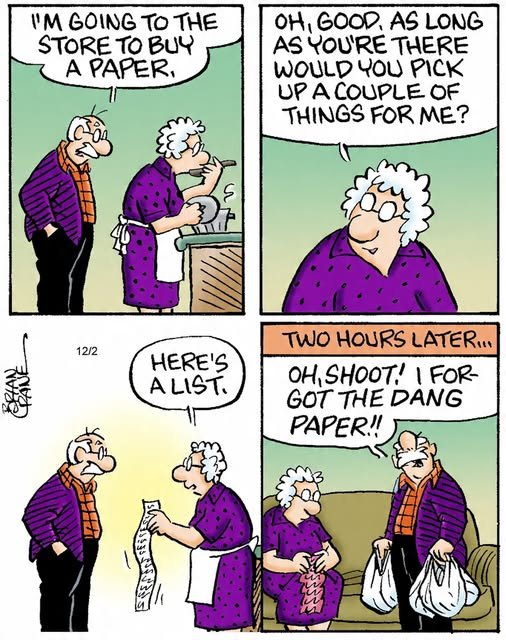
Mot: .. I Can Soooooooo - Relate!!!!
FRANK26….1-30-26…..I GIVE UP
KTFA
Friday Night Video
FRANK26….1-30-26…..I GIVE UP
This video is in Frank’s and his team’s opinion only
Frank’s team is Walkingstick, Eddie in Iraq and guests
Playback Number: 605-313-5163 PIN: 156996#
KTFA
Friday Night Video
FRANK26….1-30-26…..I GIVE UP
This video is in Frank’s and his team’s opinion only
Frank’s team is Walkingstick, Eddie in Iraq and guests
Playback Number: 605-313-5163 PIN: 156996#