All My Money Is Gone. What Can I Do?
All My Money Is Gone. What Can I Do?
Danielle Antosz Moneywise Sat, January 10, 2026
I took my friend’s advice to invest my $180K nest egg in a foreign savings firm.
Investment scams are on the rise in the U.S., with data from the FTC showing a 25% increase in losses between 2023 to 2024 (1). Consumers reported $5.7 billion lost to these scams last year — and for many Americans, that number highlights how easy it can be to fall for a fraudster’s schemes.
All My Money Is Gone. What Can I Do?
Danielle Antosz Moneywise Sat, January 10, 2026
I took my friend’s advice to invest my $180K nest egg in a foreign savings firm.
Investment scams are on the rise in the U.S., with data from the FTC showing a 25% increase in losses between 2023 to 2024 (1). Consumers reported $5.7 billion lost to these scams last year — and for many Americans, that number highlights how easy it can be to fall for a fraudster’s schemes.
Consider someone like Michael, a 46-year-old warehouse supervisor in Ohio. Last year, a close friend urged him to invest his life savings with a foreign firm that was supposedly generating double-digit returns for everyday investors. The friend said he had already seen strong results and even showed screenshots of his growing balance.
Trusting his friend was enough. Michael wired nearly $180,000 — his entire nest egg — to the firm, with little additional research. A few months later, the company announced “temporary liquidity issues.” By the end of the year, the CEO was in court overseas and customers learned that the firm had funneled money into high-risk, unregulated investments, before collapsing. Michael and his friend lost everything.
How Do Investment Scams Work?
Investment scams convince unsuspecting victims that they can earn big returns with a new opportunity that few others know about. And scammers are getting better at making these schemes look legitimate (2), as the FTC warns.
“The data we’re releasing today shows that scammers’ tactics are constantly evolving,” said Christopher Mufarrige, Director of the FTC’s Bureau of Consumer Protection. “The FTC is monitoring those trends closely and working hard to protect the American people from fraud (1)”.
While these schemes take different forms, the general process is similar: They get your attention via ads, free events, or financial advice. They'll often say you'll make lots of money and may pitch the investment as something new or unique. Many scammers use "real" people's stories to show you how much you could make by showing their lavish lifestyles.
The actual investment can vary. Sometimes it's coins, cryptocurrency, real estate, or investments in international firms. Scammers often promise high returns and may even show you a dashboard of your money growing, usually to encourage you to increase your investment (2).
In the end, though, your money is gone and you're left to pick up the pieces. Even worse, recovering your investment is often impossible.
Avoiding Investment Scams
Investment scams don’t just happen to people who are careless or uninformed. They often prey on trust, like a friend’s recommendation, a community connection, or a professional-looking website. And once money is transferred, especially across borders, recovering it becomes extremely difficult.
That’s why prevention is critical. Here are the signs an “opportunity” may not be what it seems:
TO READ MORE: https://www.yahoo.com/finance/news/took-friend-advice-invest-180k-130000048.html
“Tidbits From TNT” Thursday Morning 1-22-2026
TNT:
Tishwash: US Central Command: 7,000 ISIS detainees will be transferred from Syria to Iraq
The US Central Command announced on Wednesday that approximately 7,000 ISIS detainees will be transferred from Syria to Iraq as part of joint security measures.
The US Central Command said in a statement: "We have begun a mission to transfer ISIS terrorist detainees from Syria to Iraq and place them in secure detention centers."
She added, "We expect that the number of ISIS terrorist detainees who will be transferred from Syria to Iraq will reach around 7,000."
TNT:
Tishwash: US Central Command: 7,000 ISIS detainees will be transferred from Syria to Iraq
The US Central Command announced on Wednesday that approximately 7,000 ISIS detainees will be transferred from Syria to Iraq as part of joint security measures.
The US Central Command said in a statement: "We have begun a mission to transfer ISIS terrorist detainees from Syria to Iraq and place them in secure detention centers."
She added, "We expect that the number of ISIS terrorist detainees who will be transferred from Syria to Iraq will reach around 7,000."
"We are coordinating with partners in the region and the Iraqi government, and we appreciate their role in ensuring the defeat of the ISIS terrorist organization," she affirmed. link
Tishwash: Government advisor: We are still in the middle of tax reform.
Advisor to the Prime Minister, Abdul Hussein Al-Anbaki, confirmed that good steps have been taken in the tax reform process, noting that the procedures are “halfway through.”
Al-Anbaki said in a press statement : “Talking about the existence of a fixed strategy for economic reform is inaccurate, as Iraq has witnessed the preparation of more than 16 strategies and roadmaps for economic reform since 2009.”
He explained that “the work continued until the last government, which was the government of Mohammed Shia Al-Sudani, where the focus was on some aspects of economic reform, including tax reform, which included the Supreme Committee, and we were able to put in place a number of good steps, but we are still in the middle of the road and need to complete them.”
The path to tax reform
Al-Anbaki expressed his fear that “the new governments will follow the approach of previous governments by leaving projects incomplete and starting anew, as if there were no previous scientific or intellectual output or visions for economic reform.”
He pointed out that “all visions are available, but the problem lies in the institutional structure, in addition to the absence of economic specializations, as people from other specializations are handling the file, which leads to repeated mistakes.”
He added that “economic reform has been delayed for too long due to temporary appeasement and populist policies, under governments that operate within short time periods without long-term thinking,” explaining that “Iraq, since 2003 until now, has not achieved long-term requirements, which necessitates working in two directions; short and long term; because neglecting the long term leads to the fragility of the state and exposes it to crises and global changes.”
Economic policy is being run in reverse.
He stated that “Iraq has not been able, during the past 23 years, to create a financial lever to protect the economy from crises, as economic policy is managed in reverse, where spending expands with the expansion of the economy and contracts with its contraction, contrary to economic theories that assume that the state should intervene with expansion during periods of contraction and with contractionary policy during inflation.”
He pointed out that “as an expert in the Organisation for Economic Co-operation and Development (OECD) for more than 15 years, Iraq has provided important outputs for economic reform, including a roadmap for restructuring state-owned enterprises in 2015, which was highly praised in Paris, but it has not been implemented.”
He stressed, “the importance of reactivating the relationship with international organizations to find out where the world has reached in economic reform, especially in the field of the digital economy, in which Iraq is still lagging behind.”
He explained that “the International Tax and Investment Organization (ITIC) has emphasized the role of tax reforms in attracting foreign direct investment, as the lower the cost of compliance, the greater the opportunities to attract investors.”
He stressed that “this requires a great effort and a comprehensive improvement of the business environment, not just tax reform.” link
************
Tishwash: Conflicting interpretation of an Iranian message regarding Maliki: Will Savaya attend the "framework" session on Saturday?
The Shiite alliance enters the final stretch of the battle
Over the past few days, the Coordination Framework has received conflicting messages from Tehran and Washington regarding the name of the next prime ministerial candidate.
Political assessments indicate that the matter may be resolved early next week, either in favor of Nouri al-Maliki, leader of the State of Law Coalition, or by proposing a compromise candidate acceptable to the conflicting parties.
As of the time of this report, two key factions within the Shiite alliance still oppose Maliki's candidacy for the premiership.
The CoordinationFramework has reached a political impasse due to Maliki's insistence on running, while his opponents have exhausted all means of pressure and maneuvering without achieving a decisive breakthrough.
Political sources suggest that a meeting of the Coordination Framework scheduled for next Saturday will be pivotal for two main reasons:
First, the arrival of an Iranian message that has been interpreted in contradictory ways by both the pro- and anti-Maliki camps.
Second, the meeting coincides with the visit of US President Donald Trump's envoy to Iraq, Mark Savaya, who is expected to deliver a significant political message.
While a political source close to a pro-Maliki faction, who requested anonymity, stated that "the Iranian message endorsed Maliki's selection," another source from a camp described as "neutral" offered a different interpretation, suggesting that "Tehran is preoccupied with its internal and regional affairs and has not intervened as it has in the past, limiting itself to general, indirect signals."
This view is reinforced by statements from Husam al-Hassani, a leader in the Hikma Movement, who confirmed in a television interview that "the Iranian message did not support a specific name but rather advocated for the principle of consensus," explaining that its essence was: "Put your trust in God regarding what you have agreed upon."
Maliki's movements and Washington's messages : Over the past 48 hours, Maliki intensified his meetings with leaders of the opposition camp, meeting separately with Ammar al-Hakim, leader of the Hikma Movement, and Qais al-Khazali, leader of Asa'ib Ahl al-Haq, in an attempt to bridge the differences regarding the next prime minister, without any clear indications of a resolution.
Meanwhile, the American position remains shrouded in ambiguity. A neutral political source says that “Safia will be in Baghdad on Saturday, carrying a message that may not be in Maliki’s favor,” thus opening the door to the option of a “compromise candidate.”
The US envoy recently escalated his rhetoric, stating that “reforming Iraq begins with confronting corruption decisively,” considering “militias to be the symptom, while corruption is the disease.” In a post on the X platform, he described the corruption network in Iraq as “complex and deliberately built over more than two decades,” emphasizing that dismantling it is a prerequisite for restoring stability and sovereignty.
According to circulating information, the US envoy is expected to move towards activating a package of decisions that Al-Mada newspaper exclusively published last year, which includes closing most Iraqi banks and keeping only a limited number, no more than “four to six banks,” as part of a strict US campaign to combat money laundering and dry up Iran’s sources of funding.
Mark Savia had held a series of meetings with officials in Washington during the past week, which received direct praise from US President Donald Trump, reinforcing the impression that the envoy is operating with a broad mandate and unprecedented powers.
Within Iraq, perceptions of Safia's stance toward the Shiite alliance vary. Some see him as an adversary seeking to undermine its influence, while others consider him a potential partner in reshaping the political landscape according to new equations.
What does the opposition want?
Domestically, Hakim and Khazali remain steadfast in their rejection of Maliki's nomination, as confirmed by Badr Organization leader Mukhtar al-Moussawi.
Al-Moussawi, a member of parliament, told Al-Mada yesterday, "These are still the current positions regarding Maliki, and perhaps they changed Tuesday evening after the latest meeting held by the opposition forces, but I cannot confirm that yet."
Al-Moussawi, whose bloc has not yet announced a definitive position on the crisis, believes that "the problem is not Maliki himself, but rather his inability so far to convince the opposition of its share of the government."
The "Coordination Framework" failed last week to hold two meetings that were supposed to finalize the candidate's name.
Al-Mada observed a clear divergence of opinions within the "Coordination Framework" regarding Nouri al-Maliki's nomination. Some parties believe he is "unsuitable" for the position at this stage, while others consider his selection a potentially "provocative message" given the repercussions of the Syrian crisis.
The opposition camp believes that the number of seats held by the State of Law coalition does not qualify al-Maliki for the premiership, unless the circulating reports about Prime Minister Mohammed al-Sudani relinquishing his political "points" in his favor prove true.
However, Hussam al-Hassani, a leader in the Hikma Movement, denied these assessments, asserting that the "Reconstruction and Development" bloc, headed by al-Sudani, was asked if it was prepared to concede its entitlement to the State of Law coalition in exchange for the prime ministership.
His response was decisive: "No, we have our political entitlement."
Al-Sudani had surprised the "Coordination Framework" by announcing his willingness to relinquish the position to al-Maliki, followed by reports of an alliance between the two sides, although the latter has not yet officially confirmed it. However, the opposition camp continues to promote the narrative that al-Sudani is engaging in political maneuvering, placing al-Maliki at the forefront of the crisis to pave the way for his return to the premiership.
The Shiite alliance has thus far failed to secure a clear stance from the Najaf religious establishment, which has repeatedly refused to intervene in this matter.
This is compounded by the silence of Muqtada al-Sadr, leader of the Sadrist Movement, regarding the unfolding crisis. With the prospects of removing al-Maliki through consensus dwindling, his opponents are promoting what they call a "policy of entrapment ," meaning pushing him to the forefront at the height of the crisis to hold him politically responsible.
In this context, Sunni forces have begun launching indirect attacks against him, a notable development after weeks of his name circulating as a potential candidate.
Over the past two days, Mohammed al-Halbousi has continued to level veiled criticisms, reminiscent of al-Maliki's era in power.
In a notable post yesterday, he said, “Those who do not learn from history cannot build the future,” recalling the events of the “Arab Spring” and what accompanied it in Iraq in terms of “crisis management, sectarian incitement, and the arrest of innocent people.” He considered that those policies were used at the time to cover up the escape of senior terrorists from Abu Ghraib prison, which took place during the second Maliki government, in “an incident described as the strangest, which passed without any accountability or condemnation of those responsible for it.”
He added that the fugitives later managed to occupy and destroy entire provinces before they were reclaimed "through immense sacrifices and the displacement of millions," referring to the tragedy of the Bzeibiz Bridge.
Al-Halbousi added that the scenario is being repeated today amidst regional and international turmoil, through the so-called SDF and its smuggling of ISIS leaders from its prisons, warning of the danger of repeating the same mistakes.
He called on "the wise men of Iraq" to recognize the magnitude of the challenges and adopt a unified national stance that prevents "a return to the past, whatever the reasons," while emphasizing the need to preserve the security, political, and social stability achieved after the defeat of ISIS.
Last Monday, Al-Halbousi had called for the appointment of a figure with broad national acceptance "away from a return to painful, lean days," a statement widely interpreted as referring to Nouri al-Maliki.
Similarly, Sunni leader Ahmed Abdullah Abdul Jabouri (Abu Mazen) stressed that "Iraq cannot afford to turn back the clock," calling for the formation of a national unity government built on trust and partnership, in a post on social media.
Researcher and academic Ziad al-Arar believes that the Sunni position on Nouri al-Maliki assuming the premiership is "diverse and not unified," as it is divided between a genuine rejection of al-Maliki's return to office and other stances that can be described as "political maneuvering," linked to specific demands and conditions, or based on positions al-Maliki has recently taken, particularly his rejection of a specific Sunni figure assuming the speakership of parliament.
Al-Arar, speaking to Al-Mada, points out that the political voices within the Sunni community opposing al-Maliki's return appear to be more numerous and influential than those supporting him. Furthermore, the Kurdish position has not yet crystallized clearly.
However, he emphasizes that the final decision should remain with the "Shia framework," as it is the body authorized to choose the prime ministerial candidate. He recalls that the framework previously allowed Sunni forces the freedom to choose Mohammed al-Halbousi as Speaker of Parliament.
He adds that Mohammed al-Sudani's move to withdraw or nominate al-Maliki for the next prime minister came, in his view, within the framework of striving to preserve the unity of the "coordination framework" and break the political deadlock. At the same time, he stresses that al-Sudani remains a viable candidate, and that the final outcome will depend on internal political developments, as well as the impact of regional events in shaping the final picture of the Iraqi political landscape. link
Mot: Let Me Tell YOU So!!!!

Mot: . SurPrise!!!!!!

FRANK26...1-21-26....DESPERATION
KTFA
Wednesday Night Video
FRANK26...1-21-26....DESPERATION
This video is in Frank’s and his team’s opinion only
Frank’s team is Walkingstick, Eddie in Iraq and guests
Playback Number: 605-313-5163 PIN: 156996#
KTFA
Wednesday Night Video
FRANK26...1-21-26....DESPERATION
This video is in Frank’s and his team’s opinion only
Frank’s team is Walkingstick, Eddie in Iraq and guests
Playback Number: 605-313-5163 PIN: 156996#
Seeds of Wisdom RV and Economics Updates Wednesday Evening 1-21-26
Good Evening Dinar Recaps,
Davos 2026: Geopolitics Overshadows Global Economy as Trump’s Greenland Push Tests Alliances
World Economic Forum becomes focal point for transatlantic tensions, alliance friction, and economic realignment pressures
Good Evening Dinar Recaps,
Davos 2026: Geopolitics Overshadows Global Economy as Trump’s Greenland Push Tests Alliances
World Economic Forum becomes focal point for transatlantic tensions, alliance friction, and economic realignment pressures
Overview
The 2026 Annual Meeting of the World Economic Forum in Davos has shifted from routine economic discussion to a geopolitical pressure point, as U.S. President Donald Trump used the platform to renew his controversial bid to assert U.S. interests over Greenland and challenge European partners. His address — combining economic nationalism, strategic ambition, and tariff threats — has provoked strong pushback from European leaders, raised market sensitivities, and underscored weakening cohesion among traditional allies. This moment, at one of the year’s highest-profile international gatherings, signals deepening strains in global cooperation.
Key Developments
1. Trump Reiterates Greenland Goal Without Military Force
President Trump delivered a high-profile speech at Davos on January 21, 2026, emphasizing the U.S. desire to acquire Greenland and strategically framing it as critical to national and continental defense. He explicitly ruled out the use of military force while intensifying diplomatic and economic pressure.
2. Transatlantic Tensions Escalate Publicly
Trump used his speech to criticize European allies and frame NATO relationships as transactional. His rhetoric contributed to a diplomatic rupture, with European leaders warning that Greenland’s sovereignty is non-negotiable and planning united responses.
3. Tariff Threats Linked to Strategic Aims
During and around the forum, the U.S. reiterated threats of escalating tariffs on Denmark and other European NATO members if negotiations over Greenland did not progress — a move seen by critics as coercive and likely to disrupt trade ties.
4. European Pushback and Arctic Security Responses
In response, European Commission President Ursula von der Leyen outlined plans for a comprehensive package to support Arctic security, emphasizing cooperation and asserting Greenland and Danish sovereignty.
5. Broader Leader Participation Amplifies Stakes
With nearly 65 heads of state and government attending, including key European, Asian, and Middle Eastern leaders, Davos has become an unusually political forum, blending economic discussion with alliance and security concerns.
Why It Matters
Davos is traditionally a venue for consensus on economic growth, sustainability, and innovation. But this year, geopolitics — specifically territorial strategy and alliance friction — has dominated the conversation. That shift reflects a broader reality: economic policymaking is increasingly inseparable from strategic and security priorities. The entanglement of trade, alliance cohesion, and territorial competition signals deeper structural stresses in the global order.
This dynamic complicates coordinated responses to shared challenges like inflation, debt, and climate change, and reinforces geoeconomic fragmentation over unified global governance.
Why It Matters to Foreign Currency Holders
For foreign currency holders focused on reset or revaluation signals:
Alliance friction and tariff threats elevate the risk of diversified reserve strategies and regional payment systems.
Political instability among major economies increases demand for safe-haven currencies and assets beyond traditional anchors.
Shifts in geopolitical economic governance may accelerate exploration of non-dollar settlement mechanisms among emerging economies.
Moments of tectonic geopolitical stress often precede periods of currency repricing and market restructuring.
Implications for the Global Reset
Pillar 1: Geoeconomic Realignment
Davos 2026 exemplifies how global economic forums are now arenas for strategic competition, not just cooperation. Trade policy, security imperatives, and alliance negotiations are central concurrently.
Pillar 2: Structural Monetary Pressures
As political risk and alliance fragmentation rise, traditional monetary frameworks may be reevaluated. This environment nourishes demand for alternative financial architectures and reinforces multipolar economic trends.
The reset isn’t a sudden event — it’s the accumulation of strategic divergence across policy domains.
This is not globalization at consensus — it’s globalization under strain, with strategic rivalry rewriting the rules at Davos itself.
Seeds of Wisdom Team
Newshounds News™ Exclusive
Sources
Reuters/AP captured in KPBS: Trump says he won’t use force to acquire Greenland in Davos speech
Reuters/Economic Times – Trump at Davos 2026: from economic nationalism to territorial pressure
Reuters – EU Commission working on Arctic security support package
World Economic Forum – Over 60 heads of state gathering at Davos 2026
~~~~~~~~~~
Trump Announces NATO ‘Framework’ Deal on Greenland at Davos
A sharp reversal from tariff threats eases markets but raises deeper questions about alliance cohesion and strategic realignment
Overview
At the World Economic Forum in Davos, Switzerland, U.S. President Donald Trump announced that he and NATO Secretary General Mark Rutte have “formed the framework of a future deal” regarding Greenland and the broader Arctic Region. The announcement came after intense diplomatic engagement and followed days of tariff threats that had rattled markets and strained transatlantic relations. Trump also said he would drop planned European tariffs and ruled out the use of military force to acquire the strategically vital island.
Key Developments
1. Framework Deal on Greenland and the Arctic
Trump posted on social media that following productive talks with NATO leadership, a framework for a prospective agreement on Greenland and Arctic security has been established. Specifics and timelines were not disclosed, but the announcement reversed earlier aggressive rhetoric.
2. Tariff Threats Withdrawn
In a major policy shift, Trump said he will not impose the 10% tariffs on eight European NATO allies that had been scheduled to start on February 1. These tariffs were tied to Trump’s push for greater U.S. influence over Greenland. The reversal helped calm financial markets after sharp sell-offs tied to earlier escalation.
3. Military Force Rule-Out
In his Davos remarks, the president explicitly ruled out using military force to seize control of Greenland, a significant departure from months of speculation. He framed the approach as diplomatic and strategic rather than coercive.
4. Market and Diplomatic Reactions
Global markets responded positively to the announcement, with major U.S. stock indices rebounding after recent volatility tied to geopolitical risk. European leaders, however, remain cautious, emphasizing the sovereignty of Denmark and Greenland and the need for genuine consultation with Arctic partners.
Why It Matters
This development marks a major de-escalation in one of the most significant transatlantic crises in years. A potential Greenland agreement — even in “framework” form — removes an immediate threat to trade relations and NATO cohesion. Yet, the absence of details and the unconventional nature of the deal raise questions about sovereign decision-making, alliance trust, and how strategic resources are negotiated in a multipolar world.
In global reset terms, the episode underscores how geopolitical leverage, economic statecraft, and alliance structures are increasingly intertwined, influencing economic integration and currency confidence.
Why It Matters to Foreign Currency Holders
For holders focused on currency reset signals:
Tariff threats and geopolitical risk can significantly shift capital flows into safe havens and alternative assets.
A diplomatic reversal indicates that political risk premiums may be temporary, affecting currency valuations tied to perceived stability.
The Arctic’s strategic importance — and uncertainty over governance — could eventually influence energy and resource-backed currency considerations down the road.
Periods of heightened alliance tension often coincide with currency volatility and repricing opportunities.
Implications for the Global Reset
Pillar 1: Structural Alliance Recalibration
The United States and NATO confronting a territorial and strategic flashpoint highlights fracture lines in long‐standing alliance frameworks, accelerating discussions on multipolar security and economic cooperation.
Pillar 2: Risk and Policy Interdependence
Geopolitical risk now feeds directly into economic policy, market confidence, and currency positioning. Central banks and sovereign authorities may increasingly price politico-strategic indicators into monetary decisions.
This isn’t just diplomacy — it’s a reconfiguration of how economic and security policy intersect on the world stage.
This is not a finalized treaty — it’s a strategic pivot that could influence alliances, markets, and monetary expectations as the world order evolves.
Seeds of Wisdom Team
Newshounds News™ Exclusive
Sources
~~~~~~~~~~
Seeds of Wisdom Team RV Currency Facts Youtube and Rumble
Newshound's News Telegram Room Link
RV Facts with Proof Links Link
RV Updates Proof links - Facts Link
Follow the Gold/Silver Rate COMEX
Follow Fast Facts
Seeds of Wisdom Team™ Website
Thank you Dinar Recaps
Iraq Economic News and Points To Ponder Wednesday Evening 1-21-26
Iraq Can Fund Salaries, But Oil Sets The Limits
2026-01-21 Shafaq News Iraq is not expected to face immediate difficulties in paying public-sector salaries or pensions in early 2026, according to government advisers and economists. However, continued payments remain closely linked to oil prices staying within a limited range, leaving public finances vulnerable to external market shifts.
Iraq Can Fund Salaries, But Oil Sets The Limits
2026-01-21 Shafaq News Iraq is not expected to face immediate difficulties in paying public-sector salaries or pensions in early 2026, according to government advisers and economists. However, continued payments remain closely linked to oil prices staying within a limited range, leaving public finances vulnerable to external market shifts.
Oil revenues account for more than 90% of Iraq’s state income, making fiscal stability highly sensitive to fluctuations in global crude prices. Monthly operational spending —primarily salaries, pensions, and social welfare— absorbs the bulk of government expenditures, reducing flexibility in the event of a downturn.
The Prime Minister’s financial adviser, Mudhhir Mohammed Saleh, said that Iraq’s fixed monthly obligations amount to approximately 8 trillion Iraqi dinars (around $6.1 billion), excluding subsidies, debt servicing, and outstanding contractual payments.
In comments to Shafaq News, he noted that oil revenues can cover these commitments provided the annual average oil price remains above $60 per barrel, assuming exports of about 3.4 million barrels per day.
*Economists caution that this benchmark reflects structural fragility rather than financial resilience.* Ahmed Abd Rabbo, an economic analyst, said salary payments may remain secure in the short term but warned that the underlying imbalance persists.
He pointed to the steady expansion of the public wage and pension bill over the past decade, alongside limited growth in non-oil revenues. “The issue is not an immediate inability to pay,” he said, “but prolonged exposure to oil-market volatility without sufficient reform.”
Official data highlight the scale of the challenge. The Eco Iraq Observatory reported that Iraq’s fiscal deficit reached 24.68 trillion dinars (about $18.8B) by October 2025. Current expenditures accounted for roughly 75% of total spending, while non-oil revenues totaled less than 10 trillion dinars, compared with oil revenues of nearly 93 trillion dinars during the same period.
Central Bank figures further show that salaries and service-related spending reached about 96 trillion dinars, representing close to 90% of overall expenditure, leaving limited room to absorb revenue shocks or expand investment.
Nawar al-Saadi, a professor of international economics, said the main concern is the absence of a stabilizing mechanism. “Oil revenues are sufficient to fund current spending,” he told Shafaq News, “but they are not being channeled into economic diversification or a functioning stabilization fund. Any sudden price decline or unplanned obligation immediately turns salaries into a sensitive financial and political issue.”
Another economist, Mustafa al-Faraj, estimated that salary payments remain manageable if oil prices stay above $55 per barrel, warning that sustained prices below that level would impose significant constraints unless spending is adjusted.
He argued that reforms should focus on expenditure discipline, including reviewing high-level salaries, addressing duplicate salary payments, and reassessing legacy compensation schemes, alongside efforts to activate non-oil sectors such as tourism.
The government of Prime Minister Mohammed Shia al-Sudani, whose term has recently ended, introduced limited deficit-control measures, including the sale of unused government vehicles and equipment, a 50% reduction in fuel allocations, and a freeze on recognizing additional academic degrees for salary and promotion purposes from January 2026.
Economists say that while these measures may save about $2 billion annually, and ease pressure in the short term, they remain modest relative to the overall deficit. Without broader structural reforms targeting spending rigidity and revenue diversification, Iraq’s ability to sustain salary payments will continue to depend largely on favorable oil market conditions.https://www.shafaq.com/en/Report/Iraq-can-fund-salaries-but-oil-sets-the-limits
Iraq Imports Exceed $17B In Q3 2025
2026-01-21 Shafaq News– Baghdad Iraq’s imports reached $17.929 billion in the third quarter of 2025, up from $17.534 billion in the second quarter, Trading Economics said on Wednesday.
According to the data, machinery and transport equipment accounted for 38% of imports, followed by manufactured goods at 27%, mineral fuels at 10%, and chemicals and related products at 7%.
Syria ranked as Iraq’s largest import partner, accounting for 18%, followed by China with 14% and the United States with 6%. Other key partners included South Korea, Jordan, Germany, and India.
Iraq’s average imports between 1988 and 2025 stood at $13.478 billion. Figures peaked at a record $50.155 billion in the fourth quarter of 2012, while the lowest level was recorded at $2.681 billion in the fourth quarter of 1994. Iraq’s Central Bank announced last month that imports from January to September 2025 totaled $63.093 billion. https://www.shafaq.com/en/Economy/Iraq-imports-exceed-17B-in-Q3-2025
Iraq Climbs To Fourth Among Turkiye’s House Buyers In December 2025
Economy & Business 2026-01-21 Shafaq News– Ankara Iraqis purchased 133 houses in Turkiye in December 2025, ranking fourth among foreign buyers of real estate, the Turkish Statistical Institute (TURKSTAT) said on Wednesday.
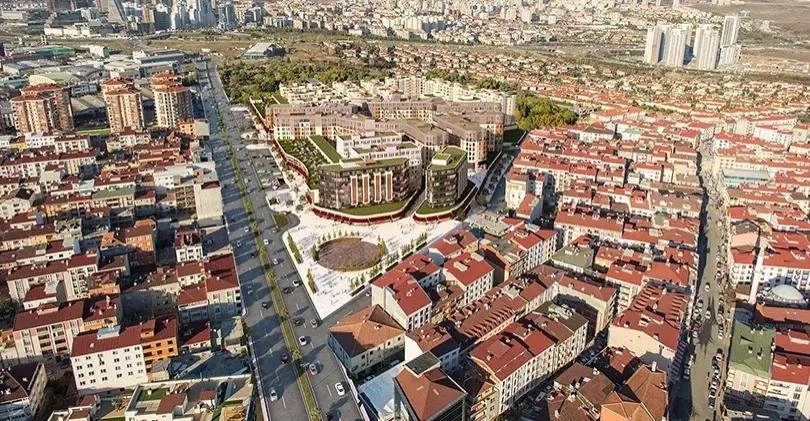
Total home sales across Turkiye rose by 19.8 percent in December compared with the same month last year, reaching 254,777 units.
Sales to foreign nationals increased by 5.1 percent year-on-year to 2,541 homes, accounting for 1.0 percent of total property sales during the month. Russians topped the list of foreign buyers with 504 homes, followed by Iranians with 232 and Ukrainians with 193. Azerbaijan ranked fifth with 113 homes, followed by Germany with 105, Kazakhstan 92, Saudi Arabia with 74, Afghanistan and China recorded 71 houses.
Last month, data showed that Iraqis bought 104 houses and took fifth place in November 2025. Iraqis had led foreign property purchases in Turkiye for several years, starting in 2015, but slipped to second place behind Iran at the beginning of 2021. Their ranking dropped further to third in April 2022 following a surge in Russian purchases.
USD/IQD Exchange Rates Climb In Baghdad, Dip In Erbil
Economy & Business Iraq 2026-01-21 Shafaq News– Baghdad/ Erbil The US dollar exchange rates closed higher in Baghdad but lower in Erbil on Wednesday, widening the gap between the two markets by 250 Iraqi dinars by the end of trading.
According to a Shafaq News market survey, the dollar rose in Baghdad’s Al-Kifah and Al-Harithiya central exchanges to 148,200 dinars per 100 dollars, up from 148,000 dinars earlier in the day.
Local exchange shops in the capital sold the dollar at 148,750 dinars per 100 dollars, while buying prices stood at 147,750 dinars. In Erbil, the selling price fell to 147,950 dinars per 100 dollars and the buying price to 147,850 dinars. https://www.shafaq.com/en/Economy/USD-IQD-exchange-rates-climb-in-Baghdad-dip-in-Erbil-1
Trump Treasury & Fed Will Run it Hot in 2026 – Craig Hemke
Trump Treasury & Fed Will Run it Hot in 2026 – Craig Hemke
By Greg Hunter’s USAWatchdog.com
Financial writer, market analyst and precious metals expert Craig Hemke predicted at the beginning of 2024 that the US would add a whopping $2 trillion in debt. It did.
At the beginning of 2025, Hemke predicted the US dollar would take a big hit. It did, and record high gold and silver prices score Hemke another bullseye.
At the beginning of 2026, Hemke is predicting the Trump Treasury and Fed are going to put the pedal to the metal in running the economy.
Trump Treasury & Fed Will Run it Hot in 2026 – Craig Hemke
By Greg Hunter’s USAWatchdog.com
Financial writer, market analyst and precious metals expert Craig Hemke predicted at the beginning of 2024 that the US would add a whopping $2 trillion in debt. It did.
At the beginning of 2025, Hemke predicted the US dollar would take a big hit. It did, and record high gold and silver prices score Hemke another bullseye.
At the beginning of 2026, Hemke is predicting the Trump Treasury and Fed are going to put the pedal to the metal in running the economy.
Hemke explains, “Japan had yield curve control for years. They have taken it off, and interest rates have skyrocketed. This is where we are heading in the US.
In May, Trump is going to appoint a ‘yes man’ to the Fed. He’s going to replace (Jay) Powell, who will work with Scott Bessent (Treasury Secretary) and do his bidding and meld operations together.
Why would they need to do that? Because they are going to run it hot.
Remember, it was austerity a year ago. DOGE was going to cut $2 trillion in spending. They were going to balance the budget and all that kind of stuff. They quickly figured out that dog was not going to hunt.
Now, it’s all about growing our way out of this. Scott Bessent was on TV this weekend saying we are going to grow fast enough that the interest expense, which is around 6% of GDP, is going back down to 3% of GDP.
They think they can grow GDP that fast. They are going to grow GDP that fast by Trump’s ‘yes man’ cutting the short end, and if interest rates on the long end start going higher because of the inflation that it’s going to cause, they are going to come back in with yield curve control here in the US.
They have done this before after World War II, and they are going to do it again as soon as this year. That is the most bullish thing that can happen for gold and silver. This is also why gold and silver have been rallying so strongly in the last 24 months.”
Hemke predicts gold will hit at least $6,000 per ounce, and silver will easily hit $130 per ounce in 2026. The industrial demand for silver is not going to let up anytime soon.
Also, central bank demand is going to continue. Hemke contends, “Two weeks after the start of the Ukraine war, the US kicked Russia out of the SWIFT system and froze its foreign currency reserves. That sparked, at the same time, global central bank gold demand that has run record buying for four years in a row.
It started in 2022. Countries looked around and said, ‘Wow, if we get sideways with the US, they will do the same thing to us.’ So, they started selling their Treasuries and dollar reserves and started buying gold.
There were record amounts in 2022, 2023, 2024 and another big year in 2025 for physical gold buying by central banks.
We just got news today that the Polish central bank is buying another 150 metric tons of gold. They are building their gold holding to 700 metric tons. So, this global central bank demand is underpinning gold.”
In closing, Hemke says, “The Fed is saying they are going to cap interest rates. The Fed is going to be a buyer of 10-year Treasury notes at let’s say 4%. . .. With locking in rates while inflation is up there, you will have negative real interest rates.
The most bullish factor for gold prices are negative real interest rates. That’s the path, and that’s where the US is headed. It will be yield curve control.”
There is much more in the 39-minute interview.
Join Greg Hunter of USAWatchdog as he goes One-on-One with Craig Hemke of the popular website TFMetalsReport.com for 1.20.26.
https://usawatchdog.com/trump-treasury-fed-will-run-it-hot-in-2026-craig-hemke/
Rob Cunningham: Fiat Money Extracts Future Labor through Debt
Rob Cunningham: Fiat Money Extracts Future Labor through Debt
1-21-2026
Rob Cunningham | KUWL.show @KuwlShow
Fiat money extracts future labor through debt.
Fiat law governs present behavior through presumption.
When both lack transparency,
the people are ruled not by consent – but by confusion.
Rob Cunningham: Fiat Money Extracts Future Labor through Debt
1-21-2026
Rob Cunningham | KUWL.show @KuwlShow
Fiat money extracts future labor through debt.
Fiat law governs present behavior through presumption.
When both lack transparency,
the people are ruled not by consent – but by confusion.
Control does not require tyranny
when ignorance can be engineered at scale.
Truth requires light.
Justice requires limits.
Freedom requires consent.
Any system that fears transparency
has already confessed its intent.
“The truth will set you free.”
– not narratives, not authority, not volume – truth.
Trustlessness ends “trust me” chains.

Bruce’s Big Call Dinar Intel Tuesday Night 1-20-26
Bruce’s Big Call Dinar Intel Tuesday Night 1-20-26
Transcribed By WiserNow Emailed To Recaps (INTEL ONLY)
Welcome everybody to the big call tonight. it is Tuesday, January 20th and you're listening to the big call. thanks everybody for tuning in, and we're looking forward to another good call tonight.
Let's talk about where we are from an Intel point of view. All right. Well, this is not going to be that long a segment, but I would say what's interesting that I found out yesterday was that the we --- let me get the currencies right. First of all, there weren't any currencies up on the redemption center screens yesterday.
Bruce’s Big Call Dinar Intel Tuesday Night 1-20-26
Transcribed By WiserNow Emailed To Recaps (INTEL ONLY)
Welcome everybody to the big call tonight. it is Tuesday, January 20th and you're listening to the big call. thanks everybody for tuning in, and we're looking forward to another good call tonight.
Let's talk about where we are from an Intel point of view. All right. Well, this is not going to be that long a segment, but I would say what's interesting that I found out yesterday was that the we --- let me get the currencies right. First of all, there weren't any currencies up on the redemption center screens yesterday.
Previously, we had had 30 like the day before, we had 37 currencies on the front screen of the redemption center. That's more than we thought were going to be there. And they said they might get as many as 40. So they might have three, maybe four more currencies that would show up.
These are all currencies are going up in value against the USN dollar. Okay, so the fact that we had 37 now, the rates were fluctuating or populating, as we say, where you couldn't really concentrate and focus on a rate. It's because they were flickering and changing so quickly.
But it's nice to know that we had space with a pending notification for the Iranian Rialas well the Venezuelan Bolivar. So those two should be in the basket in play. And we have rates for, not really for the Rial right now, but we did have something for the Bolivar so anybody who has that is probably going to be doing well, on that particular currency.
Let's see what else there was.-- What was interesting on the Central Bank of Iraq site, on their CBI screens, Iraq, the central bank of Iraq. We used to call it central bank, and then we changed it to Sovereign bank of Iraq. They still use designation CBI, so I just call it CBI --
CBI site had actually two other currencies on their site, and one was the Vietnamese Dong and the other one was not Afghanistan , I believe it was on, was the rupiah was on their site? What was that telling us? That’s telling us that that is ready to be exchanged or traded against the new Iraqi dinar.
And so that's that's pretty cool, had not heard that before -- Now, President Trump was going to leave tonight to go over to Davos, Switzerland to be part of the World Economic Forum.
And I know it's going over there to talk about several things, but one of the things he was going to talk about, was picking up Greenland. Greenland, and how he intends to do that, and what, what we're going to have to benefit from it, primarily from a security point of view, from a military point of view, I think it helps to complete our golden dome that he's talked about, and we've talked about -- So that is really important.
He's going over with that, and he's got to go over and talk also about our housing issues over here, in terms of first time home buyers trying to get people that are having difficulty finding a house they can afford and affording a first time house to make that happen. I don't quite understand why he would bring that up over there at the World Economic Forum, but I know he has something planned for that. But he talked about making that happen.
We do know that he had talked about a 50 year mortgage. He talked about, I think there was a number of bonds that have been purchased to help reduce the cost for maybe it's Freddie Mac and Fannie Mae FHA loans or something. I don't have the full details on it, but that'll be interesting to see when that all comes out,
But President Trump today, on January, 20 marks one year that President Trump has been in office, one year of his four year term, and today, I watched a two hour press conference, and then I had, there were questions afterwards that he answered quite a few of, and it's amazing. He just basically went through and listed the accomplishments that he and his administration had made in the first year. And it's an amazing list that he has produced.
And I was very, very happy and very proud to see how much was done in one year. And we're just really getting started where we should see some really good things happen in our second, third and fourth years. We're really looking forward to that.
What else happening? As far as that goes, -- I think what's interesting is we have been tracking for five days at our last call, Thursday night, on when everybody is supposed to receive notification and when are we supposed to go in for exchanges?
Well, we always talk about tier three bond holders who are supposed to go slightly ahead of us in terms of receiving notification they were to receive notification yesterday and today on their funds that would be placed in their accounts so that they could, they'd see the funds, and then also get notified as to when they could have access to those funds for sort of two separate things, the bonds, for the most part, except for bonds that we might have in I'm talking sheet bonds. I'm not talking about the Zim. I'm talking about sheet bonds, and so called boxes of bonds that we will be able to take into the redemption center to hypothecate or to to redeem.
And we can do that, but we have to give them notice if you have sheet bonds, Golden Dragon, yellow Dragon, Red Dragon. Bonds, railroad bonds, Peruvian gold bonds, any of the bonds that are legitimately in sheet form that you have provenance for, that you can prove how you receive them before you or they give to you. Blah, blah, blah, all of that is called provenance, and that's what you have to be able to show if you have bonds to go into the redemption center to redeem.
So what I'm suggesting is bond holders, to my knowledge, may have been funds, may have been placed in their accounts, and we do not have verification of that yet, and I think it was more like instead of Monday, Tuesday, it's more likely to be today and Wednesday, tomorrow before bond holders may see those funds in their accounts.
Now, when that's a big question, access once they receive the email to tell them one and here's my what I think that may look like, we should get our notifications according to who we have talked to, these redemption center leaders, people working within the Treasury. These are people just in that particular arena.
Some are special forces. Some are people that are involved in security, etc, but they're all pretty much suggesting for tier 4B, should get notified either tomorrow or Thursday and begin exchanges early as Thursday this week.
Everybody is this week now, one of the ranges that was given was from the 20th, which is today, through the 25th we had originally heard 27th 26th and now the far date is 25th I think that's Saturday, right?
That would be great now, obviously. And we had heard for one one particular redemption center that we could get this anytime on Wednesday night to Thursday by noon. Boy, I like that. I like that so specific. Thursday night to I mean, excuse me, Wednesday night to Thursday by noon is how it was stated.
All right, we're not going to hold ourselves to that exact timeline, but I like Wednesday, Thursday for us. But you know what, guys, it could be Thursday, Thursday, we could get notified Thursday, set appointments and begin exchanges on the same day.
Very possible, and I hope that's going to be the case for us.
So bondholders are still waiting for notifications to tell them when they have access. I don't know how many have received funds into their account and whether they have the coordinates to be able to see that yet, but I know that that is the plan for them to be able to see their account, and they know how much of that money they will have for the first 60 days, and then after 60 days, very similar to us, they would have access to all of it. In our case, we tell them how much we need for the first 60 to 90 days for our projects, and then we can put that amount in our primary account.
Now I'm moving it from our Quantum account into our primary and then after 60 or 90 days, whichever it is, we can have access to as much as we want.
That is the plan.
So we'll see how that comes together. I'm hoping everything is coming like from about three or four different sources that are talking about the Wednesday, Thursday for tier 4b that's what I'm hoping for, and believing that's going to happen for us.
Let's see beyond that. -- Of course, redemption centers are the way to go.
We know that the contract rate on the dinar has been agreed to and put under contract by President Trump in his first term as president, and that's an extremely good rate, and I'm looking forward to that.
We we don't have a contract rate, per se, on the Dong but we know that it's supposed to be a very good rate, and I've heard where it was, and now it should be at that point, or maybe a little higher.
So we're going to see what that is that should be great for us and the other currencies, like said, will come into play. I believe that everything that we thought we had to wait to happen has happened.
There may be something with the regime change in Iran that I don't have the latest information on right now might be something to that, but realistically, we're only a couple of days away from being where we think we need to be. I did hear one source this morning that indicated 72 hours to 96 hours from 3am this morning.
Okay, that's three days or four days from this morning early today is what Tuesday --- So maybe it is a Friday, Saturday, so we have to open our window. I'm hoping for Wednesday, Thursday, but it could be by the end of the week.
I think if we look at it that way, I think that's probably the safest way to look at it right now, and remember that we tend to go by what the redemption center leaders are getting from both Wells, Fargo and treasury, because Treasury will send an email to Wells and Wells will forward that to the redemption center leaders, and we sometimes are fortunate enough to find out what they're thinking.
And that works out really well. So President Trump is leaving, if he hasn't already left tonight, or Davos, Switzerland, arriving in the morning, and he'll be good to go for his meetings tomorrow.
And actually, usually, as I remember, that's a four day conference over there. But see, I don't know how long President Trump's planning to stay, and I don't know how many different meetings he has scheduled, but I know he's meeting with a lot of the European leaders that will be there, and that's a good thing. That's a good thing.
So I'm hoping that the picking up of Greenland will be in everybody's best interest from a national security point of view, and a regional security point of view for the United States, and I know President Trump will do the right thing for the people on the island of Greenland, and also for Denmark, who theoretically owns Greenland. But it is, it is strategic, and it's a good thing that we're looking at that.
I think, really, that is pretty much everything that I wanted to talk about tonight. That's what we're most interested in. Is our timing. What is our timeline? Try to update time line. And you know, things do change as you guys know, things do change.
Things come up, other things happen, and that has slowed us down for quite a while, so we will see whether or not there's anything else that's inhibiting us in our path to get this done,
but in the meantime, which is where we are. In the meantime, let's stay positive for it. Let's believe for it, let's pray for it, and let's stay patient for it, because that's really what serves us best, is being patient knowing that it's coming and knowing that it's close.
So let's just do what Sue was talking about earlier. Let's not get depleted. Let's keep our energy, but let's be ready in season and out of season for an instant word of a current encouragement that we can give to people that need it every every day of our lives. Be an encourager.
Okay, I think that's really something we can all do. So I want to thank Sue and Bob for being great co hosts. And you know, there's just so much that we've tried to cover on the big call for you guys. And many of you guys have been with us ever since the very first call 15 years ago. We're in our 15th year of the big call, and it's been exciting.
So I want to thank everybody. So we will be in touch with you, and we do plan. We had a really nice compliment from kind of pretty famous guy out there that said, check for the 800 numbers.
If you're a dinar holder, no other note banks are going to be exchanging Zim or redeeming Zim. So if you're a Zim holder, obviously you go to the redemption center and you'll get a free Q phone, which is basically phone that works on the Starlink satellite system. And it's like a satellite phone. It is a sat phone. So you'll be able to do that.
And there's a some other things that you'll get redemption center. So that's the ticket, the one you want to do. And then, of course, when you're at the redemption center, that when you tell them, if you have a dire need, and you're a zim holder, you definitely want to get the bed into the computer and hold it you're in the system, and that's what I'm going to do, and that's what many of you will do. So keep that in mind.
News, new news, Med beds, I know an instance where friend of mine, what witness, Terry guy, that was all from PTSD, really was not and took a in the med bed. It took 20 wins to completely erase and clear all of his problems, and he came out normal. That's all that was all gone. So there's a lot of potential for all of us, and we just have to get this thing kicked off.
So let's go ahead, pray the call out.. Well, good night everybody. Thank you. Thank you. Thursday night. God bless everybody.
Bruce’s Big Call Dinar Intel Tuesday Night 1-20-26 REPLAY LINK Intel Begins 1:07:15
Bruce’s Big Call Dinar Intel Thursday Night 1-15-26 REPLAY LINK Intel Begins 1:05:30
Bruce’s Big Call Dinar Intel Tuesday Night 1-13-26 REPLAY LINK Intel Begins 1:14:54
Bruce’s Big Call Dinar Intel Thursday Night 1-8-26 REPLAY LINK Intel Begins 1:22:42
Bruce’s Big Call Dinar Intel Tuesday Night 1-6-26 REPLAY LINK Intel Begins 1:13:10
Bruce’s Big Call Dinar Intel Thursday Night 1-1-26 New Year’s Day NO CALL
Bruce’s Big Call Dinar Intel Tuesday Night 12-30-25 REPLAY LINK Intel Begins 56:00
Bruce’s Big Call Dinar Intel Thursday Night 12-25-25 REPLAY LINK Intel Begins 20:40
Bruce’s Big Call Dinar Intel Tuesday Night 12-23-25 REPLAY LINK Intel Begins 1:05:35
Bruce’s Big Call Dinar Intel Thursday Night 12-18-25 REPLAY LINK Intel Begins 1:02:02
Bruce’s Big Call Dinar Intel Tuesday Night 12-9-25 REPLAY LINK Intel Begins 1:08:08
Bruce’s Big Call Dinar Intel Thursday Night 12-11-25 REPLAY LINK Intel Begins 1:21:00
Bruce’s Big Call Dinar Intel Tuesday Night 12-9-25 REPLAY LINK Intel Begins 1:02:50
Seeds of Wisdom RV and Economics Updates Wednesday Afternoon 1-21-26
Good Afternoon Dinar Recaps,
How Metals and Bonds Interact in a Currency Reset
Credibility anchors first, liquidity instruments second — not triggers, not shortcuts
Good Afternoon Dinar Recaps,
How Metals and Bonds Interact in a Currency Reset
Credibility anchors first, liquidity instruments second — not triggers, not shortcuts
Overview
In every historical monetary reset, metals and bonds play defined but separate roles. Neither triggers a reset, releases funds, nor dictates timing. Instead, they function as support mechanisms once sovereign authorities decide to restructure or realign the monetary system.
Metals anchor trust.
Bonds provide liquidity and settlement.
Understanding the distinction is essential for currency holders navigating reset narratives.
Key Developments
1. Metals Serve as Trust Anchors, Not Payment Tools
Gold — and occasionally silver — has historically been used to signal credibility and restraint when fiat systems lose confidence. Metals stabilize perception and valuation frameworks, but they do not circulate cash or fund economies.
2. Bonds Act as the Liquidity Engine
Bonds are instruments of movement and settlement. During resets, sovereign debt is often restructured, repriced, extended, or netted, allowing liquidity to flow while liabilities are realigned within the system.
3. Reset Mechanics Are Sequential, Not Instant
Resets do not occur through sudden asset “activation.” Instead:
Metals justify value
Bonds move value
This sequence allows systems to transition without collapsing payment rails or credit structures.
4. Sovereign Authority Controls the Process
All resets are executed through central banks, treasuries, and regulatory systems. Public speculation does not initiate, accelerate, or bypass these mechanisms.
Why It Matters
Confusion around metals and bonds fuels unrealistic expectations. Gold is often mistaken for a payout mechanism, while bonds are incorrectly assumed to trigger resets. In reality, credibility and liquidity must be established separately to prevent systemic failure.
Resets are not events — they are managed transitions.
Why It Matters to Foreign Currency Holders
For foreign currency holders waiting on revaluation or systemic realignment:
Metals may support new valuation confidence, but they do not deliver funds
Bonds may be adjusted to realign debt and liquidity, not enrich holders
Timing and execution are determined entirely by sovereign policy, not asset possession
Understanding this prevents false expectations and misinterpretation of market signals.
Implications for the Global Reset
Pillar 1: Credibility Must Precede Liquidity
No system can move money without trust. Metals help establish credibility, especially during transitions away from overleveraged fiat systems.
Pillar 2: Liquidity Is Engineered, Not Released
Bonds enable restructuring, settlement, and continuity. They are tools of control, not windfalls.
Together, metals and bonds support a reset — but neither causes it.
Gold doesn’t pay people. Bonds don’t create trust. A reset requires both — executed through sovereign systems, not public speculation.
Seeds of Wisdom Team
Newshounds News™ Exclusive
Reality Check
No metal “releases” funds
No bond holder sets timing
No reset bypasses central banking systems
Sources
~~~~~~~~~~
Argentina’s President Milei Declares International Left-Wing “Officially Dead”
Right-wing libertarian leader doubles down on ideological overhaul — signaling deeper geopolitical shifts
Overview
Argentina’s President Javier Milei, a vocal right-wing libertarian and self-described anarcho-capitalist, has issued a bold statement declaring the “international left-wing officially dead.” The proclamation, circulating on social media platforms shortly after Milei’s address to global audiences, reflects his ongoing campaign to redefine political identities and challenge established ideological alignments — both domestically and internationally.
Milei’s rhetoric signals a further shift in Argentina’s political discourse and aligns with broader movements questioning traditional political categories amid rising populism, national sovereignty debates, and economic realignment pressures.
Key Developments
1. Milei’s Public Declaration Against the Left
A statement attributed to Argentina’s president proclaimed the “international left-wing officially dead,” underscoring his rejection of leftist political frameworks and signaling a broader ideological defeat from his viewpoint. The announcement gained traction online, reflecting Milei’s use of social media and direct communication channels to shape political debate.
2. Ideological Positioning in Global Context
Milei’s political positions have been widely characterized as right-wing populist and libertarian, emphasizing limited government, free markets, and staunch opposition to socialist and collectivist ideologies. These themes are central to his governance and international rhetoric, reinforcing his status as a polarizing figure in both Latin American and global politics.
3. Broader Political Polarization in Argentina
Milei’s ascent has disrupted Argentina’s long-standing political consensus, especially against leftist currents such as Peronism and traditional socialist movements. His statements reflect deeper social and political polarization at home and the potential for ideological export amid shifting global alliances.
Why It Matters
Although declarative in nature, Milei’s statement captures a larger trend of ideological realignment in global politics. As populist and nationalist leaders gain prominence in various regions, traditional left-right distinctions are being reinterpreted or rejected outright. This shift affects international cooperation frameworks, trade negotiations, geopolitical alliances, and even economic governance models.
For global reset narratives, this kind of rhetoric highlights the erosion of consensus around established political economies and the rise of alternatives that challenge multilateral norms.
Why It Matters to Foreign Currency Holders
For foreign currency holders tracking systemic resets and monetary realignment:
Political ideology shifts can influence capital allocation and currency confidence — especially if governments adopt radical economic policies.
A decline in left-wing discourse may accompany favoring of deregulation, privatization, and free-market currencies, potentially affecting reserve asset preferences.
International ideological shifts often coincide with realignments in trade blocs, reserve currency strategy, and speculative flows.
Understanding ideological undercurrents helps interpret currency risk premia and structural repositioning across geopolitical blocs.
Implications for the Global Reset
Pillar 1: Ideological Fragmentation
The declaration reflects broader fragmentation of traditional political frameworks. Instead of stable left-right binaries shaping global governance, fluid ideological coalitions based on nationalism, economic sovereignty, and strategic autonomy are emerging.
Pillar 2: Political Risk in Economic Policy
A president publicly dismissing a major global ideology signals widening political risk — an important driver of market volatility, reserve diversification, and structural economic policy shifts that feed into reset scenarios.
This is less a proclamation of an end and more an indicator of how contested ideological ground shapes economic and geopolitical evolution.
This is not just rhetoric — it’s a signal of shifting political strata that could reshape alliances, policies, and global economic dynamics.
Seeds of Wisdom Team
Newshounds News™ Exclusive
Sources
~~~~~~~~~~
Seeds of Wisdom Team RV Currency Facts Youtube and Rumble
Newshound's News Telegram Room Link
RV Facts with Proof Links Link
RV Updates Proof links - Facts Link
Follow the Gold/Silver Rate COMEX
Follow Fast Facts
Seeds of Wisdom Team™ Website
Thank you Dinar Recaps
Major Currencies are Headed for a Reckoning
Major Currencies are Headed for a Reckoning
WTFinance: 1-21-2026
The global financial landscape is undergoing a significant transformation, driven by a complex interplay of fiscal dominance, geopolitical volatility, monetary policy, and demographic shifts.
In a recent episode of the WTFinance podcast, host Anthony Fatseas sat down with macro strategist Lyn Alden to explore these changes and their far-reaching implications. .
Lyn explains that the market environment has transitioned from a liquidity-driven, relatively predictable phase in 2023-2024 to a more volatile, headline-driven phase in 2025 and beyond.
Major Currencies are Headed for a Reckoning
WTFinance: 1-21-2026
The global financial landscape is undergoing a significant transformation, driven by a complex interplay of fiscal dominance, geopolitical volatility, monetary policy, and demographic shifts.
In a recent episode of the WTFinance podcast, host Anthony Fatseas sat down with macro strategist Lyn Alden to explore these changes and their far-reaching implications. .
Lyn explains that the market environment has transitioned from a liquidity-driven, relatively predictable phase in 2023-2024 to a more volatile, headline-driven phase in 2025 and beyond.
This shift is not simply the natural end of a bull market but a reflection of broader systemic tensions, including fiscal dominance, where government debt and deficits heavily influence central bank policies.
As a result, markets are becoming increasingly sensitive to political and geopolitical uncertainties, making it essential for investors and individuals to be prepared for a more unpredictable future.
The conversation between Anthony and Lyn delves into the intricate relationship between the U.S. Federal Reserve and political pressures, particularly under the Trump Administration.
The ongoing debates about Fed independence and the potential implications of leadership changes have significant implications for monetary policy.
While the Fed may begin to increase its balance sheet again, the approach is expected to be gradual and cautious, aiming to maintain financial system stability without triggering a bond market crisis. This delicate balancing act will be crucial in navigating the challenges ahead.
The persistent fiscal deficits and monetary expansion have significant socio-economic consequences, including rising inequality between older and younger generations and the emergence of a “K-shaped” economy.
Lyn emphasizes the challenges posed by demographic shifts, particularly aging populations, and the role of technological advancements like AI, which while boosting productivity, also disrupt labor markets and potentially exacerbate wage pressures. As the global economy continues to evolve, understanding these dynamics will be essential for developing effective strategies to mitigate their impact.
Geopolitical risks, such as the strategic importance of Greenland and the transition from a unipolar to a multipolar world, are framed within the broader theme of fiscal dominance and systemic instability.
Lyn warns that this era of fiscal dominance tends to breed populism, social unrest, and conflict, often culminating in currency and debt crises that force significant economic restructuring. As the global landscape becomes increasingly complex, it is crucial to be aware of these risks and their potential consequences.
Despite the bleak outlook, Lyn recommends practical strategies for individuals, emphasizing diversification, preparedness for unlikely but impactful events, and maintaining personal and community resilience. By focusing on productive efforts, financial prudence, and supporting social cohesion, individuals can navigate the ongoing uncertainty and build a more secure future.
The evolving global financial landscape presents significant challenges, but also opportunities for growth and adaptation.
By understanding the complex interplay of fiscal dominance, geopolitical volatility, monetary policy, and demographic shifts, we can develop effective strategies to navigate the uncertain terrain ahead. As Lyn Alden’s insights make clear, being prepared, diversified, and resilient will be essential for weathering the storms ahead.
For further insights and information, be sure to watch the full video from WTFinance.
Coffee with MarkZ, joined by Andy Schectman. 01/21/2026
Coffee with MarkZ, joined by Andy Schectman. 01/21/2026
Some highlights by PDK-Not verbatim
MarkZ Disclaimer: Please consider everything on this call as my opinion. People who take notes do not catch everything and its best to watch the video so that you get everything in context. Be sure to consult a professional for any financial decisions
Member: Good Morning Mark, Mods and all Dinarians from around the Cosmos!!!!
Member: RV there yet?
Coffee with MarkZ, joined by Andy Schectman. 01/21/2026
Some highlights by PDK-Not verbatim
MarkZ Disclaimer: Please consider everything on this call as my opinion. People who take notes do not catch everything and its best to watch the video so that you get everything in context. Be sure to consult a professional for any financial decisions
Member: Good Morning Mark, Mods and all Dinarians from around the Cosmos!!!!
Member: RV there yet?
Member: President Trump just finished a speech that lasted over an hour at DAVOS. Hope he has other side meetings regarding a currency reset as long as he is there….lol
Member: I was praying President Trump would announce Nesara
Member: Pay attention to what Trump is saying in Davos. Pay attention to the Board of Peace Charter. That is GESARA. IMO
MZ: Lots of interesting things happening- that’s for sure.
Member: To me it makes sense that we don’t go into nesara gesara until the income taxes are gone and the swift currency is replaced, which should come straight from Scott Bessent or Trump as a public message…
MZ: On the bond side there is a 4:00PM Europe time bond meeting today….and they are expecting payment.
Member: Isn’t it 4:00 Europe time right now?? Your bond holders possibly in their meeting as we speak?
MZ: Yes, going on about right now. I hope to have that update this evening. Cross your fingers and hope they are finally getting it.
MZ: In Iraq: “ Savaya : Iraq’s stability depends on dismantling corruption networks and stopping fake salaries” Savaya is saying a lot of money goes to causes to disrupt the government. Mostly from Iranian influences. It’s a rampant corruption scheme. They need to clean these networks up to stop the corruption…and they are in the middle of cleaning this up in Iraq.
Member: Sounds like Minnesota and the US.
Member: Kurdistan was saying there was more people on the payroll than actual so SOMO is direct paying Kurdistan employees via the cards
MZ: Eliminating corruption is dominating the news in Iraq this morning.
Member: Frank26 was saying he believes that Savaya and Trump pic is legit and those coins are army, navy and military coins.
MZ: “Sudani arrives at Ain Al Assad base after receiving it from coalition” Iraqi forces are now taking over the old US bases.
Member: Frank26 said we’re still there just moved to Kuridistan region
Member: Iraq’s government said Sunday that US forces have completed a “full withdrawal” from military facilities within the country’s federal territory!!!
Member: The US-led coalition to fight the Islamic State group also withdrew from the Joint Operations Command headquarters, leaving the installations under the full control of Iraqi security forces!
MZ: Trump said we would leave when we get paid. I believe we have been paid or its scheduled….but good things are inbound.
Member: I don’t think the troops are leaving Iraq just yet I think they’re headed towards the border of Iraq and Iran
Member: I agree.
Membere: Thanks Mark and Andy…….Everyone stay safe in the big storm hitting much of the US this week…
Andy Schectman joins the stream today. Please listen to the replay for his information and opinions
THE CONTENT IN THIS PODCAST IS FOR GENERAL & EDUCATIONAL PURPOSES ONLY&NOT INTENDED TO PROVIDE ANY PROFESSIONAL, FINANCIAL OR LEGAL ADVICE. PLEASE CONSIDER EVERYTHING DISCUSSED IN MARKZ’S OPINION ONLY
https://rumble.com/user/theoriginalmarkz
Kick: https://kick.com/theoriginalmarkz
FOLLOW MARKZ : TWITTER . https://twitter.com/originalmarkz?s=21. TRUTH SOCIAL . https://truthsocial.com/@theoriginalm...
Mod: MarkZ "Back To Basics" Pre-Recorded Call" for Newbies 10-19-2022 ) https://www.youtube.com/watch?v=37oILmAlptM
MARKZ DAILY LINKS: https://theoriginalmarkz.com/home/
Note from PDK: Please listen to the replay for all the details and entire stream….I do not transcribe political opinions, medical opinions or many guests on this stream……just RV/currency related topics.
THANK YOU ALL FOR JOINING. HAVE A BLESSED NIGHT! SEE YOU ALL TONIGHT AT 7:00 PM EST OR IN THE MORNING FOR COFFEE @ 10:00 AM EST ~ UNLESS BREAKING NEWS HAPPENS!
FROM NOW ON NO MORE NIGHTLY PODCASTS ON MONDAYS AND FRIDAYS