Rob Cunningham: All with Vision Can See the Convergence
Rob Cunningham: All with Vision Can See the Convergence
12-29-2025
Rob Cunningham | KUWL.show @KuwlShow
All with vision see the convergence of:
Honest measurement
Tokenization of real-world assets
Auditable reserves
Rob Cunningham: All with Vision Can See the Convergence
12-29-2025
Rob Cunningham | KUWL.show @KuwlShow
All with vision see the convergence of:
Honest measurement
Tokenization of real-world assets
Auditable reserves
Collateral transparency
Digital ledgering
Immutable record-keeping
Tamper resistance
Verifiable ownership
Atomic settlement
Instant finality
No counterparty risk
No rehypothecation games
This is not “quantum finance” in the sci-fi sense.
It is mathematically enforced truth.
This aligns perfectly with Divine Law:
Truth must be knowable
Ownership must be provable
Exchange must be consensual
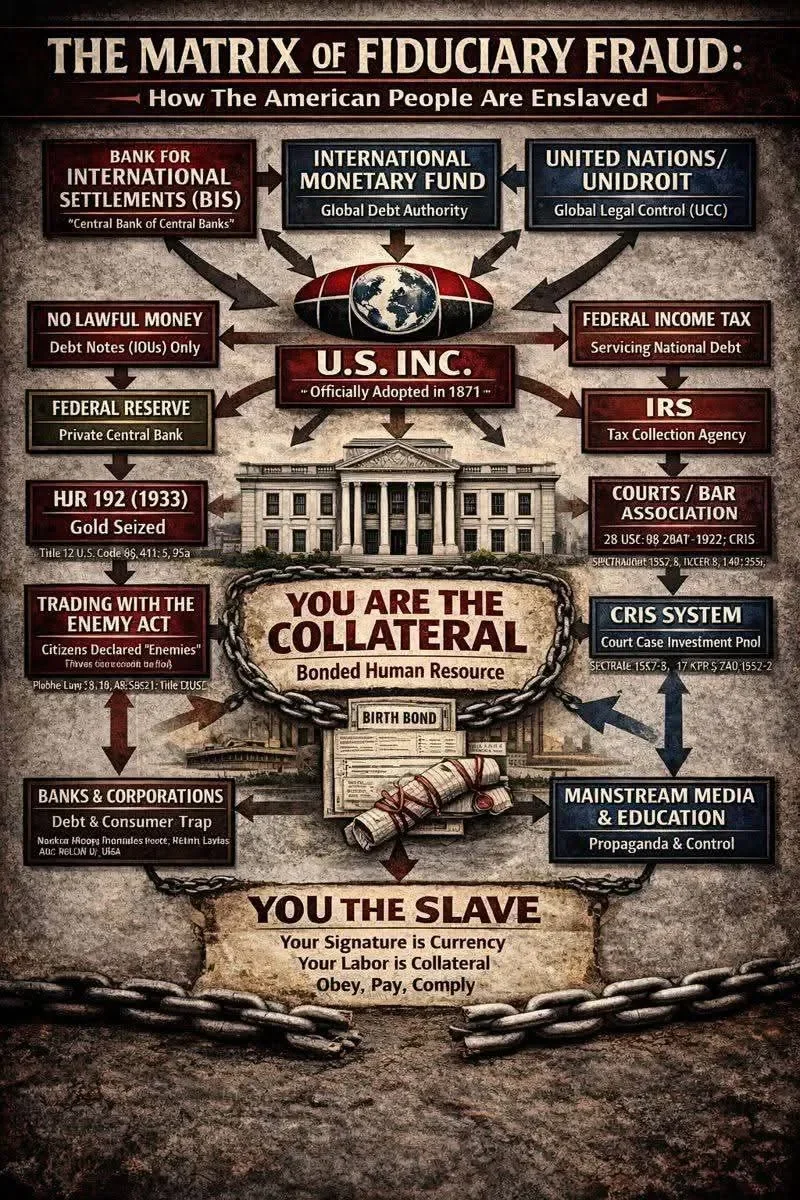
The real “end of the moneychangers”
The system being squeezed is not banks per se – it is:
Opacity
Asymmetry
Non-consensual intermediation
Rent extraction without value creation
Jesus didn’t overturn tables because money existed.
He overturned them because gatekeepers inserted themselves between two willing parties.
“You have made it a den of thieves.”
Modern technology now allows:
Two-party settlement
Without custodial risk
Without timing arbitrage
Without privileged insiders
That is the true obliteration underway.
What’s actually emerging is:
Not a secret cabal.
Not a single global currency.
Not a sudden overnight reset.
But rather:
Multipolar trade settlement
Asset-backed credibility returning
Digital rails enforcing honesty
Reduced reliance on 3rd-party trust
Sovereign choice replacing coercion
In other words:
Truth is being embedded into the system architecture itself.
Final synthesis
What we are witnessing is the slow but irreversible alignment of:
Truth (law)
Measurement (math)
Consent (free will)
Settlement (finality)
When systems can no longer lie, liars lose their leverage.
That – not spectacle – is the real signal to the world. We can align with it, fear it, or ignore its’ inevitability.
Truth sets us free from slavery.
Life is a series of free-will choices.
Top Trader Forecasts Gold & Silver for 2026 – and the Black Swan That Could Derail Markets
Top Trader Forecasts Gold & Silver for 2026 – and the Black Swan That Could Derail Markets
Miles Franklin Media: 12-28-2025
Michelle Makori, President & Editor-in-Chief, Miles Franklin Media, is joined by Gareth Soloway, Chief Market Strategist at Verified Investing, to break down what could become the true black swan of 2026. Soloway shares his 2026 forecast for gold, silver, palladium, platinum and more. He also gives his top trade of 2026. In this episode of The Real Story:
Why gold and silver surged to record highs in 2025 & what that signals next
Soloway’s call for $5,000 gold in early 2026
Top Trader Forecasts Gold & Silver for 2026 – and the Black Swan That Could Derail Markets
Miles Franklin Media: 12-28-2025
Michelle Makori, President & Editor-in-Chief, Miles Franklin Media, is joined by Gareth Soloway, Chief Market Strategist at Verified Investing, to break down what could become the true black swan of 2026. Soloway shares his 2026 forecast for gold, silver, palladium, platinum and more. He also gives his top trade of 2026. In this episode of The Real Story:
Why gold and silver surged to record highs in 2025 & what that signals next
Soloway’s call for $5,000 gold in early 2026
Why silver may see a sharp correction before its next leg higher
Bitcoin’s ETF-driven transformation into a macro trading asset
Why oil could be the most overlooked trade of 2026
How near-24/7 stock trading could turn markets into a casino
Coming Up
00:34 Introduction: Precious Metals Performance in 2025
03:09 Bitcoin's Performance & Future Outlook
13:23 Equity Market Predictions for 2026
17:00 Potential Black Swan Events in 2026
19:05 Impact of Japanese Rates on US Markets
20:57 Inflation & the Fed's Role
34:59 Gold's Future in 2026
38:32 Gold Price Predictions for 2026
41:05 Silver's Extraordinary Performance
42:37 Silver Market Dynamics
49:13 Platinum & Palladium Insights
50:35 Top Trade for 2026
56:44 Avoiding Tech Stocks in 2026
01:00:31 Market Emotions & Investor Psychology
01:01:30 Round-the-Clock Trading: A New Era
01:05:00 Final Thoughts & Personal Advice
Seeds of Wisdom RV and Economics Updates Monday Afternoon 12-29-25
Good Afternoon Dinar Recaps,
Key Watched Nations: Who Is Ready for the Global Financial Reset
Infrastructure, assets, and timing determine who moves first
Good Afternoon Dinar Recaps,
Key Watched Nations: Who Is Ready for the Global Financial Reset
Infrastructure, assets, and timing determine who moves first
Overview
The global reset will not occur uniformly across all countries
Readiness depends on infrastructure, reserves, governance, and political timing
Some nations are technically ready but politically constrained
Others are asset-rich but policy-limited
Quiet preparation often signals higher readiness than public declarations
Why This Series Matters
Most observers focus on headlines. Institutions focus on plumbing.
This series tracks countries where financial architecture is already aligned — even if public action has not yet occurred.
🇻🇳 Vietnam — Quietly Ready, Strategically Patient
Deeply embedded in global manufacturing supply chains
Conservative monetary policy and disciplined reserve management
Rapid growth in digital and cashless payment rails
Strategy favors smooth transition over disruptive reform
Status: Technically ready, deliberately quiet
🇮🇶 Iraq — Technically Ready, Politically Timed
Core banking and payment systems upgraded and compliant
Strong oil revenues support reserves and balance-of-payments strength
Settlement and reporting infrastructure largely complete
Political coordination remains the gating factor
Status: Infrastructure complete, execution paced
🇻🇪 Venezuela — Asset-Rich, Policy-Constrained
One of the world’s largest oil reserves
Significant gold holdings despite economic turmoil
Currency credibility damaged by years of mismanagement
Any reset participation depends on policy overhaul and governance reform
Status: Assets present, credibility rebuilding required
🇮🇷 Iran — Sanctioned but Structurally Aligned
Energy-rich with strong domestic production capacity
Alternative trade and settlement channels already in use
Reduced dependence on Western banking systems
Sanctions limit integration, not internal readiness
Status: Operationally adaptive, externally restricted
🇷🇺 Russia — De-Dollarized, Resource-Anchored
Large gold reserves and commodity backing
Settlement systems increasingly routed outside dollar rails
Accelerated adoption of alternative payment mechanisms
Strategic focus on sovereignty over integration
Status: Actively transitioned, geopolitically isolated
🇨🇳 China — System Builder, Not First Mover
Advanced digital currency infrastructure
Large gold reserves and trade dominance
Prefers control, testing, and phased rollout
Avoids triggering instability through sudden shifts
Status: Technically advanced, strategically restrained
🇧🇷 Brazil — Aligned, Cooperative, and Adaptive
Strong participation in BRICS initiatives
Commodity-backed economic strength
Improving digital payment and settlement systems
Favors multilateral coordination
Status: Ready through alignment, not leadership
🇺🇸 United States — Structurally Ready, Strategically Constrained
Most advanced financial infrastructure globally
Deep debt limits monetary flexibility
Must manage transition without triggering loss of confidence
Focused on control of timing rather than speed
Status: Ready but constrained by reserve-currency role
🇪🇺 European Union — Technically Advanced, Politically Fragmented
Modern payment rails and regulatory frameworks
Uneven debt and growth across member states
Consensus governance slows decisive action
Likely to follow coordinated global moves
Status: Operationally ready, institutionally slow
Why It Matters
The reset will favor countries that:
Built infrastructure quietly
Anchored value with assets
Modernized settlement rails
Managed timing carefully
Countries that confuse noise with readiness risk volatility.
Implications for the Global Reset
Pillar: Readiness Is Uneven
The reset unfolds in stages, not a single moment.Pillar: Infrastructure Beats Rhetoric
Payment rails, reserves, and settlement systems determine who moves first.
This is not just politics — it’s global finance restructuring before our eyes.
Seeds of Wisdom Team
Newshounds News™ Exclusive
Sources
International Monetary Fund — “Country Financial and Monetary Profiles”
Bank for International Settlements — “Global Payment System Modernization”
~~~~~~~~~~
Silver’s Record Break and Sharp Reversal: What Volatility Means for Reset Assets
Structural demand, speculative spikes, and market mechanics collide in historic silver moves
Overview
Silver prices hit all-time highs above $80 per ounce late in December 2025 before sharply retracing
The rally was quickly followed by a steep pullback as profit-taking, margin requirement increases, and rapid repositioning hit markets.
This pattern reflects deeper forces in silver — supply constraints, industrial demand, speculative leverage, and macro positioning, not just transient safe-haven flows.
The swing in prices highlights how precious metals behave at the intersection of monetary stress and real demand needs — a key signal in the global reset landscape.
Key Developments
Parabolic Rally to Record Levels
Silver climbed dramatically in 2025, driven by a blend of geopolitical uncertainty, expectations of U.S. interest rate cuts, tight physical supply, and industrial demand.
Spot prices reached all-time highs near $80 per ounce (and intraday peaks reported above $83), far exceeding historical norms
Tight inventories, export restrictions, and foundational supply deficits contributed to the surge.
Sudden Pullback and Volatility
After the record surge, profit-taking and risk reduction triggered a sharp decline in prices.
Exchanges responded by raising margin requirements, putting pressure on leveraged positions and amplifying the selloff.
Sharp intraday falls — including double-digit percentage retreats — underscored the fragile balance between speculative positioning and real demand pressures.
Underlying Forces Driving the Move
Structural supply deficits and declining inventories created real scarcity pressures beyond typical safe-haven behaviors.
Industrial demand — especially for technology, solar, EVs, and data centers — added a parallel consumption narrative.
Macro drivers, including weakening currencies and rate expectations, enhanced precious metals appeal.
Why It Matters
Silver’s late-year ascent and dramatic reversal underscore how volatile hybrid assets — those with both industrial demand and monetary characteristics — behave under pressure.
Drivers of the Rally
Structural supply deficits: global demand, particularly for industrial uses like solar, AI, and electrification, remains tight and outpaces mining increases.
Safe-haven rotation: geopolitical uncertainty, anticipated interest rate cuts, and concerns about currency debasement pushed investors toward hard assets.
Speculative momentum: record prices attracted a wave of leveraged and retail traders, inflating a self-fulfilling surge in futures markets.
Mechanics of the Fall
Margin hikes by exchanges quickly escalated holding costs, forcing leveraged longs to reduce exposure.
Profit-taking at extreme levels occurred as technical conditions became overbought, exacerbating sell-offs.
Paper markets reacted faster than physical demand, illustrating how liquidity stress can overwhelm fundamental price drivers.
Why It Matters to Foreign Currency Holders
For foreign currency holders, silver’s volatility is more than a commodity story — it is a signal of shifting risk perception and repricing dynamics within asset markets.
Volatility reveals liquidity fragility: When leveraged players dominate, market repricing can occur swiftly and deeply, influencing expectations for other monetary and near-money assets.
Safe-haven rotation intersects with macro stress: Silver’s rally correlates with expectations of lower real yields and currency debasement — themes also central to currency repricing risk.
Industrial demand embeds fundamentals: Unlike gold, silver’s pricing captures both value storage and real economic utility, making it a more sensitive early indicator of systemic stress.
Silver’s run and subsequent correction suggest that markets are actively testing the boundaries between store-of-value demand and industrial scarcity, a dynamic that will increasingly shape how currencies and alternative assets are valued in reset scenarios.
Implications for the Global Reset
Pillar: Dual-Role Assets Lead Signals
Assets that combine monetary and industrial demand — like silver — can signal stress earlier than pure stores of value, highlighting where liquidity and leverage intersect with real demand.
Pillar: Market Mechanics Matter More Than Narratives
Margin costs, exchange interventions, and liquidity conditions can drive faster price adjustments than long-term structural narratives alone.
This is not just politics — it’s global finance restructuring before our eyes.
Seeds of Wisdom Team
Newshounds News™ Exclusive
Sources
Financial Times — “Silver price tumbles as record-breaking rally goes into reverse”
PV Magazine USA — “Silver hits record high of $83.62 an ounce”
~~~~~~~~~~
Seeds of Wisdom Team RV Currency Facts Youtube and Rumble
Newshound's News Telegram Room Link
RV Facts with Proof Links Link
RV Updates Proof links - Facts Link
Follow the Gold/Silver Rate COMEX
Follow Fast Facts
Seeds of Wisdom Team™ Website
Thank you Dinar Recaps
Iraq Economic News and Points To Ponder Monday Afternoon 12-29-25
The Economic Risk Map That The World Has Drawn Up For Iraq During The Year 2025
Economy 22-12-2025, | 602 Deep Structural Imbalances Baghdad Today – Baghdad In the assessments of international institutions regarding Iraq's situation in 2025, it is not viewed as an economy heading towards a single, specific crisis, but rather as a system living on a delicate balance: a state that finances itself from a single resource, consumes most of its revenue on current expenditures, postpones the development of a productive economy, and is then surprised to find that shocks do not come in isolation, but rather as simultaneous waves linked to oil prices, production decisions, water scarcity, youth employment, and investor confidence
The Economic Risk Map That The World Has Drawn Up For Iraq During The Year 2025
Economy 22-12-2025, | 602 Deep Structural Imbalances Baghdad Today – Baghdad In the assessments of international institutions regarding Iraq's situation in 2025, it is not viewed as an economy heading towards a single, specific crisis, but rather as a system living on a delicate balance: a state that finances itself from a single resource, consumes most of its revenue on current expenditures, postpones the development of a productive economy, and is then surprised to find that shocks do not come in isolation, but rather as simultaneous waves linked to oil prices, production decisions, water scarcity, youth employment, and investor confidence.
This is why reports repeatedly describe the situation as one of deep structural imbalances that cannot be remedied by temporary abundance or masked by circumstantial improvements.
Dangerous Dependence On Oil
The most consistent observation in the 2025 reports is that oil continues to dictate the pace of a nation's economy before it dictates the pace of the market. When a country's revenues are so tied to a highly volatile market, any change in prices or production levels can shift it from a position of substantial spending to one of strain in a short period. This dependence not only signifies financial vulnerability but also means that policy itself becomes a recurring crisis management exercise, adapting to the ever-changing oil price landscape.
Public Finances Under Constant Pressure
Reports link the fragility of oil revenues to the structure of public spending. The issue is not simply whether or not there is a deficit, but rather the composition of the budget: salaries, pensions, subsidies, and transfers, compared to productive investment that is insufficient to transform the economy. In this context, there is a recurring warning about the inflation of current spending at the expense of development spending, which makes the state less resilient in the event of an oil shock or an emergency.
An Undiversified Economy And A Sluggish Private Sector
Conversely, reports indicate that the non-oil sector is operating below its potential, and that years of relative stability have not automatically translated into rapid and sustainable growth. They add that the private sector remains constrained by chronic factors: bureaucracy, limited access to finance, weak competition, unstable policies, and state dominance over broad economic sectors. Without a clear regulatory environment and a vibrant financial market, private investment remains too weak to become a major engine of job creation.
Finance And Banking: A Hurdle That Delays Investment
One of the most frequent findings in the reports is that the financial system is not playing its full role in driving the economy. When credit to the private sector is limited, and when confidence in the financial system remains insufficient, small and medium-sized enterprises (SMEs) become trapped between operating costs and difficulty accessing finance, which weakens expansion and innovation and reduces opportunities for creating stable jobs.
A Dysfunctional Labor Market And High Youth Unemployment
From a labor market perspective, reports highlight the expansion of the informal economy as a large but precarious employment sector. Informal jobs mean less protection, lower productivity, a limited tax base, and ultimately, a state that spends more to manage the consequences of unemployment rather than investing in preventing it. While public sector opportunities remain the most attractive, the state's capacity to absorb them is diminishing as wages inflate, leaving the youth gap open to increasingly complex social and economic possibilities.
Corruption And Governance: A Hidden Cost That Consumes The State
International reports treat corruption and governance as economic indicators, not merely ethical considerations. Corruption increases project costs, weakens competition, deters investment, and diverts public spending toward lower output at a higher cost. Simultaneously, poor governance undermines the ability of institutions to enforce fair and transparent rules, which directly impacts market confidence and capital willingness to invest.
Increased External Risks
Reports do not view Iraq as an isolated economy, but rather as a country that is quickly exposed to global shocks due to its dependence on oil. A slowdown in the global economy, geopolitical and trade instability, or changes in demand all translate into an immediate impact on revenues. And when domestic obligations are fixed and substantial, the margin for maneuver in the face of any revenue decline becomes very limited.
Water And Climate: The Danger That Became Economic
By 2025, the water issue had shifted from the realm of environmental concerns to that of economic ones. Water scarcity, agricultural decline, and internal migration are placing long-term pressure on cities, services, and the labor market, presenting the state with a costly dilemma: either significant investments in adaptation and resource management, or accumulating social and economic costs year after year. With the increasing complexity of the water situation in upstream countries, water has become a source of both external and internal pressure simultaneously.
2025 Summary: Improvement Is Reversible If Reforms Remain Delayed
The recurring theme in international reports is that improved revenues alone do not build resilience. If a country remains dependent on oil, consumes most of its resources on current expenditures, leaves the private sector without adequate funding and a clear competitive environment, and faces water scarcity as a recurring shock, then any oil, political, or security shock will push the economy back into a state of tension.
According to economist Ziad al-Hashemi , international reports during 2025 do not speak of a temporary crisis, but rather of structural risks in the Iraqi economic model, and that any improvement in revenues will remain fragile and susceptible to reversal with the first oil, political or security shock unless deep economic reforms are implemented.
Source: Baghdad Today + X website + Agencies https://baghdadtoday.news/289543-2025.html
The Numbers Are Reassuring... But Are The Reserves Sufficient To Protect The Dinar?… The Shocking Truth: The Danger Lies Not In The Market, But In The State Itself.
Baghdad Today – Baghdad While the parallel market is testing the limits of monetary policy, the Prime Minister's financial advisor, Mazhar Muhammad Salih , offered explicit reassurance: the official exchange rate will remain at 1,320 dinars, and the recent fluctuations are merely "short-term noise." But behind this apparent calm lies a larger question concerning the state's ability to bolster its resources without jeopardizing monetary stability.
Economist Ahmed Abdel Rabbo interprets Saleh’s statements as part of a broader strategy; in his view, price stability is not merely a financial option but a political signal that the incoming government will not approach adjusting the exchange rate in its first year, in recognition of the magnitude of the inflationary impact that any step in this direction could have.
Abdel Rabbo tells Baghdad Today that the real challenge lies not in the exchange rate but in the revenue structure itself. He explains that Iraq loses billions of dollars annually through weak customs procedures, a paper-based tax system, and massive import flows that keep the demand for dollars high.
In his view, increasing revenue requires less of a change in the exchange rate and more of a complete customs reform, a shift to electronic tax collection, and linking tax databases to foreign trade, banks, and border crossings.
What Abdel Rabbo points out aligns with part of Mazhar Saleh's vision: strong foreign reserves provide cover for the official exchange rate, and inflation, which has fallen to 2.5%, reflects the success of monetary policy in stabilizing prices. However, without addressing the loopholes in tax collection, evasion, and invoice manipulation, the parallel market will remain capable of generating speculative waves whenever a rumor or incomplete information emerges.
Abdel Rabbo also believes that part of the pressure on the dollar is a result of an economic structure that relies on consumer imports, which makes supporting agriculture, food industries, building materials and medicines not only a development option, but also an indirect monetary policy that reduces the need for the dollar and improves the balance of payments.
In light of this scenario, the equation for stability seems clear: protecting the dinar is not achieved by changing the price, but by reforming the economy from the bottom up.
What Saleh said about the stability of the reserves provides the necessary cover, but what Abd Rabbo is proposing represents the long road that cannot be avoided if the state wants a stable exchange rate that is not shaken by "temporary noise". Source: Baghdad Today + Agencies https://baghdadtoday.news/288554-.html
Central Bank Reserves: Gold Rises, Investments Decline By 5 Trillion Dinars
Source: Alsumaria News 1,229 views Alsumaria News– The economist revealed the economy, Nabil Al-Marsoumi On Sunday, details emerged regarding the latest official data on foreign reserves.
Central Bank of Iraq He confirmed that it had reached levels close to $98.2 billion.
Al-Marsoumi stated in a blog post on his social media account that the foreign reserves of Central Bank of Iraq As of September 30, 2025, it reached $98.155 billion,” based on official figures.
He explained that the total figure mentioned is equivalent to 127.601 trillion dinars, distributed as follows: "Gold 27.552 trillion dinars, investments 98.308 trillion dinars, and cash reserves at the Central Bank 1.741 trillion dinars."
The economist pointed out that "compared to the end of last April, gold reserves increased by approximately 5 trillion dinars, while investments decreased by more than 5 trillion dinars during the same period."
Regarding investments, Al-Marsoumi said they "include investments in US Treasury bonds, British bonds, bonds of other countries, and the purchase of sukuk (Islamic bonds)."Development Bank Islamic investment involves placing deposits in various banks, which are highly liquid and low-risk investments. LINK
For current and reliable Iraqi news please visit: https://www.bondladyscorner.com
“Tidbits From TNT” Monday 12-29-2025
TNT:
Tishwash: Sudani: Our relationship with countries in the region and the world is based on economic partnerships.
Prime Minister Mohammed Shia Al-Sudani affirmed that Iraq’s relations with the countries of the region and the world are based on economic partnerships.
He added that Iraq's relations with countries in the region and the world are based on economic partnerships, given Iraq's geostrategic location and its vast natural and human resources. He emphasized the importance of the relationship with the United States within the economic framework, given its companies and technology, from which Iraq can benefit from its experience.
He explained that Iraq and Syria have great opportunities to improve the economic situation, including the Kirkuk-Banias oil export pipeline.
TNT:
Tishwash: Sudani: Our relationship with countries in the region and the world is based on economic partnerships.
Prime Minister Mohammed Shia Al-Sudani affirmed that Iraq’s relations with the countries of the region and the world are based on economic partnerships.
He added that Iraq's relations with countries in the region and the world are based on economic partnerships, given Iraq's geostrategic location and its vast natural and human resources. He emphasized the importance of the relationship with the United States within the economic framework, given its companies and technology, from which Iraq can benefit from its experience.
He explained that Iraq and Syria have great opportunities to improve the economic situation, including the Kirkuk-Banias oil export pipeline. link
Tishwash: The Sudanese government directs the release of a new batch of payments owed to contractors.
Prime Minister Mohammed Shia al-Sudani directed on Sunday the release of a new batch of payments for completed work as part of a series of payments to Iraqi contractors.
The office of Prime Minister Mohammed Shia al-Sudani said in a statement received by Al-Ghad Press that he chaired a meeting on Sunday regarding the contractual obligations of contractors, in the presence of the Undersecretary of the Ministry of Planning and the head of the Contractors Union.
According to the statement, the meeting included a review of the details of contractual obligations, their amounts, and the sums due to contractors implementing projects for all ministries and governorates, in order to guarantee the rights of contracting companies and support the stability of the construction sector, which is one of the most important drivers of the national economy.
Al-Sudani directed the release of a new batch of payments for completed work as part of a series of payments to Iraqi contractors, stressing the government's commitment to monitoring projects and their implementation phases and ensuring the payment of financial dues to contractors, in order to move forward with infrastructure and service projects link
************
Tishwash: Parliamentary division precedes swearing-in session; vote on parliamentary speaker enters a phase of controversy.
A parliamentary source revealed on Monday that there is a clear division within the Iraqi parliament, ahead of the swearing-in session, regarding the election of the parliament's leadership.
The source told Shafaq News Agency that "a number of MPs from political blocs, especially within the coordination framework, do not intend to abide by the directives of the heads of blocs and parties regarding voting on the candidates for Speaker of Parliament and his deputies, which threatens an undisciplined vote during the session."
He added that "the division is not limited to the House of Representatives, but also extends to the National Political Council and the Coordination Framework, where positions regarding the position of Speaker of Parliament are divided between a group that supports Hebat al-Halbousi, and another that supports Muthanna al-Samarrai."
The source indicated that the disputes also extend to the position of First Deputy Speaker of Parliament, particularly within the coordination framework, as the following are competing for the position: Yasser Al-Maliki, candidate of the State of Law Coalition; Adnan Faihan, candidate of Asaib Ahl Al-Haq and current Governor of Babylon and winner in the elections; Mohsen Al-Mandalawi; and Ahmed Al-Asadi, candidate of the Reconstruction and Development Coalition and current Minister of Labor and Social Affairs.
He explained that "the competition for the position of second deputy speaker of parliament is limited to two candidates, namely Shakhwan Abdullah from the Kurdistan Democratic Party, and Ribwar Karim from the Position Bloc," indicating that "the majority of the deputies of the political blocs tend to renew confidence in Shakhwan Abdullah to assume the position."
The Iraqi parliament is scheduled to hold its first session on Monday, its sixth session, which includes two items on its agenda: the first is the swearing-in of the new members, and the second is the election of the Speaker of Parliament and his two deputies, according to a statement issued by the parliament’s media department.
The Presidency of the House of Representatives consists of a Speaker and two Deputy Speakers, who manage the legislative sessions and organize the work of the Council. According to the political traditions followed after 2003, the position of Speaker of Parliament is allocated to the Sunni component, the First Deputy Speaker to the Shiite component, and the Second Deputy Speaker to the Kurdish component.
update later link
Mot: They are cute and harmless but they are loud, incredibly expensive to keep and absolutely untrainable.
They are cute and harmless but they are loud, incredibly expensive to keep and absolutely untrainable.
The other is a kangaroo. I don't really know much about kangaroos.

Mot: . Start the new year off right…

Monday Coffee with MarkZ. 12/29/2025
Monday Coffee with MarkZ. 12/29/2025
Some highlights by PDK-Not verbatim
MarkZ Disclaimer: Please consider everything on this call as my opinion. People who take notes do not catch everything and its best to watch the video so that you get everything in context. Be sure to consult a professional for any financial decisions
Member: Great Morning Mark, Mods and Z Family
Member: 3 day count down to 2026!!! Hello everyone
Monday Coffee with MarkZ. 12/29/2025
Some highlights by PDK-Not verbatim
MarkZ Disclaimer: Please consider everything on this call as my opinion. People who take notes do not catch everything and its best to watch the video so that you get everything in context. Be sure to consult a professional for any financial decisions
Member: Great Morning Mark, Mods and Z Family
Member: 3 day count down to 2026!!! Hello everyone
Member: Saw several youtube videos on sliver. Someone is desperately trying to hold silver down. What are you hearing Mark?
MZ: Emergency meetings yesterday between bankers, the Federal Reserve, Europeans …..a huge meeting , a emergency meeting. All hands on deck around 4PM est yesterday afternoon. Whatever they put into play is obviously suppressing metal prices for now. But they cannot affect physical prices in Aisa right now.
MZ: This is getting wild…buckle up.
Member: Silver hit $81.50 at 1:30 (PST) yesterday and has been suppressed ever since.
MZ: Imagine being a banker right now…You know emergency meetings are going on….you know all you shorts are being called…..you know the world is going to crap…..you know the system is crumbling unless they miraculously find more fingers to plug the holes in the dyke. ….but they know their days are numbered. I can only imagine the anxiety they all have.
Member: Crash the Banks …..Bring on Blockchain and QFS
Member: COMEX, CME and the CFTC had a 1:34 am call on Christmas Eve! They SAW what was coming!!!
Member: I think Shanghai is still trading at $89 so what does that tell you
MZ: You can see what China has done to keep silver from fleeing the country. It is a strategic metal.
Member: China starting to restrict international sales on silver
Member: Mexico stopped the Samsung silver deal & several others ... no Silver leaving Mexico
Member: I see this as the dip u talked bout mark last ditch to hold it down an then big run
Member: Hey Mark -Washington state is putting a ten percent tax on silver , starting the beginning of the year
Member: Will silver collapse the banks and fiat currency ….What will a bank failure look like?
MZ: I think they will try to keep it as quiet as they can. Many times in a collapse metal prices survive for awhile as they adjust. Lynette Zang did a good video on this. The question is -When did it begin?” Usually when fiat is resetting and collapsing there is about a 9 month period where metals retain before prices come down. Are we at the beginning of that or half way through it.
MZ: Lynette Zang and What Typically happens and how often we see resets https://www.youtube.com/watch?v=KZioQ3_MFCs&t=13s
Member: (from Dinar Guru) Mnt Goat There is so much real optimism and VERY GOOD news for Iraq and yet there is still lots of propaganda news... As investors in the Iraqi dinar, we need to hear optimistic and truthful news and it is all optimistic let there be no mistake about it...There is much more evidence than not that everything is pointing to early 2026 for them to normalize the dinar and place it back on FOREX to trade...I...can only rely on what my contact in the CBI along with the articles were telling us. They are telling us NOW IS THE TIME!
MZ: I agree 100% with that one.
Member: Frank26 thinks the rate of 1310 will expire on Dec 31st!
Member: Everyone!!! The 29th is setting up the new Govt and perhaps initiating the most important Laws in Iraq. Aka HCL Law. This all goes into affect on 1/1/26. Watching the first few days of 26 for the new rate!
Member: Syria is releasing new currency on Jan. 1
Member: Think about the countries that openly state new currency values coming January 1,2026
MZ: This is the focus in Iraq: “Al Sudani discusses with the deputies of the Ministry of Reconstruction and Development the preparation for the next legislative phase” They are in meetings this morning and trying to seat the new government.
MZ: “ MP’s (Ministers of Parliament) Start to arrive to take the oath of office and elect the presidency of the Parliament” they are pounding things out. “The Speaker of the Parliament and his two deputies will be elected today and there is no extension of the session”
Member: Officially, Parliament elects Adnan Faihan as First Deputy Speaker of the Council
MZ: Many members of Parliament are in a mad dash to finish HCL by Jan 1st. I am very encouraged with what we are seeing in Iraq right now.
Member: It is obvious that January 1st will be the day Iraq goes fully international with a new rate!!! 3 more days brother!!!!!!3 MORE DAYS!!!!
MZ: On the bond side its still quiet. This is usual for a Monday morning.
Member: Are we still going to be able to choose humanitarian projects from a list when we exchange?
MZ: I am being told yes….but don’t think we will know for sure until we exchange.
Member: I believe we will see the RV in the very first quarter of 2026
MZ: Many people believe that….but if we wake up Jan 1 with no new rate yet- Don’t panic….It’s coming.
Member: Have a great day everyone….. Won’t be long before we start off a new and wonderful year!
THE CONTENT IN THIS PODCAST IS FOR GENERAL & EDUCATIONAL PURPOSES ONLY&NOT INTENDED TO PROVIDE ANY PROFESSIONAL, FINANCIAL OR LEGAL ADVICE. PLEASE CONSIDER EVERYTHING DISCUSSED IN MARKZ’S OPINION ONLY
FOLLOW MARKZ : TWITTER . https://twitter.com/originalmarkz?s=21. TRUTH SOCIAL . https://truthsocial.com/@theoriginalm...
Mod: MarkZ "Back To Basics" Pre-Recorded Call" for Newbies 10-19-2022 ) https://www.youtube.com/watch?v=37oILmAlptM
MARKZ DAILY LINKS: https://theoriginalmarkz.com/home/
Note from PDK: Please listen to the replay for all the details and entire stream….I do not transcribe political opinions, medical opinions or many guests on this stream……just RV/currency related topics.
ZESTER'S LINK TREE: https://linktr.ee/CrazyCryptonaut
THANKS FOR JOINING. HAVE A BLESSED DAY! SEE YOU ALL TUESDAY THROUGH THURSDAY EVENINGS FOR NEWS @ 7:00 PM EST ~ UNLESS BREAKING NEWS HAPPENS! FROM NOW ON NO MORE NIGHTLY PODCASTS ON MONDAYS AND FRIDAYS
News, Rumors and Opinions Monday 12-29-2025
Confirmed New ZIG Notes Ready for Circulation Q1 2026
Swisher1776: 12-29-2025
ZIM RV: CONFIRMED NEW ZIG NOTES READY FOR CIRCULATION Q1 2026
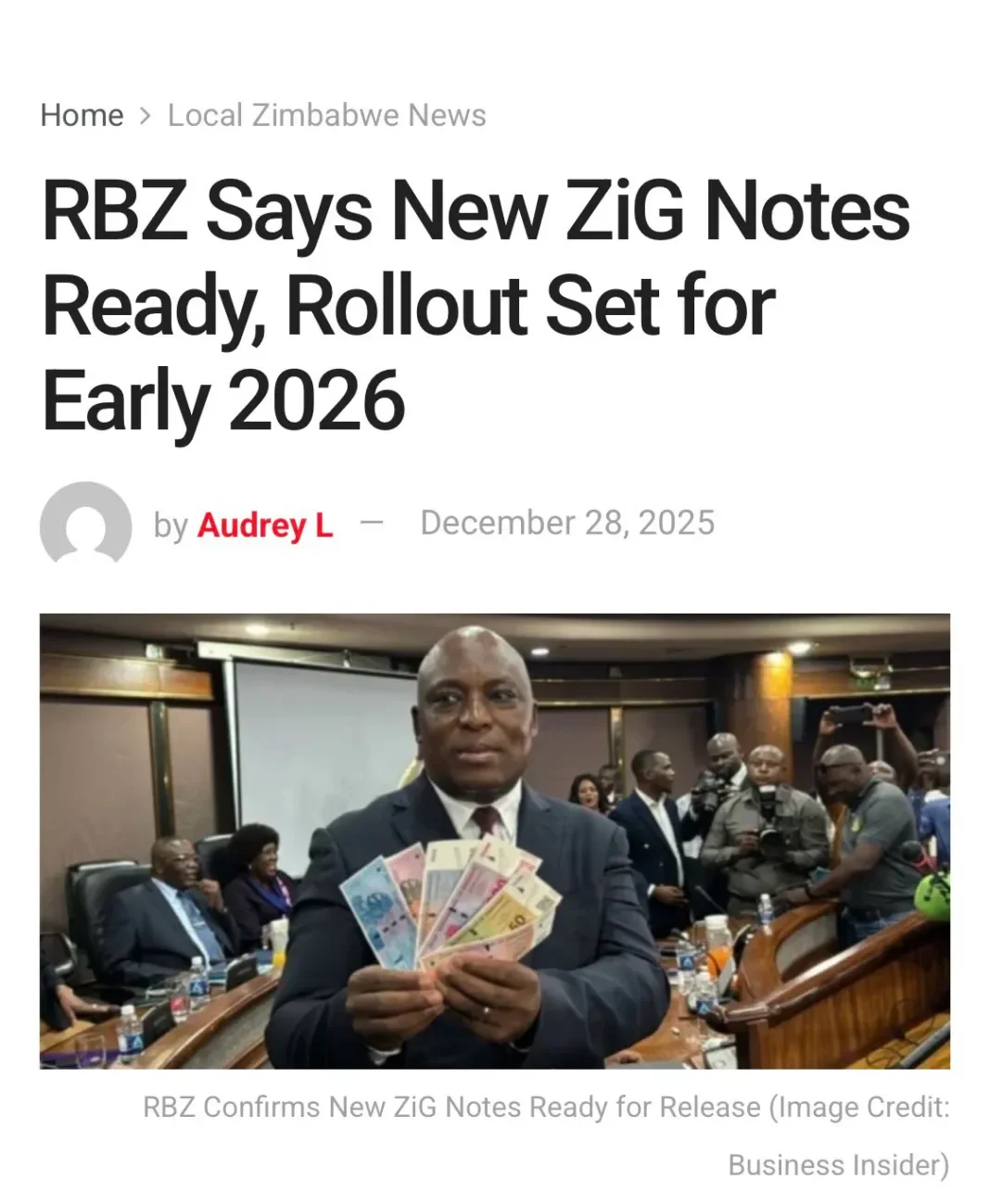
The Reserve Bank of Zimbabwe (RBZ) has confirmed that newly designed ZiG banknotes are ready for circulation, with distribution set to take place through banks and authorised outlets once rollout begins.
RBZ Governor Dr John Mushayavanhu said preparations are at an advanced stage, but stressed that the introduction of the new notes will be carefully managed to safeguard price and exchange rate stability.
Confirmed New ZIG Notes Ready for Circulation Q1 2026
Swisher1776: 12-29-2025
ZIM RV: CONFIRMED NEW ZIG NOTES READY FOR CIRCULATION Q1 2026
The Reserve Bank of Zimbabwe (RBZ) has confirmed that newly designed ZiG banknotes are ready for circulation, with distribution set to take place through banks and authorised outlets once rollout begins.
RBZ Governor Dr John Mushayavanhu said preparations are at an advanced stage, but stressed that the introduction of the new notes will be carefully managed to safeguard price and exchange rate stability.
Gradual Rollout Planned for Early 2026
Speaking in an interview, Dr Mushayavanhu said the release of the new ZiG notes will follow a phased approach guided by economic conditions and actual demand for cash.
He explained that circulation is expected to begin within the first quarter of 2026, allowing authorities to closely monitor market conditions and ensure a smooth transition.
No Expansion of Money Supply
The central bank governor assured the public that the introduction of physical ZiG notes will not increase the amount of money in circulation. Instead, banks will receive cash in exchange for their existing electronic balances held at the RBZ.
This approach, he said, is designed to maintain monetary discipline while improving convenience for cash users.
Public Awareness Campaign to Support Transition
To ensure public confidence, the RBZ plans to roll out a nationwide awareness campaign highlighting the new notes’ security features, durability and the safeguards in place to preserve currency stability.
Source(s): https://x.com/swisher1776/status/2005439679412203955
************
Courtesy of Dinar Guru: https://www.dinarguru.com/
Militia Man Iraq's neighbors are implementing currency changes with Syria starting a 2-zero removal starting on January 1st. Iran is planning a 4-zero cut from about March of next year. Azerbaijan... launching a 4-zero redenomination on January 1st. These efforts simplify transactions and build trust in regional economies...Iraq is going to be
deleting 3-zeros. I don't believe for a moment this is a coincidence of this going on.
Jeff Article: "Iranian government rolling out nationwide currency denomination" Quote: "Iran's government will begin the process of removing 4-zeros from the currency since the next Iranian year from March 21, 2026 to March 20, 2027..." Why this period? It's their budget period...I pulled this straight off the internet. Iran's budget period/ fiscal year goes from March 21st to March 20th of the following year...Iraq's fiscal year goes from January 1st to December 31st.
Mnt Goat There is so much real optimism and VERY GOOD news for Iraq and yet there is still lots of propaganda news... As investors in the Iraqi dinar, we need to hear optimistic and truthful news and it is all optimistic let there be no mistake about it...There is much more evidence than not that everything is pointing to early 2026 for them to normalize the dinar and place it back on FOREX to trade...I...can only rely on what my contact in the CBI along with the articles were telling us. They are telling us NOW IS THE TIME!
$100 Silver Likely As Manipulation Breaks | Ed Steer
Liberty and Finance: 12-28-2025
Ed Steer, a longtime precious metals analyst, argues that silver and other precious metals have been deliberately price-suppressed since the U.S. left the gold standard.
He claims that growing industrial demand and long-standing supply deficits are now forcing large short positions to unwind, driving prices higher.
Steer believes Western futures markets like COMEX are losing control of price discovery, which will increasingly shift to Asia, especially China.
He warns that regulatory intervention could undermine market credibility and fail to stop a physical silver shortage. Overall, he argues the precious metals bull market is only in its early stages with significant upside ahead.
Seeds of Wisdom RV and Economics Updates Monday Morning 12-29-25
Good Morning Dinar Recaps,
Iraq — Technically Ready, Politically Timed
Infrastructure aligned, reforms staged, execution dependent on stability
Good Morning Dinar Recaps,
Iraq — Technically Ready, Politically Timed
Infrastructure aligned, reforms staged, execution dependent on stability
Overview
Iraq has completed most technical requirements for modern banking and payments
Monetary and settlement infrastructure is largely in place
Currency reform is paced deliberately to align with political stability
Timing, not capability, is the gating factor
Key Developments
Banking system upgrades have aligned Iraq with international compliance standards
Payment rails and settlement mechanisms have been modernized and tested
Foreign reserve management has improved, supporting monetary credibility
Oil revenue continues to anchor fiscal capacity and balance-of-payments strength
Political coordination remains the primary variable influencing execution timing
Gradual reform sequencing is favored over abrupt currency actions
Why It Matters
Iraq’s position illustrates a core truth of financial resets: technical readiness does not equal political readiness. The systems can be prepared, tested, and compliant, but execution depends on governance stability and coordinated policy decisions. Iraq’s measured approach reduces the risk of disruption while preserving the option to act when conditions align.
Why It Matters to Foreign Currency Holders
For foreign currency holders, Iraq represents a case where infrastructure readiness precedes visible change. This creates extended periods of anticipation followed by decisive movement. Watching political alignment, regulatory clarity, and fiscal coordination matters more than tracking technical milestones already achieved.
Implications for the Global Reset
Pillar: Infrastructure First, Policy Follows
Systems are built quietly before public currency actions occur.Pillar: Timing Protects Stability
Deliberate sequencing reduces volatility during transition.
This is not just politics — it’s global finance restructuring before our eyes.
Seeds of Wisdom Team
Newshounds News™ Exclusive
Sources
International Monetary Fund — “Republic of Iraq: Financial Sector and Monetary Policy Overview”
Bank for International Settlements — “Payment System Modernization and Cross-Border Settlement”
~~~~~~~~~~
Vietnam — Quietly Ready, Strategically Patient
Why disciplined preparation matters more than dramatic moves
Overview
Vietnam is among the most structurally prepared emerging economies
Readiness has been built through manufacturing depth, trade integration, and monetary discipline
Digital payment infrastructure is expanding rapidly without destabilizing reforms
Vietnam’s strategy prioritizes stability, timing, and system alignment
Key Developments
Vietnam is deeply embedded in global manufacturing supply chains
Monetary policy remains conservative and stability-focused
Foreign reserves have been managed prudently relative to growth
Digital and cashless payment systems continue to scale nationally
Trade relationships are diversified across major economic blocs
Policy direction favors readiness without disruption
Why It Matters
Vietnam demonstrates how financial transitions occur without chaos. Instead of forcing currency shocks or public realignments, Vietnam has quietly aligned its infrastructure, reserves, and trade relationships. This approach reduces volatility while preserving flexibility when broader global shifts accelerate.
Why It Matters to Foreign Currency Holders
For foreign currency holders, Vietnam illustrates that system readiness does not require headlines. Countries that modernize payment rails, maintain disciplined monetary policy, and integrate deeply into global trade are positioned to adapt smoothly during global resets. Quiet preparation often outperforms reactive policy shifts when currencies realign.
Implications for the Global Reset
Pillar: Stability Before Repricing
Countries that build quietly reduce shock risk during transition.Pillar: Infrastructure Signals Readiness
Payments, reserves, and trade alignment matter more than rhetoric.
This is not just politics — it’s global finance restructuring before our eyes.
Seeds of Wisdom Team
Newshounds News™ Exclusive
Sources
~~~~~~~~~~
Ukraine Peace Talks Reach Advanced Stage After Trump–Zelensky Meeting
Multi-hour Florida summit signals nearing resolution while key obstacles remain
Overview
Ukrainian President Volodymyr Zelensky and U.S. President Donald Trump report substantial progress toward a negotiated peace agreement
Negotiators claim 90–95% of a proposed 20-point peace framework is agreed
U.S.–Ukraine security guarantees are described as fully settled
Final outcomes hinge on unresolved territorial, nuclear, and ceasefire issue
Key Developments
Zelensky confirmed that approximately 90% of the 20-point peace plan is finalized
Trump stated negotiators have resolved roughly 95% of the issues required to end the war
U.S.–Ukraine security guarantees were described as “100% agreed” and a critical milestone
Trump suggested clarity on success or failure would emerge within weeks
Trump conducted a two-hour phone call with Russian President Vladimir Putin prior to the meeting and planned follow-up discussions
Negotiating teams are expected to reconvene in the coming weeks, potentially with European leaders present
Outstanding Obstacles
Territorial Disputes: The status of the Donbas region remains the most contentious issue, with Trump warning Ukraine may face further losses if talks stall
Zaporizhzhia Nuclear Power Plant: The U.S. proposed a joint operational framework involving Russia, which Zelensky has rejected
Ceasefire Conditions: Zelensky insists a national referendum is required for any territorial concessions, while Russia has not yet agreed to a ceasefire to enable such a vote
Why It Matters
This negotiation phase represents more than a bilateral peace effort — it reflects broader geopolitical recalibration. A resolution to the Ukraine conflict would reduce systemic risk across energy markets, sovereign debt exposure, and European financial stability. The pace and structure of the deal signal that global powers are prioritizing managed outcomes over prolonged uncertainty.
Why It Matters to Foreign Currency Holders
For foreign currency holders, progress toward a Ukraine peace agreement directly impacts risk premiums, currency valuation, and capital flows. Prolonged conflict forces governments to fund defense, energy subsidies, and reconstruction through debt expansion, which weakens currency credibility over time. A credible path to peace reduces these pressures and shifts focus toward fiscal normalization.
Peace also stabilizes Europe’s energy outlook. Lower geopolitical risk in Eastern Europe reduces volatility in energy pricing, which directly affects inflation, trade balances, and central bank policy across multiple currencies. When inflation pressure eases, currencies tied to disciplined monetary policy regain relative strength.
Most importantly, conflict resolution allows global capital to move from defensive positioning into restructuring mode. Investors begin repricing currencies based on infrastructure readiness, trade integration, and settlement efficiency rather than wartime uncertainty. Currencies backed by stable governance, secure energy access, and modern payment systems gain durability, while those reliant on emergency funding and prolonged instability face repricing risk.
In reset terms, peace does not trigger revaluation — it removes the final obstacle that allows revaluation mechanics to proceed.
Implications for the Global Reset
Pillar: Conflict Resolution Enables Financial Repricing
Large-scale geopolitical conflicts delay capital reallocation. Peace unlocks restructuring across trade, energy, and currency markets.
Pillar: Security Guarantees Anchor Stability
Formalized security frameworks reduce uncertainty premiums embedded in global markets.
This is not just politics — it’s global finance restructuring before our eyes.
Seeds of Wisdom Team
Newshounds News™ Exclusive
Sources
Reuters — “Zelenskiy meets Trump in Florida to discuss Ukraine peace plan”
CNN — “Takeaways from Trump’s meeting with Zelensky in Florida”
~~~~~~~~~~
🌱 A Message to Our Currency Holders🌱
If you’ve been holding foreign currency for many years, you were not foolish.
You were not wrong to believe the global financial system would change.
What failed was not your patience — it was the information you were given.
For years, dates, rumors, and personalities replaced facts, structure, and proof. “This week” predictions created cycles of hope and disappointment that were never based on how currencies actually change.
That is not your failure.
Our mission here is different: • No dates • No rates • No hype • No gurus
Instead, we focus on:
• Verifiable developments • Institutional evidence
• Global financial structure • Where countries actually sit in the process
Currency value changes only come after sovereignty, trade, banking, settlement systems, and fiscal coordination are in place. History and institutions confirm this sequence.
You will see silence. You will see denials. That is not delay — that is discipline.
Protect your identity. Organize your documents. Verify everything.
Never hand your discernment to anyone who cannot show proof.
You deserve truth — not timelines.
Seeds of Wisdom Team Newshounds News
~~~~~~~~~~
Seeds of Wisdom Team RV Currency Facts Youtube and Rumble
Newshound's News Telegram Room Link
RV Facts with Proof Links Link
RV Updates Proof links - Facts Link
Follow the Gold/Silver Rate COMEX
Follow Fast Facts
Seeds of Wisdom Team™ Website
Thank you Dinar Recaps
Iraq Economic News and Points To Ponder Monday Morning 12-29-25
Beneath The Feet Of Iraqis: A Treasure Capable Of Transforming The Country's Economy... Job Opportunities And Huge Returns Await Activation
A disrupted strategic resource Baghdad Today – Baghdad With every attempt to predict the future of the Iraqi economy, silica emerges as a more postponed issue than a neglected one. This material, used in the manufacture of advanced glass, fibers, and solar cells, is now widely integrated into the global supply chain, yet in Iraq it remains in the stage of "geological existence" rather than "economic presence."
Beneath The Feet Of Iraqis: A Treasure Capable Of Transforming The Country's Economy... Job Opportunities And Huge Returns Await Activation
A disrupted strategic resource Baghdad Today – Baghdad With every attempt to predict the future of the Iraqi economy, silica emerges as a more postponed issue than a neglected one. This material, used in the manufacture of advanced glass, fibers, and solar cells, is now widely integrated into the global supply chain, yet in Iraq it remains in the stage of "geological existence" rather than "economic presence."
Huge Reserves
Iraqi geological data indicates that the country possesses approximately 350 million tons of high-purity silica sand, distributed in the western desert and large areas of Anbar, with an average purity ranging between 95% and 99%, a percentage considered among the highest in the Middle East.
However, current extraction operations do not exceed 50,000-70,000 tons per year, while any sustainable processing industry needs a minimum of 500,000-1 million tons per year to enter commercial production, which effectively puts the sector outside the economic cycle.
A Different Governmental Vision
Mohammed Othman Al-Khalidi, a member of the Reconstruction and Development Alliance, confirmed to Baghdad Today that “the government has reinstated silica among the strategic priority files, with the intention of actually introducing it in 2026, as part of reactivating 16 important economic files.”
Al-Khalidi points out that the new investment map aims to shift the economy from dependence on oil — which currently accounts for more than 92% of revenues — to a broader model based on mineral resources and manufacturing industries.
Obstacles Hindering A Promising Sector
Analysis of the silica situation in Iraq reveals five key factors hindering investment:
Geographical distance: Most deposits are 250-350 km away from industrial centers.
Lack of specialized factories: There are no facilities for processing or manufacturing silica.
Unsupportive mining legislation.
Transportation costs range between $14 and $22 per ton.
A technological gap exists in the production of high-purity silica for the solar industries.
A Rapidly Growing Global Market, And Iraq Is Out Of The Picture.
The global silica market was valued at $22 billion in 2024, with projections indicating it will reach $32 billion by 2030, driven by the expansion of the glass and solar energy industries.
Although Iraq possesses larger reserves than some producing countries, its production remains at marginal levels.
Economic estimates indicate that silica could become a sustainable resource, significantly boosting the Iraqi budget, if incorporated into manufacturing industries. While selling the raw material yields limited returns, manufacturing completely alters the equation.
Manufacturing 1 million tons annually can generate revenues ranging from
$400 to $900 million per year, depending on the type of industry.If Iraq expands to produce 2-3 million tons, with most of it being processed, potential revenues will rise to between $1.5-2 billion annually within a decade.
If these figures are realized, silica could become one of the most important non-oil resources in Iraq in the coming years.
2026: Will It Be A Pivotal Year?
The inclusion of silica as a government priority makes next year a test of the seriousness of the economic transformation. The transition from a geological resource to an advanced industry requires a suitable legal environment, new infrastructure, and international partnerships capable of introducing advanced technology.
If the state manages to provide these requirements, silica could become the first real success story in the path of diversifying the national economy, instead of remaining one of the resources that experts know about… but the market does not feel. https://baghdadtoday.news/288533-.html
The Most Important Resource In Iraq Is Oil, "Outside The Calculations"... When Will It Be Transformed Into A Real Lever For The Economy?
Economy 10-12-2025, | 727 A true force for growth Baghdad Today – Baghdad In his latest analysis of the World Bank's 2025 report, economist Ziad al-Hashemi presents a starkly different picture of Iraq's "wealth." According to the report, the most important resource is not oil or fleeting financial surpluses, but rather "its people and its young generation."
However, as al-Hashemi comments, this wealth is currently managed with minimal vision and maximum waste, to the point that Iraq has become one of the most fragile countries in terms of human capital development, despite its vast financial resources.
The World Bank report, as cited by Al-Hashemi, argues that decades of political conflict, instability, and government mismanagement have hampered human capital development, thereby diminishing opportunities for economic growth.
The report indicates that Iraq's youth have lost "tens of billions of dollars" in potential earnings over the past years—amounts that could have been realized had they benefited from a quality education system, an effective healthcare system, and a productive labor market. In other words, Iraq has not only lost potential revenue but also the opportunity to accumulate expertise and skills that could have transformed its economy.
Fragility, as described by Al-Hashemi based on the report, is not a detail confined to a single sector.
According to this analysis, Iraq is among the most fragile countries in terms of education, training, health, and food security, with wide gaps at every stage of life: from early childhood, through school and working years, to old age.
A child enters school without adequate nutrition or structured early education, then a student receives a deteriorating education in overcrowded schools and universities, then a young person faces high unemployment or low-productivity jobs, then a worker ages without a robust pension system and health protection… a whole series of successive gaps, culminating in a less productive, more fragile, and less resilient society.
On paper, the picture is different. Al-Hashemi points to the existence of national plans such as the "National Development Plan 2023–2027," but notes that implementation is repeatedly hampered by "the lack of ongoing reforms, mismanagement, the absence of effective governance, and insufficient funding."
Plans are written, but the institutions meant to translate them into programs, policies, and tangible results remain trapped in bureaucracy, political infighting, and shifting priorities with each new government.
In this context, Al-Hashemi puts his finger on the heart of the problem: the weakness of government institutions and their inability to translate strategies into tangible results remains the greatest challenge facing any serious human capital investment project.
Institutions run on the basis of patronage and favoritism, rather than competence and accountability, tend to produce networks of rent-seeking jobs more than effective education, training, and healthcare programs.
The result is an economy increasingly reliant on government appointments and the absorption of young people into low-productivity jobs, instead of channeling them into a private sector capable of creating added value and sustainable employment opportunities.
However, Al-Hashemi does not view the issue as a hopeless case, but rather as an opportunity that still exists if it is treated as a national priority. He emphasizes that "Iraq has no option but to develop its human capital and invest in its youth," through a comprehensive approach that includes improving education, strengthening the healthcare system, expanding social protection, and opening the door for the private sector to create real job opportunities for young people, coupled with training and skills development.
Without this, new generations will remain trapped in the same cycle: studies that do not translate into skills, followed by a long search for a government job, or work in fields that do not match their qualifications.
Al-Hashemi also reminds us that "investing in people is the most important path towards sustainable economic growth and long-term prosperity," and that investing in human capital "is not a luxury, but rather a prerequisite for survival and advancement.
" Countries that have built a solid economic standing have not done so solely through natural resources, but also by cultivating a broad base of trained and capable individuals, able to innovate, adapt, and withstand shocks. "A country with trained and capable human capital," he says, "is often an economically resilient country, capable of withstanding crises and confidently progressing towards development and advancement."
In conclusion, Al-Hashemi links all these observations to a direct political question, albeit phrased in a calm economic manner: Will the next government take clear and tangible steps to invest in Iraqi human capital, or will the decline continue and it join its predecessors who neglected this issue and left young people stuck between waiting for government appointments or being drawn into unsuitable work?
Between an international report that raises its voice and warnings from local experts, Iraq's economic future seems to hinge on a practical answer to this question, not on more speeches and unimplemented programs. Source: Baghdad Today + X website https://baghdadtoday.news/288780-.html
For current and reliable Iraqi news please visit: https://www.bondladyscorner.com
FRANK26….12-28-25…..90 DAYS
KTFA
Sunday Night Video
FRANK26….12-28-25…..90 DAYS
This video is in Frank’s and his team’s opinion only
Frank’s team is Walkingstick, Eddie in Iraq and guests
Playback Number: 605-313-5163 PIN: 156996#
KTFA
Sunday Night Video
FRANK26….12-28-25…..90 DAYS
This video is in Frank’s and his team’s opinion only
Frank’s team is Walkingstick, Eddie in Iraq and guests
Playback Number: 605-313-5163 PIN: 156996#
Why 2026 will be the End of the Fiat Experiment
Why 2026 will be the End of the Fiat Experiment
As Good As Gold Australia: 12-28-2025
As we navigate the complexities of the current financial landscape, industry experts Daryl Payne, CEO of As Good as Gold Australia, and Alasdair Macleod offer a stark warning: the global economy is on the brink of a significant upheaval.
In a detailed discussion, they shed light on the precious metals market, particularly silver and gold, and what the future holds for these assets amidst growing economic instability.
Why 2026 will be the End of the Fiat Experiment
As Good As Gold Australia: 12-28-2025
As we navigate the complexities of the current financial landscape, industry experts Daryl Payne, CEO of As Good as Gold Australia, and Alasdair Macleod offer a stark warning: the global economy is on the brink of a significant upheaval.
In a detailed discussion, they shed light on the precious metals market, particularly silver and gold, and what the future holds for these assets amidst growing economic instability.
The conversation begins with silver, a metal that has been quietly gaining momentum. Alasdair Macleod highlights that silver prices are experiencing an extraordinary rise, primarily driven by industrial demand.
The surge in emerging technologies, such as electric vehicle batteries, has significantly increased the demand for silver, propelling its price upwards. Moreover, central banks, especially in Asia, are accumulating silver reserves, further bolstering its value.
Macleod emphasizes that the long-term suppression of silver prices is finally correcting itself, reflecting fundamental changes in demand.
This breakout is not just a market fluctuation; it’s a significant shift that investors should take note of. As the world transitions towards greener technologies, the demand for silver is expected to continue its upward trajectory, making it a critical asset to watch in the coming years.
The discussion then shifts to gold, an asset that has traditionally served as a safe haven during times of economic uncertainty.
Alasdair Macleod underscores gold’s role as a monetary asset, particularly in an era where fiat currencies are facing increasing instability. The U.S. dollar, a long-standing global reserve currency, is under scrutiny as the global economy grapples with massive credit and equity bubbles.
Macleod warns that the current global credit and equity bubble is the largest in recorded history, far surpassing the 1929 crash.
As this bubble nears its bursting point, the repercussions will be severe, including rising bond yields, plummeting equity prices, and heightened counterparty risks. In such a scenario, gold is poised to play a crucial role as a safe-haven asset, protecting investors from the impending financial storm.
The conversation also delves into the broader geopolitical and currency implications of the current financial landscape.
The era of fiat currency is seen to be in decline, with major currencies like the U.S. dollar facing a loss of purchasing power. China is strategically positioning itself with gold-backed yuan trade settlements and forming alliances through BRICS and the Shanghai Cooperation Organization.
Meanwhile, Europe and NATO are experiencing political fractures that could further destabilize the global financial system.
As the geopolitical landscape continues to evolve, the importance of holding assets that are insulated from these risks becomes increasingly evident.
Alasdair Macleod stresses that rising inflation is inevitable and that governments may resort to price controls, which will only exacerbate economic pain for ordinary people. In this context, preserving wealth through hard assets like gold and silver becomes a prudent strategy. Macleod urges investors not to wait for price dips but to secure their holdings promptly.
The key takeaway is clear: in uncertain times, understanding the dynamics of the precious metals market and the broader financial environment is crucial for protecting individual and community wealth. Education and awareness are the first steps towards making informed investment decisions.
The insights shared by Daryl Payne and Alasdair Macleod offer a compelling case for why gold and silver should be at the forefront of any investment strategy in the coming years.
As the global economy hurtles towards significant changes, these precious metals are poised to play a pivotal role in safeguarding wealth.
For those looking to navigate the complexities of the current financial landscape, the message is clear: now is the time to act.
Watch the full video from As Good As Gold to gain further insights into the precious metals market and how to protect your wealth in the face of looming financial uncertainty.