
Tuesday Coffee with MarkZ. 10/14/2025
Tuesday Coffee with MarkZ. 10/14/2025
Some highlights by PDK-Not verbatim
MarkZ Disclaimer: Please consider everything on this call as my opinion. People who take notes do not catch everything and its best to watch the video so that you get everything in context. Be sure to consult a professional for any financial decisions
Member: Happy Terrific Tuesday….any bond updates Mark?
MZ: No bond updates…but I expect one this evening. A couple contacts have updates today to find out when they get funding…..Hope to know more by tonight
Tuesday Coffee with MarkZ. 10/14/2025
Some highlights by PDK-Not verbatim
MarkZ Disclaimer: Please consider everything on this call as my opinion. People who take notes do not catch everything and its best to watch the video so that you get everything in context. Be sure to consult a professional for any financial decisions
Member: Happy Terrific Tuesday….any bond updates Mark?
MZ: No bond updates…but I expect one this evening. A couple contacts have updates today to find out when they get funding…..Hope to know more by tonight
Member: I honestly don't we will hear anything else from bonds, groups because we are so close.
Member: Did a little digging, looks like the IMF and World Bank Group Hold their annual meetings from 10/13-10/18 in Washington DC. Could be positive for the RV.
MZ: That could be very positive for the RV
Member: Hey Mark, IYO is Sudani holding this RV as a bargaining chip for reelection?
MZ: No..i think he best bet would be to release it and guarantee his re-election.
Member: So Nov 11 could be our back wall?
Member: IMO Until Sudani pulls the trigger on the RV, he is a liar.
Member: Sudani has been promising purchasing power for his people for 3 years now
MZ: He is going to have to anti up
Member: Since he told them it would happen during this term, I believe he is a man of his word. It will happen before the election.
Member: What else does Iraq need to do to kick off the RV ?
Member: (From Dinar Guru) Nader From The Mid East With me...I'm going to tell you the truth. Sometimes it hurts but it's life...When I said before, it's after the election, it's not before...Why? Cuz they use the election as a bargain...'If you want purchase power, you have to vote for me.' That's what they saying exactly on TV. You can see it in the debates and everything...The election starts in the end of next month.
MZ: The election starts Nov. 11 and I disagree with him and think the RV could start before. But he could be right. But I would think Sudani would like to do it before. That makes more sense to me then doing it after elections.
MZ: “The Prime Minister’s participation in the Sharm-al Sheikh summit is a clear message of Iraq’s regional role” Heres a picture of Sudani’s meeting with Trump. They are international with security and stability
Member: SOMO announces the export of approximately 2.5 million barrels from the Kurdistan Region.
MZ: “ The Central Bank of Iraq begins the implementation of the comprehensive banking reform project” It is being implemented and executed. It is done. This is a victory lap.
MZ: So we have peace, stable and secure with no inflation to speak of. Things are good in Iraq.
Member: Another box checked in the process of the RV.
Member: Will Iran currency be in the first basket?
MZ: I don’t think it will unless something political occurs in Iran over the next few days. I have a feeling it will go on its own after…..
Member: No matter when it happens, I feel blessed that I'm in the biggest wealth transfer! Many people have no clue.
Member: Hey mark: Just a big Thank You for all that you have done/do for us out here!
THE CONTENT IN THIS PODCAST IS FOR GENERAL & EDUCATIONAL PURPOSES ONLY&NOT INTENDED TO PROVIDE ANY PROFESSIONAL, FINANCIAL OR LEGAL ADVICE. PLEASE CONSIDER EVERYTHING DISCUSSED IN MARKZ’S OPINION ONLY
FOLLOW MARKZ : TWITTER . https://twitter.com/originalmarkz?s=21. TRUTH SOCIAL . https://truthsocial.com/@theoriginalm...
Mod: MarkZ "Back To Basics" Pre-Recorded Call" for Newbies 10-19-2022 ) https://www.youtube.com/watch?v=37oILmAlptM
MARKZ DAILY LINKS: https://theoriginalmarkz.com/home/
Note from PDK: Please listen to the replay for all the details and entire stream….I do not transcribe political opinions, medical opinions or many guests on this stream……just RV/currency related topics.
ZESTER'S LINK TREE: https://linktr.ee/CrazyCryptonaut
THANKS FOR JOINING. HAVE A BLESSED DAY! SEE YOU ALL TUESDAY THROUGH THURSDAY EVENINGS FOR NEWS @ 7:00 PM EST ~ UNLESS BREAKING NEWS HAPPENS! FROM NOW ON NO MORE NIGHTLY PODCASTS ON MONDAYS AND FRIDAYS
“Tidbits From TNT” Tuesday 10-14-2025
TNT:
Tishwash: Al-Sudani meets Trump at the Sharm el-Sheikh summit.
Iraqi Prime Minister Mohammed Shia al-Sudani met with US President Donald Trump on Monday on the sidelines of the Sharm el-Sheikh summit, which brings together a number of regional and international leaders.
The Prime Minister held a series of meetings on Monday with a number of kings, presidents, and heads of government, as well as the Secretary-Generals of the United Nations and the Arab League, and former British Prime Minister Tony Blair.
These meetings took place on the sidelines of Al-Sudani's participation in the Sharm El-Sheikh conference in the Arab Republic of Egypt, regarding the situation in Gaza.
TNT:
Tishwash: Al-Sudani meets Trump at the Sharm el-Sheikh summit.
Iraqi Prime Minister Mohammed Shia al-Sudani met with US President Donald Trump on Monday on the sidelines of the Sharm el-Sheikh summit, which brings together a number of regional and international leaders.
The Prime Minister held a series of meetings on Monday with a number of kings, presidents, and heads of government, as well as the Secretary-Generals of the United Nations and the Arab League, and former British Prime Minister Tony Blair.
These meetings took place on the sidelines of Al-Sudani's participation in the Sharm El-Sheikh conference in the Arab Republic of Egypt, regarding the situation in Gaza. link


Tishwash: Al-Sudani meets a number of kings, presidents, and heads of government in Sharm El-Sheikh.
Prime Minister Mohammed Shia al-Sudani held a series of meetings on Monday with a number of kings, presidents, and heads of government. He also met with the Secretary-Generals of the United Nations and the Arab League, as well as former British Prime Minister Tony Blair.
The meetings were held on the sidelines of his participation in the Sharm el-Sheikh conference in the Arab Republic of Egypt on the situation in Gaza.
A statement from his office, a copy of which was received by {Euphrates News}, stated that: “Al-Sudani met with the kings of Jordan and Bahrain, the presidents of Palestine, Azerbaijan, and Cyprus, the German chancellor, and the heads of governments of Britain, Spain, Italy, Greece, and Armenia.”
He added, "During the meetings, Al-Sudani discussed joint relations, ways to develop them in various fields, and the importance of developing prospects for joint cooperation in a way that brings mutual benefit to brotherly and friendly peoples."
The statement continued, "The meetings also addressed the steps taken to end the suffering of Palestinians in Gaza, the need to work to maintain a ceasefire against civilians, and the need for major powers, Arab and international organizations and institutions to play their part in rebuilding Gaza and providing basic needs for Palestinian civilians."
During the meetings, Al-Sudani emphasized "the need for international efforts to reduce tensions and escalation in the region and around the world," calling for "the importance of strengthening dialogue and finding solutions based on international law to address everyone's concerns, including the existing disputes between Iran and Western countries over the nuclear issue and other issues." link
************
Tishwash: Al-Awadi: The Prime Minister's participation in the Sharm El-Sheikh Summit is a clear message about Iraq's regional role
Government spokesman Bassem Al-Awadi confirmed today, Monday, that the participation of Prime Minister Mohammed Shia Al-Sudani in the Sharm El-Sheikh Peace Summit on Gaza comes within the framework of emphasizing the importance of Iraq's regional role and its firm position towards the Palestinian issue.
Al-Awadi said in a statement to Al-Iraqiya News, which was followed by the Iraqi News Agency (INA), that "the presence of a large number of heads of state at this summit would not have happened without the great importance of the Palestinian issue, as well as the international community's growing awareness of the importance of the Iraqi role in the region."
He added, "Iraq cannot be informed of the truth about the agreements and initiatives proposed regarding Gaza and the region, without the actual presence of the Prime Minister, which allows him to be directly informed and participate in formulating positions".
He added, "Iraq officially went to the Sharm El-Sheikh summit to confirm its clear position on the necessity of stopping the killing of civilians in Arab and Islamic countries, especially Palestine, lifting the siege on Gaza, stopping forced displacement, and starting reconstruction".
He explained that "the Prime Minister's participation in the summit is to confirm Iraq's firm and decisive position that the Palestinian people have the right to live on their land freely and with dignity," stressing that "this issue is not negotiable, and the Palestinian people must be granted the right to self-determination."
He also pointed out that "the Iraqi government believes in the importance of dialogue and understandings as a way to find a real balance in the region, and warns that failure to adhere to these paths will expose existing agreements to collapse".
Al-Awadi explained, "Through his participation, the Prime Minister seeks to meet with the largest possible number of leaders and officials to exchange views, explain Iraq's firm position, in addition to inviting leaders to visit Baghdad and enhance bilateral cooperation."
Al-Awadi said, "There is a clear international view of Iraq's return to its influential regional role and the balance of its presence on pivotal issues, which is confirmed even by the United States, which believes that Iraq is witnessing development and reconstruction and has become the focus of the region's attention, and its position on the Palestinian issue is clear and firm." link
Mot: Not So Funny Now – HUH

Mot: . Yeppers!!! -- Siigghhhhhh!!!

Seeds of Wisdom RV and Economics Updates Tuesday Morning 10-14-25
Good Morning Dinar Recaps,
The Hidden Cost of a Shutdown: When Politics Freezes the U.S. Economy
As Washington’s government shutdown drags on, economic ripples are spreading—not just domestically, but across global markets and confidence in U.S. leadership.
Good Morning Dinar Recaps,
The Hidden Cost of a Shutdown: When Politics Freezes the U.S. Economy
As Washington’s government shutdown drags on, economic ripples are spreading—not just domestically, but across global markets and confidence in U.S. leadership.
Economic Data Goes Dark
The U.S. government shutdown entered its 13th day, and Treasury Secretary Scott Bessent warned the closure is “beginning to harm the real economy.”
With the shutdown, key agencies like the Bureau of Labor Statistics, Commerce Department, and Census Bureau have suspended their operations, halting release of critical economic indicators.
A Reuters analysis also flagged that “a shutdown could affect financial markets by limiting regulator operations and delaying publication of key economic data,” thereby reducing visibility for investors and central banks.
Ripples of Confidence & Credibility
The IRS announced over 34,000 employees (≈46% of its workforce) would be furloughed during the shutdown, hampering tax operations and citizen services.
Markets reacted with nervousness: U.S. index futures slid amid concerns the U.S. shutdown would cloud the Fed’s next rate path by suppressing data flows.
Fitch Ratings, however, maintained that in the near term, the shutdown is “unlikely to affect sovereign ratings,” while acknowledging uncertainty and institutional strain.
Global Context: The Governance Gap
As U.S. paralysis deepens, observers in emerging and developing economies see a reinforcement of arguments for diversified global governance—where dependence on Washington’s stability is too risky.
Political dysfunction in the U.S. is being interpreted in some financial circles as evidence that the era of unquestioned fiscal leadership is waning.
Why This Matters
This isn’t merely a budget fight — it’s a test of U.S. institutional resilience. The longer critical functions remain offline, the louder the signal to the rest of the world: monetary and structural dependency on the U.S. is a strategic vulnerability.
This is not just politics — it’s global finance restructuring before our eyes.
Seeds of Wisdom Team
Newshounds News™ Exclusive
Sources:
“US Treasury chief says government shutdown is hitting economy” — Reuters
“How the US government shutdown affects key economic data publishing” — Reuters
“How a US government shutdown could affect financial markets” — Reuters
“IRS to furlough nearly half of its workforce due to US government shutdown” — Reuters
“US stock futures fall as government shutdown clouds interest-rate view” — Reuters
“US government shutdown unlikely to affect sovereign ratings in near term, Fitch says” — Reuters
~~~~~~~~~
Gold’s Comeback: The Silent Vote Against Dollar Dominance
As BRICS nations push alternative financial paradigms, global players are rediscovering gold as a neutral anchor in turbulent times.
Gold’s Strategic Resurgence
Central banks are on pace to buy 1,000+ metric tons of gold in 2025 — their fourth consecutive year of heavy accumulation.
Global gold demand rose 3% in Q2 2025 (to ~1,248.8 metric tons) driven by a 78% surge in investment demand, according to the World Gold Council.
In parallel, physical gold ETFs hit record inflows in the first half of 2025, reinforcing investor appetite for safe-haven exposure.
De-Dollarization & Hedge Demand
With the dollar’s global reserve share slipping, gold becomes a logical diversification asset — especially for nations and institutions seeking refuge from currency volatility or political interference.
Reuters noted that gold hit a fresh record (over $4,000/oz) amid mounting U.S.–China trade tensions and expectations of Fed rate cuts.
Another Reuters piece emphasized that “anxieties over global geopolitical and economic risks are the biggest drivers pushing gold’s 54% surge this year.”
Market Narrative & Forecasts
Bank of America has raised its gold forecast to $5,000/oz by 2026, citing persistent demand as a hedge.
Reuters framed gold now as the “hedge-everything” trade: it thrives when investors fret over inflation, economic slowdowns, or geopolitical risk.
Why This Matters
Gold’s ascent is more than a cyclic rebound — it’s a structural recalibration. Each tonne acquired, each ETF inflow, each central bank purchase is a tacit vote against overreliance on the dollar.
While the U.S. remains a central pillar, its dominance is being tested not just by alternatives — but by assets that transcend them.
This is not just politics — it’s global finance restructuring before our eyes.
Seeds of Wisdom Team
Newshounds News™ Exclusive
Sources:
“Central banks on track for 4th year of massive gold purchases” — Reuters
“Global gold demand up 3% in second quarter as investment jumps” — Reuters
“Gold’s record-breaking rally: who’s keeping it going?” — Reuters
“Gold rises to record as US-China trade woes escalate” — Reuters
“Gold set to extend record-breaking run on global anxieties” — Reuters
“BofA hikes gold price forecast to $5,000/oz for 2026” — Reuters
“Gold’s rise in central bank reserves appears unstoppable” — Reuters
~~~~~~~~~
China’s Export Boom Defies Tariffs: Beijing Rewires Global Trade Beyond Washington’s Reach
September data shows China’s export machine remains strong despite 100% U.S. tariffs — signaling a rapid pivot toward new markets and the rise of a multipolar trade network.
Resilient Trade in a Fractured World
China’s exports rose 8.3% year-on-year in September, beating forecasts and marking the fastest growth since March.
Imports also jumped 7.4%, reflecting both restocking and improving demand from developing markets.
Analysts note that Beijing’s export diversification is offsetting tariff pain as the U.S. share of China’s trade continues to decline.
“China is adapting faster than expected,” said Xu Tianchen of the Economist Intelligence Unit. “100% tariffs will bite, but the effect won’t mirror the shock of 2018.”
Tariffs as a Political Lever — and a Catalyst for Diversification
President Donald Trump’s 100% tariffs on Chinese goods — announced last week — revived fears of another trade war.
Beijing retaliated by tightening export controls on rare earth elements and enhancing oversight of semiconductor users.
Exports to ASEAN, Africa, and Latin America rose sharply, while shipments to the U.S. fell to under 10% of total exports — a historic low.
This marks a decisive stage in Beijing’s de-dollarization and south-south trade realignment — the architecture of a new multipolar economy taking shape.
Markets Adjust to the Split Supply Chain
Shipments to India and Southeast Asia hit record highs, showing that regional integration is accelerating even as global supply chains fragment.
Meanwhile, South Korea’s export data reflected muted demand from China, underscoring Beijing’s continued domestic challenges.
China’s trade surplus narrowed to $90.45 billion, down from $102.3 billion in August — a reflection of rising import appetite and global rebalancing.
The numbers show not isolation, but substitution — the creation of new trade corridors that weaken U.S. leverage and strengthen regional interdependence.
The Road Ahead: Tariff Truce and Global Realignment
The 90-day tariff truce between Beijing and Washington expires November 9.
Economists warn that without a new framework, both sides risk renewed uncertainty heading into 2025.
Beijing’s policy push — including a 500 million yuan infrastructure credit program — aims to sustain export-led growth through the turbulence.
China’s ability to adapt under pressure shows that the global trade map is no longer dictated from Washington, but negotiated through multipolar alliances.
Why This Matters
China’s export resilience — despite aggressive tariffs — signals a deeper transformation in how global trade functions.
The U.S. can no longer rely on tariff leverage alone; the world is rebalancing supply chains and currencies at once.
In this multipolar era, trade resilience equals geopolitical power.
This is not just politics — it’s global finance restructuring before our eyes.
Seeds of Wisdom Team
Newshounds News™ Exclusive
Sources:
• Modern Diplomacy – China’s exports surge past forecasts despite fresh U.S. tariffs
• Reuters – China exports beat forecasts despite U.S. tariffs
• South China Morning Post – China’s exports surge as U.S. tariffs reignite trade tensions
• CNBC – China responds to U.S. tariffs with new export curbs on critical minerals
• Bloomberg – China finds new buyers for exports as U.S. tariffs bite
~~~~~~~~~
Seeds of Wisdom Team RV Currency Facts Youtube and Rumble
Newshound's News Telegram Room Link
Follow the Gold/Silver Rate COMEX
Follow Fast Facts
Seeds of Wisdom Team™ Website
Thank you Dinar Recaps
3 Rich Person Habits To Pick Up and 3 Poor Ones To Drop Now
3 Rich Person Habits To Pick Up and 3 Poor Ones To Drop Now
Laura Bogart Mon, October 13, 2025 GOBankingRates
Growing up, you might’ve watched a certain show called “Lifestyles of the Rich and Famous,” wherein the wealthy elite and celebrities alike shared the ins and outs of their glorious, sometimes decadent lifestyle. The phrase “champagne wishes and caviar dreams” may have imprinted itself on your mind as the way all rich people live.
The truth is many of the most successful and financially secure people around you aren’t flaunting their wealth. They’re quietly embracing smart habits that make growing and managing their money much easier — habits that are actually pretty simple to adopt. Including for you.
3 Rich Person Habits To Pick Up and 3 Poor Ones To Drop Now
Laura Bogart Mon, October 13, 2025 GOBankingRates
Growing up, you might’ve watched a certain show called “Lifestyles of the Rich and Famous,” wherein the wealthy elite and celebrities alike shared the ins and outs of their glorious, sometimes decadent lifestyle. The phrase “champagne wishes and caviar dreams” may have imprinted itself on your mind as the way all rich people live.
The truth is many of the most successful and financially secure people around you aren’t flaunting their wealth. They’re quietly embracing smart habits that make growing and managing their money much easier — habits that are actually pretty simple to adopt. Including for you.
Picking up some of these common “rich person” habits can help you improve your own financial situation. At the same time, it’s the right time to drop the habits that are keeping you stuck in the muck of your own limited finances.
Rich Person Habit: Regularly Reviewing Your Financial Plan
Wealthy people may seem adept at reading the tea leaves of financial trends, but in reality, they’re just used to consistently reviewing their personal finance plans and ensuring those plans align with their long-term goals. And yes, wealthy people typically have such goals for their money, chiefly oriented around growing it and making sure that they and their loved ones are protected.
They also know when to bring in expert help. Rich individuals often work with trusted financial advisors who can guide them on when they should make changes and when they should stay the course. They’re smart enough to know what they don’t know — and to delegate accordingly.
Rich Person Habit: Outsourcing Time Strategically
Speaking of delegation as a top-tier financial habit, wealthy people also understand that time is money. Rather than spending hours learning tax law or DIY-ing plumbing repairs, they hire experts who know what they’re doing. Not only do they benefit from this expertise, but they’re also able to devote that freed-up time and energy to high-value tasks.
That could mean taking courses to refine their skill sets, attending networking events or simply making space to think strategically about their business or investments. Investing their time wisely empowers them to increase their earning potential and long-term financial security.
Rich Person Habit: Prioritizing Assets Over Just Income
The old stereotype of a rich person working around the clock, all day, every day, doesn’t tell the whole story. While many successful people work hard, they also take steps to make their money work for them. This means they do more than just put their paycheck change in a high-interest savings account each month. They prioritize building up and diversifying assets that generate passive income.
Keep in mind that prioritizing assets leads to understanding the power of compounding interest rates and passive income. By following their example — investing in income-generating assets, diversifying your portfolio and avoiding common pitfalls — you can set yourself on a path to long-term financial success.
Poor Person Habit: Living Paycheck to Paycheck (Even With a High Income)
TO READ MORE: https://www.yahoo.com/lifestyle/articles/3-rich-person-habits-pick-181507635.html
MilitiaMan and Crew: IQD News Update-Iraq -USA Set the Stage Global Integration
MilitiaMan and Crew: IQD News Update-Iraq -USA Set the Stage Global Integration
10-13-2025
The Crew: Samson, PompeyPeter, Petra, Daytrader, Sunkissed, GIGI and Militia Man
Follow MM on X == https://x.com/Slashn
Be sure to listen to full video for all the news……..
MilitiaMan and Crew: IQD News Update-Iraq -USA Set the Stage Global Integration
10-13-2025
The Crew: Samson, PompeyPeter, Petra, Daytrader, Sunkissed, GIGI and Militia Man
Follow MM on X == https://x.com/Slashn
Be sure to listen to full video for all the news……..
FRANK26……10-13-25……TRUMP WANTS HIS
KTFA
Monday Night Video
FRANK26……10-13-25……TRUMP WANTS HIS
This video is in Frank’s and his team’s opinion only
Frank’s team is Walkingstick, Eddie in Iraq and guests
Playback Number: 605-313-5163 PIN: 156996#
KTFA
Monday Night Video
FRANK26……10-13-25……TRUMP WANTS HIS
This video is in Frank’s and his team’s opinion only
Frank’s team is Walkingstick, Eddie in Iraq and guests
Playback Number: 605-313-5163 PIN: 156996#
Seeds of Wisdom RV and Economics Updates Monday Evening 10-13-25
Good Evening Dinar Recaps,
GAIN Act: Senate Pushes Trade Rule That Could Shake the AI Chip Industry
As Washington moves to prioritize domestic markets in AI chip exports, a critical battleground opens between sovereignty and globalization in tech.
Good Evening Dinar Recaps,
GAIN Act: Senate Pushes Trade Rule That Could Shake the AI Chip Industry
As Washington moves to prioritize domestic markets in AI chip exports, a critical battleground opens between sovereignty and globalization in tech.
What the GAIN Act Does — and What It Upends
The U.S. Senate passed the GAIN Act (as part of the 2026 defense & tech bill), mandating that AI chip manufacturers must fulfill U.S. orders before any foreign exports. (CoinTribune)
Export license bans may be imposed on “most advanced circuits,” giving the government discretionary power to block overseas shipments.
The law mirrors the logic of the Patriot Act, treating advanced semiconductors as dual-use technologies essential to national security.
🌱 This is more than trade policy — it reframes chips as sovereignty assets. The state reclaims control over technology flow in defense of strategic dominance.
Winners, Losers & Strategic Fault Lines
U.S. firms gain preferential access to domestic markets — especially leaders like NVIDIA, AMD, and AI hardware providers.
Foreign partners and tech startups may suffer disruption or exclusion from global supply chains.
Crypto miners and distributed computing users are affected: GPUs are essential components for many blockchain networks, and restrictions may raise costs or limit access.
🌱 This is technological containment as power play: one side builds walls, the other must adapt or reroute. The cycle of innovation is being gated by security.
How This Tattoo Matches the Global Reset
The GAIN Act comes just as BRICS and other nations pursue monetary and digital sovereignty. The U.S. is now applying similar logic to tech: retaining control over advanced systems.
This pivot echoes broader themes: the world is fragmenting into competing spheres of regulation, trust, and control, not just shared markets.
Legislation like the GAIN Act complements your earlier themes — whether it’s finance or technology, authority is being restructured around strategic domains.
Risks, Pushback & Unintended Consequences
Innovation chill: Overregulation may slow global AI progress, as talent moves to jurisdictions with freer regimes.
Diplomatic blowback: Allies and trade partners might see this as techno-mercantilism, fueling pushback or retaliatory regulation.
Supply chain strain: Many chip production components are multinational. Restricting trade flows could fracture the supply web and cause bottlenecks.
Why This Matters
The GAIN Act doesn’t just regulate chips — it signals how the U.S. intends to defend its technological hegemony in a fracturing world. As capital, currency, and data realign globally, tech becomes another axis in the reshaping of sovereignty.
• In tech as in finance, the question is not if structures will change — but who sets the architecture.
• As nations reassert control over money, data, and innovation, multi-domain sovereignty is quietly being redrawn.
This is not just politics — it’s global finance and tech restructuring before our eyes.
Seeds of Wisdom Team
Newshounds News™ Exclusive
Source:
• CoinTribune – GAIN Act: The US Senate Passes a Law That Could Disrupt the AI Chip Industry cointribune.com
~~~~~~~~
Dollar in Danger: BRICS Currency Launch Accelerates the Global Shift Away from the U.S. Dollar
The new BRICS financial architecture is accelerating rapid de-dollarization — and Washington’s response through domestic digital currency laws underscores how global power is shifting beneath the surface.
A Rapid, Measurable Decline in Dollar Dominance
The dollar’s share of global reserves has fallen steadily — from 73% in 2001 to around 54% in 2025, according to the IMF. The trend is no longer theoretical; it’s systemic.
Now, with BRICS nations — Brazil, Russia, India, China, South Africa, and new partners such as Indonesia — accounting for nearly 40% of global GDP (PPP), the dollar’s dominance is facing its most serious structural challenge in decades.
🌍 De-dollarization is no longer a warning — it’s an active transition, powered by new digital payment systems and the development of local-currency trade mechanisms across BRICS economies.
Three Systems Are Reshaping Global Trade
While BRICS leaders stopped short of announcing a single currency for 2025, their coordinated actions are clear:
Bilateral trade in national currencies has accelerated since sanctions on Russia reshaped global settlement networks.
The BRICS Cross-Border Payments Initiative is building a SWIFT alternative immune to Western sanctions.
A new BRICS Grain Exchange aims to conduct commodity trading — especially in agriculture — using national currencies instead of the dollar.
“BRICS countries repeatedly emphasize they are firmly against using currencies — the U.S. dollar in particular — as a foreign policy weapon.”
(Kelly Bogdanova, RBC Wealth Management)
These mechanisms represent monetary sovereignty in motion — a foundational shift away from the U.S.-centric system that defined postwar finance.
Tariffs Accelerate the Breakaway
Washington’s recent tariff escalation has only hastened coordination within the BRICS bloc.
U.S. tariffs on Brazil and India were interpreted as economic sanctions.
China cut U.S. Treasury holdings by 27% since 2022.
Central banks purchased over 1,000 tonnes of gold annually for reserve diversification.
“We are witnessing a simultaneous collapse in the price of all U.S. assets… The market is rapidly de-dollarising.”
(George Saravelos, Deutsche Bank)
The U.S. is now confronting the ripple effect of its own monetary weaponization.
Every tariff and sanction has become a catalyst for the creation of alternative systems — a global firewall against the dollar’s political use.
Digital Infrastructure Powers the Transition
Technology is doing what politics once resisted.
China’s digital yuan is operational.
BRICS Pay pilot programs and the Bridge settlement platform are expanding.
The New Development Bank recently launched a Multilateral Guarantee Mechanism — funding infrastructure and climate projects in local currencies, not dollars.
“India does not aim to undermine the dollar but seeks practical alternatives for trade settlements where necessary.”
(S. Jaishankar, India’s External Affairs Minister)
India’s position is pragmatic — not anti-dollar, but pro-autonomy.
It underscores how even U.S. partners are seeking monetary flexibility as the financial order transitions toward multipolarity.
BRICS Expansion and the New Balance of Power
The 17th BRICS Summit in Rio de Janeiro (July 2025) was historic:
Indonesia joined as a full member.
Eleven new partner nations — including Nigeria, Thailand, and Vietnam — entered cooperation agreements.
The bloc now represents nearly half the global population (47.9%).
With India set to lead the 2026 presidency, priorities are shifting to financial reform, digital governance, and climate-linked finance — all structured to reduce dependency on the dollar-based system.
“The multipolar world is already here.”
(Gen. Mark Milley, former U.S. Joint Chiefs Chairman)
The balance of power is no longer anchored in Washington or Wall Street — it’s distributed across digital networks, trade corridors, and emerging alliances.
The Road Ahead
Analysts forecast the dollar’s reserve share could decline to 40–45% by 2040 under a gradual shift — or below 30% by 2030 in the event of U.S. debt or political shocks.
Foreign buying of Treasuries continues to fall, yields are climbing, and the dollar’s reputation as a safe haven is eroding.
The BRICS financial network — through digital platforms, gold accumulation, and local currency swaps — is now a functioning alternative ecosystem.
Whether the transition remains orderly depends on how quickly substitute systems scale and how Washington adapts through domestic innovation, including tokenized dollar initiatives.
Why This Matters
This story is not just about finance — it’s about power redistribution.
The BRICS currency evolution and rapid de-dollarization trend mark the beginning of a post-dollar era, one defined by parallel systems of settlement, trade, and governance.
If the U.S. cannot adapt its economic model and regulatory infrastructure, the Genius and Clarity Acts — which seek to digitize and protect the dollar’s role — may prove too slow to counter this transformation.
This is not just politics — it’s global finance restructuring before our eyes.
Seeds of Wisdom Team
Newshounds News™ Exclusive
Sources:
• Watcher.Guru – “Dollar in Danger as BRICS Currency Launch Fuels Rapid De-Dollarization”
• IMF Global Reserves Data (2025)
• RBC Wealth Management, BRICS Monetary Outlook (2025)
~~~~~~~~~
Seeds of Wisdom Team RV Currency Facts Youtube and Rumble
Newshound's News Telegram Room Link
Follow the Gold/Silver Rate COMEX
Follow Fast Facts
Seeds of Wisdom Team™ Website
Thank you Dinar Recaps
There Was Once A Time When Congress Cared About Literally Every Penny—
There Was Once A Time When Congress Cared About Literally Every Penny—
Notes From the Field By James Hickman (Simon Black) October 13, 2025
As the clock struck midnight on July 1, 1848, Ohio Congressman Samuel Vinton probably started having a minor panic attack. Viton was Chairman of the powerful House Ways and Means Committee, the Congressional body that, at least at the time, was responsible for all taxation and spending appropriations. Anything that got spent-- or didn’t get spent-- was Vinton’s domain.
The United States was just coming out of a war in the year 1848-- the Mexican War, in which the US invaded Mexico and wound up with 525,000 square miles of new territory as a result.
There Was Once A Time When Congress Cared About Literally Every Penny—
Notes From the Field By James Hickman (Simon Black) October 13, 2025
As the clock struck midnight on July 1, 1848, Ohio Congressman Samuel Vinton probably started having a minor panic attack. Viton was Chairman of the powerful House Ways and Means Committee, the Congressional body that, at least at the time, was responsible for all taxation and spending appropriations. Anything that got spent-- or didn’t get spent-- was Vinton’s domain.
The United States was just coming out of a war in the year 1848-- the Mexican War, in which the US invaded Mexico and wound up with 525,000 square miles of new territory as a result.
Several members of Congress thought the war unjust and unconstitutional. One critic, in fact, was a little-known politician from the state of Illinois named Abraham Lincoln, who often spoke passionately on the House floor against what he viewed as clear aggression.
Others in Lincoln’s party-- the Whigs, who were essentially proto-Republicans-- winced at the immense cost of the war.
By 1848 the costs of the Mexican War were at least four times what the Democrat-controlled War Department had originally promised. And the Whigs were tired of it.
In one heated exchange that took place on March 20, 1848, after a senior Treasury official had meekly described the enormous war costs as “mistakes” and “miscalculations”, one conservative senator blasted his colleagues saying,
“Our [federal government] expenditures have become so enormous that a few ‘mistakes’ in the calculations of the Treasury Department-- a few mere slips of the pen-- involve a larger amount than the whole annual expenditure during the administration of [President Andrew] Jackson [in 1836].”
In other words, simply the cost overruns for the year 1848 were MORE than the entire federal budget just twelve years earlier.
The Whigs put their foot down and refused to vote on any further appropriations until there was a full audit of the war costs.
At the time, the federal government’s fiscal year ran from July 1 through June 30 (as opposed to now, the fiscal year runs from October 1 through September 30).
So as the June 30 deadline became closer, House Ways and Means Chairman Samuel Vinton became increasingly anxious.
Back then the federal government was much smaller, so there weren’t anywhere near as many programs that required Congressional funding as exist today. But there were still important government functions that needed money-- including the Army.
Vinton knew that he was responsible for passing the Army’s funding bill. So in session after session, he practically begged his colleagues to PLEASE vote on it.
Yet his cries fell on deaf ears. And at 12:01 am on July 1, 1848, the Army was ‘defunded’ by the 30th United States Congress for the first time.
Ultimately the Whigs wanted greater financial accountability of war costs, plus a drastic downsizing of the Army back to peacetime levels-- two perfectly reasonable asks. The Democrats finally caved several weeks later, and the stalemate ended on August 7, 1848, when Congress passed HR 618-- “an act making appropriations for the support of the Army [for Fiscal Year 1849].”
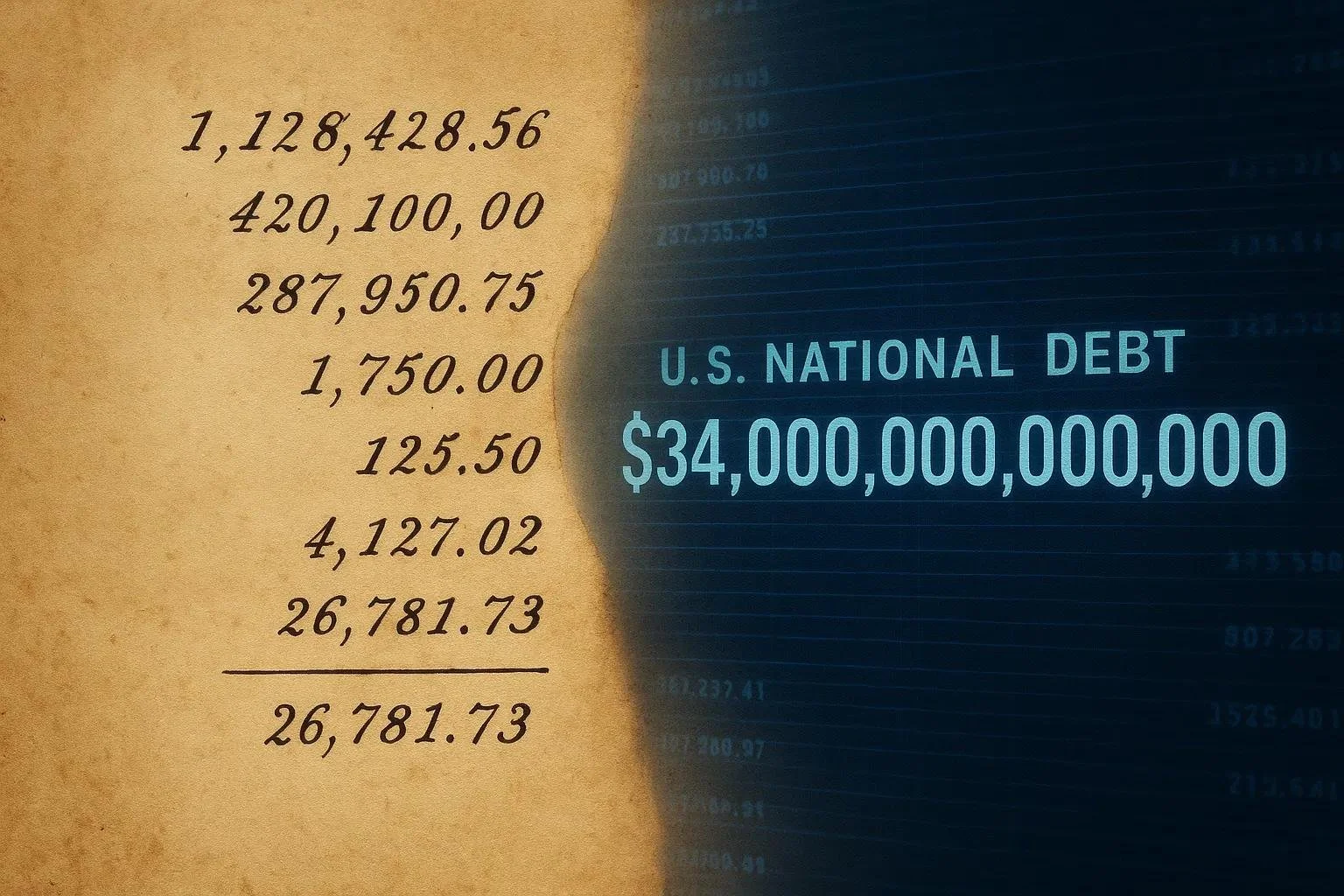
It’s notable that the Army’s entire budget from that appropriations bill was less than $8 million, with some ridiculously specific line items-- like $1,127,428.56 for food, subsistence, and provisions. They seriously added the fifty-six cents! It’s amazing that Congress actually cared about literally every penny back then.
Unfortunately, 1848 wasn’t the last time that Congress had a budget stalemate; in fact, it became typical for Congress to NOT pass appropriations bills before the Fiscal Year-end.
But whenever this happened, most federal agencies (including the military) had leftover money from the previous year to keep themselves funded for an extra month or so. Worst case the Treasury would advance them funds.
The bottom line is that no one ever had to ‘shut down’.
This changed in 1980. For most of his Presidential administration, Jimmy Carter had been at odds with Congress. And on April 25th that year, he asked his Attorney General, Benjamin Civiletti, to issue formal guidance about the possibility of a government shut down.
Civiletti complied and reinterpreted some obscure legislation from 1884 to conclude that no government agency would be allowed to operate unless it received formal appropriations from Congress.
Carter intended to use this legal interpretation as leverage to pressure Congress about proposed FTC legislation. Instead it backfired, and the first-ever government shutdown took place on May 1, 1980.
And ever since, thanks to Carter and his Attorney General, the US government is now under the threat of shutdown every single year.
In the past, most shutdowns (or at least funding gaps) have been because of specific disputes; in 1980 it was about the authority of the FTC. In 1848 it was over excess war spending.
But today’s shutdown is different. First-- it was totally preventable. And second, it’s not about a single issue (including the supposed Obamacare tax credit, which will almost certainly be extended).
Today’s shutdown is because two sides absolutely hate each other and refuse to work together.
Personally, I’m not losing any sleep over the Department of Commerce having to furlough employees. And frankly I don’t believe that any “non-essential” government job should even exist.
But the whole thing is a gigantic stain on the credibility of the US government.
This matters. Foreigners own $10+ trillion worth of US government bonds. It’s the very basis of America’s economic power abroad, and why the US dollar is the global reserve currency. Confidence in the US government is paramount in maintaining this system.
Foreign creditors tend to notice things like a full-blown government shutdown. And the fact that Congress is willing to burn everything down just to spite the other side.
Who would possibly want to continue buying US Treasury bonds when the federal government isn’t even willing to keep itself open for business?
Confidence is waning rapidly. And frankly we can see this in the price of gold, which just surpassed $4,100 as I write this. It’s not a speculative bubble; rather it’s a sad reflection of Congress’s collapsing credibility. And that credibility probably isn’t improving anytime soon.
To your freedom, James Hickman Co-Founder, Schiff Sovereign LLC
Jon Dowling: NESARA, GESARA, and Currency Revaluations Updates with Tom Lennox
Jon Dowling: NESARA, GESARA, and Currency Revaluations Updates with Tom Lennox
October 2025
We live in interesting times, don’t we? The world feels like it’s shifting, and sometimes the most profound insights come from voices that cut through the noise of everyday headlines.
That’s exactly what we find in the latest episode of the Jon Dowling podcast, featuring retired Army veteran Mr. Thomas J. Lennox. This isn’t your average financial discussion; it’s a deep dive into the very foundations of our global systems, laced with historical revelations and a glimpse into a future that might sound like science fiction, but is being presented as tangible reality.
Jon Dowling: NESARA, GESARA, and Currency Revaluations Updates with Tom Lennox
October 2025
We live in interesting times, don’t we? The world feels like it’s shifting, and sometimes the most profound insights come from voices that cut through the noise of everyday headlines.
That’s exactly what we find in the latest episode of the Jon Dowling podcast, featuring retired Army veteran Mr. Thomas J. Lennox. This isn’t your average financial discussion; it’s a deep dive into the very foundations of our global systems, laced with historical revelations and a glimpse into a future that might sound like science fiction, but is being presented as tangible reality.
Mr. Lennox, with his unique blend of military discipline and financial acumen, takes us on a remarkable journey.
He dissects the intricate workings of geopolitical and financial systems, shining a spotlight on entities that often operate just beyond our everyday awareness. We’re talking about the legendary St. Germaine Trust, the enigmatic IRS, the powerful Federal Reserve, and crucially, the much-talked-about impending global financial reset.
One of the most compelling aspects of the conversation is Lennox’s ability to connect historical dots. He delves into the origins of seemingly mundane documents like the U.S. birth certificate, revealing layers of meaning we might never have considered. O’
He lifts the curtain on the Federal Reserve, suggesting it’s not what it appears to be – hinting at its private ownership and its pivotal role in the financial landscape.
For those who have felt a sense of unease about the current economic system, Lennox offers a perspective that suggests a deliberate dismantling of the IRS and the fiat currency system is already underway.
The sheer scope of the St. Germaine Trust is mind-boggling. Lennox speaks of massive hidden wealth, purportedly worth quadrillions, and its potential role in funding transformative global financial reforms like NESARA and GESARA.
This isn’t just about money; it’s about the possibility of a radical shift in how wealth is distributed and managed on a global scale.
But the transformation doesn’t stop at financial restructuring. Lennox paints a picture of the future: a transition to a Quantum Financial System (QFS). This isn’t just another digital currency; it’s a system backed by tangible assets like gold, silver, platinum, and copper.
He explains how this will replace our current, often fragile, banking systems with a transparent, secure, biometric-based digital currency, managed through specialized phones. Imagine a financial future where security and transparency are paramount.
The episode also ventures into the realm of classified military financial complexities. Lennox offers a fascinating explanation for why military audits often falter, attributing it to fragmented budgeting and accounting systems that are far more complex than we might imagine.
As the episode draws to a close, Mr. Lennox offers a message of hope and readiness. He reflects on the ongoing transformation, urging listeners to prepare spiritually and financially for the changes that lie ahead. This is not a call to panic, but an invitation to awareness and informed preparation.
This Jon Dowling podcast episode with Thomas J. Lennox is a must-listen for anyone who feels the currents of change and seeks a deeper understanding of the forces shaping our world. It challenges conventional thinking and opens the door to a future that is both intriguing and potentially revolutionary.
For the full, in-depth insights and further information, be sure to watch the complete video from Jon Dowling. You might just find yourself looking at the world – and its future – with entirely new eyes.
Ariel : War in Gaza is Over, What this means for the Iraqi Dinar
Ariel : War in Gaza is Over, What this means for the Iraqi Dinar
The War In Gaza Is Over: Nations Welcome A New Beginning (What This Means For Iraqi Dinar)
Peace as the Ultimate Gatekeeper to Prosperity
Is it true that Iraq’s Central Bank just rolled out those new 50-, 100-, and 200-dinar notes, ditching the low-denomination junk to clean up circulation and signal “we’re serious about stability.”?
Ariel : War in Gaza is Over, What this means for the Iraqi Dinar
The War In Gaza Is Over: Nations Welcome A New Beginning (What This Means For Iraqi Dinar)
Peace as the Ultimate Gatekeeper to Prosperity
Is it true that Iraq’s Central Bank just rolled out those new 50-, 100-, and 200-dinar notes, ditching the low-denomination junk to clean up circulation and signal “we’re serious about stability.”?
We will see. Because it definitely appears that way. Rate’s hovering at 1,320 IQD to the buck, but that’s the street price the official’s tighter at 1,300.
Come next week’s IMF review (Article IV consultation drops October 18), eyes will lock on Baghdad. They’ve been teasing a “redenomination” lop off three zeros, so 25,000 IQD becomes 25 IQD without touching your wallet’s power.
Is a full reval in the cards? Damn right it’s plausible. Oil’s at $85/barrel, exports ramping to 4.5 million bpd, and with Gaza quiet, Iraq slots into that “peace dividend” pipeline.
IMF’s been whispering about basket pegs tying the dinar to a gold-oil-USD mix. If they greenlight it, expect a bump to 1,000:1 or better by Q1 ’26. Not pie-in-the-sky; it’s logistics.
Banks are prepping exchange facilities right now. 1:1 & 3:1 and higher is what I am looking at. We are in great shape people. Do not let up now.
Sequence matters, folks: Peace locks in the borders, investment floods the rebuild (think $100B in Gulf sovereign funds alone), trade explodes via Abraham Accords 2.0, and then bam currency resets ripple out.
Dinar holders, you’ve waited 20 years through the scams; this ain’t one. It’s the domino tipping first.
Global Ripples
Iraq’s dinar reval? First brick in the wall. Gaza peace cascades: Lebanon stabilizes, Syria rebuilds, Iran joins the table sans sanctions.
We’re not just ending wars; we’re ending the war on wealth itself.
Source(s): https://www.patreon.com/posts/war-in-gaza-is-141069633
Iraq Economic News and Points To Ponder Monday Afternoon 10-13-25
With Iraq's Participation, The Peace Agreement Was Signed In Gaza.
Time: 10/13/2025 19:18:35 Reading: 165 times {International: Al Furat News} The United States, Egypt, Qatar, and Turkey signed the comprehensive document on the Gaza agreement on Monday evening.
The document was signed by US President Donald Trump, his Egyptian counterpart Abdel Fattah el-Sisi, Turkish President Recep Tayyip Erdogan, and Qatari Emir Tamim bin Hamad Al Thani.
With Iraq's Participation, The Peace Agreement Was Signed In Gaza.
Time: 10/13/2025 19:18:35 Reading: 165 times {International: Al Furat News} The United States, Egypt, Qatar, and Turkey signed the comprehensive document on the Gaza agreement on Monday evening.
The document was signed by US President Donald Trump, his Egyptian counterpart Abdel Fattah el-Sisi, Turkish President Recep Tayyip Erdogan, and Qatari Emir Tamim bin Hamad Al Thani.
The agreement was signed during the Sharm el-Sheikh summit, hosted by Egypt, in the presence of a number of Arab and foreign leaders, including Prime Minister Mohammed Shia al-Sudani.
Before signing, Trump said, "The Sharm el-Sheikh summit is a great day for the Middle East. The document is very comprehensive and will clarify the rules and regulations."
He added, "Ultimately, we reached a solution to this issue that had lasted for more than 3,000 years. This was perhaps one of the most difficult conflicts in the world."
The US President stressed that "the Gaza agreement is the largest and most important agreement in the Middle East."
He explained: "We chose Egypt for a reason, and that is your great assistance. You (Sisi) are a wonderful leader... and you are doing a wonderful job." LINK
An Economic Expert Warns: The 2026 Budget Faces Major Challenges That Threaten Its Ability To Be Approved.
Time: 2025/10/13 18:39:37 Reading: 135 times {Economic: Al Furat News} Economic expert Abdul Rahman Al Mashhadani warned that the 2026 budget faces significant challenges that could impact its ability to be approved. He attributed the primary reason to the Ministry of Finance's delay in submitting the budget to the government for discussion on time.
Al-Mashhadani told Furat News, "The fear of not passing the budget is more closely linked to the delay in forming the next government," noting that "the new parliament will not hold its first session until after January 6, which weakens the possibility of completing the budget on time."
Al-Mashhadani pointed out that "the struggle over sovereign positions and the premiership could prolong the period required to form a government, rendering the budget potentially useless if these obstacles are not addressed quickly."
The expert added, "The time required to form a government could range from five to six months or more, increasing the risk of delays and complicating efforts to ratify important financial laws." LINK
The Dollar Stabilizes In Baghdad And Rises In Erbil.
Stock Exchange The dollar exchange rate stabilized against the dinar on Monday afternoon in Baghdad markets, while it rose slightly in Erbil as the stock exchange closed.
Baghdad Selling price: 142,750 dinars for $100 Purchase price: 140,750 dinars for $100.
Erbil Selling price: 141,550 dinars per $100 Purchase price: 141,500 dinars for $100.
91 views Added 10/13/2025 - 5:16 PM https://economy-news.net/content.php?id=61102
Tax Reform: Tax Deposits Are Liquidated Periodically And Are Only Withdrawn By Government Decision.
Money and Business Economy News – Baghdad The Supreme Committee for Tax Reform confirmed on Monday that tax deposits are liquidated periodically and can only be withdrawn by Cabinet decision. It also indicated that there are no risks associated with tax deposits, thanks to taxpayers' awareness.
Committee member Khaled Al-Jabri said, "There are no longer any tax deposits withdrawn by employees except by a decision issued by the Council of Ministers."
Al-Jabri added, "All tax trusts are now liquidated periodically, due to taxpayers' increased understanding and awareness that these tax trusts can be used to process tax dues or pay other entitlements, such as employee salaries."
He pointed out that "tax integrity today no longer represents a threat, but has become an effective tool due to increased awareness among taxpayers, as a result of the awareness campaigns launched in the recent period."
https://economy-news.net/content.php?id=61097
Oil Rises More Than 1% After Sharp Losses
Monday, October 13, 2025 08:40 | Economic Number of readings: 325 Baghdad / NINA / Oil prices recovered some gains on Monday, after hitting their lowest levels in five months in the previous session, as investors hope that potential talks between the presidents of the United States and China will ease trade tensions between the world's two largest economies and oil consumers.
Brent crude futures rose 87 cents, or 1.39%, to $63.60 a barrel, after settling down 3.82% on Friday to its lowest levels since May 7.
West Texas Intermediate crude, the US intermediate, rose 87 cents, or 1.48%, to $59.77 a barrel, after falling 4.24% to reach its lowest levels since May 7. / End https://ninanews.com/Website/News/Details?key=1256716
Gold Hits New Record High As Trade Tensions Escalate Between Washington And Beijing.
Monday, October 13, 2025 09:11 | Economics Number of readings: 323 Baghdad / NINA / Gold recorded a new record jump on Monday morning, driven by increased demand for safe havens amid escalating trade tensions between the United States and China, and growing expectations of a rate cut by the US Federal Reserve. At the same time, silver prices rose to their highest levels ever.
The price of spot gold rose 0.7% to reach $4,044.29 per ounce by 02:53 GMT, after reaching a record high of $4,059.30 earlier in the session. US gold futures for December delivery also rose 1.6% to $4,062.50, according to Reuters.
This rise came after US President Donald Trump threatened on Friday to impose additional 100% tariffs on Chinese imports, along with new restrictions on the export of vital software, which will take effect on November 1, in response to Chinese restrictions imposed on the export of rare earth minerals and related equipment.
Meanwhile, silver prices jumped 2% to a record high of $51.52 an ounce, driven by the same factors that supported gold, along with tight supply in the spot market.
In other precious metals markets, platinum rose 2.6% to $1,628.80, and palladium rose by the same amount to $1,442.06. /End https://ninanews.com/Website/News/Details?key=1256736
For current and reliable Iraqi news please visit: https://www.bondladyscorner.com