There Was Once A Time When Congress Cared About Literally Every Penny—
Notes From the Field By James Hickman (Simon Black) October 13, 2025
As the clock struck midnight on July 1, 1848, Ohio Congressman Samuel Vinton probably started having a minor panic attack. Viton was Chairman of the powerful House Ways and Means Committee, the Congressional body that, at least at the time, was responsible for all taxation and spending appropriations. Anything that got spent-- or didn’t get spent-- was Vinton’s domain.
The United States was just coming out of a war in the year 1848-- the Mexican War, in which the US invaded Mexico and wound up with 525,000 square miles of new territory as a result.
Several members of Congress thought the war unjust and unconstitutional. One critic, in fact, was a little-known politician from the state of Illinois named Abraham Lincoln, who often spoke passionately on the House floor against what he viewed as clear aggression.
Others in Lincoln’s party-- the Whigs, who were essentially proto-Republicans-- winced at the immense cost of the war.
By 1848 the costs of the Mexican War were at least four times what the Democrat-controlled War Department had originally promised. And the Whigs were tired of it.
In one heated exchange that took place on March 20, 1848, after a senior Treasury official had meekly described the enormous war costs as “mistakes” and “miscalculations”, one conservative senator blasted his colleagues saying,
“Our [federal government] expenditures have become so enormous that a few ‘mistakes’ in the calculations of the Treasury Department-- a few mere slips of the pen-- involve a larger amount than the whole annual expenditure during the administration of [President Andrew] Jackson [in 1836].”
In other words, simply the cost overruns for the year 1848 were MORE than the entire federal budget just twelve years earlier.
The Whigs put their foot down and refused to vote on any further appropriations until there was a full audit of the war costs.
At the time, the federal government’s fiscal year ran from July 1 through June 30 (as opposed to now, the fiscal year runs from October 1 through September 30).
So as the June 30 deadline became closer, House Ways and Means Chairman Samuel Vinton became increasingly anxious.
Back then the federal government was much smaller, so there weren’t anywhere near as many programs that required Congressional funding as exist today. But there were still important government functions that needed money-- including the Army.
Vinton knew that he was responsible for passing the Army’s funding bill. So in session after session, he practically begged his colleagues to PLEASE vote on it.
Yet his cries fell on deaf ears. And at 12:01 am on July 1, 1848, the Army was ‘defunded’ by the 30th United States Congress for the first time.
Ultimately the Whigs wanted greater financial accountability of war costs, plus a drastic downsizing of the Army back to peacetime levels-- two perfectly reasonable asks. The Democrats finally caved several weeks later, and the stalemate ended on August 7, 1848, when Congress passed HR 618-- “an act making appropriations for the support of the Army [for Fiscal Year 1849].”
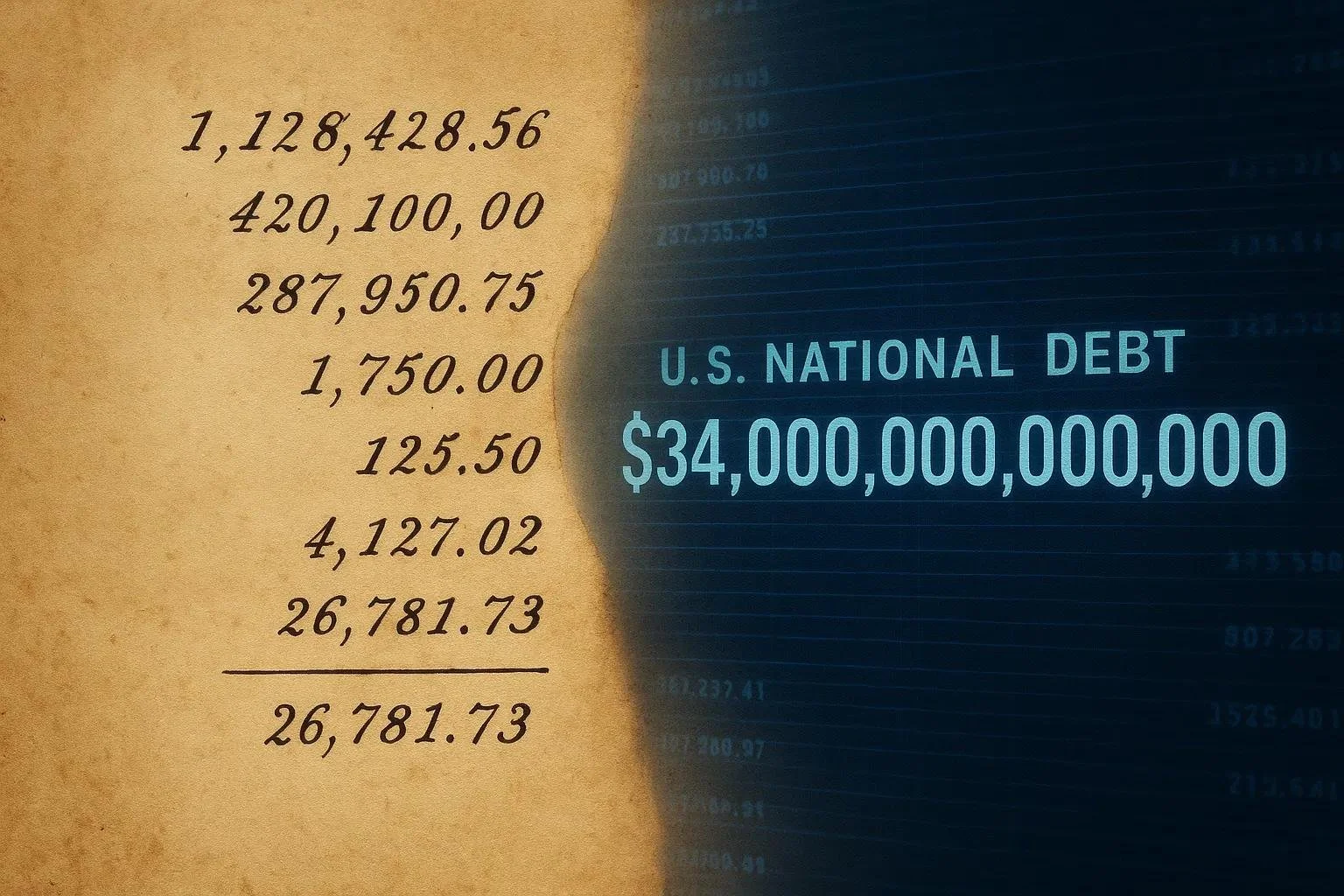
It’s notable that the Army’s entire budget from that appropriations bill was less than $8 million, with some ridiculously specific line items-- like $1,127,428.56 for food, subsistence, and provisions. They seriously added the fifty-six cents! It’s amazing that Congress actually cared about literally every penny back then.
Unfortunately, 1848 wasn’t the last time that Congress had a budget stalemate; in fact, it became typical for Congress to NOT pass appropriations bills before the Fiscal Year-end.
But whenever this happened, most federal agencies (including the military) had leftover money from the previous year to keep themselves funded for an extra month or so. Worst case the Treasury would advance them funds.
The bottom line is that no one ever had to ‘shut down’.
This changed in 1980. For most of his Presidential administration, Jimmy Carter had been at odds with Congress. And on April 25th that year, he asked his Attorney General, Benjamin Civiletti, to issue formal guidance about the possibility of a government shut down.
Civiletti complied and reinterpreted some obscure legislation from 1884 to conclude that no government agency would be allowed to operate unless it received formal appropriations from Congress.
Carter intended to use this legal interpretation as leverage to pressure Congress about proposed FTC legislation. Instead it backfired, and the first-ever government shutdown took place on May 1, 1980.
And ever since, thanks to Carter and his Attorney General, the US government is now under the threat of shutdown every single year.
In the past, most shutdowns (or at least funding gaps) have been because of specific disputes; in 1980 it was about the authority of the FTC. In 1848 it was over excess war spending.
But today’s shutdown is different. First-- it was totally preventable. And second, it’s not about a single issue (including the supposed Obamacare tax credit, which will almost certainly be extended).
Today’s shutdown is because two sides absolutely hate each other and refuse to work together.
Personally, I’m not losing any sleep over the Department of Commerce having to furlough employees. And frankly I don’t believe that any “non-essential” government job should even exist.
But the whole thing is a gigantic stain on the credibility of the US government.
This matters. Foreigners own $10+ trillion worth of US government bonds. It’s the very basis of America’s economic power abroad, and why the US dollar is the global reserve currency. Confidence in the US government is paramount in maintaining this system.
Foreign creditors tend to notice things like a full-blown government shutdown. And the fact that Congress is willing to burn everything down just to spite the other side.
Who would possibly want to continue buying US Treasury bonds when the federal government isn’t even willing to keep itself open for business?
Confidence is waning rapidly. And frankly we can see this in the price of gold, which just surpassed $4,100 as I write this. It’s not a speculative bubble; rather it’s a sad reflection of Congress’s collapsing credibility. And that credibility probably isn’t improving anytime soon.
To your freedom, James Hickman Co-Founder, Schiff Sovereign LLC