
Fed's Crumbling Illusion of Stability | History Reveals the Endgame
Fed's Crumbling Illusion of Stability | History Reveals the Endgame
Lynette Zang: 9-29-2025
From the gold standard to the paper dollar and now to digital fiat, the Fed has always sold the illusion of stability.
But history proves every one of these experiments ends the same way.
In Part 1, Lynette shows how today’s policies echo the Great Depression, why central banks are hoarding gold, and how the dollar’s endgame is already unfolding.
Fed's Crumbling Illusion of Stability | History Reveals the Endgame
Lynette Zang: 9-29-2025
From the gold standard to the paper dollar and now to digital fiat, the Fed has always sold the illusion of stability.
But history proves every one of these experiments ends the same way.
In Part 1, Lynette shows how today’s policies echo the Great Depression, why central banks are hoarding gold, and how the dollar’s endgame is already unfolding.
Chapters:
00:00 Introduction
00:43 Stablecoins vs. Sound Money
03:12 Understanding the Boom-Bust Cycles
03:43 Fiat Currency’s Life Cycle
05:22 Rule Changes: From Reserves to Confiscation
07:24 How Past Playbooks Shape Today’s System
10:44 From Gold-Backed Money to Government IOUs
12:24 Gold & Silver Removed: Why You Need Your Own Bank
15:57 Purchasing Power Collapse: The Consumer Boom Trap
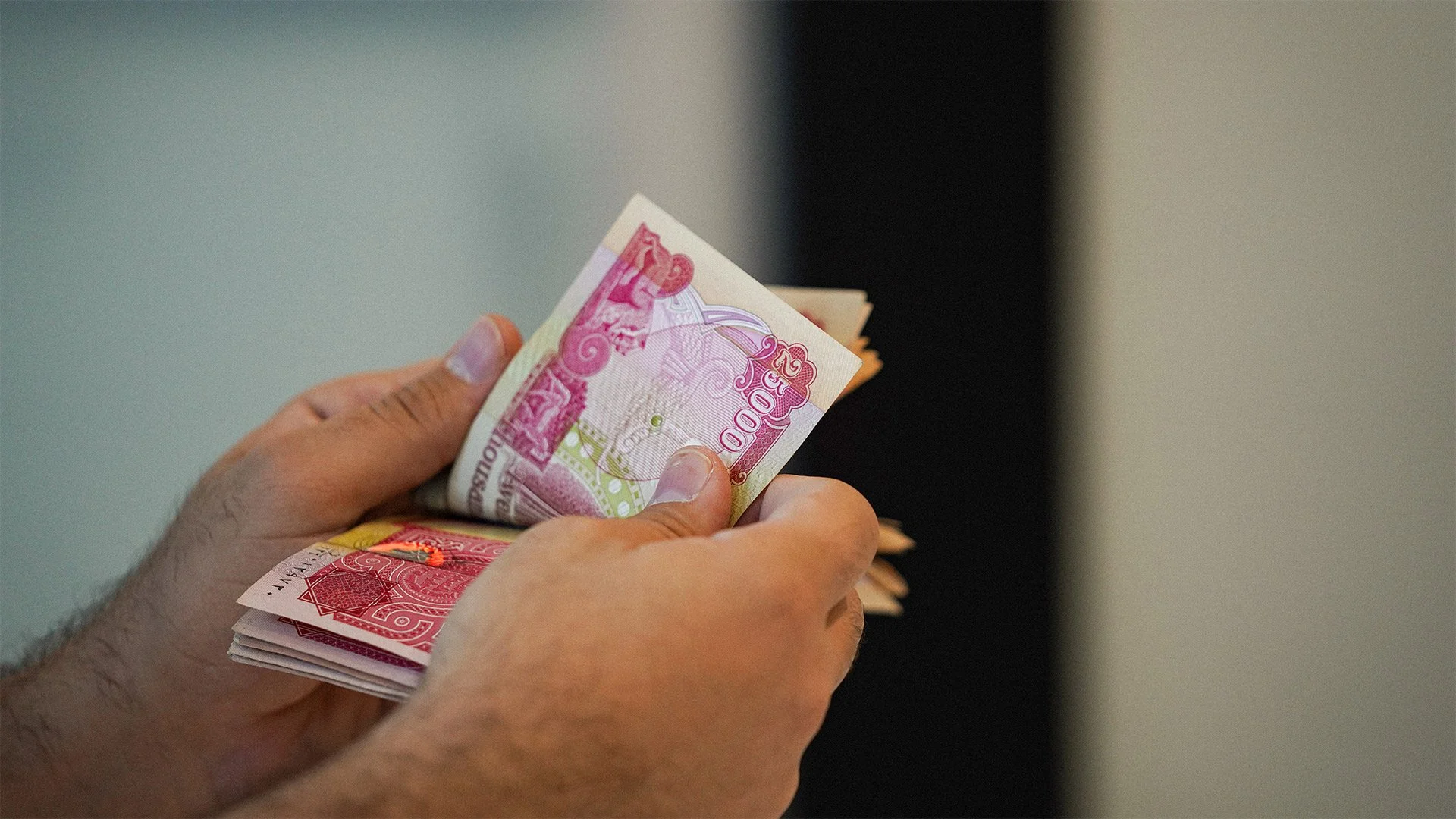
Five Key Iraqi Dinar Revaluations Against the US Dollar Since 1968
TNT:
Tishwash: Five Key Iraqi Dinar Revaluations Against the US Dollar Since 1968
Few currencies tell a nation’s story as vividly as the Iraqi dinar.
Once among the world’s strongest, valued at four US dollars, it later collapsed to the point where one dollar bought 3,000 dinars.
Today, at 1,310 to the dollar, the dinar is more than an exchange rate; it is a mirror of Iraq’s turbulent modern history.
TNT:
Tishwash: Five Key Iraqi Dinar Revaluations Against the US Dollar Since 1968
Few currencies tell a nation’s story as vividly as the Iraqi dinar.
Once among the world’s strongest, valued at four US dollars, it later collapsed to the point where one dollar bought 3,000 dinars.
Today, at 1,310 to the dollar, the dinar is more than an exchange rate; it is a mirror of Iraq’s turbulent modern history.
Stage One: Founding (1931–1968)
The dinar was born in 1931 with the Iraqi Currency Board in London. In 1947, Iraq established the National Bank, later renamed the Central Bank of Iraq. This was more than a financial step it was a declaration of sovereignty, giving Iraq its own currency at a time when newly independent states sought symbols of nationhood.
Stage Two: The Golden Age (1968–1988)
From the late 1960s to the late 1980s, the dinar lived its golden age.
1968–1979: 1 IQD = $4 (100 USD = 25 dinars).
1980–1988: 1 IQD ≈ $3.3 (100 USD = 28 dinars).
Fueled by oil revenues, Iraq’s currency symbolized prosperity and power. For ordinary Iraqis, it was not just money in their pockets but proof that their country could stand strong on the world stage.
Stage Three: Collapse and Fragmentation (1990–2003)
Wars, sanctions, and economic isolation shattered that strength. After the invasion of Kuwait and the Gulf War, the dinar plummeted. Two currencies circulated the “Swiss dinar” in Kurdistan and heavily devalued notes elsewhere.
By the mid-1990s, 1 USD = 3,000 IQD (100 USD = 300,000 dinars).
This collapse was more than economic. It destroyed savings, eroded trust, and turned the dinar into a daily reminder of hardship and international isolation.
Stage Four: Post-2003 Fragile Stability
Following the 2003 US-led invasion, Iraq introduced new notes and began stabilization efforts.
2006–2008: The dinar appreciated almost 20% to around 1,200 per dollar.
2010–2011: The rate stabilized at 1,166 per USD, offering rare predictability.
Yet fragility persisted. Black market pressures often drove the dollar higher than the official peg. In 2020, with oil revenues collapsing, Iraq sharply devalued the dinar to 1,460. In February 2023, the Central Bank revalued to 1,300 per USD, aiming to restore confidence. But in practice, parallel markets continued trading above 1,400.
Beyond Numbers: The Dinar as a Shared Fiction
Currencies, as historian and author Yuval Noah Harari reminds us, are shared fictions, stories people choose to believe in. The Iraqi dinar’s history shows what happens when that collective faith falters, and how fragile yet vital it is to rebuild.
Each revaluation, from the $4 peak in the 1970s to the 1,300 peg in 2023, was not just a technical adjustment. It was an attempt to reclaim trust, to remind Iraqis that their state could still hold the line against chaos.
The dinar’s journey is not only about money. It is about Iraq’s struggle for sovereignty, resilience, and the fragile hope that, one day, the story told by its currency will once again be one of strength.
Iraq Economic News and Points To Ponder Monday Afternoon 9-29-25
Central Bank Governor: We Have Comfortable Foreign Reserves Capable Of Defending The Exchange Rate.
Buratha News Agency2722025-09-28 Central Bank Governor Ali Al-Alaq announced on Sunday that Iraq is currently experiencing its lowest inflation rate in history. He also noted that Iraq possesses comfortable foreign reserves capable of defending the exchange rate. He emphasized the creation of a sound investment environment following the significant success of monetary policy. LINK
Central Bank Governor: We Have Comfortable Foreign Reserves Capable Of Defending The Exchange Rate.
Buratha News Agency2722025-09-28 Central Bank Governor Ali Al-Alaq announced on Sunday that Iraq is currently experiencing its lowest inflation rate in history. He also noted that Iraq possesses comfortable foreign reserves capable of defending the exchange rate. He emphasized the creation of a sound investment environment following the significant success of monetary policy. LINK
US Embassy Economic Advisor: Armed Factions Continue To Threaten Investors In Iraq
Iraq The economic advisor at the US Embassy in Baghdad, Eric Camus, confirmed that armed factions in Iraq still pose a threat to investors and drive them away from the country, despite security improvements compared to fifteen years ago.
This came during a dialogue session at the Iraq Investment Forum, where Kamus noted the interest and promising investments in Iraq that encourage American investors. He emphasized his country's commitment to supporting Iraq and providing international support to protect businesspeople and enhance foreign investment opportunities. https://www.radionawa.com/all-detail.aspx?jimare=42638
Oil Minister: Receiving Oil Produced From The Region Is A Good Start And An Embodiment Of The State's Sovereignty.
Sunday, September 28, 2025, 15:09 | Economics Number of reads: 283 Baghdad / NINA / Deputy Prime Minister for Energy Affairs and Minister of Oil Hayan Abdul-Ghani stressed that receiving oil produced from the region is a good start, and it is an embodiment of the state's sovereignty over national wealth.
The Ministry of Oil said in a statement, "Deputy Prime Minister for Energy Affairs and Minister of Oil, Eng. Hayan Abdul-Ghani Al-Sawad, chaired today, Sunday, the ninth session of the Opinion Board in the presence of undersecretaries, advisors and general managers of oil companies and departments.
The Minister began the session by congratulating the Iraqi people on the occasion of signing the agreement to receive crude oil produced in the region for the purposes of exporting it through the State Oil Marketing Organization "SOMO", noting the importance of this agreement, which occurs for the first time in 20 years.
The Minister praised the efforts of the distinguished staff of the ministry to reach this agreement, which was signed by the federal Ministry of Oil, the Ministry of Natural Resources and foreign companies operating in the region.
The statement continued, "During the session, the topics included in the agenda were discussed and appropriate decisions and recommendations were taken. /End https://ninanews.com/Website/News/Details?key=1254155
Iraq Attracts $102 Billion In Investments
Money and Business Economy News – Baghdad Minister of Trade, Athir al-Ghurairi, announced that the volume of investment in Iraq over the past two years has reached $102 billion, 62% of which is foreign investment.
During his participation in the Iraqi Investment Conference today, Sunday, the Minister of Trade explained that Iraq's annual import rate from abroad amounts to $85 billion, including $23 billion from the UAE, $16 billion from Turkey, $18 billion from China, and $12 billion from the United States.
He pointed out that Iraq is a promising market, and there are significant investment opportunities in the country, according to the German news agency "dpa."
He added that the Ministry of Commerce is working to transition to digital transformation, e-commerce, and company registration through a mobile application to eliminate bureaucracy and corruption.
Al-Ghariri continued, "We need our brothers and friends to achieve economic and investment development in Iraq. There are promising and significant opportunities amounting to $450 billion in various sectors."
He said that Iraq has surpassed the stage of achieving food security in the country and is providing food to approximately 42 million Iraqis under the ration card system. https://economy-news.net/content.php?id=60465
Dr. Mahoud: The Banking Reform Plan Focused On Three Main Factors.
Banks Economy News - BaghdadThe Prime Minister's advisor for banking affairs, Saleh Mahoud, confirmed on Sunday that the banking reform plan focused on three main factors, while noting that the World Bank praised Iraq's progress in electronic payments.
Mahoud said, "The banking reform plan adopted by the Central Bank of Iraq in coordination with the government took into account three main factors: trust, speed of procedures, and the development of banking tools."
He explained that "investors seek trust, speed of procedures, and modern banking products, and these elements represent the fundamental pillars of any investment environment."
He noted that "enhancing trust depends on the presence of effective institutions and compliance with anti-money laundering regulations, which positively impacts investor confidence in the banking system and investment environment."
He added, "The speed of procedures means a shift toward digitization and the development of electronic payment methods, which is what the banking reform plan focused on through extensive coordination between the government, the Central Bank, and the private sector." He noted that "the relevant committees are working in an organized and effective manner."
He pointed out that "the most prominent challenges facing the digital transformation process lie in societal culture and resistance to change, given that Iraqi society relies on cash."
He explained that "the government and the Central Bank have sought to spread the culture of electronic payment through practical decisions, including adopting fuel stations as a starting point for card payment experiments, which has contributed to raising awareness of the importance of these tools."
He pointed out that "other challenges relate to infrastructure, legislation, and cybersecurity, as well as the gap between cities and villages in the field of digital services," noting that "the government, in coordination with the Central Bank, has issued clear instructions to activate electronic payment tools in the governorates."
He added, "During a recent symposium, World Bank experts praised the rapid progress Iraq has made in electronic payments and financial inclusion over the past three years, stressing that the indicators recorded in the number of cards and electronic payment devices reflect this development ." https://economy-news.net/content.php?id=60469
Iraq records a rise in its oil exports to the United States
economy | 09:48 - 09/28/2025 Mawazine News - Follow-up The US Energy Information Administration announced on Sunday that Iraq's oil exports to the United States increased last week.
The administration said in a statistic reviewed by Mawazine News that "the average US crude oil imports last week from 10 major countries reached 5.767 million barrels per day, an increase of 699,000 barrels per day compared to the previous week, which averaged 5.068 million barrels per day."
It added that "Iraq's oil exports to the US reached 197,000 barrels, an increase of 74,000 barrels per day compared to the previous week, which averaged 123,000 barrels per day."
The administration indicated that "the largest oil revenues to the US last week came from Canada, at an average of 3.837 million barrels per day, followed by Brazil, at an average of 435,000 barrels per day, Mexico, at an average of 320,000 barrels, and Saudi Arabia, at an average of 296,000 barrels per day."
According to the table, "US crude oil imports from Ecuador averaged 236,000 barrels per day, from Venezuela 143,000 barrels per day, from Nigeria 123,000 barrels per day, from Colombia 121,000 barrels per day, and from Libya 68,000 barrels per day."
https://www.mawazin.net/Details.aspx?jimare=267511
Central Bank: Iraq Is Witnessing Its Lowest Inflation Rate In History Today
Economy | 12:13 - 09/28/2025 Mawazine News - Baghdad - The Governor of the Central Bank, Ali Al-Alaq, announced today, Sunday, that Iraq is witnessing its lowest inflation rates in history. While noting that it possesses comfortable foreign reserves capable of defending the exchange rate, he emphasized the creation of a sound investment environment following the great success of monetary policy.
In his speech during the Iraq Investment Forum, the Governor of the Central Bank, Ali Al-Alaq, said that "the current phase in Iraq is characterized by stability, reform, and openness to investment," noting that "the Central Bank is a condition for achieving this stability through its monetary and financial policies, controlling inflation, supporting and stimulating various economic initiatives, addressing the requirements of reality, and enabling the private sector to operate in an appropriate environment."
He added that "achieving monetary and financial stability is the result of several factors, most notably the daily policies pursued by the Central Bank in confronting developments and challenges, the prudent management of financial reserves, which represents a fundamental pillar for achieving stability, and the management of the banking sector in a way that contributes to strengthening this path."
He pointed out that "one of the most prominent indicators of the success of monetary policy is the creation of a sound investment environment through controlling inflation rates," explaining that "general price stability constitutes an important basis for the work of the private sector and investors, while turbulent environments in price levels and inflation hinder real growth."
He pointed out that "the Central Bank gives this issue top priority through close monitoring to ensure general price stability," stressing that "Iraq is currently witnessing the lowest inflation rates in its history, which reflects the success of monetary policies in controlling and managing the flow of money, in addition to the presence of comfortable foreign reserves capable of defending the exchange rate and achieving a significant balance between supply and demand for foreign currency."
https://www.mawazin.net/Details.aspx?jimare=267517
For current and reliable Iraqi news please visit: https://www.bondladyscorner.com
Seeds of Wisdom RV and Economics Updates Monday Afternoon 9-29-25
Good Afternoon Dinar Recaps,
Naval Build-Up: U.S. Modernizes Fleet While China Surges Ahead in Shipbuilding
As China scales ship production and the U.S. ramps its naval modernization amid war games in the South China Sea, the balance of power is shifting — with major implications for global money, trade, and military finance.
Good Afternoon Dinar Recaps,
Naval Build-Up: U.S. Modernizes Fleet While China Surges Ahead in Shipbuilding
As China scales ship production and the U.S. ramps its naval modernization amid war games in the South China Sea, the balance of power is shifting — with major implications for global money, trade, and military finance.
China’s Shipyard Dominance & Technological Leap
China now accounts for over half of all global ship orders by tonnage in the first eight months of 2025, confirming its dominance in commercial and dual-use shipbuilding – despite U.S. port fees targeting Chinese vessels.
The aircraft carrier Fujian launched a stealth fighter using an electromagnetic catapult — a capability previously almost unique to the U.S. Navy. This reflects not just quantity, but technological maturity.
China’s latest naval project, the amphibious assault ship Type 076 “Sichuan”, is designed to carry drones and launch them with EMALS-like systems; it is preparing for sea trials.
U.S. Response: Modernization, Fees, and Strategic Rebalancing
The U.S. is pushing port fees on Chinese-built vessels entering U.S. ports, raising the cost for vessels tied to Chinese shipyards, in part as a way to counter China’s maritime dominance.
U.S. naval modernization includes investing in shipyards, increasing production, and improving warship technology, although several reports warn of weaknesses: maintenance backlogs, supply chain delays, workforce shortages.
War Games & U.S.-China Confrontations in the Sea
Recent U.S. war games and exercises in the South China Sea, often with allies, serve both as deterrence and as demonstrations of logistical capacity and naval readiness — key in projecting both power and securing supply lines.
China, meanwhile, is performing its own naval drills, advancing capabilities in drone warfare, early warning aircraft, and carrier operations. The potential for escalation exists, but much also depends on who controls the maritime routes.
How This Fits Into Broader Global Restructuring
🔹 Industrial Capacity as National Security Asset
▪️ China's state-supported industrial base allows it to produce commercial and warship assets at scale and speed. Those shipyards are dual use: supporting merchant fleets, but also military expansion.
▪️ U.S. is trying to revive its shipbuilding industrial base — not just for defense, but because industrial strength impacts trade balance, employment, and technological leadership.
🔹 Financial & Trade Levers in Strategic Competition
▪️ Port fees on Chinese-built vessels are not just trade policy — they are financial instruments used to shape economic dependencies and shift investment flows.
▪️ Countries ordering ships, choosing ports, or contracting shipyards are effectively making strategic financial decisions: where capital flows, where alliances are strengthened, where supply chains are trusted.
🔹 Alliance Behavior & Global Military Finance
▪️ U.S. war games with allies amplify defense costs: joint training, combined procurement, shared technology development. Funding these requires investment, debt, subsidies, which influences national budgets.
▪️ China’s activities press other nations to reexamine their naval and maritime strategies; they may feel compelled to invest more in defense or align more closely with China or the U.S. for protection, trade guarantees, or port access.
Key Implications
Countries dependent on shipping or maritime trade must now consider which naval power controls the routes, how fees or sanctions could affect shipping costs, and what defense guarantees they will need.
U.S. policy is beginning to treat industrial capacity (shipyards, ports, naval tech) not just as defense, but as essential infrastructure in geopolitical competition.
The speed and scale of China’s shipbuilding challenge the assumption that the U.S. can remain structurally dominant without major reform, funding, or alliances.
Why This Matters
The naval build-up is not just about ships or war games. It’s about which nations control maritime commerce, technological platforms, and industrial capacity. How trade gets routed, which currencies are used in ship finance, who builds warships and their supply chains — all this will reshape political and financial systems of power globally.
This is not just politics — it’s global finance restructuring before our eyes.
@ Newshounds News™ Exclusive
Sources:
Reuters – China shipyard orders strong despite U.S. port fees on Chinese vessels Reuters
Business Insider – China’s newest aircraft carrier, Fujian, launches stealth fighter with EMALS Business Insider
Reuters – Trump’s port fees will weaken China’s shipbuilding dominance Financial Times
South China Morning Post – Type 076 “Sichuan” ship enters trials South China Morning Post
Reports on U.S. shipbuilding weakness: Business Insider analysis Business Insider
Reuters – US targets China’s global ports as part of maritime strategy Reuters
Congressional Research Service – China Naval Modernization: Implications for U.S. Navy capabilities Congress.gov
~~~~~~~~~
SWIFT’s Blockchain Push vs. Ripple/XRP: Competition in the Cross-Border Payments Arena
As SWIFT pivots toward blockchain and tokenization, Ripple/XRP’s fast, low-cost rails present a parallel model — both are part of a broader reshaping of how value moves globally.
SWIFT’s Prototype with Consensys: Modernizing the Backbone
SWIFT is developing a shared blockchain ledger in partnership with Consensys, aimed at improving cross-border payments among global banks. The prototype will test tokenized assets (including stablecoins), enforce transactions with smart contracts, validate sequencing, and improve transaction cost transparency.
Key participating banks include Bank of America, Citigroup, NatWest, Deutsche Bank, HSBC, JPMorgan Chase, etc. Swift’s goal: offer 24/7 instant, always-on cross-border transactions with predictable pricing and speed.
Ripple / XRP: Already Operating at the Edge of Innovation
Ripple’s XRP Ledger (XRPL) settles many transactions in 3-5 seconds at very low fees (< $0.01), especially in remittances and low-value cross-border flows. In contrast, traditional SWIFT transfers can take days and cost tens of dollars.
Ripple’s model (On-Demand Liquidity, use of XRP as a bridge currency) sidesteps needs for pre-funded nostro/vostro accounts, reducing capital tied up in cross-border transfers.
Where SWIFT and Ripple Overlap, Diverge, and What’s at Stake
🔹 Overlap / Convergence
▪️ SWIFT inserting blockchain rails into its messaging infrastructure suggests it recognizes the same pain points Ripple has long highlighted: high fees, delayed settlement, opaque fees.
▪️ The tokenization of assets and stablecoins, which SWIFT’s prototype supports, is a terrain where Ripple already has products (like its RLUSD stablecoin) and experience.
🔹 Key Differences
▪️ Scale vs. agility: SWIFT has a vast global network of ~11,000+ financial institutions; Ripple/XRP is much newer but more nimble, able to move fast in certain corridors.
▪️ Settlement vs messaging: SWIFT historically handles messaging / instruction; Ripple handles actual value settlement using XRP. SWIFT’s blockchain effort appears to be about modernizing messaging plus adding settlement-adjacent capabilities, but Ripple directly handles liquidity and settlement.
▪️ Regulatory clarity & adoption: XRP’s usage depends heavily on regulation (e.g., classification of XRP, stablecoin rules, AML/KYC compliance). SWIFT is embedded in legacy systems and regulatory structures, giving it institutional trust; but it risks lagging in innovation if not careful.
Implications for Global Financial Restructuring
Redefinition of Cross-Border Money Flows: As SWIFT upgrades and blockchain/crypto rails (Ripple/XRP, stablecoins, etc.) improve, money transfer becomes faster, cheaper, and more transparent. This reduces reliance on costly legacy banking intermediaries.
Shifting Power over Financial Infrastructure: Who controls payment rails and messaging systems gains geopolitical leverage. Countries or institutions that adopt XRPL or SWIFT-blockchain systems may control more of the financial flow, clearing, and settlement power.
Currency Sovereignty & De-Dollarization Pressures: As stablecoins and tokenized assets gain traction, less value might flow through USD-centric channels. Ripple’s blockchain model, combined with SWIFT’s recognizing of stablecoins and tokenization, opens up paths for non-USD payment settlements.
Financial Access and Inclusion: Lower fees, faster settlement may make cross-border trade, remittances, and financial services more accessible to smaller countries, SMEs, and unbanked populations. That changes who participates in global finance.
Key Points
SWIFT is shifting from a purely messaging network to a blockchain-based prototype that includes tokenization and smart contracts.
Ripple/XRP already offers settlement finality and liquidity in seconds, which SWIFT’s current model doesn’t yet match in most use cases.
The move by SWIFT suggests incumbents are adapting—not being disrupted entirely but trying to incorporate the innovation around them.
Why This Matters Now
This is about more than tech. It’s about who writes the rules of cross-border value transfer. As SWIFT modernizes, blockchain networks like XRP are testing new possibilities. The intersection of regulation, infrastructure, currency choice, and technology is forming a new financial architecture.
This is not just politics — it’s global finance restructuring before our eyes.
@ Newshounds News™ Exclusive
Sources:
Financial Times – SWIFT to launch blockchain in response to rise of stablecoins Financial Times
Coingape – Shared blockchain ledger for global payments (SWIFT & Consensys) CoinGape
CCN – What SWIFT’s Cross-Border Retail Payments Scheme Means & XRP competition CCN.com
AInvest – XRP vs SWIFT: The New Era of Cross-Border Payments AInvest
~~~~~~~~~
Seeds of Wisdom Team RV Currency Facts Youtube and Rumble
Newshound's News Telegram Room Link
Follow the Gold/Silver Rate COMEX
Follow Fast Facts
Seeds of Wisdom Team™ Website
Thank you Dinar Recaps
News, Rumors and Opinions Monday 9-29-2025
Note: All intel should be considered as "Rumors" until we receive official announcements ...and “Rates and Dates” could change anytime until we get to the banks/redemption centers.
RV Excerpts from the Restored Republic via a GCR: Update as of Mon. 29 September 2025
Compiled Mon. 29 September 2025 12:01 am EST by Judy Byington
The Quantum Financial System (QFS) was replacing the corrupt banking grid, routing transactions via secure Star Link satellites. QFS was incorruptible, decentralized, and tied to asset-backed currencies.
Note: All intel should be considered as "Rumors" until we receive official announcements ...and “Rates and Dates” could change anytime until we get to the banks/redemption centers.
RV Excerpts from the Restored Republic via a GCR: Update as of Mon. 29 September 2025
Compiled Mon. 29 September 2025 12:01 am EST by Judy Byington
The Quantum Financial System (QFS) was replacing the corrupt banking grid, routing transactions via secure Star Link satellites. QFS was incorruptible, decentralized, and tied to asset-backed currencies.
The U.S. Treasury was aligning with ISO20022 and Rainbow Treasury Notes (to be announced Jan. 1 2026) backed by gold and silver. The privately owned by foreign bankers Federal Reserve and their collection arm, the IRS would soon be gone. Star Link was the new nervous system of commerce.
Fri. 27 Sept. 2025 Everything is moving faster than expected. …John F. Kennedy on Telegram
Financial systems are syncing to new frequency bands.
Accounts are being mirrored into QFS.
Legacy ledgers are being drained and archived.
Every move now leaves a quantum imprint. No more hiding.
The world is not just watching — it’s aligning. In silence. In shadows. In full awareness.
Stay where you are. Listen without sound. Read between the lines. Everything is unfolding. TRUST THE PLAN
~~~~~~~~~~~~~~~
Possible Timing:
The Wed. 1 Oct. 2025 government shutdown will be permanent for many offices. The Office of Management and Budget has been telling Agencies to prepare elimination lists. President Trump stated, “Many Americans will be happy on Oct. 1 2025.” Is this the day that the Global Currency Reset would be official?
Mon. 13 Oct. was expected to be the beginning of a banking and market crash. As the old fiat financial system goes down, there were 209 country’s banks already connected to the new gold/asset-backed Quantum Financial System. Out of those, 97 Central Banks have been covertly integrated, while 82 more were pending.
Tues. 14 Oct. 2025 has been designated as World Quantum Day when Nesara Gesara Law will be (allegedly) official throughout the World. By that Tues. 14 Oct. Bitcoin would be (allegedly) gone; Servers and data centers, (allegedly) obliterated; 99.5% of all crypto—(allegedly) vanished. Only ISO20022 coins, backed by gold, would survive. As this fiat system died, the Stock Market would crater. Such would signal the end of the Cabal’s SWIFT Global Banking System.
By the next day on Wed. 15 Oct. 2025 there was expected to be a full banking and market crash – that would trigger activation of the Emergency Broadcast System (EBS).
On Tues. 30 Sept. 2025 US Inc. Government funding ends, no debt ceiling increase, shutdown begins. Money printing stops. “The biggest upgrade to the US Treasury is happening on Sept. 30 2025.” …Eco X on X
Oct 8–13: Predicted crash window. Full banking and market collapse Oct 13–15.
Iraq: US troops nearly gone. Sudani must pay or (allegedly) lose trillions in bonds and face public execution. Iraq must RV by month’s end and will (allegedly) join BRICS.
NESARA/GESARA: Will be announced. Accounts (allegedly) reset to zero, then restored. Have cash, food, water ready. Stimulus and Tariff Bonus expected in October.
“On 14 October 2025 Nesara Gesara will be official throughout the World. The Quantum Reset Has Begun. The Reset Is Real. It’s The End of The Cabal’s SWIFT Global Banking System. 209 Country’s Banks Are (allegedly) connected to the Quantum Financial System. 97 Central Banks Have Been Covertly Integrated, While 82 More Are Pending. World Quantum Day 14 October – a yearly International Event Dedicated to Understand Quantum Science & Technology Trust The Plan. …Tucker Carlson on Telegram
Oct 24: Possible scare event—staged to shock the nation awake.
Nov 11 The Great Settlement. Global debt erased. New ledger confirmed public.
Nov 22: Launch of the new Rainbow Currency.
Jan. 1 2026: “The great reset is not coming, it’s already here. Nesara Gesara will be (allegedly) fully implemented by Jan. 1 2026.” …
Read full post here: https://dinarchronicles.com/2025/09/29/restored-republic-via-a-gcr-update-as-of-september-29-2025/
************
Courtesy of Dinar Guru: https://www.dinarguru.com/
Militia Man Think about it, when Iraq starts to rebuild its country in dinar and when they do a revaluation, redenomination and apply a real effective exchange rate, they're going to be able to get construction material far cheaper in dinar terms. That's fact IMO.
Frank26 A long long time ago in a far far galaxy I once told you the day you see the HCL you'll see what you've been wanting to see, a new exchange rate for the currency of the country of Iraq for the Iraqi dinar, within nanoseconds.
Nader From The Mid East We have to wait for Forex. It's on the agenda. They're talking a lot about Forex but they're not saying when we're going to be on Forex. If it's on Forex even at 1310, I just want it tradable on Forex even at 1310. It don't care at 1320. I just want it tradable. Once it's tradable then we talk. For now it's not tradable. It is on Forex but it's frozen. You cannot sell it on Forex.
Fed Prepares Massive QE as Bond Buyback Scheme Exposed
Taylor Kenny: 9-28-2025
The Fed’s secret third mandate may be the key to unlimited money printing- and it’s already being revived. If you have savings, retirement, or cash in the bank, this affects you.
Taylor breaks down what this means for you and how gold can protect your wealth.
CHAPTERS:
0:00 The Fed’s Real Agenda
1:36 Unlimited QE & Yield Curve Control
3:12 The Debt Spiral and Interest Crisis
4:17 Powell’s Dismissal
5:09 Coordinated Messaging
6:21 The Coming Reset
8:30 Built to Endure
Monday Coffee with MarkZ. 09/29/2025
Monday Coffee with MarkZ. 09/29/2025
Some highlights by PDK-Not verbatim
MarkZ Disclaimer: Please consider everything on this call as my opinion. People who take notes do not catch everything and its best to watch the video so that you get everything in context. Be sure to consult a professional for any financial decisions
Member: Good Monday morning to all
Member: The question is- will this week be Groundhog day….or fireworks?
Monday Coffee with MarkZ. 09/29/2025
Some highlights by PDK-Not verbatim
MarkZ Disclaimer: Please consider everything on this call as my opinion. People who take notes do not catch everything and its best to watch the video so that you get everything in context. Be sure to consult a professional for any financial decisions
Member: Good Monday morning to all
Member: The question is- will this week be Groundhog day….or fireworks?
Member: A rumor is tomorrow is the day
MZ: There are so many bond rumors screaming right now.….Bond rumors over the weekend was it would happen late Saturday to within 36-48 hours for all the bond aggregators to get codes…..I know...we have heard it before but there is a huge amount of chatter.
MZ: I am hearing these rumors consistently from high level, legitimate folks. Their meetings and conversations over the weekend were extremely good that there would be some type of release within 36-48 hours….then they start paying people out on Wednesday. We shall see.
MZ: Stay calm when you hear these rumors because filtering out the truth is getting more and more difficult. But they are extremely optimistic.
Member: Per Frank26 the CBI governor came back out at a Business Forum and said we have no plans on changing the value against the dollar rate. Remember Kuwait did the same thing and the next day they RVd
MZ: The article was almost completely BS. And yes we heard the same thing in Kuwait,…..then they changed the rate the same day.
Member: Nader had a live this morning discussing an article that said the IQD was a scam and warned all to not invest.... the misdirection has me super excited!
Member: IMO the iraq official that said they aren't changing the rate was being completely honest because its already done sudani said 18 yr process is completely done
Member: Sudani said monetary reform is complete
Member: IMO the hcl is done sudani said the hcl was tied to bank reforms and bank reforms are completed
Member: Frank25 said its against their constitution to say they are changing the rate
MZ: “Kurdistan oil is approaching 400,000 barrels per day. “ Oil is flowing. Many articles out all about this over the weekend.
Member: VND is having g their status and stock market ranking elevated from a C to a B on Oct 8th. Completely changes their international trade and business policies making them incredibly more compliant.
MZ: From zerohedge: “ Gold revaluation imminent-US Treasury hoard tops $1 trillion for first time” A number of economists are calling for the imminent revaluation og that yellow metal. This is a big deal and a change to our monetary supply. This is 99.9% a sign of a reset. And it is now being talked about on the world stage.
Member: Maybe a way to back our USN gold/asset backed currency as well.
MZ: gold currently at $3,834, silver at $46.94 …everything is on a run as it repositions.
Member: Any news on the government shutdown this week?
MZ: They expect it to shutdown on Wed. but the government politicians doesn’t seem all that concerned. Do they know something? Is there another plan? An opportunity to clean house?
Member: What do you think is holding the RV up?
MZ: I I just think we are watching the final moments of this game play out right now.
MZ: A video came out this weekend on President Trumps Truth Social account about medbeds….even reported on fox but has since been removed. “Medbed hospitals- a new era of healthcare” including a picture. Which I thought was pretty cool. (Mark shows the picture) They are talking about the future of medicine.
MZ: It was up for about 12 hours and then it was taken down.
MZ: It has been removed but some have posted screenshots https://x.com/AutistDivision/status/1972125872338735449?s=09
Member: Skye also said Medbeds in 6 to 8 weeks
Member: I really hope there will be medbeds for our pets as well.
Member: Tomorrow night for a reset would be perfect. government shutting down possibly, new fiscal year, oil flowing, misdirection getting heavier.
Member: I think Oct 1st is an ideal economic time to RI being the new beginning of the fiscal year?
Member: The Hunt for Red October starts Wednesday
Member: Buckle up. This week is going to be bumpy
StacieZ joins the stream today. Please listen to the replay for her information.
THE CONTENT IN THIS PODCAST IS FOR GENERAL & EDUCATIONAL PURPOSES ONLY&NOT INTENDED TO PROVIDE ANY PROFESSIONAL, FINANCIAL OR LEGAL ADVICE. PLEASE CONSIDER EVERYTHING DISCUSSED IN MARKZ’S OPINION ONLY
FOLLOW MARKZ : TWITTER . https://twitter.com/originalmarkz?s=21. TRUTH SOCIAL . https://truthsocial.com/@theoriginalm...
Mod: MarkZ "Back To Basics" Pre-Recorded Call" for Newbies 10-19-2022 ) https://www.youtube.com/watch?v=37oILmAlptM
MARKZ DAILY LINKS: https://theoriginalmarkz.com/home/
Note from PDK: Please listen to the replay for all the details and entire stream….I do not transcribe political opinions, medical opinions or many guests on this stream……just RV/currency related topics.
ZESTER'S LINK TREE: https://linktr.ee/CrazyCryptonaut
THANKS FOR JOINING. HAVE A BLESSED DAY! SEE YOU ALL TUESDAY THROUGH THURSDAY EVENINGS FOR NEWS @ 7:00 PM EST ~ UNLESS BREAKING NEWS HAPPENS! FROM NOW ON NO MORE NIGHTLY PODCASTS ON MONDAYS AND FRIDAYS
Seeds of Wisdom RV and Economics Updates Monday Morning 9-29-25
Good Morning Dinar Recaps,
Israel’s Gaza War & Trump-Netanyahu Talks Reshape Global Alignments
Diplomatic recognition, financial leverage, and post-war governance point to a broader restructuring of the global order.
Israeli Forces Advance as Diplomacy Intensifies
As Israeli forces deepen their push into Gaza ahead of planned White House talks between Donald Trump and Benjamin Netanyahu, the military campaign is colliding with urgent international diplomacy. The U.S. president has signaled he will propose a new Gaza peace framework, but his ability to deliver rests on whether allies and Arab states align behind it.
Good Morning Dinar Recaps,
Israel’s Gaza War & Trump-Netanyahu Talks Reshape Global Alignments
Diplomatic recognition, financial leverage, and post-war governance point to a broader restructuring of the global order.
Israeli Forces Advance as Diplomacy Intensifies
As Israeli forces deepen their push into Gaza ahead of planned White House talks between Donald Trump and Benjamin Netanyahu, the military campaign is colliding with urgent international diplomacy. The U.S. president has signaled he will propose a new Gaza peace framework, but his ability to deliver rests on whether allies and Arab states align behind it.
Recognition of Palestine Challenges U.S. Policy
▪️ Britain, France, Canada, and Australia have formally recognized Palestinian statehood, testing Trump’s pro-Israel stance.
▪️ This shift strengthens Palestine’s claim to international legitimacy and creates new pathways for financial aid, trade, and institutional engagement.
▪️ Diplomatic recognition here is more than symbolism — it directly reshapes the channels through which global finance flows.
Palestinian Leadership Seeks Cooperation
Palestinian President Mahmoud Abbas has pledged cooperation with Trump, France, Saudi Arabia, and others on a U.N.-backed peace plan — despite rejecting Hamas’s actions. This move aligns the Palestinian Authority with a broad diplomatic coalition, signaling readiness for structured governance and international funding flows.
Post-War Governance and Arab Roles
▪️ The U.S. has discussed with Gulf states the possibility of temporary administration of Gaza after the war.
▪️ Such arrangements would require new funding frameworks, governance structures, and trade guarantees — effectively building parallel financial systems.
▪️ European and Muslim-majority countries are also considering stabilization missions, adding layers of international oversight.
Regional Pushback and Humanitarian Costs
▪️ Egypt, Saudi Arabia, the UAE, and Oman have warned of regional collapse and demanded recognition of Palestine.
▪️ The humanitarian toll and infrastructure destruction risk triggering sanctions, trade realignments, and redirection of international aid.
Why This Matters
The Israel-Palestine conflict is no longer just about territory — it is now a fault line in global financial structuring.
Diplomatic recognition of Palestine re-channels financial legitimacy.
Post-war governance will create new funding mechanisms and oversight institutions.
The humanitarian and economic burden forces nations to redirect capital toward reconstruction and relief.
Allies diverging from U.S. policy signals a realignment of global alliances that will spill into trade, aid, and sanctions.
This is not just politics — it’s global finance restructuring before our eyes.
@ Newshounds News™ Exclusive
Sources:
Reuters – Israeli forces advance ahead of Trump-Netanyahu Gaza war talks
Reuters – Trump to push elusive Gaza peace in talks with Netanyahu
Reuters – U.S. allies embrace Palestinian statehood, testing Trump’s Israel policy
Reuters – Palestinian President Abbas affirms readiness to work with Trump, others
Reuters – U.S. has talked with Gulf states about post-war Gaza administration
Reuters – Israeli tanks push deeper into Gaza City as Trump talks peace
AP News – Arab states warn of collapse, urge recognition of Palestine
~~~~~~~~~
NATO & EU React to Russia’s 12-Hour Barrage: A Signal of Deepening Global Fractures
The intense Russian aerial assault on Ukraine and the strong responses from allies are reshaping how security, diplomacy, and finance interact — part of the larger global restructuring underway.
Russia’s Assault, NATO’s Flight Response
Russia launched a 12-hour barrage over Ukraine with over 40 cruise missiles and nearly 600 drones, hitting regions including Kyiv, Zaporizhzhia, Mykolaiv, and Odesa. Civilian infrastructure was damaged; lives were lost.
NATO scrambled fighter jets and raised alerts as missile and drone threats mounted. Ukraine’s President Zelenskiy condemned the strike as “vile and cowardly,” urging stricter sanctions on Russian oil and increased military aid from allies.
EU Allies Step Up, Propose Regional Defense Measures
President Volodymyr Zelenskiy proposed creating a joint aerial defense shield with European allies to protect against ongoing Russian missile and airspace incursions. Europe responded with calls for more robust defense cooperation, particularly along NATO’s eastern flank.
A "drone wall" initiative is gaining traction: EU defense ministers agreed to strengthen detection and interception of drones along borders, focusing first on eastern member states. This includes investment in defense industry capacity and rapid deployment.
NATO’s Strategic Tightening and Tensions
Zelenskiy sharply criticized what he called NATO’s “weak reaction” to repeated Russian violations of airspace by drones and aircraft; some members are now pressing for more assertive rules of engagement. (Newsweek)
Some NATO allies have activated Article 4 (consultations) in response to airspace breaches; others are reinforcing eastern defenses, deploying jets and missile defense resources closer to borders with Russia.
Russia’s Pushback & Risk of Escalation
Russia has warned that any aggression against its airspace will be met with “decisive response.” Moscow denies some of the accusations of breaching NATO airspace but claims that western support for Ukraine is making the conflict more dangerous. (Reuters)
Moscow also views proposals like Ukraine’s potential NATO membership and enhanced defense cooperation among EU states as part of what it sees as a broader encroachment, raising the risk of miscalculation.
How This Fits Into Global Political and Financial Restructuring
🔹 Security & Finance Converge
▪️ Military escalation carries immediate fiscal consequences: more spending on air defense, rebuilding damaged infrastructure, hosting displaced populations. This shifts national budgets and foreign aid flows, reshaping which countries become donors vs. dependents.
▪️ Countries investing heavily in defense (Eastern Europe, Baltic states, Poland, etc.) may see accelerated development of their defense-industrial sectors—part of a broader economic realignment away from dependency on traditional supply lines.
🔹 Legitimacy, Recognition & Power Structures
▪️ Zelenskiy’s calls for collective defense, EU support, and formal recognition of Ukraine’s threats underscore how legitimacy in international law and alliances translates into geopolitical and financial power.
▪️ As EU and NATO tighten their frameworks, access to trade, investment, and diplomatic influence hinges on being regarded as a trustworthy partner in a volatile environment.
🔹 De-Dollarization & Alt Finance Pressure
▪️ As sanctions intensify and the costs of war escalate, Russia (and those aligned with or sympathetic to it) are likely to lean even more on non-USD financial mechanisms, regional partnerships, and alternative payment systems.
▪️ For Ukraine and its allies, securing financial backing, loans, arms, and post-war recovery packages involves navigating sanction regimes and often collateralizing autonomy in how they engage with capital flows.
Why This Matters
Russia’s barrage and the strong reactions from NATO and EU allies expose fissures in the old security-and-finance order. What we’re seeing is the emboldened assertion of regional defense autonomy, financial realignments driven by necessity, and the redefinition of what it means to protect sovereignty and legitimacy.
This is not just politics — it’s global finance restructuring before our eyes.
@ Newshounds News™ Exclusive
Sources:
Reuters – Ukraine’s Zelenskiy proposes joint aerial shield with European allies
The Guardian – Hundreds of Russian missiles and drones hit Ukraine; Poland scrambles jets
Reuters – Russia warns NATO & EU any aggression will be met with decisive response
Newsweek – Zelensky criticizes ‘weak’ NATO response to air violations
AP News – EU defense ministers agree on “drone wall” initiative
~~~~~~~~~
Newshound's News Telegram Room Link
Follow the Gold/Silver Rate COMEX
Follow Fast Facts
Seeds of Wisdom Team™ Website
Thank you Dinar Recaps
“Tidbits From TNT” Monday Morning 9-29-2025
TNT:
Tishwash: The government adopts the "Oliver Wyman Strategy" for the development road project.
Prime Minister Mohammed Shia al-Sudani chaired the regular meeting of the Higher Committee for the Development Road on Sunday, September 28, 2025, in the presence of the Ministers of Transport and Construction and Housing, the Chairman of the National Investment Commission, a number of advisors and executives, and representatives of Oliver Wyman, the company's private consultant.
During the meeting, according to a statement from Al-Sudani's office, a copy of which was received by Al-Jabal, "the latest developments in the project and the procedures required to proceed with its stages were discussed. The draft law of the authority for the development road, the port of Faw and the industrial cities was reviewed. The rates of progress achieved in the technical and administrative aspects, as well as the plans related to the railway and the road were also reviewed."
TNT:
Tishwash: The government adopts the "Oliver Wyman Strategy" for the development road project.
Prime Minister Mohammed Shia al-Sudani chaired the regular meeting of the Higher Committee for the Development Road on Sunday, September 28, 2025, in the presence of the Ministers of Transport and Construction and Housing, the Chairman of the National Investment Commission, a number of advisors and executives, and representatives of Oliver Wyman, the company's private consultant.
During the meeting, according to a statement from Al-Sudani's office, a copy of which was received by Al-Jabal, "the latest developments in the project and the procedures required to proceed with its stages were discussed. The draft law of the authority for the development road, the port of Faw and the industrial cities was reviewed. The rates of progress achieved in the technical and administrative aspects, as well as the plans related to the railway and the road were also reviewed."
Regarding the Grand Faw Port, according to the statement, "the Director General of Ports presented a detailed report on the percentages of the latest achievements in the roads and the submerged tunnel, and the remaining percentages of completion. He also discussed the operational file and details of the offers submitted by other companies and countries."
Al-Sudani pointed to "the importance of the project and the need to shift work from the technical and administrative aspects to practical implementation, so that citizens are fully informed of the efforts being made by all state institutions to complete the first stages of the development path," stressing that "the next phase will witness the commencement of the actual implementation of the process."
The meeting discussed the project's progress with the Kurdistan Region of Iraq, the results of the recent quadripartite meeting of the project's contributing countries in Baghdad, and the issue of land expropriation. The Prime Minister directed the head of the Higher Council for Coordination between the Governorates to communicate with the relevant governorates and resolve the remaining expropriation issue.
According to the statement, "Oliver Wyman presented a summary of its progress on the integrated strategy for the Development Road project, which includes governance, the road, the railway, the economic strategy, investment opportunities, and investor outreach. It proposed beginning implementation of the strategy and agreeing to share the interim governance protocol with partner countries before the upcoming quadrilateral ministerial meeting in Baghdad."
During the meeting, it was decided to "adopt the complete strategy submitted for the project." link
****************
Tishwash: Central Bank: We have comfortable foreign reserves capable of defending the exchange rate.
Central Bank Governor Ali Al-Alaq announced on Sunday that Iraq is currently experiencing its lowest inflation rate in history. He noted that Iraq possesses comfortable foreign reserves capable of defending the exchange rate and emphasized the creation of a sound investment environment following the significant success of monetary policy.
format issues
In his speech at the Iraq Investment Forum, Central Bank Governor Ali Al-Alaq said, "The current phase in Iraq is characterized by stability, reform, and openness to investment." He noted that "the Central Bank is a prerequisite for achieving this stability through its monetary and fiscal policies, controlling inflation, supporting and stimulating various economic initiatives, addressing the demands of the situation, and enabling the private sector to operate in a suitable environment."
He added, "Achieving monetary and financial stability is the result of several factors, most notably the daily policies pursued by the Central Bank in addressing developments and challenges, the prudent management of financial reserves, which constitute a fundamental pillar for achieving stability, and the management of the banking sector in a way that contributes to strengthening this process."
He pointed out that "one of the most prominent indicators of the success of monetary policy is creating a sound investment environment through controlling inflation rates," explaining
that "general price stability constitutes an important foundation for the private sector and investors, while turbulent environments in terms of price and inflation levels hinder real growth."
He pointed out that "the Central Bank is giving this issue top priority through close monitoring to ensure overall price stability," emphasizing that "Iraq is currently experiencing the lowest inflation rates in its history, which reflects the success of monetary policies in controlling and managing the flow of currency, in addition to the presence of comfortable foreign reserves capable of defending the exchange rate and achieving a significant balance between supply and demand for foreign currency." link
****************
Tishwash: Dr. Mahoud: The banking reform plan focused on three main factors.
The Prime Minister's advisor for banking affairs, Saleh Mahoud, confirmed on Sunday that the banking reform plan focused on three main factors, while noting that the World Bank praised Iraq's progress in electronic payments.
Mahoud said, "The banking reform plan adopted by the Central Bank of Iraq in coordination with the government took into account three main factors: trust, speed of procedures, and the development of banking tools."
He explained that "investors seek trust, speed of procedures, and modern banking products, and these elements represent the fundamental pillars of any investment environment." He noted that "enhancing trust depends on the presence of effective institutions and compliance with anti-money laundering regulations, which positively impacts investor confidence in the banking system and investment environment."
He added, "The speed of procedures means a shift toward digitization and the development of electronic payment methods, which is what the banking reform plan focused on through extensive coordination between the government, the Central Bank, and the private sector." He noted that "the relevant committees are working in an organized and effective manner."
He pointed out that "the most prominent challenges facing the digital transformation process lie in societal culture and resistance to change, given that Iraqi society relies on cash." He explained that "the government and the Central Bank have sought to spread the culture of electronic payment through practical decisions, including adopting fuel stations as a starting point for card payment experiments, which has contributed to raising awareness of the importance of these tools."
He pointed out that "other challenges relate to infrastructure, legislation, and cybersecurity, as well as the gap between cities and villages in the field of digital services," noting that "the government, in coordination with the Central Bank, has issued clear instructions to activate electronic payment tools in the governorates."
He added, "During a recent symposium, World Bank experts praised the rapid progress Iraq has made in electronic payments and financial inclusion over the past three years, stressing that the indicators recorded in the number of cards and electronic payment devices reflect this development link
Mot: Those Were the Daze My Friend! - before Youtube!! – LOL

Mot: ""Made With Love""

Gold Telegraph: More than a Decade in the Making
Gold Telegraph: More than a Decade in the Making
9-29-2025
Russia’s Finance Minister says Russia and China are working to set up a securities depository to rival Belgium-based Euroclear and Clearstream. Payment infrastructure… Transformational times.
BREAKING NEWS: THE EUROPEAN CENTRAL BANK SAYS IT WOULD CONDUCT NEW EXPERIMENTS NEXT YEAR ABOUT WHAT COULD BE ACHIEVED THROUGH A DIGITAL EURO
Here comes digital…
Gold Telegraph: More than a Decade in the Making
9-29-2025
Russia’s Finance Minister says Russia and China are working to set up a securities depository to rival Belgium-based Euroclear and Clearstream. Payment infrastructure… Transformational times.
BREAKING NEWS: THE EUROPEAN CENTRAL BANK SAYS IT WOULD CONDUCT NEW EXPERIMENTS NEXT YEAR ABOUT WHAT COULD BE ACHIEVED THROUGH A DIGITAL EURO
Here comes digital…
“The ECB said this year’s experiments with the private sector showed the digital euro – an electronic wallet backed by the central bank…”
Source: https://www.reuters.com/technology/ecb-conduct-new-digital-euro-experiments-next-year-2025-09-26/
Last year, billionaire and legendary mining entrepreneur Pierre Lassonde told me: The Shanghai Gold Exchange is going to turn into a casino — and that’s when we’ll see the real crazy prices…”
Fast forward to today: The People’s Bank of China is using the Shanghai Gold Exchange to court central banks from friendly nations, encouraging them to buy bullion and store it inside China’s borders. I’m looking forward to my next conversation with Pierre.
https://twitter.com/i/status/1971635645434241405
In July, the United States quietly took an equity stake in the nation’s largest rare earth miner and even set a price floor to support it. The United States is very focused on the dominance of China in minerals… This is going to get very interesting.
BREAKING NEWS: THE UNITED STATES GOVERNMENT IS IN TALKS TO TAKE STAKES IN MULTIPLE CRITICAL MINERALS COMPANIES
You heard it here, first:
Gold Telegraph: Something to think about… The U.S. just took a 10% equity stake in Intel all in the name of national security. If chips justify ownership… do you really think critical minerals aren’t next? China has played this game for decades. Washington is only starting to catch up.
This has been more than a decade in the making. I’ve been writing this story for years, sometimes dismissed as crazy, even delusional. What a moment. What a ride.
Source(s): https://x.com/GoldTelegraph_/status/1971346477483270481
https://dinarchronicles.com/2025/09/29/gold-telegraph-more-than-a-decade-in-the-making/
FRANK26…9-28-25…..TRUTH…NOTHING BUT TRUTH
KTFA
Sunday Night Video
FRANK26…9-28-25…..TRUTH…NOTHING BUT TRUTH
This video is in Frank’s and his team’s opinion only
Frank’s team is Walkingstick, Eddie in Iraq and guests
Playback Number: 605-313-5163 PIN: 156996#
KTFA
Sunday Night Video
FRANK26…9-28-25…..TRUTH…NOTHING BUT TRUTH
This video is in Frank’s and his team’s opinion only
Frank’s team is Walkingstick, Eddie in Iraq and guests
Playback Number: 605-313-5163 PIN: 156996#
Seeds of Wisdom RV and Economics Updates Sunday Afternoon 9-28-25
Good Afternoon Dinar Recaps
Innovation: Stablecoins, CBDCs & New Payment Networks
Nominal monetary innovation is moving fast — stablecoins and CBDCs are shifting from fringe to core components of how money moves globally
Good Afternoon Dinar Recaps
Innovation: Stablecoins, CBDCs & New Payment Networks
Nominal monetary innovation is moving fast — stablecoins and CBDCs are shifting from fringe to core components of how money moves globally
Stablecoins Gaining Institutional Legitimacy in Europe
A consortium of nine major European banks (including ING, UniCredit, DekaBank) is forming a company in Amsterdam to issue a euro-denominated stablecoin, targeting launch in H2 2026.
The initiative aims to deliver faster, lower‐cost payment and settlement solutions, while enhancing financial sovereignty under the EU’s MiCA framework.
Expanding Stablecoin Use & Regulatory Backing
Stablecoin market cap remains high and stable coins are being increasingly looked upon as infrastructure for payments, trading, trade settlement, and cross-border finance.
Regulatory moves like the U.S. GENIUS Act are giving clearer frameworks for payment stablecoins, oversight of issuers, and standards for reserves and audits.
CBDC & Digital Payment Infrastructure Trends
Cross-border CBDC initiatives are expanding, such as Project mBridge (China, Thailand, UAE, Hong Kong, etc.), wholesale payment corridors, research into offline CBDC functionality.
Academic studies are designing hybrid monetary ecosystems, combining stablecoins, fiat, CBDCs so that private and public monies co-exist under digital rails.
Why This Matters
These payment innovations reduce friction in global transactions: faster settlement, lower cost, reduced dependence on traditional banks.
They provide alternatives to SWIFT, dollar-pegged systems, and may ease the path toward trade in local currency or stablecoin arrangements.
As stablecoins and CBDCs scale, the infrastructure of global finance begins to shift—who controls the rails matters as much as who holds the reserves.
Geopolitical Implications
Europe wants sovereignty in payments; BRICS and others are watching. Those with robust digital infrastructure may gain economic leverage.
Countries under sanctions or currency instability may lean on stablecoins or CBDCs as lifelines outside global USD clearing.
Regulatory clarity (or lack thereof) becomes a battleground—nations that define rules in their favor will attract innovation and capital.
Why This Matters
Innovation in the movement of money is accelerating. What seems like niche payments tech is actually the foundation for a new financial order. As stablecoins and CBDCs mature, control over payment networks, currency rails, and settlement systems becomes a major component of global financial restructuring.
This is not just politics — it’s global finance restructuring before our eyes.
@ Newshounds News™ Exclusive
Sources: Reuters, PaymentsJournal, McKinsey & Company, Atlantic Council, Wikipedia
~~~~~~~~~
De-Dollarization & Currency Alternatives Gain Speed
With debt pressures mounting and innovation rising, countries are accelerating efforts to reduce reliance on the U.S. dollar — rewriting global financial alignments.
Quiet Moves Away from Dollar Dependence
As the U.S. dollar weakens, many countries’ dollar-denominated debt liabilities expand, increasing risk. The global debt report shows major economies are increasingly exposed.
Emerging markets now carry over $109 trillion in total debt, making them especially sensitive to USD fluctuations and rate changes.
Alternative Currency & Stablecoin Developments
European banks launching a euro stablecoin represent a direct challenge to dollar-centric payments and trade systems. It offers a euro-denominated digital payment option.
Countries increasing CBDC efforts and hybrid monetary models (stablecoin + fiat) point toward multipolar monetary infrastructure.
Dollar System Under Strain
The global debt surge and rising bond/loan redemptions in emerging markets may force renegotiations, defaults, or restructuring. All these weaken confidence in USD‐denominated finance.
With the GENIUS Act and other regulations, the U.S. is also institutionalizing stablecoins — signaling that USD’s role may become more digital and regulated, but not unchallenged.
Why This Matters
The combination of overwhelming global debt, innovation in money forms (stablecoins, CBDCs), and rising currency alternatives creates a fertile ground for de-dollarization. What once took decades may now accelerate in years—or months.
Countries already under pressure from debt, inflation, or sanctions are especially motivated to reduce exposure to exchange rate risk, to diversify reserves, and to explore payment rails outside U.S. influence.
Geopolitical Implications
BRICS and other alliances may solidify new trade and payment networks that settle in local or alternative currencies.
Reserve managers will reconsider dollar holdings; gold and other assets may re-gain centrality.
Nations may increasingly view U.S. policy not just through diplomacy but as financial risk affecting how they trade, borrow, issue debt.
Why This Matters
De-dollarization is no longer theory—it is unfolding through shifting debt, reserve strategy, and innovation. The realignment of currencies and financial rails is part of a new global order being written right now.
This is not just politics — it’s global finance restructuring before our eyes.
@ Newshounds News™ Exclusive
Sources: Reuters1, Reuters2, Atlantic Council, Wikipedia
~~~~~~~~~
Seeds of Wisdom Team RV Currency Facts Youtube and Rumble
Newshound's News Telegram Room Link
Follow the Gold/Silver Rate COMEX
Follow Fast Facts
Seeds of Wisdom Team™ Website
Thank you Dinar Recaps