
Seeds of Wisdom RV and Economic Updates Friday Morning 6-27-25
Good Morning Dinar Recaps,
BRICS Summit Shaken as Xi Jinping and Putin Skip Key Brazil Meeting
By Watcher.Guru | June 2025
The upcoming BRICS summit in Rio de Janeiro has plunged into uncertainty after it was confirmed that both Chinese President Xi Jinping and Russian President Vladimir Putin will not attend. Their absence—unprecedented in the bloc’s history—raises serious concerns about the leadership cohesion and future direction of the expanded alliance.
Good Morning Dinar Recaps,
BRICS Summit Shaken as Xi Jinping and Putin Skip Key Brazil Meeting
By Watcher.Guru | June 2025
The upcoming BRICS summit in Rio de Janeiro has plunged into uncertainty after it was confirmed that both Chinese President Xi Jinping and Russian President Vladimir Putin will not attend. Their absence—unprecedented in the bloc’s history—raises serious concerns about the leadership cohesion and future direction of the expanded alliance.
No-Show: ICC Warrant Disrupts Attendance
Russian President Vladimir Putin will not attend the July 6–7 summit due to the International Criminal Court (ICC) arrest warrant issued against him in March 2023. The warrant, tied to allegations of war crimes involving the deportation of Ukrainian children, legally obliges Brazil, an ICC member, to detain him if he enters the country.
“This is related to certain difficulties in the context of the ICC’s demands,” said Russian foreign policy aide Yuriy Ushakov. “The Brazilian government was unable to take a clear position that would allow our president to participate.”
Putin will instead join virtually, while Foreign Minister Sergey Lavrov leads Russia’s in-person delegation. This continues Putin’s avoidance of ICC member states—he also skipped the G20 in Brazil last year.
Xi Jinping Breaks Decade-Long Attendance Streak
In a historic first, Xi Jinping will not attend the BRICS summit—a major shift for the Chinese leader who has been present at every summit since assuming power. Instead, Premier Li Qiang will represent China, as he did during the 2023 G20 summit in India.
Officially, Beijing cites a scheduling conflict, but reports suggest deeper reasons:
▪️ Diplomatic sources hint at displeasure over Brazil’s warm reception of Indian PM Narendra Modi, potentially seen as undermining Xi’s role.
▪️ Xi previously met with Brazilian President Luiz Inácio Lula da Silva twice in 2024, raising expectations of a reciprocal visit.
Brazil Left Scrambling Amid Leadership Crisis
Brazilian officials have expressed clear disappointment as the summit host country, calling this a “BRICS leadership crisis.” President Lula’s May trip to Beijing was intended as a goodwill gesture to strengthen ties.
Despite Xi’s absence, China’s Foreign Ministry voiced support for the summit:
“In a volatile and turbulent world, BRICS nations maintain their strategic resolve and work together for global peace, stability, and development,” said ministry spokesperson Guo Jiakun.
Yet behind the diplomacy, the absence of both Putin and Xi has created an unmistakable vacuum at the top of the BRICS bloc.
Unity in Question as BRICS Expands
With the recent expansion of BRICS to include Egypt, Ethiopia, Iran, and the UAE, the bloc faces new complexity in aligning its geopolitical interests. But the absence of its two most prominent leaders—one for legal reasons, the other for diplomatic concerns—underscores the fragility of BRICS’ unity.
The dual absence “exposes the limits of international cooperation under pressure from legal and geopolitical constraints,” said one analyst.
“It weakens the bloc’s ability to present a united front in contrast to Western institutions.”
What Lies Ahead?
Though the summit will proceed, led by Li Qiang and Sergey Lavrov, the leadership void casts a long shadow. The BRICS initiative—long positioned as an alternative to U.S.-dominated global systems—now faces deeper questions:
▪️ Can the bloc maintain coherence with rising internal tensions?
▪️ Will future summits restore full leadership participation?
▪️ And how will these developments impact BRICS’ long-term role in shaping a multipolar global order?
For now, the Rio summit may proceed, but the tone is cautious, not triumphant.
@ Newshounds News™
Source: Watcher Guru
~~~~~~~~~
Seeds of Wisdom Team RV Currency Facts Youtube and Rumble
Newshound's News Telegram Room Link
Follow the Roadmap
Follow the Timeline
Seeds of Wisdom Team™ Website
Thank you Dinar Recaps
How Much Should You Share With Your Kids About Your Finances?
How Much Should You Share With Your Kids About Your Finances? Experts Weigh In
Nicole Spector Wed, June 25, 2025 GOBankingRates
Most of us were raised without any formal education in personal finance. This alone can hold us back. But for many of us, it’s worse than that — we didn’t have much of an understanding of what was going on with money in our own homes while we were growing up. Maybe we sensed, or were told, that the money situation at home was “bad” or “good” or “stressful.” But that’s not education — that’s emotion.
Now, as parents, we want our children to have it better than we did. That means equipping them with the right tools to navigate the world of personal finance when they’re older. So what, exactly, should we share with our kids about our finances?
How Much Should You Share With Your Kids About Your Finances? Experts Weigh In
Nicole Spector Wed, June 25, 2025 GOBankingRates
Most of us were raised without any formal education in personal finance. This alone can hold us back. But for many of us, it’s worse than that — we didn’t have much of an understanding of what was going on with money in our own homes while we were growing up. Maybe we sensed, or were told, that the money situation at home was “bad” or “good” or “stressful.” But that’s not education — that’s emotion.
Now, as parents, we want our children to have it better than we did. That means equipping them with the right tools to navigate the world of personal finance when they’re older. So what, exactly, should we share with our kids about our finances?
Your Money Values
“The first place my mind goes when thinking about your question is, share your money values,” said Brian Lawrence, partner and financial advisor at North Ridge Wealth Advisors. “Teaching values can start at a young age and last until they leave for college, or whatever the next step might be after high school.”
Consider the everyday — or even once-a-year — things you do with money that reflect your financial values. “The conversations can be as simple as saying, ‘We are a family that pays our bills on time’; ‘Our family doesn’t buy unnecessary things’; or ‘This family saves money so we can buy things that really matter, or go on special trips,'” Lawrence said. “The list is endless. And discussion should be welcome to help children understand ‘Why.'”
How Money Grows
Victor Wang, CEO at Stockpile, pointed out that many of us tell our kids, “Money doesn’t grow on trees,” but stop there. We should go further and show them where and how money does grow.
“Introducing concepts like compound interest and investing can help them understand the value of patience and long-term thinking,” Wang said. “You can start by explaining that when you invest money, it doesn’t just sit there. It can grow over time because the money you earn, through returns or dividends, can help you earn even more. Using simple examples or visual aids, like a chart or an online calculator, can make this concept clear and engaging for kids.”
Wang encouraged taking it a step further by showing your kids how you invest — whether through a retirement account or investing app.
“When kids see that investing is something you do little by little over time — not a one-off thing or some big gamble — they start to see that growing money is about patience and sticking with it,” he said. “Encouraging them to start small, maybe by saving part of their allowance or birthday money, and watching it grow bit by bit can help them feel excited and confident about handling their own money down the road.”
Your Relationship Between Work and Earnings
Kids, especially those too young to get summer jobs, may not clearly connect the dots about how their needs or wants are fulfilled by your income. You shouldn’t hold your hard work over their heads, but you should open a conversation about the concept of earning money by working.
TO READ MORE: https://www.yahoo.com/lifestyle/articles/much-share-kids-finances-experts-131606912.html
“Tidbits From TNT” Friday Morning 6-27-2025
TNT:
Tishwash: Al-Mashhadani hopes that Iraqis will achieve their aspirations for a dignified and prosperous life.
During his congratulations on the Hijri New Year
Parliament Speaker Mahmoud al-Mashhadani congratulated Iraqis on Thursday on the occasion of the new Hijri year, wishing them the fulfillment of their aspirations for a dignified and prosperous life.
Al-Mashhadani's office said:
The Speaker of the Iraqi Council of Representatives, Dr. Mahmoud Al-Mashhadani, extends his sincere congratulations and best wishes to our honorable people and to the entire Islamic nation on the occasion of the new Hijri year.
TNT:
Tishwash: Al-Mashhadani hopes that Iraqis will achieve their aspirations for a dignified and prosperous life.
During his congratulations on the Hijri New Year
Parliament Speaker Mahmoud al-Mashhadani congratulated Iraqis on Thursday on the occasion of the new Hijri year, wishing them the fulfillment of their aspirations for a dignified and prosperous life.
Al-Mashhadani's office said:
The Speaker of the Iraqi Council of Representatives, Dr. Mahmoud Al-Mashhadani, extends his sincere congratulations and best wishes to our honorable people and to the entire Islamic nation on the occasion of the new Hijri year.
He asks God Almighty to make it a year of goodness, peace, and stability, in which the aspirations of our people for a dignified and prosperous life are fulfilled, and to bring this occasion back to our beloved Iraq while it enjoys glory and progress, and to bring security, peace, and unity to our Islamic nation. link
Tishwash: Iraq chairs the Asia-Pacific group and receives international endorsement
Iraq assumed the presidency of the Asia-Pacific Group for the month of July, and received the group's support for its candidacy for membership in the Human Rights Council (2026–2028). The Ministry of Foreign Affairs stated that “the monthly meeting of the Asia-Pacific Group was held for the month of June at the United Nations headquarters in New York, during which the group’s countries announced their support and endorsement of the Republic of Iraq’s candidacy for membership in the Human Rights Council for the period 2026–2028.”
He added that “this endorsement is the result of the intensive diplomatic efforts made by the Iraqi Ministry of Foreign Affairs, through its permanent missions and embassies around the world, as part of the nomination campaign that reflects Iraq’s firm commitment to the values and principles of human rights.”
The Permanent Representative of the Republic of Iraq to the United Nations, Abbas Kazim Obaid, expressed his “deep thanks and gratitude to the member states of the regional group for their support,” noting that “this endorsement represents an important milestone in the nomination process and adds a double responsibility to the Iraqi delegation ahead of the elections scheduled for the United Nations General Assembly in October 2025.”
In his address to the group, Obaid stressed that “Iraq’s candidacy for membership in the Human Rights Council is based on the national achievements and measures taken by the Iraqi government in the field of promoting human rights, as well as Iraq's constructive cooperation with relevant UN mechanisms." During the meeting, the Permanent Representative of the Islamic Republic of Iran, in his capacity as Chair of the Group for the month of June, announced that "Iraq will assume the chairmanship of the Asia-Pacific Group for July 2025, a step that reflects the growing confidence in Iraq's active role within the UN system.
The handover ceremony took place, and all missions of Member States and regional groups were officially informed." At the conclusion of the meeting, the Member States of the Group expressed their congratulations to Iraq on assuming the chairmanship of the Group, expressing their confidence in its ability to effectively represent the Group's interests and priorities. linl
************
Tishwash: Government advisor: The ceasefire agreement provided temporary relief to oil markets
The Prime Minister's financial advisor, Mazhar Mohammed Saleh, confirmed on Thursday that the ceasefire agreement between Iran and the Zionist entity has returned oil markets to a downward trend.
Saleh told the Iraqi News Agency (INA): "Following the announcement of a ceasefire agreement between Iran and the Zionist entity, which halted threats to close the vital Strait of Hormuz - threats issued within the context of escalation with the Zionist entity - oil markets returned to a downward path and headed towards peace indicators, after a sudden hedging wave that they witnessed at the height of tension."
He added, "The Strait of Hormuz is strategic, through which approximately 20% of the world's crude oil passes, in addition to a third of liquefied natural gas supplies destined for international markets under ongoing, long-term contracts." He noted that "the decision to cease the war has given energy markets a strong positive signal indicating the stability of supply routes, especially in the world's most important energy corridor."
“This was directly reflected in Brent crude prices, which are considered a benchmark for oil pricing, as they recorded an immediate drop of more than 5%, equivalent to $3 to $4 per barrel in a single session. This is considered one of the largest daily declines in recent times, which means the end of the threat and the return of balance to the market,” he continued, stressing that “the end of the threats that were threatening the Strait of Hormuz and the return to the language of calm represented a temporary moment of relief for the markets. However, in reality, this relief does not necessarily mean long-term stability, as the fragility of the truce and the possibility of renewed clashes if diplomatic efforts fail, maintain a high level of caution in future forecasts.”
He explained that "the market is now pricing oil and is once again being affected by traditional economic factors: from weak demand, to OPEC+ production policies, to competition between exporting countries from within and outside the organization."
He pointed out that "public finances in Iraq must adhere to the constants of hedging and financial discipline included in Law No. 13 of 2023 (the three-year budget), which is spending according to the optimal minimum requirements and resorting to domestic borrowing when needed, as permitted by the law and in a way that does not disrupt basic operational and investment expenditures, even with the disappearance of the (strategic oil premium) generated by threats to the Strait of Hormuz." link
Mot: One of the ""Joys"" of being Retired!!!!

Mot: . I've Been Bored so I ~~~

MilitiaMan & Crew: Iraq Dinar Update- Development Road Project, Salaries, Budget
MilitiaMan & Crew: Iraq Dinar Update- Development Road Project, Salaries, Budget
6-26-2025
The Crew: Samson, PompeyPeter, Petra, Daytrader, Sunkissed, GIGI and Militia Man
Be sure to listen to full video for all the news……..
MilitiaMan & Crew: Iraq Dinar Update- Development Road Project, Salaries, Budget
6-26-2025
The Crew: Samson, PompeyPeter, Petra, Daytrader, Sunkissed, GIGI and Militia Man
Be sure to listen to full video for all the news……..
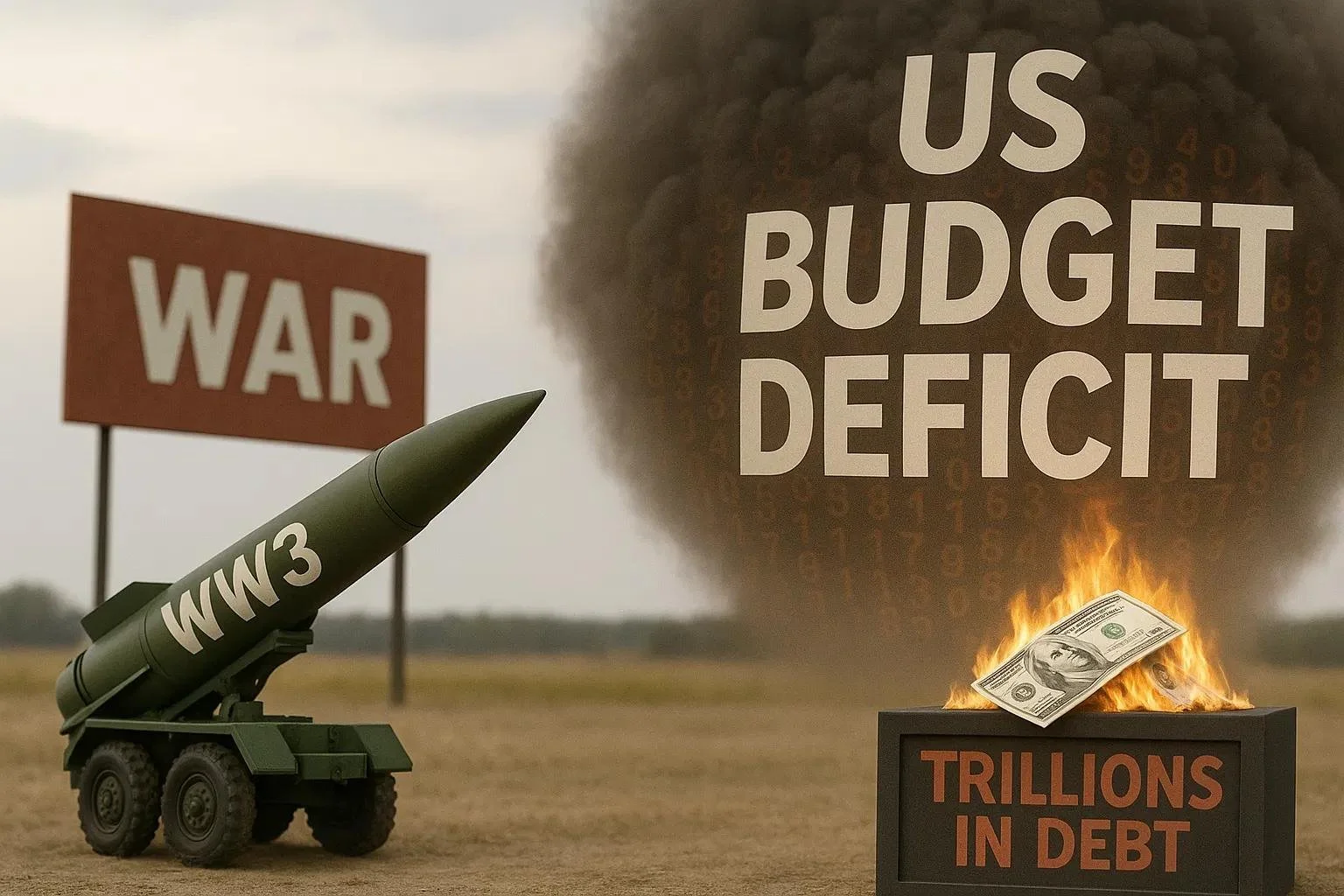
I’m Far More Concerned About The Deficit Than World War 3
I’m Far More Concerned About The Deficit Than World War 3
Notes From the Field By James Hickman (Simon Black) June 24, 2025
I can understand why so many people are worried about World War 3 breaking out. It’s a completely rational concern. I just don’t happen to share it.
Why? Because regardless of the debate over whether the US strikes against Iran’s nuclear facilities were a good idea, or a reckless risk of another expensive foreign entanglement, one thing is indisputable: America reminded the world of its immense military capabilities.
I’m Far More Concerned About The Deficit Than World War 3
Notes From the Field By James Hickman (Simon Black) June 24, 2025
I can understand why so many people are worried about World War 3 breaking out. It’s a completely rational concern. I just don’t happen to share it.
Why? Because regardless of the debate over whether the US strikes against Iran’s nuclear facilities were a good idea, or a reckless risk of another expensive foreign entanglement, one thing is indisputable: America reminded the world of its immense military capabilities.
There’s not a single adversary nation that wants to risk armed conflict with the US after watching those stealth bombers obliterate their targets.
And the proof is already here: Iran’s foreign minister flew to Moscow seeking military support from Russia... and Putin offered absolutely nothing except for strong words.
This is why I’m more convinced than ever that World War 3 is NOT going to break out over this conflict: no other country wants F-35s or B-2 stealth bombers in their airspace, let alone the 75th Ranger Regiment and ‘Delta Force’ special operators.
There’s now a great deal of debate over the wisdom of the air strikes, including within the President’s own party.
I’m extremely sympathetic to the view that America cannot afford yet another foreign occupation brought on by regime change in the Middle East; it should hardly be controversial to say that a country should avoid pointless and unwinnable conflicts.
At the same time, it should also be uncontroversial to see obvious benefit in ensuring that your sworn enemy does not have nuclear bombs.
As I wrote yesterday, a fairly conservative cost estimate of the air strikes, naval deployment, and assistance to Israeli air defense is around $1 billion. That’s not nothing.
But it’s also clear that the government spends a lot more than that on completely idiotic and pointless programs.
The Bureau of Labor Statistics spends more than $1 billion each year just to publish dubious economic reports that private companies (like ADP) already produce for free... and with greater accuracy. Would anyone rationally argue that the Bureau’s reports are more important than neutralizing a nuclear threat?
Unfortunately I’m not sure anyone in Washington is engaging in this kind of rational cost/benefit analysis... which is why the US has a $36 trillion national debt.
Private businesses and individuals have to make these rational decisions every day about how to allocate scarce resources— primarily time, money, and energy. The government, on the other hand, pretends that it has unlimited, infinite resources.
And this ‘unlimited resource’ mentality is FAR more concerning to me than the prospect of World War 3.
Without a change, the US could easily find itself in an existential financial crisis within the next eight years. I’m not being dramatic.
And in today’s podcast, we explain why and how that’s likely; we discuss:
Why the Social Security cliff is coming faster than expected—and how even its predicted 2033 insolvency is optimistic.
How this problem—and America’s debt addiction— could be solved, if any politician were willing to even address it.
How the US missed a golden opportunity to refinance its debts at much lower interest rates just four years ago.
How the US used to be capable of making wise investments— like the Louisiana Purchase or buying Alaska.
What the looming fiscal crisis means in practical terms for Americans (Spoiler: inflation).
Why foreign governments and central banks are shifting their reserves away from US dollars and towards strategic assets— not just gold, but platinum, industrial metals and even uranium.
And why the companies that produce these real assets are remarkably cheap.
CLICK HERE to listen to the podcast.
For the audio-only version, check out our online post here.
Finally, you can find the podcast transcript for your convenience, here.
To your freedom, James Hickman Co-Founder, Schiff Sovereign LLC
P.S. The clock is ticking—America likely has eight years at most before a financial crisis unleashes runaway inflation.
Foreign central banks know it. They’re dumping dollars and buying gold.
But they’re not buying small, overlooked gold companies—some producing for $1,000/oz and trading below their cash on hand.
That’s where the real opportunity lies: low downside, massive upside.
Our 4th Pillar research has already uncovered multiple winners—up 2–3x—and others could take off any day.
7 Unforeseen Financial Obligations You Take On When You Retire
7 Unforeseen Financial Obligations You Take On When You Retire
John Csiszar Mon, May 13, 2024
Once you retire, you want your financial life to be as uneventful as possible. If you’re like most retirees, you’ll be living on a combination of investment income and Social Security benefits, and that income will be relatively fixed and predictable.
This means that unexpected financial obligations can cause serious distress, as it might be hard to find a way to pay for them without going into debt. To avoid falling into this situation, it’s best to plan ahead and build a bigger emergency fund before you retire so that none of these expenses send you into a financial tailspin.
7 Unforeseen Financial Obligations You Take On When You Retire
John Csiszar Mon, May 13, 2024
Once you retire, you want your financial life to be as uneventful as possible. If you’re like most retirees, you’ll be living on a combination of investment income and Social Security benefits, and that income will be relatively fixed and predictable.
This means that unexpected financial obligations can cause serious distress, as it might be hard to find a way to pay for them without going into debt. To avoid falling into this situation, it’s best to plan ahead and build a bigger emergency fund before you retire so that none of these expenses send you into a financial tailspin.
General Healthcare Expenses
It’s a fact of life that at least statistically, healthcare expenses rise as you age. The problem in terms of budgeting for retirement is that there’s no way to know just how high those costs will go. For this reason, it’s best to head into retirement expecting these so-called “unexpected” healthcare costs and to budget on the high side if at all possible.
Elderly Parents
Even if you retire at 65, it’s entirely possible that your parents are still alive, and it’s also possible or even probable that they will need your assistance in some way. Oftentimes, this assistance comes in the form of financial aid. If you’re already struggling to live on your retirement budget, having to take care of your elderly parents might be enough to break the bank.
As you approach retirement, however, you’ll likely have a good idea of how much financial support you might have to provide for your elderly parents, and it’s important to incorporate this into your budget, if possible.
Long-Term Care
In addition to rising general healthcare expenses, many retirees will have to plan for long-term care. Research shows that up to 70% of adults 65 and older will need long-term care in their lifetimes, so it’s definitely an expense you should anticipate could arise after you retire. The national average median cost for long-term care ranges from $2,058 for adult day health care to $9,733 for a private room in a nursing home, according to Genworth.
Although it’s hard to budget for large expenses, knowing they are coming can help in the planning process. One of the avenues you might consider is getting long-term care insurance before you need it.
Adult Children
https://finance.yahoo.com/news/7-unforeseen-financial-obligations-retire-120029536.html
Evening News with MarkZ, joined by Dr. Scott Young. 06/26/2025
Evening News with MarkZ, joined by Dr. Scott Young. 06/26/2025
MarkZ Disclaimer: Please consider everything on this call as my opinion. Be sure to consult a professional for any financial decisions.
Dr. Scott talks about Nesara.
THE CONTENT IN THIS PODCAST IS FOR GENERAL & EDUCATIONAL PURPOSES ONLY&NOT INTENDED TO PROVIDE ANY PROFESSIONAL, FINANCIAL OR LEGAL ADVICE. PLEASE CONSIDER EVERYTHING DISCUSSED IN MARKZ’S OPINION ONLY
Evening News with MarkZ, joined by Dr. Scott Young. 06/26/2025
MarkZ Disclaimer: Please consider everything on this call as my opinion. Be sure to consult a professional for any financial decisions.
Dr. Scott talks about Nesara.
THE CONTENT IN THIS PODCAST IS FOR GENERAL & EDUCATIONAL PURPOSES ONLY&NOT INTENDED TO PROVIDE ANY PROFESSIONAL, FINANCIAL OR LEGAL ADVICE. PLEASE CONSIDER EVERYTHING DISCUSSED IN MARKZ’S OPINION ONLY
https://rumble.com/user/theoriginalmarkz
Kick: https://kick.com/theoriginalmarkz
FOLLOW MARKZ : TWITTER . https://twitter.com/originalmarkz?s=21. TRUTH SOCIAL . https://truthsocial.com/@theoriginalm...
Mod: MarkZ "Back To Basics" Pre-Recorded Call" for Newbies 10-19-2022 ) https://www.youtube.com/watch?v=37oILmAlptM
MARKZ DAILY LINKS: https://theoriginalmarkz.com/home/
THANK YOU ALL FOR JOINING. HAVE A BLESSED NIGHT! SEE YOU ALL IN THE MORNING FOR COFFEE @ 10:00 AM EST ~ UNLESS BREAKING NEWS HAPPENS!
FROM NOW ON NO MORE NIGHTLY PODCASTS ON MONDAYS AND FRIDAYS
Where are Metals Headed Amid Geopolitical Chaos: Andy Schectman
Where are Metals Headed Amid Geopolitical Chaos
Liberty and Finance: Andy Schectman: 6-25-2025
In a recent exclusive interview with Liberty and Finance, Andy Schectman provided a detailed breakdown of the escalating tensions between Iran, Israel, and the United States.
The ongoing conflict has significant implications for global stability and the precious metals markets. As the situation continues to unfold, it is essential to understand the potential consequences of these rising tensions.
Where are Metals Headed Amid Geopolitical Chaos
Liberty and Finance: Andy Schectman: 6-25-2025
In a recent exclusive interview with Liberty and Finance, Andy Schectman provided a detailed breakdown of the escalating tensions between Iran, Israel, and the United States.
The ongoing conflict has significant implications for global stability and the precious metals markets. As the situation continues to unfold, it is essential to understand the potential consequences of these rising tensions.
The Middle East has long been a hotbed of geopolitical activity, with various nations vying for power and influence. The current tensions between Iran, Israel, and the US are rooted in a complex web of historical, cultural, and economic interests.
Iran’s now-crippled nuclear program, Israel’s concerns about national security, and the US’s role as a global superpower have all contributed to the escalating conflict.
The rising tensions between these nations pose a significant threat to global stability. A potential conflict could have far-reaching consequences, including disruptions to global trade, increased terrorism, and a heightened risk of cyberattacks. The impact on the global economy could be severe, with potential losses in the trillions of dollars.
In times of geopolitical uncertainty, investors often turn to precious metals as a safe haven. Gold, silver, and other precious metals have historically performed well during periods of conflict and economic instability.
As the situation in the Middle East continues to deteriorate, investors may increasingly seek out these assets as a hedge against potential losses.
Andy Schectman’s interview with Liberty and Finance provides valuable insights into the current situation and its potential implications for the precious metals markets. With his expertise in the field, Schectman offers a nuanced understanding of the complex factors at play and the potential consequences of the rising tensions.
For a deeper understanding of the geopolitical chaos involving Iran, Israel, and the US, and its potential impact on global stability and precious metals markets, watch the full video interview with Andy Schectman on Liberty and Finance.
The interview provides a comprehensive analysis of the situation and offers valuable insights for investors and individuals concerned about the potential consequences of the escalating conflict.
In conclusion, the rising tensions between Iran, Israel, and the US have significant implications for global stability and the precious metals markets. As the situation continues to unfold, it is essential to stay informed and adapt to the changing landscape.
By watching the full interview with Andy Schectman and staying up-to-date on the latest developments, individuals can better navigate the complex and rapidly evolving geopolitical environment.
Iraq Economic News and Points To Ponder Thursday Afternoon 6-26-25
Expert: Economic Stability In Iraq...And Identifies A Prominent Reason
Time: 2025/06/26 Reading: 225 times {Economic: Al Furat News} Economic expert Abdul Rahman Al Mashhadani confirmed that Iraq is currently experiencing a degree of local economic stability, attributing this to continued government support for the fuel sector and energy provision.
Al-Mashhadani explained in a statement to Al-Furat News that: "The stability includes subsidized gasoline, diesel, and gas, in addition to providing free fuel to private generators to ensure the continuity of electricity for citizens."
Expert: Economic Stability In Iraq...And Identifies A Prominent Reason
Time: 2025/06/26 Reading: 225 times {Economic: Al Furat News} Economic expert Abdul Rahman Al Mashhadani confirmed that Iraq is currently experiencing a degree of local economic stability, attributing this to continued government support for the fuel sector and energy provision.
Al-Mashhadani explained in a statement to Al-Furat News that: "The stability includes subsidized gasoline, diesel, and gas, in addition to providing free fuel to private generators to ensure the continuity of electricity for citizens."
He pointed out that "the ampere prices set by the Baghdad Provincial Council for this month were identical to those set last month, indicating relative stability in this aspect of services."
However, Al-Mashhadani warned that "this stability could be negatively impacted if the war continues, especially given the potential for the security situation to deteriorate as a result of the conflict escalating in Iraqi airspace." He noted that "the calm of the government and citizens, along with the end of the war, played a significant role in maintaining economic stability across all sectors." LINK
Sudanese Advisor: The Ceasefire Agreement Provided Temporary Relief To Oil Markets.
Energy Economy News – Baghdad The Prime Minister's financial advisor, Mazhar Mohammed Saleh, confirmed on Thursday that the ceasefire agreement between Iran and the Zionist entity has returned oil markets to a downward trend.
Saleh told the official agency, followed by Al-Eqtisad News, that "following the announcement of a ceasefire agreement between Iran and the entity, which halted threats to close the vital Strait of Hormuz - threats issued within the context of escalation with the entity - oil markets returned to a downward path and headed towards peace indicators, after a sudden hedging wave that it witnessed at the height of tension."
He added, "The Strait of Hormuz is strategic, through which approximately 20% of the world's crude oil passes, in addition to a third of liquefied natural gas supplies destined for international markets under ongoing, long-term contracts.
" He noted that "the decision to cease the war has given energy markets a strong positive signal indicating the stability of supply routes, especially in the world's most important energy corridor."
“This was directly reflected in Brent crude prices, which are considered a benchmark for oil pricing, as they recorded an immediate drop of more than 5%, equivalent to $3 to $4 per barrel in a single session.
This is considered one of the largest daily declines in recent times, which means the end of the threat and the return of balance to the market,” he continued, stressing that “the end of the threats that were threatening the Strait of Hormuz and the return to the language of calm represented a temporary moment of relief for the markets.
However, in reality, this relief does not necessarily mean long-term stability, as the fragility of the truce and the possibility of renewed clashes if diplomatic efforts fail, maintain a high level of caution in future forecasts.”
He explained that "the market is now pricing oil and is once again being affected by traditional economic factors: from weak demand, to OPEC+ production policies, to competition between exporting countries from within and outside the organization.
" He pointed out that "public finances in Iraq must adhere to the constants of hedging and financial discipline included in Law No. 13 of 2023 (the three-year budget), which is spending according to the optimal minimum requirements and resorting to domestic borrowing when needed, as permitted by the law and in a way that does not disrupt basic operational and investment expenditures, even with the disappearance of the (strategic oil premium) generated by threats to the Strait of Hormuz." https://economy-news.net/content.php?id=56663
Parliamentary Warnings Of The Repercussions Of Dependence On Oil
Buratha News Agency1452025-06-26 The Parliamentary Finance Committee warned on Thursday, June 26, against continuing to rely on oil prices, as it is considered a risk to the Iraqi economy.
Committee member Mustafa Al-Karawi told Al-Sumaria TV that, “There was an increase in oil prices during the past crisis represented by the war between the Islamic Republic of Iran and the usurping Zionist entity, due to market turmoil and export problems. Consequently, this increase was reflected positively in the country’s financial aspect.” He added,
“However, in general, this is not considered a real increase, as there are circumstances that may affect the reduction of the oil price to below the normal price, and thus continuing to rely on oil prices is considered a risk to the Iraqi economy.”
He explained that "another parallel economy must be built to compensate and support the country in the event of any external problems, given that oil prices are controlled by others. In contrast, the internal economy and non-oil revenues can be in the hands of the Iraqi government.
" He indicated, "We hope for security and economic stability in the region so that there is no direct impact on the country or on neighboring Islamic countries." https://burathanews.com/arabic/economic/462060
Iraq's Oil Exports Exceed 500 Million Barrels In Five Months
Energy Economy News – Baghdad Iraq's oil exports in the first five months of 2025 exceeded 500 million barrels.
According to statistics announced by SOMO, "Iraq's total oil exports during the first five months of this year amounted to 507 million, 699 thousand, and 760 barrels, at a rate of 101 million, 539 thousand, and 932 barrels per month."
She added, "The total oil exported from the Basra and central fields from Basra ports amounted to 492 million, 543 thousand, and 872 barrels, while the total exported from the Qayyarah field from Kirkuk amounted to 4 million, 745 thousand, and 590 barrels."
Statistics also indicated that "oil exports from the modern Kirkuk depot to Jordan during this period amounted to 1,649,316 barrels." According to SOMO, "financial revenues from exports for the months of March, April, and May amounted to $20 billion, 816 million, 452 thousand, and 330 dollars." https://economy-news.net/content.php?id=56665
Dollar Exchange Rate Fluctuations Against The Dinar In Baghdad
Economy | 10:46 - 06/26/2025 Mawazine News - Baghdad - The US dollar exchange rate witnessed a decline in local markets on Thursday morning.
It decreased slightly on the Al-Kifah and Al-Harithiya stock exchanges, recording 141,400 Iraqi dinars for every $100, while yesterday morning, Wednesday, it recorded 141,500 dinars for every $100.
Selling prices in exchange shops in local markets in Baghdad also stabilized, with the selling price reaching 142,500 Iraqi dinars for every $100, and the purchase price reaching 140,500 dinars for every $100. https://www.mawazin.net/Details.aspx?jimare=263102
The Minister Of Interior Affirms Iraq's Keenness To Consolidate Cooperation With NATO In The Areas Of Training And Capacity Building.
A wish | 06/26/2025 Mawazine News - Baghdad - Interior Minister Abdul Amir Al-Shammari affirmed, on Thursday, his keenness to enhance coordination with NATO, especially in the field of training and capacity building.
The ministry said in a statement received by Mawazine News: "Interior Minister Abdul Amir Al-Shammari met with the Commander of the NATO Mission in Iraq, Major General Christophe Hintery, and his accompanying delegation."
The statement added, "At the beginning of the meeting, the Minister welcomed his guests and discussed with them a number of topics of common interest, most notably the Iraqi Ministry of Interior's readiness to cooperate with the mission in all training fields. Regional developments were also discussed during this meeting."
According to the statement, the Minister stressed his keenness to "strengthen bilateral relations and enhance coordination, especially in the field of training and capacity building."
For his part, the NATO Commander praised "the remarkable security stability in all Iraqi governorates, appreciating the efforts of the Iraqi Ministry of Interior in supporting security work and its cooperation in the field of training, especially as it is an advanced ministry in security issues."
The statement added, "The meeting discussed cooperation in the fields of cybersecurity, international border control, combating drugs, and training operations for the Federal Police Forces Command." https://www.mawazin.net/Details.aspx?jimare=263115
For current and reliable Iraqi news please visit: https://www.bondladyscorner.com/
Seeds of Wisdom RV and Economic Updates Thursday Afternoon 6-26-25
Good Afternoon Dinar Recaps,
BRICS Inspires 15 African Nations to Adopt Homegrown Payment System
By Watcher.Guru | June 2025
Africa is now taking a decisive step toward de-dollarization, inspired by the BRICS bloc. A group of 15 African countries has turned to the Pan-African Payments and Settlements System (PAPSS)—a homegrown payment network that allows trade settlements in local currencies, bypassing the US dollar entirely.
Good Afternoon Dinar Recaps,
BRICS Inspires 15 African Nations to Adopt Homegrown Payment System
By Watcher.Guru | June 2025
Africa is now taking a decisive step toward de-dollarization, inspired by the BRICS bloc. A group of 15 African countries has turned to the Pan-African Payments and Settlements System (PAPSS)—a homegrown payment network that allows trade settlements in local currencies, bypassing the US dollar entirely.
Key Highlights:
▪️ 15 African nations, including Kenya, Malawi, Tunisia, and Zambia, are using PAPSS to settle trade.
▪️ 150+ commercial banks are now connected to PAPSS.
▪️ The system can cut foreign exchange costs from 10–30% down to just 1%.
▪️ PAPSS leverages regional currencies like the Nigerian naira, Ghanaian cedi, and South African rand.
▪️ Estimated $5 billion in savings in FX costs if scaled across Africa.
PAPSS: Africa’s Answer to the US Dollar
PAPSS—created to enable real-time gross settlement of cross-border transactions—is becoming the financial backbone of intra-African trade. It reduces reliance on USD, which traditionally dominated African trade deals due to lack of direct currency convertibility.
With BRICS as its model, PAPSS aims to shift African economies toward currency sovereignty. It eliminates the need for costly third-party currencies and reinvests saved foreign exchange into local development.
“A trade worth $200 million in USD could cost up to 30% in FX fees. PAPSS drops that to just 1%.”
A Growing Threat to USD Dominance
The Pan-African system mirrors the BRICS vision: creating a multipolar financial world with decentralized currency power. In fact, BRICS itself is exploring a similar platform, aligning closely with PAPSS to reduce reliance on Western-led financial systems.
As more countries across Africa adopt PAPSS, the pressure on the U.S. dollar’s international dominance will only increase. Combined with BRICS initiatives, the global financial structure is pivoting toward regional cooperation and currency independence.
The Big Picture:
Africa’s use of PAPSS is a quiet revolution that could become one of the most significant economic stories of the decade. By bypassing the dollar, reducing transaction costs, and increasing autonomy, Africa is joining a global movement toward local currency empowerment—one spearheaded by BRICS and now embraced continent-wide.
The future of trade may not revolve around the dollar, but around locally-led, digitally connected networks like PAPSS.
@ Newshounds News™
Source: Watcher Guru
~~~~~~~~~
Seeds of Wisdom Team RV Currency Facts Youtube and Rumble
Newshound's News Telegram Room Link
Follow the Roadmap
Follow the Timeline
Seeds of Wisdom Team™ Website
Thank you Dinar Recaps
Why Nations Are Moving Gold Out of the U.S. and Back Home
Why Nations Are Moving Gold Out of the U.S. and Back Home | Peter Boehringer
Kitco News: 6-26-2025
Central banks around the world are accelerating a quiet but powerful shift — pulling their gold reserves out of U.S. and foreign custody.
Germany led this move over a decade ago, repatriating 674 tonnes of gold from the Federal Reserve and Banque de France. Now others are following. Why?
In this exclusive Kitco News interview, Jeremy Szafron speaks with Peter Boehringer, Member of the German Bundestag and former Chair of the Budget Committee, who spearheaded Germany’s gold repatriation.
Why Nations Are Moving Gold Out of the U.S. and Back Home | Peter Boehringer
Kitco News: 6-26-2025
Central banks around the world are accelerating a quiet but powerful shift — pulling their gold reserves out of U.S. and foreign custody.
Germany led this move over a decade ago, repatriating 674 tonnes of gold from the Federal Reserve and Banque de France. Now others are following. Why?
In this exclusive Kitco News interview, Jeremy Szafron speaks with Peter Boehringer, Member of the German Bundestag and former Chair of the Budget Committee, who spearheaded Germany’s gold repatriation.
Boehringer breaks down why trust, control, and monetary sovereignty are pushing countries to rethink their reserve strategies — and why this trend is only gaining speed in 2025.
Key topics:
-Germany’s gold repatriation: why it began and how it unfolded
-The risks of outsourcing custody to the U.S. and U.K.
-OMFIF 2025 survey: 70% of central banks cite U.S. instability as a concern
-Why more central banks are buying gold and reducing dollar exposure
-Is a sovereign gold movement underway?
-Could gold become a new anchor of credibility in a fragmenting world?
-The future of the euro, digital currencies, and Bitcoin in national reserves
00:00 Introduction
01:57 Germany's Gold Repatriation
04:05 Concerns About Foreign Gold Custody
07:21 Audit and Transparency Issues
13:32 Global Gold Movement
18:25 Euro and Global Reserve Dynamics
21:12 Germany's Fiscal Policy and Gold Reserves
23:50 Germany's Missed Gold Opportunity
24:54 Bitcoin vs. Gold: A Libertarian Perspective
25:18 The Future of Sovereign Crypto Reserves
25:48 Gold's Historical Value and Bitcoin's Uncertainty
27:25 Challenges of Using Gold to Offset National Debt
30:43 The Independence of Central Banks
32:14 The Case for a European Gold Depository
36:44 Central Bank Digital Currencies: A Dystopian Future?
42:06 Public Influence on Gold Repatriation
43:25 Gold Market Dynamics and Central Bank Strategies
44:43 Conclusion