
Iraq News Highlights and Points To Ponder Wednesday AM 7-17-24
An Expert Reveals The Reasons For The Return Of The Dollar’s Price Rise.. What Is The Relationship With The “Chinese Yuan”?
Economy |An expert reveals the reasons for the return of the dollar’s price rise.. What is the relationship -31-3-2023 Baghdad Today - Baghdad
Today, Wednesday (July 17, 2024), the economic and financial affairs specialist, Nawar Al-Saadi, revealed the reasons for the return of the rise in the dollar exchange rate in local markets.
Al-Saadi said in an interview with Baghdad Today, "The rise in the price of the dollar in Iraq is due to a group of complex and intertwined factors, the first of which is the decision of the Central Bank of Iraq to stop dealing in the Chinese yuan after the US Federal Reserve accused Iraq of inflating remittances, which directly affected the local market."
An Expert Reveals The Reasons For The Return Of The Dollar’s Price Rise.. What Is The Relationship With The “Chinese Yuan”?
Economy |An expert reveals the reasons for the return of the dollar’s price rise.. What is the relationship -31-3-2023 Baghdad Today - Baghdad
Today, Wednesday (July 17, 2024), the economic and financial affairs specialist, Nawar Al-Saadi, revealed the reasons for the return of the rise in the dollar exchange rate in local markets.
Al-Saadi said in an interview with Baghdad Today, "The rise in the price of the dollar in Iraq is due to a group of complex and intertwined factors, the first of which is the decision of the Central Bank of Iraq to stop dealing in the Chinese yuan after the US Federal Reserve accused Iraq of inflating remittances, which directly affected the local market."
He explained that "this decision prompted traders and companies that were relying on the Chinese yuan in their commercial transactions with China to resort to the US dollar as an alternative, which increased the demand for the dollar and raised its price. In addition, the US sanctions imposed on some Iraqi banks reduced the flow of dollars to the market, which reduced the supply and increased the demand for it."
The economic and financial expert added, "The rise in the price of the dollar naturally leads to an increase in inflation rates in the country, which negatively affects the purchasing power of Iraqi families and increases the complexity of the economic situation."
The past two weeks have witnessed a significant increase in the exchange rate of the US dollar against the Iraqi dinar, with the 100 US dollar denomination reaching more than 150,000 dinars.
On Monday (July 4, 2024), the Central Bank of Iraq issued new instructions regarding granting US dollars to travelers, indicating that these instructions will come into effect starting from July 14.
According to the statement issued by the bank, it was directed to Rafidain, Rashid, and Iraqi Trade Banks, exchange companies currently operating at airports, and exchange companies of category A and B , that "in order to ensure that travelers receive cash dollars and to prevent exchange companies from passing improper transactions, it was decided to set 7/14/2024 as the final date for starting the mechanism of granting dollars to travelers at airports exclusively."
According to the Central Bank, the aforementioned banks and exchange companies operating at the airport are entitled to a fixed commission of (15,000) dinars from the customer for each transaction, and the exchange companies outside the airport collect it for the benefit of the companies and banks operating at the airport, according to a mechanism determined between the two parties, the banks and companies operating at the airport and the exchange companies outside the airport. LINK
Al-Sudani Stresses The Need For Real Reforms In The Economy And The Correct Direction Of Resources
Posted On 2024-07-17 By Sotaliraq 2024/07/17 Hussein Al-Saadi: Prime Minister Mohammed Shia Al-Sudani stressed the need for real reforms in the economy and the correct direction of resources, while stressing the need for private sector companies to adhere to the retirement and social security law for workers. The
Prime Minister's media office stated in a statement: Prime Minister Mohammed Shia Al-Sudani chaired a meeting of the Ministerial Council for the Economy, during which the most important decisions related to economic affairs were discussed, and work within the framework of the basic determinants of financial and administrative reform included in the government program.
He added that the meeting hosted a group of businessmen specializing in the oil industries, as His Excellency affirmed the government's support for the active private sector, and its belief in its ability to support the Iraqi economy by providing job opportunities, and establishing a national industry that meets the needs of the local market, indicating that there are practical steps to achieve this support, as it is the only option for the government to cover the needs of citizens, and achieve the requirements of reconstruction and services, in implementation of the government program.
Al-Sudani stressed the need for private sector companies to adhere to the retirement and social security law for workers; In order to expand their care in this sector, and increase the number of insured persons, stressing the importance of carrying out real reforms, and directing resources in the right direction, so that reliance on oil revenues does not continue as the sole source of income, and meeting the requirements of the operational and investment budget.
The statement continued that the Council discussed the work of the Diwani Order Committee (24573 in 2024) on studying the economics of oil and gas in the country, leading to the adoption of showing the real costs along the value chain, according to economic foundations.
He continued that “it was decided, during the meeting, to find a mechanism for marketing petroleum products expected to increase in the coming years, and to audit the quantities of petroleum derivatives supplied to factories and plants by the Financial Supervision Bureau, as well as to know the size of the current support for factories, and the amount of benefit achieved from it, in addition to evaluating factories according to production capacity and actual production and the extent of compliance with controls.
He continued by saying: It was also decided that the government support provided to companies would be based on the products, the number of insured workers, and the factory’s ability to export according to a specific mechanism. A committee was formed that includes the Ministries of Oil and Industry, the Investment Authority, and National Security to follow up on the work of the factories and verify the information. It was also decided, during the meeting, to grant brick factories a period of one and a half years to convert their accreditation from black oil to liquefied gas. LINK
International Oil Companies Involved In Oil Smuggling Network In Kurdistan Region
Money and business Economy News - Follow-up More than a year has passed since the Kurdistan Region was banned from exporting its oil through oil pipelines, but crude oil is still flowing from the region on tanker trucks towards the border with Iran.
She told Reuters, in a report translated by "Al-Eqtisad News", that "there are more than 1,000 tanker trucks transporting at least 200,000 barrels per day of Kurdish oil to both Iran and Turkey."
Although the price of crude oil smuggled from the semi-autonomous northern region is reportedly around $40 a barrel in these shady deals, the trade is lucrative, especially when compared to the difficulties the Kurdistan Regional Government has experienced after being deprived of oil revenues over the past year.
Reuters estimates that oil smuggling generates revenues for the region of about $200 million per month.
These estimates came after the World News Agency correspondents contacted more than 20 people, including oil engineers, oil industry sources, traders, government officials, politicians and diplomats.
Some of them said that the oil smuggling was likely taking place with the knowledge of the provincial and federal governments. When the oil reaches Iran, it is loaded onto ships at Iranian ports in the Gulf, such as Port Imam Khomeini and Bandar Abbas, or transported by land to Afghanistan and Pakistan.
The ban on oil exports to Turkey, which amounted to about 450,000 barrels per day, from the territory of the Kurdistan Region of Iraq via the pipeline, came in March 2023 due to disagreements over who should issue permission to export Kurdish oil.
The ruling, issued by the International Chamber of Commerce in March 2023 after a dispute between Turkey and Iraq over Kurdistan’s oil, deepened the region’s wounds. It ruled in Iraq’s favor, and prevented Turkey from allowing Kurdish oil to be exported through the Iraq-Turkey pipeline and the Turkish port of Ceyhan without the approval of the Iraqi federal government.
After this decision, the Iraqi Oil Marketing Company SOMO became the sole owner of the right to sell crude oil produced anywhere in Iraq.
Reopening the pipeline to Ceyhan on Turkey's Mediterranean coast does not appear to be a priority for politicians in Baghdad.
Norway’s DNO, a six-member oil company in the Kurdistan Petroleum Industry Association (APIKUR), said in November 2023 that international companies operating oil fields in Kurdistan would not produce oil for export until payments and future terms of sales and purchases were clarified.
While some companies have started to resume oil production for the local market, oil industry sources told Reuters that local buyers, who are allowed to buy crude, are selling the oil through middlemen who then export it without the knowledge of international companies about the resale.
Estimates from various Reuters sources range from 200,000 barrels per day (bpd) to more than 300,000 bpd. The smuggled oil is being added to Iraq’s oil supply. Iraqi officials have privately suggested that the trade is one of the reasons why Iraq, OPEC’s second-largest producer, has so far failed to cap its output under the OPEC+ deal.
The Iraqi government has not committed to the current cuts, despite its continued pledge that it will show better commitment in the future.
Compensation plans have been put in place for both Iraq and Kazakhstan, which also failed to meet their quotas. In the period from January to March 2024, Iraq produced 602,000 barrels per day above its quota, according to OPEC estimates.
Iraq has been capped at 4 million barrels per day (bpd). But Iraq pumped 4.189 million bpd in June, down 25,000 bpd from May, OPEC secondary sources said in their latest monthly report this week. That’s still about 200,000 bpd above the OPEC+ target.
133 views 2024/07/17 - https://economy-news.net/content.php?id=45313
FRANK26….7-16-24……3…2….1….LIFT OFF !!!
KTFA
Tuesday Night conference Call
FRANK26….7-16-24……3…2….1….LIFT OFF !!!
This video is in Frank’s and his team’s opinion only
Frank’s team is Walkingstick, Eddie in Iraq and guests
Playback Number: 605-313-5163 PIN: 156996#
KTFA
Tuesday Night conference Call
FRANK26….7-16-24……3…2….1….LIFT OFF !!!
This video is in Frank’s and his team’s opinion only
Frank’s team is Walkingstick, Eddie in Iraq and guests
Playback Number: 605-313-5163 PIN: 156996#
Iraq Economic News and Points To Ponder Tuesday Evening 7-16-24
To Rein In The Dollar...The Central Bank “Confuses” Dinar Accounts
July 16, 2024 Baghdad/Iraq Observer The exchange rates of the dollar against the dinar rose today, Tuesday, on the main stock exchange in the capital, Baghdad.
Dollar prices on the Kifah and Harithiya stock exchanges recorded 149,000 dinars for every 100 dollars.
Prices in exchange shops in Baghdad markets also witnessed an increase, as the selling price reached 150,250 dinars, while the purchasing price reached 148,250 dinars for every 100 dollars.
In turn, the Central Bank of Iraq announced a new mechanism for travelers to receive foreign currency “dollars,” which will be exclusively through corporate and bank outlets at international airports, stressing that the goal of the new mechanism that will come into effect on July 14 is for the dollar to reach the real traveler.
To Rein In The Dollar...The Central Bank “Confuses” Dinar Accounts
July 16, 2024 Baghdad/Iraq Observer The exchange rates of the dollar against the dinar rose today, Tuesday, on the main stock exchange in the capital, Baghdad.
Dollar prices on the Kifah and Harithiya stock exchanges recorded 149,000 dinars for every 100 dollars.
Prices in exchange shops in Baghdad markets also witnessed an increase, as the selling price reached 150,250 dinars, while the purchasing price reached 148,250 dinars for every 100 dollars.
In turn, the Central Bank of Iraq announced a new mechanism for travelers to receive foreign currency “dollars,” which will be exclusively through corporate and bank outlets at international airports, stressing that the goal of the new mechanism that will come into effect on July 14 is for the dollar to reach the real traveler.
The bank stated: “It facilitates proper transactions, as well as facilitating travelers’ access to the dollar faster.”
More Than One Share
It is noteworthy that the Central Bank allowed exchange companies to receive more than one share during the week in order to fully respond to travelers’ requests.
In turn, economists commented on the Central Bank’s decision by saying:
“The Central Bank’s announcement of stopping remittances using the Chinese currency and using the dollar, in addition to the continuing demand to deal with Iran in the dollar, and
this matter will lead to great momentum on the dollar.”
While they warned against linking the dollar to Baghdad International Airport, because it will exacerbate the rise of the dollar, and we will witness confusion in the local markets that are suffering from stagnation at the present time.
They pointed out that the rise in the dollar exchange rates remains dependent on the behavior of the Central Bank and the extent of its responses to it, and the
recent rise of the dollar came after the decision of the Central Bank of Iraq to transfer the operations of travelers obtaining the dollar exclusively through Baghdad Airport. According to a report,
“Airports are not prepared to receive this large number of companies;
There are many companies that sell the dollar, and if they are limited to only 6 offices,
it will be useless and the citizen will not be able to obtain the dollar, and previous experiences confirm this.
Where Is The Central Bank Spokesman?
Observers were surprised by the lack of an official spokesman despite his presence in all state ministries.
This is one of the problems with the Central Bank, which announced the procedures and results of the visits conducted by the governor to Washington.
All statements are confusing and confused due to the lack of accuracy and correct official information.”
In this context, the Prime Minister’s Advisor for Financial Affairs, Mazhar Muhammad Saleh, confirms:
“The exchange rate in the parallel market does not affect the stability of the general level of prices. While he pointed out that the
parallel exchange market has begun to affect a narrow economic scope, he pointed out that the
stability of the dinar’s exchange rate against... The dollar is real and solid.”
Two Factors, Internal And External
Saleh said in a statement followed by the Iraq Observer Agency:
“There is an international factor that imposes controls on what is called banking compliance in financing the demand for dollars from our country’s international bank accounts in foreign currency, and
there is also an internal factor that benefits from the actions and pressure of the external factor in order to obtain profitable gains.” “Determined or emergency, especially in cash dollar transactions.”
He points out that:
“The dominance of the fixed exchange rate system in Iraq, which is based on a base of international reserves, is the highest in the history of Iraq and its monetary policy, as
the foreign currency covers a percentage of more than 100 percent of the total currency currently exported.”
He continued: “Through the strength of the official central exchange market, the exchange rate of the dollar to the dinar in the parallel market in our country does not constitute any relative importance in affecting the stability of the general level of prices,
which have become stable in their components and trends as a result of the influence of the official exchange rate factor that prevails and currently dominates the exchange rate.” Financing “import” foreign trade, amounting to 1,320 dinars per dollar, is responsible for financing 90 percent of Iraq’s foreign trade. He stated,
“The stability of the official exchange rate leads to stability in the stable external value of the dinar, which is embodied in the state of stability in the relative prices of goods and services, as annual inflation in our country does not exceed only 3 percent, and
this is what was indicated in the reports of multilateral international financial and economic organizations.”
The Strength Of Foreign Reserves
Saleh added, “In light of the strength of the foreign reserves supporting the Iraqi dinar, whose value as liquid foreign assets exceeds $100 billion, the official exchange market, as a general trend, will remain dominant in containing any noise with ambiguous information that is affected by the parallel exchange market in short periods, due to political events.” “International or regional emergency.” He stressed,
“After the decline of the phenomenon of dollarization in internal transactions, especially in contracts, obligations and payments within the country since last year and its legal ban, the parallel exchange market has begun to have its general effects only on a narrow economic scope of prohibited transactions, practiced by informal markets and at a rate of 10 percent of Total supply and demand transactions for the currency.”
He pointed out, “The stability of the exchange rate of the dinar to the dollar that the country is witnessing, even in the secondary markets, is a real and well-established stability. Rather,
it is derived from the strength of the influence of the price and quantitative factors of the monetary and financial policies and their integration in imposing overall price stability in the country, and containing the inflationary expectations that it was causing.” Parallel exchange market forces over the past years.” https://observeriraq.net/لكبح-جماح-الدولار-البنك-المركزي-يربك/
Has The Battle To Eliminate The Corrupt In Institutions Begun?
July 14, 2024 Baghdad/Iraq Observer The theft of the century case, which was revealed in mid-October, raises intense anger in oil-rich Iraq, where corruption is rampant.
Although corruption is widespread in all state institutions in Iraq, the trials taking place in these cases have begun to become active, and if they occur, they target officials, whether junior or senior.
Stealing The Century
The day before yesterday, an informed source revealed the completion of the results of the investigations into what he described as “the
theft of the century,” as it was discovered that
billions of dinars were stolen by some employees in the local administration in Diyala Governorate, while he explained that
the results are currently ready, but they cannot be revealed to the public opinion. Public only after obtaining approval from higher authorities in Baghdad. He stated that
there are three main reasons behind the delay in announcing the final results, including the
complications associated with embezzlement and theft operations, and the
efforts made to recover the stolen funds and track down those involved, pointing out that the
general security conditions in Diyala also contributed to the delay in the official announcement.
The source added that the results clearly show the circumstances of the “theft of the century,” and the
identity of those involved in it has been identified, with
details currently being kept secret until the appropriate conditions for public disclosure are in place.
The acting governor of Diyala, Karim Ali Agha, announced in a press conference last April that the stolen amounts amounted to 7 billion and 394 million dinars, noting that the
embezzlement operations began in 2019, and
a number of those involved were arrested after identifying them and issuing arrest warrants against them.
It should be noted that investigations are still ongoing, and
it is expected that the official announcement of the results will be made after the formation of the local government in Diyala or at a specific later date.
Anti-Corruption
Yesterday, Prime Minister Muhammad Shiaa Al-Sudani made a visit to the headquarters of the Federal Integrity Commission.
While chairing a meeting, Al-Sudani
pointed out that the Integrity Commission represents an essential tool in implementing the government program and the priority of combating corruption,
praising the distinguished efforts of the Commission’s workers,
which have established hope among the general public that there is a real will to combat financial and administrative corruption.
Al-Sudani touched on the issue of the theft of tax deposits, which represents a black point in the state’s history due to the nature and size of the money stolen and under official cover, in collusion with state employees, and
half of this money was smuggled out of the country, stressing “continuing efforts to recover it.”
He stated, “The work of the Commission is clearly different from the previous stage,
stressing the necessity of continuing the same professional path in work, especially since public opinion was concerned about selectivity in combating corruption and the political nature of opening files, as happened in the Diwani Order Committee 29, which is what happened.”
It no longer exists, as work today is being carried out in accordance with the law and in cooperation with the executive and judicial authorities.”
Fault Handling
Al-Sudani stressed “the necessity of quickly addressing any defect that appears among integrity employees, and refusing any employee to exploit his position, especially if he is charged with oversight and protecting integrity,” stressing that
he “communicates daily with the Integrity Commission and its head for follow-up and directives.”
The Prime Minister directed all officers and commanders to “submit a statement of their financial liabilities.
He also directed all departments to continue setting and updating standards for the use of bribery by surveying the opinions of citizens, and providing a periodic position on the ministries’ procedures on the subject of integrity, and the speed of responding to the subject of information received.”
REDUCED BRIBERY
The Ministry of Interior said on Sunday that our forces carried out an important operation that resulted in the killing of terrorists in Diyala Governorate, while noting that
the intelligence agency arrested 34,000 people during the first half of this year.
According to the Ministry of Interior: 7,705 people accused of drug trafficking were arrested, while
it confirmed a decrease in premeditated murder crimes by 13% compared to last year.
It indicated a decrease in bribery by 10% and fraud by 8%. https://observeriraq.net/هل-بدأت-معركة-زوال-الفاسدين-من-المؤسسا/
Iraq Resumes Negotiations To Join WTO
Amr Salem July 16, 2024 Baghdad (IraqiNews.com) – The Iraqi Minister of Trade, Atheer Al-Ghurairi, declared on Monday that discussions to join the World Trade Organization (WTO) had resumed after more than a 16-year break.
A statement issued by the Trade Ministry revealed that Iraqi negotiating teams began their preparatory meetings at the WTO’s headquarters in Geneva, Switzerland, in preparation for the third meeting that will discuss Iraq’s accession, the Iraqi News Agency (INA) reported.
During his participation in the 13th Ministerial Conference of the WTO held last February in the UAE capital, Abu Dhabi, Al-Ghurairi affirmed that
Iraq fulfilled the conditions necessary to become a member of the WTO following the completion of economic reforms and the enhancement of the investment climate.
The Iraqi Trade Minister indicated that Baghdad finalized issues related to goods and services in accordance with the deadlines set for integration into the international trade system.
The Iraqi government expressed interest in joining the WTO after submitting a request to do so in 2004.
Iraq needed to be a member of the multilateral international trade system in order to regain its place as a major player in the global economy.
In addition to debating the future of the global trade movement in light of current challenges, Al-Ghurairi said that the conference sends a strong message to the countries of the world about the value of joining this organization.
The Iraqi official added that Iraq is attempting to expand its commercial and economic connections around the world in order to create new opportunities for collaboration.
https://www.iraqinews.com/iraq/iraq-resumes-negotiations-to-join-wto/
To read more current and reliable Iraqi news please visit : https://www.bondladyscorner.com/
“Inflationary Forces”? Duh
“Inflationary Forces”? Duh
Notes From the Field By James Hickman / Simon Black 7-16-24
Jamie Dimon is the CEO of JP Morgan Chase, one of the world’s largest banks. And last week he issued a stern warning on the bank’s quarterly earnings call that “multiple inflationary forces” are still lurking.
File that one away under “duh”. It should be completely obvious to just about anyone paying attention to the world that many of the key drivers that rocketed inflation higher are still with us.
The Federal Reserve, of course, desperately wants to pretend that inflation is in the rear-view mirror, never to return. And they keep insisting that the downward trend of inflation justifies their interest rate cuts.
But as Mr. Dimon points out, “large fiscal deficits, infrastructure needs, restructuring of trade and remilitarization of the world” all create high risk of substantial inflation.
We agree with him.
“Inflationary Forces”? Duh
Notes From the Field By James Hickman / Simon Black 7-16-24
Jamie Dimon is the CEO of JP Morgan Chase, one of the world’s largest banks. And last week he issued a stern warning on the bank’s quarterly earnings call that “multiple inflationary forces” are still lurking.
File that one away under “duh”. It should be completely obvious to just about anyone paying attention to the world that many of the key drivers that rocketed inflation higher are still with us.
The Federal Reserve, of course, desperately wants to pretend that inflation is in the rear-view mirror, never to return. And they keep insisting that the downward trend of inflation justifies their interest rate cuts.
But as Mr. Dimon points out, “large fiscal deficits, infrastructure needs, restructuring of trade and remilitarization of the world” all create high risk of substantial inflation.
We agree with him.

“Remilitarization of the world”, i.e. conflict, is very expensive. The very nature of war means consuming vast quantities of resources to produce munitions that will destroy your adversaries’ resources.
Most governments don’t have the money to do this. The last time the United States was able to fund a war without going into debt was the Spanish-American War in 1898. Every other war, or even preparation for war, required significant additional debt... which ultimately resulted in printing more money.
So, in the end, warfare means more money in the system, but fewer resources. This is the very definition of inflation.
Dimon mentions trade disputes as well, which are also very expensive.
Free trade creates wealth. It allows countries and producers to specialize in what they do best, and trade for what other countries do best.
Germany is great at high tech manufacturing, pharmaceuticals, and various other industries. But they can’t produce bananas to save their life.
Fortunately, Guatemala exists. Guatemala has no high-tech industry. But they’re great at bananas. It’s a sensible trade.
When nations are in dispute with one another, trade breaks down and they start having to produce goods and services where they have no expertise.
Sometimes it works out; in one of their endless wars with France, Britain boycotted French wine... and in the process, accidentally invented port. But usually, such inefficiencies create a lot of inflation.
Dimon also mentions infrastructure needs. And that’s a massive understatement.
The US highway system is deteriorating. Amtrak is blowing money without any serious improvements. California is tens of billions of dollars over budget, and several years late, for a high-speed rail it promised from San Francisco to Los Angeles.
It doesn’t help that they put $1 trillion in the hands of an incompetent diversity hire like Transportation Secretary Pete Buttigieg.
All of this money will need to be conjured out of thin air by the central bank, which, again, is inflationary.
Lastly, Dimon also references “large fiscal deficits”, which is putting it politely.
We’ve said it many times— the government’s own internal projections expect an extra $22 TRILLION in deficit spending (i.e. new debt) on top of the $35 trillion national debt, over the next decade. Most of that will come within the next five years.
Deficits are inflationary, as we have seen over the past few years.
To be fair, there are some potential deflationary forces as well.
Increases in productivity are very deflationary. Technology, driven by artificial intelligence, could be monumental in improving productivity and keeping prices down.
Yet there are also a lot of people in government (and even within the AI industry), trying to slow down development and hold back AI.
Capitalism— which encourages competition to offer the best quality goods and services at the lowest prices— is also deflationary.
Unfortunately, many people in power despise capitalism and rail against it as racist, misogynist, or bad for the planet.
To Read More: https://www.schiffsovereign.com/trends/inflationary-forces-duh-151157/
More News, Rumors and Opinions Tuesday PM 7-16-2024
TNT:
Tishwash: Minister of Trade arrives in Geneva to head the negotiating team for Iraq's accession to the World Trade Organization
On Tuesday, Minister of Trade Athir Dawood Salman headed the negotiating team for Iraq’s accession to the World Trade Organization in Geneva, while indicating that Iraq would proceed with its accession to the global organization.
The Ministry of Trade said in a statement, seen by "Economy News", that "Minister of Trade Athir Dawood Salman arrived in Geneva today, Tuesday, at the head of the Iraqi negotiating team for Iraq's accession to the World Trade Organization to attend the third meeting of the working group for Iraq's accession, 16 years after the second meeting was held."
TNT:
Tishwash: Minister of Trade arrives in Geneva to head the negotiating team for Iraq's accession to the World Trade Organization
On Tuesday, Minister of Trade Athir Dawood Salman headed the negotiating team for Iraq’s accession to the World Trade Organization in Geneva, while indicating that Iraq would proceed with its accession to the global organization.
The Ministry of Trade said in a statement, seen by "Economy News", that "Minister of Trade Athir Dawood Salman arrived in Geneva today, Tuesday, at the head of the Iraqi negotiating team for Iraq's accession to the World Trade Organization to attend the third meeting of the working group for Iraq's accession, 16 years after the second meeting was held."
It added that "Iraq is proceeding, through the national committee concerned with its accession to the World Organization, which is headed by the Minister of Trade, to complete its procedures to complete the required files and support reforms and legislation to be in line with the market system and enhance the country's economic capabilities to complete the requirements of the next stage of the accession process
Explaining that "the preparatory meetings of the Iraqi negotiating team are continuing at the headquarters of the World Trade Organization in Geneva, in preparation for the third meeting of the working group for Iraq's accession, which will be held this week link
Courtesy of Dinar Guru: https://www.dinarguru.com/
Frank26 [Iraq boots-on-the-ground report] FIREFLY:
My bank guy just flat out came out and told me, to be honest with you I think it will reinstate to what it was before and then it's going to float like any other international currency...It's more from the rumor mill. FRANK: I know it's going to reinstate. You know it. The money exchangers know it, that's why they went ape %$^%. That's why they're happy! ...This is the 3rd time your bank friend tells you $3.22 and it will float...That is the most logical thing for the CBI to do.
Militia Man They pushed out the HOR meeting till after this next holiday which is on the 17th...The WTO meeting they say is on the 18th unless their calendar changes. I highly suspect that won't be the case. They set the stage for the presidency to be done on the 20th. Those are the things we're looking at today...I hope you guys understand what we're seeing is powerful and I'm pretty excited and I think everybody else should be. It's really looking good...
************
KTFA:
Clare: Iraq Resumes WTO Accession Talks After 16-Year Hiatus
16th July 2024 By John Lee.
Iraqi Trade Minister Athir Dawood Al-Ghurairi announced the resumption of preliminary meetings for Iraq's accession to the World Trade Organization (WTO) after a 16-year pause.
The Iraqi negotiation teams have started preparatory meetings at the WTO headquarters in Geneva, preparing for the third working group meeting on Iraq's accession.
According to a statement from the Ministry's media office, Riyad Fakher Al-Hashemi, Director General of the Foreign Economic Relations Department, indicated that the first preparatory meeting was held with the WTO's Accession Section Director and experts in goods, services, and intellectual property.
This meeting, chaired by Al-Hashemi and including negotiators from various Iraqi ministries and the Kurdistan Region, discussed key files and documents previously submitted by Iraq.
The third official working group meeting, to be led by the Trade Minister representing Iraq, will review the completed files and documents prepared by the national committee responsible for the accession. This marks a significant step as the Iraqi negotiation team reaches a high level of expertise in dealing with complex issues related to WTO membership.
(Source: Ministry of Trade) LINK
***********
Clare: Third round of negotiations for Iraq's accession to the World Trade Organization
7/16/2024
Minister of Trade Athir Dawood Salman arrived today, Tuesday, in the city of Geneva, Switzerland, at the head of the Iraqi team negotiating Iraq’s accession to the World Trade Organization to attend the third meeting of the working group on Iraq’s accession, 16 years after the second meeting was held
The statement of the Ministry's media office, a copy of which was received by {Euphrates News}, indicated that "Iraq is proceeding, through the national committee concerned with its accession to the World Organization, which is headed by the Minister of Trade, to complete its procedures to accomplish the required files and support reforms and legislation to be in line with the market system and enhance the country's economic capabilities to complete the requirements of the next stage of the accession process."
The statement noted that "the preparatory meetings of the Iraqi negotiating team are continuing at the headquarters of the World Trade Organization in Geneva, in preparation for the third meeting of the working group on Iraq's accession, which will be held this week." LINK
EMERGENCY ANNOUNCEMENT Vietnam Decree 52
Edu Matrix: 7-16-2024
EMERGENCY ANNOUNCEMENT Vietnam Decree 52 - Major Financial Changes in Vietnam. IQD Investors, watch carefully.
The Market Cracks Are Growing WIDER
Lynette Zang: 7-16-2024
Today we are talking about the markets cracks opening up and exposing truths like the S&P 500 being propped up by 7 companies out of 500 which are the only ones to remain with positiveuoearnings and what these false market highs really mean for you...
Seeds of Wisdom RV and Economics Updates Tuesday Afternoon 7-16-24
Good afternoon Dinar Recaps,
FIVE CENTRAL BANKS HAVE INTERCONNECTED THEIR INSTANT PAYMENT SYSTEMS "Five central banks have interconnected their instant payment systems, creating a framework for faster and more affordable cross-border payments globally. These include the central banks of India, Malaysia, the Philippines, Singapore, and Thailand." CLICK THE LINK TO WATCH THE SHORT VIDEO- VERY INFORMATIVE
While watching the video remember that Ripple is a member of the BIS cross-border Payments interoperability and Extention (PIE) taskforce. @ Newshounds News™
Good Afternoon Dinar Recaps,
FIVE CENTRAL BANKS HAVE INTERCONNECTED THEIR INSTANT PAYMENT SYSTEMS
"Five central banks have interconnected their instant payment systems, creating a framework for faster and more affordable cross-border payments globally.
These include the central banks of India, Malaysia, the Philippines, Singapore, and Thailand."
CLICK THE LINK TO WATCH THE SHORT VIDEO- VERY INFORMATIVE
While watching the video remember that Ripple is a member of the BIS cross-border Payments interoperability and Extention (PIE) taskforce.
@ Newshounds News™
Read and See more: Twitter
~~~~~~~~~
IRAQ RESUMES NEGOTIATIONS TO JOIN WTO
Baghdad (IraqiNews.com) – The Iraqi Minister of Trade, Atheer Al-Ghurairi, declared on Monday that discussions to join the World Trade Organization (WTO) had resumed after more than a 16-year break.
A statement issued by the Trade Ministry revealed that Iraqi negotiating teams began their preparatory meetings at the WTO’s headquarters in Geneva, Switzerland, in preparation for the third meeting that will discuss Iraq’s accession, the Iraqi News Agency (INA) reported.
During his participation in the 13th Ministerial Conference of the WTO held last February in the UAE capital, Abu Dhabi, Al-Ghurairi affirmed that Iraq fulfilled the conditions necessary to become a member of the WTO following the completion of economic reforms and the enhancement of the investment climate.
The Iraqi Trade Minister indicated that Baghdad finalized issues related to goods and services in accordance with the deadlines set for integration into the international trade system.
The Iraqi government expressed interest in joining the WTO after submitting a request to do so in 2004. Iraq needed to be a member of the multilateral international trade system in order to regain its place as a major player in the global economy.
In addition to debating the future of the global trade movement in light of current challenges, Al-Ghurairi said that the conference sends a strong message to the countries of the world about the value of joining this organization.
The Iraqi official added that Iraq is attempting to expand its commercial and economic connections around the world in order to create new opportunities for collaboration.
@ Newshounds News™
Read more: Iraw News
~~~~~~~~~
Japanese tokenized deposit platform DCJPY starts production testing
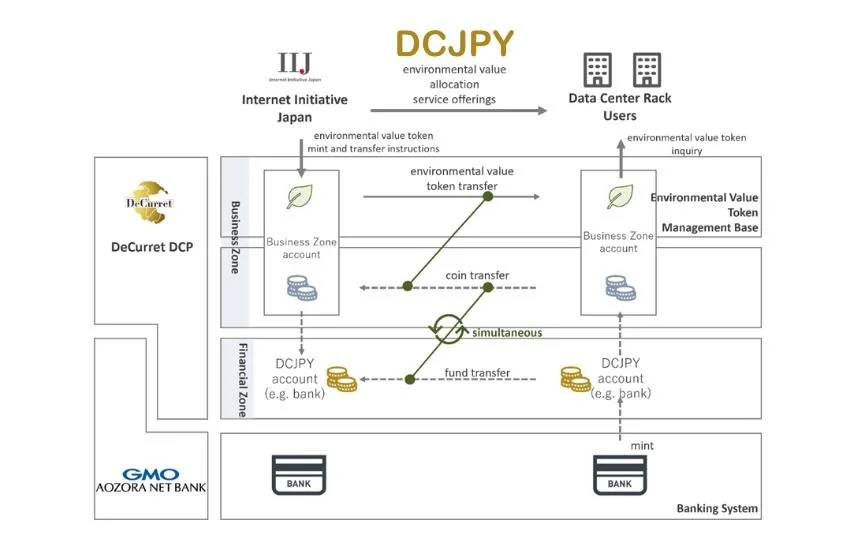
DeCurret DCP, the company behind the DCJPY tokenized deposit network, said it has started production testing of the network. It expects to go into production in August. DeCurret runs the Japanese Digital Currency Forum, which has more than a hundred corporate and government participants who are exploring a broad range of applications that use digital currencies for settlement. DeCurret also raised significant funding from several big names, including MUFG, SMBC and SBI Holdings.
However, they are not participants in the first application, which uses on-chain bank deposits to pay for tokenized renewable energy certificates (RECs). The Internet Initiative Japan (IIJ) recently became a member of the Japan Electric Power Exchange (JEPX) to procure RECs on behalf of its data center clients. Now it plans to convert the RECs into digital tokens and settle transactions with tokenized deposits from GMO Aozora Net Bank.
In the future DeCurret DCP wants to expand the application by including electricity retailers, power companies and carbon trading exchanges.
The key benefits of on-chain payment is it eliminates settlement risk because the asset and money exchange simultaneously. Another advantage is automation, with programmability payments enabling a vast range of use cases.
The DCJPY Network consists of two separate blockchains, a Business Zone(s) and a Financial Zone. Only banks are present in the Financial Zone and this is where they tokenize the deposits and the DCJPY transfers actually happen. The transfer of the asset is recorded in the Business Zone. However, so are the instructions to transfer the DCJPY (but not the actual transfer). This requires synchronization between the two blockchain zones. DeCurret DCP uses the Inter-Blockchain Communication Protocol (IBC) from Cosmos.
Meanwhile, a recent DeCurret DCP survey showed a luke warm appetite for digital currencies from enterprises. Out of 100 companies surveyed, 26% aim to use digital currency in one to three years. Just over two thirds of those with plans are members of the Digital Currency Forum.
Japan’s approach to digital currencies
Japan is one of the most advanced economies in terms of legal support for digital currencies. It passed legislation that supports three types of stablecoins. These include two bank related ones – stablecoins backed by bank deposits and third party reserve backed stablecoins where the reserves are managed by trust banks. Hence, in the realm of digital currency, DCJPY faces competition at launch.
@ Newshounds News™
Read more: Ledger Insights
~~~~~~~~~
BRICS: EVERY AFRICAN COUNTRY PREPARING TO JOIN the ALLIANCE
"Former Ethiopian speaker of the house Agegnehu Teshager revealed that all African countries are interested in joining the BRICS alliance. His statement comes at a time when developing countries are looking to sideline the US dollar and use local currencies."
"Developing countries are finding the BRICS de-dollarization agenda lucrative as the initiative can boost their native economies and local currencies. "
"“Africa is a great potential for BRICS, most African countries have an appetite to be a member of the alliance,” he said. The former speaker continued, “Africa’s economy is developing and the continent is interested in the BRICS alliance.”
"Ethiopia is the new entrant in the BRICS alliance and is the second African nation apart from South Africa to be a part of the grouping. The bloc might invite many other countries during the 16th summit and expand the alliance in 2024. However, there is no clear information on which countries might receive the invitation."
NOTE: JUST BECAUSE A COUNTRY EXPRESSES INTEREST IN BECOMING A MEMBER OF BRICS DOESN'T MEAN THEY ARE AUTOMATICALLY A MEMBER. THERE IS A PROCESS TO MEMBERSHIP..
@ Newshounds News™
Read more: Watcher Guru
~~~~~~~~~
Cardano (ADA) Price Surges 40% as $240M TVL and Ethereum ETFs Emerge Bullish Catalysts
Cardano (ADA) has experienced a significant price surge, trading at $0.44, up 40% over the last ten days, fueled by several internal and external factors that are generating renewed investor interest and optimism.
Cardano Price Crosses $0.45 First Time in 10-Days
After having dropped to historic lows on Friday July 5, a positive shift in the US macroeconomic environment has provided a favorable backdrop for ADA’s recent rebound phase. Positive Non-Farm Payroll (NFP) and Consumer Price Index (CPI) data have bolstered investor confidence in the economic outlook, supporting the overall cryptocurrency market.

Furthermore, the anticipation of Ethereum ETFs expected to launch soon has spilled over into the altcoin market, including Cardano, as investors look for promising opportunities beyond Bitcoin and Ethereum.
@ Newshounds News™
Reas more: The Crypto Basic
~~~~~~~~~
Newshound's Daily Breakdown Podcast Link
Newshound's News Telegram Room Link
Q & A Classroom Link
Follow the Roadmap
Follow the Timeline
Seeds of Wisdom Team™ Website
Subscribe to Newsletter
Thank you Dinar Recaps
Economist’s “News and Views” Tuesday 7-16-2024
100 Days to the BRICS Summit: What You Need to Know Now
Think BRICS: 7-15-2024
100 Days to the BRICS Summit: What You Need to Know Now! This video provides exclusive insights analysis on the upcoming BRICS Summit 2024 in Kazan.
Discover how the BRICS bridge and alternative payment system will reshape global economics. Tune in as we discuss the BRICS Parliament, the newly proposed grain exchange, and the ambitious BRICS expansion plans.
Our experts reveal the latest BRICS news and debunk common BRICS fake news, ensuring you get the most accurate information. This live stream, part of our Think BRICS series, is your go-to source for comprehensive updates.
100 Days to the BRICS Summit: What You Need to Know Now
Think BRICS: 7-15-2024
100 Days to the BRICS Summit: What You Need to Know Now! This video provides exclusive insights analysis on the upcoming BRICS Summit 2024 in Kazan.
Discover how the BRICS bridge and alternative payment system will reshape global economics. Tune in as we discuss the BRICS Parliament, the newly proposed grain exchange, and the ambitious BRICS expansion plans.
Our experts reveal the latest BRICS news and debunk common BRICS fake news, ensuring you get the most accurate information. This live stream, part of our Think BRICS series, is your go-to source for comprehensive updates.
We explore the Think BRICS partnerships with the BRICS+ University Association and the BRICS+ Development Group and their significance in the evolving geopolitical landscape. This video covers critical topics that will be discussed at the Kazan Summit.
In this live stream, we revisit key topics from past videos and provide fresh perspectives on what to expect at the BRICS Summit in Kazan this October. From policy changes to new initiatives, get a complete understanding of the strategic moves by BRICS countries.
While this video offers an in-depth analysis of various aspects of the BRICS Summit 2024, it does not delve into the detailed history of the BRICS nations. We focus on the upcoming summit and future developments rather than past events
One MAJOR Financial Domino Left to Fall: Tavi Costa
Daniela Cambone: 7-15-2024
"We’re close to a major domino falling in the next six to nine months," predicted Tavi Costa, macro strategist at Crescat Capital.
He explains to Daniela Cambone that the equity markets are likely to be the next to feel the economic repercussions driven by the higher cost of capital, which will impact the valuation of companies.
"Ultimately, I would say that we're going back to a world where investors pay closer attention to profitability,” he stresses. Costa also remains firm on his recession outlook. “You can plug in so many charts—yield curve versus unemployment rates, initial jobless claims, continuing jobless claims.
You can see that clearly, the steepening of the yield curve from inverted levels is a very negative signal for the economy,” he explains.
Watch the compelling video to learn more about Costa’s views on the economy.
Can This Dethrone the US Dollar? What You Need to Know About the New Financial Currency System
Can This Dethrone the US Dollar? What You Need to Know About the New Financial Currency System
On July 15, 2024 By Awake-In-3D
Learn why this new Alternative Financial System is creating a game-changing currency framework focused on gold and oil.
The US Dollar, and the global fiat currency system it maintains, wield immense financial power and control over the world. Few dare to challenge this formidable financial fortress.
That said, the BRICS Alliance is actively building a new, Alternative Financial System right before our eyes.
This innovative system, with its unique focus and sound design, aims to compete with and challenge the 100-year global dominance of the US Dollar and the entire fiat currency system.
Can This Dethrone the US Dollar? What You Need to Know About the New Financial Currency System
On July 15, 2024 By Awake-In-3D
Learn why this new Alternative Financial System is creating a game-changing currency framework focused on gold and oil.
The US Dollar, and the global fiat currency system it maintains, wield immense financial power and control over the world. Few dare to challenge this formidable financial fortress.
That said, the BRICS Alliance is actively building a new, Alternative Financial System right before our eyes.
This innovative system, with its unique focus and sound design, aims to compete with and challenge the 100-year global dominance of the US Dollar and the entire fiat currency system.

The BRICS Alliance is harnessing their collective economic power, emphasizing physical resource-backed currency stability, and reducing dependency on debt. They are aggressively accumulating gold and increasingly settling trades in their local currencies.
This shift redefines the global financial landscape and disrupts the longstanding USD hegemony and the global fiat currency system as a whole.
In This Article
Formidable Strength of the US Dollar-Based System: Analyzes the entrenched power and influence of the USD.
Emergence of the Alternative Global Financial System: Examines the rise of the BRICS alliance and its new financial framework.
Structural Strength and Stability of BRICS: Details the foundational pillars of the BRICS financial system.
Energy as the Financial Backbone: Explores the role of energy resources in the new financial order.
The Formidable Strength of the Current US Dollar-Based Financial System
The US dollar (USD) has long stood as a pillar of global financial power. It is the world’s primary reserve currency, with 80% of global foreign exchange transactions involving the USD.
The dollar’s dominance is supported by several key factors:
Reserve Currency Status: The USD’s role as the primary reserve currency means that central banks around the world hold vast reserves of dollars, underpinning global trade and finance.
Global Financial Systems: The USD dominates global financial systems like SWIFT, Eurodollar markets, and derivative and petrodollar markets. These systems facilitate international trade and investment, reinforcing the dollar’s central role.
Federal Reserve’s Influence: The Federal Reserve, with its exclusive power to print USD, maintains control over global liquidity. This unique position allows the US to manage economic crises and influence global financial markets effectively.
Debt and Print Cycle: The USD’s strength is bolstered by its ability to be printed and lent into existence. This “debt and print” cycle creates a dependency on the dollar for liquidity, entrenching its dominance.
Despite its imperfections, the USD remains today as an insurmountable fortress of financial power and control. Its influence permeates every corner of the global economy, making it difficult to challenge.
Emergence of the Alternative Global Financial System
In a world dominated by the USD, the BRICS alliance is developing an alternative global financial system.
This system, designed to circumvent the limitations and risks of the fiat currency framework, leverages local currencies and gold for trade settlements. The BRICS nations aim to reduce the volatility and dependency associated with fiat currencies, creating a robust financial framework.
Local Currencies and Gold: The BRICS financial system emphasizes trade settlements in local currencies and gold. This reduces the risk of currency fluctuations and dependence on the USD.
Resource-Backed Stability: The BRICS countries are rich in natural resources, particularly energy. By linking their financial system to tangible assets like gold and oil, they provide a more stable and reliable economic foundation.
Reduced Debt Dependency: The alternative system minimizes reliance on debt for liquidity, contrasting with the USD’s “debt and print” cycle. This approach fosters financial discipline and sustainability.
Structural Strength and Stability of BRICS
The strength of the BRICS financial system lies in its emphasis on resource-backed stability and reduced debt dependency. By settling trades in local currencies and gold, the BRICS nations mitigate the risks posed by currency fluctuations and external economic pressures.
This approach fosters financial discipline and long-term sustainability, positioning the BRICS system as a viable competitor to the USD.
Energy as the Financial Backbone
Energy resources, especially oil, play a crucial role in the BRICS financial strategy.
With rising global energy demand, particularly from populous nations like China and India, the preference for settling oil transactions in gold or local currencies is growing. This trend not only undermines the dollar’s dominance in global trade but also enhances the stability and resilience of the BRICS financial system.
Challenges to USD Dominance
Despite the dollar’s entrenched position, several factors indicate that the BRICS alternative global financial system could pose a significant challenge:
Global Distrust in the USD: Actions like the weaponization of the USD against countries like Russia have eroded trust in the dollar as a neutral reserve asset. This distrust fuels the search for alternatives.
Shifts in Trade Practices: An increasing number of countries are conducting trade outside the USD framework. For instance, in 2023, 20% of global oil sales were settled in currencies other than the USD, reflecting a significant shift in trade practices.
Accumulation of Gold: Since the 2008 Global Financial Crisis, many central banks, particularly in BRICS nations, have been accumulating gold, moving away from USD-denominated assets. This trend is bolstered by the Bank of International Settlements’ recent recognition of gold as a tier-one asset.
The Long-Term Vision
The BRICS alliance’s vision extends beyond mere competition with the USD. It aims to create a more balanced and equitable global financial system, reducing the disproportionate influence of any single currency.
By leveraging their collective economic power and resource wealth, the BRICS nations are laying the groundwork for a resilient and self-sufficient financial ecosystem.
The Bottom Line
The US dollar’s long-standing dominance is facing a formidable challenge from the BRICS alliance and its alternative global financial system.
Built on the principles of resource-backed stability, reduced debt dependency, and strategic use of local currencies and gold, the BRICS system represents a significant shift in the global financial landscape.
As the world moves towards a more balanced and equitable financial order, the question remains: will the enduring value of gold and energy resources redefine the future of global finance, potentially at the expense of the USD’s supremacy?
Only time will tell.
Contributing Article: https://vongreyerz.gold/is-the-usd-really-too-big-to-fail
© GCR Real-Time News
Visit the GCR Real-Time News website and search 100’s of articles here: Ai3D.blog
Join my Telegram Channel to comment and ask questions here: GCR_RealTimeNews
Follow me on Twitter: @Real_AwakeIn3D
Iraq News Highlights and Points To Ponder Tuesday AM 7-16-24
Dollar Fluctuates Amid Tight Monetary Authority Measures
Economic 2024/07/16 Dollar fluctuates amid tight monetary authority measures 678 , days before the implementation of the Central Bank’s decision to sell dollars exclusively to travelers at airports, the dollar exchange rates witnessed clear fluctuations in the parallel markets, as they exceeded the barrier of 150 thousand dinars for every 100 dollars, a number that specialists see as possible (stability or decline) in the coming periods as a result of the Central Bank continuing to meet the requirements of foreign trade, which could lead to a decline in the effects of the parallel market, stressing the need to double efforts to make the new experiment of granting travelers dollars a success for fear of the continued rise of the green currency.
The Central Bank's decision to grant the green currency exclusively to airport travelers has come into effect, amid anticipation of the continued fluctuation of the exchange rate in the parallel market, which observers fear will affect the purchasing value of prices, while the Prime Minister's Advisor for Financial Affairs, Dr. Mazhar Mohammed Saleh, sees the opposite, as he explains that through "the strength of the official central exchange market, the exchange rate of the dollar to the dinar in the parallel market does not constitute any relative importance in affecting the stability of the general price level, which has become stable in its components and trends due to the influence of the prevailing official exchange rate factor."
Dollar Fluctuates Amid Tight Monetary Authority Measures
Economic 2024/07/16 Dollar fluctuates amid tight monetary authority measures 678 , days before the implementation of the Central Bank’s decision to sell dollars exclusively to travelers at airports, the dollar exchange rates witnessed clear fluctuations in the parallel markets, as they exceeded the barrier of 150 thousand dinars for every 100 dollars, a number that specialists see as possible (stability or decline) in the coming periods as a result of the Central Bank continuing to meet the requirements of foreign trade, which could lead to a decline in the effects of the parallel market, stressing the need to double efforts to make the new experiment of granting travelers dollars a success for fear of the continued rise of the green currency.
The Central Bank's decision to grant the green currency exclusively to airport travelers has come into effect, amid anticipation of the continued fluctuation of the exchange rate in the parallel market, which observers fear will affect the purchasing value of prices, while the Prime Minister's Advisor for Financial Affairs, Dr. Mazhar Mohammed Saleh, sees the opposite, as he explains that through "the strength of the official central exchange market, the exchange rate of the dollar to the dinar in the parallel market does not constitute any relative importance in affecting the stability of the general price level, which has become stable in its components and trends due to the influence of the prevailing official exchange rate factor."
Amidst this, economic experts believe that among the tools for controlling exchange rates are the recent measures represented by introducing the Customs Data Automation Program (ASYCUDA) system, stressing that this important government measure is an essential part of limiting the rise in the dollar price in the parallel market.
Financial Affairs Advisor, Dr. Mazhar Muhammad Salih, said yesterday, Sunday, in a statement to the Iraqi News Agency (INA): "There is an international factor that imposes controls on the so-called banking compliance in financing the demand for the dollar from our country's international bank accounts in foreign currency, and there is also an internal factor that benefits from the actions and pressure of the external factor in order to obtain temporary or emergency profit gains, especially in cash dollar transactions."
He explained that "the dominance of the fixed exchange rate system in Iraq, based on an international reserve base, is the highest in the history of Iraq and its monetary policy, as foreign currency covers more than 100 percent of the total currency currently issued."
He continued: "Through the strength of the official central exchange market, the exchange rate of the dollar to the dinar in the parallel market in our country does not constitute any relative importance in influencing the stability of the general price level, which has become stable in its components and trends as a result of the influence of the prevailing and dominant official exchange rate factor currently in financing foreign trade (imports), amounting to 1320 dinars per dollar, which is responsible for financing 90 percent of Iraq's foreign trade."
He stressed that "after the decline of the dollarization phenomenon in domestic transactions, especially in contracts, obligations and payments within the country since last year and its legal prohibition, the parallel exchange market has become such that its general effects only form a narrow economic scope of prohibited transactions, practiced by informal markets and at a rate of 10 percent of the total supply and demand transactions for the currency."
He pointed out that "the stability of the dinar to dollar exchange rate that the country is witnessing even in secondary markets is a real and solid stability, and is derived from the strength of the impact of the price and quantitative factors of the monetary and financial policies and their integration in imposing overall price stability in the country, and containing the inflationary expectations that were caused by the parallel exchange market forces during the past years."
It is noteworthy that the Central Bank's sales of hard currency last week amounted to more than one billion dollars through the currency auction that was held over four days, at a daily rate of 272 million and 80 million and 368 dollars, while sales of foreign remittances recorded 991 million and 141 thousand and 473 dollars, which indicates, according to specialists, the possibility of achieving clear relative stability in the various prices of goods and materials, and their not being affected by the parallel exchange rate.
The new mechanism for granting the "dollar", according to the Central Bank, aims to provide foreign currency to the real traveler and pass sound transactions, in addition to facilitating travelers' access to the dollar faster.
According to the "Monetary Authority", the mechanism includes the traveler going to authorized exchange companies spread across all cities to deliver the amount in dinars equivalent to the citizen's share of the dollar according to the official exchange rate of the Central Bank of Iraq.
The company will enter the data of the traveling citizen and upload his name on the electronic platform of the Central Bank of Iraq and deliver him a receipt confirming his deposit of the dinar, to receive the cash dollar inside the airport exclusively.
In turn, the economic expert Dr. Nabil Al-Marsoumi, during his interview with "Al-Sabah", sees the existence of several closely related factors that contribute to the rise in the exchange rate, some of which are real and others are psychological, as the real factors are represented by stopping bank transfers in the Chinese yuan due to suspicions of corruption on the subject, in addition to stopping the injection of cash dollars into the parallel market and the new procedures of the Central Bank that limit sales to air ports and airports.
The expert Al-Marsoumi attributed the reasons for the fluctuations to the launch of the general budget for the year 2024 and the approval of the budget schedules, as this leads to an increase in public spending in its operational and investment aspects, which naturally leads to an increase in consumer demand and an increase in investment demand, and thus an increase in imports and an increase in pressure on the dollar.
Regarding psychological factors, the spokesman indicated that "the fears among citizens went towards the possibility of the dollar rising in the near future, and therefore there is a great rush to buy it from the parallel market, which caused its exchange rate to rise by 3 to 4 percent, expecting that "the market will calm down soon as a result of several factors, most notably the negotiations that the governor of the Central Bank may conduct in Washington regarding bank transfers."
This Is The Volume Of Our Trade With Iran.. An Economist Reveals The Reasons For The Dollar Problem Inside Iraq
Economy |Baghdad Today – Baghdad Economic expert, Munir Al-Abidi, revealed today, Tuesday (July 16, 2024), the volume of trade between Iraq and Iran, while indicating that the dollar problem in Iraq is not due to official trade.
Al-Obaidi said in a clarification he published on Facebook, which was followed by "Baghdad Today", "The Iranians say that our trade with Iraq during three months amounts to 3 billion dollars, distributed as 1.2 billion to meet the need for gas, 700 million dollars for electricity, while 200 dollars are for food, and another 200 million for iron trade."
He added, "This means that the value of food and iron during the year amounts to only 1.5 billion dollars annually," indicating that "some say that our trade with Iran amounts to 12 or 14 billion dollars, which is the reason for the dollar crisis."
Al-Obaidi said, "Our official trade for the private sector does not exceed 3 billion dollars with Iran and does not exceed 300 million dollars with Syria," stressing that "the problem with the dollar is not the official trade with Iran and Syria."
He pointed out that "the problem of the demand for dollars in the local market is to cover the needs of other types of informal and illegal trade, most notably drugs," stressing that "all this fuss, crying and wailing in the channels is to reopen the money channels for this trade." LINK
Parliamentary Finance Committee Comments On US Decision To Stop Iraq's Transactions In Chinese Yuan
Posted On2024-07-16 By Sotaliraq Member of the Parliamentary Finance Committee, MP Moeen Al-Kadhimi, described today, Tuesday, the decision of the US Federal Reserve to stop transfers in Chinese yuan as “arbitrary” against the Iraqi economy.
[size=45]Al-Kadhimi said in a statement, "The decision to stop transfers in the Chinese yuan was issued by the US Federal Reserve, claiming that there were suspicions about some transfers in the Chinese yuan."
[size=45]He pointed out that "the Central Bank of Iraq has contracted with an international company to evaluate and monitor transfers, and this company is a source of acceptance and trust for the US Federal Reserve."
He pointed out that "after a short period, the Central Bank of Iraq will resume transferring remittances in Chinese yuan to Iraqi traders in general," indicating that "these measures of the US Federal Reserve are considered arbitrary against Iraq and its national economy."
The Central Bank of Iraq stopped dealing in the Chinese yuan after the US Federal Reserve accused Iraq of “inflating remittances.”
During the current period, America has worked to destroy the Iraqi currency by imposing sanctions on private banks and preventing the dollar under many pretexts, which in one way or another led to a severe financial crisis in local markets. LINK
Economist: America Has Begun To Abandon Iraq
Money and business Economic expert, Jalil Al-Lami, confirmed that America has begun to gradually abandon Iraq by restricting the use of the dollar and abandoning the purchase of Iraqi oil.
Al-Lami said that America decided to buy oil from Canada instead of Iraq, and also to restrict the use of the dollar, which are messages to the Iraqi government.
He added that the Iraqi government sent a delegation to settle the issues with America and end the dollar restriction. 825 views 2024/07/16 - https://economy-news.net/content.php?id=45274
Pros And Cons Of Iraq Joining The WTO
Pros And Cons Of Iraq Joining The WTO
Appearance of Mohammed Saleh
Since 2003, Iraq has adopted broad open policies towards the world and sought to establish important economic and legislative rules that operate according to the mechanisms of the market system, most of which helped improve Iraq’s foreign trade, after an economic blockade that lasted for more than a decade and led to Iraq’s marginalization on the map of the global economic system and deprived it of investment opportunities, progress, development and technological knowledge that should have helped it confront the rapid developments and changes that international markets have witnessed and whose competitive capabilities have changed dramatically over the past two decades at least.
Thus, Iraq became isolated from its international environment in the midst of a world swept by the currents of merging its companies, liberalizing its markets and integrating them, especially the financial ones, and the dominance of the new liberal doctrine, which required broad economic transformations in the field of information technology that became in harmony with the internationalism of productive activity through the role that multinational companies began to play and the increasing competitive advantage of the products that the world markets began to generate.
Pros And Cons Of Iraq Joining The WTO
Appearance of Mohammed Saleh
Since 2003, Iraq has adopted broad open policies towards the world and sought to establish important economic and legislative rules that operate according to the mechanisms of the market system, most of which helped improve Iraq’s foreign trade, after an economic blockade that lasted for more than a decade and led to Iraq’s marginalization on the map of the global economic system and deprived it of investment opportunities, progress, development and technological knowledge that should have helped it confront the rapid developments and changes that international markets have witnessed and whose competitive capabilities have changed dramatically over the past two decades at least.
Thus, Iraq became isolated from its international environment in the midst of a world swept by the currents of merging its companies, liberalizing its markets and integrating them, especially the financial ones, and the dominance of the new liberal doctrine, which required broad economic transformations in the field of information technology that became in harmony with the internationalism of productive activity through the role that multinational companies began to play and the increasing competitive advantage of the products that the world markets began to generate.
However, we find in the integration of financial markets, whose assets exceed $850 trillion, the main title of financial globalization and the main focus of dominance in the globalization of the new liberal economy.
At the same time, it represents the trend of transition in the axes of international trade and the introduction to the transformation from the scope of the GATT Agreement signed in 1948 to the World Trade Organization Agreement (WTO), where the latter focused on regulating a wide range of trade in services, especially financial services, whose annexes were called the GATS Agreement in 1994 based on the Uruguay Round.
While the gross domestic product of the world's 192 economies does not exceed $83 trillion annually at present (and the value of world trade in goods and services has also not increased annually by more than a third of the aforementioned global output), we find that trade in currency conversion, speculation, and short-term capital movements exceeds about $4.5 trillion daily in international monetary and financial markets, a speculative financial trade whose annual total exceeds more than fifty times the total global trade in goods and services.
In the midst of these changes in the international commercial and financial space, Iraq has moved to important organizational levels in the transition to a market economy to break the effects of its international isolation by engaging in a strong area of economic liberalism that focused on liberalizing the areas of Iraq's foreign trade in goods and services and the means of financing them,
despite the fluctuations in its organization, as well as the development and expansion of areas of progress achieved in some financial services and improving the environment for foreign investment through the legislation of the banking and investment laws and the Central Bank Law,
which allows foreign banks to operate in Iraq and allows the transfer of capital and currency in a manner that serves Iraq's openness to the world in the conditions of a central rentier economy that is difficult to deal with in understanding market liberalism, which nevertheless led to providing positive opportunities and promising legal and organizational foundations for the Iraqi business environment.
However, all of this is not enough to put Iraq on the path of international economic competition. There are still more than five thousand legislative texts that hinder economic freedom and market activity, which are being studied by legal circles and which must be amended so that Iraq can integrate into international trade and investment and prepare it to join the World Trade Organization according to the terms of membership in it so that our country can obtain the most-favored nation status and the principle of national treatment.
However, the paradoxes of joining revolve around the issues of oil and agriculture, in addition to other problems of joining.
While oil sector production dominates nearly 50% of Iraq’s GDP, the sector employs only 2% of the Iraqi workforce, and the country’s crude oil exports and revenues constitute the near-absolute majority of total exports, general budget revenues, and foreign exchange earnings.
In light of all this, the World Trade Organization excludes crude oil as a commodity within the group of raw commodities traded internationally, which remains the core of the contradiction in Iraq’s accession to that organization that excludes crude oil.
If the World Trade Organization had allowed oil to be taken into account, the price would have been determined by global supply and demand, away from the cartel or consumer groups represented by the International Energy Agency and its lines and programs for rationalizing demand for oil.
Or away from the cartel or producer groups represented by the Organization of the Petroleum Exporting Countries (OPEC) and its role in regulating production and influencing prices, which is the matter that imposed price and quantity restrictions on a commercial commodity, but a strategic and political one at the same time, which is the driving force of Iraq’s foreign trade.
On the other side of the Iraqi economy, we find the agricultural sector, which includes less than a third of the Iraqi population and about 22% of the Iraqi labor force, and does not contribute to the gross domestic product except by a percentage not exceeding 5%, which made the country a near-net importer of food or agricultural goods, the value of which exceeds 14 billion dollars annually.
This important sector, which has been subjected to militarization and neglect over the past thirty years and more, does not have the sufficient components to provide food security in terms of grains or agricultural production requirements after the shrinkage of productive agricultural areas due to desertification, salinization, and the recent water crisis, which eliminated more than 50% of the lands prepared for agriculture, in addition to the deterioration of the agricultural infrastructure, 83% of whose components are controlled by the state as a public commodity.
Here the agricultural sector contradicts the oil sector structurally in the directions of openness to the global market and with two different wings in terms of the impact of commercial benefits and costs.
The forces of the international market or global supply and demand have come to control strongly, whether in the demand for oil and its impact on the value of Iraqi exports or in the supply of food products and its impact on the cost of Iraq’s imports from them.
When referring to the philosophy of reducing customs restrictions by 24% and abolishing non-customs restrictions, which are the conditions imposed by the World Trade Organization on the member state in the group of developing countries to work with and implement them within a period of six years from the date of accession, in addition to reducing agricultural support by 13.3% within a period of ten years from accession, we find that these regulatory conditions of the World Trade Organization clash with the conditions and situations of the agricultural market and the global food stock exchange itself.
If we look at the agricultural monopolies in the world in light of the deterioration of agricultural development in Iraq, we find a real threat to national food security that restricts the country in the event of joining the organization unless it is preceded by starting or following an agricultural program for self-sufficiency immediately. We will really need a green revolution similar to what Mexico and many Latin American countries have done.
Especially if we know that there are between 3 to 6 major monopolistic companies in the world that control 80 to 90% of agricultural crop trade and control prices and quantities such as wheat, sugar, tea, coffee, cotton, jute, etc. At a time when ten multinational companies still control a third of the world's seed and pesticide production and trade.
Despite the above, Iraq’s entry and integration into the global economic space through the World Trade Organization and its dealings with international groups on terms that apply to everyone from a formal standpoint at a time when the world is still divided between the countries of the North and the South or the countries of the advanced industrial center and the developing periphery,
Iraq has no choice but to leave its international isolation that it inherited since the blockade that began in 1990, which placed Iraq under Chapter VII of the United Nations Charter or its aftermath, a chapter whose effects still provide a negative economic environment hostile to development and perhaps obstructing natural integration into the global market.
This chapter prohibits levels of investment in advanced technology or easy dealings with the world due to the restrictions it imposes on our country as a high-risk country that threatens world peace and allows the use of force against it in a regrettable legacy for the civilization of Mesopotamia despite the disappearance of the objective reasons for which the economic blockade was imposed on Iraq.
Noting that Iraq's accession to regional economic zones, such as the Greater Arab Free Trade Area and other economic agreements within the framework of the Arab League or other forms of regional integration and consolidation, must take into account the implementation of the provisions contained in the World Trade Organization Agreement and before it the GATT Agreement, both of which have become binding restrictions on the implementation of trade agreements.
Thus, any trade facilitations within the framework of regional agreements become useless or worthless if they are less than the facilitations provided within the framework of the World Trade Organization.
Finally, Iraq's continued isolation from its international environment will cost it a lot due to the loss of organizational advantages and opportunities, technological and legal benefits, and other areas of investment and arbitration, which are opportunities that isolation from the world does not provide and does not enable a gradual transformation into a group of stable and low-risk countries, a transformation that encourages international cooperation in a secure global investment and trade environment, provided that effective development begins based on the strong push program.
96 views 2024/07/16 - https://economy-news.net/content.php?id=45283
Third Round Of Negotiations For Iraq's Accession To The World Trade Organization
Time: 2024/07/16 Reading: 234 times {Economic: Al Furat News} Minister of Trade Athir Dawood Salman arrived today, Tuesday, in the city of Geneva, Switzerland, at the head of the Iraqi team negotiating Iraq’s accession to the World Trade Organization to attend the third meeting of the working group on Iraq’s accession, 16 years after the second meeting was held.
The statement of the Ministry's media office, a copy of which was received by {Euphrates News}, indicated that "Iraq is proceeding, through the national committee concerned with its accession to the World Organization, which is headed by the Minister of Trade, to complete its procedures to accomplish the required files and support reforms and legislation to be in line with the market system and enhance the country's economic capabilities to complete the requirements of the next stage of the accession process."
The statement noted that "the preparatory meetings of the Iraqi negotiating team are continuing at the headquarters of the World Trade Organization in Geneva, in preparation for the third meeting of the working group on Iraq's accession, which will be held this week." LINK
“Coffee With MarkZ” Tuesday Morning Chat 7-16-2024
Thank you MarkZ for all your time, and encouragement daily….. PDK
MarkZ Update- Some highlights by PDK-Not verbatim
MarkZ Disclaimer: Please consider everything on this call as my opinion. People who take notes do not catch everything and its best to watch the video so that you get everything in context. Be sure to consult a professional for any financial decisions
Member: Another day and another dollar I hope!
Member: Is this another Groundhog day- or something better??
Member: Exciting news last night about a possible Iraq RI ASAP…hope its true.
Thank you MarkZ for all your time, and encouragement daily….. PDK
MarkZ Update- Some highlights by PDK-Not verbatim
MarkZ Disclaimer: Please consider everything on this call as my opinion. People who take notes do not catch everything and its best to watch the video so that you get everything in context. Be sure to consult a professional for any financial decisions
Member: Another day and another dollar I hope!
Member: Is this another Groundhog day- or something better??
Member: Exciting news last night about a possible Iraq RI ASAP…hope its true.
Member: MARKZ if Iraq does a RI, will we be able to redeem at the bank? Knowing of course the money will be fiat at this point.
MZ: I should have mentioned last night that this is an RI- with an adjustment for inflation. The original RI rate was around $3.22….I did not qualify that last night.
MZ: Lets dive into the news. Some of the Zim charity platforms may go first – is what I am suddenly hearing. Maybe even before some of the Historic bonds. So I am hearing positive things for those who aggregated Zim for humanitarian reasons.
MZ: That being said…..I heard that the initial releases of money are being pushed very hard for humanitarians. That is the priority I have heard. But this does not mean there is a delay for us currency holders. Just that humanitarian projects are the priority. I am getting that from bunches of sources.
MZ: I have also had a number of sources from groups reach out over the last 12-14 hours that if we have projects to submit- be sure to get those dusted off and prepared and ready.
Member: I wonder- Can we still pick from a list for projects at our exchange ???
Member: I have also heard you can choose from projects they have…if we want to.
MZ: I have heard that – I have also heard we will be given access to those choices when we set our appointments so we are prepared when we get there.
Member: So many things in this world need help. Fresh water, new recycling technologies, Foster kids, Clean the oceans, Homelessness, our Veterans,, pollution ect…..it may be a big list.
Member: RayRen says the 3 Letter Agencies are on high alert over the next 24 hours..
MZ: And we have officially spotted an Iraqi delegation in Geneva with the World Trade organization. They are working on the full “Ascension” to the WTO….and trying to fast track that process.
Member: someone in Iraq is supposed to give an important announcement later today...at 7 but not sure what timezone?
MZ: Bond folks were very quiet overnight.
Member: lots of chatter, lots of movement...have heard it before...won't get excited until I see something real.
Member: Is it safe to put in our 2 weeks notice?
MZ: I think we are so close to being able to put in our 2 weeks notice.
Member: 2 week notice? They’ll be luck if they get a 2 minute notice!
Mark your thoughts on the US treasury holding this up?
Member: Mark, do you think CMKX and PP’s would go before the humanitarian projects money?
MZ: No- I think they may go at about the same time….
Member: Will we still be signing NDA’s?
MZ: I keep hearing mixed stuff. I am hearing now that if you don’t have historic bonds or Zim –there will not be an NDA. That is what I hear from banking contacts….
Member: We will not know for sure until we exchange…imo
Member: Do we have an update on rates to expect?
Mod: NO ONE KNOWS WHAT RATES OR WHAT WILL BE EXCHANGED WILL BE UNTIL THIS HAPPENS, ALL CONJECTURE RIGHT NOW
Member Will we exchange at banks or redemption centers?
Member: a lot of the redemption centers will be banks, if I understand what Marks has always said. I could be wrong.
Member: We need to be cautious…. we have family friend who was wealthy and their wealth manager stole all their money and they instantly became poor
Member: Good rule to follow 10-10-10-10 rule. 10% give;10% long term save; 10% precious metals; 10% investments (passive and active: real estate, annuities, etc)
Member: Great podcast today….Thanks to all…..have a great day
Member: See everyone tonight
THE CONTENT IN THIS PODCAST IS FOR GENERAL & EDUCATIONAL PURPOSES ONLY&NOT INTENDED TO PROVIDE ANY PROFESSIONAL, FINANCIAL OR LEGAL ADVICE. PLEASE CONSIDER EVERYTHING DISCUSSED IN MARKZ’S OPINION ONLY
Odysee at: https://odysee.com/@theoriginalmarkz:e OR THE RUMBLE CHANNEL: https://rumble.com/user/theoriginalmarkz
FOLLOW MARKZ : TWITTER . https://twitter.com/originalmarkz?s=21. TRUTH SOCIAL . https://truthsocial.com/@theoriginalm...
Mod: MarkZ "Back To Basics" Pre-Recorded Call" for Newbies 10-19-2022 ) https://www.youtube.com/watch?v=37oILmAlptM
MARKZ DAILY LINKS: https://theoriginalmarkz.com/home/
MARK’S TELEGRAM ROOM FOR WORLD NEWS EVENTS & CHAT? LINK: https://t.me/TrollingNews_telegram
THANKS FOR JOINING. HAVE A BLESSED DAY! SEE YOU ALL THIS EVENING FOR NEWS @ 7:00 PM EST ~ UNLESS BREAKING NEWS HAPPENS!
Note from PDK: Please listen to the replay for all the details and entire stream….I do not transcribe political opinions, divisive social commentary, medical opinions or many guests on this stream……just RV/currency related topics.