Power of Attorney: When You Need One
.Power of Attorney: When You Need One
By Kimberly Rotter Updated May 18, 2022
Reviewed By Khadija Khartit Fact Checked By Ryan Eichler
A power of attorney (POA) is a legal document in which the principal (you) designates another person (called the agent or attorney-in-fact) to act on your behalf. The document authorizes the agent to make either a limited or broader set of decisions. The term "power of attorney" can also refer to the individual designated to act in this way.
KEY TAKEAWAYS
A power of attorney (POA) is a legal document that gives an individual, called the agent or attorney-in-fact, the authority to take action on behalf of someone else, called the principal.
The agent can have either extensive or limited authority to make legal decisions about the principal's property, finances, or healthcare, depending on the terms of the POA.
Power of Attorney: When You Need One
By Kimberly Rotter Updated May 18, 2022
Reviewed By Khadija Khartit Fact Checked By Ryan Eichler
A power of attorney (POA) is a legal document in which the principal (you) designates another person (called the agent or attorney-in-fact) to act on your behalf. The document authorizes the agent to make either a limited or broader set of decisions. The term "power of attorney" can also refer to the individual designated to act in this way.
KEY TAKEAWAYS
A power of attorney (POA) is a legal document that gives an individual, called the agent or attorney-in-fact, the authority to take action on behalf of someone else, called the principal.
The agent can have either extensive or limited authority to make legal decisions about the principal's property, finances, or healthcare, depending on the terms of the POA.
Types of POA include conventional, also known as a limited power of attorney, durable, which lasts for a lifetime unless you cancel it, springing, which only comes into play for specific events, and medical, also known as a durable power of attorney for healthcare.1
How a Power of Attorney (POA) Works
Certain circumstances may trigger the desire for a power of attorney (POA) for someone over the age of 18. For example, someone in the military might create a POA before deploying overseas so that another person can act on their behalf should they become incapacitated.
Incapacity isn't the only reason someone might need a POA, though. Expatriates workers and families need to set a POA for their affairs in America while doing their work overseas. Younger people who travel a great deal might set up a POA so that someone can handle their affairs in their absence, especially if they have no spouse to do so. However, POAs are most commonly established when someone is elderly or if they face a serious, more long-term health crisis.
If you have a POA and become unable to act on your own behalf due to mental or physical incapacity, your agent or attorney-in-fact may be called upon to make financial decisions to ensure your well-being and care. For example, they may need to pay bills, sell assets to pay for medical expenses, and take steps for Medicaid planning for you.
Other important tasks a POA can authorize someone to carry out are banking transactions, real estate decisions, dealing with government or retirement benefits, and healthcare billing.
How to Get a Power of Attorney (POA)
To continue reading, please go to the original article here:
https://www.investopedia.com/articles/personal-finance/101514/power-attorney-do-you-need-one.asp
6 Estate Planning Must-Haves
.6 Estate Planning Must-Haves
By GLENN CURTIS Updated February 27, 2022
Many people believe that having an estate plan simply means drafting a will or a trust. However, there is much more to include in your estate planning to make certain all of your assets are transferred seamlessly to your heirs upon your death. There are specific estate planning documents, like healthcare power of attorney and will or trust.
A successful estate plan also includes provisions allowing your family members to access or control your assets, should you become unable to do so yourself.
6 Estate Planning Must-Haves
By GLENN CURTIS Updated February 27, 2022
Reviewed By Khadija Khartit Fact Checked By Pete Rathburn
Many people believe that having an estate plan simply means drafting a will or a trust. However, there is much more to include in your estate planning to make certain all of your assets are transferred seamlessly to your heirs upon your death. There are specific estate planning documents, like healthcare power of attorney and will or trust.
A successful estate plan also includes provisions allowing your family members to access or control your assets, should you become unable to do so yourself.
KEY TAKEAWAYS
Estate planning is not only for the wealthy—everybody can benefit from ensuring their assets and finances are properly taken care of after their death.
Without a will, a probate court could lead to an unintended distribution of assets.
Estate planning is also useful if you become incapacitated.
A will is part of an estate plan.
If you have underage children, an estate plan is extremely important, as it will list their guardians, in the event your spouse cannot care for them after your death.
Estate Planning Basics
The Estate Planning Must-Haves
Here is an estate planning checklist of items every estate plan should include:
Will/Trust
Durable Power Of Attorney
Beneficiary Designations
Letter Of Intent
Healthcare Power Of Attorney
Guardianship Designations
In addition to these six documents and designations, a well-laid estate plan also should consider the purchase of insurance products such as long-term care insurance to cover old age, a lifetime annuity to generate some level of income until death, and life insurance to pass money to beneficiaries without the need for probate.
Does your estate plan measure up? Let's examine each item on this checklist to make sure you haven't left any decisions to chance.
1. Wills and Trusts
A will or a trust may sound complicated or expensive—something only rich people have. That is an incorrect assessment. A will or trust should be one of the main components of every estate plan, even if you don't have substantial assets. Wills ensure property is distributed according to an individual's wishes (if drafted according to state laws). Some trusts help limit estate taxes or legal challenges. However, simply having a will or trust isn't enough. The wording of the document is critically important.
A will or trust should be written in a manner consistent with how you've bequeathed the assets that pass outside of the will. For example, suppose you've already named your sister as a beneficiary on a retirement account or insurance policy (assets that typically pass outside of a will to a named beneficiary). In that case, you don't want to bequeath the same asset to a second cousin in the will because it could lead to a will contest. Not to mention that both individuals could become bitter toward each other (and you) during a legal battle.
Always name a guardian and a backup guardian for your underage children in your will. If you do not name a guardian, the courts may decide to place your young children with a family member (not of your choice) or even put them in the state's custody.
2. Durable Power of Attorney
https://www.investopedia.com/articles/pf/07/estate_plan_checklist.asp
Will vs. Trust: What’s the Difference?
.Will vs. Trust: What’s the Difference?
Both transfer an estate to heirs, but only a trust can skip probate court
By Matthew Jarrell Updated May 17, 2022
Wills vs. Trusts: An Overview
Trusts are legal arrangements that protect assets and direct their use and disposition in accordance with their owners’ intentions. While wills take effect upon death, trusts may be used both during the life and after the death of their creators. Separately or together, wills and trusts can serve effective estate planning.1
This article will examine how these estate-planning tools can provide for your heirs, including:
The need for a will, a trust, or both
The different types of trusts
The advantages and disadvantages of wills and trusts
Will vs. Trust: What’s the Difference?
Both transfer an estate to heirs, but only a trust can skip probate court
By Matthew Jarrell Updated May 17, 2022
Reviewed By Ebony Howard Fact Checked By Amanda Jackson
Wills vs. Trusts: An Overview
Trusts are legal arrangements that protect assets and direct their use and disposition in accordance with their owners’ intentions. While wills take effect upon death, trusts may be used both during the life and after the death of their creators. Separately or together, wills and trusts can serve effective estate planning.1
This article will examine how these estate-planning tools can provide for your heirs, including:
The need for a will, a trust, or both
The different types of trusts
The advantages and disadvantages of wills and trusts
KEY TAKEAWAYS
When creating a will or a trust, you should consult tax, investment, and legal advisors.
A will is a legal document that spells out how you want your affairs handled and assets distributed after you die.
A trust is a fiduciary arrangement whereby a grantor (also called a trustor) gives a trustee the right to hold and manage assets for the benefit of a specific purpose or person.
Trusts can have a limited term, the duration of the grantor’s or another person’s lifetime, and can hold assets and distribute them after the grantor’s or other person’s death.
If you die intestate (i.e., without a will) and have made no other estate planning provisions, the distribution of your assets will be determined by state law.
Wills
A will is a document that directs the distribution of your assets after your death to your designated heirs and beneficiaries. It also can include your instructions for matters that require decisions after your death, such as the appointment of an executor of the will and guardians for minor children, or directions for your funeral and burial.
A will can direct an executor to create a trust and appoint a trustee to hold assets for the benefit of particular persons, for example, for minor children until they reach majority or a specified age.
A will must be signed and witnessed as required by state law. Its implementation requires a legal process. It must be filed with the probate court in your jurisdiction and carried out by your designated executor. The document is publicly available in the records of the probate court which oversees its execution and has jurisdiction over any disputes.
Trusts
Trusts are legal arrangements that provide for the transfer of assets from their owner, called the grantor or trustor, to a trustee. They set the terms for the trustee’s management of the assets, for distributions to one or more designated beneficiaries, and for the ultimate disposition of the assets. The trustee is a fiduciary obligated to handle the trust assets in accordance with the terms of the trust document and solely in the best interests of the beneficiaries.
To continue reading, please go to the original article here:
Why One Of The Wealthiest Empires In History Disintegrated In 17 Years
.Why One Of The Wealthiest Empires In History Disintegrated In 17 Years
Notes From the Field By Simon Black June 20, 2022
On June 17, 1631, the 38-year old chief consort of Shah Jahan, head of the Mughal Empire, was giving birth to their 14th child in the central Indian city of Burhanpur.
It had been a long and extremely difficult labor-- more than 30 hours in total. But the consort persisted and gave birth to a healthy baby girl. The consort herself, unfortunately, succumbed to uncontrollable postpartum bleeding, and she passed away that same day.
Why One Of The Wealthiest Empires In History Disintegrated In 17 Years
Notes From the Field By Simon Black June 20, 2022
On June 17, 1631, the 38-year old chief consort of Shah Jahan, head of the Mughal Empire, was giving birth to their 14th child in the central Indian city of Burhanpur.
It had been a long and extremely difficult labor-- more than 30 hours in total. But the consort persisted and gave birth to a healthy baby girl. The consort herself, unfortunately, succumbed to uncontrollable postpartum bleeding, and she passed away that same day.
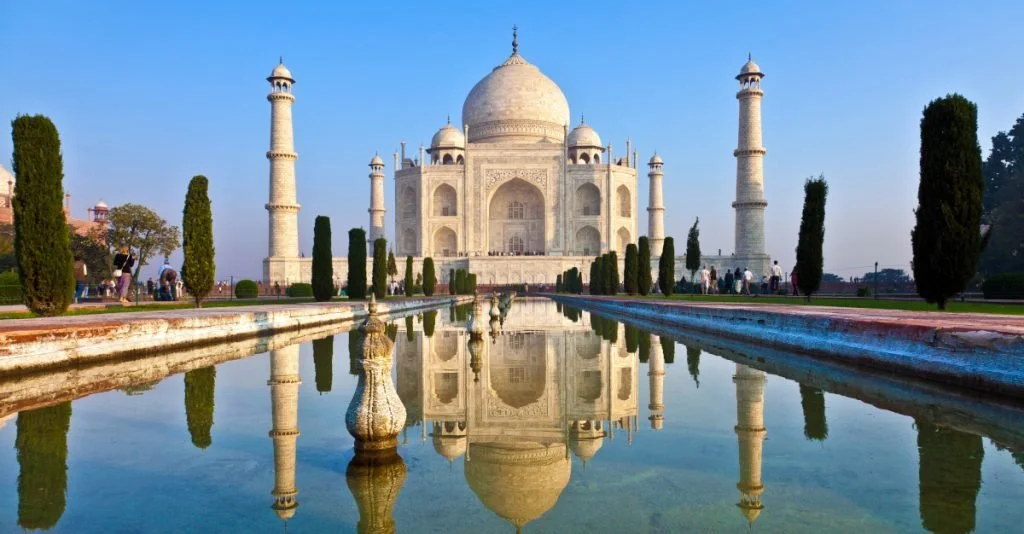
Her name was Mumtaz Mahal. And her husband the Emperor was so bereaved that, after a year-long period of mourning, he commissioned a palatial mausoleum to house her tomb.
We know this tomb today as the Taj Mahal. And Shah Jahan spared no expense on its grandeur. According to the scrupulously kept financial records of the time, the cost of the Taj Mahal totaled precisely 41,828,426.47 silver Rupees. Based on the today’s gold and silver prices, that works out to be more than $3 billion in today’s money.
Now, I’m sure Shah Jahan loved his wife very much. But that’s a lot of money to spend on a tomb… especially when the money comes from the public treasury.
But this sort of profligate spending was pretty typical of the Mughal Emperors at the time.
The Mughal Empire had only been founded roughly 100 years before, in 1526. And it rose to prominence under the reign of Akbar the Great during the late 1500s.
Akbar tripled the size and wealth of the Mughal Empire until it included virtually all of India, Pakistan, and parts of Bangladesh and Afghanistan.
Akbar also ensured that economic freedom reigned. He cut taxes. The coinage was stable. Infrastructure was highly advanced. People were free to engage in commerce and trade.
Akbar also held government bureaucracy to a minimum, and even kept his personal household spending quite low.
He famously ruled with a staff of just four ministers, and he set an example of routinely hiring people based purely on their talent, irrespective of someone’s religion, nationality, or class.
As a result, the Mughal Empire became a financial powerhouse, responsible for roughly 22% of global GDP. (This is approximately the same as the US is today.)
The empire quickly became known for its unimaginable wealth, and European travelers marveled at the Mughals’ high standard of living.
Naturally, the wealth didn’t last. The emperors who followed Akbar did not continue his policies of freedom, tolerance, and conservative spending.
Akbar’s son Jahangir was a cruel, drunken degenerate who reveled in flaying his political opponents; he also ballooned the expenses of his imperial court by establishing a harem of 6,000 women.
(The harem’s administrator was the emperor’s favorite wife-- a woman he married after brutally murdering her first husband.)
Jahangir’s son, Shah Jehan, was even more intemperate. He came to power by slaughtering his brothers, and then quickly raised government spending to epic levels.
In addition to the Taj Mahal, Shah Jehan built dozens of other lavish palaces, and he spent indiscriminately on other personal luxuries like jewelry.
He raised taxes and poisoned the economy with armies of bureaucrats. Shah Jehan was also highly intolerant of other religions and ideologies, and he imposed a special tax on all individuals who did not convert to his Muslim faith.
Shah Jehan was violently overthrown by his son Aurangzeb, a fanatic who sought to eradicate every other faith except for his own. He tore down monuments, smashed statues, and closed schools which did not conform to his ideology.
As Emperor, Aurangzeb raised taxes and accelerated expansion of regulation and government bureaucracy. He also constantly provoked foreign enemies and sunk a great deal of the Empire’s sagging treasury into a never-ending state of costly warfare.
Ironically, though, due to his personal faith, Aurangzeb was a pacifist at home. He frequently refused to enforce the laws and punish crime. Eventually Aurangzeb became legendary for his clemency and forgiveness, and criminals thrived under his reign.
Aurangzeb died in 1707. And just 17 year after his death, the Mughal Empire had disintegrated into fragments.
The Empire’s rise to wealth and prominence over just a few decades in the 1500s was astonishing. Its rapid decline was even more extraordinary. But it’s not hard to understand.
Between peak and decline, the Empire experienced terrible leadership. Weak and incompetent emperors spent lavishly, expanded the bureaucracy, raised taxes, increased regulation, and waged war. Some of those wars ended with humiliating defeats, resulting in a loss of national prestige.
They trampled on individual and economic liberty. They formalized extreme ideological intolerance and encouraged social divisions. They canceled, sometimes violently, anyone who didn’t espouse their beliefs.
They didn’t bother enforcing their own laws, and they let the lawless reign. They lost the ability to transfer power in an orderly manner between successive rulers.
They failed to protect their borders from foreigner invaders-- most notably the British East India Company. And they absolutely failed to recognize that rival powers around the world were rising and would take their place.
They foolishly and arrogantly assumed that their wealth and power would last forever. It didn’t. It never does.
This theme is as old as human civilization itself, and we can see many of the same extravagances and follies from the Mughal Empire in our world today.
This time is not different, and it’s why diversifying internationally makes so much sense… why having a Plan B makes so much sense.
To your freedom, Simon Black, Founder, SovereignMan.com
Estate Planning: 16 Things to Do Before You Die
.Estate Planning: 16 Things to Do Before You Die
When Aretha Franklin died intestate—without a legal will—in 2018, she joined a surprisingly long list of famous people, including Prince, who also did the same.12 By not preparing an estate plan, she made the task of settling her affairs more complicated for her survivors. While your estate may not be as large or complex as a famous singer's, it's still important to have a plan in place in the event of your death.
More Than a Last Will and Testament
Estate planning goes beyond drafting a will. Thorough planning means accounting for all of your assets and ensuring they transfer as smoothly as possible to the people or entities you wish to receive them. Along with implementing your plan, you must make sure others know about it and understand your wishes.
Estate Planning: 16 Things to Do Before You Die
This pre-death checklist will get your affairs in order
By Troy Segal Updated March 11, 2022
Reviewed By Marguerita Cheng Fact Checked By Melody Kazel
When Aretha Franklin died intestate—without a legal will—in 2018, she joined a surprisingly long list of famous people, including Prince, who also did the same.12 By not preparing an estate plan, she made the task of settling her affairs more complicated for her survivors. While your estate may not be as large or complex as a famous singer's, it's still important to have a plan in place in the event of your death.
More Than a Last Will and Testament
Estate planning goes beyond drafting a will. Thorough planning means accounting for all of your assets and ensuring they transfer as smoothly as possible to the people or entities you wish to receive them. Along with implementing your plan, you must make sure others know about it and understand your wishes.
Not sure how to get started? Follow this checklist, and you'll have covered most, if not all, of your bases.34
1. Itemize Your Inventory
To start things out, go through the inside and outside of your home, and make a list of all valuable items. Examples include the home itself, television sets, jewelry, collectibles, vehicles, art and antiques, computers or laptops, lawn equipment, and power tools.
The list will probably be a good deal longer than you may have expected. As you go, you may want to add notes if someone comes to mind that you'd like to have the item after your death.
2. Follow With Non-Physical Assets
Next, start adding your non-tangible assets to your list, such as things you own on paper or other entitlements that are predicated on your death. Items listed here would include brokerage accounts, 401(k) plans, IRAs, bank accounts, life insurance policies, and other policies such as long-term care, homeowners, auto, disability, and health insurance.
Include all account numbers and list the location of any physical documents you have in your possession. You may also want to list contact information for the firms holding these non-physical possessions.
3. Assemble a List of Debts
Then, make a separate list for open credit cards and other obligations you may have. This should include items such as auto loans, mortgages, home equity lines of credit (HELOCs), and any other debts you might owe. Again, add account numbers, the location of signed agreements, and the contact information of the companies holding the debt.
Include all your credit cards, noting which ones you use regularly and which ones tend to sit in a drawer unused.
To continue reading, please go to the original article here:
https://www.investopedia.com/articles/retirement/10/estate-planning-checklist.asp
Should You Buy a House With Cash? Here's What to Consider
.Should You Buy a House With Cash? Here's What to Consider
Terri Williams Fri, June 17, 2022
In a hyper-competitive housing market, prospective buyers are pulling out all the stops to close bids on new homes—and for some, the winning tactic is a cash offer. In February 2022, 25 percent of home offers were all-cash, according to data from the National Association of Realtors, and in 2021, all-cash offers were more than four times as likely to win a bidding war.
With these chances, it's no surprise that prospective homebuyers have been going out of their way to make these offers. "Our quarterly report reveals that 57 percent of agents have seen buyers leverage their own retirement or securities funds to pay cash for a home," says Laura Tonelli, home trends expert at HomeLight, a San Francisco-based real estate referral company. In addition, she says that 49 percent of real estate agents polled have seen buyers take out a home equity loan or home equity line of credit for this purpose, and 38 percent of agents have seen buyers get short-term loans from friends or family.
Should You Buy a House With Cash? Here's What to Consider
Terri Williams Fri, June 17, 2022
In a hyper-competitive housing market, prospective buyers are pulling out all the stops to close bids on new homes—and for some, the winning tactic is a cash offer. In February 2022, 25 percent of home offers were all-cash, according to data from the National Association of Realtors, and in 2021, all-cash offers were more than four times as likely to win a bidding war.
With these chances, it's no surprise that prospective homebuyers have been going out of their way to make these offers. "Our quarterly report reveals that 57 percent of agents have seen buyers leverage their own retirement or securities funds to pay cash for a home," says Laura Tonelli, home trends expert at HomeLight, a San Francisco-based real estate referral company. In addition, she says that 49 percent of real estate agents polled have seen buyers take out a home equity loan or home equity line of credit for this purpose, and 38 percent of agents have seen buyers get short-term loans from friends or family.
So, you may have enough money to consider buying a house with cash. But is that a wise decision?
"Paying cash for a home as opposed to financing all or part of it is a big decision, and really should be made with the help of an accountant and/or a financial advisor," advises Bill Golden, realtor and associate broker at RE/MAX Around Atlanta. "Tax consequences need to be considered, both for the current situation and as a long-term investment—and every situation is different."
Below, learn all the factors you should weigh if you're considering paying cash for a house.
Long-Term Savings On The Cost Of The House
If your goal is to save money on the overall cost of the home, paying cash definitely provides an advantage. "If you can buy a home all-cash, you are spending less to purchase the same asset," says Ryan Serhant, founder and CEO of SERHANT. "By the time you finish paying off a mortgage, the home is going to cost you more than the initial purchase price because of the interest."
Serhant's view is shared by Brielle Mabrey, Washington, D.C.-based personal finance coach and founder of the financial empowerment firm Wisdom Then Wealth. "Two words provide significant motivation to buy a house with cash if you can do so: amortization schedule." This refers to the amount of principal and interest you'll pay over the term of the loan.
"For example, on a $240,000 mortgage at a 3.5 percent fixed interest rate with 360 monthly payments, you will pay $147,974 in interest on a standard payment schedule," she explains. "The total paid will be $387,974, with you paying 61.7 percent of your loan amount in interest."
Interest Rates
On the other hand, interest rates (although rising) are still pretty low. "Home mortgages tend to be one of the most affordable ways that individuals can access finance capital," says Aaron Dorn, chairman, president, and CEO of Studio Bank in Nashville, TN. "Many mortgage rates are actually lower than national inflation rates, which can further compound the long-term value of having a mortgage."
To continue reading, please go to the original article here:
https://www.yahoo.com/lifestyle/buy-house-cash-heres-consider-191742931.html
10 Genius Ways to Protect Your Money
.10 Genius Ways to Protect Your Money
Mark Henricks Thu, June 16, 2022,
SmartAsset: 10 Asset Protection Strategies for 2022
Asset protection strategies can protect investors, professionals, business owners and those with significant assets from loss due to lawsuits, creditor claims and other risks. This often involves moving assets from the owner’s personal control into various legal entities in order to separate them from claims against the owner. While not necessarily simple, inexpensive or guaranteed to stop all claims, asset protection can be an important part of a financial plan. A financial advisor can help identify the assets and strategies appropriate to your individual situation.
What Is Asset Protection?
10 Genius Ways to Protect Your Money
Mark Henricks Thu, June 16, 2022,
SmartAsset: 10 Asset Protection Strategies for 2022
Asset protection strategies can protect investors, professionals, business owners and those with significant assets from loss due to lawsuits, creditor claims and other risks. This often involves moving assets from the owner’s personal control into various legal entities in order to separate them from claims against the owner. While not necessarily simple, inexpensive or guaranteed to stop all claims, asset protection can be an important part of a financial plan. A financial advisor can help identify the assets and strategies appropriate to your individual situation.
What Is Asset Protection?
Asset protection consists of a set of legal techniques used to protect assets owned by individuals and businesses from claims arising from lawsuits, debts and taxes. For instance, these strategies can limit the amount a driver can lose if someone is injured in an automobile accident in which the driver is at fault.
Asset protection is most useful for people with significant assets. Occupation also plays a role here. Business owners, especially those with employees, are among those most likely to be subject to lawsuits for damages. Others at risk include real estate investors and highly paid professionals such as physicians, especially surgeons and obstetricians.
Asset protection can also shield assets from loss due to divorce. In that sense, anyone who is married may be a candidate for asset projection.
Asset protection is useful but has its limitations. It may involve significant cost and complexity and is a lower priority for people with few or no assets. And asset protection can’t shield against all taxes or various liens such as mechanics liens.
10 Asset Protection Strategies
Asset protection is highly individualized. Every asset protection plan is likely to be different in some aspects from all or most other asset protection plans. However, there is a finite set of tools that can be used. Here are 10 of the most important:
Plan ahead. In most cases, when a lawsuit is filed or a tax bill is levied it is too late to try to protect assets. For best results, asset protection should be done before there is a need for it.
A limited liability company (LLC) is one of the most common, simple and effective asset tools for protecting assets. Creating an LLC and transferring real estate, vehicles and other assets into the LLC can shield them from lawsuits or other claims against the owners of the LLC. LLCs can also manage taxes by avoiding double taxation on corporate profits.
Asset protection trusts are irrevocable trusts that serve as repositories for assets removed from the control of the original owner. Assets transferred to an asset protection trust are often protected from creditor and lawsuit claims against an individual or business. International asset protection trusts based in offshore havens such as the Cook Islands and Nevis offer even more protection.
Family limited partnerships let owners set themselves up as general partners of partnerships owning assets they wish to protect. Family members can be made limited partners. This is an effective way to manage estate taxes.
To continue reading, please go to the original article here:
https://finance.yahoo.com/news/10-genius-ways-protect-money-160000620.html
What Working with the Homeless Taught Me about Financial Planning
.What Working with the Homeless Taught Me about Financial Planning
Stacia Williams, Investment Adviser Representative, Founder Wed, June 15, 2022
I learned the importance of having a plan at an early age thanks to my father, a homeless camp and sack lunches. My father was a pastor, and he viewed helping the homeless as a calling. So, on Saturday afternoons, my family would prepare 125 sack lunches, with the contents of those lunches imprinted on my memory to this day – a bologna sandwich, a bag of potato chips and a Little Debbie.
We would rise at 6 on Sunday morning, load the sack lunches into a van and travel to a park where homeless people camped. There we handed out the treats. The sack lunches came with no strings attached, but my father took the opportunity to invite people to church, granting a hot lunch after the service to whomever accepted the offer.
What Working with the Homeless Taught Me about Financial Planning
Stacia Williams, Investment Adviser Representative, Founder Wed, June 15, 2022
I learned the importance of having a plan at an early age thanks to my father, a homeless camp and sack lunches. My father was a pastor, and he viewed helping the homeless as a calling. So, on Saturday afternoons, my family would prepare 125 sack lunches, with the contents of those lunches imprinted on my memory to this day – a bologna sandwich, a bag of potato chips and a Little Debbie.
We would rise at 6 on Sunday morning, load the sack lunches into a van and travel to a park where homeless people camped. There we handed out the treats. The sack lunches came with no strings attached, but my father took the opportunity to invite people to church, granting a hot lunch after the service to whomever accepted the offer.
That made for memorable rides from the homeless camp to church, because my father always asked the people to tell him their stories about how they ended up down on their luck. As the miles clicked by, I listened. Some people had been successful at one time but had been unprepared for a stock market crash that left their finances in ruin. Others fell on hard times after a spouse died. Whatever the story, a common theme emerged: They didn’t have a plan for withstanding life’s cruelest turns, and that was their downfall.
Those stories left an impression on me while also teaching me this lesson: Life can happen to anyone at any time.
Whether we like to admit it or not, that’s true for you and me if we don’t have a financial plan that will see us through the ups and downs. We all face plenty of risks in life, but your plan should address at least three of those risks: tax strategy, investments and longevity.
Tax Strategy
It’s common for people to owe money on credit cards, mortgages and automobile loans. But many people arrive at retirement without realizing that their largest creditor may not be one of these. Instead, it may potentially be the IRS.
That’s because so much of most people’s retirement savings is comfortably tucked away in traditional IRAs, 401(k)s or other tax-deferred accounts. Things get uncomfortable, though, when you begin withdrawing that money because that’s when the taxes come due. And, over time, the money in those accounts has grown, which means the amount owed in taxes has grown with it.
We have seen cases where individuals have been able to pay a significant amount less than what they thought they would have to by employing a tax strategy that helps soften the blow of the now larger tax burden. That is why we discuss potential tax liability with our clients; it is a significant part of overall financial health, especially in retirement.
To continue reading, please go to the original article here:
https://finance.yahoo.com/news/working-homeless-taught-financial-planning-083005173.html
Imagining a Cashless World
.Imagining a Cashless World
Sweden shows us what life without paper currency might be like.
By Nathan Heller
A fantastic heist (we like our crimes as smart and magical as dreams) took place some years back, when a stolen helicopter landed on the roof of a cash depot in Stockholm and three masked men smashed a skylight to climb inside. It was September 23, 2009. The depot was freshly stocked in expectation of a coming Swedish payday.
Armed with a Kalashnikov, the invaders held employees at bay while their accomplices outside positioned road spikes to keep cop cars from swarming the building. Fake bombs had been set among the police helicopters to delay an aerial chase. The thieves loaded bag after bag of bills into their aircraft, then departed. Seven men were later caught and sentenced, but nearly all of the stolen cash—reportedly some $6.5 million—still has not been found.
Imagining a Cashless World
Sweden shows us what life without paper currency might be like.
By Nathan Heller
A fantastic heist (we like our crimes as smart and magical as dreams) took place some years back, when a stolen helicopter landed on the roof of a cash depot in Stockholm and three masked men smashed a skylight to climb inside. It was September 23, 2009. The depot was freshly stocked in expectation of a coming Swedish payday.
Armed with a Kalashnikov, the invaders held employees at bay while their accomplices outside positioned road spikes to keep cop cars from swarming the building. Fake bombs had been set among the police helicopters to delay an aerial chase. The thieves loaded bag after bag of bills into their aircraft, then departed. Seven men were later caught and sentenced, but nearly all of the stolen cash—reportedly some $6.5 million—still has not been found.
The robbery is known as the Västberga heist, and, like many capers, it became a source of public fascination. (It is the subject of Evan Ratliff’s e-book “Lifted.”) But it also earned astringent notice from some economic theorists, who saw in it a parable about the risks of paper money. Cash is the squirmy ferret of societal wealth—tricky to secure physically and, once liberated in the wild, almost impossible to get back—and money, as technology, has changed a lot in half a century. A day’s errands once called for bulging pockets.
Now it’s possible to shop for groceries, pay rent, buy lunch, summon a taxi, and repay your sister for a movie without handling a checkbook, let alone fumbling with bills and coins. Most people think of card and electronic payments as conveniences, stand-ins for exchanging cold, hard cash. Yet a growing group of theorists, led in the United States by Kenneth S. Rogoff, a former chief economist at the International Monetary Fund, are embracing the idea that physical currency should be the exception rather than the rule.
In a new book, “The Curse of Cash,” Rogoff, now a professor at Harvard, argues for phasing out paper money in the U.S., starting with big bills and slowly letting small denominations fall toward disuse. “Paper currency has become a major impediment to the smooth functioning of the global financial system,” he writes.
His cause dates to the late nineteen-nineties, when he found that sixty per cent of the value of the country’s currency supply was in hundred-dollar bills—an astonishing proportion, considering how rarely C-notes show up in ordinary life. Since then, the percentage has risen (it’s now about eighty per cent), with $1.34 trillion outside banks at any moment. That’s nearly forty-two hundred dollars carried by every man, woman, and child in the U.S. Under whose mattress has all this cash vanished?
Rogoff argues that the invisible large notes must be paying off-the-book wages. They are sitting in Zurich safe-deposit boxes, probably, crossing borders with cartels and traffickers, and doing other awful things. The U.S. dollar is an unofficial currency in both unstable economies (such as the Philippines) and under-the-table oligarchies (China, Russia). Phasing out big bills would make it harder for domestic currency to support corruption abroad. A million dollars in hundred-dollar bills is easy to tote in a shopping bag, but a million in ten-dollar bills weighs an ungainly two hundred and twenty pounds.
Hobbling the underground market should also temper tax evasion, a costlier problem than many people realize. The most recent I.R.S. estimates indicate a tax-payment shortfall of four hundred and sixty billion dollars a year—a disparity that’s transferred to those who pay. Rogoff speculates that eliminating big bills would also be a more effective deterrent to illegal immigration than, say, a border wall, because the wages of undocumented workers are, necessarily, paid in cash.
Most important for many economists, low-cash life allows for negative interest rates, in which the lender pays the borrower interest. These are already in limited use in Europe and Japan, and they’ve become the subject of increasing attention in the U.S. (Paper money is an obstacle, because if interest rates went negative a lot of people would cash out and stuff money into sock drawers—that way, at least, they’d get a zero rate.)
Some economists think a quick drop into negative rates during a global economic crisis, like the one in 2008, would have the effect of a defibrillator: there would be a brief jolt, but then the system would get pumping again, and both interest rates and inflation would return to healthy, growth-oriented zones.
As things are, rates can’t drop below zero, but they struggle to climb. For these and other reasons, Rogoff told me, some formerly skeptical colleagues have warmed to the idea of phasing out cash. Seriously considering his sunset scenario in the U.S., however, would require looking to a country that has already started toward that horizon.
That country is Sweden, the site of the Västberga heist. Cash circulation, long on the decline, has plunged since the time of the robbery, from a hundred and six billion Swedish crowns, or kronor, to seventy-seven billion last year. In 2013, Sweden eliminated its largest-denomination bill, and demand for its second-largest bill, the five-hundred-krona note (about sixty dollars), surprisingly fell off soon afterward.
By 2014, only a fifth of Swedish retail transactions were being conducted in cash. (In the U.S., it’s slightly less than half.) Swedish ticket machines for trains and buses usually take only cards; increasingly, cafés and bars and restaurants refuse cash, too.
To continue reading, please go to the original article here:
https://www.newyorker.com/magazine/2016/10/10/imagining-a-cashless-world
The Invention of Money
.The Invention of Money
By John Lanchester July 29, 2019
When the system buckles, how do we know what money is really worth? In three centuries, the heresies of two bankers became the basis of our modern economy. When the Venetian merchant Marco Polo got to China, in the latter part of the thirteenth century, he saw many wonders—gunpowder and coal and eyeglasses and porcelain.
One of the things that astonished him most, however, was a new invention, implemented by Kublai Khan, a grandson of the great conqueror Genghis. It was paper money, introduced by Kublai in 1260. Polo could hardly believe his eyes when he saw what the Khan was doing:
He makes his money after this fashion. He makes them take of the bark of a certain tree, in fact of the mulberry tree, the leaves of which are the food of the silkworms, these trees being so numerous that whole districts are full of them.
The Invention of Money
By John Lanchester
When the system buckles, how do we know what money is really worth? In three centuries, the heresies of two bankers became the basis of our modern economy. When the Venetian merchant Marco Polo got to China, in the latter part of the thirteenth century, he saw many wonders—gunpowder and coal and eyeglasses and porcelain.
One of the things that astonished him most, however, was a new invention, implemented by Kublai Khan, a grandson of the great conqueror Genghis. It was paper money, introduced by Kublai in 1260. Polo could hardly believe his eyes when he saw what the Khan was doing:
He makes his money after this fashion. He makes them take of the bark of a certain tree, in fact of the mulberry tree, the leaves of which are the food of the silkworms, these trees being so numerous that whole districts are full of them.
What they take is a certain fine white bast or skin which lies between the wood of the tree and the thick outer bark, and this they make into something resembling sheets of paper, but black. When these sheets have been prepared they are cut up into pieces of different sizes.
All these pieces of paper are issued with as much solemnity and authority as if they were of pure gold or silver; and on every piece a variety of officials, whose duty it is, have to write their names, and to put their seals.
And when all is prepared duly, the chief officer deputed by the Khan smears the seal entrusted to him with vermilion, and impresses it on the paper, so that the form of the seal remains imprinted upon it in red; the money is then authentic. Anyone forging it would be punished with death.
That last point was deeply relevant. The problem with many new forms of money is that people are reluctant to adopt them. Genghis Khan’s grandson didn’t have that difficulty.
He took measures to insure the authenticity of his currency, and if you didn’t use it—if you wouldn’t accept it in payment, or preferred to use gold or silver or copper or iron bars or pearls or salt or coins or any of the older forms of payment prevalent in China—he would have you killed. This solved the question of uptake.
Marco Polo was right to be amazed. The instruments of trade and finance are inventions, in the same way that creations of art and discoveries of science are inventions—products of the human imagination. Paper money, backed by the authority of the state, was an astonishing innovation, one that reshaped the world.
That’s hard to remember: we grow used to the ways we pay our bills and are paid for our work, to the dance of numbers in our bank balances and credit-card statements. It’s only at moments when the system buckles that we start to wonder why these things are worth what they seem to be worth.
The credit crunch in 2008 triggered a panic when people throughout the financial system wondered whether the numbers on balance sheets meant what they were supposed to mean.
As a direct response to the crisis, in October, 2008, Satoshi Nakamoto, whoever he or she or they might be, published the white paper that outlined the idea of Bitcoin, a new form of money based on nothing but the power of cryptography.
The quest for new forms of money hasn’t gone away. In June of this year, Facebook unveiled Libra, global currency that draws on the architecture of Bitcoin. The idea is that the value of the new money is derived not from the imprimatur of any state but from a combination of mathematics, global connectedness, and the trust that resides in the world’s biggest social network. That’s the plan, anyway.
To continue reading, please go to the original article here:
https://www.newyorker.com/magazine/2019/08/05/the-invention-of-money
Stop! Don't Make These 6 Dumb Mistakes With Your Financial Windfall
.Stop! Don't Make These 6 Dumb Mistakes With Your Financial Windfall
By Kentin Waits
Maybe your lottery numbers finally came in. Maybe a favorite aunt remembered you in her will. Heck, maybe one day while you were shootin' at some food, up through the ground came bubblin' crude — oil that is! Texas tea! Whatever the source, you're the lucky beneficiary of a financial windfall. Revel in it and protect your new-found wealth by avoiding these six dumb moves.
1. Act Impulsively
Receiving money unexpectedly is exciting, and it can send even normally down-to-earth folks straight into the stratosphere. In those dizzying weeks and months following a financial windfall, we're really not ourselves, so making big decisions during that time is usually a terrible idea.
Stop! Don't Make These 6 Dumb Mistakes With Your Financial Windfall
By Kentin Waits
Maybe your lottery numbers finally came in. Maybe a favorite aunt remembered you in her will. Heck, maybe one day while you were shootin' at some food, up through the ground came bubblin' crude — oil that is! Texas tea! Whatever the source, you're the lucky beneficiary of a financial windfall. Revel in it and protect your new-found wealth by avoiding these six dumb moves.
1. Act Impulsively
Receiving money unexpectedly is exciting, and it can send even normally down-to-earth folks straight into the stratosphere. In those dizzying weeks and months following a financial windfall, we're really not ourselves, so making big decisions during that time is usually a terrible idea.
Instead of spending or investing immediately, take a time out. Collect yourself. Adjust to your new wealth for six months or a year and just let the cash sit in a money market account or CD. Remember, high emotion and sound decision-making usually don't mix.
2. Buy a New Car
Even if you're paying cash, there are many reasons to avoid buying a new car. Not only is it the most cliché thing you can do with a windfall, but it's also one of the quickest ways to lose roughly 25% on every dollar you spend.
The minute you sign the paperwork and drive off the lot, that new car becomes used. Depreciation takes a quick and silent bite out of your new ride. Let someone else absorb that financial hit; buy a pre-owned late-model car that's still under warranty.
3. Loan Money to Friends and Family
Making loans to friends and family is a sure way to take the wind out of your financial windfall. Loans have a curious way of never getting repaid, and once your bank balance dwindles, hard feelings can set in and slowly erode relationships.
If a loan is unavoidable, find out how to increase your chances of repayment without sacrificing the relationship. Better yet, if someone dear to you truly needs a hand up, simply make a one time cash gift with no repayment expectations.
4. Sink It All in Stocks
To continue reading, please go to the original article here: