
Iraq Economic News and Points To Ponder Sunday Morning 12-21-25
For The Second Year In A Row, Iraq Is Outside The Top 20 Countries Holding These US Bonds
Saturday, December 20, 2025 15:57 | Economy Number of views: 139 Baghdad/ NINA / The US Treasury announced that Japan and the United Kingdom, the two largest holders of US Treasury securities, increased their holdings, while China reduced its holdings. The Treasury also noted that two Arab countries were among the top 20 holders.
For The Second Year In A Row, Iraq Is Outside The Top 20 Countries Holding These US Bonds
Saturday, December 20, 2025 15:57 | Economy Number of views: 139 Baghdad/ NINA / The US Treasury announced that Japan and the United Kingdom, the two largest holders of US Treasury securities, increased their holdings, while China reduced its holdings. The Treasury also noted that two Arab countries were among the top 20 holders.
In its latest 2025 report, the Treasury stated that Japan and the United Kingdom increased their holdings of US Treasury securities to $1.2 trillion and $877 billion respectively in October, while China reduced its holdings to $688 billion from $700 billion.
The report added that Saudi Arabia and the United Arab Emirates were among the top 20 holders of US Treasury securities, with holdings of $134 billion and $110 billion respectively. It further noted that Iraq remained outside the top 20 holders of these securities for the second consecutive year.
She pointed out that: "The total value of bonds held by countries worldwide reached $9.242 trillion.
It is worth noting that Iraq holds approximately $32 billion in US bonds, which are considered part of the country's reserve investments." /End 7. https://ninanews.com/Website/News/Details?key=1267660
The Prime Minister Affirms The Government's Support For Automation And Digital Transformation Projects
Saturday, December 20, 2025 | Politics Number of views: 121 Baghdad/ NINA /Prime Minister Mohammed Shia al-Sudani affirmed the government's support for projects employing automation and digital transformation to serve scientific research and document preservation.
His media office stated in a press release that Prime Minister Mohammed Shia al-Sudani inaugurated the Iraqi Digital Library project in Baghdad on Saturday.
In his address, al-Sudani emphasized that the project represents a significant scientific edifice serving the present and paving the way for future knowledge by making documents and information available in a digitally archived, reliable, and easily accessible format.
The Prime Minister explained that the library will preserve Iraq's human output in all its intellectual, scientific, cultural, literary, and media dimensions, serving researchers and students by converting it into a comprehensive digital system using the latest internationally recognized equipment and technologies.
The statement further clarified that the Digital Library project is a pioneering initiative, being the first of its kind in Iraq, the seventh globally, and the third in the region. It was designed according to international standards, and preparations are currently underway to launch the second phase of the project, which involves equipping the library with the necessary digital transformation equipment. https://ninanews.com/Website/News/Details?key=1267689
Iraq's Imports Exceeded $60 Billion In Nine Months.
Money and Business Economy News — Baghdad The Central Bank of Iraq announced on Saturday that Iraq's imports up to September of last year, 2025, amounted to more than $63 billion.
The bank said in a statistic that “Iraq’s imports for the first nine months, from the beginning of January until September, amounted to $63 billion and 93 million,” indicating that “the imports included imports of the government sector and the private sector.”
He added that "government sector imports amounted to $5 billion and 350 million, while private sector imports amounted to $57 billion and 743 million."
She pointed out that "government imports included consumer imports, capital imports, oil product imports, and other government imports," while "private sector imports included consumer imports and capital imports."
https://economy-news.net/content.php?id=63605
SOMO: The Oil Agreement Between Baghdad And Erbil Will Be Renewed
Energy The deputy director of SOMO announced that there are no problems with the oil agreement between Erbil and Baghdad, and it will be renewed.
Hamdi Shenkali, deputy director of the Iraqi Oil Marketing Company (SOMO), stated today regarding the oil agreement between Erbil and Baghdad and its expiration at the end of this month: "The agreement will be renewed and there is no problem with it. Kurdistan Region oil will continue to flow as it is. Currently, exports have exceeded 200,000 barrels per day, and God willing, the quantity of exports will increase even more."
Regarding the duration of the agreement, he said: "The agreement was set for a period of three months and ends on December 31, but in accordance with the budget law and to ensure continuity, it will be renewed later until the problems are fully resolved."
He noted that Kurdistan Region oil is currently being delivered to the Iraqi Oil Ministry in Fishkhabur, which in turn transports the oil via pipeline to the port of Ceyhan. https://economy-news.net/content.php?id=63614
For current and reliable Iraqi news please visit: https://www.bondladyscorner.com
“Tidbits From TNT” Sunday Morning 12-21-2025
TNT:
Tishwash: Zidane: The parliamentary session on December 29th will decide on the presidency of the council and cannot be extended.
The head of the Supreme Judicial Council, Faiq Zaidan, confirmed that the session of the new House of Representatives scheduled for December 29 must end with the appointment of the Speaker of the Council and his two deputies, noting that it is not constitutionally or legally possible to postpone or extend it.
A statement from the judiciary, a copy of which was received by Al-Furat News, stated that: “This came during the reception of the President of the Supreme Judicial Council, Faiq Zaidan, on Saturday, by the President of the Patriotic Union of Kurdistan Party, Bafel Talabani.”
TNT:
Tishwash: Zidane: The parliamentary session on December 29th will decide on the presidency of the council and cannot be extended.
The head of the Supreme Judicial Council, Faiq Zaidan, confirmed that the session of the new House of Representatives scheduled for December 29 must end with the appointment of the Speaker of the Council and his two deputies, noting that it is not constitutionally or legally possible to postpone or extend it.
A statement from the judiciary, a copy of which was received by Al-Furat News, stated that: “This came during the reception of the President of the Supreme Judicial Council, Faiq Zaidan, on Saturday, by the President of the Patriotic Union of Kurdistan Party, Bafel Talabani.”
He added, "During the meeting, emphasis was placed on the importance of respecting the constitutional timelines for electing the three presidencies, in order to ensure the completion of the formation of the legislative and executive authorities."
Zaidan explained that "the first session of the new House of Representatives on 29/12/2025 must end with the appointment of the Speaker of the House of Representatives and his two deputies, and it is not constitutionally or legally possible to postpone or extend it."
Ziad also stressed "the importance of deciding on the nomination of the candidate for the presidency of the republic within the constitutional period of thirty days after the election of the Speaker of Parliament on the 29th of this month." link
Tishwash: Savaya travels to Baghdad to discuss the nature of the relationship between Washington and Baghdad in the next phase.
An informed government source revealed on Sunday that the US President’s envoy, Mark Savaya, will soon visit Baghdad at the head of a delegation from the US administration to discuss a number of issues related to the nature of the relationship between Washington and Baghdad in the next stage, as well as to discuss solutions to the crises.
The source told Shafaq News Agency that “US envoy Mark Savaya, accompanied by a number of US officials, will visit Baghdad soon to meet with a number of officials in the Iraqi government and various political leaders, to discuss important issues concerning developments in the Middle East and its stability, in addition to economic dealings and partnerships, US investment, and the priorities of the stage, most notably the political and security files for Iraq and the region in general.”
He added that "the delegation will also discuss mechanisms to expand the scope of partnership and political consensus regarding some visions concerning the regional situation, and proposals for solutions to address crises and challenges," indicating that "Safaya will carry with him American messages to the Iraqi forces, including the results of work on some issues and files agreed upon between Baghdad and Washington, and the upcoming visions for formulating a real partnership, specifically regarding the withdrawal of American forces according to the specified timetables, in addition to how to deal with the next stage based on the security partnership and arming the Iraqi forces, and the armament plans."
Last October, US President Donald Trump decided to appoint Mark Savaya as special envoy to Iraq .
Mark Savaya is the third US envoy to Iraq since Paul Bremer in 2003, and after Brett McGurk, during the war against ISIS in 2014.
Savaya has stirred controversy through his recent writings, in which he explicitly called for an end to the armed factions and for them to be prevented from participating in the government, as well as issuing warnings to Iraq and cautioning against a return to a "cycle of complications".
Yesterday, Saturday, some armed factions announced their agreement to the call to restrict weapons to the state, and official positions were issued by the Secretary-General of the Imam Ali Brigades, Shibl al-Zaidi, followed by a call from the Secretary-General of the Asa’ib Ahl al-Haq Movement, Qais al-Khazali, as well as the Ansar Allah al-Awfiya faction, in addition to the spokesman for the Sayyid al-Shuhada Brigades.
The head of Iraq’s Supreme Judicial Council, Faiq Zaidan, announced yesterday that armed factions had responded to the call to restrict weapons to the state.
However, Kataib Hezbollah issued a statement rejecting its "disarmament" and affirming that "sovereignty, controlling the security of Iraq, and preventing foreign interference in all its forms are prerequisites for discussing the state's monopoly on weapons. We affirm that our position is consistent with what our religious authorities have stated, whenever that is achieved link
***************
Tishwash: After the prime minister's name was decided, the coordination framework moved to negotiating the government program.
Non-controversial
The atmosphere of the movement within the Coordination Framework, the broader umbrella for Shiite political forces in Parliament, is moving towards a crucial stage, the title of which is agreeing on a name and program for the next Prime Minister
In an attempt to produce a candidate who can manage the next stage and open the door to understanding with the rest of the political forces within the framework of constitutional entitlements and political calming, which seems to have decided on the name of the Prime Minister internally, to move practically to negotiating the government program and its priorities before the official announcement of the candidate.
Salam Al-Zubaidi, a member of the Coordination Framework, confirmed to Baghdad Today that “the intensive meetings and gatherings held by the Framework’s forces are witnessing remarkable progress in viewpoints, and there is a broad understanding on the need to choose a figure capable of managing the next stage efficiently and achieving political and service stability, while taking into account the country’s supreme interest.”
Al-Zubaidi explained that "the discussions are not limited to names only, but also include the government program and executive work priorities, foremost among them improving the economic situation, supporting security and stability, and enhancing public confidence in official institutions, and agreement on these files is proceeding in parallel with the naming file."
According to political data obtained by "Baghdad Today," most of the figures close to the coordinating framework, who appear on political programs on television, confirm in their talks that "the decision has already been made," and that the candidate is a figure from the Middle Euphrates region, a graduate of Baghdad University, and does not provoke a sharp dispute among the main Shiite forces.
These data indicate that the current discussion is focused on the details of the government program, which was likely formulated primarily in agreement with the candidate himself, and that the ongoing dialogues aim to incorporate the observations of the various forces before announcing the final version.
Al-Zubaidi added that "the positive atmosphere prevailing in the dialogues reflects the keenness of all parties to avoid disputes and move towards a genuine consensus that leads to the formation of a strong government capable of facing internal and external challenges, and the next few days may witness an official announcement of the name of the candidate for the premiership."
The member of the coordinating framework concluded by saying that "the current stage requires calming down and clearly prioritizing the logic of dialogue and understanding, and the framework is proceeding with completing the constitutional entitlements in accordance with the legal contexts and in a way that fulfills the aspirations of the citizens."
Three key factional figures broke the scene in the past few hours with similar statements, in which they expressed their readiness to hand over weapons and confine them to the hands of the state, in a move that is read - according to political sources - as one of the signs of paving the way for the new political stage, and an early message of support for the next government and its supposed security program.
The political arena is witnessing intense activity to resolve the issue of forming the new government, amid popular anticipation of the process of choosing the next Prime Minister, and whether he will be able to manage the economic and service crises and reduce the severity of political tension, after previous government experiences marred by disputes and the failure to implement reform programs. link
Mot: lights ooops!!!!!

Mot: Only ""muffin""

Can Tokenization Save the Financial System Before it Breaks?
Can Tokenization Save the Financial System Before it Breaks?
Miles Harris: 12-19-2025
The global financial system is facing a mounting stress test, with many experts attributing the turmoil to a debt crisis.
However, a recent video by Miles Harris presents a contrarian view, arguing that the root cause of the problem lies not in debt, but in a shortage of usable collateral.
In this blog post, we’ll dive into the video’s key insights and explore the implications of a collateral-driven financial system.
Can Tokenization Save the Financial System Before it Breaks?
Miles Harris: 12-19-2025
The global financial system is facing a mounting stress test, with many experts attributing the turmoil to a debt crisis.
However, a recent video by Miles Harris presents a contrarian view, arguing that the root cause of the problem lies not in debt, but in a shortage of usable collateral.
In this blog post, we’ll dive into the video’s key insights and explore the implications of a collateral-driven financial system.
Modern finance relies heavily on collateralized balance sheets, repo markets, securities lending, derivatives margining, and wholesale funding.
All these mechanisms require widely accepted, transparently priced, and mobile collateral to function effectively. When collateral circulation falters, lending capacity contracts sharply, causing recurring stress in short-term funding markets. In other words, the smooth functioning of the financial system depends on the availability of high-quality collateral.
Since the 2008 financial crisis, government debt has been the primary form of universal collateral. However, this is proving insufficient due to banks’ balance sheet constraints, regulatory rules, and interest rate risks.
The recent stalling of quantitative tightening (QT) by the Federal Reserve is a case in point. Rather than being a failure of monetary policy, the Fed’s decision to purchase short-term debt is a response to collateral scarcity, aimed at maintaining liquidity and preventing short-term funding markets from seizing up.
The video highlights a global movement towards a unified digital ledger system, promoted by central banks and international organizations like the BIS.
This system would consolidate records of money and financial assets onto shared digital rails, increasing transparency of asset ownership, collateral pledging, and usage.
Tokenization, the process of converting real-world assets into standardized digital claims, is a critical innovation that could unlock vast pools of currently illiquid assets, like real estate, for lending.
The European Commission’s recent policy moves, such as build-to-rent housing schemes, are practical examples of expanding collateral bases through tokenization-friendly assets.
Infrastructure providers like the DTCC are already engaging with tokenized collateral frameworks, signaling that the transition is not theoretical but an active redesign of financial plumbing.
While the new system is not yet ready, policymakers must rely on temporary bridges like balance sheet expansions, liquidity facilities, and regulatory flexibility to keep the system afloat in the short term.
The success of tokenization and unified ledgers depends heavily on timing; premature tightening risks systemic shocks, while delayed implementation prolongs fragility.
Understanding the dynamics of a collateral-driven financial system is crucial for preserving and growing wealth in the coming years.
Those who anticipate and adapt to the transition towards a tokenized, unified ledger-based financial system will be better positioned to navigate future crises and opportunities.
In conclusion, the video by Miles Harris offers a compelling narrative that challenges the conventional wisdom on global financial stress.
By recognizing the critical role of collateral in modern finance and the limitations of government debt as collateral, we can better understand the underlying drivers of financial stress. As the world moves towards a tokenized and unified ledger-based financial system, it’s essential to stay informed and adapt to the changing landscape.
MilitiaMan and Crew: IQD News Update-Economic Foundation-Path to REER-Revaluation
MilitiaMan and Crew: IQD News Update-Economic Foundation-Path to REER-Revaluation
12-20-2025
The Crew: Samson, PompeyPeter, Petra, Daytrader, Sunkissed, GIGI and Militia Man
Follow MM on X == https://x.com/Slashn
Be sure to listen to full video for all the news……..
MilitiaMan and Crew: IQD News Update-Economic Foundation-Path to REER-Revaluation
12-20-2025
The Crew: Samson, PompeyPeter, Petra, Daytrader, Sunkissed, GIGI and Militia Man
Follow MM on X == https://x.com/Slashn
Be sure to listen to full video for all the news……..
Seeds of Wisdom RV and Economics Updates Saturday Afternoon 12-20-25
Good Afternoon Dinar Recaps,
Global Trade Set to Break Records in 2025 as Flows Surge Past $35 Trillion
Goods and services expansion underscores resilience amid global restructuring
Good Afternoon Dinar Recaps,
Global Trade Set to Break Records in 2025 as Flows Surge Past $35 Trillion
Goods and services expansion underscores resilience amid global restructuring
Overview
Global trade in goods and services is on track to exceed $35 trillion in 2025, marking the highest level on record.
Trade flows are expected to rise by approximately $2.2 trillion, or 7%, compared with 2024, reflecting continued expansion through the second half of the year.
Services trade is growing faster than goods, highlighting structural shifts in global commerce.
Key Developments
Trade in goods is projected to contribute roughly $1.5 trillion to overall growth, supported by resilient supply chains and continued demand.
Services trade is expected to expand by about $750 billion, nearly 9%, reinforcing its rising importance in global trade flows.
UN Trade and Development (UNCTAD) forecasts continued growth into the fourth quarter of 2025, though at a slower pace.
Quarterly growth is expected to moderate to 0.5% for goods and 2% for services, signaling stabilization rather than contraction.
The sustained expansion reflects adaptive trade networks, even as geopolitical fragmentation and policy realignment persist.
Why It Matters
Record-breaking global trade levels suggest that despite geopolitical tensions, sanctions, and supply chain reconfiguration, the global economy continues to function through diversified trade corridors. This resilience supports economic activity but also masks underlying shifts in trade settlement, currency use, and regional alignment.
Why It Matters to Foreign Currency Holders
As trade volumes expand, currency demand increasingly follows trade settlement preferences rather than legacy reserve norms. Growth in services and diversified trade routes may accelerate the use of non-dollar currencies, increasing volatility and repricing risk for foreign currency holders tied to traditional trade settlement systems.
Implications for the Global Reset
Pillar: Trade System Resilience
Record trade volumes demonstrate that global commerce is adapting rather than collapsing, even as structures are redesigned.Pillar: Currency Realignment
Expanding trade flows create pressure for alternative settlement mechanisms and regional currency usage beyond the dollar-centric system.
This is not just politics — it’s global finance restructuring before our eyes.
Seeds of Wisdom Team
Newshounds News™ Exclusive
Sources
~~~~~~~~~~
Industrial Metals Rally on Tight Supply and Demand Dynamics
Copper near record highs underpins bullish industrial metals narrative
Overview
Copper prices are trading within striking distance of all-time highs amid renewed tight supply concerns and structural demand growth. Benchmark copper on the London Metal Exchange rose to about $11,837 per ton, approaching the record $11,952 level set recently.
Bullish outlook persists even as the U.S. dollar strengthens slightly, with week-to-date gains and continued year-to-date strength (up ~35% in 2025).
Key Developments
Analysts from Goldman Sachs highlighted unique supply constraints as a core driver of the rally and reiterated long-term structural demand, citing copper as a favored industrial metal.
Aluminium reached multi-year highs, supported by both energy transition and infrastructure demand, while other base metals including tin and lead saw upward pressure.
Nickel prices climbed modestly after Indonesia proposed output cuts, tightening markets for battery and alloy metals.
A stronger U.S. dollar capped further gains, highlighting currency dynamics in commodity pricing.
Why It Matters
Copper’s sustained rally signals deeper shifts in global industrial demand — particularly for electrification, renewable infrastructure, and data-center capacity — while constrained mine supply underscores structural inflexibility in raw materials that are critical to the energy transition.
Why It Matters to Foreign Currency Holders
Rising real asset prices like copper often reflect weakening confidence in fiat currencies, driving investors toward tangible commodities. For holders of foreign currencies, such strength can signal inflation hedging behavior and reallocation of capital into hard assets.
Implications for the Global Reset
Pillar: Transition-Asset Realignment
Surge in critical industrial metals reflects fundamental rebalancing towards energy transition priorities and infrastructure buildout.Pillar: Monetary Risk Hedging
Persistent metals strength amidst currency dynamics highlights deepening investor preference for real assets over sovereign debt.
This is not just markets — it’s structural demand shaping future global capital flows.
Seeds of Wisdom Team
Newshounds News™ Exclusive
Sources
Reuters – Copper nears record high as supply tightness back in focus
Reuters/Commodity price data wrap – Copper prices rise as tight supply is in focus
~~~~~~~~~~
Fed Withdraws Crypto Banking Ban, Opening Door for Digital Asset Innovation
Regulatory shift empowers state-chartered banks to engage with digital asset services
Overview
The U.S. Federal Reserve Board has officially withdrawn its 2023 policy statement that restricted state-chartered banks from engaging in certain cryptocurrency and innovative banking activities. The action marks a significant pivot toward enabling responsible financial innovation.
The withdrawn guidance had effectively limited state member banks, including uninsured banks, by tying them to the same narrow activity set as national banks.
The new policy framework creates a pathway for both insured and uninsured state-supervised banks to pursue novel activities — including digital asset services — so long as they satisfy supervisory and risk-management standards.
Key Developments
The 2023 policy statement — rescinded in December 2025 — had been viewed as a de facto barrier to crypto-related services by state-chartered banks, including payments, stablecoin support, and brokerage functions.
Under the new framework, state member banks may seek approval to offer innovative activities not previously permissible, provided they meet safety and soundness requirements.
Uninsured state banks particularly benefit, as the previous regime limited their access to Federal Reserve membership and payment infrastructure.
The Board’s shift reflects an evolved understanding of financial technologies and a desire to balance innovation with systemic stability.
Industry leaders have framed the move as a major regulatory pivot that could expand institutional participation in digital assets through the regulated banking system.
Why It Matters
This withdrawal of restrictive guidance signals a meaningful shift in the U.S. central bank’s approach to digital finance. By carving out an explicit route for state-chartered banks to engage in digital asset activities, the Fed is potentially integrating blockchain-based services more directly into the regulated financial system — a move that could reshape market structure and institutional participation in crypto-related markets.
Why It Matters to Foreign Currency Holders
The integration of digital asset capabilities into mainstream banking has implications for currency holders globally. As traditional financial institutions begin to support crypto and tokenized services under regulated frameworks, demand patterns for alternative settlement mechanisms, cross-border payments, and digital liquidity pools may evolve, pressuring established currency systems and reserve assets.
Implications for the Global Reset
Pillar: Regulatory Integration of Digital Finance
Enabling banks to engage in digital asset services under supervision bridges the divide between traditional finance and emerging technologies.Pillar: Financial System Evolution
The policy shift accelerates the normalization of digital asset markets within regulated banking systems, potentially influencing global capital flows and monetary treatment of crypto-based instruments.
This is not just policy — it’s the structural integration of digital finance into the global banking architecture.
Seeds of Wisdom Team
Newshounds News™ Exclusive
Sources
~~~~~~~~~~
EV Metals Complex Under Strain as Battery Materials Lose Charge
Oversupply and tech shifts reshape metals trade and supply chains
Overview
Battery metals like lithium, nickel and cobalt are facing a third consecutive difficult year despite strong EV adoption, as oversupply and shifting battery chemistries weigh on prices and demand.
EV sales rose ~21% year-over-year, yet not all metals are benefiting equally due to evolving battery technology preferences.
Key Developments
Chinese companies advancing LFP and sodium-ion battery tech are displacing traditional nickel-cobalt chemistries, reducing demand pressures for those metals.
Nickel and cobalt markets are oversupplied, with elevated LME warehouse stocks and lagging demand growth compared to early-cycle forecasts.
Lithium remains dominant but is facing emerging competition from new chemistries, challenging traditional demand assumptions.
Copper and aluminum stand out as enduring winners, vital for wiring, infrastructure and vehicle construction even as battery mix shifts.
Why It Matters
The disconnect between EV sales momentum and lagging battery-metal pricing highlights how technological shifts and supply imbalances are redefining commodity demand patterns, with implications for producers, national export strategies and capital allocation.
Why It Matters to Foreign Currency Holders
Oversupplied metal markets amid evolving demand can temper inflationary pressures on input costs while signaling deeper structural shifts in trade flows for critical minerals — influencing currency valuations in commodity-dependent economies.
Implications for the Global Reset
Pillar: Strategic Resource Realignment
Technology-driven demand patterns force a rethinking of mineral investment and supply chain strategies globally.Pillar: Trade Flow Reconfiguration
Oversupply in traditional battery metals may redirect flows toward alternative critical commodities and produce new geopolitical dependencies.
This is not just technology — it’s a new blueprint for industrial commodities in a post-transition economy.
Seeds of Wisdom Team
Newshounds News™ Exclusive
Sources
Reuters – EV revolution rolls on but battery metals lose their charge
Reuters – Commodities Market Headlines: battery metals under pressure
~~~~~~~~~~
Seeds of Wisdom Team RV Currency Facts Youtube and Rumble
Newshound's News Telegram Room Link
RV Facts with Proof Links Link
RV Updates Proof links - Facts Link
Follow the Gold/Silver Rate COMEX
Follow Fast Facts
Seeds of Wisdom Team™ Website
Thank you Dinar Recaps
Iraq Economic News and Points To Ponder Saturday Afternoon 12-20-25
The Dollar Is Rising Again And Putting Pressure On The Dinar In Local Markets.
Economy | 20/12/2025 Mawazin News - Baghdad: Local markets in Baghdad witnessed a rise in the exchange rate of the US dollar against the Iraqi dinar. The selling price reached 143,500 dinars per 100 dollars, while the buying price was 142,500 dinars per 100 dollars. Traders are cautiously monitoring market activity and the fluctuating exchange rates.
The Dollar Is Rising Again And Putting Pressure On The Dinar In Local Markets.
Economy | 20/12/2025 Mawazin News - Baghdad: Local markets in Baghdad witnessed a rise in the exchange rate of the US dollar against the Iraqi dinar. The selling price reached 143,500 dinars per 100 dollars, while the buying price was 142,500 dinars per 100 dollars. Traders are cautiously monitoring market activity and the fluctuating exchange rates. https://www.mawazin.net/Details.aspx?jimare=271801
Government Advisor: Iraq's Debt Does Not Pose A Burden On Financial Stability
Economy | 20/12/2025 Mawazin News - Baghdad: The Prime Minister's Financial Advisor, Mazhar Muhammad Salih, confirmed that
Iraq's external debt is 4%, which is within safe limits. He also indicated that both internal and external debt are within internationally accepted safe limits.
Salih stated, "Iraq's external public debt constitutes only about 4% of its GDP, a very low percentage compared to internationally recognized safe limits, which allow external debt to reach up to 60% of GDP." He added, "This means that Iraq is outside the circle of external debt overburden, which is clearly reflected in its stable credit rating at level B over the past years and up to the present."
He continued, "As for domestic public debt, the accumulated amount during the current government's term does not exceed 34 trillion dinars, a figure significantly lower than the hypothetical ceilings anticipated in the three-year budget."
He added, "The financial planning for that budget assumed annual borrowing levels nearly double what was actually achieved over the three years, meaning that the ratio of actual domestic debt to the planned amount did not exceed 15% during the implementation period of the three-year budget, as stipulated by Law No. (13) of 2023."
He pointed out that "the 2026 budget planning takes into account that the outstanding debt balance, particularly the inherited domestic debt accumulated over more than a decade, along with the remaining external debt, collectively constitutes only 31% of the total annual GDP. This percentage also falls within the globally safe range for financial stability and does not represent a structural burden on public finances."
He added, "The 2026 budget's reliance on a hypothetical borrowing ceiling is not a cause for concern; rather, it falls within the framework of sound risk management, particularly regarding the risks of global oil market volatility and its potential impact on planned revenue levels."
He pointed out that "this approach is reinforced by adopting a high level of fiscal discipline, the foundations of which are being laid in the draft federal budget law for next year, through controlling expenditures, enhancing non-oil revenues, and implementing high-level financial governance, while taking into account external shocks, especially those related to energy markets." https://www.mawazin.net/Details.aspx?jimare=271809
Warning Against Using It To Address The Financial Deficit... Economic Observatory: Iraq's Gold Reserves At Their Highest Levels
Saturday, December 20, 2025, 10:28 AM | Economy Number of views: 220 Baghdad ( NINA ) – An economic observatory announced on Saturday that Iraq's gold reserves have reached a record high of approximately $23.064 billion, while simultaneously warning against using or disposing of them to address the country's financial deficit.
The observatory stated in a report that "Iraq purchased approximately 8.2 tons of gold during 2025, bringing the total reserve to 170.9 tons." The report further explained that "this increase was distributed as follows: one ton in March, 1.6 tons in June, 3.1 tons in July, and 2.5 tons in August."
The report indicated that "the total reserve of 170.9 tons is currently equivalent to $23.064 billion, the highest level of gold reserves in Iraq's history."
The observatory attributed "this significant increase to the rise in global gold prices, and not to the volume of purchases made during 2025," explaining that "recent purchases represent approximately 6.4% of the total reserves since the beginning of this year."
The observatory warned against "any manipulation or misuse of gold reserves to cover financial deficits, whether through selling a portion of them or investing them in high-risk ventures," emphasizing that "gold is a sovereign asset dedicated to supporting financial stability, not to generating immediate revenue." /End https://ninanews.com/Website/News/Details?key=1267601
Iraq And Jordan Are Developing A Roadmap For Economic Cooperation And Integration.
December 20, 2025 Amman – Rand Al-Hashemi Baghdad – Qusay Munther Iraq and Jordan agreed to launch a roadmap for economic cooperation and integration between the two countries, which includes opening new investment opportunities and developing trade relations, within the framework of pushing joint development to broader horizons.
Meanwhile, an independent economic observatory warned of the danger of manipulating gold reserves to cover the budget deficit, stressing that such a step could threaten the stability of public finances and weaken confidence in the local economy.
A statement received by Al-Zaman yesterday said that, “Following up on the initiative launched after the meeting between Prince Hassan bin Talal and both the Iraqi Ambassador to the Hashemite Kingdom of Jordan, Omar Al-Barzanji, and the Iraqi Commercial Attaché, Mustafa Thamer Al-Alam, the second meeting of the Iraqi-Jordanian Economic Cooperation and Integration Forum was held, with the participation of a select group of senior business leaders and representatives of the private sector from both countries.”
The statement added that, “This meeting comes within the framework of following up on the directions agreed upon during that meeting, and the resulting formation of a joint working group concerned with exploring mechanisms to enhance economic cooperation, studying opportunities for integration between Iraq and Jordan, and developing projects of common priority.”
It continued, “The participants discussed setting general strategic guidelines for the forum’s work, and defining the executive frameworks for the next phase, including supporting mutual investment, activating the joint industrial zone, and strengthening cooperation in the productive and service sectors. The outcomes of the first meeting were also reviewed, and follow-up mechanisms were updated.”
The statement concluded by saying that, “The forum concluded its meeting by affirming the continuation of holding periodic sessions, expanding participation, and working to develop a practical plan that opens new horizons for cooperation.” (Economic partnership between the two countries).
For his part, Barzanji affirmed that (the forum represents a practical step towards consolidating the economic partnership between the two countries), noting that (all outputs and recommendations will be presented to Prince Talal for final approval and implementation, in a way that supports the path of bilateral economic integration).
On the other hand, an observatory calling itself Eco Iraq warned of the dangers of tampering with Iraq's gold reserves, valued at approximately $23.64 billion, to address the country's financial deficit. The observatory stated in a report yesterday that Iraq purchased approximately 8.2 tons of gold this year, raising its total reserves to 170.9 tons. It noted that this increase was distributed as follows: one ton in March, 1.6 tons in June, 3.1 tons in July, and 2.5 tons in August.
The observatory explained that Iraq's total reserves of 170.9 tons are currently equivalent to $23.064 billion, the highest level ever recorded for gold reserves. It attributed the significant increase in the reserve's value to the rise in global gold prices, not to the volume of purchases made in recent months, which constituted 64 percent of the total reserves since the beginning of the year.
The observatory warned against any manipulation of the gold reserves to cover deficits, whether by selling a portion of them or subjecting them to high-risk investments, emphasizing that gold is a sovereign asset allocated for financial stability, not for generating immediate revenue. In a related development, an economic expert identified key pillars for strengthening the Iraqi economy.Salah Nouri stated yesterday that “economic strength lies in local production that competes with imported goods, especially agricultural and livestock production,” emphasizing that “Iraq is historically an agricultural country and the elements of agricultural production can be provided, provided the water problem is solved at present.”
Nouri explained that “the second pillar depends on strengthening industrial production through public-private partnership contracts, as well as encouraging small and medium enterprises by supporting them with soft loans while ensuring monitoring and regulation of these projects,” stressing “the importance of accelerating the completion of the electricity infrastructure and utilizing the natural gas associated with oil extraction,” calling for “reconsidering the size of the operational budget and streamlining spending, especially unjustified privileges in light of the financial crisis.”
He added that “the success of these pillars, in addition to the International Development Road project, depends on combating corruption in contracting and implementation processes.” LINK
For current and reliable Iraqi news please visit: https://www.bondladyscorner.com
Seeds of Wisdom RV and Economics Updates Saturday Morning 12-20-25
Good Morning Dinar Recaps,
🌱 A Message to Our Currency Holders🌱
If you’ve been holding foreign currency for many years, you were not foolish.
You were not wrong to believe the global financial system would change.
What failed was not your patience — it was the information you were given.
For years, dates, rumors, and personalities replaced facts, structure, and proof. “This week” predictions created cycles of hope and disappointment that were never based on how currencies actually change.
That is not your failure.
Good Morning Dinar Recaps,
🌱 A Message to Our Currency Holders🌱
If you’ve been holding foreign currency for many years, you were not foolish.
You were not wrong to believe the global financial system would change.
What failed was not your patience — it was the information you were given.
For years, dates, rumors, and personalities replaced facts, structure, and proof. “This week” predictions created cycles of hope and disappointment that were never based on how currencies actually change.
That is not your failure.
Our mission here is different:
• No dates • No rates • No hype • No gurus
Instead, we focus on:
• Verifiable developments • Institutional evidence
• Global financial structure • Where countries actually sit in the process
Currency value changes only come after sovereignty, trade, banking, settlement systems, and fiscal coordination are in place. History and institutions confirm this sequence.
You will see silence. You will see denials. That is not delay — that is discipline.
Protect your identity. Organize your documents. Verify everything.
Never hand your discernment to anyone who cannot show proof.
You deserve truth — not timelines.
Seeds of Wisdom Team
Newshounds News
~~~~~~~~~~
ECB Affirms Banks Will Be Central in Distributing Digital Euro
Policy makers aim to preserve banking intermediation and financial stability as digital currency design advances
Overview
European Central Bank officials reaffirmed that banks and payment intermediaries will distribute the digital euro, maintaining their key role in the financial system and credit intermediation.
The digital euro is being designed to avoid bank disintermediation, with holding limits, non-remuneration, and links to commercial accounts.
The ECB is progressing toward potential issuance, with regulatory approval and pilot phases targeted in the coming years.
Key Developments
ECB executives restated that banks will distribute the digital euro and manage customer interfaces, integrating digital euro wallets into existing banking services.
Safeguards to preserve credit intermediation include non-interest design, holding limits, and linked commercial accounts, preventing destabilising deposit outflows.
Technical design measures aim to ensure banks retain revenue from transactions and benefit from digital euro adoption through fee savings and compensated services.
The ECB continues public outreach and legislative engagement, while broader EU institutions work on legal frameworks and functionality (e.g., online/offline use).
Blockchain/DLT settlement preparations and cross-border ambitions are advancing, potentially reinforcing banks’ roles within a robust payments ecosystem.
Why It Matters
This emphasis by the ECB reflects policymakers’ desire to modernise the euro area’s payment systems without undermining traditional banking functions. By anchoring digital euro distribution through banks, the ECB aims to uphold the transmission of monetary policy, deposit-credit intermediation, and financial stability even as central bank money goes digital.
Why It Matters to Foreign Currency Holders
The design choices for the digital euro — including banks as distribution partners — will influence how digital currencies compete with cash, commercial deposits, and emerging stablecoins globally. A digital euro that preserves bank roles may stabilize demand for euro-area financial assets, support banking credit flows, and shape foreign portfolio allocations toward euro-denominated instruments.
Implications for the Global Reset
Pillar: Public-Private Financial Integration
Embedding a digital euro within the existing banking network bridges central bank money with private financial intermediation, supporting continuity in credit markets.Pillar: Monetary Stability & Sovereignty
A European CBDC designed to complement banks strengthens the euro area’s monetary order while mitigating fragmentation and foreign payment dependencies.
This is not just finance — it’s how digital money will integrate with the global banking system.
Seeds of Wisdom Team
Newshounds News™ Exclusive
Sources
ECB – The digital euro: maintaining the autonomy of the monetary system
Reuters – EU Council backs digital euro with both online and offline functionality
~~~~~~~~~~
Russia and China Expand Joint Bomber Patrols as Strategic Pressure Builds
Evolving military cooperation signals deeper alignment against U.S.-led security architecture
Overview
Russia and China have steadily expanded joint bomber patrols since 2019, including aircraft capable of carrying nuclear weapons.
Patrols have moved beyond East Asia, extending into the Pacific and near Alaska, signaling a broader strategic reach.
The cooperation reflects a deepening “partnership without limits”, aimed at counterbalancing U.S. and allied military influence.
Key Developments
The 10th joint air patrol was conducted on December 9 near Japan, under an annual military cooperation plan between Moscow and Beijing.
Russian Tu-95MS bombers (nuclear-capable) and Chinese H-6K bombers participated, operating within Japan’s and South Korea’s air defense identification zones but outside sovereign airspace.
Patrol routes have expanded over time, moving from the Sea of Japan into the Philippine Sea, the Chukchi Sea, and the Bering Sea near Alaska.
Patrol frequency increased starting in 2022, with Russia and China conducting two joint missions per year for the first time.
Reciprocal landings at each other’s airfields in 2022 marked a milestone in operational trust and coordination.
The 2024 patrol near Alaska prompted interceptions by U.S. and Canadian fighter jets, underscoring heightened geopolitical sensitivity.
Why It Matters
These patrols reinforce a visible shift toward multipolar security dynamics as Russia and China coordinate military signaling beyond their immediate regions. Even if largely symbolic, the operations challenge U.S. strategic dominance in the Pacific and normalize joint power projection outside traditional theaters.
Why It Matters to Foreign Currency Holders
Escalating military coordination between major nuclear powers increases geopolitical risk premiums across global markets. Heightened security tensions often accelerate capital movement toward neutral reserves, commodities, and alternative settlement systems—placing added pressure on fiat currencies exposed to geopolitical instability.
Implications for the Global Reset
Pillar: Security Realignment
Coordinated military presence weakens unilateral enforcement power and supports a multipolar balance of deterrence.Pillar: Financial Risk Repricing
Rising geopolitical friction increases volatility, reinforcing the shift toward hard assets and non-dollar trade mechanisms.
This is not just politics — it’s global finance restructuring before our eyes.
Seeds of Wisdom Team
Newshounds News™ Exclusive
Sources
~~~~~~~~~~
BRICS Ditches Dollar for Gold as Bloc Tightens Control Over Global Supply
Gold accumulation accelerates as de-dollarization reshapes monetary power
Overview
BRICS nations now control roughly 50% of global gold production through combined output from member and aligned countries.
Russia and China lead a multi-year gold accumulation drive, systematically reducing exposure to U.S. dollar assets.
Central banks purchased over 1,000 tons of gold annually from 2022–2024, marking the longest sustained buying streak in modern history.
Key Developments
BRICS and aligned producers—including China, Russia, Brazil, South Africa, Kazakhstan, Iran, and Uzbekistan—now dominate global gold supply, shifting pricing influence away from Western markets.
Collective BRICS gold reserves exceed 6,000 tons, with Russia holding approximately 2,336 tons, China 2,298 tons, and India 880 tons.
Brazil resumed gold buying in September 2025, adding 16 metric tons—its first purchase since 2021—raising reserves to 145.1 tons.
A BRICS gold-backed settlement instrument (“Unit”) has entered pilot phase, combining 40% physical gold and 60% member currencies, with each unit pegged to one gram of gold.
Russia and China now settle nearly all bilateral trade in local currencies, accelerating de-dollarization across Eurasian trade networks.
BRICS is developing a separate gold pricing benchmark, challenging dollar-based price discovery in global precious metals markets.
Why It Matters
This shift signals a structural reordering of global finance as monetary trust moves from fiat systems toward tangible reserves. By anchoring trade and reserves to gold, BRICS nations are insulating themselves from sanctions risk, dollar volatility, and Western financial leverage—undermining long-standing pillars of U.S.-led monetary dominance.
Why It Matters to Foreign Currency Holders
Foreign currency holders face rising exposure as reserve systems evolve away from dollar dependency. As gold-backed settlement mechanisms expand, currencies lacking hard-asset backing may experience declining demand, reduced liquidity, and long-term valuation pressure—particularly during future financial stress events.
Implications for the Global Reset
Pillar: Monetary Realignment
Gold accumulation and gold-linked settlement tools mark a transition away from fiat trust toward asset-backed credibility.Pillar: Financial Sovereignty
Independent pricing systems and local-currency trade weaken dollar enforcement mechanisms and reshape global capital flows.This is not just politics — it’s global finance restructuring before our eyes.
Seeds of Wisdom Team
Newshounds News™ Exclusive
Sources
Watcher Guru – “BRICS Ditches Dollar for Gold, Bloc Now Controls 50% of Global Supply”
World Gold Council – “Central Bank Gold Reserves and Purchasing Trends”
~~~~~~~~~~
Seeds of Wisdom Team RV Currency Facts Youtube and Rumble
Newshound's News Telegram Room Link
RV Facts with Proof Links Link
RV Updates Proof links - Facts Link
Follow the Gold/Silver Rate COMEX
Follow Fast Facts
Seeds of Wisdom Team™ Website
Thank you Dinar Recaps
Iraq Economic News and Points To Ponder Saturday Morning 12-20-25
Government Advisor: Iraq's Foreign Policy Is Moving Towards Adopting "Productive Diplomacy" To Achieve Development.
Time: 19/12/2025 Reading: 15 times {Economic: Al-Furat News} The financial advisor to the Prime Minister, Mazhar Muhammad Saleh, confirmed on Friday that Iraq’s foreign policy is generally moving towards adopting what is known as “productive diplomacy,” noting that it represents a comprehensive approach to transforming diplomatic presence into an economic and developmental lever.
Government Advisor: Iraq's Foreign Policy Is Moving Towards Adopting "Productive Diplomacy" To Achieve Development.
Time: 19/12/2025 Reading: 15 times {Economic: Al-Furat News} The financial advisor to the Prime Minister, Mazhar Muhammad Saleh, confirmed on Friday that Iraq’s foreign policy is generally moving towards adopting what is known as “productive diplomacy,” noting that it represents a comprehensive approach to transforming diplomatic presence into an economic and developmental lever.
******************************
Saleh told Al-Furat News Agency that "the international economic path occupies a prominent position among the priorities of this approach, as it is the most sustainable approach to building balanced partnerships, maximizing mutual benefits, and protecting the national economy against external shocks."
He added that “this diplomacy is based on making the economy a structural axis in shaping foreign relations, by expanding the base of common interests with regional and international countries, and linking political cooperation to clear agendas in the areas of trade, investment, energy, transport, logistical integration, and the digital economy,” explaining that “foreign policy is thus transformed from managing traditional relations to managing complex economic interests that serve the goals of growth and economic diversification.”
Saleh added that “productive diplomacy aims to diversify foreign partnerships and not be beholden to a single path or specific axis, which allows Iraq to benefit from its strategic geographical location, natural resources and human capabilities in building a flexible network of economic relations,” noting that “this constitutes an important element in supporting economic stability and reducing dependence on a single source of income, especially in light of the fluctuations in global energy markets.”
He explained that “economic diplomacy becomes, in this context, the practical pillar of this approach, as it is entrusted with attracting quality investments, transferring technology, expanding opportunities for access to foreign markets, as well as supporting major strategic projects and enhancing Iraq’s presence in regional and international value chains,” stressing that it “contributes to creating an advanced negotiating environment that enhances Iraq’s position as a reliable partner, not just as a consumer market.”
Saleh concluded by noting that “productive diplomacy is not a tactical or circumstantial option, but rather represents a strategic shift in the philosophy of Iraqi foreign policy, aimed at aligning political considerations with economic requirements, and linking national security with economic security, in a way that achieves Iraq’s higher interests and enhances its ability to integrate positively into the global economic system.” LINK
An Economic Expert Identifies 5 Pillars For Strengthening Iraq's Economic Power.
Time: 2025/12/19 Reading: 0 times {Economic: Al-Furat News} On Friday, economist Salah Nouri identified five key pillars for strengthening Iraq's economic power, stressing that the success of economic programs and the path to international development is linked to combating corruption in contracts and implementation.
Nouri told Al-Furat News Agency that "economic strength lies in local production that competes with imported goods, especially agricultural and animal production," noting that "the Iraqi environment is historically an agricultural country and the elements of agricultural production can be provided, provided that the water problem is solved at the present time."
*****************************************
He added that "the second pillar depends on enhancing industrial production through public-private partnership contracts, as well as encouraging small and medium enterprises by supporting them with soft loans while ensuring the monitoring and regulation of these projects."
Nouri stressed "the importance of accelerating the completion of the electrical power infrastructure and utilizing the natural gas associated with oil extraction," while also calling for "reconsidering the size of the operational budget and streamlining spending, especially unjustified privileges in light of the financial crisis."
The economist stressed that "the success of these programs, in addition to the International Development Road project, depends primarily on combating corruption in contracting and implementation processes." LINK
Al-Hakim From Najaf: We Are Facing An Important Opportunity To Affirm That Iraq Is Capable Of Building A Strong State, Not A State Of Internal Conflicts, External Dependence, Chaos, Or Power-Sharing And Spoils
Friday, December 19, 2025 | Politics Number of views: 158 Najaf/ NINA / Ammar al-Hakim, head of the National Wisdom Movement, stated that we are facing a significant opportunity to affirm that Iraq is capable of building a strong and dignified nation, not one plagued by internal conflicts, foreign dependency, chaos, or sectarian quotas and spoils.
He added, during a speech on Iraqi Martyrs' Day at the shrine of the Martyr of the Sanctuary, Muhammad Baqir al-Hakim, in Najaf,
"We are facing a significant opportunity to affirm to ourselves and the world that Iraq is capable of building a strong, just, and powerful nation, a nation that serves its people, not one plagued by internal conflicts, foreign dependency, chaos, or sectarian quotas and spoils.
" He further explained, "We may differ on politics... and this is natural. We may differ on programs, and this is healthy. However, we must not disagree on Iraq itself, nor should we allow the bait of discord to ensnare our youth, nor allow the rhetoric of betrayal to divide our hearts, nor allow petty squabbles to dissipate the energy of society."
He stressed the necessity of the state having a monopoly on the use of force, in accordance with the constitution and the directives of the highest religious authority, so that the law is above all, a law that must be implemented by the will of the Iraqi people and their national political forces, not by external dictates.
He continued, "We will not accept weapons outside the authority of the state, nor will we accept the use of this issue as a tool to pressure us and our brothers."
Al-Hakim called for expediting the formation of the government, respecting constitutional deadlines, and selecting an effective, balanced, and aware cabinet capable of addressing the challenges of this stage. /End.
https://ninanews.com/Website/News/Details?key=1267519
For current and reliable Iraqi news please visit: https://www.bondladyscorner.com
“Tidbits From TNT” Saturday Morning 12-20-2025
TNT:
Tishwash: we already know this I'm not sure why they are telling us again but they are
An Iraqi bank switches to the global standard "SWIFT MX"
The National Bank of Iraq announced that it has successfully completed the transition to the new global standard " SWIFT MX " for financial messages, in a step that constituted a significant milestone in the bank's technological infrastructure modernization and enhanced readiness for digital transformation.
The bank said in a statement, “The implementation of this transformation comes as part of the bank’s transition from the old MT standard to the MX ISO 20022 model , which is the most advanced, structured and data-rich framework in the global financial messaging sector.
TNT:
Tishwash: we already know this I'm not sure why they are telling us again but they are
An Iraqi bank switches to the global standard "SWIFT MX"
The National Bank of Iraq announced that it has successfully completed the transition to the new global standard " SWIFT MX " for financial messages, in a step that constituted a significant milestone in the bank's technological infrastructure modernization and enhanced readiness for digital transformation.
The bank said in a statement, “The implementation of this transformation comes as part of the bank’s transition from the old MT standard to the MX ISO 20022 model , which is the most advanced, structured and data-rich framework in the global financial messaging sector.
The transformation process was carried out across all operational channels with high efficiency and minimal downtime, reflecting the bank’s strong technical readiness, accurate planning, and commitment to providing its services without any significant interruption.”
He pointed out that "this transformation is an advanced step within the strategic roadmap of the National Bank of Iraq to modernize its systems, enhance its compatibility with global best practices, and provide an advanced digital banking experience for its individual and corporate clients."
For his part, the bank’s Chief Operating Officer and Deputy CEO, Aqeel Ezzedine, explained that “the smooth transition to the MX standard came as a result of a robust system of governance, teamwork and careful planning, and represents an important step in modernizing the payments infrastructure and enhancing the reliability and security of banking operations.”
Hani Khalil, head of the bank's transformation department, said that "achieving this transformation embodies the bank's commitment to keeping pace with the latest international standards in payment systems, and building a more transparent, integrated and high-quality financial data structure, which enhances the customer experience and strengthens the bank's position within the regional financial system."
The MX standard enables a more accurate and richer exchange of information in financial messages, with substantial improvements in transaction tracking and identification of parties, supporting global trends towards greater efficiency and transparency in payments. link
************
Tishwash: The torn currency: between the failure of paper circulation and the delay of digital transformation
The torn currency reveals a deeper flaw than the tearing of the paper, as it shows a cash management crisis, a delay in automation, and a weakness in replacement mechanisms, which makes the citizen the weakest link between banks that refuse, a market that punishes, and digital solutions that are not yet complete.
“No one will take it from me,” Zainab al-Khafaji, a government employee, whispered to herself, her voice thick with despair, as she strolled through the shops of Baghdad’s upscale Mansour district.
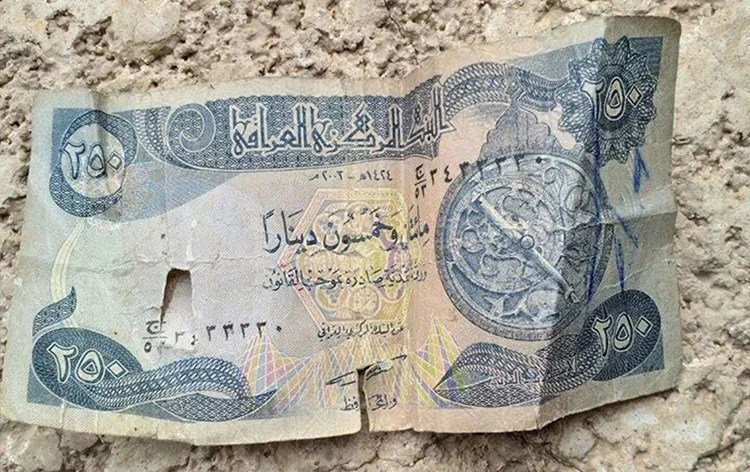
She clutched a five-thousand-dinar note that looked as if it had been through a war; it was tattered, its edges torn, and held together with a makeshift piece of tape.
Zainab says bitterly, “I don’t know who gave it to me while I was shopping in the crowded market, and when I tried to buy with it again, everyone refused it. Legally it is a national currency, but in the market’s view it is just a damaged piece of paper.”
Crisis of confidence in "small groups"
Zainab’s story is not an isolated case, but rather a reflection of the daily suffering experienced by millions of Iraqis, as worn-out paper currency, especially the small denominations (250, 500, 1000, 5000 dinars), has become a financial and psychological burden.
While worn-out currency is easy to trade in the Kurdistan Region or neighboring countries, citizens in central and southern Iraq face a popular and commercial “veto” on these papers.
Paper currency is subject to rapid deterioration, especially the smaller denominations, due to its frequent circulation and use by children in direct transactions between different shops and markets.
This is compounded by the lack of education from the Central Bank regarding the replacement of damaged currency at the bank, which has created an opening for unscrupulous individuals to take a percentage of the money in exchange for replacing damaged currency with new currency, sometimes reaching 50% of its value.
Black market for replacing damaged parts... commissions reaching 50%
This social “unacceptability” of the official currency opened the door for the emergence of a class of “weak-willed” people who exploited people’s needs and administrative complexities.
Due to poor education about central bank procedures, an illegal trade has emerged to exchange damaged currency for exorbitant commissions, sometimes reaching half the value of the amount.
Ali Al-Bahadli, a market owner, says: “Sometimes I have to leave my young son to manage the shop, and some people take advantage of his innocence and pass him quantities of small damaged denominations. At the end of the day, I find myself facing a financial loss for which I am not responsible. The only way out is for someone to come by from time to time and collect this (cash debris) in exchange for deducting a large percentage of its value, sometimes reaching 50%, so that he can later exchange it through his own means at the banks.”
As for Sobhi Hussein, a bus driver, he confirms that the banks themselves are contributing to the worsening of the crisis: “I have accumulated large amounts of 500 and 1000 denominations that are written on or torn. When I tried to deposit or exchange them in the banks, they were rejected outright, which forced me to sell them to exchange offices for a much lower value.”
Economic vision: The solution lies in "automation" and plastic currencies
Economic expert Dr. Hussein Al-Khaqani believes the crisis begins in the banks and ends in the streets. He says, “The central bank is the sole authority for issuing currency, but the refusal of some banks to accept damaged banknotes from merchants generates a defensive reaction from the public, causing them to stop using the currency for fear of losing its value.”
Al-Khaqani proposes a radical solution, which is to impose the use of electronic cards (Visa & MasterCard) on shops and gas stations, stressing that “the real application of automating transactions will reduce the amount of cash circulating manually, and protect the citizen from financial losses in small units.”
Other experts believe that solving this problem does not require additional resources, but rather a clear decision, strict implementation, and genuine coordination between the central bank, banks, and markets.
According to international reports, 15% of the money in circulation globally up to 2024 was printed using polymer material, which clearly contributed to reducing the percentage of torn money in the world.
Central Bank Guide: When to Accept Currency and When to Confiscate It?
Despite the public controversy, the Central Bank of Iraq has clear instructions aimed at protecting the value of the currency, which are as follows:
If the banknote is worn out or damaged even though it is not torn and no parts of it are missing, or if the banknote is made up of two parts (different numbers) and its area is close to the area of the original banknote and it is attached with adhesive tape, or if the banknote is attached with one or more transparent adhesive tapes along its length or width, or if the banknote has a cut in more than one corner.
Or if the banknote is defective in printing (in terms of design, size, color, or other security features that a genuine banknote has), or contains stamps or writings that do not affect its external appearance, or if the banknote has lost less than 50% of its area.
However, the Central Bank confirmed the confiscation of damaged banknotes that are not fit for circulation if changes have been made to the external appearance of the banknote as a result of writing, drawing, printing, stamps, or if it contains an adhesive substance, or if the banknote has lost 50% or more of its area, or if it is made up of two parts on one side.
If there is evidence that convinces the central bank that the missing parts of the papers have been completely destroyed, they will be partially or fully compensated. link
Tishwash: At Christmas Party, Trump Publicly Acknowledges U.S. Envoy to Iraq
Trump praised U.S. Envoy to Iraq Mark Savaya at a White House Christmas event, as the U.S. President praised sweeping first-year achievements.
A brief but pointed acknowledgment by U.S. President Donald Trump of America’s envoy to Iraq, Mark Savaya, during the White House’s 2025 Christmas party has drawn attention in diplomatic and political circles, symbolizing both personal rapport and the broader confidence projected by the administration as it declares sweeping domestic and international achievements.
In a post on X dated Dec. 19, 2025, Savaya publicly thanked President Trump for recognizing him during the White House Christmas gathering, writing: “President Trump, thank you for your kind acknowledgment at the 2025 White House Christmas party. You are truly the greatest president this country has ever had. Merry Christmas and may God bless you and the United States of America.”
The post was accompanied by a video capturing the moment in which President Trump acknowledged Savaya among a select group of invited guests, offering praise in front of the assembled audience.
The exchange occurred during what President Trump described as a particularly exclusive and tightly attended event.
Addressing the crowd, the president reflected on the significance of the gathering, noting that the Christmas party was “the toughest invitation,” emphasizing that attendance was limited and that those present held “special significance.”
Within that context, Trump called out Savaya by name, remarking, “Mark Savaya. Hey Mark! You’re looking good,” before continuing to recognize others in attendance and expressing pride in those gathered.
The moment, though brief, was emblematic of the administration’s broader messaging during the holiday season—an effort to project unity, loyalty, and confidence as the White House closed out its first year in office.
Savaya’s public response, effusive in its praise of the president, underscored the personal dimension of that acknowledgment and highlighted the envoy’s visibility within the administration at a time of heightened focus on U.S. foreign policy in the Middle East.
Mark Savaya @Mark_Savaya
President Trump, thank you for your kind acknowledgment at the 2025 White House Christmas party. You are truly the greatest president this country has ever had. Merry Christmas and may God bless you and the United States of America. link
Mot: To Save YOU Time!!!

Mot: Just as Mary is exhausted ~~~~

Seeds of Wisdom RV and Economics Updates Friday Afternoon 12-19-25
Seeds of Wisdom RV and Economics Updates Friday Afternoon 12-19-25
Good Afternoon Dinar Recaps,
Market Turmoil and Liquidity Signals: Global Stocks & Bonds Shift
Equities fluctuate as inflation cools, bond markets steady, and investor caution rises
Seeds of Wisdom RV and Economics Updates Friday Afternoon 12-19-25
Good Afternoon Dinar Recaps,
Market Turmoil and Liquidity Signals: Global Stocks & Bonds Shift
Equities fluctuate as inflation cools, bond markets steady, and investor caution rises
Overview
• Major U.S. equity mixed performance despite easing inflation
Inflation data showed slower price gains, lifting stocks though tech weakness persists.
• Continued volatility in major indexes
Indexes had consecutive losses amid renewed tech pressure and soft labor data.
• Fed liquidity measures calm year-end funding stress
U.S. Treasury bill purchases aim to reduce repo market strain into year-end.
• EU joint debt issuance welcomed by markets
Investors viewed €90B shared Ukrainian loan positively for fiscal unity.
Key Developments
Stocks show internal divergence
U.S. markets saw gains on one day while global indices oscillated, reflecting lingering AI bubble concerns and anticipation of future rate moves.
Bond markets show resilience
Yield trends stabilized as investors digest Fed liquidity support, though long-end yields remain sensitive to inflation and growth data.
EU joint borrowing signals fiscal evolution
EU’s decision to issue joint debt for Ukraine reinforces investor confidence in euro-area policy unity—even as debt supply grows.
Sentiment cautious on banks and sectors
Contrarian signals from fund managers indicate overly bullish positioning may be topping, suggesting risk management ahead.
Why It Matters
Markets are wrestling with slowing inflation, mixed economic cues, and structural shifts in fiscal policy. These dynamics influence capital flows, risk pricing, and whether markets embrace stability or correction phases—key drivers in broader financial reconfiguration.
Why It Matters to Foreign Currency Holders
Currency valuations respond to yield expectations and safe-haven flows. With global yields and fiscal policies shifting, foreign exchange portfolios may need recalibration.
Implications for the Global Reset
Pillar 1: Liquidity Anchors & Fiscal Integration
Central bank interventions and joint sovereign debt frameworks signal evolving global financial cooperation.
Pillar 2: Risk Adjustments in Capital Markets
Investor repricing of risk across equities and bonds shows deeper structural shifts in global capital allocation.
This is not just politics — it’s global finance restructuring before our eyes.
Seeds of Wisdom Team
Newshounds News™ Exclusive
Sources
~~~~~~~~~~
Banking & Crypto Integration: U.S. Fed Rewrites Rules—Opening Doors
Federal Reserve removes barriers and U.S. regulators accelerate digital-asset integration
Overview
• Fed eliminates risk stigma blocking banks from crypto services
New framework allows standard risk assessments for crypto engagement.
• CFTC expands digital assets in derivatives markets
Recent guidance allows major digital assets as acceptable collateral.
• UK crypto regulatory consultation accelerates oversight
FCA invites public feedback on comprehensive crypto rules.
• Tokenization and stablecoins reshape settlement infrastructure
Stablecoin market caps and institutional use grow as settlement tools.
Key Developments
Fed rescinds restrictive guidance
Federal Reserve withdrew official guidance that limited banks’ ability to engage with crypto, aiming for ‘responsible innovation’ under existing risk management.
CFTC enhances futures market participation
New no-action relief allows payment stablecoins, Bitcoin, Ether, and tokenized funds as collateral, boosting institutional crypto use.
UK pushes comprehensive crypto rules
Financial Conduct Authority launched a detailed consultation on crypto asset listings, safeguards, and prudential requirements, aiming for a 2027 regulatory regime.
Stablecoins become critical payments backbone
Market data shows stablecoins acting as de-facto settlement infrastructure with significant market cap and institutional interest.
Why It Matters
Regulatory clarity is pivoting toward mainstream integration of crypto into banking and capital markets. This paradigm shift pushes digital assets from fringe speculation to core financial plumbing.
Why It Matters to Foreign Currency Holders
Digital assets and tokenized money markets could influence FX liquidity, cross-border payment rails, and reserve asset composition, reshaping currency strategy.
Implications for the Global Reset
Pillar 1: Digital Assets as Financial Infrastructure
Crypto and stablecoins are evolving from speculative assets to systemic settlement layers.
Pillar 2: Aligning Traditional Finance With Decentralized Systems
Regulators balancing innovation and risk signal a new phase of hybrid finance.
This is not just politics — it’s global finance restructuring before our eyes.
Seeds of Wisdom Team
Newshounds News™ Exclusive
Sources
Reuters – “British regulator kicks off consultation on new crypto rules”
Reuters – “US regulator grants crypto firms initial approval to launch trust banks”
EconomyWatch – “U.S. Fed lifts guidance that blocked banks from crypto activities”
CEO Today – “How stablecoins are rewiring institutional settlement”
~~~~~~~~~~
Energy & Trade Realignment Signals Post-Dollar Power Shift
Strategic energy deals accelerate as nations move pricing and trade outside U.S.-centric frameworks
Overview
• Major energy producers and consumers are locking in long-term supply agreements amid rising geopolitical risk
• Energy pricing and settlement structures are quietly shifting away from exclusive dollar dependence
• Trade corridors are being redesigned to bypass traditional Western-controlled chokepoints
Key Developments
• Multiple bilateral and bloc-level energy deals finalized using alternative settlement structures
• Expansion of non-dollar energy trade among BRICS-aligned and Global South nations
• Increased state control over energy assets as governments prioritize supply security
• Long-term contracts replacing spot-market exposure amid volatility
Why It Matters
Energy has become a strategic monetary anchor in the global restructuring. As nations secure supply and experiment with non-dollar settlement, energy markets are no longer just about fuel — they are about sovereignty, currency leverage, and insulation from sanctions risk. This marks a decisive step in dismantling the post-Bretton Woods trade order.
Why It Matters to Foreign Currency Holders
For holders of foreign currencies, cross-border assets, and trade-exposed investments, energy and trade realignment carries immediate and long-term consequences:
• Energy Pricing Influences Currency Stability: As energy contracts shift toward non-dollar settlement, currencies tied to energy trade may gain relative strength, while dollar-dependent importers face increased FX volatility.
• Reduced Dollar Recycling Weakens Liquidity Assumptions: Long-term energy deals settled outside the dollar system reduce global dollar circulation, impacting liquidity conditions that foreign currency holders have historically relied upon.
• Trade Route Realignment Alters FX Demand: New bilateral and bloc-based trade corridors reshape demand for settlement currencies, affecting exchange rates beyond traditional market signals.
• Energy-Backed Trade Supports Hard-Asset Valuation: Currencies linked to energy production and commodity exports gain structural support, while fiat currencies lacking resource backing may face devaluation pressure.
For foreign currency holders, these shifts signal a move away from predictable, dollar-anchored trade flows toward a resource-influenced currency landscape, where energy access and settlement choice increasingly drive value.
Implications for the Global Reset
Pillar: De-Dollarized Trade Infrastructure
Energy pricing outside the dollar weakens its dominance in global trade settlement.
Pillar: Hard-Asset Anchoring
Energy joins gold and commodities as a stabilizing force in the emerging system.
This is not just politics — it’s global finance restructuring before our eyes.
Seeds of Wisdom Team
Newshounds News™ Exclusive
Sources
Reuters – “ Reuters – “ Turkey’s BOTAS, Mercuria sign 20‑year LNG supply deal ”
Bloomberg – “Global Energy Trade Shifts as Nations Rethink Dollar Dependence”
~~~~~~~~~~
Sovereign Debt Stress & Currency Defense: Nations Move to Protect Balance Sheets
Governments restructure debt and fortify reserves as refinancing risks intensify
Overview
• Sovereign debt pressures are accelerating as countries face elevated refinancing costs
• Governments are restructuring obligations and adjusting FX frameworks to defend currencies
• Reserve strategies are shifting amid rising volatility in global capital markets
Key Developments
• Ukraine Restructures GDP-Linked Debt: Ukraine finalized a deal to restructure $2.6 billion in GDP-linked warrants, removing a major long-term liability that could have sharply increased future repayment burdens.
• Argentina Adjusts FX Bands and Reserve Policy: Argentina modified its foreign exchange bands and outlined a reserve-building strategy to stabilize the peso and restore investor confidence.
• Yuan-Denominated Debt Expands: Global borrowers increasingly turn to yuan funding, signaling diversification away from U.S. dollar-centric debt markets.
Why It Matters
Rising sovereign debt stress highlights the fragility of the existing financial system. As governments prioritize balance-sheet survival over growth, these actions signal preparation for systemic monetary transition. Debt restructuring, FX intervention, and reserve diversification are not emergency tactics — they are strategic positioning for a changing global order.
Why It Matters to Foreign Currency Holders
For holders of foreign currencies, sovereign bonds, or cross-border assets, these developments carry direct implications:
• Currency Defense Measures Can Alter Liquidity: FX bands, controls, and intervention policies can restrict convertibility and impact exit timing for foreign holders.
• Debt Restructuring Changes Risk Profiles: Ukraine’s restructuring illustrates how payout terms, maturities, and expected returns can shift rapidly under stress.
• Reserve Diversification Impacts Valuations: Growing use of non-dollar funding — particularly yuan issuance — may affect relative currency strength and long-term purchasing power for foreign holders.
Together, these moves signal a less predictable environment for foreign currency exposure, where policy decisions increasingly override free-market assumptions.
Implications for the Global Reset
Pillar: Sovereign Balance-Sheet Defense
Governments are restructuring liabilities and reserves to survive monetary transition.
Pillar: Multipolar Currency Evolution
Debt stress accelerates diversification away from a single-reserve-currency model.
This is not just politics — it’s global finance restructuring before our eyes.
Seeds of Wisdom Team
Newshounds News™ Exclusive
Sources
Reuters – Ukraine clinches deal to restructure $2.6 billion in GDP-linked debt
Reuters – Argentina’s new FX bands and reserves policy aim to boost credibility
Reuters – Debt boom signals yuan’s arrival as a funding currency
~~~~~~~~~~
Seeds of Wisdom Team RV Currency Facts Youtube and Rumble
Newshound's News Telegram Room Link
RV Facts with Proof Links Link
RV Updates Proof links - Facts Link
Follow the Gold/Silver Rate COMEX
Follow Fast Facts
Seeds of Wisdom Team™ Website
Thank you Dinar Recaps
The 1929 Signal Flashed - Bitcoin $10k Risk, Gold Volatility & The ‘Great Reversion’
The 1929 Signal Flashed - Bitcoin $10k Risk, Gold Volatility & The ‘Great Reversion’
Kitco News: 12-18-2025
The S&P 500 is pricing in a perfect soft landing, but the physical economy is screaming recession. In this Outlook 2026 special, Mike McGlone, Senior Macro Strategist at Bloomberg Intelligence, joins Jeremy Szafron to warn that the markets are facing a "Great Reversion" similar to 1929.
McGlone points to the S&P 500-to-Gold ratio hitting a historic peak of 1.55—the same level seen before the Great Depression crash - as a signal that a massive rotation out of "paper" assets and into hard assets is imminent.
The 1929 Signal Flashed - Bitcoin $10k Risk, Gold Volatility & The ‘Great Reversion’
Kitco News: 12-18-2025
The S&P 500 is pricing in a perfect soft landing, but the physical economy is screaming recession. In this Outlook 2026 special, Mike McGlone, Senior Macro Strategist at Bloomberg Intelligence, joins Jeremy Szafron to warn that the markets are facing a "Great Reversion" similar to 1929.
McGlone points to the S&P 500-to-Gold ratio hitting a historic peak of 1.55—the same level seen before the Great Depression crash - as a signal that a massive rotation out of "paper" assets and into hard assets is imminent.
McGlone breaks down his "frightening" outlook for 2026, predicting extreme volatility where Gold could hit both $5,000 and $3,500 in the same year.
He also doubles down on his deflationary thesis, forecasting Crude Oil to collapse to $40 and warning that Bitcoin faces a purge that could eventually send it back to $10,000.
Is the "wealth effect" about to shatter? And where can investors hide if stocks and crypto roll over?
TIMESTAMPS:
00:00 Introduction and Market Overview
00:43 Interview with Mike McGlone Begins
01:10 Market Predictions and Analysis
01:44 US Stock Market Resilience
02:03 Gold and Crude Oil Trends
02:40 Cryptocurrency Market Insights
03:51 Impact of US Economic Policies
05:02 Global Economic Indicators
07:22 Energy Market Dynamics
08:45 Industrial Metals and Commodities
19:28 Silver and Copper Market Trends
22:05 Investment Strategies for 2026
22:30 US Treasury Bonds and Dollar Outlook
24:40 Year-End Predictions
26:24 Conclusion and Final Thoughts