
Seeds of Wisdom RV and Economics Updates Saturday Afternoon 8-8-26
Good Afternoon Dinar Recaps,
U.S. Debt Repricing: Is the Financial System Demanding a Higher Cost to Borrow?
Rising long-term Treasury yields are raising a larger question for global markets: how much more will investors require to finance America’s growing debt burden?
Good Afternoon Dinar Recaps,
U.S. Debt Repricing: Is the Financial System Demanding a Higher Cost to Borrow?
Rising long-term Treasury yields are raising a larger question for global markets: how much more will investors require to finance America’s growing debt burden?
OVERVIEW
U.S. long-term borrowing costs remain elevated, with the 30-year Treasury yield around 5.2%, keeping pressure on the cost of financing government debt.
Investors are increasingly weighing large government debt issuance, inflation uncertainty and reduced demand for long-duration bonds when determining the return they require to hold Treasury securities.
If higher yields become structural rather than temporary, the consequences could extend beyond Washington, affecting interest rates, asset valuations, currencies, government budgets and global capital flows.
KEY DEVELOPMENTS
1. Long-Term Treasury Yields Remain Under Pressure
The 30-year Treasury yield reached approximately 5.21% on Friday, while the 10-year yield remained around 4.65% after moving lower following weaker-than-expected July employment data.
The important issue is not simply where yields are today, but whether investors are becoming comfortable demanding higher long-term returns to hold government debt.
2. The Market May Be Repricing Long-Term Risk
A growing body of market analysis points to several structural forces pushing borrowing costs higher: heavy government and corporate debt issuance, less demand for long-duration bonds and greater policy uncertainty.
This creates an important distinction between a temporary increase in yields caused by economic news and a more lasting repricing of the cost of capital.
3. The Federal Reserve Is Only One Part of the Equation
The Federal Reserve strongly influences short-term interest rates, but long-term Treasury yields are also determined by investor expectations about inflation, economic growth, government borrowing and future interest rates.
That means the Fed could eventually lower short-term rates while longer-term Treasury yields remain elevated if investors continue demanding a larger premium for holding long-duration government debt.
4. Higher Treasury Yields Spread Through the Financial System
Treasury securities serve as a foundational reference point for pricing many other forms of credit.
When Treasury yields remain high, mortgages, corporate borrowing, consumer credit and other financial assets can face higher financing costs. Higher yields can also make bonds more competitive with stocks, potentially changing how investors allocate capital.
5. The Bigger Question Is Debt Sustainability
The United States can continue financing its obligations, but higher interest rates make each refinancing cycle more expensive.
As more existing debt matures and is replaced with securities carrying today's higher yields, the government can face a gradual increase in interest expenses and fiscal pressure.
That is why the Treasury market deserves attention even when stock markets are performing well: the bond market determines the price of money underneath much of the financial system.
WHY IT MATTERS
The Treasury market is one of the most important markets in the world. Its yields influence government financing, corporate borrowing, mortgages, investment valuations and global capital flows.
A sustained increase in long-term yields could make it more expensive for governments to finance deficits and for businesses and households to borrow.
It could also complicate Federal Reserve policy. If inflation remains elevated while long-term yields stay high, policymakers face a difficult balance between supporting economic growth and maintaining price stability.
The broader concern is whether the financial system is entering an environment in which higher borrowing costs become the new baseline rather than a temporary market adjustment.
WHY IT MATTERS TO FOREIGN CURRENCY HOLDERS
Currency value: Higher U.S. yields can attract international capital toward dollar-denominated assets, potentially supporting the dollar, although fiscal concerns can work in the opposite direction.
Purchasing power: Higher borrowing costs can eventually increase the cost of mortgages, credit and government financing, placing pressure on household purchasing power.
Capital flows: Global investors continuously compare Treasury yields with returns available in other countries. Changes in U.S. yields can therefore redirect international capital.
Exchange rates: Significant changes in Treasury yields can alter expectations for the dollar and influence exchange rates against other major currencies.
IMPLICATIONS FOR THE GLOBAL RESET
Pillar 1: Debt
The most direct Global Reset implication is Debt.
If investors require persistently higher yields to finance U.S. government borrowing, the global financial system must adjust to a higher cost of capital. Over time, that can influence fiscal policy, government spending, refinancing decisions and the ability of governments to carry increasingly large debt loads.
Pillar 2: Assets
The second directly affected pillar is Assets.
Treasury yields provide a benchmark against which many other assets are valued. A structural rise in long-term yields can change the relative attractiveness of bonds, equities, real estate, commodities and other investments as global capital searches for the best combination of yield, liquidity and protection from inflation.
CONCLUSION
The important question is not whether the U.S. Treasury market is suddenly failing. It is whether investors are gradually demanding a higher price for financing America's debt.
That distinction matters because even a gradual repricing can have enormous consequences when applied to one of the world's largest debt markets.
If higher long-term yields become structurally embedded, governments, corporations, investors and households will all have to adapt to a financial system in which money is more expensive and debt carries a higher ongoing cost.
The potential financial reset may begin not with a single dramatic event, but with the market steadily repricing the cost of debt.
Seeds of Wisdom Team
Newshounds News™ Exclusive
SOURCES
Reuters — "US stocks, bonds rally after soft jobs report; yen bounces back"
MarketWatch — "There are good reasons higher bond yields are here to stay"
~~~~~~~~~~
Seeds of Wisdom Team RV Currency Facts Youtube and Rumble
Newshound's News Telegram Room Link
RV Facts with Proof Links Link
RV Updates Proof links - Facts Link
Start Here room with Most Asked Questions Link
Follow the Gold/Silver Rate COMEX
Follow Fast Facts
Seeds of Wisdom Team™Website
Thank you Dinar Recaps
Iraq Economic News and Points To Ponder Saturday Afternoon 8-8-26
Brent Up 1% As Markets Weigh Hormuz Risks
2026-08-07 Shafaq News Oil extended gains on Friday amid further concerns around the opening of the Strait of Hormuz as Iran, working with Oman, suggested banning vessels deemed hostile from the strait and heavily fining those which violated the proposed rules.
Brent crude futures rose 80 cents, or 0.97%, to $83.29 a barrel by 0303 GMT. U.S. West Texas Intermediate futures rose 64 cents, or 0.83%, to $77.93.
Brent Up 1% As Markets Weigh Hormuz Risks
2026-08-07 Shafaq News Oil extended gains on Friday amid further concerns around the opening of the Strait of Hormuz as Iran, working with Oman, suggested banning vessels deemed hostile from the strait and heavily fining those which violated the proposed rules.
Brent crude futures rose 80 cents, or 0.97%, to $83.29 a barrel by 0303 GMT. U.S. West Texas Intermediate futures rose 64 cents, or 0.83%, to $77.93.
Oil futures settled up at over $3 a barrel on Thursday as Iran reviewed a bill to ban U.S. and Israeli vessels from the Strait of Hormuz where roughly a fifth of the world’s oil and liquefied natural gas transmitted before the war began at the end of February.
Prices fell earlier in the week as a possible solution to the ongoing conflict looked more likely but benchmark Brent breached $80 on Thursday after falling below that for the first time since July 13. Both benchmarks were headed for a weekly loss of about 8%.
Analysts said the events that have unfolded this week signalled that the hostilities between Iran and the U.S. are not yet over.
"The proximate trigger is more specific, it's (oil prices) reacting to Iran's published draft plan for Hormuz transit conditions, which would ban U.S. and Israeli vessels and require other 'hostile' countries to pay compensation before passage," said Lin Ye, vice president of commodities market – oil at consultancy Rystad Energy.
"That's not the market pricing in a bad deal, it's pricing in confirmation that whatever emerges is a managed/conditional corridor, not a restoration of normal flow," Ye added.
An Iranian lawmaker said a parliamentary committee is reviewing a preliminary bill to ban U.S., Israeli and other vessels deemed hostile from the Strait of Hormuz, and fine violators of the proposed restrictions up to 20% of cargo value, according to Fars news agency.
Iran is seeking fees of between 5% and 7% of the price of cargoes from ships using the strait, according to the senior Iranian official. Oman is discussing fees of around 3%, while Washington wants no fees at all.
Four industry sources have said the proposed deal is not easily workable due to U.S. sanctions and restrictive insurance clauses on any payments.
"This week’s signals on a potential Iran-Oman transit deal have driven a roller-coaster ride in market sentiment but as of now, (it is) left it in the dark as to what needs to happen for the agreement to be clinched," said Vandana Hari, founder of oil market analysis provider Vanda Insights.
Meanwhile, Yemen's Houthis said they carried out missile and drone attacks on "Saudi deployments" in Marib and Hadramout in Yemen on Thursday.
U.S. President Donald Trump on Thursday told reporters that he believed the war would be over soon. (REUTERS)
https://www.shafaq.com/en/Economy/Brent-up-1-as-markets-weigh-Hormuz-risks
India's Reliance Pays Record $25M To Ship Iraqi Crude
2026-08-07 Shafaq News- New Delhi India's Reliance Industries has agreed to pay a record $23 million to $25 million to charter a supertanker to transport Iraqi crude oil, highlighting soaring shipping costs and a shortage of vessels operating in the Gulf, three shipping sources told Reuters on Thursday.
Reliance booked the tanker to load 2 million barrels of Iraqi crude at 1,200 World Scale, equivalent to about 12 times the benchmark freight rate. Before the US-Iran war began in late February, similar voyages typically cost around $2 million, or 0.8 to 0.9 times the benchmark rate. The tanker will be supplied by South Korea's Sinokor, one of the few shipowners that continues to operate through the waterway despite growing security risks.
Despite the record freight costs, the sources said Reliance is still expected to save millions of dollars because Iraq's state oil marketer SOMO is offering crude at discounts of $25 to $30 per barrel against Dubai benchmarks to encourage buyers to lift cargoes from terminals in Hormuz.
A day earlier, Reuters reported that shipping traffic through the strait had fallen sharply as markets monitored Iran-Oman talks on reopening the strategic waterway. Vessel-tracking data showed only 33 ships transited the strait between Monday and Thursday, down from 50 during the same period a week earlier.
Iraq's oil revenues have declined sharply this year. SOMO figures showed the country earned $18.679 billion from exporting 268.1 million barrels of crude in the first half of 2026, compared with more than 606 million barrels exported during the same period of 2025.
https://www.shafaq.com/en/Economy/India-s-Reliance-pays-record-25M-to-ship-Iraqi-crude
Syria Exports 2M Tons Of Iraqi Oil Via Baniyas
2026-08-07 Shafaq News- Damascus Syria exported more than 2 million metric tons of Iraqi oil through Baniyas Port under the transit system since the beginning of the year, the Syrian General Authority for Land and Sea Border Crossings stated on Thursday.
About 30 tankers carrying fuel oil and refined petroleum products transported the shipments through the port, which received 108 tankers loaded with about 3.23 million metric tons of various petroleum products since the beginning of 2026.
Read more: Kirkuk–Baniyas Pipeline: Iraq’s direct oil lifeline to the Mediterranean
Last month, Iraq and Syria signed a US-sponsored memorandum of understanding to restart the Kirkuk-Baniyas oil pipeline, paving the way for Iraqi crude exports to Mediterranean ports through Syrian territory. The project aims to diversify Iraq's export routes and strengthen economic cooperation between the two countries.
Read more: Preparatory studies begin on Kirkuk-Baniyas pipeline rehabilitation
https://www.shafaq.com/en/Economy/Syria-exports-2M-tons-of-Iraqi-oil-via-Baniyas
Currency Issuance Rose 13.8 Percent Through May
2026-08-07 Shafaq News- Baghdad Iraq's currency issuance rose 13.8 percent in the first five months of 2026, reaching about 113.56 trillion Iraqi dinars (about $86B) by the end of May, an increase of 13.761 trillion dinars from the close of 2025 (about $10.4B), the financial and economic adviser to the prime minister, Mudhhir Mohammed Salih, told Shafaq News.
Salih said the rise was an exceptional response to a sharp fall in oil revenue, not a monetary expansion meant to stimulate demand.
Currency issuance refers to the total value of banknotes the Central Bank of Iraq has put into circulation. The figure stood at 99.799 trillion dinars at the end of December 2025, according to data tracked by Shafaq News.
The measure climbed to 101.431 trillion dinars in January 2026, 104.614 trillion in February, 108.985 trillion in March, and 112.896 trillion in April, before reaching 113.560 trillion in May, according to the Shafaq News survey. The largest monthly rise came in March, at about 4.371 trillion dinars, followed by 3.911 trillion in April.
The expansion coincided with a financial crisis tied to a steep drop in oil exports, Salih said. Iraqi exports fell to about 15 percent of their usual levels as a result of the Strait of Hormuz conflict —the waterway through which Iraq shipped about 95% of its total oil exports— before recovering to around 30 percent. The issuance met the government's need for liquidity to cover public-sector salaries and essential spending amid the revenue shortfall, rather than to expand demand, he added.
Read more: Iraq turns to bank borrowing to cover August salaries amid oil-revenue collapse
Most of those funding needs were met by widening domestic public debt through treasury bills, which state banks bought and then rediscounted at the central bank; as a result, the bank now holds more than 60 percent of government debt instruments in its investment portfolio, according to Salih.
Salih described the rise as "an exceptional response to a temporary external financial shock," rather than a sign of monetary or financial breakdown.
The risk of the expansion should be judged by monetary stability indicators rather than the size of issuance alone, Salih said. Foreign reserves still covered the money supply above the 75 percent threshold that international practice treats as a marker of a sound monetary position, and annual inflation held steady at about 4.5 percent, indicating the increase had not yet translated into broad inflationary pressure.
Read more: Delayed 2026 budget pushes Iraq toward 2027 plan
Sustaining the path over a long period carries growing risks, Salih cautioned. Repeated reliance on monetizing public debt through the central bank could generate inflationary pressure over time, or erode reserve coverage, if oil revenue does not recover sufficiently.
“Monetary policy in the next phase would depend, in coordination with fiscal policy, on preserving reserve adequacy, limiting monetary financing of the deficit, and rebuilding balance between public revenue and government spending as oil conditions improve.”
The pace slowed at the end of the period, with the monthly increase falling to about 664 billion dinars in May, according to Shafaq News survey. *1 US dollar = 1310 dinars
https://www.shafaq.com/en/Economy/Currency-issuance-rose-13-8-percent-through-May
Basrah Crude Drops Over 2% On The Week
2026-08-08 Shafaq News- Basrah Basrah Heavy and Medium crude posted weekly losses of $1.42 a barrel, or 2.56% and 2.49%, respectively, despite rising in the final trading session, while global oil prices closed lower.
Basrah Heavy gained $2.16 a barrel, or 4.10%, in the final session to settle at $54.79. Basrah Medium also rose $2.16 a barrel, or 3.92%, to close at $57.09.
Global oil futures ended the session lower. West Texas Intermediate fell $0.23, or 0.30%, to $77.06 a barrel, while Brent declined $0.30, or 0.36%, to $82.19.
https://www.shafaq.com/en/Economy/Basrah-crude-drops-over-2-on-the-week
US Dollar Edges Lower In Baghdad And Erbil
2026-08-08 Shafaq News- Baghdad/ Erbil The US dollar opened Saturday's trading lower in Iraq, hovering around 152,000 dinars per 100 dollars in Baghdad and Erbil.
According to Shafaq News market survey, the dollar traded in Baghdad's Al-Kifah and Al-Harithiya exchanges at 152,000 dinars per 100 dollars, down from Thursday's 152,050 dinars.
In the Iraqi capital, exchange shops sold the dollar at 152,500 dinars and bought it at 151,500 dinars.
In Erbil, selling prices stood at 152,150 dinars and buying prices at 152,050 dinars.
https://www.shafaq.com/en/Economy/US-Dollar-edges-lower-in-Baghdad-and-Erbil-9
Gold Prices Rise In Baghdad, Erbil Markets
2026-08-08 Shafaq News- Baghdad/ Erbil On Saturday, gold prices hovered around 930,000 IQD per mithqal in Baghdad and Erbil markets, continuing their upward trend, according to a survey by Shafaq News Agency.
Gold prices on Baghdad's Al-Nahr Street recorded a selling price of 937,000 IQD per mithqal (equivalent to five grams) for 21-carat gold, including Gulf, Turkish, and European varieties, with a buying price of 933,000 IQD. The same gold had sold for 920,000 IQD on Thursday.
The selling price for 21-carat Iraqi gold stood at 907,000 IQD, with a buying price of 903,000 IQD.
In jewelry stores, the selling price per mithqal of 21-carat Gulf gold ranged between 940,000 and 950,000 IQD, while Iraqi gold sold for between 910,000 and 920,000 IQD.
In Erbil, 22-carat gold was sold at 973,000 IQD per mithqal, 21-carat gold at 930,000 IQD, and 18-carat gold at 797,000 IQD.
https://www.shafaq.com/en/Economy/Gold-prices-rise-in-Baghdad-Erbil-markets-7-1
*********************
Iraq Oil Minister Details Hormuz Talks, Production Outlook
2026-08-08 Shafaq News- Baghdad Iraq's Oil Minister Basim Mohammed Khudair confirmed on Saturday that the country is currently producing 2.7 million barrels of oil per day, with exports ranging between 1.5 and 1.7 million barrels daily, revealing that talks are underway with Iran to allow Iraqi oil exports through the Strait of Hormuz, though no agreement has yet been implemented.
Despite challenges linked to the strait, the ministry has managed to secure oil products for citizens, Khudair said at a press conference, adding that the ministry is working to develop the oil industry, increase production and exports, build infrastructure, boost investment, and attract global companies to optimally invest in oil and gas.
He noted that exploration teams affiliated with the ministry are conducting surveys in several provinces to offset depleted reserves, explaining that the ministry is pursuing two parallel tracks on the gas file: ending gas flaring and investing in gas fields. "Iraq spends large sums on gas, so we are working to invest in it, with 14 contracts awarded to global companies for this purpose.”
Khudair said his recent visit to the United States marked “a new chapter of cooperation with global companies,” stressing that the presence of American firms in Iraq “reflects the attractiveness of the country's investment environment.”
Global companies are capable of training Iraqi personnel and contributing to infrastructure development, as well as attracting large numbers of workers, Khudair stated, noting that the ministry signed memoranda of understanding and contracts covering seven provisions, including two contracts for developing fields and investing in associated oil and gas, alongside an annex to the Qurna-2 agreement and the Nasiriyah project and four blocks.
The minister also added that three memoranda of understanding signed with American companies would provide significant investment capacity, pointing also to a step related to an export project through the port of Aqaba.
The Basra-Fishkhabour pipeline project will be built under a build-operate-transfer (BOT) system, with a company handling construction and operation under an investment arrangement, according to the minister. Current oil output cannot reach previous levels, he said, but exports could return to prior volumes once the war ends.
On the oil agreement with Turkiye, Khudair said the deal had been renewed with certain conditions, while Ankara had proposed limiting the arrangement to oil transport with Iraqi participation in some projects, clarifying that the planned quantity of 700,000 barrels cannot be supplied through Kirkuk.
Regarding the oil and gas file in the Kurdistan Region of Iraq (KRI), Khudair confirmed the existence of a tripartite agreement between the federal government, the region, and oil companies, which can be amended through negotiation.
The ministry does not differentiate between citizens in Kurdistan and those in any other province, he stressed. “The KRI file requires extensive dialogue, with continued negotiation essential to reaching solutions that serve the national interest.”
Read more: Iraq-US investment deals depend on implementation, experts say
https://www.shafaq.com/en/Economy/Iraq-oil-minister-details-Hormuz-talks-production-outlook
Ariel: Iraq Only has Two Options
Ariel: Iraq Only has Two Options
8-8-2026
The Forex Payback: Apple Rails, CBI Gold, and the End of the Iraq Occupation Ledger (Sept 30th Recoup?)
Iraq is going through financial crisis … no financial liquidity available for them.
They Only Have Two Options
Ariel: Iraq Only has Two Options
8-8-2026
The Forex Payback: Apple Rails, CBI Gold, and the End of the Iraq Occupation Ledger (Sept 30th Recoup?)
Iraq is going through financial crisis … no financial liquidity available for them.
They Only Have Two Options
• Use the cash reserve held in foreign countries to support the currency value or use the gold in CBI as collateral in order to get a loan to pay salaries, which is by itself is a huge risk losing it if they couldn’t pay back the loan
• Iraq can keep the gold at the central bank and back up the currency with it… and issue new notes without three zeros
From Majeed: – Yesterday, Iraq news channels saying the central Bank of Iraq opened a file they didn’t wanna open for a long time which is changing your exchange rate to solve the financial crisis. And now the CBI is discussing implementing it.
• The USA shipped $500 million to Iraq and they told them the amount is for traveling purposes, meaning anyone wanna travel out of Iraq they have to exchange their currency with dollars in order to leave the country. So the $500 million was not for salaries. The salary crisis need the rate to be changed.
• The minister of finance in Iraq will be meeting with the parliament tomorrow, Saturday to see why the country is bankrupt.
The CBI Gold Asset Backing vs. Collateral Loan
Iraq’s liquidity crisis has forced the CBI to open the exchange rate file because the alternatives are systemic s*****e. Pledging the 33 trillion dinars worth of gold as loan collateral risks losing the sovereign reserve to IMF/Cabal debt structures if Iraq defaults. It is a trap.
The second option backing the currency with the gold and issuing new notes without three zeros is the White Hat path. Deleting the zeros is a redenomination, but backing it with the physical gold at CBI transforms it into a sovereign revaluation. It recapitalizes the currency internally without Cabal debt strings. The Finance Minister’s emergency parliament session Saturday is to formalize this path. The liquidity crisis is the crisis required to justify the reset.
The September 30 Deadline
Sept 30, 2026, is the end of the U.S. fiscal year. This is the mechanical hard stop for the current budget cycle. It is not an arbitrary date; it is the operational fuse.
If Iraq executes the three-zero deletion and digital wallet rollout before Sept 30, the new exchange rate hits the global system before the U.S. has to reconcile its own FY2026 books. The U.S. Treasury’s foreign currency valuations, the Fed’s swap lines, and the IMF’s SDR baskets all have to adjust to the new Iraqi rate in the next fiscal cycle.
Furthermore, Congressional appropriations and continuing resolutions expire Sept 30. If the Clarity Act remains stalled, the SEC steps in Oct 1 under existing law. The start of FY2027 is the legal trigger for SEC enforcement. The Q4 rate cuts inject the fiat liquidity, the SEC provides the regulatory framework, and the CBI provides the asset-backed digital currency.
All timelines converge on Sept 30.
Read Full Article:
https://www.patreon.com/Prolotario1/posts/forex-payback-of-166065353
https://dinarchronicles.com/2026/08/08/prolotario-iraq-only-has-two-options/
Iraq Economic News and Points To Ponder Saturday Morning 8-8-26
80% Of Money Is Outside Banks... Former Mp Calls For A New Strategy To Attract Hoarded Funds
Information/Baghdad... Former MP Abbas Sarout confirmed on Thursday that 80% of Iraqi money is hoarded in homes, away from banks, noting the need to reconsider the strategy for attracting funds to the banking system.
Sarout explained to Al-Maalouma that "Iraq is suffering from a liquidity crisis that has begun to affect salary distribution, given that 80% of the money is hoarded outside banks.
80% Of Money Is Outside Banks... Former Mp Calls For A New Strategy To Attract Hoarded Funds
Information/Baghdad... Former MP Abbas Sarout confirmed on Thursday that 80% of Iraqi money is hoarded in homes, away from banks, noting the need to reconsider the strategy for attracting funds to the banking system.
Sarout explained to Al-Maalouma that "Iraq is suffering from a liquidity crisis that has begun to affect salary distribution, given that 80% of the money is hoarded outside banks.
This requires serious attention to adopt a strategy that creates incentives to encourage citizens from all walks of life to deposit their money in banks and adopt electronic payment methods, a strategy used in most countries worldwide."
He added that "this mechanism ensures the government's ability to distribute salaries, grant loans and advances, and conduct financial transactions," pointing out that "the majority of financial transactions in Iraq still rely on traditional methods, and this has many drawbacks."
He stressed "the necessity of citizens having confidence to deposit their money in banks, as this will create balance, sustain the flow of funds, and foster greater flexibility, particularly in ensuring the financial capacity to meet obligations." End/25
Iraq Moves To Cover 13 Trillion Dinar Deficit
Shanya Salar
At a Glance
Deficit reaches 13 trillion IQD
Revenues fall short of spending
50 trillion IQD needed by year-end
Oil exports and reserves under review
Information obtained by Channel8 indicates that Iraq is facing a 13 trillion Iraqi dinar fiscal deficit during the first five months of the year, prompting the government to consider expanded oil exports, customs reforms, debt recovery, and the possible use of foreign currency reserves to cover its financial obligations.
Key Statements and Focus Area
Government spending reached more than 46 trillion IQD, compared with 33 trillion IQD in revenues during the first five months.
Iraq requires an additional 50 trillion IQD over the remaining five months to cover salaries and core operating expenses.
Authorities are targeting exports of up to 750,000 barrels per day through Ceyhan while increasing output from the Kirkuk fields.
Iraq holds approximately $93 billion in foreign currency reserves that could be used to absorb financial pressures.
Iraq recorded a fiscal deficit of approximately 13 trillion Iraqi dinars during the first five months of the year, as government expenditures exceeded revenues.
Public spending surpassed 46 trillion dinars, while total revenues reached around 33 trillion dinars, leaving a significant gap that Baghdad must address as it approaches the final five months of the year.
The government is estimated to require an additional 50 trillion dinars to maintain public-sector salaries and essential operating expenditures through the end of the year.
Baghdad is prioritizing increased crude exports as one of its main measures to strengthen state revenues.
Iraq is working toward exporting 750,000 barrels of crude oil per day through Turkey's Port of Ceyhan while also seeking to increase production from the Kirkuk oil fields.
To attract buyers and maintain market share, Iraq is offering discounts of between $27 and $30 per barrel on Basra Medium and Basra Heavy crude grades.
The government is also considering the Syrian route as an additional export channel.
Authorities are pursuing reforms at land and air border crossings to increase non-oil revenues and strengthen customs collection.
The government also intends to recover part of the approximately 64 trillion IQD in outstanding state advances and loans issued to citizens and companies.
These measures are intended to provide additional revenue without relying entirely on oil exports or new borrowing.
Iraq currently holds approximately $93 billion in foreign currency reserves, providing the government with a potential financial buffer during the current revenue shortfall.
Authorities could draw on the reserves to absorb part of the fiscal shock, similar to the approach taken in 2014, when reserves fell to approximately $38 billion as Iraq financed the war against ISIS.
The Iraqi Parliament is scheduled to hold an extraordinary session to discuss the country's financial situation and hear from the Minister of Finance.
The Parliamentary Finance Committee is also examining options, including external borrowing and the possibility of issuing additional currency.
Economic experts have warned that relying on new debt to finance recurring operational expenditures, particularly public-sector salaries, could create deeper structural problems for Iraq's finances.
FYI
Iraq's public finances remain heavily dependent on oil revenues, while salaries, pensions, and government operating costs account for a large share of recurring expenditure.
The current deficit has increased pressure on Baghdad to expand oil exports, strengthen non-oil revenue collection, recover outstanding state funds, and manage its foreign-currency reserves while avoiding financing recurring expenditures through unsustainable borrowing. https://channel8.com/english/news/63256
After Delays In Payment, A Member Of Parliament Proposes A "Virtual Currency" To Solve The Salary Crisis.
2026-08-07 Shafaq News - Baghdad On Friday, Saad Al-Awadi, the deputy head of the National Approach parliamentary bloc, proposed a plan to secure the salaries of employees and retirees through the "digital dinar" and end the "cash crisis" in Iraq.
In a statement received by Shafaq News Agency, MP Al-Awadi said that this initiative is "a comprehensive economic initiative to address the cash liquidity crisis and ensure the stability of salary payments for employees and retirees, through the launch of the (digital Iraqi dinar) and to facilitate access to financial entitlements for employees without the need to deal with paper money."
He explained that "the initiative aims directly to save employees from the repercussions of delayed salaries and liquidity bottlenecks in banks and disbursement outlets, by depositing the salary as a digital, encrypted, and protected currency in local financial wallets, which allows citizens to use their salaries immediately to purchase needs and make electronic payments without waiting for (cash) to be available."
Al-Awadi explained that “the current cash bottleneck is not due to a lack of resources, but rather to the hoarding and stockpiling of paper currency outside the banking system at record rates, stressing that reliance on the digital dinar approved by the Central Bank will eliminate salary delays, reduce operational costs for printing and transporting money, and provide protection for citizens’ purchasing power away from domestic borrowing policies.”
He added that "the proposed roadmap also includes obligating the service and commercial sectors to accept digital transactions, and providing incentive packages and government guarantees to restore confidence in the banking sector."
He called on the government, the central bank and the relevant parliamentary committees to hold an urgent joint session to develop the legislative and technical frameworks necessary for implementing the project.
It should be noted that Iraq still lacks official cash platforms or electronic trading systems, and the most famous and widespread digital currencies traded globally, Bitcoin, are still not adopted on the ground in buying, selling and cash transactions https://www.shafaq.com/ar/سیاسة/بعد-ت-خر-صرفها-نا-ب-يقترح-عملة-افتراضية-لحل-زمة-الرواتب
MP Proposes Digital Dinar To Fix Iraq's Cash Shortage
2026-08-07 / Shafaq News- Baghdad MP Saad al-Awadi, deputy head of the National Approach parliamentary bloc, proposed on Friday a plan to secure salary payments for state employees and retirees through a "digital dinar" and end Iraq's ongoing cash crisis.
In a statement, al-Awadi said the initiative represents “a comprehensive economic plan to address the liquidity crisis and ensure stable salary disbursement through the launch of a digital Iraqi dinar,” easing access to financial entitlements for employees without requiring paper cash transactions.
The plan aims directly to shield employees from the effects of salary delays and liquidity bottlenecks at banks and disbursement outlets, he explained, by depositing salaries as encrypted, protected digital currency into designated financial wallets, allowing citizens to immediately use their salaries for purchases and electronic payments without waiting for cash to become available.
“The current cash bottleneck does not stem from a lack of resources but from paper currency being withheld and hoarded outside the banking system at record rates,” al-Awadi stressed, adding that reliance on a central bank-issued digital dinar would eliminate salary delays, reduce the operational costs of printing and transporting cash, and protect citizens' purchasing power without resorting to domestic borrowing policies.
Read more: Iraq faces ‘cash-flow’ strain, not bankruptcy
His proposed roadmap also includes requiring service and commercial sectors to accept digital transactions, along with incentive packages and government guarantees to restore confidence in the banking sector.
Al-Awadi called on the government, the Central Bank, and the relevant parliamentary committees to hold an urgent joint session to establish the legislative and technical frameworks needed to implement the project.
Iraq still lacks official digital payment platforms or electronic trading systems, and globally circulated cryptocurrencies, most notably Bitcoin, the most widely used, remain unadopted in practice for buying, selling, and cash transactions in the country.
Read more: Delayed public salaries push Iraq’s Diyalafamilies into debt
https://www.shafaq.com/en/Iraq/MP-proposes-digital-dinar-to-fix-Iraq-s-cash-shortage
Seeds of Wisdom RV and Economics Updates Saturday Morning 8-8-26
Good Morning Dinar Recaps,
Hormuz Shipping Deal: Markets Test Whether Energy Supply Can Normalize
An emerging Iran-Oman shipping agreement could ease global energy pressures, but markets remain cautious until commercial traffic through the Strait of Hormuz returns to normal.
Good Morning Dinar Recaps,
Hormuz Shipping Deal: Markets Test Whether Energy Supply Can Normalize
An emerging Iran-Oman shipping agreement could ease global energy pressures, but markets remain cautious until commercial traffic through the Strait of Hormuz returns to normal.
OVERVIEW
Diplomatic progress between Iran and Oman is raising expectations that commercial shipping through the Strait of Hormuz could resume with fewer restrictions.
Oil markets remain cautious, because an agreement has not yet translated into fully restored tanker traffic or normalized energy flows.
If shipping does normalize, the impact could extend well beyond oil, potentially reducing inflation pressure, easing supply-chain risks, and improving the outlook for global markets.
KEY DEVELOPMENTS
1. Iran-Oman Talks Move Toward a Shipping Agreement
Negotiations between Iran and Oman have advanced toward an agreement designed to establish conditions for commercial shipping through the Strait of Hormuz.
A U.S. official told Reuters that a deal is expected soon and that, if implemented, the United States would lift its blockade of Iranian ports. The U.S. position remains conditional on Iran fulfilling its commitments under the agreement.
2. Markets Are Betting on Lower Energy Risk
The possibility of restored shipping has already influenced energy markets, as traders assess whether the geopolitical risk premium embedded in oil prices can continue to decline.
However, oil prices remain sensitive to developments because the market has not yet seen a full return to normal shipping conditions. The uncertainty means energy markets remain headline-driven rather than fully stabilized.
3. The Real Test Is Commercial Traffic
The announcement of an agreement is only the first step. The more important test for global markets will be whether tankers actually begin moving consistently through the Strait without new attacks, restrictions or delays.
This distinction matters because markets can price in an expected reopening well before physical energy flows recover. A sustained increase in vessel traffic would provide stronger evidence that the disruption is genuinely reversing.
4. Energy Normalization Could Reduce Inflation Pressure
A reliable reopening would remove some of the supply risk that has pushed energy costs higher during the conflict.
Lower and more predictable energy prices could eventually help reduce transportation and production costs, easing inflationary pressure on economies that depend heavily on imported oil and LNG.
5. Hormuz Is Becoming a Test of Global Trade Stability
The Strait of Hormuz is not simply an energy issue. It is a critical connection between energy producers, shipping networks, manufacturers and consumers around the world.
A durable reopening would therefore represent more than a decline in oil prices. It could signal that one of the largest disruptions to global trade and energy flows is beginning to unwind.
WHY IT MATTERS
The global economy is highly sensitive to energy prices because oil and natural gas influence transportation, manufacturing, food production and consumer costs.
For financial markets, the difference between continued disruption and normalized shipping is substantial. A sustained reopening could lower the inflation risk premium and improve expectations for economic growth and monetary policy.
For governments and central banks, more stable energy prices could provide additional room to manage interest rates, inflation and borrowing costs without another major energy-driven shock.
The broader issue is whether the global system can move from geopolitical disruption back toward predictable trade and energy flows.
WHY IT MATTERS TO FOREIGN CURRENCY HOLDERS
Currency value: Lower energy costs can reduce inflation pressure in energy-importing countries, potentially supporting currency stability.
Purchasing power: Lower fuel and transportation costs can improve household purchasing power if savings eventually flow through to consumers.
Capital flows: Reduced geopolitical risk can encourage investors to move capital back toward higher-risk international markets.
Exchange rates: A sustained decline in energy prices could benefit oil-importing economies while reducing some of the advantage enjoyed by major energy exporters.
IMPLICATIONS FOR THE GLOBAL RESET
Pillar 1: Energy
The Strait of Hormuz situation demonstrates how control of critical energy routes can influence inflation, currencies, interest rates and global economic stability.
If shipping returns to normal, the resulting reduction in energy risk could become an important stabilizing force for the global economy. The key question is whether the improvement proves durable rather than temporary.
Pillar 2: Trade
A functioning Strait of Hormuz is essential to predictable international commerce. A successful agreement could demonstrate that diplomacy can restore a major global trade route after severe disruption.
That would be significant for a global financial system increasingly focused on supply-chain resilience, alternative trade routes and the security of strategic transportation corridors.
CONCLUSION
The emerging Iran-Oman shipping agreement is an important development, but the market has not yet reached the point of declaring the Hormuz crisis resolved.
The next phase will be measured by physical evidence: more vessels transiting the Strait, fewer shipping restrictions and a sustained return toward normal energy flows.
If those conditions develop, the economic consequences could extend far beyond oil, potentially easing inflation and reducing pressure across global markets.
The real breakthrough will not be the announcement of a deal—it will be the return of reliable global trade.
Seeds of Wisdom Team
Newshounds News™ Exclusive
SOURCES
Reuters — "US official: We expect deal soon between Iran and Oman on Strait of Hormuz"
Reuters — "Brent climbs $1 on uncertainty over end to Iran war"
~~~~~~~~~~
🌱 A Message to Our Currency Holders🌱
If you’ve been holding foreign currency for many years, you were not foolish.
You were not wrong to believe the global financial system would change.
What failed was not your patience — it was the information you were given.
For years, dates, rumors, and personalities replaced facts, structure, and proof. “This week” predictions created cycles of hope and disappointment that were never based on how currencies actually change.
That is not your failure.
Our mission here is different: • No dates • No rates • No hype • No gurus
Instead, we focus on:
• Verifiable developments • Institutional evidence
• Global financial structure • Where countries actually sit in the process
Currency value changes only come after sovereignty, trade, banking, settlement systems, and fiscal coordination are in place. History and institutions confirm this sequence.
You will see silence. You will see denials. That is not delay — that is discipline.
Protect your identity. Organize your documents. Verify everything.
Never hand your discernment to anyone who cannot show proof.
You deserve truth — not timelines.
Seeds of Wisdom Team
Newshounds News
~~~~~~~~~~
Seeds of Wisdom Team RV Currency Facts Youtube and Rumble
Newshound's News Telegram Room Link
RV Facts with Proof Links Link
RV Updates Proof links - Facts Link
Start Here room with Most Asked Questions Link
Follow the Gold/Silver Rate COMEX
Follow Fast Facts
Seeds of Wisdom Team™Website
Thank you Dinar Recaps
US & China are Quietly Buying Gold to Devalue Currency | Andy Schectman
US & China are Quietly Buying Gold to Devalue Currency | Andy Schectman
WTFinance and Miles Frabklin Media:
On this episode of the WTFinance podcast I had the pleasure of welcoming back Andy Schectman. Andy is the CO of Miles Franklin Precious Metals.
During our conversation we spoke about the current situation in the economy, the structural issues that are facing the monetary system, what this means for gold and precious metals, creation of multipolar systems and more.
US & China are Quietly Buying Gold to Devalue Currency | Andy Schectman
WTFinance and Miles Frabklin Media:
On this episode of the WTFinance podcast I had the pleasure of welcoming back Andy Schectman. Andy is the CO of Miles Franklin Precious Metals.
During our conversation we spoke about the current situation in the economy, the structural issues that are facing the monetary system, what this means for gold and precious metals, creation of multipolar systems and more.
Ross: The IQD is Well on its Way
Ross: The IQD is Well on its Way
8-7-2026
No one is talking about how big this actually is.
CBI is actively working to bring Apple, Google, and Meta into Iraq under proper licensing and payment regulation.
Those companies don’t take cash.
They don’t take .00076 dinars
Ross: The IQD is Well on its Way
8-7-2026
No one is talking about how big this actually is.
CBI is actively working to bring Apple, Google, and Meta into Iraq under proper licensing and payment regulation.
Those companies don’t take cash.
They don’t take .00076 dinars
So how exactly are Iraqi citizens supposed to participate in the modern digital economy?
The rails have to work.
IQD has to work.
This meeting is about more than just “regulation.”
AnnaMarieF:CBI: The Central Bank Governor discusses with the President of the Media and Communications Authority the regulation of digital payments. His Excellency the Governor of the Central Bank of Iraq, Mr. Nizar Nasser Hussein, met with the Chairman of the Executive Body of the Media and Communications Commission, Mr. Baligh Abu Kalal, to discuss mechanisms for enhancing joint cooperation in regulating digital payment services and developing the legislative and regulatory environment for the digital economy in Iraq.
Iraq is still heavily cash-based overall.
Full, clean integration of these platforms’ payment rails (Apple Pay proper, Google Pay as a real wallet, Meta payments, smooth international settlement) is not fully there yet.
That is literally what today’s meeting is about — regulating and licensing them so their systems can operate properly inside Iraq.
Cooperation between Erbil and Baghdad is absolutely critical to the HCL and consequentially the revaluation of IQD so be grateful for these headlines that are lacking even the slightest signs of confrontation.
AnnaMarieF:The Prime Minister assures the President of the Kurdistan Region of the government's commitment to addressing all pending files in accordance with the constitution and the law, in a manner that preserves Iraq's unity and sovereignty and strengthens national partnership.
Iraq has two problems:
1. Managing the liquidity emergency
2. Locking in a hard deadline on non-state arms
This is the exact environment where CBI/government pressure for rate realism, digital rails, or reserve management decisions tends to accelerate.
Salary delays create political urgency, the Sept 30 arms deadline creates a sovereignty deadline.
Both point toward the same requirement: a more coherent, investable Iraqi state that can actually collect and deploy its own resources.
IQD is a reflection of Iraq’s progress in saving itself.
Your pay day is when Iraq overcomes its challenges and finally prospers.
What I find fascinating about the lightning-speed progress toward the revaluation of IQD right now is that the moment President Trump “returned to office” in 2024 the CBI launched major banking sector reform initiatives that are now peaking in 2026 — right on schedule, at the convergence of the Iran War + crypto laws/regulation advancing.
No one can deny the “coincidence” of Iraq getting its act together all of a sudden.
Banking cleanup. Restricted banks getting cleared. Cashless mandate live. Directed lending expanding. Digital rails advancing.
Iranian influence being removed.
Crypto clarity advancing.
All of it accelerated after Trump returned and this was well before Al-Zaidi ignited a blitzkrieg of progress in Iraq.
Everything is moving on all fronts at once and no one realizes how much actually kick started behind the scenes the moment Nov 2024 struck.
Reset Intelligence:Scott B is doing the rounds again today. Wall Street now calls his playbook a 2nd Bretton Woods, and Iraq is coming off the punishment list piece by piece. Airline delisted. Hormuz route mapped. And the CBI building the licensing to put Apple and Google inside Iraq's payment rails. Nobody builds rails like that for a currency meant to stay where it is. As @Ross_ptm would say, "IQD hopium is justified right now." The man rebuilding the global monetary order is clearing Iraq's lane into it. Ep 66 connects the dots
Watch on X: https://twitter.com/i/status/2085329971963449523
And what’s even more interesting is the fact that Iraq has made so much progress in such a short time “all of a sudden” meanwhile they’re under the massive pressure of a liquidity crisis due to the process of removing Iranian influence.
I refuse to believe any of it is left to chance and that a plan was not laid out well in advance by the US Treasury to guide Iraq through this economic rebirth.
IQD is well on its way and no one can deny the ever increasing hype of hopium infused headlines bombing us investors to the point where you need MASSIVE news just to get excited right now.
Massive news is happening on an almost daily and weekly basis. Don’t take it for granted.
Security solidification with the Gulf is the baseline headline.
The real signal is investment deals between Iraq and Saudi Arabia.
That’s what makes Al-Zaidi’s visit actually fruitful — a stepping stone for IQD.
The Iran War proved why IQD never could have revalued without Iraq first boosting non-oil revenues.
The Iraqi Dinar should reflect Iraq’s true wealth of resources… but what happens when they can’t sell the oil?
Imagine if the dinar had revalued before the war.
How do you defend a stronger currency when you’re still 90%+ dependent on oil revenues that just got crippled?
Now they’re in a pure sink-or-swim position.
The tools they’re reaching for say everything: tax reforms, expanding ASYCUDA customs automation at the borders to choke smuggling and leakage, selling confiscated properties, and recovering stolen public funds held abroad.
That last one hits especially clean. Recovering the stolen money brings fresh revenue into the budget and stops the ongoing bleed. But the deeper win is that the same corruption being dismantled was the Iranian influence that had been rotting Iraq’s economy from the inside. As the war continues, every recovery is also cutting those channels out.
All by design.
Funny how the Strait of Hormuz turned into the exact pressure that forced this acceleration.
No other country is about to see a greater economic makeover as the end result.
Channel8English: Iraq's budget deficit has expanded to between 70 trillion and 80 trillion Iraqi dinars, driven by lower oil prices and a sharp decline in crude export revenues, prompting the government to suspend hundreds of development projects and accelerate measures to increase non-oil income. Read more:https://channel8.com/english/news/63094
Goran is not some random Twitter account. He speaks for the actual traders in one of the main Kurdistan currency markets. When he talks, the parallel market listens.
The dinar can strengthen meaningfully if two conditions line up:
1. Political conditions inside Iraq stabilize
2. Tension around critical trade routes (specifically the Strait of Hormuz) eases
His specific call: the parallel rate could move to 142,000–147,000 IQD per $100.
Official CBI rate remains in the low 1,300s per dollar (roughly 130–132k per $100). The gap is still wide, but a sustained move into the mid-140s would be a clear narrowing.
Channel8English: Slemani Market Spokesperson Jabar Goran Predicts Iraqi Dinar Strengthening Speaking to Channel8, Jabar Goran, spokesperson for the Slemani currency market, stated that the Iraqi dinar could strengthen against the US dollar if political conditions in Iraq stabilize and tension surrounding vital trade routes, such as the Strait of Hormuz, eases. Key Highlights: Economic Impact: Political stability in Iraq and uninterrupted maritime trade are crucial drivers for strengthening the local currency.
Al-Zaidi is acting like a PM who intends to keep the machine running and force the political system to close the gaps rather than wait indefinitely, removing the risk of the incomplete structure becoming an excuse for drift.
The trajectory is toward completion of the cabinet rather than prolonged stagnation.
Discomfort is the key to achieving growth in life.
Iraq is VERY uncomfortable right now.
The liquidity situation is actually quite dire.
The pressure building, the clock ticking, this is how the reforms will get pushed across the finish line.
Surviving the aftermath of the Iran War will set the stage for a prosperous Iraq and consequentially the revaluation of IQD.
Gas is flowing from a major KRG field into the federal grid.
Great.
But the operators went around the KRG — the actual contracting party — and unilaterally re-routed volumes without approval.
This is exactly the contractual mess the Hydrocarbon Law is supposed to fix.
A face-saving deal that respects the existing contract while keeping the gas flowing would be bullish for IQD.
It forces HCL as the permanent solution… and HCL requires the new rate.
Read full post here: https://dinarchronicles.com/2026/08/07/ross-the-iqd-is-well-on-its-way/
Reset Intelligence: The Man Who Broke the Pound
Reset Intelligence: The Man Who Broke the Pound
8-7-2026
The Man Who Broke the Pound
By Reset Intelligence | @EXIT_FIAT
The man who runs the US Treasury helped break the Bank of England in 1992 and beat the yen from inside the Soros fund. This week Wall Street started calling his currency moves a 2nd Bretton Woods, out loud.
Reset Intelligence: The Man Who Broke the Pound
8-7-2026
The Man Who Broke the Pound
By Reset Intelligence | @EXIT_FIAT
The man who runs the US Treasury helped break the Bank of England in 1992 and beat the yen from inside the Soros fund. This week Wall Street started calling his currency moves a 2nd Bretton Woods, out loud.
And in the same news cycle, Iraq came off the punishment list piece by piece.
The man is the story
Scott Bessent’s history is not new news. He led the Soros team that broke the pound on Black Wednesday in 1992. He shorted the yen for the same firm 2 decades later. He taught economic history at Yale. And in late 2024, before he was even sworn in, he said on camera that a Bretton Woods realignment was underway and he wanted to be part of it.
What is new is that the mainstream has caught up. Bloomberg is writing about his hedge fund playbook at the Treasury. A chief market strategist published his note under the title Bretton Woods 2.0. The man told everyone the plan 2 years ago, and this week the market finally started saying it back.
What actually moved
• The yen operation – the US bought yen for the first time in over a decade, selling euros to do it, with a planned size of $5 to $10 billion visible in Bessent’s own handwriting on a Camp David notepad.
• The bond fix – Japan sold $66.7 billion of US Treasuries in May defending its currency alone. The new arrangement routes Japan through the Fed’s own repo window, so the bonds never touch the open market.
• Fly Baghdad delisted – the US Treasury removed Iraq’s carrier and 2 of its Boeing 737s from the sanctions list on August 5, while expanding sanctions on Iran’s Mahan Air the same week.
• Hormuz route mapped – Iran and Oman agreed the coordinates of a proposed shipping lane through the strait the same day, with a joint statement in final drafting.
• September 30 hardened – Iraq’s governing coalition confirmed weapons outside state authority will be prosecuted under the Anti-Terrorism Law after the deadline.
• The CBI builds rails – Iraq’s central bank met the communications regulator to build licensing for Apple, Google and Meta to operate formally inside Iraq’s payment system.
Each of those crossed the wire as a separate story. They are not separate. That is the short version. The full connection, what it means for the dinar, and the question of why this man was hired for this job at this exact moment is in today’s full briefing.
The only question history will ask is who saw it while it was actually happening.
Read the full daily briefing free for 5 days. Sign up here: resetintelligence.com
Want it straight from the horse’s mouth? The CBI Rate Alert pings you the moment the Central Bank of Iraq moves the official rate. The number itself, not a rumour about it. It comes with our free resource library and the daily breakdown of what is actually moving in Iraq. Sign up free: resetintelligence.com/rate-alert
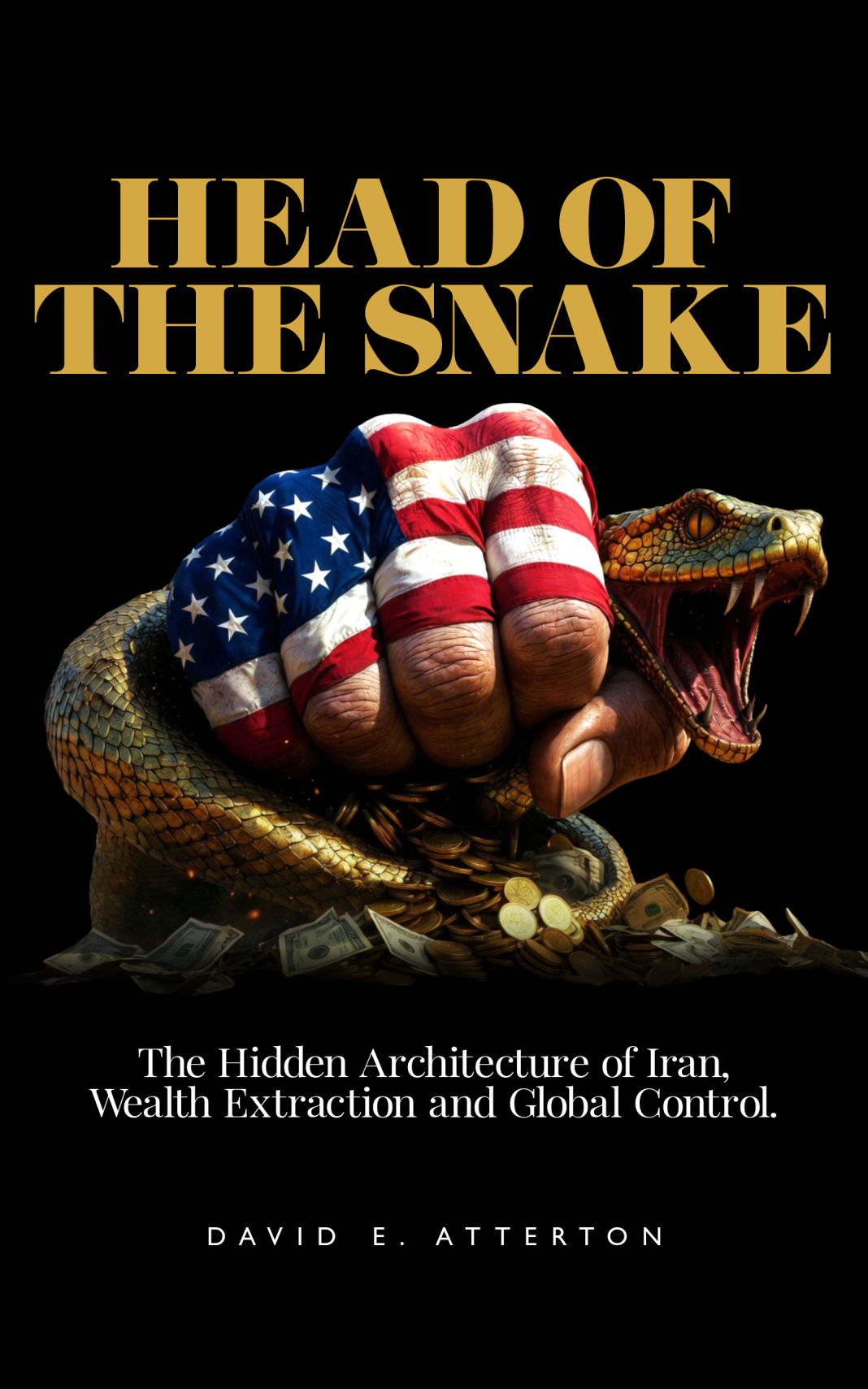
The longer story of the system being replaced is in the book, Head of the Snake, and the free guides live in the resource library.
Follow the daily intel free: Telegram · Facebook · Spotify · Odysee
https://dinarchronicles.com/2026/08/06/reset-intelligence-the-man-who-broke-the-pound
Seeds of Wisdom RV and Economics Updates Friday Afternoon 8-7-26
Good Afternoon Dinar Recaps,
U.S. Labor Market Weakens as Treasury Yields Fall — A New Test for Federal Reserve Policy
Unexpected job losses are reshaping rate expectations while investors confront a more uncertain path for U.S. monetary policy and government borrowing costs
Good Afternoon Dinar Recaps,
U.S. Labor Market Weakens as Treasury Yields Fall — A New Test for Federal Reserve Policy
Unexpected job losses are reshaping rate expectations while investors confront a more uncertain path for U.S. monetary policy and government borrowing costs
OVERVIEW
U.S. employers unexpectedly cut 23,000 jobs in July, reversing expectations for continued job growth and raising fresh questions about the strength of the American economy.
Treasury yields fell as investors reduced expectations for an immediate Fed rate increase, with the 10-year Treasury yield moving down toward 4.64% following the employment report.
The development comes as Fed Chairman Kevin Warsh pushes for a more data-driven, market-led policy approach, potentially shifting more responsibility for determining borrowing costs onto bond markets at a time of elevated inflation and heavy government debt issuance.
KEY DEVELOPMENTS
1. U.S. Labor Market Delivers an Unexpected Warning
The July employment report showed that U.S. employers cut 23,000 jobs, sharply missing expectations for an increase of approximately 80,000 jobs.
The weakness was compounded by revisions that reduced previously reported employment gains for May and June by a combined 103,000 jobs. The data suggests that the labor market may be losing momentum even as inflation remains above the Federal Reserve’s target.
2. Treasury Yields Respond as Rate Expectations Shift
The bond market reacted quickly to the weaker employment numbers. The 10-year Treasury yield fell to about 4.64%, while the two-year yield, which is particularly sensitive to expectations for Federal Reserve policy, also declined.
Lower yields can temporarily reduce borrowing pressure across the economy, but the broader picture remains complicated. Long-term Treasury yields have recently remained elevated, reflecting investor concerns about inflation, government borrowing and the amount of debt the market must absorb.
3. Warsh’s Federal Reserve Strategy Puts More Weight on Markets
Reuters reports that Fed Chairman Kevin Warsh is deliberately providing less forward guidance, arguing that monetary policy should respond more directly to incoming economic data rather than rely heavily on forecasts.
That approach means investors may have to determine more of the future path of interest rates themselves. Reuters noted that longer-term Treasury yields surged after the Fed's most recent meeting, with the 30-year yield reaching its highest level since 2007.
This represents an important structural change because the Treasury market is being asked to play a greater role in determining the price of money while the federal government continues to operate with substantial borrowing requirements.
4. The Fed Faces a Difficult Inflation-versus-Employment Balance
The weaker labor market could give the Federal Reserve more time before raising rates, but inflation remains the opposing force.
Markets are now watching the next round of inflation data closely. The July employment report may reduce pressure for an immediate September rate increase, but persistent inflation could keep monetary policy restrictive.
This creates a difficult policy environment: raising rates could further weaken employment, while easing too quickly could allow inflation to remain elevated.
5. Global Markets Are Repricing the U.S. Economic Outlook
The employment report immediately affected global markets. U.S. stocks moved higher, Treasury yields declined and the dollar weakened as investors reassessed the likelihood of near-term rate increases.
The significance extends beyond Wall Street. U.S. interest rates influence global borrowing costs, currency values, capital flows and sovereign bond markets around the world.
WHY IT MATTERS
The combination of weaker employment, elevated inflation and high Treasury yields puts the Federal Reserve in an increasingly difficult position.
For the economy, higher borrowing costs can restrain investment, housing and consumer spending. For markets, uncertainty over the Fed's reaction function can increase volatility as investors attempt to price future policy without the level of guidance they have historically received.
The bigger issue is the Treasury market itself. If investors demand higher yields to hold long-term U.S. debt, the government faces higher financing costs, which can place additional pressure on future budgets.
This is why today's employment report is more than a jobs story. It is another signal that monetary policy, government debt and financial markets are becoming increasingly interconnected.
WHY IT MATTERS TO FOREIGN CURRENCY HOLDERS
Currency values: Changes in U.S. interest-rate expectations can quickly influence the dollar against other major currencies.
Purchasing power: Persistent inflation can continue to affect the real value of currencies and household purchasing power.
Capital flows: Changes in Treasury yields can redirect global investment between U.S. assets, foreign markets and hard assets.
Exchange-rate pressure: A weaker dollar can alter the relative value of foreign currencies and influence international trade and commodity prices.
IMPLICATIONS FOR THE GLOBAL RESET
Pillar 1: Debt
The most direct structural implication is Debt. Higher Treasury yields increase the cost of financing existing and future U.S. government borrowing.
If long-term yields remain elevated, governments around the world may face greater pressure to reconsider debt levels, fiscal sustainability and the cost of maintaining large borrowing programs.
Pillar 2: Assets
The second directly affected pillar is Assets. Changes in Treasury yields influence how investors value stocks, bonds, currencies, gold and other stores of value.
As investors reassess the reliability of traditional fixed-income assets, capital can move between sovereign debt, equities, commodities and alternative assets, contributing to broader changes in global asset allocation.
CONCLUSION
Today's employment report provides another indication that the U.S. economy may be entering a more complicated phase, with labor-market weakness emerging while inflation remains elevated.
At the same time, the Federal Reserve is moving toward a policy framework in which markets may have to interpret economic data with less forward guidance. That places greater importance on Treasury yields as a real-time measure of investor expectations and confidence.
For the broader financial system, the critical question is no longer simply whether the Fed raises or lowers rates. It is how markets, government debt and monetary policy will interact as the global financial system adjusts to a higher-cost borrowing environment.
The Global Reset is not defined by one announcement—it is revealed through the gradual restructuring of debt, markets and the systems that determine the price of money.
Seeds of Wisdom Team
Newshounds News™ Exclusive
SOURCES
Reuters — "Jobs report will offer fresh test of Fed Chairman Warsh's less-guidance stance"
Associated Press — "US stocks jump as employers unexpectedly cut 23,000 jobs"
~~~~~~~~~~
Seeds of Wisdom Team RV Currency Facts Youtube and Rumble
Newshound's News Telegram Room Link
RV Facts with Proof Links Link
RV Updates Proof links - Facts Link
Start Here room with Most Asked Questions Link
Follow the Gold/Silver Rate COMEX
Follow Fast Facts
Seeds of Wisdom Team™Website
Thank you Dinar Recaps
More Iraq News Posted by Tishwash at TNT 8-7-2026
TNT:
Tishwash: A new shipment of $500 million in cash has arrived in Iraq.
Payment of $500 million
Allocating funds for travelers and remittances
To boost liquidity
A source reported in press statements that a new batch of cash dollars had arrived in Iraq, sent by the US Federal Reserve to the Central Bank of Iraq.
TNT:
Tishwash: A new shipment of $500 million in cash has arrived in Iraq.
Payment of $500 million
Allocating funds for travelers and remittances
To boost liquidity
A source reported in press statements that a new batch of cash dollars had arrived in Iraq, sent by the US Federal Reserve to the Central Bank of Iraq.
Within the framework of periodic agreements between the Central Bank of Iraq and the US Federal Reserve
Controlling the demand for foreign currency
The source told the official agency that "the US Federal Reserve sent a new batch of cash dollars to the Central Bank of Iraq worth $500 million."
He added that "the amount sent will be invested in transactions related to travelers and foreign remittances, with the approval of the Central Bank of Iraq."
This payment comes as part of the periodic agreements between the Central Bank of Iraq and the US Federal Reserve to supply the local market with dollar liquidity and to cover the needs of travelers and foreign remittances, at a time when Baghdad is seeking to stabilize the exchange rate. link
************
Tishwash: The United States begins dismantling its air defense systems in Iraq as the withdrawal date approaches.
The United States has begun reducing its military presence in Iraq by dismantling its last air defense systems in the Kurdistan region, as the scheduled end of its forces' mission in the country approaches at the end of September.
Reports indicate that Patriot missile batteries stationed near Erbil International Airport have begun withdrawing, after playing a key role in countering missile and drone attacks targeting the region in recent months.
This development comes as the Iraqi government continues to implement its plan to restrict weapons to the state, and emphasizes that no armed formations will be allowed outside the framework of official institutions after the end of September, at a time when efforts continue to end the mission of the international coalition against ISIS.
Observers believe that reducing air defense systems raises concerns about the Kurdistan Region's ability to confront any future attacks, especially in light of the absence of an independent air defense system and the continued security tensions in the region.
In contrast, analysts point out that the American withdrawal may not be complete, but may take the form of a reorganization of the military presence, while maintaining limited defensive capabilities to protect American interests and diplomatic and military facilities inside Iraq.
Experts also link the future of the American presence to the course of growing economic relations between Baghdad and Washington, especially after the signing of dozens of investment agreements in the fields of energy, technology and infrastructure, which reflect a trend towards expanding bilateral cooperation outside the security framework.
Experts confirm that the next phase will determine the nature of the Iraqi-American partnership, in light of the continued security and regional challenges, and whether Washington will maintain a limited defensive presence in Iraq, or proceed towards a broader withdrawal while relying on economic and strategic cooperation between the two countries. link
************
Tishwash: Al-Zaidi Retains Control of Defense and Interior Ministries; No Appointments Imminent as Strict Criteria Disqualify Candidates
Last updated: August 7, 2026 – 1:15 AM
Informed government sources have revealed that Prime Minister and Commander-in-Chief of the Armed Forces, Ali Faleh Al-Zaidi, does not currently intend to finalize appointments for the Ministries of Defense and Interior. He prefers to maintain their administration on an acting basis, given his confidence in the performance of current leadership and his direct oversight of the two security institutions' operations.
According to the sources, Al-Zaidi has established rigorous professional and security criteria for selecting candidates for these ministries. They emphasized that names circulating in political circles are baseless and that the matter remains on hold as the government focuses on more pressing issues—foremost among them the financial crisis, the expansion of economic and investment partnerships, and managing the repercussions of regional developments.
The sources explained that while relevant political blocs have the right to nominate candidates in accordance with their constitutional entitlements, the final decision rests with the Commander-in-Chief. He will not approve any candidate who fails to align with the standards he has set for managing the two security institutions.
This stance follows the Parliament's vote of confidence in Al-Zaidi’s government months ago—a government formed only partially, with several portfolios, including Defense and Interior, remaining vacant due to persistent political disagreements over candidates. Since assuming the premiership, Al-Zaidi has initiated sweeping changes within military and security institutions, redrawing the high-level command structure. These moves coincided with an unprecedented campaign against financial and administrative corruption, resulting in the dismissal and arrest of officials, as well as the recovery of funds and assets worth billions of dinars.
As part of the security sector restructuring, he tasked Senior Undersecretary Hussein Al-Awadi with managing the Ministry of Interior in an acting capacity. He also brought former Interior Minister Lieutenant General Abdul Amir Al-Shammari back to the forefront by appointing him Director of the Office of the Commander-in-Chief of the Armed Forces.
Al-Zaidi capped these changes by dissolving the Joint Operations Command and merging it with the Office of the Commander-in-Chief and the National Operations Center into a unified security entity. Observers view this move as part of a broader initiative to consolidate command and control, accelerate the plan to restrict arms to state control, reorganize the security apparatus, and integrate the Popular Mobilization Forces into official defense institutions. link
Tishwash: Iraq adopts Apple as a trusted platform to promote electronic payments
The head of the executive body of the Media and Communications Commission, Baligh Abu Kalal, announced on Thursday that Apple has been approved as a verified digital platform to operate in Iraq, after completing all the requirements and procedures stipulated in the framework regulations for digital platforms and services.
Abu Kalal said in a statement received by Shafaq News Agency that the accreditation includes classifying Apple as a trusted digital service provider for its services represented by ( App Store , Apple Music , Apple Podcasts , Apple Arcade , and Apple Ads ), after it has met the technical and legal requirements approved by the Media and Communications Commission, which allows the provision of these services within an official regulatory framework that is consistent with the laws and regulations in force in the Republic of Iraq.
He pointed out that the adoption of global digital platforms falls within a strategy aimed at aligning the services of international companies with Iraqi legislation, ensuring the protection of users’ rights, supporting the digital economy, and developing the investment environment in the information technology sector.
He added that the commission continues to work with major international companies and platforms to complete licensing and accreditation procedures, which will contribute to expanding the scope of digital services, regulating electronic payment operations, and enhancing Iraq’s presence in the global digital economy link
************
Tishwash: IMAX technology enters Iraqi cinemas; Minister Sarwa says it's a step towards keeping pace with developed countries.
Mall of Iraq (Baghdad)
On Thursday (August 6, 2026), the capital Baghdad witnessed the opening of the first “IMAX” theater in Iraq, located inside the Mall of Iraq, in the presence of the Acting Minister of Culture, Tourism and Antiquities, Sarwa Abdul Wahid, who affirmed the ministry’s support for investment and artistic projects aimed at developing the film and theater industry in the country.
As Iraq officially entered the era of modern cinematic display technologies, those in charge of the project revealed plans to establish the second IMAX theater in Baghdad, in addition to the largest private theater with a capacity of more than 5,000 spectators to host Arab and international concerts and artistic performances, stressing that the prices of tickets for the new theater are among the lowest in the world.
Culture: Developing cinema requires competition
Acting Minister of Culture, Tourism and Antiquities, Sarwa Abdul Wahid, confirmed to 964 Network that the ministry supports artistic and investment projects that contribute to the development of the cinema and theater sectors, considering the opening of the first IMAX theater in Iraq as an important step that reflects the existence of cultural investments that keep pace with what exists in developed countries.
She added that developing the film industry requires an investment mindset based on competition, stressing that complete reliance on the state in managing this sector will not achieve the desired success, noting that the ministry is open to supporting projects that contribute to the production and screening of films.
5 years to reach the first IMAX in Iraq
Zaid Al-Khafaji, CEO of Iraqi Cinema, told 964 Network that work on the IMAX project took more than 5 years due to the strict technical requirements imposed by the technology's owner, explaining that the team was finally able to complete all the requirements and obtain the official license.
He added that the success of the project prompted the company to plan to establish a second IMAX theater in the Karkh district, explaining that Baghdad received an exception due to its size and population, even though the company's policy usually stipulates that there should be only one theater in each city.
The largest private theater in Iraq
Al-Khafaji revealed a new direction for the company towards investing in the theater sector, explaining that Iraq lacks a hall that can accommodate concerts and major artistic performances. Therefore, work is underway on a project to establish a theater that can accommodate more than 5,000 spectators, to host Arab and foreign singers and artists and public events.
He added that ticket prices in Baghdad are among the lowest globally for IMAX theaters, noting that they start from 15,000 dinars for front seats, 18,000 dinars for middle seats, and 25,000 dinars for VIP seats, despite deducting percentages from the ticket value for the benefit of IMAX and film production companies. ink
News, Rumors and Opinions Friday 8-7-2026
Ross: The Solution that will Boomerang the IQD Revaluation
8-7-2026
Iraq does not revalue the Dinar to escape crises of this severity BUT sink-or-swim is the only thing that historically forces Baghdad to move on structural files that have been stalled for years.
The solution that will provide a boomerang towards the revaluation of IQD.
Ross: The Solution that will Boomerang the IQD Revaluation
8-7-2026
Iraq does not revalue the Dinar to escape crises of this severity BUT sink-or-swim is the only thing that historically forces Baghdad to move on structural files that have been stalled for years.
The solution that will provide a boomerang towards the revaluation of IQD.
1. Real expenditure rationalization and non-oil revenue expansion.
2. Acceleration of the long-delayed Oil & Gas Law / Hydrocarbon Law framework. This is the single biggest structural unlock for sustained higher oil revenue and FDI.
3. Banking-sector cleanup, better customs collection (ASYCUDA push), and tighter control over regional revenue transfers. Better customs collection and forcing the Region to transfer what it owes directly improves the federal cash position without new borrowing.
4. Possible formal borrowing authority that comes with conditions or oversight. The version that helps the longer-term case is borrowing that is explicitly tied to reform milestones, spending limits, transparency requirements, and parliamentary or external oversight.
5. Serious corruption cleanup and recovery of public/stolen funds. Recovering looted or mismanaged public money is pure liquidity that does not create new debt. It strengthens reserves, reduces the need for printing or emergency borrowing, and signals that the system is finally being cleaned.
6. Continued push on digital payments / reduced cash economy (cuts leakage and improves tax collection).
7. Clear, enforced resolution of the Kurdistan oil and revenue-sharing mechanism so the federal budget is no longer constantly bleeding.
8. Full completion of the cabinet under al-Zaidi and a functioning government that can actually pass and implement the above (vote coming 8/15-20).
None of these items equals an automatic higher dinar rate.
Collectively they shrink the fiscal hemorrhage, raise the quality of revenue, reduce leakage, and make the revalued currency defensible.
All of this is achievable and Baghdad has no choice but to act swiftly.
Lightning-speed fire under Iraq’s a*s progress is and will continue to unfold.
How long can Iraq hold its breath under water?
Source(s):
• https://x.com/Ross_ptm/status/2085407872738066717
https://dinarchronicles.com/2026/08/07/ross-the-solution-that-will-boomerang-the-iqd-revaluation/
***************
Courtesy of Dinar Guru: https://www.dinarguru.com/
Walkingstick [Iraqi bank friend Aki update] The shortage in liquidity in the markets is causing a big demand on the 3-zero notes...It means the rate is going in the right direction...There are no more 3-zero notes...now there's a huge demand for the 2-zero notes and shortly there will be a great demand for the 1-zero notes...after the 1-zero notes will be the lower notes...Every day our rate fluctuates...The important part is the direction it's going. Every day our currency is gaining value. That's why the RI and the RD will be here soon. We are geared up to go international.
Stephen The last 6 months we have seen change happen like never before. As someone who has been involved in this investment since 2011, Iraq has let deadlines come and go. They have meant nothing to Iraq. But...since the Trump administration has gotten involved with them, we have a new prime minister who is getting rid of corruption, he's signing big deals, it's putting pressure on the HCL law...we have Starlink which is going to allow citizens to do online banking, we have all of these banking reforms being implemented right now. This stuff is happening right before our very eyes...We are in very exciting times.
Jeff There's a massive currency shortage. They're claiming it's due to lack of oil revenues from the war... Iraq talks to you out of both sides of their mouth...You need to think about this from both sides...What are things that might happen when the rate's about to change? ...January through June, they kept telling us, 'Hey, we're eventually going to have to adjust the salary pay scales.' What causes that? ...A rate change force them to have to adjust salary pay scales...Is it possible they're not paying salaries because they need to adjust the pay scale? ...New currency denominations impact the budget and the salary pay scales...All possibly suggest the rate is about to change. Those are things Iraq can't tell you. Iraq had no problem paying salaries during the first half of the year but when you hit the second half of the year it's magically a big problem, which is potentially a new budget period.
IQD Update: Is Iraq's Dinar About to Get a Major Makeover?
Edu Matrix: 8-7-2026