
Iraq Economic News and Points To Ponder Thursday Afternoon 6-16-26
United Nations: The Iraqi Government Is Adopting Economic Reforms Based On Digitalization And Combating Corruption.
Money and Business Economy News – Baghdad The UN Assistant Secretary-General and Regional Director of the United Nations Development Programme for Arab States, Abdullah Al-Dardari, announced on Wednesday the details of bilateral talks with Prime Minister Ali Al-Zidi, stressing that the government is adopting economic reforms based on digitalization and combating corruption.
United Nations: The Iraqi Government Is Adopting Economic Reforms Based On Digitalization And Combating Corruption.
Money and Business Economy News – Baghdad The UN Assistant Secretary-General and Regional Director of the United Nations Development Programme for Arab States, Abdullah Al-Dardari, announced on Wednesday the details of bilateral talks with Prime Minister Ali Al-Zidi, stressing that the government is adopting economic reforms based on digitalization and combating corruption.
Al-Dardari told the Iraqi News Agency, as reported by "Al-Eqtisad News": "Prime Minister Ali Al-Zidi presented, during our meeting with him, a vision for addressing the Iraqi economy, where he spoke about economic institutions operating according to a real economic model, and combating corruption to revive the Iraqi economy."
He continued: "The Prime Minister also spoke about automating and digitizing the Iraqi economy and Iraqi public institutions, and developing the financial system to attract and mobilize financial resources, especially Arab and foreign private investment, to work in Iraq."
He pointed out that "local development was discussed, including in Sinjar district, to achieve economic and social stability for its residents, in addition to achieving economic stability in the liberated areas that have been reconstructed, as these areas are facing an economic crisis due to the absence of effective economic activity and the failure to establish companies and economic entities."
He added: “The meeting with the Prime Minister also resulted in a discussion of the Southern Fund to improve the situation in the southern regions, which have recorded the highest unemployment rates.”
He added, “The Prime Minister focused on the transformation and transition towards a competitive economy, while ensuring social protection for groups that may be affected by this transformation, and we are ready to work on this issue.” He pointed out that “the meeting also discussed supporting the Development Fund, which needs a law and expertise to support it in becoming a mechanism for mobilizing private financial resources towards well-studied and calculated investment projects.”
He explained that "the United Nations Development Programme specializes in implementing loans effectively, quickly, transparently, free from corruption, and with reliable global procedures."
https://www.economy-news.net/content.php?id=70360
The Minister Of Finance Orders The Disbursement Of Dues To Contractors In 5 Governorates
Money and Business Economy News – Baghdad Finance Minister Faleh al-Sari ordered on Wednesday the disbursement of dues to contractors in the governorates of Basra, Diwaniyah, Najaf, Babylon and Maysan, as part of the first batch of financial dues.
The head of the Iraqi and Arab Contractors Union, Ali Fakher Al-Sanafi, said in a statement seen by “Al-Eqtisad News” that “adopting a mechanism for disbursement in the form of successive and regular installments contributes to settling the issue of dues gradually, and enhances the stability of the work of contracting companies in various governorates.”
He added that "the Minister of Finance's directive came during the meeting that brought them together today," indicating that "releasing these dues represents an important step in the process of addressing the outstanding financial dues of contractors."
It is worth noting that the head of the Iraqi and Arab Contractors Union confirmed at the beginning of this month that Prime Minister Ali Falih al-Zaidi promised to disburse one trillion dinars of the contractors’ outstanding dues as a first payment.
Finance Minister: Unifying Customs Systems With The Region Is A Strategic Step To Maximize Revenues
Money and Business Economy News – Baghdad Finance Minister Faleh Sari confirmed on Thursday that unifying customs systems with the region is a strategic step to maximize revenues.
A statement from the Ministry of Finance, received by “Al-Eqtisad News”, stated that “Minister of Finance Faleh Sari affirmed that unifying customs systems and procedures between the federal government and the Kurdistan Region represents a strategic step in the path of economic reform, due to the positive effects it achieves in maximizing non-oil revenues, tightening control over the movement of goods, reducing cases of evasion, as well as enhancing transparency and unifying data and procedures in accordance with international standards.”
The statement added that "the minister's assurances came in conjunction with a joint meeting held by the General Authority of Customs with the Kurdistan Region Customs Authority in the capital, Baghdad, today, in the presence of relevant sectoral bodies, to discuss mechanisms for implementing the ASYCUDA World system in the customs centers affiliated with the region."
The statement continued, “The meeting witnessed a discussion of the technical and administrative aspects of the system currently adopted in the ports affiliated with the federal government, and a review of the results achieved in the field of digital transformation, simplifying procedures and enhancing electronic monitoring, in addition to discussing ways to unify procedures and data between the two sides.”
The statement continued, “A joint protocol was signed that included a set of recommendations and executive procedures related to the application of the system in the customs centers affiliated with the Kurdistan Region, to be submitted to the Ministerial Council for Economy to complete the necessary procedural steps.”
He pointed out that "this meeting comes within the framework of the ongoing efforts made by the General Authority of Customs within the framework of the comprehensive digital transformation project, and in line with the vision of the Federal Ministry of Finance aimed at modernizing customs work, enhancing electronic control, and supporting the national economy."
https://www.economy-news.net/content.php?id=70405
The Minister Of Industry Emphasizes The Importance Of Strengthening Cooperation With International Companies And Benefiting From Their Expertise
Money and Business Economy News – Baghdad Minister of Industry and Minerals, Mohammed Nouri, stressed on Thursday the importance of strengthening cooperation with international companies and benefiting from their expertise.
The media office of the Minister of Industry and Minerals stated in a statement received by "Economy News" that "Nouri received the Italian Ambassador to Iraq, Nicolo Fontana, to discuss bilateral relations and ways to enhance joint cooperation in the industrial and investment fields."
According to the statement, the minister stressed "the importance of strengthening cooperation with international companies and benefiting from their expertise in developing the industrial sector," noting "the work on preparing an integrated investment map that includes many promising opportunities in various industrial fields."
For his part, the Italian ambassador affirmed his country's interest in strengthening industrial and investment cooperation with Iraq in the coming period, expressing the desire of Italian companies to enter the Iraqi market and participate in important industrial projects. https://www.economy-news.net/content.php?id=70399
Iraq Development Fund: 34 Key Points That Must Be Met Before Implementing The Baghdad Metro
Money and Business Economy News — Baghdad The Iraq Development Fund has set 34 points for study before launching the Baghdad Metro project, indicating that these points are necessary and essential before moving to the implementation phase.
The Fund’s Executive Director, Mohammed Al-Najjar, told the official newspaper: “The project was launched early, before the required studies were completed, and its so-called roadmap must be redrafted,” noting that “the Fund found 34 points that should have been studied before launching or announcing it.”
He added that "these points included population studies, transport lines and other axes that were not ready," noting that the project was viewed "engineeringly" and not "strategically".
Al-Najjar expressed his hope that "the current government will adopt the Fund's report and the points that must be properly met, and relaunch the project in a manner befitting such projects in the world."
The Fund’s Executive Director stressed that “the project cannot be started until 1 to 18 months after these points are completed, as it is a project that can change the movement of the population and the nature of business and open up different horizons in Iraq.”
For her part, Mona Al-Muhammadawi, a member of the Transportation, Communications and E-Governance Committee in the House of Representatives, considered the “Baghdad Metro” project a strategic solution to the traffic congestion crisis.
Al-Muhammadi added to Al-Sabah that “the success of the project requires a clear vision, stable funding and serious implementation procedures,” noting that “the citizen today is not waiting for the announcement of new projects as much as he is waiting to see the announced projects enter into actual implementation.”
The committee affirmed its support for moving forward with this vital project, stressing the need to adhere to timelines and maintain full transparency in all stages of contracting and implementation, to ensure the desired benefit is achieved for citizens.
Seeds of Wisdom RV and Economics Updates Thursday Afternoon 6-18-26
Good Afternoon Dinar Recaps,
Japan’s New Security Strategy Draws Strong Opposition From China
Tokyo's proposed military expansion marks a historic shift from its post-war defense policy, raising tensions over Taiwan, regional security, and the balance of power in the Indo-Pacific.
Good Afternoon Dinar Recaps,
Japan’s New Security Strategy Draws Strong Opposition From China
Tokyo's proposed military expansion marks a historic shift from its post-war defense policy, raising tensions over Taiwan, regional security, and the balance of power in the Indo-Pacific.
Overview
Japan is moving toward its most significant defense policy overhaul since World War II, proposing expanded military capabilities and increased defense spending.
China has strongly condemned the proposed security reforms, arguing they threaten regional stability and interfere with Beijing's interests regarding Taiwan.
The dispute reflects the growing strategic competition between China, Japan, and the United States, with major implications for security, trade, and geopolitical alliances across Asia.
Key Developments
1. Japan Plans Historic Defense Expansion
Japan's ruling Liberal Democratic Party approved a draft proposal to revise the country's National Security Strategy, National Defense Strategy, and Defense Force Enhancement Plan.
The proposed changes would allow Japan to expand long-range strike capabilities, increase missile development, ease restrictions on defense exports, and raise military spending to approximately 2% of GDP, representing a major departure from decades of post-war military restraint.
2. China Rejects the Security Shift
China's Foreign Ministry condemned the proposal, describing Japan's military expansion as a return to militarization that threatens peace and regional stability.
Beijing warned that increased Japanese military activity near Taiwan, including missile deployments on islands close to the Taiwan Strait, crosses what China considers its core national security interests.
3. Taiwan Remains the Central Flashpoint
Japan has increasingly emphasized that stability in the Taiwan Strait is directly linked to its own national security.
China, however, continues to insist that Taiwan remains an internal matter and has warned that any foreign military involvement could carry serious consequences.
Why It Matters
Japan's evolving defense policy reflects the rapidly changing security environment in the Indo-Pacific. Rising tensions surrounding Taiwan, expanding military modernization, and growing strategic competition between major powers are reshaping regional alliances and defense planning.
The developments also demonstrate how national security concerns are increasingly influencing economic policy, technology investment, supply chain resilience, and international diplomacy throughout Asia.
Why It Matters to Foreign Currency Holders
For those following the Global Financial Reset, geopolitical developments in the Indo-Pacific are becoming increasingly important because they influence global trade routes, financial markets, investment flows, and reserve currency stability.
Escalating regional tensions could increase demand for safe-haven assets, accelerate defense spending, disrupt semiconductor supply chains, and encourage nations to strengthen regional economic partnerships. These trends may contribute to longer-term shifts in capital allocation and the evolving structure of the global financial system.
Implications for the Global Reset
Pillar 1 : Trade
The Taiwan Strait remains one of the world's most important commercial shipping corridors. Any increase in regional tensions could affect global trade, semiconductor production, and international supply chains.
Pillar 2 : Technology
Competition over advanced technology, semiconductor manufacturing, and defense innovation continues to drive strategic investment and reshape economic alliances throughout the Indo-Pacific region.
Looking Ahead
Japan is expected to continue strengthening its defense capabilities while expanding security cooperation with allies including the United States, Australia, the Philippines, and NATO partners.
China is likely to respond with additional military modernization, diplomatic protests, and increased activity around Taiwan as both sides seek to reinforce their strategic positions. The evolving security environment will remain one of the most significant geopolitical factors influencing global markets and international stability in the years ahead.
This is not simply a regional defense issue—it reflects the broader competition shaping the future balance of economic and geopolitical power.
Seeds of Wisdom Team
Newshounds News™ Exclusive
Sources
Reuters — "Japan expands defense strategy amid rising regional security concerns"
Modern Diplomacy — "Japan's New Security Strategy: China's Response, Taiwan, and U.S. Influence"
~~~~~~~~~~
Seeds of Wisdom Team RV Currency Facts Youtube and Rumble
Newshound's News Telegram Room Link
RV Facts with Proof Links Link
RV Updates Proof links - Facts Link
Start Here room with Most Asked Questions Link
Follow the Gold/Silver Rate COMEX
Follow Fast Facts
Seeds of Wisdom Team™Website
Thank you Dinar Recaps
Rob Cunningham: Let’s Dream a Little Dream
Rob Cunningham: Let’s Dream a Little Dream
6-18-2026
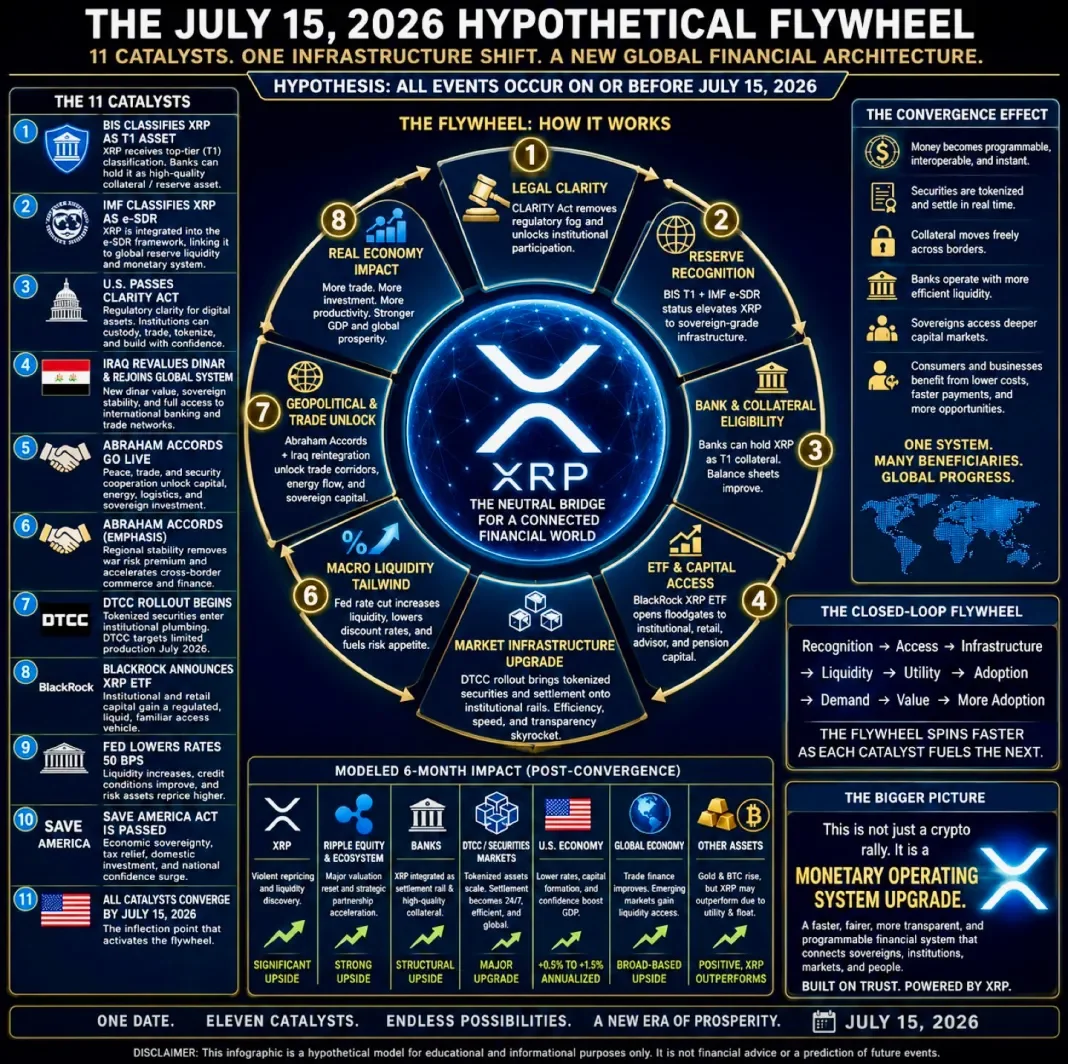
Let’s “dream a little dream” and model a hypothetical bullish XRP scenario over the next 30 days.
Suppose these synergistic events all occurred on/before July 15, ‘26
BIS classifies XRP as a T1 asset.
IMF classifies XRP as an e-SDR.
U.S. passes Clarity Act.
Iraq revalues Dinar and rejoins global financial system.
Rob Cunningham: Let’s Dream a Little Dream
6-18-2026
Let’s “dream a little dream” and model a hypothetical bullish XRP scenario over the next 30 days.
Suppose these synergistic events all occurred on/before July 15, ‘26
BIS classifies XRP as a T1 asset.
IMF classifies XRP as an e-SDR.
U.S. passes Clarity Act.
Iraq revalues Dinar and rejoins global financial system.
Abraham Accords go live.
DTCC rollout begins.
BlackRock announces XRP ETF
Fed lowers interest rates 50 BPS
SAVE AMERICA ACT is passed
If all 9 events happen by July 15, 2026, the result is not “crypto news.” It is a coordinated monetary architecture shock.
The “Jaw Drop” Mechanism
Legal clarity unlocks capital.
ETF access unlocks demand.
BIS/IMF recognition unlocks reserves.
DTCC unlocks plumbing.
Fed easing unlocks risk appetite.
Abraham Accords/Iraq unlock geopolitical trade confidence.
Together, they create a closed-loop institutional adoption flywheel:
Regulation → Recognition → ETF Wrapper → Tokenized Settlement → Collateral Use → Liquidity Expansion → Price Repricing → More Institutional Adoption.
XRP price discovery becomes reflexive. The market would no longer be pricing XRP as “maybe useful someday,” but as a newly validated bridge/collateral/liquidity instrument.
The biggest modeled outcome is not merely a higher XRP price.
It is this:
The world’s money, collateral, securities, and trade settlement systems begin converging into one faster, programmable, asset-backed, legally clarified liquidity layer.
Source(s):
• https://x.com/KuwlShow/status/2067462053418152030
https://dinarchronicles.com/2026/06/18/rob-cunningham-lets-dream-a-little-dream/
News, Rumors and Opinions Thursday 6-18-2026
GPQ: Why this is Significant for Iraq
IRAQ
Official data released by the Central Bank of Iraq (CBI) shows a noticeable decline in the bank’s total reserves during the second quarter of this year.
Why This Is Significant
Iraq is heavily oil-dependent.
GPQ: Why this is Significant for Iraq
IRAQ
Official data released by the Central Bank of Iraq (CBI) shows a noticeable decline in the bank’s total reserves during the second quarter of this year.
Why This Is Significant
Iraq is heavily oil-dependent.
Oil exports are the backbone of its economy and government budget. When revenues fall (whether from price drops, export disruptions, or logistics issues), the central bank often steps in by using reserves. Consecutive monthly declines signal real pressure, not a one-off blip.
Geopolitical angle:
Mentions of Strait of Hormuz disruptions point to ongoing regional tensions (Iran-related shipping risks are a recurring theme).
Any escalation there directly hits Iraq’s ability to sell oil and get paid reliably.
Fiscal strain and policy implications:
Drawing down reserves to plug deficits isn’t sustainable long-term.
It can pressure the Iraqi dinar (IQD), affect liquidity in the banking system, and limit the government’s options for spending or subsidies.
Gold’s stable role in reserves is worth noting — it shows Iraq (like many countries) is maintaining or increasing gold holdings amid uncertainty.
Broader financial system context:
• Central bank reserve trends are closely watched as indicators of economic health, currency stability, and exposure to oil price swings.
• Gold’s prominence in Iraq’s reserves aligns with the global pattern of central banks buying gold as a hedge (record buying trends in recent years).
• For anyone following energy markets, Middle East geopolitics, or currency developments, this is a concrete data point on stress in a major oil producer.
Bottom line:
This isn’t just a number — it reflects real-world pressures from oil market volatility, export/logistics challenges, and the need to cover government spending gaps.
It’s a signal worth monitoring for knock-on effects on oil prices, regional stability, and Iraq’s financial position.
Read more: http://channel8.com/english/news/6…
Source(s):
• https://x.com/argosaki/status/2067548115113267395
https://dinarchronicles.com/2026/06/18/gp-q-why-this-is-significant-for-iraq/
Courtesy of Dinar Guru: https://www.dinarguru.com/
Frank26If you have the formation of the government then you're going to see the laws of the hydrocarbon law, the HCL. That's the first thing on the docket...1300 will not function for the HCL...There isn't enough physical 3 zero notes to do that...
Stephen Iraq has strategically and intentionally had certain economic and monetary policies in place for years and years because they knew that in the future the Iraq dinar was going to be revalued at a certain point in time...A lot of that corruption, a lot of the Iranian influence that had to be rooted out is happening right now and has been happening over the last few months. I only see upside from here moving forward...If you hold Iraqi dinar...then you are well positioned for something great in the near future...We're positioned very very well.
Jeff In order for them to complete the government the last remaining 9 ministers have to go through a parliamentary vote...The government formation is the lynch pin to the rate change. When they finish the government formation, the [rate] is going to change quickly after that...They're not ready to complete the government because they need to do this closer to the rate change...Everything is close. It just all has to happen at the right time.
***************
Is Trump Invested In The Iraqi Dinar ?
The Dinar Den: 6-17-2026
Iraq Economic News and Points To Ponder Late Wednesday Evening 6-17-26
MP: Washington Is Using The Dollar To Blackmail Iraq
16 Jun 2026 The Information Agency / Baghdad – MP Abbas Qusay asserted on Tuesday that the United States is using the dollar as a tool for financial pressure and blackmail against Iraq, indicating that this is reflected in the country's economic policies.
Qusay told the Information Agency, "The United States is using the dollar to financially blackmail Iraq and is imposing its influence on all financial transactions and transfers."
MP: Washington Is Using The Dollar To Blackmail Iraq
16 Jun 2026 The Information Agency / Baghdad – MP Abbas Qusay asserted on Tuesday that the United States is using the dollar as a tool for financial pressure and blackmail against Iraq, indicating that this is reflected in the country's economic policies.
Qusay told the Information Agency, "The United States is using the dollar to financially blackmail Iraq and is imposing its influence on all financial transactions and transfers."
He added that "American interference in Iraqi financial policy is one of the main reasons behind the disruption of the economy and the slowdown of some economic measures within the country."
He pointed out that "the Iraqi economy needs to strengthen its financial independence and reduce its reliance on instruments that give external parties the ability to influence national economic decisions."
He emphasized that "the continuation of this approach negatively impacts economic stability and development in Iraq."
https://almaalomah.me/news/135782/economy/نائب:-واشنطن-تستخدم-الدولار-لابتزاز-العراق
Sources To Alwan News: Two Shipments Of US Dollars In Cash Arrive In Baghdad Coinciding With Tom Barrack's Visit To Iraq
latest news 2026 Baghdad - One News - 6/17/2026 Informed Iraqi sources told Alwan News that two shipments of cash dollars arrived in the capital, Baghdad, coinciding with the visit of the US Special Envoy to Iraq and Syria, Tom Barrack.
According to the sources, the incoming funds will support the stability of the exchange market and maintain the value of the Iraqi dinar, as well as enhance import operations and finance foreign trade.
This step comes in light of Iraqi-American talks related to financial and economic files, in addition to energy and arms files, amid a government trend to avoid any pressures or sanctions that may affect the local market.
https://1news-iq.net/مصادر-لوان-نيوز-وصول-دفعتين-من-الدولار/
Financial Expert: Expectations Of A Dinar Devaluation Are Driving Increased Demand For The Dollar And Fueling Speculation.
Shafaq News – Baghdad Financial expert and former Director General of the Central Bank of Iraq, Mahmoud Dagher, revealed on Wednesday that expectations of a reduction in the value of the Iraqi dinar in light of the economic situation and existing debts are driving an increase in demand for the dollar and a rise in its price in the local market.
Dagher added, in an interview with Shafaq News Agency, that statements and leaks related to the work of the Central Bank or the possibility of changing the exchange rate contribute to strengthening waves of speculation, noting that the market usually enters a cycle of anticipation that pushes towards strengthening dollar holdings among various economic actors, which is directly reflected in prices.
He explained that such expectations often lead to a collective behavior among individuals and companies towards converting savings into foreign currency, which increases the demand for it in the free market.
The local markets witnessed a rise in the exchange rate of the dollar against the Iraqi dinar during the past few days; as it recorded on Wednesday in the Al-Kifah exchange 156,000 dinars for every 100 dollars, while the official rate adopted by the Central Bank is 132,000 dinars. https://www.shafaq.com/ar/اقتصـاد/خبير-مالي-توقعات-خفض-قيمة-الدينار-تدفع-لزيادة-الطلب-على-الدولار-وتغذي-المضاربات
The Central Bank Of Iraq Denies A Forged Document Regarding A Change In The Exchange Rate.
economy The Central Bank of Iraq on Wednesday categorically denied reports circulating about an intention to amend the exchange rate of the Iraqi dinar.
The bank warned in a statement, “against dealing with misleading news, revealing that it had detected a forged document circulating that claims a request was submitted from the Prime Minister’s office to the Finance Committee in the House of Representatives to change the exchange rate to (1600) dinars per dollar.”
The bank called on the media and citizens to "be accurate and rely on news and information from official and exclusive sources issued by the Central Bank of Iraq. https://www.alsumaria.tv/news/economy/567320/المركزي-العراقي-ينفي-كتاباً-مزوراً-حول-تغيير-سعر-الصرف
Al-Arab: Al-Zaidi Is In A Complicated Situation Between Factions Entrenched In The State, Supported By Iran, And An American Administration That Wants To Dismantle Them
latest news Baghdad - One News - 6/17/2026 The London-based Al-Arab newspaper reported that Iraqi Prime Minister Ali al-Zubaidi finds himself in a very complicated position between Iranian-backed armed groups on one hand, and the US administration led by Donald Trump on the other, amid escalating pressure related to the issue of armed factions loyal to Tehran.
The newspaper pointed out that the challenges facing al-Zaidi go beyond simply being described as difficult, as Iran’s allies in Iraq do not want an independent prime minister who responds to American demands, at a time when Washington seems determined to reduce Iranian influence and deal firmly with the factions linked to Tehran.
She added that al-Zaidi faces a delicate equation, as his failure to strike a balance between the two sides could lead to him losing the internal political support he needs to ensure the stability of his government, or losing the American support that greeted the new government with cautious welcome. https://1news-iq.net/العرب-الزيدي-في-وضع-مُعقد-بين-فصائل-متو/
The central bank's foreign reserves declined by more than 1.7 trillion dinars in one week.
The Central Bank of Iraq revealed on Wednesday a decline in its foreign reserves during the second quarter of this year.
A statement from the bank, received by Al-Maalomah News Agency, indicated that “reserves reached approximately 118.947 trillion dinars on May 28, compared to 120.675 trillion dinars on May 21, a decrease of 1.728 trillion dinars, or 1.43%, indicating a continued downward trend during May.
” The statement added, “Reserves continued their decline on a monthly basis, recording approximately 127.152 trillion dinars in April, after standing at 130.443 trillion dinars in March, reflecting a gradual decrease in total reserve assets during the period from March to the end of May.”
It also noted that "the value of gold included in official reserves reached approximately 32.973 trillion dinars, representing one of the most important hedging elements within the foreign reserves structure."
Al-Halbousi and the Private Sector Development Council discuss encouraging local, foreign investment
Iraqi News Agency INA - BAGHDAD - June 17th, 2026 Speaker of Parliament Haybat al-Halbousi met with a delegation from the Private Sector Development Council on Wednesday to discuss the state of the private sector in Iraq and the legislation needed to encourage local and foreign investment in the country.
Al-Halbousi received a delegation from the Private Sector Development Council headed by Abdullah Saleh al-Jubouri, according to the Speaker's media office statement received by the Iraqi News Agency - INA.
During the meeting, the current state of the private sector in Iraq was discussed, along with the most prominent challenges and obstacles facing the business environment and ways to address them, in order to contribute to strengthening economic activity.
The meeting addressed “the necessary legislation that contributes to strengthening the role of the private sector and encouraging local and foreign investment, and the importance of refining this legislation by utilizing the proposals and opinions of specialists and experts, so that it is passed in a way that meets the requirements of economic development and supports the business environment in Iraq."
Seeds of Wisdom RV and Economics Updates Thursday Morning 6-18-26
Good Morning Dinar Recaps,
Kim Yo Jong Rejects G7 Denuclearization Call, Declares North Korea’s Nuclear Status Permanent
Pyongyang dismisses G7 demands, reinforces its nuclear doctrine, and signals a long-term shift toward deterrence rather than disarmament.
Good Morning Dinar Recaps,
Kim Yo Jong Rejects G7 Denuclearization Call, Declares North Korea’s Nuclear Status Permanent
Pyongyang dismisses G7 demands, reinforces its nuclear doctrine, and signals a long-term shift toward deterrence rather than disarmament.
Overview
North Korea has firmly rejected the G7's renewed call for complete denuclearization, declaring its nuclear weapons status to be permanent and irreversible.
Kim Yo Jong, sister of North Korean leader Kim Jong Un, stated that demands to abandon the country's nuclear arsenal violate North Korea's sovereignty and constitution.
The announcement further diminishes hopes for future denuclearization talks and reinforces a security environment increasingly based on deterrence rather than diplomacy.
Key Developments
1. North Korea Declares Nuclear Status "Irreversible"
Kim Yo Jong dismissed the G7's statement calling for North Korea's denuclearization, asserting that the country's nuclear capabilities are now a permanent component of its national defense strategy.
Pyongyang maintains that its nuclear arsenal is essential for protecting the country from perceived threats posed by the United States and its regional allies.
2. G7 Reaffirms Commitment to Denuclearization
The statement follows the recent G7 Summit, where leaders once again urged North Korea to abandon its nuclear weapons and ballistic missile programs while expressing concern over continued missile launches and cyber activities.
Despite years of sanctions and diplomatic efforts, North Korea has continued expanding its strategic weapons capabilities.
3. Diplomatic Prospects Continue to Fade
By publicly declaring that denuclearization is no longer open for negotiation, North Korea is shifting the conversation away from eliminating its nuclear arsenal and toward managing long-term strategic deterrence.
Analysts believe future diplomacy, if it occurs, will likely focus on risk reduction, crisis management, and arms control, rather than complete disarmament.
Why It Matters
North Korea's position reflects a significant shift in the international security landscape. The growing acceptance within Pyongyang that nuclear weapons are a permanent element of national policy makes diplomatic breakthroughs increasingly difficult and raises the likelihood of continued regional military competition.
The continued impasse also places additional pressure on the United States, South Korea, Japan, and the United Nations as they seek to maintain stability while enforcing non-proliferation agreements.
Why It Matters to Foreign Currency Holders
For those following the Global Financial Reset, ongoing geopolitical tensions remain an important factor influencing currency markets, safe-haven investments, defense spending, and global capital flows.
Periods of heightened international uncertainty often strengthen demand for traditional reserve assets such as the U.S. dollar and gold while encouraging governments to increase military expenditures and strategic investment. These developments can indirectly affect inflation expectations, sovereign debt, and long-term monetary policy decisions that currency holders closely monitor.
Implications for the Global Reset
Pillar 1 : Assets
Persistent geopolitical instability continues to support demand for gold, strategic commodities, and other safe-haven assets during periods of global uncertainty.
Pillar 2 : Trade
Long-term security tensions in Northeast Asia could influence regional investment, supply chains, technology development, and defense-related trade as nations strengthen strategic partnerships.
Looking Ahead
North Korea is expected to continue developing its nuclear and missile capabilities while maintaining that its nuclear status is non-negotiable. The G7 and regional allies are likely to respond through continued sanctions, military cooperation, and enhanced missile defense initiatives.
Although diplomatic engagement remains possible, future discussions are increasingly expected to focus on managing tensions rather than achieving complete denuclearization. This evolving reality reinforces the emergence of a more complex and multipolar global security environment.
This is not just a regional security issue—it reflects the broader geopolitical realignment shaping the future global order.
Seeds of Wisdom Team
Newshounds News™ Exclusive
Sources
~~~~~~~~~~
🌱 A Message to Our Currency Holders🌱
If you’ve been holding foreign currency for many years, you were not foolish.
You were not wrong to believe the global financial system would change.
What failed was not your patience — it was the information you were given.
For years, dates, rumors, and personalities replaced facts, structure, and proof. “This week” predictions created cycles of hope and disappointment that were never based on how currencies actually change.
That is not your failure.
Our mission here is different:
• No dates • No rates • No hype • No gurus
Instead, we focus on:
• Verifiable developments • Institutional evidence
• Global financial structure • Where countries actually sit in the process
Currency value changes only come after sovereignty, trade, banking, settlement systems, and fiscal coordination are in place. History and institutions confirm this sequence.
You will see silence. You will see denials. That is not delay — that is discipline.
Protect your identity. Organize your documents.
Verify everything.
Never hand your discernment to anyone who cannot show proof.
You deserve truth — not timelines.
Seeds of Wisdom Team
Newshounds News
~~~~~~~~~~
Seeds of Wisdom Team RV Currency Facts Youtube and Rumble
Newshound's News Telegram Room Link
RV Facts with Proof Links Link
RV Updates Proof links - Facts Link
Follow the Gold/Silver Rate COMEX
Follow Fast Facts
Seeds of Wisdom Team™Website
Thank you Dinar Recaps
Final signing at the White House... Al-Zaidi to launch a "second Iraq" in mid-July
TNT:
Tishwash: Final signing at the White House... Al-Zaidi to launch a "second Iraq" in mid-July
Barak's plan: Baghdad as the heart of a "new Middle East"
Ali al-Zaidi is close to setting a political precedent that could make him one of the fastest Iraqi prime ministers to reach the White House after assuming office.
His anticipated visit to Washington in mid-July is not seen as a mere protocol visit, but rather as an attempt to inaugurate a new phase in the relationship between Baghdad and Washington, more than two decades after the 2003 regime change in Iraq.
TNT:
Tishwash: Final signing at the White House... Al-Zaidi to launch a "second Iraq" in mid-July
Barak's plan: Baghdad as the heart of a "new Middle East"
Ali al-Zaidi is close to setting a political precedent that could make him one of the fastest Iraqi prime ministers to reach the White House after assuming office.
His anticipated visit to Washington in mid-July is not seen as a mere protocol visit, but rather as an attempt to inaugurate a new phase in the relationship between Baghdad and Washington, more than two decades after the 2003 regime change in Iraq.
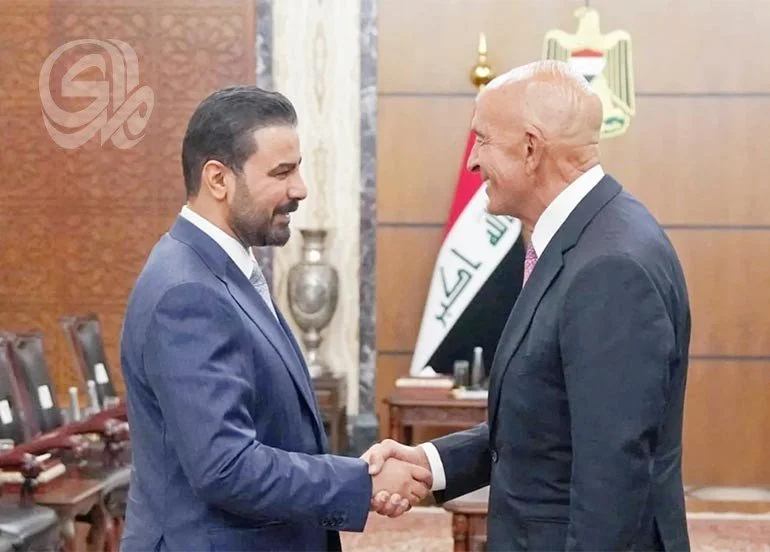
Political assessments suggest that the visit represents an opportunity to restructure the relationship between the two countries on different foundations, transcending the legacy of past years and opening the door to broader cooperation on energy, economic, and security issues.
However, according to observers, this path will not be without obstacles, given the continued influence of Iran and armed factions in the Iraqi landscape.
The Iraqi government announced last Monday that al-Zaidi would visit Washington in mid-July at the invitation of US President Donald Trump, shortly after US envoy Tom Barrack's visit to Baghdad, which was accompanied by leaks that sparked widespread interest regarding issues of weapons, corruption, and the future relationship between the two sides.
Academic and political analystMohammed Naanaa believes that Tom Barrack's meeting with al-Zaidi was a crucial step in preparing for the anticipated visit.
Naanaa told Al-Mada that the details of the visit were discussed during the meeting, including the issues mentioned in the Prime Minister's office statement. These issues pertain to the complete disarmament of Iraqis, the consolidation of all armed groups under the command of the Commander-in-Chief of the Armed Forces, the expansion of the American presence in Iraq, particularly for companies operating in the southern oil fields, and the granting of significant licenses to Starlink.
He added that these indicators, in his opinion, reflect an Iraqi alignment with the American vision for the future of the relationship between the two countries. He considers al-Zaidi's visit to be pivotal and the culmination of a series of contacts, dialogues, and reciprocal visits led by Barrack and the US Chargé d'Affaires in Baghdad, leading to what he describes as "the final signing of the new relationship between the two sides."
But Naanaa believes this path will not be without its challenges. He argues that any stability Tehran achieves will prompt it to revitalize its influence within Iraq, and that armed factions may return to exert greater pressure on the power structure, either directly or through their political representatives in parliament and the government.
The researcher emphasizes that Iraq should consider what it stands to gain from this burgeoning relationship, which is expected to culminate in the White House meeting on July 15. He stresses the importance of securing clear American support in three key sectors: banking, energy, and defense. According to Naanaa, Baghdad needs American assistance in acquiring air defense systems to protect the country, and support that will help liberalize the Iraqi monetary system, reduce exchange rate volatility, and mitigate the impact of the parallel dollar on citizens' livelihoods.
Furthermore, assistance is needed to resolve the gas import crisis for electricity generation through alternative solutions, including floating power platforms. The issues of weapons and sovereignty were also discussed. During their recent meeting in Baghdad, al-Zaidi and Barak emphasized the importance of building a strong and mutually beneficial Iraqi-American partnership.
According to the official statement, the two sides discussed a shared vision for building a "brighter, terrorism-free" future, implementing plans for complete disarmament, dissolving all armed groups and formations operating outside the authority of the state, and ensuring that weapons are solely in the hands of the state and that full sovereignty is established.
They also stressed the need to keep Iraq out of regional conflicts and prevent its territory from being used by any party to threaten security and stability in the region, emphasizing the urgent need to fully achieve these goals.
Iraq at the heart of a new Middle East.
Former diplomat Ghazi Faisal, however, views the visit from a broader perspective that transcends the bilateral relationship between Baghdad and Washington.He tells Al-Mada that the new American initiative, which emerged after Tom Barrack was assigned the Iraq portfolio, is based on major strategic projects, including strengthening coordination and economic integration between Iraq and Syria, ultimately aiming to build a nucleus of regional cooperation that may later include Cairo, Amman, and Beirut, in addition to Baghdad and Damascus.
Faisal believes the region is facing a new phase, especially after what he calls the "historic agreement" to resolve long-standing crises with Iran dating back to 1979. He considers this agreement a precursor to a new Middle East map based on development rather than wars and conflicts.
He adds that Iraq is at the heart of these transformations, and that al-Zaidi's visit could be a starting point for the country's transition from the security, political, and economic chaos that has accompanied the post-2003 era to building a truly democratic state.
He emphasizes that the visit could lay the foundation for deeper economic and investment relations, because, as he describes it, investment is what creates jobs and stimulates the economy, while currently, about 75% of the budget goes to salaries at the expense of development and investment.
Faisal also expects the United States to support Iraq's efforts to combat corruption within ministries, banks, and companies, and to pursue networks involved in smuggling and money laundering.
He points out that the environment created by armed factions and financial corruption in recent years has driven companies and investors to leave Iraq or freeze their projects, which necessitates providing new security and political guarantees to restore confidence in the Iraqi economy.
The visit he concludes, represents an opportunity to review the mistakes made by Washington and Iraqi political parties over the past two decades, and to move Iraq from a failing and declining state to a more stable one, better able to integrate into its regional environment. According to political sources who spoke to Al-Mada, Tom Barrack only arrived in Baghdad after Washington received initial positive signals regarding several demands it had previously conveyed to the Iraqi government.
The sources describe Barrack's visit as pivotal in the course of Iraqi-American relations, considering it the foundation for a new phase, distinct from the period following 2003, based on clear commitments and mutual interests. The most prominent American demands, according to these sources, include the disarmament of all armed factions without exception, preventing their participation in the government, and completing the integration of the Popular Mobilization Forces (PMF) into official security institutions after removing leaders affiliated with armed factions.
The sources indicate that these issues are still under discussion and have not yet been definitively resolved.
The American demands also include closing more than ten banks accused of smuggling dollars and involvement in money laundering, restructuring other financial institutions, expanding anti-corruption measures, and opening the door to broad American and Gulf investments.
According to sources, Washington links the success of these measures to the influx of major investments that Baghdad needs in the energy, infrastructure, and services sectors.
If these conditions are not met, Barak informed Iraqi officials, according to the same sources, that "all options are open," and that the United States will act in accordance with its interests.
Compared to his predecessors, if the visit takes place as scheduled, al-Zaidi will be one of the fastest Iraqi prime ministers to reach the White House.
Only Nouri al-Maliki rivals him in this regard, having visited Washington four times during two terms, with his first visit coming just two months after assuming the premiership. In contrast, Mohammed Shia al-Sudani waited about 17 months before meeting former US President Joe Biden, amid American reservations and internal complications.
For his part, Ahmed al-Yassiri, an Iraqi political analyst residing in Australia, believes that focusing on the speed or timing of the visit does not reflect its true importance.
He tells Al-Mada that al-Zaidi did not request the visit, but rather received an invitation from the US administration. Therefore, linking its significance to the time elapsed since his assumption of office is inaccurate.
He adds that the visit's true importance lies in providing the Iraqi political system with American backing during a sensitive regional period, and in restructuring the relationship between Baghdad and Washington amidst the ongoing transformations in the region, particularly concerning the Iranian issue and the redrawing of security and political alliances.
Al-Yassiri, who also heads the Arab-Australian Center for Strategic Studies, believes the visit will also exert internal pressure on the Iraqi government to present a realistic program regarding investment and the entry of American companies, in addition to ensuring the continued flow of Iraqi funds and preventing the country from being exposed to the risks of US sanctions.
He emphasizes that these issues will shape the features of the next phase, regardless of al-Zaidi's ability to achieve quick results or immediate breakthroughs.
Political support or practical results?
Munqith Dagher, Middle East and North Africa director and a member of the board of directors of Gallup International, views the visit as more of a message of political support than an exceptional event.
He tells Al-Mada that the visit carries a ceremonial dimension for al-Zaidi and represents an American attempt to demonstrate its support for the Iraqi Prime Minister, especially since Washington—in his estimation—played a key role in his rise to power through Tom Barrack.
Dagher believes the timing might have been better had it been delayed slightly, but he acknowledges that American motives dictated the visit's timing. He adds that it wouldn't be a negative development if al-Zaidi succeeds in using the opportunity to raise important Iraqi issues and secure greater American support on vital matters.
He concludes by saying that the true measure of the visit will depend on its actual outcomes: will it remain within the realm of protocol and political messaging, or will it become a starting point for genuine progress on the outstanding issues between Baghdad and Washington? link
Iraq Economic News and Points To Ponder Wednesday Afternoon 6-17-26
Iraq's Basrah Crude Falls Over 3%
2026-06-17 Shafaq News- Basrah Iraq's two Basrah crude grades fell more than 3% on Wednesday, widening the discount against Arab producer benchmarks and pushing Basrah Heavy toward the $50 threshold.
Basrah Heavy dropped $2.05, or 3.83%, to $51.45 per barrel, while Basrah Medium declined $2.05, or 3.69%, to $53.55 per barrel.
Iraq's Basrah Crude Falls Over 3%
2026-06-17 Shafaq News- Basrah Iraq's two Basrah crude grades fell more than 3% on Wednesday, widening the discount against Arab producer benchmarks and pushing Basrah Heavy toward the $50 threshold.
Basrah Heavy dropped $2.05, or 3.83%, to $51.45 per barrel, while Basrah Medium declined $2.05, or 3.69%, to $53.55 per barrel.
Saudi Arab Light traded at $85.28 per barrel, Kuwait Export Crude at $94.84, the UAE's Murban at $71.81, and Qatar Land at $75.81, leaving both Basrah grades at least $18 below the cheapest Arab benchmark in Wednesday's session.
Brent crude fell to $78.71 per barrel, while West Texas Intermediate (WTI) declined to $75.71 per barrel.
https://www.shafaq.com/en/Economy/Iraq-s-Basrah-crude-falls-over-3
Oil Prices Dip Post US-Iran Pact
2026-06-17 Shafaq News Oil prices inched lower on Wednesday, extending the previous session's declines as investors assessed the U.S.-Iran peace deal, though uncertainty over the full resumption of shipping through the Strait of Hormuz limited further falls.
Brent crude futures dipped 16 cents, or 0.2%, to $78.80 a barrel by 0340 GMT, while U.S. West Texas Intermediate fell 25 cents, or 0.3%, to $75.80 a barrel.
Both benchmarks fell about 5% for a second straight session on Tuesday to stand at three-month lows, on hopes that a U.S.-Iran deal would allow oil flows through the Strait.
"Markets are broadly stripping out the embedded geopolitical risk premium in oil prices," said Priyanka Sachdeva, senior market analyst at Phillip Nova.
"That said, the path toward normalisation remains far from straightforward. While political agreements may be progressing, physical tanker traffic through the Strait has yet to fully recover."
The deal would provide for the United States to lift its blockade of Iran's ports, while Tehran would allow oil tanker traffic through the Strait, effectively blocked since U.S. and Israel strikes on February 28.
"Oil markets retreated on expectations the Strait of Hormuz would reopen following the peace agreement, but traders held off further selling pending details," said Hiroyuki Kikukawa, chief strategist of Nissan Securities Investment.
Before the closure, about a fifth of global crude oil and liquefied natural gas supplies flowed through the Strait.
Details of the interim peace deal began to emerge on Tuesday, with President Donald Trump saying it would rule out a nuclear weapon for Tehran and a U.S. official saying it would allow Iran to sell oil upon signing.
The memorandum of understanding, not yet public, extends by another 60 days a tenuous ceasefire agreed in April, so as to allow room for talks toward a permanent truce.
Still, industry officials say a full return to pre-war production and refining levels is likely to take weeks, months or even years.
Israel has distanced itself from both the April ceasefire and the latest U.S.-Iran pact, fuelling uncertainty about whether it will hold.
Israeli drone strikes targeted three vehicles in southern Lebanon on Tuesday, killing at least four and wounding others, Lebanon's National News Agency said, prompting a rare public rebuke from Trump.
China's crude oil throughput fell 9.1% in May on the year to its lowest in almost four years, data showed, also signalling that refiners were starting to draw on stockpiles amid the Iran war.
The American Petroleum Institute report showed U.S. crude stocks fell 8.3 million barrels in the week ended June 12, the sources said.
It exceeded expectations for a draw of 4.6 million barrels, with official numbers due from the Energy Information Administration at 10:30 a.m. ET (1430 GMT) on Wednesday.
(Reuters) https://www.shafaq.com/en/Economy/Oil-prices-dip-post-US-Iran-pact
Foreign Reserves In Iraq Shrink By $1.1B In One Week
2026-06-17 Shafaq News- Baghdad Iraq's foreign reserves fell 1.43% during the final week of May, extending their decline in the second quarter of 2026, according to data released by the Central Bank of Iraq.
Holdings stood at 118.947 trillion Iraqi dinars ($76.25B) on May 28, down 1.728 trillion dinars ($1.11B) from 120.675 trillion dinars ($77.36B) a week earlier. The figures also showed a broader monthly decline, with reserves reaching 127.152 trillion dinars ($81.51B) in April compared with 130.443 trillion dinars ($83.62B) in March.
Gold remained one of the main components of the country’s official reserves, with assets valued at 32.973 trillion dinars ($21.14B). https://www.shafaq.com/en/Economy/Foreign-reserves-in-Iraq-shrink-by-1-1B-in-one-week
USD/IQD Inches Higher At The Closure
2026-06-17 Shafaq News- Baghdad/ Erbil The US dollar closed Wednesday’s trading higher in Iraq, hovering around 156,200 dinars per 100 dollars.
According to Shafaq News market survey, the dollar traded in Baghdad's Al-Kifah and Al-Harithiya exchanges at 156,250 dinars per 100 dollars, up from the morning session’s 156,000 dinars.
In the Iraqi capital, exchange shops sold the dollar at 156,750 dinars and bought it at 155,750 dinars, while in Erbil, selling prices stood at 155,700 dinars and buying prices at 155,650 dinars.
The former Director General of the Central Bank of Iraq (CBI), Mahmoud Dagher, told Shafaq News on Wednesday that expectations of a potential devaluation of the Iraqi dinar amid economic pressures and existing debt obligations are contributing to higher demand for the US dollar and pushing up its exchange rate in the local market.
“Statements and leaks related to the Central Bank's policies or possible changes to the exchange rate often fuel speculation in the market.”
Dagher explained that such reports typically create uncertainty and encourage economic actors to increase their holdings of US dollars, placing additional pressure on the local currency and affecting market prices. “Expectations of a weaker dinar frequently trigger a broader shift among individuals and businesses toward converting savings into foreign currency.” https://www.shafaq.com/en/Economy/USD-IQD-inches-higher-at-the-closure
Gold Prices Trend Upward In Baghdad And Erbil
2026-06-17 Shafaq News- Baghdad/ Erbil On Wednesday, gold prices hovered around 950,000 IQD per mithqal in Baghdad and Erbil markets, according to a survey by Shafaq News Agency.
Gold prices on Baghdad's Al-Nahr Street recorded a selling price of 948,000 IQD per mithqal (equivalent to five grams) for 21-carat gold, including Gulf, Turkish, and European varieties, with a buying price of 944,000 IQD. The same gold had sold for 943,000 IQD on Tuesday.
The selling price for 21-carat Iraqi gold stood at 918,000 IQD, while the buying price reached 914,000 IQD.
In jewelry stores, the selling price per mithqal of 21-carat Gulf gold ranged between 950,000 and 960,000 IQD, while Iraqi gold sold for between 920,000 and 930,000 IQD.
In Erbil, 22-carat gold was sold at 997,000 IQD per mithqal, 21-carat gold at 951,000 IQD, and 18-carat gold at 815,000 IQD. https://www.shafaq.com/en/Economy/Gold-prices-trend-upward-in-Baghdad-and-Erbil
IEA Projects 8M Bpd Supply Surge By 2027
2026-06-17 Shafaq News- Paris The International Energy Agency (IEA) said on Wednesday that the global oil market is expected to gradually recover from the disruption caused by the closure of the Strait of Hormuz, while warning of a significant supply surplus in 2027.
In its monthly oil market report, the Paris-based agency said the temporary agreement between the United States and Iran, which includes reopening the Strait of Hormuz and lifting US restrictions on Iranian ports, would help restore Gulf oil flows.
International Energy Agency – On X LINK
The IEA estimated that the recent conflict disrupted more than 14 million barrels per day (bpd) of Middle Eastern oil production, adding that Iranian exports are expected to fully resume once US restrictions are lifted.
The agency's preliminary outlook for 2027 projects global oil supply growth of around 8 million bpd, far outpacing expected demand growth of less than 2 million bpd.
According to the report, oil flows through the Strait of Hormuz began to recover in early June, driven by an increase in ship-to-ship transfers in the Gulf of Oman, lifting total Middle East supplies to around 12 million bpd from 9.6 million bpd in May. https://www.shafaq.com/en/Economy/IEA-projects-8M-bpd-supply-surge-by-2027
Hamas Reports Progress In Talks On Gaza Ceasefire Second Phase
2026-06-17 Shafaq News- Gaza The discussions with mediators and representatives of the Peace Council had produced broad agreements and significant progress toward completing the implementation of the Gaza ceasefire agreement and moving to its second phase, Hamas stated on Wednesday.
The group’s spokesperson Hazem Qassem said the talks addressed several key issues, including the entry of the National Committee into the Gaza Strip, the deployment of international forces, and the issue of Palestinian weapons.
“The discussions approached the weapons issue through a logical framework acceptable to all parties,” he added, clarifying that Hamas continues to hold meetings with mediators and Peace Council representatives, including Nikolay Mladenov, to finalize discussions and establish a framework for implementing the ceasefire agreement.
Qassem stressed that Hamas was demonstrating “flexibility and positivity” in addressing the various issues under discussion, to reach agreements that prioritize the interests of Palestinians in Gaza. He also said the movement's objectives include ending the “genocide” in Gaza, facilitating the delivery of humanitarian assistance, and beginning reconstruction efforts.
On Sunday, Hamas announced that it had submitted the response of Palestinian factions to a roadmap proposed by Mladenov, while reiterating its demand for a full Israeli withdrawal from the Gaza Strip.
Mladenov presented a 15-point roadmap on May 21 to implement a Gaza plan proposed by US President Donald Trump. The roadmap outlines mechanisms related to Gaza’s future, including reconstruction, disarmament, Israeli withdrawal, the role of an international stabilization force, and the rebuilding of the police apparatus.
The proposal also calls for the implementation of measures promised at the start of the ceasefire, including humanitarian aid, fuel deliveries, border crossings, and shelter provisions, as well as commitments contained in the Sharm El-Sheikh understandings, before advancing to the next stage.
Trump unveiled a 20-point plan on September 29, 2025, aimed at ending the war in Gaza. The proposal includes the release of Israeli hostages, the disarmament of Hamas, a phased Israeli withdrawal, the formation of a technocratic government, and the deployment of an international stabilization force.
The first phase of the plan entered into force on October 10, 2025. Hamas says it has fulfilled its obligations under the agreement, while accusing Israel of violations and of delaying the transition to the second phase.
Read more: Gaza Ceasefire - Phase 1: What we know so far
https://www.shafaq.com/en/Middle-East/Hamas-reports-progress-in-talks-on-Gaza-ceasefire-second-phase
Seeds of Wisdom RV and Economics Updates Wednesday Evening 6-17-26
Good Evening Dinar Recaps,
The Firm’s Q &A Saturday Night Call
WHEN: 📅 Saturday Night
6:00 PM Pacific
8:00 PM Central
9:00 PM Eastern
WHERE: The Firm Q &A Room on Telegram, LINK
Good Evening Dinar Recaps,
The Firm’s Q &A Saturday Night Call
WHEN: 📅 Saturday Night
6:00 PM Pacific
8:00 PM Central
9:00 PM Eastern
WHERE: The Firm Q &A Room on Telegram, LINK

Previous Calls: Listen Here
🐸 Leap Into The Fun! 🐸
Got a question?
Got a topic?
Got something that has you scratching your head?
Jump into the Firm Q&A Room and let's talk about it! LINK
Every week we explore topics, share ideas, chase a few rabbit holes, and occasionally test RJax's timer skills.
Bring your questions for the Saturday Night Call and help shape the discussion.
You never know where the conversation will go once Jester gets curious, Skyedancer sees a connection, and Q3 starts answering.
So leap in, join the fun, and let's learn together!
🐸 Questions Welcome
🎙 Saturday Night Call
💬 Q&A Room Open All Week
~~~~~~~~~~
Seeds of Wisdom Team RV Currency Facts Youtube and Rumble
Newshound's News Telegram Room Link
RV Facts with Proof Links Link
RV Updates Proof links - Facts Link
Start Here room with Most Asked Questions Link
Follow the Gold/Silver Rate COMEX
Follow Fast Facts
Seeds of Wisdom Team™Website
Thank you Dinar Recaps
The Dollar’s REPLACEMENT is Being Launched (It’s Closer Than You Think)
The Dollar’s REPLACEMENT is Being Launched (It’s Closer Than You Think)
Taylor Kenny: 6-16-2026
China and Saudi Arabia's mBridge payment system could challenge dollar dominance and accelerate the shift toward a new global monetary order.
The global financial system is currently undergoing a transformative period that could redefine how nations conduct trade and manage reserves.
The Dollar’s REPLACEMENT is Being Launched (It’s Closer Than You Think)
Taylor Kenny: 6-16-2026
China and Saudi Arabia's mBridge payment system could challenge dollar dominance and accelerate the shift toward a new global monetary order.
The global financial system is currently undergoing a transformative period that could redefine how nations conduct trade and manage reserves.
At the heart of this transition is “Project mbridge,” a collaborative initiative involving China, Saudi Arabia, the UAE, Thailand, and Hong Kong. This digital currency payment network is designed to facilitate cross-border transactions using Central Bank Digital Currencies (CBDCs), effectively creating a sophisticated alternative to the traditional, dollar-centric SWIFT messaging system.
For decades, the U.S. dollar has maintained its status as the world’s primary reserve currency, bolstered significantly by the petrodollar agreement.
However, recent economic shifts—including persistent inflation and rising geopolitical tensions—have prompted many nations to seek greater financial sovereignty.
By moving toward alternative infrastructures, these countries aim to insulate themselves from the potential weaponization of the global financial system and reduce their reliance on a single currency for international trade.
A significant development in this narrative is Saudi Arabia’s increasing engagement with the mbridge project. As the Kingdom explores the possibility of pricing oil trade in currencies other than the dollar, or even physical gold, the historical influence of the petrodollar appears to be evolving.
This shift is fueling what some analysts describe as an “alternative financial systems arms race,” where nations are rapidly building independent payment networks to secure their economic interests.
The geopolitical stakes are clearly high, highlighted by the fact that even major international institutions have had to navigate complex pressures regarding their involvement in these new digital frameworks.
While the emergence of these systems offers potential improvements in transaction speed and global inclusivity, it also brings up complex questions regarding the future of privacy and government oversight.
As countries experiment with CBDCs, there are growing debates about the balance between digital efficiency and individual autonomy. Furthermore, critics point out that while a total collapse of the dollar is not necessarily imminent, the ongoing trend toward de-dollarization and the strengthening of gold reserves suggests a fundamental change in the global financial order is underway.
As we look toward the future, the rise of digital infrastructure and the renewed interest in tangible assets reflect a broader desire for stability.
Many experts suggest that during times of economic uncertainty and currency fluctuations, individuals might consider diversifying their personal holdings by exploring physical precious metals like gold and silver. These assets have historically served as a hedge against systemic risk and inflationary pressures.
CHAPTERS:
00:00 The Dollar’s Biggest Threat Yet
00:58 Why Dollar Dominance Matters
03:49 Project MBridge: China, Saudi Arabia & CBDCs
04:19 SWIFT, CIPS & the Financial Arms Race
07:39 The Petrodollar Is Being Chipped Away
08:36 Saudi Arabia, China, Oil & Gold Settlement
13:16 CBDCs and “Absolute Control”
16:09 Central Banks Choose Gold Over Treasuries
Could This Be the Biggest Gold Announcement in Decades?
Could This Be the Biggest Gold Announcement in Decades?
Andy Schectman & Michelle Makori: 6-16-2026
Michelle Makori, President & Editor-in-Chief, Miles Franklin Media, sits down with Andy Schectman, Founder & CEO, Miles Franklin Precious Metals, to discuss a theory that is gaining traction among gold investors ahead of July 4th: could the Trump administration unveil a major gold-related initiative that reshapes the global monetary system?
Schectman explains why he believes there is a growing possibility that gold-backed U.S. Treasury instruments could emerge as part of a broader strategy to address America’s debt burden, restore manufacturing competitiveness, and navigate the accelerating shift toward a multipolar financial system.
Could This Be the Biggest Gold Announcement in Decades?
Andy Schectman & Michelle Makori: 6-16-2026
Michelle Makori, President & Editor-in-Chief, Miles Franklin Media, sits down with Andy Schectman, Founder & CEO, Miles Franklin Precious Metals, to discuss a theory that is gaining traction among gold investors ahead of July 4th: could the Trump administration unveil a major gold-related initiative that reshapes the global monetary system?
Schectman explains why he believes there is a growing possibility that gold-backed U.S. Treasury instruments could emerge as part of a broader strategy to address America’s debt burden, restore manufacturing competitiveness, and navigate the accelerating shift toward a multipolar financial system.
The conversation explores the implications of Kevin Warsh’s appointment as Fed Chair, the hiring of Project 2025 contributor Paul Winfree, the passage of the GENIUS Act, China’s continued gold accumulation, the rollout of mBridge, and the growing challenge to the dollar-centric financial order.
In this episode of The Real Story with Michelle Makori:
Iran deal: peace agreement or temporary pause?
Why gold is rallying despite de-escalation
Kevin Warsh, inflation metrics and Fed policy
Gold-backed Treasuries explained
Why Andy gives a July 4 announcement a 50/50 chance
Gold, the dollar and Triffin’s dilemma
China, mBridge and the alternative financial system
Singapore’s new gold-clearing initiative
Could Western commodity pricing be losing control?