
Rob Cunningham: Fiat Money Extracts Future Labor through Debt
Rob Cunningham: Fiat Money Extracts Future Labor through Debt
1-21-2026
Rob Cunningham | KUWL.show @KuwlShow
Fiat money extracts future labor through debt.
Fiat law governs present behavior through presumption.
When both lack transparency,
the people are ruled not by consent – but by confusion.
Rob Cunningham: Fiat Money Extracts Future Labor through Debt
1-21-2026
Rob Cunningham | KUWL.show @KuwlShow
Fiat money extracts future labor through debt.
Fiat law governs present behavior through presumption.
When both lack transparency,
the people are ruled not by consent – but by confusion.
Control does not require tyranny
when ignorance can be engineered at scale.
Truth requires light.
Justice requires limits.
Freedom requires consent.
Any system that fears transparency
has already confessed its intent.
“The truth will set you free.”
– not narratives, not authority, not volume – truth.
Trustlessness ends “trust me” chains.

Seeds of Wisdom RV and Economics Updates Wednesday Afternoon 1-21-26
Good Afternoon Dinar Recaps,
How Metals and Bonds Interact in a Currency Reset
Credibility anchors first, liquidity instruments second — not triggers, not shortcuts
Good Afternoon Dinar Recaps,
How Metals and Bonds Interact in a Currency Reset
Credibility anchors first, liquidity instruments second — not triggers, not shortcuts
Overview
In every historical monetary reset, metals and bonds play defined but separate roles. Neither triggers a reset, releases funds, nor dictates timing. Instead, they function as support mechanisms once sovereign authorities decide to restructure or realign the monetary system.
Metals anchor trust.
Bonds provide liquidity and settlement.
Understanding the distinction is essential for currency holders navigating reset narratives.
Key Developments
1. Metals Serve as Trust Anchors, Not Payment Tools
Gold — and occasionally silver — has historically been used to signal credibility and restraint when fiat systems lose confidence. Metals stabilize perception and valuation frameworks, but they do not circulate cash or fund economies.
2. Bonds Act as the Liquidity Engine
Bonds are instruments of movement and settlement. During resets, sovereign debt is often restructured, repriced, extended, or netted, allowing liquidity to flow while liabilities are realigned within the system.
3. Reset Mechanics Are Sequential, Not Instant
Resets do not occur through sudden asset “activation.” Instead:
Metals justify value
Bonds move value
This sequence allows systems to transition without collapsing payment rails or credit structures.
4. Sovereign Authority Controls the Process
All resets are executed through central banks, treasuries, and regulatory systems. Public speculation does not initiate, accelerate, or bypass these mechanisms.
Why It Matters
Confusion around metals and bonds fuels unrealistic expectations. Gold is often mistaken for a payout mechanism, while bonds are incorrectly assumed to trigger resets. In reality, credibility and liquidity must be established separately to prevent systemic failure.
Resets are not events — they are managed transitions.
Why It Matters to Foreign Currency Holders
For foreign currency holders waiting on revaluation or systemic realignment:
Metals may support new valuation confidence, but they do not deliver funds
Bonds may be adjusted to realign debt and liquidity, not enrich holders
Timing and execution are determined entirely by sovereign policy, not asset possession
Understanding this prevents false expectations and misinterpretation of market signals.
Implications for the Global Reset
Pillar 1: Credibility Must Precede Liquidity
No system can move money without trust. Metals help establish credibility, especially during transitions away from overleveraged fiat systems.
Pillar 2: Liquidity Is Engineered, Not Released
Bonds enable restructuring, settlement, and continuity. They are tools of control, not windfalls.
Together, metals and bonds support a reset — but neither causes it.
Gold doesn’t pay people. Bonds don’t create trust. A reset requires both — executed through sovereign systems, not public speculation.
Seeds of Wisdom Team
Newshounds News™ Exclusive
Reality Check
No metal “releases” funds
No bond holder sets timing
No reset bypasses central banking systems
Sources
~~~~~~~~~~
Argentina’s President Milei Declares International Left-Wing “Officially Dead”
Right-wing libertarian leader doubles down on ideological overhaul — signaling deeper geopolitical shifts
Overview
Argentina’s President Javier Milei, a vocal right-wing libertarian and self-described anarcho-capitalist, has issued a bold statement declaring the “international left-wing officially dead.” The proclamation, circulating on social media platforms shortly after Milei’s address to global audiences, reflects his ongoing campaign to redefine political identities and challenge established ideological alignments — both domestically and internationally.
Milei’s rhetoric signals a further shift in Argentina’s political discourse and aligns with broader movements questioning traditional political categories amid rising populism, national sovereignty debates, and economic realignment pressures.
Key Developments
1. Milei’s Public Declaration Against the Left
A statement attributed to Argentina’s president proclaimed the “international left-wing officially dead,” underscoring his rejection of leftist political frameworks and signaling a broader ideological defeat from his viewpoint. The announcement gained traction online, reflecting Milei’s use of social media and direct communication channels to shape political debate.
2. Ideological Positioning in Global Context
Milei’s political positions have been widely characterized as right-wing populist and libertarian, emphasizing limited government, free markets, and staunch opposition to socialist and collectivist ideologies. These themes are central to his governance and international rhetoric, reinforcing his status as a polarizing figure in both Latin American and global politics.
3. Broader Political Polarization in Argentina
Milei’s ascent has disrupted Argentina’s long-standing political consensus, especially against leftist currents such as Peronism and traditional socialist movements. His statements reflect deeper social and political polarization at home and the potential for ideological export amid shifting global alliances.
Why It Matters
Although declarative in nature, Milei’s statement captures a larger trend of ideological realignment in global politics. As populist and nationalist leaders gain prominence in various regions, traditional left-right distinctions are being reinterpreted or rejected outright. This shift affects international cooperation frameworks, trade negotiations, geopolitical alliances, and even economic governance models.
For global reset narratives, this kind of rhetoric highlights the erosion of consensus around established political economies and the rise of alternatives that challenge multilateral norms.
Why It Matters to Foreign Currency Holders
For foreign currency holders tracking systemic resets and monetary realignment:
Political ideology shifts can influence capital allocation and currency confidence — especially if governments adopt radical economic policies.
A decline in left-wing discourse may accompany favoring of deregulation, privatization, and free-market currencies, potentially affecting reserve asset preferences.
International ideological shifts often coincide with realignments in trade blocs, reserve currency strategy, and speculative flows.
Understanding ideological undercurrents helps interpret currency risk premia and structural repositioning across geopolitical blocs.
Implications for the Global Reset
Pillar 1: Ideological Fragmentation
The declaration reflects broader fragmentation of traditional political frameworks. Instead of stable left-right binaries shaping global governance, fluid ideological coalitions based on nationalism, economic sovereignty, and strategic autonomy are emerging.
Pillar 2: Political Risk in Economic Policy
A president publicly dismissing a major global ideology signals widening political risk — an important driver of market volatility, reserve diversification, and structural economic policy shifts that feed into reset scenarios.
This is less a proclamation of an end and more an indicator of how contested ideological ground shapes economic and geopolitical evolution.
This is not just rhetoric — it’s a signal of shifting political strata that could reshape alliances, policies, and global economic dynamics.
Seeds of Wisdom Team
Newshounds News™ Exclusive
Sources
~~~~~~~~~~
Seeds of Wisdom Team RV Currency Facts Youtube and Rumble
Newshound's News Telegram Room Link
RV Facts with Proof Links Link
RV Updates Proof links - Facts Link
Follow the Gold/Silver Rate COMEX
Follow Fast Facts
Seeds of Wisdom Team™ Website
Thank you Dinar Recaps
Major Currencies are Headed for a Reckoning
Major Currencies are Headed for a Reckoning
WTFinance: 1-21-2026
The global financial landscape is undergoing a significant transformation, driven by a complex interplay of fiscal dominance, geopolitical volatility, monetary policy, and demographic shifts.
In a recent episode of the WTFinance podcast, host Anthony Fatseas sat down with macro strategist Lyn Alden to explore these changes and their far-reaching implications. .
Lyn explains that the market environment has transitioned from a liquidity-driven, relatively predictable phase in 2023-2024 to a more volatile, headline-driven phase in 2025 and beyond.
Major Currencies are Headed for a Reckoning
WTFinance: 1-21-2026
The global financial landscape is undergoing a significant transformation, driven by a complex interplay of fiscal dominance, geopolitical volatility, monetary policy, and demographic shifts.
In a recent episode of the WTFinance podcast, host Anthony Fatseas sat down with macro strategist Lyn Alden to explore these changes and their far-reaching implications. .
Lyn explains that the market environment has transitioned from a liquidity-driven, relatively predictable phase in 2023-2024 to a more volatile, headline-driven phase in 2025 and beyond.
This shift is not simply the natural end of a bull market but a reflection of broader systemic tensions, including fiscal dominance, where government debt and deficits heavily influence central bank policies.
As a result, markets are becoming increasingly sensitive to political and geopolitical uncertainties, making it essential for investors and individuals to be prepared for a more unpredictable future.
The conversation between Anthony and Lyn delves into the intricate relationship between the U.S. Federal Reserve and political pressures, particularly under the Trump Administration.
The ongoing debates about Fed independence and the potential implications of leadership changes have significant implications for monetary policy.
While the Fed may begin to increase its balance sheet again, the approach is expected to be gradual and cautious, aiming to maintain financial system stability without triggering a bond market crisis. This delicate balancing act will be crucial in navigating the challenges ahead.
The persistent fiscal deficits and monetary expansion have significant socio-economic consequences, including rising inequality between older and younger generations and the emergence of a “K-shaped” economy.
Lyn emphasizes the challenges posed by demographic shifts, particularly aging populations, and the role of technological advancements like AI, which while boosting productivity, also disrupt labor markets and potentially exacerbate wage pressures. As the global economy continues to evolve, understanding these dynamics will be essential for developing effective strategies to mitigate their impact.
Geopolitical risks, such as the strategic importance of Greenland and the transition from a unipolar to a multipolar world, are framed within the broader theme of fiscal dominance and systemic instability.
Lyn warns that this era of fiscal dominance tends to breed populism, social unrest, and conflict, often culminating in currency and debt crises that force significant economic restructuring. As the global landscape becomes increasingly complex, it is crucial to be aware of these risks and their potential consequences.
Despite the bleak outlook, Lyn recommends practical strategies for individuals, emphasizing diversification, preparedness for unlikely but impactful events, and maintaining personal and community resilience. By focusing on productive efforts, financial prudence, and supporting social cohesion, individuals can navigate the ongoing uncertainty and build a more secure future.
The evolving global financial landscape presents significant challenges, but also opportunities for growth and adaptation.
By understanding the complex interplay of fiscal dominance, geopolitical volatility, monetary policy, and demographic shifts, we can develop effective strategies to navigate the uncertain terrain ahead. As Lyn Alden’s insights make clear, being prepared, diversified, and resilient will be essential for weathering the storms ahead.
For further insights and information, be sure to watch the full video from WTFinance.
Seeds of Wisdom RV and Economics Updates Wednesday Morning 1-21-26
Good Morning Dinar Recaps,
ECB Signals Need for Deep Economic Review Amid Rising Global Uncertainty
Lagarde and ECB leaders warn Europe must adapt to a shifting international order as tariff risks and geopolitical strain mount
Good Morning Dinar Recaps,
ECB Signals Need for Deep Economic Review Amid Rising Global Uncertainty
Lagarde and ECB leaders warn Europe must adapt to a shifting international order as tariff risks and geopolitical strain mount
Overview
European Central Bank officials, including President Christine Lagarde and policymakers such as François Villeroy de Galhau, are pushing for a fundamental rethink of the euro-area economic model in response to rising U.S. tariff threats, geopolitical pressure, and persistent uncertainty. While inflation in the euro zone has remained near target, policymakers emphasize the need for resilience, unity, and strategic autonomy in the face of external economic shocks.
Key Developments
1. Lagarde Calls for “Deep Review” to Navigate New Economic Order
ECB President Christine Lagarde told French radio that the European economy must undertake a comprehensive review to adapt to a changing world order, especially given policy volatility and U.S. tariff risks. She noted that while direct inflationary pressure from tariffs may be limited, the uncertainty they generate poses a real economic threat.
2. Villeroy Urges Europe to Respond Decisively to External Threats
ECB governor François Villeroy de Galhau emphasized the importance of European unity, self-reliance, and defense of internal economic rights in the face of potential additional U.S. tariffs. He highlighted strengths in areas such as AI and clean energy, calling policymakers to mobilize around a major European project that supports long-term competitiveness.
3. Tariffs Likely Have Muted Effect on Inflation, But Growth Risks Remain
French central bank chief Villeroy noted that while new U.S. tariffs are expected to have a limited impact on eurozone inflation, they will weigh negatively on growth for all involved — including the U.S. and European economies.
Why It Matters
ECB leadership is clearly shifting focus beyond routine inflation targeting. Their remarks reflect growing concern that external political and trade pressures are reshaping economic fundamentals, not just cyclical growth. Traditional monetary policy tools are less potent when underlying geopolitical volatility dominates market expectations.
This marks a potential pivot point: policy frameworks may need to incorporate geopolitical risk directly, not just as a secondary consideration.
Why It Matters to Foreign Currency Holders
For holders tracking currency revaluation or reset signals:
Calls for deep economic review can undermine confidence in status-quo monetary strategy.
Geopolitical shocks can push capital toward alternative reserve assets and settlement systems.
Regional unity initiatives and strategic autonomy narratives can support diversified currency alignments beyond traditional anchors.
Periods of systemic reassessment often precede monetary recalibration and realignment in foreign exchange markets.
Implications for the Global Reset
Pillar 1: Multipolar Economic Strategy
ECB leaders are effectively signaling that Europe cannot rely on the U.S. or existing global frameworks alone — a core tenet of the shift toward a multipolar economic structure.
Pillar 2: Monetary Strategy Under Pressure
While inflation remains near target, the emphasis on resilience and structural review suggests that central banking doctrine itself may evolve to factor in political risk, defensive industrial policy, and strategic autonomy.
This isn’t incremental adjustment — it’s structural re-orientation.
This is not just ECB caution — it’s Europe repositioning itself for a new economic stratification.
Seeds of Wisdom Team
Newshounds News™ Exclusive
Sources
Reuters — ECB’s Lagarde says European economy needs ‘deep review’ to face new world order
Reuters — Time for Europe to wake up amid US threats, ECB’s Villeroy says
Reuters — Fresh tariffs to have muted inflation impact in Europe, ECB’s Villeroy says
~~~~~~~~~~
IMF Sees Steady Global Growth Through 2027 Despite Trade Uncertainty
Updated IMF outlook shows resilience but highlights risks that could reshape global economic dynamics
Overview
The International Monetary Fund has released its latest forecast projecting global economic growth holding at around 3.3% in 2026 and easing only slightly in 2027, even as geopolitical tensions and tariff risks linger. Supported by strong investment in technology — particularly artificial intelligence — the forecast signals cautious optimism. However, the IMF also warns that growth remains vulnerable to trade disruptions, geopolitical conflict, and concentrated sector risk, conditions that have deeper implications for the evolving global economic order.
Key Developments
1. Upgraded Growth Forecast
The IMF lifted its 2026 global growth projection to 3.3%, an upward revision compared with its previous outlook. Growth for 2027 is also expected to remain strong at 3.2%, indicating a sustained global expansion trajectory in the near term.
2. AI Investment Seen as Major Growth Engine
Strong investment in artificial intelligence and technology sectors has become a central driver of economic momentum in major economies such as the United States and parts of Asia. While this supports headline growth, it also highlights concentration risk in a narrow set of sectors.
3. Trade Tensions and Tariff Risks Remain Downside Threats
Despite easing of some trade friction, the IMF flagged that tariff uncertainty and geopolitical disruptions continue to pose significant downside risks. Any new escalation in trade barriers — particularly between major economic blocs — could materially impact growth forecasts and global supply chains.
4. Regional Divergence and Uneven Momentum
Growth prospects are uneven across regions, with some emerging markets showing strong prospects while others face slower recoveries due to structural constraints, debt burdens, or weaker fiscal space. This divergence could reshape capital flows and investment priorities.
Why It Matters
The IMF’s steady growth forecast suggests that global resilience is not broken, but its undercurrents reveal deeper systemic stresses. Heavy reliance on AI-led investment, persistent trade policy uncertainty, and geopolitical fragmentation point to a world where traditional levers of growth may be insufficient if shocks intensify.
This dual picture — surface resilience with hidden vulnerabilities — is critical to understanding how and why the global reset may unfold unevenly rather than as a single market event.
Why It Matters to Foreign Currency Holders
For holders watching currency revaluation or reset mechanisms:
AI-driven growth reinforces dollar and reserve asset dominance in the near term, but also increases systemic vulnerability that could trigger sudden reallocation if markets correct.
Trade fragmentation may encourage regional settlement systems or alternative reserve strategies, especially among emerging markets seeking insulation from tariff volatility.
Divergent regional growth could lead to currency divergence, strengthening currencies tied to technological leadership and weakening those dependent on traditional industries.
Periods of narrow growth concentration and geopolitical friction have historically preceded structural monetary and policy realignment.
Implications for the Global Reset
Pillar 1: Multipolar Momentum
The IMF’s outlook suggests that while global growth continues, leadership dynamics are shifting. Economic power increasingly consolidates where tech and investment momentum exist, accelerating a multi-centered global order.
Pillar 2: Monetary Fragility and Risk Syndromes
Concentration in a few sectors (e.g., AI) exposes macroeconomic systems to vulnerabilities that can catalyze abrupt responses, including monetary policy shifts, currency repositioning, or capital controls — key elements in reset scenarios.
The forecast is not a crisis warning — but it does signal that structural realignments are brewing under the surface of headline growth figures.
This is not complacency — it’s cautious growth amidst systemic stress.
Seeds of Wisdom Team
Newshounds News™ Exclusive
Sources
IMF lifts 2026 global growth forecast but flags AI, trade risks — New Indian Express
IMF raises global growth forecast to 3.3% in 2026 as AI investment offsets trade policies — LiveMint
~~~~~~~~~~
🌱 A Message to Our Currency Holders🌱
If you’ve been holding foreign currency for many years, you were not foolish.
You were not wrong to believe the global financial system would change.
What failed was not your patience — it was the information you were given.
For years, dates, rumors, and personalities replaced facts, structure, and proof. “This week” predictions created cycles of hope and disappointment that were never based on how currencies actually change.
That is not your failure.
Our mission here is different: • No dates • No rates • No hype • No gurus
Instead, we focus on:
• Verifiable developments • Institutional evidence
• Global financial structure • Where countries actually sit in the process
Currency value changes only come after sovereignty, trade, banking, settlement systems, and fiscal coordination are in place. History and institutions confirm this sequence.
You will see silence. You will see denials. That is not delay — that is discipline.
Protect your identity. Organize your documents. Verify everything.
Never hand your discernment to anyone who cannot show proof.
You deserve truth — not timelines.
Seeds of Wisdom Team
Newshounds News
~~~~~~~~~~
Seeds of Wisdom Team RV Currency Facts Youtube and Rumble
Newshound's News Telegram Room Link
RV Facts with Proof Links Link
RV Updates Proof links - Facts Link
Follow the Gold/Silver Rate COMEX
Follow Fast Facts
Seeds of Wisdom Team™ Website
Thank you Dinar Recaps
Iraq Economic News and Points To Ponder Wednesday Morning 1-21-26
Finance Minister: We Seek To Reduce The Oil Dominance Over The General Budget
Money and Business Economy News – Baghdad Finance Minister Taif Sami confirmed on Wednesday the effort to reduce the oil sector's dominance over the general budget.
The ministry stated in a statement received by “Al-Eqtisad News” that “Minister of Finance Taif Sami Mohammed received today a high-level delegation from the World Bank for the Middle East and North Africa region, where the two sides reviewed prospects for joint international cooperation to support the reform program currently being pursued by the Iraqi government and to expand the map of major development projects in the country.”
Finance Minister: We Seek To Reduce The Oil Dominance Over The General Budget
Money and Business Economy News – Baghdad Finance Minister Taif Sami confirmed on Wednesday the effort to reduce the oil sector's dominance over the general budget.
The ministry stated in a statement received by “Al-Eqtisad News” that “Minister of Finance Taif Sami Mohammed received today a high-level delegation from the World Bank for the Middle East and North Africa region, where the two sides reviewed prospects for joint international cooperation to support the reform program currently being pursued by the Iraqi government and to expand the map of major development projects in the country.”
During the meeting, the Minister of Finance affirmed that "the Ministry is committed to creating an attractive environment for foreign and local investments by simplifying financial and banking procedures and providing all necessary facilities to stimulate the movement of money and business, thereby ensuring sustainable development that positively impacts the level of services provided to citizens," stressing that partnership with international institutions represents a fundamental pillar in the strategy to advance the national economic reality.
According to the statement, "The meeting witnessed a discussion of the executive steps to activate the role of the private sector as a pivotal partner in the economic development process by providing technical and financial support for vital projects that contribute to creating job opportunities and modernizing infrastructure."
Sami explained that "empowering the private sector and giving it a leading role in the economic cycle is a strategic goal that we seek to achieve in cooperation with the World Bank to ensure the resilience of the Iraqi economy and its ability to face global challenges," noting that the ministry attaches paramount importance to stimulating the productive and industrial sectors to reduce total dependence on imports and localize international expertise in Iraqi institutions.
The discussions also focused on mechanisms to maximize non-oil revenues through the automation of tax and customs systems and the strengthening of public treasury resources to ensure long-term financial stability. Sami indicated that "the Iraqi government is determined to carry out deep structural reforms aimed at diversifying sources of national income and reducing the dominance of oil over the general budget by activating electronic collection and controlling border crossings." https://economy-news.net/content.php?id=64813
SOMO: A Plan To Maximize The Value Of Iraqi Oil By Diversifying Markets
nergy Economy News – Baghdad The State Oil Marketing Company (SOMO) announced on Wednesday a plan to maximize the value of Iraqi oil by diversifying markets, while indicating that it has adopted a flexible and well-thought-out system for export movement in line with the global market.
The company’s general manager, Ali Nizar Al-Shatri, told the Iraqi News Agency, as reported by “Al-Eqtisad News”: “The Oil Marketing Company relies on an integrated system of accurate data that includes export levels, shipping flows, and supply and demand trends in the main markets, which allows for flexible and well-thought-out planning of export movements in line with global market conditions in coordination with the Organization of (OPEC).”
He added that "the company coordinates through regular official and technical channels with member countries, including data exchange, participation in technical meetings and specialized committees, and continuous communication about market developments and emerging challenges," stressing that "coordination ensures a collective commitment to agreed policies and enhances trust among producing countries, which positively impacts the balance of supply and demand and the stability of the global oil market."
He explained that "the role of the oil marketing company is not limited to the commercial aspect only, but extends to contributing to achieving market stability and protecting Iraq's interests within an international system that relies on cooperation and coordination to achieve common goals that serve both producers and consumers."
He added that “the Oil Marketing Company prepares daily, weekly and monthly reports that monitor the market situation in terms of supply and demand and geopolitical developments, and in light of these studies, decisions are made that contribute to the success of the marketing process, taking into account the organization’s goals of achieving stability in the global market,” noting that “the Oil Marketing Company faces a fundamental challenge, which is to achieve a delicate balance between the requirements of the national economy in terms of oil revenues, and the collective responsibility of Iraq as an active member of the (OPEC+) alliance to maintain the stability of the global market.”
He explained that "the Iraqi economy relies heavily on oil revenues to finance the general budget, support basic services, and implement development projects, which imposes continuous pressure to maximize returns," adding that "any ill-considered increase in oil supply could lead to downward pressure on prices, which would negatively affect total revenues even if exported quantities increased."
He added that "the company faces challenges related to fluctuations in global demand, geopolitical conditions, and changes in energy policies of consuming countries, in addition to the need to maintain Iraq's reliability as a committed partner within the alliance," noting that "commitment to quotas and voluntary reductions is not seen as a burden, but rather as a strategic tool and investment to ensure market stability in the medium and long term, achieving more sustainable returns compared to short-term gains, thus serving the interests of Iraq and producing and consuming countries alike."
Al-Shukri stressed that “the Oil Marketing Company is working in coordination with the Ministry of Oil and the relevant authorities to maximize the value of Iraqi oil by diversifying markets, improving marketing conditions, and raising the efficiency of operations, in order to ensure the best possible revenue within the agreed ceilings, and in a way that serves the interest of Iraq and the stability of the global oil market at the same time. https://economy-news.net/content.php?id=64818
Iraq's Imports Exceeded $17 Billion In The Third Quarter Of 2025
Money and Business Economy News – Baghdad Iraq's imports of goods in the third quarter of 2025 amounted to more than $17 billion, according to Trading Economics.
The website said in a statistic seen by “Al-Eqtisad News” that Iraq’s imports in the third quarter of last year amounted to $17.929 billion, up from $17.534 billion in the second quarter of the same year.
He added that Iraq’s average imports between 1988 and 2025 amounted to $13.478 billion, recording its highest level ever at $50.155 billion in the last quarter of 2012, and its lowest level at $2.681 billion in the last quarter of 1994.
The statistics indicated that Iraq’s most important imports are: machinery and transport equipment, which constitute 38% of total imports; manufactured products, which constitute 27%; mineral fuels, which constitute 10%; and chemicals and related products, which constitute 7%.
The main import partners are: Syria (18% of total imports), China (14%), and the United States (6%). Other partners include South Korea, Jordan, Germany, and India, according to the website. https://economy-news.net/content.php?id=64816
Gold Prices Jump To Over One Million Dinars In Iraq
Stock Exchange Economy News – Baghdad Gold prices, both foreign and Iraqi, rose on Wednesday, with 21-karat gold recording more than one million dinars for the first time in the local markets of the capital, Baghdad.
Gold prices in the wholesale markets of Al-Nahr Street in Baghdad this morning recorded a selling price of 1.020 million dinars per mithqal of 21-karat gold from the Gulf, Turkey and Europe, and a buying price of 1.016 million dinars, while yesterday, Tuesday, they recorded 982 thousand dinars.
The selling price of one mithqal of 21-karat Iraqi gold reached 990,000 dinars, and the buying price was 986,000 dinars.
Regarding gold prices in jewelry stores, the selling price of a mithqal of 21-karat Gulf gold ranges between 1.025 million dinars and 1.030 million dinars, while the selling price of a mithqal of Iraqi gold ranges between 995 thousand and 1.000 million dinars. https://economy-news.net/content.php?id=64814
The Dollar Is Rising In Baghdad Today.
Economy News – Baghdad The exchange rate of the US dollar rose this morning, Wednesday, in the markets of the capital, Baghdad.
The dollar exchange rate rose in the Al-Kifah and Al-Harithiya exchanges in Baghdad, recording 148,000 Iraqi dinars for every 100 dollars, after it had recorded 147,650 dinars for 100 dollars on Tuesday.
Selling prices in exchange shops in the local markets of Baghdad have increased, with the selling price reaching 148,500 dinars for 100 dollars, while the buying price reached 147,500 dinars for 100 dollars. https://economy-news.net/content.php?id=64810
Gold Prices Surge In Baghdad And Erbil
2026-01-21 Shafaq News- Baghdad/ Erbil Gold prices in Baghdad's Al-Nahr Street surged nearly 4% on Wednesday, with 21-carat gold —including Gulf, Turkish, and European varieties— hitting 1.020 million IQD per gram, while the buying price stood at 1.016 million IQD.
In jewelry stores, the selling price per mithqal of 21-carat Gulf gold ranged between 1.025 million IQD and 1.030 million IQD, while Iraqi gold sold for between 995,000 and 1 million IQD.
In Erbil, 22-carat gold was sold at 1.070 million IQD per mithqal, 21-carat gold at 1.025 million IQD, and 18-carat gold at 878,000 IQD. https://www.shafaq.com/en/Economy/Gold-prices-surge-in-Baghdad-and-Erbil-1
Iraq Achieves Total Control Over Syrian Frontier
2026-01-19 Shafaq News– Baghdad Iraq has fully secured its border with Syria, the country’s Armed Forces said on Monday, framing the move as a measure to protect national security and prevent illegal groups from exploiting border vulnerabilities.
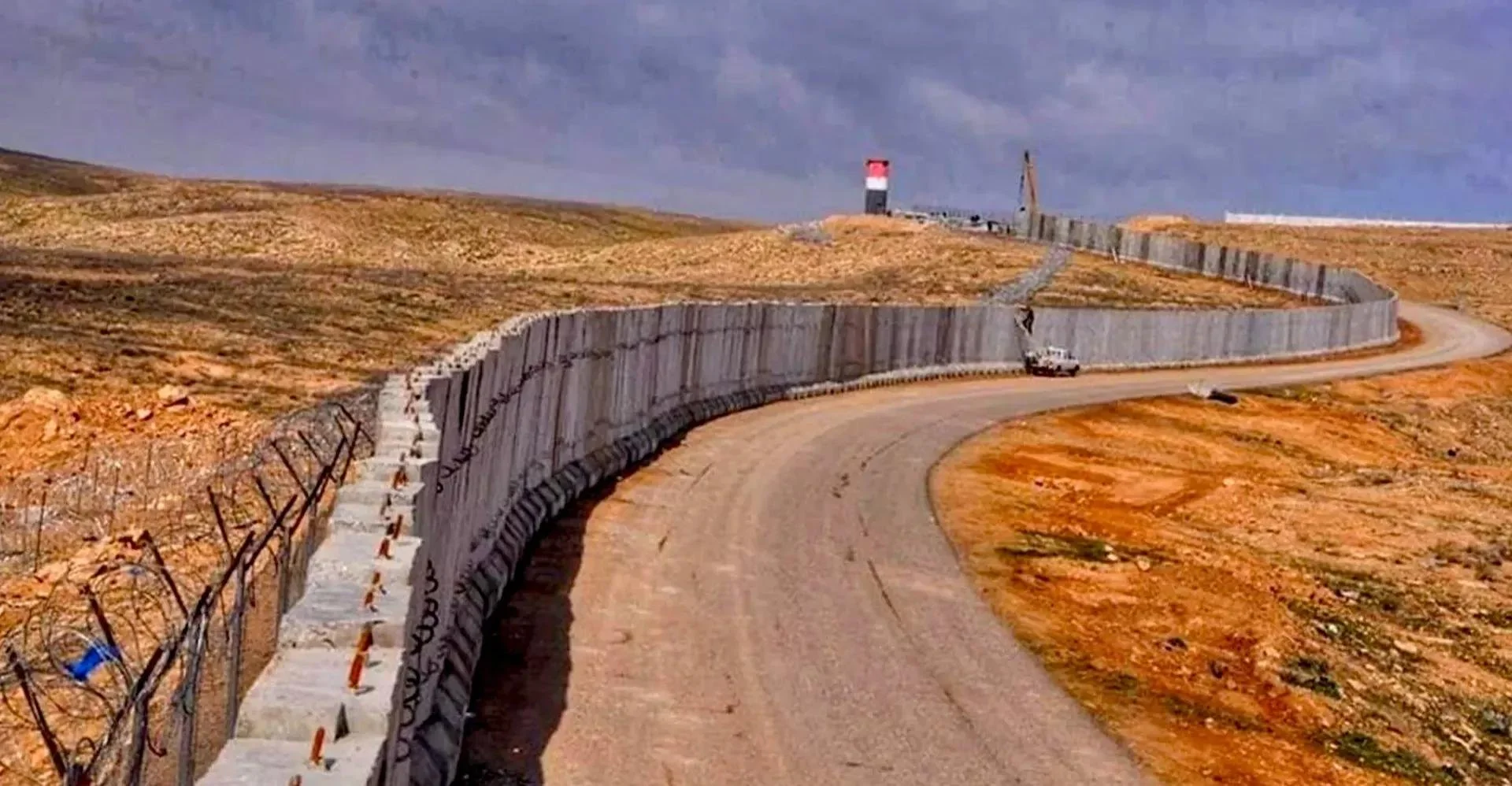
Speaking to Shafaq News, Sabah Al-Numan, spokesperson for the Iraqi Armed Forces, indicated that the concrete wall along the 600-kilometer Iraq-Syria frontier is now about 80% complete. The border has also been reinforced with additional personnel, advanced technical and logistical equipment, and fixed defense lines maintained by both the Iraqi Army and Popular Mobilization Forces (PMF).
''Iraq’s borders with all neighboring states are experiencing the same high level of stability,'' he noted.
Earlier today, PMF confirmed the deployment of its 25th Brigade along the border as part of a broader security plan, intended to support Iraqi forces and strengthen intelligence and field operations.
Muqtada Al-Sadr, leader of Iraq’s Patriotic Shiite Movement (PSM), had previously cautioned against handling the situation in Syria “naively,” urging authorities to secure the borders and reinforce deployments promptly.
The warning comes amid rising tensions in northeastern Syria, where clashes between the Syrian army and the Kurdish-led Syrian Democratic Forces (SDF) left dozens dead or injured and forced thousands of Kurdish families to flee. Meanwhile, Syria’s transitional President Ahmad Al-Sharaa signed a new agreement with the SDF, ending the clashes and paving the way for the group’s integration into state institutions. https://www.shafaq.com/en/Security/Iraq-achieves-total-control-over-Syrian-frontier
“Tidbits From TNT” Wednesday Morning 1-21-2026
TNT:
Tishwash: Iraq attracts investments exceeding $100 billion in 3 years
The National Investment Commission announced on Tuesday that it had achieved investment accomplishments exceeding $100 billion in Iraq during the past three years, noting that it had dealt with more than 850 investment requests for various projects during the past year .
The spokesperson for the authority, Hanan Jassim, said in a statement to the official agency, which was followed by the “Al-Sa’a” network, that “the volume of investments achieved during the past three years amounted to more than 102 billion US dollars, in an indication of rising investor confidence, which paves the way for achieving higher figures during 2026. ”
TNT:
Tishwash: Iraq attracts investments exceeding $100 billion in 3 years
The National Investment Commission announced on Tuesday that it had achieved investment accomplishments exceeding $100 billion in Iraq during the past three years, noting that it had dealt with more than 850 investment requests for various projects during the past year .
The spokesperson for the authority, Hanan Jassim, said in a statement to the official agency, which was followed by the “Al-Sa’a” network, that “the volume of investments achieved during the past three years amounted to more than 102 billion US dollars, in an indication of rising investor confidence, which paves the way for achieving higher figures during 2026. ”
She noted that “during 2025, the Authority dealt with more than 850 investment applications for various projects in the energy, housing, health, education, transportation, and services sectors, which were audited and studied in accordance with the provisions of the applicable investment law and in coordination with the relevant sectoral authorities to obtain the necessary approvals .”
She explained that "the Authority issued and amended about 40 investment licenses for strategic projects that included power generation stations, smart electricity billing projects in Baghdad and a number of governorates, residential complexes, commercial centers, airports, and service projects, in addition to participating in about 30 joint technical and legal committees to address obstacles and expedite the completion of transactions link
Tishwashs: Iraq discusses with the World Bank ways to enhance transparency and combat corruption
The head of the Integrity Commission, Mohammed Al-Lami, discussed with a delegation from the World Bank mission in Iraq on Tuesday ways to enhance transparency standards in contracts and projects funded by the World Bank, stressing Iraq’s openness and its joining all international and regional initiatives aimed at confronting and reducing corruption.
The delegation expressed the mission’s desire to conclude a memorandum of understanding with the commission in a way that contributes to strengthening the integrity system and good governance.
The Integrity Commission stated in a statement received by Network 964 that “the head of the Federal Integrity Commission, Dr. (Mohammed Ali Al-Lami), met with a delegation from the World Bank mission in Iraq to discuss ways to enhance joint cooperation in the areas of integrity, transparency and combating corruption, especially in contracts and national projects funded by the Bank.”
The statement added that “Dr. Al-Lami affirmed, during his meeting with Mr. Alan Bacaris, Director of the Integrity Unit at the World Bank, and Mr. Emmanuel Salinas, Special Representative of the World Bank Mission in Iraq and their accompanying delegation, that Iraq welcomes all international and regional initiatives aimed at confronting corruption and reducing its avenues and has taken the initiative to join them,” praising “the areas of cooperation with the World Bank Mission, especially in the field of promoting transparency and preventing and combating corruption.”
For his part, Alan Bacaris, Director of the Integrity Unit at the World Bank, and his accompanying delegation, expressed “his mission’s desire to conclude a memorandum of understanding with the Commission,” praising “the Commission’s steps in the programs implemented by the Iraqi Academy for Combating Corruption, and the benefit to international bodies from the Academy’s experience, commending the endeavor to automate and digitize anti-corruption procedures.”
At the conclusion of the meeting, the head of the commission stressed “the importance of preparing the final draft of the memorandum of understanding and concluding it between the two parties, noting the technical support provided by international organizations, including the World Bank mission and the UNDP
Which contributes to strengthening the integrity and good governance system and supports national efforts aimed at preventing and combating corruption in accordance with best international practices,” pointing out that “one of the commission’s main objectives is to prevent corruption before it occurs and to support investors and protect them from extortion.” link
*************
Tishwash: US Envoy to Iraq Calls Corruption the “Disease” Undermining Stability
Mark Savaya says dismantling corruption networks is essential to restoring Iraqi sovereignty and weakening militias.
Mark Savaya, the United States president’s special envoy to Iraq, said on Wednesday that corruption lies at the core of Iraq’s instability and must be confronted decisively if the country is to be stabilized and militias dismantled.
In a statement posted on his official X account, Savaya argued that while militias are often treated as the central problem, they are in fact a byproduct of a deeper and more entrenched system of corruption.
“Militias are a symptom. Corruption is the disease,” he said, stressing that meaningful reform must begin with targeting illicit financial networks.
Savaya said he has detailed knowledge of how corrupt money is channeled through complex structures that extend beyond senior officials.
According to him, illicit funds frequently move through layers of lower-level actors, including family members, friends, guards, drivers, and intermediaries, a system designed to provide insulation and plausible deniability while remaining fully functional.
He described the corruption apparatus as a highly sophisticated and deliberately constructed network that has been active for more than two decades. Savaya said the system has repeatedly bypassed regulations, compliance mechanisms, and international auditing frameworks, allowing it to operate with relative impunity.
According to the US envoy, these corruption networks have played a critical role in financially empowering, protecting, and sustaining Iranian-backed militia groups in Iraq.
He warned that without dismantling these financial lifelines, efforts to restore Iraqi sovereignty and weaken armed groups would remain ineffective.
Savaya emphasized that any serious attempt to stabilize Iraq must focus on shutting down major sources of corrupt funding, including fake payrolls, fraudulent loans, and fictitious assets.
“Without that,” he said, “every other effort will fail.”
His comments come amid ongoing debates within Iraq and among international partners over governance reform, state authority, and the long-term challenge posed by militias and entrenched corruption.
The Twitter post
https://x.com/Mark_Savaya/status/2013841906837364863?s=20
If Iraq is to be fixed, corruption must be confronted first and decisively. Militias are a symptom. Corruption is the disease.
I know in detail how illicit money is channeled. It does not flow only through senior principals. More importantly, it moves through layers of lower level actors such as family members, friends, guards, drivers, and intermediaries.
This structure creates insulation and deniability while keeping the system fully operational. This is a highly complex and deliberately constructed network that has been active for more than two decades. It has successfully bypassed regulations, compliance frameworks, and international auditing mechanisms.
Through this system, Iranian backed militia groups have been financially empowered, protected, and sustained. Any serious effort to stabilize Iraq, restore sovereignty, and dismantle militias must begin with dismantling the corruption networks that finance and protect them.
The sources of massive corrupt money such as fake payrolls, fake loans, and fictitious assets must stop. Without that, every other effort will fail. link
Mot: Apparently -- This Really Might Beeeeee the Week!!!!

Mot: Heres One fir Ya!!! ... hmmmmmmm

Seeds of Wisdom RV and Economics Updates Tuesday Evening 1-20-26
Good Evening Dinar Recaps,
Wall Street Slips Toward Three-Week Lows as Tariff Shock Rattles Markets
Trade escalation revives volatility and exposes cracks beneath the rally
Good Evening Dinar Recaps,
Wall Street Slips Toward Three-Week Lows as Tariff Shock Rattles Markets
Trade escalation revives volatility and exposes cracks beneath the rally
Overview
U.S. equity markets slid toward three-week lows as renewed tariff threats from President Donald Trump triggered a sharp shift in investor sentiment. The Dow Jones Industrial Average, S&P 500, and Nasdaq all moved lower as traders rotated out of risk assets and volatility surged across global markets.
Key Developments
Broad Market Decline: All three major U.S. indexes posted notable losses as tariff headlines revived fears of a prolonged trade confrontation.
Risk-Off Rotation: Capital flowed into traditional safe havens while equities and high-beta assets faced sustained selling pressure.
Volatility Spike: Market volatility indicators rose, reflecting uncertainty over trade policy, growth expectations, and geopolitical stability.
Global Spillover: Weakness in U.S. markets echoed across Europe and Asia, reinforcing the interconnected nature of global financial stress.
Why It Matters
Markets had been pricing in relative stability and policy containment. The sudden reintroduction of tariff risk highlights how fragile that confidence remains. Trade conflict acts as a drag on earnings, investment, and global growth — and history shows that sustained equity stress often forces policymakers into corrective action.
Why It Matters to Foreign Currency Holders
For foreign currency holders anticipating revaluation or systemic change:
Equity market stress often precedes currency realignments and policy shifts.
Risk-off environments expose weaknesses in fiat systems built on leverage and confidence.
Trade shocks accelerate discussions around alternative settlement systems, reserve diversification, and monetary reform.
Market instability is not noise — it is often the pressure point where monetary change begins.
Implications for the Global Reset
Pillar 1: Financial Market Stress
Persistent equity weakness signals structural fragility rather than a temporary pullback, increasing the odds of coordinated fiscal or monetary intervention.
Pillar 2: Policy Inflection Risk
As trade tensions suppress growth and markets wobble, central banks and governments may be forced into unexpected pivots — a recurring feature in reset-style transitions.
This is not just a market pullback — it is a stress test of the existing financial order.
This is not just volatility — it’s global finance restructuring before our eyes.
Seeds of Wisdom Team
Newshounds News™ Exclusive
Sources
Reuters — Wall Street falls as tariff threats spark risk-off trading
CNBC — Stocks slide, volatility jumps as trade tensions return to focus
~~~~~~~~~~
Global Market Wrap: Stocks Slip, Dollar Weakens as Safe Havens Gain
Capital rotation signals stress beneath the surface of global markets
Overview
Global financial markets shifted into a defensive posture as equities softened, the U.S. dollar weakened, and investors moved into bonds and traditional safe-haven currencies. Gold prices strengthened as trade tensions and geopolitical uncertainty drove renewed risk aversion across asset classes.
Key Developments
Global Equities Pull Back: Stock markets in the U.S., Europe, and Asia edged lower as investors reassessed growth and trade risks.
U.S. Dollar Weakness: The dollar declined against major currencies, reflecting reduced confidence amid rising policy and geopolitical uncertainty.
Safe Havens Strengthen: Bonds, gold, and defensive currencies attracted inflows as investors sought capital preservation.
Risk Rotation Accelerates: Market behavior suggests portfolio rebalancing away from growth-sensitive assets and toward stability.
Why It Matters
The combination of falling equities and a weaker dollar is a notable signal. Historically, this pattern reflects waning confidence in growth assumptions and policy stability. When investors simultaneously exit risk assets and the reserve currency, it often marks the early stages of deeper systemic stress rather than a routine market pullback.
Why It Matters to Foreign Currency Holders
For foreign currency holders anticipating revaluation or monetary restructuring:
Dollar weakness can precede currency realignments and reserve diversification.
Safe-haven accumulation highlights declining trust in leveraged financial systems.
These rotations often emerge before policy resets, liquidity injections, or structural reforms.
Such market signals align closely with conditions that tend to surface ahead of major monetary transitions.
Implications for the Global Reset
Pillar 1: Reserve Currency Pressure
A weakening dollar alongside rising safe havens points to subtle but growing strain on the traditional reserve system.
Pillar 2: Capital Reallocation
As capital migrates toward hard assets and defensive positions, the foundations of the post-World War II financial order face renewed testing.
This environment reinforces the narrative that global markets are gradually repositioning for a multipolar financial future.
This is not just a market rotation — it’s global finance restructuring before our eyes.
Seeds of Wisdom Team
Newshounds News™ Exclusive
Sources
~~~~~~~~~~
Move Over BRICS: Zambia Accepts Chinese Yuan for Taxes
Africa becomes a new front in China’s currency expansion strategy
Overview
Zambia has become the first African nation to accept tax and royalty payments in the Chinese yuan, marking a significant step in the currency’s internationalization beyond the BRICS framework. Chinese mining companies operating in Zambia are now paying government taxes directly in yuan rather than U.S. dollars, a move confirmed by the Zambian government and central bank.
Key Developments
Yuan Used for Taxes: Chinese mining firms in Zambia have begun paying royalties and taxes in yuan, not dollars — a first for Africa.
Central Bank Confirmation: The Bank of Zambia confirmed that yuan-based payments started in October and are now part of official reserve and payment operations.
Reserve Diversification: Zambia is actively increasing its holdings of foreign currencies, with the yuan taking a growing share.
China’s Africa Footprint: The shift builds on China’s deep economic ties through the Belt and Road Initiative, spanning mining, ports, railroads, airports, and infrastructure projects.
Why It Matters
Accepting taxes in a foreign currency is a powerful signal of trust and structural alignment. Unlike trade settlements, tax payments embed a currency directly into a country’s fiscal system. This move elevates the yuan from a trade currency to a functional component of sovereign finance — a major milestone in de-dollarization dynamics.
Why It Matters to Foreign Currency Holders
For foreign currency holders watching global realignment:
Dollar exclusivity is weakening not just in trade, but in government revenue systems.
Currency diversification at the central bank level often precedes valuation shifts and reserve rebalancing.
Africa’s role as a testing ground suggests de-dollarization is spreading quietly, not through headlines but through infrastructure and taxation.
These are the kinds of structural changes that tend to surface before major monetary transitions.
Implications for the Global Reset
Pillar 1: Fiscal-Level De-Dollarization
When taxes are paid in non-dollar currencies, the dollar’s role as the default sovereign settlement tool erodes.
Pillar 2: Multipolar Currency System
China is extending yuan usage beyond BRICS and into Africa, signaling a broader strategy to normalize multiple reserve and settlement currencies globally.
This is not symbolic — it is operational de-dollarization.
This is not just trade diversification — it’s global finance restructuring before our eyes.
Seeds of Wisdom Team
Newshounds News™ Exclusive
Sources
Watcher.Guru — Move Over BRICS, Zambia’s Government Accepts Chinese Yuan as Taxes
News24 — Zambia accepts taxes in yuan as China pushes currency across Africa
~~~~~~~~~~
Seeds of Wisdom Team RV Currency Facts Youtube and Rumble
Newshound's News Telegram Room Link
RV Facts with Proof Links Link
RV Updates Proof links - Facts Link
Follow the Gold/Silver Rate COMEX
Follow Fast Facts
Seeds of Wisdom Team™ Website
Thank you Dinar Recaps
Gold, Silver and Bitcoin: How These 3 Assets Have Protected Wealth in Uncertain Times
Gold, Silver and Bitcoin: How These 3 Assets Have Protected Wealth in Uncertain Times
Sean Bryant GOBankingRates Sun, January 18, 2026
Is there a foolproof way to avoid large portfolio swings? Whether you are young in your investment journey or are nearing retirement and looking for a way to avoid large dips in your portfolio’s value, it’s important to understand what history says about storing wealth.
Gold, Silver and Bitcoin: How These 3 Assets Have Protected Wealth in Uncertain Times
Sean Bryant GOBankingRates Sun, January 18, 2026
Is there a foolproof way to avoid large portfolio swings? Whether you are young in your investment journey or are nearing retirement and looking for a way to avoid large dips in your portfolio’s value, it’s important to understand what history says about storing wealth.
In this article, we’ll cover how gold, silver and bitcoin fare during uncertain times and what this means for your portfolio.
Gold Shines During Uncertain Times
Gold has historically been a strong hedge against inflation. This means that as volatility increases in the market, gold remains relatively stable. Not only does gold hold its value, but it’s also a liquid asset. For example, you can walk into any pawn shop or jewelry store and sell your gold on the same day.
During the pandemic, the value of gold grew stronger. In fact, in January 2020, the price of gold was at $1,581 per ounce, according to Macrotrends. By the end of 2020, the price grew to $1,895, which is an almost 20% gain. Part of the reason gold remains a stable investment during uncertain times is that it is globally recognized as valuable.
Silver Remains Stable During Uncertain Times
Silver has been used alongside gold during uncertain times; however, it isn’t as stable as gold. The intrinsic value of silver is heavily dependent on its use as an industrial commodity and a monetary metal.
To Read More: https://finance.yahoo.com/news/gold-silver-bitcoin-3-assets-135417680.html
$5,000 Gold, $100 Silver INCOMING as Fiat Experiment Collapses Globally
$5,000 Gold, $100 Silver INCOMING as Fiat Experiment Collapses Globally
Taylor Kenny: 1-20-2026
Gold and silver are shattering all-time highs — and the world’s financial system is cracking under the pressure.
As of Tuesday morning, January 20th, gold sits at a staggering $4,735 an ounce. Silver has surged to $93. This isn't a blip. It’s a blaring siren.
$5,000 Gold, $100 Silver INCOMING as Fiat Experiment Collapses Globally
Taylor Kenny: 1-20-2026
Gold and silver are shattering all-time highs — and the world’s financial system is cracking under the pressure.
As of Tuesday morning, January 20th, gold sits at a staggering $4,735 an ounce. Silver has surged to $93. This isn't a blip. It’s a blaring siren.
CHAPTERS:
00:00 – Gold & Silver Break Records
01:26 – Geopolitical Chaos & Economic Fallout
02:17 – The $9 Trillion Debt Time Bomb
02:45 – Japan's Bond Crisis Echoes Globally
04:07 – The Central Bank Playbook
04:36 – The Real Economic Picture
05:34 – Currency Reset Patterns
06:31 – Final Warning & What To Do Next
Economic Videos From Andy Schectman 1-20-2026
Massive Fed’s Gold Revaluation Ahead! If You Own Gold or Silver, Watch This Now - Andy Schectman
Business Upside: 1-19-2026
What happens if Gold becomes the reserve currency of the world instead of the US Dollar?
A potential Federal Reserve gold revaluation is gaining attention as precious metals expert Andy Schectman highlights powerful signals from the US financial system.
In this video, we break down what a Fed gold revaluation means for gold and silver investors, how it could impact the US dollar, inflation, and global markets, and why many believe gold and silver prices may be entering a strong bullish phase.
Massive Fed’s Gold Revaluation Ahead! If You Own Gold or Silver, Watch This Now - Andy Schectman
Business Upside: 1-19-2026
What happens if Gold becomes the reserve currency of the world instead of the US Dollar?
A potential Federal Reserve gold revaluation is gaining attention as precious metals expert Andy Schectman highlights powerful signals from the US financial system.
In this video, we break down what a Fed gold revaluation means for gold and silver investors, how it could impact the US dollar, inflation, and global markets, and why many believe gold and silver prices may be entering a strong bullish phase.
This analysis covers gold price forecast, silver price prediction, Federal Reserve policy, US economy outlook, and long-term wealth protection strategies.
If you own gold or silver or are planning to invest, this video offers clear insights, positive market perspective, and macro-economic clarity based on current US trends.
This Isn’t Going Back — The Silver Market Is Breaking | Andy Schectman
MacroEdge: 1-20-2026
In this video, we break down why the global silver market is under growing structural pressure as physical delivery demand accelerates and paper trading mechanisms begin to lose control.
Nation-states, central banks, and major industrial buyers are increasingly demanding real metal, not paper promises — exposing deep imbalances in futures markets like COMEX and the LBMA.
Andy Schectman explains how rising physical demand, shrinking available inventories, and the classification of silver as a critical mineral are changing how the market functions.
Unlike previous cycles, price-suppression tactics such as margin hikes are no longer stopping the trend — they are simply transferring silver from weak hands to the strongest buyers on earth.
This is not about short-term price predictions or hype. It’s about market structure, delivery risk, counterparty exposure, and why physical silver is becoming strategically important in a world moving away from debt-based settlement systems.
Seeds of Wisdom RV and Economics Updates Tuesday Afternoon 1-20-26
Good Afternoon Dinar Recaps,
U.S.–Europe Trade Tensions Escalate at Davos
Tariff warnings, Greenland politics, and a fragile global trade order collide
Good Afternoon Dinar Recaps,
U.S.–Europe Trade Tensions Escalate at Davos
Tariff warnings, Greenland politics, and a fragile global trade order collide
Overview
Tensions between the United States and the European Union took center stage at the 2026 World Economic Forum in Davos after U.S. Treasury Secretary Scott Bessent publicly urged European leaders not to retaliate against President Donald Trump’s proposed tariffs tied to the Greenland dispute. The warning comes as global markets show increasing signs of stress and risk aversion.
Key Developments
Davos Intervention: Treasury Secretary Scott Bessent cautioned EU officials that retaliation would risk reigniting a destructive trade war at a time of fragile global growth.
Greenland Factor: The tariff threat is linked to broader geopolitical pressure surrounding Greenland, highlighting how strategic geography is now intersecting with trade policy.
Market Sensitivity: Equity markets, currencies, and commodities have reacted sharply, underscoring how tariff rhetoric alone can move global capital.
Diplomatic Fractures: Despite public calls for restraint, trust between Washington and Brussels appears strained as trade policy becomes increasingly unilateral.
Why It Matters
Escalating trade tensions between two of the world’s largest economic blocs threaten global supply chains, suppress growth, and weaken confidence in multilateral trade frameworks. Even without immediate tariffs, the threat itself is enough to disrupt markets, delay investment, and amplify geopolitical risk.
Why It Matters to Foreign Currency Holders
For those holding foreign currencies in anticipation of higher future valuations:
Trade fragmentation increases pressure on fiat currency stability.
Volatility in the euro and dollar highlights vulnerabilities in the current reserve system.
Periods of trade conflict historically precede currency realignments and revaluations, especially during broader systemic shifts.
This environment reinforces why many currency holders view geopolitical stress as a catalyst rather than a setback.
Implications for the Global Reset
Pillar 1: Trade Fragmentation
The Davos warning underscores a move away from unified global trade toward regional blocs and strategic alliances — a core feature of reset-era restructuring.
Pillar 2: Monetary Confidence Erosion
As trade disputes intensify, confidence in legacy systems weakens, accelerating interest in alternative settlement mechanisms, hard assets, and currency reform.
This is not just diplomacy — it’s structural pressure on the post-World War II economic order.
This is not just trade policy — it’s global finance restructuring before our eyes.
Seeds of Wisdom Team
Newshounds News
Sources
The Guardian — Scott Bessent urges Europe not to retaliate against Trump tariffs
Reuters — Global markets react as tariff tensions rise at Davos
~~~~~~~~~~
Why Gold and Silver Are Soaring While Crypto Slips Under Tariff Pressure
Safe-haven metals surge as trade tensions expose fault lines in risk assets
Overview
Gold and silver prices have surged to new record highs as investors seek safety amid escalating U.S.–EU tariff tensions and broader geopolitical uncertainty. At the same time, cryptocurrency markets have weakened, with Bitcoin, Ethereum, and major altcoins declining as capital rotates out of high-risk assets. This divergence highlights a renewed preference for tangible stores of value during periods of economic and political stress.
Key Developments
1. Precious Metals Attract Safe-Haven Demand
Gold and silver have rallied sharply as investors hedge against tariff escalation, market volatility, and geopolitical risk. Rising uncertainty has reinforced the traditional role of precious metals as defensive assets during periods of instability.
2. Crypto Markets Slide Amid Risk-Off Sentiment
Cryptocurrencies have declined alongside broader risk assets. Bitcoin has fallen below $93,000, while Ethereum dropped under $3,100. The overall crypto market fell more than 2% in the past 24 hours, with SOL, DOGE, and ADA also trending lower.
3. Tariff Tensions Drive Capital Rotation
Renewed tariff threats tied to U.S.–EU trade disputes have increased caution across markets. Investors appear to be reducing exposure to speculative assets and reallocating capital toward metals viewed as protection against policy-driven shocks.
4. Diplomacy Signals Brief Market Relief
President Donald Trump confirmed upcoming trade discussions with European leaders at the World Economic Forum in Davos. While this raised hopes for de-escalation, markets continue to price in elevated risk until concrete outcomes emerge.
Why It Matters
The divergence between precious metals and cryptocurrencies signals a shift in investor psychology. In periods of sustained uncertainty, markets tend to favor assets with long-established roles as stores of value over newer, volatility-prone instruments.
This rotation reflects declining confidence in growth-dependent assets when trade policy and geopolitical stability are in question.
Why It Matters to Foreign Currency Holders
For foreign currency holders anticipating revaluation or reset-driven gains:
Rising gold and silver prices often signal declining confidence in fiat stability.
Sustained safe-haven demand can precede currency realignment or reserve diversification.
Weakness in speculative assets suggests capital is preparing for monetary or structural adjustment rather than growth expansion.
Historically, precious-metal strength has accompanied periods leading into monetary resets or repricing events.
Implications for the Global Reset
Pillar 1: Return to Hard-Asset Confidence
The renewed dominance of gold and silver reflects skepticism toward policy stability, debt expansion, and trade coherence. Hard assets regain prominence when trust in systems weakens.
Pillar 2: Risk Assets Face Structural Headwinds
Crypto and other speculative markets remain sensitive to liquidity conditions and political risk. As tariffs and fragmentation persist, volatility increases, reinforcing the divide between value preservation and growth speculation.
This shift signals preparation — not panic — within the global financial system.
This is not just a metals rally — it’s a warning that markets are repositioning for systemic change.
Seeds of Wisdom Team
Newshounds News
Sources
~~~~~~~~~~
BRICS Digital Currency Link Signals 2026 Acceleration in De-Dollarization
CBDC interoperability proposal highlights Global South push to reshape trade and payments
Overview
A new proposal from India’s Reserve Bank to link BRICS central bank digital currencies (CBDCs) is emerging as one of the clearest signals yet that de-dollarization efforts are entering a more structured phase in 2026. The initiative, expected to be placed on the agenda of the BRICS summit hosted by India later this year, aims to facilitate cross-border trade and tourism payments while reducing reliance on the U.S. dollar.
Key Developments
1. RBI Pushes CBDC Interoperability to Summit Level
India’s central bank has recommended formally discussing a BRICS digital currency link at the 2026 summit. If adopted, this would mark the first coordinated attempt to connect the CBDCs of Brazil, Russia, India, China, South Africa, and newer members at a bloc-wide level.
2. Building on 2025 Rio Declaration
The proposal expands on a 2025 BRICS declaration in Rio de Janeiro that called for interoperability between national payment systems. The current framework represents a shift from concept to implementation, signaling that BRICS nations are preparing digital infrastructure for real trade usage.
3. Trade Imbalances and Governance Take Center Stage
Officials acknowledge that interoperability alone is insufficient. Governance rules, settlement mechanisms, and solutions for trade imbalances remain unresolved. Previous local-currency trade experiments, particularly between Russia and India, exposed practical limits without robust settlement frameworks.
4. FX Swaps and Periodic Settlement Considered
Central banks are exploring bilateral foreign exchange swaps and periodic settlement schedules to manage imbalances. These mechanisms would help prevent the accumulation of unusable local currency balances while maintaining sovereignty over monetary policy.
Why It Matters
This proposal reflects a structural evolution in global payments. Rather than replacing the dollar outright, BRICS nations are building parallel systems that reduce dependence on correspondent banking networks and U.S.-centric settlement rails.
The focus on CBDC interoperability suggests that future trade flows may bypass traditional financial intermediaries altogether.
Why It Matters to Foreign Currency Holders
For foreign currency holders anticipating revaluation or reset-driven gains:
Digital settlement frameworks often precede currency repricing.
Reduced dollar reliance increases flexibility for regional currency realignment.
Trade-driven digital infrastructure strengthens the case for managed revaluation rather than speculative appreciation.
This development reinforces the idea that currency change is being engineered through plumbing, not proclamations.
Implications for the Global Reset
Pillar 1: Payments Before Currency Replacement
BRICS is prioritizing payment interoperability rather than announcing a new reserve currency. This incremental approach minimizes disruption while steadily weakening dollar dominance in trade settlement.
Pillar 2: Global South Trade Reorganization
Trade projections show BRICS+ growth outpacing traditional blocs. As trade reorganizes, digital payments become the backbone supporting a multipolar monetary system.
The reset is advancing through infrastructure — quietly, technically, and deliberately.
This is not the launch of a new currency — it is the rewiring of how global trade settles value.
Seeds of Wisdom Team
Newshounds News
Sources
Watcher.Guru — BRICS Digital Currency Link & 2026 Trading Show De-Dollarization Shift
Reuters — India’s central bank proposes linking BRICS digital currencies
~~~~~~~~~~
Seeds of Wisdom Team RV Currency Facts Youtube and Rumble
Newshound's News Telegram Room Link
RV Facts with Proof Links Link
RV Updates Proof links - Facts Link
Follow the Gold/Silver Rate COMEX
Follow Fast Facts
Seeds of Wisdom Team™ Website
Thank you Dinar Recaps