
News, Rumors and Opinions Saturday 10-25-2025
Note: All intel should be considered as "Rumors" until we receive official announcements ...and “Rates and Dates” could change anytime until we get to the banks/redemption centers.
RV Excerpts from the Restored Republic via a GCR: Update as of Sat. 25 Oct. 2025
Compiled Sat. 25 Oct. 2025 12:01 am EST by Judy Byington
Possible Timing:
Fri. 24 Oct. 2025 Prepare for the Global Currency Reset, full scale activation of the gold and asset-backed Quantum Financial System, the public introduction of Med Beds, a 48 hour wealth redistribution blackout and ten days of Worldwide communication darkness. …Gesara Show Intel on Telegram
Note: All intel should be considered as "Rumors" until we receive official announcements ...and “Rates and Dates” could change anytime until we get to the banks/redemption centers.
RV Excerpts from the Restored Republic via a GCR: Update as of Sat. 25 Oct. 2025
Compiled Sat. 25 Oct. 2025 12:01 am EST by Judy Byington
Possible Timing:
Fri. 24 Oct. 2025 Prepare for the Global Currency Reset, full scale activation of the gold and asset-backed Quantum Financial System, the public introduction of Med Beds, a 48 hour wealth redistribution blackout and ten days of Worldwide communication darkness. …Gesara Show Intel on Telegram
Between Thurs. 10 Oct. and Tues. 11 Nov 2025 activation of the Quantum Financial System’s Nesara and Gesara was (allegedly) rolling out for the US and the Netherlands.
Thurs. 30 Oct. 2025 the Quantum Financial System (QFS) will transition into full operational control. Global banking infrastructures are (allegedly) syncing to the new asset-backed framework, dissolving the final remnants of the fiat system.
Thurs. Fri. 30, 31 Oct. 2025 Scheduled Roll-out Window for Tier4b (Us, the Internet Group) depending on regional system loads. …Internal Advisory Bulletin sent to mid-level banking partners
On Sat. 1 Nov 2025, the scheduled 48-hour blackout for GCR/GESARA wealth redistribution will (allegedly) begin. This marks the start of major fund allocations into new sovereign digital wallets under QFS oversight.
On Sat. 1 Nov. 2025 the new United States of the American Republic will (allegedly) start it’s new fiscal year under a gold-backed US Note as part of the Global Currency Reset.
On Wed. 5 Nov 2025, the Ten Days of Darkness will (allegedly) commence via the secure Starlink satellite network. During this period, all main stream media will go (allegedly) offline while continuous broadcasts through the Emergency Broadcast System will (allegedly) reveal the global takedown of the cabal, the collapse of the fiat USD, and the rise of sovereign freedom for all 209 GESARA-compliant nations.
On Mon. 10 Nov 2025, the first wave of wealth redistribution will (allegedly) go live — millions will receive initial fund releases, empowering communities and igniting local economic recovery worldwide.
Between Tues. 11 Nov. and Tues. 18 Nov. the Quantum Financial System officially (allegedly) begins. Orion Shield, the quantum fraud detection network that time-stamps, verifies, and archives every movement of wealth in real time, will send community restoration credits directly to verified participants.
Each wallet is (allegedly) tied to its owner’s biometric signature, which guarantees full ownership and protection against theft or tampering. This event is not a charity; it is a return of stolen value to its rightful owners through open redistribution.
This is NESARA GESARA, the global reset of values, wealth and sovereignty. It’s the quiet replacement of the corrupt monetary architecture that’s ruled humanity for centuries. The world will move from debt to abundance, from control to freedom.
~~~~~~~~~~~~
Global Financial System:
Fri. 24 Oct. 2025: HISTORIC BOND REDEMPTION: THE FORGOTTEN WEALTH THAT WILL SHAKE THE FINANCIAL SYSTEM – THE SECRETS BURIED IN VAULTS – amg-news.com – American Media Group
~~~~~~~~~~~~
Global Currency Reset:
Judy Note: It is my personal opinion, and I could easily be wrong, that when we hear the EBS go off with the sound of Seven Trumpets, we can soon expect to receive several messages on our cell phones generated from the new Starlink Satellite System.
One of those messages should contain information about how to gain a redemption center appointment.
Those who don’t have foreign currency to exchange will use their appointment to set themselves up for banking, med bed treatment and voting using personal cell phones linked up to the Starlink Satellite System, while we with currency and bonds will do the same, plus be able to do our exchange.
Read full post here: https://dinarchronicles.com/2025/10/25/restored-republic-via-a-gcr-update-as-of-october-25-2025/
Courtesy of Dinar Guru: https://www.dinarguru.com/
Militia Man Iraq's financial house is in order. The dinar is ready...Iraq is integrating into global markets. That's how serious it is...You've got the Finance Minister telling you don't listen to the politics, pay attention to what we're telling you. You got Alaq talking about restructuring new notes...That's pretty powerful information.
Frank26 [Iraq boots-on-the-ground report] FIREFLY: There's a lot of activity going on. The dropping of the zeros in the streets is everywhere but more so the amount of gold we have... FRANK: There are many parts of the monetary reform that are visible now...All this gold and so much more they're about to tell you they have is not for a sanctioned program rate, it's for the promised purchasing power for the Iraq citizens.
Mnt Goat …in the recent news once again the CBI confirms that they are moving ahead with the removing the zeros from the dinar. No longer historical stuff or futuristic someday stuff but NOW stuff... Article: “CENTRAL BANK: THE PROJECT TO REMOVE ZEROS FROM THE DINAR IS STILL ONGOING AND IS BEING PLANNED.” ...the CBI is confirming to the citizens the project is underway and we will see it soon. But when is “soon”? I can only guess it has to be between now and the end of December...if they still plan to reinstate in January 2026. We will shortly find out with only a few months to go...this RV saga is quickly coming to an end.
****************
They're Buying GOLD & Preparing to CRASH The US Economy (here's why) | @SimonDixon21
CapitalCosm: 10-24-2025
Seeds of Wisdom RV and Economics Updates Saturday Morning 10-25-25
Good Morning Dinar Recaps,
XRP in the Spot Light — Building the Bridge to a New Global Financial System
How XRP and Evernorth Holdings Inc. are shaping interoperable liquidity rails for the next era of money.
Good Morning Dinar Recaps,
XRP in the Spot Light — Building the Bridge to a New Global Financial System
How XRP and Evernorth Holdings Inc. are shaping interoperable liquidity rails for the next era of money.
What’s Happening
Evernorth, backed by Ripple Labs Inc. and other major investors, plans to raise over US $1 billion in a U.S. market listing to build the world’s largest publicly-traded XRP treasury.
Evernorth’s stated strategy: actively purchase XRP on the open market, deploy it into business-lending, DeFi, liquidity-provision and validator-operations—rather than passively track price.
Meanwhile, the International Monetary Fund (IMF) and other global institutions are recognising blockchain-based settlement systems and tokenised value models — including XRP’s role as a bridge asset in cross-border flows.
Why It Matters
Bridge and liquidity model: XRP is increasingly viewed not just as a speculative token but as the neutral asset (a “currency C”) that enables value to move between different currencies, asset classes and networks without pre-funded accounts.
Supply tightness meets institutional demand: With a limited float and major institutional vehicles building positions, the mechanics of forthcoming liquidity flows may trigger structural shifts in how value is moved globally.
Foundation for a new monetary infrastructure: As DeFi, tokenised real-world assets, and central-bank digital currencies (CBDCs) proliferate, systems like XRP + Evernorth represent one of the first material stacks that span trad-fi, digital assets and network-infrastructure.
Global finance in transition: The alignment of capital markets, infrastructure providers and regulatory recognition indicates that we are moving beyond isolated use-cases into the architecture of the next financial system.
Implications
For banks & corporates: Access to near-real-time, cross-border liquidity could reduce capital-lock-up and streamline settlement, aligning with frameworks outlined by the IMF for tokenised money.
For asset markets: Tokenised securities, real-world asset platforms and DeFi flows may increasingly require interoperable rails—XRP-ecosystem participants such as Evernorth could occupy that layer.
For investors: The shift from speculative token-plays to infrastructure-plays means assessing projects not just on price action but on utility, regulatory clarity and network effect.
For monetary architecture: If bridge-assets like XRP become widely adopted by institutions and central banks, we may see the gradual erosion of legacy currency-settlement models and the emergence of a programmable, token-first system of global finance.
This is not just crypto hype — it’s a window into how global finance is being re-engineered around digital liquidity rails.
This is not just politics — it’s global finance restructuring before our eyes.
Seeds of Wisdom Team
Newshounds News™ Exclusive
Sources
Reuters: “Ripple-backed Evernorth set to raise over USD 1 billion …” 🔗 https://www.reuters.com/business/ripple-backed-evernorth-set-raise-over-1-billion-us-listing-hoard-xrp-token-2025-10-20/
Blockworks: “Ripple-backed Evernorth aims to raise over USD 1 B for XRP treasury” 🔗 https://blockworks.co/news/ripple-evernorth-raise-xrp
IMF: Trust Bridges and Money Flows (Fintech Notes) — tokenisation of money & cross-border flows. 🔗 https://www.imf.org/-/media/Files/Publications/FTN063/2023/English/FTNEA2023001.ashx
U.Today / TradingView: “261,819,198 XRP now held by Evernorth…” 🔗 https://www.tradingview.com/news/u_today%3A93d180a32094b%3A0-261-819-198-xrp-now-held-by-evernorth-in-push-to-build-largest-treasury/
~~~~~~~~~
Global Equity Inflows Surge as U.S.–China Trade Tensions Ease
Markets signal cautious optimism as liquidity and trust begin to realign.
The Rebalancing Begins
Global equity markets saw a sharp return of capital this week, with total inflows surpassing US $11 billion — the strongest in nearly a month, according to Reuters.
U.S. equity funds led the rebound, attracting ≈ US $9.65 billion in fresh capital.
Asian markets, notably China and Hong Kong, followed with ≈ US $2.81 billion in inflows as investors responded to renewed diplomatic signals between Washington and Beijing.
The easing of trade tensions between Donald Trump’s administration and China’s Xi Jinping has sparked tentative optimism among global investors. Both sides have reportedly reopened limited channels of dialogue on tariffs, semiconductor policy, and bilateral supply-chain stability.
The Underlying Shifts
Behind this short-term rally lies a deeper transformation: the gradual reconfiguration of global capital flows.
The redirection of liquidity toward Asian markets indicates that institutional investors are beginning to price in a multi-polar economic environment, one less dependent on U.S. interest-rate policy and dollar-denominated returns.
Barron’s described this as an “inflation relief rally,” but analysts caution it could represent more than market sentiment — it may signal the early stages of capital realignment as nations diversify away from single-currency dependencies.
Why It Matters
Liquidity migration — Capital inflows into Asia suggest that global liquidity is no longer U.S.-centric, marking the start of a new era in transnational capital mobility.
Trade diplomacy as monetary signal — Each thaw in U.S.–China relations now carries currency-market implications, influencing cross-border settlements and digital reserve planning.
BRICS alignment and diversification — Renewed investor confidence in Asian and emerging markets complements the rise of commodity-backed trade frameworks, reducing reliance on the dollar for settlement.
Path toward a global financial reset — As liquidity diversifies and investment trust decentralizes, the structure of global finance is evolving from a single-hub model to a distributed system of regional financial poles — a necessary step toward the coming global monetary realignment.
Implications
The surge in equity inflows may appear cyclical, but in the broader context of global monetary transition, it represents something structural:
A shift in global liquidity architecture, as capital begins to recognize new centers of growth and influence.
The emergence of regional trade currencies and digital settlement systems, quietly reshaping how reserves and equities interact across borders.
The early signs of a decentralized global order, where trust in economic performance, not just monetary policy, drives value flows.
This is not just markets recovering — it’s the first pulse of a rebalanced world economy.
This is not just politics — it’s global finance restructuring before our eyes.
Seeds of Wisdom Team
Newshounds News™ Exclusive
Sources
Reuters – Global equity fund inflows surge as U.S.–China trade tensions ease
The Guardian – Markets hit record highs amid easing inflation and trade optimism
~~~~~~~~~
Seeds of Wisdom Team RV Currency Facts Youtube and Rumble
Newshound's News Telegram Room Link
Follow the Gold/Silver Rate COMEX
Follow Fast Facts
Seeds of Wisdom Team™ Website
Thank you Dinar Recaps
“Tidbits From TNT” Saturday 10-25-2025
TNT:
Tishwash: FAT Brands to Open 10 New Stores in Iraq
FAT (Fresh. Authentic. Tasty.) Brands Inc., parent company of Great American Cookies and Marble Slab Creamery, has announced a development agreement to open ten co-branded stores across Iraq over the next five years. The partnership is with Eric Wilson, a 27-year U.S. military veteran who previously served in Iraq.
Taylor Wiederhorn, Chief Development Officer of FAT Brands, said the company continues to build its presence in Iraq, where it already operates seven locations. He expressed confidence that the launch of Great American Cookies and Marble Slab Creamery will succeed given the growing demand for American brands and Wilson's commitment as a local operator.
TNT:
Tishwash: FAT Brands to Open 10 New Stores in Iraq
FAT (Fresh. Authentic. Tasty.) Brands Inc., parent company of Great American Cookies and Marble Slab Creamery, has announced a development agreement to open ten co-branded stores across Iraq over the next five years. The partnership is with Eric Wilson, a 27-year U.S. military veteran who previously served in Iraq.
Taylor Wiederhorn, Chief Development Officer of FAT Brands, said the company continues to build its presence in Iraq, where it already operates seven locations. He expressed confidence that the launch of Great American Cookies and Marble Slab Creamery will succeed given the growing demand for American brands and Wilson's commitment as a local operator.
Founded in 1977, Great American Cookies is known as the creator of the Original Cookie Cake and for its signature chocolate chip cookie recipe, along with brownies and Double Doozies™ - icing-filled cookie sandwiches. Marble Slab Creamery, a pioneer in the ice cream industry for over 40 years, introduced the frozen slab technique and offers homemade, small-batch ice cream with free mix-ins, shakes, and ice cream cakes. link
Tishwash: Exclusive: The US State Department outlines Trump's strategy toward Iraq.
The US State Department outlined the Trump administration's strategy toward Iraq on Friday, emphasizing that the United States prioritizes "trade over conflict."
The ministry's clarification came in an exclusive comment to Shafaq News Agency regarding how the US administration interpreted the letter of thanks recently sent by President Donald Trump to the President of the Kurdistan Region, Nechirvan Barzani, in which he praised his efforts in supporting "peacebuilding" and "ending regional conflicts."
Last Wednesday, US President Donald Trump expressed his thanks and appreciation to Kurdistan Region President Nechirvan Barzani for his efforts to promote peace and peaceful coexistence, and his endeavors to end conflicts in the Middle East.
In this regard, a State Department spokesperson told Shafaq News Agency, "President Trump has prioritized trade over conflict," noting that Washington "actively supports the growing interest of American companies in the Iraqi market."
According to the spokesperson, these companies "will bring advanced technology, increased revenue, and improved customer service to Iraq," as Iraq focuses on improving internal security and transparency. He reiterated the United States' commitment to "partners across Iraq working to build a truly sovereign, stable, and prosperous state."
He emphasized that the bilateral partnership aims to "protect Iraq's sovereignty, enhance regional stability, and strengthen economic relations," adding that this is "in line with the Strategic Framework Agreement between the United States and Iraq."
The spokesman concluded by saying that this agreement includes cooperation on key issues such as "Iraq's energy independence from Iran, the commercial investment climate, private sector and banking reforms, in addition to cultural preservation, educational opportunities, security, and defense."
In his letter to Nechirvan Barzani, President Trump emphasized the importance of "overcoming old rivalries" for "a shared future of peace, success, and progress." link
************
Tishwash: Details of the largest oil deals in Iraq.. Baghdad seeks to produce 8 million barrels per day
Iraq's largest oil deals achieved a qualitative leap during the first nine months of 2025, after signing a series of strategic agreements and deals with major international companies to boost production and develop the oil sector's infrastructure.
According to a recent economic survey, these moves were directly reflected in Baghdad's plans to increase its export capacity and achieve an advanced position in global markets.
Iraq has concluded a series of huge contracts with British, American and Chinese companies, including the development of giant fields, investments in petrochemicals, pipeline projects, in addition to artificial intelligence and robotics technologies.
The largest oil deals in Iraq in 9 months indicate that Baghdad sets the goal of reaching production exceeding 8 million barrels per day in the coming years, as part of an integrated strategy aimed at diversifying sources of income and enhancing foreign direct investments.
Through these agreements, Iraq has consolidated its position on the list of the largest oil deals in the region and the world, proving that Baghdad is on a clear path towards regaining its position as a major player in global energy markets.
Developing oil reserves - January 2025
At the forefront of the largest oil deals in Iraq in January 2025 came a deal with the British company BP to develop reserves estimated at more than 9 billion barrels, with the aim of raising Iraq's production to 8 million barrels per day within 3 years.
Under the agreement, the Iraqi Ministry of Oil is working with BP to redevelop the Kirkuk field and neighboring fields, as part of a preliminary agreement dating back to August 2024, which represents a major step among the largest oil deals in Iraq in the recent period.
The project also aims to refer the rehabilitation and development operations of 4 fields belonging to the North Oil Company to the British company, while adopting the latest technical methods, to reach the best production rates of oil and gas.
Two agreements with two American companies - February 2025
The list of the largest oil deals in Iraq was strengthened by the signing of two agreements with the American company Halliburton in February to develop the Nahr Bin Omar and Sinbad fields in Basra, in a move aimed at increasing production and achieving greater efficiency in investing national resources.
Under the agreements, Halliburton will begin field and evaluation studies of the two fields, while developing production plans that will raise the Nahr Bin Omar field from 45,000 barrels per day to 300,000 barrels per day, consolidating its role among the largest oil deals in Iraq.
The plans also include investing in associated gas and employing the latest technical and economic models to develop production, which enhances oil revenues and supports Iraq's economic growth, according to what was reviewed by the specialized energy platform.
Artificial Intelligence Support - February 2025
Artificial intelligence was the hero of one of the largest oil deals in Iraq during February 2025, through an agreement to apply it in the East Baghdad field, with the Chinese company SBS, to develop monitoring technologies and improve the efficiency of oil extraction.
The deal aims to use advanced systems to monitor wells and reduce response time to faults, which enhances the operational performance of the field and reflects Iraq's trend towards innovation, according to what was followed by the specialized energy platform.
The new system allows data to be integrated and analyzed directly via smartphones, making it easier for engineers to make immediate decisions, and making the East Baghdad field a model for modern technologies in the oil sector.
Development of 4 oil fields - March 2025
Baghdad continued to support the largest oil deals in Iraq, through a contract with the British oil company BP, to develop 4 fields in Kirkuk, adding 150,000 barrels per day to the country's production capacity.
Under the deal, BP will invest about $25 billion in projects including oil, gas and water, making it one of the largest foreign investments, and dedicating this deal among the largest oil deals in Iraq for the year 2025.
This agreement returns the British company to Iraq after an absence since 2019, constituting a pivotal step in developing giant reserves and increasing production in the long term.
Technology for exploiting robots - March 2025
Baghdad witnessed a prominent deal among the largest oil deals in Iraq, which was the introduction of robots to detect oil pipeline malfunctions, in cooperation with the Chinese company "EBS", which operates the southern eastern Baghdad field.
According to a statement from the Iraqi Ministry of Oil, the new technology allows for the detection and treatment of rust and leaks, which contributes to extending the life of the pipeline and increasing operating efficiency, making this deal a technical example among the largest oil deals in Iraq.
The plan includes the use of high-quality insulating coatings and the development of comprehensive maintenance programs, which will enhance the level of safety in crude oil transportation operations.
A pipeline to transport Iraqi oil - April 2025
An agreement between the Iraqi Ministry of Oil, the Italian Micobre coalition, and the Turkish Esta to build a pipeline with a design capacity of up to 2.4 million barrels per day came at the forefront of the largest oil deals in Iraq.
Under the contract, the pipeline will be built to increase the flexibility of oil export operations through the ports of Basra, Khor Al-Amaya and the floating platform, as the project is a fundamental pillar of Baghdad's future plans to enhance the stability of its supplies and increase its oil revenues through modern infrastructure.
Iraq-China deal - May 2025
An important agreement with China occupied a prominent position among Iraq's largest oil deals, which included a comprehensive agreement to develop the Touba field, establish a refinery and petrochemical plant, and thermal and solar power plants.
The deal aims to raise the field's production to 100,000 barrels per day, in addition to establishing a refinery with a capacity of 200,000 barrels, along with petrochemical and fertilizer projects, to enhance industrial and economic integration, while supporting the country's electricity sector.
Hamrin Field Development - July 2025
An agreement with the American company HKN to develop the Hamrin field entered the list of the largest oil deals in Iraq during the first 9 months of this year.
The deal, the details of which were reviewed by the specialized energy platform, aimed to increase the production of the Iraqi Hamrin field to 60,000 barrels per day, in addition to investing in associated gas.
Through this deal, Baghdad seeks to enhance its current production, amounting to 20 to 25 thousand barrels per day, so that the Hamrin field becomes an important pillar in the plans for the largest oil deals in Iraq.
The agreement also aims to support the local electricity sector through gas exploitation, enhancing integration between the oil and energy sectors.
Increased production of 7 fields - September 2025
Baghdad concluded the list of the largest oil deals in Iraq during the first 9 months of 2025, with a contract to secure the seawater network to support reservoir pressure and increase the production of 7 giant fields.
Under the deal, which Basra Oil Company signed with China's CBB, a 950-kilometre network is scheduled to be built, making it one of the largest strategic projects among the largest oil deals in Iraq.
The plan aims to sustain the production of giant fields such as Rumaila, Zubair, West Qurna and Majnoon, in addition to supporting the Maysan and Dhi Qar fields, thus consolidating Iraq's position in energy markets. link
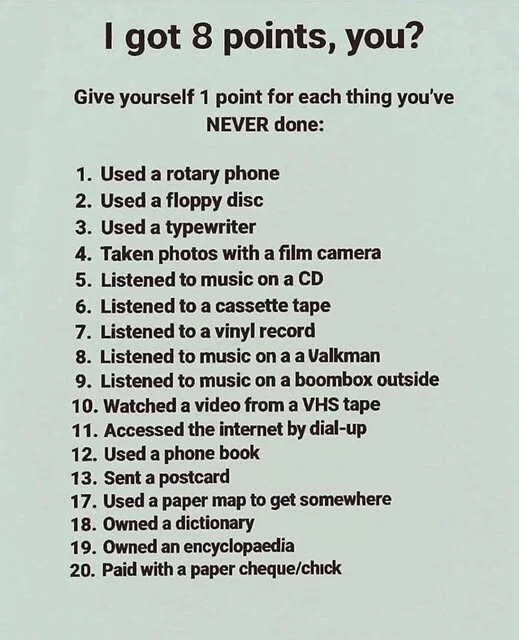
Mot: .. I Said to Meself!!!!!

Mot: . I Gots NO Points -- How bout YOU!~!!!
Money vs. Currency | Hidden Secrets of Value Ep. 2 | Alan Hibbard
Money vs. Currency | Hidden Secrets of Value Ep. 2 | Alan Hibbard
GoldSilver: 10-23-2025
In this episode of Hidden Secrets of Value, Alan Hibbard revisits the shocking story of Weimar Germany’s hyperinflation, where the price of bread soared from 1 mark to billions in just a few years.
The takeaway: currencies can be printed into oblivion, while money — like gold, silver, and even bitcoin — must be earned through work.
Money vs. Currency | Hidden Secrets of Value Ep. 2 | Alan Hibbard
GoldSilver: 10-23-2025
In this episode of Hidden Secrets of Value, Alan Hibbard revisits the shocking story of Weimar Germany’s hyperinflation, where the price of bread soared from 1 mark to billions in just a few years.
The takeaway: currencies can be printed into oblivion, while money — like gold, silver, and even bitcoin — must be earned through work.
👉 In this video, you’ll discover:
Why the U.S. dollar is a currency, not money — and why that distinction matters.
How inflation quietly destroys purchasing power, even without a “Weimar moment.”
Why gold, silver, and bitcoin are forms of honest money — immune to unlimited printing.
The truth behind Elon Musk’s statement that “money is just a database” — and why the honesty of that database determines your wealth.
Gresham’s Law: why people always hoard the best money and spend the weakest currency.
In Episode 2, Alan explores: Could hyperinflation happen in America?
What makes gold, silver, and bitcoin superior to paper currencies?
Should you hold U.S. dollars as savings, or convert them into a true store of value?
What role does honest money play in securing your family’s future?
This isn’t theory — it’s history, repeating itself.
And understanding the difference between money and currency may be the single most important step in protecting your wealth.
Watch the full series here: https://goldsilver.com/hsov
Seeds of Wisdom RV and Economics Updates Friday Afternoon 10-24-25
Good Afternoon Dinar Recaps,
The DeFi Spine of the Global Reset: How Flare, Ripple, and BRICS Gold Systems Are Converging
From tokenized liquidity to gold-backed trade, a two-tier financial system quietly takes shape.
A quiet but monumental transformation is underway across global finance — one not defined by central banks alone, but by the convergence of decentralized and sovereign digital systems.
Good Afternoon Dinar Recaps,
The DeFi Spine of the Global Reset: How Flare, Ripple, and BRICS Gold Systems Are Converging
From tokenized liquidity to gold-backed trade, a two-tier financial system quietly takes shape.
A quiet but monumental transformation is underway across global finance — one not defined by central banks alone, but by the convergence of decentralized and sovereign digital systems.
The Flare Network’s 40 million XRP bridge, the Ripple cross-border payment infrastructure, and the BRICS gold-backed digital currency initiatives are no longer separate experiments — they are interlocking components of what analysts are now calling a “dual-layer financial architecture.”
At the first layer, sovereign digital currencies — including BRICS’ proposed settlement coin and China’s digital yuan — form the backbone of state-backed value exchange. These systems are increasingly commodity-anchored, with Russia, China, and Saudi Arabia linking trade settlements to gold and energy units.
At the second layer, interoperable DeFi platforms like Flare and Ripple enable real-time liquidity movement across private and public networks. Through wrapped assets like FXRP, tokenized gold, and programmable stablecoins, these systems are demonstrating how digital collateral can flow globally without central clearing intermediaries.
The BIS Innovation Hub has acknowledged that such interoperability “could redefine the infrastructure of reserve mobility.” Ripple’s distributed ledger for banks and Flare’s cross-chain DeFi mechanics effectively create a “financial Internet”—a programmable liquidity grid connecting sovereign and private markets.
Why It Matters
This hybrid model—state-backed reserves supported by decentralized liquidity rails—forms the technological foundation of the global financial reset.
It represents the end of static reserves and the rise of programmable value, where gold, oil, and digital assets circulate within a unified, tokenized framework.
As BRICS nations shift trade settlements into this dual system, and Western institutions quietly pilot similar models through the IMF’s Digital Money Reports and BIS cross-border trials, the stage is set for the first programmable global monetary order in history.
This is not just politics — it’s global finance restructuring before our eyes.
Seeds of Wisdom Team
Newshounds News™ Exclusive
Sources:
Watcher.Guru – Flare Bridges 40 Million XRP as CEO Says It’s Only the Beginning
BIS Innovation Hub – Unified Ledger and Cross-Border Tokenization Framework
BRICS Secretariat – Working Paper on Commodity-Backed Settlement Unit (2025)
Ripple Insights – Institutional Liquidity and Cross-Border Payment Rail Study
~~~~~~~~~
BRICS Accelerates Dollar Offload as China’s Currency Intervention Hits $51.8 Billion
IMF and BIS analysts warn of deepening liquidity divergence as Beijing leads a new wave of de-dollarization.
BRICS member China is intensifying its push away from the U.S. dollar.
According to Bloomberg and Watcher.Guru, Chinese banks helped clients offload $51.8 billion in foreign currencies in September — the largest single-month sell-off since 2020. The wave of conversions, primarily by exporters and institutional investors, marks a sharp turn toward yuan internationalization amid growing U.S. trade tensions.
The People’s Bank of China (PBOC) has been actively supporting the yuan’s value, setting its daily reference rate at its strongest level in a month. These moves come shortly after U.S. President Donald Trump’s tariff escalation on Chinese imports, prompting Beijing and other BRICS nations to tighten coordination and support local-currency settlements.
The BIS has recently cautioned that “sustained dollar offloading by systemically important economies could fragment liquidity channels.” Meanwhile, the IMF notes that “multi-currency reserve diversification now poses measurable risk to dollar-based clearing systems.”
$51.8 billion in FX offloads marks the largest coordinated move since 2020.
Yuan confidence surges as exporters settle trade in domestic currency.
BRICS coordination deepens, signaling an active transition toward a commodity-anchored, multipolar financial order.
Why It Matters
This accelerated dollar liquidation by BRICS members, led by China, represents more than a trade maneuver — it’s a monetary shift. Each sale of dollar reserves and foreign assets weakens the U.S.-centric liquidity network that underpins global trade. As alternative settlement systems expand and BRICS currency integration advances, the groundwork for a parallel financial architecture emerges — the very foundation of a global financial reset built on multipolar balance, digital assets, and sovereign control.
This is not just politics — it’s global finance restructuring before our eyes.
Seeds of Wisdom Team
Newshounds News™ Exclusive
Sources:
Watcher.Guru – BRICS Speeds Up Dollar Selling, Chinese Firms Offload $51.8 Billion
IMF Global Financial Stability Report – “Shifting Ground Beneath the Calm”
~~~~~~~~~
Seeds of Wisdom Team RV Currency Facts Youtube and Rumble
Newshound's News Telegram Room Link
Follow the Gold/Silver Rate COMEX
Follow Fast Facts
Seeds of Wisdom Team™ Website
Thank you Dinar Recaps
Start of Monetary Reset? What’s Next for Bitcoin, Gold, Dollar
Start of Monetary Reset? What’s Next for Bitcoin, Gold, Dollar
David Lin: 10-23-2025
Ever wonder what the future of our economy truly holds? Recently, David Lin sat down with Jim Thorne, Chief Market Strategist at Willington Altis Private Wealth, for a comprehensive dive into the intricate web of market dynamics, geopolitical shifts, and groundbreaking technological advancements.
Thorne’s insights paint a vivid picture of profound transformation, from a capex supercycle fueled by AI to a reimagined global financial system.
Start of Monetary Reset? What’s Next for Bitcoin, Gold, Dollar
David Lin: 10-23-2025
Ever wonder what the future of our economy truly holds? Recently, David Lin sat down with Jim Thorne, Chief Market Strategist at Willington Altis Private Wealth, for a comprehensive dive into the intricate web of market dynamics, geopolitical shifts, and groundbreaking technological advancements.
Thorne’s insights paint a vivid picture of profound transformation, from a capex supercycle fueled by AI to a reimagined global financial system.
At the heart of Thorne’s forecast is the anticipation of a “capex super cycle”. This isn’t just incremental growth; it’s a massive wave of capital expenditure driven by technological innovation, primarily Artificial General Intelligence (AGI). He argues that this will be the engine of substantial investment and economic expansion.
Fueling this boom, Thorne points to the potential impact of a new Trump Administrationn’s pro-growth, supply-side economic policies. Specifically, the 100% tax deductibility on capital expenditures is expected to unleash a torrent of investment, especially in sectors tied directly to AI development and energy infrastructure.
This policy, he suggests, will accelerate the deployment of cutting-edge technologies and revitalize key industries.
When it comes to alternative assets, Thorne made a bold prediction: gold and Bitcoin are poised to significantly outperform real estate over the next 5 to 10 years.
While precious metals have seen recent profit-taking, Thorne remains bullish on gold long-term, though he anticipates a near-term consolidation phase. This suggests a strategic patience for investors looking at the yellow metal’s enduring value.
Bitcoin, intrinsically linked to technological innovation and a potentially lower interest rate environment, is also set for strong performance. This outlook positions digital and traditional alternative assets as key beneficiaries in the coming decade.
One of Thorne’s most intriguing visions revolves around the evolving role of stablecoins backed by US treasuries. He outlines a scenario he calls “Bretton Woods 2.0,” where digital assets significantly increase demand for US debt, paradoxically strengthening the dollar’s global dominance. This suggests a future where the digital and traditional financial worlds converge, with the US dollar maintaining its central role through new, tokenized mechanisms.
Crucially, Thorne forecasts lower interest rates in the future, which would act as a powerful tailwind for asset prices, particularly growth stocks and cryptocurrencies. This monetary environment, combined with the capex supercycle, sets the stage for a period of robust market activity.
Finally, Thorne highlights the profound, transformative potential of blockchain and tokenization in financial markets.
He predicts substantial disruption and innovation, particularly in how treasuries and other assets are accessed and traded. This isn’t just about efficiency; it’s about fundamentally rethinking the infrastructure of finance, making markets more accessible and liquid.
Jim Thorne’s analysis offers a compelling roadmap for understanding a future defined by technological leaps, strategic policy shifts, and a redefined global financial architecture. It’s a future where innovation, particularly AGI and blockchain, isn’t just a buzzword, but the very engine of economic transformation.
Seeds of Wisdom RV and Economics Updates Friday Morning 10-24-25
Good Morning Dinar Recaps,
U.S.–Canada Trade Rift Exposes Cracks in Western Unity
Alliance fatigue and economic nationalism test the post-WWII trade framework.
The suspension of U.S.–Canada trade talks this week underscores a deeper fracture within the Western economic order. What began as a dispute over a provincial ad campaign has now escalated into a full-blown diplomatic standoff, threatening a $1.3 trillion trade relationship that anchors the North American economy.
Good Morning Dinar Recaps,
U.S.–Canada Trade Rift Exposes Cracks in Western Unity
Alliance fatigue and economic nationalism test the post-WWII trade framework.
The suspension of U.S.–Canada trade talks this week underscores a deeper fracture within the Western economic order. What began as a dispute over a provincial ad campaign has now escalated into a full-blown diplomatic standoff, threatening a $1.3 trillion trade relationship that anchors the North American economy.
The Financial Times reports that Washington’s abrupt halt to discussions reflects growing “strategic fatigue” between allied economies over subsidies, tariffs, and digital-trade sovereignty. Beneath the surface, the rift reveals how trusted Western partners are repositioning amid an increasingly multipolar global structure.
Economic nationalism is resurging even among allies, eroding confidence in legacy trade agreements.
Digital sovereignty is becoming a battleground—each nation seeks control over data, payment systems, and energy grids.
Alternative trade channels (such as BRICS settlements and bilateral tokenized-asset exchanges) are quietly expanding in parallel.
Viewed through the lens of the global reset, this tension shows how the Western bloc’s internal coherence is unraveling. The weakening of U.S. trade dominance—even among its closest partners—could accelerate fragmented trade zones, digital reserve systems, and cross-bloc monetary innovation.
Implication: The end of Western trade uniformity may catalyze the birth of a decentralized global trade and payment architecture, a critical step toward the coming financial realignment.
This is not just politics — it’s global finance restructuring before our eyes.
Seeds of Wisdom Team
Newshounds News™ Exclusive
Sources:
~~~~~~~~~
IMF & BIS Warning: Saudi Arabia’s Vision 2030 Hits the Fault Lines of the Global Reset
Petrodollar fatigue meets systemic liquidity stress as global finance enters its next phase.
Saudi Arabia’s grand economic transformation — Vision 2030 — is confronting a critical juncture that both the IMF and Bank for International Settlements (BIS) now describe as emblematic of “emerging fault lines” in global liquidity and sovereign debt systems.
As reported by Reuters, Riyadh’s once-celebrated megaprojects face delays, funding shortfalls, and reduced foreign capital inflows, while the cost of borrowing rises amid tighter global financial conditions.
The BIS’s latest quarterly review notes that “energy-exporting economies are facing a dual liquidity trap,” balancing falling oil revenues with growing domestic debt issuance. The IMF’s Global Financial Stability Report echoes that sentiment, warning that petrodollar-linked economies are now “structurally exposed to a post-dollar world.”
Oil-backed growth is stalling: Lower revenues and rising U.S. tariffs are straining Saudi fiscal policy.
Capital markets are fragmenting: Sovereign wealth funds are quietly reallocating into BRICS-linked commodities and digital settlements.
Riyadh’s debt dependence now mirrors broader emerging-market vulnerabilities that the BIS classifies as “pre-reset indicators.”
This is more than an energy story—it’s the unraveling of the dollar-based liquidity architecture.
As petrodollar flows weaken and digital commodity-backed trade grows, Saudi Arabia’s financial system has become the test case for the transition from centralized dollar liquidity to a multipolar reserve ecosystem.
Implication:
The Saudi financial squeeze isn’t isolated; it marks the visible edge of the global reset, where traditional energy economies, U.S. rate policy, and BRICS commodity integration intersect to reshape the next global monetary order.
This is not just politics — it’s global finance restructuring before our eyes.
Seeds of Wisdom Team
Newshounds News™ Exclusive
Sources:
Reuters: Crunch Time for Saudi Arabia as Financial Elite Descend on Riyadh
IMF Global Financial Stability Report – “Shifting Ground Beneath the Calm”
BIS Quarterly Review – October 2025: Energy Economies and Liquidity Fragmentation
~~~~~~~~~
Seeds of Wisdom Team RV Currency Facts Youtube and Rumble
Newshound's News Telegram Room Link
Follow the Gold/Silver Rate COMEX
Follow Fast Facts
Seeds of Wisdom Team™ Website
Thank you Dinar Recaps
“Tidbits From TNT” Friday Morning 10-24-2025
TNT:
Tishwash: Government: Iraq has foreign exchange reserves exceeding $100 billion, covering its external debt many times over.
The Prime Minister's financial advisor, Mazhar Mohammed Salih, confirmed on Thursday that Iraq's external debt is at its lowest level compared to many neighboring countries.
Saleh said in a statement to the official agency, followed by (Al-Rabia): “The general indicators of the Iraqi economy have witnessed an improvement during the past two years, thanks to a number of intertwined factors
TNT:
Tishwash: Government: Iraq has foreign exchange reserves exceeding $100 billion, covering its external debt many times over.
The Prime Minister's financial advisor, Mazhar Mohammed Salih, confirmed on Thursday that Iraq's external debt is at its lowest level compared to many neighboring countries.
Saleh said in a statement to the official agency, followed by (Al-Rabia): “The general indicators of the Iraqi economy have witnessed an improvement during the past two years, thanks to a number of intertwined factors
The most important of which is the relative stability of oil revenues at acceptable levels, which provided a stable funding base for the general budget, and improved management of public spending by re-prioritizing reconstruction and infrastructure projects, and focusing on the service and production sectors within the government program.”
He added, "This came alongside the activation of financial and administrative reform tools launched by the Central Bank and the Ministry of Finance, whether through electronic payment systems, expanding the non-oil revenue network, or controlling border crossings and customs through automation, in addition to stabilizing the exchange rate and controlling inflation within globally acceptable limits, which has strengthened monetary and financial confidence in the national economy." link
Tishwash: Iraq is preparing to launch an international conference to market investment opportunities on the path to development
The Iraq Fund for Development revealed its expectations that the volume of investments in the Development Road project will reach about (150) billion dollars, subject to increase in the coming years, stressing that the project constitutes a qualitative economic shift that will redraw the map of investment in Iraq and the region, and open new horizons of cooperation with international partners.
The head of the fund, Mohammed Al-Najjar, said, "Major changes are looming on the horizon for the Iraqi economy, with investments in the project expected to reach about (150) billion dollars, most of which are partnerships between Iraq and international companies within a safe and attractive investment environment."
He added, "The Fund is planning to launch an international investment conference to market the project, which may be held at Al-Faw Port or in the form of a global tour to present investment opportunities to governments, sovereign funds and major companies."
Al-Najjar pointed out that "the development road project includes an integrated economic system that includes transportation, industry, energy, agriculture, housing and logistics services, on an area of about (24) thousand square kilometers, which is equivalent to the area of Belgium, which allows the establishment of industrial and residential cities and modern production projects."
The head of the fund confirmed "the exclusion of any financial or financing obstacles, noting that the government has established an independent legal framework to manage the project, ensure transparency and protect investors' rights, while closely monitoring all specialized opportunities within the various sectors, including oil and gas, industry and agriculture." link
************
Tishwash: The Swiss Embassy reopens in Baghdad after 30 years of closure: a step towards strengthening bilateral relations.
The Swiss embassy in Baghdad was officially reopened on Thursday, in the presence of Iraqi Deputy Prime Minister and Minister of Foreign Affairs Fuad Hussein and Swiss Foreign Minister Ignazio Cassis. The event was described as a turning point in relations between Iraq and Switzerland, after a three-decade hiatus.
The opening ceremony was attended by a number of senior Iraqi officials and members of the Swiss delegation. In his speech, Minister Fuad Hussein emphasized that this step reflects the international community's confidence in the stability Iraq is experiencing. It also paves the way for expanding political and economic cooperation and opening the doors to investment for Swiss companies in the Iraqi market.
For his part, Swiss Minister Ignazio Cassis welcomed the return of Swiss diplomatic representation to Iraq, stressing that his country views Iraq as an important partner in the region and that the opening of the embassy reflects Switzerland's commitment to supporting stability and development efforts in the Middle East.
This opening marks the culmination of a process of diplomatic rapprochement between the two countries and a step toward a more cooperative and partnership-based future. link
************
Tishwash: Al-Sudani: The government has achieved an economic transformation, with international accolades, in less than three years.
Prime Minister Mohammed Shia al-Sudani affirmed on Thursday that the Iraqi government has achieved a real economic transformation in less than three years, as attested by international institutions. He noted that the results of the reforms adopted will become clear in the coming years.
During his reception of sheikhs and dignitaries of the Al-Izirj clan in Baghdad, according to a statement from his media office, Al-Sudani said, “The results of the sixth parliamentary elections will either establish stability that preserves what has been achieved during this period, or lead to regression and squandering of the achievements.” He pointed out that “there are those who practice lying, deception, and distortion in an attempt to influence the achievements made and confuse the scene.”
He continued, "Our government came into office during difficult circumstances, and from the first day of its term, it began addressing citizens' needs and priorities." He noted that "the government took an important step in appointing graduates and securing permanent contracts and lecturers."
He pointed out that "the services file was a priority in our work through service efforts, completing stalled and suspended projects, and launching new projects in Baghdad and the governorates."
He added, "The ballot boxes will determine how the country will be run for the next four years, and voters must carefully choose who will represent them in the House of Representatives."
He pointed out that "we have preserved Iraq's security and stability, avoiding any emotional stances, while maintaining our principled position in support of the Palestinian cause." link
Mot: Happened Again!!! – siigghhhhh

Mot: Halloween in Yellowstone Park

Seeds of Wisdom RV and Economics Updates Thursday Evening 10-23-25
Good Evening Dinar Recaps,
Peace as Policy: Diplomacy and the Economics of a Global Reset
Cease-fires and summits are not just geopolitical optics — they are economic infrastructure for a new monetary order.
A series of diplomatic signals this week underscore how geopolitical stabilization is aligning with the financial restructuring now underway.
Good Evening Dinar Recaps,
Peace as Policy: Diplomacy and the Economics of a Global Reset
Cease-fires and summits are not just geopolitical optics — they are economic infrastructure for a new monetary order.
A series of diplomatic signals this week underscore how geopolitical stabilization is aligning with the financial restructuring now underway.
U.S. and BRICS nations are quietly building peace corridors — diplomatic frameworks that reduce risk and unlock capital flows for the next global financial phase.
Trump’s Budapest Summit Initiative—now slated for early November—will include envoys from Russia, Turkey, and Saudi Arabia, focusing on energy coordination and trade stabilization.
Turkey’s mediation in Gaza and India’s proposal for a neutral BRICS peace commission both aim to normalize regional trade channels.
At the same time, the IMF and BIS are promoting “cross-border liquidity frameworks” that could operate seamlessly once geopolitical tensions ease — suggesting policy synchronization between peace and finance.
Each diplomatic thaw creates the stability required for interoperable digital currencies, tokenized reserves, and commodity-backed settlement networks to function globally.
Peace, in this context, becomes a precondition for the financial reset — not its byproduct.
Implications:
The world’s emerging alliances appear less ideological and more infrastructural — geoeconomic partnerships designed to enable a new trade and currency architecture beyond the old dollarized order.
Diplomacy has become the operating system upgrade for global finance.
This is not just politics — it’s global finance restructuring before our eyes.
Seeds of Wisdom Team
Newshounds News™ Exclusive
Sources:
~~~~~~~~~
India at the Crossroads: BRICS, Quad, and the Architecture of a Dual Financial Order
As global alliances fracture and converge, India’s decision may determine which system defines the next world economy.
India stands today at the geopolitical and financial crossroads of the emerging global order.
At this week’s ASEAN Summit in Kuala Lumpur (October 26–28), Prime Minister Narendra Modi faces the delicate task of navigating between two rival economic frameworks — BRICS and the Quad.
Each represents a competing vision for the future of finance:
BRICS is advancing a gold- and commodity-backed digital payments network aimed at reducing dependence on the dollar.
The Quad, led by the U.S., Japan, and Australia, is reinforcing a tokenized, dollar-based architecture aligned with IMF and BIS digital standards.
Reports from Watcher.Guru and Reuters suggest that India’s participation in both systems is increasingly difficult as U.S. trade tariffs, BRICS currency plans, and Iran’s inclusion test New Delhi’s neutrality. If India tilts toward BRICS, it could accelerate the formation of a parallel financial network centered on resource-backed trade. If it sides with the Quad, it strengthens the digitally centralized Western framework built around tokenized dollars and allied liquidity corridors.
Implications:
India’s balancing act is more than diplomatic — it’s structural. The outcome could determine whether the next global reset takes form as a divided multipolar system or an interoperable hybrid order linking East and West through digital and asset-backed mechanisms.
This is not just politics — it’s global finance restructuring before our eyes.
Seeds of Wisdom Team
Newshounds News™ Exclusive
Sources:
~~~~~~~~~
Seeds of Wisdom Team RV Currency Facts Youtube and Rumble
Newshound's News Telegram Room Link
Follow the Gold/Silver Rate COMEX
Follow Fast Facts
Seeds of Wisdom Team™ Website
Thank you Dinar Recaps
Let’s Take a Quick Pause and Look Back at History
Let’s Take a Quick Pause and Look Back at History
Notes From the Field By James Hickman (Simon Black) October 23, 2025
In light of this week’s roller-coaster gold ride, I thought it would be useful to turn once again back to the lessons of history and revisit what we discussed recently about the 1970s.
Foreign governments and central banks around the world had been becoming increasingly concerned about the US government’s outrageous fiscal deficits as early as the mid-1960s.
Let’s Take a Quick Pause and Look Back at History
Notes From the Field By James Hickman (Simon Black) October 23, 2025
In light of this week’s roller-coaster gold ride, I thought it would be useful to turn once again back to the lessons of history and revisit what we discussed recently about the 1970s.
Foreign governments and central banks around the world had been becoming increasingly concerned about the US government’s outrageous fiscal deficits as early as the mid-1960s.
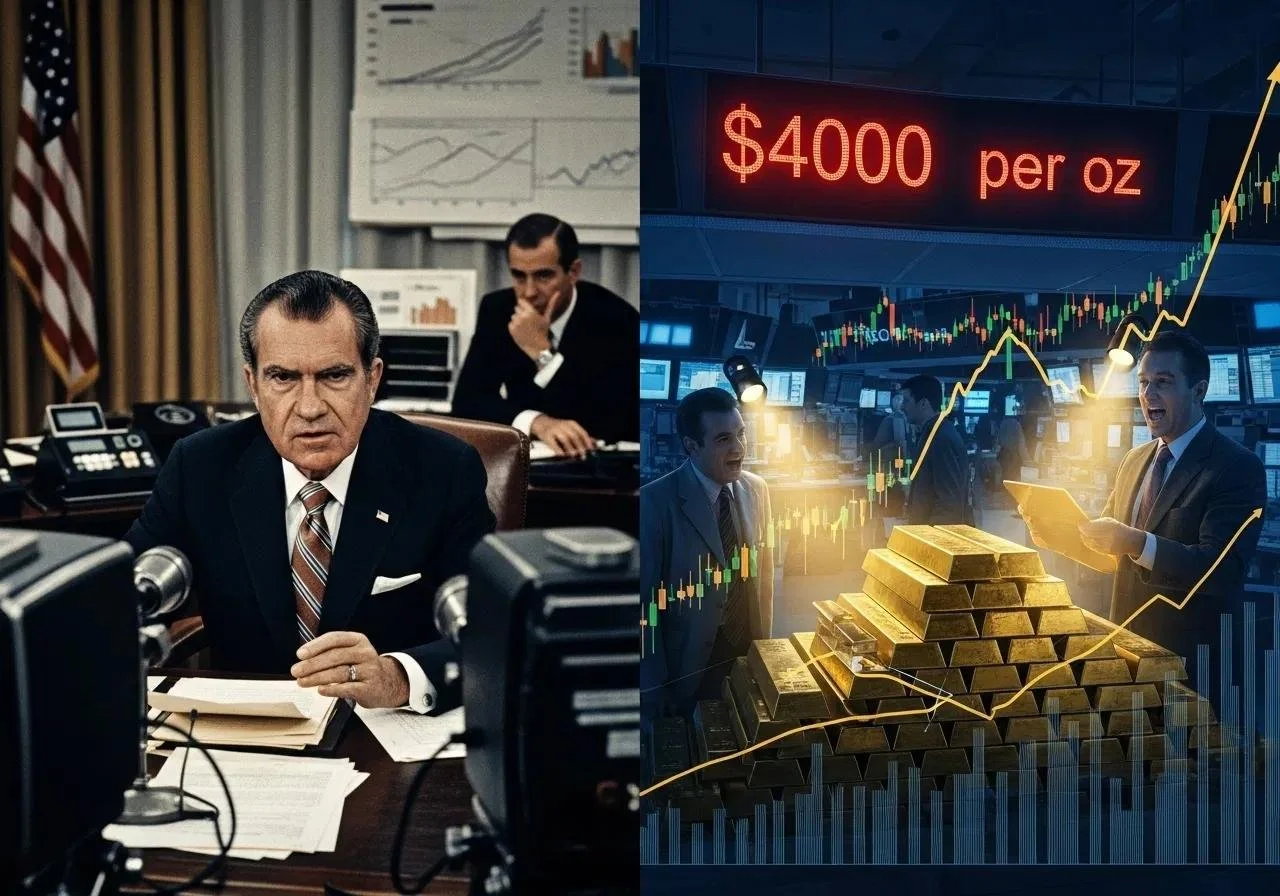
French President Charles de Gaulle sounded the alarm about America’s costly war in Vietnam, combined with historic welfare spending, and he began demanding that the Treasury Department redeem a portion of France’s US dollar holdings for gold.
Decades ago, that was his right because under the post–World War II Bretton Woods system, the US dollar was convertible into gold at a rate of $35 per ounce.
By 1971, foreigners’ demands to exchange their dollars for gold had become so great that Richard Nixon formally ended the convertibility once and for all.
Nixon downplayed any impact, telling Americans on August 15, 1971, “your dollar will be worth just as much tomorrow as it is today.”
The reality is the dollar went on to lose 75% of its value throughout the course of the decade. And if anything, Nixon’s move only encouraged foreigners to dump their dollars at an even more rapid pace.
As a result, the price of gold skyrocketed fivefold as governments and central banks around the world diversified out of the dollar and into gold.
We’ve been seeing this same move over the past couple of years—insatiable foreign and central bank appetite has driven gold prices from $1,800 a couple of years ago to over $4,000 today.
Obviously, over the past few months, there has been a lot of individual investor capital flowing into ETFs, hedge fund speculation, and similar vehicles. But in the long run, gold’s rise has been—and will continue to be—driven by foreign government and central bank diversification out of the dollar.
In 1975, gold hit a temporary peak at around $185 per ounce. After a period of consolidation, in which there was a significant price correction, gold then resumed its ascent, rising all the way to $850.
The point is that regardless of any short-term price correction, the fundamental driver—foreign governments and central banks diversifying out of the US dollar—hadn’t changed.
It took the election of Ronald Reagan in 1980 to finally restore credibility in the US government’s finances. Reagan, of course, campaigned on cutting the deficit, sparking a long-term trend which culminated in multiple budget surpluses in the late 1990s.
This renewed confidence in US government finances is what ultimately reversed the trend on gold prices, causing the price to collapse below $300 by the end of the 90s.
I believe we’re in a similar situation today as in 1975.
Gold had a significant correction earlier this week, but the price remained above $4,000.
Perhaps this is the start of a lull period, or even a correction phase as in 1975, but it doesn’t fundamentally change the story right now: foreign governments and central banks are aggressively trying to diversify their US dollar strategic reserves, and gold is one of the only assets that makes sense.
I’m not here to say “buy gold” at $4,000. But based on the trajectory of the US government’s finances, the price of gold should go much higher over the next few years.
I don’t say this because I’m a “gold bug.” I don’t have any irrational fascination with a piece of metal. Rather, my outlook is based on a clear understanding of global central banking and strategic reserve assets, coupled with the obvious deterioration in the US government’s fiscal condition.
But I also understand that after an almost uninterrupted and astonishing rise to nearly $4,400, gold may be due for a correction—similar to what happened in 1975.
The reality is, no one knows for sure. Gold could just as easily rise to $5,000 as drop to $3,500.
I’d point out, however, that there are still a number of high-quality gold, platinum, and silver businesses that are wildly undervalued and extremely profitable—and they will continue to be extremely profitable even if there is a steep decline in gold prices.
For example, one of the companies we featured in our premium investment research service is producing gold at a price of just $1,000 per ounce. This means the price of gold could fall below $3,000, and this company would still be making money hand over fist—and trading at just 5x earnings based on today’s stock price.
Did I mention they pay a handsome dividend?
To me, the long-term case for gold is crystal clear—foreign governments and central banks will continue to by gold unless there is a fundamental change in Congress’s attitude toward the US budget deficit. And I don’t see that happening anytime soon.
The short-term case for gold over the next couple of months is anyone’s guess. It could go higher, it could go lower. And that’s why I think some of these ultra-cheap, highly profitable, well-managed, largely debt-free gold companies are really worth considering.
When the long-term case for gold is so obvious, it’s a sensible strategy to own a business that has so much gold exposure, pays a dividend, and can continue to be extremely profitable—even if there’s a short-term gold correction.
To your freedom, James Hickman Co-Founder, Schiff Sovereign LLC
What’s Really Driving Gold & Silver Volatility? It’s Classic ‘Price Misdirection’ | Andy Schectman
What’s Really Driving Gold & Silver Volatility? It’s Classic ‘Price Misdirection’ | Andy Schectman
Miles Franklin Media: Michelle Makori, President & Editor-in-Chief of Miles Franklin Media, breaks down the shocking overnight sell-off that sent gold and silver prices tumbling before bouncing back.
Andy Schectman, Founder & CEO of Miles Franklin Precious Metals, reveals what really happened and who dumped gold in the middle of the night and why?
Was it technical selling, profit-taking, or a coordinated paper-market attack?
What’s Really Driving Gold & Silver Volatility? It’s Classic ‘Price Misdirection’ | Andy Schectman
Miles Franklin Media: Michelle Makori, President & Editor-in-Chief of Miles Franklin Media, breaks down the shocking overnight sell-off that sent gold and silver prices tumbling before bouncing back.
Andy Schectman, Founder & CEO of Miles Franklin Precious Metals, reveals what really happened and who dumped gold in the middle of the night and why?
Was it technical selling, profit-taking, or a coordinated paper-market attack?
Schectman exposes what really happened during the “drive-by” selloff, which banks quietly bought the dip, and how this wild volatility could be a flashing warning signal of something much bigger – a reset in the global monetary order.
In this interview:
Record highs followed by the sharpest gold drop in 12 years
Massive futures dump at the thinnest trading hour – why it matters
Evidence of major banks buying physical metal right after the crash
Paper vs. Physical: the widening gap and what it reveals
Is this volatility engineered misdirection before a monetary reset?
Why gold’s “crash” may actually confirm its long-term bull trend
00:00 Introduction: Gold & Silver Market Volatility
02:55 Analyzing the Gold Market Correction
04:44 Market Manipulation & Paper Contracts
13:43 Global Financial Implications
31:52 Mainstream Media Narratives
38:46 Future of Gold & Silver
44:19 Systemic Contagion & Coordinated Attacks
46:22 Global South & East's Role in Commodities
50:26 The Erosion of the Dollar's Attraction
59:00 U.S. Government's Secret Gold Accumulation
01:11:09 The Federal Reserve's Dilemma
01:21:06 Practical Investment Advice in a Volatile Market
01:27:37 Conclusion & Viewer Engagement