What Your Relationship with Money Reveals About You
...and Why Romantic Partners Often Fight Over Finances
By Seth J. Gillihan Ph.D. Think, Act, Be
Money is a complicated topic. Most of us tend to feel uncomfortable talking about it, and might even prefer to reveal aspects of our sex lives than to divulge our income.
Even if we spend countless hours thinking of ways to make more money, we may not give much thought to how we relate to money. But when you pay attention to your relationship with money, you can gain some important insights into yourself.
Your Mindset
Do you feel like there’s never enough money, and always too many expenses? Does it pain you to spend money? You may have a scarcity mindset, as described by Steven Covey in his bestselling book The Seven Habits of Highly Effective People. With this mindset, you see money and other resources as zero-sum games—with more for others meaning less for you and vice versa.
With a scarcity mindset, you might feel bad whether the money is coming in or going out. Paying money to others feels bad because you see it as less money for you, and receiving money can lead to guilt about “taking money from others.”
I noticed my scarcity mindset a few years ago when my income temporarily went up. I was looking forward to putting the extra money toward savings and doing something fun with our family—and then we had a whopping Emergency Room bill and a flood in our basement. I felt bitter disappointment that all of the money went toward covering these bills.
“We’re so afraid if we give something, we lose something,” said "Zen Millionaire" Ken Honda, author of Happy Money, whom I recently interviewed on the Think Act Be podcast. But in reality, spending and receiving money are part of a cycle.
“If you spend $100, it goes into somebody’s hand, who will spend the $100 somewhere else, and in the end that $100 comes back to you,” he said. “That’s how the economy goes.”
“If you find yourself out of the cycle,” he continued, “that means you’re not living. Life is found in this cycle.” Embracing that cycle of giving and receiving is the abundance mentality.
In my own example, I caught my thinking and was able to shift my perspective. Rather than feeling cheated out of money that I thought I would have, I realized I had been given exactly as much money as I needed to pay for unexpected bills. It was all part of a well-functioning system.
2. Your Past
To continue reading, please go to the original article here:
7 Signs Your Savings Account Is Quietly Costing You Money
Austin Smith Mon, November 23, 2026 at 4:58 AM CST 8 min read
Quick Read
Banks rarely volunteer your rate, so look up your APY now; "nobody's going to tap you on the shoulder" when you're losing out.
Inflation of roughly 4% outpaces many basic savings rates, so your balance grows on paper while its buying power shrinks.
What To Do With A Windfall
Considerations to help you make the most of your good fortune.
Fidelity Wealth Management
Key takeaways
Even though it may be tempting to treat yourself right away, it's important to step back and thoughtfully assess your full financial picture.
Taxes and other costs may impact the net value of your windfall.
Consider how you may want to change your asset allocation, giving strategy, and estate plan.
From Windfall to Financial Foundation
Marguerite C. Weese Chief Wealth Strategist
Practical first steps for turning unexpected money into greater security and long-term opportunity
Key Takeaways
Pause before making major decisions by keeping the money secure, gathering information, and avoiding pressure to spend, invest, or give before you have a plan
Match the money to your goals by separating short-term needs from long-term priorities so you know what should stay accessible and what may be invested for future growth
Get guidance before complexity creates mistakes, especially when taxes, inherited assets, debt, family requests, or investment choices may affect your next steps
5 Questions To Ask An Advisor About A Financial Windfall
Get help turning sudden wealth into a sustainable plan.
Fidelity Wealth Management
Key takeaways
A windfall can create new opportunities, but it can also bring emotional and financial complexity. Taking time to understand your new financial picture can help you avoid costly mistakes.
Significant increases in net worth may require updates to your portfolio, insurance coverage, estate plan, and approach to family and charitable giving.
Building the right team of financial, tax, legal, and insurance professionals can help you navigate new opportunities and challenges with confidence.
Did You Get Rich Quick? These 4 Steps Can Help You Stay That Way
By Jeremy DiTullio, CFP®, AWMA®, CRPC® Reviewed by Lisa Hitt
Published August 29, 2026 In Features
Sudden wealth is less about the money and more about the discipline required to manage it, so it's critical to pause and plan before making any major financial moves
Sudden wealth doesn't change who you are. It does reveal how prepared you are.
I recently read a news story in which a lottery winner who received a jackpot worth more than $167 million had reportedly been arrested four times within 14 months of receiving the money.
Rethinking the Inheritance Timeline
November 13, 2026 Wendy Farrissey
As lifespans increase, affluent investors may want to consider accelerating inheritances to help heirs at critical junctures in their lives.
For years, wealth advisors have been discussing the implications of the Great Wealth Transfer—the expected shift of some $124 trillion from older to younger generations over the next two decades.1
How Much Gold Should You Have In Your Portfolio? Experts Weigh In
Faith Wakefield, USA TODAY Sun, November 15, 2026
Gold is often viewed as a store of value and can help stabilize portfolios during times of inflation or market volatility. But how much gold should you have in your portfolio? And is it even necessary at all?
Experts tend to recommend investors hold between 0% and 15% of their portfolio in precious metals, with gold typically making up the largest share. A common starting point for moderate buyers is 5%.

There’s a Different Way
Notes From the Field By James Hickman (Simon Black / Sovereign Man) November 6, 2026
A friend of mine got legal residency in New Zealand a couple of years ago as global tensions rose around wars in Ukraine and the Middle East. He was only half joking about why. His reasoning is that if WW3 breaks out and the nukes start flying, he would want to be in New Zealand.
But he’s not picking up his life, abandoning all caution, and permanently moving to a new country. He just has a plan, and the basics in place.

Tomorrow’s Election Changes Nothing About The National Debt
Notes From the Field By james Hickman (Simon Black/Sovereign Man) November 2, 2026
Johnny Moon was homeless and unemployed in the early 2000s. A high school dropout with a bad drug habit, Moon was hardly someone that banks would consider creditworthy.
And yet, over the course of a single year, he was able to borrow more than $600,000 to buy five different investment properties.
7 Surprising Benefits of Failure
By Kentin Waits WISEBREAD
Everyone loves a success story, and the world is filled with them. But what about stories of failure? Can't they be as just as educational? Just as inspirational? Equally insightful?
After all, a single big win is often built on several losses. It's a truth perfectly captured in the words of Japanese industrialist and automaker, Soichiro Honda, "Success is 99% failure."
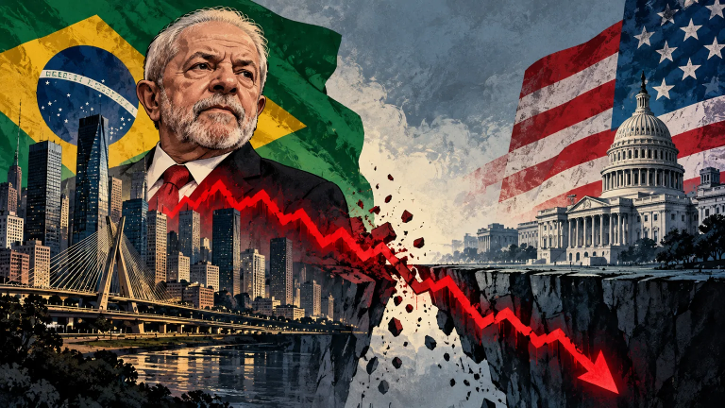
Brazil’s Massive Crash Is A Sign Of Things To Come In The West
Notes From the Field By James Hickman (Simon Black / Sovereign Man) October 29, 2026
On Sunday night, Brazil re-elected its left-wing president, Lula da Silva. On Monday morning the São Paulo stock market fell so hard at the open that the exchange halted trading for the first time since the pandemic. When trading resumed, Brazil’s stock market kept falling.
6 Attitudes That Breed Financial Failure
By Kentin Waits WiseBread
Financial success or failure is often the result of attitudes — both conscious and unconscious — that affect our behavior. No amount of budgeting and self-control can help us when we’re up against ingrained ideas about money management, spending, and debt. If you’re having a tough time shifting your financial behavior, maybe it’s time to change your mind about money. Here are six common attitudes that work against us financially.

Plan B Options for folks on Social Security
Notes From the Field By James Hickman (Simon Black / Sovereign Man) October 27, 2026
In the early morning hours of February 7, 1937, a young American named Stirling Dickinson got off a train in central Mexico and rode into San Miguel de Allende on a mule-drawn cart.
He and a Princeton classmate were months into a trip around Mexico looking for a quiet place to write, and a Mexican opera singer had told them to try San Miguel.

A Condo in this Ghost City Gets You Ten Years Residency
Notes From the Field By James Hickman (Simon Black / Sovereign Man) October 22, 2026
On March 6, 2016, Malaysia’s prime minister, Najib Razak, turned up for the grand opening of a city that did not exist yet, two kilometers off the coast from Singapore.
It was called Forest City, and the plan was enormous. One of the largest property developers in the world came in to build four artificial islands in the strait and put a “smart, green” city of 700,000 people on them, at a cost of roughly $100 billion.
Avoid These 4 Common Mistakes When You Get Rich Overnight
September 4, 2025 by Laura Bogart GoBankingRates
You’re about to score a financial touchdown. Maybe you’ve crushed it at work and landed a sweet promotion. Perhaps you’ve won a lottery or stumbled into a side hustle that suddenly pays off. As you near the end zone, heart pounding, head full of dreams, you can’t afford (literally) to fumble. Whether you’re blindsided by unexpected taxes or tripped up by bad financial advice, you have a lot to lose if you drop the ball.
The Best Money Advice From 80-Year-Olds, Per an 80-Year-Old Magazine
By Diane Harris Edited by Lisa Gerstner last updated November 23, 2026 In Features
Eight decades of living yields a lot of wisdom. We asked financial experts and cultural icons who are in their eighties or will turn 80 in 2027 to share their insights and advice about money for their peers and younger generations. Here's what they had to say.