.How To Invest Like Paul McCartney and Michael Jackson
Notes From The Field By Simon Black
August 29, 2019 Bahia Beach, Puerto Rico
Here’s how you can invest like Paul McCartney and Michael Jackson
In 1978, a scruffy-looking Frenchman named Patrick Hernandez signed his first-ever recording contract.
He had spent the better part of the previous decade touring ballrooms in France, backing b-class singers without any real success to show for himself.
But in late 1978, he released his very first single, “Born to Be Alive.”
The song was an instant hit. It hit the number 1 spot in France, and within a few months, sold over a million copies in the US alone.
And Hernandez became a sensation. By the end of 1979, he had amassed fifty-two gold and platinum record awards from more than fifty countries.
Just like that, he was set for life.
And 40 years later that same single still earns him around 1,200 euros per day...roughly 438,000 euros per year.
Even his official music video has over 100 million views on Youtube - the envy of most professional YouTubers.
Imagine getting paid hundreds of thousands of dollars per year for something you created over thirty years ago!
It’s rare, but it’s possible… and one of the best ways to do it is with royalties.
Royalties are cash payments you receive from assets you’ve created or own. Millions of people worldwide earn royalties every year - on assets as diverse as books, songs and movies-- but also from lesser-known sources like oil wells, gold mines or real estate.
Royalties are an all-time favorite of investors around the world - including Warren Buffett.
That’s because once you own the asset, all you’ve got to do is collect your cash every month or quarter.
I personally love royalties. To me, they are real assets - and generate income no matter what’s happening in the economy.
In times of inflation, the value of your asset goes up, protecting your savings.
In a deflationary period, the cash that the asset produces becomes even more valuable.
And the cash flow can be incredible…
To continue reading, please go to the original article at
A Former Fed Official Finally Tells The Truth About Inflation…
Notes From The Field By James Hickman / Simon Black 7-29-24
My sister used to be a reporter for Fox News based in south Florida and would regularly be assigned to cover NASA press conferences.
And she’s often told me about how reporters were terrified to ask any real questions. They’re not astrophysicists and don’t understand the first thing about rocket propulsion, and most of the journalists never bothered to learn even the basics of the topic.
So, the majority of the questions were very superficial; quite simply the reporters didn’t want to embarrass themselves.
This is how the media covers the Federal Reserve. Most reporters don’t have a clue about central banking, so, not wanting to look stupid, they just sit quietly and give the Fed a pass. There’s no real scrutiny.
Some Thoughts On America For Her 248th Birthday
Notes From The Field by James Hickman (Simon Black Sovereign Man) July 3, 2024
When the 56 delegates to the Second Continental Congress ratified the Declaration of Independence 248 years ago tomorrow, they were creating much more than a nation. They were giving birth to an idea.
America, at its core, is an idea. And it’s one that ranks as one of the greatest innovations in the history of human civilization, right up there with the wheel, the steam engine, the printing press, and the Internet.
The idea of America wasn’t born in 1776, however. By then it had already evolved over thousands of years.
Five Predictions For The Coming Decade Of Decline
Notes From the Field By James Hickman (Simon Black) June 11, 2024
There is a well-known modern proverb (often attributed to the novelist G. Michael Hopf) that goes, "Weak men create hard times, hard times create strong men, strong men create good times, good times create weak men."
The saying sums up the cyclical nature of the rise and fall of societies– and it’s a topic in which I have tremendous personal interest.
Having recently reached middle age, I can comfortably say with the benefit of hindsight that I was born and grew up during the American prime time– the time at which the wealthiest and most powerful country in the history of the world was at its peak.
Gold Will Soon Displace The US Dollar, And Americans Are Missing Out
Notes From the Field By James Hickman (Simon Black) June 3 2024
Next month will mark 80 years since the US dollar was formally anointed as the world’s reserve currency.
It was July 1944. And with the war in Europe near its denouement, governments were already trying to plan what the postwar world would look like. Most urgently, they needed to figure out how to rebuild their devastated economies.
Just think about the mess they were in: nearly every industrialized country in Europe had been destroyed by war. Manufacturing and farming were both in the dumps, and they had very little savings to invest in economic revival.
They also had a gigantic mess when it came to international trade. Dozens of countries each had their own currencies, so commercial trade meant each government keeping 20-30 currencies in reserve.
France, for example, would have to hold Austrian schillings, British pounds, Spanish pesetas, Italian lira, Dutch guilders, Soviet rubles, etc. in reserve, just to be able to trade.
Would You Pay €1 For This House?
Notes From the Field by James Hickman (Simon Black) May 29, 2024
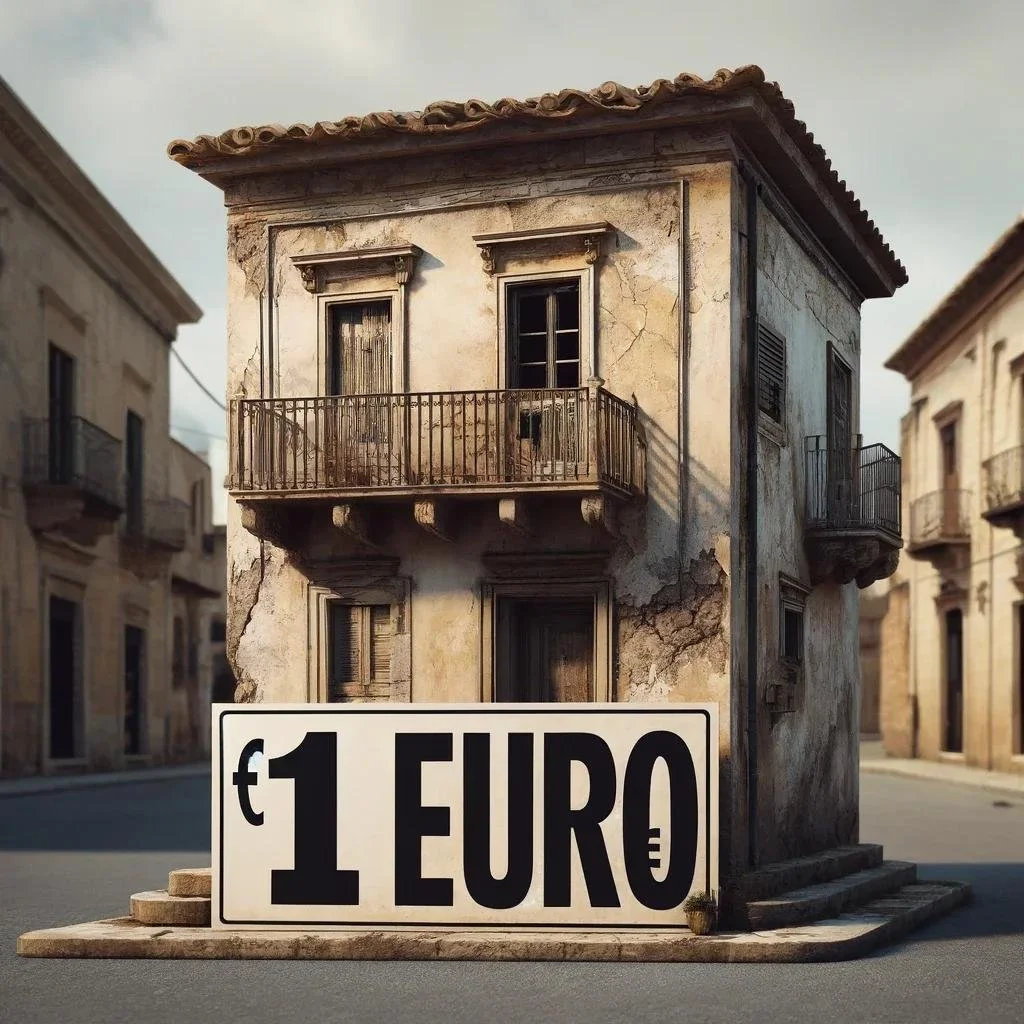
In 2007, Giuseppe Ferrarello found himself facing a monumental challenge as the newly-elected mayor of Gangi, Italy — an incredibly picturesque yet dwindling town nestled in the mountains of Sicily.
Like many rural communities across Italy and beyond, the village of Gangi was grappling with depopulation and economic decline. Once home to 15,000 people, its population by 2007 stood at just 7,000. Young people in particular were leaving to seek job opportunities in northern Italy and elsewhere in Europe, leaving behind aging parents and empty houses.
At first glance, the situation seemed hopeless. Gangi’s inland location far from the coast rendered it unattractive to tourists.
Where The Price Of Oil Is Just $15/Barrel
Notes From the Field By James Hickman (Simon Black) Tues May 28 2024
In the year 1712, an English ironworker and part-time Baptist preacher named Thomas Newcomen finally put the finishing touches on a new invention that had been more than a century in the making.
Newcomen called it the ‘atmospheric engine’, and it was essentially a very crude, rudimentary steam engine that he used to pump water.
The idea had existed since the early 1600s, and a number of inventors had attempted to create something similar. But Newcomen was the first to develop a functioning engine, and his key breakthrough was including a fuel source (wood) to heat up water and create steam.
It’s remarkable that, even to this day, most automobile engines, generators, and electrical power plants still rely on Newcomen’s basic concept: burn a fuel to create heat, then harness that heat energy to generate motion and mechanical work.
Civil War… Really?
Notes From the Field By James Hickman (Simon Black) May 20, 2024
On July 12, 1648, dozens of angry French politicians gathered at the hallowed Palais de Justice in Paris to draft the final ultimatum that would be sent to their nine-year-old king, Louis XIV.
The politicians were all members of France’s national parliament, and, like most modern politicians, they were almost all lawyers who lived extremely privileged lives at the expense of French taxpayers.
In France, most aristocrats historically came from a group known as the noblesse d'épée, essentially Knights of the Sword. They were warriors who had fought valiantly and had won their power for their dedicated service to France.
This new class of politicians, however, came from a different group known as the noblesse de robe. They had never fought or bled for France, and rather had spent their lives in academia and law school without any understanding of the real world.
Why The Dollar Will Lose Its Status As The Global Reserve Currency
Notes From the Field By James Hickman (Simon Black) May 13, 2024
By the early 400s, the Roman Empire was coming apart at the seams and in desperate need of strong, competent leadership. In theory, Honorius should have been the right man for the job.
Born into the royal household in Constantinople, Honorius had been groomed to rule, practically since birth, by the finest experts in the realm. So even as a young man, Honorius had already accumulated decades of experience.
Yet Rome’s foreign adversaries rightfully believed Honorius to be weak, out of touch, divisive, and completely inept.
He had entered into bonehead peace treaties that strengthened Rome’s enemies. He paid vast sums of money to some of their most powerful rivals and received practically nothing in return. He made virtually no attempt to secure Roman borders, leaving the empire open to be ravaged by barbarians.
Settling the Gold Versus Crypto Debate
Notes From The Field by James Hickman April 24, 2024
In 1972, while excavating to build a factory on the Black Sea coast of Bulgaria, a backhoe operator noticed gold objects glimmering in the bucket of his machine.
The construction worker had accidentally discovered the Varna Necropolis.
Dating back to around 4500 BC, the jewelry found in this ancient burial site is the earliest evidence of the use of gold by humans, and archeologists believe that they were considered a status symbol in ancient burial rituals.
Thousands of years ago, gold was likely collected from the earth’s surface in the form of nuggets or river dust.
It wasn’t until about 3500 BC, on a hilltop located in the modern-day country of Georgia, that a group of people from the prehistoric Kura-Araxes dug the oldest known gold mine.
Known as Sakdrisi-Kachagiani, the gold mine predates Ancient Egypt and even Mesopotamia.
The Fed’s Game Of “Make Believe” Comes To An End
Notes From The Field by James Hickman (Simon Black) April 29, 2024
It’s barely been a year since the 2023 bank crisis in which several large banks, including Silicon Valley Bank and Signature Bank, failed.
At the time, I wrote that the bank failures weren’t over, and that there would be more.
But it’s been quiet for most of the last year; the banking system has been pretty calm thanks in large part to an emergency program that the Federal Reserve created to bail out other troubled banks.
They called it the Bank Term Funding Program (BTFP), and it essentially expired a few weeks ago. In other words, no more emergency lending to troubled banks.
Barely a month later, we have already witnessed our first casualty: Pennsylvania-based Republic First (not to be confused with First Republic, which failed last year) was shut down by regulators on Friday afternoon.
America’s Biggest Bank Sounds the Alarm Bell
Notes From the Field By James Hickman (Simon Black) April 8, 2024
Jamie Dimon, the CEO of JP Morgan Chase, did not open his annual shareholder letter with rosy language about the state of the world, or even enthusiasm about his bank’s record profits.
Instead, he describes “yet another year of significant challenges” including the war in Ukraine, war in the Middle East, extreme tensions with China, higher food and energy prices, turmoil in the banking sector, outrageous government deficits, and even major risks with the Federal Reserve’s monetary policy.
Dimon writes that “America’s global leadership role is being challenged outside by other nations and inside by our polarized electorate,” and that this is a “time of great crises”.

Why Saudi Arabia’s Futuristic City Is A Sign Of Major Inflation To Come
Notes From the Field By Simon Black/James Hickman April 3, 2024
[Important Reminder: In case you missed our announcement from January 24, Sovereign Man has merged with Peter Schiff's media group. We are now called Schiff Sovereign, and our founder (Simon Black) has dropped the pen name and is now writing under his real name, James Hickman.]
Did you hear about the new streamlined tourist visa to Saudi Arabia? I’m sure you’re standing in line for it already.
No? Me neither.
I was actually stationed in Saudi Arabia for a while when I was in the Army… and, the most unique ‘tourist’ attraction, at least for non-Muslims, is a place we used to call “Chop Chop Square” where they would do the public beheadings and dismemberments of convicted criminals.
Aside from that, Saudi Arabia has virtually nothing to offer tourists. At least for now.
“It looks like fly crap to me. . .”
Notes From the Field by Simon Black / James Hickman March 25, 2024
I’m on my way back home from Mexico City after an incredible weekend event here with more than 100 of our Total Access members.
First things first, if you’ve never been to Mexico City, I highly recommend it. A lot of people have a misconception that the city is some kind third world dump. It’s not. And most first-time visitors are stunned by the vast green areas, expansive parks, tree-lined streets, museums, architecture, and modern lifestyle.
In my opinion it also has some of the best restaurants in the western hemisphere. You can eat extremely well in Mexico City, but you don’t pay very much for it.
Uranium Hasn’t Been This Critical Since The Days Of Oppenheimer
Notes From the Field By Simon Black – James Hickman 3-12-24
If you saw Christopher Nolan’s blockbuster Oppenheimer, you might remember the scene in which Dr. Oppenheimer travels to Chicago to meet with physicist Enrico Fermi, who had just achieved the world’s first ever self-sustaining nuclear chain reaction.
This really happened-- it was December 2, 1942, and Enrico Fermi’s experiment was a massive scientific breakthrough. Fermi and his team proved that a fission reaction could be controlled… and therefore the vast amount of energy inside of an atom’s nucleus could be harnessed for other purposes.
Obviously, the US government was singularly focused on turning that immense nuclear energy into the biggest bomb the world had ever seen. But Fermi’s discovery also paved the way for nuclear power.
Why Gold Might (Weirdly) Be A Contrarian Investment Right Now
Notes From the Field By Simon Black/James Hickman March 5, 2024
[Important Reminder: (Simon Black) has dropped the pen name and is now writing under his real name, James Hickman.]
It’s hard to say with a straight face that an asset hovering near its all-time high could be a “contrarian” investment. But I’m going to say it anyhow-- I think gold may be a contrarian play right now.
Now, it would be easy to assume that gold is near its all-time high because everyone is buying. And normally that would be true; typically, whenever an asset soars to a record high, it’s because individual investors are piling into the market.
We’ve seen this countless times, from Bitcoin to meme stocks; once something becomes the hot thing to own, small investors-- and occasionally professionally managed funds-- drive the price higher.
But that’s not happening with gold. In fact, investors have been abandoning gold for years.
Even The FDIC Doesn’t Want To Pay Its Tax Bill…
Hotes From the Field By Simon Black/James Hickman February 28, 2024
[Important Reminder: In case you missed our announcement from January 24, Sovereign Man has merged with Peter Schiff's media group. We are now called Schiff Sovereign, and our founder (Simon Black) has dropped the pen name and is now writing under his real name, James Hickman.]
Almost one year ago to the day-- on February 24, 2023-- Silicon Valley Bank released its 2022 annual report. And senior executives must have been pretty nervous since the report showed that the bank was nearly insolvent.
The bank had acquired a massive portfolio of more than $100 billion of US government bonds-- supposedly the ‘safest’ asset class in the world-- during 2020 and 2021 back when interest rates were at historic lows.
But then the Fed started hiking rates very quickly in 2022. And higher rates cause bond prices to fall-- even the ‘safest’ ones like US Treasury bonds.
Even Warren Buffett’s Legendary Optimism Is Fading
Notes From the Field By Simon Black/James Hickman February 26, 2024
[Important Reminder: In case you missed our announcement from January 24, Sovereign Man has merged with Peter Schiff's media group. We are now called Schiff Sovereign, and our founder (Simon Black) has dropped the pen name and is now writing under his real name, James Hickman.]
Early in the spring of 1956, only weeks after Elvis Presley released his debut studio album, and actress Norma Jean Mortenson had her name legally changed to Marilyn Monroe, a budding 25-year-old businessman from the American Midwest fatefully registered his first-ever company.
His name, of course, was Warren Buffett. And the company he founded was called Buffett Associates-- which was formed with $105,000 of capital from his friends and family.
The US economy at the time was absolutely booming. Interest rates in 1956 were at historic lows. Inflation was practically zero. Economic growth was a dizzying 7%. Productivity growth was strong.
It’s Not A Prediction. It’s Arithmetic. SB
Notes From the Field BY Simon Black (James Hickman) February 7, 2024
[Important Reminder: In case you missed our announcement from January 24, Sovereign Man has merged with Peter Schiff's media group. We are now called Schiff Sovereign, and our founder (Simon Black) has dropped the pen name and is now writing under his real name, James Hickman.]
Thousands of years ago during the late Bronze Age-- most likely between 1100 and 1200 BC, two ancient civilizations were exhausted after nearly a decade of warfare.
On one side was the ancient Achaean peoples led by the Mycenaean king Agamemnon. On the other was a legendary Hittite city that had already been in existence for more than 2,000 years.
Back then the city was called Wilusa. Today we know it as Troy.
The general consensus among historians today is that, most likely, the war did take place. But it obviously lacked the drama and intrigue of Homer’s epic tale, the Iliad.
![Depositphotos_166481014_XL[1].jpg](https://images.squarespace-cdn.com/content/v1/5d5222a44813620001d89582/9bc7c07d-e0e9-4518-8dfd-b4a6ac43ab24/Depositphotos_166481014_XL%5B1%5D.jpg)
The Fed Asks America To Fill In The Blanks _______ SB
Notes From The Field By Simon Black (James Hickman) February 5, 2024
It’s interesting to see how so many mainstream voices are starting to express concern about the gargantuan size of the US national debt.
For most of the past decade, even as the debt spiraled out of control and passed $20 trillion, $25 trillion, $30 trillion, etc., hardly anyone in the media said a word about it. If anything, they would insist that the ‘debt doesn’t matter.’
That tune is finally starting to change. And the latest example came last night when 60 Minutes interviewed the Chairman of the Federal Reserve, Jerome Powell.
The US national debt now stands at more than $34 trillion. It will surpass $35 trillion by the summer and likely $36 trillion by the end of the year.
It’s growing so quickly that the interviewer asked about the debt, “Thirty years from now, it is projected to be $144 trillion. . . [I]s the national debt a danger to the economy in your view? I have the sense this worries you very much.”
Good Reason For a Plan B SB
This Story From The 3rd Century Will Sound Quite Familiar To You
January 29, 2024 James Hickman / Simon Black
[Important Reminder: In case you missed our announcement from January 24, Sovereign Man has merged with Peter Schiff's media group. We are now called Schiff Sovereign, and our founder (Simon Black) has dropped the pen name and is now writing under his real name, James Hickman.]
When Publius Licinus Valerianus (known as Valerian) became Roman emperor in September of 253 AD, people across the empire must have breathed a sigh of relief.
“Finally,” many Roman citizens probably thought, “There’s an adult in the room.”
The Roman Empire at that point was in the midst of its infamous ‘Crisis of the Third Century’. The Empire was recovering from a nasty pandemic known as the Antonine Plague. Inflation was soaring. Conflict with their enemies-- especially in the Middle East-- was intensifying. Social tensions were growing. Crime was rising. Trade was declining. The economy was on the ropes. Taxes were going up.
This is a Blueprint for How the Dollar Goes Kaput SB
Notes From The Field By Simon Black January 19, 2024
That infernal clanging you might have heard outside your bedroom window this morning was the sound of the proverbial can being kicked down the road, yet again.
With no agreement on spending anywhere on the horizon for the current fiscal year, the US Congress passed yesterday a ‘Continuing Resolution’ to keep the government temporarily funded for another six weeks.
This is nothing new; in fact, Congress has passed more than 50 Continuing Resolutions just since 2010, primarily because they almost NEVER manage to figure out the budget prior to the start of the fiscal year on October 1st.
But now there is far greater need to get it right than ever before.
Breaking Down The Coming $20 Trillion Debt Tsunami SB
Notes From the Field By Simon Black January 17, 2024
Tony Fauci should be in a prison cell in Wuhan right now given how much responsibility he bears for destroying US government finances. This guy was one of the chief architects of the hysteria that took over the US (and much of the world) back in 2020.
Yet he now admits, according to recent Congressional testimony, that his infamous six-foot social distancing edict “sort of just appeared” and was “not based on any data”.
But it was precisely those sorts of claims that prompted politicians to close schools and business across the country, and to pay people to stay home and NOT work.
The financial results of this insanity are clear; the US national debt increased by an unbelievable $6.5 trillion during 2020 and 2021. And while there is a lot of blame to go around-- politicians had ample time to find their intellectual courage-- Fauci is extremely culpable.
This Is What You Call A Win/Win Deal. US Steel Wins. Nippon Steel Wins. America Wins. Japan Wins
Notes From the Field By James Hickman / Simon Black January 7, 2025
The year was 1901, and it was pretty much a who’s who of American business and finance at the time. Andrew Carnegie. JP Morgan. Charles M. Schwab. Elbert Gary (namesake of the city Gary, Indiana).
It would be as if Elon Musk, Billy Gates, and Carl Icahn all got together on a new venture. It would be pretty much guaranteed to be a big deal. Those early 20th century titans formed what would become the world’s largest and most important company in that era— US Steel.