Thank you to all the subscribers to our Early Access program…we thank you for your continued support.
We are excited to offer this new service to keep you informed and up-to-date on the latest Dinar and currency news.
“Tidbits From TNT” Friday 3-20-2026
TNT:
Tishwash: The office of Grand Ayatollah Sistani: Tomorrow, Friday, is the last day of Ramadan.
Saturday is the first day of Eid.
The office of Grand Ayatollah Ali al-Sistani announced today, Thursday (March 19, 2026), that the crescent moon of Shawwal could not be sighted, therefore Friday will be the completion of the month of Ramadan and Saturday will be the first day of Eid al-Fitr.
The office said in a statement received by Network 964 , “The office of His Eminence Sayyid al-Sistani (may his shadow last) in Najaf al-Ashraf announces that tomorrow, Friday, is the last day of the blessed month of Ramadan, and Saturday, corresponding to (March 21, 2026), is the first day of Shawwal for the year 1447 AH.”
TNT:
Tishwash: The office of Grand Ayatollah Sistani: Tomorrow, Friday, is the last day of Ramadan.
Saturday is the first day of Eid.
The office of Grand Ayatollah Ali al-Sistani announced today, Thursday (March 19, 2026), that the crescent moon of Shawwal could not be sighted, therefore Friday will be the completion of the month of Ramadan and Saturday will be the first day of Eid al-Fitr.
The office said in a statement received by Network 964 , “The office of His Eminence Sayyid al-Sistani (may his shadow last) in Najaf al-Ashraf announces that tomorrow, Friday, is the last day of the blessed month of Ramadan, and Saturday, corresponding to (March 21, 2026), is the first day of Shawwal for the year 1447 AH.” link
************
Tishwash: The Pentagon is sending 2,200 troops to the Middle East.
The US Department of Defense (Pentagon) announced on Thursday that three Navy ships carrying approximately 2,200 soldiers will head to the Middle East next week .
Politico quoted a Pentagon official, in a report followed by Al-Sa’a Network, as saying that “the Department is also considering sending more troops to the region.”
He added that "the military movements are part of plans to strengthen the American military presence in the Middle East during the next phase." link
************
Tishwash: The Strait of Hormuz: Five European countries and Japan are on the front lines of the crisis
Five European countries, along with Japan, announced on Thursday their readiness to put in place plans to ensure navigation in the Strait of Hormuz, which was closed by Iranian military forces following the US-Israeli war on their country.
A joint statement issued by Britain, France, Germany, Italy, the Netherlands and Japan on the sidelines of the Brussels summit read: "We condemn Iran's attacks on commercial vessels in the Gulf."
The European countries and Japan added: "We are ready to contribute to ensuring passage through the Strait of Hormuz, and we will take steps to stabilize energy markets."
The countries continued in their statement: "We will work to support the most affected countries through the United Nations," calling for "an immediate halt to attacks on oil and gas facilities."
Iran is exploiting its location in the Strait of Hormuz to put pressure on the energy market and force countries to negotiate for safe passage, which raises the cost of conflict for the United States and its allies.
The recent attacks have caused unprecedented disruption to shipping and increased risks, with the number of passing ships declining sharply.
Asian countries such as India, Turkey and Pakistan began negotiating with Tehran to secure supplies, amid a de facto closure of the strait to "enemy ships".
In contrast, Washington is finding it difficult to form a maritime coalition, and the resumption of normal navigation could take weeks even in the best-case scenario. link
************
Tishwash: Sudani: Iraq supports a ceasefire and warns against its expansion.
Sudani: Iraq supports a ceasefire and warns against its expansion.
Prime Minister Mohammed Shia al-Sudani affirmed Iraq's support for all international efforts aimed at ending the war in Iran, warning of the conflict's potential to escalate in the region.
During a phone call with NATO Secretary General Mark Rutte, the two discussed regional developments and the rapidly escalating conflict.
Al-Sudani emphasized that Iraq "supports all efforts by countries and international organizations to stop the war," stressing the importance of strengthening stability and restoring security in the region.
He added that the solution must be achieved through "dialogue and addressing issues and problems without resorting to military action."
The Prime Minister underscored Iraq's full commitment to protecting diplomatic missions, stating that security forces "in all their branches are prepared to protect embassies and missions operating in Iraq," as part of their constitutional duties.
He also affirmed Baghdad's rejection of "the use of Iraqi territory or airspace to attack others," while emphasizing the importance of not dragging the country into the conflict or expanding it.
Al-Sudani reiterated the necessity for NATO countries "not to become involved in this war," calling for maximum efforts to support diplomatic solutions.
For his part, Rutte expressed his appreciation for the Iraqi positions, praising the efforts to protect diplomatic missions, and emphasizing the "constructive partnership between NATO and Iraq." link
************
Mot: Great Plan
MilitiaMan and Crew: IQD News Update-REER Update: Iraq's Quiet Integration Momentum
MilitiaMan and Crew: IQD News Update-REER Update: Iraq's Quiet Integration Momentum
3-19-2026
The Crew: Samson, PompeyPeter, Petra, Daytrader, Sunkissed, GIGI and Militia Man
Follow MM on X == https://x.com/Slashn
Be sure to listen to full video for all the news……..
MilitiaMan and Crew: IQD News Update-REER Update: Iraq's Quiet Integration Momentum
3-19-2026
The Crew: Samson, PompeyPeter, Petra, Daytrader, Sunkissed, GIGI and Militia Man
Follow MM on X == https://x.com/Slashn
Be sure to listen to full video for all the news……..
Seeds of Wisdom RV and Economics Updates Thursday Evening 3-19-26
Good Evening Dinar Recaps,
XRP and the Future of Money: How Digital Assets Are Connecting to Global Payment System Transformation
As financial infrastructure evolves, XRP highlights the intersection of crypto, banking, and cross-border settlement.
Overview
The global financial system is undergoing a quiet but significant transformation, driven by the modernization of payment systems, digital currencies, and financial infrastructure.
Good Evening Dinar Recaps,
XRP and the Future of Money: How Digital Assets Are Connecting to Global Payment System Transformation
As financial infrastructure evolves, XRP highlights the intersection of crypto, banking, and cross-border settlement.
Overview
The global financial system is undergoing a quiet but significant transformation, driven by the modernization of payment systems, digital currencies, and financial infrastructure.
At the center of this shift is the growing role of blockchain-based assets like XRP, which are increasingly being discussed in the context of cross-border payments and financial system efficiency.
While cryptocurrencies began as alternatives to traditional finance, some are now being evaluated for how they might integrate into the existing global monetary framework.
Key Developments
1. Cross-Border Payment Systems Are Being Redesigned
Global institutions such as the Bank for International Settlements and the Financial Stability Board are actively working to improve cross-border payment systems, which today are often:
• Slow• Costly• Opaque
The G20 roadmap aims to enable faster, cheaper, and more transparent global transactions — a major structural upgrade to financial infrastructure.
2. XRP’s Core Use Case Aligns With Payment Efficiency Goals
Unlike many digital assets, XRP was designed specifically for:
• Real-time cross-border settlement• Liquidity bridging between currencies• Reducing reliance on intermediary banks
Ripple Labs has positioned XRP as a tool that could help streamline international payments, aligning with global efforts to modernize financial systems.
3. Central Bank Digital Currencies Are Expanding Globally
More than 130 countries are now exploring or developing central bank digital currencies (CBDCs).
Examples include:
• Digital yuan (China)
• e-rupee (India)
• Digital euro (European Union)
These initiatives reflect a broader shift toward digitized monetary systems, where faster settlement and improved transparency are key priorities.
4. Integration Between Blockchain and Traditional Finance Is Increasing
Financial institutions are increasingly exploring how blockchain technology can be integrated into existing systems.
This includes:
• Tokenized assets• Digital settlement layers• Hybrid financial infrastructure
Assets like XRP are part of this conversation because they operate at the intersection of crypto innovation and institutional finance.
Why It Matters
Payment systems are the foundation of the global economy.
Changes to how money moves across borders can reshape:
• Global trade efficiency• Currency demand• Financial system interoperability
Why It Matters to Foreign Currency Holders
For those tracking a potential shift in the global monetary system, this trend highlights a critical evolution:
• Faster settlement may change currency flows• Digital infrastructure could reduce friction in global trade• New systems may alter how value is transferred internationally
This is directly connected to broader themes such as CBDCs, reserve diversification, and financial system modernization.
Implications for the Global Financial System
This development ties into two major pillars of the evolving system:
• Pillar 1 — Financial InfrastructureDigital assets and blockchain technology may contribute to faster and more efficient global payment rails.
• Pillar 2 — Monetary IntegrationThe coexistence of CBDCs, traditional currencies, and digital assets suggests a more interconnected and flexible monetary system.
Closing Perspective
XRP’s relevance today is not about replacing traditional finance — it is about how emerging technologies are being evaluated as part of the system’s evolution.
As global institutions work to modernize payments and introduce digital currencies, the lines between crypto and traditional finance are beginning to blur.
This is not just about cryptocurrency — it is about the future architecture of how money moves around the world.
Seeds of Wisdom Team
Newshounds News™ Exclusive
Sources
~~~~~~~~~~
XRP Gains Attention as U.S. Crypto Regulation Debate Intensifies
Regulatory clarity efforts could reshape digital asset markets and investor focus.
Overview
XRP is drawing renewed attention as discussions around U.S. cryptocurrency regulation accelerate, with lawmakers working toward clearer rules for digital assets.
While Bitcoin remains the largest cryptocurrency by market value, XRP is increasingly viewed by some analysts as a key asset to watch due to its regulatory positioning and ties to cross-border payments.
The growing debate in Washington reflects a broader effort to define how cryptocurrencies are classified, regulated, and integrated into the financial system.
Key Developments
1. Regulatory Clarity Efforts Gain Momentum
U.S. lawmakers are continuing to work on legislation aimed at providing clear rules for digital assets, often referred to as market structure or “clarity” frameworks.
These efforts are designed to:
• Define which assets are securities vs. commodities• Establish regulatory oversight responsibilities• Provide legal certainty for investors and companies
While progress is ongoing, no final legislation has been passed yet, and timelines remain uncertain.
2. XRP Benefits From Prior Legal Developments
Ripple Labs and XRP have already been at the center of one of the most significant crypto legal battles involving the U.S. Securities and Exchange Commission.
A key U.S. court ruling previously determined that XRP is not inherently a security in all contexts, giving it a degree of regulatory clarity compared to some other cryptocurrencies.
This has positioned XRP as a case study for how digital assets may be treated under future regulations.
3. Market Attention Shifts Toward Utility-Focused Tokens
Unlike Bitcoin, which is often viewed as a store of value, XRP is designed for:
• Cross-border payments• Financial institution settlement• Liquidity provisioning in global transactions
This functional use case has led some analysts to argue that XRP could play a role in future financial infrastructure, particularly if regulatory clarity improves.
4. Investor Sentiment Reacts to Policy Signals
The cryptocurrency market is highly sensitive to regulatory developments.
As policymakers move closer to clearer frameworks, investor focus often shifts toward assets that may:
• Benefit from compliance clarity• Integrate with financial institutions• Align with emerging regulatory standards
This has contributed to renewed discussion around XRP’s potential role.
Why It Matters
Regulation is one of the most important factors shaping the future of the cryptocurrency market.
Clear rules could:
• Increase institutional adoption• Reduce legal uncertainty• Strengthen market stability
Why It Matters to Foreign Currency Holders
For those tracking the evolution of the global financial system, digital assets represent an emerging layer of financial infrastructure.
Key considerations include:
• Digital assets may complement traditional currency systems• Blockchain technology could impact cross-border payments• Regulatory clarity influences adoption and trust
These developments intersect with broader trends such as CBDCs and payment system modernization.
Implications for the Global Financial System
The XRP narrative highlights a larger structural shift:
• Digital assets entering regulated financial frameworks• Governments defining the future of crypto markets• Integration between traditional finance and blockchain technology
If regulatory clarity is achieved, cryptocurrencies could play a more formal role in global finance.
Closing Perspective
XRP’s growing attention is less about replacing Bitcoin and more about how regulation is shaping the next phase of the digital asset market.
As governments move toward clearer frameworks, the focus is shifting toward which assets can operate within the evolving financial system.
This is not just a crypto story — it is part of the broader transition toward a more digitized and regulated financial landscape.
Seeds of Wisdom Team
Newshounds News™ Exclusive
Sources
~~~~~~~~~~
Seeds of Wisdom Team RV Currency Facts Youtube and Rumble
Newshound's News Telegram Room Link
RV Facts with Proof Links Link
RV Updates Proof links - Facts Link
Follow the Gold/Silver Rate COMEX
Follow Fast Facts
Seeds of Wisdom Team™ Website
Thank you Dinar Recaps
Ever Wonder Where $7 TRILLION Goes? So Does the Government
Ever Wonder Where $7 TRILLION Goes? So Does the Government
Notes From the Field By James Hickman (Simon Black) March 17, 2026
On March 10, a nonpartisan Washington think tank called the Committee for a Responsible Federal Budget published a report called: "Break Glass: A Plan for the Next Economic Shock."
It points out that the United States has never entered an economic downturn as indebted as it is today— meaning there is essentially zero fiscal space to respond to the next crisis. When the financial crisis hit in 2008, national debt stood at roughly 35% of GDP. By the time it was over, debt had ballooned to about 70%.
Then, when COVID hit in 2020, debt was already at 80% of GDP. By the time that was over, it had surged past 100%.
Ever Wonder Where $7 TRILLION Goes? So Does the Government
Notes From the Field By James Hickman (Simon Black) March 17, 2026
On March 10, a nonpartisan Washington think tank called the Committee for a Responsible Federal Budget published a report called: "Break Glass: A Plan for the Next Economic Shock."
It points out that the United States has never entered an economic downturn as indebted as it is today— meaning there is essentially zero fiscal space to respond to the next crisis. When the financial crisis hit in 2008, national debt stood at roughly 35% of GDP. By the time it was over, debt had ballooned to about 70%.
Then, when COVID hit in 2020, debt was already at 80% of GDP. By the time that was over, it had surged past 100%.
Today the official national debt is almost at 130% of GDP. That's well beyond the World War II record.
Each economic crisis starts from a worse position, requires more borrowing, and leaves the country deeper in the hole.
None of this should be surprising to anyone who's been paying attention. We've been writing about this for years.
We said it in 2019 when everything was going great— record stock market, record tax revenue, healthy economy— and the government still ran a trillion dollar deficit.
We wondered out loud— if the government still runs a $1 trillion deficit when everything is great, how bad will the deficit be when there’s an actual crisis?
We didn’t have to wait long to find out; Covid hit shortly thereafter, causing the government deficit to surge to $5+ trillion.
So what happens when the next recession hits? Where does the money come from?
The CRFB's proposed emergency plan gives you the answer. First, freeze Social Security, Medicare, and all discretionary spending — no cost-of-living adjustments, no growth, nothing.
Then, freeze tax brackets too, so that inflation quietly pushes more Americans into higher brackets.
And on top of all that, phase in a brand new "deficit reduction surtax": an additional tax on income above $100,000 that ratchets up every year until deficits fall to 3% of GDP.
Of course this would all be so politically toxic that the report concedes nothing will be done until... a crisis forces it.
But that doesn’t mean Americans aren’t already feeling the consequences of higher deficits.
Last year, a Yale Budget Lab report found that federal deficit spending since 2015 has pushed interest rates up by nearly a full percentage point.
The government borrows so much money that it crowds out private lending, forcing everyone else to pay more. You’re essentially competing with the government for a loan.
For a new homebuyer, that single percentage point adds $76,014 in extra costs over a 30-year mortgage — roughly $2,534 per year, or about $211 every single month. Auto loans cost an extra $670. Small business loans cost an extra $7,723.
So when a young couple can't afford their first house, or a small business owner pays more to expand, part of that cost is a direct, measurable consequence of Washington's borrowing binge.
The national debt isn't an abstract number on a screen in Washington. It's higher interest rates on mortgages, auto loans, and credit cards.
And the government borrowing is only accelerating.
Over the past year, the debt grew by $2.7 trillion; that’s a sharp increase from the $1.8 trillion federal deficit in fiscal year 2025.
So not only is the national debt growing, but the rate at which the national debt is growing... is growing. (If you’re a math wonk, the second derivative is positive.)
At the current trajectory, the debt will cross $39 trillion by the end of this month. And $40 trillion by the summer... not long after America celebrates its 250th birthday.
What’s crazy is that the people in charge of tracking all of this spending can't figure out where the money goes.
On March 5, a government auditor reported that the Office of Management and Budget cannot even produce a complete inventory of federal programs, despite being legally required to do so.
It’s not that the OMB is lazy or incompetent; it’s that there are simply too many federal programs... and the complex web of spending makes it virtually impossible to tally up all the various offices, agencies, sub-departments, committees, special advisory boards, emergency programs, etc. that exist in the federal government.
Congress makes things much worse when they appropriate annual funding for some program— sort of ‘fire and forget’. So decades go by since a program was originally created...yet it continues to receive money each year even though nobody knows what it’s for.
Bottom line, the government now spends $7 trillion each year. And they can’t figure out where it goes.
We've spent the last 16 years helping people build a Plan B— because even back in 2010, the trajectory of fiscal spending was obvious.
Look, the world’s not coming to an end. But it would be naive and foolish to think there won’t be consequences to such a dismal financial situation. There already are.
And it’s important to think about this, because the earlier you start preparing, the more options you’ll have to mitigate the consequences.
To your freedom, James Hickman Co-Founder, Schiff Sovereign LLC
Fed Forced to Act as Private Credit Bubble Collapses, Banks on Brink
Fed Forced to Act as Private Credit Bubble Collapses, Banks on Brink
David Lin: 3-19-2026
The current economic landscape is marked by a complex interplay of factors, including inflation, interest rates, and the health of the private credit market.
In a recent in-depth discussion featured in a video by David Lin, Chris Whalen, chairman of Whalen Global Advisor, shared his critical perspective on the Federal Reserve’s recent decisions and the broader economic challenges facing the United States.
Fed Forced to Act as Private Credit Bubble Collapses, Banks on Brink
David Lin: 3-19-2026
The current economic landscape is marked by a complex interplay of factors, including inflation, interest rates, and the health of the private credit market.
In a recent in-depth discussion featured in a video by David Lin, Chris Whalen, chairman of Whalen Global Advisor, shared his critical perspective on the Federal Reserve’s recent decisions and the broader economic challenges facing the United States.
The Federal Reserve’s decision to maintain steady interest rates amidst rising oil prices and a weakening labor market has been a subject of considerable debate.
Chris Whalen critiqued the Fed’s approach, pointing out the multifaceted nature of inflation, which is influenced by factors such as tariffs and oil prices.
The challenge lies in accurately measuring the impact of these factors, making it difficult for the Fed to make informed decisions. Whalen’s insights underscore the complexity of managing inflation in an economy subject to various external pressures.
One of the most significant concerns highlighted by Whalen is the stress building in the private credit market. This market expanded substantially in the post-CociD era due to low interest rates, but it is now facing serious challenges, including large redemptions and liquidity issues.
These problems are compounded by increasing default rates and the prevalence of payment-in-kind (PIK) loans, which are indicative of underlying distress. Whalen also raised concerns about the opacity and potential inflation of private credit valuations due to conflicts of interest among fund sponsors. This situation could lead to widespread markdowns and losses, posing a risk to financial stability.
Interestingly, Whalen suggested that despite these challenges, an exodus from private credit to public equities might provide some support to public markets. This potential shift highlights the interconnectedness of different segments of the financial market and the complex dynamics at play.
The labor market is exhibiting signs of weakening, partly due to AI-driven layoffs that disproportionately affect lower-income workers. In contrast, consumption among the wealthy remains robust, indicating a divergence in economic fortunes across different income groups. This dichotomy is a critical aspect of the current economic landscape, with implications for overall economic health and policy responses.
The conversation also touched on the US housing market, where high inflation and limited supply continue to drive prices upward, particularly in regions like New York. Recent executive orders aimed at easing regulatory barriers to affordable housing construction are a step towards addressing these issues.
However, the impact of these measures remains to be seen, and the housing market’s challenges are likely to persist in the near term.
Whalen highlighted the rapidly increasing government debt interest payments as a significant fiscal challenge. This situation may compel the Fed to engage in more quantitative easing, potentially fueling inflation. The interplay between fiscal policy and monetary policy is critical in this context, as it can have far-reaching implications for economic stability and growth.
In the face of these challenges, Whalen advises caution in financial markets. He recommends favoring precious metals and income-producing assets as a hedge against uncertainty.
Moreover, he warns that rising long-term interest rates could trigger more corporate defaults and economic slowdown ahead. This cautious outlook underscores the need for vigilance and strategic planning in navigating the current economic environment.
In conclusion, the insights from Chris Whalen’s discussion with David Lin offer a nuanced understanding of the current economic landscape, marked by challenges in managing inflation, stress in the private credit market, and broader fiscal and economic risks.
As the situation continues to evolve, staying informed and adopting a cautious, well-considered approach will be crucial for investors and policymakers alike. For a more detailed exploration of these themes, watching the full video from David Lin is recommended.
Freedom Fighter: This Connects to all Global Currencies via Forex
Freedom Fighter: This Connects to all Global Currencies via Forex
3-19-2026
Freedom Fighter @FreedomFight12
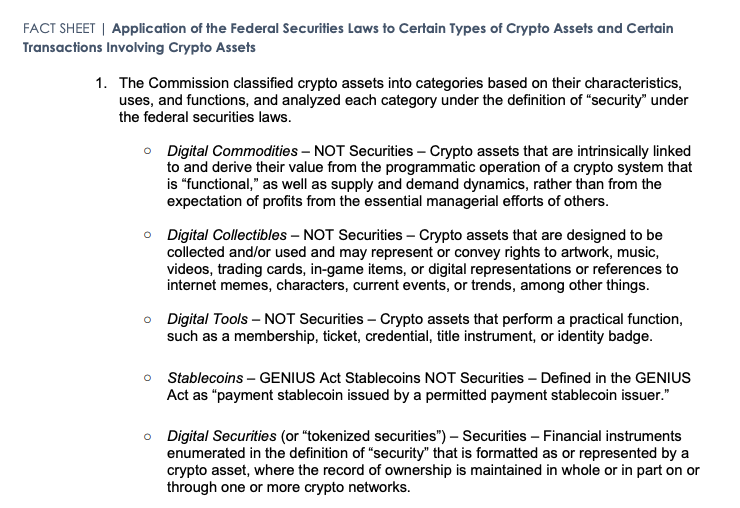
WHOA – This directly connects to the ALL Global Currencies via FOREX— not just crypto.
Classifying assets like $XRP as digital commodities aligns with their role in global financial infrastructure.
WHY
Freedom Fighter: This Connects to all Global Currencies via Forex
3-19-2026
Freedom Fighter @FreedomFight12
WHOA – This directly connects to the ALL Global Currencies via FOREX— not just crypto.
Classifying assets like $XRP as digital commodities aligns with their role in global financial infrastructure.
WHY
ISO 20022 isn’t just messaging — it’s the standard for cross-border value transfer between currencies – FOREX
XRP sits at the intersection of:
liquidity
settlement
interoperability
Solana: BREAKING: The SEC has formally classified SOL as a digital commodity in its new crypto asset taxonomy, alongside BTC, ETH, and 14 other assets. SOL is not a security.
Explained in detail here (global currencies + XRP)
https://youtu.be/irS2uYNX36U?list=PLsFvxx-OqfFl7TLwbZdh0U_H0q73ytqBY
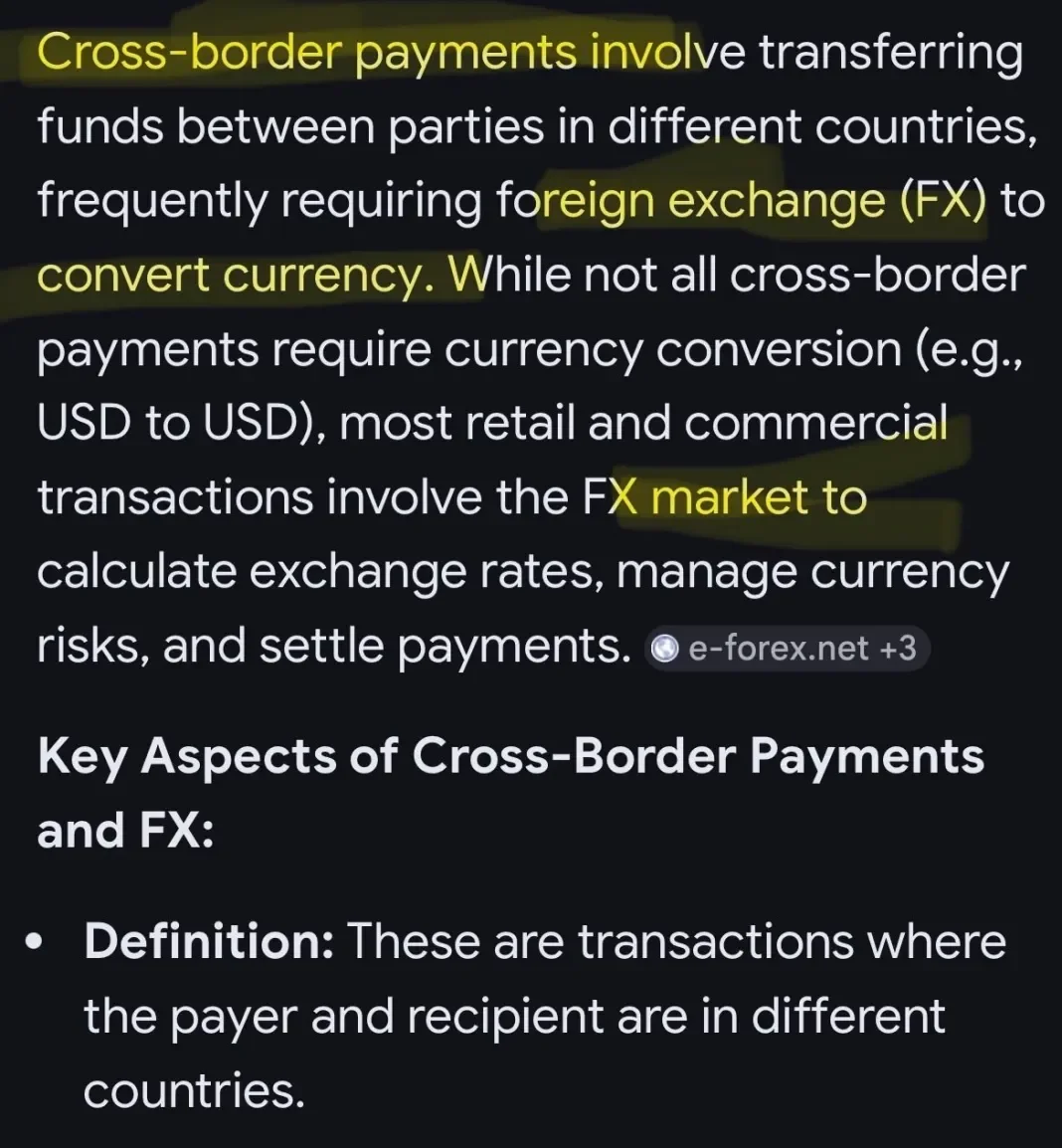
As I showed on last Saturday’s Live that Cross Border Payments = FOREX
Seeds of Wisdom RV and Economics Updates Thursday Afternoon 3-19-26
Good Afternoon Dinar Recaps,
Oil, Inflation, and Instability: Iran Conflict Sends Shockwaves Through the Global Financial System
Energy markets react as geopolitical tensions threaten supply routes and economic stability.
Overview
The escalating conflict involving Iran is no longer just a regional security issue — it is rapidly becoming a global financial event, with direct consequences for oil markets, inflation, and economic stability worldwide.
Good Afternoon Dinar Recaps,
Oil, Inflation, and Instability: Iran Conflict Sends Shockwaves Through the Global Financial System
Energy markets react as geopolitical tensions threaten supply routes and economic stability.
Overview
The escalating conflict involving Iran is no longer just a regional security issue — it is rapidly becoming a global financial event, with direct consequences for oil markets, inflation, and economic stability worldwide.
As tensions rise, fears of disruption to the Strait of Hormuz—a critical energy corridor—are driving volatility in oil prices and increasing uncertainty across global markets.
Because this narrow waterway handles roughly 20% of the world’s oil supply, any sustained disruption could have immediate and far-reaching effects on energy costs, inflation, and global growth.
Key Developments
1. Oil Markets React to Supply Risk
Oil prices have shown heightened volatility as traders respond to the possibility of disrupted shipments through the Persian Gulf.
Even the threat of disruption is enough to move markets, as energy supply remains one of the most sensitive components of the global economy.
2. Strait of Hormuz Remains a Critical Chokepoint
The Strait of Hormuz is one of the most strategically important trade routes in the world.
Roughly one-fifth of global oil consumption passes through this corridor, making it a focal point for both geopolitical tension and market sensitivity.
Any limitation on tanker traffic could trigger sharp increases in oil prices and supply chain disruptions.
3. Rising Energy Costs Fuel Inflation Concerns
Higher oil prices often lead to broader inflation because energy costs impact:
• Transportation and shipping• Manufacturing and production• Consumer goods pricing
As energy prices rise, central banks may face increased pressure when managing interest rates and economic growth.
4. Markets Shift Toward Safe-Haven Assets
During periods of geopolitical instability, investors often move toward perceived safe-haven assets such as:
• Gold• U.S. dollar• Government bonds
This shift reflects rising caution and can influence currency values and capital flows across global markets.
Why It Matters
Energy markets sit at the core of the global economy.
When supply uncertainty increases, the effects ripple across:
• Inflation levels• Consumer spending• Business investment• Global trade flows
Why It Matters to Foreign Currency Holders
For those monitoring potential changes in the global financial system, this situation highlights how energy and currency systems are deeply connected.
Key insights include:
• Oil trade plays a major role in currency demand• Energy shocks can shift global capital flows• Volatility can accelerate financial system adaptation
These forces often influence how countries approach reserve management and trade settlement strategies.
Implications for the Global Financial System
This development connects directly to broader structural trends:
• Energy security influencing economic policy• Inflation pressures shaping central bank decisions• Geopolitical tensions affecting global financial alignment
When combined with ongoing changes in digital currencies, payment systems, and reserve diversification, these events contribute to a gradual transformation of the financial landscape.
Closing Perspective
The Iran conflict is a powerful reminder that energy, geopolitics, and finance are tightly interconnected.
Disruptions in one area quickly cascade into others, influencing markets, currencies, and global economic stability.
This is not just an energy story — it is a financial signal of how interconnected and sensitive the global system has become.
Seeds of Wisdom Team
Newshounds News™ Exclusive
Sources
~~~~~~~~~~
Netanyahu Claims Iran’s Uranium Enrichment Capability Eliminated Amid Escalating Conflict
Military strikes raise major questions about nuclear capability, regional stability, and global financial risk.
Overview
Israeli Prime Minister Benjamin Netanyahu has stated that Iran no longer has the capacity to enrich uranium, following a series of coordinated military strikes targeting nuclear and military infrastructure.
The claim comes amid a rapidly escalating regional conflict involving Israel, Iran, and U.S. involvement, which has already begun impacting energy markets, global trade routes, and financial stability.
However, analysts and international observers note that independent verification of Iran’s full nuclear capability status remains limited, and Iran continues to demonstrate ongoing military and strategic capacity.
Key Developments
1. Netanyahu Declares Enrichment Capability “Eliminated”
Netanyahu stated that Iran’s ability to enrich uranium and develop key weapons infrastructure has been significantly degraded or removed following recent strikes.
The operations reportedly targeted:
• Nuclear enrichment facilities• Missile production infrastructure• Drone and weapons manufacturing sites
However, no detailed public evidence has been released to fully substantiate the extent of the damage.
2. Ongoing Conflict Raises Uncertainty About True Capabilities
Despite these claims, Iran continues to demonstrate military response capabilities, including missile and drone activity across the region.
Reports indicate:
• Continued retaliatory strikes on regional targets• Ongoing tensions across Gulf energy infrastructure• Persistent security risks in key shipping lanes
This suggests that while infrastructure may be damaged, Iran’s overall strategic capacity has not been fully neutralized.
3. Nuclear Status Remains Difficult to Verify
Independent verification of Iran’s nuclear program remains challenging due to:
• Limited access to damaged facilities• Restricted international inspections in conflict zones• Uncertainty over remaining uranium stockpiles
Some reports indicate that enriched uranium may still exist but be inaccessible or buried under damaged infrastructure, adding another layer of uncertainty to the situation.
4. Conflict Expands Beyond Nuclear Concerns
The broader conflict is now impacting:
• Energy markets and oil supply routes• Global shipping through the Strait of Hormuz• Regional financial markets and investor sentiment
These developments connect the situation directly to global economic stability, not just regional security.
Why It Matters
Nuclear capability is one of the most sensitive components of global geopolitical stability.
Any shift—real or perceived—in a country’s nuclear capacity can influence:
• Military strategy and alliances• Energy markets and inflation expectations• Investor confidence across global markets
Why It Matters to Foreign Currency Holders
For those tracking potential changes in the global financial system, this situation highlights how geopolitical events can quickly influence financial structures.
Key takeaways include:
• Energy security directly impacts currency stability• Conflict can accelerate shifts in trade and payment systems• Market volatility increases demand for safe-haven assets
These dynamics often intersect with broader trends such as reserve diversification and payment system evolution.
Implications for the Global Financial System
This development sits at the intersection of several major financial forces:
• Geopolitical conflict influencing markets• Energy supply risks affecting global inflation• Strategic competition shaping financial alliances
Periods of heightened geopolitical tension often act as catalysts for structural financial changes, particularly in how countries manage reserves, trade, and currency exposure.
Closing Perspective
Netanyahu’s statement marks a significant moment in the ongoing conflict—but uncertainty remains about the full reality on the ground.
What is clear is that the situation is no longer isolated to regional politics.
It is directly influencing energy flows, financial markets, and global economic stability.
This is not just a military development — it is a geopolitical event with global financial consequences.
Seeds of Wisdom Team
Newshounds News™ Exclusive
Sources
Reuters — “Netanyahu Says Iran No Longer Has Uranium Enrichment Capacity”
Associated Press — “Iran Retaliates as Netanyahu Claims Nuclear Capabilities Reduced”
~~~~~~~~~~
Seeds of Wisdom Team RV Currency Facts Youtube and Rumble
Newshound's News Telegram Room Link
RV Facts with Proof Links Link
RV Updates Proof links - Facts Link
Follow the Gold/Silver Rate COMEX
Follow Fast Facts
Seeds of Wisdom Team™ Website
Thank you Dinar Recaps
Iraq Economic News and Points To Ponder Thursday Afternoon 3-19-26
ECB holds rates at 2%, warns of war impact
2026-03-19 Shafaq News- Brussels On Thursday, the European Central Bank (ECB) kept its key interest rate unchanged at 2%, cautioning that tensions and the war in Iran could weigh on growth and inflation prospects in the eurozone.
In a statement, the ECB indicated that “the war in the Middle East will have a material impact on near-term inflation through higher energy prices,” noting that its medium-term effects will depend on the intensity and duration of the conflict, and the extent to which energy costs pass through to consumer prices and the broader economy.
ECB holds rates at 2%, warns of war impact
2026-03-19 Shafaq News- Brussels On Thursday, the European Central Bank (ECB) kept its key interest rate unchanged at 2%, cautioning that tensions and the war in Iran could weigh on growth and inflation prospects in the eurozone.
In a statement, the ECB indicated that “the war in the Middle East will have a material impact on near-term inflation through higher energy prices,” noting that its medium-term effects will depend on the intensity and duration of the conflict, and the extent to which energy costs pass through to consumer prices and the broader economy.
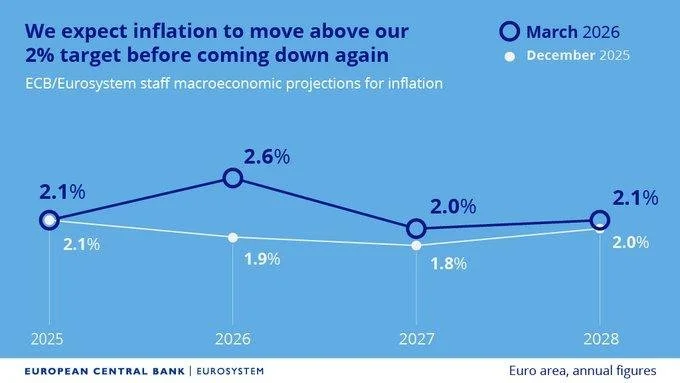
See below the baseline inflation outlook for the euro area, taken from our latest macroeconomic projections. In view of the current geopolitical uncertainty in the Middle East, two additional scenarios have also been prepared.
According to Reuters, financial markets expect eurozone inflation to rise to around 4% next year, with a return to the 2% target likely to take several years. These expectations come amid a surge in oil and gas prices since the start of US-Israeli attacks on Iran, raising the risk of higher energy costs, increased consumer prices, and slower economic activity in the eurozone, which comprises 21 countries and relies heavily on fuel imports.https://www.shafaq.com/en/Economy/ECB-holds-rates-at-2-warns-of-war-impact
Iraq Oil Shipments To US Drop ~5% In 20252026-03-18 Shafaq News- Baghdad Iraq’s oil exports to the United States fell in 2025 to just over 90 million barrels, according to US Energy Information Administration (EIA) data.
The data showed that total shipments reached 90.8 million barrels, down 4.6 million barrels, or 4.8%, from about 95.4 million barrels in 2024.
Despite the decline, Iraq remains a key oil supplier to the United States, though current export levels are far below the decade peak of 220.5 million barrels recorded in 2018, a drop of nearly 59%.
Monthly exports varied, peaking in August at 10.2 million barrels and falling to a low of 5.4 million barrels in February, reflecting fluctuations in Iraq’s oil supply flows to the US market. https://www.shafaq.com/en/Economy/Iraq-oil-shipments-to-US-drop-5-in-2025
Oil Jumps As Iran Strikes Energy Sites Across Middle East
2026-03-19 Shafaq News Oil prices rose on Thursday, with benchmark Brent rising as much as $5 a barrel, after Iran attacked energy facilities across the Middle East following a strike on the South Pars gas field, a major escalation in the war with the United States and Israel.
Brent futures were up $4.66, or 4.3%, at $112.04 a barrel by 0400 GMT, after an earlier rise of more than $5 to $112.86 a barrel. U.S. West Texas Intermediate crude rose 96 cents, or 1%, to $97.28 a barrel, after having risen over $3.
Brent closed up 3.8% on Wednesday, while WTI settled nearly flat. WTI has been trading at its widest discount to Brent in 11 years due to releases from U.S. strategic reserves and higher freight costs, while renewed attacks on Middle Eastern energy facilities boosted support for Brent.
"Escalation in the Middle East, precise attacks on oil infrastructure, and the death of Iranian leadership all point to a prolonged disruption in oil supplies," Phillip Nova analyst Priyanka Sachdeva said in a note.
"Adding fuel to the fire, the Federal Reserve served 'steady rates' with a hawkish narrative, pointing to the economic concerns that follow a war."
The U.S. central bank held interest rates steady on Wednesday, projecting higher inflation as policymakers take stock of the impact of the U.S.-Israel war with Iran.
On Wednesday, QatarEnergy said Iranian missile attacks on Ras Laffan, the site of Qatar's core LNG processing operations, caused "extensive damage" to its energy hub.
Saudi Arabia said it intercepted and destroyed four ballistic missiles launched on Wednesday toward Riyadh and an attempted drone attack on a gas facility.
Iran issued evacuation warnings before its attacks for several oil facilities across Saudi Arabia, the UAE and Qatar, as it prepared to retaliate for strikes on its own energy infrastructure in South Pars and Asaluyeh.
South Pars is the Iranian sector of the world's largest natural gas deposit, which Iran shares with U.S. ally Qatar on the other side of the Gulf.
Israel carried out the South Pars gas field attack, but the United States and Qatar were not involved, President Donald Trump said late on Wednesday.
He added that Israel would not further attack Iranian facilities in South Pars unless Iran attacked Qatar, and warned that the United States would respond if Iran acted against Doha.
Oil prices are set to stay supported as Iran's fresh strikes on Middle Eastern energy infrastructure worsen regional tension, with no sign of de-escalation in the conflict or a near-term reopening of the Strait of Hormuz, said Tina Teng, market strategist at Moomoo ANZ.
Earlier, Reuters reported that Trump's administration is considering deploying thousands of U.S. troops to reinforce its operation in the Middle East, in preparation for the next steps of its campaign against Iran.
Options include providing safe passage for oil tankers through the Strait of Hormuz, which would involve primarily air and naval forces, said the sources cited in the report, but securing the Strait could also mean deploying U.S. troops.
(REUTERS) https://www.shafaq.com/en/Economy/Oil-jumps-as-Iran-strikes-energy-sites-across-Middle-East
Iraqis 3rd In Turkiye’s Foreign House Purchases In February
2026-03-19 Shafaq News- Baghdad/ Ankara Iraqis ranked third among foreign buyers of real estate in Turkiye in February, according to data released by the Turkish Statistical Institute (TURKSTAT).
The total house sales across Turkiye rose to 124,549 units in February, compared with 112,818 in the same month last year. Sales to foreign nationals reached 1,457 houses during the month, marking a relative decline compared with February of the previous year.
Russians led foreign purchases with 256 houses, followed by Iranians with 133, while Iraqis ranked third with 106 houses. Ukrainians, Germans, Chinese, British, Americans, and Kazakhstanis followed in the overall ranking.
https://www.shafaq.com/en/Economy/Iraqis-3rd-in-Turkiye-s-foreign-house-purchases-in-February
USD/IQD Exchange Rates Surge In Baghdad, Erbil
2026-03-19 Shafaq News- Baghdad/ Erbil The US dollar rose slightly in Iraq on Thursday, trading near 155,000 dinars per 100 dollars. According to a Shafaq News market survey, the dollar traded in Baghdad’s Al-Kifah and Al-Harithiya central exchanges at 154,900 dinars per 100 dollars, up from 154,700 dinars earlier in the day.
In the capital, exchange shops sold the dollar at 155,500 dinars and bought it at 154,500 dinars, while in Erbil, selling prices reached 154,800 dinars and buying prices stood at 154,700 dinars.
https://www.shafaq.com/en/Economy/USD-IQD-exchange-rates-surge-in-Baghdad-Erbil-0-4
Gold Extends Losses To Seventh Consecutive Session
2026-03-19 Shafaq News Gold prices dropped over 5% on Thursday, falling for a seventh consecutive session, as the Middle East conflict increased energy prices and ignited inflation concerns, raising expectations that top central banks will keep borrowing costs elevated.
Spot gold fell 5.5% to $4,552.38 per ounce by 8:46 a.m. ET (1246 GMT), its lowest since early February.
U.S. gold futures for April delivery fell 7% to $4,554.70.
"Gold is now a very widely held position for institutional investors and that has been on the back of the debasement trade over the last year. But the foundations of that trade are now weakening," said Daniel Ghali, commodity strategist at TD Securities.
"For the near term, we continue to see risk to the downside. There is a very substantial amount of room for gold to sell off while maintaining its bull market era trend support," he added.
Gold is prized as a hedge against inflation and geopolitical turmoil, but because it does not generate interest, it tends to lose appeal in periods when rates are high.
Top central banks struck hawkish tones as the Iran war drove energy prices sharply higher but acknowledged the sheer uncertainty over the impact on the global economy called for caution in their next policy moves.
Benchmark Brent oil prices traded above $110 a barrel after Iran attacked energy facilities across the Middle East following Israel's strike on its South Pars gas field.
Meanwhile, a U.S. official and three people familiar with the matter said President Donald Trump's administration is considering deploying thousands of U.S. troops to reinforce its operation in the Middle East as the Iran war enters a possible new phase.
Analysts at SP Angel said gold has been hit by profit-taking and a stronger dollar, noting that after its strong rally in 2025, it is not surprising to see traders lock in gains to cover margin calls and rotate into fresh trades such as hydrocarbons amid renewed volatility.
Spot silver fell 10.7% to $67.26 per ounce. Spot platinum fell 6.8% to $1,886.13, and palladium lost 4.1% to $1,415.41.
(REUTERS) https://www.shafaq.com/en/Economy/Gold-extends-losses-to-seventh-consecutive-session
“Tidbits From TNT” Thursday 3-19-2026
TNT:
Tishwash: US Central Command: We will not hesitate to defend our forces and personnel in Iraq.
The US Central Command on Thursday (March 19, 2026) accused Iraqi armed factions of attacking US forces and citizens in Iraq.
In press statements, the US leadership stressed that "the United States will not hesitate to defend its forces and American personnel in Iraq," indicating that defensive and deterrence operations are continuing to counter current threats.
In a related context, security sources told Reuters that a US diplomatic facility located near Baghdad International Airport was targeted by Katyusha rockets.
TNT:
Tishwash: US Central Command: We will not hesitate to defend our forces and personnel in Iraq.
The US Central Command on Thursday (March 19, 2026) accused Iraqi armed factions of attacking US forces and citizens in Iraq.
In press statements, the US leadership stressed that "the United States will not hesitate to defend its forces and American personnel in Iraq," indicating that defensive and deterrence operations are continuing to counter current threats.
In a related context, security sources told Reuters that a US diplomatic facility located near Baghdad International Airport was targeted by Katyusha rockets.
She noted that the attack triggered alarms inside the facility and surrounding areas, without providing immediate details on the extent of human or material losses. link
**************
The war is hitting the economy hard: high prices and closed shops in Tehran's Grand Bazaar.
The war, which has been raging for nearly three weeks, has affected the usually bustling alleys and lanes of Tehran’s Grand Bazaar, with many shops closed and prices soaring for Iranians already struggling under years of sanctions that have strangled the economy.
Tehran’s Grand Bazaar shopping area is usually packed in the days leading up to the Persian New Year and Eid al-Fitr with merchants seeking to sell goods and close deals, and families shopping for gifts, but despite the presence of shoppers, the number on Wednesday was lower than usual.
"How can we afford to buy them?" said Nasreen, 40, as she searched the few shops that were open for new jeans for her two children.
Thanks to her salary of about $130 a month from her job at a dental clinic, Nasrin was able to buy some new clothes for the family as well as food and other necessities despite the economic problems that Iran is experiencing, including high inflation rates.
With the intense Israeli and American bombing campaign that killed the country’s supreme leader and many other prominent figures, the government has not released any new economic statistics since the start of the offensive on February 28.
But while many businesses and government offices remain open, both traders and shoppers in the market area say the war is having a strong economic impact, and they spoke of prices rising to well above the 36 percent inflation rate that persisted through most of 2025.
The “Grand Bazaar of Tehran” stretches across the center of the capital, a city within a city, filled with wholesalers and retailers, with wide streets covered by towering arches of brick or galvanized steel, whose darkness is pierced by the bright rays of the sun.
The bazaar is divided into different sections for clothing, food, spices, carpets, electronics, metal goods, and a wide range of other categories. It has long been an economic pillar of Tehran and its merchants, who form an important political voting bloc.
The war not only damaged businesses, but some buildings also suffered material damage as a result of air raids.
A shop owner was shouting "Danger, danger" as people walked by, pointing to debris falling from part of the roof.
Boria Rahbar-Yektashinais, who has owned a clothing store for nearly 14 years, said his business had just begun to recover from a long economic downturn before the war began.
But he added, "Everything collapsed," explaining that he had to close his shop again for two weeks, fearing that the market would be a target for raids, and only recently reopened his shop.
"The situation is clear now," he said, pointing to a number of closed shops in the neighborhood and surrounding alleys that were almost devoid of customers. link
**********
Tishwash: Agreement to postpone government formation: "cautious waiting" and a temporary government until the war ends
Well-informed political sources revealed on Tuesday (March 17, 2026) that there is what they described as a "near agreement" among major political forces to postpone the completion of procedures for forming the new Iraqi government until the course and repercussions of the ongoing military conflict between Iran, the United States, and Israel become clear, amid growing fears of the repercussions of regional escalation on the Iraqi interior.
Sources told Baghdad Today that “unannounced consultations took place during the past few days between the leaders of prominent political blocs, which concluded that it is necessary to adopt a policy of cautious waiting, in order to avoid forming a government that may face complex security and economic challenges in the event of an expansion of the scope of military confrontation in the region.”
She explained that “a number of political parties believe that the current stage requires a transitional government with limited powers or a continuation of temporary caretaker government until the regional scene stabilizes, especially with the possibility of Iraq being directly affected by military developments due to its geographical location and the entanglement of its political and economic interests with the parties to the conflict.”
The sources added that "internal disputes have not been fully resolved yet, but the regional factor has become an additional pressure that has prompted some forces to reassess their political priorities and focus on maintaining security stability and avoiding political division during the period of tension."
While the region is ablaze with cross-border conflicts and escalating regional tensions, the Iraqi scene seems to be moving at a different pace, governed less by the results of the war than by deep internal disputes that extend from the Coordination Framework to the Kurdish forces, hindering the identification of both the Prime Minister and the President of the Republic.
With no real signs of resolution, fears are growing that the political waiting will become a permanent state, making the formation of the next government a task postponed indefinitely. Political sources confirm that there is no specific timeframe for forming the next government, indicating that the disputes between the Coordination Framework and the Kurdish forces remain unresolved, while emphasizing that the delay in forming the government is related to internal problems and not to the results of the ongoing war in the region. link
**************
Mot: Take a Break -- Close Ur Eyes and Listen to -- Unchained Melody !!!!
https://www.youtube.com/watch?v=ejm3Q5ZKr28&list=RDejm3Q5ZKr28&start_radio=1
The Global Wealth Transfer They Don’t Want You to See
The Global Wealth Transfer They Don’t Want You to See
Black Swan Capitalist: 3-18-2026
The world is at a tipping point. The US dollar is weakening, central banks are hoarding gold, and global financial rails are quietly evolving.
What if I told you that XRP isn’t just a cryptocurrency, but a bridge to a new parallel banking system, one that could redefine wealth, settlement, and power worldwide?
The Global Wealth Transfer They Don’t Want You to See
Black Swan Capitalist: 3-18-2026
The world is at a tipping point. The US dollar is weakening, central banks are hoarding gold, and global financial rails are quietly evolving.
What if I told you that XRP isn’t just a cryptocurrency, but a bridge to a new parallel banking system, one that could redefine wealth, settlement, and power worldwide?
In this video, I’ll explore why global wealth is shifting away from traditional banks and fiat currencies, and how tokenization and digital assets, including XRP, are rewriting the way settlement systems work.
I’ll explain why nothing in finance is truly decentralized and what that means for you, while also looking at the role of gold, silver, and other precious metals in this evolving landscape.
Finally, I’ll show how the next phase of global finance will reward those who position themselves within these new rails. If you want to understand the future of money, the role of XRP, and why timing is critical, this is a video you cannot afford to miss.
Coffee with MarkZ, joined by Dr. Scott Young. 03/19/2026
Coffee with MarkZ, joined by Dr. Scott Young. 03/19/2026
Some highlights by PDK-Not verbatim
MarkZ Disclaimer: Please consider everything on this call as my opinion. People who take notes do not catch everything and its best to watch the video so that you get everything in context. Be sure to consult a professional for any financial decisions
Member: Gooood morning Mark, Dr. Scott Young, mods and fellow Patriots.
Member: Ramadan ends tonight…Today is the beginning of Eid -Al-Fitr. 4 day weekend of celebration of giving.
Coffee with MarkZ, joined by Dr. Scott Young. 03/19/2026
Some highlights by PDK-Not verbatim
MarkZ Disclaimer: Please consider everything on this call as my opinion. People who take notes do not catch everything and its best to watch the video so that you get everything in context. Be sure to consult a professional for any financial decisions
Member: Gooood morning Mark, Dr. Scott Young, mods and fellow Patriots.
Member: Ramadan ends tonight…Today is the beginning of Eid -Al-Fitr. 4 day weekend of celebration of giving.
Member: Anybody else have a great feeling about this weekend or am I the only one?
Member: I’m right there with you. Staying hopeful and believing today brings positive updates for Mark. Sometimes the best news shows up right when we need it most, so I’m holding that expectation!
MZ: I am having a real good feeling about the next couple of weeks myself.
Member: I am so ready to get off this roller coaster.
MZ: I am also beyond ready to get off this ride…..Hope what my bond folks heard is correct.
MZ: I am getting more bond confirmations of meetings held this week…and a lot of contented people. I do not think they have money but I think they know their exact timing. I havn’t seen a lot of big spending so maybe there are restrictions? But I have had 3 bond contacts tell me that in another week we will know our currency timing as well.
MZ: They are saying (by high profile people) the currency side will have a very big week. Weeks ago I was told that by April 2 we would be banking on the currency side. I do not know the timing….but am very excited.
MZ: I believe huge progress has been made. We are just not across the finish line yet.
Member: with the national debt now over 38 trillion, imo the rv/reset has to be happening very soon!
Member: Kharge Island - we will see what happens there and if it becomes a US asset - Tres Sec Bessent
MZ: I would not be surprised
Member: Stuff IS DEFINITELY being done behind the scenes!!!!!
MZ: “Iraq signs contracts to export oil via Jordan and Syria” Kirkuk is also exporting oil via pipeline through Ceyhan Turkey. Sudani is definitely in charge…..they are coming off “stuck”
Member: Yaaaay…Iraq finally did something quickly……Don’t stop now!!!!
Member: How long will it take for the info notification to get to Dinar Recaps once RV goes?
MZ: I will put money on it that they will get it before any other guru gets it. Dinar Recaps was named specifically by 2 different personnel from banks as getting the exchange info quickly. I am confident in this. They told me they have the email prepared and ready with instructions and directions and how to reach them. When it is time to go -they will send it to Recaps and some other dinar news sites to get this news out. There is a better than excellent chance that they will get the email before me. But maybe only by a few minutes.
Member: Easter-Saint Germaine trust opens?
Member: Judy Shelton says the US will have gold backed Treasuries by July 4th……..hopefully gold backed currency at the same time.
Member: Just an observation if April 2nd is the timing that would put us 120 days til July 2 days before July 4th interesting
Member: We need to see QFS now.
Member: So, if XRP is the new clearance block chain. XRP will have the same rails??? that means it will be the new FOREX???
Member: FYI-March 24th will be the 35th anniversary of the Kuwaiti dinar RV?
Member: Tomorrow is the first day of spring.
Member: Thanks to all…..have a wonderful day.
Dr. Young and StacieZ joins the stream. Please listen to the replay for their information and opinions.
THE CONTENT IN THIS PODCAST IS FOR GENERAL & EDUCATIONAL PURPOSES ONLY&NOT INTENDED TO PROVIDE ANY PROFESSIONAL, FINANCIAL OR LEGAL ADVICE. PLEASE CONSIDER EVERYTHING DISCUSSED IN MARKZ’S OPINION ONLY
https://rumble.com/user/theoriginalmarkz
Kick: https://kick.com/theoriginalmarkz
FOLLOW MARKZ : TWITTER . https://twitter.com/originalmarkz?s=21. TRUTH SOCIAL . https://truthsocial.com/@theoriginalm...
Mod: MarkZ "Back To Basics" Pre-Recorded Call" for Newbies 10-19-2022 ) https://www.youtube.com/watch?v=37oILmAlptM
MARKZ DAILY LINKS: https://theoriginalmarkz.com/home/
Note from PDK: Please listen to the replay for all the details and entire stream….I do not transcribe political opinions, medical opinions or many guests on this stream……just RV/currency related topics.
THANK YOU FOR JOINING. HAVE A BLESSED DAY. SEE YOU IN THE MORNING FOR COFFEE @ 10:00 AM EST ~ UNLESS BREAKING NEWS HAPPENS! FOR UPDATES ON MARK’S PODCAST GO TO: https://t.me/+b3hYhYlhKM1hYzcx
News, Rumors and Opinions Thursday 3-19-2026
Note: All intel should be considered as "Rumors" until we receive official announcements ...and “Rates and Dates” could change anytime until we get to the banks/redemption centers.
RV Excerpts from the Restored Republic via a GCR Update as of Thurs. 19 March 2026
Compiled Thurs. 19 March 2026 12:01 am EST by Judy Byington
Wed. 18 March 2026 OVER $2.3 TRILLION IN OFF-LEDGER ASSETS HAVE BEEN QUIETLY POSITIONED THROUGH U.S. TREASURY-ALIGNED CHANNELS SINCE 2018.
STORED ACROSS STRATEGIC RESERVES IN TEXAS, NEVADA, COLORADO, AND ALASKA.
Note: All intel should be considered as "Rumors" until we receive official announcements ...and “Rates and Dates” could change anytime until we get to the banks/redemption centers.
RV Excerpts from the Restored Republic via a GCR Update as of Thurs. 19 March 2026
Compiled Thurs. 19 March 2026 12:01 am EST by Judy Byington
Wed. 18 March 2026 OVER $2.3 TRILLION IN OFF-LEDGER ASSETS HAVE BEEN QUIETLY POSITIONED THROUGH U.S. TREASURY-ALIGNED CHANNELS SINCE 2018.
STORED ACROSS STRATEGIC RESERVES IN TEXAS, NEVADA, COLORADO, AND ALASKA.
THESE ASSETS WERE NEVER RECORDED IN PUBLIC BALANCE SHEETS. THEY WERE TRANSFERRED THROUGH DEFENSE CONTRACTORS, SOVEREIGN FUNDS, AND RESTRUCTURED UNDER EMERGENCY AUTHORIZATION PROTOCOLS.
INTERNAL DOCUMENTS LINK THESE HOLDINGS DIRECTLY TO THE ISO20022 TRANSITION FRAMEWORK, PREPARING A FULLY ASSET-BACKED SETTLEMENT LAYER.
THIS RESERVE WAS NOT BUILT FOR THE CURRENT SYSTEM. IT WAS BUILT FOR WHAT COMES NEXT.
~~~~~~~~~~~~~
Wed. 18 March 2026 BOOM! RV. MILITARY OP: THE NEW FINANCIAL SYSTEM — STEP OUT OF THE MATRIX AND INTO THE GOLDEN AGE! DINAR, DONG, AND ZIM! GCR! THE ALLIANCE: THE WHITE HATS’ MILITARY! …Tier4b Activated on Telegram
BOOM! THE WHITE HATS ARE LEADING THE CHARGE IN THE GLOBAL CURRENCY RESET (GCR), WITH A MILITARY OPERATION TO BRING DOWN THE CORRUPT FINANCIAL SYSTEM.
GET READY FOR THE REVALUATION (RV) OF THE IRAQI DINAR, VIETNAMESE DONG, AND ZIMBABWEAN ZIM. THIS IS BEING DESCRIBED AS THE MOMENT TO BREAK FREE FROM THE OLD SYSTEM AND STEP INTO A NEW ERA OF PROSPERITY, FREEDOM, AND WEALTH REDISTRIBUTION.
THE GLOBAL REVOLUTION HAS BEGUN — PREPARE FOR THE GREATEST SHIFT IN HUMAN HISTORY. THE FINANCIAL RESET MANY HAVE BEEN TALKING ABOUT IS PRESENTED AS A COMPLETE TRANSFORMATION OF THE SYSTEM.
THE GOLDEN AGE IS SAID TO BE ON THE HORIZON, WHERE HUMANITY RECLAIMS CONTROL OVER ITS ECONOMIC FUTURE.
THE GREAT AWAKENING: HUMANITY IS WAKING UP TO THE TRUTH. THE OLD FINANCIAL STRUCTURE, BUILT ON DEBT AND CONTROL, IS BEING CHALLENGED. MANY BELIEVE THE WORLD IS ENTERING A PERIOD WHERE PEOPLE RECOGNIZE THEIR OWN POWER AND THE SYSTEM BEGINS TO CHANGE.
THE GLOBAL CURRENCY RESET: A COMPLETE OVERHAUL OF THE FINANCIAL SYSTEM. SUPPORTERS SAY THE SHIFT MOVES FROM FIAT CURRENCIES CONTROLLED BY CENTRAL BANKS TO A SYSTEM BACKED BY REAL ASSETS SUCH AS GOLD AND SILVER, CONNECTED TO THE QUANTUM FINANCIAL SYSTEM (QFS).
THE QUANTUM FINANCIAL SYSTEM (QFS): THE FUTURE OF MONEY IS DIGITAL. DESCRIBED AS DECENTRALIZED AND SECURE, THE QFS USES ADVANCED LEDGER TECHNOLOGY TO CREATE TRANSPARENT AND FAST GLOBAL TRANSACTIONS, WITH NETWORKS LIKE STELLAR PLAYING A ROLE IN GLOBAL FINANCIAL CONNECTIVITY.
THE KEY PLAYERS: IRAQI DINAR, VIETNAMESE DONG, AND ZIMBABWEAN ZIM. THESE CURRENCIES ARE SAID TO BE AT THE CENTER OF THE REVALUATION EVENT, POTENTIALLY TRIGGERING LARGE-SCALE WEALTH REALIGNMENT AND SUPPORTING GLOBAL HUMANITARIAN PROJECTS.
THE REVOLUTION HAS BEGUN — AND MANY BELIEVE THERE IS NO STOPPING IT. THE OLD WORLD IS CHANGING, AND A NEW ERA OF ECONOMIC FREEDOM AND GLOBAL COOPERATION IS BEING DISCUSSED AS THE FUTURE.
STAND STRONG, STAY AWARE, AND WATCH AS HISTORY CONTINUES TO UNFOLD.
~~~~~~~~~~~~~~
Tues. 17 March 2026 Bruce, The Big Call The Big Call Universe (ibize.com) 667-770-1866, pin123456#
– Bank of America and Chase banks were finally connected to the QFS at 4 am Mon. morning 16 March 2026.
– 93 banks in Europe were not connected to the QFS and would likely never be.
– A Wells Fargo paymaster predicted we would be notified Wed. 18 March or Thurs. 19 March.
– A Military contact said we would be notified before Fri. 20 March.
– Bond Holders have been told they would have usable funds on Wed. or Thurs.
Read full post here: https://dinarchronicles.com/2026/03/19/restored-republic-via-a-gcr-update-as-of-march-19-2026/
*****************
Courtesy of Dinar Guru: https://www.dinarguru.com/
Jeff How far away is the rate change? Obviously the war has to happen first. Yesterday's news...they flat out finally admitted it to you. The government formation is paused and on hold until the war is done...I've been telling you guys since we've been into this year that everything in Iraq, including real trade against their currency, taxation, all of that is paused and on hold until they form the government and revalue the currency going international.
Frank26 We're close no doubt. But the problem is that you can see what is in the way. You know what is preventing this. We need to pray that the war ends and we are victorious and the government of Iraq is established...Like I always say, lets wait till the smoke clears..In my heart I believe it's gong to clear before the end of this month.
Mnt Goat Article: "FOUR MONTHS AFTER THE IRAQI ELECTIONS: THE WAR MAY LEAD TO AN EXTENSION OF AL-SUDANI’S TERM" Quote: "Well-informed political sources revealed on Tuesday (March 17, 2026) that there is what they described as a “near agreement” among major political forces to postpone the completion of procedures for forming the new Iraqi government until the course and repercussions of the ongoing military conflict between Iran, the United States, and Israel become clear, amid growing fears of the repercussions of regional escalation on the Iraqi interior." So now there is talk that the elections may just be postponed altogether until the Iranian conflict is over. The new Parliament leader already told us he does not intend to hold any sessions until the conflict is over.
***************
“Nefarious” Activities at Comex? What’s REALLY Going on With Gold and Silver Prices - Bubba Horwitz
Daniela Cambone: 3-18-2026
As gold and silver pull back from recent highs, one veteran trader says the setup is building for the next leg higher. Todd "Bubba" Horwitz, chief market strategist, joins Daniela Cambone to break down the critical signals flashing in the precious metals market.
"I don't think there are enough metals in the world, silver and gold, to cover the amount of paper that is written on them and the amount of use that is needed," he argues.
"The prices get suppressed." He adds that the current consolidation is healthy: "We are in absolute perfect condition right now to build on that next rally, because the longer these markets go sideways and consolidate… they're going to explode higher in my opinion."
Seeds of Wisdom RV and Economics Updates Thursday Morning 3-19-26
Good Morning Dinar Recaps,
Global Reset Series - Part 2
Why Central Banks Are Buying Gold at Record Levels
Gold is once again becoming a strategic reserve asset for many nations as governments reassess financial stability and reserve diversification.
Good Morning Dinar Recaps,
Global Reset Series - Part 2
Why Central Banks Are Buying Gold at Record Levels
Gold is once again becoming a strategic reserve asset for many nations as governments reassess financial stability and reserve diversification.
Overview
Central banks around the world have been rapidly increasing their gold reserves in recent years, marking one of the most significant shifts in reserve management since the 1970s.
NAccording to the World Gold Council, central bank gold purchases have exceeded 1,000 tonnes annually, the highest sustained levels since modern records began.
This trend reflects growing interest in diversification and long-term financial stability.
Key Developments
1.Gold purchases are occurring across multiple regions
Several major economies have significantly expanded their gold reserves, including:
• China• India• Turkey• Russia• Poland
Many of these purchases represent long-term reserve diversification strategies.
2.Gold remains a unique financial asset
Unlike government bonds or foreign currencies, gold carries no counterparty risk.
This means its value does not depend on the financial stability of another government or institution.
Because of this characteristic, gold continues to play a strategic role in central bank balance sheets.
3.Reserve diversification has become a priority
Many central banks are seeking to reduce reliance on a single reserve currency.
Diversifying reserve holdings can help protect against:
• currency volatility
• geopolitical risks
• global financial shocks
Why It Matters
Central bank reserve strategies influence the stability of the global financial system.
Large-scale shifts in reserve assets can affect:
• currency markets
• financial confidence
• international capital flows
Historically, similar shifts have coincided with major transitions in the global monetary system.
Why It Matters to Foreign Currency Holders
Gold accumulation is often viewed as a signal that governments are strengthening financial buffers.
While modern currencies are not backed by gold, strong gold reserves can increase confidence in a country's monetary position.
Implications for the Global Reset
Pillar 1 — Monetary Resilience
Gold reserves provide stability and diversification within national balance sheets.
Pillar 2 — Global Reserve Strategy
Increasing gold holdings may signal a gradual evolution in how countries manage financial reserves.
Seeds of Wisdom Team View
Gold has served as a monetary anchor for thousands of years.
The renewed interest among central banks suggests that traditional reserve assets still play a critical role even as digital financial technologies emerge.
Seeds of Wisdom Team
Newshounds News™ Exclusive
Sources
~~~~~~~~~~
A Message to Our Currency Holders
If you’ve been holding foreign currency for many years, you were not foolish.
You were not wrong to believe the global financial system would change.
What failed was not your patience — it was the information you were given.
For years, dates, rumors, and personalities replaced facts, structure, and proof. “This week” predictions created cycles of hope and disappointment that were never based on how currencies actually change.
That is not your failure.
Our mission here is different: • No dates • No rates • No hype • No gurus
Instead, we focus on:
• Verifiable developments • Institutional evidence
• Global financial structure • Where countries actually sit in the process
Currency value changes only come after sovereignty, trade, banking, settlement systems, and fiscal coordination are in place. History and institutions confirm this sequence.
You will see silence. You will see denials. That is not delay — that is discipline.
Protect your identity. Organize your documents. Verify everything.
Never hand your discernment to anyone who cannot show proof.
You deserve truth — not timelines.
Seeds of Wisdom Team
Newshounds News
~~~~~~~~~~
Seeds of Wisdom Team RV Currency Facts Youtube and Rumble
Newshound's News Telegram Room Link
RV Facts with Proof Links Link
RV Updates Proof links - Facts Link
Follow the Gold/Silver Rate COMEX
Follow Fast Facts
Seeds of Wisdom Team™Website
Thank you Dinar Recaps