
Thank you to all the subscribers to our Early Access program…we thank you for your continued support.
We are excited to offer this new service to keep you informed and up-to-date on the latest Dinar and currency news.
Iraq Economic News and Points To Ponder Wednesday Morning 8-20-25
OPEC Oil Refining Capacity: What Is Iraq's Ranking?
Economy 2025-08-19 | 583 views Alsumaria News – Economy oil refining capacity continues OPEC its five-year upward trend, with new refineries being built or existing capacity being expanded.
The organization's latest annual statistics, published by the Washington-based Energy Research Unit, showed thatoil refining capacity in member states increased by 18.5%, or 2.2 million barrels per day, during the period from 2020 to 2024.
OPEC 's oil refining capacity increased by 0.5%, or 71,000 barrels per day, in 2024,
bringing the total to 14.14 million barrels per day.
OPEC Oil Refining Capacity: What Is Iraq's Ranking?
Economy 2025-08-19 | 583 views Alsumaria News – Economy oil refining capacity continues OPEC its five-year upward trend, with new refineries being built or existing capacity being expanded.
The organization's latest annual statistics, published by the Washington-based Energy Research Unit, showed thatoil refining capacity in member states increased by 18.5%, or 2.2 million barrels per day, during the period from 2020 to 2024.
OPEC 's oil refining capacity increased by 0.5%, or 71,000 barrels per day, in 2024,
bringing the total to 14.14 million barrels per day.
The share of the 12 OPEC member states in total global refining capacity increased from 11.8% in 2020 to 13.6% in 2024, with global capacity reaching 103.8 million barrels per day last year.
On the other hand, refinery production in OPEC countries increased by 5%,
or 411,000 barrels per day, to reach 8.921 million barrels per day in 2024,
compared to about 8.511 million in 2023.
This means that OPEC's refinery utilization rate —refinery production divided by total refining capacity—will not exceed 63% in 2024, according to the Energy Research Unit's analysis.
Developments In Oil Refining Capacity In OPEC Countries
accounted Saudi Arabia for nearly a quarter of OPEC's oil refining capacity in 2024,
with its refining capacity remaining unchanged at 3.291 million barrels per day (bpd) from 2023.
The Kingdom's refining capacity increased by 12.5%, or 364,000 barrels per day,
between 2020 and 2024, according to OPEC's annual report. ranked Iran second among OPEC countries,
with its refining capacity set to stabilize at 2.237 million barrels per day in 2024.
Iran's refining capacity has not seen significant changes over the past five years,
remaining at around 2.2 million barrels per day, or slightly higher since 2020.
Venezuela ranked third among OPEC countries, with its crude refining capacity set to remain stable at 2.154 million barrels per day in 2024, the same level as in 2020.
Refining Capacity In Kuwait, Iraq And The UAE
Kuwait has taken fourth place in OPEC's oil refining capacity, with its capacity increasing by pproximately 36,000 barrels per day, reaching 1.451 million barrels per day by 2024.
Kuwait's refining capacity has seen a significant jump of 81%,
or 651,000 barrels per day, since 2020, thanks to the operation of the Al-Zour refinery,
according to comparative data analyzed by the Energy Research Unit.
ranked Iraq fifth, with its refining capacity remaining stable at 1.266 million barrels per day in 2024, unchanged from 2023.
However, Iraq's refining capacity has jumped by 67%, or 508,000 barrels per day, since 2020.
The UAE ranked sixth in terms of refining capacity,
which remained virtually stable at 1.227 million barrels per day in 2024, unchanged from 2020.
Refining Capacity In Nigeria, Algeria And Libya
Nigeria ranked seventh in OPEC's oil refining capacity,
with its capacity set to increase by just 3,000 barrels per day to 1.125 million barrels per day in 2024.
Nigeria's refining capacity remained below 500,000 barrels per day from 2020 to 2022,
before jumping to 1.22 million barrels per day in 2023.
The main reason for this boom is the operation of the Dangote Refinery (the largest refinery in Africa),
which has a design capacity of approximately 650,000 barrels per day.
Algeria ranked eighth, with its refining capacity remaining stable at 677,000 barrels per day in 2024,
unchanged from 2020.
Libya ranked ninth, with its oil refining capacity increasing by 32,000 barrels per day,
reaching 666,000 barrels per day in 2024.
Libya's refining capacity remained stable at 634,000 barrels per day from 2020 to 2023,
according to annual data monitored by the Energy Research Unit.
OPEC Oil Refining Capacity In 2024, From Largest To Smallest
Gabon ranked tenth in OPEC's oil refining capacity, with its refinery capacity remaining stable at 25,000 barrels per day since 2020.
ranked Congo 11th, with its refining capacity remaining stable at 21,000 barrels per day in 2024, unchanged from 2020.
is Equatorial Guinea the only OPEC member state without refineries, according to the Energy Research Unit.
In brief, the oil refining capacity of OPEC countries in 2024 can be arranged as follows:
Saudi Arabia: 3.291 million barrels per day.
Iran: 2.237 million barrels per day.
Venezuela: 2.154 million barrels per day.
Kuwait: 1.451 million barrels per day.
Iraq: 1.266 million barrels per day.
UAE: 1.227 million barrels per day.
Nigeria: 1.125 million barrels per day.
Algeria: 677,000 barrels per day.
Libya: 666,000 barrels per day.
Gabon: 25,000 barrels per day.
Congo: 21,000 barrels per day.
https://www.alsumaria.tv/news/economy/537686/طاقة-تكرير-النفط-في-دول-أوبك-ما-ترتيب-العراق؟
Government Advisor: Oil Will Return To $75 Soon... Here's Why
Time: 2025/08/19 Read: 600 times {Economic: Al Furat News} The Prime Minister's economic advisor, Mazhar Mohammed Saleh, confirmed that the need for oil energy will increase after each cycle of price decline, noting that this increase will restore balance to the energy market, which will push the price of a barrel of oil to an average of no less than $75 higher.
Saleh told Al Furat News: “The need for oil energy will increase after each cycle of price decline due to the rise in production costs in the world’s major producing regions, which will restore balance to the energy market and raise the price of a barrel of oil to an average of no less than $75 per barrel, especially after the market’s glut of cheap oil disappears due to geopolitical turmoil around the world.”
He added, "This is a temporary situation that does not represent a long-term investment strategy in oil energy markets, particularly the US production market, as it is the world's largest oil producer, but at high costs compared to the low-cost production costs of Middle Eastern and Gulf oil." LINK
Economic Media
Economic 08/20/2025 Yasser Al-Mutawali It is necessary to reconsider the selection of figures who speak on economic issues, to ensure the transmission of a clear and attractive image that reflects real potential, thus serving as a tool to enhance trust and attract international cooperation.
The danger of economic discourse lies in its external repercussions, as
it directly contributes to shaping other countries' perceptions of a country's strength or weakness.
Since international relations are built on the size, capabilities, and potential of each country,
the image of the national economy becomes the basis for shared interests.
It goes without saying that a country's strength is largely measured by the strength of its economy,
a key criterion for determining the nature of its economic relations with the world.
In the case of Iraq, there is a dire need to unify the economic media discourse to enhance the country's reputation
and present it as a significant economic power,
given its untapped wealth and resources, in addition to its status as an oil-producing country par excellence.
The goal here is to attract investment and build solid economic relations in this manner.
But what happens if a false image of a country's economy is conveyed?
The likely result is a state of uncertainty, especially when
statements conflict and the
language of unification disappears from the discourse,
replacing the image of strength with an impression of weakness.
One of the most prominent causes of this problem is the growing circle of so-called "accidental experts."
These are individuals who
present themselves, or are
presented through certain media outlets,
as economic experts,
without possessing any real qualifications.
An economic expert is not just a title;
it is the result of a long process that begins with an interest in economic affairs,
then progresses to the stage of economic researcher, and
finally to the level of expert, which is
awarded through scientific evaluation by a competent and respected body,
after accumulating
experience and a
deep understanding of economic theories and concepts.
The lack of precise criteria for awarding the title of "expert" has negatively impacted Iraq's international image.
Statements by non-experts have painted a vague picture of the economic reality,
leading to a disdainful view from some countries,
which have come to view Iraq as a country unqualified to build strong economic relations.
Therefore, it is necessary to reconsider the selection of figures who speak on economic issues,
ensuring they convey a clear and attractive image that reflects real potential, thus
serving as a tool for enhancing trust and attracting international cooperation.
The phenomenon of “coincidence experts” can be said to be comparable to malicious rumors in the extent of their negative impact on public opinion, and perhaps even exceed them in Some cases. https://alsabaah.iq/119250-.html
For current and reliable Iraqi news please visit: https://www.bondladyscorner.com
Seeds of Wisdom RV and Economic Updates Wednesday Morning 8-20-25
Good Morning Dinar Recaps,
U.S. Crypto Regulation at a Crossroads: SEC Reforms and Senate Showdown
The landscape of U.S. cryptocurrency regulation is undergoing its most significant shift in years. On one side, SEC Chair Paul Atkins is pledging to rapidly implement the President’s recommendations for a more rules-based, innovation-friendly framework. On the other, Sen. Tim Scott is leading a high-stakes push in Congress to pass a comprehensive crypto market structure bill, facing resistance from Sen. Elizabeth Warren, one of the industry’s fiercest critics.
Together, these developments underscore how the U.S. is rethinking its approach to digital assets—balancing investor protections, innovation, and global competitiveness.
Good Morning Dinar Recaps,
U.S. Crypto Regulation at a Crossroads: SEC Reforms and Senate Showdown
The landscape of U.S. cryptocurrency regulation is undergoing its most significant shift in years. On one side, SEC Chair Paul Atkins is pledging to rapidly implement the President’s recommendations for a more rules-based, innovation-friendly framework. On the other, Sen. Tim Scott is leading a high-stakes push in Congress to pass a comprehensive crypto market structure bill, facing resistance from Sen. Elizabeth Warren, one of the industry’s fiercest critics.
Together, these developments underscore how the U.S. is rethinking its approach to digital assets—balancing investor protections, innovation, and global competitiveness.
SEC Pivot: From Enforcement to Clarity
At the Wyoming Blockchain Symposium, Atkins announced that the SEC will move quickly to adopt the President’s Working Group recommendations. The shift signals a departure from Gary Gensler’s enforcement-heavy era, which critics say pushed many developers overseas.
Key elements of the SEC’s new approach include:
Safe harbor periods for startups to innovate before facing heavy compliance.
Tailored exemptions for digital assets, moving away from “one-size-fits-all” securities rules.
New disclosure frameworks to improve transparency without stifling development.
Atkins stressed that only a small fraction of tokens should be treated as securities, depending on how they are marketed and sold. The goal, he argued, is to curb fraud while encouraging responsible growth in areas like ICOs, airdrops, network rewards, and decentralized apps.
The venture capital community and advocacy groups such as Andreessen Horowitz and the DeFi Education Fund welcomed the reforms, saying clearer rules could help keep innovation in the U.S.
Congressional Battle: Scott vs. Warren
While the SEC takes steps to modernize its regulatory playbook, Congress is locked in a political showdown over the future of crypto legislation.
Sen. Tim Scott (R-SC), joined by Sens. Cynthia Lummis, Bill Hagerty, and Bernie Moreno, has introduced a crypto market structure draft bill with a Sept. 30 deadline.
Scott believes he can win the support of 12 to 18 Senate Democrats, but singled out Sen. Elizabeth Warren (D-MA) as “standing in the way” of bipartisan progress.
The House has already passed its version of a market structure bill 294–134, with support from 78 Democrats, making Senate approval the next hurdle.
Warren, however, has denounced the draft, calling it an “industry handout” that risks giving crypto lobbyists everything they want while imposing weaker safeguards than those required of traditional financial institutions.
The Road Ahead
These parallel developments highlight the crossroads for U.S. crypto regulation:
The SEC’s reforms represent a more collaborative, innovation-focused regulatory model.
The Senate debate pits Scott’s pro-growth coalition against Warren’s consumer-protection stance.
Both paths will shape how the U.S. positions itself in the global digital economy—either as a leader in innovation with balanced oversight, or as a jurisdiction weighed down by partisan divides and regulatory uncertainty.
The next month could prove decisive: the SEC’s rapid rollout of new frameworks, combined with Congress’ looming Sept. 30 deadline, will determine whether the U.S. establishes long-term regulatory clarity—or continues to face gridlock as innovation moves abroad.
@ Newshounds News™
Sources:
~~~~~~~~~
Wyoming Becomes First U.S. State to Issue Its Own Stablecoin: FRNT
Wyoming has made history as the first state in the United States to launch a government-issued stablecoin. The Frontier Stable Token (FRNT) marks a breakthrough in public-sector adoption of blockchain, combining state oversight with private sector innovation.
FRNT Launches on Seven Blockchains
The Wyoming Stable Token Commission has officially launched FRNT, now live on:
Arbitrum
Avalanche
Base
Ethereum
Optimism
Polygon
Solana
FRNT is fully backed by U.S. dollars and short-term Treasuries, with a legally mandated 2% overcollateralization. The token was developed in partnership with industry leaders to ensure security, scalability, and transparency.
Not Yet Available to the Public
Although launched, FRNT is not yet publicly available as final regulatory steps are underway.
On Solana, it will debut via Wyoming’s Kraken.
On Avalanche, it will be integrated through Rain’s Visa card.
Governor Mark Gordon highlighted Wyoming’s leadership in blockchain legislation, with over 45 crypto and digital asset laws passed since 2016.
Transforming Public Finance
Anthony Apollo, Executive Director of the Wyoming Stable Token Commission, emphasized that FRNT represents a paradigm shift:
Instant vendor payments instead of traditional delays
On-chain tax refunds and social benefits
A working model of how governments can use blockchain to make processes faster, smarter, and more efficient
In a July pilot program with Hashfire, FRNT reduced Wyoming’s payment processing time from 45 days to just seconds.
Built with Industry Leaders
FRNT was developed in collaboration with top-tier firms:
LayerZero – Token issuance
Fireblocks – Blockchain infrastructure
Franklin Advisers – Reserve management
Inca Digital – Open-source insights
The Network Firm – Auditing
Real-World Utility Ahead
Through its partnership with Rain, FRNT will soon be spendable anywhere Visa is accepted — including online, in-store, and via Apple Pay and Google Pay.
The Wyoming model shows how government and industry can work together to modernize finance, setting a precedent for other U.S. states and potentially the federal government.
@ Newshounds News™
Source: Coinpedia
~~~~~~~~~
Ripple Says Custody Is Critical: Four Pillars for Providers
Key Points
Ripple outlines four principles for digital asset custody providers: compliance, tailored models, resilience, and governance.
Custody is positioned as essential for scaling digital finance, including stablecoins, tokenized assets, and cross-border payments.
Ripple forecasts tokenized assets could reach $18.9 trillion by 2033, with institutional adoption accelerating.
Custody at the Core of Digital Finance
Ripple executives have placed digital asset custody at the center of institutional adoption, unveiling a framework of guiding principles during a joint workshop with the Blockchain Association Singapore (BAS). The workshop also examined stablecoin use and security, reflecting momentum behind tokenizing real-world assets.
Ripple’s Four Pillars for Custody Providers
In a company blog, Ripple’s Rahul Advani (Global Co-Head of Policy) and Caren Tso (Asia-Pacific Policy Manager) identified four critical areas:
Compliance by Design – Meeting strict regulatory demands, such as those from Singapore’s MAS, requiring robust protocols for segregation and recovery of assets.
Tailored Custody Models – Institutions must adopt custody setups that fit their needs, whether third-party, hybrid, or self-custody.
Operational Resilience – In line with frameworks like the EU’s Digital Operational Resilience Act, providers must design workflows that can withstand disruptions and meet recovery standards.
Governance – Strong oversight, segregation of duties, and audit trails are vital to maintain institutional trust.
Custody as a Gateway for Scaling Finance
Ripple emphasized that custody is a “critical entry point” for enterprises scaling into stablecoins, tokenized assets, and cross-border payments.
The BAS workshop also released a best-practices report on stablecoin and cybersecurity standards, highlighting custody’s role in enabling:
Trade finance
Cross-border settlement
Corporate cash flow management
Ripple further noted that custody providers can accelerate adoption through API integrations, AML safeguards, and programmable compliance tools.
Ripple’s Stablecoin & Market Outlook
Ripple highlighted its USD stablecoin (RLUSD), launched under a New York Trust Company Charter. RLUSD is fully dollar-backed, subject to third-party audits, and maintains segregated reserves.
Ripple’s custody platform is designed to help institutions manage tokenized assets under strict legal and operational frameworks.
A Ripple–BCG report projects tokenized assets could hit $18.9 trillion by 2033.
Standard Chartered offers an even higher estimate—$30 trillion by 2034.
Ripple’s own survey shows over 50% of Asia-Pacific firms plan to adopt custody within three years, driven by tokenization growth.
Institutional Momentum
The growing custody and tokenization trend is attracting global financial heavyweights:
Goldman Sachs and BNY Mellon are piloting tokenized money-market funds.
BlackRock, Coinbase, Bank of America, and Citi are also exploring tokenization and digital securities platforms.
@ Newshounds News™
Source: BeInCrypto
~~~~~~~~~
Seeds of Wisdom Team RV Currency Facts Youtube and Rumble
Newshound's News Telegram Room Link
Follow the Roadmap
Follow the Timeline
Seeds of Wisdom Team™ Website
Thank you Dinar Recaps
“Tidbits From TNT” Wednesday Morning 8-20-2025
TNT:
Tishwash: Central Bank: Foreign transfers are proceeding smoothly and seamlessly.
Central Bank Governor Ali Al-Alaq confirmed on Wednesday that nearly all major currencies are covered, noting that the central bank is conducting foreign exchange transactions in all currencies smoothly and with high fluidity.
Al-Alaq said in a statement to the official agency, followed by ( IQ ): “The foreign transfer process has witnessed significant development during the last two years, whether in terms of style, method, and organization, or through direct communication and direct transfer between Iraqi banks and approved correspondent banks.”
TNT:
Tishwash: Central Bank: Foreign transfers are proceeding smoothly and seamlessly.
Central Bank Governor Ali Al-Alaq confirmed on Wednesday that nearly all major currencies are covered, noting that the central bank is conducting foreign exchange transactions in all currencies smoothly and with high fluidity.
Al-Alaq said in a statement to the official agency, followed by ( IQ ): “The foreign transfer process has witnessed significant development during the last two years, whether in terms of style, method, and organization, or through direct communication and direct transfer between Iraqi banks and approved correspondent banks.”
He added, "This expansion is not only in the number of correspondent or transfer banks, but also in the number of currencies," noting that "the Central Bank covers almost all the currencies used by Iraq for large-scale trade."
He stressed that "the Central Bank is currently conducting transfers in almost all major currencies, and they are proceeding smoothly and with high fluidity. link
***************
Tishwash: The last US soldier will leave Ain al-Asad base in mid-September.
An Iraqi security source revealed on Tuesday that the last US soldier will leave Ain al-Asad base in Anbar province, western Iraq, in mid-September, after which the international coalition headquarters at the base will be permanently closed.
The source told Shafaq News Agency that the Ain al-Assad base is scheduled to be permanently closed on September 15, explaining that US forces stationed in western Iraq will move to bases inside Syrian territory, while those in the capital, Baghdad, will move to alternative bases in Erbil in the Kurdistan Region.
The source added that a limited number of American personnel and leaders will remain within the joint forces in Baghdad as needed.
On Monday, the first phase of the withdrawal of US forces from the country to Syrian territory began.
An Iraqi security source told Shafaq News Agency that a US convoy, including trucks carrying military vehicles, had begun moving out of Ain al-Assad base.
Ain al-Asad Air Base is the second largest air base in Iraq after Balad Air Base. It is the headquarters of the US Army's 7th Division and is located 10 kilometers from the Baghdadiyah district in Anbar Governorate.
Earlier, a spokesperson for the US Embassy in Baghdad revealed that a "civilian" partnership between the international coalition and Iraq was close to being signed, coinciding with the planned "military" withdrawal by next September.
The spokesman said in a statement to the agency that the Global Coalition to Defeat ISIS (Operation Inherent Resolve) will transition from its military mission in Iraq to a more traditional bilateral security partnership, stressing the continuation of the coalition's civilian-led efforts at the global level.
He emphasized that this shift does not mean the end of the international coalition's work to defeat ISIS, but rather comes as part of a transition plan to enhance stability in Iraq through security partnerships and ongoing civilian cooperation.
A government source told Shafaq News Agency that Iraq has agreed with the international coalition countries, primarily the United States, on a timetable for ending the coalition's mission.
The timetable stipulates ending its presence with the central government in September 2025, leading to a full withdrawal in September 2026, with the number of its forces gradually reduced to less than 500 personnel, whose presence will be limited to Erbil, while the rest will be transferred to Kuwait. link
******************
Tishwash: The value of Iraq's gold reserves has increased.
An economic observatory announced, on Tuesday, an increase in the value of the reserve.IraqGold prices rose by 4.76% during the first half of this year, as a result of...Gold prices riseGlobally.
The Observatory said in a statement seen by Reuters:Alsumaria Newsthat "IraqHe owns 162 tons of gold as part of his national reserve," noting that "the price of a ton of gold was 105 million US dollars in January 2025, and gradually rose to reach 110 million US dollars by the end of June 2025."
He added, "This increase in the price of gold has directly contributed to raising the value of Iraq's gold reserves," stressing that "gold remains one of the most important strategic assets that enhances the country's financial strength.
" The observatory noted that,Gold prices riseGlobally, over the past months, it reflects the volatility of global markets and directly impacts the value of national reserves in many countries, including Iraq.
He explained, "Monitoring gold prices on a regular basis enables Iraq to accurately assess the value of its reserves and make appropriate economic decisions to maintain the stability of the country's purchasing power." link
***************
Mot: Ya KNows!!! -- Sum Daze are Just More Challenging Then Others!! – Siigghhhh

Mot: .. They Say Horse Riders are lazy!!!-- HUH????

The Dollar’s Down 99% Since Nixon Temporarily Took us off Gold Standard
The Dollar’s Down 99% Since Nixon Temporarily Took us off Gold Standard
Arcadia Economics: 8-20-2025
What if one seemingly temporary financial decision, made decades ago, has profoundly shaped your economic reality today, from the value of your dollar to the global power balance?
That’s the powerful question at the heart of a recent video from Arcadia Economics, featuring the insightful Vince Lanci. The discussion dives deep into a pivotal moment in financial history: August 15, 1971, the day President Richard Nixon unilaterally severed the U.S. dollar’s link to gold.
The Dollar’s Down 99% Since Nixon Temporarily Took us off Gold Standard
Arcadia Economics: 8-20-2025
What if one seemingly temporary financial decision, made decades ago, has profoundly shaped your economic reality today, from the value of your dollar to the global power balance?
That’s the powerful question at the heart of a recent video from Arcadia Economics, featuring the insightful Vince Lanci. The discussion dives deep into a pivotal moment in financial history: August 15, 1971, the day President Richard Nixon unilaterally severed the U.S. dollar’s link to gold.
Dubbed the “Nixon Shock,” this decision effectively ended the Bretton Woods system, which had pegged the dollar to gold and other currencies to the dollar.
Nixon presented it as a temporary measure, a necessary step to combat inflation and foreign speculation. However, as Lanci meticulously details, what began as a short-term fix unleashed a cascade of long-term, irreversible consequences that continue to reverberate through our global economy.
Fast forward to today, and the chickens are coming home to roost. The video highlights how the long-term repercussions of Nixon’s 1971 decision are now manifesting in the erosion of U.S. hegemony and the rise of alternative monetary strategies worldwide.
Central banks globally are sending clear signals: they’re increasingly dumping U.S. Treasuries and, significantly, accumulating gold once again as a core reserve asset.
This isn’t just a cyclical shift; it’s a strategic repositioning away from a system that no longer offers the same perceived stability.
Vince Lanci previews an upcoming, thought-provoking article titled “The End of Free Market Capitalism and the US Debt for Equity Swap.” This analysis suggests that with foreign buyers of U.S. Treasuries retreating, America may be facing a critical juncture.
The U.S. might soon need to explore exchanging equity stakes in its future — meaning, pieces of its economic engine and assets — for the capital inflows it desperately needs. This potential scenario marks a significant deviation from a purely free-market capitalist system, signaling a monumental shift in how the nation might finance its future.
Amidst these macroeconomic tidal shifts, specific market signals offer glimpses of opportunity and change. The discussion also touches upon recent precious metals updates, including exciting news from Argenta Silver about exceptional drill results indicating very high silver concentrations.
Such developments underscore the importance of monitoring market signals, policy shifts, and resource potential in navigating these uncertain economic times.
The Arcadia Economics video with Vince Lanci serves as a crucial reminder that historical decisions have tangible, long-lasting consequences.
These aren’t just abstract economic concepts; they are live, evolving challenges that impact every facet of our financial lives and the global economic order.
Iraq Economic News and Points To Ponder Tuesday Afternoon 8-18-25
Home Savings...Idle Money
Economic 2025/08/19 Dr. Talal Nazim Al-Zuhairi In almost every Iraqi home, there's a corner dedicated to financial security: a metal box, a secret drawer, or even a plastic bag hidden in a wardrobe.
Millions of dinars are kept at home instead of being circulated through the economy via banks or investments, with all the obvious risks this entails, such as theft, fire, or even loss of money due to any emergency.
Home Savings...Idle Money
Economic 2025/08/19 Dr. Talal Nazim Al-Zuhairi In almost every Iraqi home, there's a corner dedicated to financial security: a metal box, a secret drawer, or even a plastic bag hidden in a wardrobe.
Millions of dinars are kept at home instead of being circulated through the economy via banks or investments, with all the obvious risks this entails, such as theft, fire, or even loss of money due to any emergency.
This phenomenon, which has become a common behavior, is not merely an old habit or an individual choice. Rather, it reflects a complex economic and social reality with profound repercussions for the
financial system and the national economy.
The primary reason driving Iraqi families to keep their money at home is the lack of trust in banks.
Previous experiences with
delayed salary payments or
disruptions to electronic systems, in addition to the
complex procedures for withdrawals and deposits,
have created a state of chronic anxiety among depositors.
In the mind of the citizen, keeping cash at home ensures immediate access to their funds when needed,
without falling into a cycle of red tape or facing the possibility of accounts being frozen in times of crisis.
However, there is also a near-total absence of safe and transparent investment channels.
The average citizen, especially those with medium or limited incomes, has only two options:
deposit their money in a bank with a weak return that doesn't keep pace with inflation, or
take the risk of investing in unsecured projects that lack proper research and oversight.
Under this equation, the home becomes more attractive than any financial institution.
When the government announced the salary localization policy,the stated goal was to
integrate a broad segment of employees into the banking system and
facilitate financial transactions through electronic payments and purchases,
while keeping surplus funds in bank accounts rather than withdrawing them in cash.
However, reality has proven that the lack of trust in banks has rendered this policy ineffective.
As soon as salaries are deposited into accounts, the
majority of employees rush to withdraw them in full on the same day,
as if the bank account were merely a temporary stopover.
Money continues to leak out of the banking system as soon as it enters,
re-entering the same household savings cycle.
Thus, the idea of localization has transformed
from a tool for promoting financial inclusion
into a formality that fails to achieve its economic objectives.
The continued withdrawal of funds from the Iraqi banking system and
their continued holding at home
weakens banks' ability to lend and
puts pressure on the government to meet its obligations.
This could
lead to delayed salaries and
force the Central Bank to print more currency,
causing inflation and
weakening purchasing power.
Successful international experiences (such as those in Turkey and Malaysia) have proven that the
solution begins with
rebuilding trust between citizens and banks by
improving services,
providing incentives to savers, and
expanding electronic payments.
To achieve similar results, Iraq needs to:
digitize government salaries and payments;
launch savings and investment instruments
with attractive and secure returns; and
ensure deposit protection. In addition, it needs to
improve the banking infrastructure and
reduce electronic transaction fees. https://alsabaah.iq/119166-.html
The Value Of Iraq's Gold Reserves Has Increased.
Economy 2025-08-19 | 625 views An economic observatory announced on Tuesday that the
value of Iraq's gold reserves rose by 4.76% during the first half of this year, due to gold prices. rising global The observatory said in a statement seen by Sumaria News that "Iraq possesses 162 tons of gold as part of its national reserves," noting that "the price of a ton of gold was $105 million in January 2025, and gradually rose to $110 million by the end of June 2025."
He added, "This increase in the price of gold has directly contributed to
raising the value of Iraq's gold reserves," stressing that "gold remains one of the most important strategic assets that enhances the country's financial strength."
The Observatory noted that "the rise in global gold prices over the past months reflects
fluctuations in global markets and directly impacts the value of national reserves in many countries, including Iraq."
He explained, "Monitoring gold prices on a regular basis enables Iraq to accurately assess the value of its reserves and make appropriate economic decisions to maintain the stability of the country's purchasing power." https://www.alsumaria.tv/news/economy/537713/ارتفاع-قيمة-احتياطي-العراق-من-الذهب
Economists: Public Spending Technology Will Reduce The Budget Deficit
Economic 08/20/2025 Baghdad: The pillar of the emirate In light of the ongoing volatility of crude oil prices in global markets, the government has adopted what is known as the "public spending technique" as a mechanism for managing financial resources and ensuring their optimal allocation.
This technique is based on
planning,
implementing, and
monitoring government spending
to achieve
efficiency and
effectiveness,
align with sustainable development goals, and
meet societal needs.
Alternatives to compensate for the deficiency
The government's financial advisor, Dr. Mazhar Muhammad Salih, stated that the
instability of global crude oil prices and their decline to below the price set in Budget Law No. (13) of 2023,
which amounted to $70 per barrel,
forced Iraq to search for alternatives to compensate for the shortfall in revenues. He explained that the escalating trade war between the world's two largest economies—the United States, the largest oil producer, and China, the largest importer, with 10 million barrels per day— was the primary reason for this decline.
Saleh explained, in his interview with Al-Sabah, that the United States is investing extensively in shale oil fields with a production cost of no less than $58 per barrel at the break-even point, with a production rate of 15 million barrels per day, in addition to strategic storage needs of up to To 23 million barrels.
In contrast, China imports about 10 million barrels per day, the highest import rate in the world. He emphasized that this reality places international markets before "the most difficult geo-economic equation in their history," which will not stabilize unless a balance is achieved between production cycles and oil assets at a moderate and stable point.
He added that, in light of the above, the Iraqi public finances are working to maximize their revenues
through the time factor in financial collection without delay, by enhancing the government's unified digital account.
Government collections will be digitally collected for the benefit of the public finances' cash budget,
ensuring that all government payments, including wages, services, fees, taxes, and market sector revenues, are received via instant digital payments without delay, with the aim of enhancing spending without delay or resorting extensively to bridge financing through borrowing.
Options and alternatives
The Prime Minister's financial advisor continued that the fiscal policy has set limits on two spending options.
The first is necessary spending, represented by paying salaries, wages, pensions, social welfare, debt services, farmers' support, and fuel, on the one hand, and proceeding with the basic infrastructure projects approved within the government's service program, on the other hand.
He added that the second option is expanding deferred operational spending in the event of an increase in oil prices and the return of oil assets to stability at higher price levels, to implement the approved expenditures according to their importance and the importance of their gradualness.
He stressed that it is a successful flexible fiscal policy supported by a strong monetary policy that
maintains stability with monetary guarantees that provide sustainability of financial spending at the ideal minimum without the country being exposed to any economic contraction.
Administrative Control
For his part, Dr. Imad Al-Ani, an economic expert, explained that financial reform efforts should focus on
increasing the efficiency of allocating government resources by strengthening administrative control systems to control and reduce resources allocated to unproductive operational spending, or
what is known as “off-budget spending.”
This is what is meant by public spending technology, meaningthe use of modern technology and advanced methods to better distribute public funds by measuring the returns on this spending,
thus shifting funds
from unproductive public spending
to productive spending with economic and social returns that achieve the well-being of society.
Social services
Al-Ani added to Al-Sabah that the public spending technique also means linking the commitment to
providing support for goods and services to the needy groups in particular,
working to improve the level of social services and the method of providing them, in addition to
focusing on human development and infrastructure. He pointed out that
the composition and structure of public spending, not its level, is what is important in the process of reforming public spending, to the extent that the level of public spending is consistent with economic stability. https://alsabaah.iq/119249-.html
Economist: 99.2% Of Crude Oil Revenues Go To Cover Salaries Alone.
Today's Economy , 10:22 | 298 Baghdad Today – Baghdad Economic expert Nabil Al-Marsoumi confirmed on Tuesday (August 19, 2025) that most crude oil revenues go to cover salaries only, warning that this situation undermines the potential for economic development and limits the provision of basic services to the population.
Al-Marsoumi said in a post on his Facebook account, followed by "Baghdad Today," that
"oil revenues are almost entirely allocated to cover salaries, according to the financial accounts published by the Ministry of Finance for the first quarter of 2025.
Crude oil export revenues amounted to approximately 45.283 trillion dinars, while
total salaries paid amounted to 44.946 trillion dinars, with a coverage rate of 99.2%."
He added that these salaries include
employee compensation,
grants and wages,
retirement pensions,
salaries for full-time appointees, and the
social safety net,
warning that this situation undermines the potential for economic development and
limits the provision of basic services to the population.
To address this crisis, the expert outlined two main solutions: the first is to increase public revenues, whether from oil or non-oil sources, and the second is to reform and restructure the payroll system by addressing private and duplicate salaries, combating corruption, and rationalizing expenditures.
Al-Marsoumi pointed out that if swift action is not taken, the government may be forced to make difficult choices, such as devaluing the dinar or reconsidering government subsidies— decisions that would negatively impact fixed-income earners and the poor. https://baghdadtoday.news/281227-992.html
For current and reliable Iraqi news please visit: https://www.bondladyscorner.com
Podcast: The Rise of National Capitalism
Podcast: The Rise of National Capitalism
Notes From the Field By James Hickman (Simon Black) August 19, 2025
Few people understand how the Federal Reserve actually works— and frankly, I’m not sure the President or Treasury Secretary are among them.
That’s not an insult, just based on what they say. Let me explain.
Podcast: The Rise of National Capitalism
Notes From the Field By James Hickman (Simon Black) August 19, 2025
Few people understand how the Federal Reserve actually works— and frankly, I’m not sure the President or Treasury Secretary are among them.
That’s not an insult, just based on what they say. Let me explain.
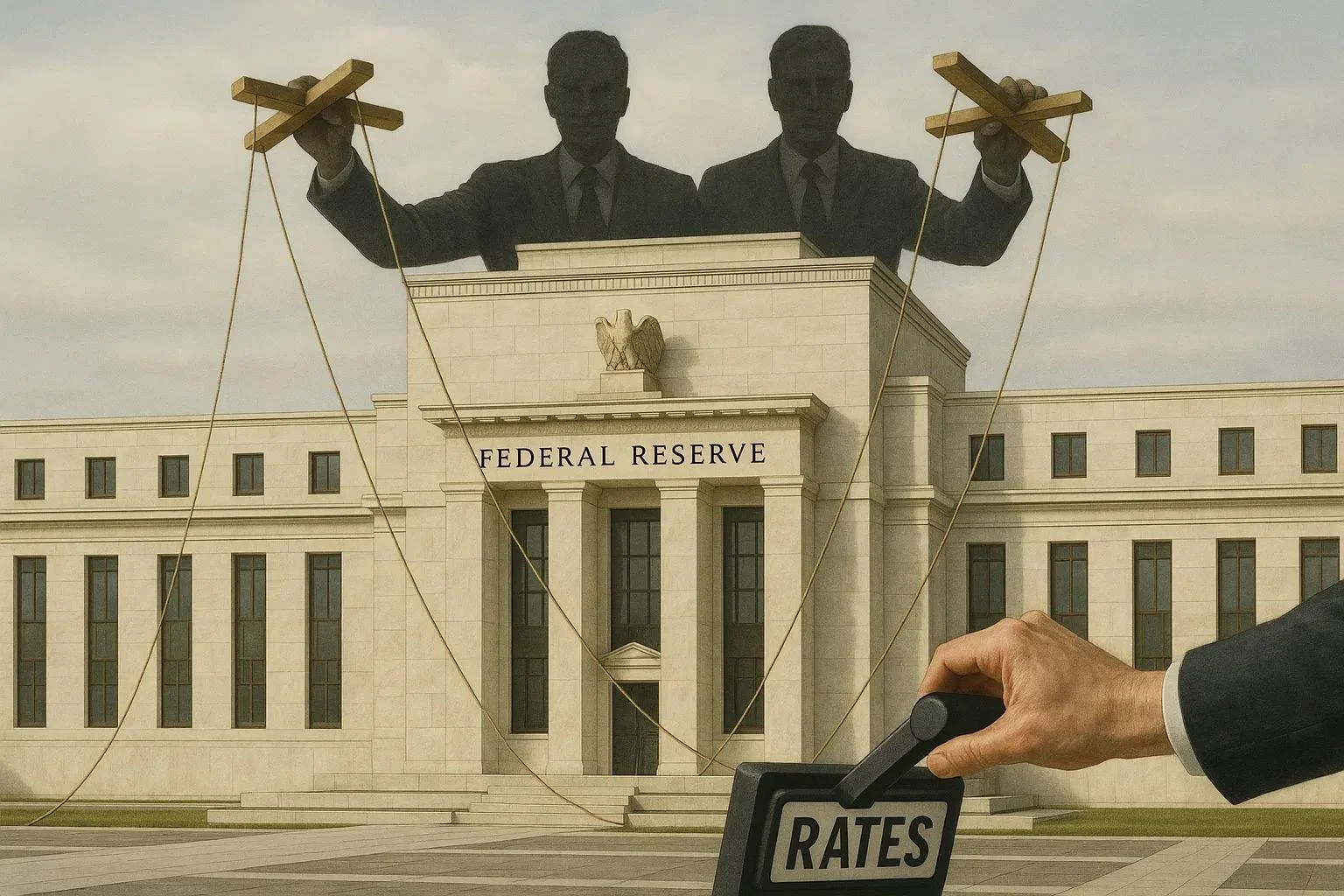
Most people think the Fed sets “the interest rate” for everything—mortgages, car loans, 10-year yields. But that’s not how it works. The Fed only sets a very narrow rate—the overnight lending rate between banks.
Everything else, from your mortgage to the government’s long-term borrowing costs, is determined by the bond market. And as America’s debt spirals past $37 trillion, the bond market—not the Fed—is in control.
This misunderstanding matters. Because when Treasury Secretary Bessent says he’s going to “get rates down,” what he really means is printing money.
That’s the only lever left: the Federal Reserve creates money electronically and uses it to buy government bonds.
The consequence of that is inflation: more money in the system means higher prices. Sometimes it shows up in financial assets—stocks, bonds, real estate—can also surge to record highs as a result of inflation. Other times inflation hits the grocery store, your utility bill, or your insurance premiums.
Lately, it’s been both. Inflation is everywhere.
But this administration is also openly floating the idea of a sovereign wealth fund—borrowing billions (or trillions) and putting that money directly into the stock market. Intel. Nvidia. Strategic stakes in American companies.
It’s not socialism, and it’s not free markets. It’s something in between: a blending of state and corporate power. Call it National Capitalism.
If that sounds far-fetched, remember—they’re already talking about taking a stake in Intel. Why would they stop there?
This administration is full of people whose entire background is borrowing massive sums of money at low interest, pouring it into enormous projects, and pocketing the spread.
There’s nothing wrong with that. That’s what they know. That’s what they do. Trump is a very successful real estate developer who has personally borrowed billions of dollars throughout his career.
So of course when they look at the economy, their instinct is to repeat the same playbook on a national scale—borrow cheap, buy big, and hope the gap between cost and return pays for everything.
But when the government itself becomes one of the biggest stock buyers, what happens to markets? They explode higher.
And you’re going to want to own assets when that happens.
This is the subject of today’s podcast.
We dive into:
Why the Fed’s “rate cuts” don’t control the 10-year or 30-year Treasury yields—and why the bond market is now in charge.
How the U.S. is spending $1.2 trillion a year just on interest payments, and why refinancing old debt at today’s higher rates keeps driving costs up.
The Fed’s true method of lowering rates: creating new money, buying bonds, and fueling asset bubbles—at the cost of more inflation.
The absurdity of how the US banking system works.
How every time the Fed “prints money” to bail out a crisis—9/11, 2008, the pandemic—it ends up inflating specific bubbles: housing, stocks, crypto, collectibles, and now consumer prices across the board.
And we wrap up with a quick look at Total Access—our highest level membership built around forging lasting relationships with other members in extraordinary settings. It combines world-class networking and internationalization strategies with unforgettable, once-in-a-lifetime travel experiences.
Right now, Total Access membership is open for a limited time. You can learn more here.
And you can listen to the full podcast here.
For the audio-only version, check out our online post here.
Finally, you can find the podcast transcript for your convenience, here.
To your freedom, James Hickman Co-Founder, Schiff Sovereign LLC
FRANK26….8-19-25….LOP NO
uesday Night Conference Call
FRANK26….8-19-25….LOP NO
This video is in Frank’s and his team’s opinion only
Frank’s team is Walkingstick, Eddie in Iraq and guests
Playback Number: 605-313-5163 PIN: 156996#
Tuesday Night Conference Call
FRANK26….8-19-25….LOP NO
This video is in Frank’s and his team’s opinion only
Frank’s team is Walkingstick, Eddie in Iraq and guests
Playback Number: 605-313-5163 PIN: 156996#
What Frank’s suit color’s mean…. FRANKS SUIT COLORS FOR CC'S..... WHITE = NEW INFO…. SILVER = INTEL FROZEN…. RED= HIGH ALERT… PURPLE=GUEST WITH US…. BLUE = AIR FORCE…. BLACK = GROUND/FF’S…. GREEN= MR OR FAB 4 ... GOLD = CHANGE… ORANGE=IMPLEMENTATION
Active Resistance to the Digital Financial Reset
Active Resistance to the Digital Financial Reset
Miles Harris: 8-18-2025
A major change is occurring in the global financial system. Governments and financial institutions describe this change as modernization, efficiency, or digital innovation.
In reality, it is a gradual shift of money, markets, and ownership records into centralized digital systems.
Active Resistance to the Digital Financial Reset
Miles Harris: 8-18-2025
A major change is occurring in the global financial system. Governments and financial institutions describe this change as modernization, efficiency, or digital innovation.
In reality, it is a gradual shift of money, markets, and ownership records into centralized digital systems.
These systems make assets visible in real time, programmable by policy, and subject to rules that can change without the consent of the owner.
Understanding this process is essential for anyone who wants to maintain control over their assets and plan for the future.
00:00 Intro
Legal & Regulatory Changes
Institutional & Infrastructure Developments
Digital Identity Integration
Engineered Liquidity
Events Policy Narratives
Control Layer Indicators
International coordination clues
Planning the Sequence of Actions
A Practical Monitoring System Conclusion
Americans Are Hoarding More Cash
Americans Are Hoarding More Cash, but not in checking or savings. Here are the accounts rewarding savers today
Danielle Antosz Sun, August 17, 2025 Moneywise
Consumer spending remains strong in the U.S., even as inflation holds at 2.7% and checking and savings balances decline. So, where’s the money coming from?
New research from JPMorgan Chase's Household Finances Pulse analysis may offer an answer.
Analyzing data from 4.7 million households, the study found that while traditional bank balances have stagnated, total cash reserves — including money market funds, brokerage accounts, and certificates of deposit (CDs) — are growing 3% to 5% annually in 2025.
Americans Are Hoarding More Cash, but not in checking or savings. Here are the accounts rewarding savers today
Danielle Antosz Sun, August 17, 2025 Moneywise
Consumer spending remains strong in the U.S., even as inflation holds at 2.7% and checking and savings balances decline. So, where’s the money coming from?
New research from JPMorgan Chase's Household Finances Pulse analysis may offer an answer.
Analyzing data from 4.7 million households, the study found that while traditional bank balances have stagnated, total cash reserves — including money market funds, brokerage accounts, and certificates of deposit (CDs) — are growing 3% to 5% annually in 2025.
The biggest gains are among lower-income households, with those in the lowest income quartile seeing 5% to 6% growth in total cash reserves.
This shift toward higher-yield accounts may help explain why consumer spending remains resilient, despite economic headwinds.
Where are Americans putting their money?
Instead of parking funds in checking or standard savings accounts, many households are turning to investment-style options with higher returns. If you're considering a similar move, here are a few of the most popular alternatives:
High-yield savings accounts (HYSAs): These work like traditional savings accounts but offer higher interest rates — often between 4% and 5% APY as of mid-2025 — often offered by online banks with lower overhead.
Certificates of deposit (CDs): CDs lock your money in for a fixed term in exchange for a guaranteed return. Rates vary by term but can exceed 4% for longer durations.
Money market accounts (MMAs): Offered by banks, MMAs combine savings features with limited check-writing abilities, FDIC insurance, and competitive yields — though often slightly below HYSAs.
Money market funds (MMFs): These are investment products, not bank accounts. While not FDIC-insured, they invest in low-risk, short-term securities and are considered a stable alternative to cash.
Brokerage accounts: These accounts allow you to invest in stocks, ETFs, and mutual funds. While more volatile, they offer higher long-term growth potential.
TO READ MORE: https://finance.yahoo.com/news/americans-hoarding-more-cash-not-210000368.html
Seeds of Wisdom RV and Economic Updates Tuesday Afternoon 8-19-25
Good Afternoon Dinar Recaps,
BRICS Meaning in Globalization: From Trade Bloc to Power Player
BRICS meaning in globalization reflects a major shift from Western-dominated trade systems toward a more multipolar world economy. What began as Goldman Sachs’ 2001 investment concept has evolved into a geopolitical force that now challenges traditional global power structures.
Today, BRICS—Brazil, Russia, India, China, and South Africa—controls 37.3% of global GDP and represents over 40% of the world’s population. With new members like Egypt, Ethiopia, Iran, and the UAE, the bloc is extending its influence across trade, politics, and energy.
Good Afternoon Dinar Recaps,
BRICS Meaning in Globalization: From Trade Bloc to Power Player
BRICS meaning in globalization reflects a major shift from Western-dominated trade systems toward a more multipolar world economy. What began as Goldman Sachs’ 2001 investment concept has evolved into a geopolitical force that now challenges traditional global power structures.
Today, BRICS—Brazil, Russia, India, China, and South Africa—controls 37.3% of global GDP and represents over 40% of the world’s population. With new members like Egypt, Ethiopia, Iran, and the UAE, the bloc is extending its influence across trade, politics, and energy.
Economic Foundation and Global Impact
The economic weight of BRICS is staggering:
China accounts for 19.05% of global GDP
India contributes 8.23% of global GDP
(Source: IMF)
This power is institutionalized through initiatives like the New Development Bank, which funds infrastructure across emerging markets.
An S&P Global analysis notes that the expanded BRICS could control nearly half of worldwide oil production. With Saudi Arabia’s potential inclusion, the bloc would become a true commodities superpower.
Political Coordination and Global Influence
Politically, BRICS has become a platform for resisting Western pressure. Trade tensions and U.S. tariffs have only deepened bloc unity.
Leaders like Brazil’s President Lula da Silva and China’s Xi Jinping continue to push for cooperation against unilateralism.
Professor Jayati Ghosh highlights U.S. inconsistency, noting that even the EU—like BRICS members—continues to purchase Russian oil.
Member Countries and South Africa’s Role
South Africa has leveraged BRICS to amplify Africa’s voice in global trade and reform agendas. The inclusion of Egypt and Ethiopia further strengthens continental representation in strategic platforms.
Chinese President Xi Jinping emphasized that adding new economies injects vitality, representativeness, and influence into BRICS cooperation. Currently, 23 countries have formally applied to join.
Future Direction and Currency Alternatives
BRICS is actively working on alternatives to the U.S. dollar, developing frameworks for bilateral trade in local currencies. Brazilian officials are also exploring the creation of a BRICS currency to reduce dollar dependency.
Beyond finance, BRICS is building cooperation in climate, health, energy, and digital economy initiatives, with the upcoming COP30 summit offering another platform for joint action.
Professor Ghosh notes that U.S. policy unpredictability makes long-term deals with Washington risky, pushing nations toward independent BRICS-led agreements.
Bottom Line: BRICS meaning in globalization has transformed from a trade bloc into a strategic power player, reshaping economics, energy, and geopolitics. With expansion underway and dollar alternatives rising, the bloc is setting the stage for a new global order.
@ Newshounds News™
Source: Watcher Guru
~~~~~~~~~
Seeds of Wisdom Team RV Currency Facts Youtube and Rumble
Newshound's News Telegram Room Link
Follow the Roadmap
Follow the Timeline
Seeds of Wisdom Team™ Website
Thank you Dinar Recaps
News, Rumors and Opinions Tuesday 8-19-2025
Note: All intel should be considered as "Rumors" until we receive official announcements ...and “Rates and Dates” could change anytime until we get to the banks/redemption centers.
RV Excerpts from the Restored Republic via a GCR: Update as of Tues. 19 August 2025
Compiled Tues. 19 August 2025 12:01 am EST by Judy Byington
This is the QFS. …QFS on Telegram:
The Quantum Financial System is (allegedly) live across the globe, dismantling the banking empires from the inside. Deutsche Bank, HSBC, and JP Morgan have (allegedly been stripped of authority.
Note: All intel should be considered as "Rumors" until we receive official announcements ...and “Rates and Dates” could change anytime until we get to the banks/redemption centers.
RV Excerpts from the Restored Republic via a GCR: Update as of Tues. 19 August 2025
Compiled Tues. 19 August 2025 12:01 am EST by Judy Byington
This is the QFS. …QFS on Telegram:
The Quantum Financial System is (allegedly) live across the globe, dismantling the banking empires from the inside. Deutsche Bank, HSBC, and JP Morgan have (allegedly been stripped of authority.
Mastercard and VISA are(allegedly collapsing. QFS debit cards, armed with quantum encryption, are (allegedly replacing them. PayPal and Stripe are next.
Every citizen already has a QFS account. It is (allegedly linked to their national ID and waiting for activation. At the appointed time, a secured message through the Quantum Communication Network will (allegedly trigger the switch.
Fiat money dead: the dollar, the euro, the yen With the petrodollar destroyed, the balance of power has shifted. The new financial order is (allegedly anchored in gold, silver, and precious metals. Rainbow Tokens — asset-backed, incorruptible, immune to cabal manipulation — now stand at the foundation.
Central banks in more than sixty nations have quietly (allegedly stockpiled gold for years, preparing for this transition.
Zim Bonds are now at the heart of global wealth redistribution.
Redemption Centers (allegedly operate under military command. What was once hoarded by elites is being redirected into humanitarian projects.
~~~~~~~~~~~~
Mon. 18 Aug. 2025 Nesara Gesara Rollout Notice. …Mr. Pool https://x.com/MrPool_QQ/status/1956978275059663342?t=k0nAWlKqIdopgQcmyLj7CQ&s=03
Treasury begins gold and commodity peg alignment; Dollar moves to asset basis.
Debt Jubilee protocols tested in three states; interest arrears marked fulfilled.
QFS Settlement rail handles Federal payrolls and pensions; public wallets Phase Two
~~~~~~~~~~
Mon. 18 Aug. 2025 BOOM: TRUMP AND PUTIN JUST TRIGGERED GESARA FROM A U.S. MILITARY BASE …Wikileaks Database on Telegram
The August 15 summit at Joint Base Elmendorf–Richardson in Alaska was not a photo-op. President Trump and Vladamir Putin (allegedly) met under military protection, far from globalist interference, to finalize the opening phases of GESARA — the gold-backed system that will (allegedly) dismantle the empire of debt, fraud, and endless war.
This wasn’t diplomacy. It was the public unveiling of a military operation that has been quietly in motion for years.
Debt erasure has already (allegedly) begun quietly across multiple states under the cover of “legal corrections” and “settlement programs.” Over $400 billion in student loans and mortgages have been marked “in dispute” inside federal databases.
IRS field agents are (allegedly) being reassigned to audit divisions reporting directly to Space Force contractors.
Major banks(allegedly) undergo forced realignments as their fiat credit systems collapse. This isn’t theory. It’s GESARA’s debt jubilee unfolding step by step.
At the same time, over 1,300 institutions are already (allegedly) running QFS compliance tests. New “federal ID systems” being issued are in reality Quantum Access Cards — sovereign wallets tied to asset-backed digital currency.
Read full post here: https://dinarchronicles.com/2025/08/19/restored-republic-via-a-gcr-update-as-of-august-19-2025/
************
Courtesy of Dinar Guru: https://www.dinarguru.com/
Jeff Across this weekend the central bank has been putting a huge emphasis on banking reforms. Why is that? Because Iraq's about to revalue the currency and get back on the world stage...The banking reforms are coming forward because they're ready and timed with the rate changing...
Frank26 The monetary reform education process is being introduced by something they're calling a 'mechanism'. It's my strong opinion that the 'mechanism' is what we call Article 12-2c [of the budget] because 12-2c contains IMO the new exchange rate that they've been using/going to use for the future...
Militia Man Article: "Rafidain Bank confirms: Our agreement with K2 Integrity puts Iraq on the map of the global financial system." The focus on a qualitative leap is likely due to the efforts taken by Iraq regarding compliance, anti-money laundering (AML), counter-terrorism financing (CML), etc...Iraq will not be isolated banking wise from the international system any longer...K2s partnership supports that Iraq is going to make a change to its currency...Completion looks to be set for show time.
************
Who's The Big Gold Buyer In The US | Andy Schectman
Liberty and Finance: 8-18-2025
Andy Schechtman of Miles Franklin Precious Metals reveals who is truly behind the massive gold buying in the US.
He argues that the buyers aren't everyday investors, but rather powerful institutions and possibly even the U.S. government itself.
Schechtman analyzes the unprecedented flow of physical gold out of exchanges, contrasting this with a public that is at record-high speculation in the stock market.
This crucial divergence, he explains, signals that those with inside knowledge are preparing for an economic reckoning and a continued de-dollarization trend.
Tune in to understand why gold is the asset of choice for the world's most informed players and what that means for your financial future.
INTERVIEW TIMELINE:
0:00 Intro
1:30 Africa's resources
12:49 Market update
24:00 Who's stockpiling gold?
Tuesday Coffee with MarkZ. 08/19/2025
Tuesday Coffee with MarkZ. 08/19/2025
Some highlights by PDK-Not verbatim
MarkZ Disclaimer: Please consider everything on this call as my opinion. People who take notes do not catch everything and its best to watch the video so that you get everything in context. Be sure to consult a professional for any financial decisions
Member: Happy terrific Tuesday
Member: Any RV news today Mark???????????
Tuesday Coffee with MarkZ. 08/19/2025
Some highlights by PDK-Not verbatim
MarkZ Disclaimer: Please consider everything on this call as my opinion. People who take notes do not catch everything and its best to watch the video so that you get everything in context. Be sure to consult a professional for any financial decisions
Member: Happy terrific Tuesday
Member: Any RV news today Mark???????????
MZ: Bond side still very quiet. Group side is still very quiet. Not expecting any news on this front until later this evening.
Member: Will we not Rv until we’re on the Gold standard??
Member: I do find it interesting that POTUS is covering the oval in gold. Right in our face
Member: when they go back to a gold standard, we'll get our purchasing power back
Member: My bank is getting all new ATM machines. They are called ITM’s
MZ: I love seeing all the banking changes.
Member: Just got a call from Wells Fargo, asking if I'd like to come in ans speak with a wealth manager one day.
Member: does the RV have anything to do with Iraq getting a digital dinar?
MZ: Actually the digital dinar has a lot to do with Iraq having an RV. It’s a mechanism for inner banking ect….they told us years ago the digital dinar is important for the revaluation.
Member: Given Iraqs trading partnership with Iran…could Iran RV too?
MZ: I know the goal is to have Iran RV at the same time. It will make regional stability much better. But is Iran ready for those changes? My gut says they will both go at the same time.
Member: Iran has already said publicly that they are dropping 4 zeros.
Member: A source from the KRG Council of Ministers tells Zoom News that the KRG Ministry of Finance will transfer 120 billion dinars to Baghdad tomorrow.
MZ: That is one of the breakthrough stories I was waiting on today. Thank you. We may be almost off “stuck”
Member: I wonder if the new IQD rate is still hidden in the budget tables?
MZ: “Before it’s to late: Sudani calls on the government to send the budget tables immediately” they should have them before the Nov. elections. I believe they have been delaued because they have the new rate in them.
Member: So ..theoretically when they (Al Sudani) says to release the budget tables, historically, could that mean it’s already been released & we’re just waiting for the news cycle to catch up?
Member: Maybe Vietnam, Brazil, or say Saudi Arabia just say We are RVing and force Iraq to go as well?
MZ: IMO if all these countries went at the same time it would force the western banking system to capitulate.
Member: IMO The corrupt politicians in Iraq are trying to to hold on to the gravy train
Member: Frank said the corrupt Iraqi parliament has been completely side lined. Irrelevant now, no more hold ups, just waiting for the go.
Member: Do you think the US is in charge of the RV now Mark? Will we have to wait for peace in Russia and Ukraine?
MZ: I don’t think we have to wait for peace over there…..I think most of the peace will be announced right after the RV. .
Member: I heard at the Trump-Putin meeting Gesara was started
MZ: That is highly possible with as close as it appears.
Member: Has anyone else noticed how much Vietnam Banking has been in the news???
Member: I heard banks are seriously watching Iraq progress
Member: Events all coming together to a planned Event Intersection. A single event to push this forward to the finish
The mushroom ladies join the stream today. Please listen to the replay for their information
THE CONTENT IN THIS PODCAST IS FOR GENERAL & EDUCATIONAL PURPOSES ONLY&NOT INTENDED TO PROVIDE ANY PROFESSIONAL, FINANCIAL OR LEGAL ADVICE. PLEASE CONSIDER EVERYTHING DISCUSSED IN MARKZ’S OPINION ONLY
FOLLOW MARKZ : TWITTER . https://twitter.com/originalmarkz?s=21. TRUTH SOCIAL . https://truthsocial.com/@theoriginalm...
Mod: MarkZ "Back To Basics" Pre-Recorded Call" for Newbies 10-19-2022 ) https://www.youtube.com/watch?v=37oILmAlptM
MARKZ DAILY LINKS: https://theoriginalmarkz.com/home/
Note from PDK: Please listen to the replay for all the details and entire stream….I do not transcribe political opinions, medical opinions or many guests on this stream……just RV/currency related topics.
ZESTER'S LINK TREE: https://linktr.ee/CrazyCryptonaut
THANKS FOR JOINING. HAVE A BLESSED DAY! SEE YOU ALL TUESDAY THROUGH THURSDAY EVENINGS FOR NEWS @ 7:00 PM EST ~ UNLESS BREAKING NEWS HAPPENS! FROM NOW ON NO MORE NIGHTLY PODCASTS ON MONDAYS AND FRIDAYS
MilitiaMan and Crew: Iraq Dinar News Update- Banks-Oil-Salaries-Budget-EXR
MilitiaMan and Crew: Iraq Dinar News Update- Banks-Oil-Salaries-Budget-EXR
8-19-2025
The Crew: Samson, PompeyPeter, Petra, Daytrader, Sunkissed, GIGI and Militia Man
Be sure to listen to full video for all the news……..
MilitiaMan and Crew: Iraq Dinar News Update- Banks-Oil-Salaries-Budget-EXR
8-19-2025
The Crew: Samson, PompeyPeter, Petra, Daytrader, Sunkissed, GIGI and Militia Man
Be sure to listen to full video for all the news……..