
Thank you to all the subscribers to our Early Access program…we thank you for your continued support.
We are excited to offer this new service to keep you informed and up-to-date on the latest Dinar and currency news.
Basel 3, The BRICS & Financial Disorder
Basel 3, The BRICS & Financial Disorder
Miles Harris: 6-23-2025
As Western regulators tighten liquidity rules under Basel III, gold—the oldest store of value—has been quietly sidelined from modern banking.
Yet at the same time, BRICS nations are accumulating it with strategic intent. Is this a regulatory oversight... or part of a deeper global shift?
In this analysis, we’ll explore how Basel III shapes financial behaviour in the West—while BRICS nations operate on an entirely different playbook.
Basel 3, The BRICS & Financial Disorder
Miles Harris: 6-23-2025
As Western regulators tighten liquidity rules under Basel III, gold—the oldest store of value—has been quietly sidelined from modern banking.
Yet at the same time, BRICS nations are accumulating it with strategic intent. Is this a regulatory oversight... or part of a deeper global shift?
In this analysis, we’ll explore how Basel III shapes financial behaviour in the West—while BRICS nations operate on an entirely different playbook.
What emerges is not just a regulatory gap, but a structural divergence that may well redefine the future of money.
00:00 Intro
00:38 Basel 3 Technicalities
03:56 Gold: Capital Efficient; Liquidity Inefficient
04:47 Basel III: Scope & Application
05:36 Opaque Channels Beyond Basel
07:14 The East West Regulatory Divergence
Seeds of Wisdom RV and Economic Updates Tuesday Morning 6-24-25
Good Morning Dinar Recaps,
Iran Stands Firm as BRICS Calls US Strikes a Global Turning Point
Iran’s defiance in the face of US military action strengthens BRICS unity, marks a pivotal moment in the global economic and geopolitical order.
Amid escalating tensions, Iranian President Masoud Pezeshkian has emerged as a symbol of resistance, leading mass protests in Tehran following U.S. military strikes on Iran’s nuclear facilities in Isfahan, Natanz, and Fordo. In response, the BRICS bloc has rallied behind Iran, framing the attacks as a turning point in Western aggression against emerging powers.
Good Morning Dinar Recaps,
Iran Stands Firm as BRICS Calls US Strikes a Global Turning Point
Iran’s defiance in the face of US military action strengthens BRICS unity, marks a pivotal moment in the global economic and geopolitical order.
Amid escalating tensions, Iranian President Masoud Pezeshkian has emerged as a symbol of resistance, leading mass protests in Tehran following U.S. military strikes on Iran’s nuclear facilities in Isfahan, Natanz, and Fordo. In response, the BRICS bloc has rallied behind Iran, framing the attacks as a turning point in Western aggression against emerging powers.
▪️ The U.S. actions have been denounced as violations of international law by BRICS nations.
▪️ Iran’s resilience has reinforced BRICS unity and accelerated its push toward a multipolar world order.
▪️ BRICS views Iran’s handling of sanctions and pressure as a model for financial independence and strategic realignment.
A Defiant Iran Within a Strengthened BRICS Framework
Iran's president and foreign ministry have presented a firm front, signaling that the U.S. attack has only deepened Iran’s commitment to BRICS values.
▪️ Iranian Foreign Minister Abbas Araghchi accused the U.S. of deciding to “blow up diplomacy” and challenged calls for renewed negotiations:
“How can Iran return to something it never left?”
▪️ In Istanbul, Araghchi declared the U.S. and Israel had crossed “a big red line”:
“There is no red line that they have not crossed.”
▪️ Iran’s response aligns with BRICS’ multipolar vision and reinforces its stance on sovereignty, self-determination, and non-interference.
Russia’s Condemnation Signals BRICS Cohesion
Russia swiftly condemned the strikes, reinforcing the growing strategic alignment within the bloc.
▪️ The Russian Foreign Ministry stated the U.S. had violated the UN Charter and international law:
“This reckless decision… constitutes a blatant violation of international law, the UN Charter, and relevant UN Security Council resolutions.”
▪️ Moscow’s response places BRICS in direct opposition to unilateral U.S. military action, deepening its appeal among developing nations seeking alternatives to Western institutions.
Economic Reorientation: Iran's Sanctions and BRICS Integration
Iran’s economy, long impacted by U.S.-led sanctions, is undergoing structural realignment through BRICS support.
▪️ Chinese purchases of Iranian oil using yuan, and Russian technology transfers, are creating practical alternatives to the dollar-based system.
▪️ Iran is becoming a case study in how emerging economies can resist Western financial pressure by joining new global partnerships.
▪️ BRICS support extends beyond diplomacy, offering concrete economic lifelines and access to alternative markets.
Regional Impact and Ceasefire
While a ceasefire brokered via Qatar has paused hostilities, tensions remain high.
▪️ Former President Trump stated Iran “must now agree to end this war,” while President Pezeshkian labeled the U.S. “the main factor behind” Israel’s campaign.
▪️ Iranian forces reportedly continued military operations until 4 a.m., demonstrating readiness and resolve.
Strategic and Geopolitical Implications
The crisis has crystalized BRICS’ long-term goals:
▪️ Sovereignty, non-interference, and financial independence are now strategic imperatives.
▪️ The economic power shift from West to East continues gaining momentum, driven by BRICS' expanded influence and appeal.
▪️ New members are increasingly attracted to BRICS, not just for economic benefits, but for protection from Western-led interventions.
“The BRICS response to U.S. strikes will likely strengthen, not weaken, the alliance. This is a watershed moment for global realignment.”
Conclusion: A New Global Order Takes Shape
The unified BRICS stance following U.S. strikes on Iran marks a defining moment in the shift toward a multipolar world. As Iran models how resilience and realignment can neutralize Western leverage, other nations may follow, accelerating the de-dollarization movement and reinforcing BRICS as a viable global counterweight.
@ Newshounds News™
Source: Watcher Guru
~~~~~~~~~
Seeds of Wisdom Team RV Currency Facts Youtube and Rumble
Newshound's News Telegram Room Link
Follow the Roadmap
Follow the Timeline
Seeds of Wisdom Team™ Website
Thank you Dinar Recaps
Silver Is Set to Explode, Gold Has Surpassed the Euro - We’re Just Getting Started
Silver Is Set to Explode, Gold Has Surpassed the Euro - We’re Just Getting Started | Randy Smallwood
Kitco News: 6-23-2025
Silver is trading above $36, and Wheaton Precious Metals CEO Randy Smallwood says “it’s the most explosive metal right now.”
In this Kitco News interview, Smallwood explains why the setup for silver and gold is the strongest he’s seen in 20 years, how central banks are driving a structural shift in global reserves, and why Wheaton is positioned to grow 40% without lifting a shovel.
Silver Is Set to Explode, Gold Has Surpassed the Euro - We’re Just Getting Started | Randy Smallwood
Kitco News: 6-23-2025
Silver is trading above $36, and Wheaton Precious Metals CEO Randy Smallwood says “it’s the most explosive metal right now.”
In this Kitco News interview, Smallwood explains why the setup for silver and gold is the strongest he’s seen in 20 years, how central banks are driving a structural shift in global reserves, and why Wheaton is positioned to grow 40% without lifting a shovel.
Kitco News anchor Jeremy Szafron also asks about the Middle East escalation, the new ECB data showing gold has overtaken the euro as the world’s second-largest reserve asset, and whether the U.S. dollar’s dominance is at risk.
Wheaton, a $40 billion streaming and royalty firm, has deals across gold, silver, copper, and platinum group metals.
Smallwood breaks down current strategy, macro tailwinds, and where long-term value is hiding in the precious metals space.
Key topics:
-Silver’s explosive upside and price potential
-Why gold has overtaken the euro in global FX reserves
-Central bank gold buying led by China, India, Turkey
-Wheaton’s 40% projected growth and no-capex model
-De-dollarization and global trust erosion in fiat
-Why this is the best setup for metals in decades
00:00 Introduction and Current Middle East Tensions
01:05 Market Reactions to Geopolitical Events
01:35 Gold's Role in Global Instability
02:13 Interview with Randy Smallwood: Precious Metals Insights
04:03 Gold vs. US Dollar: A Deeper Analysis
08:17 Silver Market Trends and Predictions
12:07 Wheaton Precious Metals' Strategic Approach
19:25 Global Resource Race and Policy Challenges
28:10 Conclusion
More News, Rumors and Opinions Monday PM 6-23-2025
Gold Telegraph: The Strait of Hormuz
6-22-2025
BREAKING NEWS: IRAN PARLIAMENT REPORTEDLY BACKS CLOSING STRAIT OF HORMUZ
Big.
“About 30 percent of global seaborne oil shipments pass through the narrow passage…”
Gold Telegraph: The Strait of Hormuz
6-22-2025
BREAKING NEWS: IRAN PARLIAMENT REPORTEDLY BACKS CLOSING STRAIT OF HORMUZ
Big.
“About 30 percent of global seaborne oil shipments pass through the narrow passage…”
Source: https://www.politico.eu/article/iran-reportedly-moves-shut-strait-hormuz-us-attacks/
The United States is pressuring China to persuade Iran not to shut down the Strait of Hormuz. Unbelievable but this is real.
BREAKING NEWS: TWO SUPERTANKERS, EACH CAPABLE OF HAULING ABOUT 2 MILLION BARRELS OF CRUDE, U-TURNED IN THE STRAIT OF HORMUZ
Energy…
“The Coswisdom Lake and South Loyalty both entered the waterway and abruptly changed course…”
BREAKING NEWS: GERMANY AND ITALY ARE FACING CALLS TO MOVE THEIR GOLD OUT OF THE UNITED STATES
The pressure is on.
“Germany and Italy hold the world’s second- and third-largest national gold reserves…”
Source: https://www.ft.com/content/e39390cc-ea02-4197-843a-1e4c242422cc
Source(s): https://x.com/GoldTelegraph_/status/1936835226136694906
https://dinarchronicles.com/2025/06/23/gold-telegraph-the-strait-of-hormuz/
************
Courtesy of Dinar Guru: https://www.dinarguru.com/
Militia Man With Middle East tensions, what we're seeing in the news on a daily basis...gives a little bit of anxiety...to a lot of people...I understand it...But the ultimate thing is commerce and trade still keeps going. That cog is still going to turn...On a good note Iraq is still pushing forward. We have evidence of that...The borders are still open. They're still doing commercial trade through trading partners. They're still focusing in on progress.
Frank26 What do we need in order for the Iraqi dinar to finally show the world it does have the potential, right, support to have value? According to Dr. Shabibi...security and stability. What was born yesterday in the Middle East? ...Do we have security and stability in the Middle East to bring forth the new exchange rate? No. What is happening is the start. It is the start of the security and stability...It was born. We don't have it yet...It's coming...We are on the cusp.
************
"Gold AND the Dollar Could Rise Simultaneously" - Brent Johnson w/ Mike Maloney
6-23-2025
Find Brent at SantiagoCapital.com Mike Maloney recently spoke at George Gammon's Rebel Capitalist event in Orlando.
While there, he was able to catch up with his friend (and once neighbor!) Brent Johnson. Enjoy this behind the scenes discussion where Mike quizzes Brent on his thoughts about gold, the US dollar, China, the 'Dollar Milkshake Theory' and what lies ahead for the global economy.
SILVER ALERT! BRACE FOR SILVER SLAM as COMEX Silver Riggers Need to Close July Shorts!
(Bix Weir) 6-23-2025
There are 5 trading days left before the start of the COMEX July delivery month and the Silver Riggers are currently short 350M ounces! Will they roll over the majority of contracts or will this be the END of their game? We will find out in 5 days!
Why the Treasury is Buying its Own Debt and What it means for Gold
Why the Treasury is Buying its Own Debt and What it means for Gold
APMEX: 6-22-2025
The financial world is constantly evolving, with power players making moves that can ripple through the global economy. One such move recently made by the U.S. Treasury has raised eyebrows and sparked debate: a record-setting buyback of its own debt.
While on the surface it might appear as a straightforward attempt to manage debt, a deeper analysis suggests something far more complex might be at play. Could this be a hidden financial intervention designed to stabilize the dollar in a world increasingly questioning its dominance?
Why the Treasury is Buying its Own Debt and What it means for Gold
APMEX: 6-22-2025
The financial world is constantly evolving, with power players making moves that can ripple through the global economy. One such move recently made by the U.S. Treasury has raised eyebrows and sparked debate: a record-setting buyback of its own debt.
While on the surface it might appear as a straightforward attempt to manage debt, a deeper analysis suggests something far more complex might be at play. Could this be a hidden financial intervention designed to stabilize the dollar in a world increasingly questioning its dominance?
APMEX, a leading precious metals retailer, recently released a video breaking down the multifaceted implications of this Treasury action. They argue that it’s crucial to look beyond the immediate headlines and consider the broader context of inflation, geopolitical tensions, and the growing trend of de-dollarization.
The initial reaction to the Treasury’s buyback might be suspicion. Does this action resemble a bailout, propping up struggling banks and financial institutions burdened by U.S. debt?
While that might be a contributing factor, APMEX suggests a more strategic motive: bolstering demand for the U.S. dollar in the face of weakening global confidence.
The global landscape has been shifting dramatically. Inflation continues to plague economies worldwide, forcing central banks to grapple with rising interest rates and potentially triggering recessions. Concurrently, geopolitical instability, fueled by conflicts and escalating tensions, is creating uncertainty and pushing nations to reconsider their reliance on the dollar for international trade and reserves.
This shift away from the dollar, known as de-dollarization, is perhaps the most significant pressure facing U.S. institutions. Countries like Russia, China, and others are actively seeking alternative currencies for trade, challenging the dollar’s longstanding role as the world’s reserve currency.
This trend, if continued, could significantly weaken the dollar’s value and impact the U.S. economy.
The Treasury’s debt buyback, according to APMEX, can be seen as a proactive attempt to combat this erosion of confidence. By reducing the supply of U.S. debt in the market, the Treasury aims to increase its demand, thereby supporting the dollar’s value and maintaining its global influence.
The U.S. Treasury’s debt buyback might be more than just a debt management strategy. It could be a calculated maneuver to shore up the dollar’s value in the face of mounting global pressures.
By understanding the underlying factors driving this action, investors can better navigate the evolving financial landscape and make informed decisions to protect their wealth.
The spotlight is on gold and silver, but the real story is how the complex relationship between inflation, geopolitics and de-dollarization plays out on a global stage.
Seeds of Wisdom RV and Economic Updates Monday Morning 6-23-25
Good Morning Dinar Recaps,
Senator Lummis’ RISE Act: A Step Toward AI Accountability or a Shield for Developers?
The RISE Act aims to define liability boundaries for AI in professional settings—but critics say it leaves too much unsaid and too many developers untouched.
A “Timely and Needed” Start—But Is It Enough?
Senator Cynthia Lummis introduced the Responsible Innovation and Safe Expertise (RISE) Act of 2025, which seeks to define civil liability protections for AI developers in professional settings like healthcare, law, and finance. While some view the bill as an essential first step, others are concerned that it places too much risk on professionals and not enough responsibility on developers.
Good Morning Dinar Recaps,
Senator Lummis’ RISE Act: A Step Toward AI Accountability or a Shield for Developers?
The RISE Act aims to define liability boundaries for AI in professional settings—but critics say it leaves too much unsaid and too many developers untouched.
A “Timely and Needed” Start—But Is It Enough?
Senator Cynthia Lummis introduced the Responsible Innovation and Safe Expertise (RISE) Act of 2025, which seeks to define civil liability protections for AI developers in professional settings like healthcare, law, and finance. While some view the bill as an essential first step, others are concerned that it places too much risk on professionals and not enough responsibility on developers.
Lummis calls it the nation’s “first targeted liability reform legislation for professional-grade AI.” But critics argue that the bill protects AI creators more than the users or the public.
“It puts the bulk of the burden of risk on ‘learned professionals’… and provides [developers] with broad immunity otherwise,” said Hamid Ekbia, professor at Syracuse University.
What the RISE Act Proposes
AI developers would be shielded from certain civil lawsuits unless negligence or intent is proven.
Developers would be required to publish model specifications (e.g., model cards), enabling professionals to make informed decisions.
It does not address use cases where AI interacts directly with consumers, including vulnerable groups like minors.
The bill is narrow in scope, focusing primarily on AI used by professionals. Cases like a Florida teen’s suicide after extended chatbot interaction are not covered.
Critics Warn of a “Giveaway” to Big Tech
Platforms such as the Democratic Underground have labeled the bill a potential “giveaway” to AI companies looking to evade accountability.
However, legal experts like Felix Shipkevich argue the bill is not overly lenient but “rational,” especially considering the unpredictability of large language models:
“Without some form of protection, developers could face limitless exposure for outputs they have no practical way of controlling,” he said.
Transparency: A Missing Link?
The AI Futures Project, a nonprofit consulted during the bill’s drafting, supports the bill's intent but criticizes its weak transparency provisions. Executive Director Daniel Kokotajlo stated:
“The public deserves to know what goals, values, agendas, biases, instructions, etc., companies are attempting to give to powerful AI systems… this bill does not go far enough.”
He also warns companies can simply accept liability instead of complying with transparency rules, making key safeguards optional.
A U.S. Risk-Based Approach vs EU’s Rights-Based Model
The RISE Act follows a risk-based approach, emphasizing documentation and oversight, rather than providing explicit legal rights to users. This differs sharply from the EU’s rights-based AI framework, which empowers individuals—particularly vulnerable populations.
The EU initially proposed an AI liability directive in 2022 but withdrew it in 2025, reportedly due to industry lobbying, leaving the bloc’s liability stance in flux.
“AI can create new kinds of potential harms,” noted Ryan Abbott, professor of law and medicine at the University of Surrey. “The healthcare arena is going to be particularly challenging.”
Abbott emphasized emerging evidence that AI-only systems might outperform “human-in-the-loop” models in certain medical scenarios—raising thorny liability questions.
A Constructive Beginning, Not the Final Word
Policy experts see potential if the bill evolves. Justin Bullock of Americans for Responsible Innovation (ARI) said the act is a “constructive first step,” but warned:
“Publishing model cards without robust third-party auditing and risk assessments may give a false sense of security.”
Similarly, Shipkevich believes the RISE Act could serve as a foundation for balanced AI oversight, but only if modified to include stronger transparency and risk-management requirements.
What’s Next?
If enacted, the RISE Act would take effect on December 1, 2025. In the meantime, public debate continues over whether the bill prioritizes innovation over accountability, or if it's simply the first draft of a more comprehensive AI regulatory framework.
@ Newshounds News™
Source: Cointelegraph
~~~~~~~~~
Coinbase Secures MiCA License via Luxembourg to Cement European Expansion
The U.S.-based crypto giant gains regulatory clarity across all 27 EU member states under the MiCA framework.
Coinbase has officially secured a MiCA license in Luxembourg, marking a major step in its European growth strategy. The license, granted by Luxembourg’s Commission de Surveillance du Secteur Financier (CSSF), allows the exchange to offer its full suite of crypto services across all 27 European Union member states.
The approval effectively designates Luxembourg as Coinbase’s regulatory hub for Europe under the Markets in Crypto-Assets (MiCA) regime.
"Now, with MiCA, we're uniting these efforts under a single framework, enabling millions of Europeans to access regulated, trusted, and secure crypto services," Coinbase said in a Friday statement.
MiCA: A Game-Changer for EU Crypto Regulation
MiCA, which came into full effect at the end of 2024, provides the EU’s first comprehensive regulatory framework for crypto assets, covering everything from stablecoins and exchanges to custody and consumer protection.
Coinbase had already secured regulatory licenses in Germany, France, Ireland, Italy, the Netherlands, and Spain—but the MiCA license consolidates these approvals under one EU-wide structure, simplifying operations and compliance.
Coinbase Isn’t Alone in the Race
Other major crypto firms are also making moves in the region under the MiCA regime:
Gemini, the exchange founded by Cameron and Tyler Winklevoss, is in the final stages of securing a MiCA license in Malta. The company submitted its application in January 2025.
OKX, another global exchange, has similarly chosen Malta as its MiCA operational base.
A New Chapter for Crypto in Europe
With regulatory certainty now in place across the EU, Coinbase and its competitors are positioning themselves for a new wave of crypto adoption in Europe, where MiCA is expected to serve as a model for global crypto regulation.
@ Newshounds News™
Source: The Block
~~~~~~~~~
BRICS Bank Issues $2.1 Billion in Local Currency Loans as De-Dollarization Push Accelerates
The New Development Bank boosts non-dollar financing, with 22% of disbursements now in national currencies.
The New Development Bank (NDB)—commonly known as the BRICS Bank—has disbursed $2.1 billion worth of loans in local currencies, part of a broader effort to reduce reliance on the U.S. dollar. The move reflects the bloc’s response to ongoing Western sanctions, particularly those levied against Russia since 2022.
According to newly released figures, the BRICS Bank lent a total of nearly $10 billion, with 22% of that amount issued in currencies such as the Chinese yuan and South African rand.
The NDB plans to increase local currency lending to 30% by the end of 2026, aiming to surpass $3 billion in de-dollarized loans.
De-Dollarization in Action: China, South Africa, and India Take Lead
The Chinese yuan accounted for $1.8 billion of the local currency loans.
The South African rand was used for loans totaling $284 million.
The Indian rupee is next in line, with preparations underway for rupee-based loan disbursements starting in 2026.
This marks a significant evolution in the BRICS financial strategy, as more countries in Africa and Southeast Asia increasingly accept national currencies to avoid costly foreign exchange conversions.
U.S. Sanctions Spur Shift Toward Financial Sovereignty
The NDB’s pivot was accelerated after U.S. sanctions on Russia in 2022, imposed in response to the war in Ukraine. The sanctions remain in place through 2025, even under the Trump administration, reinforcing the alliance's motivation to find alternative financial mechanisms.
“The BRICS bank is not just lending money—it’s building a foundation for sovereign economic cooperation, independent of Western financial pressure,” analysts say.
NDB’s Growing Influence
With Russia actively collaborating with the NDB on managing finances through local currencies, the bank is becoming a critical vehicle for BRICS’ broader economic strategy. Its policies signal growing monetary coordination among member nations and challenge the U.S. dollar’s long-standing dominance in global trade and finance.
@ Newshounds News™
Source: Watcher Guru
~~~~~~~~~
Seeds of Wisdom Team RV Currency Facts Youtube and Rumble
Newshound's News Telegram Room Link
Follow the Roadmap
Follow the Timeline
Seeds of Wisdom Team™ Website
Thank you Dinar Recaps
Seeds of Wisdom RV and Economic Updates Sunday Afternoon 6-22-25
Good Afternoon Dinar Recaps,
Texas Governor Greg Abbott Signs Strategic Bitcoin Reserve Bill Into Law
Texas becomes the first U.S. state to establish a publicly-funded, stand-alone Bitcoin reserve.
Texas Governor Greg Abbott has signed a groundbreaking piece of legislation into law, making Texas the third U.S. state to formally establish a strategic Bitcoin reserve, following in the footsteps of Arizona and New Hampshire.
Good Afternoon Dinar Recaps,
Texas Governor Greg Abbott Signs Strategic Bitcoin Reserve Bill Into Law
Texas becomes the first U.S. state to establish a publicly-funded, stand-alone Bitcoin reserve.
Texas Governor Greg Abbott has signed a groundbreaking piece of legislation into law, making Texas the third U.S. state to formally establish a strategic Bitcoin reserve, following in the footsteps of Arizona and New Hampshire.
However, Texas distinguishes itself by creating the first stand-alone, publicly funded Bitcoin reserve, independent of the state treasury. The newly enacted Senate Bill 21 (SB 21) assigns oversight of the reserve to the Texas Comptroller of Public Accounts, Glenn Hegar, rather than the state’s general financial administration.
“We can buy land, we can buy gold; I think the state of Texas should have the option of evaluating the best performing asset over the last 10 years,” — State Senator Charles Schwertner, bill author.
In tandem, House Bill 4488 (HB 4488) was also signed into law. This measure insulates the Bitcoin reserve—and other designated state funds—from the state treasury’s routine ‘fund-sweeps’ into general revenue. The law also guarantees the legal existence of the reserve, even if no Bitcoin is purchased before the 2026 fiscal deadline.
Strategic Investment on the Horizon
The Texas Blockchain Council expects the Lone Star State to commit significant capital to the fund. Its founder and president, Lee Bratcher, stated that the investment would likely reach tens of millions of dollars:
“While it sounds significant, it is a very modest amount for a state the size of Texas,”
— Lee Bratcher, Texas Blockchain Council.
Bratcher emphasized that all investment decisions—regarding how much Bitcoin to purchase and when—will be made solely by professionals at the Comptroller’s office, following standard institutional investment practices.
A Quiet but Symbolic Move
Notably, neither SB 21 nor HB 4488 were featured in the Governor’s official press release highlighting 16 “critical” new laws. Abbott signed a total of 334 bills on Saturday.
Despite its low-profile announcement, the legislation marks a strategic shift in the financial positioning of one of America’s largest and most economically influential states. Analysts say this could spark broader state-level crypto adoption and further legitimize Bitcoin as an emerging reserve asset.
@ Newshounds News™
Source: The Block
~~~~~~~~~
BRICS to Launch New Investment Platform to Rival Western Financial Dominance
Putin and Xi propose alternative capital structure to counter U.S. dollar and IMF influence ahead of 17th BRICS Summit.
In a bold move to reshape global finance, Russia and China have jointly proposed the creation of a new BRICS investment platform aimed at strengthening member economies and challenging the Western-led financial system.
The proposal, introduced by Presidents Vladimir Putin and Xi Jinping ahead of the upcoming 17th BRICS summit in July, outlines a strategic realignment to support growth in the Global South, while deepening intra-BRICS cooperation.
New BRICS ‘Investment Platform’ — What’s the Vision?
The initiative focuses on boosting investment in technology, education, trade, and finance, creating a self-reliant financial ecosystem for BRICS members. Putin emphasized:
“We must multiply the volume of capital investment… Our countries need to step up cooperation in areas such as technology, education, trade, and finance.”
According to the Kremlin, the presidents shared updates in a bilateral phone conversation and signaled urgency in advancing the platform from concept to implementation.
Alternative to Western Institutions
This proposed platform would provide independent capital channels, enabling BRICS nations to reduce reliance on the US dollar and international financial institutions like the IMF.
Should the initiative gain consensus at the July summit, it would mark a major step toward monetary sovereignty for BRICS and possibly other emerging market economies.
The investment platform could also introduce new financing tools, including local currency issuance to support cross-border trade among developing and least-developed countries (LDCs). The mechanism would serve as a strategic counterbalance to dollar-based global trade.
A Financial Shift on the Horizon
Analysts say this platform, if successfully adopted, may catalyze a fundamental shift in global capital flows, giving BRICS nations a competitive alternative to the Western-dominated banking ecosystem.
As BRICS continues to expand its influence—both through de-dollarization and strategic alliances—this initiative could become a cornerstone of emerging market resilience in the decade ahead.
@ Newshounds News™
Source: Watcher.Guru
~~~~~~~~~
Seeds of Wisdom Team RV Currency Facts Youtube and Rumble
Newshound's News Telegram Room Link
Follow the Roadmap
Follow the Timeline
Seeds of Wisdom Team™ Website
Thank you Dinar Recaps
Seeds of Wisdom RV and Economic Updates Sunday Morning 6-22-25
Good Morning Dinar Recaps,
XRP Ledger Sets Record with Over 5.1 Million Transactions — Network Signals Institutional Readiness
The XRP Ledger (XRPL) has recorded its most active day ever, surpassing 5.1 million transactions on June 15, with analysts citing the network’s stability, scalability, and increasing user participation as major indicators of institutional-grade performance.
Good Morning Dinar Recaps,
XRP Ledger Sets Record with Over 5.1 Million Transactions — Network Signals Institutional Readiness
The XRP Ledger (XRPL) has recorded its most active day ever, surpassing 5.1 million transactions on June 15, with analysts citing the network’s stability, scalability, and increasing user participation as major indicators of institutional-grade performance.
Genuine Activity Drives Unprecedented Growth
Unlike some chains that inflate metrics with automated activity, the XRPL’s surge was reportedly driven by real user demand. According to blockchain analyst Ripple Van Winkle, the record-breaking day included a mix of NFT minting, asset transfers, and decentralized trading.
“No system delays, no spikes in fees — XRPL handled it flawlessly,”
Van Winkle said. “It’s a rare combination of performance and composure in volatile conditions.”
XRPL Shows Signs of Institutional-Scale Maturity
Observers say XRPL’s low transaction fees and smooth performance under pressure are clear signs the network is ready for institutional integration. The ability to maintain throughput and cost stability even during peak load is drawing comparisons to the invisible infrastructure of the internet.
“Institutions want boring reliability, not flashy experiments. XRPL is starting to look like the TCP/IP of crypto — invisible, stable, critical,”
Van Winkle added.
New data from RippleXity and Glassnode supports this narrative:
Over 7.1 million wallets are now registered on the XRP Ledger.
Wallets holding 1 million+ XRP have climbed above 2,700, a new record.
XRP Price Slips as Long-Term Investors Realize Profits
Despite the network’s momentum, XRP’s token price has declined, down nearly 15% this month and trading near $2.07, according to BeInCrypto.
Blockchain analytics firm Glassnode reports that long-term holders are realizing gains, with an average of $68.8 million in daily profits cashed out in early June. Many of these investors accumulated during XRP’s pre-rally phase in late 2024, when the asset surged to $3.36 in January 2025.
“XRP is still trading more than 3x above its pre-rally base from November 2024,”
Glassnode stated, noting some whales may be strategically exiting positions.
Analysts: Short-Term Weakness, Long-Term Promise
While current price action is under pressure, analysts believe this is a temporary consolidation, not a structural weakness. They point to strong network fundamentals, increasing developer activity, and growing traction in tokenized assets — including stablecoins like USDC and tokenized U.S. Treasuries launching on XRPL.
As utility grows and market rotation slows, XRP could be poised for another leg up once the profit-taking cycle winds down.
@ Newshounds News™
Source: BeInCrypto
~~~~~~~~~
Seeds of Wisdom Team RV Currency Facts Youtube and Rumble
Newshound's News Telegram Room Link
Follow the Roadmap
Follow the Timeline
Seeds of Wisdom Team™ Website
Thank you Dinar Recaps
The US Likely Has 8 Years—At Most—Before Crisis
The US Likely Has 8 Years—At Most—Before Crisis
Notes From the Field By James Hickman (Simon Black) June 19, 2025
Yesterday afternoon the US government published its annual report stating plainly that America has eight years left before a major financial crisis.
This is not hyperbole. This is not conjecture. This is not some wild conspiracy theory.
In fact, eight years until a crisis is probably the BEST CASE SCENARIO unless Congress takes serious action soon.
The US Likely Has 8 Years—At Most—Before Crisis
Notes From the Field By James Hickman (Simon Black) June 19, 2025
Yesterday afternoon the US government published its annual report stating plainly that America has eight years left before a major financial crisis.
This is not hyperbole. This is not conjecture. This is not some wild conspiracy theory.
In fact, eight years until a crisis is probably the BEST CASE SCENARIO unless Congress takes serious action soon.
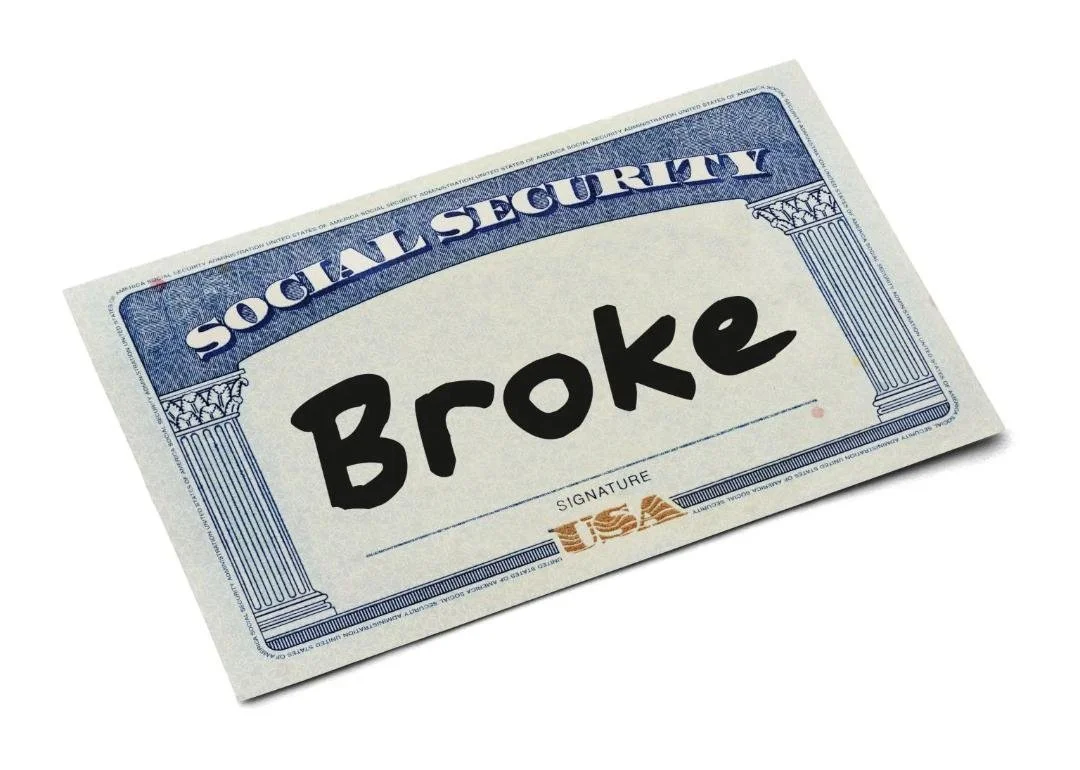
That’s because the most critical trust fund in the Social Security system (called OAS, or “Old Age Survivors) will be fully depleted.
That’s precisely what it says in the 2025 Annual Report of the Board of Trustees of Social Security, signed by the US Secretary of Treasury just yesterday.
And once that OAS Trust Fund runs out of money, the report states that Social Security benefits will be immediately and permanently cut by at least 23%. And then the benefit cuts will likely become worse over time.
This will constitute a broken promise to 70+ million Americans who spent decades paying into a system that was supposed to be solvent by the time they retire.
Now, Social Security’s biggest trust fund running out of money in 2033 would be problematic enough.
But on top of that— by 2033, the total US national debt will be $52 TRILLION according to Congressional Budget Office (CBO) estimates. And the CBO notoriously underestimates deficits... so in all likelihood the national debt will be event greater.
$52 trillion is so large that the government could easily be spending 40% of all tax revenue just to pay interest on the national debt.
Think about that. Not on defense. Not on infrastructure. Not even on the bloated entitlement programs Washington refuses to reform. Just interest.
These two things together— a massive annual interest bill combined with Social Security’s insolvency— will likely combine to a gargantuan fiscal crisis in the US. It’s eight years away.
Amazingly, politicians are not concerned. There is very little will to cut federal spending, or make necessary reforms that would allow Social Security to continue operating.
Foreign governments and central banks, on the other hand, clearly understand this problem.
They see how difficult it will be for the US to pay its debts in the not-so-distant future. And that’s why so many foreign institutions are dumping their US dollars and US government bonds.
In other words, foreigners are losing confidence in the US government, so they’re cashing out.
One of the biggest beneficiaries of this trend has been gold; we’ve been talking about this for a couple of years— as foreign governments and central banks dump their US dollars, they have been buying up record amounts of gold bullion.
This isn’t some ideological crusade—it’s a rational move for foreign governments and central banks; gold is liquid, fungible (i.e. standardized), globally recognized, and the market can absorb massive capital flows— hundreds of billions of dollars or more.
This is how they diversify to protect themselves from what will likely happen down the road in the US. You can do the same.
We have pointed out many times, however, that foreign governments and central banks buy gold. They do not buy gold companies.
This key difference has created a major disconnect between the price of gold (which is near a record high) and the valuations of gold companies (many of which are laughably cheap).
We have been writing about this trend for nearly two years, during which time the portfolio of gold companies (and other real asset businesses) has performed exceptionally well.
In our 4th Pillar investment research service, we pinpointed companies with world-class assets, great management, strong balance sheets, and dirt-cheap valuations. Then we shared them with subscribers.
The results speak for themselves:
One of our top picks is up 153% in just three months.
Another surged 146% over the past eleven months.
Two more have gained 133% and 51% respectively in just a few months.
Most other companies have delivered steady gains of “only” 27–34%.
For the sake of transparency we’ve had precisely ONE precious metals related company go the other way—it’s down 27%. But the fundamentals are solid, and with key catalysts on the horizon, we see it as even more undervalued now.
And in our most recent issue, we spotlighted a profitable gold company trading for less than the cash on its balance sheet.
Talk about limited downside—you could buy the whole company, get all your money back in cash, and still own a cash-flowing gold business for free.
We are exceptionally proud of this research and the returns that we deliver to our subscribers.
To your freedom, James Hickman Co-Founder, Schiff Sovereign LLC
Gold’s Doing What It’s Supposed To Do’ - Signals Shift Ahead Of Q3 | Mike McGlone
Gold’s Doing What It’s Supposed To Do’ - Signals Shift Ahead Of Q3 | Mike McGlone
Kitco News: 6-19-2025
Gold is hovering near $3,370 as investors weigh the Fed’s decision to hold rates, Trump’s tariff escalation, and rising geopolitical risk in the Middle East.
In this episode, Mike McGlone, Senior Macro Strategist at Bloomberg Intelligence, returns to Kitco News to break down what gold is really telling us - and why he says, “Gold’s doing what it’s supposed to do.”
Gold’s Doing What It’s Supposed To Do’ - Signals Shift Ahead Of Q3 | Mike McGlone
Kitco News: 6-19-2025
Gold is hovering near $3,370 as investors weigh the Fed’s decision to hold rates, Trump’s tariff escalation, and rising geopolitical risk in the Middle East.
In this episode, Mike McGlone, Senior Macro Strategist at Bloomberg Intelligence, returns to Kitco News to break down what gold is really telling us - and why he says, “Gold’s doing what it’s supposed to do.”
Szafron and McGlone unpack the Fed’s stagflation dilemma, oil’s risk premium, the dollar’s vulnerability, and where smart money is rotating now.
Key Topics:
-Fed holds, inflation revised up, GDP forecast cut
-Trump attacks Powell, calls for 200bps cut
-Stagflation signals and Fed credibility risk
-Gold pullback: consolidation or exhaustion?
-Bitcoin rotation and ETF flows -Oil near $78
— Strait of Hormuz fears grow
-Commodities rotation and inflation protection
-Outlook for Q3 positioning: gold, oil, bonds, cash
00:00 Introduction
01:45 Fed's Position and Market Insights
03:08 Gold and Cryptocurrency Market Dynamics
14:49 Silver and Platinum Market Trends
17:10 Oil Market and Geopolitical Risks
20:58 Debt, Inflation, and Market Predictions
Seeds of Wisdom RV and Economic Updates Saturday Afternoon 6-21-25
Good Afternoon Dinar Recaps,
China Dumps $8.2 Billion in US Treasuries in Bold BRICS Counter-Attack
China has escalated its BRICS-led economic challenge to the United States by offloading $8.2 billion in U.S. Treasury bonds in April 2025. The aggressive move follows new U.S. tariffs imposed by President Trump in early April, signaling a major economic realignment by the world’s second-largest economy.
Good Afternoon Dinar Recaps,
China Dumps $8.2 Billion in US Treasuries in Bold BRICS Counter-Attack
China has escalated its BRICS-led economic challenge to the United States by offloading $8.2 billion in U.S. Treasury bonds in April 2025. The aggressive move follows new U.S. tariffs imposed by President Trump in early April, signaling a major economic realignment by the world’s second-largest economy.
China Unwinds Dollar Holdings in Strategic Shift
According to the U.S. Treasury Department, China’s sell-off is part of a larger trend away from U.S. dollar-denominated assets, a key plank in BRICS’ de-dollarization strategy.
In April 2025 alone, China sold $8.2 billion in U.S. Treasuries, accelerating its broader push to cut financial ties with the U.S. and accumulate gold and other non-dollar assets in its central bank reserves.
Beijing’s Treasury holdings, once at $1.35 trillion in FY 2012–13, have plummeted to $757 billion as of April 2025 — a 44% decline over 13 years and a clear signal of long-term decoupling.
Diversifying Away from the Dollar
China is not just reducing exposure to U.S. debt — it's also diversifying its reserves into gold and other local currencies, aiming to reduce dependence on the U.S. dollar and strengthen the BRICS bloc’s financial autonomy.
“China’s April reduction in US Treasury holdings is mainly due to the need for diversified foreign exchange reserve allocation,”
said Xi Junyang, professor at Shanghai University, to the Global Times.
He added that this trend may continue, noting China has been aggressively selling off Treasuries since 2022.
Implications for U.S. Deficit Funding
China remains the third-largest holder of U.S. Treasury debt, behind only Japan and the United Kingdom. If BRICS nations or other developing economies follow China’s lead, the United States could face serious difficulties funding its growing deficit.
This latest financial move is widely seen as a BRICS countermeasure to Trump’s trade tariffs and broader economic confrontation with the West.
A Steep Strategic Realignment
China’s evolving Treasury strategy signals more than portfolio diversification — it reflects a geopolitical shift designed to:
Undermine the U.S. dollar’s global supremacy,
Strengthen BRICS internal economic resilience, and
Accelerate a multipolar global financial system that challenges traditional Western institutions.
With the dollar’s role as the global reserve currency increasingly under scrutiny, China’s decisive actions may mark a tipping point in the ongoing East-West economic realignment.
@ Newshounds News™
Source: Watcher.Guru
~~~~~~~~~
Seeds of Wisdom Team RV Currency Facts Youtube and Rumble
Newshound's News Telegram Room Link
Follow the Roadmap
Follow the Timeline
Seeds of Wisdom Team™ Website
Thank you Dinar Recaps
Seeds of Wisdom RV and Economic Updates Saturday Morning 6-21-25
Good Morning Dinar Recaps,
Ripple Unveils Urgent 4-Point Plan to Ignite UK Crypto Revolution
Ripple has issued a powerful call to action aimed at positioning the United Kingdom as a global leader in crypto innovation, unveiling a four-point regulatory strategy designed to unlock investment, expand financial access, and accelerate blockchain-driven modernization.
Good Morning Dinar Recaps,
Ripple Unveils Urgent 4-Point Plan to Ignite UK Crypto Revolution
Ripple has issued a powerful call to action aimed at positioning the United Kingdom as a global leader in crypto innovation, unveiling a four-point regulatory strategy designed to unlock investment, expand financial access, and accelerate blockchain-driven modernization.
New Recommendations Set Stage for UK’s Explosive Crypto Power Shift
On June 18, Ripple convened key stakeholders at the London Policy Summit, co-hosted with the UK Centre for Blockchain Technology and Innovate Finance, to assess the UK’s fast-evolving digital asset policy landscape.
The summit spotlighted recent UK government initiatives, including:
Chancellor Rachel Reeves’ April address supporting digital finance.
HM Treasury’s draft legislation on crypto-assets.
FCA consultations covering stablecoins, custody rules, and prudential oversight.
Launch of the Digital Securities Sandbox and pilot for a digital UK government bond (DIGIT).
Ripple used the summit to deliver a sharp message: Now is the time to act—boldly and fast.
Ripple’s 4-Point Plan for UK Crypto Leadership
In a whitepaper released after the summit, Ripple laid out four key regulatory priorities critical to the UK’s ascent in the digital economy:
1. Accelerate Regulatory Framework Finalization
“The government and regulators must act at pace to develop a crypto-asset regulatory framework that drives investment and growth.”
Ripple emphasized that early movers in crypto regulation will reap long-term rewards in global competitiveness and capital inflows.
2. Ensure Global Standards Alignment
Ripple urged the UK to harmonize its rules with international frameworks, helping firms avoid conflicting obligations and maintain global interoperability.
3. Advance Stablecoin Regulation
Ripple pushed for the swift regulation of stablecoins, including legal pathways to allow overseas-issued stablecoins to circulate in the UK without local issuance requirements—a move that would increase liquidity and stimulate market innovation.
4. Remove Legal, Regulatory, and Tax Barriers
To solidify leadership in tokenization, Ripple proposed an integrated approach to overcome legacy barriers that hinder the tokenization of traditional assets like bonds and equities.
“The opportunity for the UK is huge. If the regulatory framework is designed correctly, it can facilitate innovation, enhance financial inclusion, and solidify the UK’s position as a competitive global financial centre.”
— Ripple
A Strategic Moment for UK Finance
Ripple underscored the transformative role of blockchain in modernizing payments, increasing transparency, and broadening access to financial services. With over 90% of major financial institutions engaged in crypto by 2024, the stakes for leadership are rising fast.
Summit participants echoed a growing consensus:
Rapid regulatory clarity is no longer optional—it’s essential to unlocking crypto’s full potential and ensuring the UK remains at the forefront of global finance.
@ Newshounds News™
Source: Bitcoin.com
~~~~~~~~~
South Korea’s Central Bank Open to Stablecoin Amid Cautious Forex Outlook
South Korea may soon join the growing list of nations backing fiat-pegged stablecoins. The Governor of the Bank of Korea signaled openness to the issuance of a won-based stablecoin, though he voiced concerns over its foreign exchange impact, particularly in relation to dollar-backed tokens.
Cautious Approval from the Central Bank
At a press conference covered by Reuters, Bank of Korea Governor Rhee Chang-yong stated that while he does not oppose the creation of a won-pegged stablecoin, there are critical risks tied to its adoption:
“Issuing won-based stablecoin could make it easier to exchange them with dollar stablecoin rather than working to reduce use of dollar stablecoin.”
Rhee warned this could inadvertently increase demand for dollar stablecoins and complicate forex management, undermining efforts to strengthen South Korea’s own currency reserves and monetary autonomy.
Shrinking Forex Reserves Add Pressure
The concern comes amid declining national reserves.
At the end of December 2024, South Korea held $415.6 billion in forex reserves.
By May 2025, that figure dropped to $404.6 billion—a $11 billion decrease in just six months.
This underscores the urgency in crafting a stablecoin policy that enhances domestic financial resilience without unintentionally driving capital back into U.S.-dollar-based instruments.
Democratic Party Pushes Pro-Stablecoin Legislation
Newly elected President Lee Jae-myung is advancing crypto reform as part of his campaign promises. On June 10, his Democratic Party introduced the Digital Asset Basic Act, a legislative proposal that would:
Allow companies with at least $368,000 in equity capital to issue stablecoins.
Require issuers to maintain sufficient reserves for redemptions.
Mandate approval from the Financial Services Commission (FSC) prior to issuance.
This move aims to foster innovation, reduce U.S. dollar reliance, and offer a regulatory pathway for local stablecoin ecosystems to thrive.
Regulators Scrutinize Exchanges and Fees
South Korea’s FSC is currently probing local exchanges over the transaction fees they charge, aligning with President Lee’s pledge to lower trading costs for retail investors, especially younger users.
The regulatory scrutiny marks a shift toward a more competitive and transparent crypto exchange landscape, which could boost local investor confidence.
The Global Stablecoin Landscape Is Evolving
While U.S. dollar-backed stablecoins still dominate, with Tether (USDT) and Circle’s USDC leading at $156 billion and $61 billion respectively, non-USD options are starting to gain traction.
Circle’s euro-pegged EURC saw a 156% market cap increase since the start of 2025, now totaling $203 million. Momentum grew further after U.S. lawmakers backed the GENIUS Act, a key stablecoin regulatory bill, sending Circle’s stock sharply higher.
South Korea Eyes Its Own Path
As global stablecoin competition intensifies, South Korea’s measured but open stance on a won-based stablecoin could position the nation as a regional leader in digital finance, provided it carefully balances innovation with macroeconomic stability.
The next steps will likely involve regulatory fine-tuning, market feedback, and possible pilot programs to test the feasibility of stablecoin circulation under central bank oversight.
@ Newshounds News™
Source: Cointelegraph
~~~~~~~~~
Crypto ETF Approval Odds Surge to “90% or Higher,” Say Bloomberg Analysts
The approval of a broad array of U.S. crypto exchange-traded funds (ETFs) is now considered “almost certain,” according to top Bloomberg analysts. In a major shift in regulatory tone, the Securities and Exchange Commission (SEC) appears increasingly willing to approve spot ETFs for altcoins like XRP, Solana, Dogecoin, and Cardano, signaling expanding institutional access to digital assets.
Bloomberg: ETF Approval Odds at 90% or Higher
Analysts James Seyffart and Eric Balchunas raised their estimated approval odds to “90% or higher” on Friday, citing “very positive” engagement from the SEC in recent weeks.
“The tone and feedback from the SEC has shifted meaningfully,”
Seyffart said in a post on social media, emphasizing that this new posture marks a clear pro-crypto pivot at the regulatory agency.
One key reason for the rising optimism: The SEC appears to categorize many major cryptocurrencies — including XRP, Solana (SOL), Litecoin (LTC), Dogecoin (DOGE), and Cardano (ADA) — as commodities, not securities. This classification would place them largely outside of the SEC’s strictest enforcement scope, removing one of the biggest regulatory roadblocks.
Timeline Unclear, But Momentum Is Building
While approvals now seem likely, Seyffart cautioned that actual product launches may still take several months, potentially extending past October. The agency must still finalize reviews and respond to public comments on a number of ETF proposals — including XRP and SOL ETF filings by Franklin Templeton.
Bitcoin ETF Success Fuels Altcoin Hopes
The surge in altcoin ETF interest follows the historic success of spot Bitcoin ETFs, which have shattered records. BlackRock’s iShares Bitcoin Trust (IBIT) recently surpassed $70 billion in assets after just 341 days — making it the most successful ETF launch in U.S. history.
“There’s an arms race to replicate the Bitcoin ETF’s success,”
said Balchunas, pointing to strong demand for crypto exposure among institutional and retail investors alike.
However, not all crypto ETFs have performed equally. Ether ETFs, launched in July, have seen mixed reception, with Glassnode reporting in May that average ETH ETF investors were still “substantially underwater.”
Altcoins Rising, But Bitcoin Remains Dominant
While interest in altcoin ETFs is surging, analysts don’t expect any product to eclipse Bitcoin’s dominance in the near term. Still, the entry of top-tier asset managers like Franklin Templeton and the SEC’s willingness to open comment periods marks a turning point in mainstream crypto adoption.
With market watchers tracking every signal from Washington, these ETF developments could define the next chapter of crypto-finance integration in the United States.
@ Newshounds News™
Source: Cointelegraph
~~~~~~~~~
Seeds of Wisdom Team RV Currency Facts Youtube and Rumble
Newshound's News Telegram Room Link
Follow the Roadmap
Follow the Timeline
Seeds of Wisdom Team™ Website
Thank you Dinar Recaps
Seeds of Wisdom RV and Economic Updates Friday Afternoon 6-20-25
Good Morning Dinar Recaps,
BRICS vs NATO: Who Holds More Power in 2025—Military, Economic, and Strategic Influence Compared
The BRICS vs NATO rivalry has become the defining geopolitical fault line of 2025. While NATO leads in global military coordination, BRICS commands accelerating economic momentum and demographic dominance—reshaping the global power structure into an increasingly multipolar world.
Good Afternoon Dinar Recaps,
BRICS vs NATO: Who Holds More Power in 2025—Military, Economic, and Strategic Influence Compared
The BRICS vs NATO rivalry has become the defining geopolitical fault line of 2025. While NATO leads in global military coordination, BRICS commands accelerating economic momentum and demographic dominance—reshaping the global power structure into an increasingly multipolar world.
Military Power: NATO Dominates in Coordination and Budget, BRICS in Nuclear Arsenal
Defense Spending and Strategic Alignment
NATO commands unmatched military spending, led by the U.S., which contributed $877 billion to NATO’s total $1.3 trillion defense budget in 2024—over half of global military expenditures.
By contrast, BRICS nations collectively spent around $350 billion, with China contributing $225 billion and India significantly investing in regional and technological defense initiatives.
However, BRICS lacks unified military coordination, unlike NATO's Article 5 collective defense framework, which tightly integrates its 32 member states under a single strategic command.
Nuclear Capabilities
NATO maintains around 5,500 nuclear warheads, but BRICS—largely due to Russia—surpasses that with 6,360 warheads. While NATO leads in advanced military infrastructure, BRICS holds a quantitative edge in nuclear firepower, underscoring a more fragmented yet potent deterrence force.
Economic Power: BRICS Surpasses NATO in GDP and Trade Growth
GDP and Growth Trajectory
BRICS has surged ahead with a combined GDP of over $60 trillion in 2024, outpacing NATO’s $40 trillion. China ($18 trillion) and newcomers like Saudi Arabia and the UAE have significantly boosted the bloc’s global economic weight.
Growth rates underscore this shift:
BRICS: 4%+ annual GDP growth
NATO: 1–2.5% growth
Trade and Currency De-Dollarization
BRICS now accounts for 25% of global exports, driven by rising intra-bloc trade and new trade initiatives using local currencies—notably the Chinese Yuan and Indian Rupee—which challenge the US dollar’s global dominance.
Population and Global Influence: BRICS Leverages Demographics, NATO Holds Institutional Power
Demographics
BRICS nations represent 3.5 billion people, nearly 45% of the world’s population, compared to NATO’s 950 million. This massive demographic advantage drives consumer markets and economic scale, especially through India’s growing population and urbanization.
Institutional Control vs. Multipolar Reforms
NATO members retain disproportionate sway over global institutions such as:
UN Security Council (permanent seats)
IMF (voting power)
World Bank (leadership roles)
However, BRICS is building alternative institutions like the New Development Bank (NDB) to challenge Western-led governance and promote multipolar frameworks, particularly in the Global South.
Future Trajectory: Two Pillars of Global Power
The NATO vs BRICS rivalry highlights two divergent yet increasingly complementary power centers:
NATO continues to lead in military strength, technology, and alliance integration, shaping global security architecture.
BRICS, propelled by economic momentum, population size, and alternative financial systems, is redefining global economic leadership.
Both blocs now represent dual axes of power—military and economic—that are not merely competitive, but also structurally embedded in the emerging multipolar order.
@ Newshounds News™
Source: Watcher.Guru
~~~~~~~~~
Seeds of Wisdom Team RV Currency Facts Youtube and Rumble
Newshound's News Telegram Room Link
Follow the Roadmap
Follow the Timeline
Seeds of Wisdom Team™ Website
Thank you Dinar Recaps