
Thank you to all the subscribers to our Early Access program…we thank you for your continued support.
We are excited to offer this new service to keep you informed and up-to-date on the latest Dinar and currency news.
Jon Dowling: There is an RV Process Going on, NESARA-GESARA Intel, November 2025
Jon Dowling: There is an RV Process Going on, NESARA-GESARA Intel, November 2025
Have you ever felt that the world is on the cusp of a monumental shift?
That beneath the surface of daily headlines, something profound is stirring in the realms of global finance, geopolitics, and even human consciousness?
A recent, fascinating fireside chat on the Jon Dowling podcast, featuring the insightful analyst known as SG ANON, ventured far beyond the typical news cycle to map out this very transition.
Jon Dowling: There is an RV Process Going on, NESARA-GESARA Intel, November 2025
Have you ever felt that the world is on the cusp of a monumental shift?
That beneath the surface of daily headlines, something profound is stirring in the realms of global finance, geopolitics, and even human consciousness?
A recent, fascinating fireside chat on the Jon Dowling podcast, featuring the insightful analyst known as SG ANON, ventured far beyond the typical news cycle to map out this very transition.
The conversation wove together threads of economics, national security, and spiritual awakening into a compelling tapestry of what may lie ahead.
For those seeking to understand the potential timelines and underlying mechanisms of this global transformation, the discussion was nothing short of revelatory. Let’s break down the key themes.
A central topic was the long-anticipated revaluation of the Iraqi dinar. SG ANON contextualizes this not as an isolated event, but as a key component of a broader global economic reset. The timeline? He points strategically to the 2025 holiday season, extending into early 2026.
This period is expected to coincide with the full integration of new, robust financial standards like ISO 20022—a global standard for payment messaging that increases transparency—and Basel III regulations, which strengthen bank capital requirements.
The implementation of Project Aurora was also highlighted as a critical system designed to root out illicit financing, effectively creating a cleaner, more accountable global financial network.
In this new environment, SG ANON anticipates a significant rise in the value of gold and silver. This isn’t presented as mere speculation, but as a logical outcome of shifting government fiscal policies, the end of wasteful spending, and a move towards asset-backed currency value.
The conversation also addressed the elephant in the room: significant market corrections. SG ANON predicts looming downturns in the stock market, cryptocurrency, and real estate sectors.
However, he frames this not as a doomsday scenario, but as a necessary and controlled demolition of unstable systems. This “reset” would be followed by aggressive stabilization efforts, potentially led by a reinvigorated Trump Administration.
Perhaps most intriguing were the hints at direct economic relief for citizens. The discussion touched on potential “dividend checks” or a similar mechanism as part of a broader strategy to redistribute economic value back to the American people, framed as a gradual and sustainable process rather than a one-time stimulus.
The podcast didn’t shy away from hard geopolitics. Border security was emphasized as a paramount national and financial priority, with ongoing efforts to secure borders and repatriate individuals as part of a larger global realignment.
Beyond finance and politics, SG ANON ventured into the profound impact on human well-being. He identified the current era as one of intense psychological warfare and recommended a return to nature and spirituality as the ultimate antidote to societal trauma.
On the frontier of health, he shed light on emerging technologies like MedBeds. These devices, allegedly leveraging advanced frequency and waveform physics, represent a revolutionary leap in healthcare—a field of suppressed technology now purportedly emerging into public view.
The conversation concluded on a note of powerful optimism.
SG ANON reflected on symbolic dates—like January 1st and April 1st—as potential markers for financial milestones and a global economic rebirth.
His core message was one of hope: we are living through a transformational period aimed at reclaiming sovereignty—over our finances, our nations, and our personal health.
This period of “Great Unraveling,” as chaotic as it may seem, is ultimately presented as the necessary precursor to a more prosperous, transparent, and spiritually aligned future.
This blog post is a summary and analysis based on the Jon Dowling podcast episode. For the full, unfiltered depth of this fascinating discussion, we highly recommend watching the full video for yourself.
Gold Set to Skyrocket as China Challenges Dollar Order
Gold Set to Skyrocket as China Challenges Dollar Order
Taylor Kenny: 11-14-2025
Something monumental is happening in the global financial landscape, and if you’re not paying attention, you could be caught unprepared.
The U.S. dollar’s long-standing position as the world’s reserve currency is facing its most formidable challenge yet, as a strategic pivot towards physical gold signals a potential seismic shift in global monetary power.
Gold Set to Skyrocket as China Challenges Dollar Order
Taylor Kenny: 11-14-2025
Something monumental is happening in the global financial landscape, and if you’re not paying attention, you could be caught unprepared.
The U.S. dollar’s long-standing position as the world’s reserve currency is facing its most formidable challenge yet, as a strategic pivot towards physical gold signals a potential seismic shift in global monetary power.
A seemingly minor decision by a small nation like Cambodia – to store its national gold reserves in China rather than traditional Western strongholds like New York or London – is actually a potent symbol of a much larger, calculated move.
China is aggressively positioning itself as the epicenter of a new global gold-based monetary system.
This isn’t just about accumulating wealth; it’s a strategic play to reduce the world’s dependence on the U.S. dollar.
For decades, much of global gold trading has been dominated by Western institutions like COMEX and LBMA, where paper contracts for gold vastly outnumber actual physical deliveries. This system has long been criticized for enabling price suppression and manipulation, keeping gold’s true value artificially low.
Enter China’s Shanghai Gold Exchange (SGE). In stark contrast, the SGE emphasizes physical gold trading, demanding delivery upon transaction.
By promoting this model and building a vast network of global gold vaults, China is challenging Western control and offering an alternative – one where instant settlement in physical gold bypasses the dollar altogether.
This move fundamentally undermines the dollar’s hegemony, which currently props up America’s massive national debt through its coveted reserve currency status.
The implications are far-reaching: a transition like this signals a potential surge in gold prices and a corresponding decline in the dollar’s purchasing power.
This domestic instability puts the Federal Reserve in an unenviable position. Tasked with its dual mandate to curb inflation and maintain full employment, the Fed faces an impossible balancing act.
With inflation stubbornly high and the labor market showing signs of wear, the most likely path forward for the Fed is to cease quantitative tightening and potentially resume interest rate cuts. While this might temporarily prop up some sectors, it would inevitably lead to further devaluation of the dollar, eroding purchasing power for all.
These two powerful currents – a global shift towards physical gold as a primary reserve asset and a weakening domestic U.S. economy – are converging.
The “Great Gold Reset” isn’t just a theory; it’s a dynamic unfolding before our eyes, threatening the established financial order and the purchasing power of the dollar.
Given these developments, the prudent course of action is clear: acquire physical gold and silver. These precious metals have historically served as reliable insurance policies against economic instability and currency depreciation.
They are tangible assets, free from counterparty risk, and hold inherent value independent of any government or financial institution.
To truly understand these intricate dynamics and prepare effectively for what’s coming, we strongly recommend attending a free live webinar titled “The Great Gold Reset.” This webinar promises to provide deeper insights into these monumental global monetary changes and offer actionable strategies for safeguarding your financial future.
Don’t just watch from the sidelines as the world’s financial system undergoes its most profound transformation in decades. Equip yourself with knowledge and take proactive steps.
Seeds of Wisdom RV and Economics Updates Friday Afternoon 11-14-25
Good Afternoon Dinar Recaps,
Global Metals Markets Reflect Shift Toward Asset-Backed Financial Systems
Gold and strategic metals are becoming central to monetary policy and sovereign strategy.
Overview
Central banks continue record gold accumulation, signaling waning trust in debt-based reserves.
Strategic metals (lithium, copper, nickel) are now treated as geopolitical assets, not simple commodities.
Physical markets are diverging from paper markets, suggesting supply stress and asset realignment.
Good Afternoon Dinar Recaps,
Global Metals Markets Reflect Shift Toward Asset-Backed Financial Systems
Gold and strategic metals are becoming central to monetary policy and sovereign strategy.
Overview
Central banks continue record gold accumulation, signaling waning trust in debt-based reserves.
Strategic metals (lithium, copper, nickel) are now treated as geopolitical assets, not simple commodities.
Physical markets are diverging from paper markets, suggesting supply stress and asset realignment.
Key Developments
Gold demand from monetary authorities reaches multi-decade highs, reshaping reserve strategies.
Nations secure long-term supply contracts for essential metals, linking resource access to financial positioning.
Industrial metals show increased volatility, driven by energy policy and infrastructure shifts.
New digital gold and tokenized metal products emerge, offering programmable settlement backed by physical reserves.
Why It Matters
A move to asset-backed financial architecture increases the importance of real-world materials. Metals markets are becoming a proxy for global trust and monetary security.
Implications for the Global Reset
Pillar 1: Gold as a Stability Anchor
Gold accumulation reflects preparation for currency realignment and debt repricing.
Pillar 2: Strategic Metals as Financial Leverage
Critical minerals are now core components of national and financial resilience.
This is not just politics — it’s global finance restructuring before our eyes.
Seeds of Wisdom Team
Newshounds News™ Exclusive
Sources
~~~~~~~~~
World Currencies Enter Transition Phase as Multi-System Architecture Emerges
Digital platforms, alternative settlement corridors, and de-dollarisation reshape global currency power.
Overview
The U.S. dollar remains dominant but shows early signs of diversification pressure.
Cross-border digital currency pilots are maturing, creating new paths for settlement.
Countries are forming bilateral trade corridors that bypass legacy FX systems.
Key Developments
Tokenized central bank money is being tested for cross-border settlement, reducing intermediaries.
Bilateral and regional payment blocs expand, using local currencies for trade finance.
Reserve diversification accelerates, with several nations increasing gold and reducing dollar exposure.
Sovereign digital currencies (CBDCs) gain operational readiness, preparing for commercial integration.
Why It Matters
Currency power determines geopolitical leverage. These developments suggest a shift from a single-dominant reserve system to a multi-asset, multi-rail global currency framework.
Implications for the Global Reset
Pillar 1: Multi-Currency Settlement Systems
Nations are building financial sovereignty through alternative rails and local-currency trade.
Pillar 2: Digital Reserve Transformation
Tokenized reserves will change how value is stored, transferred, and measured.
This is not just politics — it’s global finance restructuring before our eyes.
Seeds of Wisdom Team
Newshounds News™ Exclusive
Sources
~~~~~~~~~
BRICS Gold Strategy 2025–2030: Reserve Expansion Signals Long-Term Financial Shift
Gold accumulation and de-dollarization efforts point to a coordinated monetary realignment.
Overview
BRICS nations are actively expanding gold reserves, signaling a structural shift away from dollar-dominant reserves.
Long-term plans for 2025–2030 include increased gold and silver purchases, alongside new autonomous financial tools.
Analysts view this as groundwork for a future BRICS gold-linked currency and a broader multipolar financial architecture.
Key Developments
Brazil added 16 tonnes of gold in September 2025, its first major purchase since 2021, raising reserves from 129.7 to 145.1 tonnes.
Russia (2,336 tonnes), China (2,298 tonnes), and India (880 tonnes) continue high-volume holdings and steady accumulation.
Global central banks bought more than 1,000 tonnes annually from 2022–2024 — the longest modern streak on record.
WGC surveys show overwhelming consensus (95%) that central bank gold reserves will increase over the next 12 months.
BRICS financial coordination includes de-dollarization, BRICS Pay, and exploration of a gold-anchored currency, forming alternative settlement channels.
Why It Matters
BRICS gold policies reflect a coordinated strategy to rebalance reserve composition, reduce reliance on the U.S. dollar, and build credibility for future currency frameworks. These moves represent a deliberate step toward a multipolar financial order.
Implications for the Global Reset
Pillar 1: Reserve Asset Recomposition
Growing gold reserves strengthen monetary independence and create foundations for alternative financial rails.
Pillar 2: Currency and Payment System Innovation
Development of BRICS Pay and discussions of a gold-linked instrument show preparation for a parallel settlement system.
This is not just politics — it’s global finance restructuring before our eyes.
Seeds of Wisdom Team
Newshounds News™ Exclusive
Sources
~~~~~~~~~
Seeds of Wisdom Team RV Currency Facts Youtube and Rumble
Newshound's News Telegram Room Link
RV Facts with Proof Links Link
RV Updates Proof links - Facts Link
Follow the Gold/Silver Rate COMEX
Follow Fast Facts
Seeds of Wisdom Team™ Website
Thank you Dinar Recaps
4 Things You Don’t Know About Your Money
I’m a Financial Expert: 4 Things You Don’t Know About Your Money
Laura Beck Fri, August 16, 2024 GOBankingRates
You might think you’ve got a handle on your finances, but there’s probably a thing or two you don’t understand.
GOBankingRates spoke with financial experts to uncover some surprising truths about money that many people overlook. Carlos Rodriguez, director of financial planning at Edelman Financial Engines, pointed to EFE’s 2023 Everyday Wealth in America report, which indicated that 46% of Americans cite personal finances as their top source of stress. That emphasizes the importance of effective financial management for overall well-being.
From investment strategies to the power of small savings, these insights could change the way you think about your hard-earned cash.
Here are four things you (probably) don’t know about your money.
I’m a Financial Expert: 4 Things You Don’t Know About Your Money
Laura Beck Fri, August 16, 2024 GOBankingRates
You might think you’ve got a handle on your finances, but there’s probably a thing or two you don’t understand.
GOBankingRates spoke with financial experts to uncover some surprising truths about money that many people overlook. Carlos Rodriguez, director of financial planning at Edelman Financial Engines, pointed to EFE’s 2023 Everyday Wealth in America report, which indicated that 46% of Americans cite personal finances as their top source of stress. That emphasizes the importance of effective financial management for overall well-being.
From investment strategies to the power of small savings, these insights could change the way you think about your hard-earned cash.
Here are four things you (probably) don’t know about your money.
Earning passive income doesn't need to be difficult. You can start this week.
Being Too Conservative Can Cost You Big Time
If you’re the type to keep your money tucked safely away in a savings account, you might want to reconsider.
Robert R. Johnson, Ph.D., CFA, professor of finance at Creighton University’s Heider College of Business, has some eye-opening data to share.
“Being conservative with investments over time is extremely costly,” he said. “From 1926 through 2023, government bonds earned an average return of 5.1%. One dollar invested in government bonds at the beginning of 1926 would have grown to $133 by the end of 2023.”
Sounds pretty good, right? Well, hold onto your hats. Johnson continued, “Over that same time period, large stocks (think S&P 500) earned 10.1% compounded annually. That same dollar invested in an index of large cap stocks would have grown to $14,568 by the end of 2023.”
That’s not a typo, folks. We’re talking about a difference of over $14,000 from a single dollar. As Johnson put it, “A 5% annual difference in returns results in an astronomical difference in terminal wealth.”
You Can’t Save Your Way to Wealth – You Need To Invest
If you think squirreling away money in a savings account is your ticket to wealth, think again. Johnson busts this common myth wide open.
“One of the biggest money myths is that you can save your way to wealth,” he said. “The wealthy save and invest. The middle class, too often, simply save. Unfortunately, it isn’t enough that people simply save. That is a necessary condition for building wealth, but not a sufficient condition for wealth accumulation.”
Instead, it’s all about investing. “Individuals need to be taught to invest for retirement and not to save for retirement,” Johnson said. “The surest way to build true long-term wealth and higher net worth is to invest in the stock market.”
Of course, as with all wealth building, the earlier the better. Why? Well, the glory of compound interest — which is interest calculated on both the initial principal and all of the earlier accumulated interest.
Small, Consistent Investments Can Add Up to Big Money
Think you need a fortune to start investing? Grace Moser, owner of the women’s lifestyle blog Chasing Foxes, disagrees.
“The thing I wish people knew about their money is if you set it and forget it, it will grow,” she said. “I think people believe that they need to have a huge amount of money to start investing, but it’s just not true.”
To Read More: https://www.yahoo.com/finance/news/m-financial-expert-4-things-170009313.html
Inflation and Debt Are Quietly Reshaping the Global Wealth Divide, Says George Gammon
Inflation and Debt Are Quietly Reshaping the Global Wealth Divide, Says George Gammon
Kitco News: 11-1-4-2025
The stock market is hitting record highs, credit markets are flashing warning signs, and economic cracks are widening—yet many investors remain oblivious to the brewing storm.
In a recent interview with Jeremy Szafron of Kitco News, financial analyst George Gammon delved into the precarious state of the global financial system, uncovering troubling parallels to the pre-2008 crisis era.
Inflation and Debt Are Quietly Reshaping the Global Wealth Divide, Says George Gammon
Kitco News: 11-1-4-2025
The stock market is hitting record highs, credit markets are flashing warning signs, and economic cracks are widening—yet many investors remain oblivious to the brewing storm.
In a recent interview with Jeremy Szafron of Kitco News, financial analyst George Gammon delved into the precarious state of the global financial system, uncovering troubling parallels to the pre-2008 crisis era.
This alarming financial landscape suggests that while the stock market may be soaring, the foundation underneath is eroding fast.
Gammon highlighted eerie similarities between today’s conditions and those leading up to the 2007 Bear Stearns collapse:
“The biggest risk right now isn’t the Fed—it’s the shadow banking system. When trust in collateral erodes, liquidity vanishes overnight.”
The bottom line? A full-blown 2008-style meltdown isn’t inevitable, but the warning signs are impossible to ignore.
Most importantly, true wealth lies in access to goods and services, not just inflated asset prices. In a crisis, liquidity and tangible assets will matter far more than paper gains.
The financial system is walking a tightrope. While central banks maintain the illusion of stability, the real economy is showing cracks—from failing credit markets to distressed consumers.
The question isn’t if a correction is coming, but how severe it will be.
Investor and macro expert George Gammon warns that “the smart money is running for the exits.”
Beneath record Dow highs, UBS hedge fund liquidations, and 6.65% subprime auto delinquencies signal “this is playing out exactly like the middle of 2007.”
In this exclusive interview with Jeremy Szafron on Kitco News, Gammon explains that “the plumbing is clogging up” across global credit markets, the Fed has lost control of the monetary system, and why both parties now push “big government socialism.”
He calls the 50-year mortgage “real estate serfdom” and says fiscal populism is turning stimulus into a permanent election tool.
As gold trades above $4,200, Gammon says, “true wealth isn’t about how much gold you have, it’s about access to goods and services.”
Are we witnessing the greatest wealth transfer of our lifetime, and the slow-motion replay of 2008?
In this interview, Gammon discusses:
• Parallels between today’s market and 2007
• Liquidity risk, counterparty exposure, and the next repo crisis
• Debt, inflation, and the illusion of wealth
• Gold above $4,200 and Bitcoin as real purchasing power
• How fiscal policy became permanent stimulus
00:48 – Introduction: Is the System Breaking?
01:10 – Corporate Bankruptcies & The 2007 Warning Signs
02:28 – Systemic Risk: “The Plumbing Is Clogging”
06:00 – Monetary System Breakdown & Repo Market Risks
21:39 – Labor Market Flashing Red
26:08 – Housing Market: Debt Serfdom Ahead?
28:27 – Collateral, Home Equity, and Hidden Fragility
33:32 – Fiscal Populism & The New Political Uniparty
35:43 – Gold, Bitcoin, and Real Wealth
43:45 – Protecting Freedom & Purchasing Power
51:05 – Outlook: The Greatest Wealth Transfer
Seeds of Wisdom RV and Economics Updates Friday Morning 11-14-25
Good Morning Dinar Recaps,
Global Finance Signals Structural Reset as Institutions Shift Toward Tokenized Systems
New frameworks from the IMF, BIS, and central banks point to an accelerating monetary overhaul.
Overview
Major financial institutions are signaling that the existing global system is no longer sustainable, citing fragmentation, fiscal stress, and rising sovereign risk.
The BIS has outlined a next-generation monetary architecture built on tokenized reserves, programmable settlement, and unified ledgers—indicating structural redesign, not incremental reform.
Central banks continue heavy gold accumulation, positioning tangible assets as stability anchors amid currency uncertainty.
Good Morning Dinar Recaps,
Global Finance Signals Structural Reset as Institutions Shift Toward Tokenized Systems
New frameworks from the IMF, BIS, and central banks point to an accelerating monetary overhaul.
Overview
Major financial institutions are signaling that the existing global system is no longer sustainable, citing fragmentation, fiscal stress, and rising sovereign risk.
The BIS has outlined a next-generation monetary architecture built on tokenized reserves, programmable settlement, and unified ledgers—indicating structural redesign, not incremental reform.
Central banks continue heavy gold accumulation, positioning tangible assets as stability anchors amid currency uncertainty.
Key Developments
IMF officials warn of “sudden and sweeping changes” in financial flows as debt loads and geopolitical tensions destabilize traditional coordination.
Tokenized financial instruments are moving from pilot to pre-deployment, with cross-border settlement platforms now tested by multiple central banks.
Sovereign debt restructuring frameworks are accelerating, a shift typically seen only in periods of global realignment.
Dollar dominance shows its first measurable erosion, with new bilateral trade corridors using alternative currencies and settlement rails.
Why It Matters
These developments indicate that global finance is transitioning from a legacy system built on correspondent banking and U.S. dollar hegemony toward a digitized, multi-asset reserve structure. This represents not a policy cycle—but a re-architecture of the financial world.
Implications for the Global Reset
Pillar 1: Monetary Infrastructure Redesign
A move toward tokenized reserves and unified ledgers suggests that the core plumbing of global finance is being rebuilt from the ground up.
Pillar 2: Shifts in Reserve Assets & Sovereign Stability
Central bank gold accumulation and new debt-restructuring tools point to a transition away from debt-driven liquidity toward asset-backed stability.
This is not just politics — it’s global finance restructuring before our eyes.
Seeds of Wisdom Team
Newshounds News™ Exclusive
Sources
~~~~~~~~~
Geopolitical Realignments Accelerate as Nations Shift Toward New Financial Alliances
Diplomacy is now directly shaping the emerging global monetary system.
Overview
Diplomatic blocs are reorganizing around financial cooperation rather than ideology, linking trade, currency, and settlement frameworks.
Major economies are building parallel payment systems, reducing reliance on traditional Western financial rails.
Peace negotiations increasingly include financial guarantees and reconstruction mechanisms, tying diplomacy to monetary restructuring.
Key Developments
Bilateral agreements now include digital-currency settlement terms, signaling that foreign policy and monetary policy are merging.
Regional alliances are prioritizing stability corridors, including energy-for-settlement swaps and guaranteed liquidity lines.
Global institutions are reframing peacebuilding through financial integration, using economic tools to secure long-term stability.
Middle-power nations are emerging as key mediators, leveraging new financial systems to gain geopolitical influence.
Why It Matters
Diplomacy is no longer only about territory or security — financial alignment is now the central strategic objective. This shift reflects a world preparing for a multi-system monetary order.
Implications for the Global Reset
Pillar 1: Financial Alliances Replace Old Security Blocs
Nations are choosing economic interoperability over military pacts as their anchor of cooperation.
Pillar 2: Peace Through Economic Integration
Stability is increasingly achieved through shared digital infrastructure and settlement frameworks.
This is not just politics — it’s global finance restructuring before our eyes.
Seeds of Wisdom Team
Newshounds News™ Exclusive
Sources
~~~~~~~~~
Global Markets Signal Structural Transition as Liquidity and Settlement Systems Evolve
Market behavior is reflecting deep infrastructure change far beyond normal cycles.
Overview
Market volatility now mirrors structural uncertainty, not just economic data.
Investors are repositioning around hard assets and tokenized instruments.
Sovereign bonds are showing new divergence, signaling a repricing of global risk.
Key Developments
Tokenized government securities are entering pilot issuance, creating new liquidity layers.
Global equity indices show capital rotation toward infrastructure, commodities, and digital settlement tech.
Bond markets price rising sovereign fragility, especially across emerging markets.
A widening gap between physical and derivative markets suggests a revaluation of tangible assets.
Why It Matters
Markets are adjusting not only to economic conditions but to the replacement of legacy financial plumbing — the rails that determine how money moves.
Implications for the Global Reset
Pillar 1: Restructuring of Market Liquidity
Tokenized instruments and new clearing systems are redefining capital flows.
Pillar 2: Real Asset Revaluation
Markets are preparing for an economy where tangible value holds greater weight than debt-based instruments.
This is not just politics — it’s global finance restructuring before our eyes.
Seeds of Wisdom Team
Newshounds News™ Exclusive
Sources
~~~~~~~~~
Seeds of Wisdom Team RV Currency Facts Youtube and Rumble
Newshound's News Telegram Room Link
RV Facts with Proof Links Link
RV Updates Proof links - Facts Link
Follow the Gold/Silver Rate COMEX
Follow Fast Facts
Seeds of Wisdom Team™ Website
Thank you Dinar Recaps
Record High Debt = Record High Gold Price
Record High Debt = Record High Gold Price
Notes From the Field By James Hickman (Simon Black) November 11, 2025
Barrick Mining Corporation—one of the world’s largest and most established gold producers—just reported its third quarter earnings yesterday— and it was an absolute blowout.
The company reported third quarter profit of $1.3 billion, nearly triple last year’s Q3 earnings.
And for the first nine months of 2025, Earnings per Share is up a whopping 132% over the same period last year. Free Cash Flow is up an astonishing 176%.
Record High Debt = Record High Gold Price
Notes From the Field By James Hickman (Simon Black) November 11, 2025
Barrick Mining Corporation—one of the world’s largest and most established gold producers—just reported its third quarter earnings yesterday— and it was an absolute blowout.
The company reported third quarter profit of $1.3 billion, nearly triple last year’s Q3 earnings.
And for the first nine months of 2025, Earnings per Share is up a whopping 132% over the same period last year. Free Cash Flow is up an astonishing 176%.
The company further announced that they’re raising the dividend by 25% and expanding the company’s share buyback authorization by an additional $500 million, after already repurchasing $1 billion worth of shares under the prior program.
And what’s perhaps even more striking is that these record profits were based on an average gold price of $3,200. This means that the company’s Q4 earnings (which we’re nearly halfway through) should be MUCH higher given that gold has averaged $4,041 so far this quarter.
Our readers won’t be surprised to hear any of this; we’ve been saying for the past few years that gold was going to go much higher— specifically because foreign governments and central banks have been buying gold by the metric ton to diversify their strategic reserves away from the US dollar.
This trend isn’t going away.
Between the government shutdown fiasco, the rising $38+ trillion US national debt (up $500 BILLION just in the last six weeks), extreme political dysfunction in Congress and the courts, etc., foreign governments and central banks are continuing to literally buy tons of gold, even at record high prices.
We also wrote that gold companies (including miners like Barrick) would benefit substantially from rising gold prices.
So, just as we predicted, Barrick (among other gold miners) is raking in record profits, and its stock price has doubled this year alone— outpacing gains from Oracle, Nvidia, Palantir, and pretty much every major large cap company in the market.
But here’s what’s really amazing— despite such stellar performance, many of these gold companies are still cheap.
Barrick stock, for example, is near its all-time high. Yet the company is still valued at less than NINE times forward earnings— and that’s assuming gold doesn’t go up further from here.
(And even if the gold price tanks, Barrick will still be a profitable, dividend-paying, modestly valued business. Remember, Barrick’s record profits are based on $3,400 gold!)
Smaller gold companies— the ones that we focus on in our premium investment research— are even cheaper.
One of the gold miners we’ve featured is already up 4x this year. Yet it still trades at just 3.5 times forward earnings. The company is extremely shareholder-friendly and has a pristine balance sheet with zero net debt. Oh, and did I mention they pay a substantial dividend?
The gold price could collapse to less than $3,000 and this company would still be wildly profitable.
Could that happen? It’s possible. Even during the 1970s when gold rose from $35 to $850, gold suffered a major pullback in 1975. The pullback was temporary, and gold rose over 8x from there.
That’s because the fundamentals driving gold’s rise during the 1970s hadn’t really changed.
After Richard Nixon formally ended the Bretton Woods system in August 1971, foreign governments and central banks rapidly began selling their US dollars for gold.
As the decade progressed, foreigners became increasingly concerned about US deficits, government dysfunction (Watergate in 1973), global instability, waning US power, and more.
And despite a brief pullback in gold prices, this trend continued until the early 1980s, when the election of Ronald Reagan restored confidence in America’s might and fiscal discipline. It was only at that point that gold prices started to fall.
This same trend is unfolding today, and it’s not hard to understand: the record high US national debt = record high gold price.
Foreign governments and central banks remain deeply concerned about America’s fiscal condition, and gold is one of the few assets available for them to diversify their US dollar holdings.
Just like in the 1970s, we expect this trend to continue until Congress proves that it can act like grownups and be fiscally responsible.
In the meantime, we anticipate gold— and gold companies— to continue to perform very well. Again, many are posting record profits yet are still insanely undervalued. We do not expect this anomaly to last.
To your freedom, James Hickman Co-Founder, Schiff Sovereign LLC
“Tidbits From TNT” Friday Morning 11-14-2025
TNT:
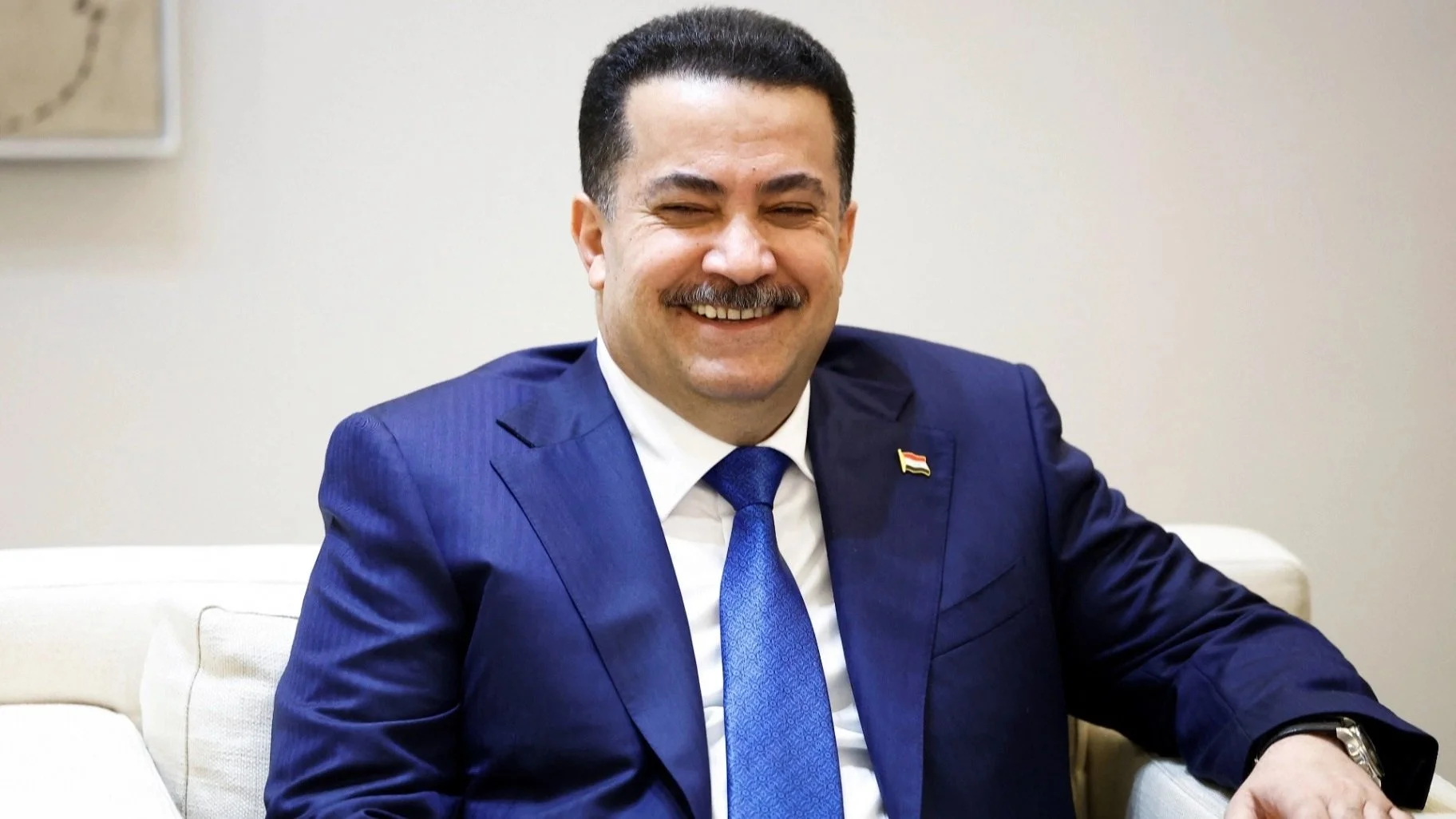
Tishwash: Sudani on the cover of Newsweek: The man who brought Iraq back into the spotlight
The renowned American magazine Newsweek published an exceptional cover in its issue released this week featuring Prime Minister Mohammed Shia al-Sudani, asserting in a headline that “It’s time to shine — the Iraqi Prime Minister has brought Iraq back into the spotlight.”
The selection of Al-Sudani for the cover came after a series of remarkable developments in Iraq recently, most notably the great success in organizing the parliamentary elections, which the magazine described as “among the most smooth and transparent in recent years,” considering that this achievement restored international confidence in Baghdad’s ability to manage its democratic entitlements with high efficiency.
TNT:
Tishwash: Sudani on the cover of Newsweek: The man who brought Iraq back into the spotlight
The renowned American magazine Newsweek published an exceptional cover in its issue released this week featuring Prime Minister Mohammed Shia al-Sudani, asserting in a headline that “It’s time to shine — the Iraqi Prime Minister has brought Iraq back into the spotlight.”
The selection of Al-Sudani for the cover came after a series of remarkable developments in Iraq recently, most notably the great success in organizing the parliamentary elections, which the magazine described as “among the most smooth and transparent in recent years,” considering that this achievement restored international confidence in Baghdad’s ability to manage its democratic entitlements with high efficiency.
In an extensive report within the issue, Newsweek noted that the political and security developments that accompanied the electoral process coincided with vigorous government efforts to rebuild state institutions and support the national economy, which enabled Iraq to move steadily towards restoring its regional and international role.
The report also addressed Al-Sudani’s vision for promoting stability, improving services, and expanding Iraq’s relations with various countries, considering that this approach “brought Iraq back to the map of global attention after many years of challenges.” link
************
Tishwash: The US agrees to sell an advanced communications system to Iraq.
The US Department of Defense (Pentagon) said that the US State Department has approved a possible sale of a communications repeater system, which is used to enhance communications, nationwide to Iraq for $100 million.
The Pentagon added that the prime contractor for the sale would be L3 Harris Corporation.
A Telecommunication Repeater System is a vital system in telecommunications networks. Its primary function is to receive weak or distorted wireless or wired signals, amplify or renew them, and then retransmit them to increase coverage range and maintain signal quality over long distances. link
************
Tishwash: Iraq participates in the Arab Forum for Public Finance and Budget in Beirut
Minister of Finance, Taif Sami Mohammed, participated today, Thursday, in the Arab Forum for Public Finance and Current Budget in Beirut from November 12-13.
The ministry said in a statement followed by Al-Masra, “The Minister of Finance, Taif Sami Muhammad, participated in the work of the Arab Forum for Public Finance and Current Budget in Beirut from November 12-13, which discusses the most prominent challenges and financial policies in Arab countries, with the participation of ministers, officials and experts from Arab countries and international and regional organizations.”
She added that “the forum’s activities opened with a ministerial session dedicated to discussing public spending, social sector priorities, and public financial sustainability in the region. The session focused on the importance of directing resources towards social development priorities and reviewed reforms and policies that enhance spending efficiency and support the sustainability of financial frameworks.”
She added that “the session also addressed successful models and practical experiences in improving public spending management, in addition to discussing the challenges facing governments in promoting investment in human development, social protection and basic services.”
She pointed out that “the convening of the forum comes within the efforts to promote dialogue and Arab cooperation in the field of public finance, and to exchange experiences and visions aimed at supporting public financial sustainability and achieving economic and social development in the region.” link
************
Tishwash: Sudani appoints nine ministers to the new parliament, while four are excluded.
Sudani appoints nine ministers to the new parliament, while four are excluded.
Preliminary results announced by the Independent High Electoral Commission showed that Prime Minister Mohammed Shia al-Sudani and nine members of his cabinet won, while four other ministers lost despite receiving thousands of votes.
The preliminary results showed that Prime Minister Mohammed Shia al-Sudani, who leads the Reconstruction and Development Coalition and is running in Baghdad, received 92,477 votes. Also winning from his coalition in Baghdad were Minister of Labor and Social Affairs Ahmed al-Asadi, who received 14,291 votes, and Minister of Communications Hayam Aboud al-Yassiri, who received 10,240 votes.
Among the winning ministers were Minister of Electricity Ziad Ali, a candidate from the State of Law Coalition in Basra Governorate, who received 17,776 votes, and Minister of Agriculture Abbas Jabr al-Ulayawi, from the same coalition in Najaf, who received 6,171 votes.
Planning Minister Mohammed Ali Tamim, a candidate from the Progress Party in Kirkuk, won with 37,160 votes, as did Defense Minister Thabit Mohammed al-Abbasi, head of the Hasam Party and candidate in Nineveh, who received 19,920 votes.
The results also showed victories for Higher Education Minister Naeem al-Aboudi, a candidate from the Sadiqun Movement in Baghdad, with 8,803 votes; Education Minister Ibrahim Namis, a candidate from the Excellence Alliance in Salah al-Din, with 9,083 votes; and Transportation Minister Razzaq Muhaibis, a candidate from the Badr Organization in Dhi Qar, with 9,362 votes.
Conversely, four ministers lost, most notably Youth and Sports Minister Ahmed al-Mubarga, a candidate from the State of Law Coalition in Baghdad, despite receiving 4,652 votes, and Oil Minister Hayyan Abdul Ghani, a candidate from the same coalition in Basra, who received 6,351 votes.
Tourism, Culture, and Antiquities Minister Ahmed Fakak, a candidate from the Progress Party in Nineveh Governorate, also lost, receiving 7,201 votes. Finally, Minister of Migration and Displacement Evan Faeq Jabro, a candidate representing the Christian quota, also lost, despite receiving 13,128 votes.
The Independent High Electoral Commission announced the preliminary results of Tuesday's elections on Wednesday evening, showing that the Sudani list received the most votes in Baghdad and seven other governorates. link
************
Mot: .. We are Now at the Modern Age of Excuses!!!!

Mot: ... My Quest for Today is To Get One of These!!

Seeds of Wisdom RV and Economics Updates Thursday Evening 11-13-25
Good Evening Dinar Recaps,
Tokenization Moves into the Mainstream as International Organization of Securities Commissions Warns of New Risks
Global regulators issue landmark report as tokenized financial assets gain traction.
Overview
The International Organization of Securities Commissions (IOSCO) published its final report on the tokenization of financial assets, signalling regulatory focus on a rapidly evolving segment.
The report highlights legal, infrastructure and systemic-risk challenges, including unclear ownership rights and heightened interconnectedness across platforms.
With more institutions experimenting with tokenization of bonds, money markets and other assets, the report underscores the need for updated governance frameworks.
Good Evening Dinar Recaps,
Tokenization Moves into the Mainstream as International Organization of Securities Commissions Warns of New Risks
Global regulators issue landmark report as tokenized financial assets gain traction.
Overview
The International Organization of Securities Commissions (IOSCO) published its final report on the tokenization of financial assets, signalling regulatory focus on a rapidly evolving segment.
The report highlights legal, infrastructure and systemic-risk challenges, including unclear ownership rights and heightened interconnectedness across platforms.
With more institutions experimenting with tokenization of bonds, money markets and other assets, the report underscores the need for updated governance frameworks.
Key Developments
Legal uncertainty: Ownership and enforceability of tokenised assets remain ambiguous under many jurisdictions.
Infrastructure risks: Increased interconnectedness of token platforms may amplify vulnerabilities already present in traditional markets.
Institutional shift: Tokenisation is moving from pilots to production, with benefits such as efficiency, liquidity and access cited by industry participants.
Why It Matters
The advancement of tokenization marks a fundamental transformation in financial markets: assets become programmable, settlement accelerates and access broadens. As regulators raise warnings, the shift poses both opportunity and risk — the architecture of capital markets is being rewired from the ground up.
Implications for the Global Reset
Pillar 3 – Market & Capital Flow Reorientation: Tokenization opens new channels for capital flows, fractionalisation and cross-border investing, reshaping how value moves globally.
Pillar 5 – Infrastructure & Technology: The report emphasises that the next stage of finance relies less on legacy systems and more on blockchain-based settlement, tokens and digital assets.
This is not just politics — it’s global finance restructuring before our eyes.
Seeds of Wisdom Team
Newshounds News™ Exclusive
Sources:
IOSCO – “Final Report on the Tokenization of Financial Assets”
Finovate – “IOSCO Highlights Challenges to Financial Asset Tokenization”
~~~~~~~~~
Monetary Authority of Singapore Launches 2026 Pilot for Tokenised Government Bills, Tightens Stablecoin Rules
Singapore doubles down on digital assets with real-world trials and regulatory clamp-down.
Overview
The Monetary Authority of Singapore announced a 2026 pilot for tokenised government bills settled using a wholesale central bank digital currency (CBDC).
At the same time, MAS introduced tighter rules around stablecoins as part of its broader digital finance strategy.
The dual move highlights the convergence of regulation, innovation and financial infrastructure in one of Asia’s key financial hubs.
Key Developments
Singapore’s pilot will involve tokenised government securities (T-bills) and settlement in a wholesale CBDC environment, signalling real-world use of programmable finance.
Stablecoin rules have been strengthened to ensure investor protection, operational resilience and integration with the broader financial system.
Regional banks, fintechs and infrastructure providers are preparing to engage with the pilot, positioning Singapore at the forefront of tokenised asset markets.
Why It Matters
Singapore’s initiative bridges the gap between experimental digital finance and mainstream credit/investment markets. By embedding tokenisation into government-backed instruments and aligning regulation, the city-state is shaping a new model for how finance, technology and sovereignty interlink.
Implications for the Global Reset
Pillar 2 – Trade & Industry: The pilot paves the way for tokenised instruments to become standard in government financing, commercial funding and cross-border settlement.
Pillar 5 – Infrastructure & Technology: With CBDC settlement and tokenised bills, Singapore’s model points to tomorrow’s global finance infrastructure—programmable, fast, border-aware.
This is not just politics — it’s global finance restructuring before our eyes.
Seeds of Wisdom Team
Newshounds News™ Exclusive
Sources:
TradingView – “Singapore’s MAS Unveils 2026 Tokenised CBDC Pilot, Tightens Stablecoin Rules”
CoinDesk – “Intain, FIS Roll Out Tokenised Loan Marketplace on Avalanche for Small Banks”
~~~~~~~~~
2 BRICS Members Achieve 100% De-Dollarization, Call It ‘Great Joy’
Kazakhstan and Russia complete full transition to national currency settlements.
Overview
Russia and Kazakhstan have reached 100% de-dollarization in bilateral trade, officially eliminating the U.S. dollar from cross-border settlements.
President Vladimir Putin confirmed the milestone during a meeting with Kazakhstan’s President Kassym-Jomart Tokayev in Moscow, calling it “a great joy” for both economies.
The achievement underscores BRICS’ broader strategy to establish financial sovereignty and insulate member economies from Western sanctions.
Key Developments
Bilateral trade between Russia and Kazakhstan, previously 90% de-dollarized earlier this year, has now reached full settlement in ruble and tenge.
The move follows U.S. sanctions imposed on Russia since 2022, which accelerated the global push to shift away from the dollar.
Putin noted that joint investment projects total “tens of billions of dollars”, now fully transacted in local currencies.
The de-dollarization model between these two BRICS partners may serve as a blueprint for other emerging economies seeking monetary independence.
BRICS financial institutions, including the New Development Bank, are expanding funding in local currencies for climate and infrastructure projects.
Why It Matters
This milestone marks a critical turning point in the de-dollarization campaign that underpins BRICS’ economic strategy. As member nations build parallel financial frameworks, the global dominance of the U.S. dollar faces unprecedented structural challenge—one that could redefine reserve currency dynamics for the decade ahead.
Implications for the Global Reset
Pillar 2 – Trade and Industry: The Russia–Kazakhstan model demonstrates how regional trade networks can thrive without dollar dependency, strengthening multipolar financial systems.
Pillar 3 – Finance and Monetary Policy: Full de-dollarization signals a transition toward currency blocs, creating new standards for global payment systems and investment flows.
This is not just politics — it’s global finance restructuring before our eyes.
Seeds of Wisdom Team
Newshounds News™ Exclusive
Sources:
Watcher.Guru – “2 BRICS Members Achieve 100% De-Dollarization, Call It ‘Great Joy’”
TASS – “Putin: Russia and Kazakhstan Complete Transition to National Currencies”
Reuters – “Russia, Kazakhstan Reach Full Local Currency Trade Settlement”
~~~~~~~~~
Seeds of Wisdom Team RV Currency Facts Youtube and Rumble
Newshound's News Telegram Room Link
RV Facts with Proof Links Link
RV Updates Proof links - Facts Link
Follow the Gold/Silver Rate COMEX
Follow Fast Facts
Seeds of Wisdom Team™ Website
Thank you Dinar Recaps
Life Changing Market Crash on the Horizon
Life Changing Market Crash on the Horizon
WTFinance: 11-12-2025
Are you confident your retirement savings are truly safe amidst today’s increasingly unpredictable financial markets?
For investors aged 50 and above, nearing or already in retirement, this question carries unprecedented weight.
The market landscape is shifting, and according to Chris Vermeulen, founder and chief market strategist at The Technical Traders, a major financial reset might be closer than many realize.
Life Changing Market Crash on the Horizon
WTFinance: 11-12-2025
Are you confident your retirement savings are truly safe amidst today’s increasingly unpredictable financial markets?
For investors aged 50 and above, nearing or already in retirement, this question carries unprecedented weight.
The market landscape is shifting, and according to Chris Vermeulen, founder and chief market strategist at The Technical Traders, a major financial reset might be closer than many realize.
In a recent, insightful episode of the WTFinance podcast, Vermeulen delivered a comprehensive analysis, urging investors to stop relying on hope and start building a robust game plan to protect their hard-earned capital.
His message is clear: preparedness isn’t just wise, it’s essential for navigating what could be a swift, life-changing financial event.
Vermeulen paints a vivid picture of the current stock market, largely propped up by the “Magnificent 7” tech stocks. While these giants have driven much of the recent growth, he warns of “frothy valuations” and a dangerous “herd mentality” that could leave many vulnerable.
This concentrated market strength might feel good on the surface, but it masks underlying fragilities.
So, how do we spot the true signs of an impending downturn? Vermeulen points to the precious metals sector—gold, silver, platinum, and palladium—as a critical barometer.
Historically, the performance of these metals relative to equities has been a reliable indicator of market tops and forthcoming corrections.
He draws chilling parallels to the 2007-2008 financial collapse, noting similar price movements in gold leading up to that crisis. This isn’t just about diversification; it’s about paying attention to the market’s own internal warning signals.
A cornerstone of Vermeulen’s philosophy is the importance of discarding unreliable economic data and political rhetoric. Instead, he advocates for focusing purely on “price action and money flow.” The market tells its own story, and by learning to read it, investors can gain a clearer, less biased perspective.
Vermeulen underscores the unique value of holding cash during a market reset. It’s not about missing out on small gains; it’s about preserving your principal and gaining the ultimate flexibility to capitalize when others are in distress.
The episode closes with a powerful message: a major, swift, and potentially life-changing financial event is likely imminent.
For those nearing or in retirement, protecting your capital isn’t just an option—it’s paramount to your financial future.
Having a clear, well-rehearsed capital protection strategy will be the deciding factor in whether you merely survive the coming storms or indeed, truly thrive in their aftermath.
Don’t wait until it’s too late. Arm yourself with knowledge and a plan.
Jon Dowling: Latest Intel on the Great Wealth Transfer with High Profile Banker Mr B for November 2025
Jon Dowling: Latest Intel on the Great Wealth Transfer with High Profile Banker Mr B for November 2025
11-12-2025
The global economy feels like it’s holding its breath, poised on the edge of monumental change.
If you’ve been sensing an underlying tension in financial markets, you’re not alone. A recent special report on the Jon Dowling podcast offers an exclusive, deep dive into exactly what’s happening and, more importantly, what’s coming next.
Jon Dowling welcomed back a return guest, the highly respected Mr. B, a financial analyst boasting nearly three decades of experience at Charles Schwab.
Jon Dowling: Latest Intel on the Great Wealth Transfer with High Profile Banker Mr B for November 2025
11-12-2025
The global economy feels like it’s holding its breath, poised on the edge of monumental change.
If you’ve been sensing an underlying tension in financial markets, you’re not alone. A recent special report on the Jon Dowling podcast offers an exclusive, deep dive into exactly what’s happening and, more importantly, what’s coming next.
Jon Dowling welcomed back a return guest, the highly respected Mr. B, a financial analyst boasting nearly three decades of experience at Charles Schwab.
Far from a casual chat, this episode delivers a comprehensive, candid, and urgent assessment of current and future economic trends, with a stark focus on an impending financial crash anticipated within the next few months.
Mr. B’s insights are grounded in historical context, current market data, and sobering future projections.
A central pillar of his discussion is the critical importance of gold and silver as a store of value and an indispensable hedge against fiat currency devaluation. For decades, he argues, deliberate misinformation has suppressed the recognition of precious metals as solid, essential investments. This podcast powerfully debunks those myths, underscoring why these ancient assets are set to reclaim their rightful place in a global financial reset.
The conversation outlines a jarring sequence of events: an expected market “meltup” – a final surge fueled by artificial liquidity – followed by a severe and inevitable crash.
Mr. B expertly dissects the roles of central banks and government policies in creating this precarious situation, explaining how the current Keynesian economic system is teetering on the brink, paving the way for new financial paradigms such as NESARA/GESARA.
For those nearing or in retirement, Mr. B offers practical strategies for protecting your nest egg using gold and silver. He provides crucial insights into the timing of these momentous market events, emphasizing the urgency of acting now.
The overarching message is clear: education and preparation are not optional; they are paramount.
We are standing at the precipice of unprecedented economic shifts, and understanding these trends is the first step toward preserving and growing your wealth through the storm.
Don’t miss out on this vital intelligence. For a complete, unfiltered understanding of the coming financial reset and how to position yourself strategically, watch the full video from Jon Dowling.
Seeds of Wisdom RV and Economics Updates Thursday Afternoon 11-13-25
Good Afternoon Dinar Recaps,
Gaza: The Laboratory of Peace Under the Shadow of Power
When “peace” becomes the language of control rather than liberation.
Overview
The U.S. draft resolution for an international stabilization force in Gaza has reignited debate over the meaning of peace in global politics.
The proposal, presented to the UN Security Council, emphasizes stability, reconstruction, and civilian protection—but critics warn it entrenches outside dominance.
Analysts and human rights advocates argue the plan risks replicating earlier international interventions that prioritized control over sovereignty.
Good Afternoon Dinar Recaps,
Gaza: The Laboratory of Peace Under the Shadow of Power
When “peace” becomes the language of control rather than liberation.
Overview
The U.S. draft resolution for an international stabilization force in Gaza has reignited debate over the meaning of peace in global politics.
The proposal, presented to the UN Security Council, emphasizes stability, reconstruction, and civilian protection—but critics warn it entrenches outside dominance.
Analysts and human rights advocates argue the plan risks replicating earlier international interventions that prioritized control over sovereignty.
Key Developments
The two-year “International Stabilization Force” proposed by the U.S. could effectively replace local governance with externally managed authority, echoing post-war frameworks like Kosovo and Bosnia.
The plan grants foreign forces enforcement powers, transforming peacekeeping into direct governance through coercion rather than mediation.
Economic reconstruction funds would be distributed through Western-aligned committees, raising fears of conditional aid and political leverage.
Regional voices, particularly Arab states, have been sidelined, weakening local legitimacy and risking diplomatic backlash across the Middle East.
Humanitarian organizations warn that expanded military mandates without oversight could heighten civilian risk and lead to accountability crises.
Why It Matters
The U.S. draft resolution exposes the widening gap between peace as a principle of justice and peace as a framework of control. When international powers shape the recovery and governance of Gaza without meaningful Palestinian participation, peace becomes an instrument of dominance rather than reconciliation.
Implications for the Global Reset
Pillar 1 – Diplomacy and Peace: The Gaza proposal demonstrates how power blocs use “stabilization” as a mechanism for influence, signaling the decline of authentic multilateralism.
Pillar 4 – Governance and Sovereignty: External peace operations increasingly override local autonomy, reshaping international norms around intervention and statehood.
This is not just politics — it’s global finance restructuring before our eyes.
Seeds of Wisdom Team
Newshounds News™ Exclusive
Sources:
Modern Diplomacy – “Gaza: The Laboratory of Peace Under the Shadow of Power”
Al Jazeera – “Critics Warn U.S. Gaza Proposal Risks Perpetuating Occupation Under New Terms”
Reuters – “U.S. Circulates Draft Resolution on Gaza Stabilization at UN Security Council”
~~~~~~~~~
Putin Ally Issues Nuclear Warning to U.S.: ‘Russia Will Respond’
Escalating nuclear rhetoric underscores fragile global deterrence balance.
Overview
Kremlin spokesperson Dmitry Peskov warned that Russia would respond “in kind” if the United States resumes nuclear weapons testing.
U.S. officials, including Secretary of State Marco Rubio, have discussed potential test resumption amid concerns over China’s expanding arsenal.
The statements follow President Donald Trump’s directive to the Pentagon to restart nuclear testing in Nevada, citing parity with other nations.
Key Developments
Peskov’s remarks mark a potential end to nearly three decades under the Comprehensive Nuclear Test Ban Treaty (1996) framework.
Russia’s ministries were ordered by President Putin on November 5 to assess feasibility of full-scale tests.
Experts warn that renewed testing by any major power could trigger a global chain reaction involving China, North Korea, and others.
Why It Matters
The revival of nuclear testing discussions signals erosion of long-standing arms-control norms. A return to testing by the U.S. or Russia would undermine strategic stability, complicate disarmament efforts, and elevate risks within the broader global security architecture—an outcome directly tied to the geopolitical realignment now shaping global power centers.
Implications for the Global Reset
Pillar 1 – Diplomacy and Peace: The nuclear standoff highlights the collapse of cooperative security frameworks and the re-emergence of power-based diplomacy.
Pillar 2 – Global Security Architecture: Renewed nuclear activity would accelerate fragmentation of post-Cold-War treaties, forcing nations to seek new multilateral or regional defense alignments.
This is not just politics — it’s global finance restructuring before our eyes.
Seeds of Wisdom Team
Newshounds News™ Exclusive
Sources:
Newsweek – “Putin Ally Issues Nuclear Warning to U.S.: ‘Russia Will Respond’”
TASS – “Peskov: Russia Will Respond if U.S. Resumes Nuclear Testing”
Arms Control Association – “Nuclear Test Ban Treaty Under Strain Amid Global Tensions”
~~~~~~~~~
Japan’s Takaichi Declares Strategic Maturity as Tokyo Eyes Greater Autonomy
Japan signals a decisive turn toward independent global leadership.
Overview
Japanese Foreign Minister Sanae Takaichi announced Japan’s readiness to act as a “fully autonomous strategic power,” signaling a pivot away from postwar dependency on the U.S. alliance.
The declaration coincided with the launch of Japan’s new defense-industrial export framework, allowing Tokyo to supply non-lethal systems to strategic partners.
The initiative forms part of Japan’s “Global Security Initiative”, aimed at expanding its regional and global diplomatic footprint.
Key Developments
Takaichi emphasized that Japan will no longer operate as a “junior partner” but as an equal stakeholder in Indo-Pacific security, coordinating directly with India and ASEAN.
The government approved ¥3.2 trillion in defense export incentives, aimed at strengthening domestic manufacturing and innovation.
Analysts view the policy as Tokyo’s assertion of strategic maturity, laying the groundwork for a broader realignment of Asian power dynamics.
Why It Matters
Japan’s shift from a U.S.-centric security posture to a more autonomous role reflects the broader geopolitical reordering underway. As Washington’s influence wanes in Asia, regional players like Japan are positioning themselves for leadership in the evolving multipolar framework.
Implications for the Global Reset
Pillar 1 – Diplomacy and Peace: Japan’s autonomous diplomacy signals diversification of global power centers, diminishing reliance on legacy Western structures.
Pillar 2 – Trade and Industry: The defense export framework strengthens Japan’s domestic economy and underscores a shift toward industrial sovereignty within global supply chains.
This is not just politics — it’s global finance restructuring before our eyes.
Seeds of Wisdom Team
Newshounds News™ Exclusive
Sources:
Nikkei Asia – “Japan’s Takaichi Vows Strategic Autonomy in Global Affairs”
Reuters – “Japan to Boost Defense Exports Under New Strategic Framework”
Japan Times – “Takaichi: Japan Ready to Lead as Independent Power”
~~~~~~~~~
Seeds of Wisdom Team RV Currency Facts Youtube and Rumble
Newshound's News Telegram Room Link
RV Facts with Proof Links Link
RV Updates Proof links - Facts Link
Follow the Gold/Silver Rate COMEX
Follow Fast Facts
Seeds of Wisdom Team™ Website
Thank you Dinar Recaps
Podcast: These Three Central Banks are SELLING Gold
Podcast: These Three Central Banks are SELLING Gold
Notes From the Field By James Hickman (Simon Black) November 12, 2025
We sincerely hope the House of Representatives can pull itself together and get the government back open this week.
Not because we love federal bureaucracy—but because this shutdown is embarrassing, and it continues to chip away at the rapidly declining confidence that foreign governments and central banks have in the United States.
This matters. Foreign governments and central banks collectively own $10+ trillion of US government bonds and other agency securities.
Podcast: These Three Central Banks are SELLING Gold
Notes From the Field By James Hickman (Simon Black) November 12, 2025
We sincerely hope the House of Representatives can pull itself together and get the government back open this week.
Not because we love federal bureaucracy—but because this shutdown is embarrassing, and it continues to chip away at the rapidly declining confidence that foreign governments and central banks have in the United States.
This matters. Foreign governments and central banks collectively own $10+ trillion of US government bonds and other agency securities.
And given how rapidly the national debt is rising, the Treasury Department needs every lender they can get.
Up until recently, foreigners have always happily stocked up on US government bonds— which were traditionally viewed as THE world’s “risk free” asset.
But over the past few years, they’ve seen endless financial chaos and political dysfunction.
They watched Joe Biden shake hands with thin air. They watched the humiliating US withdrawal of Afghanistan. They watched millions of migrants stream across the US border with impunity, then be showered with taxpayer benefits. They watched TWO assassination attempts on a Presidential candidate.
Then, even after last year’s election, they watched the richest guy in the world willingly roll up his sleeves to help eliminate federal waste and cut the deficit— only to get chased out of town by politicians who are addicted to fraudulent spending.
They’ve watched extreme political dysfunction, with two sides who can’t agree on anything... including the most basic task of keeping the government open.
They’ve watched deficits grow and the national debt spiral to $38 trillion. They watched the debt grow by HALF A TRILLION dollars just over the past SIX WEEKS when the government was supposedly closed.
In short, if you were a foreign government or central bank, there’s little chance you would look at Congress and think, “these are serious, responsible people.”
Quite the opposite. In fact you would probably think that it’s time to start cutting your Treasury holdings and back away from the US dollar. After all, the United States Congress doesn’t exactly look “risk free” any longer.
Foreigners understand that a time is coming—sooner rather than later—when the US dollar will no longer be the dominant global reserve currency. Many central banks still hold nearly 100% of their reserves in US dollars. They know they need to diversify.
And we’ve written about this many times before— the #1 asset that they’re purchasing right now is gold.
It’s not because these foreign central bankers and finance ministers are irrational gold bugs. Instead, they understand that gold is nearly the only asset that (1) is universally accepted, (2) carries zero counterparty risk, and (3) has a large enough market to absorb hundreds of billions of dollars in capital flows.
That’s why, from Poland to Ghana to Kazakhstan, central banks have been buying gold in record quantities. It’s not just China.
China is the most desperate. They hold hundreds of billions in US dollar assets as part of their strategic financial reserves, and the Communist Party is extremely concerned—because they see a real possibility that they could be at war with their own borrower in the future.
Only three central banks were selling gold last quarter—and their reasons are easy to understand.
Russia was one—not because they love the dollar. But because they need to fund a war. Frozen out of the global financial system, gold has become almost a medium of exchange for the Russian government.
Singapore was another. Most central banks only buy strategically; they don’t try to turn a profit. Not Singapore. Their financial institutions are filled with sharp traders who would sell high into record trading volume, with the intent to buy gold back at a lower price.
In fact, it wouldn’t surprise me if the Singaporean government picked up more gold during the recent price dip earlier this month.
The third was Uzbekistan, whose central bank already holds about 80% of its total reserves in gold. With gold prices up, the value of their holdings ballooned—so selling some is simply a way to re-balance.
The problem for most countries is that they have too many dollars and not enough gold. Uzbekistan is the lone example of a country with too much gold and not enough dollars. So their gold sales, while unusual, make sense.
We keep talking about this because it truly is one of the most important trends of our time.
The US government's fiscal condition is atrocious. Almost no one in Washington is willing to take it seriously. But foreign governments and central banks are—and that's exactly why they’re buying gold.
That trend won’t reverse unless, miraculously, everyone in Washington starts treating the national debt like the emergency it actually is.
I’m not holding my breath.
That’s why we believe $5,000 to $10,000 gold is a completely valid future scenario—and why mining companies, precious metals producers, and real asset businesses are so well positioned.
We discuss several of these miners in today’s podcast, including Barrick, Newmont, and Franco-Nevada.
And we also highlight some of the overlooked smaller gold companies that, right now, are just absurd bargains.
You can listen to the full podcast here.
For the audio-only version, check out our online post here.
Finally, you can find the podcast transcript for your convenience, here.
To your freedom, James Hickman Co-Founder, Schiff Sovereign LLC
PS – We write about this because we’re extremely proud of what we do.
We provide extremely high-quality research, and the results speak for themselves. Four of our precious metals companies are up 3-4x, even after recent pullbacks. Another seven are up 35–150%.