
Thank you to all the subscribers to our Early Access program…we thank you for your continued support.
We are excited to offer this new service to keep you informed and up-to-date on the latest Dinar and currency news.
Seeds of Wisdom RV and Economic Updates Tuesday Afternoon 8-19-25
Good Afternoon Dinar Recaps,
BRICS Meaning in Globalization: From Trade Bloc to Power Player
BRICS meaning in globalization reflects a major shift from Western-dominated trade systems toward a more multipolar world economy. What began as Goldman Sachs’ 2001 investment concept has evolved into a geopolitical force that now challenges traditional global power structures.
Today, BRICS—Brazil, Russia, India, China, and South Africa—controls 37.3% of global GDP and represents over 40% of the world’s population. With new members like Egypt, Ethiopia, Iran, and the UAE, the bloc is extending its influence across trade, politics, and energy.
Good Afternoon Dinar Recaps,
BRICS Meaning in Globalization: From Trade Bloc to Power Player
BRICS meaning in globalization reflects a major shift from Western-dominated trade systems toward a more multipolar world economy. What began as Goldman Sachs’ 2001 investment concept has evolved into a geopolitical force that now challenges traditional global power structures.
Today, BRICS—Brazil, Russia, India, China, and South Africa—controls 37.3% of global GDP and represents over 40% of the world’s population. With new members like Egypt, Ethiopia, Iran, and the UAE, the bloc is extending its influence across trade, politics, and energy.
Economic Foundation and Global Impact
The economic weight of BRICS is staggering:
China accounts for 19.05% of global GDP
India contributes 8.23% of global GDP
(Source: IMF)
This power is institutionalized through initiatives like the New Development Bank, which funds infrastructure across emerging markets.
An S&P Global analysis notes that the expanded BRICS could control nearly half of worldwide oil production. With Saudi Arabia’s potential inclusion, the bloc would become a true commodities superpower.
Political Coordination and Global Influence
Politically, BRICS has become a platform for resisting Western pressure. Trade tensions and U.S. tariffs have only deepened bloc unity.
Leaders like Brazil’s President Lula da Silva and China’s Xi Jinping continue to push for cooperation against unilateralism.
Professor Jayati Ghosh highlights U.S. inconsistency, noting that even the EU—like BRICS members—continues to purchase Russian oil.
Member Countries and South Africa’s Role
South Africa has leveraged BRICS to amplify Africa’s voice in global trade and reform agendas. The inclusion of Egypt and Ethiopia further strengthens continental representation in strategic platforms.
Chinese President Xi Jinping emphasized that adding new economies injects vitality, representativeness, and influence into BRICS cooperation. Currently, 23 countries have formally applied to join.
Future Direction and Currency Alternatives
BRICS is actively working on alternatives to the U.S. dollar, developing frameworks for bilateral trade in local currencies. Brazilian officials are also exploring the creation of a BRICS currency to reduce dollar dependency.
Beyond finance, BRICS is building cooperation in climate, health, energy, and digital economy initiatives, with the upcoming COP30 summit offering another platform for joint action.
Professor Ghosh notes that U.S. policy unpredictability makes long-term deals with Washington risky, pushing nations toward independent BRICS-led agreements.
Bottom Line: BRICS meaning in globalization has transformed from a trade bloc into a strategic power player, reshaping economics, energy, and geopolitics. With expansion underway and dollar alternatives rising, the bloc is setting the stage for a new global order.
@ Newshounds News™
Source: Watcher Guru
~~~~~~~~~
Seeds of Wisdom Team RV Currency Facts Youtube and Rumble
Newshound's News Telegram Room Link
Follow the Roadmap
Follow the Timeline
Seeds of Wisdom Team™ Website
Thank you Dinar Recaps
News, Rumors and Opinions Tuesday 8-19-2025
Note: All intel should be considered as "Rumors" until we receive official announcements ...and “Rates and Dates” could change anytime until we get to the banks/redemption centers.
RV Excerpts from the Restored Republic via a GCR: Update as of Tues. 19 August 2025
Compiled Tues. 19 August 2025 12:01 am EST by Judy Byington
This is the QFS. …QFS on Telegram:
The Quantum Financial System is (allegedly) live across the globe, dismantling the banking empires from the inside. Deutsche Bank, HSBC, and JP Morgan have (allegedly been stripped of authority.
Note: All intel should be considered as "Rumors" until we receive official announcements ...and “Rates and Dates” could change anytime until we get to the banks/redemption centers.
RV Excerpts from the Restored Republic via a GCR: Update as of Tues. 19 August 2025
Compiled Tues. 19 August 2025 12:01 am EST by Judy Byington
This is the QFS. …QFS on Telegram:
The Quantum Financial System is (allegedly) live across the globe, dismantling the banking empires from the inside. Deutsche Bank, HSBC, and JP Morgan have (allegedly been stripped of authority.
Mastercard and VISA are(allegedly collapsing. QFS debit cards, armed with quantum encryption, are (allegedly replacing them. PayPal and Stripe are next.
Every citizen already has a QFS account. It is (allegedly linked to their national ID and waiting for activation. At the appointed time, a secured message through the Quantum Communication Network will (allegedly trigger the switch.
Fiat money dead: the dollar, the euro, the yen With the petrodollar destroyed, the balance of power has shifted. The new financial order is (allegedly anchored in gold, silver, and precious metals. Rainbow Tokens — asset-backed, incorruptible, immune to cabal manipulation — now stand at the foundation.
Central banks in more than sixty nations have quietly (allegedly stockpiled gold for years, preparing for this transition.
Zim Bonds are now at the heart of global wealth redistribution.
Redemption Centers (allegedly operate under military command. What was once hoarded by elites is being redirected into humanitarian projects.
~~~~~~~~~~~~
Mon. 18 Aug. 2025 Nesara Gesara Rollout Notice. …Mr. Pool https://x.com/MrPool_QQ/status/1956978275059663342?t=k0nAWlKqIdopgQcmyLj7CQ&s=03
Treasury begins gold and commodity peg alignment; Dollar moves to asset basis.
Debt Jubilee protocols tested in three states; interest arrears marked fulfilled.
QFS Settlement rail handles Federal payrolls and pensions; public wallets Phase Two
~~~~~~~~~~
Mon. 18 Aug. 2025 BOOM: TRUMP AND PUTIN JUST TRIGGERED GESARA FROM A U.S. MILITARY BASE …Wikileaks Database on Telegram
The August 15 summit at Joint Base Elmendorf–Richardson in Alaska was not a photo-op. President Trump and Vladamir Putin (allegedly) met under military protection, far from globalist interference, to finalize the opening phases of GESARA — the gold-backed system that will (allegedly) dismantle the empire of debt, fraud, and endless war.
This wasn’t diplomacy. It was the public unveiling of a military operation that has been quietly in motion for years.
Debt erasure has already (allegedly) begun quietly across multiple states under the cover of “legal corrections” and “settlement programs.” Over $400 billion in student loans and mortgages have been marked “in dispute” inside federal databases.
IRS field agents are (allegedly) being reassigned to audit divisions reporting directly to Space Force contractors.
Major banks(allegedly) undergo forced realignments as their fiat credit systems collapse. This isn’t theory. It’s GESARA’s debt jubilee unfolding step by step.
At the same time, over 1,300 institutions are already (allegedly) running QFS compliance tests. New “federal ID systems” being issued are in reality Quantum Access Cards — sovereign wallets tied to asset-backed digital currency.
Read full post here: https://dinarchronicles.com/2025/08/19/restored-republic-via-a-gcr-update-as-of-august-19-2025/
************
Courtesy of Dinar Guru: https://www.dinarguru.com/
Jeff Across this weekend the central bank has been putting a huge emphasis on banking reforms. Why is that? Because Iraq's about to revalue the currency and get back on the world stage...The banking reforms are coming forward because they're ready and timed with the rate changing...
Frank26 The monetary reform education process is being introduced by something they're calling a 'mechanism'. It's my strong opinion that the 'mechanism' is what we call Article 12-2c [of the budget] because 12-2c contains IMO the new exchange rate that they've been using/going to use for the future...
Militia Man Article: "Rafidain Bank confirms: Our agreement with K2 Integrity puts Iraq on the map of the global financial system." The focus on a qualitative leap is likely due to the efforts taken by Iraq regarding compliance, anti-money laundering (AML), counter-terrorism financing (CML), etc...Iraq will not be isolated banking wise from the international system any longer...K2s partnership supports that Iraq is going to make a change to its currency...Completion looks to be set for show time.
************
Who's The Big Gold Buyer In The US | Andy Schectman
Liberty and Finance: 8-18-2025
Andy Schechtman of Miles Franklin Precious Metals reveals who is truly behind the massive gold buying in the US.
He argues that the buyers aren't everyday investors, but rather powerful institutions and possibly even the U.S. government itself.
Schechtman analyzes the unprecedented flow of physical gold out of exchanges, contrasting this with a public that is at record-high speculation in the stock market.
This crucial divergence, he explains, signals that those with inside knowledge are preparing for an economic reckoning and a continued de-dollarization trend.
Tune in to understand why gold is the asset of choice for the world's most informed players and what that means for your financial future.
INTERVIEW TIMELINE:
0:00 Intro
1:30 Africa's resources
12:49 Market update
24:00 Who's stockpiling gold?
Seeds of Wisdom RV and Economic Updates Tuesday Morning 8-19-25
Good Morning Dinar Recaps,
US Treasury Calls for Public Comment on GENIUS Stablecoin Bill
The U.S. Treasury Department is seeking public input on the Guiding and Establishing National Innovation for U.S. Stablecoins (GENIUS) Act, signed into law by President Donald Trump in July. The move is part of a broader effort to strengthen U.S. leadership in digital assets while addressing illicit finance risks tied to crypto.
Good Morning Dinar Recaps,
US Treasury Calls for Public Comment on GENIUS Stablecoin Bill
The U.S. Treasury Department is seeking public input on the Guiding and Establishing National Innovation for U.S. Stablecoins (GENIUS) Act, signed into law by President Donald Trump in July. The move is part of a broader effort to strengthen U.S. leadership in digital assets while addressing illicit finance risks tied to crypto.
Public Comment Period Open Until Oct. 17
Treasury has invited individuals and organizations to submit comments by October 17.
Feedback should focus on innovative methods to detect and mitigate illicit activity involving digital assets.
Areas of particular interest include:
Anti–money laundering strategies
APIs and blockchain monitoring tools
Artificial intelligence applications
Digital identity verification
Treasury officials will compile and review the public responses before submitting formal reports to the Senate Banking Committee and House Financial Services Committee.
Secretary Bessent: Essential Step for U.S. Leadership
Treasury Secretary Scott Bessent described the consultation process as “essential” for implementing the GENIUS Act and securing American leadership in the digital asset sector.
The law requires the Treasury and Federal Reserve to finalize regulations before full implementation. Under the timeline:
The GENIUS Act will take effect 18 months after being signed (July 2025), or
120 days after final regulations are published — whichever comes first.
Political and Regulatory Timing
The timing suggests that enforcement of the GENIUS Act will not overlap with the 2026 midterm elections, reducing the likelihood of the law being used as a campaign issue.
Broader Crypto Legislation Efforts
The GENIUS Act was one of three major bills advanced during Republicans’ “crypto week” in July:
GENIUS Act – Establishes a regulatory framework for stablecoins
Digital Asset Market Clarity (CLARITY) Act – Aims to provide clearer rules for digital asset markets
Anti-CBDC Surveillance State Act – Pushes back against a government-issued central bank digital currency
The House of Representatives passed all three with bipartisan support. The Senate Banking Committee has indicated it will prioritize crypto market structure, aiming to advance its own version of the CLARITY Act by October.
@ Newshounds News™
Source: Cointelegraph
~~~~~~~~~
Tether Appoints Former White House Crypto Council Head Bo Hines as U.S. Strategy Advisor
Stablecoin leader Tether (USDT) has appointed Bo Hines, the former executive director of the White House Crypto Council, as its Strategic Advisor for Digital Assets and U.S. Strategy. The move marks a major step in Tether’s push to establish a regulated presence in the U.S. under the new pro-crypto administration.
Bo Hines Brings Washington Insider Experience
Hines, a Yale-trained attorney and former GOP congressional candidate, played a central role in shaping U.S. crypto policy.
At the White House, he helped secure passage of the GENIUS Act, creating a federal framework for stablecoins.
He also organized a high-level digital assets summit connecting industry leaders with government officials.
After seven months in government service, Hines stepped down in early August before moving to the private sector.
Why the Appointment Matters for Tether
Tether has long operated outside the U.S. regulatory framework. By adding Hines, the company gains:
A direct connection to U.S. policymakers
Expertise in navigating Washington’s legislative and regulatory processes
Strategic positioning to launch a U.S.-compliant stablecoin under the GENIUS Act
Tether CEO Paolo Ardoino confirmed that U.S. expansion plans are “well underway,” calling Hines’s appointment a pivotal step toward meeting institutional and regulatory standards in the world’s largest market.
Tether’s Market Position
Tether issues USDT, the world’s largest stablecoin.
Circulating supply exceeds $166 billion, according to The Block’s data dashboard.
The company’s U.S. strategy signals its ambition to transition from operating on the regulatory margins to becoming a fully integrated player in the American financial system.
@ Newshounds News™
Source: The Block
~~~~~~~~~
Ripple Backs Gemini’s IPO Filing With $75M Credit Line, RLUSD Option Included
Ripple has emerged as a key backer of Gemini’s upcoming IPO, providing the exchange with a $75 million credit line that could expand to $150 million. The deal also introduces Ripple’s new stablecoin, RLUSD, as a borrowing option once the initial facility is tapped.
Key Takeaways
Ripple extends $75M credit line to Gemini, with potential to reach $150M and RLUSD as a borrowing option.
Gemini files for IPO under ticker “GEMI,” aiming to become the third U.S. crypto exchange to go public.
The exchange reported a $282.5M net loss in H1 2025, highlighting steep financial headwinds ahead of listing.
RLUSD inclusion signals Ripple’s ambition to challenge Tether (USDT) and Circle (USDC) in the stablecoin market.
Gemini’s IPO Plans
Gemini, which plans to list on Nasdaq under the ticker “GEMI,” disclosed the agreement with Ripple as part of its long-anticipated public offering.
The move positions Gemini to become the third crypto exchange to go public in the U.S., following Coinbase (2021) and Bullish (2025).
However, Gemini’s filing also revealed significant financial challenges:
A $282.5 million net loss in H1 2025, up nearly sevenfold from last year.
Revenue sliding to $67.9 million, down from $74.3 million in the same period of 2024.
Ripple’s Credit Facility Terms
Under the agreement with Ripple Labs, Gemini can:
Borrow in tranches of at least $5 million.
Pay interest rates of 6.5% or 8.5%, with collateral required.
Once borrowing surpasses $75 million, loans can be denominated in RLUSD, providing Ripple’s new stablecoin a direct entry into U.S. exchange infrastructure.
No funds have been drawn yet, but the inclusion of RLUSD underscores Ripple’s push to compete with USDT and USDC, which dominate the stablecoin market.
For Gemini, the facility provides fresh liquidity at a critical moment, as investor scrutiny intensifies ahead of its IPO.
Wall Street Giants Back Gemini IPO
The deal is being led by major Wall Street banks, including:
Goldman Sachs
Citigroup
Morgan Stanley
Cantor Fitzgerald
With Academy Securities and AmeriVet Securities acting as co-managers.
Investor appetite for crypto listings is strong:
Circle’s IPO (June 2025) saw shares surge nearly 10x from its $31 offering price before settling at $149.
Bullish’s IPO earlier this week more than tripled from $37 to nearly $70 on its first trading day.
Several other firms — including OKX, Grayscale, and Kraken — are also considering public offerings. Meanwhile, listed giants like Coinbase and MicroStrategy have hit multi-year highs.
Policy Shift Fuels IPO Wave
The IPO momentum comes amid a regulatory climate increasingly favorable to digital assets:
Since President Trump’s return in January 2025, the SEC has dropped most cases against crypto firms.
The administration has advanced a pro-crypto agenda, including:
An executive order urging regulators to remove barriers preventing 401(k) retirement plans from including crypto assets.
Potential reforms that could allow millions of Americans to allocate retirement savings into Bitcoin and other digital assets through regulated channels.
@ Newshounds News™
Source: CryptoNews
~~~~~~~~~
Seeds of Wisdom Team RV Currency Facts Youtube and Rumble
Newshound's News Telegram Room Link
Follow the Roadmap
Follow the Timeline
Seeds of Wisdom Team™ Website
Thank you Dinar Recaps
“Tidbits From TNT” Tuesday Morning 8-19-2025
TNT:
Tishwash: The withdrawal of the US coalition... Is the war over or has new influence begun?
The US Embassy in Iraq announced on Monday that the withdrawal of the international coalition from the country does not mark the end of its work against the terrorist organization ISIS, noting that its military mission will transform into a bilateral security partnership with Iraqi security forces.
In statements to Al Jazeera, monitored by Al-Mustaqilla, the embassy confirmed that the international coalition will continue its civilian efforts worldwide, raising questions about the form and extent of future US intervention in Iraq and the extent to which this partnership will impact Iraqi sovereignty.
TNT:
Tishwash: The withdrawal of the US coalition... Is the war over or has new influence begun?
The US Embassy in Iraq announced on Monday that the withdrawal of the international coalition from the country does not mark the end of its work against the terrorist organization ISIS, noting that its military mission will transform into a bilateral security partnership with Iraqi security forces.
In statements to Al Jazeera, monitored by Al-Mustaqilla, the embassy confirmed that the international coalition will continue its civilian efforts worldwide, raising questions about the form and extent of future US intervention in Iraq and the extent to which this partnership will impact Iraqi sovereignty.
Observers believe this shift may represent a less obvious reshuffle of the US presence, but it could continue to shape the course of politics and security in Iraq. While others believe the bilateral security partnership could give Iraqi forces an opportunity to independently enhance their capabilities to counter terrorism, the ambiguity surrounding the nature of this partnership raises concerns about the continued indirect influence of foreign powers.
Amid these statements, the most prominent question remains: Is the coalition's withdrawal a real step toward Iraq regaining its independent security decision-making, or merely a change in form without any change in reality? link
********************
Tishwash: Demonstration announcement in Basra: We will not remain silent any longer.
The Nahr al-Ezz tribes in the Thaghr district, north of Basra in the far south of Iraq, announced this evening, Monday, a demonstration to demand services and job opportunities, starting on August 24. While warning against neglecting the implementation of rights, they affirmed their commitment to continuing until their rights are fully and undiminished.
This came in a statement by the leader of the Shaghanbi, Al-Bubakhit and Al-Hilijiya tribes movement, Sheikh Ali Sabah Hatem Al-Shaghanbi, received by Shafaq News Agency.
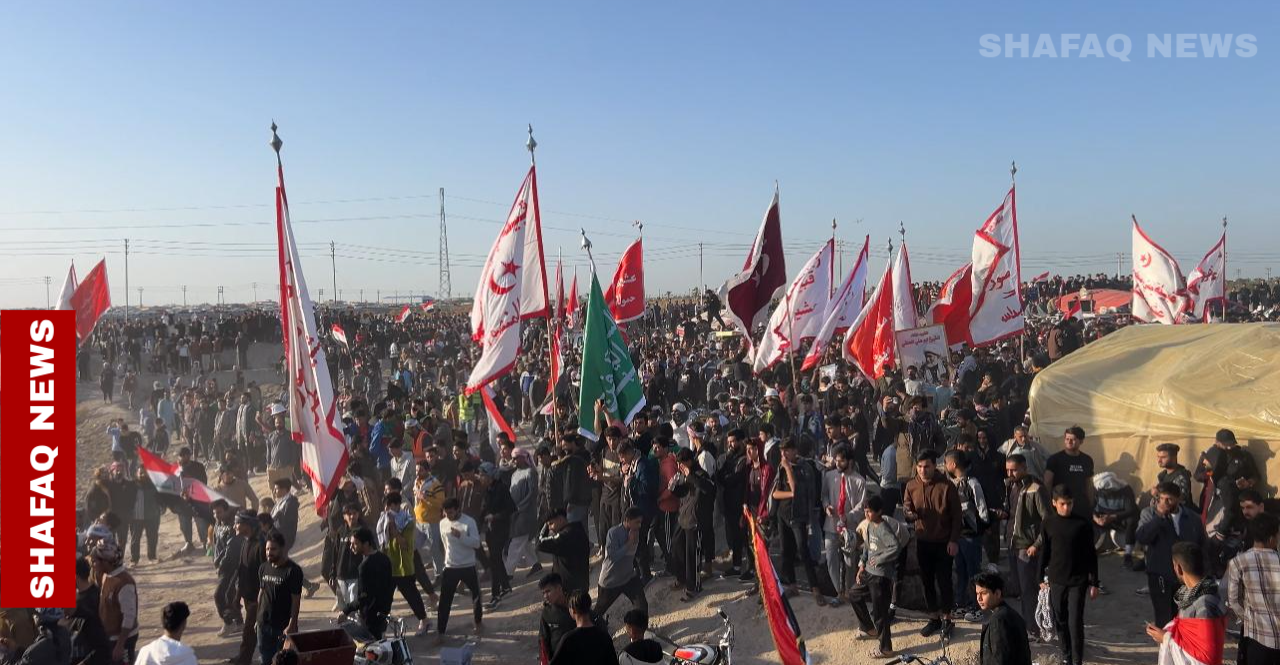
Addressing the people of Basra, the statement said, "Enough is enough. For many years, we have suffered the bitterness of deprivation and marginalization, with no health care, no education, no electricity, no services, and no job opportunities that would preserve the dignity of our youth."
He added, "We previously stood in front of the West Qurna 2 oil fields and raised our voices sincerely, but they met us with silence, disregard, and deadly indifference. Today, we say it loud and clear: Our rights will not be granted; we will seize them by force."
He continued: "We warn anyone who underestimates the will of the people of Nahr al-Ezz: the patience of the patient has limits, and if the patient becomes angry, his revolution will not be stopped by a false promise or a deceptive speech." He stressed: "We, the people of Nahr al-Ezz, will not retreat, and we will not remain silent from today on, and we will continue until we obtain our full and undiminished rights, no matter the cost."
The statement declared, "Our date is Sunday, August 24, a day when everyone will hear the voice of the oppressed, the voice of truth, the voice of the river of glory. And tomorrow is near."
Northern areas of Basra province, particularly the districts of Al-Thaghr and Al-Sadiq, and the Al-Qurna district, have witnessed a series of demonstrations and sit-ins over the past few months, protesting what residents describe as "deliberate marginalization and neglect" by the local and federal governments.
Protesters' demands ranged from improving basic services, providing job opportunities, and addressing the dangerous environmental pollution resulting from oil extraction operations, which have destroyed agricultural areas and spread disease. There have been repeated threats to shut down oil fields if the situation continues to be ignored. link
************
Tishwash: Iraqi banks eye capital boost extension
An economist expects the capital increase period for Iraqi banks "covered by reform" to be extended.
Economic expert Mustafa Akram Hantoush confirmed on Monday that the Central Bank of Iraq and the Iraqi banking system are going through a critical phase, suggesting that the deadline for increasing the capital of banks subject to reform will likely be extended to three years, instead of the previous deadline of the end of this year.
Hantoush told Shafaq News Agency, "The Central Bank contracted last year with Oliver Wyman to conduct a comprehensive study of the banking sector," noting that "the company has completed its study."
He added, "The preliminary report was submitted three weeks ago, while the final report was recently issued. It included a package of mechanisms to address banking challenges and regulate dollar transactions. These mechanisms are currently under discussion between the Central Bank and the company."
Hantoush pointed out that "the recommendations included raising the capital of all Iraqi banks to 400 billion dinars, in addition to paying $2.4 million over four years for banks, under conditions most notably merger or liquidation, as well as restructuring the capital so that relatives' stake does not exceed 10%."
He pointed out that "these conditions pose a significant challenge to the sanctioned banks, making it difficult to comply with the required increase," emphasizing that "the matter requires discussions between the Central Bank and these banks to reach an acceptable formula."
The economic expert expects that "the Central Bank will open a new dialogue with the consulting firm to reach a compromise, either by extending the capital increase period to more than three years, or by reducing the required amounts to be closer to the capabilities of Iraqi banks." link
*************
Mot: Now - This is What I Wants!!!!

Mot: .. Fitting In !!!!

I’m an Economist: Here’s When Tariff Price Hikes Will Start Hitting Your Wallet
I’m an Economist: Here’s When Tariff Price Hikes Will Start Hitting Your Wallet
August 1, 2025 by Gabrielle Olya
A blanket 10% reciprocal tariff issued by President Donald Trump took effect April 5, with more slated to roll out on Aug. 1. So far, prices haven’t surged — but that’s likely to change.
GOBankingRates spoke with Lauren Saidel-Baker, an economist at ITR Economics, about why prices have yet to spike, when they will and how far they are expected to climb.
I’m an Economist: Here’s When Tariff Price Hikes Will Start Hitting Your Wallet
August 1, 2025 by Gabrielle Olya
A blanket 10% reciprocal tariff issued by President Donald Trump took effect April 5, with more slated to roll out on Aug. 1. So far, prices haven’t surged — but that’s likely to change.
GOBankingRates spoke with Lauren Saidel-Baker, an economist at ITR Economics, about why prices have yet to spike, when they will and how far they are expected to climb.
Why Prices Haven’t Surged Yet
We never expected that prices would immediately rise by the full extent of the tariffs imposed.
In some cases, importers absorb at least a portion of the cost. In many cases, excess inventory has been brought into the U.S. in anticipation of these tariff announcements and there will be a lag while that lower-cost inventory is available.
While the impact of tariffs on pricing varies materially on a microeconomic scale, it tends to be smaller on a macroeconomic scale. The supply chain is relatively neutral currently, and stable financial conditions have permitted consumers to shift spending behaviors such that the aggregate effect of tariffs on overall consumer prices has been minimal thus far.
The overall consumer price index also includes housing and services, which are more insulated from tariffs.
When Tariffs Will Start Raising Prices
At Least Social Security Will Go Bankrupt With Good Customer Service
At Least Social Security Will Go Bankrupt With Good Customer Service
Notes From the Field By James Hickman (Simon Black) August 18, 2025
I know it’s cliche, but one of the happiest days of my life was a bit more than four years ago when my daughter was born in Cancún, Mexico. My wife and I chose Mexico deliberately— given all the COVID craziness that was going on (especially in the US), we wanted to be in a place where the pandemic wasn’t going to factor into our lives at all. And Cancun was perfect.
Add in world-class healthcare at affordable prices, and it was an easy call. Plus babies born in Mexico automatically become citizens, and both parents and grandparents receive permanent residency.
At Least Social Security Will Go Bankrupt With Good Customer Service
Notes From the Field By James Hickman (Simon Black) August 18, 2025
I know it’s cliche, but one of the happiest days of my life was a bit more than four years ago when my daughter was born in Cancún, Mexico. My wife and I chose Mexico deliberately— given all the COVID craziness that was going on (especially in the US), we wanted to be in a place where the pandemic wasn’t going to factor into our lives at all. And Cancun was perfect.
Add in world-class healthcare at affordable prices, and it was an easy call. Plus babies born in Mexico automatically become citizens, and both parents and grandparents receive permanent residency.
Pretty much everything about her birth went really smoothly. The Mexican paperwork was shockingly easy, and we were able to get her passport and our residency cards very quickly.
The most difficult part by far was the US side.
We couldn’t fly back to Puerto Rico until she had a US passport. But thanks to the State Department’s broken online system (which crashes constantly and conjures bizarre errors) we were scrambling for a slot.
(It’s also bizarre that, despite millions of Americans traveling to Cancun each year, the US government put its consulate 4 1/2 hours away in Merida... not exactly convenient.)
Once there, storm-trooper style security treated a newborn’s bottled milk as a threat, and then we sat for more than an hour while bureaucrats invented reasons to say “no” to her passport application.
In the end, we finally got what we needed—but the whole process revealed the deeper truth: in the US, government offices act as if citizens work for them. They’ve forgotten their purpose is to serve, and citizens are left with inefficient, indifferent, even borderline inhumane experiences.
Some other countries take a different approach; they treat citizens like valued customers, and bureaucrats are measured on the efficiency and quality of their service.
When the US first launched the Department of Government Efficiency—DOGE—I thought this should be a critical piece of the reform.
Yes, of course, slash fraud, waste, and abuse. But even more urgently, reset the entire culture of how the US government does business with its citizens.
I recently found a glimmer of hope that this may be happening.
Late last week, Social Security marked its 90th birthday since being signed it into law in 1935 at the height of the Great Depression.
Ever since, generations of Americans have accumulated stories of painfully navigating this massive institution— too often about waiting rooms, endless forms, and mind-numbing incompetence.
But something unusual has happened in the last few months. Frank Bisignano, the new commissioner, took over. He comes from a CEO position in the private sector, and seems to be running Social Security like a business.
He’s pushed a digital-first strategy, incorporated AI tools, and focused on simple things that most people in the private sector would take for granted.
Processing backlogs are coming down. Efficiency is up.
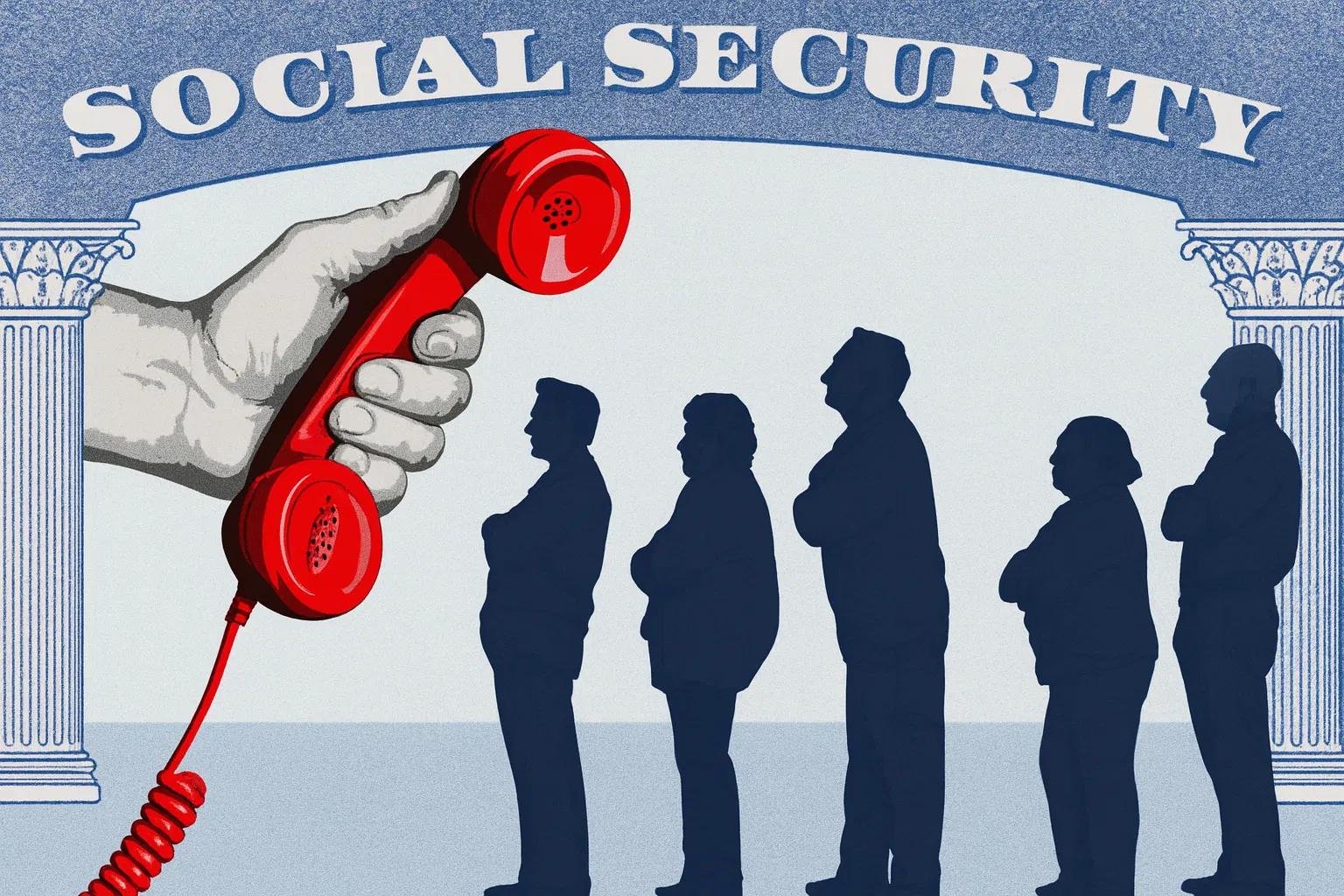
Barely a year ago, you had to spend nearly 30 minutes on hold when you called Social Security. Today, the agency says the wait is under five minutes—while serving nearly twice as many people.
You can also now schedule appointments before going into an office— imagine that. And the average wait time at a Social Security office has also been slashed down to just six minutes.
The Social Security website has been overhauled as well, so taxpayers are able to obtain much more information and handle their service needs online. Crazy that it took until 2025 to make this happen.
Oh, and it turns out that the Social Security website— until very recently— used to be offline nearly 30 hours per WEEK for scheduled downtime. They’ve now eliminated this and MySocialSecurity is now available 24/7.
Frankly, the bar for government performance is so low that saying “the website now works” is heralded as a massive breakthrough.
But still, it’s encouraging to see what’s possible when someone with a private-sector mindset actually tries to fix things. In just a few months, one of the worst bureaucracies in Washington has shown major improvement.
Unfortunately, there’s one thing the Commissioner can’t control: Social Security’s looming insolvency.
Social Security’s finances are up to Congress, and that picture is bleak.
Social Security is almost out of money. Everyone in Washington knows it. At best, there’s less than eight years until Social Security’s major trust fund runs out of money. And it will probably take place sooner than that.
Just like fixing bad government service, fixing Social Security’s solvency is not complicated. At this point there are only a few levers to pull: either raise taxes, or roll back retirement age.
The trustees and Social Security’s own actuaries have spelled out these solutions for years, practically begging Congress to act.
They’ve also been clear— the sooner that Congress works to solve the problem, the less painful the solution will be.
If they raise payroll taxes now, the tax hike will be minor. If they wait until 2032, the increase will be brutal.
Similarly, if they pass a law today to phase in an increase to the retirement age, the change will be minor. If they wait a decade, the increase will be much more dramatic.
Yet Congress is—predictably—the least capable group on the planet when it comes to handling obvious problems.
Sure, most likely they won’t let Social Security fail. But the longer they wait, the more likely the eventual fix will simply be a multi-trillion-dollar bailout funded by “printing” money.
The national debt will continue its upward surge, taxpayers will fork over more money, and inflation will quicken.
Bisignano, Social Security’s new “CEO” commissioner, shows what is possible when government changes its posture.
Instead of the usual “F-you, take a number” attitude, Bisignano’s team worked to serve people more efficiently and respectfully. That massive cultural shift moved the needle almost instantly—wait times fell, backlogs shrank, and an agency long known for dysfunction suddenly became usable.
It shouldn’t stop there. The same mindset could be applied to bigger problems—Social Security’s solvency, immigration, debt. None of these are mysteries. The solutions already exist. It’s not rocket science. What’s required is competence and a willingness to act early, before the problems metastasize.
But that’s the catch. The most incompetent body of all—Congress—is the one charged with making those decisions.
And until voters stop sending the same clowns back to Washington, nothing changes.
These are people who can’t balance a budget, can’t read a balance sheet, and can barely string together a coherent thought—yet they’re entrusted with fixing the nation’s most critical programs.
It’s no wonder every solution comes too late, costs too much, and creates another crisis in the process.
To your freedom, James Hickman Co-Founder, Schiff Sovereign LLC
"MAJOR ALERT! Trump's Surprise Gold Strategy Will Send Gold Above $20,000/Oz" – Andy Schectman
"MAJOR ALERT! Trump's Surprise Gold Strategy Will Send Gold Above $20,000/Oz" – Andy Schectman
Finance Log: 8-17-2025
The possibility of a gold revaluation in the United States is no longer a fringe discussion. With Scott Bessent now serving as Treasury Secretary, the signals coming out of Washington suggest that gold is once again being considered as a pillar of fiscal and monetary strategy.
Judy Shelton, long associated with calls for a return to sound money, has openly floated the idea of issuing Treasury Trust Bonds tied to gold—potentially as early as July 4th, 2026, the 250th anniversary of American independence.
"MAJOR ALERT! Trump's Surprise Gold Strategy Will Send Gold Above $20,000/Oz" – Andy Schectman
Finance Log: 8-17-2025
The possibility of a gold revaluation in the United States is no longer a fringe discussion. With Scott Bessent now serving as Treasury Secretary, the signals coming out of Washington suggest that gold is once again being considered as a pillar of fiscal and monetary strategy.
Judy Shelton, long associated with calls for a return to sound money, has openly floated the idea of issuing Treasury Trust Bonds tied to gold—potentially as early as July 4th, 2026, the 250th anniversary of American independence.
The symbolism is deliberate: a declaration of economic renewal backed by the one asset that has anchored monetary systems for millennia.
But it may not just be about the future—it could already be underway.
Andy Schectman points to staggering amounts of physical gold quietly being drawn out of COMEX since last November. Over $100 billion worth of gold has moved, with delivery percentages far exceeding historic norms.
For decades, less than one percent of contracts stood for delivery. Now, we’re seeing 100 percent fulfillment in certain contract months, with billions leaving the ecosystem.
The obvious question is: who is buying all this gold? The secrecy and scale strongly suggest that it is not hedge funds or private investors.
The possibility that the U.S. government itself is behind this accumulation cannot be ignored.
Seeds of Wisdom RV and Economic Updates Monday Afternoon 8-18-25
Good Afternoon Dinar Recaps,
BRICS Members in 2025: Full List, New Member Countries & Global Impact
The BRICS alliance has expanded significantly, now including eleven member nations as of 2025. What began with five founding members has grown into a geopolitical and economic force representing over 40% of the world’s population and 37.3% of global GDP. With Saudi Arabia finalizing its membership in July 2025, BRICS continues to attract nations searching for alternatives to Western-led institutions.
Good Afternoon Dinar Recaps,
BRICS Members in 2025: Full List, New Member Countries & Global Impact
The BRICS alliance has expanded significantly, now including eleven member nations as of 2025. What began with five founding members has grown into a geopolitical and economic force representing over 40% of the world’s population and 37.3% of global GDP. With Saudi Arabia finalizing its membership in July 2025, BRICS continues to attract nations searching for alternatives to Western-led institutions.
Current BRICS Members and Expansion
Originally formed in 2006 by Brazil, Russia, India, and China—later joined by South Africa in 2010—the BRICS bloc has become an anchor for emerging economies.
2024 expansion: Egypt, Ethiopia, Iran, and the United Arab Emirates joined on January 1, 2024.
2025 expansion: Indonesia joined in January 2025, followed by Saudi Arabia in July 2025.
This brings the current BRICS membership to eleven nations.
Chinese President Xi Jinping emphasized:
“Adding new economies will inject new vitality into BRICS cooperation and increase the representativeness and influence of BRICS.”
Which Countries Want to Join BRICS
Interest continues to rise, with 32 countries signaling interest and 23 filing official applications.
The alliance has also created a circle of 13 “partner countries,” including Belarus, Bolivia, Cuba, Kazakhstan, Malaysia, Nigeria, Thailand, Uganda, and Uzbekistan.
Top candidates for membership include:
Bahrain
Malaysia
Turkey
Vietnam
Belarus
Sri Lanka
Mexico
Kuwait
Thailand
Uzbekistan
Oil producers such as Bahrain and Kuwait aim to leverage their resources as strategic bargaining chips, while Mexico could deliver Latin American access and Belarus offers an Eastern European foothold.
Thailand stated:
“Joining BRICS would benefit Thailand in many respects and boost prospects of being one of the international economic policy makers.”
Economic Impact of BRICS
The expanded bloc now represents 3.3 billion people and wields 37.3% of global GDP (PPP).
China: 19.05%
India: 8.23%
With Iran, UAE, and Saudi Arabia onboard, BRICS members control nearly half of global oil production and roughly 35% of total oil consumption.
S&P Global noted:
“With Saudi onboard the BRICS grouping would be a commodities powerhouse.”
Meanwhile, the New Development Bank (NDB) has financed over $32 billion across 96 projects since 2016, pioneering local-currency infrastructure loans that reduce reliance on the U.S. dollar.
Challenges Facing BRICS
Despite its growth, the alliance faces internal divisions:
China and Russia are pushing rapid expansion.
Brazil and India are urging a more cautious approach.
This tension has slowed decision-making on new member admissions and economic integration strategies.
Political reactions have been sharp:
U.S. President Donald Trump dismissed the bloc outright: “BRICS is dead.”
UN Secretary-General António Guterres highlighted its appeal to developing nations:
“This system was created by rich countries to benefit rich countries. Practically no African country was sitting at the table of the Bretton Woods Agreement.”
Global Shift
The BRICS expansion underscores a multipolar shift in global governance, giving developing nations new financial and trade pathways outside the traditional Western order. With dozens of nations waiting to join, BRICS is positioning itself as the central counterweight to the U.S.-led system in global finance, energy, and trade.
@ Newshounds News™
Source: Watcher.Guru
~~~~~~~~~
Seeds of Wisdom Team RV Currency Facts Youtube and Rumble
Newshound's News Telegram Room Link
Follow the Roadmap
Follow the Timeline
Seeds of Wisdom Team™ Website
Thank you Dinar Recaps
Gold Revaluation to $15,000, Here's The Secret Plan For a U.S. Reset
Gold Revaluation to $15,000, Here's The Secret Plan For a U.S. Reset
Daniela Cambone: 8-18-2025
“Gold is heading to $15,000 an ounce,” says former Swiss banker Clive Thompson in this exclusive conversation with Daniela Cambone.
With U.S. debt exploding and interest costs devouring nearly 20% of tax revenues, Thompson argues Washington’s only lifeline is to revalue its gold reserves, unlocking trillions without adding to the national debt.
“It’s the same playbook from 1934,” he warns, pointing to a quiet plan already in motion that could hand the Treasury $3.9 trillion overnight.
Gold Revaluation to $15,000, Here's The Secret Plan For a U.S. Reset
Daniela Cambone: 8-18-2025
“Gold is heading to $15,000 an ounce,” says former Swiss banker Clive Thompson in this exclusive conversation with Daniela Cambone.
With U.S. debt exploding and interest costs devouring nearly 20% of tax revenues, Thompson argues Washington’s only lifeline is to revalue its gold reserves, unlocking trillions without adding to the national debt.
“It’s the same playbook from 1934,” he warns, pointing to a quiet plan already in motion that could hand the Treasury $3.9 trillion overnight.
Thompson calls $15,000 the “sweet spot” — high enough to ease the debt spiral but not so high as to trigger a dollar collapse. Such a move, he explains, would ignite silver past $100, squeeze America’s creditors, and accelerate a global rush into hard assets.
With Fed rate cuts now certain, COMEX inventories draining, and hedge funds taking physical delivery, Thompson says the world is “waking up to gold’s return as money.”
News, Rumors and Opinions Monday 8-18-2025
Note: All intel should be considered as "Rumors" until we receive official announcements ...and “Rates and Dates” could change anytime until we get to the banks/redemption centers.
Restored Republic via a GCR: Update as of Mon. 18 August 2025
Compiled Mon. 18 August 2025 12:01 am EST by Judy Byington
Possible Global Currency Reset and EBS Timing:
Sun. 17 Aug. 2025: Oil exports from the Kurdistan Region of Iraq to Turkey’s Ceyhan port are set to resume within hours, ending a halt of more than two years. An agreement has been reached between the KRG and the Iraqi Ministry of Oil.
Note: All intel should be considered as "Rumors" until we receive official announcements ...and “Rates and Dates” could change anytime until we get to the banks/redemption centers.
Restored Republic via a GCR: Update as of Mon. 18 August 2025
Compiled Mon. 18 August 2025 12:01 am EST by Judy Byington
Possible Global Currency Reset and EBS Timing:
Sun. 17 Aug. 2025: Oil exports from the Kurdistan Region of Iraq to Turkey’s Ceyhan port are set to resume within hours, ending a halt of more than two years. An agreement has been reached between the KRG and the Iraqi Ministry of Oil.
An informed source told Channel 8 that Iraqi oil exports will begin this week (Mon. 18 Aug) after 28 months of suspension. (Such could not (allegedly) happen unless the Iraqi Dinar had revalued with an international rate). Majeed KSA on X: / X
Sun. 17 Aug. 2025: “The US-led global international coalition is already packing their stuff and ready to leave Iraq. “ Remember Trump said they aren’t leaving until they get paid in full. https://x.com/majeed66224499/status/1957148043658297637
~~~~~~~~~~
Sun. 17 Aug. 2025 High Up Rumors were that it would be wise to stay inside for the next couple of days as chaos was about to hit nations across the Globe. … on Telegram
Trump has given the Green Light for the new Quantum Financial System to slide into place.
The Global Military Alliance and BRICS Nations’ recent (alleged) implementation of the Quantum Financial System changed all. Now every stolen dollar, every offshore vault, every hidden transaction — was tracked, blocked and reversed.
The QFS didn’t just bypass the banks. It (allegedly) replaced them.
~~~~~~~~~~~~
Sun. 17 Aug. 2025 Nesara Gesara Rollout Notice …Mr. Pool on Telegram
Treasury begins gold and commodity peg alignment; Dollar moves to asset basis.
Debt Jubilee protocols tested in three states; interest arrears marked fulfilled.
QFS settlement rail handles Federal payrolls and pensions; public wallets Phase Two opens
Withholding on wages paused; funding shifted to tariffs and resource duties.
Mortgage and title audits start; unlawful fees flagged for repayment.
Small Business relief and revaluation windows scheduled; community banks join the new ledger.
EBS briefings will explain Nesara Gesara benefits prior to full implementation
Keep documents handy, save statements; do not sign new loan terms until briefings.
Read full post here: https://dinarchronicles.com/2025/08/18/restored-republic-via-a-gcr-update-as-of-august-18-2025/
************
Courtesy of Dinar Guru: https://www.dinarguru.com/
Militia Man We're going to maybe see a surprise. Because Iran is one of Iraq's largest trading partners. Yes we've had sanctions and we have some conflict in the Middle East...There's two articles about Iran removing 4 zeros...One of the things that's interesting here and it's no different than Iraq is that I know they were going to talks about coinage in Iraq again...Iran's gong to drop 4-zeros off their currency and Iraq is going to drop 3 zeros...They're trading partners. That kind of levels the playing field...If they can do the same thing at or around the same time, that might be a surprise.
Mnt Goat Another item is the much-needed Oil and Gas law. Article: “ERBIL, BAGHDAD SIGN OIL EXPORT MECHANISM AGREEMENT”. In a major breakthrough, the Kurdistan Regional Government’s (KRG) Ministry of Natural Resources and the Iraqi Ministry of Oil have finalized and signed a comprehensive agreement on the mechanism to resume oil exports from the Kurdistan Region, paving the way to end a costly suspension that has been in place since March 2023. So, although they may not have the new Oil and Gas Law fully in parliament yet, we learned that they are getting very close to resolving past issues and use these crises to build the new law, as the years passed.
************
Iraq's Central Bank of Iraq News: Mandates for End of 2025
Edu Matrix: 8-17-2025
raq’s Central Bank is making some of its biggest moves in years! From ambitious new banking reforms to partnerships with Egypt on digital transformation, these changes could reshape Iraq’s financial future. In this video, we’ll break down the most important updates:
Why banks must raise their capital to 400 billion dinars by 2025
How Iraq is working with Egypt to expand digital banking and fight money laundering
The Central Bank’s daily dollar auctions and what they mean for the Iraqi dinar
New security upgrades to protect financial operations
Support programs for displaced families in Nineveh and Duhok
Whether you’re following the Iraqi dinar, interested in global finance, or just want to stay updated on Middle East economics, this video will give you a clear and simple explanation of what’s happening right now.
Seeds of Wisdom RV and Economic Updates Monday Morning 8-18-25
Good Morning Dinar Recaps,
The United States Prepares a Complete Overhaul of DeFi
Regulatory Overhaul on the Horizon
The U.S. Treasury has placed decentralized finance (DeFi) under sweeping review as part of the GENIUS Act, signed in July 2025 by President Donald Trump. The initiative targets the anonymity of DeFi transactions, aiming to combat money laundering and terrorist financing by embedding digital identity verification directly into DeFi smart contracts.
Good Morning Dinar Recaps,
The United States Prepares a Complete Overhaul of DeFi
Regulatory Overhaul on the Horizon
The U.S. Treasury has placed decentralized finance (DeFi) under sweeping review as part of the GENIUS Act, signed in July 2025 by President Donald Trump. The initiative targets the anonymity of DeFi transactions, aiming to combat money laundering and terrorist financing by embedding digital identity verification directly into DeFi smart contracts.
This would require users to prove their identity—via government-issued IDs or even biometric data—before completing transactions.
Coding Compliance Into DeFi
The Treasury’s proposal seeks to integrate KYC (Know Your Customer) requirements into the very code of DeFi protocols. According to its official notice, these identity tools are meant to balance compliance with user privacy, while reducing burdens for financial institutions.
Banks and regulators largely support the move, but many in the crypto community view it as a threat to anonymity and a break from DeFi’s founding principles.
Technology at the Center
The consultation paper highlights four key tools for regulatory enforcement:
Artificial Intelligence
Surveillance APIs
Blockchain Analytics
Digital Identity Systems
By making these technologies native features of DeFi platforms, regulators aim to ensure the law cannot be circumvented through code.
Industry Reactions
Crypto Community: Critics warn of a dangerous precedent, fearing that U.S.-mandated universal KYC could spread globally and stifle innovation. Concerns also focus on data protection risks if personal identifiers are hard-coded into protocols.
Banking Sector: Groups like the Bank Policy Institute (BPI) support the move but also flagged loopholes in the GENIUS Act, warning Congress that some stablecoin issuers could bypass interest-payment restrictions, potentially shifting up to $6.6 trillion in bank deposits into stablecoins.
Key Facts and Timeline
Public consultation launched: August 18, 2025
Comments accepted until: October 17, 2025
Applies to: All DeFi platforms offering services in the U.S.
Targeted enforcement tools: API, AI, blockchain monitoring, digital identity
Political Pushback
Not all policymakers are aligned. Senator Elizabeth Warren argues the GENIUS Act could weaken transparency rather than strengthen it, legitimizing opaque practices under the guise of innovation.
The Bigger Picture
The U.S. strategy represents a paradigm shift: regulation will be embedded in DeFi infrastructure itself. The era of uncontrolled decentralized finance is ending, and the next chapter will test how much freedom DeFi can retain under government scrutiny.
@ Newshounds News™
Source: CoinTribune
~~~~~~~~~
Will U.S. Regulation Kill Decentralized Finance, or Simply Reshape It?
The United States has moved from watching decentralized finance (DeFi) to attempting to engineer regulation directly into its foundations. Under the GENIUS Act, the Treasury is consulting on rules that would insert identity verification and compliance mechanisms into the very code of DeFi smart contracts. The official justification is clear: stop money laundering, curb terrorist financing, and close loopholes that could drain liquidity from traditional banks.
But the deeper question remains — will this end decentralization?
The Case for the “End of DeFi”
For many, the answer is yes — at least within U.S. borders. By requiring:
Portable digital identifiers for every transaction,
KYC baked into smart contracts, and
AI-driven compliance tools tied directly to platforms,
the government would effectively erase the anonymity and permissionless nature that define DeFi. In this model, “decentralized” finance begins to look more like a tokenized extension of the banking system, where innovation bends to regulatory code.
The Counterpoint: DeFi is Global
Yet DeFi was never designed to exist in a single jurisdiction. Code can be deployed anywhere, and users can access protocols across borders. If the U.S. tightens rules, offshore DeFi will continue without these restrictions, keeping anonymity and censorship resistance alive. Other nations may even embrace this shift, hoping to attract the next wave of innovation that America appears to be constraining.
A Two-Track Future
Rather than a complete “end,” what is emerging is a split reality:
Regulated DeFi (CeDeFi):
U.S. and European platforms that integrate KYC and compliance.
Tailored for banks, institutional investors, and regulated entities.
Less innovation, but far more legitimacy in financial markets.
True DeFi (Permissionless):
Offshore or pseudonymous projects that maintain full decentralization.
Higher innovation potential, but riskier for users facing regulatory pushback.
Likely to attract those unwilling to trade away anonymity.
Why the U.S. is Pushing Now
The timing is not accidental. Bank groups warn that up to $6.6 trillion in deposits could flow into stablecoins, destabilizing traditional finance. For regulators, the threat is not just about crime or terrorism — it is about control of capital flows. If trillions shift into DeFi outside the banking system, central banks lose visibility and authority.
Conclusion: Decentralization Won’t Die, But It Will Change
The U.S. is not ending DeFi — it is reshaping it into a regulated, institution-friendly framework. True decentralization will survive, but it may migrate offshore, becoming harder for Americans to access.
The result? Two parallel worlds:
Compliant DeFi for Wall Street.
Permissionless DeFi for the rest of the world.
In this sense, the fight over DeFi’s future is not about technology alone — it is about whether financial sovereignty remains in the hands of individuals, or is recoded into the architecture of regulation.
@ Newshounds News™
Source: AI ChatGPT
~~~~~~~~~
XRP News: Can Ripple Replace Banks Worldwide?
Riccardo Spagni’s viral post reignites debate as Ripple rides legal victories, political endorsements, and market optimism.
A viral post from Riccardo Spagni, the former lead developer of Monero, has thrust XRP back into the spotlight — and reignited one of crypto’s most divisive debates: can Ripple and XRP eventually replace banks?
Ripple Momentum Builds on Legal & Political Wins
The timing of Spagni’s remarks is significant. Ripple has been riding a string of favorable developments, including the SEC formally dropping its lawsuit against the company. The momentum was amplified when President Donald Trump named XRP as a potential part of the U.S. digital asset reserve stockpile — a surprise endorsement that sent ripples across markets.
XRP’s performance reflects this surge in confidence. Rising from under $1 in late 2024 to over $3.60 by mid-2025, XRP has remained one of the year’s strongest tokens, even after retracing from recent highs. Ripple continues to push its narrative of XRP as a global bridge currency, further boosting investor interest.
Critics Push Back: “Replacing Banks is Unrealistic”
Not everyone is convinced. Spagni revealed that a close friend — previously skeptical of crypto — wanted to buy XRP, persuaded by the belief that banks would be gone within two years. While bullish XRP holders welcomed the statement, critics quickly pushed back.
Skeptics argue that XRP cannot truly replace banks, and warn that granting such influence to Ripple risks creating a single point of failure — running counter to blockchain’s promise of decentralization. Some community members dismissed the hype outright, calling it little more than an orchestrated marketing narrative.
Analysts Warn of Downside Pressure
Amid the heated debate, on-chain analyst Ali Martinez issued a cautious note. He observed that XRP has recently slipped below the key $3 support level, which could expose the token to further downside — possibly to $2.60 or even $2 if bearish momentum accelerates.
At the same time, XRP bulls remain undeterred, with some analysts continuing to forecast a potential rally to $4 by year-end. For many newcomers — like the friend in Spagni’s story — optimism appears to outweigh caution.
Ripple’s Marketing Engine in Overdrive
Even Ripple’s harshest critics concede one thing: its marketing machine is unmatched in crypto. Social media engagement around XRP consistently outpaces most other tokens, drawing fresh retail investors into the ecosystem.
But detractors argue this success is fueled by questionable narratives. Some allege that Ripple funds campaigns exaggerating the collapse of banks or the inevitability of XRP as the “global bridge asset.” One critic, known online as Fish Catfish, even suggested investigative journalists should scrutinize Ripple’s media influence more closely.
Outlook
The debate over XRP’s ultimate role is far from settled. Supporters see Ripple as the front-runner for global financial integration, while critics view it as overhyped and fundamentally centralized.
What remains undeniable is that XRP continues to command disproportionate attention in crypto markets — whether as the future of finance, or as one of the industry’s most polarizing tokens.
@ Newshounds News™
Source: Coinpedia
~~~~~~~~~
Investors May Soon Earn 4–7% Annual Yield on XRP Holdings
Flare Labs and Firelight are collaborating to bring decentralized finance opportunities to XRP holders, with projected yields ranging from 4% to 7% annually.
Flare & Firelight Introduce XRP Yield Opportunities
In a recent interview with Scott Melker, Hugo Philion (CEO of Flare Labs) and Jesus Rodriguez (CTO of Sentora and lead at Firelight) revealed details of their joint initiative. The project aims to allow XRP holders to lend, borrow, and generate yield—unlocking new use cases for an asset historically used only for payments.
Philion compared the concept to Ethereum’s MakerDAO, where investors can lock XRP as collateral to mint stablecoins, acquire assets, or provide liquidity to DeFi protocols. He emphasized that Flare’s approach avoids custodial risks by using FXRP, a wrapped version of XRP secured by network validators, enabling non-custodial transfers and lending.
4–7% Yield Potential for Idle XRP
Rodriguez highlighted that internal tests showed potential annual returns of 4% to 7% for XRP holders. He described this as groundbreaking for an asset that has traditionally generated no yield, noting that restaking strategies could further expand XRP’s DeFi capabilities.
Community Divided on Risk vs. Reward
The XRP community has responded with mixed reactions:
Brad Kimes (Digital Perspectives): Called it a milestone that could unlock “the biggest release of idle liquidity in crypto,” comparing it to turning XRP into a bond-like income stream.
Attorney Bill Morgan: Welcomed the yield prospects as a much-needed incentive for long-term holders.
Vet (XRP Ledger validator): Warned that 7% yield may not justify the risks of deploying volatile assets into DeFi strategies, urging the ecosystem to move beyond short-term speculation.
Morgan suggested that the ideal product would allow holders to lock XRP long-term while borrowing safely against it for liquidity, though such solutions remain in development.
With Flare and Firelight pushing ahead, XRP could soon transform from a non-yielding asset into one that provides steady income streams, potentially reshaping its role in global finance.
@ Newshounds News™
Source: The Crypto Basic
~~~~~~~~~
Seeds of Wisdom Team RV Currency Facts Youtube and Rumble
Newshound's News Telegram Room Link
Follow the Roadmap
Follow the Timeline
Seeds of Wisdom Team™ Website
Thank you Dinar Recaps
“Tidbits From TNT” Monday Morning 8-18-2025
TNT:
Tishwash: Some of them are crucial.. The Coordination Framework will meet tomorrow to discuss five files.
An informed source within the Coordination Framework, which brings together Shiite political forces excluding the Sadrist bloc, revealed the agenda for the framework's meeting scheduled for Monday evening, Sunday.
The source told Shafaq News Agency, "The framework will discuss a number of important issues tomorrow, Monday, including the visit of the Secretary of Iran's Supreme National Security Council, Ali Larijani, to Baghdad last Monday, and his signing of a security memorandum of understanding related to security coordination on the common border between the two countries."
TNT:
Tishwash: Some of them are crucial.. The Coordination Framework will meet tomorrow to discuss five files.
An informed source within the Coordination Framework, which brings together Shiite political forces excluding the Sadrist bloc, revealed the agenda for the framework's meeting scheduled for Monday evening, Sunday.
The source told Shafaq News Agency, "The framework will discuss a number of important issues tomorrow, Monday, including the visit of the Secretary of Iran's Supreme National Security Council, Ali Larijani, to Baghdad last Monday, and his signing of a security memorandum of understanding related to security coordination on the common border between the two countries."
He added, "The framework will also discuss the withdrawal of US forces from Iraq according to the agreed-upon timetable, including a full withdrawal from the Iraqi government-controlled area by September 2025, and from the Kurdistan Region by September 2026."
He pointed out that "the Coordination Framework will also discuss the issue of oil exports via the Turkish port of Ceyhan, which has been suspended since March 2023 following a ruling by the International Chamber of Commerce's Court of Arbitration in Paris, resulting in losses estimated at billions of dollars due to the disruption of supplies."
The source also revealed that the framework will discuss the parliamentary elections scheduled for November 11, 2025, the issue of the Electoral Commission's disqualification of some candidates, and the compensation mechanism for those excluded, who number in the hundreds.
In this context, the source noted that "the Coordination Framework forces may resort to holding a subsequent meeting with the head of the High Elections Commission to discuss the exclusion and compensation mechanism in some detail and in accordance with applicable laws."
For its part, the Electoral Commission clarified that the disqualifications were due to the candidates' violation of Article 7/Third of the House of Representatives Elections Law of 2018.
Article 7/Thirdly, of the law stipulates that the candidate must be “of good character and conduct, and not have received a previous pardon for crimes of financial and administrative corruption or misdemeanors that violate honor.”
As for the final aspect of the framework meeting, the source said it "will include a discussion of the possibility of passing the Popular Mobilization Law and its future consequences for the country. This is expected to be discussed in a preliminary manner during tomorrow's meeting, Monday. A special meeting may be held regarding the Popular Mobilization Law to agree on a mechanism for passing it or postponing it to the next session, in a manner consistent with the requirements of the current stage."
In this regard, Ibtisam al-Hilali, a member of the Coordination Framework, revealed to Shafaq News Agency on Sunday that there is a movement within the House of Representatives to collect signatures to hold an upcoming session to vote on the Popular Mobilization Forces (PMF) law.
However, Member of Parliament Jawad al-Yasari previously confirmed to Shafaq News Agency that there is no directive from the parliament's presidency or a concrete date for resuming scheduled sessions to discuss and vote on a number of important laws, including the Popular Mobilization Forces law link
************
Tishwash: Al-Rasheed begins disbursing the first semi-annual interest on national bonds.
Rashid Bank announced today, Sunday, the commencement of disbursing the first semi-annual interest to holders of the first national bond issue, affirming its commitment to the timetable previously set by the Central Bank of Iraq and the Ministry of Finance.
The bank explained in a statement that "this step comes within the framework of its efforts to enhance confidence in national bonds as a safe savings and investment tool, in addition to their contribution to diversifying funding sources and supporting the national economy."
The bank urged citizens to "visit the relevant branches to receive their dues," stressing that "national bonds represent an important investment opportunity for citizens, as they offer generous returns with full government guarantees, which contributes to attracting local savings and directing them toward development projects." link
************
Tishwash: The Association of Banks announces the launch of a guide to accessing finance in Iraq.
The Iraqi Private Banks Association announced today, Sunday, the launch of a guide to accessing finance in Iraq under the auspices of the German Development Cooperation Agency (GIZ) and the Central Bank of Iraq, noting that the launch of this guide is a fundamental step towards building the national economy.
"The launch of the Access to Finance Guide in Iraq is a fundamental step toward empowering entrepreneurs, small and medium-sized enterprise owners, and all those seeking to contribute to building our national economy," said Ali Tariq, CEO of the Iraqi Private Banks Association, in a speech at the launch event of the Access to Finance Guide.
He added, "Access to financing is one of the biggest challenges facing youth and the private sector in Iraq today. Many innovative ideas and promising projects are stalled due to a lack of clear information about funding sources, available mechanisms, and required procedures." He explained that "this guide will serve as a simplified, practical reference, bringing together various financing tools and options that can benefit investors, entrepreneurs, or any startup."
He continued, "This guide would not have seen the light of day without the fruitful cooperation between the GIZ and the Central Bank, in the belief that enhancing financial inclusion and empowering the private sector represent a fundamental gateway to economic reform in Iraq."
He continued: "We are currently experiencing a pivotal phase in the development process, as the state moves to support and develop the private sector to become an effective partner in building the economy and diversifying sources of income." He pointed out that "this guide is not just a document, but rather a practical tool that will help thousands of young men and women and entrepreneurs identify the options available to them, whether through banks, financing companies, or government and international support programs."
He explained that "the Iraqi Private Banks Association affirms its commitment to working side by side with its partners to overcome obstacles, simplify procedures, and develop the business environment, thus opening the door to investment and innovation."
He pointed out that "the launch of this guide today is a message of hope to Iraqi youth that opportunities exist, support is available, and success is possible when there is determination and resolve, along with sound planning and cooperation." He expressed his thanks to "everyone who contributed to the preparation of this guide, and to all the parties that offered their expertise and support to make this initiative a success. I also thank you for inviting us to participate in issuing this guide, which reflects your commitment to supporting the economic reform process in Iraq."
He expressed his hope that "Iraq will witness more initiatives that will positively impact development and prosperity." link
*************
Mot: .. school - back he is !!!!

Mot: school - first day

Dollar Decline Is the Plan: Gold & Bitcoin to Compete as Neutral Reserve Asset | Luke Gromen
Dollar Decline Is the Plan: Gold & Bitcoin to Compete as Neutral Reserve Asset | Luke Gromen
Miles Frankin Metals: 8-17-2025
Michelle Makori, President & Editor-in-Chief of Miles Franklin Media, speaks with Luke Gromen, Founder & President of Forest for the Trees (FFTT), about why a seismic monetary shift is already underway and why the outcome has effectively been decided.
Gromen explains how the Trump administration is deliberately engineering a weaker U.S. dollar to reshore manufacturing, why central banks around the world have replaced Treasuries with gold for over a decade, and how a “gold pivot” could reset the global system.
Dollar Decline Is the Plan: Gold & Bitcoin to Compete as Neutral Reserve Asset | Luke Gromen
Miles Frankin Metals: 8-17-2025
Michelle Makori, President & Editor-in-Chief of Miles Franklin Media, speaks with Luke Gromen, Founder & President of Forest for the Trees (FFTT), about why a seismic monetary shift is already underway and why the outcome has effectively been decided.
Gromen explains how the Trump administration is deliberately engineering a weaker U.S. dollar to reshore manufacturing, why central banks around the world have replaced Treasuries with gold for over a decade, and how a “gold pivot” could reset the global system.
He also reveals why Bitcoin may be America’s chosen asset to compete with gold as the next neutral reserve asset. In this interview:
The Triffin Dilemma and the deliberate reversal of 50 years of dollar flows
Why the U.S. can’t make the goods to support the current reserve system
The Fed’s quiet gold revaluation research note & hints from top U.S. officials
The chess game between two neutral reserve assets: gold vs. Bitcoin
Luke’s gold & Bitcoin forecast – the next 6-12 months
00:00 Coming Up
01:41 Introduction: The US Dollar's Global Dominance & Its Consequences
06:24 The Dollar’s Managed Decline & Global Implications
12:46 China’s Strategic Moves & the Role of Gold
15:25 U.S. National Security & Industrial Base Concerns
25:41 Potential Gold Revaluation & Its Impact
41:02 Fiscal Challenges & Future Economic Strategies
47:07 Gold as a Primary Reserve Asset
49:09 U.S. Gold Imports & Shadow Programs
52:18 China’s Gold Strategy & U.S. Response
55:58 Bitcoin vs. Gold: The New Neutral Reserve Asset
01:03:45 Bitcoin’s Role in U.S. Economic Strategy
01:18:35 AI’s Impact on the Economy & Gold/Bitcoin
01:27:25 Final Thoughts & Predictions