
Thank you to all the subscribers to our Early Access program…we thank you for your continued support.
We are excited to offer this new service to keep you informed and up-to-date on the latest Dinar and currency news.
This Looks like 2007, Markets at a Critical Tipping Point
This Looks like 2007, Markets at a Critical Tipping Point
Wealthion: 8-12-2025
The financial markets stand at a precarious crossroads, with investors grappling with the existential question: are stocks poised to power to new, unprecedented highs, or are we teetering on the brink of a painful bear market?
According to Chris Vermeulen, founder of TheTechnicalTraders, the answer isn’t simple, but the signals are flashing a critical tipping point.
In a recent in-depth interview with James Connor on Wealthion, Vermeulen laid out a comprehensive technical analysis across major asset classes, warning that while opportunities exist, the underlying market weakness masked by a few dominant players could spell trouble.
This Looks like 2007, Markets at a Critical Tipping Point
Wealthion: 8-12-2025
The financial markets stand at a precarious crossroads, with investors grappling with the existential question: are stocks poised to power to new, unprecedented highs, or are we teetering on the brink of a painful bear market?
According to Chris Vermeulen, founder of TheTechnicalTraders, the answer isn’t simple, but the signals are flashing a critical tipping point.
In a recent in-depth interview with James Connor on Wealthion, Vermeulen laid out a comprehensive technical analysis across major asset classes, warning that while opportunities exist, the underlying market weakness masked by a few dominant players could spell trouble.
One of Vermeulen’s most striking warnings is the uncomfortable parallel he draws between the current market environment and the period leading up to the 2007 top.
He suggests that the market’s current structure, where a small group of mega-cap tech stocks – famously dubbed the “Magnificent Seven” – are driving much of the broader market’s gains, is creating a deceptive illusion of strength.
Beneath the surface sparkle of these tech giants, Vermeulen sees widespread weakness that is reminiscent of past market tops.
Amidst the swirling uncertainty, Vermeulen emphasizes a crucial strategy: avoiding the Fear Of Missing Out (FOMO) and waiting for clear confirmation signals.
He believes that blindly chasing recent gains in a concentrated market is a recipe for disaster. Instead, his approach centers on patience, allowing technical indicators to provide unambiguous direction before committing capital.
The current market dynamic, according to Vermeulen, poses particular risks for retirees and long-term investors. The potential for a significant market correction, coupled with the deceptive strength of a few stocks, could erode portfolios built on traditional long-term strategies if not carefully managed. His analysis underscores the need for vigilance and a deep understanding of underlying market mechanics, rather than simply relying on headline index performance.
Chris Vermeulen’s insights provide a sobering yet crucial perspective on the current financial landscape. His emphasis on technical signals, avoidance of FOMO, and detailed breakdown of various asset classes paints a picture of a market at a critical crossroads, demanding careful consideration and strategic positioning from all investors.
For a comprehensive understanding of Chris Vermeulen’s technical signals and further insights into his market outlook, watch the full interview on Wealthion.
News, Rumors and Opinions Wednesday 8-13-2025
KTFA:
Clare: Government advisor: Iraq is qualified to become a cultural and religious tourism destination in the Middle East.
8/13/2025 Baghdad - INA - Nassar Al-Hajj
The Prime Minister's Financial Advisor, Mazhar Mohammed Salih, confirmed on Wednesday that Iraq possesses the necessary capabilities to become one of the most prominent cultural and religious tourism destinations in the Middle East.
Saleh told the Iraqi News Agency (INA): "Despite Iraq's unique cultural and tourism heritage, which includes religious, cultural, and environmental tourism, the contribution of tourism to the gross domestic product does not exceed 0.5%, compared to countries like Spain, where the percentage is close to 13%. This disparity indicates a policy and investment gap that can be bridged through well-thought-out structural reforms."
KTFA:
Clare: Government advisor: Iraq is qualified to become a cultural and religious tourism destination in the Middle East.
8/13/2025 Baghdad - INA - Nassar Al-Hajj
The Prime Minister's Financial Advisor, Mazhar Mohammed Salih, confirmed on Wednesday that Iraq possesses the necessary capabilities to become one of the most prominent cultural and religious tourism destinations in the Middle East.
Saleh told the Iraqi News Agency (INA): "Despite Iraq's unique cultural and tourism heritage, which includes religious, cultural, and environmental tourism, the contribution of tourism to the gross domestic product does not exceed 0.5%, compared to countries like Spain, where the percentage is close to 13%. This disparity indicates a policy and investment gap that can be bridged through well-thought-out structural reforms."
He added, "Iraq has unique tourism pillars globally, including religious, archaeological, and global tourism, all of which are interconnected. Tourism activity alone contributes to generating value-added chains simultaneously. This requires a strong investment policy that increases the number of workers in the tourism sector from the current 100,000 to 500,000 or more."
He pointed out that "this important issue can be activated once investment in this sector is reorganized, whether directly or indirectly, which requires raising tourism's contribution to the GDP from the current 0.5% to 5% over the five-year plan."
He explained that "cultural and religious tourism can enhance Iraq's international image in a more attractive way through investment and tourism promotion, and most importantly, diversifying sources of national income and reducing dependence on oil."
He stressed that "it requires launching a highly specialized national tourism strategy, in partnership with the private sector and international tourism organizations, for the years 2025-2035, in accordance with the vision of the Prime Minister's government program and his recent affirmations in this regard, without neglecting to amend laws to encourage private tourism investment."
He added: “With long-term tax exemptions as stipulated in the current investment law, and the allocation of tourism development funds directed at small and medium enterprises, as well as the establishment of free tourism zones with extensive customs and investment facilities linked to tourism development programs with the world, which include, for example, the launch of the Mesopotamian Civilizations Trail (Ur, Babylon and Nineveh) with a global tourism delegation system in an integrated tourism product with the world, as well as the marshes and religious and cultural tourism.”
He concluded by saying, "Iraq has the necessary capabilities to become one of the most prominent cultural and religious tourism destinations in the Middle East, but this requires the implementation of a clear policy and strategic investment in infrastructure and laws."
He pointed out that "transforming the tourism sector into a true engine of development requires immediate practical steps, starting with policies and ending with immediate implementation on the ground." LINK
************
Clare: Baghdad and Kurdistan agree to resume oil exports under a special mechanism
8/13/2025
The Kurdistan Regional Government's Ministry of Natural Resources agreed on Wednesday with the Iraqi Ministry of Oil to resume exports of the region's crude oil under a special mechanism.
According to information obtained by Shafaq News Agency, the agreement stipulates that the export process will be conducted in accordance with the daily production of the fields, with 50,000 barrels allocated to meet the region's internal needs, while the remaining quantities will be delivered to the federal government's SOMO company.
The information also indicated that the draft agreement was signed by a delegation from the federal Ministry of Oil and a delegation from the region's Ministry of Natural Resources, confirming that the federal delegation has returned to Baghdad.
According to the same information, the start of exports requires negotiations between the federal and Turkish governments before the process can be implemented.
An informed source revealed to Shafaq News Agency last month the details of the agreement between Baghdad and Erbil regarding the resumption of Kurdistan's oil exports. He confirmed that the agreement stipulated that the regional government would hand over 240 billion dinars in revenues for the months of May and June, at a rate of 120 billion dinars per month, in addition to delivering 230,000 barrels of oil per day to Baghdad, in exchange for the latter sending the salaries of the region's employees for those two months.
The roots of this crisis between the federal government in Baghdad and the Kurdistan Regional Government (KRG) lie in ongoing disagreements over oil export mechanisms and the unification of public revenues. This is a long-standing crisis that resurfaces from time to time, but it has worsened significantly since May 2025, when the federal government refused to send salaries to the region's employees. LINK
************
Courtesy of Dinar Guru: https://www.dinarguru.com/
Frank26 [Iraq boots-on-the-ground report] FIREFLY: TV is saying we only have 20 days left to implement the banking reforms issued by Oliver Wyman of the United States...says Washington is pressuring and watching. We only have 20 days left for liquidation of banks. They have to get capital up to a certain amount. FRANK: That's why I keep telling you watch what President Trump does this month in your country. T-minus 20 days and counting to implement your monetary reform.
Walkingstick Trump is pushing the monetary reform. He's using Wyman and Rubio to push it. These are the people in Trumps circle. There's a reason why [Iraq] hired the American consulting firm because Trump wanted it because that's going to push the monetary reform. They are there now and said we want to talk to you about the monetary reform. Trump has been pushing for this monetary reform for a long time. That consulting firm is not by chance. Wyman is representing the United States. This is happening for the monetary reform.
************
Shocking Report: The Treasury Needs $1.6 Trillion by End of Year
Heresy Financial: 8-12-2025
TIMECODES
00:00 Why the Treasury Needs $1.6 Trillion
00:42 The Scale of Government Borrowing
02:15 How Debt Levels Reached This Point
03:20 The Impact on Interest Rates and Markets
04:18 Why the Deadline Matters
05:05 Possible Consequences for the Economy
06:02 What This Means for Everyday Americans
07:00 Final Thoughts and Warnings
Seeds of Wisdom RV and Economic Updates Wednesday Afternoon 8-13-25
Good Afternoon Dinar Recaps,
Brazil Leads BRICS Toward Historic Common Currency Launch by 2026
The BRICS common currency initiative is entering its most advanced phase yet, with Brazil spearheading efforts toward what analysts forecast as a potential 2026 launch. Recent developments include progress on digital payment systems, expanded local currency settlements, and blockchain-based infrastructure — positioning the project as a direct challenge to U.S. dollar dominance
Good Afternoon Dinar Recaps,
Brazil Leads BRICS Toward Historic Common Currency Launch by 2026
The BRICS common currency initiative is entering its most advanced phase yet, with Brazil spearheading efforts toward what analysts forecast as a potential 2026 launch. Recent developments include progress on digital payment systems, expanded local currency settlements, and blockchain-based infrastructure — positioning the project as a direct challenge to U.S. dollar dominance.
Momentum Builds After 2024 and 2025 Summits
2024 BRICS Summit in Kazan saw major breakthroughs in monetary cooperation. Russian President Vladimir Putin was seen with what appeared to be a prototype BRICS banknote.
Putin emphasized that BRICS is not rejecting the dollar outright but is seeking alternatives due to restrictions on its use:
“If they don’t let us work with [the dollar], what can we do? We have to look for other alternatives, which is happening.”
2025 Brazil Summit maintained currency momentum despite some high-profile absences. Analysts now view 2026 as a realistic target for the rollout, with digital settlement mechanisms being implemented across member nations.
U.S. Tariffs Accelerate De-Dollarization
U.S. tariffs on Brazilian exports under the Trump administration have intensified BRICS’ push for a shared currency.
Brazilian President Luiz Inácio Lula da Silva and Chinese President Xi Jinping have pledged deeper cooperation to resist “unilateralism and protectionism.”
Diplomatic strains escalated after Brazil’s Finance Minister canceled a meeting with the U.S. Treasury Secretary.
Economic Benefits and Strategic Impact
Reduced dollar dependency and greater transaction efficiency are top economic drivers for the BRICS currency project.
Iranian Ambassador to Russia Kazem Jalal stressed that the initiative would help member nations bypass the impact of U.S. sanctions.
Integration of blockchain technology and central bank digital currencies (CBDCs) is advancing, enabling a modern settlement framework.
2026 Implementation Path
Brazil’s leadership is focused on aligning monetary policies, inflation management, and payment infrastructure across BRICS members. Despite varying economic conditions, the bloc is consolidating around shared frameworks to ensure the currency’s successful rollout.
@ Newshounds News™
Source: Watcher Guru
~~~~~~~~~
Seeds of Wisdom Team RV Currency Facts Youtube and Rumble
Newshound's News Telegram Room Link
Follow the Roadmap
Follow the Timeline
Seeds of Wisdom Team™ Website
Thank you Dinar Recaps
Fed Hints at Gold Revaluation: From ‘Conspiracy Theory’ to Central Bank Policy?
Fed Hints at Gold Revaluation: From ‘Conspiracy Theory’ to Central Bank Policy?
Miles Franklin Metals: 8-12-2025
Michelle Makori, President & Editor-in-Chief of Miles Franklin Media, speaks with Matthew Piepenburg, Partner at VON GREYERZ, about the Federal Reserve’s surprising acknowledgment of gold revaluation as a debt solution – a move once dismissed as “tinfoil hat” thinking.
The Fed’s recent notes detail how countries have revalued gold reserves to raise cash without selling an ounce and how the U.S. could do the same.
Fed Hints at Gold Revaluation: From ‘Conspiracy Theory’ to Central Bank Policy?
Miles Franklin Metals: 8-12-2025
Michelle Makori, President & Editor-in-Chief of Miles Franklin Media, speaks with Matthew Piepenburg, Partner at VON GREYERZ, about the Federal Reserve’s surprising acknowledgment of gold revaluation as a debt solution – a move once dismissed as “tinfoil hat” thinking.
The Fed’s recent notes detail how countries have revalued gold reserves to raise cash without selling an ounce and how the U.S. could do the same.
Piepenburg breaks down what this could mean for the dollar, U.S. debt, and global power dynamics, plus the risks if Russia and China hold more gold than America.
This discussion is a Quick Cut from a longer in-depth interview. It covers:
Why the Fed is “planting the seed” for gold revaluation
How past gold revaluations worked in other countries
The trillion-dollar question: Spot price vs. $20K gold
Risks if China & Russia have more gold than the U.S.
Would this accelerate de-dollarization?
00:00 Introduction to Gold Revaluation
00:21 Federal Reserve's Note on Gold Revaluation
01:02 Global Examples of Gold Revaluation
01:46 Implications and Speculations on US Gold Revaluation
02:29 Historical Context and Mainstream Acceptance
03:55 Potential Impact on US Debt and Economy
06:21 Global Reactions and Strategic Considerations
Ariel: Recent Developments Surrounding the Revaluation of the Iraqi Dinar
Ariel: Recent Developments Surrounding the Revaluation of the Iraqi Dinar
8-13-2025
The recent developments surrounding the Iraqi Dinar (IQD) revaluation represent a convergence of economic, geopolitical, and technological factors that could mark one of the most significant financial shifts in modern history.
As of August 12, 2025, the global financial landscape is undergoing profound changes, with Iraq’s banking reforms, the resolution of the Ripple-SEC case, and discussions on gold revaluation by the Federal Reserve creating a fertile ground for currency adjustments.
Ariel: Recent Developments Surrounding the Revaluation of the Iraqi Dinar
8-13-2025
The recent developments surrounding the Iraqi Dinar (IQD) revaluation represent a convergence of economic, geopolitical, and technological factors that could mark one of the most significant financial shifts in modern history.
As of August 12, 2025, the global financial landscape is undergoing profound changes, with Iraq’s banking reforms, the resolution of the Ripple-SEC case, and discussions on gold revaluation by the Federal Reserve creating a fertile ground for currency adjustments.
These events are not isolated; they interconnect through international monetary policies, blockchain advancements, and strategic resource management, potentially leading to enhanced value for currencies like the IQD. For American citizens holding IQD, this period signals an opportunity for substantial gains, driven by Iraq’s push toward financial sovereignty and integration into global digital payment systems.
The excitement for us IQD holders lies in the logical progression: Iraq’s reforms address long-standing issues like corruption and dollar dependency, paving the way for a managed revaluation.
Historical data from countries like Germany (post-WWII) and Russia (1998) show revaluations yielding 10-100x returns for early investors, though Iraq’s could be more modest (e.g., 1,000-500 IQD/USD initially).
[Don’t Quote] Chase Bank’s preparation, as relayed by a manager, reflects internal memos circulating among major U.S. banks since mid-2025, training staff on handling exotic currency exchanges amid expected Middle Eastern volatility.
This aligns with Basel III’s emphasis on reserve assets, prompting banks to gear up for influxes of revalued dinars.
The Iraq blackout’s timing, mirroring Kuwait’s 1990-1991 disruptions during currency transitions, suggests deliberate orchestration for system resets.
In Kuwait, blackouts masked the printing and distribution of new dinars; in Iraq, it may have enabled software updates for a digital dinar pilot, unreported but inferred from CBI’s recent digital payment initiatives.
Over the next couple of months, key milestones include the August 31 reform deadline and potential IMF reviews in September 2025. Success here could trigger a pilot revaluation by Q4, with full implementation in 2026, driven by oil prices stabilizing above $80 per barrel.
American holders should be excited because this event transcends speculation; it’s a testament to Iraq’s reconstruction, potentially yielding life-changing returns while contributing to global financial equity.
The convergence of these factors Ripple’s clarity, gold revaluation talks, and Iraq’s reforms positions IQD as a pivotal asset in the shift toward multipolar economics. In witnessing this, individuals are observing the erosion of petrodollar dominance, with implications for U.S. fiscal policy and crypto integration. The next months promise volatility but also opportunity, as Iraq pulls the trigger on long-awaited stability.
Here’s the probable sequence of events Iraq would follow right before a currency revaluation based on how other countries have done it, plus Iraq’s current political and economic reality:
Stage 1 — Final Banking Reform Lock-In
Timeline: Weeks–months before a rate change
What to Watch For: From Stephanie
Central Bank of Iraq (CBI) announces all private banks have met capital and compliance requirements.
Public confirmation that Iraqi banks are fully SWIFT compliant and connected for international settlements.
Foreign bank partnerships become operational (not just announced).
IMF, World Bank, or BIS statements praising Iraq’s financial readiness.
Stage 2 — Market Preparation
Timeline: 2–6 weeks before
What to watch for:
Tightened dollar supply domestically (already happening, but would intensify).
Increase in official gold reserves and CBI foreign currency holdings.(This has been occurring.)
CBI runs “public education” campaigns about modern banking, digital payments, and avoiding currency speculation.(This has been occurring.)
Quiet, unexplained meetings between Iraq, the U.S. Treasury, and IMF teams.(This has been occurring.)
Stage 3 — Legislative & Policy Clearance
Timeline: Days–weeks before
What to watch for:
Finalization of the Hydrocarbon Law (HCL) and budget laws to secure oil revenue flow. (With elections coming up Nov 2025, the HCL could be up for legislation in early 2026.)
Laws passed to protect investors and prevent capital flight.
PM Al-Sudani or CBI Governor making speeches about “a new phase for Iraq’s economy.”
Announcement of new financial contracts or trade agreements priced in dinars instead of USD.
Stage 4 — Exchange Rate Adjustment
Timeline: Immediate
What to watch for:
CBI makes an early-morning announcement (often on a Sunday in Iraq when markets are closed internationally).
Overnight system updates for banks, ATMs, and SWIFT codes.
Temporary bank closures for 1–3 days while systems adjust.
Strong capital controls — limits on cash withdrawals, foreign transfers, and currency exchanges in the first days.
Stage 5 — Post-Revaluation Stabilization
Timeline: Weeks after
What to watch for:
Heavy CBI intervention to keep the new rate stable.
Gradual easing of capital controls once confidence is established.
IMF and World Bank monitoring reports showing stability.
Surge in foreign investment announcements. (US sent our largest trade delegation in history to sign trade deals in March 2025.)
The big tell: When Iraq finishes banking reforms AND resolves all U.S./IMF compliance issues, the gap between that and a revaluation is usually short weeks or months, not years.
Read Full Article: https://www.patreon.com/posts/federal-reserve-136357628
Seeds of Wisdom RV and Economic Updates Wednesday Morning 8-13-25
Good Morning Dinar Recaps,
U.S. Banks Warn Congress: Close GENIUS Act Stablecoin Loophole Before It Disrupts the Financial System
A coalition of major U.S. banking organizations is calling on Congress to close a critical loophole in the newly enacted GENIUS Act, warning that it could allow stablecoin issuers to offer yields through affiliate businesses — a move they say could drain trillions from the banking system and destabilize the U.S. credit market.
Good Morning Dinar Recaps,
U.S. Banks Warn Congress: Close GENIUS Act Stablecoin Loophole Before It Disrupts the Financial System
A coalition of major U.S. banking organizations is calling on Congress to close a critical loophole in the newly enacted GENIUS Act, warning that it could allow stablecoin issuers to offer yields through affiliate businesses — a move they say could drain trillions from the banking system and destabilize the U.S. credit market.
The Loophole at the Heart of the Dispute
Signed into law on July 18, the GENIUS Act prohibits stablecoin issuers from directly paying interest or yield to token holders. However, it does not explicitly extend this restriction to crypto exchanges or other affiliated platforms.
This omission, banking groups argue, creates a backdoor for issuers to indirectly pay yields, sidestepping the law’s intent and undermining the banking sector’s ability to retain deposits.
The Bank Policy Institute (BPI) — joined by the American Bankers Association, Consumer Bankers Association, Independent Community Bankers of America, and the Financial Services Forum — warned in a letter to Congress that this gap could trigger a deposit flight of up to $6.6 trillion from the traditional banking system.
Why Bankers See a Risk
Banks rely on deposits to fund loans for households and businesses. If large amounts of capital shift into yield-bearing stablecoins, credit availability could shrink, interest rates could climb, and borrowing could become more expensive for Main Street.
According to the April U.S. Treasury report cited in the letter, such an outflow could:
Increase deposit flight risk, especially during periods of market stress.
Reduce overall credit supply in the economy.
Lead to higher loan costs for businesses and consumers.
The Competitive Edge of Yield-Bearing Stablecoins
Yield is one of the strongest marketing tools for stablecoin adoption.
Some stablecoins offer built-in rewards, while others — such as Circle’s USDC — provide incentives through exchanges like Coinbase and Kraken.
Coinbase CEO Brian Armstrong insists these payments are “rewards,” not “interest,” arguing they fall outside the GENIUS Act’s restrictions.
PayPal has also indicated it plans to continue offering incentives for its stablecoin users.
Bankers counter that stablecoins differ fundamentally from bank deposits or money market funds because they do not fund loans or invest in securities to generate returns. Instead, they are designed to maintain a fixed peg, meaning any yield offered would be purely a competitive draw for deposits, not a driver of economic growth.
Market Context
Stablecoin Market Cap: $280.2 billion as of mid-2025.
Dominance: Over 80% controlled by Tether (USDT) and USDC.
U.S. Money Supply Comparison: Stablecoins are still a fraction of the $22 trillion U.S. dollar supply.
Growth Projections: Treasury estimates the stablecoin market could reach $2 trillion by 2028.
Balancing Dollar Dominance with Financial Stability
Crypto industry analysts argue that the GENIUS Act — by legitimizing and promoting dollar-backed stablecoins — could strengthen U.S. dollar dominance on the global stage, especially in competition with rival currencies.
However, bankers warn that without tighter rules, the same growth could come at the cost of domestic financial stability.
As the stablecoin sector expands, the fight between innovation and regulation is intensifying — and lawmakers may soon have to decide whether this “gray zone” in the GENIUS Act will be closed or exploited.
@ Newshounds News™
Sources: Coinpedia and Cointelegraph
~~~~~~~~~
SEC Shifts Focus to Clear Crypto Rules After Ripple Settlement
The U.S. Securities and Exchange Commission (SEC) is turning its attention toward crafting a clear regulatory framework for cryptocurrency, following the conclusion of its nearly five-year legal battle with Ripple Labs.
Case Closure Frees Regulatory Focus
The dispute, which began in December 2020, ended after both parties agreed to drop appeals and cover their own legal costs. SEC Commissioner Hester Peirce called the resolution a “welcome development” that frees resources for policymaking.
SEC Chair Paul Atkins echoed this sentiment, stating that the agency can now move “from the courtroom to the policy drafting table” to build rules that encourage innovation while protecting investors.
Background of the Ripple Case
The SEC alleged Ripple raised $1.3 billion through unregistered XRP sales.
In July 2023, Judge Analisa Torres ruled XRP was not a security for retail sales, but was a security in institutional sales.
Ripple was fined $125 million in August 2024.
Push for the CLARITY Act
The conclusion of the Ripple case comes as lawmakers debate the CLARITY Act, a bill intended to define digital assets more clearly under U.S. law. Republican sponsors aim to pass it by Sept. 30, alongside the Anti-CBDC Surveillance State Act, which seeks to block a U.S. central bank digital currency.
However, opposition is mounting. Key Democrats, led by Rep. Maxine Waters, have labeled the package “dangerous” and accused Republicans of fast-tracking it without sufficient safeguards.
Key Takeaway
With Ripple litigation behind it, the SEC faces mounting pressure to deliver well-defined crypto regulations that can balance innovation, investor protection, and political consensus.
@ Newshounds News™
Source: Cointelegraph
~~~~~~~~~
DeFi Advocates and a16z Call on SEC to Establish Safe Harbor for Blockchain Apps
The DeFi Education Fund and venture capital giant Andreessen Horowitz (a16z) are urging the U.S. Securities and Exchange Commission (SEC) to create a regulatory safe harbor for certain blockchain applications — a move they say would provide much-needed clarity for developers and preserve the SEC’s authority over high-risk activities.
Proposal for a Safe Harbor
In a letter to SEC Commissioner Hester Peirce, the groups proposed a framework that would exempt qualifying blockchain apps from the agency’s broker-dealer rules.
To qualify, an app must:
Be non-custodial (not hold user assets)
Avoid making recommendations or exercising discretion over user activity
Be built on decentralized underlying protocols
These conditions, they argue, reflect the reality that most blockchain applications are passive software tools enabling users to interact directly with public, decentralized networks — not intermediaries acting like traditional brokers.
Regulatory Shift Under Trump Administration
The proposal comes amid a noticeable regulatory pivot under the Trump administration:
Creation of a crypto task force to establish a more “sensible” regulatory path
Termination of investigations into several crypto firms
Launch of Project Crypto to modernize SEC rules for digital assets
Previously, the SEC had hinted that certain apps — including Coinbase Wallet, Uniswap Labs, and OpenSea — might need to register as brokers. Enforcement actions and investigations into these platforms were ultimately dropped, including a court dismissal of broker allegations against Coinbase Wallet.
Flexibility for Developers
Amanda Tuminelli, Executive Director of the DeFi Education Fund, emphasized that the safe harbor is designed to be adaptable:
“Developers deserve clarity. Our hope is to provide guidelines that allow front-end developers to build without fear of being subjected to outdated requirements misaligned with modern technology.”
Why It Matters
Supporters argue that without a safe harbor, U.S. blockchain innovation risks being stifled by uncertainty and misapplied regulatory frameworks — potentially pushing development overseas.
@ Newshounds News™
Source: The Block
~~~~~~~~~
Seeds of Wisdom Team RV Currency Facts Youtube and Rumble
Newshound's News Telegram Room Link
Follow the Roadmap
Follow the Timeline
Seeds of Wisdom Team™ Website
Thank you Dinar Recaps
“Tidbits From TNT” Wednesday Morning 8-13-2025
TNT:
Tishwash: Iraqi Embassy in Washington: Iraq is not subordinate to any country's policy.
The Iraqi embassy in Washington confirmed on Wednesday that Iraq is not subordinate to any country's policies.
The embassy said in a statement received by ( IQ ): "In response to the statements made by the US State Department spokesperson during her recent press conference, we affirm that Iraq is a fully sovereign state and has the right to conclude agreements and memoranda of understanding in accordance with the provisions of its constitution and national laws, and in a manner consistent with its supreme interests."
TNT:
Tishwash: Iraqi Embassy in Washington: Iraq is not subordinate to any country's policy.
The Iraqi embassy in Washington confirmed on Wednesday that Iraq is not subordinate to any country's policies.
The embassy said in a statement received by ( IQ ): "In response to the statements made by the US State Department spokesperson during her recent press conference, we affirm that Iraq is a fully sovereign state and has the right to conclude agreements and memoranda of understanding in accordance with the provisions of its constitution and national laws, and in a manner consistent with its supreme interests."
He added, "Iraq enjoys friendly and cooperative relations with a large number of countries around the world, including its geographical neighbors, the United States of America, and other friendly countries, and is keen to build these relations on the foundations of mutual respect and common interests," stressing that "Iraq is not subservient to the policies of any country."
She pointed out that "Iraq's decisions stem from its independent national will. In this context, the security agreement recently signed with Iran comes within the framework of bilateral cooperation to maintain security and control the common border, in a way that achieves the stability and security of the two countries and serves the security of the region as a whole link
************
Tishwash: The Central Bank of Iraq discusses the banking reform plan with Oliver Wyman.
On Tuesday, the Governor of the Central Bank of Iraq, Ali Al-Alaq, discussed with the international company Oliver Wyman the details of the banking reform plan submitted by the Iraqi Private Banks Association, as part of efforts to develop the banking sector and align it with international standards.
The Central Bank stated in a statement received by Shafaq News Agency that Al-Alaq and the relevant team held a meeting with Oliver Wyman to discuss what was stated in the letter of the Iraqi Private Banks Association regarding the banking reform plan.
Al-Alaq confirmed in the statement that the Central Bank had completed an extensive discussion, during which attendees expressed an understanding of the points contained in the letter and ways to flexibly adapt some of the plan's provisions to facilitate implementation. The company has begun studying available avenues to present the best proposals and ideas in this regard as soon as possible.
The statement continued, "This is confirmed by what the bank announced during the months-long plan preparation period, which stated that the goal of the plan is to achieve a real project to build and stabilize the banking sector to operate safely and effectively in accordance with international practices and standards and local laws, in order to enhance governance, compliance, and risk management, to transition banks to an economic role that enhances the development process and provides services with the highest levels of efficiency and effectiveness, using the best practices and modern technologies."
The bank emphasized that the plan would "enhance local and international confidence in the Iraqi banking sector, particularly since implementing the plan and adhering to its provisions will lead to the restoration of relationships between all banks that meet the plan's requirements and internationally accredited correspondent banks, particularly those that do not currently have international banking relationships." link
************
Tishwash: The Ministry of Finance postpones the submission of the 2025 budget schedules, and first-half revenues exceed 60 trillion dinars.
Financial and economic affairs expert Haider Al-Sheikh revealed today, Tuesday (August 12, 2025), that the Ministry of Finance informed the General Secretariat of the Council of Ministers of postponing the submission of the federal budget tables for the year 2025.
In an interview with Baghdad Today, Al-Sheikh said, "The Ministry of Finance has officially informed the General Secretariat of the Council of Ministers that it will postpone sending the schedules for the draft federal budget law for 2025 until the relevant authorities complete the audit of the allocations."
He explained that "the Prime Minister's directive to the Ministry of Finance to release bonuses, promotions, and service calculations for state employees, as well as the Ministry of Finance's letter to the General Secretariat of the Council of Ministers, confirm that there are no budget schedules for this year."
He added, "Oil and non-oil revenues generated from January to July 2025 amounted to more than 60 trillion dinars, an amount sufficient to pay employee salaries as planned in last year's operating budget."
He stressed that "oil and non-oil revenues are expected to reach more than 130 trillion dinars by the end of this year, sufficient to pay the salaries of employees and retirees, the social safety net, in addition to food ration card and energy bills, and operating expenses."
The federal budget preparation process in Iraq faces recurring challenges, most notably the volatility of global oil prices, political pressures over allocations, and technical issues in auditing government spending. Delays in submitting budgets to the Council of Ministers and then Parliament often lead to the disruption of investment projects and the postponement of development plans. Meanwhile, the government continues to rely on operating expenses to cover salaries and basic expenses, a pattern that occurred in previous years when budgets were approved in the second half or even at the end of the year. link
************
Mot: Yeppers!! -- Every Time!!!

Mot: ""Mots"" Tip on Keeping Ur Relationship Fresh They Say!!!!

The Final Reset is Here! Gold & Silver Prices Will Soar DRAMATICALLY Soon - Chris Vermeulen
The Final Reset is Here! Gold & Silver Prices Will Soar DRAMATICALLY Soon - Chris Vermeulen
Money Sense: 8-12-2025
Chris Vermeulen views the current gold setup as resembling 2007. Back then, stocks reached a marginal new high, while gold quietly began to outperform.
When equities rolled over, gold surged—first clearing a 20% target, then stretching to a 37% rally before cooling off. Over the past two decades, gold has returned 616% compared to the S&P 500’s 421%.
The Final Reset is Here! Gold & Silver Prices Will Soar DRAMATICALLY Soon - Chris Vermeulen
Money Sense: 8-12-2025
Chris Vermeulen views the current gold setup as resembling 2007. Back then, stocks reached a marginal new high, while gold quietly began to outperform.
When equities rolled over, gold surged—first clearing a 20% target, then stretching to a 37% rally before cooling off. Over the past two decades, gold has returned 616% compared to the S&P 500’s 421%.
That’s not a minor gap—it suggests a more profound shift in market leadership. Today, Vermeulen sees a bull flag pattern forming in gold, with an initial target of $3,700 and a secondary target of $4,100.
And unlike the five-month run in 2007, he thinks this move could play out in just two to three months. Once it breaks, he expects momentum to feed on itself—emotional buying, crowded trades, and acceleration.
In the short term, gold has taken a hit. It’s posted its sharpest drop in three months as traders dial back bets on a bullion import tariff and optimism over a potential Ukraine–Russia ceasefire trims safe-haven demand.
That followed a brief rally on Friday, which fizzled when the Trump administration left its tariff stance unclear. Vermeulen notes that the “smart money” often moves into miners first. Gold producers are inherently leveraged—a 1% rise in gold can boost profits by 5–8%, and individual mining stocks can swing 20–30% in a single day.
The current market is proving the point. GDX just recorded its best quarter ever, fueled by record gold prices in Q2 2025. In the last three sessions alone, gold stocks rose 4.7%, 2.8%, and 1.6%, while gold itself barely budged.
That’s 33.7x upside leverage—precisely the kind of outperformance that has historically signaled the early stages of a significant gold run. Silver’s rally just hit a pause, but the broader trend still looks bullish.
Chris Vermeulen notes that silver’s price action is far noisier than gold’s. It’s prone to sharp swings — 10% or even 20% pullbacks are normal — so the only way to catch the real move is to take a position and sit through the turbulence.
This week, silver ran into selling pressure near $38.10, snapping a six-day winning streak during Asian trading on Monday. The metal opened last week at $36.96 and closed at $38.26, up nearly 3% and holding close to its highest levels in 13 years.
The larger trend, Vermeulen says, is still intact: higher highs and higher lows. If gold breaks out, silver will likely follow. The next technical target is around $40.80. Even so, gold’s chart is cleaner, with more upside potential — roughly 18% versus silver’s 6%, unless silver overshoots its current range.
That makes gold the higher-probability trade for now. Silver slightly outperformed gold last week — gold was up about 1% — but gold stole the spotlight after spiking to $3,534 per ounce on news that the United States planned to impose tariffs on imported gold bars, shaking up the market.
Gold Revaluation Is The Only Option | Andy Schectman
Gold Revaluation Is The Only Option | Andy Schectman
Liberty and Finance: 8-11-2025
Andy Schectman explains that gold revaluation is no longer a fringe theory. He points out that central banks around the world, pressured by unsustainable debt levels, begin to seriously consider revaluing their gold reserves as a monetary strategy.
Analysts like Michael Hartnett and Francisco Blanche from Bank of America support this view, describing gold as a rising key asset rather than a “barbarous relic.”
Gold Revaluation Is The Only Option | Andy Schectman
Liberty and Finance: 8-11-2025
Andy Schectman explains that gold revaluation is no longer a fringe theory. He points out that central banks around the world, pressured by unsustainable debt levels, begin to seriously consider revaluing their gold reserves as a monetary strategy.
Analysts like Michael Hartnett and Francisco Blanche from Bank of America support this view, describing gold as a rising key asset rather than a “barbarous relic.”
Schectman argues that revaluing gold could serve as a soft default on the dollar and help the U.S. fund government spending without issuing more debt.
He believes a significant revaluation—potentially to $10,000 or even $24,000 per ounce—is increasingly likely and may be one of the few remaining tools to stabilize the financial system.
INTERVIEW TIMELINE:
0:00 Intro
2:00 Margin debt
19:25 Gold scams
The Debt Problem Was Actually Scarier In The 90’s Here’s How They Solved It
The Debt Problem Was Actually Scarier In The 90s. Here’s How They Solved It. Podcast
Notes From the Field By James Hickman (Simon Black ) August 12, 2025
I was still just a kid as the US headed into the 1992 US Presidential election, but I remember the excitement around my home town as Ross Perot entered the race as an independent candidate.
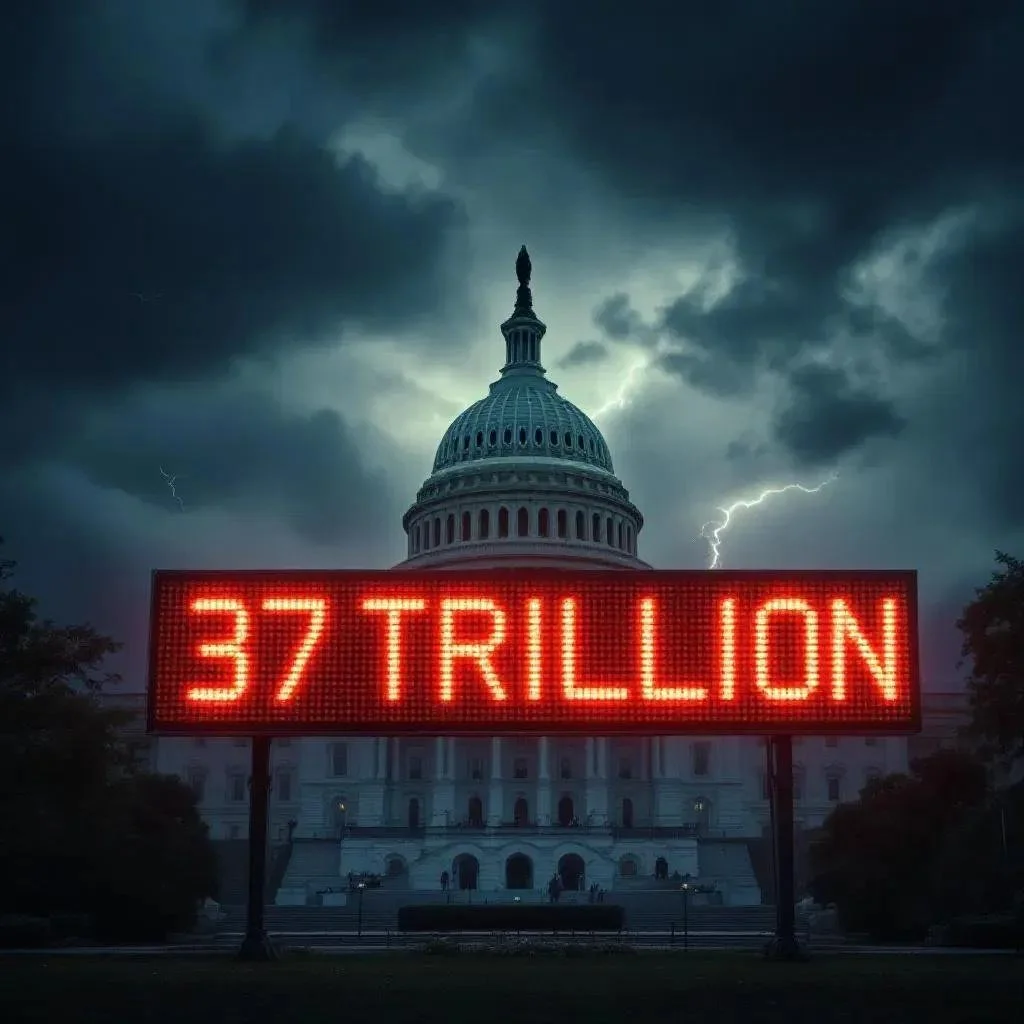
Perot was from Dallas, where I grew up. And he was one of the first tech billionaires, long before the dot-com boom. Like Elon today, Perot knew that America was heading down a dangerous fiscal path. At the time, the US government was spending about 28% of its annual tax revenue just to pay interest on the national debt.
The Debt Problem Was Actually Scarier In The 90s. Here’s How They Solved It. Podcast
Notes From the Field By James Hickman (Simon Black ) August 12, 2025
I was still just a kid as the US headed into the 1992 US Presidential election, but I remember the excitement around my home town as Ross Perot entered the race as an independent candidate.
Perot was from Dallas, where I grew up. And he was one of the first tech billionaires, long before the dot-com boom. Like Elon today, Perot knew that America was heading down a dangerous fiscal path. At the time, the US government was spending about 28% of its annual tax revenue just to pay interest on the national debt.
PIC
It wasn't because the debt was so vast. Actually back then it was just a fraction of today's debt.
The real problem was that sky-high interest rates from the 1980s (15%+) had pushed the government's borrowing costs and annual interest bill to the moon.
So Ross Perot decided to run for President under a promise to fix the deficit.
Few people understood anything about the deficit back then. So Perot used his vast fortune to buy TV time where he would explain the problem in hour-long presentations. I remember learning things from him that I'd never even heard about before-- Treasury markets, bond yields, government accounting, mandatory spending, and more.
Perot single-handedly dragged America's deficit issue to the front page and started a national conversation; so even though Bill Clinton ultimately won the election, Perot succeeded in making deficit reduction a top priority.
It was interesting times politically. Clinton was rocked by scandals, impeached, and deeply hated by the other party... quite similar to the situation today. They didn't have social media back then, but 'talk radio' pundits raged 24/7 with the same ferocity of today's Twitter mob.
Yet even with such conflict and division, Congress and the White House managed to work it out. And over the next decade, interest costs fell from 28% of tax revenue down to 18%. And by the end of the 1990s the government was posting strong budget surpluses.
How did they do it? It wasn't rocket science or black magic. They simply took a common sense approach to spending-- they held spending increases to minimal levels, all while tax revenue soared thanks to a tech-fueled economic bonanza.
Over the ten-year period between 1991 and 2000, government expenditures only rose by 35%. Adjusted for inflation that's just 5.5% over the entire decade.
Meanwhile tax revenue nearly doubled over the same period. Poof. Problem solved. And America stormed into the 21st century with a record budget surplus, and its interest costs and national debt under control.
Could this happen today? Maybe. There are a lot of similarities. The US government currently pays roughly 22% of tax revenue just to cover the annual interest bill on the national debt, and this amount is growing rapidly. Not to mention, interest costs plus mandatory entitlements (like Social Security and Medicare) already consume 100% of tax revenue.
If they don't solve this problem, America is going to be looking at a major fiscal crisis in the coming years.
Unfortunately few people in power seem to be taking this seriously. The White House is far more focused on tariffs and trade rather than the obvious problem-- excessive spending. And when it comes to deficit reduction, their approach is to seize control of the Fed to push through interest rate cuts.
Congress, meanwhile, seems completely oblivious to the problem.
One of my major concerns is that American voters tend to oscillate from one side to another. So if the guys in power now don't solve this problem now, voters could swing hard to the Left in 2028, quite possibly to a card-carrying socialist.
There are certainly a lot of socialists emerging in American politics. And they all see deficits as a "revenue problem" and believe that higher taxes will fix every challenge.
Well, we did the math in today's podcast: "taxing the rich" won't make a dent in the deficit problem. Neither will wealth taxes, or any of the other idiotic proposals that socialists come up with.
The only way to fix this is to cut spending... and to spend the money much more responsibly.
Fingers crossed that they see the light. And soon. But I wouldn't hold my breath just yet on major fiscal reform... which is why it's so critical to have a Plan B.
Listen in to today's podcast, in which we cover:
The 70% tax rate fantasy – Even taxing every dollar over $10 million at 70% doesn’t cover a single year’s interest on the debt.
Why huge new taxes barely move the needle – A wealth tax might grab $200–250B upfront, then $60–100B/year. Yet the debt is growing by trillions annually.
Behavior matters – People restructure income, delay gains, and move capital. The socialists' 'wealth tax' projections will never match reality.
Their entire philosophy is to treat the private sector like an ATM while refusing to cut a cent of waste.
The problem with the socialists who want to "seize the means of production" is that they've never produced anything!
The spending problem – The top 2% already paid ~$1 trillion in taxes in 2021 (28% effective rate on $3.5T income).
Since July 4th, the US has added nearly $800 billion to the debt— about $500B of it brand-new spending.
The real “third side” of the coin – It’s not just a revenue problem or a spending problem—it’s decades of baked-in waste, fraud, and mismanagement in federal budgets.
Zero-base budgeting: A common-sense approach where agencies start at zero and justify every dollar… something almost no one in Washington is willing to consider.
Bond market reality check – The Fed can nudge short-term rates, but long-term rates are set by the bond market—
This means that political control of the Fed may not deliver the rate cuts they expect.
Socialist footholds in major cities – from NYC to Chicago to Seattle, socialists are winning local races and pushing radical tax-and-spend agendas.
The bottom line:
Confiscating more from the productive economy doesn’t fix the problem; it fuels it. The only real solution starts with cutting waste and ending the government’s addiction to spending.
Until that happens, individuals need their own Plan B—whether it’s hedging against inflation with real assets, diversifying internationally, or building networks with like-minded people who see what’s coming.
That’s exactly why we built our Total Access community. Over the years, it’s become more than just an exclusive group—it’s sparked friendships, partnerships, and a global network of people who are prepared, connected, and two steps ahead. After 15+ years in this business, it’s the thing I’m most proud of.
Listen to the full breakdown here.
For the audio-only version, check out our online post here.
Finally, you can find the podcast transcript for your convenience, here.
To your freedom James Hickman Co-Founder, Schiff Sovereign LLC
Seeds of Wisdom RV and Economic Updates Tuesday Afternoon 8-12-25
Good Afternoon Dinar Recaps,
91% of Investors Say US Stock Market is Overvalued, According to New Bank of America Survey
A record-high 91% of fund managers now believe the U.S. stock market is overvalued, according to the latest Bank of America (BofA) survey reported by Bloomberg. This marks the highest level of market overvaluation sentiment since 2001.
Good Afternoon Dinar Recaps,
91% of Investors Say US Stock Market is Overvalued, According to New Bank of America Survey
A record-high 91% of fund managers now believe the U.S. stock market is overvalued, according to the latest Bank of America (BofA) survey reported by Bloomberg. This marks the highest level of market overvaluation sentiment since 2001.
Key Findings from the Survey:
Record pessimism on U.S. equities: 91% of respondents think U.S. stocks are overpriced.
Shift toward foreign markets: Investor allocations to overseas markets have reached their highest levels since February, signaling a sentiment shift away from U.S. equities.
Bubble risk warning: BofA strategist Michael Hartnett cautions that the recent rally could turn into a bubble, as cash levels have fallen to 3.9% of total assets — a historical signal of an impending sell-off.
Emerging market optimism: A net 49% see emerging market (EM) stocks as undervalued, the highest level of EM optimism since February 2024.
Most Crowded Trades Identified:
Long positions in the Magnificent 7 tech stocks
Short the U.S. dollar
Long gold
Top Tail Risks Cited by Investors:
Trade war–induced recession
Persistent inflation preventing Federal Reserve rate cuts
Disorderly rise in bond yields
AI-driven equity bubble
U.S. dollar debasement
@ Newshounds News™
Source: The Daily Hodl
~~~~~~~~~
Death of the US Dollar Has Begun With BRICS Rebellion, Says Forecaster
American trend forecaster Gerald Celente warns that the BRICS alliance is poised to put the US dollar “on its death bed,” as member nations grow increasingly self-sufficient and independent from USD reliance.
In a podcast interview with journalist Rick Sanchez, Celente highlighted that China and India now possess robust economies capable of thriving without the dollar.
China dominates global manufacturing, supplying the US and Western nations with essential goods.
Russia, despite sanctions, is expected to see GDP growth of 1.4% in FY 2024–25.
India is increasingly self-sustained through domestic manufacturing and job creation, with only 2% of its GDP tied to trade with the United States.
Celente emphasized that recent US tariffs on India, imposed by President Donald Trump, are unlikely to significantly impact India’s economy. “They’re becoming more self-sustaining and self-sufficient. They’re buying and making their own products, and the people are buying them there. That’s what used to be in America,” he said.
A Growing Economic Force
BRICS is now positioned as a collective financial powerhouse capable of shifting global market trends and policy directions. Should the bloc stop using the US dollar in trade, the resulting deficit could further weaken the currency.
“The world has had enough of the United States’ hegemony. The world is becoming fed up,” Celente stated, noting that China, once lacking heavy industry and high-tech capabilities, is now a leader in both — including the production of electric vehicles.
Celente concludes that this self-sufficiency is accelerating the dollar’s decline and solidifying BRICS’ role in the next phase of global economic realignment.
@ Newshounds News™
Source: Watcher Guru
~~~~~~~~~
Seeds of Wisdom Team RV Currency Facts Youtube and Rumble
Newshound's News Telegram Room Link
Follow the Roadmap
Follow the Timeline
Seeds of Wisdom Team™ Website
Thank you Dinar Recaps
Dr. Scott Young: Confusion on What the Gold Back Standard means to the US Dollar
Dr. Scott Young: Confusion on What the Gold Back Standard means to the US Dollar
8-11-2025
The idea of a gold-backed dollar isn’t just a historical footnote; it’s a recurring topic of debate, particularly in times of economic uncertainty and inflation.
Proponents argue it’s a path to stability and fiscal discipline, while critics warn of its inflexibility in modern economies. But what exactly would a return to a gold standard entail, and how would it impact your money?
Let’s break down some of the most pressing questions surrounding a gold-backed dollar.
Dr. Scott Young: Confusion on What the Gold Back Standard means to the US Dollar
8-11-2025
The idea of a gold-backed dollar isn’t just a historical footnote; it’s a recurring topic of debate, particularly in times of economic uncertainty and inflation.
Proponents argue it’s a path to stability and fiscal discipline, while critics warn of its inflexibility in modern economies. But what exactly would a return to a gold standard entail, and how would it impact your money?
Let’s break down some of the most pressing questions surrounding a gold-backed dollar.
Currently, the U.S. dollar operates as a fiat currency. Its value is not tied to a physical commodity but is instead based on the trust and confidence in the government that issues it.
A gold-backed dollar, on the other hand, would mean that every dollar in circulation is redeemable for a fixed amount of gold. The government would hold a reserve of gold equal to the value of the currency it issues, theoretically preventing it from printing money without a tangible asset to back it.
No, you would not “lose” your money in the sense of it being confiscated or disappearing. If the U.S. were to return to a gold standard, existing dollars would likely be revalued or converted to reflect the new gold peg.
The intent behind such a move is to stabilize the currency and its purchasing power over time, not to devalue current holdings arbitrarily. However, a significant economic transition could lead to short-term market volatility or shifts in asset values.
A gold standard wouldn’t “replace” the dollar itself, but rather redefine its value and the rules governing its issuance. The dollar would still be the unit of currency, but its value would be fixed to a specific weight of gold (e.g., $X per ounce of gold). This link would impose a strict discipline on the money supply; the government could only print more dollars if it acquired more gold reserves. This fundamentally shifts the basis of the currency from government decree to a tangible commodity.
The concept of a gold standard has garnered attention from various political figures, including President Donald Trump. While he has not explicitly endorsed a full return to a classical gold standard, members of his past administration and advisors have publicly discussed its merits and the potential for integrating elements of hard asset backing into the monetary system.
This indicates an awareness and discussion of the topic within high-level political circles.
Under a classical gold standard, the Federal Reserve’s role would be drastically curtailed. The Fed’s primary function currently is to manage the nation’s money supply and influence interest rates to achieve economic stability, full employment, and moderate inflation.
With a gold standard, monetary policy would become largely automatic and non-discretionary. The supply of money would be determined by the amount of gold reserves, effectively removing the Fed’s ability to engage in quantitative easing, set interest rates freely, or stimulate the economy by printing money. Proponents see this limitation as a “fix” that prevents inflation and government overspending.
A decrease in the value or purchasing power of the dollar is, by definition, inflation. When the dollar buys less goods and services, prices for those goods and services rise. This is the core mechanism of inflation – too much money (or money that has lost value) chasing too few goods.
Historically, and under a classical gold standard, the U.S. Treasury (representing the executive branch of the government) would likely be the primary custodian of the gold reserves and responsible for issuing the currency.
The Federal Reserve’s role would be significantly diminished, potentially becoming more of a regulatory body ensuring the fixed gold-dollar exchange rate is maintained, rather than an independent central bank setting monetary policy. This would represent a considerable shift of power from the Fed back to the elected government.
A return to a gold-backed dollar is a complex proposition with profound implications for the economy, government, and individual finances. It promises stability and limits on government spending, but at the cost of monetary policy flexibility needed to navigate economic downturns.
For a deeper dive into these intricate details and further insights, watch the full video from Dr. Scott Young for further insights and information.
Gold Revaluation Overnight? Why It Could Happen Under Trump | Piepenburg & Makori
Gold Revaluation Overnight? Why It Could Happen Under Trump | Piepenburg & Makori
Miles Franklin Metals: 8-11-2025
Michelle Makori, President & Editor-in-Chief of Miles Franklin Media, speaks with Matthew Piepenburg, Partner at VON GREYERZ, about whether the U.S. could be on the verge of a gold revaluation and why it could happen under a Trump administration.
The two break down the Federal Reserve’s “quiet confession” about America’s debt crisis and fading trust in the U.S. dollar.
Gold Revaluation Overnight? Why It Could Happen Under Trump | Piepenburg & Makori
Miles Franklin Metals: 8-11-2025
Michelle Makori, President & Editor-in-Chief of Miles Franklin Media, speaks with Matthew Piepenburg, Partner at VON GREYERZ, about whether the U.S. could be on the verge of a gold revaluation and why it could happen under a Trump administration.
The two break down the Federal Reserve’s “quiet confession” about America’s debt crisis and fading trust in the U.S. dollar.
Piepenburg and Makori explore the deeper implications of this potential gold revaluation, why it’s a symptom of systemic desperation, and how this ties into a looming monetary reset.
They also dive into the Genius Act, backdoors to CBDCs, BRICS and de-dollarization. In this interview:
The Fed’s new paper detailing how nations have revalued gold reserves
Lessons from FDR’s 1933 gold confiscation and Nixon’s 1971 shock
Why debt desperation may leave no option but to revalue gold
What a gold reset would mean for the dollar, debt, and global markets
The triple crisis: stocks, sovereign debt, and fiat currencies collapsing together
Is this the start of a new Bretton Woods moment or a last-ditch move to save the dollar?
00:00 Coming Up
01:29 Introduction: US National Debt and Gold's Rising Value
02:19 Federal Reserve's Research on Gold Revaluation
05:12 Expert Analysis with Matthew Piepenburg
06:38 Global Economic and Political Landscape
18:36 Tariffs and US Economic Strategy
28:58 Gold Revaluation: A Desperate Measure?
38:38 Mainstream Acceptance of Gold Revaluation
42:03 Trump Administration's Gold Revaluation Plans?
46:33 The Debate on Gold Revaluation
48:31 US Dollar's Decline and Global Reactions
52:47 Geopolitical Tensions and Economic Strategies
01:02:35 Potential Outcomes and Global Reset
01:21:04 Central Bank Digital Currencies: Control and Concerns
01:23:19 Stablecoins: The Gateway to CBDCs?
01:33:11 The Debate on Bitcoin and Gold
01:40:30 Existential Threats to Bitcoin and Gold
01:48:31 Protecting Wealth
01:54:45 Final Thoughts