
Thank you to all the subscribers to our Early Access program…we thank you for your continued support.
We are excited to offer this new service to keep you informed and up-to-date on the latest Dinar and currency news.
Seeds of Wisdom RV and Economic Updates Saturday Morning 6-7-25
Good Morning Dinar Recaps,
Crypto Adoption Continues: Apple, X, Airbnb Exploring Stablecoin Integration – Report
As US lawmakers work on passing crucial crypto-related legislation, multiple tech giants are reportedly exploring the adoption of stablecoins to lower transaction costs and streamline cross-border payments.
Apple, Airbnb, X Eye Stablecoin Integration
On Friday, Fortune reported that several Big Tech companies are in early discussions with crypto firms to integrate stablecoins. Sources familiar with the matter stated that Apple, X, Airbnb, and Google are exploring stablecoin adoption to optimize cross-border payments and lower transaction costs.
Good Morning Dinar Recaps,
Crypto Adoption Continues: Apple, X, Airbnb Exploring Stablecoin Integration – Report
As US lawmakers work on passing crucial crypto-related legislation, multiple tech giants are reportedly exploring the adoption of stablecoins to lower transaction costs and streamline cross-border payments.
Apple, Airbnb, X Eye Stablecoin Integration
On Friday, Fortune reported that several Big Tech companies are in early discussions with crypto firms to integrate stablecoins. Sources familiar with the matter stated that Apple, X, Airbnb, and Google are exploring stablecoin adoption to optimize cross-border payments and lower transaction costs.
According to the report, Airbnb has been in talks with crypto companies since the beginning of the year, aiming to reduce high transaction fees charged by processors like Visa and Mastercard by adopting stablecoin solutions.
The short-term rental platform has reportedly discussed the integration with Worldpay, one of its payment processors. Notably, Worldpay recently announced support for stablecoin payouts through its partnership with stablecoin infrastructure provider BNVK.
An Airbnb spokesperson confirmed:
“While crypto payments aren’t something we’re focused on integrating into the platform in the near future, we’re always looking at all aspects of payments for ways to improve our community’s experience with it, including developments in digital assets and their use cases.”
Similarly, Apple has reportedly been engaged in stablecoin-related talks since January. Four sources claim Apple has held conversations with a senior director at Circle, who works on “strategic partnerships in stablecoin payments.”
X (formerly Twitter) is also actively pursuing stablecoin integration into its new payments platform, X Money. The company is reportedly in talks with Stripe to implement this feature. Patrick Traughber, X’s former head of consumer products and payments, initially led the effort before departing in January for the Sam Altman-backed project World. Payam Abedi, a senior engineer at X, has since taken over the initiative.
More Tech Giants Explore Crypto Adoption
Google Cloud is “arguably the furthest along on stablecoin integrations,” the report noted. Google has already accepted payments in PayPal’s PYUSD, a stablecoin that recently cleared a regulatory investigation by the SEC without enforcement action.
Rich Widmann, head of Web3 strategy at Google Cloud, commented:
“It’s pretty clear that this is probably one of the biggest upgrades to payments since the SWIFT network.”
“We’ve invoiced the customer like we would normally invoice them. They’ve paid that bill the way they would normally pay it. But they’ve used stablecoins to effectuate settlement.”
The report also mentions that other tech firms, including Meta, are exploring stablecoin usage. On Thursday, Uber CEO Dara Khosrowshahi revealed that the company is currently in the “study phase” regarding stablecoins for international money transfers.
Chris Ahn, a partner at Haun Ventures, stated:
“[Stablecoins] are this old idea, but finally I think we’ve got the right pieces coming together such that it’s really coming into fruition.”
Regulatory Shift Boosts Momentum
Under the current Trump administration, US regulators have moved away from a punitive “regulation by enforcement” stance. Instead, they are pursuing clear frameworks and detailed guidelines for the digital asset sector.
This shift has accelerated industry adoption, with several Strategic Bitcoin Reserve proposals and crypto Treasury initiatives now gaining attention. Meanwhile, bipartisan efforts in Congress continue to advance the Guiding and Establishing National Innovation for US Stablecoins (GENIUS) Act, which aims to provide the US stablecoin industry with a robust legal foundation for growth.
@ Newshounds News™
Source: Bitcoinist
~~~~~~~~~
US Lawmakers Seek Audit of Federal Gold, Including ‘Deep Storage’
For the first time in over 65 years, Congress is demanding a full-scale audit of America's gold reserves — just as debt surges past $37 trillion and central banks ramp up gold accumulation.
Gold Audit Bill Demands Inventory of All Federal Bullion Holdings
On June 6, 2025, four Republican lawmakers introduced the Gold Reserve Transparency Act (H.R. 3795), calling for a sweeping audit of the United States’ gold reserves — including long-untouched “deep storage” bullion.
Reps. Thomas Massie (R-KY), Troy Nehls (R-TX), Addison McDowell (R-NC), and Warren Davidson (R-OH) co-sponsored the bill, which mandates:
A full assay, inventory, and physical audit of all U.S. gold within nine months of enactment
Recurring audits every five years
Independent oversight by the Government Accountability Office (GAO) and third-party auditors
The scope covers all bullion at depositories, security reviews, and a 50-year forensic analysis of all gold-related transactions, including:
Leases
Swaps
Sales
Purchases
Encumbrances
Gold indirectly held by or through the Federal Reserve, IMF, or foreign central banks
Crucially, the bill bars redactions in the final public report — excluding only physical security protocols. The GAO and its auditors will receive subpoena power to access any relevant facility or record, while the Treasury and Federal Reserve must provide full documentation.
Calls for Transparency Amid National Debt and Gold Repatriation
Stefan Gleason, CEO of the Money Metals Depository, sharply criticized the lack of oversight in past decades:
“The Treasury has lost records and failed to account for vault openings.”
Gleason's Idaho-based facility, notably, is twice the size of Fort Knox.
This movement echoes long-standing calls from figures like Senator Rand Paul and his father Ron Paul, who have both advocated for a Fort Knox audit.
With U.S. national debt surpassing $37 trillion, and Germany repatriating gold from the New York Fed, concerns over American-held gold have escalated. JP Cortez of the Sound Money Defense League called the audit effort a “national security issue,” rejecting performative "walkthroughs" as inadequate.
A Gold Audit vs. Bitcoin’s Blockchain Transparency
While Bitcoin (BTC) enjoys real-time public verification of its entire history and supply via the blockchain, U.S. gold reserves remain shrouded in obscurity.
“Unlike bitcoin, the U.S. gold system lacks inherent transparency,” the bill’s authors contend.
If passed, the Gold Reserve Transparency Act would usher in regular physical audits and the disclosure of decades of potentially opaque transactions — a stark contrast to Bitcoin’s cryptographic, decentralized proof-of-reserve.
What If Fort Knox Is Empty?
Financial provocateur Robert Kiyosaki has added fuel to the fire, warning:
“If Fort Knox’s vaults turn up empty, America’s entire economic infrastructure could come tumbling down.”
The results of the audit — if it passes — are expected to be made publicly available online, setting the stage for a new era of financial transparency or potentially devastating revelations.
@ Newshounds News™
Source: Bitcoin News
~~~~~~~~~
Seeds of Wisdom Team RV Currency Facts Youtube and Rumble
Newshound's News Telegram Room Link
Follow the Roadmap
Follow the Timeline
Seeds of Wisdom Team™ Website
Thank you Dinar Recaps
They’ll Ignore It Until It’s a Crisis [Podcast]
They’ll Ignore It Until It’s a Crisis [Podcast]
Notes From the Field By James Hickman (Simon Black) June 5, 2025
Think for a moment about how many times something has been whipped up into a national issue by either the big legacy media or prominent politicians.
The public has been subjected to what they call “a national conversation” about everything from transgender bathrooms to Confederate monuments to abortion rights to climate change.
They’ll Ignore It Until It’s a Crisis [Podcast]
Notes From the Field By James Hickman (Simon Black) June 5, 2025
Think for a moment about how many times something has been whipped up into a national issue by either the big legacy media or prominent politicians.
The public has been subjected to what they call “a national conversation” about everything from transgender bathrooms to Confederate monuments to abortion rights to climate change.
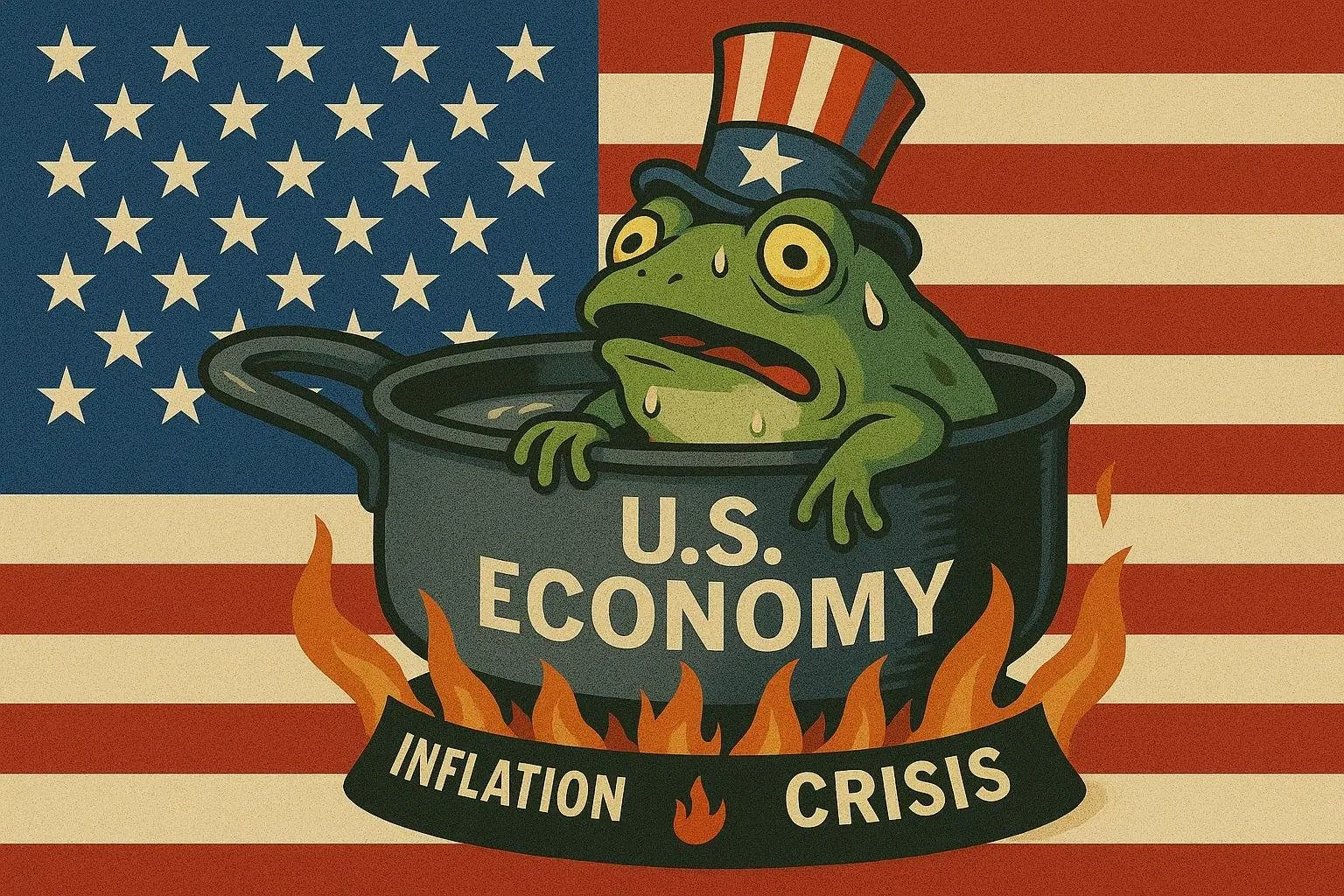
Many of these issues only affect a few people. Sometimes more. But not once have these same media or political personalities elevated the ONE issue that could deeply and adversely impact hundreds of millions of people over the next few years.
I’m talking about the US national debt... and its runaway trajectory that could easily become a major financial crisis in a few years.
The impact crater for a US debt crisis is gargantuan. 350 million people in the US would have their lives turned upside down. Dozens of countries who rely on the US financial system would suffer tremendous pain. Billions of people would be affected.
Yet there’s hardly a word about it. Far more ink has been spilled debating who should use which bathroom. It’s crazy when you think about it.
Many of those same people who should be elevating this issue are now complaining that Elon Musk did a “complete 180” because he thinks the $2 trillion projected deficit from the new tax/spending bill is an “abomination”.
I don’t see how this is a 180. Before, during, and after the election, Elon has been laser-focused on personally trying to fix America’s biggest threat: the ticking debt time bomb.
His message hasn’t changed. And the guy sacrificed plenty of time, money, and reputation to personally try and stop the catastrophe that will come if these deficits aren’t dealt with.
At least a few other prominent voices are finally echoing Elon’s warning—like Jamie Dimon, CEO of the world’s biggest bank.
That’s progress. Because the legacy media sure as hell won’t start this conversation on its own.
And that’s exactly why it’s hard to imagine we’ll hit the critical mass of voters needed to force politicians to do the right thing and tackle the deficits.
That’s what we dig into in today’s episode.
We break down how even supposedly serious financial media—like the Wall Street Journal—refuses to report on just how dire this situation really is.
One recent piece from the Journal even mocked people for buying gold to protect themselves from the obvious outcome of inflation. This is utterly hilarious, of course, given that gold has been one of the world’s best performing asset classes for this entire CENTURY.
But, hey, to the Journal, I guess we’re all just a bunch of idiots.
Today’s podcast also covers:
How everyone loves spending cuts... until you threaten their sacred cow (like taxpayer-funded Sesame Street)
What runaway interest costs mean for your future—and to the future of the US dollar
Why politicians won’t act until there’s a full-blown crisis—and what that will probably look like
That the debt problem is “solvable”—and why JP Morgan Chase CEO Jamie Dimon agrees with the solution we’ve been saying all along
Why slashing regulations needs to be part of that solution
Why strategic assets like gold, silver, uranium, and platinum are now more important than ever.
(For the audio-only version, check out our online post here.)
CLICK HERE to listen to our latest podcast.
To your freedom, James Hickman Co-Founder, Schiff Sovereign LLC
“Tidbits From TNT” Saturday Morning 6-7-2025
TNT:
Tishwash: 140 trillion dinars enter the Iraqi treasury in one year, 91% of which comes from oil.
The Iraqi Ministry of Finance revealed on Saturday that the revenues in the 2024 federal budget exceeded 140 trillion dinars, confirming that oil contributed 91% of those revenues.
Shafaq News Agency reviewed the data and tables issued by the Ministry of Finance in May for the previous fiscal year's accounts, which showed that oil remains the primary source of revenue for Iraq's general budget, accounting for 91% of the total. This indicates that the rentier economy remains the foundation of the budget structure.
TNT:
Tishwash: 140 trillion dinars enter the Iraqi treasury in one year, 91% of which comes from oil.
The Iraqi Ministry of Finance revealed on Saturday that the revenues in the 2024 federal budget exceeded 140 trillion dinars, confirming that oil contributed 91% of those revenues.
Shafaq News Agency reviewed the data and tables issued by the Ministry of Finance in May for the previous fiscal year's accounts, which showed that oil remains the primary source of revenue for Iraq's general budget, accounting for 91% of the total. This indicates that the rentier economy remains the foundation of the budget structure.
The tables indicate that total revenues in 2024 amounted to 140 trillion, 774 billion, 106 million, 157 thousand, and 464 dinars, while total expenditures amounted to 125 trillion, 214 billion, 440 million, 53 thousand, and 991 dinars.
According to the tables, oil revenues amounted to 127 trillion, 536 billion, 400 million, and 812 thousand dinars, representing 91% of the general budget, while non-oil revenues amounted to 13 trillion, 237 billion, 705 million, and 728 thousand dinars.
In this regard, economic expert Mohammed al-Hasani told Shafaq News Agency, "Iraq's reliance on oil for its public revenues indicates that the country is still suffering under the burden of a rentier economy, disguised unemployment, and other economic problems that constitute an obstacle to any progress."
He added, "Iraq needs major economic reforms focused on diversifying the economy, improving spending efficiency, and combating financial waste to ensure a sustainable economic future."
In March 2021, the Prime Minister's financial advisor, Mazhar Mohammed Salih, told Shafaq News Agency that the reasons for the economy remaining rentier are due to the wars and economic blockade imposed over the past decades, as well as the political conflicts Iraq is currently witnessing, which have led to the dispersion of economic resources.
The Iraqi state's continued reliance on oil as the sole source of its public budget exposes the country to the risk of global crises linked to oil markets. This forces it to cover its deficit through external or domestic borrowing each time. This indicates a weakness in the management of public funds and an inability to find alternative financing solutions. link
************
Tishwash: The US State Department intervenes in the crisis between Baghdad and Erbil.
The US State Department considered the recent agreements concluded by the Kurdistan Regional Government with American companies to develop natural gas production an important step to address the chronic imbalance in Iraq's energy sector, calling on Baghdad and Erbil to urgently coordinate to accelerate project implementation and enhance Iraq's energy independence.
A State Department official said in a statement, "The United States believes that Iraq will be more stable and sovereign by achieving energy independence and moving away from the harmful influence of Iran."
He added, "The agreements recently signed by Kurdistan Regional Government Prime Minister Masrour Barzani with American companies to expand natural gas production in Iraqi Kurdistan support this goal," noting that "these projects, whether in the region or the rest of the country, are in the interest of all Iraqis, especially in light of the ongoing electricity crisis."
The US official continued, "We encourage Baghdad and Erbil to work together to commence gas production as soon as possible." link
************
Tishwash: Economic Council: Broad interest from regional and international companies to participate in the Iraq Investment Forum.
Iraqi Economic Council Chairman Ibrahim Al-Masoudi Al-Baghdadi affirmed on Friday that Iraq has become a destination for investment in the Middle East, thanks to the government's extensive support for investment and investors. Addressing the Iraq Investment Forum, he revealed widespread interest from regional and international companies to participate, noting that more than 250 investment opportunities will be showcased.
Al-Baghdadi told the Iraqi News Agency (INA): “This explains the change and geopolitical orientation towards Iraq, which has today become the investment destination in the Middle East,” noting that “just a year ago, we were facing great difficulty in inviting investors to attend conferences or forums inside Iraq, but today there is a widespread desire from important companies and countries from the Gulf, the Middle East, Europe, America and Arab countries to participate in the Iraq Investment Forum scheduled to be held on June 14 and 15.”
He added, "There is growing demand due to the abundance of quality and profitable opportunities, especially since Iraq has lived through long years of war, siege, and terrorism, creating an urgent need for all types of projects. Today, we are beginning to see the results of the hard work and efforts of the past years."
He explained, "Today's investor is looking for an unsaturated market. For example, building a five-star hotel in Dubai means competing with 650 hotels of the same category, while Iraq currently needs approximately 60 hotels, according to the Minister of Culture, Tourism, and Antiquities. This provides a golden opportunity for any investor to operate in an environment virtually devoid of competition."
Al-Baghdadi pointed out that "Iraq is the largest market in the region, and its environment has become attractive to investments," predicting that "the next ten to twenty years will witness Iraqi superiority in investment competition with countries in the region."
Regarding the Iraq Investment Forum, Al-Baghdadi explained that "the forum will showcase more than 250 investment opportunities, including 150 direct opportunities, 31 of which are in the electricity sector, and more than 15 in the oil sector, in addition to dozens of opportunities in industry, agriculture, transportation, information technology, industrial cities, and free zones." He noted that "the Ministry of Industry will showcase 97 opportunities within the partnership mechanism with its companies."
He explained that "these projects will contribute to creating thousands of job opportunities, and may reach hundreds of thousands in the coming years, as part of the National Investment Commission's plans link
************
Mot: Oooooh Boy!!! –It was a

Mot: Acts of kindness…..

Gerald Celente: The Dollar is Cooked
Gerald Celente: The Dollar is Cooked
6-6-2025
Gerald is founder of the Trends Research Institute and publisher of _The Trends Journal. He holds nothing back as usual with an insightful assessment of the general quality of global leadership.
Celente, who has spent 45 years forecasting trends, describes world leaders as "clowns" and "scum," citing examples like Boris Johnson in the UK, Emmanuel Macron in France, and Gerhard Schröder in Germany.
He argues that these leaders are failing to address systemic issues, with the middle class in decline and wealth inequality on the rise.
Gerald Celente: The Dollar is Cooked
6-6-2025
Gerald is founder of the Trends Research Institute and publisher of _The Trends Journal. He holds nothing back as usual with an insightful assessment of the general quality of global leadership.
Celente, who has spent 45 years forecasting trends, describes world leaders as "clowns" and "scum," citing examples like Boris Johnson in the UK, Emmanuel Macron in France, and Gerhard Schröder in Germany.
He argues that these leaders are failing to address systemic issues, with the middle class in decline and wealth inequality on the rise.
Celente highlights the impact of globalization and free trade agreements like NAFTA, which he believes have hollowed out American manufacturing and enriched corporations at the expense of workers. He also critiques the consolidation of media power under past administrations, noting that six companies now control 92% of U.S. media.
In terms of economic trends, Celente discusses the rise of gold as a safe-haven asset, with prices expected to hit $4,000 an ounce due to geopolitical tensions and inflation.
He expresses skepticism about tariffs, arguing they won't revive American manufacturing and will instead harm small businesses.
Celente also warns of the dangers of AI-driven economic bubbles and the potential collapse of equity markets. Geopolitically, Celente focuses on the escalation of conflicts in the Middle East and Ukraine, which he believes will drive oil prices to $120 per barrel and further destabilize global markets.
He warns of the growing risk of nuclear annihilation, particularly between Israel and Iran, calling it a "doomsday scenario." Celente concludes by advocating for personal resilience, urging listeners to prioritize physical, emotional, and spiritual well-being.
He also calls for a renaissance in values, emphasizing the importance of truth, integrity, and ethical leadership in rebuilding society.
Time Stamp References:
0:00 - Introduction
0:54 - Geo-Political Freakshow
5:02 - Top 2025 'Trends Journal'
7:47 - Tariffs & Manufacturing
11:00 - Media Monopolies
14:30 - Escalation Vs. Peace
17:57 - Global Economic Slowdown
22:00 - A.I. & China's Tech Sector
23:44 - Trump & Interest Rates
24:44 - Iran & Israel Nuclear Risk
27:38 - Mentally Arrogant Rich
28:20 - We Need a Renaissance
31:09 - Focus on Your Health
33:45 - Wrap Up
Fiat Currencies are on the Verge of Collapse, is Gold the Only Safe Haven?
Fiat Currencies are on the Verge of Collapse, is Gold the Only Safe Haven?
VRIC Media: 6-6-2025
In a recent appearance on Jay Martin’s VRIC Media channel, renowned financial analyst Lynette Zang delivered a stark warning about the long-term ramifications of the recent U.S. credit rating downgrade.
Zang, known for her in-depth understanding of monetary systems and the interconnectedness of global finance, painted a picture of an increasingly unstable world where trust in traditional financial instruments is rapidly eroding.
Fiat Currencies are on the Verge of Collapse, is Gold the Only Safe Haven?
VRIC Media: 6-6-2025
In a recent appearance on Jay Martin’s VRIC Media channel, renowned financial analyst Lynette Zang delivered a stark warning about the long-term ramifications of the recent U.S. credit rating downgrade.
Zang, known for her in-depth understanding of monetary systems and the interconnectedness of global finance, painted a picture of an increasingly unstable world where trust in traditional financial instruments is rapidly eroding.
The interview explored the intricate web of factors contributing to this erosion of trust. Zang delved into the role of persistently high inflation, fueled in part by massive government spending and loose monetary policy, which devalues the purchasing power of fiat currencies.
She pointed out how central banks, caught between battling inflation and preventing a collapse in asset prices, are struggling to maintain control.
A key point of discussion was the potential unwinding of the yen carry trade. Zang highlighted how the years of ultra-low interest rates in Japan allowed investors to borrow cheaply in yen and invest in higher-yielding assets elsewhere, boosting global markets.
However, with the Bank of Japan now signaling a potential shift in its monetary policy, the unwinding of these trades could trigger significant volatility and further destabilize the global economy.
Zang emphasized that in this environment, relying solely on traditional financial assets like stocks and bonds carries significant risk. She passionately advocated for the importance of owning physical gold and silver as a hedge against inflation, currency debasement, and systemic risk.
The conversation with Jay Martin was far from optimistic, but Zang offered practical solutions for individuals looking to navigate the coming financial turmoil. She urged viewers to educate themselves about the underlying issues, diversify their assets, and prioritize owning tangible assets like precious metals.
This interview serves as an urgent call to action for anyone concerned about preserving their wealth in an increasingly precarious world.
Lynette Zang masterfully connected the dots between sovereign debt, inflation, monetary policy, and the growing need for a safe haven in the form of physical gold and silver.
Her insights provided a chilling, yet crucial, perspective on the current state of global finance and the potential challenges that lie ahead, making it a must-watch for anyone seeking to understand and prepare for the future.
Seeds of Wisdom RV and Economic Updates Friday Morning 6-6-25
Good morning Dinar Recaps,
Former CFTC Chair Warns Digital Asset Clarity Act Could Undermine Main Markets
Former Commodity Futures Trading Commission (CFTC) Chair Timothy Massad warned lawmakers that the Digital Asset Market Clarity Act of 2025 (Clarity Act) could create more confusion than clarity while potentially undermining decades of established securities law.
Good morning Dinar Recaps,
Former CFTC Chair Warns Digital Asset Clarity Act Could Undermine Main Markets
Former Commodity Futures Trading Commission (CFTC) Chair Timothy Massad warned lawmakers that the Digital Asset Market Clarity Act of 2025 (Clarity Act) could create more confusion than clarity while potentially undermining decades of established securities law.
In testimony before the House Financial Services Committee, Massad argued that effective digital asset legislation for market structure should follow two simple principles: “do no harm and keep it simple.”
Massad emphasized that any digital asset market structure legislation must not undermine the U.S.’s $120 trillion equity and debt markets, which he described as “the foundation of the U.S. economy and the envy of the world.” He cautioned that “legislation that rewrites the definition of a security or revises the Howey test to promote this technology can easily undermine the markets.”
Clarity Act’s Fatal Flaws
The former regulator identified several ways the Clarity Act violates his core principles:
Unstable Decentralization Criteria
Massad criticized the bill’s excessive reliance on decentralization as a regulatory framework, calling it “unstable ground on which to build a regulatory framework.” He noted it is difficult to define and measure, may change over time, and is not necessarily the right metric for judging innovation.Regulatory Gaps Persist
The Act fails to address the main oversight gap it claims to solve. While it introduces regulation for “digital commodities,” its definition would apply to only a handful of tokens. Exchanges like Coinbase, Kraken, and Gemini list dozens to hundreds of tokens, many of which would still lack meaningful oversight.Regulatory Arbitrage Risk
At 236 pages long with dense and complex definitions, the legislation opens doors for regulatory loopholes. Massad warned that “many, many lawyers will spend huge amounts of time developing ways to exploit this legislation.” He urged that legislation should focus on high-level principles and leave detailed implementation to experts.
A Simpler Path Forward
Instead of the Clarity Act’s approach, Massad renewed his proposal for a joint Self-Regulatory Organization (SRO) overseen by both the SEC and CFTC. This entity would regulate “any trading platform or other intermediary transacting in Bitcoin or Ether,” covering all digital tokens traded on those platforms.
The proposed SRO would be:
Tightly supervised by the SEC and CFTC
Governed independently, with board members and rules approved by the agencies
Focused on governance, customer protection, conflicts of interest, and anti-fraud
Massad contended this model would deliver comprehensive investor protection quickly by targeting the centralized platforms that dominate crypto spot markets—all without the definitional chaos embedded in the Clarity Act.
@ Newshounds News™
Source: Ledger Insights
~~~~~~~~~
BRICS: Oil Giant Eyes Chinese Yuan Bonds, Ignores US Dollar Assets
In a breakthrough shift in the financial sector, the BRICS alliance has paved the way for other countries and leading business institutions to look beyond US dollar-based Treasuries and bonds and buy other Asian-based financial assets.
Kazakhstan, which participates in BRICS Outreach formats, has allowed its state-run oil and gas company KazMunayGas to eye Chinese yuan bonds, leaving aside the US dollar-based bonds and Treasuries for the first time.
The Chinese yuan bonds are cheaper debt compared to the US-denominated financial assets such as Treasuries and bonds. KazMunayGas is also exploring opportunities to issue debt in Arab countries and buy their bonds in a first-of-a-kind development.
The credit for this new shift goes to the BRICS bloc as they’re convincing firms that there are more options to explore such as the Chinese yuan than just buying US dollar-based assets.
BRICS: Kazakhstan’s Oil & Gas Firm Eyes Chinese Yuan Bonds, Sidelining US Dollar Assets
KazMunayGas is looking to explore cheaper borrowing terms and usher the oil and gas industry into a new era. Reducing US dollar-denominated assets was the primary goal of BRICS and now other countries are following suit.
“We looked at all options. Currently, there is a possibility to sell dim sum, and panda bonds,” said CEO Askhat Khassenov to Bloomberg. “Dim sum and panda bonds offer rather good conditions,” said Khassenov.
For the uninitiated, dim sum bonds refer to notes denominated in the offshore Chinese yuan. It mainly trades outside mainland China. In addition, panda bonds are yuan debt sold by foreign borrowers in China’s domestic market. It might not take much time before state-run oil firms from BRICS countries start eyeing Chinese yuan bonds.
The BRICS development will add a dent in the US dollar-denominated assets while Chinese yuan bonds go for the win. This is the first such instance where the yuan assets are being considered—and might not be the last either.
@ Newshounds News™
Source: Watcher Guru
~~~~~~~~~
Seeds of Wisdom Team RV Currency Facts Youtube and Rumble
Newshound's News Telegram Room Link
Follow the Roadmap
Follow the Timeline
Seeds of Wisdom Team™ Website
Thank you Dinar Recaps
Expect a Gold-Backed Chinese Yuan
Expect a Gold-Backed Chinese Yuan
Liberty and Finance: 6-6-2025
The global financial system teeters on the precipice of a seismic shift, according to renowned financial analyst Alasdair Macleod.
In a recent interview with Liberty and Finance, Macleod issued a stark warning: the U.S. bond market is dangerously mispriced, and the consequences could be catastrophic.
Macleod argues that rising interest rates are failing to compensate for the burgeoning credit risks inherent in U.S. Treasuries, particularly for foreign investors.
Expect a Gold-Backed Chinese Yuan
Liberty and Finance: 6-6-2025
The global financial system teeters on the precipice of a seismic shift, according to renowned financial analyst Alasdair Macleod.
In a recent interview with Liberty and Finance, Macleod issued a stark warning: the U.S. bond market is dangerously mispriced, and the consequences could be catastrophic.
Macleod argues that rising interest rates are failing to compensate for the burgeoning credit risks inherent in U.S. Treasuries, particularly for foreign investors. This mispricing, he believes, stems from a fundamental misunderstanding of risk within the market, a situation exacerbated by declining confidence in the very foundation of the Western financial system: U.S. government bonds.
While the West remains tethered to the increasingly precarious world of fiat money, Macleod points to China’s strategic accumulation of gold over the past decades as a game-changing move.
China’s objective, according to Macleod, is clear: to internationalize the yuan and eventually back it with gold, offering a tangible alternative to the dollar’s weakening grip on global trade.
This highlights a fundamental difference in perspective. While Western nations cling to the illusion of control through fiat currencies and increasingly invasive Central Bank Digital Currencies (CBDCs), China recognizes the timeless value of gold as real money.
Macleod argues that everything else, including government bonds and CBDCs, is merely credit or a tool for political control.
Macleod’s analysis paints a grim picture of the future, dominated by rising geopolitical tensions, weakening global currencies, and the looming threat of a bursting credit bubble. The sheer scale of this bubble, he warns, is unprecedented in history.
In light of these impending economic storms, Macleod urges individuals to prioritize wealth preservation, emphasizing the enduring value of physical gold. He contends that gold serves as a vital hedge against the risks inherent in the current financial climate, acting as a safe haven amidst the turmoil and uncertainty.
Macleod’s analysis is a sobering reminder of the fragility of the global financial system. His call to action serves as a vital warning, urging individuals to reconsider their financial strategies and prioritize the preservation of their hard-earned wealth in the face of growing economic and geopolitical instability.
As the canary in the coal mine falls silent, individuals must heed the warning and prepare for the turbulent times ahead. The clock is ticking.
“Tidbits From TNT” Friday Morning 6-6-2025
TNT:
Tishwash: Rafidain Bank is preparing to distribute Eid gifts to more than 50,000 of its most engaged users.
Rafidain Bank is preparing to distribute Eid gifts to more than 50,000 customers who are the most engaged in using electronic cards to save and shop instead of using cash.
Your Eidiya is on us... Rafidain Bank is preparing to distribute Eidiya to more than 50,000 customers, the most engaged users of electronic cards for saving and shopping instead of cash.
In a qualitative step aimed at supporting the culture of electronic payment and encouraging citizens to abandon traditional cash transactions,
TNT:
Tishwash: Rafidain Bank is preparing to distribute Eid gifts to more than 50,000 of its most engaged users.
Rafidain Bank is preparing to distribute Eid gifts to more than 50,000 customers who are the most engaged in using electronic cards to save and shop instead of using cash.
Your Eidiya is on us... Rafidain Bank is preparing to distribute Eidiya to more than 50,000 customers, the most engaged users of electronic cards for saving and shopping instead of cash.
In a qualitative step aimed at supporting the culture of electronic payment and encouraging citizens to abandon traditional cash transactions,
Rafidain Bank is launching the "Your Eidiya is on Us" campaign to coincide with Eid al-Adha. The campaign includes cash rewards for thousands of customers who use their e-cards for purchases.
This initiative aligns with the Prime Minister's directives urging banks and payment companies to develop effective incentive mechanisms that contribute to accelerating the transition to a cashless digital economy and fostering a culture of savings and the smart use of modern banking tools.
The bank plans to distribute Eidiya gifts to more than 50,000 active customers using electronic cards, according to a structured regulatory system that adopts precise standards of fairness and transparency.
Rafidain Bank... Towards a digital society and banking services worthy of citizens' trust. link
*************
Tishwash: Hidden fingers are tampering with the relationship between Baghdad and Erbil... Efforts to abort Al-Sudani's second term before it matures -
Political researcher Nabil Al-Azzawi revealed on Wednesday (June 4, 2025) that there are political parties working behind the scenes to stir up tensions and disputes between Prime Minister Mohammed Shia Al-Sudani and the Kurdish forces in Kurdistan, in an attempt to block the renewal of his term for a second term.
Al-Azzawi told Baghdad Today, "There are political parties that do not want the elections scheduled for November 11 to take place, and they are seeking by all means to place artificial obstacles in the way of the government."
He pointed out that "these parties are working to undermine the growing trust between al-Sudani and the Kurdish forces, as they believe that an understanding between the two parties strengthens al-Sudani's chances of remaining in office for a second term."
He added, "Since assuming office, the Prime Minister has placed the relationship between Baghdad and Erbil at the top of his priorities. His first move was toward the Kurdistan Region, where he launched the 'Sustainable Solutions' initiative as an alternative to the policy of recurring crises. This has worried some forces that do not see a solution to these issues in their best interest."
Al-Azzawi explained that "Al-Sudani is making clear strides toward removing the outstanding issues," noting that "an expanded technical meeting is expected to be held in Baghdad, with the attendance of an official delegation from the region, to discuss a number of outstanding issues, including the push for the enactment of an oil and gas law, which would end many crises and open the door to radical solutions regarding the disputed areas and Article 140 of the constitution."
The political researcher emphasized that "leaving these issues unresolved threatens the political stability Iraq currently enjoys, especially in light of the complex regional circumstances," asserting that "inciting conflicts at this time only serves narrow agendas, while citizens today need services and development, not escalation and conflict."
Al-Azzawi pointed out that "there are multiple internal parties, some of them from within the Coordination Framework, seeking to obstruct al-Sudani's rapprochement with the Kurds, due to their awareness that the support of Kurdish and Sunni forces puts him in a strong position to secure a second term, something these parties do not desire, as they are working to shuffle the political cards to preserve their own interests."
Observers believe that since assuming the premiership in October 2022, Prime Minister Mohammed Shia al-Sudani has sought to adopt a comprehensive de-escalation policy and prioritize dialogue to resolve outstanding issues, particularly between the federal government in Baghdad and the Kurdistan Regional Government.
His first official visit was to Erbil, a clear indication of his desire to open a new page with the region.
During his tenure, Al-Sudani focused on thorny issues such as the oil and gas law, disputed territories, and the implementation of Article 140 of the constitution. These issues have been a source of tension between the two sides for years.
As the local elections approach and talk escalates about the possibility of renewing al-Sudani's term for a second term, a counter-political movement has begun to emerge, seeking to undermine this process by re-escalating tensions with the region and raising contentious issues as part of the power struggle between political forces within and outside the Coordination Framework. link
************
Tishwash: US calls on Baghdad to negotiate quickly: Iraq's independence from Iranian influence comes through Kurdistan's gas
The US State Department considered, on Thursday, that the recent agreements concluded by the Kurdistan Regional Government with American companies to develop natural gas production constitute an important step towards addressing the chronic imbalance in the Iraqi energy sector, calling on Baghdad and Erbil to urgently coordinate to accelerate project implementation and enhance Iraq's energy independence.
A ministry official told Shafaq News Agency, "The United States believes that Iraq will be more stable and sovereign by achieving energy independence and distancing itself from Iran's harmful influence."
He added, "The agreements recently signed by Kurdistan Regional Government Prime Minister Masrour Barzani with American companies to expand natural gas production in Iraqi Kurdistan support this goal," noting that "these projects, whether in the region or across the rest of the country, are in the interest of all Iraqis, especially in light of the ongoing electricity crisis."
The US official continued, "We encourage Baghdad and Erbil to work together to begin gas production as soon as possible."
The Kurdistan Regional Government announced the signing of two agreements with American companies HKN Energy and WesternZagros to develop the Miran and Topkhana-Kurdimir fields in Sulaymaniyah Governorate, with a total value estimated at approximately $110 billion, in one of the largest deals in the region's energy sector.
The agreements aim to exploit natural gas resources more widely to meet the region's and Iraq's electricity needs and reduce reliance on Iranian gas imports.
The move sparked protests from the federal government in Baghdad, with the Iraqi Oil Ministry describing the agreements as "null and void," noting that natural resource management falls solely within the purview of the federal government.
Investment efforts in Iraq's energy sector face recurring legal and political challenges, given the absence of a federal law regulating the management of natural resources between the central government and the region.
The energy crisis is one of the most significant challenges facing Iraq, with most of the population suffering from frequent power outages, which worsen during the summer months. Iraq relies heavily on gas imported from Iran, at a time when supplies are affected by political and economic factors, most notably regional tensions and mounting debt issues.
Relations between Baghdad and Kurdistan have recently become strained, particularly after the signing of the gas contract with Washington. The Iraqi Ministry of Finance announced it would halt funding for the salaries of Kurdistan Region employees until May 2025, citing the region's exceeding its budget share and its failure to deliver oil and non-oil revenues to the federal government.
In contrast, the Kurdistan Regional Government (KRG) considered the decision politically motivated and a violation of the constitution and Federal Court rulings. The KRG asserted that Baghdad had failed to honor its financial commitments despite Erbil's previous commitments, and that the decision directly impacts more than 1.2 million employees ahead of Eid al-Adha. link
************
Mot: .. Good Grief!!! – LOL

Mot: Say!!! -- Are U Up to Speed on Ur ""ABCs""

More News, Rumors and Opinions Thursday PM 6-5-2025
KTFA:
Clare: The Central Bank is exploring the possibility of opening branches of Turkish banks in Nineveh Governorate.
June 05, 2025
The Director General of the Central Bank of Iraq/Mosul Branch, Dr. Hussein Lazem, discussed with the Turkish Consul General, Serhad Varli, the possibility of opening branches of Turkish banks in Nineveh Governorate.
Lazem provided a detailed explanation of the Central Bank's operating mechanism in Nineveh Governorate and its role in achieving exchange rate stability.
KTFA:
Clare: The Central Bank is exploring the possibility of opening branches of Turkish banks in Nineveh Governorate.
June 05, 2025
The Director General of the Central Bank of Iraq/Mosul Branch, Dr. Hussein Lazem, discussed with the Turkish Consul General, Serhad Varli, the possibility of opening branches of Turkish banks in Nineveh Governorate.
Lazem provided a detailed explanation of the Central Bank's operating mechanism in Nineveh Governorate and its role in achieving exchange rate stability.
The two sides also discussed ways of cooperation between the Central Bank of Iraq and its Turkish counterpart, as well as the Turkish Banking Authority, particularly regarding the opening of branches of Turkish banks in Nineveh Governorate.
The latest developments in the financial and banking sectors in Nineveh Governorate were also discussed, particularly the automation of customs duties.
The two sides stressed the importance of increasing cooperation to increase trade exchange between the two countries, as well as financing and supporting projects in Iraq in the fields of agriculture, industry, trade, and others.
Central Bank of Iraq
Media Office
June 5, 2025
************
Clare: Al-Sudani: Our industry has reached self-sufficiency, and we aim to convert oil exports into derivatives.
6/5/2025
Iraqi Prime Minister Mohammed Shia al-Sudani said on Thursday that local industries have reached self-sufficiency, revealing at the same time that the government is targeting the conversion of oil exports into "high-value and high-yield" derivatives.
This came in a speech delivered by Al-Sudani during the celebration of National Industry Day, held by the Iraqi Federation of Industries.
In his speech, Al-Sudani said that Iraqi industrialists have proven their ability to innovate and withstand challenges throughout the various periods that Iraq has gone through, adding, "After 2003, there was an ill-considered openness that flooded the Iraqi market with imports, and industrialists turned into traders and contractors."
He added, "Our industry has reached self-sufficiency in goods and products, from food industries to pharmaceuticals," stressing that "no economic reform will be achieved without national industry, and we have given the private sector a role in decision-making and setting priorities."
Al-Sudani also pointed out that "the government, for the first time, has included sovereign guarantees for private sector projects in the budget law... which has encouraged us to bring in modern technology, equipment, and production lines to develop and provide the product locally."
He stressed that "priority was given to the construction, food, and pharmaceutical industries," noting that "the Cabinet is prepared to go beyond decisions to protect local products, and we may even ban the import of a commodity if it is available locally." Al-Sudani stated, "We still need to achieve better investment in the petroleum products industry, which will increase their value."
He continued, "We aim to transform our oil exports into high-value, high-yield derivatives by creating an important petrochemical industry that is in demand for export."
The Prime Minister concluded his remarks by saying, "We are moving forcefully to modernize the banking sector, increase control over border crossings, and limit the entry of substandard goods." LINK
************
Courtesy of Dinar Guru: https://www.dinarguru.com/
Militia Man It's been many month, a long time, that we've heard any talk about the World Trade Organization but they're doing it again. I don't think that's a coincidence. It's obvious Iraq is pushing to go and integrate into the international financial system...All of this is coming together quite beautifully. Article Quote "Iraq has made significant progress towards joining the World Trade Organization." ...Integration is inevitable as far as I can tell.
Clare Article: "Iraq is moving closer to WTO membership after completing comprehensive technical responses." Quote: "Trade Minister Atheer Al Ghurairy revealed that Iraq has made significant progress on its path to joining the World Trade Organization, affirming Baghdad's serious commitment and transparency in meeting the requirements of this important international process.
******************
Silver Outperforming Gold - What's Next? | Andy Schectman
Liberty and Finance: 6-4-2025
Join us for a live interview with Andy Schectman, CEO of Miles Franklin, as he discusses silver’s breakout past $34 per ounce and its outperformance over gold.
Schectman will also share insights on gold’s movement amid rising geopolitical tensions, including the escalating Ukraine-Russia conflict. Don’t miss this timely discussion on the shifting dynamics of the precious metals market.
Seeds of Wisdom RV and Economic Updates Thursday Afternoon 6-5-25
Good Afternoon Dinar Recaps,
RWA Token Market Grows 260% in 2025 as Firms Embrace Regulating Crypto
RWAs are benefiting from increasing U.S. crypto regulatory clarity, which has pushed the tokenization sector past $23 billion.
The tokenization of real-world assets (RWAs) surged in the first half of 2025 as increased regulatory clarity fueled broader adoption of blockchain-based financial products.
Good Afternoon Dinar Recaps,
RWA Token Market Grows 260% in 2025 as Firms Embrace Regulating Crypto
RWAs are benefiting from increasing U.S. crypto regulatory clarity, which has pushed the tokenization sector past $23 billion.
The tokenization of real-world assets (RWAs) surged in the first half of 2025 as increased regulatory clarity fueled broader adoption of blockchain-based financial products.
Real-world asset tokenization refers to financial and other tangible assets minted on the immutable blockchain ledger, increasing investor accessibility and trading opportunities for these assets.
The RWA market surged more than 260% during the first half of 2025, surpassing $23 billion in total valuation. It stood at just $8.6 billion at the beginning of the year, according to a Binance Research report shared with Cointelegraph.
Tokenized private credit led the RWA market boom, accounting for about 58% of the market share, followed by tokenized U.S. Treasury debt at 34%.
“As regulatory frameworks become clearer, the sector is poised for continued growth and increased participation from major industry players,” the report said.
Although RWAs currently lack a dedicated regulatory framework and are considered securities by the U.S. Securities and Exchange Commission (SEC), the sector is still benefiting from broader regulatory developments in crypto.
On May 29, the SEC issued new guidance on cryptocurrency staking, a move widely interpreted as a sign of “more sensible regulation.” Alison Mangiero, head of staking policy at the Crypto Council for Innovation, called the guidance a “significant win” for the industry.
The market is also awaiting a full Senate vote on the Guiding and Establishing National Innovation for U.S. Stablecoins (GENIUS) Act, which seeks to establish clear rules for stablecoin collateralization.
Other analysts cited Bitcoin’s temporary price consolidations as a major driver for RWA growth, positioning the sector as a safer investment option with more predictable yields.
Corporate FOMO Fuels Bitcoin Balance Sheets
A renewed corporate “FOMO” — fear of missing out — is inspiring more companies to adopt Bitcoin on their balance sheets.
As of now, at least 124 public companies hold Bitcoin as part of their corporate treasury, according to data from BitcoinTreasuries.NET.
While the summer may typically slow crypto activity, Binance Research noted that broader macro conditions and regulation will dictate the speed of future corporate adoption. They explained:
“Corporate BTC adoption is driven by long-term balance sheet strategy, treasury diversification and capital-raising activity.”
Long-term perspectives — not short-term liquidity or seasonal trends — are expected to continue shaping how and when corporations move to integrate Bitcoin into their financial frameworks.
@ Newshounds News™
Source: Cointelegraph
~~~~~~~~~
BRICS vs G7: Who Is Richer in 2025?
BRICS is competing with G7 to take on the monetary world and influence trade policies to its benefit. The alliance is a towering figure in the global markets threatening the global financial order. The ultimate goal is to tilt the power from the West to the East and usher the world into a new financial order. Now that BRICS is competing with G7 on the international stage, let’s see which alliance is richer in 2025.
Richest Alliance in 2025: G7 or BRICS?
1. Alliance Overview
BRICS Members (10 countries): Brazil, Russia, India, China, South Africa, Egypt, United Arab Emirates, Ethiopia, Indonesia, and Iran
Population: 3.5 to 4 billion (40–45% of world)
Strengths: Natural resources, energy dominance, rising middle class, growth potential
G7 Members (7 countries): United States, Canada, France, Germany, Italy, Japan, and the United Kingdom
Population: 800 million (10% of world)
Strengths: Wealth, controls global financial institutions, wider financial influence, technological supremacy
2. Economic Comparison in 2025
BRICS:
Nominal GDP: $30–32 trillion
GDP in Purchasing Power Parity (PPP): $60–65 trillion
Global GDP Share: 30% (Nominal), 35% (PPP)
G7:
Nominal GDP: $45–50 trillion
GDP (PPP): $45–47 trillion
Global GDP Share: 45% (Nominal), 30% (PPP)
3. Final Verdict: So Who Is Richer?
The final verdict goes to G7 and not the BRICS alliance, as the Western bloc remains richer in traditional economic terms. It is an economic superblock with real-world financial leverage that can make or break global markets. The G7 controls global banking and financial institutions worth trillions of dollars, with higher per-capita wealth and global geopolitical dominance.
On the other hand, BRICS is rising in power but still lacks per-capita wealth and is struggling to gain cohesive global influence. The alliance is also divided on internal policies, while the G7 remains a closely knit, coordinated economic force.
@ Newshounds News™
Source: Watcher.Guru
~~~~~~~~~
Seeds of Wisdom Team RV Currency Facts Youtube and Rumble
Newshound's News Telegram Room Link
Follow the Roadmap
Follow the Timeline
Seeds of Wisdom Team™ Website
Thank you Dinar Recaps
Investors are Betting on a US Default
Investors are Betting on a US Default
Heresy Financial: 6-4-2025
The US debt ceiling has once again been breached, reigniting anxieties about the nation’s fiscal stability. While many dismiss the possibility of a US default, a growing number of investors are taking the threat seriously, re-evaluating their strategies and exploring hedges against potential economic turmoil.
Heresy Financial recently highlighted the reasons behind this rising concern, suggesting that a US default, while still unlikely, isn’t entirely off the table.
Investors are Betting on a US Default
Heresy Financial: 6-4-2025
The US debt ceiling has once again been breached, reigniting anxieties about the nation’s fiscal stability. While many dismiss the possibility of a US default, a growing number of investors are taking the threat seriously, re-evaluating their strategies and exploring hedges against potential economic turmoil.
Heresy Financial recently highlighted the reasons behind this rising concern, suggesting that a US default, while still unlikely, isn’t entirely off the table.
The recurring drama surrounding the US debt ceiling, the legal limit on the total amount of money the US government can borrow, is nothing new. However, each time the ceiling is approached, it serves as a stark reminder of the nation’s mounting debt obligations and the potential for political gridlock to trigger a crisis.
While historically, the US has always found a way to raise the debt ceiling, the current political climate and the sheer magnitude of the national debt are fueling skepticism. The government’s ability to navigate these challenges hinges on bipartisan cooperation, a commodity in increasingly short supply.
Historically, US Treasury bonds have been considered the safest investment in the world. However, the constant debt ceiling debates and the accelerating pace of debt accumulation are eroding the confidence of foreign investors. This waning confidence could lead to decreased demand for US debt, potentially driving up interest rates and exacerbating the problem.
A US default doesn’t necessarily mean the government will be unable to pay its bills entirely. More likely, it would manifest as delays in payments to bondholders, social security recipients, government employees, and contractors. The ripple effects would be devastating, potentially triggering a global recession, disrupting financial markets, and severely damaging the US’s reputation as a reliable economic partner.
One of the most concerning trends is the rate at which US Treasury debt is growing compared to the nation’s GDP. When debt grows faster than the economy, it becomes increasingly difficult to service the debt without imposing significant burdens on future generations.
As interest rates rise, the cost of servicing the US debt becomes increasingly burdensome. A significant portion of the federal budget is already allocated to interest payments, and this figure is projected to grow substantially in the coming years. This puts a strain on other vital government programs and limits the government’s ability to invest in future economic growth.
Throughout history, gold has often served as a safe haven during periods of economic uncertainty and debt crises. As a tangible asset with limited supply, gold tends to hold its value when currencies depreciate and other investments lose their appeal. Many investors are increasingly turning to gold as a hedge against the potential fallout from a US default.
History is replete with examples of government defaults, from ancient Rome to modern-day Argentina. These defaults serve as cautionary tales, highlighting the severe economic and social consequences that can result from unchecked debt and unsustainable fiscal policies. Understanding these historical precedents can help investors better assess the risks associated with a potential US default.
While a US default remains a low-probability event, the growing concerns surrounding the national debt and the political landscape are prompting investors to re-evaluate their risk assessments and consider strategies to protect their portfolios.
By understanding the underlying risks and learning from history, investors can better navigate the uncertainties and position themselves to weather any potential economic storms on the horizon. The key takeaway is not to panic, but to be prepared and proactive in managing risk in an increasingly complex global financial environment.
News, Rumors and Opinions Thursday 6-5-2025
Note: All intel should be considered as "Rumors" until we receive official announcements ...and “Rates and Dates” could change anytime until we get to the banks/redemption centers.
RV Excerpts from the Restored Republic via a GCR: Update as of Thurs. 5 June 2025
Compiled Thurs. 5 June 2025 12:01 am EST by Judy Byington
Wed. 4 June 2025 The Greatest Global Shift in Human History Is Underway. …Steve Bannon on Telegram
A Treaty Signed by 209 Nations Was (allegedly) Live For a Global Currency Reset To Gold/Asset-Backed Currencies, Activating a Financial Warfare Operation Designed To Destroy the Cabal’s Control.
Note: All intel should be considered as "Rumors" until we receive official announcements ...and “Rates and Dates” could change anytime until we get to the banks/redemption centers.
RV Excerpts from the Restored Republic via a GCR: Update as of Thurs. 5 June 2025
Compiled Thurs. 5 June 2025 12:01 am EST by Judy Byington
Wed. 4 June 2025 The Greatest Global Shift in Human History Is Underway. …Steve Bannon on Telegram
A Treaty Signed by 209 Nations Was (allegedly) Live For a Global Currency Reset To Gold/Asset-Backed Currencies, Activating a Financial Warfare Operation Designed To Destroy the Cabal’s Control.
Major Public Announcement At Any Moment
Expect official statements from financial authorities confirming the reset, possibly unveiling new currency rates or debt-cancellation policies. Be ready: when the signal goes out, millions will see proof of the new system.
Authority Statements: Central bank governors and financial ministers are on standby to speak publicly. Briefings will emphasize transparency, sovereignty, and the end of financial tyranny.
System Status: Technical monitoring dashboards are green across the board. I’ve confirmed that core QFS servers are handling simulated transaction loads flawlessly with no errors.
Market Readiness: Even traditional financial markets are adjusting: stock exchanges and currency platforms are poised to switch to the new asset-backed basis. New exchange rates may be published within hours.
The pieces are in place for history to unfold. Prepare to witness the global reset. Keep your notifications on, and when alerts arrive, follow the provided steps immediately. Trust the process — our era of true economic freedom is here.
~~~~~~~~~~~~~
Global Currency Reset:
Judy Note: It is my understanding that Redemption Centers can give you a much higher rate on exchange of your currencies than can a bank. Zim can only be redeemed at a Redemption Center, not at a bank. They will be sending out notifications on how to obtain an appointment at a Redemption Center and such will be posted in my updates and on various Dinar websites.
At 3:03 EST on Tues. 3 June 2025 Operation Odin (QFS) was (allegedly) fully activated, EBS deployed through Starlink, banks closed, currencies cancelled, Sovereignty restored, codes active, accounts open, their system will freeze, yours will open. …Trump Family Channel, The 17th Letter (JFK Jr.), Julian Assange, Ben Fulford, WH Grampa on Telegram
Tues. 3 June 2025 MarkZ: “I have a number of Bond Contacts who are very excited that things will happen this week. They won’t give specifics, but are very excited.”
~~~~~~~~~~~~~~
Wed. 4 June 2025 June 3–6: Surge Protocol Confirmed in Western Europe and Canada …Nesara Gesara QFS on Telegram
Reports coming in from Frankfurt, Brussels, and Ontario confirm that onboarding for Tier 4B is now active in institutional segments. Several private banks have stopped onboarding new clients as of this morning. Why? Because internal systems are being redirected to the QFS framework.
I’ve reviewed two internal memos sent to treasury departments at mid-tier banks in the Eurozone. Both mention “temporary client blackout periods” and “transitionary fiscal recalibration.” That’s the corporate way of saying: we’re being unplugged from the fiat system.
What this means:
• Your onboarding is closer than you think
• Quantum values will soon overwrite your traditional account view
• Expect a blackout window between June 29–July 4
You will not be notified publicly. You’ll feel it first. Then you’ll see it.
Read full post here: https://dinarchronicles.com/2025/06/05/restored-republic-via-a-gcr-update-as-of-june-5-2025/
************
Courtesy of Dinar Guru: https://www.dinarguru.com/
Frank26 Question: "Does the Forex relate to what the rate will be?" The Forex will allow it to grow externally. That is called the float.
Walkingstick [Iraqi banking friend update] AKI: If I knew the date I still wouldn't tell you. But I can tell you this, that all of the meetings we are having everyday with the US Treasury, IMF and the USA people is telling us, from our understanding of these meetings, that it is happening now.
Frank26 [Iraq boots-on-the-ground report] FIREFLY: They're saying the exchange rate reform is officially enabled. This is on TV...They said the first step one was the closing of the gap between the official rate and the street rate...They're telling us the official rate and the street rate are now getting close and that was the first phase. Then they started to talk about...two more phases...The second phase will deal with the IMF and double-checking to make sure the Iraqi dinar has met all the global standards and the final step...will be engagement. They are not giving us a date or details just the plans on currency rates plans... FRANK: This education is now at the point where it's ready to show you what they have been talking to you about. You are so close. This currency report blew me out of the water. It's outstanding!
************
‘It Was Worth Zero’ - Billionaire Giustra Warns How Hyperinflation Wiped Out His Family
Daniela Cambone: 6-4-2025
“Hyperinflation had set in, and when he got his money, it was worth zero,” says Canadian businessman and billionaire Frank Giustra.
In an exclusive interview with Daniela Cambone last year in Italy, Giustra recounts a deeply personal story from his childhood in Argentina, where his family lost everything to hyperinflation—an experience that revealed the devastating impact of currency collapse.
Watch the full interview to learn more about what shaped his views on gold, inflation, and the global financial system.
“Tidbits From TNT” Thursday Morning 6-5-2025
TNT:
Tishwash: The Central Bank directs banks not to suspend their work except by a decision from the Federal Government
The Central Bank of Iraq directed banks and financial institutions not to suspend their work except by a decision from the federal government, not by holidays granted by local governments.
Shafaq News Agency obtained a document signed by the acting deputy governor, Ammar Hamad Khalaf, and addressed to all authorized banks and non-banking financial institutions, which stated: “Based on Board of Directors Resolution No. (105) of 2025, it was decided that you (the general administration and branches) are committed to the official holidays determined exclusively by the federal government
TNT:
Tishwash: The Central Bank directs banks not to suspend their work except by a decision from the Federal Government
The Central Bank of Iraq directed banks and financial institutions not to suspend their work except by a decision from the federal government, not by holidays granted by local governments.
Shafaq News Agency obtained a document signed by the acting deputy governor, Ammar Hamad Khalaf, and addressed to all authorized banks and non-banking financial institutions, which stated: “Based on Board of Directors Resolution No. (105) of 2025, it was decided that you (the general administration and branches) are committed to the official holidays determined exclusively by the federal government
In order to ensure the smooth flow of banking and financial services provided to citizens, and due to the nature of the connection between the work of various financial institutions and the work of this bank.”
Under this decision, all banks and financial institutions must adhere to official working hours when there is a holiday granted by the local governments in Baghdad and other provinces. link
************
Tishwash: The Central Bank signs a training agreement with the British Council.
The Central Bank of Iraq announced today, Wednesday, the signing of a training agreement with the British Council.
Al-Yenk said in a statement followed by Al-Masry, “Under the patronage of the Governor of the Central Bank of Iraq, Ali Mohsen Al-Alaq, the Central Bank of Iraq signed a training cooperation agreement between the bank and the British Council, in the presence of the British Ambassador to Iraq, Irfan Siddiq.
The agreement was signed on behalf of the Central Bank by the Director of the Human Resources Affairs Directorate, Falah Salim, and on the British side by the Director of the British Council, Ben Luton, and the Country Director of the British Council.”
He pointed out that "this agreement comes within the framework of enhancing joint cooperation between the two parties, aiming to develop the capabilities of Central Bank of Iraq employees in the field of the English language, through organizing specialized training courses in cooperation with the British Council, which contributes to raising linguistic proficiency and enhancing professional communication at the regional and international levels." link
*************
Tishwash: The Liquidity Problem: Between the Central Bank's Response and the Effects of the Rent Model
Dr. Haitham Hamid Mutlaq Al-Mansour
Macroeconomic policy faces a liquidity and financing problem that directly impacts various aspects of economic and living life. The roots of this problem lie in accumulated structural imbalances that make it difficult to achieve sustainable financial stability. The declining capacity of the productive base has limited the accumulation of fixed capital and the contribution of real non-oil sector output, favoring near-total reliance on oil revenues, which constitute more than 90% of state revenues, to pay for imports.
Because Iraq's traditional economic equilibrium cycle is virtually non-existent, liquidity management will be constrained by oil revenues. This situation makes the general budget's performance vulnerable to the shocks of fluctuating global oil prices, causing immediate financial crises manifested in the difficulty of financing projects and delayed payments for operational expenditures.
In the face of this challenge, the Central Bank's efforts to address it stand out through steps to reform the banking system and enhance banks' ability to manage liquidity by promoting financial inclusion, increasing banking sector productivity, creating a healthy competitive environment, and strengthening the banking system's ability to address risks.
To sustainably address the liquidity and financing shortages at the strategic level, real technical reforms and an investment-attractive climate are required. The future of liquidity, therefore, depends on the ability of macroeconomic policy to unshackle rents, implement radical reforms in financial management, stimulate productive sectors, and direct spending.
Therefore, the liquidity shortage represents a complex phenomenon that goes beyond a temporary shortage of liquidity. It reflects deep structural imbalances in the financial and monetary structure, which requires an analysis that explores its structural roots, as follows:
The expansion of government spending in multiple directions, the most dangerous of which is the continued and clearly flabby employment within government institutions, and the failure to control, rationalize, and discipline spending within the constraints of basic budget items. This requires a genuine boost to private sector growth and freeing it from the "crowding-out effect."
The rentier nature of the economy, its overwhelming reliance on rentier revenues in the general budget, and the limited diversification of revenue sources outside this sector have reinforced the budget's dependence on fluctuating revenues from this sector, leading to a persistent government deficit.
The banking system's reduced flexibility in stimulating savings and deposits, which in turn reduces the ability of Iraqi banks to absorb liquidity from individuals in the form of deposits and savings.
The limited stability of the investment environment due to bureaucracy and legal gaps discourages investors from investing in important sectors, particularly infrastructure projects, which can generate external savings for investment activity, increase real GDP growth rates, and raise the level of fixed capital formation.
Implications of the growth of the informal economy: The informal economy is estimated to represent approximately 34% of GDP in the parallel currency market, controlling approximately 40% of dollar transactions. This increases the leakage of liquidity outside the formal economy's income cycle, which is targeted by budget allocations.
Iraq's 2023 budget amounted to approximately 198.9 trillion dinars, with a deficit of 65 trillion dinars, while the 2024 budget reached 211.8 trillion dinars, with a deficit of 84 trillion dinars. The 2025 budget was allocated due to the decline in global oil prices. Iraq exports approximately 100 million barrels of oil per month, and its price fluctuates, ranging between $68 and $72 last year. During the first 11 months of 2024, oil revenues amounted to 119 trillion dinars, at a monthly rate of approximately 10 trillion dinars, which was used to cover operating expenses. This exacerbated the growing government deficit, which is reflected in limited liquidity to cover budget expenditures, leading to an increase in government debt as the deficit grows.
It can be concluded from the above that technical measures, despite their importance and rapid response in the monetary and financial sectors to address the liquidity problem, remain limited as a long-term strategy for sustainable financing unless they are accompanied by deep, gradual reforms in the financial and real sectors that address the roots of the structural crisis and create a new formulation for the development financing approach. This approach works to develop a path for generating added value for the non-oil GDP and planning policies to develop this sector, increasing its productivity and exports while reducing imports by the same percentage.
The future of long-term development financing in Iraq depends on the economic system's ability to recover from a "rentier model" to a "diversification model." link
***********
Mot: Finally - Ya Gets to Retire... Sleep in Late, Play Golf! -- then this Happens

Mot: Why I Asked!!! --- Why ????